Africa Business

Diamond magnate appeals Swiss corruption verdict

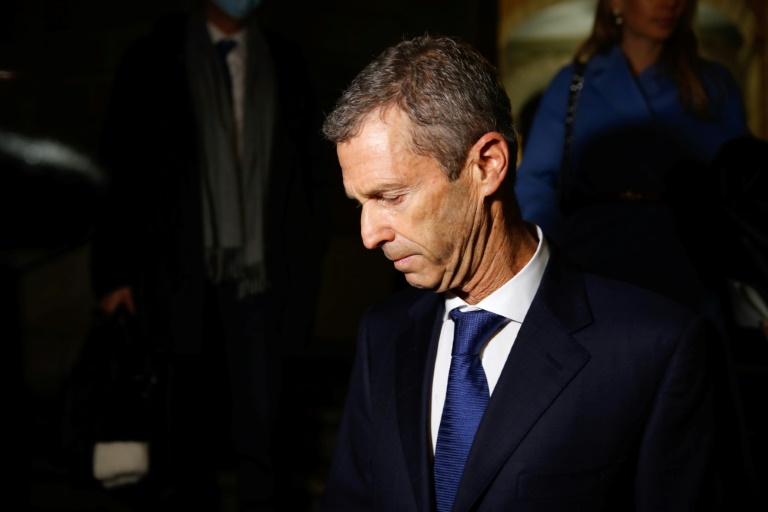
French-Israeli diamond magnate Beny Steinmetz will be back in court in Switzerland on Monday to appeal against a corruption sentence linked to mining rights in Guinea.

A Geneva court convicted the 66-year-old businessman in January 2021 of setting up a complex financial web to pay bribes to ensure his company could obtain permits in an area estimated to contain the world’s biggest untapped deposits of iron ore.

He was sentenced to five years in prison and also ordered to pay 50 million Swiss francs ($52 million) in compensation to the canton of Geneva.

Steinmetz maintained his innocence throughout that trial and immediately appealed against the ruling, decrying it as a “big injustice”.

Two of his alleged co-conspirators, who were slapped with shorter jail terms, are also appealing.

Steinmetz has changed his legal and communications team for the appeal, and they are preparing to argue that the lower court had not fully heard his arguments and had misunderstood the situation.

The first trial had painted Steinmetz in a way that “does not at all correspond to reality,” his spokesman Marc Comina said in a document detailing the diamond magnate’s case. 

Far from being corrupt, Beny Steinmetz Group Resources (BSGR) had legitimately obtained the mining rights in question, and had striven in difficult and complex circumstances to set up an operation that would have benefited Guinea’s national interests, the document said.

– ‘Pact of corruption’ –

Swiss prosecutors painted a far different picture during the first trial, which was the culmination of a drawn-out international investigation that kicked off in Switzerland in 2013.

They accused Steinmetz and two partners of bribing a wife of the then Guinean president Lansana Conte and others in order to win mining rights in the southeastern Simandou region.

The prosecutors said Steinmetz obtained the rights shortly before Conte died in 2008 after about $10 million was paid in bribes over a number of years, some through Swiss bank accounts.

Conte’s military dictatorship ordered global mining giant Rio Tinto to relinquish two concessions to BSGR for around $170 million in 2008.

Just 18 months later, BSGR sold 51 percent of its stake in the concession to Brazilian mining giant Vale for $2.5 billion.

But in 2013, Guinea’s first democratically-elected president Alpha Conde launched a review of permits allotted under Conte and later stripped the VBG consortium formed by BSGR and Vale, of its permit.

To secure the initial deal, prosecutors claimed Steinmetz and representatives in Guinea entered a “pact of corruption” with Conte and his fourth wife Mamadie Toure.

Toure, who has admitted to having received payments, has protected status in the United States as a state witness. 

She and a number of other key witnesses in the case failed to appear in the first trial, and it remained unclear if they would attend the appeal.

– ‘Totally false’ –

Steinmetz, who lived in Geneva during the years when the bribes were allegedly paid, continues to maintain that the bribery allegations are “totally false”, according to the document released by his team.

It insisted that Rio Tinto had lost the rights to half of its concessions in Simandou over its failure to develop them, in accordance with Guinean mining laws, and that BSGR later legitimately bid for and obtained the rights.

There was “nothing illegal or arbitrary” about that decision, the document said.

It also argued that the lower court had misunderstood the nature of the deal with Vale, and that BSGR had wanted to create a lasting partnership and business in Guinea.

“BSGR never intended to leave Guinea once the partnership with Vale was signed,” it said.

“Had it not been driven out of the country, BSGR would still be operating in Guinea today and would be a major player in the country’s economic rise.”

Steinmetz, who was granted a legal free-passage guarantee in order to participate in the first trial, left Switzerland without serving his sentence.

He will be back in the Geneva court from Monday to argue his case after receiving another free-passage, with the appeal hearing due to last through September 7. The verdict will come at a later date.
UN session on high seas biodiversity ends without agreement

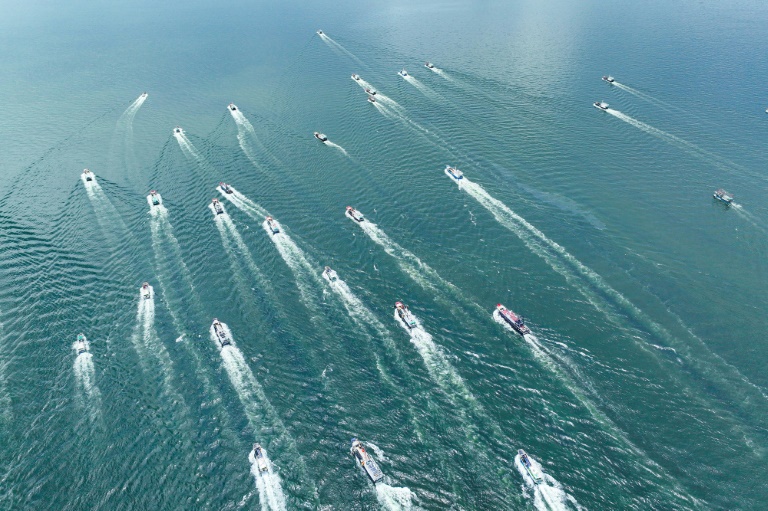
UN member states ended two weeks of negotiations Friday without a treaty to protect biodiversity in the high seas, an agreement that would have addressed growing environmental and economic challenges.

After 15 years, including four prior formal sessions, negotiators have yet to reach a legally binding text to address the multitude of issues facing international waters — a zone that encompasses almost half the planet.

“Although we did make excellent progress, we still do need a little bit more time to progress towards the finish line,” said conference chair Rena Lee.

It will now be up to the UN General Assembly to resume the fifth session at a date still to be determined.

Many had hoped the session, which began on August 15 at the United Nations headquarters in New York, would be the last and yield a final text on “the conservation and sustainable use of marine biodiversity beyond national jurisdiction,” or BBNJ for short.

“While it’s disappointing that the treaty wasn’t finalized during the past two weeks of negotiations, we remain encouraged by the progress that was made,” said Liz Karan of the NGO Pew Charitable Trusts, calling for a new session by the end of the year.

One of the most sensitive issues in the text revolved around the sharing of possible profits from the development of genetic resources in international waters, where pharmaceutical, chemical and cosmetic companies hope to find miracle drugs, products or cures.

Such costly research at sea is largely the prerogative of rich nations, but developing countries do not want to be left out of potential windfall profits drawn from marine resources that belong to no one.

-‘Missed opportunity’-

Similar issues of equity arise in other international negotiations, such as on climate change, in which developing nations that feel outsized harm from global warming have tried in vain to get wealthier countries to help pay to offset those impacts.

The high seas begin at the border of a nation’s exclusive economic zone (EEZ) — which by international law reaches no more than 200 nautical miles (370 kilometers) from its coast — and are under no state’s jurisdiction.

Sixty percent of the world’s oceans fall under this category.

And while healthy marine ecosystems are crucial to the future of humanity, particularly to limit global warming, only one percent of international waters are protected.

One of the key pillars of an eventual BBNJ treaty is to allow the creation of marine protected areas, which many nations hope will cover 30 percent of the Earth’s ocean by 2030.

“Without establishing protections in this vast area, we will not be able to meet our ambitious and necessary 30 by 30 goal,” US State Department official Maxine Burkett said at an earlier press conference.

But delegations still disagree on the process for creating these protected areas as well as how required environmental impact assessments will be implemented before new high seas activity begins.

“What a missed opportunity…”, tweeted Klaudija Cremers, a researcher at the IDDRI think tank, which, like multiple other NGOs, has a seat with observer status at the negotiations.

The delegate from Samoa, addressing the conference on behalf of the smaller developing island nations of the Pacific, said they were “disappointed.”

“We live very far and it is not cheap to travel all this way. This money was not spent on roads, on medicine, schools,” she added.

“The Pacific came here in good faith and will continue to do so until we conclude this conference in the very near future,” she said on the verge of tears, to applause from the room.

Laura Meller, of Greenpeace’s Protect the Oceans campaign, said: “Time has run out. Further delay means ocean destruction. We are sad and disappointed. While countries continue to talk, the oceans and all those who rely on them will suffer.”

UN session on high seas biodiversity ends without agreement

UN member states ended two weeks of negotiations Friday without a treaty to protect biodiversity in the high seas, an agreement that would have addressed growing environmental and economic challenges.

After 15 years, including four prior formal sessions, negotiators have yet to reach a legally binding text to address the multitude of issues facing international waters — a zone that encompasses almost half the planet.

“Although we did make excellent progress, we still do need a little bit more time to progress towards the finish line,” said conference chair Rena Lee.

It will now be up to the UN General Assembly to resume the fifth session at a date still to be determined.

Many had hoped the session, which began on August 15 at the United Nations headquarters in New York, would be the last and yield a final text on “the conservation and sustainable use of marine biodiversity beyond national jurisdiction,” or BBNJ for short.

“While it’s disappointing that the treaty wasn’t finalized during the past two weeks of negotiations, we remain encouraged by the progress that was made,” said Liz Karan with the NGO Pew Charitable Trusts, calling for a new session by the end of the year.

One of the most sensitive issues in the text revolved around the sharing of possible profits from the development of genetic resources in international waters, where pharmaceutical, chemical and cosmetic companies hope to find miracle drugs, products or cures.

Such costly research at sea is largely the prerogative of rich nations, but developing countries do not want to be left out of potential windfall profits drawn from marine resources that belong to no one.

-‘Missed opportunity’-

Similar issues of equity arise in other international negotiations, such as on climate change, in which developing nations that feel outsized harm from global warming have tried in vain to get wealthier countries to help pay to offset those impacts.

The high seas begin at the border of a nation’s exclusive economic zone (EEZ) — which by international law reaches no more than 200 nautical miles (370 kilometers) from its coast — and are under no state’s jurisdiction.

Sixty percent of the world’s oceans fall under this category.

And while healthy marine ecosystems are crucial to the future of humanity, particularly to limit global warming, only one percent of international waters are protected.

One of the key pillars of an eventual BBNJ treaty is to allow the creation of marine protected areas, which many nations hope will cover 30 percent of the Earth’s ocean by 2030.

“Without establishing protections in this vast area, we will not be able to meet our ambitious and necessary 30 by 30 goal,” US State Department official Maxine Burkett said at an earlier press conference.

But delegations still disagree on the process for creating these protected areas, as well as on how to implement a requirement for environmental impact assessments before new activity on the high seas.

“What a missed opportunity…”, tweeted Klaudija Cremers, a researcher at the IDDRI think tank, which, like multiple other NGOs, has a seat with observer status at the negotiations.

Angola's opposition rejects initial poll results

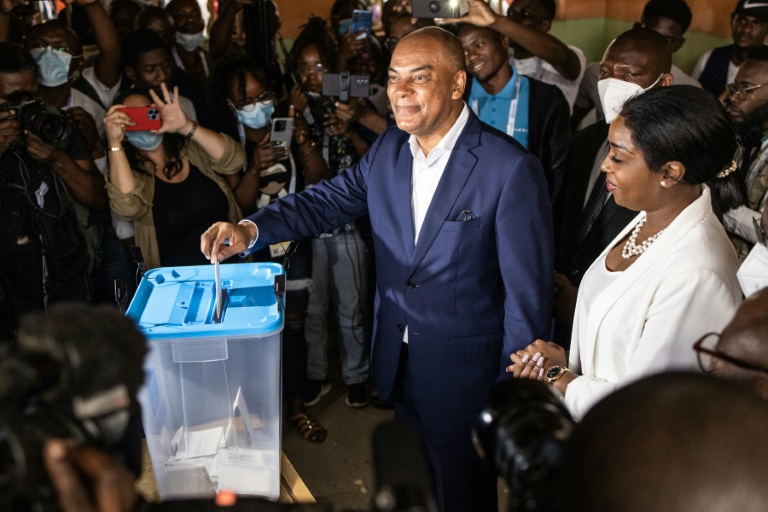
Angola’s opposition leader Friday rejected preliminary election results that suggest President Joao Lourenco will stay in power despite the country’s most competitive polls since independence.

The People’s Movement for the Liberation of Angola (MPLA), which has ruled the oil-rich nation for nearly five decades, has claimed a “comfortable majority” in this week’s vote.

Final results have still not been announced.

But after 97 percent of the results were tallied, an initial count late Thursday showed the MPLA had won 51.07 percent of the votes.

It gave its main rival, the National Union for the Total Independence of Angola (UNITA), 44.05 percent in the Wednesday polls.

UNITA leader Adalberto Costa Junior late Friday said his party “does not recognise the provisional results”.

He said the opposition party had conducted its own vote tallying and had noted discrepancies.

Costa Junior called for an international panel to review the count.

“We can affirm with complete assurance that the MPLA did not win the elections,” he told a cheering crowd of supporters.

– ‘Political turbulence’ –

The MPLA has traditionally wielded control over the electoral process and state media, and opposition and civic groups have in recent days raised fears of voter tampering.

The Southern African Development Community (SADC) and the African Union (AU) raised concerns ranging from a shortfall of national observers to questions about the electoral roll and biased reporting by state-owned television. 

The SADC said voting was “peaceful, calm and well organised”, but some polling stations opened and closed at irregular hours.

It urged anybody with objections to the results “to channel their concerns through established legal procedures”.

The AU, meanwhile, noted “some limitation on the right to access information and the freedom of press”.

The MPLA, a former liberation movement, has ruled Angola since the country gained independence from Portugal in 1975.

But it has seen a steady decline in support in recent elections.

While it romped to victory with 71.84 percent of votes in 2012, it only garnered 61 percent five years after that.

UNITA scored 26.67 percent in the 2017 elections, contesting the official count then too.

Alex Vines, of the UK-based think tank Chatham House, earlier predicted Costa Junior’s party would object.

“We can expect… some months of political turbulence,” he said.

– ‘End corruption’ –

Augusto Santana, of the non-profit Democracy Works Foundation, said protests could break out over the weekend. 

“UNITA is not happy because they think they have won the elections,” he said.

The latest election has been overshadowed by a struggling economy, inflation, poverty, drought and the death in Spain last month of Lourenco’s predecessor, Jose Eduardo dos Santos.

The opposition has proved popular in urban areas, winning in the capital Luanda and among youth disaffected with the ruling party.

“The people have voted en masse for UNITA, and to end the vicious circle of corruption that plagues the country,” said Gilson Leopoldo, a 26-year-old accountant in Luanda.

Angola is Africa’s second largest crude producer, but the oil bonanza has also nurtured corruption and nepotism.

Santana said the opposition was unlikely to manage to overturn the results.

But it could still usher in a “new era of politics”, with more UNITA lawmakers making it into parliament.

Marisa Lourenco, a Johannesburg-based independent analyst, said times were changing.

“This is the last election the MPLA will win outright,” she said.

Macron calls for 'new pact' with Algeria in reconciliation visit

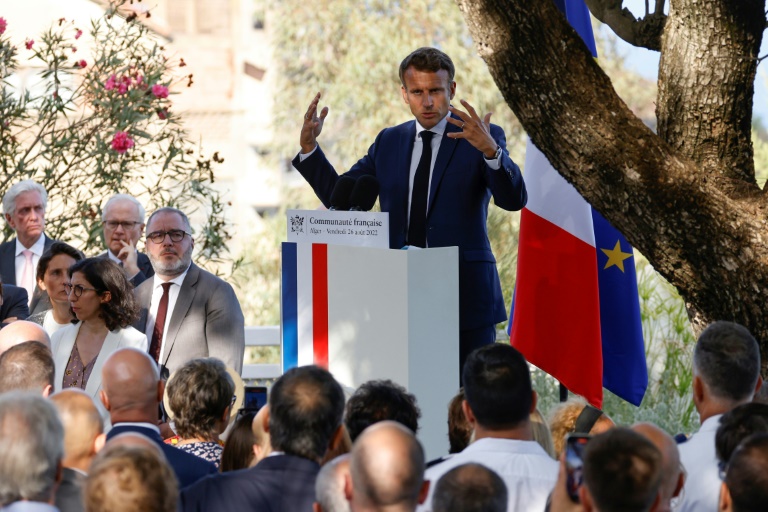
President Emmanuel Macron called Friday for a “new pact” with Algeria and “truth and recognition” of the past, on day two of a visit to France’s former colony aimed at mending troubled ties.

The trip follows months of tensions between Paris and the North African country, which earlier this year marked six decades of independence following 132 years of French rule. 

The three-day visit also comes as European powers scramble to replace Russian energy imports — including with supplies from Algeria, Africa’s top gas exporter, which in turn is seeking a greater regional role.

Macron had proclaimed a “new page” in relations on Thursday, after meeting President Abdelmadjid Tebboune and announcing the creation of a joint commission of historians to examine the colonial period and the devastating eight-year war that ended it, at a cost of hundreds of thousands of lives.

On Friday, Macron — the first French president to be born after Algerian independence in 1962, told journalists he wanted “the truth, and recognition, otherwise we’ll never move forward”.

And on Saturday Macron and Tebboune are to sign “a joint declaration for a renewed, concrete and ambitious partnership”, the French presidency said.

Addressing members of the French community in Algeria later Friday, Macron spoke of his love for the North African country.

“Many people want to promote the idea that France should hate Algeria, or Algeria should hate France,” he said.

“But we are at a moment where we can build a new pact.”

– Security meeting –

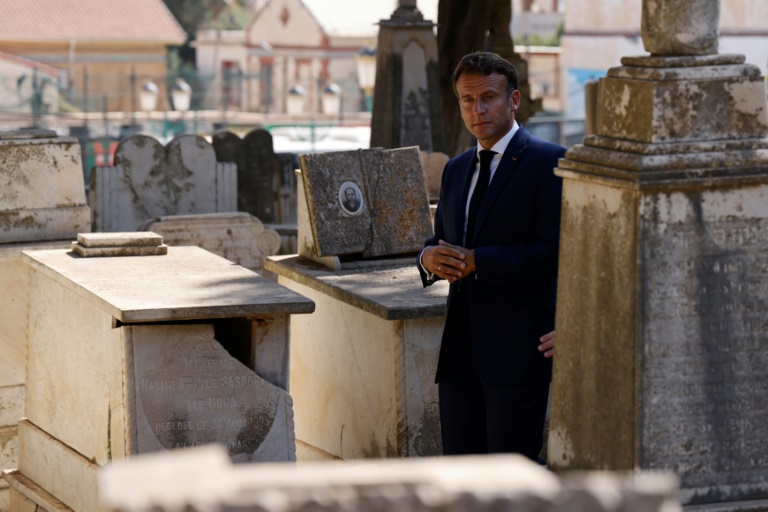
Macron earlier laid a wreath at a monument to those who “died for France”, in the mixed Christian-Jewish Saint Eugene cemetery which was a major burial ground for Europeans during colonial times.

Later in the day he met young Algerian entrepreneurs and visited the iconic Grand Mosque of Algiers before heading to second city Oran.

In a visit his office says focuses on the future, Macron is set to meet young artists and sportspeople on Saturday and visit a famous record store, before returning to Algiers.

Ties between Paris and Algiers have seen repeated crises over the years.

They had been particularly tense since last year when Macron questioned Algeria’s existence as a nation before the French occupation and accused the government of fomenting “hatred towards France”.

Tebboune withdrew his country’s ambassador in response and banned French military aircraft from its airspace.

Normal diplomatic relations have since resumed, along with overflights to French army bases in sub-Saharan Africa.

And on Friday, Macron and Tebboune presided over a “coordination meeting” involving security officials from both countries, “the first at this level since independence”, the Algerian presidency said.

The French army’s chief of staff General Thierry Burkhard, his Algerian counterpart Said Chanegriha and France’s Defence Minister Sebastien Lecornu were among those in attendance, Algiers said.

– Gas ‘good’ for Europe –

Algeria is seeking a bigger role in the region, buoyed by surging energy prices that have filled the coffers of Africa’s top natural gas exporter following Russia’s invasion of Ukraine.

Macron’s office has said gas is not a major feature of the visit — although the head of French energy firm Engie, Catherine MacGregor, is in Macron’s 90-strong delegation.

The president said on Friday that Algeria had helped Europe diversify its energy supplies by pumping more gas to Italy, which last month signed a deal to import billions more cubic metres via an undersea pipeline from the North African coast.

The deal is “good for Italy, it’s good for Europe and it improves the diversification of Europe,” he told reporters.

He also dismissed suggestions that Italy and France were “in competition”, noting that France only relies on natural gas for a small part of its energy mix.

The two leaders discussed how to bring stability to Libya, the Sahel region and the disputed territory of Western Sahara, according to Tebboune.

They also spoke at length about the spiky issue of French visas for Algerians, and Macron said Friday they had “very freely” discussed the human rights situation in Algeria.

“These issues will be settled in full respect of Algerian sovereignty,” Macron said.

He urged young Algerians “not to be taken in” by the “immense manipulation” of social media networks by foreign powers including Russia and China, which are both allies of Algiers.

Ton-up Stokes and Foakes add to South Africa's agony in second Test

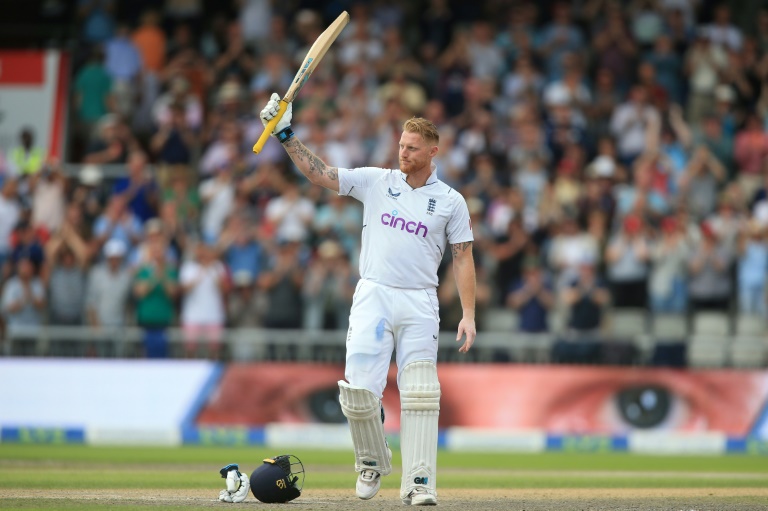
Ben Stokes hit his first century since being appointed England’s full-time captain and wicketkeeper Ben Foakes also reached three figures as the hosts established a commanding lead over South Africa in the second Test in Manchester on Friday.

Stokes made 103, with Foakes a Test-best 113 not out when his skipper declared England’s first innings on 415-9, a lead of 264 runs, after South Africa had been dismissed for a meagre 151.

That left World Test Championship leaders South Africa with a tricky nine overs to bat before the close of the second day at a sun-drenched Old Trafford.

But the Proteas, 1-0 up in this three-match series after a dominant innings and 12-run win in the first Test at Lord’s, were 23-0 at stumps — still a deficit of 241.

Sarel Erwee was 12 not out and South Africa captain Dean Elgar unbeaten on 11.

Earlier, Stokes and Foakes shared an impressive partnership of 173 after coming together with England wobbling at 147-5 following a double strike by express fast bowler Anrich Nortje that removed both overnight batsmen — Jonny Bairstow (49) and opener Zak Crawley (38).

– ‘Overjoyed’ –

“I was overjoyed getting a Test hundred,” Foakes told Sky Sports after a second century in 16 matches at this level and first at home following his 107 on debut against Sri Lanka in Galle in November 2018.

The 29-year-old Surrey gloveman, whose England career has been interrupted by injuries and, more recently a bout of Covid-19, added: “When you go through a lean patch, it makes it even more special.”

“It’s obviously not easy and they’ve got a fantastic bowling attack so it was tough out there.”

Nortje, despite being the pick of the Proteas’ attack with overall figures of 3-82 in 20 overs, was curiously underused by Elgar while bowling just nine overs in Friday’s first two sessions.

“Dean had a plan according to what the situation told him,” Nortje told reporters.

“We can’t go too deeply into who bowled when. It was a good wicket to bat on and they did bat well.”

By recalling Simon Harmer as a second spinner to their attack, in the hope the pitch at Old Trafford would offer more turn as the game went on, South Africa had almost been obliged to bat first upon winning the toss.

But off-spinner Harmer, a prolific wicket-taker with county side Essex, and slow left-armer Keshav Maharaj could only manage three late-order wickets between them for a combined 151 runs in 45.4 overs

Harmer’s first delivery on Friday, a full toss, was stroked through the covers for four by Foakes and, three balls later, Stokes swept him for six.

Left-handed batsman Stokes went into the 80s with a straight six off Maharaj.

South Africa took the new ball as soon as possible, with England 288-5 off 80 overs, only for Stokes to glance the next delivery, from Lungi Ngidi, for four.

But the second delivery with the new ball almost proved Stokes’s undoing on 92 when a diving Aiden Markram at extra cover failed to hold what would have been a spectacular catch off a hard-hit drive.

All-rounder Stokes, 98 not out at tea, went to three figures in unusual fashion when a straight drive off Kagiso Rabada deflected off the fast bowler’s shin to take him to a 158-ball hundred, including six fours and three sixes. 

But he fell soon afterwards when a leading edge off Rabada was well caught by the back-pedalling Elgar at mid-off.

England, however, were now 320-6, having recovered well in this match after a loss at Lord’s that represented their first defeat after four successive wins under the new leadership duo of Stokes and coach Brendon McCullum.

And for all the talk of a new ‘Bazball’ aggressive style, the 31-year-old Stokes’s well-paced innings  — his 12th hundred in 85 Tests and fourth against South Africa — was also a triumph of largely orthodox batting.

Foakes completed a hundred of his own when he late cut Nortje for a ninth four in 206 balls faced. 

England’s tailenders then chipped in with some extravagant shots before Stokes called a halt. 

UN high-seas biodiversity treaty struggles to leave port

A two-week negotiating session on a treaty to protect the high seas wraps up Friday, but UN observers were holding their breath with many points remaining contentious between member states.

After 15 years, including four prior formal sessions, negotiators have yet to reach a legally binding agreement to address the growing environmental and economic challenges involving the high seas, also known as international waters — a zone which encompasses almost half the planet.

Many had hoped that this fifth session, which began on August 15 at the United Nations headquarters in New York, would be the last and yield a final text on “the conservation and sustainable use of marine biodiversity beyond national jurisdiction,” or BBNJ for short.

But a new version of the treaty — distributed to delegates on Friday morning just hours before the official end of negotiations, and seen by AFP — still included many paragraphs open to negotiations.

A meeting scheduled for noon (1600 GMT) was canceled to allow consultations to continue, which observers suggest could run into Saturday.

One of the most sensitive issues revolves around the sharing of possible profits gained from developing genetic resources in international waters, where pharmaceutical, chemical and cosmetic companies hope to find miracle drugs, products or cures.

Such costly research at sea is largely the prerogative of rich nations, but developing countries do not want to be left out of potential windfall profits drawn from marine resources that belong to no one.

The new draft text seems to still side with the developing nations, with a requirement that two percent of all future sales be redistributed, eventually rising to eight percent.

Greenpeace’s Will McCallum accuses the EU, United States and Canada of rejecting the proposal. 

“It’s not even real money. It’s just hypothetical money one day. That is why it is really frustrating,” he told AFP.

The EU pushed back on that characterization, with one European negotiator telling AFP: “We are willing to contribute to the BBNJ agreement through various funding sources, which in our view shall include a fair sharing of benefits from marine genetic resources globally.”

Similar issues of equity between the Global North and South arise in other international negotiations, such as on climate change, where developing nations feel outsized harms from global warming and try in vain to get wealthier nations to help pay to offset those impacts.

– ‘Too close to fail’ –

Some are hopeful for an agreement.

“This is the final stage and delegates are working hard to come to an agreement,” said Liz Karan with the NGO Pew Charitable Trusts.

Jihyun Lee, a youth ambassador with conservation group the High Seas Alliance, said: “We’re too close to fail.”

The high seas begin at the border of nations’ exclusive economic zones (EEZs) — which by international law reach no more than 200 nautical miles (370 kilometers) from each country’s coast — and are under no state’s jurisdiction.

Sixty percent of the world’s oceans fall under this category.

And while healthy marine ecosystems are crucial to the future of humanity, particularly to limit global warming, only one percent of international waters are protected.

One of the key pillars of an eventual BBNJ treaty is to allow the creation of marine protected areas, which many nations hope will cover 30 percent of the Earth’s ocean by 2030.

“Without establishing protections in this vast area, we will not be able to meet our ambitious and necessary 30 by 30 goal,” said US State Department official Maxine Burkett at a press conference.

But delegations still disagree on the process for creating these protected areas, as well as on how to implement a requirement for environmental impact assessments before new activity on the high seas.

“I think they have made a lot of progress in the last two weeks on issues that were very controversial,” said Klaudija Cremers, a researcher at the IDDRI think tank, which like multiple other NGOs has a seat with observer status at the negotiations.

She told AFP that the final talks Friday “could be the push to get an agreement.”

'Not coping': Crisis at overcrowded Dutch asylum centre

Asylum seeker Lawrence resigned himself to another night sleeping outside near an overcrowded Dutch refugee centre, as aid groups warn of a humanitarian emergency at the facility where a three-month-old baby recently died.

The Ter Apel centre is in crisis, hit not by soaring arrivals but a backlog of people waiting to be processed — plus severe staff shortages after the government scaled down capacity.

And the centre faced huge scrutiny this week after a baby died inside the facility from unknown causes. 

The chaos is a disappointment for those seeking a better life like Nigerian-born Lawrence, who arrived 13 days ago by train.

“I am still waiting to be processed — and no, I’m not doing fine,” the father-of-two told AFP, who left Nigeria to seek a better life for his family.

“Conditions are terrible here. This is not what I expected — at least not in a civilised country like the Netherlands,” he said, not wanting to give his surname for safety reasons. 

Lawrence endured an arduous journey getting to the Netherlands from his home in the African country’s volatile southeastern region via Italy.

Arriving at the country’s main asylum centre, he expected a quick process and a roof over his head while he awaited the government’s decision.

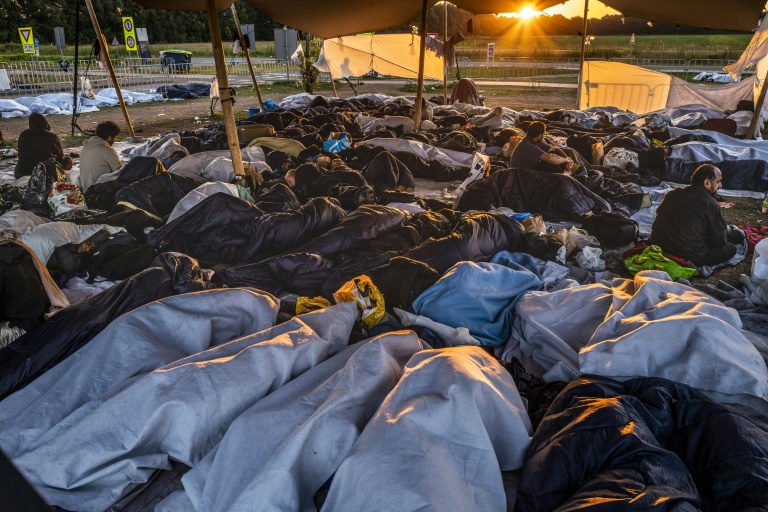
Instead, he joined more than 700 other hopefuls who have been sleeping in front of the gates — many of them for weeks. 

Both the Red Cross and the Dutch arm of Doctors Without Borders (MSF) warned Friday of a growing humanitarian emergency at the refugee centre, a short drive from the northern Dutch city of Groningen.

“It’s clear, if you look around, that we have hundreds of people living here… in dismal conditions and in the open,” said Monique Nagelkerke, an emergency coordinator with MSF.

“There still is no proper sanitation and there are all sorts of medical complaints,” she told AFP.

“The system here is trying to cope, but they’re not coping and that’s why we are here to help.”

– ‘Bunch of dogs’ –

On Thursday, MSF deployed staff to the Ter Apel centre — a first for the organisation that usually gives medical assistance to those in war zones.

Nearby, MSF doctors were treating a number of patients at a “hospital on wheels” set up early Friday.

Patients suffered ailments “you would expect of people who have been on the road for a long time,” Nagelkerke said.

Many had “skin diseases because of poor hygiene, feet problems because people have walked a long way”.

Both MSF and the Red Cross warned that the situation may deteriorate, especially with the end of summer approaching.

“People are cold at night, having to sleep on the ground. What happens when the weather changes?” a Red Cross official told the ANP news agency.

AFP correspondents saw hundreds of men laying under makeshift tarpaulins, with a row of dirty toilets nearby, many littered with empty plastic bottles left by those attempting to wash themselves.

A group of Turkish asylum seekers say some in their group have been sleeping in front of the centre for the past 11 days.

“We are not criminals. I wonder if we’d be better treated if we were a bunch of dogs,” one 37-year-old asylum-seeker told AFP, asking not to be named.

– ‘Shameful’ –

The government has launched an investigation into the baby’s death, which has thrown scrutiny on conditions at the centre.

The Dutch refugee agency (COA) has said the current crisis is down to staff shortages after the government scaled down its capacity to handle asylum-seeker numbers, which took a downturn during the coronavirus pandemic.

“The images from Ter Apel are shameful,” Dutch Prime Minister Mark Rutte said at his weekly press conference on Friday, adding “mistakes have been made”.

Rutte promised “structural solutions”, warning that improvements could take time.

“But that doesn’t mean the situation at the centre will instantly be fixed today, tomorrow or even the day after,” he said. 

The government said Friday it plans to boost the homes available to asylum seekers by 20,000, to alleviate pressure on Ter Apel.

But the Netherlands is already dealing with a housing shortage, and plans to give asylum seekers accommodation can run into fierce resistance.

And there are 16,000 processed asylum seekers desperately looking for places to stay, COA spokesman Leon Veldt told AFP.

“There are too few reception centres and too few opportunities to move on to homes,” he said.

Macron calls for 'new pact' with Algeria in reconciliation visit

President Emmanuel Macron called Friday for a “new pact” with Algeria and “truth and recognition” of the past, on day two of a visit to France’s former colony aimed at mending troubled ties.

The trip follows months of tensions between Paris and the North African country, which earlier this year marked six decades of independence following 132 years of French rule.

The three-day visit also comes as European powers scramble to replace Russian energy imports — including with supplies from Algeria, Africa’s top gas exporter, which in turn is seeking a greater regional role.

Macron had proclaimed a “new page” in relations on Thursday, after meeting President Abdelmadjid Tebboune and announcing the creation of a joint commission of historians to examine the colonial period and the devastating eight-year war that ended it, at a cost of hundreds of thousands of lives.

On Friday, Macron — the first French president to be born after Algerian independence in 1962, told journalists he wanted “the truth, and recognition, otherwise we’ll never move forward”.

And on Saturday Macron and Tebboune are to sign “a joint declaration for a renewed, concrete and ambitious partnership”, the French presidency said.

Addressing members of the French community in Algeria later Friday, Macron spoke of his love for the North African country.

“Many people want to promote the idea that France should hate Algeria, or Algeria should hate France,” he said.

“But we are at a moment where we can build a new pact.”

– ‘Promising prospects’ –

Macron earlier laid a wreath at a monument to those who “died for France”, in the mixed Christian-Jewish Saint Eugene cemetery which was a major burial ground for Europeans during colonial times.

French soldiers sang the Marseillaise as cicadas buzzed in the background.

Macron then visited the Jewish part of the cemetery, accompanied by prominent French Jews.

Later in the day he was set to meet young Algerian entrepreneurs and discuss creating a French-Algerian incubator for digital start-ups, as part of a visit his office said focuses on the future.

Tebboune on Thursday hailed “promising prospects for improving the special partnership” between the two countries.

Ties between Paris and Algiers have seen repeated crises over the years.

They had been particularly tense since last year when Macron questioned Algeria’s existence as a nation before the French occupation and accused the government of fomenting “hatred towards France”.

Tebboune withdrew his country’s ambassador in response and banned French military aircraft from its airspace.

Normal diplomatic relations have since resumed, along with overflights to French army bases in sub-Saharan Africa.

– Gas ‘good’ for Europe –

Algeria is seeking a bigger role in the region, buoyed by surging energy prices that have filled the coffers of Africa’s top natural gas exporter following Russia’s invasion of Ukraine.

Macron’s office has said gas is not a major feature of the visit — although the head of French energy firm Engie, Catherine MacGregor, is in Macron’s 90-strong delegation.

The president said on Friday that Algeria had helped Europe diversify its energy supplies by pumping more gas to Italy, which last month signed a deal to import billions more cubic metres via an undersea pipeline from the North African coast.

Dismissing suggestions that Italy and France were “in competition” for Algerian gas, Macron welcomed the deal.

“It’s good for Italy, it’s good for Europe and it improves the diversification of Europe,” he told reporters.

He also dismissed suggestions that Italy and France were “in competition”, noting that France only relies on natural gas for a small part of its energy mix.

The two leaders discussed how to bring stability to Libya, the Sahel region and the disputed territory of Western Sahara, according to Tebboune.

They also spoke at length about the spiky issue of French visas for Algerians, and Macron said Friday they had “very freely” discussed the human rights situation in Algeria.

“These issues will be settled in full respect of Algerian sovereignty,” Macron said.

He urged young Algerians “not to be taken in” by the “immense manipulation” of social media networks by foreign powers including Russia and China.

Macron was due to visit the iconic Grand Mosque of Algiers on Friday before heading to second city Oran for a stop focused on the arts.

Kenya's Ruto urges court to throw out rival's poll challenge

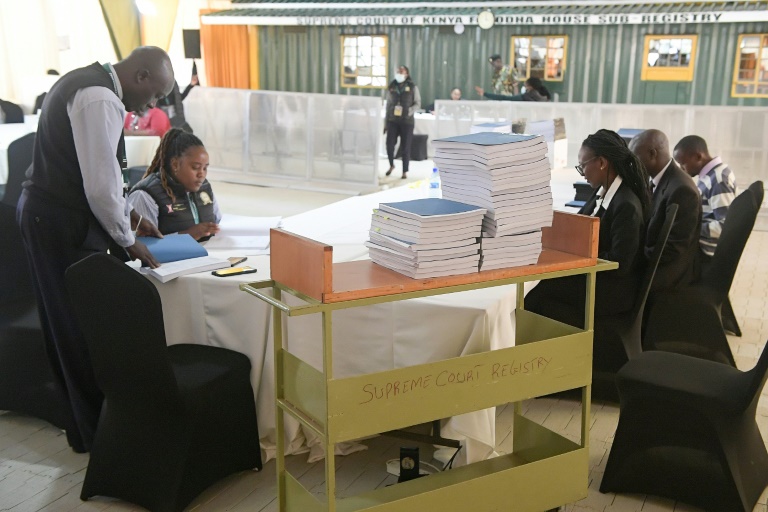
Kenya’s president-elect William Ruto on Friday urged the country’s top court to throw out a petition by his rival Raila Odinga that challenged the result of the August 9 election.

Odinga, a veteran opposition leader who ran with the backing of President Uhuru Kenyatta and the ruling party, filed a petition to the Supreme Court on Monday, contesting the outcome of the poll that delivered victory to Ruto.

The 77-year-old politician lost his fifth bid for the presidency by a narrow margin of around 230,000 votes — less than two percentage points — and said he had “enough evidence” to show that he had in fact won the election.

Since 2002, no presidential election outcome in Kenya has gone uncontested, and Odinga has previously said he was cheated of victory in the 2007, 2013 and 2017 polls.

Although polling day passed off peacefully, the announcement of the results last week sparked angry protests in some Odinga strongholds and there are fears a drawn-out dispute may lead to violence in a country with a history of post-poll unrest.

In an affidavit to the court, Ruto said Odinga had a history “of consistently disputing presidential election results and fomenting national crises after losing”.

He accused the former prime minister of trying “to have another bite at the cherry through a judicially-forced re-run”.

According to a copy of the 72-page petition seen by AFP, Odinga’s team alleges that the chairman of the Independent Electoral and Boundaries Commission, Wafula Chebukati, failed to tally around 140,000 votes.

As a result, Ruto “did not meet the constitutional threshold of 50 percent plus 1 of the valid votes cast” — a requirement for him to be declared the winner.

Judges have to issue a ruling by September 5. If they order an annulment, a new vote must be held within 60 days.

Ruto said it was “against the public interest to keep the country in a perpetual electioneering mode”, arguing that the uncertainty would further damage Kenya’s troubled economy which is already battling high inflation.

The IEBC was under heavy pressure to deliver a clean vote after facing sharp criticism over its handling of the August 2017 election, which was also challenged by Odinga.

The court annulled that election in a first for Africa and ordered a re-run which was boycotted by Odinga. Dozens of people died during a police crackdown on protests.

Kenya’s worst electoral violence occurred after the 2007 vote, when more than 1,100 people died in politically motivated clashes involving rival tribes.

On the campaign trail, both frontrunners pledged to resolve any disputes in court rather than on the streets.

Close Bitnami banner
Bitnami