Africa Business

Angola ruling party set to win hotly contested vote

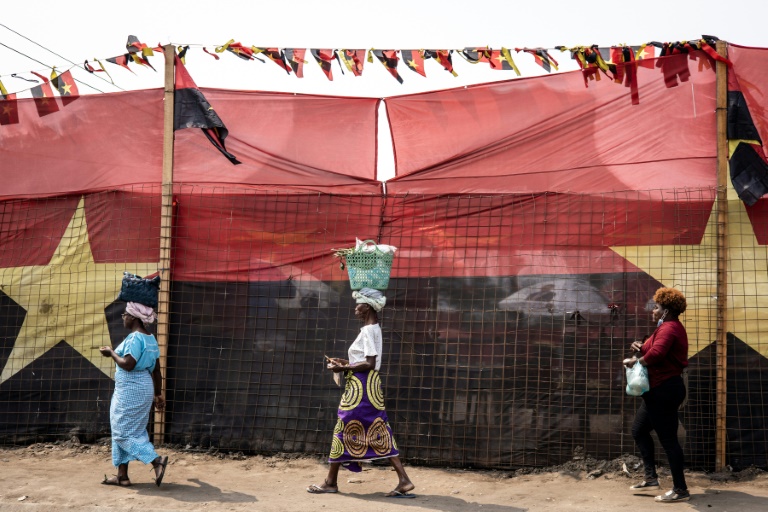
Angola’s ruling party said Friday they held a “comfortable majority” in the country’s most competitive elections since independence, amid fears of political turmoil if the opposition contested the final results.

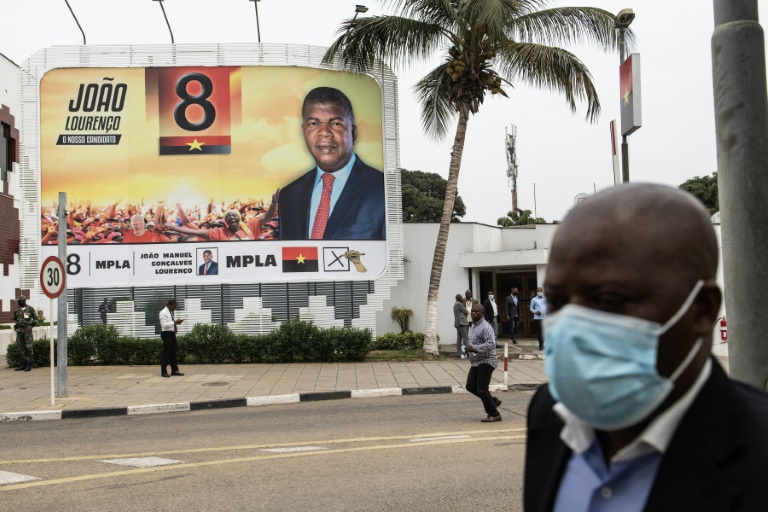
Final results were still expected, but provisional counts showed the People’s Movement for the Liberation of Angola (MPLA) was set to extend its stranglehold on power in the oil-rich southern African country, giving its leader President Joao Lourenco a second term in office.

“According to preliminary results, we have a comfortable majority,” MPLA spokesman Rui Falcao told journalists at the party’s headquarters in Luanda.

With 97 percent of ballots tallied, Angola’s electoral commission late Thursday said the MPLA had scored 51.07 percent of the vote. 

The main opposition party — the National Union for the Total Independence of Angola (UNITA) led by Adalberto Costa Junior — had secured 44.05 percent, a huge jump from 26.67 percent in the 2017 election.

Alex Vines, of the UK-based think tank Chatham House, said it was likely Costa Junior’s party would object to the final count.

“We can expect… some months of political turbulence as UNITA will challenge the results,” he said.

Anastacio Ruben Sicato, a senior member of the opposition party, said the official results did not tally with their own count.

“We hope there can be common sense,” he said.

But, he added, “we are not encouraging a rebellion, the process is not over, we must remain calm”. 

The MPLA has traditionally wielded control over the electoral process and state media, and opposition and civic groups have raised fears of voter tampering.

The party has ruled Angola for 47 years since the country gained independence from Portugal in 1975. 

But it has seen a steady decline in support in recent elections.

While it romped to victory with 71.84 percent of votes in 2012, it only garnered 61 percent five years after that.

– ‘New era’ –

Augusto Santana, of the non-profit Democracy Works Foundation, predicted protests over the weekend. 

“UNITA is not happy because they think they have won the elections,” he said.

The latest election has been overshadowed by a struggling economy, inflation, poverty and drought.

The opposition has proved popular in urban areas, winning in the capital Luanda and among youth disaffected with the ruling party.

Gilson Leopoldo, a 26-year-old accountant in Luanda, said young Angolans now had more access to information.

“The people have voted en masse for UNITA, and to end the vicious circle of corruption that plagues the country,” he said.

Angola is Africa’s second largest crude producer, but the oil bonanza has also nurtured corruption and nepotism.

Santana said that, even though the opposition was unlikely to manage to overturn the results, Wednesday’s vote could still usher in a “new era of politics”.

The MPLA looked set to retain a majority in parliament, he said, but would face more pushback from a larger number of UNITA lawmakers.

This “will motivate more dialogue”, he said.

Marisa Lourenco, an independent analyst based in Johannesburg, said times were changing as voters “no longer believe in the ruling party’s ability or will to change their socioeconomic prospects”.

“This is the last election the MPLA will win outright,” she said.
Stokes eyes century as England build large lead over South Africa

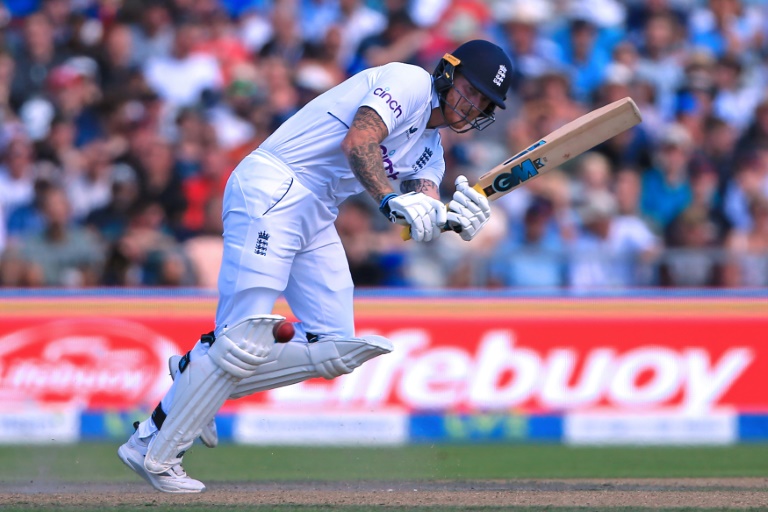
Ben Stokes was on the verge of a first century since being appointed England’s full-time captain as the hosts established a commanding advantage over South Africa in the second Test at Old Trafford on Friday.

England were 308-5 at tea on the second day, 161 runs ahead of South Africa’s meagre first-innings of 151, with all-rounder Stokes 98 not out and wicketkeeper Ben Foakes, offering fine support, unbeaten on 61.

The pair had so far shared an unbroken stand of 161, having come together with England still trailing at 147-5 after fast bowler Anrich Nortje removed overnight batsmen Jonny Bairstow and Zak Crawley in a superb burst of two wickets for three runs in seven balls.  

England, bidding to level this three-match series after a crushing innings and 12-run defeat in the first Test at Lord’s — their first loss following four successive wins under the leadership of Stokes and coach Brendon McCullum — resumed on 111-3, 40 runs behind.

Crawley was 17 not out and Bairstow unbeaten on 38 after a top-order collapse had threatened to undo the good work of James Anderson, who took 3-32 on his Lancashire home ground, and fellow paceman Stuart Broad (3-37).

The veteran duo had made the most of helpful, overcast, conditions after South Africa captain Dean Elgar’s decision to bat first backfired.

Struggling opener Crawley had a lucky break on 24 when, after aiming legside against Nortje, a leading edge looped safely over point.

Nortje’s speed eventually proved too much for Bairstow, out for 49, when he edged a reverse-swinging ball to first slip where Sarel Erwee, who has made a habit of juggling chances this series, clung on at the first attempt to break a stand of 91 with Crawley. 

England then lost their fifth wicket when Crawley was caught behind after edging a fine Nortje delivery that moved late off the seam to end a determined innings of 38 off 101 balls.

– Spinners suffer –

By recalling Simon Harmer as a second spinner to their attack, in the hope the pitch at Old Trafford would offer more turn as the game went on, South Africa had almost been obliged to bat first upon winning the toss.

But at tea, off-spinner Harmer, a prolific wicket-taker with county side Essex, and slow left-armer Keshav Maharaj had combined figures of 0-107 in 35 overs.

Harmer’s first delivery on Friday, a full toss, was stroked through the covers for four by Foakes and, three balls later, Stokes swept him for six.

Foakes was given out lbw on 28 to Maharaj’s first ball Friday shortly before lunch but his review confirmed a sharply turning delivery had pitched outside leg stump.

Left-handed batsman Stokes, 34 not out at lunch, completed a 101-ball fifty when he lofted Harmer for six in classic style.

He was deceived by a well-disguised slower ball from fast bowler Lungi Ngidi, on 72, but Stokes’s review revealed a clear inside edge after he had initially been given out leg before.

Stokes went into the 80s with a straight six off Maharaj, before Foakes completed a well-made fifty off 116 balls.

South Africa took the new ball as soon as possible, with England 288-5 off 80 overs, only for Stokes to then glance the next delivery, from Ngidi, for four.

But the second delivery with the new ball almost proved Stokes’s undoing on 92 when a diving Aiden Markram at extra cover failed to hold what would have been a spectacular catch off a hard-hit drive.

Horn of Africa drought to worsen with fifth failed rains: UN

The devastating Horn of Africa drought is set to get even worse with a fifth consecutive failed rainy season, the UN’s weather agency forecasted Friday, fearing an unprecedented humanitarian catastrophe.

Ethiopia, Kenya and Somalia are already going through their worst drought for 40 years and another poor rainy season is now highly likely, the World Meteorological Organization (WMO) warned.

“The drought is set to continue,” WMO spokeswoman Clare Nullis told reporters in Geneva.

She said the Greater Horn of Africa Seasonal Climate Outlook Forum had issued its predictions for the October to December rainy season.

“Unfortunately, the predictions show high chances of drier-than-average conditions across most parts of the region,” Nullis said.

“The drought-affected areas of Ethiopia, Kenya and Somalia are expected to receive significantly below normal rainfall until the end of the year.”

The four straight failed rainy seasons so far have killed millions of livestock, destroyed crops, and forced 1.1 million people from their homes in search of food and water.

The number of people at risk of starvation in the drought-ravaged region has increased to 22 million, the UN’s World Food Programme said last week.

The crucial October to December season typically contributes up to 70 percent of the annual total rainfall in the equatorial parts of the Greater Horn of Africa, particularly in eastern Kenya. 

Nullis warned the deficit is “really going to hit hard” and the seasonal rainfall “will not be sufficient to alleviate the crisis now”.

“We are witnessing an unfolding tragedy.”

Guleid Artan, the director of the WMO’s regional climate centre for East Africa, said the outlook showed a “high degree of confidence” that there would be a fifth consecutive failed rainy season in the Horn of Africa.

“In Ethiopia, Kenya, and Somalia, we are on the brink of an unprecedented humanitarian catastrophe,” he said.

– Malnutrition and disease –

The World Health Organization said it was focusing on the resulting health crisis, with disease being fuelled by malnutrition.

The UN health agency is trying to ensure access to basic health services, treatment for severe malnutrition and being on alert for disease outbreaks.

“Acting now means we can save millions of lives” in Djibouti, Ethiopia, Kenya, Somalia, South Sudan, Sudan and Uganda, the WHO said.

More than 7.3 million are in an “emergency state” facing extreme food shortages — “and the risk of hunger-related death is rapidly increasing”.

Jens Laerke, spokesman for the UN’s humanitarian agency, said they would be asking “everybody who has anything and everything available” to help alleviate the crisis.

“There are a lot of other countries that could step up,” he said.

Macron looks to past and future on Algeria visit to mend ties

French President Emmanuel Macron called for “truth and recognition” of the past on Friday, the second day of a visit to France’s former colony Algeria aimed at mending their often painful ties.

The three-day trip follows months of tensions between Paris and the North African country, which earlier this year marked six decades of independence following 132 years of French rule.

The visit also comes as European powers scramble to replace Russian energy imports — including with supplies from Algeria, Africa’s top gas exporter, which in turn is seeking a greater regional role.

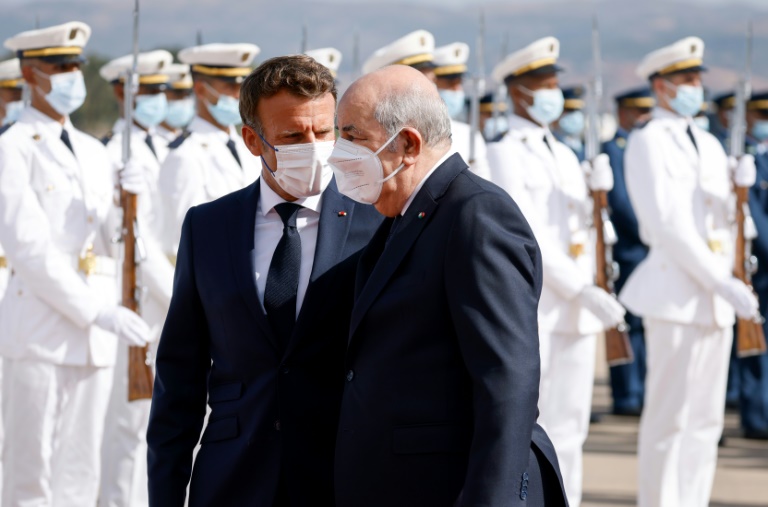
Macron had proclaimed a “new page” in relations on Thursday, after meeting President Abdelmadjid Tebboune and announcing the creation of a joint commission of historians to examine the colonial period and the devastating eight-year war that ended it, at a cost of hundreds of thousands of lives.

On Friday, Macron — the first French president to be born after Algerian independence in 1962 — dismissed what he said were calls to “choose between pride and repentance”.

“I want the truth, and recognition, otherwise we’ll never move forward,” he said.

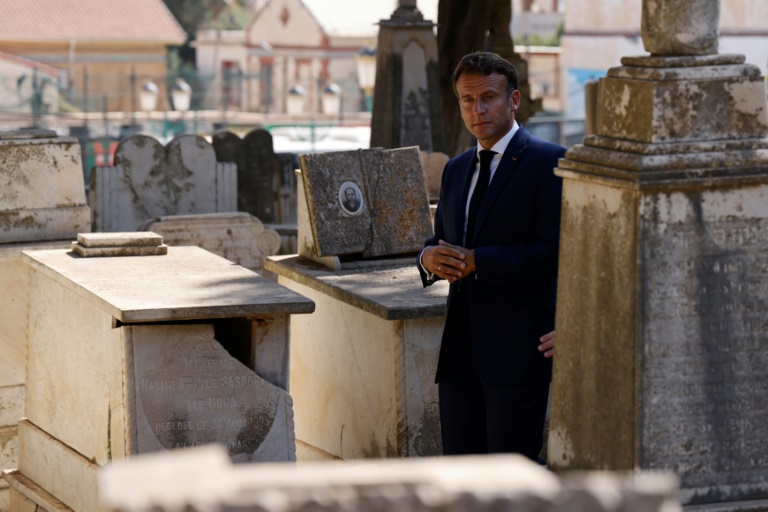
On Friday morning Macron laid a wreath at a monument to those who “died for France”, in the mixed Christian-Jewish Saint Eugene cemetery which was a major burial ground for Europeans during colonial times.

French soldiers sang the Marseillaise as cicadas buzzed in the background.

Macron then visited the Jewish part of the cemetery, accompanied by prominent French Jews.

Later in the day he was set to meet young Algerian entrepreneurs and discuss creating a French-Algerian incubator for digital start-ups, as part of a visit his office said focuses on the future.

Tebboune on Thursday hailed “promising prospects for improving the special partnership” between the two countries.

– Gas ‘good’ for Europe –

Ties between Paris and Algiers have seen repeated crises over the years.

They had been particularly tense since last year when Macron questioned Algeria’s existence as a nation before the French occupation and accused the government of fomenting “hatred towards France”.

Tebboune withdrew his country’s ambassador in response and banned French military aircraft from its airspace.

Normal diplomatic relations have since resumed, along with overflights to French army bases in sub-Saharan Africa.

Algeria is seeking a bigger role in the region, buoyed by surging energy prices that have filled the coffers of Africa’s top natural gas exporter following Russia’s invasion of Ukraine.

Macron’s office has said gas is not a major feature of the visit — although the head of French energy firm Engie, Catherine MacGregor, is in Macron’s 90-strong delegation.

The president said on Friday that Algeria had helped Europe diversify its energy supplies by pumping more gas to Italy, which last month signed a deal to import billions more cubic metres via an undersea pipeline from the North African coast.

Dismissing suggestions that Italy and France were “in competition” for Algerian gas, Macron welcomed the deal.

“It’s good for Italy, it’s good for Europe and it improves the diversification of Europe,” he told reporters.

He also dismissed suggestions that Italy and France were “in competition”, noting that France only relies on natural gas for a small part of its energy mix.

– Rights and sovereignty –

The two leaders discussed how to bring stability to Libya, the Sahel region and the disputed territory of Western Sahara, according to Tebboune.

Macron said Friday they had “very freely” discussed the human rights situation in Algeria with Tebboune, whom he said was “sensitive” to the matters.

“These issues will be settled in full respect of Algerian sovereignty,” Macron said.

He also urged young Algerians “not to be taken in” by the “immense manipulation” of social media networks by foreign powers including Russia and China.

Macron was to also visit the iconic Grand Mosque of Algiers on Friday before heading to second city Oran for a stop focused on the arts.

Conflict in Sudan's south lays bare deep scars

After his family was massacred and home torched, Sudanese farmer Ayoub Haroun sought refuge in a school alongside some of the tens of thousands fleeing recent bitter ethnic conflict.

More than a week of bloodshed last month in Sudan’s Blue Nile state left at least 105 people dead and scores wounded, as rival groups fought in a complex conflict involving deep-seated grievances, control of land and battles for power.

“The gunfire was constant, all day long every day,” said Haroun, now sheltering in the former school in Blue Nile’s Damazin city, some 450 kilometres (280 miles) south of the capital Khartoum.

But while the violence was the culmination of long-simmering ethnic tensions — between the Hausa people and other rival groups including the Barta — it has further emphasised a wider security breakdown since a military coup last year led by army chief Abdel Fattah al-Burhan.

Since the October coup, regular pro-democracy demonstrations across the country have been met with a crackdown by security forces that has left at least 116 people dead.

Before unrest erupted in Blue Nile, the western region of Darfur had already seen months of ethnic clashes which killed hundreds of people.

“We were left no option but to defend our lands,” said Al-Jaily Abdalla, from the Hamaj people. “Our homes were burnt to the ground, destruction spread everywhere, and there were multiple deaths.”

– ‘My home was burnt’ – 

Haroun, a Hausa, was left homeless, one of some 31,000 people from both sides forced to flee their houses, according to the United Nations.

“My brother and nephew were killed and my home was burnt along with the homes of the rest of my family,” he said.

Each side blames the other for starting the violence — and has accused the government of backing the other.

The clashes triggered angry protests across Sudan, with Hausa people demanding justice for those killed.

Other protests called for “unity” and an “end to tribalism” in the impoverished northeast African nation.

In late July, senior leaders from rival groups agreed a ceasefire, but a more permanent peace deal and reconciliation is needed.

Blue Nile, a region awash with guns bordering South Sudan and Ethiopia, is still struggling to rebuild after decades of civil war.

Conflict there raged from the mid-1990s to 2005, then erupted again in 2011, as ethnic minority rebels battled hardline president Omar al-Bashir.

After the ouster of Bashir in 2019, rebels including from Blue Nile signed a peace deal, the latest in a string of agreements hoped to put an end to conflict. 

Sudanese pro-democracy demonstrators have accused the country’s military leadership and ex-rebel leaders who signed the peace pact in 2020 of exacerbating ethnic tensions in Blue Nile for personal gain. Authorities have rejected such accusations.

Since the clashes, calls have intensified to suspend the agreement.

“It didn’t bring any peace at all,” said Obeid Abu Shotal, a leader from the Barta, who sees the Hausa people as a non-indigenous group.

But the conflict today is less about battling the government, and more about who has the right to the land.

The Hausa people, prominent in West Africa, began arriving in Blue Nile over a century ago “in search of grazing lands for their cattle”, according to the International Crisis Group think tank.

Today, some three million Sudanese are Hausa, a people with a reputation as skilled farmers.

But tensions remain with groups who see the land as theirs — and violence erupted when Hausa elders asked civil authorities to manage their own affairs, said Hausa leader Abdelaziz al-Nour.

– Land a ‘red line’ –

Some saw that as a means to take the land.

“The land of Blue Nile is a red line for us”, said senior Barta leader Abu Shotal, insisting it “only belongs to original people” of the region. 

Calm was restored after a heavy deployment of troops were sent to Damazin, the state capital, and an overnight curfew remains in place.

In the market, some shops are still shuttered, while other show the signs of damage from the fighting.

“The market used to be busy,” said Mohamed Adam, a grocery shop owner. “Now work has been much less and everyone left.”

Haroun, living in a school and mourning his murdered family members, wants just to rebuild his life.

“We just want things to go back to how they were,” he said.

UN high-seas biodiversity treaty struggles to leave port

A two-week negotiating session on a treaty to protect the high seas wraps up Friday, with UN observers holding their breath that the long-stalled deal can cross the finish line.

After 15 years, including four prior formal sessions, negotiators have yet to reach a legally binding agreement to address the growing environmental and economic challenges involving the high seas, also known as international waters — a zone which encompasses almost half the planet.

Many had hoped that this fifth session, which began on August 15 at the United Nations headquarters in New York, would be the last and yield a final text on “the conservation and sustainable use of marine biodiversity beyond national jurisdiction,” or BBNJ for short.

The High Ambition Coalition, a group of some 50 countries led by the European Union, had even called for a comprehensive BBNJ deal to be finalized by the end of the year.

But according to international environmental group Greenpeace, the talks are on the brink of failure because of what it considers “the greed of countries in the High Ambition Coalition and others like Canada and the United States.”

One of the most sensitive issues revolves around the sharing of possible profits gained from developing genetic resources in international waters, where pharmaceutical, chemical and cosmetic companies hope to find miracle drugs, products or cures.

Such costly research at sea is largely the prerogative of rich nations, but developing countries do not want to be left out of potential windfall profits drawn from marine resources that belong to no one.

A draft text published a few days ago seemed to side with the developing nations, with a requirement that two percent of all future sales be redistributed.

But since then, there has been “a big step backwards,” said Greenpeace’s Will McCallum, who accuses the EU of rejecting the proposal. 

“It’s not even real money. It’s just hypothetical money one day. That is why it is really frustrating,” he told AFP.

The EU pushed back on that characterization, with one European negotiator telling AFP: “We are willing to contribute to the BBNJ agreement through various funding sources, which in our view shall include a fair sharing of benefits from marine genetic resources globally.”

Similar issues of equity between the Global North and South arise in other international negotiations, such as on climate change, where developing nations feel outsized harms of global warming and try in vain to get wealthier nations to help pay to offset those impacts.

– ‘Too close to fail’ –

Though Greenpeace might be very pessimistic, others still hope for an agreement on Friday.

“It is slow but there is still a lot of will inside the room to get it done,” said Liz Karan with the NGO Pew Charitable Trusts.

“I wouldn’t call it a failure yet but the clock is ticking,” she added.

Jihyun Lee, a youth ambassador with conservation group the High Seas Alliance, said a deal was possible, but added it would be necessary for countries, “especially those who claim themselves as ocean champions, to show more ambitions and flexibility so we can get the treaty done.”

“We cannot afford to water down the high seas treaty and we don’t have any time to waste,” she told a press conference. “We’re too close to fail.”

The high seas begin at the border of nations’ exclusive economic zones (EEZs) — which by international law reach no more than 200 nautical miles (370 kilometers) from each country’s coast — and are under no state’s jurisdiction.

Sixty percent of the world’s oceans fall under this category.

And while healthy marine ecosystems are crucial for the future of humanity, particularly to limit global warming, only one percent of international waters are protected.

One of the key pillars of an eventual BBNJ treaty is to allow the creation of marine protected areas, which many nations hope will cover 30 percent of the Earth’s ocean by 2030.

“Without establishing protections in this vast area, we will not be able to meet our ambitious and necessary 30 by 30 goal,” said US State Department official Maxine Burkett at a press conference.

But delegations still disagree on the process for creating these protected areas, as well as on how to implement a requirement for environmental impact assessments before new activity on the high seas.

“I think they have made a lot of progress in the last two weeks on issues that were very controversial,” said Klaudija Cremers, a researcher at the IDDRI think tank, which like multiple other NGOs has a seat with observer status at the negotiations.

She told AFP that the final talks Friday “could be the push to get an agreement.”

UN high-seas biodiversity treaty struggles to leave port

A two-week negotiating session on a treaty to protect the high seas wraps up Friday, with UN observers holding their breath that the long-stalled deal can cross the finish line.

After 15 years, including four prior formal sessions, negotiators have yet to reach a legally binding agreement to address the growing environmental and economic challenges involving the high seas, also known as international waters — a zone which encompasses almost half the planet.

Many had hoped that this fifth session, which began on August 15 at the United Nations headquarters in New York, would be the last and yield a final text on “the conservation and sustainable use of marine biodiversity beyond national jurisdiction,” or BBNJ for short.

The High Ambition Coalition, a group of some 50 countries led by the European Union, had even called for a comprehensive BBNJ deal to be finalized by the end of the year.

But according to international environmental group Greenpeace, the talks are on the brink of failure because of what it considers “the greed of countries in the High Ambition Coalition and others like Canada and the United States.”

One of the most sensitive issues revolves around the sharing of possible profits gained from developing genetic resources in international waters, where pharmaceutical, chemical and cosmetic companies hope to find miracle drugs, products or cures.

Such costly research at sea is largely the prerogative of rich nations, but developing countries do not want to be left out of potential windfall profits drawn from marine resources that belong to no one.

A draft text published a few days ago seemed to side with the developing nations, with a requirement that two percent of all future sales be redistributed.

But since then, there has been “a big step backwards,” said Greenpeace’s Will McCallum, who accuses the EU of rejecting the proposal. 

“It’s not even real money. It’s just hypothetical money one day. That is why it is really frustrating,” he told AFP.

The EU pushed back on that characterization, with one European negotiator telling AFP: “We are willing to contribute to the BBNJ agreement through various funding sources, which in our view shall include a fair sharing of benefits from marine genetic resources globally.”

Similar issues of equity between the Global North and South arise in other international negotiations, such as on climate change, where developing nations feel outsized harms of global warming and try in vain to get wealthier nations to help pay to offset those impacts.

– ‘Too close to fail’ –

Though Greenpeace might be very pessimistic, others still hope for an agreement on Friday.

“It is slow but there is still a lot of will inside the room to get it done,” said Liz Karan with the NGO Pew Charitable Trusts.

“I wouldn’t call it a failure yet but the clock is ticking,” she added.

Jihyun Lee, a youth ambassador with conservation group the High Seas Alliance, said a deal was possible, but added it would be necessary for countries, “especially those who claim themselves as ocean champions, to show more ambitions and flexibility so we can get the treaty done.”

“We cannot afford to water down the high seas treaty and we don’t have any time to waste,” she told a press conference. “We’re too close to fail.”

The high seas begin at the border of nations’ exclusive economic zones (EEZs) — which by international law reach no more than 200 nautical miles (370 kilometers) from each country’s coast — and are under no state’s jurisdiction.

Sixty percent of the world’s oceans fall under this category.

And while healthy marine ecosystems are crucial for the future of humanity, particularly to limit global warming, only one percent of international waters are protected.

One of the key pillars of an eventual BBNJ treaty is to allow the creation of marine protected areas, which many nations hope will cover 30 percent of the Earth’s ocean by 2030.

“Without establishing protections in this vast area, we will not be able to meet our ambitious and necessary 30 by 30 goal,” said US State Department official Maxine Burkett at a press conference.

But delegations still disagree on the process for creating these protected areas, as well as on how to implement a requirement for environmental impact assessments before new activity on the high seas.

“I think they have made a lot of progress in the last two weeks on issues that were very controversial,” said Klaudija Cremers, a researcher at the IDDRI think tank, which like multiple other NGOs has a seat with observer status at the negotiations.

She told AFP that the final talks Friday “could be the push to get an agreement.”

France's Macron announces 'new page' in Algeria ties

French President Emmanuel Macron announced a “new page” in ties with Algeria on Thursday, the first day of a three-day visit aimed at mending ties with the former French colony months after it marked 60 years of independence.

Macron’s office said his visit aims to “lay a foundation to rebuild and develop” a sometimes difficult relationship with the North African nation after a particularly tense few months.

“We didn’t choose the past, we inherited it,” he said at a joint press conference on Thursday evening alongside Algerian President Abdelmadjid Tebboune.

“We must look at it and recognise it, but we have a responsibility to build our future for ourselves and our youth,” said Macron, the first French president to be born since Algerian independence in 1962.

Tebboune hailed the “positive dynamic” in the countries’ ties, saying there were “promising prospects for improving the special partnership that binds us”.

Macron had landed earlier at Algiers’ main airport where he was warmly greeted by Tebboune and a military band that played both national anthems.

Later, the French leader visited a monument to martyrs of Algeria’s war for independence, laying a wreath at the site and observing a minute of silence.

The French president announced Thursday evening that the two countries would set up a joint French-Algerian commission of historians to study archives on France’s 130 years of colonial rule in Algeria, including the devastating eight-year independence war.

“We have a common (but) complex and painful past,” said Macron, adding that the researchers would have full access to the archives.

Ties between Paris and Algiers have seen repeated crises over the years.

They had been particularly stormy since last year when Macron questioned Algeria’s existence as a nation before the French occupation and accused the government of fomenting “hatred towards France”.

Tebboune withdrew his country’s ambassador in response and banned French military aircraft from its airspace.

But Macron’s office said he “regretted” the misunderstandings caused by his comments, and his aides believe both sides have moved on, noting the resumption of normal diplomatic relations and overflights to French army bases in sub-Saharan Africa.

– Reconciliation ‘political necessity’ –

The French leader, on his second visit to Algeria since he took power in 2017, “has chosen to direct this visit towards the future, (focusing on) start-ups, innovation, youth, new sectors,” his office said.

Algerian media said Macron’s visit showed both countries’ desire for relations built around “a new vision based on equal treatment and balance of interests”.

Analyst Mansour Kedidir said that “given instability in the Maghreb region, conflicts in the Sahel and the war in Ukraine, improving ties between France and Algeria is a political necessity”.

Tebboune said he and Macron had discussed how to bring stability to Libya, the Sahel region and the disputed territory of Western Sahara.

The two leaders are also expected to discuss boosting Algerian gas deliveries to Europe to help fill the vast shortfall following Russia’s invasion of Ukraine in February.

European nations are seeking to end their dependence on Russian hydrocarbons, giving Algeria — Africa’s biggest gas exporter with direct pipelines to Spain and Italy — renewed clout.

“The French president will certainly ask Algeria to make an effort to try to increase its gas production,” said Algerian economist Abderrahmane Mebtoul.

Macron’s office has said gas is not a major feature of the visit — although the head of French energy firm Engie, Catherine MacGregor, is in Macron’s delegation.

Energy expert Geoff Porter of North Africa Risk Consulting wrote that Macron’s trip had at least two aims: “feeling out Algeria’s energy sector stability and potential additional export capacity… and trying to woo Algiers away from some of its other diplomatic relationships” including Russia and China.

– ‘Different discourse’ –

Macron has long ruled out issuing an apology for the highly sensitive issue of colonialism, but he has made a series of gestures aimed at healing past wounds.

In Algiers, few have much sympathy towards Macron, who during his first election campaign had described French colonialism as a “crime against humanity”.

“Before he was president, he used nice words, he visited (Algeria), but right after he went back to France, he changed,” said computer scientist Othmane Abdellouche, 62. 

“He used a totally different discourse”.

French historians say half a million civilians and combatants died during Algeria’s bloody war for independence, 400,000 of them Algerian. The Algerian authorities say 1.5 million were killed.

Tebboune’s office said in October that over 5.6 million Algerians were killed during the colonial period.

Angola's president set for second term as party leads vote

Angola’s Joao Lourenco was set to remain president Thursday, as his party maintained its lead in the country’s most hotly contested election in its democratic history, with nearly all the votes counted.

Results published by the country’s electoral commission gave the People’s Movement for the Liberation of Angola (MPLA) 51.07 percent of the vote with more than 97 percent of ballots tallied. 

This is significantly lower than its previous performance where it garnered 61 percent.

The main opposition group, the National Union for the Total Independence of Angola (UNITA), led by Adalberto Costa Junior, stood at 44.05 percent — a huge jump from 26.67 percent in the 2017 election.

The leader of the winning party automatically ascends to the presidency in the oil-rich former Portuguese colony. 

A senior member of the opposition party and former rebel movement told a news conference that the official results did not tally with their own parallel count.

“We hope there can be common sense, we are not encouraging a rebellion, the process is not over, we must remain calm,” said Anastacio Ruben Sicato.

The ruling party has seen a steady decline in support in recent peacetime elections. In 2012 it romped to victory with 71.84 percent against UNITA’s 18.66 percent. In 2008, MPLA won with 81.64 percent.

Its parliamentary share of seats dropped to 124 from 150 in the last election, while UNITA’s nearly doubled to 90 from 51 of the 220 parliamentary seats up for grabs.

– ‘Always the same story’ –

The MPLA has ruled Angola for nearly 50 years since the country gained independence in 1975, before a civil war erupted, lasting 27 years and claiming at least 500,000 lives.

Multi-party elections in Angola were introduced in 1992.

But the MPLA’s Jose Eduardo dos Santos, first elected in 1979, remained in office until 2017, when Lourenco succeeded him for a first five-year term.

The latest election has been overshadowed by a struggling economy, inflation, poverty and drought, compounded by dos Santos’ death last month in Spain.

“MPLA leads the count,” read state newspaper Jornal de Angola’s front page on Thursday.

Residents in the oceanside capital Luanda reacted with mixed feelings to the preliminary results.

“I voted for UNITA, and I do not believe in these results,” said Jorge, a 40-year-old mechanic who did not give his surname, accusing the electoral commission of being in cahoots with the ruling party.

“The country is not going to change, it’s always the same story.”

Lourenco, a 68-year-old former general educated in the Soviet Union, is credited with far-reaching reforms since taking power.

These include boosting financial transparency and efficiency, fighting sweeping nepotism and corruption, and promoting business-friendly policies to lure foreign investors.

Critics say his anti-graft crusade is one-sided and aimed at settling political scores, targeting children and cronies of his predecessor.

– Fears of tampering –

But his party supporters exude pride in the formerly Soviet-backed party.

“I am happy, the MPLA has given young people opportunities, there is more work and transparency,” said 27-year-old shopkeeper Madalena Antonio, commenting on the early results. 

“The government did what it could do. Things will get better.”

The MPLA has traditionally wielded control over the electoral process, and state media and opposition and civic groups have raised fears of voter tampering.

Results in past elections, including 2017, have been contested — a process that can take several weeks.

UNITA’s deputy leader Abel Chivukuvuku said earlier that the party’s own tally showed it was ahead.

There is a “clear provisional indication of a winning trend for UNITA in all provinces,” he told a live streamed press conference late Wednesday.

More than 14 million people were registered to vote.

A team of observers from the Community of Portuguese-Speaking Countries (CPLP) declared the election to have been organised in “accordance with international requirements” and Angolan laws.

Angola is Africa’s second largest crude producer, but the oil bonanza also nurtured corruption and nepotism under dos Santos.

Dos Santos will be buried on Sunday, which would have been his 80th birthday.

Germany backs Moroccan autonomy plan for W. Sahara

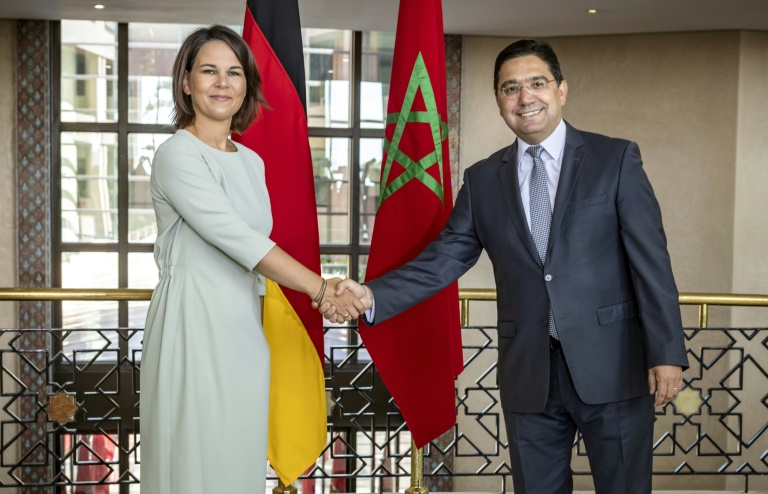
Germany gave its backing on Thursday to a Moroccan autonomy plan for resolving the Western Sahara conflict, days after the North African country’s king urged allies to “clarify their positions”.

A joint statement issued at the end of a visit to Rabat by Foreign Minister Annalena Baerbock said that “Germany considers… the autonomy plan presented in 2007 as a serious and credible effort by Morocco and as a good basis for a solution agreed upon between both parties.” 

Morocco has long insisted that it must retain sovereignty over Western Sahara, a parched but strategically important desert territory where the Polisario movement has mounted a decades-long struggle for independence, backed by Morocco’s main adversary Algeria.

In 2020, the Donald Trump administration recognised Moroccan sovereignty over the territory in return for improved ties with Israel and Rabat has since stepped up pressure on other countries to follow suit. 

Morocco had suspended ties with Germany, one of its main trading partners, in March 2021, citing “deep misunderstandings” after Berlin criticised Trump’s move.

But Rabat in December last year welcomed “positive” statements by German officials on the issue.

The German move comes after Spain in March dropped its long-held policy of neutrality and backed Rabat’s 2007 plan for limited self-rule in the territory, ending a year-long diplomatic crisis sparked by Madrid hosting Polisario leader Brahim Ghali for Covid-19 treatment.

Baerbock’s visit to Morocco comes as French President Emmanuel Macron visits Algeria.

On Saturday, King Mohammed VI called on allies to “clarify” their position on Western Sahara and “unequivocally” back the autonomy plan.

Moroccan media interpreted the comments as a message to France, which has nevertheless called the autonomy plan “a basis for serious and credible discussions”.

Rabat sees the Western Sahara as an integral part of the kingdom and a highly sensitive issue of security and national pride.

The desert territory boasts rich Atlantic fisheries, phosphate resources and a land route to markets in West Africa.

The Polisario waged a long armed struggle for independence from Morocco before agreeing a ceasefire in 1991 on the promise of a UN-supervised referendum on self-determination — which has never happened.

Close Bitnami banner
Bitnami