Africa Business

Tunisia library races to preserve rich polyglot press archive

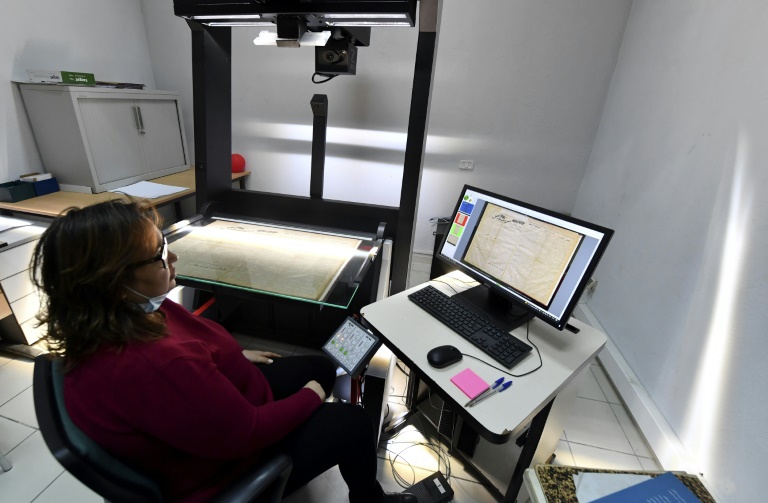
In the basement of the National Library of Tunis, conservator Hasna Gabsi combs through shelves of newspapers dating back to the mid-19th century to select the latest to digitise.

She picks out a yellowed copy of an Arabic-language newspaper printed in the 1880s, then walks to the sections containing French, Italian, Maltese and Spanish-language newspapers published in Tunisia.

“The archive is a witness to an important, historical culture,” Gabsi said under the flickering neon lights.

The library’s collection includes some 16,000 titles printed in Tunisia — numbering hundreds of thousands of editions of newspapers and periodicals.

As part of a campaign to preserve the country’s archives, the library staff have been working to digitise the documents.

Most of the newspapers are in Arabic, with the oldest from the mid-19th century when Tunisia was an Ottoman province.

After France occupied Tunisia in 1881, European settlers published periodicals in several languages, including French, Italian, Spanish and Maltese.

Some publications are even in Judeo-Arabic, a local Arabic dialect written in the Hebrew alphabet.

Gabsi selects a copy of Voix d’Israel, a Hebrew-language newspaper printed by Tunisia’s Jewish community, which numbered around 100,000 when the country gained independence from France in 1956.

Further along the shelves, she picks out L’Unione, published in 1886 by an Italian community that would number some 130,000 by the middle of the following century.

Nearby, technicians use huge scanners to digitise the newspapers and other documents, which have been made available to the public online since May.

The library’s director Raja Ben Slama has brought together a team of around 20 employees to accelerate the process.

She said the importance of preserving the newspapers was clear to her when she arrived in 2015.

“We are in a race against time with the elements against the deterioration of the periodicals,” she said.

Some of them “can’t be found anywhere else”, she added.

Many of the publications have disappeared, particularly those published in Italian, Hebrew and Maltese.

Economic woes and tensions sparked by the Arab-Israeli conflict led to the departure of most of the country’s Jewish community, while most Italians left in the years after independence.

For historian Abdessattar Amamou, the archives are rare in the region, reflecting the “mosaic” of different communities that were present in the North African country.

“At the dawn of independence, we were three million people — but with that came a huge richness on the level of the press,” Amamou added.

Senegal ruling coalition claims poll victory as opposition cries foul

President Macky Sall’s ruling coalition claimed victory in Senegal’s legislative elections but the opposition rejected the assertion as a “prefabricated majority”.

“We won 30 departments” out of the 46 in the west African country and overseas constituencies, Aminata Toure, head of the presidential coalition, told reporters late Sunday.

“This undoubtedly gives us a majority in the National Assembly.” 

“We have given a majority in the National Assembly to our coalition president”, Sall, she added, without giving the number of seats won by her camp or whether it was an absolute or relative majority.

Toure however acknowledged her coalition had been defeated in the capital Dakar in Sunday’s vote.

The opposition was swift in rejecting Toure’s claims.

Barthelemy Dias, a leader of the main opposition coalition headed by former presidential candidate Ousmane Sonko, spoke of “vulgar lies” and a “prefabricated majority” on private radio RFM.

“Cohabitation is inevitable. You lost this election at the national level. We will not accept it. This abuse will not pass,” said Dias, who is also the mayor of Dakar.

The opposition had hoped the elections would impose a cohabitation, or divided government, on Sall and curb any ambitions he may have for a third term.

Sunday’s polls were an important test for Sall after local elections in March saw the opposition win in major cities, including Dakar, Ziguinchor in the south and Thies in the west.

The single round of voting will decide the 165 seats of the single-chamber parliament — currently controlled by the president’s supporters — for the next five years.

Sall has promised to appoint a prime minister — a position he abolished and then restored in December 2021 — from the winning camp.

– Opposition collaboration –

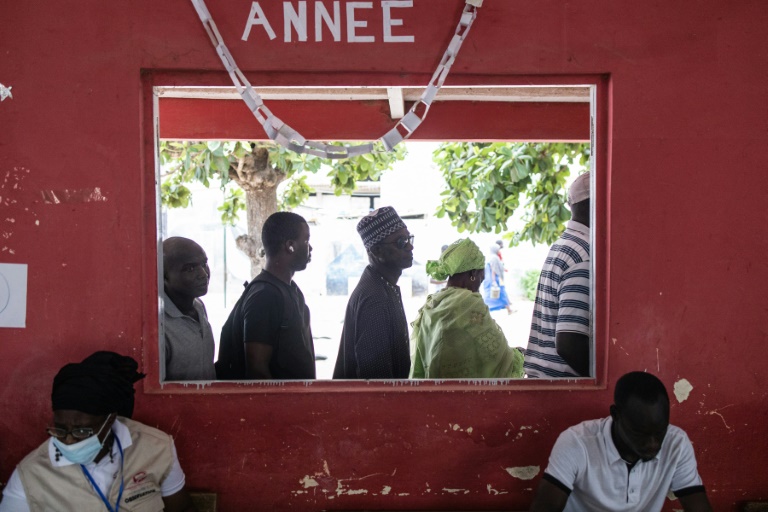
Some seven million Senegalese were eligible to vote in the election, which passed without any major incidents.

Turnout at several polling stations appeared relatively low, according to AFP correspondents and observers, and the interior ministry said participation had reached 22 percent by 1 pm.

Provisional overall results are expected no later than Friday.

“I hope… there are no disputes,” said Lamine Sylva, a 60-year-old artist who voted at a school in Mbao, near Dakar.

“It’s like football — there is a winner and a loser.”

Yahya Sall, a retired soldier, said he hoped the new parliament “will have a strong opposition presence… to advance democracy”.

The national election commission has deployed 22,000 observers nationwide. Experts from the regional ECOWAS bloc were also present.

Lawmakers are elected according to a system that combines proportional representation, with national lists for 53 lawmakers, and majority voting in the country’s departments for 97 others.

The diaspora elects the remaining 15 members of parliament.

This year, eight coalitions are in the running, including Yewwi Askan Wi (“Liberate the People” in Wolof), the main opposition coalition of Sonko, which came third in the 2019 presidential election.

But he and other members of the coalition were banned from running in Sunday’s elections on technical grounds.

Ahead of the poll, Yewwi Askan Wi joined forces with Wallu Senegal (“Save Senegal”), led by former president Abdoulaye Wade.

The two groups agreed to work together to obtain a parliamentary majority and “force governmental cohabitation”.

– Rising prices –

The vote took place against a backdrop of rising prices, in part because of the war in Ukraine.

The opposition has questioned the priorities of the government, which has highlighted its subsidies for oil products and food as well as infrastructure building. 

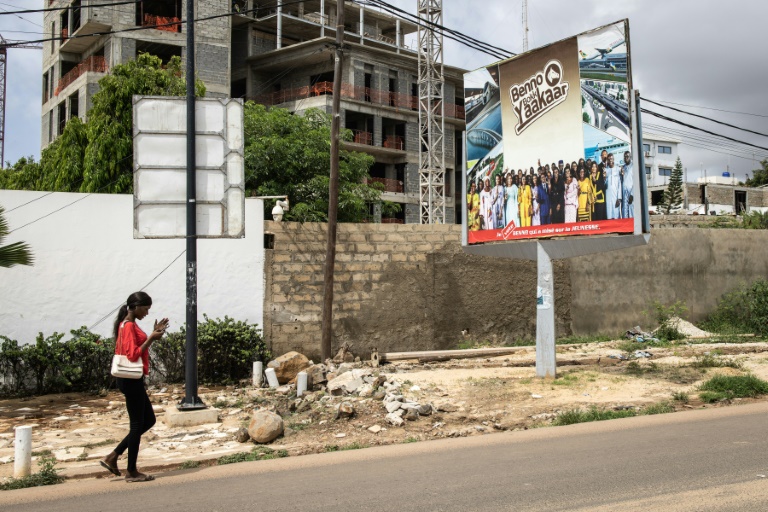
“Is the priority of the Senegalese to build beautiful stadiums, new highways while people are not eating?” Sonko said after casting his ballot in Ziguinchor.

The opposition also wants to force Sall to give up any hope of running for a third term. 

Sall, 60, was elected in 2012 for seven years then re-elected in 2019 for another five. He has been accused of wanting to break the two-term limit and run again in 2024.

He has remained vague on the subject, but any defeat of his supporters in Sunday’s vote could upset such plans.

“If Macky Sall loses them (the legislative elections), he will no longer talk about a third term,” Sonko said.

The 21-day election campaign passed in a mostly calm atmosphere.

The pre-campaign period, however, was marked by violent demonstrations that left at least three people dead after several members of the main opposition coalition, including Sonko, were banned from taking part.

On June 29, the opposition eased tensions by agreeing to take part in the elections, which it had threatened to boycott.

From Africa's fastest man to Aussie javelin champion — five athletes to watch

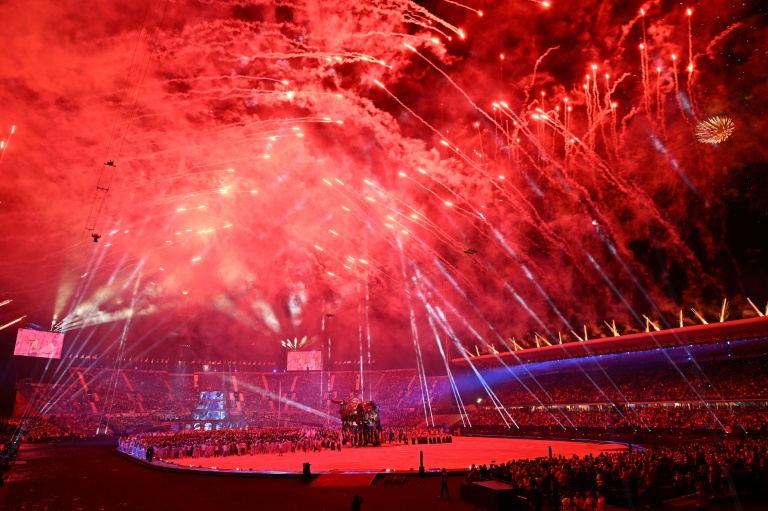
Athletics gets underway at the Commonwealth Games in Birmingham on Tuesday at the refurbished 30,000 capacity Alexander Stadium.

However, due to the closeness of the world championships and a Diamond League meeting in Poland next Saturday there are doubts over several stars appearing.

AFP Sport picks out five who appear to be certain starters:   

MEN

Ferdinand Omanyala (KEN) — 100m

The African 100 metres champion could gain compensation at the Games after his world title challenge was shattered by only obtaining a visa to enter the United States at the last minute.

The 26-year-old bowed out in the semi-finals but said he had no regrets and was looking forward to competing in Birmingham.

“The challenge of life is intended to make you better, not bitter,” he tweeted.

“Persistence and resilience only come from having been given the chance to work through difficult problems. No matter how much falls on us, we keep moving.”  

Jake Wightman (SCO) — 1500m

One of the surprises of the world championships when he took gold in a race being commentated on in the stadium by his father and coach Geoff.

The 28-year-old became Britain’s first 1500m world champion since Steve Cram in 1983 and is keen to use it as a springboard for Commonwealth gold and then the European 800m crown in Munich later this month.

“It’s crazy. The time frame between coming back from the worlds and then going into the Commonwealths,” he said.

“It’ll be tough to kind of get myself back up, which is why I need to let myself chill out for a few days to get ready for the tough rounds again and get back into that championship environment.”

Emmanuel Korir (KEN) — 400m

The 27-year-old is the undoubted king of the 800m having added world gold to his Olympic crown.

Eyebrows may be raised as to why he would not attempt to make it a triple of 800m titles in Birmingham.

However, he is extremely confident in his abilities at 400m. He said after the world final that he knew he would win as with a slow first lap he was the best 400m runner in the field.

A further aid to his hopes is he is pretty fresh having only started his season at the end of June. 

WOMEN

Keely Hodgkinson (ENG) — 800m

The 20-year-old should be the hottest of favourites to be crowned Commonwealth Games champion. She took silver in last year’s Olympics behind Athing Mu and then lost out by the barest of margins (0.08sec) to the American in the world final.

That defeat left her bristling. 

“I’m definitely a little bit annoyed,” she said. “I have a lot of respect for her but I’m obviously gutted. I came here to win the gold and it didn’t happen.”

After her silver in Tokyo, Hodgkinson, who has put studying for a criminology degree on hold, was rewarded by a sponsor with a spin in an Aston Martin.

She felt that her Eugene performance did not merit a repeat but gold in Birmingham should be good enough for a second outing.  

Kelsey-Lee Barber (AUS) — Javelin

The 30-year-old seemed set fair to finally land a Commonwealth Games gold — having taken bronze and silver in the last two editions — after she retained her world title.

The Olympic bronze medallist, though, contracted Covid-19 shortly after her world triumph but the team insisted she would make it to Birmingham.

Barber can take heart that her compatriot Jessica Stenson finally won the marathon title on Saturday despite having Covid less than a month before the Games.

UN force admits deadly shooting at DR Congo border post

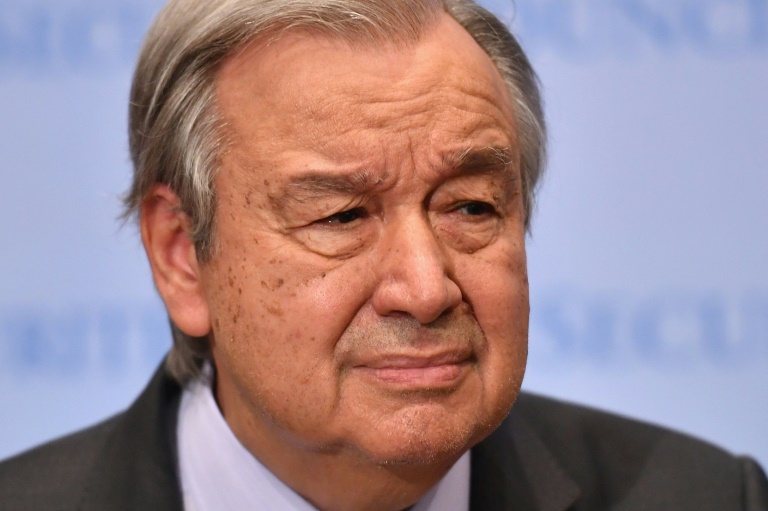
UN chief Antonio Guterres said he was “outraged” after two people were killed and several others injured when UN peacekeepers opened fire during an incident in the eastern Democratic Republic of Congo on the Uganda border on Sunday.

The UN force MONUSCO, admitted that some of its peacekeepers had opened fire “for unexplained reasons”, adding that arrests had already been made.  

Guterres was “saddened and dismayed” to learn of the shooting, a UN statement said.

“The Secretary-General stresses in the strongest terms the need to establish accountability for these events.

“He welcomes the decision of his special representative in the Democratic Republic of the Congo to detain the MONUSCO personnel involved in the incident and to immediately open an investigation,” it added.

Video of the incident, shared on social media showed men, at least one in police uniform and another in army uniform, advancing towards the immobilised UN convoy behind a closed barrier in Kasindi. 

The town is in eastern DR Congo’s Beni territory on the border with Uganda. 

After a verbal exchange, the peacekeepers appeared to open fire before opening the barrier and driving through while people scattered or hid.

“During this incident, soldiers from the intervention brigade of the MONUSCO force returning from leave opened fire at the border post for unexplained reasons and forced their way through,” the UN mission in Kasindi said in a statement earlier on Sunday.

“This serious incident caused loss of life and serious injuries.”

The Democratic Republic of Congo “strongly condemns and deplores this unfortunate incident in which two compatriots died and 15 others were injured according to a provisional roll,” government spokesman Patrick Muyaya said in a statement.

– ‘Shocked and dismayed’ –

The government said it launched an investigation with MONUSCO to establish who was responsible, why the shooting took place and would ensure “severe penalties” are given.

The UN envoy in the Democratic Republic of Congo, Bintou Keita, said she was “deeply shocked and dismayed by this serious incident”, according to the mission’s statement. 

“In the face of this unspeakable and irresponsible behaviour, the perpetrators of the shooting have been identified and arrested pending the conclusions of the investigation which has already begun in collaboration with the Congolese authorities,” MONUSCO said.

The UN mission said the troops’ home countries had been contacted so legal action could be commenced promptly, with the involvement of witnesses and survivors, which could lead to exemplary penalties. 

– Deadly region –

Earlier Barthelemy Kambale Siva, the North Kivu governor’s representative in Kasindi, said that “eight people, including two policemen who were working at the barrier, were seriously injured” in the incident.

Kambale Siva, interviewed by AFP, did not say why the UN convoy had been prevented from crossing.

There are more than 120 militias operating in the DRC’s troubled east. The UN first deployed an observer mission to the region in 1999. 

In 2010, it became the peacekeeping mission MONUSCO — the United Nations Organization Stabilization Mission in the Democratic Republic of the Congo — with a mandate to conduct offensive operations.

There have been 230 fatalities among the force, according to the UN.

– Calls for UN forces to leave –

Last week, deadly demonstrations demanding the departure of the United Nations took place in several towns in eastern DRC. 

A total of 19 people, including three peacekeepers, were killed.

Anger has been fuelled by perceptions that MONUSCO is failing to do enough to stop attacks by the armed groups.

UN under-secretary-general for peace operations Jean-Pierre Lacroix was in the central African country on Saturday to “talk to the Congolese authorities”, he said.

“(They would) examine ways in which we can both avoid a recurrence of these tragic incidents and, above all, work better together to achieve our objectives,” he said.

“We hope that the conditions will be met, in particular the return of state authority, so that MONUSCO can complete its mission as soon as possible. And to leave room for other forms of international support.”

Senegal elects parliament in test for presidential vote

Senegalese voters head to the polls Sunday for parliamentary elections the opposition hopes will force a coalition with President Macky Sall and curb any ambitions he may hold for a third term.

Sixty-year-old Sall, who was elected in 2012 for seven years then re-elected in 2019 for another five, has been accused of wanting to break the two-term limit and run again in 2024. 

He has remained vague on the subject, but any defeat of his supporters in Sunday’s vote could upset such plans.

Polling stations are due to open at 0800 GMT and close at 1800 GMT.

The single-round ballot will decide the 165 seats of the single-chamber parliament — currently controlled by the president’s supporters — for the next five years.

Lawmakers are elected according to a system that combines proportional representation with national lists for 53 lawmakers, and majority voting in the country’s departments for 97 others. 

The diaspora elects the remaining 15 members of parliament.

This year, eight coalitions are in the running, including Yewwi Askan Wi (meaning “Liberate the People” in Wolof), the main opposition coalition.

Its highest-profile member, Ousmane Sonko, came third in the 2019 presidential election.

But he and other members of the coalition have been banned from running in Sunday’s elections on technical grounds.

Ahead of the poll, Yewwi Askan Wi has joined forces with Wallu Senegal (which means “Save Senegal” in Wolof), led by former president Abdoulaye Wade.

The two groups have agreed to work together to obtain a parliamentary majority and “force governmental cohabitation.”

They also want to force Sall to give up any hope of running in 2024. 

In local elections in March, the opposition won in major cities, including the capital Dakar, Ziguinchor in the south and Thies in the west.

Sonko and other members of the Yewwi Askan Wi coalition were forbidden from running in Sunday’s elections, after the authorities in early June tossed out its national list of candidates on technical grounds.

One of the names had been accidentally put down both as a first-choice candidate and as an alternate candidate, thus invalidating the entire list.

That sparked violent demonstrations that left at least three people dead.

On June 29, the opposition finally agreed to take part in the elections, easing tensions.

Kenya says social media won't be blocked after warning to Facebook

Kenya insisted Saturday that social media would not be blocked, after a state watchdog warned Facebook it risked suspension if it did not tackle hate speech on its platform.

The National Cohesion and Integration Commission (NCIC) said Friday it had given Facebook’s parent Meta seven days to act following a report it allowed more than a dozen hateful political ads in the run-up to Kenya’s August 9 election.

But Joe Mucheru, Kenya’s minister of information, communications and technology, said on Twitter Saturday: “Media, including social media, will continue to enjoy press freedom in Kenya.”

He said it was “not clear” what legal framework the NCIC planned to use to suspend Facebook, adding: “Govt is on record. We are NOT shutting down the Internet.”

His comments were echoed by Interior Minister Fred Matiang’i who said Kenyans’ right to free expression was enshrined in the constitution.

“And, we as a government, have no intention of infringing on that right.”

The NCIC is an independent ethnic cohesion watchdog set up after the 2007-8 post-election violence that left more than 1,000 people dead.

It does not have the power to suspend Facebook but can make recommendations to the government’s Communications Authority.

The body’s recommendations followed a report by advocacy group Global Witness and UK-based legal activist firm Foxglove that said Facebook had accepted and broadcast at least 19 ads in both English and Swahili calling for rape, slaughter and beheadings.

– ‘Addressing errors’ –

Asked about the NCIC warning, a Meta spokesperson said: “We’ve taken extensive steps to help us catch hate speech and inflammatory content in Kenya, and we’re intensifying these efforts ahead of the election.

“Despite these efforts, we know that there will be examples of things we miss or we take down in error, as both machines and people make mistakes. That’s why we have teams closely monitoring the situation and addressing these errors as quickly as possible.” 

With its diverse population and large ethnic voting blocs, Kenya has long suffered politically motivated communal violence around election time, often blamed on hate speech. 

An undercover expose by UK media revealed that British consulting firm Cambridge Analytica used the personal data of millions of Facebook users to target political ads and spread misinformation during Kenya’s 2013 and 2017 presidential campaigns. 

AFP is a partner of Meta, providing fact-checking services in Asia-Pacific, Europe, the Middle East, Latin America and Africa.

US envoy urges progress on Ethiopia peace talks, aid

The new US envoy for the Horn of Africa called Saturday for progress in holding Ethiopian peace talks and for unrestricted aid deliveries to stricken areas of the country.

Mike Hammer, who arrived in Addis Ababa on Friday, held talks with Ethiopian Deputy Prime Minister and Foreign Minister Demeke Mekonnen, the US embassy said.

They discussed the “need for continued progress on ensuring unfettered humanitarian assistance delivery, human rights accountability & political talks to end the conflict & achieve a lasting peace”, the embassy said on Twitter.

Prime Minister Abiy Ahmed’s government and the rival Tigray People’s Liberation Front (TPLF) have both raised the prospect of peace talks to end the brutal conflict that erupted in November 2020.

But major obstacles have emerged, not least over who should mediate any negotiations. 

Abiy wants the African Union, which is based in Addis Ababa, to broker any talks, while the TPLF is insisting that the negotiations are led by neighbouring Kenya.

Abiy’s national security adviser Redwan Hussein said on Twitter this week that the government was ready to talk “anytime anywhere” and that negotiations should begin “without preconditions”.

Meanwhile, TPLF-linked Tigrai TV quoted the rebels’ leader Debretsion Gebremichael warning that basic services would have to be restored in Tigray before negotiations could begin.

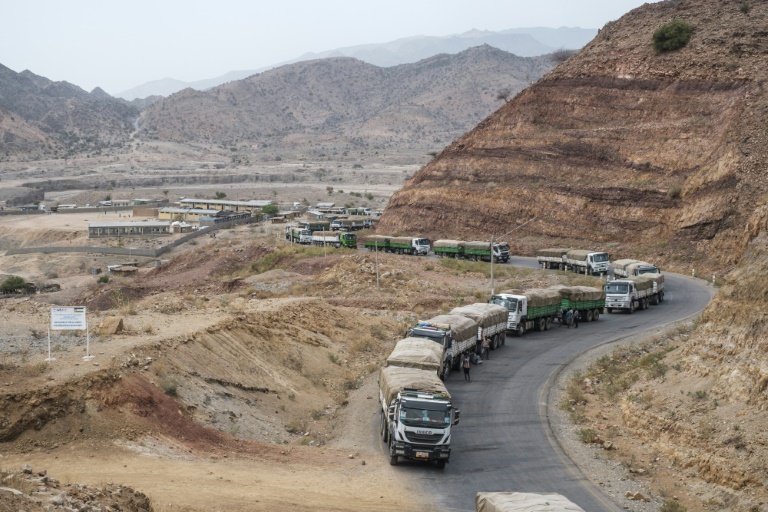
Fighting has eased in northern Ethiopia since a humanitarian truce was declared at the end of March, allowing the resumption of desperately needed aid convoys.

– Malnutrition and food insecurity –

Untold numbers of people were killed in the war and the UN says more than 13 million people need food aid across Tigray and the neighbouring regions of Afar and Amhara, with high levels of food insecurity and malnutrition.

Tigray itself is lacking in food, fuel and essential services such as electricity, communications and banking, with hundreds of thousands living in dire conditions because of what the United Nations has described as a de facto blockade.

The UN’s humanitarian response agency OCHA said that since the resumption of humanitarian convoys on April 1, 4,308 trucks had arrived in Tigray’s capital Mekele as of July 19.

In Addis, Hammer also “reviewed” the Grand Ethiopian Renaissance Dam (GERD), the large-scale hydroelectric project on the Blue Nile, the embassy said.

On Friday, Egypt said it had protested to the UN Security Council against Ethiopian plans to fill the reservoir of the controversial dam for a third year without agreement from downstream countries.

The multi-billion-dollar GERD is set to be the largest hydroelectric scheme in Africa but has been at the centre of a dispute with Egypt and Sudan ever since work began in 2011.

“We are actively engaged in supporting a diplomatic way forward under the African Union’s auspices that arrives at an agreement that provides for the long-term needs of every citizen along the Nile,” Hammer said on a visit to Egypt this week.

Addis Ababa deems the GERD essential for the electrification and development of Africa’s second most populous country.

But Cairo and Khartoum fear it could threaten their access to vital Nile waters.

Rising hate leaves 'no place for gays' in Senegal

Every time Abdou’s mother hears of a homophobic attack in the streets of Senegal’s capital Dakar, she locks him in her bedroom.

Abdou — who, like other LGBTQ people AFP interviewed, asked not to be identified by his real name — is used to hiding. He has been concealing his sexuality most of his life. 

But lately the 20-year-old has felt even more in danger. 

“The situation is becoming more and more serious,” said the soft-spoken unemployed tailor. 

“Before they would say you were gay, but they didn’t hit you. Today you are beaten and it’s posted on social media.”

Homosexuality has never been widely accepted in Senegal, a deeply conservative nation. But tensions have risen to new heights in recent months.

In May, Senegalese football star Idrissa Gana Gueye was criticised in France for missing a Paris Saint-Germain match for “personal reasons” in which players wore rainbow jerseys to support LGBTQ rights.

The reports prompted an outpouring of support for Gueye back home with social media deluged with homophobic memes.

Days later, a mob hurling homophobic slurs beat up an American artist who was in Dakar for an international festival.

Abdou’s nightmare began when a cousin discovered his sexuality and outed him, forcing him to flee from Senegal for months after being banished from his house, sacked from his job and bombarded with threats.

Now he is back and said he is trying to convince his family he has “become” straight.

“I tried several times to say, ‘Tomorrow, I’m not going to be gay anymore, tomorrow I’m going to try to find a girlfriend,’ [but] I can’t.”

Abou cut contact with his gay friends to protect them and spends most of his time in isolation, trawling social media for information about Senegal’s growing anti-gay movement.

“I can’t find the words to describe how much it hurts deep down to be hated,” he said.

He once even tried to kill himself by drinking a poison for cockroaches.

– The gay ‘lobby’ –

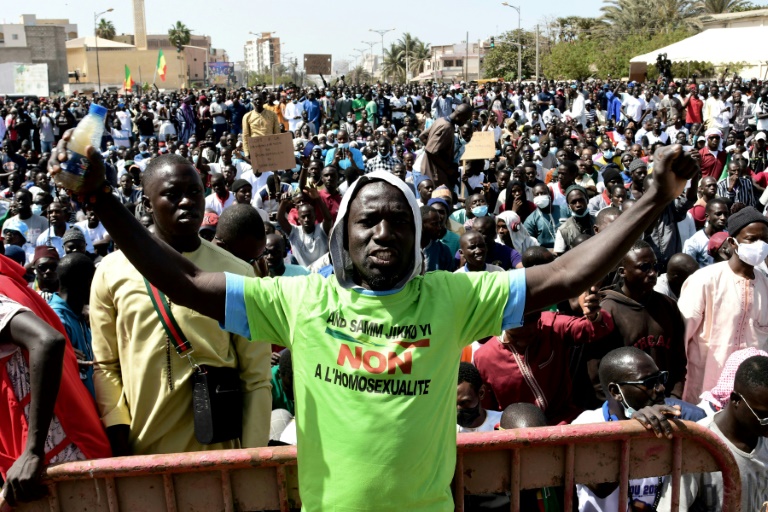
Activists say anti-gay rhetoric has been ramped up since a May 2021 demonstration in the capital calling for gay sex — currently punishable by up to five years in prison –- to be made a serious crime.

France, the former colonial power, has removed Senegal from its list of safe countries of origin because of the risks gays face there.

Last year the majority of the 1,300 Senegalese asylum applications in France cited persecution over sexual orientation, according to official figures.

But many in Muslim-majority Senegal believe homosexuality is a Western lifestyle being imposed on their society.

“I don’t see how Senegal should change its position to give more space to these homosexuals,” said Abdoulaye Guisse, a 28-year-old student, adding that LGBTQ people should remain “discreet”.

“Socially it is not allowed — religion is so strong in Senegal that it conditions our social practices.”

Powerful Sufi brotherhoods hold considerable social and political clout in Senegal.

There is also growing anti-French sentiment.

Ababacar Mboup, who runs And Samm Jikko Yi, a group that helped organise last year’s march, accused France of forcing its customs on Senegal when it does not accept Muslim practices such as polygamy within its borders.

He said he wants to stop the gay “lobby” from dominating mainstream Senegalese culture.

“If two homosexuals, holed up in their home, engage in their activities, that does not concern us — but we really want to preserve Senegalese public space,” he said, insisting his organisation is peaceful and does not condone mob violence.

“Holding Gay Pride… that we will not accept.”

Senegal is not the only sub-Saharan state with laws against gay sex — some two dozen others have them as well. 

While some nonetheless have small but visible LGBTQ communities, in Senegal — a country known for its hospitality, with a reputation for stability and the rule of law — that is not the case.

– ‘You just want to leave’ –

Khalifa, a bisexual, claims groups have been tracking down LGBTQ people and rights groups that help them and publicly denouncing them. 

The 34-year-old, who was recently outed to his family and forced into hiding outside Dakar, said some homophobes have his personal information and he is worried they will publish it.

“In Senegal, there is no place for gays,” he said. “When you hear the imams preach you just want to get on a plane and leave immediately.”

Even though he is proud to be Senegalese and a practising Muslim, he hopes to get asylum abroad.

“For me there is only one nationality on Earth and that is Senegalese,” he said.

Married with a child, Khalifa was able to hide his bisexuality most of his life, until being outed by a friend after a falling-out.

“When I walk outside, you can’t tell I’m bisexual — on the contrary, you think it’s a homophobe walking,” he said. “That’s part of the tactics.”

Abdou, on the other hand, was effeminate from a young age and his mother forced him to see a religious leader known as a marabout for “treatments” including midnight “spiritual” baths and conversion therapy.

As he got older, gay men would stop him in the streets and ask for his phone number.

That can be dangerous. LGBTQ people can be lured into meetings where they are attacked.

Dakar has never had gay bars, LGBTQ community members say, but there were previously venues where they would meet and mingle alongside straight people without others knowing. 

All that has stopped since the anti-gay march. 

“It is riskier today to publicly display one’s LGBTQI identity in Senegal compared to a few years ago,” said Ousmane Diallo, an Amnesty International researcher.

Gay activists claim politicians are jumping on the anti-gay bandwagon to rally support for parliamentary elections Sunday and a presidential vote in 2024.

– Father swore he’d shoot son –

Mame Mactar Gueye, the leader of the Jamra NGO that has been pushing for harsher punishments for gay sex, argued that tougher laws would in fact be “dissuasive” and protect LGBTQ people from mob violence. 

After parliament rejected them in January, Jamra organised a second march in February, and Gueye met President Macky Sall in May.

Gueye said that historically there was a place in Senegalese society for effeminate men or transvestites known as “goor-jigeens” — meaning “man-woman” in Wolof — but that LGBTQ people have gone too far with sacrilegious “provocations” over the last decade.

“They started to be a problem when they organised themselves into associations and started to invade the public space,” he said.

“Many countries have given in,” Gueye said, claiming Gabon had “fallen into the hands of the LGBT lobby” by relaxing laws on gay sex.

“You Westerners are used to teaching us in your university lecture halls that democracy is the law of the majority, but please, the overwhelming majority of Senegalese don’t want it,” he said.

For Senegalese gays, leaving may seem the best option, but it comes with its own challenges.

Daouda, 32, fled to a neighbouring country in 2016 and sometimes struggles to make ends meet.

“In Senegal living with homosexuality means being in danger from morning to night,” he said.

He misses his family and would like to go home but believes he cannot so long as his father is alive.

“He took out a gun and wanted to shoot me — if there weren’t people in the house right then I would have died,” he said. “He swore that he’d kill me if it’s the last thing he does.”

US judge orders Libya strongman to compensate victims' families

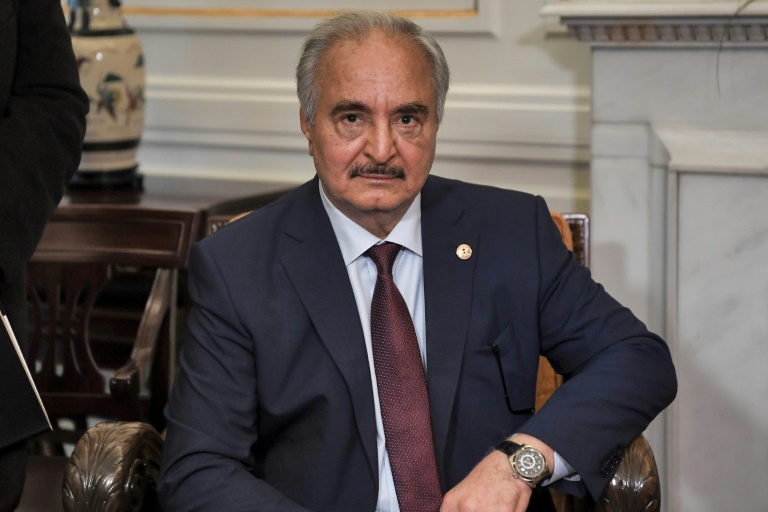
A US judge Friday ordered the military chief of eastern Libya, Field Marshal Khalifa Haftar, to compensate Libyan plaintiffs who allege he ordered the torture and extrajudicial killings of their family members.

The federal judge in the state of Virginia, where Haftar lived before returning to Libya, ruled that he had not cooperated with the court and that by “default” was ordered to pay damages to the families.

Haftar, a dual US-Libyan citizen whose name is spelled “Hifter” in American legal documents, can still appeal the decision, and future hearings will need to be held to determine the level of compensation.

Nonetheless, Friday’s ruling represents a major setback for the military leader.

“Justice has prevailed. Hifter will be held responsible for his war crimes,” said Faisal Gill, one of the lawyers spearheading the cases, in a statement shared with AFP.

Filed in 2019 and 2020, the civil lawsuits argue that Haftar, as head of the eastern-based Libyan National Army, authorized the indiscriminate bombings of civilians during his unsuccessful 2019 campaign to take Tripoli, resulting in the death of the plaintiff’s family members.

They are suing Haftar under a 1991 US law, the Torture Victim Protection Act, which allows for civil lawsuits against anyone who, acting in an official capacity for a foreign nation, commits acts of torture and/or extrajudicial killings.

The court had paused the case ahead of Libyan elections in December 2021 — but restarted it after the vote was once again delayed.

Haftar has also unsuccessfully attempted to dismiss the suit, claiming immunity as a head of state.

Oil-rich Libya has been mired in a bitter power struggle since the fall of dictator Moamer Kadhafi’s regime in 2011, with a major division between the north African country’s east and west.

Two governments are vying for power: one based in Tripoli and another supported by Haftar’s army, which controls portions of the east and south.

Haftar, 78, is a Soviet-trained soldier who assisted in the 1969 coup that brought Kadhafi to power. After taking on a senior military position in Libya’s war with Chad, Haftar was taken as a prisoner of war, and subsequently disavowed by Kadhafi.

He was ultimately offered political asylum in the United States, where he lived for 20 years and gained American citizenship as well as, according to the Wall Street Journal, several properties worth millions of dollars.

Blinken leads US bid to counter Russian charm offensive in Africa

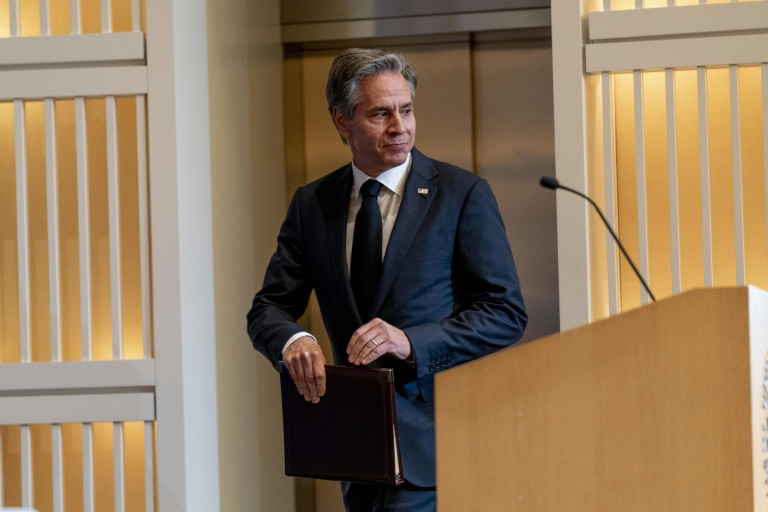
US Secretary of State Antony Blinken will travel next month to South Africa, the Democratic Republic of Congo and Rwanda, the State Department announced Friday, as Washington ramps up diplomacy in Africa to counter a Russian charm offensive.

The US ambassador to the United Nations, Linda Thomas-Greenfield, will also go in August to Ghana and Uganda and the US aid chief, Samantha Power, recently completed a trip to longtime US ally Kenya, as well as troubled Somalia, where she highlighted the rise in malnutrition aggravated by Russia’s invasion of Ukraine.

The diplomacy comes as Russian Foreign Minister Sergei Lavrov undertakes his own extensive tour of Africa, where he has sought to cast spiraling global food prices as a consequence of Western sanctions — an idea rejected by Washington, which points to Moscow’s blockade of Ukrainian ports.

Blinken will send a message that “African countries are geostrategic players and critical partners on the most pressing issues of our day, from promoting an open and stable international system, to tackling the effects of climate change, food insecurity and global pandemics to shaping our technological and economic futures,” a State Department statement said.

South Africa, a leader in the developing world, has emerged as a key diplomatic battleground as it has remained studiously neutral on the Ukraine war, refusing to join Western calls to condemn Moscow, which still enjoys affection over its opposition to apartheid.

Blinken will visit Johannesburg and the capital Pretoria from August 7-9. He will then head to the Democratic Republic of Congo’s capital Kinshasa in a bid to show support for sub-Saharan Africa’s vastest country as it tries to turn the page on decades of conflict.

He will complete his trip in Rwanda, which has seen a flare-up in tensions with DR Congo after it accused its neighbor to the east of backing M23 rebels, a charge Kigali denies.

The State Department said Blinken will press for the release of Paul Rusesabagina, who is credited with saving hundreds of lives during the 1994 genocide and inspired the movie “Hotel Rwanda.”

A US permanent resident, Rusesabagina is a critic of Rwandan President Paul Kagame and was sentenced to a 25-year prison term for “terrorism” after a plane he believed was bound for Burundi landed in Kigali in 2020.

Blinken will be paying his second trip to sub-Saharan Africa since he took office last year with President Joe Biden’s administration. 

Late last year, he traveled to Kenya, Nigeria and Senegal as he sought to highlight democracies.

Before Russia’s February invasion of Ukraine, US efforts in Africa had a heavy subtext on competition with China, which has poured money into infrastructure building on the continent and contrasts itself with the United States by making no demands on democracy or human rights.

– Rejecting Russian narrative –

While the Biden administration identifies China as the primary long-term competitor of the United States, it has focused in the short-term on countering Russia. 

Western nations have overwhelmingly voiced outrage and sought to punish Moscow over its invasion of Ukraine but developing nations, especially in Africa and South Asia, have been more hesitant.

Yoweri Museveni, the veteran leader of Uganda where Thomas-Greenfield is heading, met Tuesday with Lavrov and said, “How can we be against somebody who has never harmed us?”

Lavrov, speaking the next day in Ethiopia, urged Africa to resist a world “totally subordinated to the United States” and warned that other nations risked punishment if they run afoul of Western interests.

Blinken on Wednesday described Lavrov’s trip as “a desperate game of defense to justify to the world the actions that Russia has taken” including its “aggression” in Ukraine.

President Emmanuel Macron of France, which has a long history in Africa, on a visit to Benin on Wednesday called Russia “one of the last imperial colonial powers.”

Power, administrator of the US Agency for International Development, on her trip to the Horn of Africa unveiled more than $1 billion in emergency assistance to fight rising hunger and challenged other nations such as China and Russia to follow suit.

Close Bitnami banner
Bitnami