Africa Business

HRW says Kenyan police impunity heightens election risks

Kenya’s failure to hold police accountable for allegedly killing dozens of people after the 2017 elections heightens the risk of officers abusing their power during next week’s elections, Human Rights Watch (HRW) said Tuesday.

The US-based rights watchdog said the Kenyan authorities had failed to investigate accusations of police brutality or institute reforms, raising the threat of violence if the results of the August 9 elections are disputed.

“The failure to tackle police abuse in previous Kenyan elections risks emboldening them to continue their misconduct around this year’s general election,” said HRW’s director for East Africa, Otsieno Namwaya. 

Kenyan police are often accused by rights groups of using excessive force and carrying out unlawful killings, especially in poor neighbourhoods.

They have also been accused in the past of running hit squads targeting those investigating alleged rights abuses by police, such as activists and lawyers.

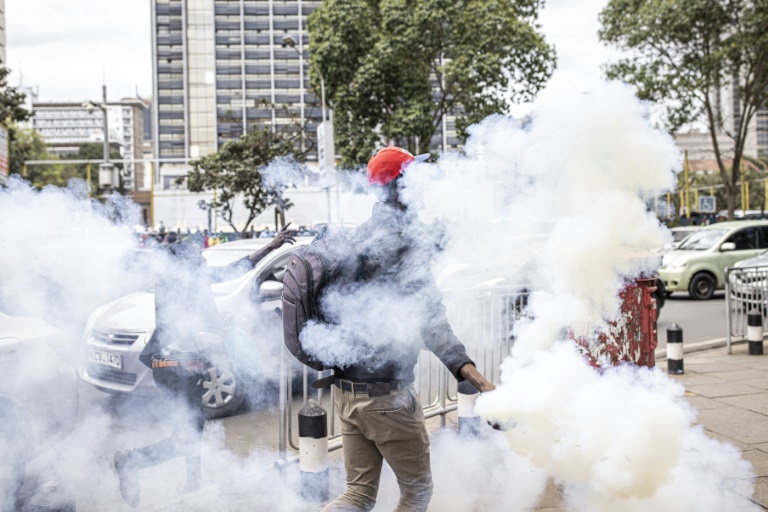
HRW said it had documented the alleged killing of at least 104 people by police during the 2017 election, mostly supporters of then opposition leader Raila Odinga. 

Heavily-armed police were deployed to disperse demonstrators after Odinga refused to accept President Uhuru Kenyatta’s victory.

“With just seven days to another general election, Kenyan authorities have yet to take steps to ensure justice for police abuses that characterised the 2017 general elections,” the rights group said. 

HRW said it had interviewed activists, government officials, police officers and victims’ families who voiced fears that law enforcers “would respond abusively” to any violence or public protests if disputes arose after the vote.

– ‘Transparency and accountability’ –

On Tuesday, Kenyans will be electing a new president as well as hundreds of members of parliament and about 1,500 county officials.

About 150,000 officers will be deployed to ensure the safety of the polls, police chief Hilary Mutyambai has said.

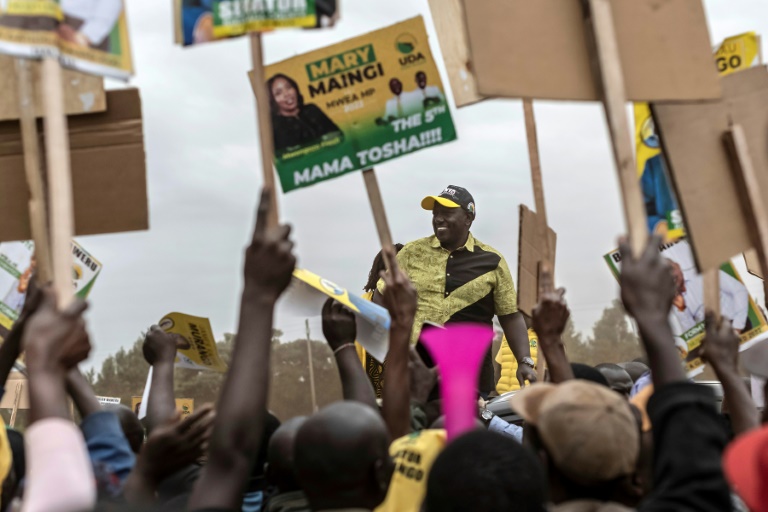
This year’s presidential vote is seen as a two-horse race between Deputy President William Ruto and Odinga, who is now backed by Kenyatta and the ruling party.

With its diverse population and large ethnic voting blocs, Kenya has long suffered politically motivated communal violence around election time, notably after a 2007 poll when more than 1,100 people died, scarring the nation’s psyche.

At least 16 civil society groups on Tuesday called for a peaceful vote as they launched a platform to monitor the polls, saying it would “increase transparency and accountability”.

“We have synergised our efforts and decided to coordinate… to have a rapid and efficient response,” said the head of election observer group ELOG, Anne Ireri. 

The responsibility for a peaceful poll should not only be reserved for the electoral agency, said Felix Owuor, executive director of the Electoral Law and Governance Institute for Africa (ELGIA).

“Collectively we can have an election that is credible.”
HRW says Kenyan police impunity heightens election risks

Kenya’s failure to hold police accountable for allegedly killing dozens after the 2017 elections heightens the risk of officers abusing their power when the country heads to the polls next week, Human Rights Watch (HRW) said Tuesday.

The rights watchdog said authorities had failed to investigate accusations of police brutality or institute reforms, raising the threat of violence if the results of next week’s elections are disputed.

“The failure to tackle police abuse in previous Kenyan elections risks emboldening them to continue their misconduct around this year’s general election,” HRW’s director for East Africa, Otsieno Namwaya, said. 

Kenya’s police is often accused by rights groups of using excessive force and carrying out unlawful killings, especially in poor neighbourhoods.

They have also been accused in the past of running hit squads targeting those — including activists and lawyers — investigating alleged rights abuses by police.

HRW said it had documented the alleged killing of at least 104 people by the police during the last election in 2017, mostly supporters of then opposition leader Raila Odinga. 

Heavily-armed police officers were deployed to disperse demonstrators after Odinga refused to accept President Uhuru Kenyatta’s victory.

“With just seven days to another general election, Kenyan authorities have yet to take steps to ensure justice for police abuses that characterized the 2017 general elections,” the rights group said. 

On August 9, Kenyans will elect a new president as well as hundreds of members of parliament and about 1,500 county officials.

This year’s presidential vote is largely a two-horse race between Deputy President William Ruto and Odinga, who is now backed by Kenyatta and the ruling party.

With its diverse population and large ethnic voting blocs, Kenya has long suffered politically motivated communal violence around election time, notably after a 2007 poll when more than 1,100 people died, scarring the nation’s psyche.

HRW said it had interviewed activists, government officials, police officers and victims’ families who worried law enforcers “would respond abusively” to any violence or public protests if disputes arose after next week’s vote.

Cool head in a rough region, Kenya faces test in election

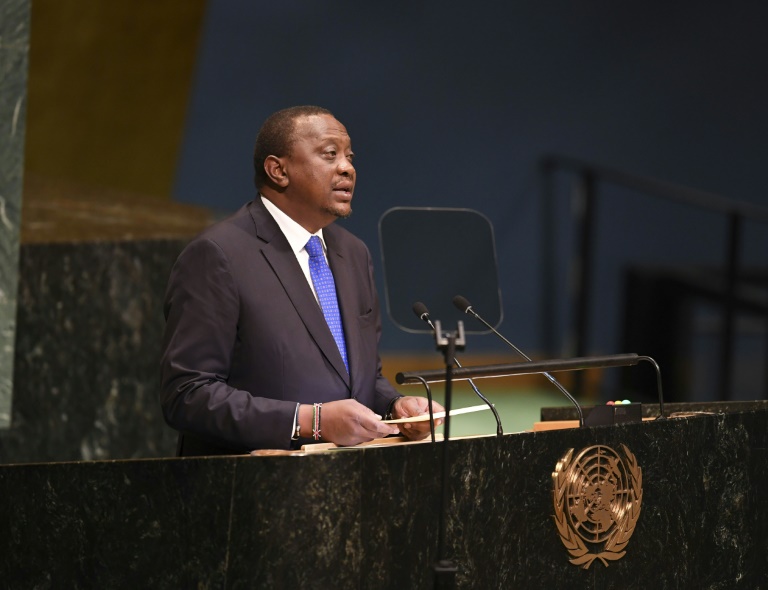
In his final weeks as president, Uhuru Kenyatta has been busier than usual playing peacemaker in East Africa, thawing tensions with Somalia, intervening in Congo’s crisis, and hosting talks between Sudan and Ethiopia.

His enthusiasm for statesmanship has not gone unrecognised — Kenya’s departing leader was recently awarded the national order of Burundi, and gifted a resplendent sash from fellow presidents for his regional diplomacy.

But with Kenyatta leaving office after almost a decade, Kenya’s allies are anxiously wondering what is next for a country that has evolved into a trusted ally and democratic anchor in a troubled region.

The August 9 election to replace Kenyatta, who cannot run for a third term, has elevated tensions and evoked the spectre of instability that has plagued Kenya’s votes.

Diplomats and foreign observers say a peaceful transfer of power remains uncertain, and that Kenya’s coveted reputation as a reliable and stable partner faces a keen test as voters head to polling booths. 

The frontrunners, William Ruto and Raila Odinga, have pledged to concede defeat if the election is free and fair.

But both candidates have been accused of inciting previous electoral violence, and the race is too close to call, raising jitters in Western capitals as the high-stakes transition draws near.

– Reliable partner – 

Foreign partners have increasingly relied on Kenya as a steady hand in East Africa, and fear an internal crisis would deprive the region of stability and leadership at a critical time.

“Weak states, feuding states, can’t play the role of a diplomatic anchor,” said Cameron Hudson, a former US official now senior associate at CSIS Africa.

He said Kenya had surpassed Ethiopia as the region’s “new diplomatic powerhouse” since Kenyatta took office in 2013.

This has seen Kenyatta personally intervene in crises where regional institutions such as the African Union and IGAD — both historically close to Addis Ababa — have been slow to act.

Late last year, as a rebel advance on Ethiopia’s capital provoked international alarm, Kenyatta flew unannounced to Addis Ababa to urge Prime Minister Abiy Ahmed to find a peaceful solution. 

The rebels from the northern Tigray region said in July that any potential ceasefire talks must be mediated by Kenyatta — not the African Union, which is headquartered in Addis Ababa.

In June, as eastern Congo spiralled into violence, Kenyatta called East African leaders to his official residence, proposing that Kenya oversee a regional peacekeeping mission to the conflict zone.

Internationally, too, Kenya has sought to project greater influence and stand on its own.

In February, as other African states responded with equivocation, Kenya strongly condemned Russia’s aggression in Ukraine at the UN Security Council, where Nairobi sought and won a temporary seat two years earlier. 

– Passionate emissary – 

Such interventions have been warmly welcomed by foreign allies including the United States, which bases troops in Kenya, and needs its support countering violent Islamists in Somalia.

Washington valued Kenyatta as a trusted envoy in regional crises where they had made little headway, analysts said.

“He is probably the African leader the US president has spoken to the most,” Hudson said.

Washington is “investing a great deal to ensure that stability continues through these elections”, he added.

Ruto and Odinga flew to London and Washington earlier this year to assure policymakers that Nairobi would continue to play a pivotal role in the region.

Diplomats say there is unlikely to be major foreign policy changes under either candidate.

“But it will not be a priority,” said Macharia Munene, professor of history and international relations at the United States International University in Nairobi.

“I don’t think either Raila or Ruto have the passion for this sort of thing, whereas for Uhuru, it’s a passion.”

In any case, he said Kenyatta’s successor would have “bigger fish to fry” than dealing with regional headaches.

East Africa’s largest economy is saddled with debt and the next administration could be pressured by international lenders to slash populist subsidies despite having promised to bring down prices.

“We’re just concerned about how much time Kenya will be able to spend on foreign policy and regional mediation, if it’s grappling with so much at home,” said Meron Elias, an analyst at the International Crisis Group.

– ‘Everybody nervous’ – 

Kenya’s international standing couldn’t have been worse when Kenyatta took office in 2013 despite -– or perhaps because of -– being indicted by the International Criminal Court on crimes against humanity.

The new administration was accused of frustrating the investigation into Kenyatta and his deputy, Ruto, over their alleged role in orchestrating the 2007 post-election violence that left over 1,100 people dead.

The cases against the pair -– who campaigned on a platform of nationalism and confronting the ICC -– were dropped, with prosecutors citing a lack of evidence and relentless witness intimidation.

There are fears “the relationship which has improved in the last few years could go sideways again” depending how the transition plays out, said a US analyst and veteran observer of Kenyan elections who declined to be named.

“Everybody is obviously nervous,” the analyst said.

Senegal ruling coalition, opposition claim poll victory

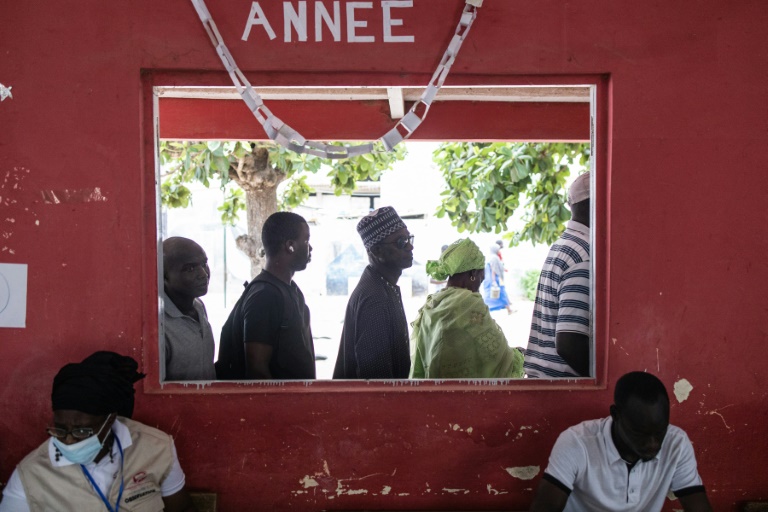
Senegal’s opposition and President Macky Sall’s ruling coalition on Monday both claimed to have won legislative elections in the West African country, while the vote count continued.

“What is undeniable is that it is we who won this election,” Khalifa Sall, one of the opposition leaders, said at a press conference.

“We won and we will not accept that our victory is stolen from us,” he said.

Macky Sall’s ruling coalition, however, maintained that it had won while acknowledging the opposition had made some gains in Sunday’s elections.

“We reject any possibility of cohabitation and … reassure our activists that we remain in the majority at the end of this election, despite an advance by the opposition,” former prime minister Aminata Toure, who led the presidential coalition’s list in the elections, said late Monday.

The opposition hoped the elections would impose a cohabitation, or divided government, on Sall and curb any ambitions he may have for a third term.

The polls, the last before presidential elections in 2024, were an important test for Sall after local elections in January saw the opposition win in major cities, including the capital Dakar, Ziguinchor in the south and Thies in the west.

Toure on Sunday night claimed to have won 30 of the 46 departments in the country and overseas constituencies.

“This undoubtedly gives us a majority in the National Assembly,” she said, while acknowledging her coalition had been defeated in Dakar.

– Opposition collaboration –

The main opposition coalition, however, expressed “astonishment” at Toure’s remarks, claiming it had won a “comfortable majority” and that the presidential camp was “looking to once again confiscate the vote”.

“We call on national and international opinion to act as witnesses against any attempt to manipulate the results,” the opposition said in a statement Monday.

Ahead of the election, Yewwi Askan Wi (“Liberate the People” in Wolof, one of Senegal’s national languages), the main opposition coalition headed by Ousmane Sonko, who came third in the 2019 presidential election, joined forces with Wallu Senegal (“Save Senegal”), led by former president Abdoulaye Wade.

The two groups agreed to work together to obtain a parliamentary majority and “force governmental cohabitation”.

“The provisional results of the legislative elections show that the President of the Republic Macky Sall lost the elections … and that he will not have a majority in the National Assembly,” Wallu Senegal declared Monday.

The coalition also said prominent politicians including former prime minister Toure had been beaten.

– Close race –

Provisional overall results are due no later than Friday, but initial indications sugget the poll was close and that the main opposition coalition had gained ground, particularly in urban areas, according to local media.

The single round of voting will decide the 165 seats of the single-chamber parliament — currently controlled by the president’s supporters — for the next five years.

Sall has promised to appoint a prime minister — a position he abolished and then restored in December 2021 — from the winning camp.

Some seven million Senegalese were eligible to vote in the election, which passed without any major incidents.

Turnout at several polling stations appeared relatively low, according to AFP correspondents and observers, and the interior ministry said the participation rate was 47 percent.

Yahya Sall, a retired soldier, said he hoped the new parliament “will have a strong opposition presence… to advance democracy”.

Lawmakers are elected according to a system that combines proportional representation, with national lists for 53 lawmakers and majority voting in the country’s departments for 97 others.

The diaspora elects the remaining 15 members of parliament.

The vote took place against a backdrop of rising prices, partly because of the Ukraine war.

The opposition has questioned the priorities of the government, which has highlighted its subsidies for oil products and food as well as infrastructure building. 

Sall, 60, was elected in 2012 for seven years then re-elected in 2019 for another five. He has been accused of wanting to break the two-term limit and run again in 2024.

He has remained vague on the subject, but any defeat of his supporters in Sunday’s vote could upset such plans.

The 21-day election campaign passed in a mostly calm atmosphere.

The pre-campaign period, however, was marked by violent demonstrations that left at least three people dead after several members of the main opposition coalition, including Sonko, were banned from taking part.

On June 29, the opposition eased tensions by agreeing to take part in the elections, which it had threatened to boycott.

Senegal ruling coalition, opposition claim poll victory

The Senegalese opposition on Monday said it had won a “comfortable” majority in legislative elections, shortly after President Macky Sall’s ruling coalition also claimed victory.

The head of the presidential coalition said her side won 30 of the 46 departments in the West African country and overseas constituencies.

“This undoubtedly gives us a majority in the National Assembly,” Aminata Toure told reporters late Sunday.

“We have given a majority in the National Assembly to our coalition president” Sall, she added, without giving the number of seats won by her camp or whether it was an absolute or relative majority.

Toure however acknowledged her coalition had been defeated in the capital, Dakar.

But on Monday the main opposition coalition expressed “astonishment” at Toure’s remarks, claiming it had won a “comfortable majority” and that the presidential camp was “looking to once again confiscate the vote”.

It also failed to specify the number of seats or what kind of majority it was claiming.

“We call on national and international opinion to act as witnesses against any attempt to manipulate the results,” the opposition said in a statement.

The opposition had hoped the elections would impose a cohabitation, or divided government, on Sall and curb any ambitions he may have for a third term.

Sunday’s polls were an important test for Sall after local elections in January saw the opposition win in major cities, including Dakar, Ziguinchor in the south and Thies in the west.

Initial indications were that the poll was close and the main opposition coalition gained ground, particularly in urban areas, according to local media.

– Opposition collaboration –

The single round of voting will decide the 165 seats of the single-chamber parliament — currently controlled by the president’s supporters — for the next five years.

Sall has promised to appoint a prime minister — a position he abolished and then restored in December 2021 — from the winning camp.

Some seven million Senegalese were eligible to vote in the election, which passed without any major incidents.

Turnout at several polling stations appeared relatively low, according to AFP correspondents and observers, and the interior ministry said the participation rate was 47 percent.

Provisional overall results are expected no later than Friday, but local media and the main political parties have been counting some of the results since Sunday evening.

Opposition coalition Wallu Senegal (“Save Senegal” in Wolof) said Sall had failed to obtain a majority and that prominent politicians including former prime minister Toure had been beaten.

Yahya Sall, a retired soldier, said he hoped the new parliament “will have a strong opposition presence… to advance democracy”.

Lawmakers are elected according to a system that combines proportional representation, with national lists for 53 lawmakers, and majority voting in the country’s departments for 97 others.

The diaspora elects the remaining 15 members of parliament.

This year, eight coalitions are in the running, including Yewwi Askan Wi (“Liberate the People” in Wolof), the main opposition coalition headed by former presidential candidate Ousmane Sonko, who came third in the 2019 presidential election.

Ahead of the poll, Yewwi Askan Wi joined forces with Wallu Senegal, led by former president Abdoulaye Wade.

The two groups agreed to work together to obtain a parliamentary majority and “force governmental cohabitation”.

– Rising prices –

The vote took place against a backdrop of rising prices, partly because of the Ukraine war.

The opposition has questioned the priorities of the government, which has highlighted its subsidies for oil products and food as well as infrastructure building. 

Sall, 60, was elected in 2012 for seven years then re-elected in 2019 for another five. He has been accused of wanting to break the two-term limit and run again in 2024.

He has remained vague on the subject, but any defeat of his supporters in Sunday’s vote could upset such plans.

The 21-day election campaign passed in a mostly calm atmosphere.

The pre-campaign period, however, was marked by violent demonstrations that left at least three people dead after several members of the main opposition coalition, including Sonko, were banned from taking part.

On June 29, the opposition eased tensions by agreeing to take part in the elections, which it had threatened to boycott.

Death toll from Uganda floods jumps to 22

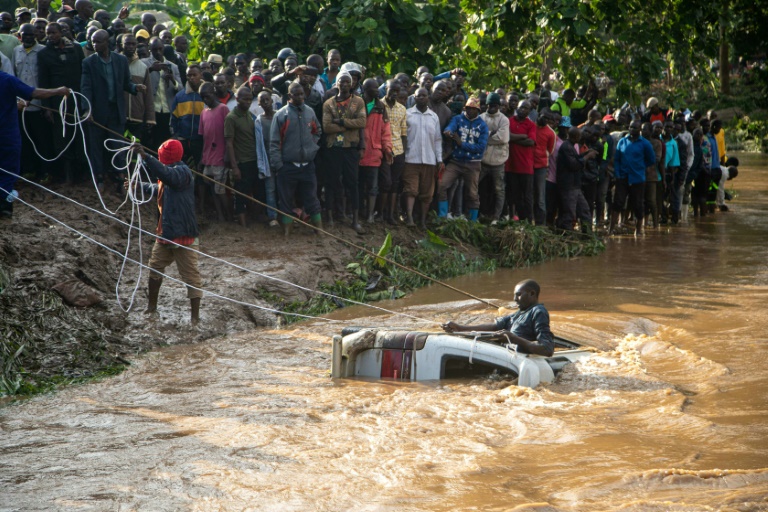
The number of people killed in flash floods in the eastern Ugandan city of Mbale has jumped to 22, including a group of partygoers who became trapped in a minibus, police said on Monday.

Two rivers burst their banks at the weekend after the city was battered by heavy rainfall, leading to mudslides that inflicted widespread damage and left hundreds of residents homeless.

A combined force of police, the army and the Red Cross were continuing to search for the missing in the muddy floodwaters that have swallowed up homes, bridges, shops and roads. 

“The death toll of those killed by floods in Mbale has reached 22. Ten others are in critical condition,” Ugandan police spokesman Fred Enanga told AFP.

Some of the victims were found trapped in a minibus, he said, adding: “These were mainly relatives and friends who were going to a party but were swept off the road by the floods.”

An AFP reporter saw five dead bodies being pulled from the submerged minibus as search teams hunted around the ill-fated vehicle for more possible victims.

Enanga said residents have been advised to relocate to safer areas as the rains continue to lash the city, which lies about 300 kilometres (180 miles) northeast of the capital Kampala.

Prime Minister Robinah Nabbanja, who visited the scene of the flooding, had suggested the disaster may have been avoided if people had not encroached on the river banks.

Mbale District, which is home to Mbale city, has a population of over 500,000, according to the 2020 census, and is one of Uganda’s densely populated areas.

Senegal ruling coalition, opposition claim poll victory

The Senegalese opposition on Monday said it had won a “comfortable” majority in legislative elections, shortly after President Macky Sall’s ruling coalition also claimed victory.

“We won 30 departments” out of the 46 in the west African country and overseas constituencies, Aminata Toure, head of the presidential coalition, told reporters late Sunday.

“This undoubtedly gives us a majority in the National Assembly.” 

“We have given a majority in the National Assembly to our coalition president,” Sall, she added, without giving the number of seats won by her camp or whether it was an absolute or relative majority.

Toure however acknowledged her coalition had been defeated in the capital, Dakar.

But on Monday the main opposition coalition expressed “astonishment” at Toure’s remarks, claiming the presidential camp was “looking to once again confiscate the vote by the Senegalese who have just given a comfortable majority in the National Assembly to the Yewwi Wallu inter-coalition”.

It also failed to specify the number of seats or what kind of majority it was claiming.

“We call on national and international opinion to act as witnesses against any attempt to manipulate the results,” the opposition said in a statement.

The opposition had hoped the elections would impose a cohabitation, or divided government, on Sall and curb any ambitions he may have for a third term.

Sunday’s polls were an important test for Sall after local elections in March saw the opposition win in major cities, including Dakar, Ziguinchor in the south and Thies in the west.

Initial indications were that the poll was close and that the main opposition coalition gained ground, particularly in urban areas, according to local media.

– Opposition collaboration –

The single round of voting will decide the 165 seats of the single-chamber parliament — currently controlled by the president’s supporters — for the next five years.

Sall has promised to appoint a prime minister — a position he abolished and then restored in December 2021 — from the winning camp.

Some seven million Senegalese were eligible to vote in the election, which passed without any major incidents.

Turnout at several polling stations appeared relatively low, according to AFP correspondents and observers, and the interior ministry said the participation rate was 47 percent.

Provisional overall results are expected no later than Friday, but local media and the main political parties have been counting some of the results since Sunday evening.

“I hope… there are no disputes,” said Lamine Sylva, a 60-year-old artist who voted at a school in Mbao, near Dakar.

“It’s like football — there is a winner and a loser.”

Yahya Sall, a retired soldier, said he hoped the new parliament “will have a strong opposition presence… to advance democracy”.

The national election commission has deployed 22,000 observers nationwide. Experts from the regional ECOWAS bloc were also present.

Lawmakers are elected according to a system that combines proportional representation, with national lists for 53 lawmakers, and majority voting in the country’s departments for 97 others.

The diaspora elects the remaining 15 members of parliament.

This year, eight coalitions are in the running, including Yewwi Askan Wi (“Liberate the People” in Wolof), the main opposition coalition headed by former presidential candidate Ousmane Sonko, who came third in the 2019 presidential election.

Ahead of the poll, Yewwi Askan Wi joined forces with Wallu Senegal (“Save Senegal”), led by former president Abdoulaye Wade.

The two groups agreed to work together to obtain a parliamentary majority and “force governmental cohabitation”.

– Rising prices –

The vote took place against a backdrop of rising prices, partly because of the Ukraine war.

The opposition has questioned the priorities of the government, which has highlighted its subsidies for oil products and food as well as infrastructure building. 

“Is the priority of the Senegalese to build beautiful stadiums, new highways while people are not eating?” Sonko said after casting his ballot in Ziguinchor.

Sall, 60, was elected in 2012 for seven years then re-elected in 2019 for another five. He has been accused of wanting to break the two-term limit and run again in 2024.

He has remained vague on the subject, but any defeat of his supporters in Sunday’s vote could upset such plans.

The 21-day election campaign passed in a mostly calm atmosphere.

The pre-campaign period, however, was marked by violent demonstrations that left at least three people dead after several members of the main opposition coalition, including Sonko, were banned from taking part.

On June 29, the opposition eased tensions by agreeing to take part in the elections, which it had threatened to boycott.

A weight off his mind: Tchatchet II eyes Commonwealth medal

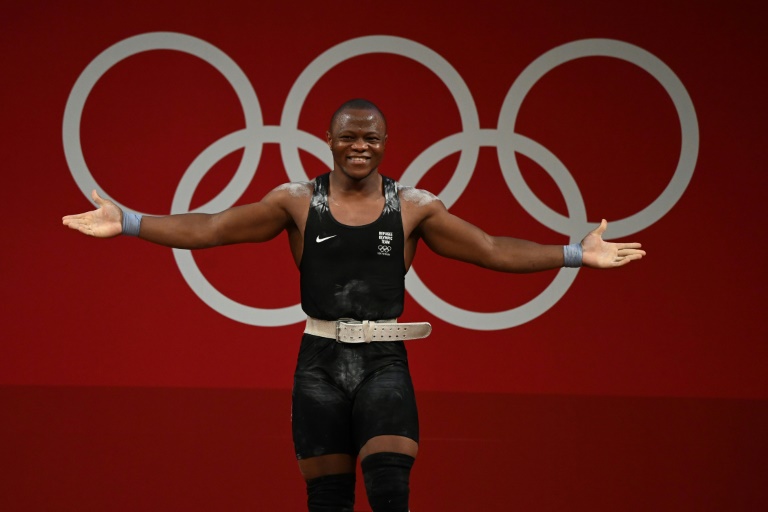
Weightlifter Cyrille Tchatchet II is aiming for Commonwealth Games glory in his “home town” of Birmingham after a compelling journey since he competed in Glasgow in 2014.

The 27-year-old is lifting for England after receiving his citizenship earlier this year. Eight years ago he disappeared at the Glasgow Commonwealths having represented Cameroon, his country of birth.

In between, he competed for the refugee team at last year’s delayed Tokyo Olympics, where he finished 10th. He was also the flag bearer for the team.

“I was homeless. Then I was a refugee. Now I am a proud British citizen,” he told the Daily Mail.

What would make a medal in the 96kg category even more special is the role host city Birmingham has played in his life.

“Birmingham is the first place where I settled, the first place that felt like home for me in the United Kingdom,” he told The Times.

“Birmingham saw me during my very difficult moments (he was in a hostel for asylum seekers) and I would be very happy for Birmingham to see me stepping on that podium and winning a medal for Team England.”

Tchatchet II lives in Walsall, just north of the city. He works as a senior mental health practitioner.       

He has never revealed why he fled the athletes’ village in Glasgow — he told The Times last week it was linked to “blackmail” — with just his backpack, containing his weightlifting shoes and belt.

“It was a very difficult experience,” he told AFP last year, ahead of the Olympics. “I had to escape. I was very young, very scared. I didn’t think much about the future.”

– ‘I didn’t give up’ –

Tchatchet II ended up homeless for two months, scraping an existence in the sout-coast city of Brighton — haunted by suicidal thoughts.

“I was sleeping under this bridge,” he told the Daily Mail. “I used to feed on biscuits. With the little money I had, I used to buy custard creams from (supermarket) Lidl.

“I was very lonely. I felt useless. I thought about the previous months when I was competing for my country. Now I found myself in a very vulnerable position.”

He admits he considered taking his own life.

“I was just depressed,” he said. “I couldn’t really see a way out. I used to stare at the sea, day in, day out.

“I felt like I just wanted to jump in the sea and see what happened.

“I went to the top of the road one day and was just thinking about something that would be quick.”

Tchatchet II, who took up weightlifting after seeing a photograph of an uncle lifting weights, was saved by the Samaritans, a charity supporting those in emotional distress.

The Samaritans alerted the police, who got him off the streets into detention centres, which he says were more like a “prison.”

He faced a couple of turbulent years while he waited for his asylum application to be processed but he was granted refugee status in 2016 and went on to gain a first-class degree in mental health nursing.

“In Cameroon, depression isn’t even a thing. If you have schizophrenia, they’ll probably say you have witchcraft, got into a sect, or paying for a bad thing you’ve done,” he told AFP.

“Even here (in Britain), there’s always that stigma: ‘You’re a man, you shouldn’t have depression.’ We need to change our mindsets. It can affect anyone.”

On Monday he will go through his eve-of-competition ritual of eating celery and having a hot bath — a far cry from those dark days under the bridge.

“I’ve had a difficult journey,” he told The Times. “I’m still training, I didn’t give up.”

Algeria talks of joining Russia-linked BRICS group

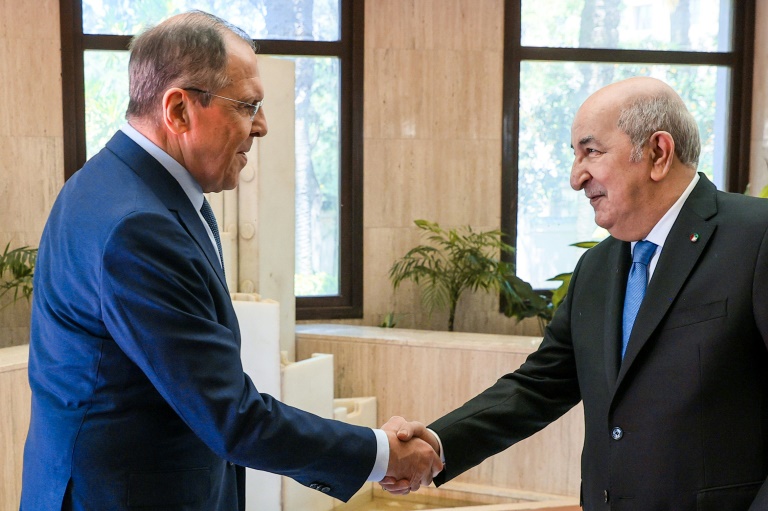
Algerian President Abdelmadjid Tebboune has suggested that his country, Africa’s largest natural gas exporter, could join the BRICS economic group that includes Russia and China.

Tebboune’s comment comes after Russian President Vladimir Putin — whose country is hit with Western sanctions over its Ukraine invasion — in June called on BRICS leaders to move towards “formation of a truly multipolar system of inter-government relations”.

The BRICS group also includes the major emerging economies of Brazil, India and South Africa.

“The BRICS interest us” as an alternative to traditional power centres, Tebboune said in a televised interview late Sunday. “They constitute an economic and political force.”

He underlined that there was no need to “get ahead of things” but promised “good news”.

The president added that his North African country meets “a good part” of the economic criteria for joining the bloc.

BRICS members currently account for nearly a quarter of the world’s gross domestic product.

Tebboune participated in a BRICS virtual summit at the end of June, when Putin called on leaders of the group to cooperate in the face of “selfish actions” from the West.

Sanctions over Ukraine have pushed Putin to seek new markets and strengthen ties with countries in Africa and Asia.

Algiers abstained when the United Nations General Assembly overwhelmingly passed a resolution in March demanding Russia immediately withdraw from Ukraine.

China, India and South Africa also abstained.

On a visit to Algeria in May, Russian Foreign Minister Sergei Lavrov said trade between his country and Algeria had reached $3 billion last year.

Mount Kenya: Where the next president could be chosen

The helicopter lands in the middle of rice fields, heralding the arrival of Kenyan presidential candidate William Ruto as he seeks votes from the densely populated, politically influential heartland of Mount Kenya.

Located in the centre of the country and flanked by an extinct volcano that gives the vast region its name, Mount Kenya has long played a key role in presidential elections and this year is no exception.

As the underdog in the August 9 election, where he will face Raila Odinga, a veteran opposition politician who now has the backing of the ruling Jubilee party, Ruto and his team know that winning Mount Kenya is essential.

The 55-year-old has vowed to lift millions of Kenyans out of poverty, making “bottom-up” economic growth a major plank of his campaign. 

At the rally in Kirinyaga country, Nancy Njeri, a 78-year-old rice farmer, told AFP he had her vote.

“Ruto will bring changes in education, youth employment, he will ensure we have fertiliser to grow our rice, and many more things,” she said.

Kirinyaga governor Anne Waiguru predicted a huge victory for Ruto’s United Democratic Alliance (UDA) party in the region, telling AFP that he is “someone who is accepted by the people of Mount Kenya.”

“He has done a lot of groundwork in that regard,” the UDA politician said. 

Ruto, a businessman from the Kalenjin tribe who is currently serving as Kenya’s deputy president, was originally slated to succeed President Uhuru Kenyatta.

Instead, he found himself banished to the sidelines after his boss struck a deal with arch-rival Odinga.

Embittered but ambitious, Ruto launched a new party and began laying the foundation for his candidacy, focusing in particular on the region which is perhaps most representative of the complex politics that govern Kenya.

– Sacred Kikuyu land – 

It was a long shot for the Kalenjin leader, at least on paper.

Mount Kenya is the sacred land of the Kikuyu, Kenya’s largest ethnic group, who believe that God lives in the snow-capped volcano they call Kirinyaga. 

The fertile region, home to mango orchards and coffee plantations, also occupies a hallowed place in Kenyan history — the Mau Mau rebellion against the British Empire began here in 1952.

“From that time (onwards) there is this sense of entitlement that the Kikuyus have always had,” said analyst Herman Manyora, who favours Odinga.

Nearly six decades after independence in 1963, Mount Kenya continues to be at the heart of Kenyan politics.

Three of the country’s four presidents — Jomo Kenyatta, his son Uhuru, and Mwai Kibaki — are Kikuyu.

The economically powerful community has always backed its own people — a widespread phenomenon in Kenya, where the tribal vote has played a big role in previous elections.

Politicians have also exploited ethnic divides to deadly effect in 2007-2008, when Kenya witnessed a vicious bout of post-poll violence that pitted mainly Kikuyus against Luos and Kalenjins, leaving more than 1,100 dead.

But this year, Kikuyus — who account for around six million of Kenya’s 22 million voters — will have to choose between Ruto, a Kalenjin and Odinga, a Luo.

The alliance between Kenyatta and Odinga has ruffled feathers in Mount Kenya, where some have turned on their former leader, accusing him of abandoning “kihoto” (the Kikuyu concept of justice) by sidelining his deputy.

“We as the Kikuyus cannot be told who to support, Uhuru is a traitor,” George Mwaura, a 38-year-old motorcycle taxi driver, said at the Kirinyaga rally.

– The ‘Martha effect’ – 

But Odinga’s team insists that the 77-year-old will win a majority in the region, pointing to the selection of Kikuyu lawyer Martha Karua as his running mate.

The choice of Karua, a former justice minister nicknamed the “iron lady”, has “energised and excited the mountain”, said David Murathe, a prominent Kikuyu and vice-chairman of the Jubilee party.

Ruto’s running mate Rigathi Gachagua is also a Kikuyu who once served as Kenyatta’s personal aide, but Murathe said he lacked Karua’s credentials as a key player in Kenya’s pro-democracy movement.

Even accounting for a worst-case scenario, the Odinga-Karua ticket could expect to secure at least 60 percent of Mount Kenya’s votes, Murathe told AFP.

“I would not be surprised if Ruto gets the shock of his life” when the results are announced, he said.

Academic Macharia Munene also testified to the presence of the “Martha effect”, telling AFP: “There was a time it appeared to be all Ruto, about six-seven months ago.

“It’s declining, that overwhelming support. It’s been eroded,” he said.

“Whether the erosion is big enough to turn the tables is another matter.”

Close Bitnami banner
Bitnami