Africa Business

W.Africa bloc chair says Guinea accepts two-year transition

The chair of a West African regional bloc said at a briefing with France’s president Thursday that Guinea would cut its transition to civilian rule from three to two years.

But Conakry has yet to confirm the announcement made by Guinea-Bissau President Umaro Sissoco Embalo, who is acting head of the Economic Community of West African States (ECOWAS).

“I was in Conakry with the president of the commission (of ECOWAS) to make the military junta understand the decision of the summit of heads of state that the transition cannot exceed 24 months”, Embalo said at a media briefing in Bissau alongside French President Emmanuel Macron.

“They had proposed 36 months, but we succeeded in convincing them,” he added.

An ECOWAS official added on condition of anonymity: “The principle is accepted but we were waiting to formalise it… before announcing it.”

Guinean authorities have not responded to AFP’s requests for comment.

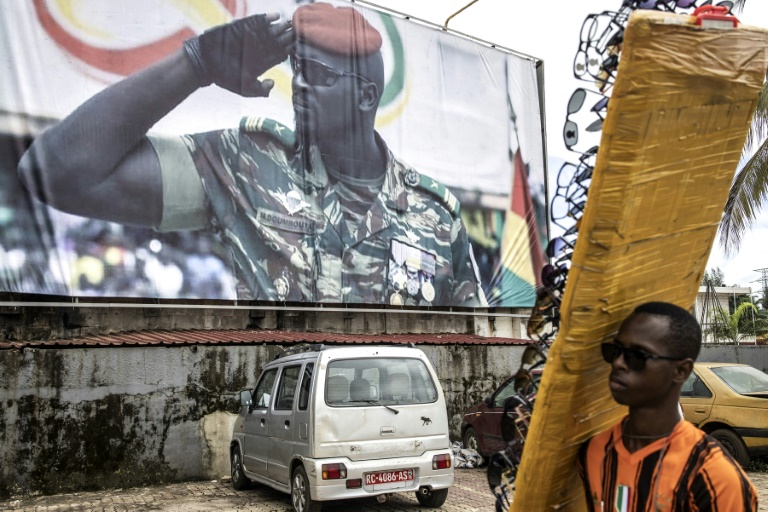
A junta led by Colonel Mamady Doumbouya, which overthrew President Alpha Conde in September last year, has pledged to hand over power to elected civilians within three years. 

But regional powers have rejected this timeline, with ECOWAS suspending Guinea after the coup.

West African mediators last week met Guinea’s ruling junta for talks on a return to civilian rule, according to ECOWAS and state media.

Embalo, Gambian diplomat Omar Alieu Touray, who is the president of the bloc’s commission, and Benin’s former president Thomas Boni Yayi, the ECOWAS mediator for Guinea, were all present.

– Protests in Conakry –

Earlier in July, ECOWAS leaders had met in Ghana’s capital Accra to discuss transitions to civilian rule in Guinea, as well as Mali and Burkina Faso, which together have undergone four coups since August 2020.

They lifted tough sanctions that had been imposed on Mali’s military regime, accepting a March 2024 return to civilian rule.

And they agreed to allow Burkina Faso two years for its transition back to democracy.

But discussions until then had been trickier with the rulers of Guinea, where the junta had announced a 36-month transition — a period that African Union chairman and Senegalese President Macky Sall described as “unthinkable”.

On Thursday, protests against Guinea’s military leaders brought Conakry to a standstill.

The National Front for the Defence of the Constitution (FNDC), a coalition of political parties, trade unions and civil society organisations, called the demonstrations to denounce the junta’s “unilateral management” of any return to civilian rule.

Other parties and coalitions joined the protests.

The junta in May banned public demonstrations, and Thursday’s protests led to sporadic clashes between demonstrators and police.

jri-sd-bm-amt/prc/ah
Anti-junta protests paralyse Guinea capital

Protests against Guinea’s ruling junta held in defiance of a protest ban brought the capital Conakry to a standstill Thursday, with clashes breaking out in some neighbourhoods.

The National Front for the Defence of the Constitution (FNDC), an influential coalition of political parties, trade unions and civil society organisations, called the demonstrations to denounce the junta’s “contempt and arrogance” and “unilateral management” of any return to civilian rule.

It accused the military leaders, who seized power in a coup in September last year, of “systematically refusing” to establish a “credible dialogue” to define the terms of the transition.

The former ruling Rally for the Guinean People (RPG) and the National Alliance for Change and Democracy (ANAD), another coalition of parties and associations, then called on their supporters to join the demonstrations.

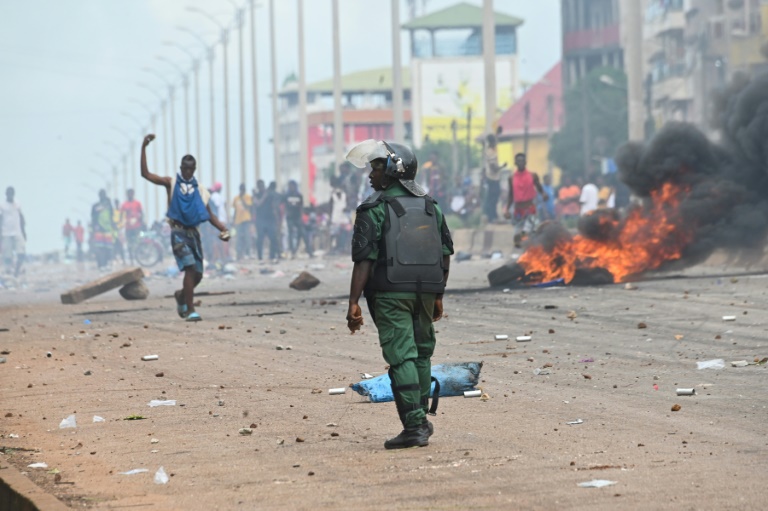
Clashes broke out Thursday morning between young demonstrators and the police in several so-called opposition areas of the capital, an AFP reporter said. 

Protestors erected barricades and burned tyres while police fired tear gas to disperse small groups throwing stones. 

Most parts of the city centre remained calm, but activity nonetheless ground to a halt. 

The Boulevard du Commerce, a major roadway usually full of people, was almost deserted by midday.

“We are delighted with the success of our call to demonstrate — it was perfect,” Ibrahima Diallo, the FNDC’s head of operations, told AFP. 

“The city has been quiet everywhere, the administration is paralysed — it’s been a great success for us.”

– ‘Authoritarian conduct’ –

Colonel Mamady Doumbouya, who overthrew President Alpha Conde last year, has pledged to hand over power to elected civilians within three years. But regional powers have rejected this timeline.

The junta in May banned any public demonstrations that could be construed as threatening public order.

The FNDC had announced protests for June 23 but later called them off, indicating they were prepared to give the transitional government a “chance” and start dialogue.

But their patience snapped after a meeting with the authorities that the FNDC slammed as a “parody”.

It denounced the “solitary and authoritarian conduct of the transition” and its “serious attacks on fundamental rights and freedoms”.

Three FNDC leaders were arrested on July 5, provoking violent demonstrations that were some of the first since the junta seized power. 

All three were released after being found not guilty of contempt of court over comments they had posted on social media criticising the prosecutor’s office and the military-appointed parliament.

Ethiopia athletics chief urges govt to ease access to Tigray

Ethiopia’s athletics chief on Thursday urged the federal government to ease access to the war-torn region of Tigray, which is home to several medallists from the recently concluded World Athletics Championships.

The northern region has been largely cut off from the rest of the country due to a conflict between federal forces and the Tigray People’s Liberation Front (TPLF) that erupted in November 2020.

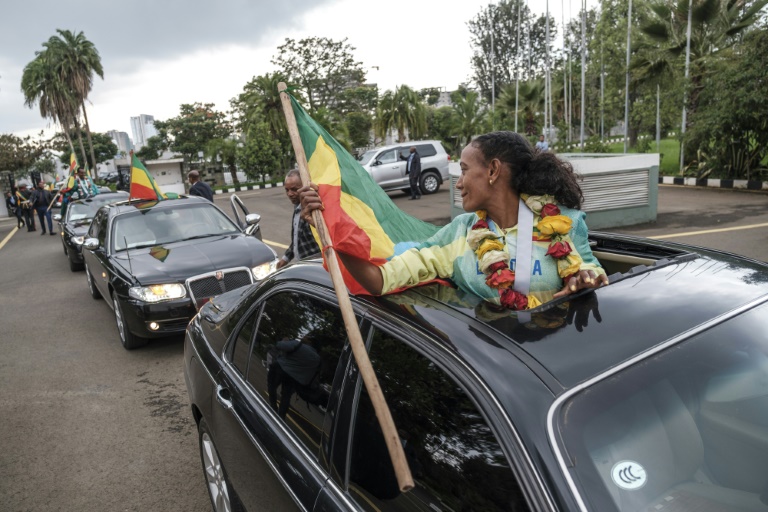
Three of Ethiopia’s four gold medallists and one silver medallist from the championships held in the US city of Eugene earlier this month hail from Tigray, including the women’s marathon winner Gotytom Gebreslase.

“Tigrayan athletes have still not had the opportunity to see their families. I hope that our president and our government will solve this issue,” said Derartu Tulu, who heads the Ethiopian Athletics Federation.

The Olympic long-distance gold medallist added that some athletes remained stuck in Tigray and were unable to participate in the championships, which saw Ethiopia come second in the medals table behind the United States, winning a total of 10 medals.

“For these athletes, opening the roads, and other essential things that the government is aware of, we want those things to be done for us, and we sincerely ask our government,” she said, speaking at a ceremony to honour the winners.

Ethiopia’s President Sahle-Work Zewde, who holds a largely ceremonial role, also spoke about the conflicts roiling Ethiopia at Thursday’s event.

“The athlete who burst into tears saying ‘I wish my father and mother watched and celebrated’ touched many of our hearts when she wiped her tears with our national flag with a mixed feeling of happiness and sorrow,” Saleh-Work said, referring to Gebreslase. 

The conflict in northern Ethiopia has driven hundreds of thousands of people to the brink of famine, displaced more than two million and left more than nine million in need of food aid, according to the United Nations.

Fighting has eased since a humanitarian truce was declared at the end of March.

But Tigray continues to face crippling shortages of food and fuel while lacking access to essential services such as electricity and banking, according to aid agencies.

Prime Minister Abiy Ahmed sent troops into Tigray in November 2020 in response to what he said were attacks by the region’s then ruling party, the TPLF, on federal army camps.

The rebels mounted a shock comeback in June last year, retaking Tigray before expanding into the neighbouring regions of Afar and Amhara.

ICC issues arrest warrant for C.Africa rebel leader

The International Criminal Court said Thursday it had issued an arrest warrant for a Central African Republic rebel leader for war crimes and crimes against humanity during civil strife in 2013.

Nourredine Adam, head of an armed faction of former rebels from the mainly Muslim Seleka group, is wanted over crimes allegedly committed while he was security minister at the time, the ICC said in a statement. 

He is wanted for crimes including torture, imprisonment, persecution, enforced disappearance and cruel treatment at detention centres run by the then-ruling regime, prosecutors said. 

One of the world’s poorest nations, the CAR was plunged into a bloody civil war after a coup in 2013 and while the violence has decreased over the past three years, armed groups still control large swathes of the country.

The warrant was originally issued under seal in January 2019 but ICC judges had now ordered it to be unsealed, the ICC said. 

It identified him as Mahamat Nouradine Adam and said was also known by a series of aliases including Nourreddine Adam.

The ICC decided that the warrant “may be communicated to any state or international organisation for the purposes of its execution”.

Adam is now the leader of the Popular Front for the Rebirth of the Central African Republic (FPRC), a former Seleka militia that is now one of the country’s remaining main rebel groups. 

His group was one of two that last year refused to put down their weapons in response to a ceasefire offer by CAR President Faustin-Archange Touadera.

The 2013 coup toppled president Francois Bozize, who seized power a decade earlier. 

The fighting was waged between a coalition of armed groups that overthrew Bozize, the predominantly Muslim Seleka, and militias supporting him, the mainly Christian anti-Balaka.

Adam is already subject to UN sanctions, the arrest warrant says.

Two former Central African warlords, Patrice-Edouard Ngaissona and Alfred Yekatom, who led anti-Balaka militias, are currently on trial at the ICC for war crimes and crimes against humanity. 

The trial of Mahamat Said Abdel Kani, an alleged Seleka commander, also accused of war crimes and crimes against humanity, is due to open in September.

Shadowy Al-Qaeda fighters heap pressure on Mali's junta

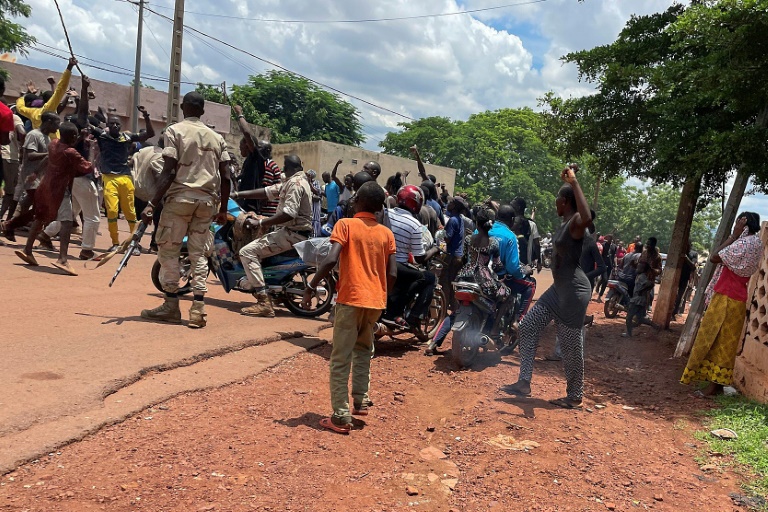
Al-Qaeda jihadists are tightening the screws on Mali’s military junta, extending their attacks to the south of the country and hitting a key garrison town on the outskirts of the capital.

Raids last week displayed coordination and operational complexity at a range that is unprecedented in the country’s decade-long jihadist campaign, say analysts.

Last Thursday, six attacks unfolded simultaneously at 5 am, striking the country’s troubled centre as well as the southern regions of Sikasso, Koulikoro and Kayes, which until now had never been targeted.

The following day, two explosive-laden vehicles smashed into the gates of an army building in Kati, a garrison town 15 kilometres (nine miles) from Bamako, killing a soldier.

The suicide raid was claimed by the Support Group for Islam and Muslims (GSIM), the main jihadist alliance in the Sahel and an Al-Qaeda affiliate, according to monitoring group SITE.

The operation was “a way of telling (the authorities) that they can strike anywhere,” a Malian analyst in the central town of Sevare told AFP.

The name of Kati has huge resonance in Mali. Its army base was the springboard for the country’s August 2020 coup and reputedly houses the country’s strongman, Colonel Assimi Goita, and Defence Minister Colonel Sadio Camara.

– ‘Corridor’ to south –

GSIM was created in 2017 from several groups — Al-Qaida in the Islamic Maghreb, an early pioneer of jihadism in the Sahel that was born in 2007, and Katiba Macina, Ansar Dine and Al-Mourabitoun, which were also led by veteran militants.

A UN-based expert in jihadist groups said the GSIM’s southward push emulated its successful “strategy of contagion” in the centre of the country.

Jihadists first struck the north of Mali in 2012, joining a regional insurgency.

After being scattered the following year by French forces, they regrouped, in 2015 launching attacks in the ethnically volatile centre and cross-border raids on Niger and Burkina Faso.

Across the three countries, thousands of civilians have been killed and more than two million have been displaced, and the economic damage has been devastating.

Heni Nsaibia, a researcher at the Armed Conflict Location & Event Data Project (ACLED), said the recent attacks had had “modest results, bearing in mind the means that were deployed”.

However, they were also a potent demonstration of the GSIM’s powers of coordination, proving the organisation is not “just a coalition of disparate groups”, he said.

One insight that emerges is the “major freedom of movement” for jihadists between the centre and south of the country, demonstrating the GSIM’s influence over a vast area that includes the border with Burkina Faso, said Nsaibia.

A recent report by UN specialists described a “southwards corridor” enabling GSIM to “extend towards the Atlantic coast” and countries on the Gulf of Guinea beyond Burkina Faso, notably Benin and Togo, where cross-border attacks have been rising.

GSIM’s targeted tactics contrast with those adopted by Islamic State jihadists in Mali, who are often blamed for indiscriminate massacres of civilians.

In areas where it wields special clout, such as the arid regions of the north, the GSIM tries to set up a parallel government to the state, say local sources.

They try to win over local people to their vision of a just and protective society, “proposing Islamic justice, access to health care and security”, said a security source in Timbuktu.

– ‘Mercenaries’ –

In early 2020, GSIM leader Iyad Ag Ghali declared he was willing to hold talks with the government in Bamako, as “between brothers”, provided France and the UN withdrew their forces.

Since then, Mali’s elected government has been replaced by a military one, and French troops are close to pulling out after the junta brought in Russian paramilitaries.

But these major shifts have not been followed by any sign of talks. In fact, violence has risen.

In central Mali, civilians are caught between the jihadists on one side and, on the other side, the Malian security forces aided by suspected operatives from the pro-Kremlin Wagner group.

In June at least 132 villagers were massacred — an act that the authorities pinned on the GSIM’s Macina Katiba component, but which the GSIM has denied.

The organisation’s mouthpiece, in claiming the Kati attack, said on Saturday: “If you have the right to hire mercenaries to kill defenceless innocents, then we have the right to destroy and target you.”

Kenya running mate ordered to forfeit $1.7 mn in graft case

A Kenyan court on Thursday ordered a politician running for deputy president in next month’s election to forfeit almost $1.7 million that had been frozen in a corruption probe.

The case highlights the endemic corruption in Kenya, where the anti-graft body last month raised “integrity” concerns about more than 200 candidates standing for various offices in the August 9 polls.

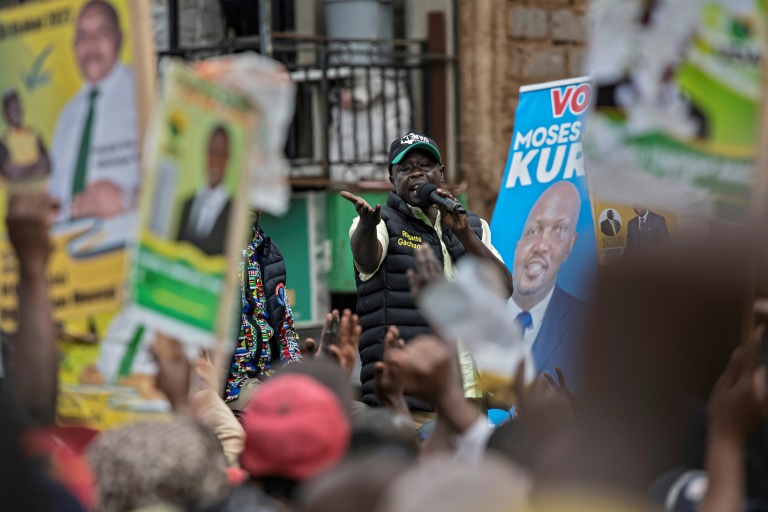
Justice Esther Maina ruled that Rigathi Gachagua, who is presidential candidate William Ruto’s running mate, had failed to explain the source of 200 million Kenyan shillings found in his bank account and should therefore surrender it to the state.

Gachagua, who in court papers said the money came from his companies’ business dealings, blasted the ruling and vowed to appeal.

“The judge was biased against us from the word go and threw caution to the wind by conducting a sham trial,” he said on Twitter.

Both outgoing Deputy President Ruto and his main presidential rival, former prime minister Raila Odinga, have pledged to tackle graft, but voters remain sceptical as corruption infects almost every level of society.

Kenyans will next month elect not only a new president but also several hundred members of parliament and about 1,500 county officials.

Interior Minister Fred Matiang’i said on Tuesday that banks were running out of 100 and 200 shilling notes because they were being used by politicians to bribe people ahead of the vote.

He accused the politicians of “laundering themselves” into elected institutions and voiced fears that those voted into office may not act to clean up the system.

Kenya was ranked 128th out of 180 countries on Transparency International’s 2021 graft perceptions index, with the watchdog saying its fight against corruption had “stagnated”.

Senegal to elect parliament in important test for presidential vote

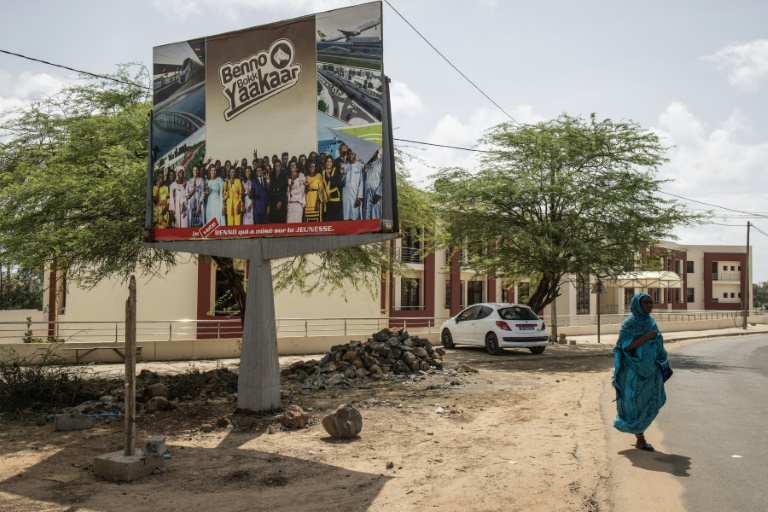
Senegal will vote Sunday in parliamentary elections the opposition hopes will force a coalition with President Macky Sall and curb any ambitions he may hold for a controversial third term.

Sixty-year-old Sall, who was elected in 2012 for seven years then re-elected in 2019 for another five, had remained vague about his plans, but critics have accused him of seeking to break the two-term limit and run again in 2024. 

Any defeat of his supporters in Sunday’s vote could upset such plans.

The president has also promised to appoint a new prime minister from the winning party, after he abolished the post in 2019 then reinstated it in December.

The single-round ballot will decide the 165 seats of the unicameral parliament — currently controlled by the president’s supporters — for the next five years.

But several members of the main opposition coalition have been banned from taking part on technical grounds.

On Sunday, polling stations are due to open at 08:00 am (local and GMT) and close at 6:00 pm for Senegal’s 7 million voters.

National Assembly members are to be elected according to a system that combines proportional representation with national lists for 53 lawmakers, and majority voting in the country’s departments for 97 others. 

The diaspora elects the remaining 15 members. 

– ‘Cohabitation’ –

Eight coalitions are in the running for these elections, including Yewwi Askan Wi (meaning “Liberate the People” in Wolof), the main opposition coalition.

Its highest-profile member, Ousmane Sonko, came third in the 2019 presidential election. But he has been banned from running in Sunday’s elections.

That coalition has joined forces with Wallu Senegal (which means “Save Senegal” in Wolof), led by former president Abdoulaye Wade.

The two groups have agreed that whichever one places lower in each department will support the other, in order to obtain a parliamentary majority and “force governmental cohabitation.”

The opposition also wants to force Sall to give up any hope of running in 2024. 

“If Macky Sall loses, he won’t be talking about seeking a third term,” Sonko said following protests in June.

For the government, the parliamentary polls are a second test following municipal elections in March, which the opposition won in major cities, including the capital Dakar, Ziguinchor in the south and Thies in the west. 

“It’s the first round of the 2024 presidential election,” researcher and political analyst Cheikh Gueye told AFP. 

The election is taking place against a backdrop of rising food and fuel prices following Russia’s invasion of Ukraine.

The opposition says the government has been unable to address the high cost of living.

But the latter says it has introduced subsidies to help people cope with the price hikes, and has a good track record of investing in infrastructure.

The 21-day election campaign, during which giant rallies and noisy caravans criss-crossed the country in a mostly calm atmosphere, ends on Friday evening.

The pre-campaign period, however, was marked by violent demonstrations that left at least three people dead.

– Opponents banned –

The violence came after the interior ministry tossed out a list of Yewwi Askan Wi’s first-choice election candidates, citing technical grounds. The country’s highest court backed the decision.

One of the names had been accidentally put down both as a first-choice candidate and as an alternate candidate, thus invalidating the entire list.

The move banned Sonko and others from participating in the elections.

Declaring it to be politically motivated, the group’s leaders called for protests in June, most of which were banned by authorities.

On June 29, the opposition finally agreed to take part in the elections, easing tensions.

Senegal has a general reputation for stability in a region where political turbulence is widespread.

But the country was shaken by several days of rioting in March last year, claiming around a dozen lives, after Sonko was accused of rape.

In recent years, several other prominent opponents of the president have seen their political careers cut short by legal cases.

They include former Dakar mayor Khalifa Sall, who is not related to the head of state, and former minister Karim Wade, the son of an ex-president.

In energy-starved South Africa, whites-only town basks in solar power

Most of South Africa is battling endless power cuts, but a remote whites-only farming town in the country’s sun-drenched centre is close to producing enough electricity to be self-sufficient.

Built after the end of apartheid along the Orange River on 8,000 hectares (more than 19,000 acres) of land acquired by white Afrikaner nationalists, Orania manages its affairs autonomously from the central government.

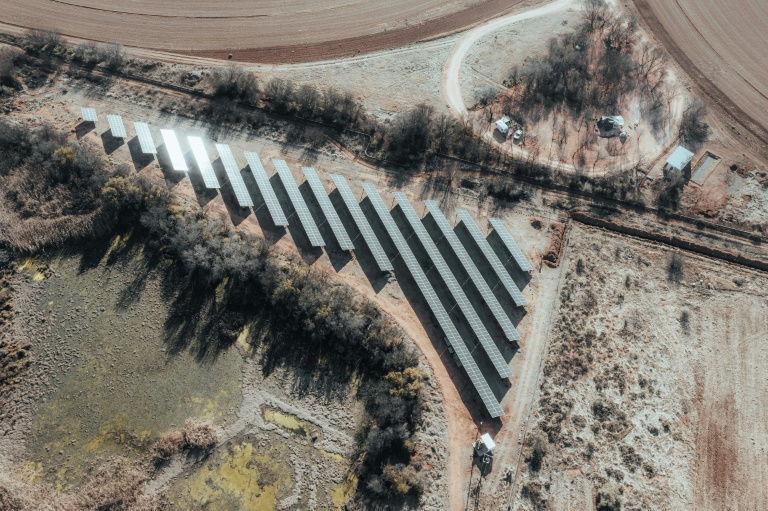
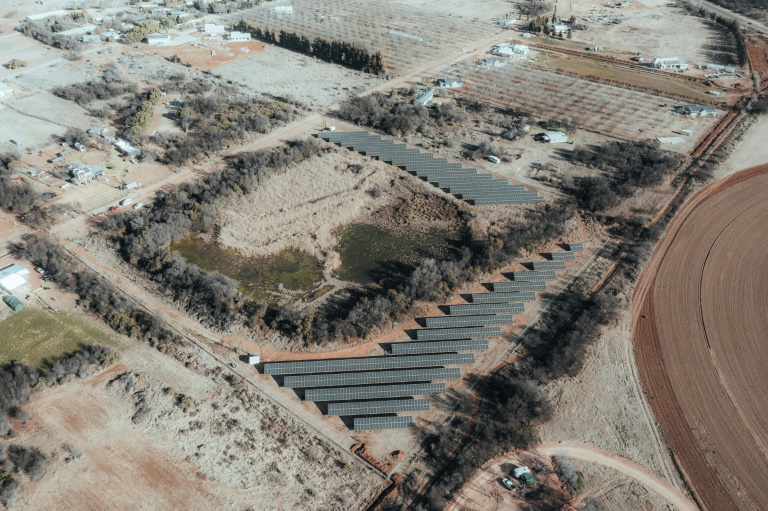
At the end of a gravel track outside the 31-year-old town, a diamond mesh gate opens onto hundreds of photovoltaic panels mounted in rows.

In a country struggling to provide basic services, the small settlement of 2,500 people is the only town nationwide close to reaching energy supply autonomy and freeing itself from the failing national power grid.

“The solar farm is quite a huge game changer for us. It brings energy sustainability to the town,” said Gawie Snyman, 43, who manages the municipality.

“Our big dream is to become an energy exporter”.

Africa’s most developed economy has in recent years been plagued by epileptic power supply, which many blame on the ageing coal-fired plants operated by the state-owned energy giant Eskom.

After weeks of some of the worst blackouts in recent years, President Cyril Ramaphosa on Monday announced energy reforms, urging South Africans to “join in a massive rollout of rooftop solar” and sell excess to the grid.

Orania, a town some 620 kilometres (380 miles) southwest of Johannesburg, was already well on its way to becoming totally energy independent in just several years’ time.

– Solar independence –

Established in 1991 after the abolition of the racial laws, Orania is protected under South Africa’s constitution, which ensures the right to self-determination.

The town was developed on land acquired by a group of Afrikaner families, led by the son-in-law of Hendrik Verwoerd, the architect of apartheid.

It was set up to preserve the “culture” of the Afrikaners — descendants of the Dutch and French-Huguenot Protestant settlers who came to South Africa in the 17th century.

Prospective residents of Orania submit an application, get vetted and the default requirement is one has to be Afrikaner.  

Town spokesman Joost Strydom, 28, said the town in the Karoo region now aimed to make the best of year-round sunshine in order to enjoy “total electricity independence”.

With funding from the municipality and private investors, Orania started building its 10.5-million-rand ($620,000) solar farm in June last year. 

Just 12 months later, the town was generating 841 KW of electricity per hour — almost enough to power half the town and surrounding farms growing corn, wheat and nuts, local authorities say.

“It was the basic idea of self-sufficiency that drove us towards doing this,” said Francois Joubert, the engineer who designed what has become known as the “Orasol” plant.

Standing next to a row of solar panels, the 69-year-old in a grey flat cap said Eskom had “failed dismally” to provide the town with the necessary power.

“You can’t rely on anybody to supply you with basic ingredients to live here in the Karoo,” he said. 

“We had to do that ourselves, we had to work it out… And it’s working for us.”

– Thirsty pecans –

A few kilometres from the solar plant, Joubert’s wife Annatjie watched as a mechanical tree shaker released pecan nuts onto a red net during early morning harvesting on her farm.

The 66-year-old former IT specialist said a stable power supply was crucial for her orchard to flourish.

When Eskom rations electricity to prevent the grid from collapsing, her trees go thirsty as she can’t pump water from the river, she explained.

Yet “it’s vital to complete your irrigation cycles especially with pecans nuts because they use a lot of water,” she said.

The new solar plant would allow her to do just that, she added.

As the world grapples with a food crisis sparked by Russia’s invasion of Ukraine, “we need to produce as much as possible of our own food, and therefore we need water… we need electricity,” her husband said.

The town was proud to be playing its part through producing clean energy, said the engineer.

“We are very glad that we can assist the green idea,” he said.

In energy-starved South Africa, whites-only town basks in solar power

Most of South Africa is wallowing in endless power cuts, but a remote whites-only farming town in the country’s sun-drenched centre is close to producing enough electricity to be self-sufficient.

At the end of a gravel track outside the Afrikaner town of Orania, a diamond mesh gate opens onto hundreds of photovoltaic panels mounted in rows.

In energy-starved South Africa, the small settlement of 2,500 people is the only town nationwide close to reaching energy supply autonomy and freeing itself from the failing national power grid.

“The solar farm is quite a huge game changer for us. It brings energy sustainability to the town,” said Gawie Snyman, 43, who manages the municipality.

“Our big dream is to become an energy exporter”.

Africa’s most developed economy has in recent years been plagued by epileptic power supply, which many blame on the ageing coal-fired plants operated by the state-owned energy giant Eskom.

After weeks of some of the worst blackouts in recent years, President Cyril Ramaphosa on Monday announced energy reforms, urging South Africans to “join in a massive rollout of rooftop solar” and sell excess to the grid.

Orania, a town some 620 kilometres (380 miles) southwest of Johannesburg, was already well on its way to becoming totally energy independent in just several years’ time.

– Solar independence –

Built on privately acquired land along the Orange River during the dying days of apartheid, Orania manages its affairs autonomously from the central government.

It was set up to preserve the “culture” of the Afrikaners — descendants of the Dutch and French-Huguenot Protestant settlers who came to South Africa in the 17th century.

Town spokesman Joost Strydom, 28, said the town in the Karoo region now aimed to make the best of year-round sunshine in order to enjoy “total electricity independence”.

With funding from the municipality and private investors, Orania started building its 10.5-million-rand ($620,000) solar farm in June last year. 

Just 12 months later, the town was generating 841 KW of electricity per hour — almost enough to power half the town and surrounding farms growing corn, wheat and nuts, local authorities say.

“It was the basic idea of self-sufficiency that drove us towards doing this,” said Francois Joubert, the engineer who designed what has become known as the “Orasol” plant.

Standing next to a row of solar panels, the 69-year-old in a grey flat cap said Eskom had “failed dismally” to provide the town with the necessary power.

“You can’t rely on anybody to supply you with basic ingredients to live here in the Karoo,” he said. 

“We had to do that ourselves, we had to work it out… And it’s working for us.”

– Thirsty pecans –

A few kilometres from the solar plant, at the De Groot Boord farm, Joubert’s wife Annatjie watched as a mechanical tree shaker released pecan nuts onto a red net during early morning harvesting.

The 66-year-old former IT specialist turned farmer said a stable power supply was crucial for her orchard to flourish.

When Eskom rations electricity to prevent the grid from collapsing, her trees go thirsty as she can’t pump water from the river, she explained.

Yet “it’s vital to complete your irrigation cycles especially with pecans nuts because they use a lot of water,” she said.

The new solar plant would allow her to do just that, she added.

As the world grapples with a food crisis sparked by Russia’s invasion of Ukraine, her husband said countries could ill afford more challenges to domestic food production.

“We need to produce as much as possible of our own food, and therefore we need water… we need electricity,” Joubert said.

The town was proud to be playing its part through producing clean energy, said the engineer.

“We are very glad that we can assist the green idea,” he said.

Insecurity, inflation deepen malnutrition in Nigeria's northwest

Lariya Abdulkareem’s family used to make a living farming beans and sorghum at a village in Nigeria’s northwest Katsina state.

But threats of bandit attacks forced them to abandon their land and farm elsewhere.

Today, worsening insecurity has disrupted agriculture and food supplies in the region, and the grandmother says feeding her family has become a challenge.

“We cannot access the places we did before,” Abdulkareem said, clutching her seven-month-old granddaughter in a clinic set up a year ago by health authorities with Medecins Sans Frontieres (Doctors Without Borders, MSF).

Rural northwest Nigeria has been ravaged by gangs of bandit militias who raid villages, loot cattle and kidnap people, holding them for ransom in camps deep in the forests that carpet the region.

Hundreds of thousands of people have been displaced across the northwest and central regions, and thousands killed.

The impact rivals that of a 13-year jihadist conflict in the northeast of Nigeria which has claimed more than 40,000 lives.

But in the northwest, the gang crime has also combined with surging prices for food and fuel, breeding a crisis that inflicts hunger on youngsters who are already exposed to malaria and other diseases, say aid workers and health officials.

– Malnutrition –

MSF, one of the few international agencies to be active in the northwest, said the complex crisis has fuelled a surge in severe acute malnutrition among youngsters.

In Katsina state alone, nearly 44,500 children have been admitted to nutrition programmes this year, and aid agency and local health authorities are preparing for this to rise to 100,000 by year’s end.

Nafisa Sani, a senior Katsina health official, said the state is seeing “high” numbers of malnutrition even for a region that often struggles with children malnourishment.

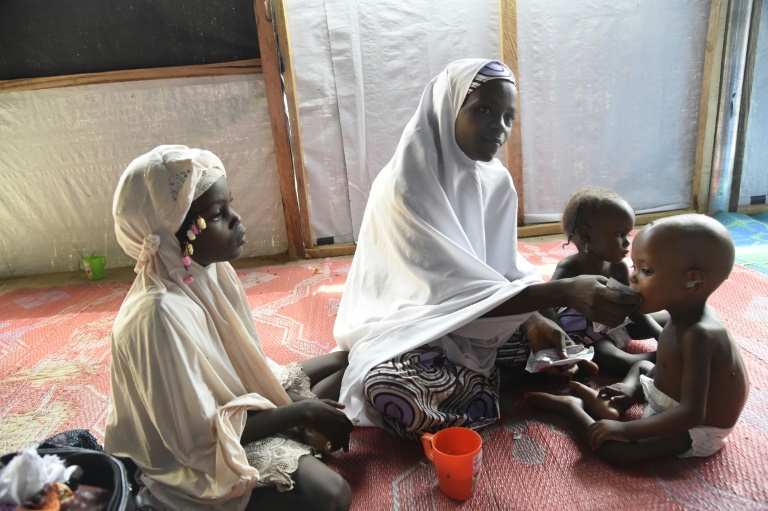
The Kofar Sauri in-patient clinic in Katsina city was set up to treat 200 patients, but admits up to 350, with mothers often sharing beds in tented wards. Other health facilities see a daily flow of hundreds of mothers seeking help.

MSF’s in-patient sites in Katsina will expand capacity to 500 beds next month to attend to growing need over recent weeks, but complicated cases rose 40 percent just over the last week.

Inside tents, children under five, some on drips in emergency care, are weighed, measured and diagnosed for malnutrition, often after falling sick with other illnesses, medical staff say.

“We have measles ongoing, there is a hunger gap and with banditry we have a lot of displaced. It takes a toll on children,” said Dr Yakubu Abubakar, a paediatrician working at one MSF Katsina city clinic. 

“And this is just one state.”

MSF said in Gummi in neighbouring Zamfara state, its teams screened more than 36,000 children under five years old in June, following a nutrition alert.

More than half the children were malnourished. One in four was severely malnourished and in need of urgent medical care.

UNICEF says Nigeria ranks first in the continent and second in the world for child malnutrition. Around eight million children in the northwest are undernourished, the agency said.

– Bandits –

Fear of attacks or violence from bandit militias based in nearby Rugu forests in Katsina’s western areas near the Niger border has kept many families away from farming the land.

Just this year, around 20,000 people were displaced by violence or threats in three areas of Jibiya local government area, a local official and community leaders said.

Many crossed the border to stay with families in nearby Niger, others shelter with families in Katsina city or other towns, but some are staying in two camps near the city.

“People are fearful of being kidnapped, killed or displaced,” said Nuhu Iliya, a primary health care official in Jibia local government authority.

“Parents are struggling to get what they need to eat, so the babies and children suffer.”

Northwest Nigeria often faces food insecurity, especially in the lean months before harvest, when stocks run low.

But as with other parts of the continent, Russia’s invasion of Ukraine has disrupted global wheat supplies and fuel prices have increased leading to rise in food costs.

Farmers outside working fields just outside Katsina city said the price of seeds for stables sorghum, millet and groundnut have doubled since the start of the year. 

Wasila Abdullahi, a 24-year-old mother of three, said price hikes were taking a toll on her meagre income.

A measure of maize used to cost 400 naira ($1) but now is 550 naira, she said, as her daughter Khadija played at her feet. The two-year-old suffered malnutrition while recovering from measles.

“Sometimes we don’t have enough to feed the family,” Abdullahi said.

Close Bitnami banner
Bitnami