Africa Business

African nations meet on 'critical' nature conservation

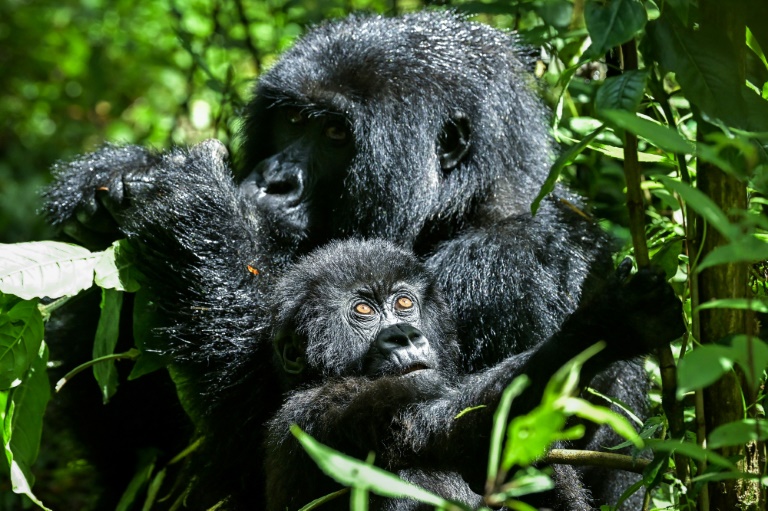
Delegates from across Africa launched Monday in Rwanda the first continent-wide gathering about the role of protected areas in ensuring the future of our planet.

The IUCN Africa Protected Areas Congress (APAC) is being held just a few months before the COP15 summit in December when global leaders are aiming to adopt a much-delayed pact to shield nature from the damage wrought by human activity.

“Protected areas are critical for the survival of the planet,” International Union for Conservation of Nature (IUCN) director general Bruno Oberle said on the opening day of the talks in the capital Kigali.

“And the more we manage them for the benefit of people and nature,the more we will build a future where everyone — human and animal — thrives,” he said on Twitter.

Organisers said APAC will aim to shape the role of protected and conserved areas in safeguarding Africa’s wildlife, delivering vital ecosystem services, and promoting sustainable development while conserving the continent’s cultural heritage and traditions. 

“It is high time that African policymakers put in place strong measures and strategies to ensure that the devastation of our rich biodiversity is stopped,” Rwandan Prime Minister Edouard Ngirente said.

Last month, the UN Convention on Biological Diversity’s (CBD) 196 members held negotiations on the draft global biodiversity framework in Nairobi, but made only limited progress in ironing out differences.

At the heart of the COP15 draft treaty is a provision to designate 30 percent of Earth’s land area and oceans as protected zones by 2030.

More than 90 world leaders have signed a pledge over the past two years to reverse nature loss by then, saying the interconnected threats of biodiversity loss and climate change are a “planetary emergency”.

According to the most recent Protected Planet report by the UN Environment World Conservation Monitoring Centre, only 17 percent of land habitats and around seven percent of marine areas were protected by 2020.

One million species are threatened with extinction, according to UN experts, and global warming is on track to make large swathes of the planet unliveable.

UN biodiversity experts warned this month that rampant exploitation of nature is a threat to the well-being of billions of people across the world who rely on wild species for food, energy and income.

The Kigali gathering runs until July 23 and has attracted more than 2,000 participants from across Africa and beyond, according to organisers.
Kenya challenger Ruto dismisses rigging fears in bid for top job

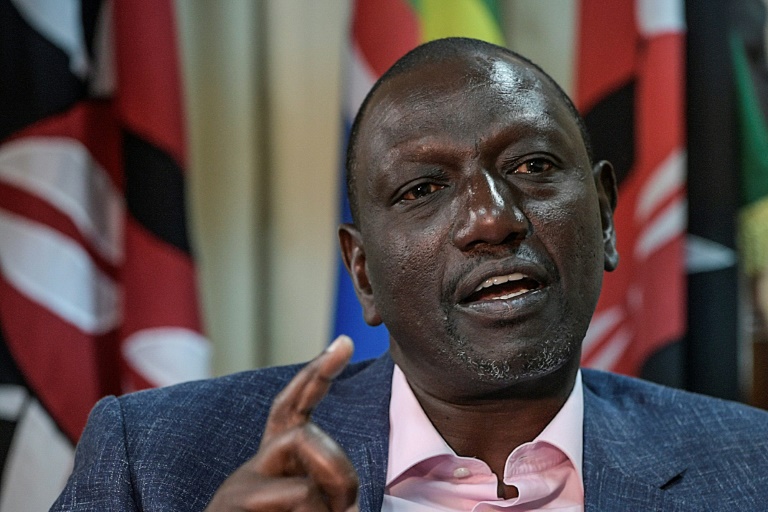
Kenya is a democracy with free and fair elections, Deputy President William Ruto said Monday in an interview with AFP, confident that he will emerge victorious in the  presidential poll on August 9.

Previous elections in the East African powerhouse have often seen accusations of vote-rigging but Ruto, known as a sharp strategist, insisted he would respect the outcome of the vote.

“I am very confident that I will win this election,” Ruto said in an interview at his Nairobi offices, where huge vehicles plastered with his face or the yellow and green colours of his party, the United Democratic Alliance, line the driveway.

“People of Kenya ultimately make their decisions. There is a wrong narrative that elections are manipulated…  It is very difficult to steal an election,” the 55-year-old former MP and minister said. 

At most, elections can be “influenced”, he conceded, but “we will stand (our ground) and still win against the so-called system”.

The ambitious politician was originally poised to succeed his boss, President Uhuru Kenyatta, as the ruling party’s candidate for the top job.

But a shock alliance between Kenyatta and his longtime rival Raila Odinga, who is now running against Ruto, has relegated the vice president to the sidelines.

Recent elections have frequently been followed by violent clashes and allegations of rigging. The 2017 poll saw Odinga approach the Supreme Court, which annulled the result and ordered a re-run — a first for Africa.

The disputed 2007 vote was marked by an eruption of politically-motivated ethnic violence, leaving more than 1,100 people dead.

Kenyatta and Ruto were indicted by the International Criminal Court for their role in the 2007-2008 killings before the cases collapsed.

Both the leading candidates have vowed to accept next month’s result, with Odinga telling a press conference on Monday, “If we lose the elections fairly, we will accept the outcome and congratulate the winner.”

For his part, Ruto said he would willingly cooperate with his rival if Odinga were to win.

“We will have… to make sure Kenya remains a democracy and Kenya moves forward,” he said.

– All about the economy –

After a decade spent at the heart of the Kenyatta government, Ruto now faces a difficult balancing act between claiming credit for the administration’s infrastructure investments and attacking his boss over the surging “crisis of cost of living”.

Accusing Kenyatta of abandoning their original agenda to improve food security and housing during his second term, Ruto has focused his campaign on promising to raise the purchasing power of ordinary Kenyans.

Three in ten Kenyans live in extreme poverty, on less than $1.90 a day, according to the World Bank.

A wealthy businessman with a rags-to-riches background, Ruto has positioned himself as a defender of “the hustlers” trying to eke out a living in a country dominated by “dynasties” — a reference to the Kenyatta and Odinga families.

Kenyatta’s father Jomo was the country’s first president while Odinga’s father Jaramogi served as vice-president. 

“The single most important issue today in this election is about the economy,” said Ruto.

He has backed a “bottom-up” economic model aimed at tackling inequality in a country long plagued by corruption and poor governance, before being battered by the Covid-19 pandemic and the fallout from war in Ukraine. 

Rising inflation and other economic pressures have even pushed tribal allegiances — a familiar cornerstone of Kenyan politics — to the background, he said.

“We have largely managed to pull away from the usual competition around ethnicities and those kind of things to a space where we are discussing issues that apply to all Kenyans: cost of living, the economy, creating jobs.”

Old-style scoreboard charm as Zimbabwe blast into T20 World Cup

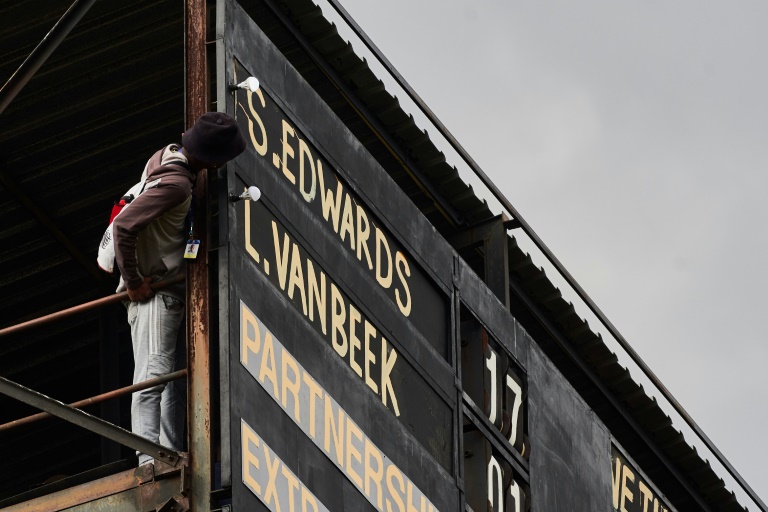
Under the gaze of an enormous, old-fashioned manually-operated scoreboard, Zimbabwe came up with all the right numbers at the weekend as they qualified for the Twenty20 World Cup for the first time since 2016.

Craig Ervine’s team clinched their ticket to Australia in October when they beat Papua New Guinea in their semi-final last Friday in the country’s second largest and southern city of Bulawayo.

They then iced the cake with a 37-run win over the Netherlands, who also qualified, in the final at the city’s Queens Sports Club, a throwback to another age when cricket did not rely so heavily on the bells and whistles of modern technology. 

Established in 1890 when Zimbabwe was still the British colony of Rhodesia, the ground was inevitably named after Queen Victoria. It became a regular venue for many touring sides and hosted its first Test match in 1994.

In spite of the coloured clothes and frenetic pace of a T20 match, there is still an old-world charm about Queens.

The stately pavilion stands proud and the ground is ringed by trees that create a panoramic umbrella for spectators sitting on the grass out of the sun, making it one of the most picturesque venues in the world.

But one key feature stands out: the scoreboard which reaches back into the 20th century, perhaps even earlier, for its display and methods of delivering information to the public.  

A team of shadowy figures ghost their way around inside the great box, all black and yellow, manually changing names and numbers. 

Adding up scores on the aged scoreboard, energetic young men, including aspiring cricketers and passionate fans, operate seamlessly in coordination with scorers waving papers from behind a glass screen in the media box some 200 metres away on the other side of the ground. 

Hand gesture communication is sometimes overridden by radio communication to verify and clarify figures.

– Errors, misspelt names –

Most international scoreboards around the world are now fully digital but the old-school scoreboard at Queen’s adds to the atmosphere, occasionally churning out unintended humour for fans, with reverse or misspelt names and upside-down numbers, just some of the errors associated with manual operations at fast turnaround.

More than a dozen youngsters physically swap in scores, led by a seasoned calligraphic artist who hand-paints player names as the game progresses. 

“It has become much better now with the radios, we can quickly rectify errors,” said scorer Donald Nyoni. 

“It is key to keep up with scores accurately. The unfortunate part is that the old board has no provision for new rules on umpiring decisions.”

This old scoring system calls for ‘sober habits’ but provides employment to youths who risk being lost in a country plagued by an upsurge in drug abuse and high unemployment.

They each earn US$10 per day for operating the scoreboard but they need to be fully focussed on the action in the middle and in the scorers’ box opposite. 

Even checking phones can be distracting and “cause a mess of the statistics,” said Admire Mupembe, in his early 20s, while shuffling through a wad of number plates to slot in. 

Queens is not alone in its manual board as India still has several as does the recently built 35,000-seater Pallekele ground in Sri Lanka. 

They all lend charm to proceedings and unlike digital boards, which flash away for advertisements, they offer a view of the score at all times. What the spectator misses out on, however, is the absence of replays, from different angles, and even features, including information on umpiring decisions. 

The spectators at Queens are not overly concerned, however, as the Zimbabwe team marches through to the T20 World Cup, a welcome boost for a cricket nation that has been starved of recent glories. 

After becoming a Test nation in 1993, Zimbabwe enjoyed its share of successes as players such as Andy Flower, Heath Streak and Henry Olonga became household names. 

In recent years, alas, the game has wilted but it remains the only sport with a significant fan-base cutting across the polarised political and racial boundaries, making qualification for the T20 World Cup all the more important. 

Australia, Afghanistan, Bangladesh, England, India, Ireland, Namibia, New Zealand, Pakistan, Scotland, South Africa, Sri Lanka, the United Arab Emirates and the West Indies had already secured places.

The 16-team tournament runs from October 16 to November 13 with Australia defending a title they won in the UAE last year. 

Sudan's Hausa people block roads after deadly tribal clashes

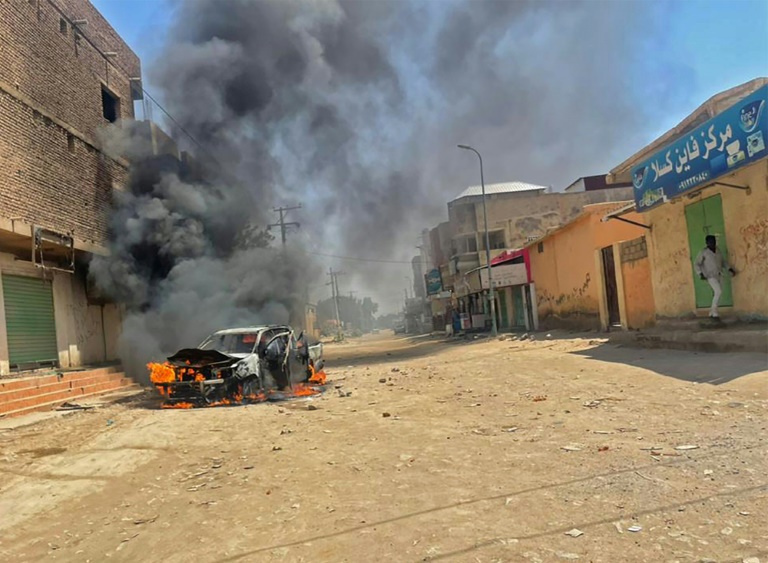
Thousands of Sudan’s Hausa people set up barricades and attacked government buildings in several cities Monday, witnesses said, after a week of deadly tribal clashes in the country’s south.

In a bid to shed light on the violence in Blue Nile state, which has killed 60 people and wounded 163 others according to local authorities, Hausa activists called for a demonstration Tuesday in Sudan’s capital Khartoum.

The clashes, between the Berti and Hausa tribes, first erupted last Monday after the Bertis rejected a Hausa request to create a “civil authority to supervise access to land”, a prominent Hausa member told AFP on condition of anonymity.

But a senior member of the Bertis had said the tribe was responding to a “violation” of its lands by the Hausas.

Blue Nile governor Ahmed al-Omda on Friday banned public gatherings and marches for one month and imposed a night-time curfew in the state, which borders Ethiopia.

In a statement Monday, he said authorities will “strike with an iron fist” against those inciting “racism, hatred and strife,” according to state news agency SUNA.

Troops were deployed in Blue Nile on Saturday, and since then an uneasy calm has prevailed there although tensions have escalated elsewhere.

In the eastern city of Kassala, the government banned public gatherings after several thousand Hausa people “set government buildings and shops on fire”, according to eyewitness Hussein Saleh.

“It’s panic in the city centre,” Kassala resident Idriss Hussein told AFP by telephone. He said protesters were “blocking roads and waving sticks.”

In the city of Wad Madani, some 200 kilometres (around 125 miles) south of Khartoum, “hundreds of Hausa people put up stone barricades and burned tires on the main bridge to block traffic”, resident Adel Ahmed told AFP.

Experts say a military coup led by army chief Abdel Fattah al-Burhan in October 2021 has created a security vacuum that has fostered a resurgence in tribal violence, in a country where deadly clashes regularly erupt over land, livestock, access to water and grazing.

Pro-democracy activists have accused Sudan’s military and ex-rebel leaders who signed a 2020 peace deal of exacerbating ethnic tensions in Blue Nile for personal gain.

The Hausas are one of the largest ethnic groups in Africa, with tens of millions of members living in several countries.

There are three million Hausas in Sudan, where they largely follow the majority religion of Islam, but speak their own native language rather than Arabic.

They mostly live off agriculture in Darfur, Al-Jazira state and in the eastern states of Kassala, Gedaref, Sennar and Blue Nile.

In jihadist-torn Niger, France gives discreet support

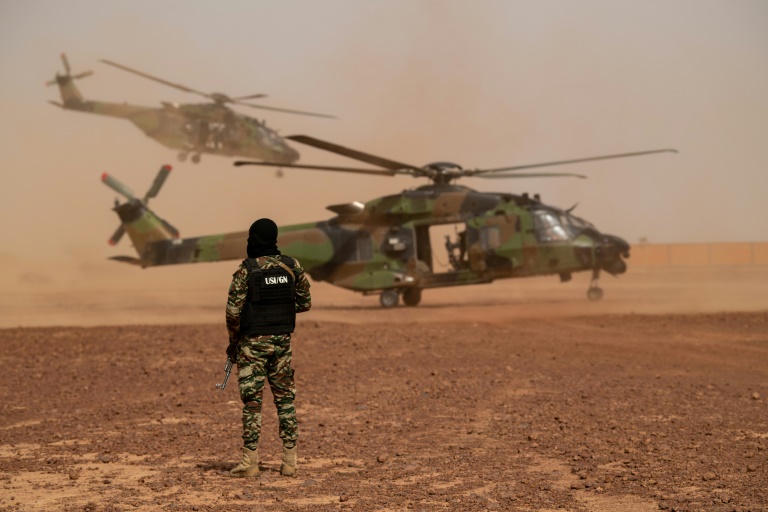
At Ouallam military base in western Niger, France’s fabled Foreign Legion and local troops work side-by-side, and the tricolour that floats over the camp is the ochre, white and green flag of Niger.

“Every morning, we stop and salute the Nigerien flag,” said a Foreign Legion lieutenant who had arrived at Ouallam a week earlier with the force’s 2nd Infantry Regiment.

The flags symbolise the changes underway as France revamps its role fighting jihadists whose years-long insurgency has devastated the Sahel.

The base, located on the badly-hit border north of Niger’s capital Niamey, has 300 French infantry, who operate alongside local troops — and their commander is a Nigerien.

Cooperation with host countries and a lower profile have become keywords in French military conversation since President Emmanuel Macron in February announced a shakeup of strategy in the Sahel.

In the coming weeks, French forces are expected to complete a pullout from Mali, ending a nearly-decade-long commitment to the country’s fight against Islamist militants.

The withdrawal was caused by a bustup following a coup that saw Mali swing towards the Kremlin and bring in Russian “advisers” condemned by France as mercenaries.

A campaign on social media that accused France of manipulating and exploiting its former Sahel colonies also found fertile ground.

Last November, violent protests erupted against a French supply convoy that wound its way to Mali through Niger and Burkina Faso.

– Support role –

French commanders say troop numbers in the Sahel — 5,100 at their peak — will fall to around 2,500 when the Mali pullout is done.

Instead of acting in the place of local forces, French soldiers will act more in a supporting role, and the host country will take the lead, they say.

“For our mission to succeed, we have to base ourselves on what Niger wants,” Defence Minister Sebastien Lecornu said last Friday as he visited Ouallam with Nigerien counterpart, Alkassoum Indattou.

In Niger, France has an important air base near the capital Niamey, where assets include drones. 

Paris is expected have over a thousand personnel in Niger after the Mali redeployment, providing air support and training, French sources say.

Indattou also gave a low-profile interpretation of the French military presence, implying that it was temporary.

“In the long term, our ambitions are to have sufficient numbers of troops and air support to take care of our own security. This is not yet the case. We need partners in order to be able build up,” he said.

Niger, the world’s poorest country by the benchmark of the UN’s Human Development Index, has been badly hit by the jihadist insurgency that began in northern Mali in 2012.

Thousands of civilians have been killed across the region and more than two million have fled their homes.

Niger is also facing an insurgency on its southeastern frontier with Nigeria — a campaign launched by the notorious Boko Haram.

– Scorching heat –

The Ouallam base is building up, but conditions are rugged.

With dayside temperatures sometimes nudging 45 degrees Celsius (113 degrees Fahrenheit), the Legionnaires sleep on camp beds inside tents. 

Nearby, bulldozers are at work, clearing ground for a “living area” for comrades who are currently out on operations. There are four field showers and two lines of sinks in the open air.

The 2nd Infantry Regiment’s operations centre is housed in a small beige-coloured tent where officers follow on computer screens real-time input from a reconnaissance operation that is under Nigerien command.

Just hours earlier, French reconnaissance power had helped the Nigeriens to capture two suspects.

“We provide the (technical) means which they lack. But they have perfect knowledge of the terrain and the enemy — they were born here,” a French officer said.

– Civilian aid –

Lecornu was accompanied to Niger by Foreign Minister Catherine Colonna, who was keen to stress France not just provided military aid but development help too.

Niger is one of the biggest recipients of French aid, receiving 143 million euros (dollars) last year.

The two sides signed agreements for a French loan of 50 million euros and a grant of 20 million euros and the Ouallam visit showcased a French-funded project to fight child malnutrition at nearby Simiri village.

Around 4.4 million people in Niger, out of a population of 24 million, are food-insecure — a problem fuelled by climate change and the jihadist campaign.

“We are in a year of unprecedented food crisis,” said the World Food Programme’s Jean-Noel Gentile.

“If we have another poor rainy season, it will be a disaster.”

Tigray rebels set up team to negotiate with govt

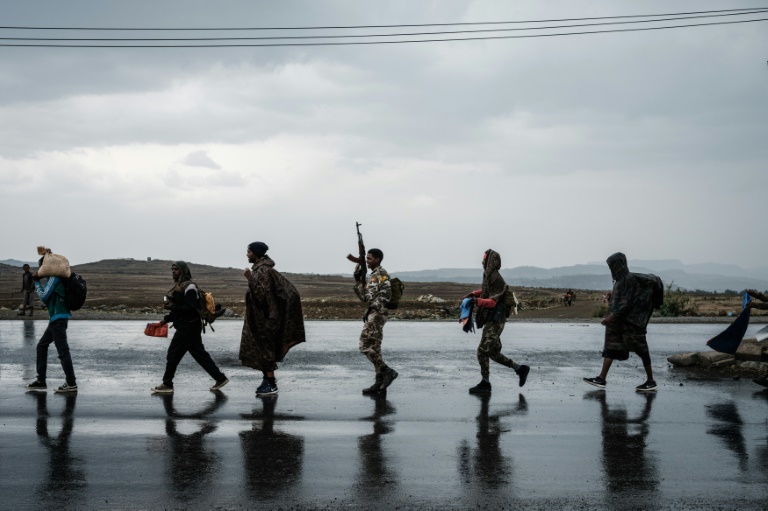
Tigrayan rebels have set up a team to negotiate with the Ethiopian government, a spokesman for the Tigray People’s Liberation Front told AFP on Monday, 20 months after war broke out in the northern region.

The announcement comes less than a week after an Ethiopian government body tasked with examining the possibility of peace talks with the TPLF held its first meeting.

But in a sign of the challenges dogging the process, Prime Minister Abiy Ahmed’s Prosperity Party has insisted any negotiations could only be led by the African Union (AU), a stance rejected by the rebels.

The TPLF has voiced concerns about the “proximity” of the AU’s envoy, former Nigerian president Olusegun Obasanjo, to Abiy and said it wants any talks to be held under the auspices of Kenyan President Uhuru Kenyatta.

“We will be ready to send a delegation to Nairobi… and have established a team with high-ranking members,” TPLF spokesman Getachew Reda told AFP, without offering further details.

“It would be very irresponsible for us to submit all negotiating processes to the AU,” he said, adding that any talks would have to involve Kenyatta, who has played an active role in peace efforts.

The government’s committee is headed by Deputy Prime Minister Demeke Mekonen, who also serves as foreign minister.

The conflict has driven hundreds of thousands of people to the brink of famine, displaced more than two million and left more than nine million in need of food aid, according to the United Nations.

Fighting has eased since a humanitarian truce was declared at the end of March.

But Tigray continues to face dire shortages of food and fuel while lacking access to essential services such as electricity and banking, according to aid agencies.

Getachew reiterated the rebels’ stance that the status of western Tigray — claimed by both Amharas and Tigrayans and currently occupied by Amhara forces — was not up for negotiation. 

The conflict erupted in November 2020 when the government sent federal troops into Tigray to topple the TPLF, the region’s former ruling party, saying it was in response to rebel attacks on army camps.

After the TPLF mounted a shock comeback in June, retaking Tigray and then expanding into the neighbouring regions of Afar and Amhara, fighting intensified in the second half of 2021, before reaching a stalemate. 

Malaysia seizes animal parts worth $18 mn

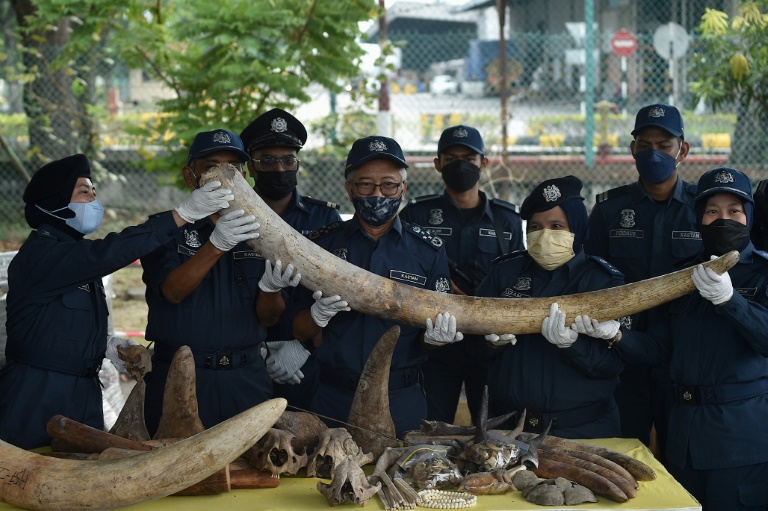
Malaysian customs officials said Monday they seized a stash of rare animal parts worth $18 million thought to have come from Africa, including elephant tusks, rhino horns and pangolin scales. 

The Southeast Asian nation is a hub for wildlife trafficking, with animal parts shipped through the country to lucrative regional markets.  

Authorities foiled a smuggling attempt on July 10 when they uncovered the illicit cargo in Port Klang, on Malaysia’s west coast, hidden in a container along with timber. 

The shipment included an estimated 6,000 kilograms (13,200 pounds) of elephant tusks — Malaysia’s biggest single seizure of elephant ivory, said customs department chief Zazuli Johan.

There were also 29 kilograms of rhino horns, 100 kilos of pangolin scales, and 300 kilos of animal skulls and other bones, he told a press conference. 

The seizure had an estimated value of 80 million ringgit ($18 million), he said, adding it was believed to have come from Africa, without giving more details.

Zazuli said Malaysia was not the shipment’s final destination, but did not say where it was heading.

Animal parts such as elephant tusks and pangolin scales are popular in countries where they are used in traditional medicine, including China and Vietnam.   

There have been no arrests over the seizure. 

Kanitha Krishnasamy — Southeast Asia director at wildlife trade monitoring group Traffic — hailed the “significant seizure”.

“This medley of threatened species in a single seizure is concerning, and it certainly verifies the suspicion that criminals continue to use Malaysian ports to move contraband wildlife,” she said.

Sudan's Hawsa people block roads after deadly tribal clashes

Thousands of Sudan’s Hawsa people set up barricades and attacked government buildings in several cities Monday, witnesses said, after a week of deadly tribal clashes in the country’s south.

Violence in Blue Nile state, bordering Ethiopia, has killed 60 people and wounded 163 others, including 13 in serious condition, according to health officials. 

The clashes first erupted a week ago on Monday between the Berti and Hawsa tribes, after the Bertis rejected a Hawsa request to create a “civil authority to supervise access to land”, a prominent Hawsa member told AFP on condition of anonymity.

But a senior member of the Bertis had said the tribe was responding to a “violation” of its lands by the Hawsas.

Troops were deployed in Blue Nile on Saturday, and since then an uneasy calm has prevailed there although tensions have escalated elsewhere.

In the eastern city of Kassala, the government banned public gatherings after several thousand Hawsa people “set government buildings and shops on fire”, according to eyewitness Hussein Saleh.

“It’s panic in the city centre,” Kassala resident Idriss Hussein told AFP by telephone. He said protesters were “blocking roads and waving sticks.”

In the city of Wad Madani, some 200 kilometres (around 125 miles) south of Khartoum, “hundreds of Hawsa people put up stone barricades and burned tires on the main bridge to block traffic”, resident Adel Ahmed told AFP.

Experts say a military coup led by army chief Abdel Fattah al-Burhan in October 2021, has created a security vacuum that has fostered a resurgence in tribal violence, in a country where deadly clashes regularly erupt over land, livestock, access to water and grazing.

Pro-democracy activists have accused Sudan’s military and ex-rebel leaders who signed a 2020 peace deal of exacerbating ethnic tensions in Blue Nile for personal gain.

The Hawsas, also known as Hausa, are one of the largest ethnic groups in Africa, with tens of millions of members living in several countries.

There are three million Hawsas in Sudan, where they largely follow the majority religion of Islam, but speak their own native language rather than Arabic.

They mostly live off agriculture in Darfur,  Al-Jazira state and in the eastern states of Kassala, Gedaref, Sennar and Blue Nile.

MPs question deterrent effect of UK's Rwanda migrant policy

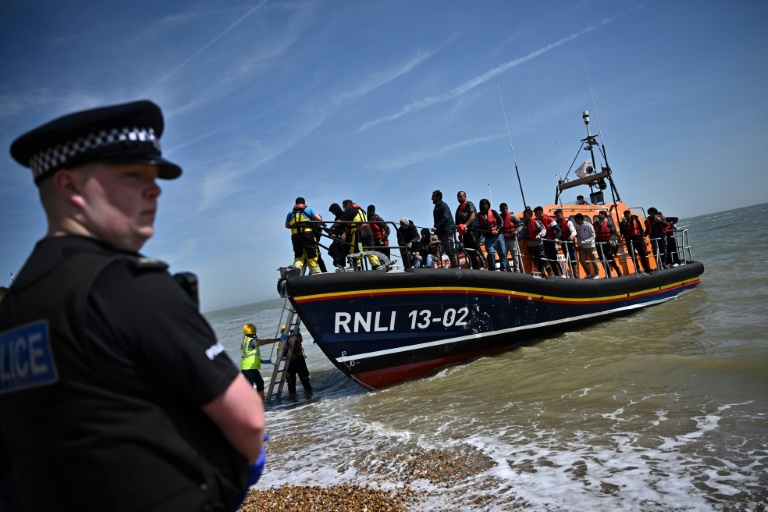
British MPs on Monday told the government there was “no clear evidence” that its controversial policy to deport some asylum seekers to Rwanda would stop Channel crossings in small boats.

The House of Commons Home Affairs Committee said “much more clarity” was needed on the plan, including how much it will cost.

Instead, the MPs urged ministers to look at less eye-catching solutions to the issue, including closer cooperation with European neighbours.

“There is no clear evidence that the policy will deter migrant crossings,” the cross-party committee said in a report on the “small boats” phenomenon.

In fact, it pointed out, numbers attempting the journey from northern France in inflatable dinghies and other unsuitable craft had increased since the policy was first announced in April.

It attributed this to “scaremongering” by people-smuggling gangs warning migrants about the change in the law.

The Channel crossings have put Prime Minister Boris Johnson and his government under political pressure, given that they promised to tighten Britain’s borders after leaving the European Union.

More than 28,500 people — most of them young men — arrived in 2021. Some 13,000 have arrived already this year out of 60,000 expected this year.

Most claim asylum but the government says the costs involved in the application process — more than £1.5 billion ($1.8 billion) — are unsustainably high.

The first flight carrying asylum seekers was due to take off for Rwanda in mid-June but was grounded due to legal challenges.

The Home Affairs Committee said there was “no magical solution” to deal with irregular migration.

But it said “close cooperation with international partners, particularly those in France” stood more chance of success in deterring Channel crossings.

That included intelligence-sharing to smash criminal gangs behind the practice, and rebuilding connections destroyed by Brexit to enable Britain to send illegal arrivals back across the Channel.

The committee pointed out that there were a total of 48,450 asylum applications in Britain in 2021 — a similar number to every year since 2014 and “far less” than in the early 2000s.

But it said the current asylum caseload of more than 125,000 was a result of “antiquated IT systems, high staff turnover and too few staff”.

Johannesburg transport project digs into wounds of the past

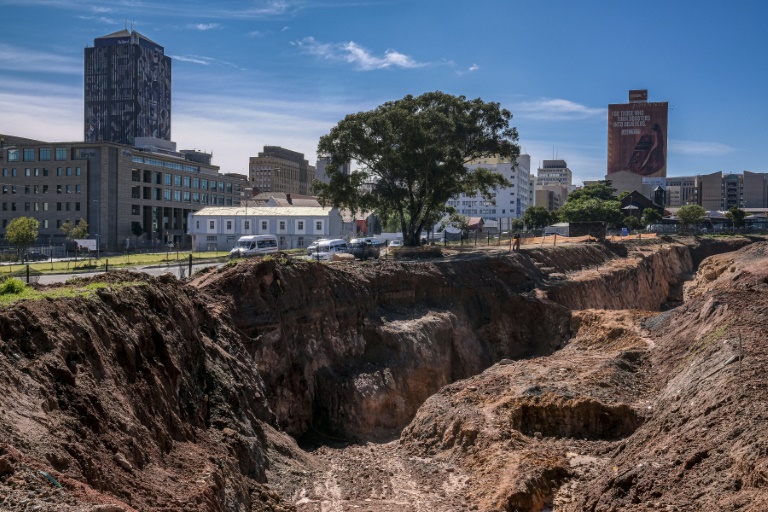
Off Johannesburg’s main highway, surrounded by skyscrapers, heavy machinery has unearthed one of the city’s original wounds — a deep gash left by the 1880s gold rush. 

The entire city centre is built over tunnels dug by generations of miners who extracted gold from the richest deposits the world has ever discovered. 

The city of around six million grew around cavernous pits and mountainous dumps, which eventually became the physical barriers of racial segregation. 

Now the rather poetic challenge of healing wounds both social and geological has fallen to property developers, who are turning this symbol of division into a bus terminal, connecting the city and the region. 

“This is a gateway site,” said Richard Bennett, marketing director for iProp, the company tasked with rehabilitating the site. 

“It will allow the South African populace in Johannesburg and surrounds to gain easy access to public or effective transport.”

– Connections –  

In the 1880s, the mine was one of the first places where prospectors dug with pickaxes, and eventually dynamite, hauling the gold 40 metres (130 feet) back up to the ground. 

After the easiest finds were depleted, this crevice — which looks like a canyon in the middle of the city — was simply filled with sand and used as a parking lot. 

The sand has now been hauled off, readying the pit to be refilled with a cement-like material that is to support the construction of a new, large bus terminal. 

The gold once mined there fuelled both fabulous wealth and deep social divides that persist to this day. 

But the future of the city depends on connecting people with better transport and more walkable streets, said David van Niekerk, CEO of the Johannesburg Inner City Partnership, a group working to revive the city centre after decades of official neglect. 

“Mixing is an important concept for the future of this city, and mixing in the widest possible sense,” van Niekerk said.

“The vision that I certainly have for this city is to turn it into a walkable city,” he added. 

“A city that’s walkable is a city that works for everyone, and I’m talking about from the homeless person to the major international corporate investor, and everyone in between.”

It’s a big challenge in a starkly divided country. 

A World Bank study last year found that the top one percent of South Africans own 55 percent of the nation’s wealth. 

The wealth of the poorest half of the country is actually negative — their debts outweigh their assets. 

The top 0.01 percent, or about 3,500 people, own more than the bottom 90 percent, representing 32 million people.

– Miners’ suffering –

Much of that inequality stems from the early days of mining, which took a tremendous and largely uncounted toll on the mostly black miners, while a few owners — wealthy whites — pocketed most of the profits.   

“Those early mines were done very chaotically and very hastily. There were no proper plans, and a lot of people died… in rockfalls and such,” said author Fred Khumalo. 

His novel “The Longest March” centred on black mine workers in early Johannesburg who lived in compounds where “the conditions were really appalling,” he said. 

“People slept on cement blocks. There were no cushions, no mattress whatsoever. The blankets they provided were flimsy, and Johannesburg winters can be cold. People fell sick, and some of them died from exposure.” 

As the city braced for war between British and white Afrikaners settlers in 1899, the mines shut down and food supplies were cut off, leading to riots. 

– Segregation –

In later decades, black mine workers who built homes nearby were forcibly removed as the gold digging expanded. 

When apartheid fully took hold, blacks were pushed to designated areas to the outskirts of the city with poor access to transport — and needed a “pass book” to access the city at all. 

Almost three decades after the end of white rule, transport links remain patchy and residents of black townships who can afford it drive cars into the city, clogging its roads.

A new transit hub could help ease some of that traffic, as thousands of commuters would replace the migrant workers who once toiled there. 

“In a way, it’s a philosophical level, paying tribute to how those spaces were created in the first place,” Khumalo said. 

“The prosperity of this country owes a lot to what happened back then.”

Close Bitnami banner
Bitnami