Africa Business

Senegalese circus troupe teaches kids to dream

Marietou Thiam’s slender figure twists and twirls, suspended in mid-air by a hoop, under the spellbound gaze of onlookers at Dakar’s first-ever circus festival. 

Thiam, 29, is the artistic director — and one of only two women members — of Sencirk, Senegal’s premier circus troupe, which organised the festival.

She moved to Dakar to study English but at the age of 21 left that life behind to join the circus. 

“I performed in more and more shows and a moment came where I had to choose, because I couldn’t continue to do both,” she told AFP.

“It (the circus) is what I loved most, because it brought me close to the kids … I said, ‘I’ve found my career’.”

Her family has never approved of the decision. But when she is on stage, Thiam has no regrets. 

She is carried by the magic of the moment — and the importance of Sencirk’s mission.

That’s because the circus company also functions as a place of learning for orphans and children from low-income families. 

It offers them a chance to learn new skills, find a sense of community — and have some fun.

One of the teachers, Malick Soumah, says Sencirk has changed his life. 

The 30-year-old came to Senegal from Guinea in 2015 and was living on the streets until he stumbled upon the company.

Now, through teaching, he can afford to rent an apartment in Ngor, a village-like neighbourhood in Dakar.

On a clear May afternoon on Ngor beach, Malick leaps into the air and looks as though he will fly away, head over heels, his feet appearing to touch a bright, white sun. 

One acrobatic feat leads to another, and suddenly Malick is forming a human pyramid with his troupe. 

He is both an artist and a teacher, sharing his passion with children in need — children who could one day take up Malick and Marietou’s mantle. 

Soon it will be their turn to ascend the pyramid and reach for the stars. 

French foreign, defence ministers in Niger as Mali pullout nears

Key ministers from France and Niger met on Friday as French forces revamp their mission in the Sahel following a planned pullout from Mali.

Foreign Minister Catherine Colonna and Defence Minister Sebastien Lecornu arrived in the Nigerien capital late Thursday.

Their joint visit aims to “represent the combined civilian and military” support given by France, a French diplomat said.

The talks take place as French forces complete a pullout from Mali, placing the spotlight on Niger as a frontline state in the fight against jihadism, and as the unstable region struggles with a string of military coups.

“The democratic regression in West Africa is extremely worrying,” Colonna told French MPs ahead of her trip.

“However, in spite of these events (and) the withdrawal from Mali, France will continue to help West African armies fight terrorist groups.”

“We are currently in consultation with our partners to determine with them, in line with their requests and needs, the kind of support that we are able to provide.”

Niger is one of the biggest recipients of French aid, receiving 143 million euros (dollars) last year.

The two sides will sign agreements for a French loan of 50 million euros and a grant of 20 million euros.

The French ministers will also meet President Mohamed Bazoum and visit a base at Ouallam, north of Niamey, which oversees joint operations on Niger’s western border by several hundred French and Nigerien troops.

– Sahel problems –

Niger, the world’s poorest country by the benchmark of the UN’s Human Development Index, has been badly hit by the jihadist insurgency that began in northern Mali in 2012 and then swept to neighbouring countries.

Thousands of civilians have been killed across the region and more than two million have fled their homes.

Niger itself is facing insurgencies both on its western border with Mali and Burkina Faso and on its south-eastern frontier with Nigeria.

It hosts tens of thousands of internally displaced people, as well as refugees from Burkina Faso, Mali and Nigeria. 

French forces who have been supporting Mali for nearly a decade are expected to complete their pullout in the coming weeks after France and the Malian junta fell out.

The roots of the dispute lie in a military takeover in August 2020, which was followed by a second coup in May 2021.

Friction developed over the junta’s delays in restoring military rule and escalated when Mali brought in Russian paramilitaries — personnel described by France as “mercenaries” from the pro-Kremlin Wagner group.

Coups followed in Guinea last September and in Burkina Faso in January.

– French in Africa –

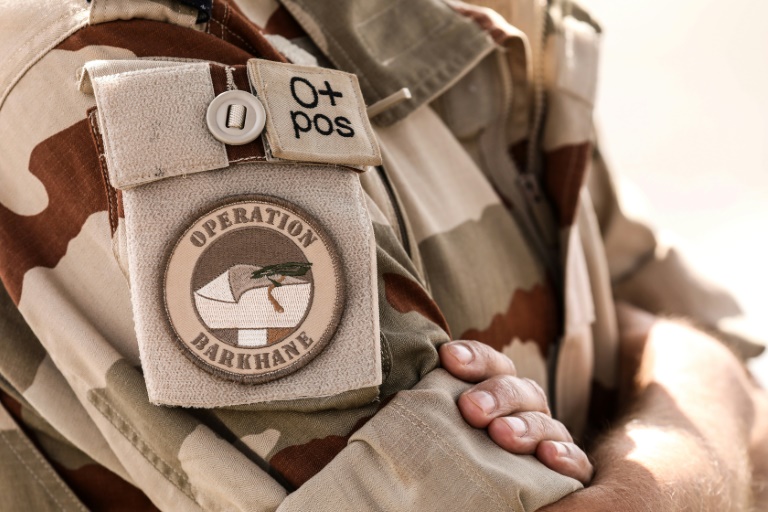
At its peak, France’s Barkhane mission had 5,100 troops among five Sahel allies, all former French colonies — Burkina Faso, Chad, Mali, Mauritania and Niger.

The forces have provided key support in air power, troop transport and reconnaissance. In Niger, France notably has an air base at Niamey where it has deployed drones.

After the Malian pullout, the mission will have “around 2,500” troops, Barkhane commander General Laurent Michon said in an interview this month.

The reconfigured mission will emphasise “more cooperative operations,” he said.

These operations will be “determined more strictly by requests from the African countries and will take the form of ‘in support of’ and not ‘in replacement for'” the local military, he said.

More than a thousand troops will be deployed in Niger, providing air support and training, French sources say.

French troops are also in Gabon, Ivory Coast and Senegal, as well as in the east of Africa in Djibouti.

On Wednesday, French President Emmanuel Macon said he had asked the government and military chiefs to “to rethink our overall presence on the African continent by the autumn.”

He called for “a presence that is less static and less exposed” and “a closer relationship” with African armed forces.

US, Canada condemn Russia's war on Ukraine at Indonesia G20 talks

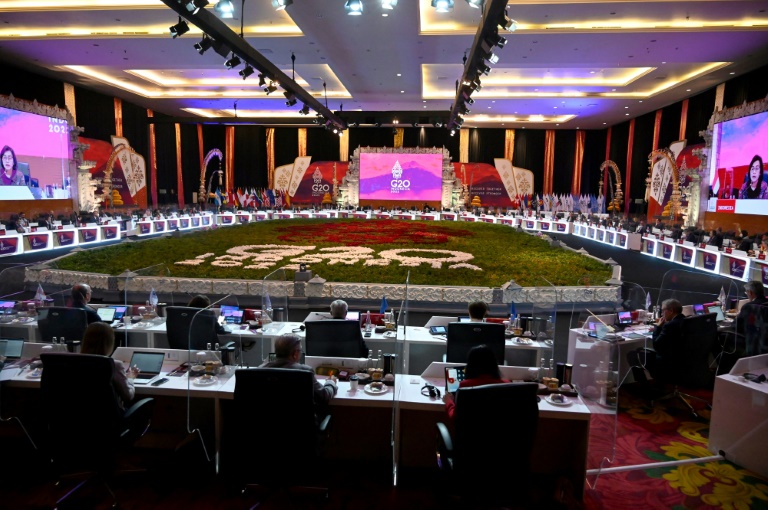
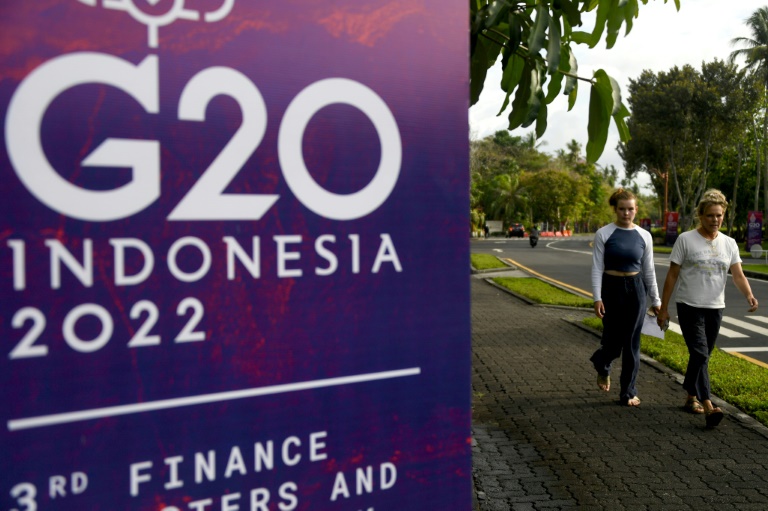
Western finance ministers condemned Moscow’s invasion of Ukraine at G20 talks in Indonesia Friday, accusing Russian officials of complicity in atrocities committed during the war.

The two-day meeting on the island of Bali began under the shadow of a Russian military assault that has roiled markets, spiked food prices and stoked breakneck inflation, a week after Moscow’s top diplomat walked out of talks with the forum’s foreign ministers.

“Russia is solely responsible for negative spillovers to the global economy,” US Treasury Secretary Janet Yellen told the Russian delegation in the opening session, according to a Treasury official.

“Russia’s officials should recognise that they are adding to the horrific consequences of this war through their continued support of the Putin regime. You share responsibility for the innocent lives lost.”

She was joined by Canadian Finance Minister Chrystia Freeland, who told Russia’s delegation they were responsible for “war crimes” in Ukraine because of their support for the invasion, a Canadian official said. 

“It is not only generals who commit war crimes, it is the economic technocrats who allow the war to happen and to continue,” said Freeland, according to the official.

Both Russian Finance Minister Anton Siluanov and Ukrainian Finance Minister Serhiy Marchenko are participating virtually in the meeting. 

Moscow instead sent Russian Deputy Finance Minister Timur Maksimov to attend the talks in person. He was present for both Yellen and Freeland’s condemnation, according to a source present at the talks.

Host and G20 chair Indonesia warned ministers that failure to tackle energy and food crises would be catastrophic.

In her opening remarks, Indonesian Finance Minister Sri Mulyani Indrawati called on ministers to work together with a spirit of “cooperation” because “the world is watching” for solutions.

“The cost of our failure is more than we can afford,” she told delegates. “The humanitarian consequences for the world and for many low-income countries would be catastrophic.”

– No walkout –

The meeting has largely focused on the food and energy crises that are weighing on an already brittle global recovery from the Covid-19 pandemic.

“(Russian President Vladimir) Putin’s actions including the destruction of agricultural facilities, theft of grain and farm equipment, and effective blockade of Black Sea ports amounts to using food as a weapon of war,” Yellen said in an afternoon seminar.

Indrawati said members had “identified the urgent need for the G20 to take concrete steps” to address food insecurity and to help countries in need.

Yellen is also pressing G20 allies for a price cap on Russian oil to choke off Putin’s war chest and pressure Moscow to end its invasion while bringing down energy costs.

Yellen in April led a multinational walkout of finance officials as Russian delegates spoke at a G20 meeting in Washington, but there was no such action on Friday.

There is unlikely to be a final communique issued when talks end on Saturday because of disagreements with Russia.

– ‘Act together’ – 

G20 chair Indonesia -– which pursues a neutral foreign policy –- has refrained from uninviting Russia despite Western pressure.

“We need to act together to demonstrate why G20 deserves its reputation as the premier forum for international cooperation,” Indrawati said. 

Alongside Moscow and Kyiv’s ministers, Chinese Finance Minister Liu Kun and Britain’s new Finance Minister Nadhim Zahawi were only attending virtually.

International Monetary Fund chief Kristalina Georgieva will appear in person after saying Wednesday the global economic outlook had “darkened significantly” because of Moscow’s invasion.

European Central Bank president Christine Lagarde is participating virtually, but World Bank chief executive David Malpass will not attend.

The meeting is a prelude to the leaders’ summit on the Indonesian island in November that was meant to focus on the global recovery from the Covid-19 pandemic.

Other issues being tackled by the ministers included digital financial inclusion –- with more than a billion of the world’s population still without access to a bank account -– and the deadline for an international tax rules overhaul.

Choppers and wheelbarrows: Kenyan vote race highlights inequality

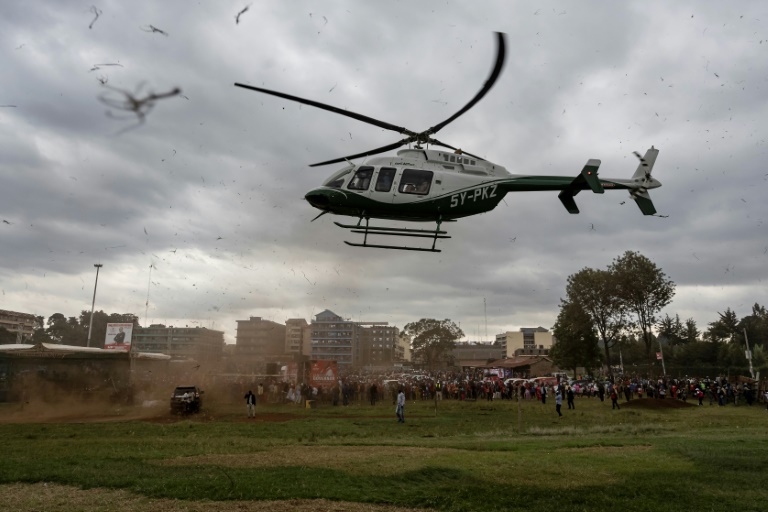
Seven helicopters lift off one by one in a cloud of dust from a remote region of western Kenya, blades spinning as an excited crowd below waves them away. 

Raila Odinga — the veteran opposition leader now backed by the ruling party in the high-stakes elections on August 9 — has just wrapped up a political rally attended by thousands. 

From the sleek choppers to convoys of luxury SUVs and trucks adorned with the faces and party colours of the politicians running for office, elections in Kenya mean money. 

“You see these people flying all over with seven, 10 choppers… when they come, they tell you that they are for common mwananchi (Swahili for common man),” accountant Benard Ooko told AFP after Odinga landed at a rally in his lakeside hometown of Bondo earlier this month. 

“Common mwananchi walks barefoot, the common mwananchi doesn’t have food to eat.”

The high-rolling campaign blitz underscores the stark inequality in a country where in 2020 four in every 10 people lived in poverty, according to a government report. 

The disparity is feeding an atmosphere of unease as Kenya — a nation of about 50 million people — battles to recover from the coronavirus pandemic, aftershocks of the grinding war in Ukraine and a biting drought. 

– ‘Hustlers’ vs dynasties – 

Deputy President William Ruto, Odinga’s main rival for the top job, has come under fire for using choppers to chase votes while giving his supporters wheelbarrows. 

The wheelbarrow is the symbol of Ruto’s United Democratic Alliance party, and its wealthy 55-year-old leader has sought to portray himself as an advocate for the “hustlers” in a country ruled by dynastic elites he says are out of touch with ordinary people. 

The showbiz doesn’t come cheap. 

Parliament in August 2021 rejected a proposal to cap presidential campaign spending to the equivalent of $38 million per candidate. As a result, the spending remains limitless.

It costs about $2,000 an hour to hire a three-seater helicopter — that compares to Kenya’s minimum monthly wage of 15,120 shillings ($128). 

There were 67 choppers registered to civilians in the country by the end of 2020, former Kenya Civil Aviation Authority director general Gilbert Kibe told AFP. 

Data from the South African Revenue Service however showed that Kenya imported 325 helicopters from that country alone in 2020.

– ‘Deprivation and hopelessness’ –

British charity Oxfam said in a report earlier this year that the two richest Kenyans own more wealth than the bottom 30 percent of the population, or some 16.5 million people.

“The extreme inequality in Kenya of increasing wealth and opportunity concentration and opulence, while millions of Kenyans are sinking more and more into undignifying deprivation and hopelessness, is an unfortunate political choice,” said Oxfam’s country director in Kenya, John Kitui.

“It is obscene, unethical and a form of social violence.”

At least three in every 10 Kenyans live in extreme poverty, on less than $1.9 a day, the World Bank said in April. 

They are struggling to cope with spiralling costs of basic goods such as food and fuel, while parts of the country are also suffering from a severe drought.

Inflation in the East African economic powerhouse jumped to a 58-month high of 7.9 percent in June, mainly as a result of skyrocketing food prices especially for staples such as maize and cooking oil, according to official figures.

– ‘It’s all PR’ –

Nevertheless, observers say the campaign showmanship can bag votes even from a population ground down by the floundering economy. 

Scenes of men clinging on treacherously to the landing gear as their favourite politician’s helicopter takes off have become commonplace, prompting the KCAA to crack down on what it called “James Bond” antics. 

“The typical voter is attracted to the rich politician,” political analyst Nerima Wako-Ojiwa told AFP.

But she said the huge wealth gap in multi-ethnic Kenya was not likely to influence voters’ choices in August.

“This election is going to be defined by tribe first, gender comes second, then age comes third,” she said.

Political analyst Joy Mdivo said however that choppers were “a necessity rather than a luxury” as politicians crisscross the vast country, combing for votes in remote villages far from the capital.

“Air travel is much safer than road, and as presidential candidates, their lives are a matter of national interest,” Mdivo told AFP, referring to the poor state of Kenya’s roads and the high number of fatal accidents.

But some voters are less than impressed.

All politicians are “cut from the same cloth” and will do little to change our lives, said 22-year-old Halima Wanjiru, a first-time voter this year. 

“It’s all PR. Only their relatives benefit when they get to office.”

With corruption endemic in Kenya, businessman Samuel Onyango Wala called for investigators to check the candidates’ campaign spending sprees.

“Where are they getting that money from? It’s from the taxpayers,” he said. 

“They are looting the economy while the common mwananchi is really suffering down here and we are not happy with that at all.”


G20 finance chiefs meet as Indonesia warns of energy, food catastrophe

Group of 20 finance ministers and central bank chiefs met in Indonesia Friday for talks on the fallout from Russia’s invasion of Ukraine, with the host warning them failure to tackle energy and food crises would be catastrophic.

The two-day meeting on the resort island of Bali started under the shadow of a war that has roiled markets, spiked food prices and stoked breakneck inflation, a week after Moscow’s top diplomat walked out of talks with the forum’s foreign ministers.

In her opening remarks, Indonesian Finance Minister Sri Mulyani Indrawati called on ministers to work together with a spirit of “cooperation” because “the world is watching” for solutions.

“The cost of our failure is more than we can afford,” she told delegates. “The humanitarian consequences for the world and for many low-income countries would be catastrophic.”

Top global finance figures, including US Treasury Secretary Janet Yellen, were to discuss the rebound from the coronavirus pandemic, but the Ukraine war and its impact on an already brittle global recovery have dominated the agenda.

Canada’s Finance Minister Chrystia Freeland, who has Ukrainian heritage, told Russia’s delegation they were responsible for “war crimes” in Ukraine because of their support for the invasion, a Canadian official said. 

“It is not only generals who commit war crimes, it is the economic technocrats who allow the war to happen and to continue,” Freeland said in the opening session, according to the official. 

Both Russian Finance Minister Anton Siluanov and Ukrainian Finance Minister Serhiy Marchenko are participating virtually in the meeting. 

Moscow instead sent Russian Deputy Finance Minister Timur Maksimov and Bank of Russia official Elizaveta Danilova to attend the talks in person.

Freeland went on to say the war was currently “the single biggest threat” to the global economy, according to the official, echoing comments from Yellen a day earlier. 

Yellen called Russia’s war in Ukraine the “greatest challenge” to the global economy and said members of Putin’s government “have no place” at the talks.

After Russia’s delegation addressed the meeting, a Western official told AFP Moscow did not send their finance minister or central bank governor in person “after the very direct criticism” that Foreign Minister Sergei Lavrov faced last week at talks in Bali. 

– No walkout –

The meeting has largely focused on the food and energy crises that are hitting economies across the world as a result of the war.

Italian Minister for Economy Daniele Franco addressed the ministers with the message that they “have a key role in avoiding that food insecurity turns into a humanitarian crisis”, according to an Italian official.

Yellen is pressing G20 allies for a price cap on Russian oil to choke off President Vladimir Putin’s war chest and pressure Moscow to end its invasion while bringing down energy costs.

Yellen in April led a multinational walkout of finance officials as Russian delegates spoke at a G20 meeting in Washington.

But there was no walkout on Friday after Yellen would not be drawn on a possible repeat of that joint action a day earlier.

There is also unlikely to be a final communique issued when talks end on Saturday because of disagreements with Russia.

– ‘Act together’ – 

G20 chair Indonesia -– which pursues a neutral foreign policy –- has refrained from uninviting Russia despite Western pressure

“This is not an easy time given our diverse membership… and also the differences in our position and views,” said Indrawati.

“We need to act together to demonstrate why G20 deserves its reputation as the premier forum for international cooperation.” 

But it has been difficult to get all parties around the table in person. 

Alongisde Moscow and Kyiv’s ministers, Chinese Finance Minister Liu Kun and Britain’s new Finance Minister Nadhim Zahawi were only attending virtually.

International Monetary Fund chief Kristalina Georgieva will appear in person after saying Wednesday the global economic outlook had “darkened significantly” because of Moscow’s invasion.

European Central Bank president Christine Lagarde is participating virtually, but World Bank chief executive David Malpass will not attend.

The meeting is a prelude to the leaders’ summit on the Indonesian island in November that was meant to focus on the global recovery from the Covid-19 pandemic.

Other issues being tackled by the ministers included digital financial inclusion –- with more than a billion of the world’s population still without access to a bank account -– and the deadline for an international tax rules overhaul.

Morocco firefighters battle infernos as villagers flee

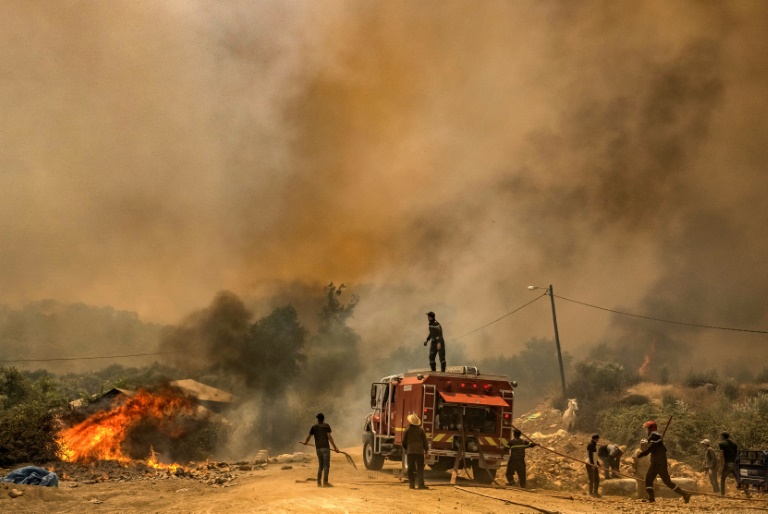
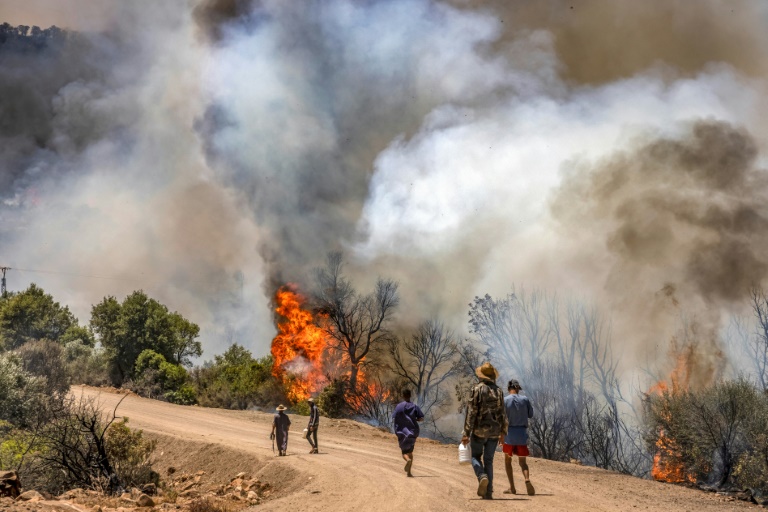
Hundreds of Moroccan firefighters and soldiers battled late Thursday to put out at least four infernos ripping through forests in the north of the kingdom, officials said.

The fires, fanned by strong winds in the four areas, have not resulted in any casualties so far, but nearly 500 families were evacuated “as a precaution” in the provinces of Larache and Taza, according to official statements.

Several villages that were evacuated also saw military planes dropping loads of water to extinguish fires tearing across the dry terrain, an AFP journalist said. 

Shocked by how fast the flames were spreading, residents fled their homes, with some families herding their cattle and horses — upon which their livelihoods depend — ahead of them.

“I was with my family, and at one point, we heard people shouting, ‘Fire! Fire!'” said Samir Boundad, from Larache. 

“We ran out to flee and fortunately, thanks to God, the fire moved up the mountain.”

A village in the Ksar El Kebir region was destroyed by the flames.

Hundreds of civil defence workers, as well as soldiers and police officers, are trying to stop the fires from causing more destruction.

In four provinces — Larache, Ouezzane, Tetouan and Taza — the fires ripped through forestland that is difficult to access, said Fouad Assali, head of the National Center for Forest Climate Risk Management.

“Efforts are continuing in the hope of bringing these fires under control,” Assali was quoted as saying by the official MAP news agency.

Since Wednesday night, at least 1,000 hectares (2,500 acres) of forest have burned in Larache and Ouezzane, according to initial reports, leaving burnt trees smouldering under a sky blanketed by plumes of smoke. 

– Intense droughts, soaring temperatures –

The North African nation, which is struggling under intense droughts, has in recent days been hit by soaring temperatures approaching 45 degrees Celsius (113 degrees Fahrenheit).

“It is the heat that causes this kind of fire. It was yesterday at dawn that the fire reached our village,” Ahmed Mezouar, 58, a resident of Larache, told AFP, adding that he was hopeful that firefighters would be able to contain it.

Still, he worried, as a neighbouring village had been completely surrounded by the flames. 

“We are afraid for our houses,” he said. “For the moment, we are safe.”

Across the Strait of Gibraltar, wildfires are also raging in southern Europe, from Portugal and Spain through to France and Greece.

Scientists say extreme weather events such as heatwaves and droughts, which make wildfires more likely, are linked to climate change.

They are expected to become even more frequent, more prolonged and more intense in the future.

Omanyala heads to world athletics as organisers cope with US visa issues

Africa’s fastest man Ferdinand Omanyala on Thursday secured a last-minute visa to travel to the United States for the World Athletics Championships although he will have to start his 100m campaign just hours after arriving.

Another African sprinter, Gift Leotlela, a semi-finalist in the 100m at the Tokyo Olympics, posted on social media that he was heading to Eugene, Oregon after delays, suggesting he was one of a group of South Africans flying at the last minute from Italy. 

“Been a frustrating few weeks heading up to the champs but we finally going although some of us are going to arrive on the day we racing,” he posted on Instagram, giving his location as Venice airport.

Jamaican 400m runner Gregory Prince also resolved his visa issues only at the last moment, reported the Jamaica Daily Gleaner. 

Championship organisers, Oregon22 and World Athletics, said that they were working to follow up on visa applications “the majority of which have been successfully resolved”.

“We continue to follow up with those outstanding visa issues,” they said in a statement, noting that international travel had become more challenging due to the Covid-19 pandemic.

Michael Johnson, who won eight world championship gold medals in 200m, 400m and relay, retweeted that statement with the comment: “pitiful & shameful”.

Oregon22 board member Renee Chube Washington, said that “of the 5,500 participants that needed visas, less than 1 percent have… not had the visas, meaning denied, or they’re still being resolved”.

“We won’t be 100 percent satisfied unless we had 100 percent of athletes here and that is just not something that we can probably be able to achieve,” Washington said.

World Athletics president Sebastian Coe said the visa issue was “complicated and multi-faceted”.

“In relative percentage terms, it’s a small number, but that’s of no comfort if you’re in that category and we will work right up to the last minute,” Coe said in Eugene.

“But Renee’s right. Will we be able to resolve all those issues in time for the start of competition tomorrow? No, we won’t.”

– Quick turnaround –

The men’s 100m opens with a preliminary round on Friday morning in Eugene. The first round of heats is in the evening.

Omanyala — the third-fastest man in the world this season — will have just a few hours rest after his flight before running.

“He will have a few hours to rest before he competes in the 100m heats, and hopefully qualify for the semi-finals and the finals,” Omanyala’s coach Duncan Ayiemba told AFP.

The 26-year-old Kenyan sprinter said he would be on the next plane and was “positive” of competing at the worlds after securing permission to travel.

“Visa challenges are faced by all Kenyans and people daily, in this case I was no different,” Omanyala said in a statement posted on his Twitter account headlined “Oregon Here I Come”.

The Kenyan team had been due to leave for the United States in two batches on Monday and Tuesday, but Omanyala was one of several members who did not receive visas in time.

Omanyala set a time of 9.85 seconds in May. Only Americans Fred Kerley and Trayvon Bromell have run faster this year.

In September last year, Omanyala set a new African record of 9.77sec, making him the ninth-fastest man ever, behind four Americans and three Jamaicans.

He told AFP in a recent interview he had set his sights on at least reaching the final of the 100m in Oregon, targeting a time of 9.6sec.

Omanyala is also competing at the Commonwealth Games in Birmingham later this month, he said in a statement Thursday.

“Looking forward to making all Kenyans proud,” he said.

aik-txw-ho-np/lp/dhc

G20 finance chiefs meet as Indonesia warns of energy, food catastrophe

Group of 20 finance ministers and central bank chiefs from top economies met in Indonesia Friday for talks on the fallout from Russia’s invasion of Ukraine, with the host warning them failure to tackle energy and food crises would be catastrophic.

The two-day meeting on the resort island of Bali started under the shadow of a war that has roiled markets, spiked food prices and stoked breakneck inflation, a week after Moscow’s top diplomat walked out of talks with the forum’s foreign ministers.

In her opening remarks, Indonesian Finance Minister Sri Mulyani Indrawati called on ministers to work together with a spirit of “cooperation, collaboration and consensus” because “the world is watching” for solutions.

“The cost of our failure is more than we can afford,” she told delegates. “The humanitarian consequences for the world and for many low-income countries would be catastrophic.”

Top global finance figures, including US Treasury Secretary Janet Yellen, will discuss the rebound from the coronavirus pandemic. But the impact of the Ukraine war –- weighing on an already brittle global recovery –- will top the agenda.

A day before the meeting, Yellen set the tone, calling Russia’s war in Ukraine the “greatest challenge” to the global economy and saying members of Putin’s government “have no place” at the talks.

“We are seeing negative spillover effects from that war in every corner of the world, particularly with respect to higher energy prices and rising food insecurity,” she said.

Yellen is expected to press G20 allies for a price cap on Russian oil to choke off President Vladimir Putin’s war chest and pressure Moscow to end its invasion while bringing down energy costs.

Both Russian Finance Minister Anton Siluanov and Ukrainian Finance Minister Serhiy Marchenko are participating virtually in the meeting.

Yellen in April led a multinational walkout of finance officials as Russian delegates spoke at a G20 meeting in Washington. No communique was issued at the end of that meeting.

It is unclear if a similar walkout will take place at this meeting, after no foreign minister walked out last week, but Yellen would not be drawn on if they would repeat their joint action.

There is also unlikely to be a final communique issued when talks end on Saturday because of disagreements with Russia.

– World tax overhaul deadline set – 

G20 chair Indonesia -– which pursues a neutral foreign policy –- has refrained from uninviting Russia despite Western pressure.

Italy and Canada’s finance ministers are in attendance, but Chinese Finance Minister Liu Kun and Britain’s new Finance Minister Nadhim Zahawi are only attending virtually.

International Monetary Fund chief Kristalina Georgieva will appear in person after saying Wednesday the global economic outlook had “darkened significantly” because of Moscow’s invasion.

European Central Bank president Christine Lagarde is participating virtually, but World Bank chief executive David Malpass will not attend.

The meeting is a prelude to the leaders’ summit on the Indonesian island in November that was meant to focus on the global recovery from the Covid-19 pandemic.

Other issues to be tackled by the ministers include digital financial inclusion –- with more than a billion of the world’s population still without access to a bank account -– and the deadline for an international tax rules overhaul.

The Organisation for Economic Cooperation and Development (OECD) will present the ministers with an update on the progress of international tax changes that will set a global minimum corporate tax rate of 15 percent by 2024, a year later than originally planned.

The deadline for the passing of legislation underpinning the new rules was set at mid-2023, the OECD said.

Morocco firefighters battle blazes as villagers flee

Hundreds of Moroccan firefighters and soldiers battled Thursday to put out at least four infernos ripping through forests in the north of the kingdom, officials said.

Several villages had to be evacuated ahead of the flames as military water-bomber planes dropped loads in a bid to extinguish the blaze, an AFP journalist said.

In soaring temperatures, and shocked by how fast the leaping flames were spreading, villagers fled their homes.

Some, where they could, herded their crucial cattle and horses upon which their livelihoods depend ahead of them.

A village in the Ksar El Kebir region of the North African nation was destroyed by the flames.

Fires fanned by strong winds broke out in the northern regions of Larache, Ouezzane, Tetouan and Taza, said the head of the National Center for Forest Climate Risk Management.

“Efforts are continuing in the hope of bringing these fires under control in the next few hours,” said Assali, quoted by the official MAP news agency.

At least 1,000 hectares (2,500 acres) of forest have been burned since Wednesday night in Larache and Ouezzane, according to initial reports.

Hundreds of civil defence workers as well as soldiers and police officers are taking part in trying to stop the fires from causing more destruction.

Morocco, which is struggling under intense droughts has in recent days been hit by soaring temperatures approaching 45 degrees Celsius (113 degrees Fahrenheit).

Across the Strait of Gibraltar, wild fires are also raging in southern Europe, from Portugal and Spain through to France and Greece.

Scientists say extreme weather events such as heatwaves and droughts, which make wildfires more likely, are linked to climate change.

They are expected to become even more frequent, more prolonged and more intense in the future.

Wimbledon trailblazer Jabeur receives Tunisian Order of Merit

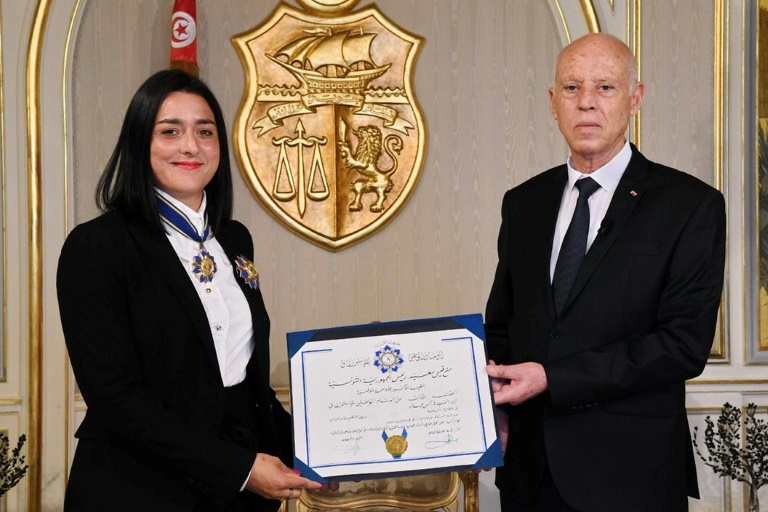
Tennis trailblazer Ons Jabeur, who became the first African woman to reach a Grand Slam singles final, was honoured by Tunisian President Kais Saied on Thursday for “her remarkable sporting successes”.

The 27-year-old Jabeur, defeated in the Wimbledon final by Russian-born Elena Rybakina last weekend, was awarded the country’s Great Medal of the National Order of Merit. 

Saied hailed Jabeur for raising “high the country’s flag in international sporting events” and described her as “the ambassador of Tunisia”.

“Congratulations for this success and future successes.”

Jabeur, nicknamed “Minister of Happiness” by fans in Tunisia, said she hoped to inspire other Arab and African players to succeed at tennis.

“We want to give more hope to the young people who watch us. We hope to continue this momentum. We are proud to be Tunisians and we will continue with this success story,” she said.

Close Bitnami banner
Bitnami