Africa Business

Mali to suspend all new UN peacekeeping rotations

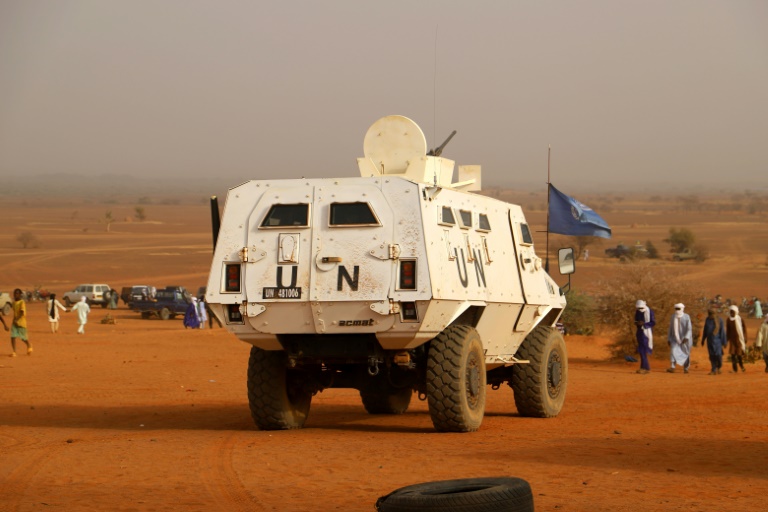
Mali said Thursday it was suspending rotations of the UN’s peacekeeping mission for “national security” reasons, in the latest complication in ties between the ruling junta and international partners.

Rotations of the MINUSMA mission are being suspended, including those that have already been scheduled, the foreign ministry in Bamako said.

The suspension will last until a meeting is held to “facilitate the coordination and regulation” of the rotation of contingents, it said in a statement.

The announcement did not expound on the reasons for the move.

But it came four days after Mali arrested 49 Ivorian soldiers it later described as “mercenaries” intent on toppling the country’s military-led government. 

Ivory Coast says the soldiers are so-called National Support Elements (NSE) — a UN procedure allowing peacekeeping contingents to use outside contractors for logistical duties.

The soldiers, who were arrested after arriving at Bamako airport aboard a special flight, comprised the eighth rotation under this scheme, according to Ivory Coast.

Mali’s statement on Thursday did not refer to the Ivorians’ arrest, nor did it give a date for talks to discuss MINUSMA rotations.

But it assured the UN mission that Mali would “work diligently to create conditions conducive to the lifting of this suspension of rotation, which is an essential step in enabling the deployed contingents to ensure the proper implementation of MINUSMA’s mandate.”

MINUSMA said in a terse statement it took note of Mali’s decision but stressed it was ready to engage without delay in discussions, adding that the rotations had a crucial role in maintaining its mission’s operational effectiveness as well as the morale of its personnel.

The statement added that “all must be done to resolve urgently” the issue.

– UN mission –

MINUSMA — the United Nations Multidimensional Integrated Stabilisation Mission in Mali — was launched in 2013 to help one of the world’s poorest countries cope with a bloody jihadist campaign.

It is one of the UN’s biggest peacekeeping operations, with around 12,200 soldiers and 1,700 police sent by some 50 countries. 

Its mandate was renewed for one year on June 29, despite Mali “firmly opposing” requests to allow freedom of movement for human rights investigators with the mission.

On July 7, MINUSMA head El-Ghassim Wane told a news conference that the mission needed the “support and cooperation of the Malian authorities”, calling for “constant dialogue” to overcome “misunderstandings”.

In mid-January, Mali suspended MINUSMA air operations for several days following what it said was a reorganisation of the process for approving flights over conflict zones. 

The suspension was lifted after “fruitful discussions”, authorities said.

MINUSMA operates regular flights between Mali and neighbouring countries for supply missions and to evacuate wounded soldiers.

– French pullout –

Meanwhile, France’s Barkhane anti-jihadist mission is expected to complete its pullout from Mali in the coming weeks after relations between Paris and Bamako foundered.

The junta has brought in Russians that it says are military advisers but which France says are paramilitaries of the controversial Wagner group.

In April, Human Rights Watch (HRW) said around 300 civilians had been massacred in central Mali the previous month by Malian forces and suspected Russian fighters.

Mali’s military regime also spent the first half of 2022 under economic sanctions by its West African neighbours over its failure to respect its timetable for restoring civilian rule.

Mali underwent coups in August 2020 and May 2021, creating a political crisis that coincides with an ongoing security crisis.

Jihadists joined a regional insurgency in northern Mali in 2012, and then extended their campaign to the centre of the country and neighbouring Burkina Faso and Niger.

Thousands of civilians have died, more than two million have fled their homes, and economic damage to countries that are among the poorest in the world has been severe.
UN urges Africa to swap commodities for tech

The UN’s trade body on Thursday said African economies were vulnerable to a triple shock as it urged governments to pave the way for tech startups that would  ease dependence on commodities.

“A recent analysis by the UN Global Crisis Response Group on Food, Energy and Finance, which analyses the global economic cost by the war in Ukraine, indicates that Africa and especially sub-Saharan Africa is now one of the world’s most exposed regions to the current crisis,” Rebeca Grynspan, secretary-general of the United Nations Conference on Trade and Development (UNCTAD), said at the launch of the body’s latest Africa report. 

“One out of two Africans — that means over 600 million people — are severely vulnerable to food, energy and finance shocks, all at once,” she added.

The report recommended diversifying away from both commodities exports, on which many African economies continue to depend, and traditional service sectors — such as travel and transport — towards more knowledge-intensive services. 

“We have been talking about diversification as long as I can remember, and how Africa can diversify its economy, and the fact is  that we’ve been looking at it through the lens of diversifying within the commodity sector,” said Paul Akiwumi, a director with UNCTAD.

“Now it’s also very timely because of technology,” he added.

He pointed to budding fintech, healthtech, agritech, e-mobility and other tech-focused sectors in African countries.  

“Africa has a growing educated middle class who need these jobs, and these types of small and medium size enterprises provide high skilled jobs — operational officers, finance officers, government liaison relations officers, software engineers, HR managers, administrative accountants,” he said. 

Akiwumi said governments must provide entrepreneurs the necessary regulatory frameworks, as well as training and capacity building. 

He also said they must implement the African Continental Free Trade Area (AfCFTA) agreement, a trade pact that came into force last year, to scale up developments across the continent.

Nigeria's Twitter ban unlawful: W.African court

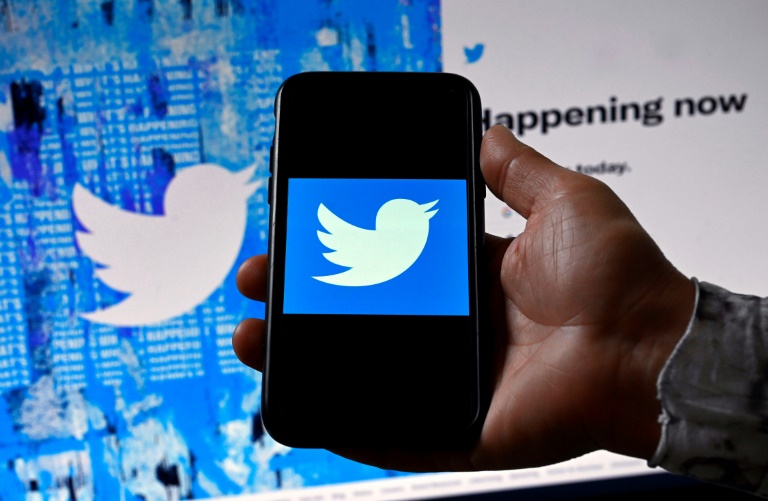
A seven-month ban on Twitter use in Nigeria was unlawful, according to a court ruling by West Africa’s regional bloc ECOWAS seen by AFP on Thursday.

The Abuja government suspended Twitter in June last year after the social media giant deleted a tweet by President Muhammadu Buhari. It lifted the ban in January.

The Economic Community of West African States (ECOWAS) court issued its ruling following a suit brought by a Nigerian NGO called the Socio-Economic Rights and Accountability Project (SERAP) and rights campaigners.

In a summing-up statement sent to AFP the court said the ban, which drew international approbrium, was unlawful, infringed freedom of expression and access to media, and ran counter to provisions both of the African Charter and the International Covenant on Civil and Political Rights.

In declaring the ban unlawful the court also ordered the Nigerian authorities never to repeat it.

Abuja lifted the suspension after talks with Twitter representatives but laid down conditions, including Twitter registering its operations in Nigeria, Africa’s largest economy.

With three-quarters of Nigeria’s population of 200 million aged under 24 the country is hyper-connected to social media. 

The ban shocked many in Nigeria, given Twitter’s major role in political discourse, as evidenced by the #BringBackOurGirls hashtag deployed after Boko Haram extremists kidnapped nearly 300 schoolgirls in 2014.

Young activists also turned to Twitter to organise the #EndSARS protests against police brutality that eventually grew into the largest demonstrations in Nigeria’s modern history before they were repressed.

Around 40 million Nigerians, or around 20 percent of the population, have a Twitter account.

Abuja initially announced an unlimited ban, accusing the platform of allowing activities it said threatened the country’s existence citing posts by separatist agitators from the country’s southeast, where a civil war five decades ago killed one million people.

Nigeria’s National Information Technology Development Agency (NITDA) director general Kashifu Inuwa Abdullahi at the time said there were “unscrupulous elements” using Twitter “for subversive purposes and criminal activities, propagating fake news, and polarising Nigerians.”

The ban came two days after Twitter took down a tweet from President Buhari warning he would take action and treat those users “in the language they understand.”

UN urges Africa to swap commodities for tech

The UN’s trade body on Thursday said African economies were vulnerable to a triple shock as it urged governments to pave the way for tech startups that would  ease dependence on commodities.

“A recent analysis by the UN Global Crisis Response Group on Food, Energy and Finance, which analyses the global economic cost by the war in Ukraine, indicates that Africa and especially sub-Saharan Africa is now one of the world’s most exposed regions to the current crisis,” Rebeca Grynspan, secretary-general of the United Nations Conference on Trade and Development (UNCTAD), said at the launch of the body’s latest Africa report. 

“One out of two Africans — that means over 600 million people — are severely vulnerable to food, energy and finance shocks, all at once,” she added.

The report recommended diversifying away from both commodities exports, on which many African economies continue to depend, and traditional service sectors — such as travel and transport — towards more knowledge-intensive services.

“We have been talking about diversification as long as I can remember, and how Africa can diversify its economy, and the fact is  that we’ve been looking at it through the lens of diversifying within the commodity sector,” said Paul Akiwumi, a director with UNCTAD. 

“Now it’s also very timely because of technology,” he added.

He pointed to budding fintech, healthtech, agritech, e-mobility and other tech-focused sectors in African countries.  

“Africa has a growing educated middle class who need these jobs, and these types of small and medium size enterprises provide high skilled jobs — operational officers, finance officers, government liaison relations officers, software engineers, HR managers, administrative accountants,” he said. 

Akiwumi said governments must provide entrepreneurs the necessary regulatory frameworks, as well as training and capacity building. 

He also said they must implement the African Continental Free Trade Area (AfCFTA) agreement, a trade pact that came into force last year, to scale up developments across the continent.

Omanyala gets last minute visa reprieve for Worlds

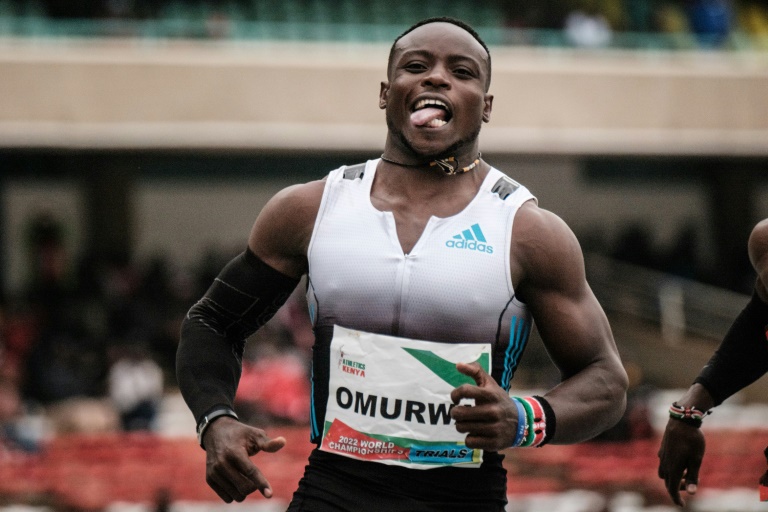
Africa’s fastest man Ferdinand Omanyala on Thursday said he would compete in the World Athletics Championships in Oregon after being granted a last-minute visa to travel to the United States. 

Omanyala — the third-quickest man in the world this season — will have just a few hours rest after his flight before the 100 metre heats start Friday in Eugene, Oregon.

But the 26-year-old Kenyan sprinter said he would be on the next plane and was “positive” of competing at the fixture after securing permission to travel.

“Visa challenges are faced by all Kenyans and people daily, in this case I was no different,” Omanyala said in a statement posted on his Twitter account headlined “Oregon Here I Come”.

He had earlier given up hope of competing after failing to receive a visa, saying there wasn’t enough time to fly to Oregon — a journey of 24 hours or more —  before the race.

But he will make the trip and arrive on Friday morning after being presented with his visa at the sports ministry, Omanyala’s coach Duncan Ayiemba told AFP.

“He will have a few hours to rest before he competes in the 100m heats, and hopefully qualify for the semi-finals and the finals,” he said.

The Kenyan team had been due to leave for the United States in two batches on Monday and Tuesday, but several members including Omanyala did not receive visas.

There was no immediate comment from Athletics Kenya, and the reasons for the visa hitch are not known.

Reports have emerged of athletes from other countries facing issues obtaining US visas, although Omanyala is the highest-profile.

Championship organisers Oregon22 and World Athletics had said on Wednesday that they were working to follow up on visa applications “the majority of which have been successfully resolved”.

“We continue to follow up with those outstanding visa issues,” they said in a statement, noting that international travel had become more challenging due to the Covid-19 pandemic.

Omanyala is the third-quickest man in the world this season behind Americans Fred Kerley and Trayvon Bromell, setting a time of 9.85 seconds in May.

In September last year, he set a new African record of 9.77sec, making him the ninth-fastest man ever, behind four Americans and three Jamaicans.

He told AFP in a recent interview he had set his sights on at least reaching the final of the 100m in Oregon, targeting a time of 9.6sec.

If he had made the podium there, it would have been an historic first for an African runner. 

Namibia’s Frankie Fredericks twice won Olympic silver in the 100m in the 1990s, but his one gold and three silvers in the World Championships were all over 200m. 

– ‘Want to leave a legacy’ –

The young athlete and his coach have been mapping out ways to make sprinting more popular in Kenya, the East African country where the long-distance runner is king.

Omanyala became the first Kenyan sprinter to reach an Olympic semi-final at the Tokyo Games last year.

He was able to represent Kenya in Tokyo after Athletics Kenya relaxed a decision to prohibit any banned athletes from taking part in international competitions.

He had been suspended for 14 months in 2017 by the Anti-Doping Agency of Kenya after testing positive for a banned substance.

“It was a hard 14 months but life has to move on,” Omanyala said in the AFP interview.

Hailing from western Kenya, Omanyala said he hoped to be a role model for other aspiring sprinters both at home and across Africa.

“I believe I opened the way for so many people coming behind me,” he said. “One of the things that I wanted to do is to leave a legacy. I want to leave an industry of sprint in Kenya.”

Omanyala is also competing at the Commonwealth Games in Birmingham later this month, he said in a statement Thursday.

“Looking forward to making all Kenyans proud,” he said.

aik-txw-ho-np/pi

Morocco's king endorses new Jewish organisations

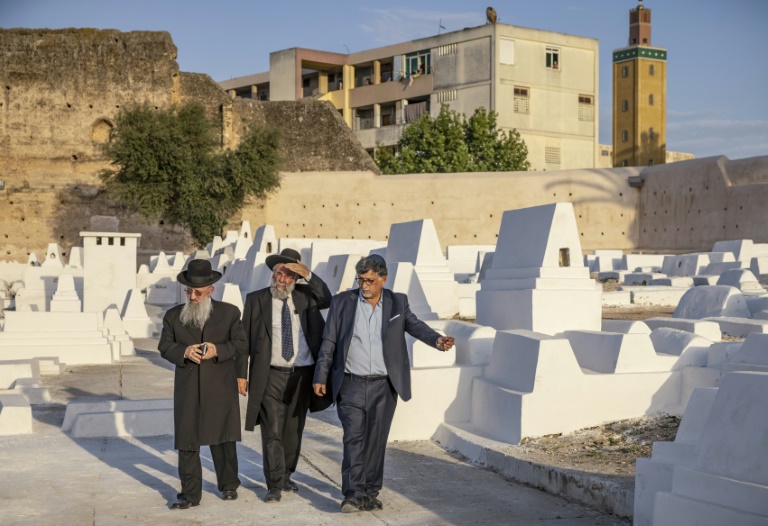
Morocco’s King Mohammed VI has authorised a reorganisation of the country’s Jewish community, a “component” of national culture in the North African country, according to the royal palace.

The measures were presented to a council of ministers meeting attended on Wednesday by the country’s monarch and crown prince, at Rabat’s royal palace.

Acting on “royal instruction”, Interior Minister Abdelouafi Laftit proposed the establishment of new representative bodies, acknowledging the Jewish tradition as “a component of the rich Moroccan culture”, according to the official news agency MAP.

The measures came the same day US President Joe Biden touched down in Israel on his first presidential visit to the Middle East.

In a speech at Ben Gurion Airport, near Tel Aviv, he  promised to “advance Israel’s integration into the region.”

Morocco established diplomatic ties with the Jewish state in 2020.

The kingdom’s Jewish community is estimated to number 3,000 people, the largest in North Africa.

Following consultations with Jewish leaders King Mohammed’s initiative will establish a National Council of the Moroccan Jewish Community, a Foundation of Moroccan Judaism tasked with protecting the community’s heritage, and a Commission of Moroccan Jews Abroad.

The kingdom’s Jewish community dates to antiquity and grew in the 15th century with the expulsion of Spain’s Jews. 

By the 1940s its number had grown to 250,000, representing 10 percent of the country’s population, but mass emigration followed Israel’s founding in 1948.

Approximately 700,000 Israelis claim Moroccan descent and maintain strong ties with their country of origin.

This new organisation of Moroccan Judaism comes alongside growth across a range of spheres in the ties between Morocco and Israel. 

Israel and Morocco established diplomatic relations in December 2020 as part of the US-backed Abraham Accords, which saw several Arab countries normalise ties with the Jewish state. 

King Mohammed’s presence at the meeting was his second public appearance in three days, accompanied by Crown Prince Moulay El Hassan, amid public interest in the monarch’s health following two heart operations since 2018 and a June Covid-19 diagnosis.

On Sunday, the king led prayers at a royal residence in Sale, near Rabat, during the Muslim festival of Eid al-Adha.

'A heart of love': Kinshasa locals reward honest cops

At dawn in a working-class district of Kinshasa, a driver slows to a halt and hands a fistful of small bills to a traffic cop.

The sight is common in the Democratic Republic of Congo’s bustling capital, where ill-paid officers are notorious for shaking down commuters. 

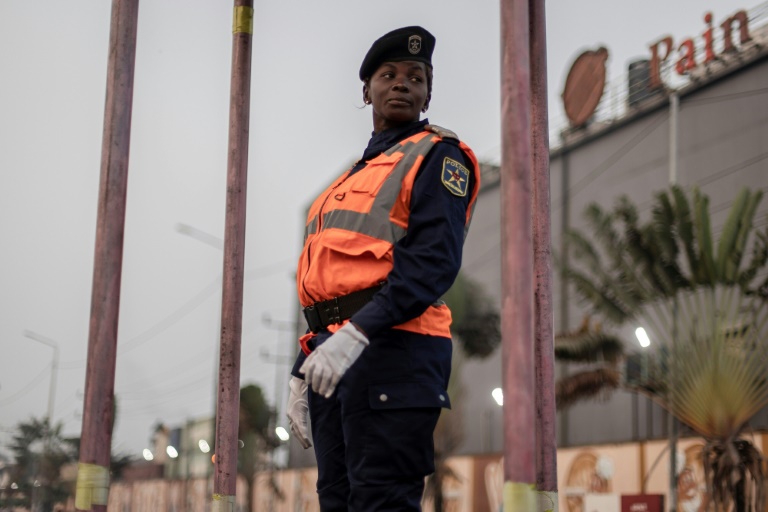
But unlike some of her less scrupulous colleagues, police officer Cecile Bakindo had solicited no money. The driver had simply stopped to give her a tip for doing her job.

“People like me a lot,” said Bakindo, wearing a beret, white gloves and a fluorescent orange vest over her navy-blue uniform. 

“They give me lots of presents.” 

Traffic cops in the megacity of 15 million have an entrenched image for corruption. 

It’s not uncommon for them to leap inside a car to accuse the driver of an imaginary infraction and snatch the key in the hope of extracting payment. Police are even known to rip off license plates during traffic stops.

Public disillusionment with the force is deep enough that a practice has developed that, elsewhere in the world, may seem paradoxical: people give money to police who are straight.

In Kinshasa, honest traffic cops are city institutions — word of their integrity swiftly spreads through conversations or on social media, and many reap rewards in tips as a result.

After Bakindo mounts a platform in the middle of her busy intersection, she smiles as she directs swarms of motorbikes and decrepit collective taxis to their destinations.

Another motorist slows down to offer her money in the space of a few minutes.

Locals, long accustomed to police harassment, said they appreciate her commitment to work and her honesty.

“She is really super,” said Patient Kanuf, a 32-year-old motorbike-taxi driver refuelling near Bakindo’s intersection. 

“She has a heart of love.”  

– Impunity –

At another intersection in the city centre, a tall and soft-spoken police captain with heavy black spectacles has also become a local celebrity for incorruptibility. 

Jean-Pierre Beya, 64, has stood under the sun at the same junction for about 15 years, smiling genially at commuters as they crawl past in late-afternoon traffic. 

Drivers who surge dangerously across the intersection earn a finger-wag and a stern talking-to.

Isaac Woto, a nearby taxi driver, said that both Beya and Bakindo are known across Kinshasa. 

“They’re serious” about their jobs, said the 45-year-old. “The others, they’re just looking for money.” 

Corruption is an engrained problem in the DRC.

A vast country the size of continental western Europe, it ranks a lowly 169th out of 180 nations in the 2021 Corruption Perceptions Index by the NGO Transparency International.

Researchers from the University of Chicago, Antwerp University, the Universite Catholique du Congo and Congolese organisation Marakuja Kivu Research delved into the issue of Kinshasa’s traffic cops.

Around 80 percent of their income came from bribes, the team say in a study due to be published next week by the US-based National Bureau of Economic Research (NBER).

Looking at more than 15,000 interactions between drivers and police, the researchers concluded that the bribery was codified into a system — cops had to achieve a quota of kickbacks.

In 2015, according to their calculation, bribes raised an average of $12,120 per month per police station. 

A traffic officer, who spoke to AFP on condition of anonymity, denied that soliciting bribes was routine, but admitted that there was impunity for senior police officers and politicians who drove dangerously.

A spokesman for the Congolese national police did not respond to requests for comment.

– ‘For the republic’ –

The unsolicited tips that AFP saw changing hands appeared to range from the equivalent of 50 US cents to a few dollars.

Such sums can be significant in a country where nearly three-quarters of the population of 90 million lives on under $1.9 a day, according to World Bank figures.

Official police salaries are very low, with the lowest-ranked traffic cop earning about $100 a month, said Beya.

But he dismissed the notion that poverty was what prompted some of his colleagues to shake drivers down.

“We’re all on the same salary,” the captain said, as he took a break in the shade.

“The problem is mentality,” he said. “I work for the republic.”

Locals seemed to cherish Beya, offering him tips and saluting or bowing as they passed by.

Beya, like Bakindo, said accepting tips was within the rules.

“It’s not corruption,” Beya said, explaining that gifts do not affect his impartiality. 

“If you do things with respect and courtesy, you’ll get something in return.”

Libya's oil firm chief resists move to replace him

Libya’s Tripoli-based government has named a new head of the state oil company to replace veteran technocrat Mustafa Sanalla, who refused to give up his post.

Unlike many other Libyan state bodies, the National Oil Corporation, led by Sanalla since 2014, has largely managed to remain neutral in the face of political wrangling.

But petrol is at the heart of political rivalries in Libya, which has two governments, one in Tripoli led by Abdulhamid Dbeibah, appointed last year as part of a United Nations-backed peace process to end more than a decade of violence in the North African country.

Dbeibah has refused to cede power to Fathi Bashagha, named in February as prime minister by a parliament based in Libya’s east and backed by military strongman Khalifa Haftar.

According to a July 7 decree made public on Wednesday, Farhat Bengdara and four others will from now on make up the “board of directors of the National Oil Corporation”.

Bengdara, 57, was governor of Libya’s central bank from 2006 to 2011 before he joined the revolt which overthrew dictator Moamer Kadhafi.

An ad hoc committee that was on Wednesday to organise the handover at the head of the NOC had to suspend its work because of employee reluctance — including from the very top.

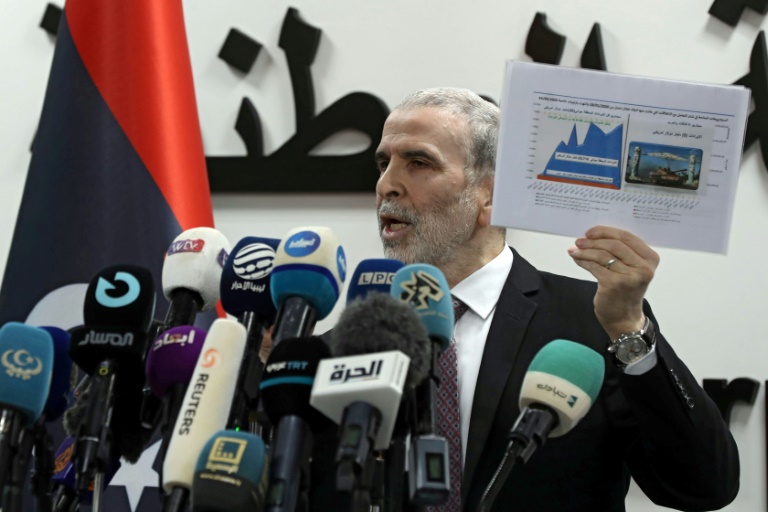
Sanalla said late Wednesday he would not give up his post.

“This institution belongs to all Libyans and not to you,” he said in a live video address to Dbeibah.

“The mandate of your government has expired,” he said, emphasising the technical and apolitical nature of the oil firm.

Sanalla has positioned himself as an interlocutor with foreign powers and oil firms. He has also skillfully mediated disputes to keep Libya’s crude flowing during times of war, as well as boosting production during peacetime.

However, Dbeibah’s Oil and Gas Minister Mohammed Aoun has on several occasions attempted to oust Sanalla.

In an April interview with AFP, Aoun accused Sanalla of not respecting laws governing the sector “and exceeding his prerogatives”.

Bengdara is reputedly close to the United Arab Emirates which backs Libya’s eastern camp. Sanalla accused the UAE of involvement in his sacking.

Despite sitting on Africa’s biggest proven oil reserves, war-battered Libya suffers chronic power outages and rising poverty. This has fuelled public anger that has piled pressure on both the Tripoli-based administration and its eastern rival.

On Wednesday the NOC said it was lifting a force majeure at two eastern export terminals. They had been blockaded for three months by groups demanding Dbeibah’s departure.

'A heart of love': Kinshasa locals reward honest cops

At dawn in a working-class district of Kinshasa, a driver slows to a halt and hands a fistful of small bills to a traffic cop.

The sight is common in the Democratic Republic of Congo’s bustling capital, where ill-paid officers are notorious for shaking down commuters. 

But unlike some of her less scrupulous colleagues, police officer Celine Bakindo had solicited no money. The driver had simply stopped to give her a tip for doing her job.

“People like me a lot,” said Bakindo, wearing a beret, white gloves and a fluorescent orange vest over her navy-blue uniform. 

“They give me lots of presents.” 

Traffic cops in the megacity of 15 million have an entrenched image for corruption. 

It’s not uncommon for them to leap inside a car to accuse the driver of an imaginary infraction and snatch the key in the hope of extracting payment. Police are even known to rip off license plates during traffic stops.

Public disillusionment with the force is deep enough that a practice has developed that, elsewhere in the world, may seem paradoxical: people give money to police who are straight.

In Kinshasa, honest traffic cops are city institutions — word of their integrity swiftly spreads through conversations or on social media, and many reap rewards in tips as a result.

After Bakindo mounts a platform in the middle of her busy intersection, she smiles as she directs swarms of motorbikes and decrepit collective taxis to their destinations.

Another motorist slows down to offer her money in the space of a few minutes.

Locals, long accustomed to police harassment, said they appreciate her commitment to work and her honesty.

“She is really super,” said Patient Kanuf, a 32-year-old motorbike-taxi driver refuelling near Bakindo’s intersection. 

“She has a heart of love.”  

– Impunity –

At another intersection in the city centre, a tall and soft-spoken police captain with heavy black spectacles has also become a local celebrity for incorruptibility. 

Jean-Pierre Beya, 64, has stood under the sun at the same junction for about 15 years, smiling genially at commuters as they crawl past in late-afternoon traffic. 

Drivers who surge dangerously across the intersection earn a finger-wag and a stern talking-to.

Isaac Woto, a nearby taxi driver, said that both Beya and Bakindo are known across Kinshasa. 

“They’re serious” about their jobs, said the 45-year-old. “The others, they’re just looking for money.” 

Corruption is an engrained problem in the DRC.

A vast country the size of continental western Europe, it ranks a lowly 169th out of 180 nations in the 2021 Corruption Perceptions Index by the NGO Transparency International.

Researchers from the University of Chicago, Antwerp University, the Universite Catholique du Congo and Congolese organisation Marakuja Kivu Research delved into the issue of Kinshasa’s traffic cops.

Around 80 percent of their income came from bribes, the team say in a study due to be published next week by the US-based National Bureau of Economic Research (NBER).

Looking at more than 15,000 interactions between drivers and police, the researchers concluded that the bribery was codified into a system — cops had to achieve a quota of kickbacks.

In 2015, according to their calculation, bribes raised an average of $12,120 per month per police station. 

A traffic officer, who spoke to AFP on condition of anonymity, denied that soliciting bribes was routine, but admitted that there was impunity for senior police officers and politicians who drove dangerously.

A spokesman for the Congolese national police did not respond to requests for comment.

– ‘For the republic’ –

The unsolicited tips that AFP saw changing hands appeared to range from the equivalent of 50 US cents to a few dollars.

Such sums can be significant in a country where nearly three-quarters of the population of 90 million lives on under $1.9 a day, according to World Bank figures.

Official police salaries are very low, with the lowest-ranked traffic cop earning about $100 a month, said Beya.

But he dismissed the notion that poverty was what prompted some of his colleagues to shake drivers down.

“We’re all on the same salary,” the captain said, as he took a break in the shade.

“The problem is mentality,” he said. “I work for the republic.”

Locals seemed to cherish Beya, offering him tips and saluting or bowing as they passed by.

Beya, like Bakindo, said accepting tips was within the rules.

“It’s not corruption,” Beya said, explaining that gifts do not affect his impartiality. 

“If you do things with respect and courtesy, you’ll get something in return.”

Nigerian prison assault deepens security crisis, jihadist threat

The raid bore all the hallmarks of the Islamic State group.

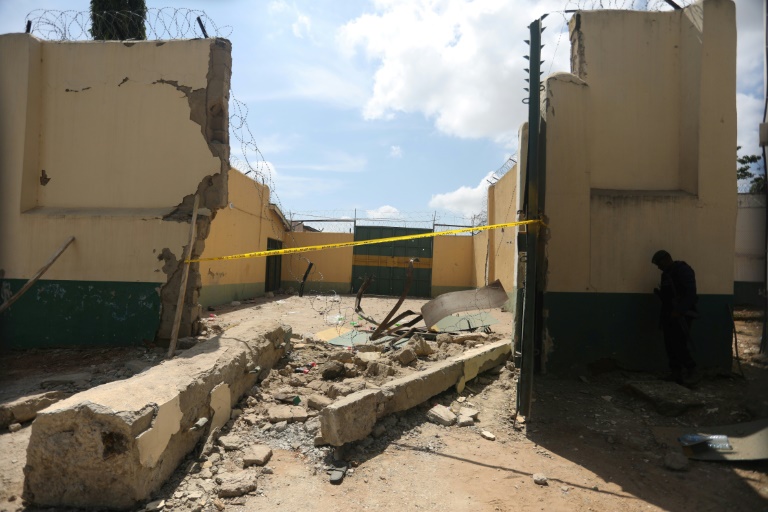
After dividing themselves into three squads, more than a hundred gunmen stormed a Nigerian prison, using explosives to blast though a wall and free dozens of jailed jihadists.

But the assault did not take place in some remote town in the country’s violence-torn northeast.

Instead, the raid unfolded just 40 kilometres (25 miles) from the residence of President Muhammadu Buhari and 20 kilometres from the capital’s international airport.

As brazen as it was sophisticated, the attack is a humiliation for Nigeria’s security forces, analysts say.

They see it as a sign of the jihadists’ growing ability to threaten regions beyond the northeast, the heartland of a 13-year insurgency.

The July 5 assault, claimed by IS affiliate ISWAP, targeted Kuje prison, a medium-security jail on the outskirts of Abuja.

“The attack… represents a monumental failure in intelligence-gathering,” Nigeria risk group SBM Intelligence said. 

“Kuje, in particular, sends a clear message from ISWAP: they are capable of hitting Abuja at will.” 

The raid happened hours after bandit gunmen ambushed a presidential convoy of staff preparing for Buhari’s visit to his home state of Katsina, in another illustration of Nigeria’s security crisis. 

The country’s multiple conflicts, from jihadists and bandit militias to separatists, will be a major part of the February 2023 election to replace Buhari — a former army commander whose rise to power was partly based on his image as a strongman.

– ‘Came in numbers’ –

In the Kuje attack, residents reported blasts and gunfire shortly after 10 pm. 

Gunmen engaged prison guards in a firefight, another group went to free comrades while a third secured the perimeter and burned security vehicles outside, prison and security officials said.

“They came in their numbers, they divided themselves into three,” correction services spokesman Abubakar Umar said.

The attack freed hundreds of inmates from the general population — many of whom were recaptured — as well as dozens of jailed jihadists, prison authorities said.

Corrections services on Friday released wanted pictures of 69 individuals jailed on terrorism charges, prompting Ghana to warn its immigration officials of attempts by Nigerian escapees to enter the country.

Members of the al-Qaeda-allied Ansaru militant group were also in the prison.

Visiting the prison briefly last week, Buhari himself asked how such an attack could happen.

The Nigerian leader has been under growing pressure over the overstretched military’s response to the insecurity.

An emergency presidential meeting with top officials called for a probe into Kuje, but critics pointed out there was no shake-up of the security management.

“The attack on this correctional facility is symptomatic of the failure of security,” Senate President Ahmad Lawan said during a visit to Kuje.

“It may not be far away from an insider job.” 

– Evolving threat –

The last major attack on Abuja was the bombing of a shopping mall in June 2014 in which 21 people died. Two months earlier, more than 80 were killed in a bus station blast.

When Buhari first came to office in 2015, Boko Haram controlled swathes of territory in Borno State. With Chadian troops, Nigerian forces pushed them back into forest hideouts.

Islamic State West Africa Province (ISWAP) broke from Boko Haram and the two factions engaged in infighting that led to the death of Boko Haram leader Abubakar Shekau last year.

Since then, the jihadist threat has evolved, analysts and security sources say.

ISWAP has consolidating its position after Shekau’s death and this year claimed attacks far from the northeast.

Its claimed operations include several attacks in north-central Kogi State, which borders the federal capital region, and other regions.

“For the first time since its formation in 2016, ISWAP has carried out attacks in Taraba, Kogi and Niger states and Abuja. These were all in 2022,” Malick Samuel, a regional researcher for the Institute for Security Studies (ISS), said in a note. 

Complicating the threat, heavily-armed criminal gangs known as bandits are constantly raiding villages and carrying out mass abductions for ransom in northwestern and central regions with little state presence.

Those gunmen kidnapped 22 farmers last month from villages outside the Abuja capital area near Niger State.

“Abuja is encircled by states like Niger and Kogi where there have been previous jail breaks and terror attacks,” said Don Okereke, a Lagos-based  security analyst and retired military officer.

Al-Qaeda affiliate Ansaru has also been re-establishing its presence in Kaduna State and in Kogi, security sources have said.

One high-ranking Nigerian security source working in counter-terrorism said the Kuje prison attack was a “national embarrassment” with major security implications.

Some escapees were bombmakers and senior militant members, the source said.

“The attack will naturally embolden them,” the source said. “It is a huge morale boost for them.”

Close Bitnami banner
Bitnami