Africa Business

Ethiopia PM meets Sudan's Burhan, says both endorse 'dialogue'

Ethiopian Prime Minister Abiy Ahmed said he met Sudan’s coup leader Abdel Fattah al-Burhan in Nairobi on Tuesday and that both committed to “dialogue” to resolve any differences.

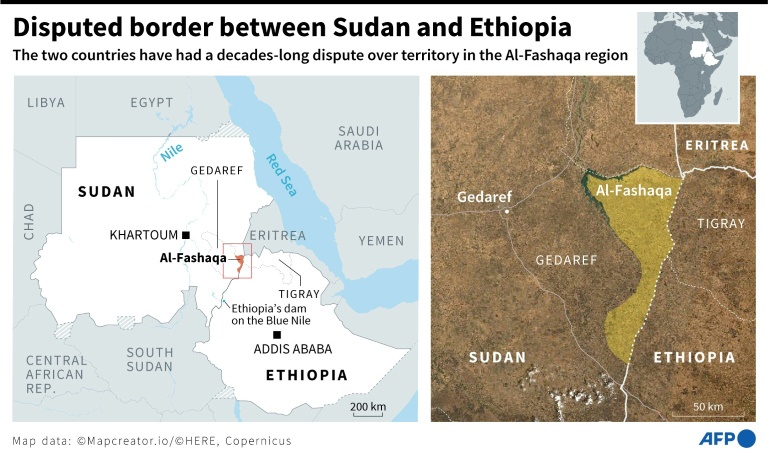
Their talks follow a clash in a volatile border region last month in which Khartoum said that Ethiopian forces had captured and killed Sudanese troops — claims denied by Addis Ababa.

“We have both agreed that our two countries have plenty of collaborative elements to work on peacefully,” Abiy said in a Twitter post, accompanied by a picture of the two men.

“Our common bonds surpass any divisions. We both made a commitment for dialogue & peaceful resolution to outstanding issues,” he said.

Both leaders were in the Kenyan capital for a summit of the Intergovernmental Authority on Development (IGAD) regional body.

Sudan’s ruling sovereign council said only that there had been a “closed-door meeting” between Burhan and Abiy.

IGAD and the African Union had both voiced alarm last week over the escalating tensions between Ethiopia and Sudan following the incident in the disputed Al-Fashaqa border area.

Khartoum said the Ethiopian army had executed seven Sudanese soldiers and a civilian in a clash on June 22 in Al-Fashaqa, and announced it was recalling its ambassador.

But Addis Ababa claimed that Sudanese forces had crossed into Ethiopian territory and that the casualties resulted from a skirmish with a local militia, denying its soldiers were in the area at the time.

Al-Fashaqa is a fertile strip of land that has long been a source of friction between Addis Ababa and Khartoum.

The region, which lies close to Ethiopia’s war-torn northern region of Tigray, has long been cultivated by Ethiopian farmers but is claimed by Sudan.

The dispute has sparked sporadic clashes between the two sides, some fatal.

The rift also feeds into wider tensions over land and water between the neighbours, particularly stoked by Ethiopia’s mega-dam on the Blue Nile.

Sudan and Egypt, both downstream countries, have been opposed to the Great Ethiopian Renaissance Dam and pushed for an agreement on the filling of its reservoir and the dam’s operations.

Tensions were heightened further after fighting erupted in Tigray in November 2020, sending tens of thousands of refugees fleeing into Sudan. 

UN warns C. Africa facing food insecurity crisis

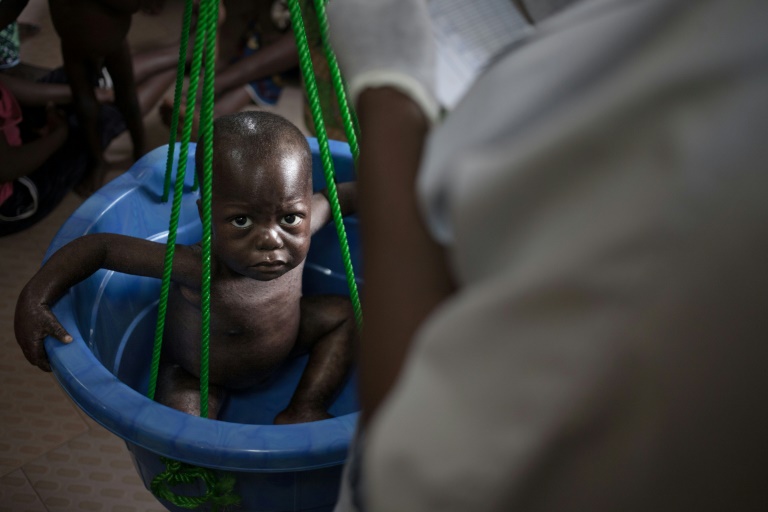
The United Nations on Tuesday made an urgent appeal for funds to help the Central African Republic face a mounting food crisis.

The UN’s World Food Programme (WFP) said 2.2 million people in the war-torn country of 5.5 million were acutely food insecure, and their plight was likely to worsen during the coming months.

“The Central African Republic is facing unprecedented humanitarian needs and a deteriorating food security situation,” WFP spokesman Tomson Phiri told reporters in Geneva.

“Food insecurity in the CAR is driven by the combined effects of the protracted internal armed conflict, persistent insecurity and population displacement.”

He said a sharp increase in commodity prices was expected from August, with rice expected to go up by 30 percent, wheat flour by 67 percent and vegetable oil by 70 percent.

WFP said it had struggled to pre-position food stocks in shortage areas ahead of the rainy season from July to September, which hampers access to much of the country.

Phiri said it was taking longer to get food into the CAR and it was also difficult to get fuel.

He said the WFP was urgently appealing for $68.4 million.

“Without immediate funding, food and nutrition insecurity will only increase for millions of people,” he said.

WFP may have to reallocate food from people who are hungry “to feed those who are hungrier”, said Phiri.

“Given the current levels of food insecurity and operational constraints, we expect the humanitarian needs to further deteriorate.

“Our teams are telling us that humanitarian assistance will be required well beyond 2022 and into 2023.”

Along with Afghanistan, Yemen and South Sudan, the CAR has one of the highest proportions of the population in acute food insecurity.

One of the world’s poorest countries, the CAR has been torn apart by civil wars for much of the past nine years, though the fighting has dropped in intensity since 2018.

In 2013, a Muslim-dominated rebellion overthrew president Francois Bozize, sparking reprisals from predominantly Christian and animist militias.

Algeria marks 60 years of independence from France

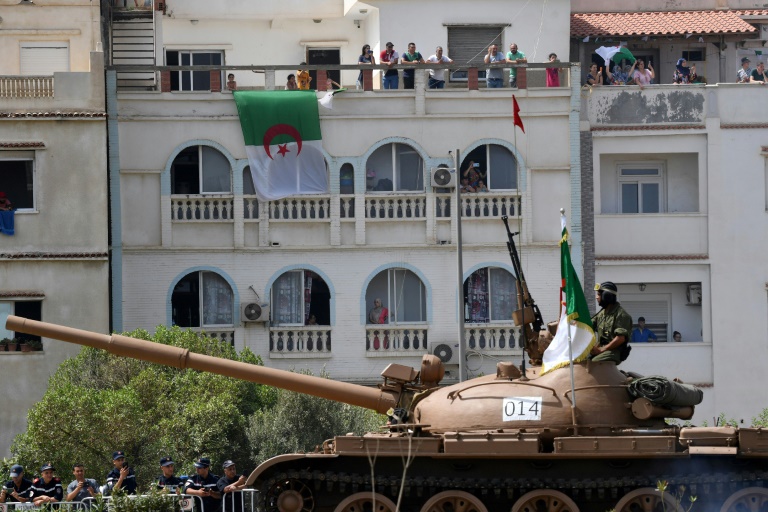
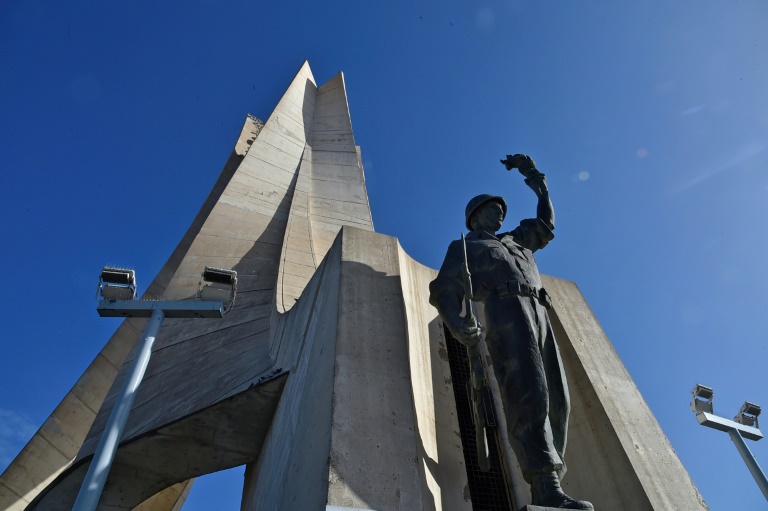
Algeria marks 60 years of independence from France on Tuesday with a huge military parade, but memories of violence during the colonial period continue to overshadow ties between the two.

The North African country won its independence following a gruelling eight-year war, which ended with the signing in March 1962 of the Evian Accords.

On July 5 of the same year, days after 99.72 percent voted for independence in a referendum, Algeria finally broke free from colonial rule — but memories of the 132-year occupation continue to mar its ties with France.

President Abdelmadjid Tebboune placed a wreath at the Martyrs Sanctuary memorial in Algiers on Tuesday, then rode in an open-top car with armed forces chief Said Chanegriha to inspect several military units before the parade officially set off.

Authorities had on Friday closed a 16-kilometre (10-mile) stretch of a major artery in Algiers for the army to carry out final rehearsals for the parade, the first in 33 years.

The closure has caused huge tailbacks on roads leading to the eastern suburbs of the capital.

Tebboune is hosting several foreign dignitaries including Palestinian president Mahmud Abbas, Tunisia’s Kais Saied and Niger’s Mohamed Bazoum.

The government has even commissioned a logo — a circle of 60 stars containing military figures and equipment — to mark “a glorious history and a new era”.

Algeria’s war of independence left hundreds of thousands dead, but six decades on, despite a string of gestures by French President Emmanuel Macron, France has ruled out any form of apology for the colonial period.

“There’s no way we can forget or erase the human genocide, the cultural genocide and the identity genocide of which colonial France remains guilty,” said Salah Goudjil, speaker of the Algerian parliament’s upper house, in an interview published by newspaper L’Expression on Monday.

French-Algerian ties hit a low late last year after Macron reportedly questioned whether Algeria had existed as a nation before the French invasion and accused its “political-military system” of rewriting history and fomenting “hatred towards France”.

Algeria withdrew its ambassador in response, but the two sides appear to have mended ties since. 

On Monday evening, Macron’s office said he had sent Tebboune a letter expressing “his best wishes to the Algerian people and… his wish that the already strong ties between France and Algeria continue to be strengthened”.

It also said a wreath would be placed in Macron’s name at a memorial in Paris for European victims of a mass killing in Oran on July 5, 1962.

Tebboune has also marked the occasion by announcing an amnesty that could lead to the early release of thousands of people detained in connection with the Hirak mass protest movement.

Sudan anti-coup protests hold firm, sceptical of army promises

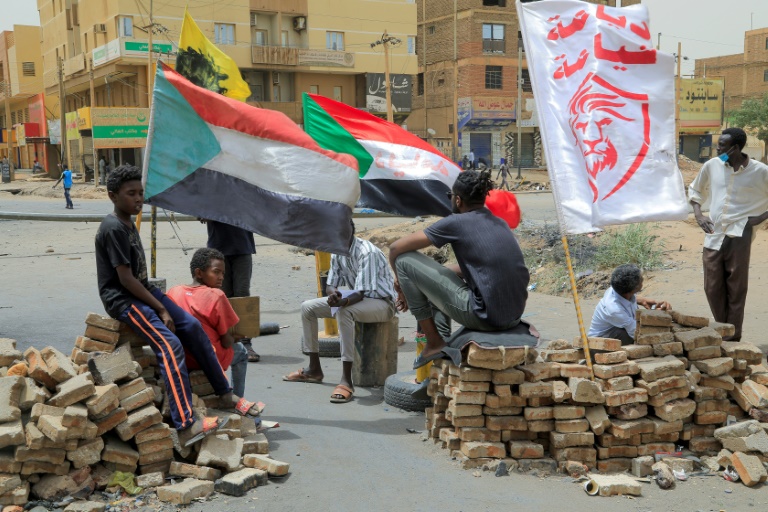
Sudanese protesters held firm on barricades Tuesday, saying they were deeply sceptical of promises by coup leader Abdel Fattah al-Burhan a day earlier that the army would make way for civilian rule.

Defying the security forces, crowds stayed on the streets of the capital Khartoum, maintaining their months-long protests against the military power grab.

“We don’t have confidence in Burhan,” said protester Muhammad Othman, perched on a barricade of bricks built across a street. “We just want him to leave once and for all.”

A day after Burhan’s announcement, many protesters were awaiting a response from the main civilian bloc, the Forces for Freedom and Change (FFC), which was ousted from power by the October coup.

The bloc has so far refused to take part in talks with military leaders, launched under international auspices in an effort to restore the transition to civilian rule.

Burhan said late Monday the military would no longer participate in the talks facilitated by the United Nations, African Union and the regional IGAD bloc, wanting instead “to make room for political and revolutionary forces and other national factions” to form a civilian government.

The announcement came eight months after the October coup ousted civilians from a transitional administration, sparking widespread international condemnation and aid cuts to the northeast African nation.

Security forces — as they have done repeatedly to the long-running protests — sought to break up the crowds by firing barrages of stun grenades and tear gas, according to pro-democracy medics.

– ‘Core grievances remain’ –

Kholood Khair, of the Khartoum think-tank Insight Strategy Partners, said many protesters believed the military’s withdrawal was “a ruse”.

Sudan, one of the world’s poorest countries, has seen only rare interludes of civilian rule.

The coup not only worsened a political crisis but has pushed Sudan deeper into a dire economic slump.

International actors have been pushing for civilian and military leaders to negotiate a return to the democratic transition they had started after the 2019 ouster of longtime autocrat Omar al-Bashir.

Hours after his surprise announcement, Burhan on Tuesday flew to Kenya for an IGAD emergency summit of East African leaders, which with the United Nations and AU has been urging for talks between the army and civilians.

Khair said he believed Burhan’s announcement was made to put “the pressure on the civilians” but warned that it might change little on the ground.

“There’s no talk of accountability,” Khair said, noting that “core grievances remain.”

Burhan’s televised address came as hundreds of anti-coup demonstrators continued protests.

Pro-democracy medics said nine demonstrators lost their lives on Thursday, the deadliest violence so far this year, bringing to 114 the number killed in the crackdown against anti-coup protesters.

On Monday, speaking shortly after Burhan’s announcement, protester Oumeima Hussein vowed the army chief must be “judged for all those killed since the coup”, and vowed to “topple him like we did to Bashir”.

Khair warned that protesters feared Burhan was putting “the Islamists back in government”, who were dominant under the three-decade rule of Bashir, with military and allied armed groups to “retain economic privileges.”

Sudan’s military dominates lucrative companies in sectors from agriculture to infrastructure.

Burhan said that “the formation of the executive government” will be followed by “the dissolution of the Sovereign Council” –- the ruling authority formed under a fragile power-sharing agreement between the army and civilians in 2019.

Also created will be a “Supreme Council of Armed Forces”, to be in charge of defence and security.

It will combine the regular army and the paramilitary Rapid Support Forces, a much feared and powerful unit commanded by Burhan’s deputy, Mohamed Hamdan Daglo.

Judge who helped jail S.Africa's Zuma sees graft probe driving change

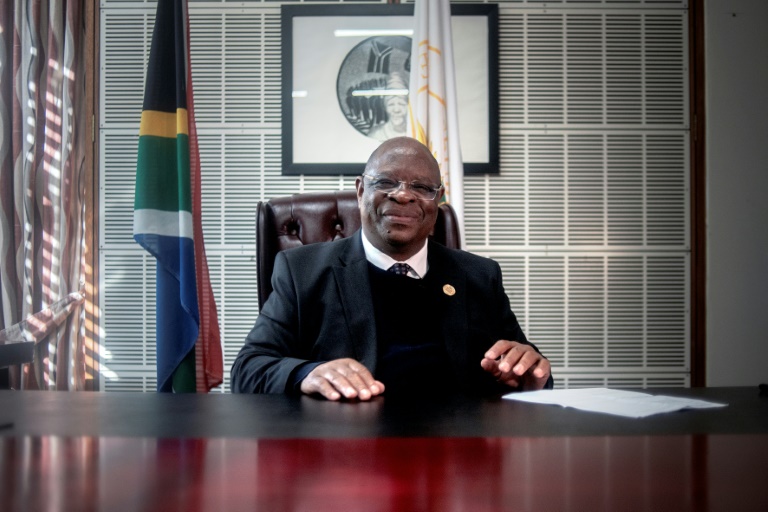
Chief Justice Raymond Zondo’s welcoming and cheerful smile belies an uncompromising nature that saw the jailing of former South African president Jacob Zuma during a high-level corruption probe.

Over the past four years, the 62-year-old has led a sweeping investigation that revealed a web of well-orchestrated state graft under Zuma and threatens to further shake the ground under the political establishment.

Published in late June, the final part of his report detailed how rampant corruption under Zuma gutted state coffers and recommended that 200 individuals face criminal charges.

Yet, speaking to AFP from his Johannesburg office, Zondo said the more than 5,000-page document also raised broader questions about Africa’s most advanced economy.

“How did we as a country get to a stage where we got somebody as president… that is ready to do such things? What is wrong in our system?” Zondo asked. 

One of the most troubling findings was Zuma’s preparedness to do “wrong things” at the instance of the wealthy Indian-born Gupta brothers, the judge said.

“If there’s anything to me that is very important out of this commission is how do we make sure that South Africa never ever gets somebody who would act like that to be its president,” he said, a cup of rooibos tea and a small cookie sitting on his large wooden desk. 

“In life there’s no guarantees… but we have to do whatever we can to minimise the chances that such a thing would happen.” 

Zuma’s nine-year presidency gained a reputation for graft where cronies influenced government appointments, contracts and state businesses.

Lawyer turned Constitutional Court judge, Zondo was appointed by Zuma himself in 2018 to head a judicial commission probing state corruption, commonly referred to as “state capture”.

Four years later, the report described Zuma as a “critical player” in the high-level plunder of state-owned enterprises that dogged his 2009 to 2018 tenure.

The man once wept in front of cameras during interviews for the position of deputy chief justice as he recounted his difficult rags-to-fame journey and how a village businessman offered to pay his school and university fees.

– Threats –

He was later to become the man who obtained a jail term for the former president. 

The burly and gentle corruption buster asked the country’s top court to try Zuma for contempt of court after the former president snubbed the investigation panel.

After a trial Zuma attended, he was last year jailed for 15 months for refusing to testify before the investigators.

Zuma’s jailing sparked riots last July that left more than 350 people dead.

The probe has gained Zondo celebrity status in South Africa, his deep voice and round face a regular feature on television over the past four years, with more than 400 days of testimony broadcast live.

But it came at a personal cost.

Zondo and his family received death threats that the father-of-eight said were linked to the July unrest.

“They would have had to kill me to stop me (from continuing with the probe),” he said. “But members of my family didn’t make any decisions, they should have been left alone.” 

In March he was named South Africa’s chief justice, an all-powerful role he now plans to return to full time.

“I’ve done my part, I don’t get involved in prosecution,” he said of potential future proceedings, adding he had finally enjoyed a “little bit of rest” after handing the report to President Cyril Ramaphosa on June 22.

Those who wanted to learn more about what went wrong could go and read it, added the judge, a fan of traditional Zulu music known as maskandi and gospel. 

I.Coast eyes cassava for its bread as wheat prices surge

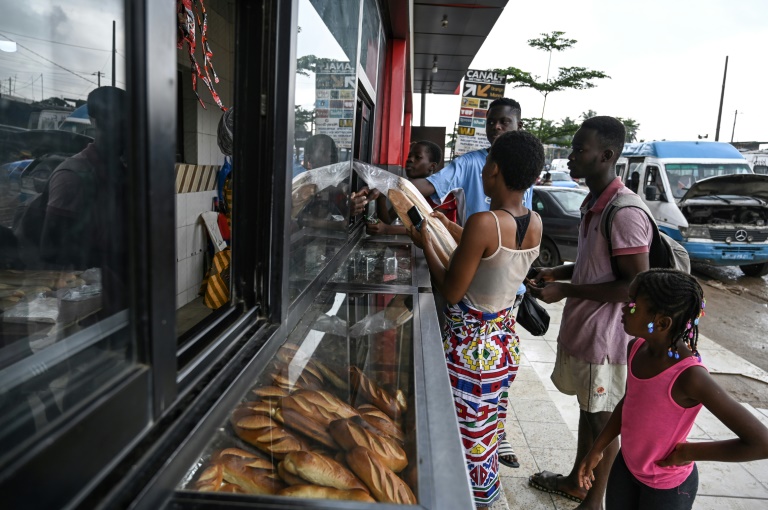
As wheat prices are driven upwards by the war in Ukraine, bakers in the West African state of Ivory Coast are starting to use locally produced cassava flour to bake bread.

The baguette, the stick of bread that is much loved in the former French colony, is commonly seen as a benchmark of the cost of living.

But Ivory Coast does not produce wheat domestically, instead importing up to a million tonnes of the grain per year, mainly from France.

Surging wheat prices have stoked concern about the impact in a country of 25 million where the average wage is less than 250,000 CFA francs ($400) per month, and which was shaken by a wave of violence less than two years ago.

Both Ukraine and Russia are large wheat producers, and lost harvests and other uncertainties have driven up prices of the global staple.

In response, Ivorian authorities have pegged the price of a baguette at between 150 and 200 CFA francs ($0.25 and $0.30) depending on weight, channelling subsidies worth 6.4 billion CFA francs (about $10 million) to the country’s 2,500 bakeries. 

Bakers, with the government’s support, are also starting to substitute a small portion of wheat flour with flour from cassava, a root vegetable.

Cassava, also called manioc, is Ivory Coast’s second largest crop after yam, with 6.4 million tonnes produced each year.

– ‘New flavours’ –

The cassava substitution plan ticks the boxes for economy and sustainability. But what do Ivorians think?

“Everything has become expensive in the market,” said Honorine Kouamee, a food vendor in Abidjan’s Blockhaus district who was cooking pancakes made of wheat mixed with coconut flour. 

“If we can make bread with local cassava flour it will be better. People are willing to eat local products.”

The national consumers’ confederation has thrown its support behind the cassava substitute.

“It will provide a stimulus for manioc producers and maintain the price of bread,” said its president, Jean-Baptiste Koffi.

But image and taste are important and some bakers are cautious.

“It’s not a done deal,” said Rene Diby, a baker.  

“For Ivorians, bread made with cassava is associated with poor-quality bread. Consumers will have to be made aware of these new flavours.”

The authorities will have to run a promotional campaign, he said.

Cassava is high in starch and is a good source of dietary fibre.

But high proportions of cassava flour lower the mineral and protein content in bread, compared with traditional wheat, a 2014 study in Nigeria found.

Financially, even using just a small portion of cassava flour would provide the government with some relief.

Last year, 10 percent of the national budget of around $16 billion was spent on food imports, despite the country’s fertile soil.

Ranie-Didice Bah Kone, executive secretary of the state-run National Council for the Fight against the High Cost of Living (CNLCV), says it is time to unlock Ivory Coast’s rch agricultural potential. 

“It’s a question of thinking long term, about our food security, it’s a question of thinking about how Ivory Coast will ensure it is less dependent on world prices,” she said.

During a visit to a cassava flour processing plant in Abidjan, she called for immediate measures to increase the supply of local flours, in addition to subsidies for the wheat sector.

– ‘Africanise baking’ –

Concerns in West Africa about dependence on imported wheat are not confined to Ivory Coast. 

On July 19, bakers from across West Africa will meet in Senegal’s capital Dakar to launch an association to lobby for setting a regional benchmark of up to 15 percent of local content in bread products.

Using local products in bread could “solve food crises,” said Marius Abe Ake, who leads a bakers’ association.

“We need to Africanise baking to help lower manufacturing costs, fight poverty and avoid damaging unrest.”

Ivory Coast has a history of turbulence.

In 2020 scores died in pre-election violence — an episode that revived traumatic memories of a brief civil conflict in 2011 in which several thousand people were killed. 

In 2008 riots broke out when the cost of rice, milk and meat soared.

Tunisia struggles to grow more wheat as Ukraine war bites

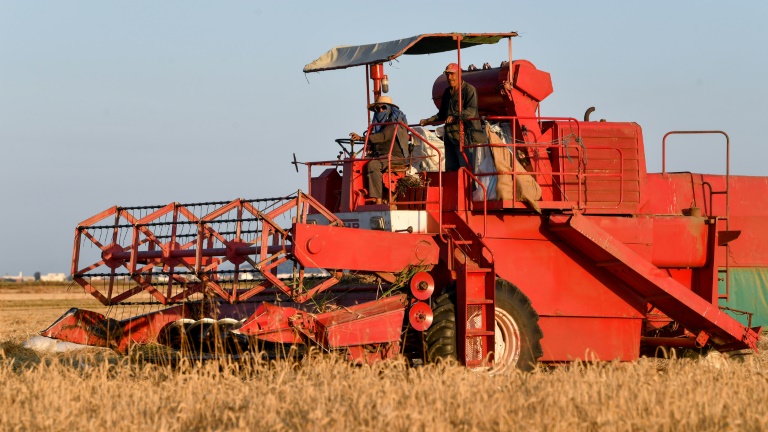
Tunisian farmer Mondher Mathali surveys a sea of swaying golden wheat and revs his combine harvester, a rumbling beast from 1976 which he fears could break down at any moment.

Since the Ukraine war sent global cereal prices soaring, import-dependent Tunisia has announced a push to grow all its own durum wheat, the basis for local staples like couscous and pasta.

The small North African country, like its neighbours, is desperate to prevent food shortages and social unrest — but for farmers on the sun-baked plains north of Tunis, even the basics are problematic.

“I’d love to buy a new combine harvester, but I could only do it with help from the government,” said Mathali, 65.

He reckons his outdated machine wastes almost a third of the crop. With spare parts hard to find, he fears a breakdown could cost him his entire harvest.

But even a second-hand replacement would cost him an unimaginable sum: $150,000.

“Our production and even the quality would go up by maybe 50 percent, even 90 percent” with government help, he said.

“But our situation is getting worse and the state isn’t helping us.”  

– ‘No continuity’ –

Tunisia’s wheat production has suffered from years of drought and a decade of political instability, with 10 governments since the country’s 2011 revolution.

That has exacerbated its reliance on imports. Last year, it bought almost two-thirds of its cereal from overseas, much of it from the Black Sea region.

Those supply chains have been rocked first by the coronavirus pandemic and then by the war in Ukraine, which last year provided around half of Tunisia’s imports of the soft wheat used in bread.

While it still plans to import soft wheat, the country is pushing for self-sufficiency in durum wheat by the 2023 harvest. 

That would be a valuable contribution to the national diet: the average Tunisian eats 17 kilograms (37 pounds) of pasta per year, second only to Italians.

In April, the government unveiled a programme to help farmers access better seeds, technical assistance and state-backed loans.

It also plans to devote 30 percent more farmland to wheat, and has dramatically boosted the prices it pays growers.

But the agriculture ministry’s chief of staff acknowledged Mathali’s problems.

“Tunisia has about 3,000 combine harvesters, 80 percent of which are old and very wasteful, which represents a major loss,” said Faten Khamassi. 

She said the state plans to fund farmers’ collectives to buy shared equipment.

– ‘Need to choose’ –

Agricultural technician Saida Beldi, who has worked with farmers in the northern Ariana governorate for three decades, says political instability has gutted the sector.

With each new minister, “the policy changes”, she said. “There’s no continuity.” 

She said many farmers struggled to obtain state-subsidised fertilisers, which trade on the black market at inflated prices.

Khamassi said it was “certainly possible to reach self-sufficiency in durum wheat”.

But she said Tunisia faces another dilemma: “develop cereal production to reach self-sufficiency, or develop other crops like strawberries and tomatoes for export? We need to choose.”

International organisations have long pushed poorer countries to focus on specific cash crops for export, rather than growing essentials.

A 2014 World Bank report argued that Tunisia “does not have a strong comparative advantage in cereals” and should instead focus on “labour intensive” crops because of cheap labour.

But in June, announcing a $130 million loan for emergency cereal imports, the lender said it was providing “incentives to sustainably increase domestic grain production” and cut import dependency.

Today, Khamassi said, comparative advantage is “no longer relevant”.

“We need to return to much more self-sufficient policies, local production,” she said.

– Changing times –

The ministry also said in June that it would allow foreign investors to own agricultural firms outright, instead of requiring at least one-third Tunisian ownership.

Khamassi said this would attract investment and create jobs.

But economist Fadhel Kaboub said this strategy would make Tunisia even more vulnerable.

“Small-scale Tunisian farmers operating on small plots of land will not be able to compete with big foreign investors with access to cheap loans from European banks,” he said. 

“These companies’ business model is to push for cash crops for export, to earn dollars and euros — not to produce wheat to sell for dinars in the local market.”

For farmer Mathali, who hopes to pass his business on to his son, the stakes couldn’t be higher.

“Tunisia was the Roman Empire’s main supplier of wheat,” he said, squinting under the summer sun.

“Why can’t we revive that?”

Egypt family keeps alive tradition behind hajj centrepiece

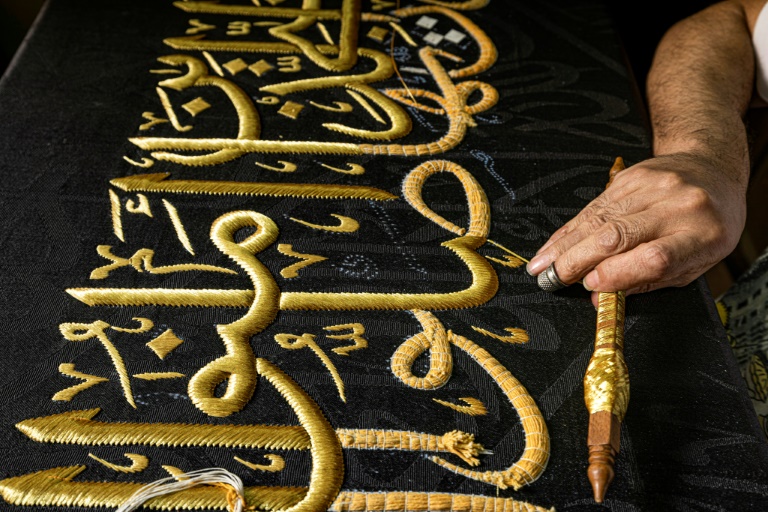
Under the steady hum of a ceiling fan, Ahmed Othman weaves golden threads through black fabric, creating Koranic verses, a century after his grandfather’s work adorned the Kaaba in Mecca’s Grand Mosque.

A ceremonial hanging of the kiswa, huge pieces of black silk embroidered with gold patterns, over the cubic structure that is the centrepiece of the Grand Mosque symbolises the launch of the hajj annual pilgrimage, which starts this week.

Othman’s family used to be honoured with the task of producing the kiswa. 

His family’s creations would be despatched in a camel caravan to Islam’s holiest site in western Saudi Arabia towards which Muslims across the world turn to pray.

Now, Othman keeps the tradition alive in a small workshop, tucked above the labyrinthine Khan al-Khalili bazaar in central Cairo, where mass-produced souvenirs line the alleys.

The area is historically home to Egypt’s traditional handicrafts, but artisans face growing challenges.

Materials, mostly imported, have become expensive, particularly as Egypt faces economic woes and a devalued currency.

Plummeting purchasing power makes high quality hand-crafted goods inaccessible to the average Egyptian, while master craftspeople find it hard to hand down their skills as young people turn to more lucrative jobs.

This wouldn’t be the case “if there was good money in the craft”, Othman sighed, hunched over one of the many tapestries that fill his workshop.

Sheets of black and brown felt are covered in verses and prayers, delicately embroidered in silver and gold.

Every stitch echoes the “sacred ritual” Othman’s grandfather was entrusted with in 1924.

“For a whole year, 10 craftsmen” would work on the kiswa that covers the Kaaba which pilgrims circumambulate, using silver thread in a lengthy labour of love.

– Sprinkled rosewater –

From the 13th century, Egyptian artisans made the giant cloth in sections, which authorities transported to Mecca with great ceremony.

Celebrations would mark the processions through cities, flanked by guards and clergymen as Egyptians sprinkled rosewater from balconies above.

Othman’s grandfather, Othman Abdelhamid, was the last to supervise a fully Egyptian-made kiswa in 1926.

From 1927, manufacturing began to move to Mecca in the nascent Kingdom of Saudi Arabia, which would fully take over production of the kiswa in 1962.

The family went on to embroider military regalia for Egyptian and foreign dignitaries, including former presidents Gamal Abdel Nasser and Anwar Sadat.

“In addition to our work with military rank embroideries, my father started embroidering Koranic verses on tapestries,” and then reproducing whole sections of the kiswa.

Clients began flooding in for “exact replicas of the kiswa, down to the last detail”.

Though today they offer small tableaus for as little as 100 Egyptian pounds (about $5), massive customised orders go for several thousand dollars, such as replicas of the Kaaba door, which Othman proudly claims are indistinguishable from the originals in Mecca.

– Back-breaking –

But the family has not been immune to the economic turbulence that began with the coronavirus pandemic, which decimated small businesses and craftsmanship in Egypt.

Since early 2020, they have sold around “two pieces per month”, whereas before they would sell at least one tapestry a day.

Othman worries that a sense of “worldwide austerity” makes business unlikely to bounce back.

Today, there might only be a dozen or so craftsmen whose work he considers authentic, with many artisans leaving the craft for quicker cash flows.

“They can make 200 to 300 pounds a day,” ($10-$16) driving a tuktuk motorised rickshaw, or a minibus, Othman said. “They’re not going to sit on a loom breaking their backs all day.”

But still, a century and a half after his great grandfather left his native Turkey and brought the craft with him to Egypt, Othman says he has stayed loyal to techniques learnt as a child when he would duck out of school to watch his father work.

“It’s on us to uphold the craft the same way we learned it, so it’s authentic to the legacy we inherited,” he said.

Algeria marks 60 years of independence from France

Algeria marks 60 years of independence from France on Tuesday with a huge military parade, but memories of violence during the colonial period continue to overshadow ties between the two.

The North African country won its independence following a gruelling eight-year war, which ended with the signing in March 1962 of the Evian Accords.

On July 5 of the same year, days after 99.72 percent voted for independence in a referendum, Algeria finally broke free from colonial rule — but memories of the 132-year occupation continue to mar its ties with France.

Authorities on Friday closed a 16-kilometre (10-mile) stretch of a major artery in Algiers for the army to carry out final rehearsals for its parade, the first in 33 years.

The closure has caused huge tailbacks on roads leading to the eastern suburbs of the capital.

President Abdelmadjid Tebboune is to preside over the parade, hosting several foreign dignitaries including Palestinian president Mahmud Abbas, Tunisia’s Kais Saied and Niger’s Mohamed Bazoum.

The government has even commissioned a logo — a circle of 60 stars containing military figures and equipment — to mark “a glorious history and a new era”.

Algeria’s war of independence left hundreds of thousands of dead, but six decades on, despite a string of gestures by French President Emmanuel Macron, France has ruled out any form of apology for the colonial period.

“There’s no way we can forget or erase the human genocide, the cultural genocide and the identity genocide of which colonial France remains guilty,” said Salah Goudjil, speaker of the Algerian parliament’s upper house, in an interview published by newspaper L’Expression on Monday.

French-Algerian ties hit a low late last year after Macron reportedly questioned whether Algeria had existed as a nation before the French invasion and accused its “political-military system” of rewriting history and fomenting “hatred towards France”.

Algeria withdrew its ambassador in response, but the two sides appear to have mended ties since. 

Macron and Tebboune confirmed in a June 18 phone call their desire to “deepen” relations and Tebboune invited his French counterpart to visit Algiers.

34 killed in two jihadist attacks in Burkina Faso

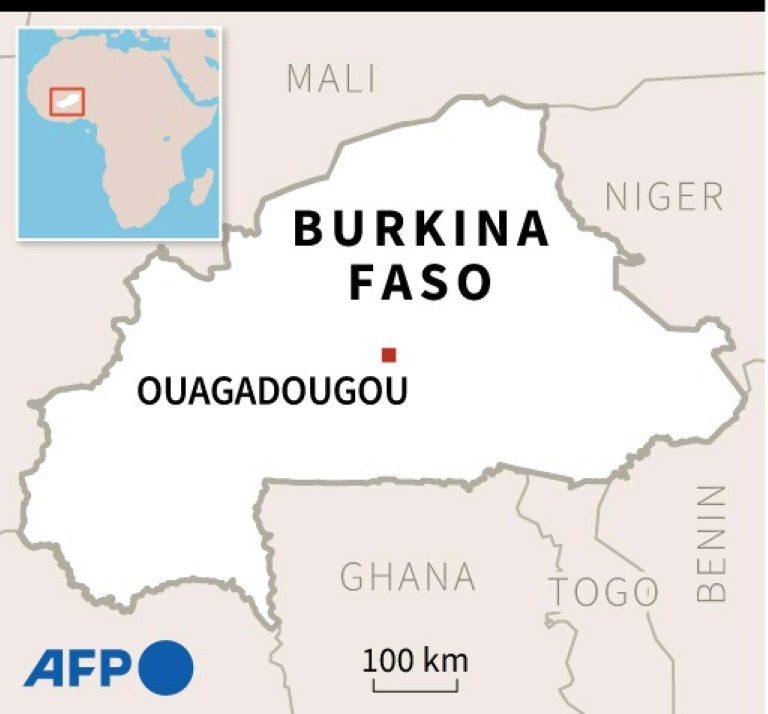
Suspected jihadists killed at least 34 people in attacks on villages in northern Burkina Faso at the weekend, officials and sources said Monday.

In the northwest of the country, 22 people, reportedly including children, were killed late Sunday at Bourasso in Kossi province, said Boucle du Mouhoun regional governor Babo Pierre Bassinga.

“Armed men moved around the village at around 5:00 pm, firing in the air. They came back at night and blindly opened fire on people,” a security source said.

In northern Burkina Faso, 12 people died on Saturday in an attack at Namissiguima in Yatenga province, another security source said, also speaking on condition of anonymity.

Three of the dead were members of a civilian militia, the Volunteers for the Defence of the Fatherland (VDP) — an auxiliary force set up in December 2019 to support the army.

Burkina Faso, one of the poorest countries in the world, has been grappling with a jihadist insurgency that swept in from neighbouring Mali in 2015.

The campaign, led mainly by groups linked to Al-Qaeda and the Islamic State group, has claimed thousands of lives and forced some 1.9 million people to flee their homes.

More than 40 percent of the country lies outside the control of the government, according to official figures.

Burkina Faso underwent a coup in January, when disgruntled colonels ousted elected president Roch Marc Christian Kabore.

The new strongman, Lieutenant-Colonel Paul-Henri Sandaogo Damiba, declared security to be his top priority but after a relative lull, attacks resumed, with the loss of hundreds of lives.

Close Bitnami banner
Bitnami