Africa Business

History-making Jabeur sets up Wimbledon semi with 'BBQ buddy' Maria

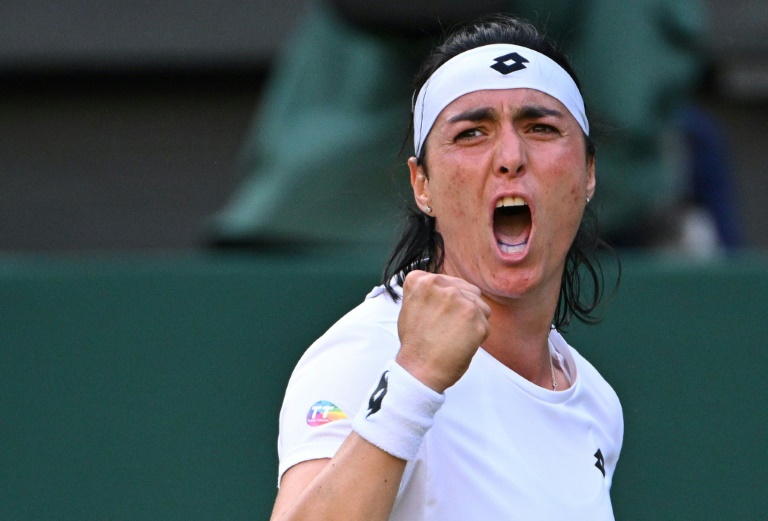
World number two Ons Jabeur became the first Arab woman to reach the semi-final of a Grand Slam on Tuesday, setting up a Wimbledon meeting with her “barbeque buddy” Tatjana Maria.

The Tunisian went one set down to Czech opponent Marie Bouzkova but lost only two games after that as she powered to a 3-6, 6-1, 6-1 win on Centre Court.

Earlier, mother-of-two Maria also dug deep to beat German compatriot Jule Niemeier 4-6, 6-2, 7-5 despite losing the first set and trailing by a break in the second and third sets.

Jabeur is the only remaining player seeded in the top 15 left in the tournament at the All England Club.

The 27-year-old said she was happy that she “woke up” after a disappointing first set.

“I am really, really happy especially that it happened on this court because I have so much love for this court,” she said. “Hopefully the journey for me will continue.”

But she explained that it would be difficult to face 34-year-old Maria, whom she described as her “barbeque buddy”.

She added: “It is going to be tough to play her (Maria), she is a great friend. I am really happy she is in a semi-final — look at her now, she is in a semi-final after having two babies. It is an amazing story.”

The Tunisian, who had not lost a set in her run to the quarter-finals, was broken twice by the 66th-ranked Bouzkova in the first set.

But it was a different story for the rest of the match as she broke her opponent’s serve six times, hitting 30 winners — more than twice her opponent’s tally.

– Mother superior –

Germany’s Maria, ranked 103, came back from maternity leave less a year ago after the birth of her second daughter.

In Tuesday’s match — only the third all-German Grand Slam quarter-final in the Open era — an early break for Niemeier proved decisive in the first set.

The 22-year-old then broke again at the start of the second set to take an iron grip on the match but Maria stormed back, breaking three times to level the match.

World number 97 Niemeier again drew first blood in the deciding set, breaking in the fifth game and holding serve to lead 4-2.

But Maria hit back to level at 4-4 and broke again in the 12th game to seal the victory in two hours and 18 minutes.

The German veteran, who saved two match points in the previous round against 12th seed Jelena Ostapenko, made her Grand Slam debut in 2007 and had never progressed beyond the third round at a major before this year’s Wimbledon.

But she said she always had faith in her ability to do something special despite her uninspiring record in the Slams.

“To be now here in this spot — I mean, like I said, one year ago I gave birth to my second daughter — if somebody would tell me one year later ‘you are in a semi-final of Wimbledon’, that’s crazy,” she said.

Even before her quarter-final on Tuesday it was business as usual for Maria, who took her eight-year-old daughter to tennis practice and said she would be changing nappies for her 15-month-old baby after her win.

“Outside of the court, I mean, nothing changes for me for a moment, so I try to keep this going, everything the same,” she said. “We keep going even if I play semi-finals.”

On Wednesday, Kazakhstan’s Elena Rybakina will face Australia’s Ajla Tomljanovic for a place in the semi-finals while Romanian former winner Simona Halep takes on American Amanda Anisimova.
Morocco urges return to W. Sahara roundtable talks

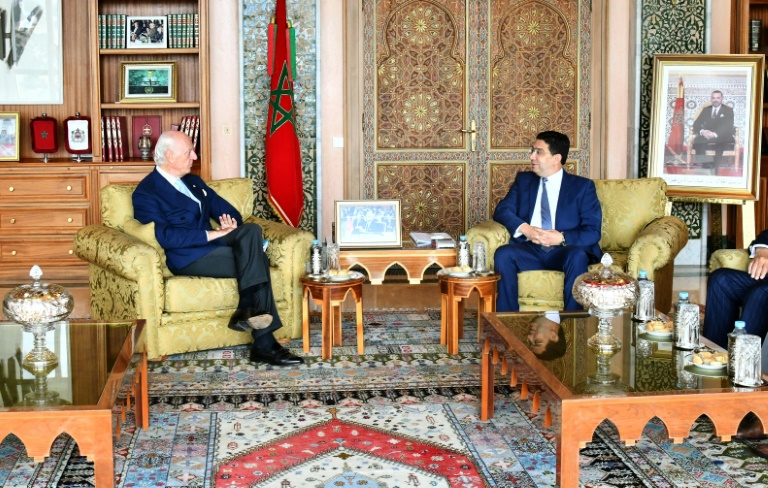
Morocco called Tuesday for a return to regional roundtable talks on a peace deal over the Western Sahara, a format rejected by neighbouring Algeria which says it masks the nature of the conflict.

Morocco’s top diplomat Nasser Bourita made the comments in a statement after a meeting with United Nations envoy Staffan de Mistura.

The Moroccan officials told the UN diplomat that they remained committed to “the political process of roundtables” to reach a “realistic, pragmatic, sustainable and compromise-based” political solution, the statement read.

Such talks were last held in Switzerland in 2019 with top officials from Morocco, Algeria, Mauritania and the Polisario movement which seeks independence for Western Sahara, but they were frozen after UN envoy Horst Kohler quit the post in May that year.

Algiers has rejected a return to the format, arguing that Morocco, by avoiding bilateral talks with the Polisario, is trying to portray the conflict as a “regional, artificial” one rather than one of “decolonisation”.

Morocco controls some 80 percent of the Western Sahara and has long insisted it must retain sovereignty there, pitting it against the Polisario which demands a referendum on independence as agreed alongside a 1991 ceasefire deal.

Tuesday’s statement said that “the Moroccan delegation reiterated the constant position of Morocco (calling) for a political solution, based exclusively on the Moroccan autonomy initiative, within the framework of the national sovereignty and territorial integrity of the kingdom.”

That was a reference to a 2007 Moroccan plan for limited autonomy in the vast desert territory, which has rich phosphate resources and Atlantic fisheries but where the Polisario has demanded independence since colonial power Spain withdrew in 1975.

The group declared a 1991 ceasefire deal null and void in November 2020 after a Moroccan army operation to clear a blockaded highway.

Weeks later, the Trump administration recognised Moroccan sovereignty over the territory in exchange for Rabat restoring ties with Israel. 

In August 2021, Algeria cut ties with Morocco, accusing it of “hostile acts”.

The UN said Monday that De Mistura had cancelled a planned visit to the Western Sahara.

The Polisario said it “deeply regretted” the cancellation and accused Rabat of “preventing him from directly witnessing the situation on the ground in the occupied Saharawi territories”. 

On Tuesday, the UN said De Mistura had had “a useful meeting” with Bourita and could “definitely continue his mission”. 

“He didn’t lose freedom of movement. The personal envoy is in control of where he goes and he will decide where he goes,” said UN spokesman Stephane Dujarric in New York.

With Angola ex-leader critically ill in Spain, family cries foul

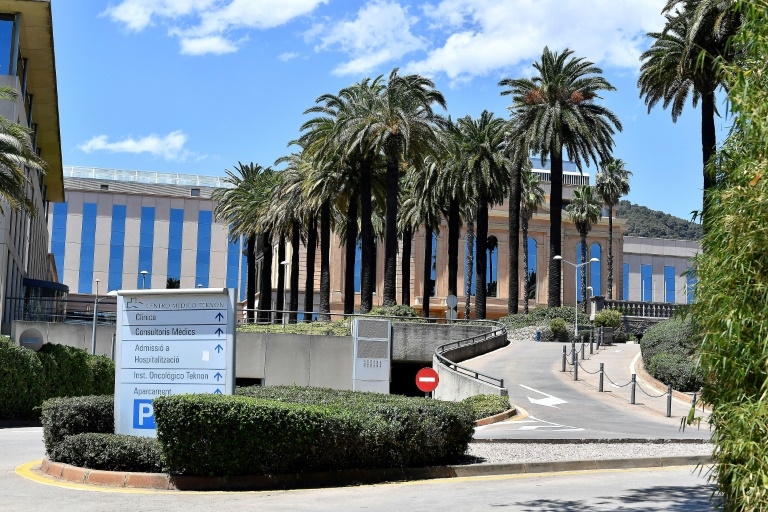
With former Angola president Jose Eduardo dos Santos critically ill at a Barcelona hospital, one of his daughters has filed a case against his wife and personal physician for attempted murder, police and her lawyers said Tuesday.

The 79-year-old was rushed to hospital and placed in intensive care after suffering a cardiac arrest on June 23, his family said, describing his condition as “critical”.

But on Monday, his daughter Tchize Dos Santos filed suit with the Catalan regional police, alleging her father’s condition was the result of attempted murder. 

“Tchize dos Santos, daughter of former Angolan president Eduardo dos Santos, who is hospitalised at the Teknon clinic in Barcelona in an induced coma, has filed a complaint with the Mossos d’Esquadra for the investigation of an alleged offence of attempted murder,” the two law firms advising her said. 

According to the complaint, she believes her father’s current wife, Ana Paula, and his personal physician are responsible for the current deterioration in his health, one of her lawyers said. 

The daughter, whose full name is Welwitschia dos Santos, said her father and his wife had been separated for some time, meaning she did not have the right to make decisions about his health, the lawyer said. 

The 44-year-old also claimed the wife had not provided legal proof of their marriage to the Spanish authorities.

Contacted by AFP, police confirmed receiving a complaint related to the former Angolan leader’s state of health and said they had opened an inquiry, without giving further details. 

In order to protect her father, his daughter requested that only his children be allowed to visit him and also asked the Spanish authorities to ensure his protection and that of his children, most of whom have moved abroad due to friction with the current president, Joao Lourenco.

Dos Santos ruled the Portuguese-speaking, oil-rich state of Angola for 38 years until stepping down in September 2017. 

Born in the slums of Luanda, he was one of Africa’s longest-serving leaders, using his nation’s oil wealth to turn one of his children into a billionaire while leaving his people among the poorest on the planet.

When he stepped down, dos Santos handed over to former defence minister Lourenco whom he handpicked to replace him.  

But Lourenco quickly turned on his erstwhile patron, starting an anti-corruption drive to recoup the billions he suspected had been embezzled under dos Santos.

French force in Sahel leaves Mali in vast operation

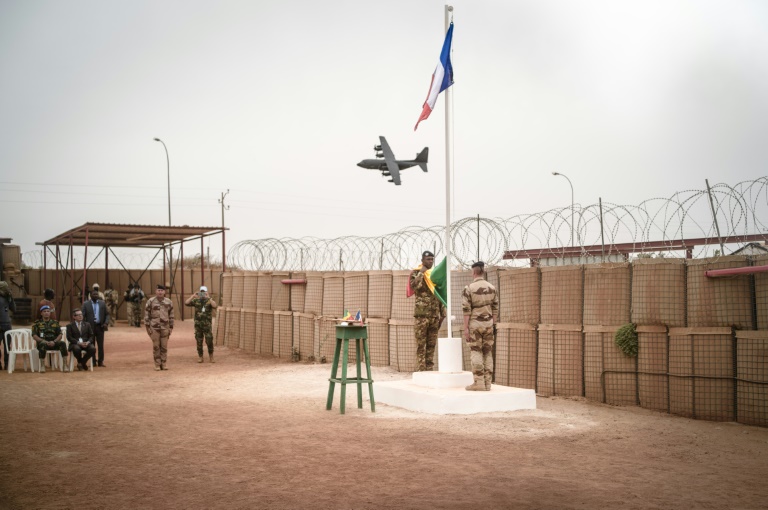
The main French military base in Niger has become a hub of frantic activity for troops and equipment leaving neighbouring Mali.

After nine years fighting jihadists in Mali, France is pulling its troops out of the country after falling out with its military junta, and reducing its presence in the wider Sahel region.

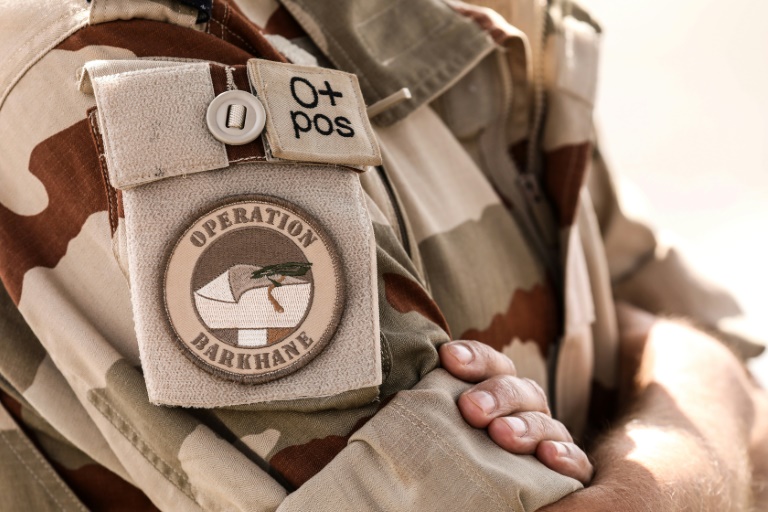
“This disengagement from Mali is the biggest of our missions,” says Colonel Hubert Baudoin, the deputy chief of the French anti-jihadist mission in the Sahel, Operation Barkhane.

Commander Thierry, coordinator of logistical movements across the zone, agrees: “It’s a gigantic manoeuvre.”

Every day, two to three air convoys travel from a base in Gao, Mali, to the one in Niger’s capital Niamey. Two to three road convoys also make the trip each week between the cities almost 500 kilometres (around 300 miles) apart.

After ties ruptured between Paris and the junta that took power in Mali in August 2020, the French began to withdraw in February.

After Gossi and Menaka, the troops are due out of Gao by summer’s end.

– Dozing legionnaires –

At the Niamey base, forklifts shuffle around pallets, while armoured vehicles sit lined up as far as the eye can see.

In all, France must fly home 1,000 vehicles and some 4,000 containers.

Colonel Laurent Grebil, logistics manager for Operation Barkhane, has already overseen a departure from a military theatre, 10 years ago in northeast Afghanistan. But that was on a much smaller scale, he says.

“Here the complexity of the manoeuvre arises from the distances to be covered and the volume of equipment and men to get out in a limited time,” he says.

“It will take a little less than a year to bring everything back to France.”

At the Niamey military airport, the forklifts handle all kinds of goods, from camp beds to spare parts and electrical equipment, including fridges.

Along the dusty road that crosses the base, French legionnaires doze under khaki tarpaulins hitched up between two armoured vehicles, after arriving a day earlier from escorting several dozen civilian vehicles from Gao.

They must head back during the night, keeping to the tight deadlines imposed by the French presidency.

– Last jihadist strike? –

The road connecting Niamey and Gao crosses semi-desert territory known as the “tri-border area” where the frontiers of Niger, Mali and Burkina converge. It is reputed to serve as a refuge for jihadists linked to the Islamic State group.

There, “armed terrorist groups have been avoiding Barkhane for several months. But we remain on our guard,” says the French force’s deputy chief of operations.

Lieutenant-Colonel Eric, of the intelligence unit, warns that a last jihadist strike could take place as a show of strength.

“With France leaving, a real security vacuum will be created. Everyone will try to occupy the space, and one of the ways of occupying at least the perceived space would be to deal us a blow.

“The disengagement phase is always the most dangerous,” he says.

The withdrawal comes amid a surge of violence in the Sahel.

More than 2,000 civilians have been killed in Mali, Niger and Burkina Faso since the start of the year, already more than the 2,021 recorded for the whole of 2021, according to an AFP tally of the findings of non-governmental organisation ACLED.

– Rainy season –

On the scorched tarmac, two Mirage 2000 fighter jets armed with guided bombs rev up their engines, ready to take off.

“We’re going to support a convoy on the part of the road identified as the most at risk. The noise of the planes tends to deter armed groups,” explains Lieutenant-Colonel Pierre-Henri, commander of the hunting detachment.

The base also has six armed drones to ensure the safety of convoys.

But the rainy season is now complicating matters.

“Rain can ground planes and blind drones,” depriving convoys of their guardian angels, says Lieutenant-Colonel Samir, head of the joint operations centre for Barkhane in N’Djamena, Chad.

And “unlike military vehicles, civilian trucks… can’t leave the tarred roads” or they risk getting stuck.

After the massive withdrawal, only 2,500 soldiers will be maintained in the Sahel, compared with more than 5,000 two years ago.

France will keep more than 1,000 men in Niger, where a tactical group will continue to work in partnership with the Nigerien forces.

But the strain it has placed on the Niamey base will not last, says its commander, Colonel Loic Mandereau.

“This base is not intended to grow. We are not transferring Gao to Niamey,” he says.

Bomb kills two peacekeepers in northern Mali

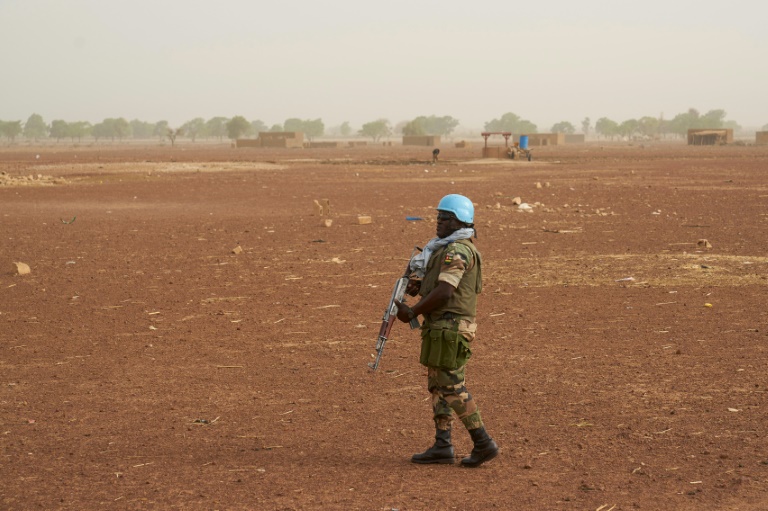
Two United Nations peacekeepers were killed and five were seriously injured Tuesday when their vehicle struck a bomb in northern Mali, the UN mission said.  

“This morning, an armoured vehicle in a MINUSMA supply convoy hit a mine on the Tessalit-Gao highway,” MINUSMA said. 

An official with the UN mission said both fatalities were Egyptian.

The injured were evacuated after a rapid intervention force was sent to the scene, the mission said in a statement. 

“MINUSMA strongly condemns this attack, which may constitute a war crime under international law, and notes with concern the frequent use by terrorist groups of improvised explosive devices to cripple the mission’s operations and impede the return to peace and stability,” it said. 

“Mines and improvised explosive devices in Mali affect UN personnel, Malian defence and security forces and the communities we serve without distinction.”

MINUSMA — the United Nations Multidimensional Integrated Stabilization Mission in Mali — is one of the UN’s biggest peacekeeping operations, and one of its most dangerous.

It says 177 of its troops have died from hostile acts, including four in June. Eight peacekeepers were injured by a mine in the Timbuktu region on June 23.

MINUSMA’s full complement includes 13,289 military personnel and 1,920 police.

The force’s mandate was extended by the UN Security Council for 12 months on June 29.

However, it will be without French air support, which has been refused by Mali, whose ruling junta is at odds with France.

Jihadists joined a regional insurgency in northern Mali in 2012, and then extended their campaign to the centre of the country and neighbouring Burkina Faso and Niger.

Thousands of civilians have died, more than two million have fled their homes, and economic damage to countries that are among the poorest in the world has been severe.

Sudan civilians reject army offer as 'ruse', urge more protests

Sudan’s main civilian bloc on Tuesday rejected a proposal by the country’s coup leader to make way for a civilian government as a “giant ruse” and urged more protests.

Army chief Abdel Fattah al-Burhan, whose power grab last October derailed a transition to civilian rule, had vowed in a surprise move Monday to “make room” for civilian groups to form a new transitional government.

But the main civilian umbrella, the Forces for Freedom and Change, called for “continued public pressure” on the streets after days of protests. It dismissed Burhan’s move as a “tactical retreat and a transparent manoeuvre”.

“The coup leader’s speech is a giant ruse, even worse than the October 25 coup,” said FFC leader Taha Othman. “The crisis will end with the coup leaders resigning and the forces of the revolution forming a civil government.”

The transitional government uprooted by Burhan last year had been painstakingly forged between the military and civilian factions in 2019, following mass protests that prompted the army to oust longtime dictator Omar al-Bashir in April that year. 

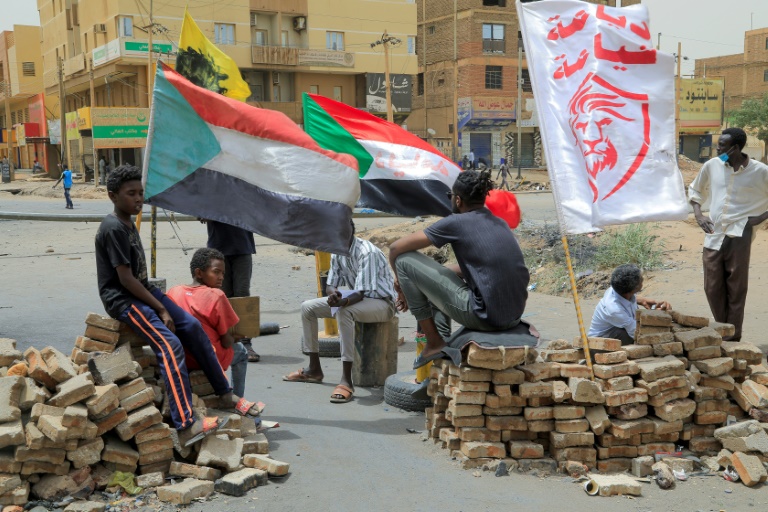
On the streets of Khartoum, protesters defied security forces and held firm on their makeshift barricades, despite heavy fatalities late last week.

“We don’t have confidence in Burhan,” said Muhammad Othman, perched on a pile of bricks. “We just want him to leave once and for all.”

Security forces — as they have done repeatedly during the long-running protests — sought to break up the crowds by firing barrages of stun grenades and tear gas, according to pro-democracy medics.

– ‘Core grievances remain’ –

The FFC has so far refused to take part in talks with military leaders, despite pressure from international brokers that range from the United Nations, to the African Union and regional bloc IGAD. 

Burhan said late Monday the military would no longer participate in the talks, wanting instead “to make room for political and revolutionary forces and other national factions” to form a civilian government.

Sudan, one of the world’s poorest countries, has seen only rare interludes of civilian rule. The latest coup not only worsened a political crisis but has also pushed the country deeper into a dire economic slump.

Burhan’s televised address came as hundreds of anti-coup demonstrators continued protests.

Pro-democracy medics said nine demonstrators lost their lives on Thursday, the deadliest violence so far this year, bringing to 114 the number killed in the crackdown against anti-coup protesters.

Protester Oumeima Hussein, speaking Monday, said the army chief must be “judged for all those killed since the coup” and vowed to “topple him like we did to Bashir”.

Hours after his surprise announcement, Burhan on Tuesday flew to Kenya for an IGAD emergency summit of East African leaders.

Kholood Khair, of the Khartoum think-tank Insight Strategy Partners, said she believed Burhan’s announcement was made to put “the pressure on the civilians”, but warned that it might change little on the ground.

“There’s no talk of accountability,” Khair said, noting that “core grievances remain.”

Khair warned that protesters feared that, after Burhan had put Bashir-era “Islamists back in government”, the coup leader was setting the military and allied armed groups up to “retain economic privileges”.

– New ‘supreme council’ –

Sudan’s military dominates lucrative companies in sectors from agriculture to infrastructure.

Burhan’s pledge Monday to step aside for a new civilian “government” with “executive” powers was accompanied by another pledge — the establishment of a new “Supreme Council of Armed Forces”. 

This body would be in charge of defence and security, he said, feeding into concerns among opponents that it would not be answerable to any government.  

Burhan said the Supreme Council would combine the regular army and the paramilitary Rapid Support Forces, a much feared and powerful unit commanded by Burhan’s deputy, Mohamed Hamdan Daglo.

He also said that the ruling Sovereign Council – established as a key institution of the post-Bashir transition – would be disbanded. 

While rejected out of hand by the main civilian bloc, Burhan’s announcements were welcomed by an ex-rebel senior commander who signed up to a 2020 agreement seeking to end Sudan’s conflicts and integrate insurgents into the army. 

“Burhan’s speech had some positive points,” said Mubarak Ardol on Tuesday, without elaborating, other than to affirm his own “unconditional” commitment to internationally brokered talks.

Rebels deny massacre in Ethiopia's Oromia

An Ethiopian rebel group on Tuesday denied accusations it was responsible for a massacre of civilians in the restive far west of the country, and pointed the finger of blame instead at government-allied militias.

Violence has been on the increase in the Oromia region in recent months, with one rights group suggesting the situation there had been overshadowed by the brutal conflict that erupted in Tigray 20 months ago.   

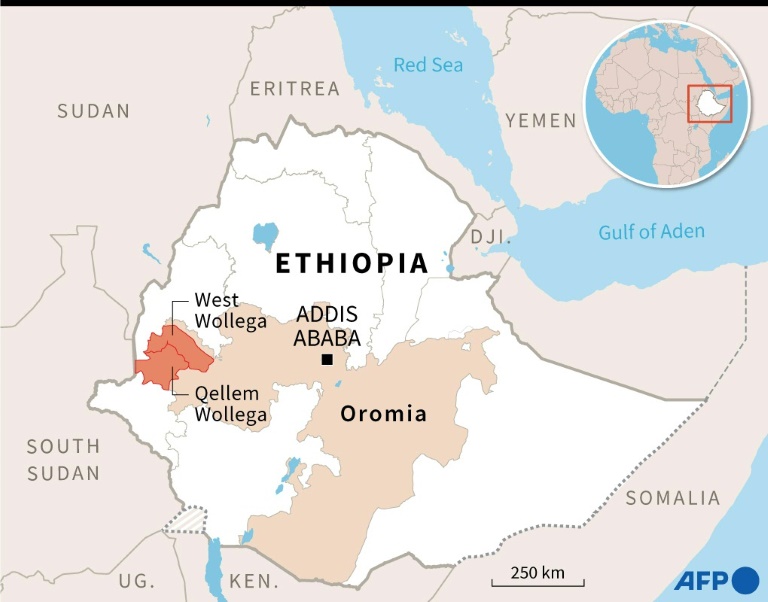
Prime Minister Abiy Ahmed said in a statement posted on Twitter on Monday that the Oromo Liberation Army (OLA) had committed mass killings in the Qellem Wollega area of western Oromia, without giving further details.

But OLA spokesman Odaa Tarbii retorted on Twitter: “The regime thinks it can just point fingers & escape accountability”. 

“Two divisions of the ENDF (Ethiopian National Defence Force) along with allied forces are occupying the towns of Qellem Walaga, including Machaara where civilians were killed en masse by the regime’s militias as security forces did nothing,” he wrote.

“Both local & international entities have to demand independent investigations and hold Abiy and co accountable for their cruelty.”

The OLA is a shadowy group that gained new prominence last year when it struck up an alliance with the Tigray People’s Liberation Front (TPLF) that has been at war with government forces in northern Ethiopia. 

Both have been designated terrorist groups by Addis Ababa. Abiy on Monday vowed to “eradicate” the OLA, although he has opened the door to possible peace talks with the Tigrayan rebels.

The US-based Amhara Association of America said Monday’s attack targeted ethnic Amharas in Mender 20 (Village 20) in Qellem Wollega in the west of Oromia, the largest and most populous region of Ethiopia.

It said the killings began at dawn and lasted several hours. 

A survivor quoted by the regional state-run Amhara Media Corporation said at least 300 bodies had been collected in the village.

It was not possible to verify the information as access to the area in western Oromia, which borders South Sudan, is restricted.

In a country comprising dozens of ethnic groups, the Amharas are the second largest after the Oromo.

– ‘Cycle of violence’ –

Last month, the Ethiopian authorities accused the OLA of killing several hundred mainly Amhara people in the village of Tole in West Wollega, an area adjacent to Qellem Wollega.

The OLA, which has been fighting the federal government in Oromia since 2018, denied the claims.

No official toll from the Tole massacre has been published, but Abiy’s spokeswoman Billene Seyoum said last week that 338 victims had so far been identified.

On June 30, several days after the Tole attack, government spokesman Legesse Tulu told reporters that districts of Qellem Wollega, Western Wollega and Horo-Guduru Wollega were “under the complete control of our joint/coordinated security forces”.

The Ethiopian Human Rights Commission, a state-affiliated independent body, on Monday called for an “urgent reinforcement” of government security forces in the area to prevent further civilian deaths.

“The continued insecurity in the area and what appears to be the ethnically targeted killing of residents must be put to a stop immediately,” EHRC chief commissioner Daniel Bekele said in a statement.

US-based Human Rights Watch said on Monday it had documented serious abuses in Oromia, including in the west where an “abusive” government campaign against the OLA had trapped civilians in the crossfire.

It said the Tigray conflict, which has witnessed a lull in recent months after the government declared a “humanitarian ceasefire”, was overshadowing a “persistent cycle of violence” against civilians by security forces and armed groups in Oromia.

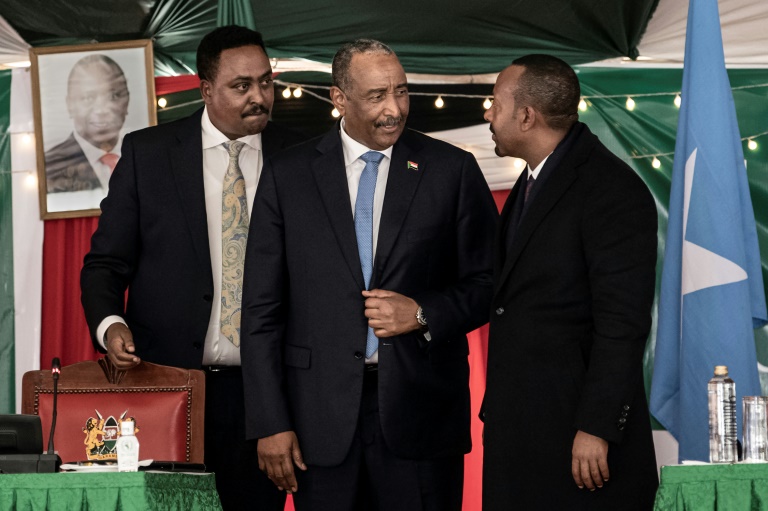
Ethiopia PM meets Sudan's Burhan, says both endorse 'dialogue'

Ethiopian Prime Minister Abiy Ahmed said he met Sudan’s coup leader Abdel Fattah al-Burhan in Nairobi on Tuesday and that both committed to “dialogue” to resolve any differences.

Their talks follow a clash in a volatile border region last month in which Khartoum said that Ethiopian forces had captured and killed Sudanese troops — claims denied by Addis Ababa.

“We have both agreed that our two countries have plenty of collaborative elements to work on peacefully,” Abiy said in a Twitter post, accompanied by a picture of the two men.

“Our common bonds surpass any divisions. We both made a commitment for dialogue & peaceful resolution to outstanding issues,” he wrote.

The meeting took place on the sidelines of a meeting of  the Intergovernmental Authority on Development (IGAD), a seven-country regional body.

Burhan said the IGAD meeting gave them an opportunity “to take stock of the response” to challenges in the region, but he did not elaborate.

“We are happy to convene in a very short time to discuss matters of great importance,” he said.

Sudan’s ruling sovereign council said only that there had been a “closed-door meeting” between Burhan and Abiy.

IGAD and the African Union (AU) voiced alarm last week over the escalating tensions between Ethiopia and Sudan following the incident in the disputed Al-Fashaqa border area.

Khartoum said the Ethiopian army had executed seven Sudanese soldiers and a civilian in a clash on June 22 in Al-Fashaqa, and announced it was recalling its ambassador.

But Addis Ababa claimed that Sudanese forces had crossed into Ethiopian territory and that the casualties resulted from a skirmish with a local militia, denying its soldiers were in the area at the time.

Al-Fashaqa is a fertile strip of land that has long been a source of friction between Addis Ababa and Khartoum.

The region, which lies close to Ethiopia’s war-torn northern region of Tigray, has long been cultivated by Ethiopian farmers but is claimed by Sudan.

The dispute has sparked sporadic clashes between the two sides, some fatal.

The rift also feeds into wider tensions over land and water between the neighbours, particularly stoked by Ethiopia’s mega-dam on the Blue Nile.

Sudan and Egypt, both downstream countries, have been opposed to the Great Ethiopian Renaissance Dam and pushed for an agreement on the filling of its reservoir and the dam’s operations.

Tensions were heightened after fighting erupted in Tigray in November 2020, sending tens of thousands of refugees fleeing into Sudan. 

Burhan was in Kenya a day after announcing that the army, which seized power in a coup in October last year, would make way for civilian rule.

Sudan’s main civilian bloc, the Forces for Freedom and Change, on Tuesday rejected the proposal with protesters again defying security forces and hold firm on their makeshift barricades on the streets of Khartoum.

IGAD, along with the United Nations and the AU has been pressing for talks between the army and civilians.

– ‘Pressing matters’-

Tuesday’s IGAD meeting was to discuss peace and security in the region as well as the drought ravaging the Horn of Africa and other natural disasters.

Four consecutive rainy seasons have failed in the Horn of Africa, with a fifth also expected to fare poorly, causing the worst drought in 40 years and a major hunger crisis spanning Kenya, Somalia and Ethiopia.

“The summit meeting sends a clear message to the region and international community that leadership is seized of the pressing matters in the region,” IGAD executive secretary Workneh Gebeyehu said. 

Other leaders at the IGAD meeting included its host, Kenyan President Uhuru Kenyatta, and President Ismail Omar Guelleh of Djibouti where the organisation is based, as well as representatives of Somalia, South Sudan and Uganda.

“We urgently need to manage the drought before it becomes a problem multiplier,” Kenyatta said. 

The leaders appealed for help from international donors, saying they had “noted with concern” the deteriorating humanitarian and health situation in the region. 

IGAD brings together Djibouti, Ethiopia, Kenya, Somalia, South Sudan, Sudan and Uganda. Eritrea suspended its membership in 2007.  

French force in Sahel leaves Mali in vast operation

The main French military base in Niger has become a hub of frantic activity for troops and equipment leaving neighbouring Mali.

After nine years fighting jihadists in Mali, France is pulling its troops out of the country after falling out with its military junta, and reducing its presence in the wider Sahel region.

“This disengagement from Mali is the biggest of our missions,” says Colonel Hubert Baudoin, the the deputy chief of the French anti-jihadist mission in the Sahel, Operation Barkhane.

Commander Thierry, coordinator of logistical movements across the zone, agrees: “It’s a gigantic maneouvre.”

Every day, two to three air convoys travel from a base in Gao, Mali, to the one in Niger’s capital Niamey. Two to three road convoys also make the trip each week between the cities almost 500 kilometres (around 300 miles) apart.

After ties ruptured between Paris and the junta that took power in Mali in August 2020, the French began to withdraw in February.

After Gossi and Menaka, the troops are due out of Gao by summer’s end.

– Dozing legionnaires –

At the Niamey base, forklifts shuffle around pallets, while armoured vehicles sit lined up as far as the eye can see.

In all, France must fly home 1,000 vehicles and some 4,000 containers.

Colonel Laurent Grebil, logistics manager for Operation Barkhane, has already overseen a departure from a military theatre, 10 years ago in northeast Afghanistan. But that was on a much smaller scale, he says.

“Here the complexity of the maneouvre arises from the distances to be covered and the volume of equipment and men to get out in a limited time,” he says.

“It will take a little less than a year to bring everything back to France.”

At the Niamey military airport, the forklifts handle all kinds of goods, from camp beds to spare parts and electrical equipment, including fridges.

Along the dusty road that crosses the base, French legionnaires doze under khaki tarpaulins hitched up between two armoured vehicles, after arriving a day earlier from escorting several dozen civilian vehicles from Gao.

They must head back during the night, keeping to the tight deadlines imposed by the French presidency.

– Last jihadist strike? –

The road connecting Niamey and Gao crosses semi-desert territory known as the “tri-border area” where the frontiers of Niger, Mali and Burkina converge. It is reputed to serve as a refuge for jihadists linked to the Islamic State group.

There, “armed terrorist groups have been avoiding Barkhane for several months. But we remain on our guard,” says the French force’s deputy chief of operations.

Lieutenant-Colonel Eric, of the intelligence unit, warns that a last jihadist strike could take place as a show of strength.

“With France leaving, a real security vacuum will be created. Everyone will try to occupy the space, and one of the ways of occupying at least the perceived space would be to deal us a blow.

“The disengagement phase is always the most dangerous,” he says, speaking on condition his second name be withheld.

The withdrawal comes amid a surge of violence in the Sahel.

More than 2,000 civilians have been killed in Mali, Niger and Burkina Faso since the start of the year, already more than the 2,021 recorded for the whole of 2021, according to an AFP tally of the findings of non-governmental organisation ACLED.

– Rainy season –

On the scorched tarmac, two Mirage 2000 fighter jets armed with guided bombs rev up their engines, ready to take off.

“We’re going to support a convoy on the part of the road identified as the most at risk. The noise of the planes tends to deter armed groups,” explains Lieutenant-Colonel Pierre-Henri, commander of the hunting detachment.

The base also has six armed drones to ensure the safety of convoys.

But the rainy season is now complicating matters.

“Rain can ground planes and blind drones,” depriving convoys of their guardian angels, says Lieutenant-Colonel Samir, head of the joint operations centre for Barkhane in N’Djamena, Chad.

And “unlike military vehicles, civilian trucks… can’t leave the tarred roads” or they risk getting stuck.

After the massive withdrawal, only 2,500 soldiers will be maintained in the Sahel, compared with more than 5,000 two years ago.

France will keep more than 1,000 men in Niger, where a tactical group will continue to work in partnership with the Nigerien forces.

But the strain it has placed on the Niamey base will not last, says its commander, Colonel Loic Mandereau.

“This base is not intended to grow. We are not transferring Gao to Niamey,” he says.

French troops in Sahel to play 'support' role, says chief

French anti-jihadist forces in the Sahel will switch operating mode after they leave Mali, acting more “in support” of local forces rather than substituting for them, their commander says.

After nearly a decade fighting jihadists in Mali, France is pulling its troops out of the country after falling out with its military junta.

President Emmanuel Macron announced the withdrawal in February, saying Operation Barkhane would continue elsewhere in the Sahel but in a smaller and reconfigured form.

In an interview with AFP and Radio France Internationale (RFI), Barkhane commander General Laurent Michon said the force now had less than 2,000 men left in Mali.

The pullout was on track for completion “by the end of summer, as the president has requested,” he said.

“Around 2,500 French troops” will remain in the Sahel when the operation is over, “but this depends above all on the wishes of the African states,” said Michon.

“France and the Europeans are moving towards more cooperative operations,” he said.

These operations will be “determined more strictly by requests from the African countries, and will take the form of ‘in support of’ and not ‘in replacement for'” the local military, he said.

Michon gave Mali as an example of the tactics of the past.

“Sometimes we acted in the place” of the local armed forces in mounting operations against the jihadists, he said.

Illustrating the closer cooperation, Michon said that last year a French unit on the Mali-Niger border was placed under the command of a Nigerien general in charge of the area.

And in March, France set up a “partnership HQ” in the Niger capital Niamey, “with the goal of working with African officers embedded” with Barkhane, he said.

As for the pullout, France has already left its bases in Gossi and Menaka in central Mali and is currently disengaging from a camp in Gao, the general said.

“In all, 4,000 containers and just under a thousand vehicles are to leave Mali,” he said.

The equipment and parting forces are heading to neighbouring Niger for logistical reasons, but will not stay there, he said.

– ‘Not a failure’ –

France intervened in Mali in 2013 to stem a jihadist-backed revolt in the north of the country.

The following year it launched the broader Barkhane operation among five Sahel allies, all former French colonies — Burkina Faso, Chad, Mali, Mauritania and Niger.

At its peak, the mission had 5,100 troops across the region, providing key support in air power, troop transport and reconnaissance.

Fifty-eight French troops have died in Barkhane and its predecessor mission, Serval.

“From my point, the disengagement (from Mali) is not a failure,” Michon said. 

With Barkhane’s help, the Malian army had been able to increase in numbers from 7,000 to 40,000 men, “and we made the terrorist groups keep their heads down,” preventing army bases from being overrun, said Michon.

– ‘Mercenaries’ –

French-Malian relations started to nosedive after Mali’s elected president, Ibrahim Boubacar Keita, was ousted in a military coup in August 2020.

The junta snubbed French appeals for an early return to civilian rule and then turned to Russian military operatives — “mercenaries” from the pro-Kremlin Wagner group, in France’s view — to help its anti-jihadist fight.

As ties worsened, criticism of France amplified, with the junta accusing Paris of having a colonial attitude.

Michon said France had been targeted by a campaign of “disinformation” on social media.

“Huge lies have been spread, saying we were arming terrorist groups, kidnapping children, leaving mass graves behind,” said Michon.

“It’s easy to wave a scapegoat at people who are living in an extremely difficult situation in security and humanitarian terms,” he said.

In one case, France published a drone video that it said showed Wagner paramilitaries burying corpses in Gossi, whose death would then be blamed on the departing French forces.

“Wagner mercenaries… are living off the country, looting, carrying out abuses — they have got their hands on the Malian army’s command apparatus and do things behind the commanders’ backs,” said Michon.

Close Bitnami banner
Bitnami