Africa Business

Sudan's Burhan says army stepping back for civilian govt

Sudan’s coup leader Abdel Fattah al-Burhan said Monday the army would make way for a civilian government, a demand made for months by street protesters and repeatedly called for by the international community.

Burhan said the military would no longer participate in national talks facilitated by the UN and regional blocs, wanting instead “to make room for political and revolutionary forces and other national factions” to form a civilian government.

His announcement came months after the October coup ousted civilians from a transitional administration, sparking widespread international condemnation and aid cuts to the impoverished northeast African country which has seen only rare interludes of civilian rule.

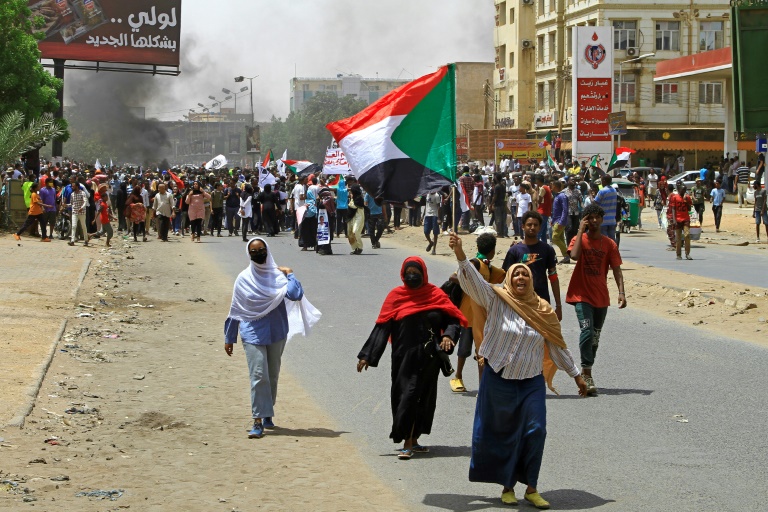
Burhan’s televised address came as hundreds of anti-coup demonstrators were on their fifth day of sit-in protests after last Thursday saw the deadliest violence so far this year.

Pro-democracy medics said nine demonstrators lost their lives, bringing to 114 the number killed in the crackdown against anti-coup protesters since October.

Protesters were unmoved by the general’s words, and in the Burri district of Khartoum new demonstrators came out immediately.

“We don’t have confidence in Burhan,” said Muhannad Othman, perched on a barricade erected by the protesters. “We just want him to leave once and for all.”

A demonstrator in central Khartoum, Oumeima Hussein, said Burhan should be “judged for all those killed since the coup” and vowed that protesters “are going to topple him like we did to Bashir”.

The army’s ouster of strongman Omar al-Bashir in 2019 after mass demonstrations led to a civilian-military transitional administration before the putsch.

Tens of thousands had taken to the streets again on Thursday, almost matching numbers at the peak of demonstrations after the coup. Although near-weekly rallies have continued, they appeared to decline in intensity before reigniting last week with the same demand: an end to military rule.

“The armed forces will not stand in the way” of democratic transition, Burhan said in his address, affirming the military’s commitment to working towards “elections in which the Sudanese people choose who will govern them”.

– Ruling council dissolving –

In the weeks following the coup, the military and civilian leaders had promised general elections in July 2023.

Sudan’s main civilian players refused to take part in talks with military leaders launched last month under international auspices in an effort to restore the transition.

The United Nations, the African Union and regional bloc IGAD facilitated the dialogue.

But the talks were boycotted by Sudan’s main civilian bloc, the Forces for Freedom and Change (FFC), which was ousted from power in the coup, and the influential Umma party. 

Late Monday, the FFC were holding an “emergency meeting” to discuss their response to Burhan’s announcements, a source within the bloc told AFP.

Also absent from the talks were members of the resistance committees — informal groups which emerged during the 2018-2019 protests that ousted Bashir and have led calls for recent anti-coup rallies.

Burhan said that “the formation of the executive government” will be followed by “the dissolution of the Sovereign Council” –- the ruling authority formed under a fragile power-sharing agreement between the army and civilians in 2019.

Though the coup derailed the transition and severed the fragile alliance, the Sovereign Council continued to govern Sudan under Burhan’s rule.

“A supreme council of armed forces” will take its place, he said, combining the Sudanese army and the Rapid Support Forces, a paramilitary unit commanded by Burhan’s deputy, Mohamed Hamdan Daglo.

The RSF incorporated members of the Janjaweed militia, which was accused by rights groups of atrocities during the conflict that erupted in 2003 in the western region of Darfur.

More recently, the RSF has been accused of taking part in crackdowns on anti-coup protesters.

The new supreme council will only be in charge of “defence and security” issues, Burhan said.
Sudan's Burhan says army stepping back for civilian govt

Sudan’s coup leader Abdel Fattah al-Burhan said Monday the army would make way for a civilian government and would “not participate” in national talks facilitated by the UN and regional blocs.

The decision was taken “to make room for political and revolutionary forces and other national factions” to form a civilian government, he said, months after the October coup ousted civilians from a transitional administration.

Widespread international condemnation and aid cuts followed the putsch, the latest in the impoverished northeast African country.

Burhan’s televised announcement surprised anti-coup demonstrators, hundreds of whom were on the fifth day of sit-in protests after last Thursday saw the deadliest violence so far this year.

Pro-democracy medics said nine demonstrators lost their lives, bringing to 114 the number killed in the crackdown against anti-coup protesters since October.

Tens of thousands had taken to the streets on Thursday, almost matching numbers at the peak of demonstrations after the coup. Although near-weekly rallies have continued, they appeared to decline in intensity before reigniting last week with the same demand: an end to military rule.

“The armed forces will not stand in the way” of democratic transition, Burhan said in his address, affirming the military’s commitment to working towards “elections in which the Sudanese people choose who will govern them.”

In the weeks following the coup, the military and civilian leaders had promised general elections in July 2023.

Sudan’s main civilian players had boycotted the talks with military leaders launched under international auspices last month in an effort to restore the transition.

The United Nations, the African Union and regional bloc IGAD facilitated the dialogue.

– Ruling body dissolving –

But Sudan’s main civilian bloc, the Forces for Freedom and Change (FFC), which was ousted from power in the coup, and the influential Umma party refused to join. 

Late Monday, the FFC were holding an “emergency meeting” to discuss their response to Burhan’s announcements, a source within the FFC told AFP.

Also absent were members of the resistance committees — informal groups which emerged during the 2018-2019 protests that ousted longtime strongman Omar al-Bashir and have led calls for recent anti-coup rallies.

Burhan said that “the formation of the executive government” will be followed by “the dissolution of the Sovereign Council” –- the ruling authority formed under a fragile power-sharing agreement between the army and civilians in 2019.

Though the coup derailed the transition and severed the fragile alliance, the Sovereign Council continued to govern Sudan under Burhan’s rule.

“A supreme council of armed forces” will take its place, he said, combining the Sudanese army and the Rapid Support Forces, a paramilitary unit commanded by Burhan’s deputy, Mohamed Hamdan Daglo.

The RSF incorporated members of the Janjaweed militia, which was accused by rights groups of atrocities during the conflict that erupted in 2003 in the western region of Darfur.

More recently, the RSF has been accused of taking part in crackdowns on anti-coup protesters.

The new supreme council will only be in charge of “defence and security” issues, Burhan said.
Libya's Dbeibah seeks calm after electricity protests

Libya’s Tripoli-based government sought on Monday to quell public anger over chronic power cuts, devoting its weekly meeting to the electricity sector and admitting it had underestimated the problem.

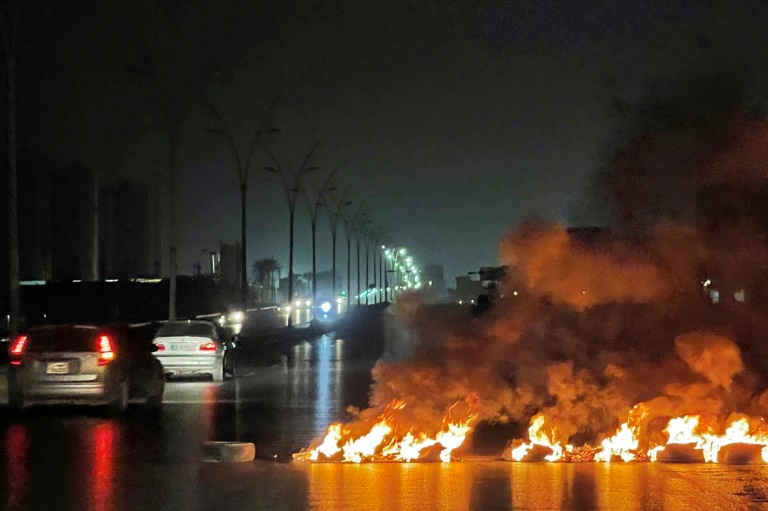
The meeting followed a night of angry protests across the capital, where masked youths set car tyres alight and blocked roads.

A further demonstration had been planned for Monday afternoon to demand long-awaited elections, but organisers cancelled it, saying they did not want to be associated with possible acts of vandalism.

Despite their country sitting on Africa’s largest oil reserves, Libyans regularly experience 18-hour power cuts, fuelling public anger that has piled pressure on both the Tripoli-based government of Abdelhamid Dbeibah and an eastern-based rival administration.

On Friday night, protesters had stormed the seat of the House of Representatives, based in the eastern city of Tobruk, ransacking its offices and torching part of the building.

In both Tripoli and the main eastern city of Benghazi, the cradle of the 2011 uprising, thousands took to the streets to chants of “we want the lights to work”.

Some brandished the green flags of the regime of dictator Moamer Kadhafi, who was killed in a 2011 NATO-backed uprising that plunged the country into over a decade of violence and wrangling among what is now a deeply entrenched yet divided political elite.

“Nobody can deny the right of the people to go out and protest and to demand elections,” Dbeibah told his cabinet on Monday.

The government “didn’t take the electricity crisis seriously”, he said, adding that resolving it would take longer than expected.

He announced however that three power stations were to open in July, two in the west and one in the east. 

Planning minister Mohamed Zaidani said some $2.96 billion had been spent on the electricity sector since 2013.

– ‘Kleptocracy and corruption’ –

United Nations Secretary-General Antonio Guterres has called for calm, but UN-mediated talks in Geneva last week aimed at breaking the stalemate between rival Libyan institutions failed to resolve key differences.

Presidential and parliamentary elections, originally scheduled for last December, were meant to cap a UN-led peace process following the end of the last major round of violence in 2020.

But voting never took place due to several contentious candidacies and deep disagreements over the polls’ legal basis between the rival power centres in the east and west.

The crisis deepened this year as parliament, elected in 2014 and backed by eastern strongman Khalifa Haftar, appointed a new government to replace Dbeibah’s.

But the interim premier has refused to cede power except to an elected administration.

On top of the political deadlock, Libyans’ living standards have been hit hard by price hikes on food imports due to the war in Ukraine.

Meanwhile supporters of the rival administration led by former interior minister Fathi Bashagha have shut down several oil facilities since April as leverage in his power struggle with Dbeibah.

Libya expert Jalel Harchaoui told AFP that “kleptocracy and systematic corruption” were rife in both eastern and western Libya.

For normal Libyans, the year “has been extremely painful” because the country “imports almost all its food and the Ukraine war has hit consumer prices”, Harchaoui said.

Relief in Mali as post-coup sanctions are lifted

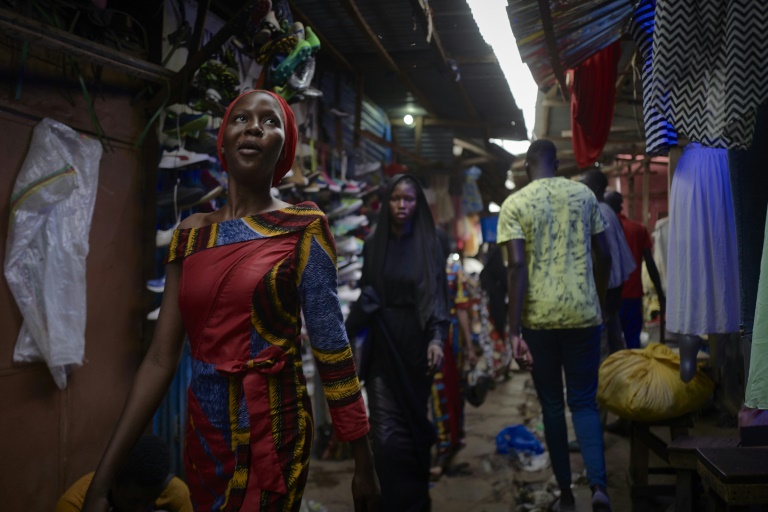
Street markets in Mali’s capital Bamako buzzed with excitement Monday after West African states lifted a six-month trade embargo imposed over the country’s latest coup, allowing traders to once again shop abroad for goods.

“We’ve had the same items (for months),” said Kadiatou Coulibaly, a fabric vendor at Bamako’s main market. 

“I plan to leave tomorrow for Abidjan to do some shopping.”

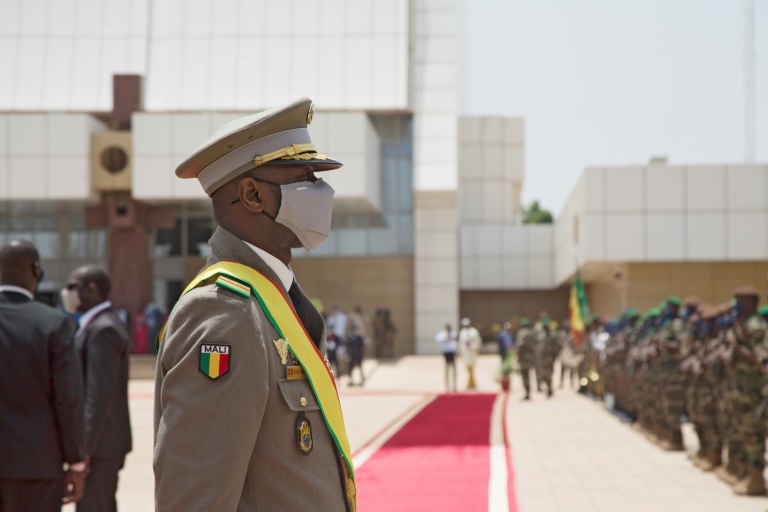
Heads of the Economic Community of West African States (ECOWAS) on Sunday lifted sanctions on the country’s military regime, including a trade and financial embargo imposed in January after the junta unveiled a scheme to rule for five years.

The sanctions have badly hit the poor Sahel state, whose economy is already under severe strain from a decade-long jihadist insurgency.

After months of talks, Malian authorities on Wednesday approved a plan to hold presidential elections in February 2024, a timeline ECOWAS accepted.

The vote will be preceded by a referendum on a revised constitution in March 2023 and legislative elections in late 2023.

“It’s a great relief for the transport sector,” said Youssouf Traore, president of the Malian Council of Road Transporters.

“All the drivers have returned to work after the announcement.”

The landlocked country depends on overland trade with its West African neighbours.

The decision to lift the penalties was made at an ECOWAS summit in the Ghanaian capital Accra to assess efforts to secure guarantees for restoring civilian rule in Mali and neighbouring Guinea and Burkina Faso.

Mali underwent coups in August 2020 and May 2021, followed by Guinea in September 2021 and Burkina Faso this January.

Fearing contagion, ECOWAS imposed tough trade and financial sanctions against Mali, but lesser punishments against Guinea and Burkina.

Its commission president, Jean-Claude Kassi Brou, said it would continue to suspend Mali from the bloc for now.

The decision also demands that no military junta member run as a candidate in Mali’s future presidential election, according to one ECOWAS delegate.

– ‘We have to sell our sheep’ –

The end of the blockade comes days before the Muslim festival of Eid al-Adha, scheduled for July 9 in Mali.

The festival, called Tabaski, is traditionally an occasion for buying new clothing and special food products — namely sheep for slaughter.

Mali, which has a large pastoral population, is one of the leading suppliers of livestock to the sub-region.

“We have to sell our sheep to our Senegalese and Ivorian brothers,” a cattle vendor told AFP.

A June 2 UN report blamed the sanctions, as well as “political, security and social instability,” as it slashed gross domestic product (GDP) growth estimates to 3.4 percent from 5.3 percent.

It said those factors had led to worsening living conditions, “in particular for the poor.”

Sanctions have particularly hit construction, transport, communications and trade in Mali, which last year imported 42 percent of its needs from other ECOWAS countries, it said.

“We are coming out of a situation that has weakened many businesses,” said Youssouf Bathily, president of the Malian Chamber of Commerce and Industry.

The sanctions had recently led the World Bank and African Development Bank (AfDB) to suspend programme funding and were “likely” to continue harming the government’s ability to service its debts, the UN report said.

Central African Republic dives into crypto with the Sango

Undeterred by the turmoil hitting crypto, the Central African Republic (CAR) — one of the poorest and most troubled countries in the world — has unveiled plans to launch its own digital currency.

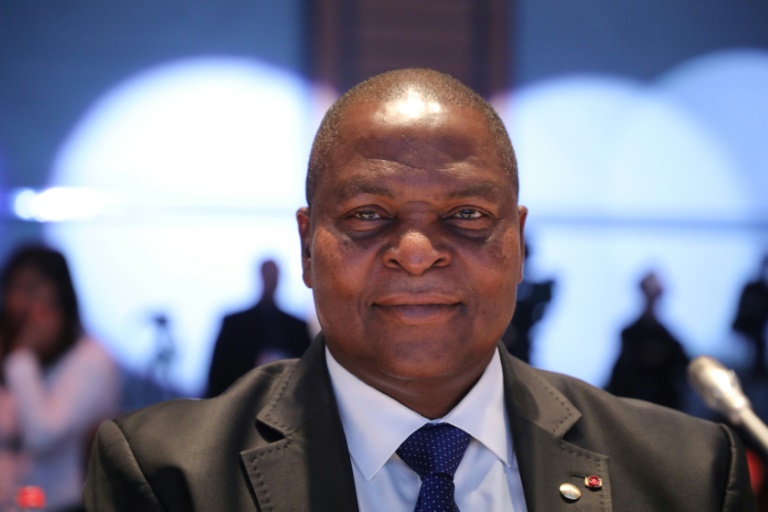
President Faustin Archange Touadera, in an “online event” on Sunday, announced CAR would create the Sango Coin and a zero-taxation “crypto-hub”, the first in Africa.

The currency is named after Sango, which with French is one of the two official languages in the landlocked country, rated the world’s second poorest nation under the UN’s Human Development Index.

Through a platform called Crypto Island, the Sango will become “the catalyst for tokenising (CAR’s) vast natural resources,” Touadera declared, providing no timeline or other details.

He hailed Sango and Crypto Island as “a new digital system fed by blockchain,” the internet-based ledger that underpins crypto currencies.

“Sango Coin will give the whole world direct access to our resources,” attracting investors and “getting the engines of the economy going,” he enthused.

On April 27, Touadera’s office abruptly announced that the CAR had adopted Bitcoin as legal tender alongside the CFA franc, a currency the country shares with five other central African economies.

It became the first country in Africa to embrace Bitcoin as a national currency, and the second in the world after El Salvador last September.

The April announcement sparked bemusement among analysts, given the entrenched poverty and lack of infrastructure in the CAR, where only one person in seven has access to mains electricity. 

They also voiced concern about the impact of crypto volatility on savings.

Virtual currencies have gone into a tailspin as investors look to safer havens at a time of inflation and uncertainty sparked by the Ukraine war.

Bitcoin has lost nearly 60 percent of its value over the past six months.

– ‘Digital gold’ –

Touadera on Sunday said 57 percent of Africa’s population does not have access to a bank.

“The solution,” he said, was “the smartphone, the alternative to the traditional bank, cash and financial red tape”.

On Twitter, he said, “gold served as the engine of our civilisation for ages! In this new age, digital gold will serve the same for the future.”

The CAR’s rush to crypto has been seen by some critics in the context of its closer ties with Russia.

Touadera has been accused of using Russian paramilitaries to buttress his regime and offering CAR’s natural resources in exchange. 

The country has a treasure chest of minerals, ranging from copper and gold to diamonds and uranium.

The CAR, a former French colony, plunged into a civil war along sectarian lines in 2013 after the then-president, Francois Bozize, was ousted.

Touadera was first elected in 2016 after an interim period and re-elected in disputed circumstances in 2020.

Violence diminished in 2018 but rebel forces remain active.

Libya protests planned over power cuts, political deadlock

Libyans angered by rising prices, chronic power cuts and political deadlock planned further demonstrations Monday after a night of angry protests across the capital. 

Masked youths set alight car tyres and blocked roads including a major coastal highway between central Tripoli and its western suburbs, but security forces did not intervene.

Videos carried by local media also showed demonstrations in Beni Walid and the port city of Misrata.

A youth movement calling itself “Beltress” said further protests were planned in Tripoli’s Martyr’s Square at 4:00 PM local time (1400 GMT).

The movement demands elections and the dissolution of both the country’s rival governments and their two houses of parliament. 

Public anger has been fuelled by power cuts that often last 18 hours amid soaring summer temperatures, despite Libya sitting on Africa’s largest oil reserves.

The vast country has been mired in political unrest and armed violence since a 2011 NATO-backed uprising toppled and killed dictator Moamer Kadhafi.

On Friday night, protesters stormed the seat of the House of Representatives in the eastern city of Tobruk, ransacking its offices and torching part of the building.

In both Tripoli and the main eastern city of Benghazi, the cradle of the 2011 uprising, thousands took to the streets to chants of “We want the lights to work”.

Some brandished the green flags of the former Kadhafi regime.

– ‘Kleptocracy and corruption’ –

United Nations Secretary-General Antonio Guterres has called for calm, but UN-mediated talks in Geneva last week aimed at breaking the stalemate between rival Libyan institutions failed to resolve key differences.

Presidential and parliamentary elections, originally set for last December, were meant to cap a UN-led peace process following the end of the last major round of violence in 2020. 

But voting never took place due to several contentious candidacies and deep disagreements over the polls’ legal basis between the rival power centres in east and west.

The crisis deepened this year as parliament, elected in 2014 and backed by eastern strongman Khalifa Haftar, appointed a new government to replace that of interim leader Abdelhamid Dbeibah.

He has refused to cede power except to an elected administration.

On top of the political deadlock, Libyans’ living standards have been hit hard by price hikes on food imports due to the war in Ukraine.

Meanwhile supporters of the rival administration of former interior minister Fathi Bashagha have shut down several oil facilities since April as leverage in his power struggle with Dbeibah.

Libya expert Jalel Harchaoui told AFP that “kleptocracy and systematic corruption” were rife in both eastern and western Libya.

For normal Libyans however, the year “has been extremely painful” because the country “imports almost all its food and the Ukraine war has hit consumer prices”, Harchaoui said.

W.African bloc lifts Mali sanctions, agrees on Burkina transition

West African leaders on Sunday lifted sanctions on Mali’s military regime, accepting a March 2024 return to civilian rule and agreed to allow Burkina Faso two years for its transition back to democracy.

Heads of the Economic Community of West African States (ECOWAS) met in Ghana’s capital Accra to assess efforts to secure guarantees for restoring civilian rule in Mali, Guinea and Burkina Faso.

Mali underwent coups in August 2020 and May 2021, followed by Guinea in September 2021 and Burkina Faso this January.

Fearing contagion in a region known for military takeovers, ECOWAS imposed tough trade and economic sanctions against Mali, but lesser punishments against Guinea and Burkina.

“After discussion, the heads of state took a firm first decision to lift the economic and financial sanctions,” ECOWAS Commission President Jean-Claude Kassi Brou told reporters about the decision on Mali.

Brou said ECOWAS would continue to monitor the situation and also maintain an ECOWAS suspension of Mali for now.

The decision also demands no military junta member run as a candidate in Mali’s future presidential election, according to one ECOWAS delegate. 

ECOWAS in January had imposed a trade and financial embargo on Mali after its military government unveiled a scheme to rule for five years.

The sanctions have badly hit the poor, landlocked Sahel state, whose economy is already under severe strain from a decade-long jihadist insurgency.

After months of talks, Malian authorities on Wednesday approved a plan to hold presidential elections in February 2024.

The vote will be preceded by a referendum on a revised constitution in March 2023 and legislative elections in late 2023.

The ECOWAS mediator in Mali, former Nigerian leader Goodluck Jonathan, visited the country last week. A member of his entourage had told AFP Mali had made “enormous progress”.

– Guinea transition ‘unthinkable’ –

Burkina Faso — another Sahel country caught up in jihadist turmoil — and Guinea have so far only been suspended from the bodies of the 15-nation bloc.

Burkina’s junta proposed a constitutional referendum in December 2024 and legislative and presidential elections in February 2025.

An ECOWAS delegate said the regional heads of state had agreed to the two-year transition timeline.

The information was confirmed to AFP by an ECOWAS official who also participated in the summit.

Visiting Ouagadougou for the second time in a month on Saturday, ECOWAS mediator Mahamadou Issoufou had praised junta leader Lieutenant Colonel Paul-Henri Sandaogo Damiba and his government for their “openness to dialogue”. 

The timetable for a return to civilian rule and the situation of deposed leader Roch Marc Christian Kabore were also discussed, said the former president of Niger.

Political parties allied to Kabore denounced the junta’s plans on Friday, saying they had not been consulted in advance.

The situation appears more complex in Guinea, whose junta has refused an ECOWAS mediator and announced a 36-month transition — a period that African Union chairman and Senegalese President Macky Sall has described as “unthinkable”.

Guinea this week has led a diplomatic offensive to assuage the concerns of regional leaders.

The country’s post-coup prime minister Mohamed Beavogui on Saturday met the United Nations’ special representative for West Africa and the Sahel, Mahamat Saleh Annadif.

The government said it wanted to reassure its ECOWAS “brothers” of its commitment to undertaking a peaceful and inclusive democratic transition.

Guinea’s military regime met the main political parties on Monday, but they have made their participation in the dialogue conditional on the nomination of an ECOWAS mediator.

Hundreds of anti-coup protesters in Sudan defy security forces

Hundreds of Sudanese protesters demanding an end to military rule took to the streets of the capital Khartoum and its suburbs for a fourth straight day Sunday, witnesses said.

A violent crackdown by security forces during mass rallies on Thursday killed nine people, according to medics, the deadliest day for several months in the long-running protests against a coup last October led by army chief Abdel Fattah al-Burhan.

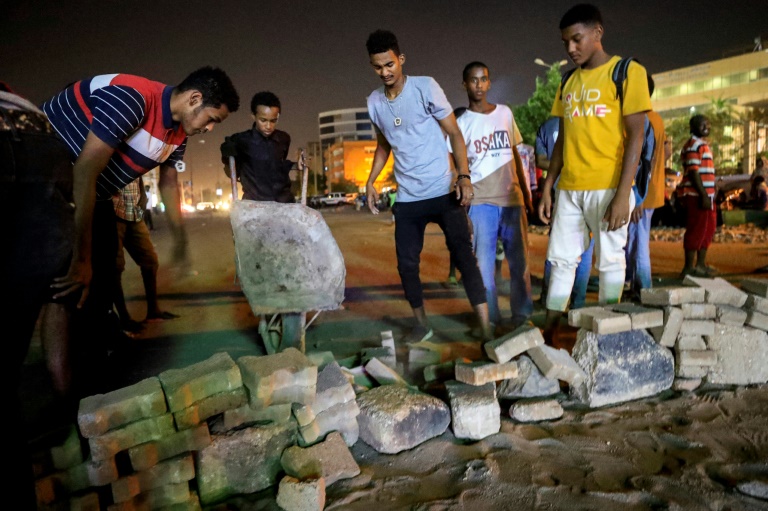
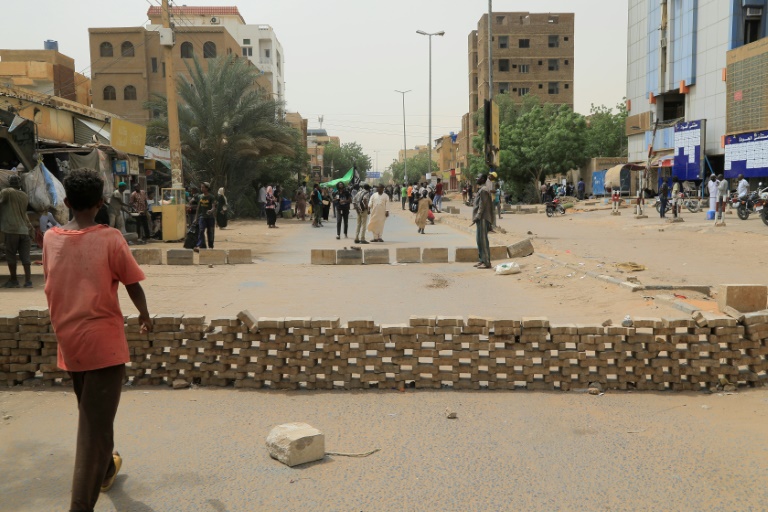
Recent protests have seen crowds burn tyres and barricade roads with bricks, while security forces have used live bullets, fired barrages of tear gas canisters and deployed powerful water cannons, according to medics and the United Nations.

Demonstrators are demanding a restoration of the transition to civilian rule that was launched after the 2019 ouster of longtime autocrat Omar al-Bashir and which the coup derailed.

“We will continue this sit-in until the coup is overturned, and we have a fully civilian government,” demonstrator Muayyad Mohamed told AFP in central Khartoum.

The death toll from protest-related violence has reached 114 since last year’s coup. The latest fatality came on Saturday when a demonstrator died from wounds sustained at a June 16 rally, according to pro-democracy medics.

– ‘We will not compromise’ –

“We will not compromise until the goals of our revolution are realised,” said Soha, 25, another protester, who only gave her first name.

“We are here in the street demanding freedom, peace, justice, a civil state and the return of the military to the barracks.”

Last year’s coup plunged Sudan further into political and economic turmoil that has sent consumer prices spiralling and resulted in life-threatening food shortages.

On Sunday, witnesses reported a heavy deployment of security forces on the streets of Khartoum, including both army vehicles and those of the Rapid Support Forces (RSF), a feared paramilitary unit commanded by Burhan’s deputy, Mohamed Hamdan Daglo.

The RSF incorporated members of the Janjaweed militia, which was accused by rights groups of atrocities during the conflict that erupted in 2003 in the western region of Darfur.

More recently, the RSF has been accused of taking part in crackdowns on protesters marching against military rule.

The international community has condemned the recent bloodshed, with the UN rights chief urging an independent probe into Thursday’s violence.

Sudan’s judiciary announced late Sunday it had opened an investigation “into the events that led to deaths and injuries”.

– ‘Dialogue’ –

The UN, African Union and regional bloc IGAD have tried to facilitate dialogue between the generals and civilians, but the main civilian factions have boycotted.

On Friday, the three bodies jointly condemned the violence and “the use of excessive force by security forces and lack of accountability for such actions, despite repeated commitments by authorities”.

Yasser Arman from Sudan’s main civilian bloc the Forces for Freedom and Change on Sunday again expressed opposition to a return to negotiations with the military and its allies.

“The bullets that have cut down protesters have cut down the political process,” he told a press conference, adding, “It’s not us who broke it off.” 

In the restive Darfur region, which has seen a recent resurgence in violence, General Daglo — known as Hemeti — on Sunday called “on all political forces, especially the youth,” to come to the table.

“Dialogue is the only way to guarantee stability in our country,” he said at a ceremony where 2,000 ex-rebels completed their training to join Sudanese security forces.

The integration of former fighters into the Sudanese army and police was part of a 2020 peace deal with rebel groups involved in decades of civil conflict, including in Darfur.

The first of its kind, the cohort “will confront the chaos in Darfur”, Daglo said.

Hundreds have been killed in recent months in Darfur, in a renewed spike of violence triggered by disputes mainly over land, livestock and access to water and grazing.

W.African bloc lifts Mali sanctions, agrees on Burkina transition

West African leaders on Sunday lifted sanctions on Mali’s military regime, accepting a March 2024 return to civilian rule, and agreed on two years for Burkina Faso’s transition back to democracy, delegates at a regional summit said.

Heads of the Economic Community of West African States (ECOWAS) had gathered to assess efforts to secure timetables and guarantees for restoring civilian rule in Mali, Guinea and Burkina Faso.

Mali underwent coups in August 2020 and May 2021, followed by Guinea in September 2021 and Burkina Faso this January.

Fearing contagion in a region known for military takeovers, ECOWAS imposed tough trade and economic sanctions against Mali, but lesser punishments against Guinea and Burkina.

“It’s done,” one delegate at the ECOWAS summit told AFP. “We have decided to lift economic and financial sanctions against Mali.”

ECOWAS in January imposed a trade and financial embargo on Mali after its military government unveiled a scheme to rule for five years.

The sanctions have badly hit the poor, landlocked Sahel state, whose economy is already under severe strain from a decade-long jihadist insurgency.

After months of talks, Malian authorities on Wednesday approved a plan to hold presidential elections in February 2024.

The vote will be preceded by a referendum on a revised constitution in March 2023 and legislative elections in late 2023.

The ECOWAS mediator in Mali, former Nigerian leader Goodluck Jonathan, visited the country last week. A member of his entourage had told AFP Mali had made “enormous progress”.

The country’s top diplomat Abdoulaye Diop on Friday said the recent political developments were moving the country towards a lifting of the sanctions.

– Guinea transition ‘unthinkable’ –

Burkina Faso — another Sahel country caught up in jihadist turmoil — and Guinea have so far only been suspended from the bodies of the 15-nation bloc.

Burkina’s junta proposed a constitutional referendum in December 2024 and legislative and presidential elections in February 2025.

“Everyone agrees that it is 24 months of transition from July 1, 2022,” an ECOWAS summit delegate told AFP.

The information was confirmed to AFP by an ECOWAS official who also participated in the summit.

Visiting Ouagadougou for the second time in a month on Saturday, ECOWAS mediator Mahamadou Issoufou had praised junta leader Lieutenant Colonel Paul-Henri Sandaogo Damiba and his government for their “openness to dialogue”. 

The timetable to enable a return to civilian rule and the situation of deposed leader Roch Marc Christian Kabore were also discussed, said the former president of Niger.

Political parties allied to Kabore denounced the junta’s plans on Friday, saying they were not consulted in advance.

The situation appears more complex in Guinea, whose junta has refused an ECOWAS mediator and announced a 36-month transition — a period that African Union chairman and Senegalese President Macky Sall has described as “unthinkable”.

Guinea this week has led a diplomatic offensive to assuage the concerns of regional leaders.

The country’s post-coup prime minister Mohamed Beavogui on Saturday met the United Nations’ special representative for West Africa and the Sahel, Mahamat Saleh Annadif.

The government said it wanted to reassure its ECOWAS “brothers” of its commitment to undertaking a peaceful and inclusive democratic transition.

Guinea’s military regime met the main political parties on Monday, but they have made their participation in the dialogue conditional on the nomination of an ECOWAS mediator.

Author of proposed new Tunisia constitution disavows project

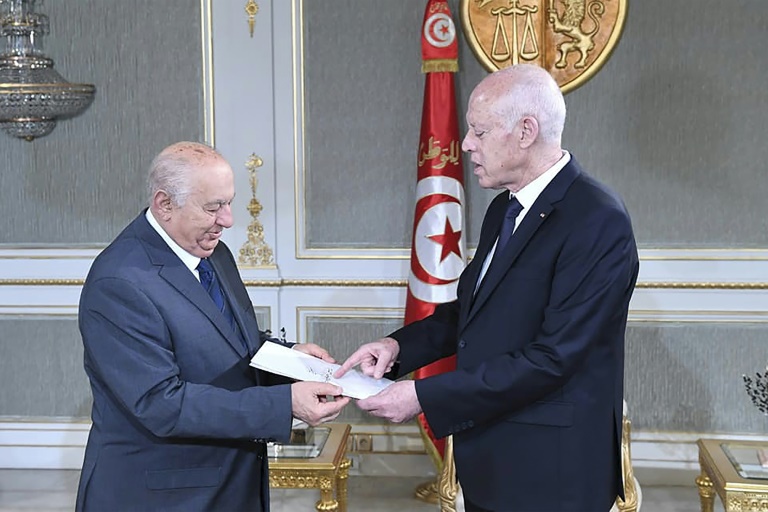
The Tunisian jurist who oversaw the drafting of a new constitution submitted to President Kais Saied said Sunday it has been changed into a charter that could lead to a dictatorship.

Some articles of the draft constitution published last Thursday in the official gazette could “pave the way for a dictatorial regime”, warned Sadeq Belaid, who headed a committee tasked with drafting the document. 

The published text is “completely different” from that submitted in person to the president late last month, the respected jurist told AFP. 

In July last year, Saied orchestrated a dramatic power grab, which many have denounced as a coup, sacking the government and freezing parliament.

Belaid was viewed as a pro-Saied figure even during subsequent moves by the president to further consolidate power this year.

His disavowal of the altered constitution is therefore a blow for the president, just weeks before it is due to go to a referendum. 

Contacted by AFP, Belaid confirmed he has withdrawn his support for the draft.

Saied has since his initial power grab moved to rule by decree and extended his powers over the judiciary and the electoral board.

Some Tunisians welcomed his moves against the sclerotic system that emerged from the revolution that toppled dictator Zine El Abidine Ben Ali in 2011.

But others have protested in the streets and warned that the president is targeting political rivals and dragging the country back towards autocracy.

– ‘Completely different’ –

The constitution for a “new republic” is at the centre of Saied’s programme for rebuilding Tunisia’s political system.

The president plans to hold a referendum on the constitution on July 25, to mark one year since his power grab.

The draft constitution published last week grants the president wide powers to rule.

It allows him to carry out “executive functions with the help of the government”, whose chief he would appoint.

The president would also head the armed forces and name judges. The draft constitution waters down the role of parliament.

Belaid warned that the published document “contains risks and considerable shortcomings”.

He specifically points to one article, which he said carries an “imminent danger” because it would give the president “very wide powers… that could lead to a dictatorial regime”.

“That is why, as head of the national constitution committee… I declare, regretfully and in true conscience… that the committee has nothing to do with the document that the president” will submit for approval in a referendum, Belaid added.

The altered draft constitution augurs a “bad future” for the country, he contended.

His misgivings were initially published as a letter in the Assabah newspaper, and he spoke subsequently to AFP, confirming that he was the author.

“The text that I drew up after several weeks of work with the participation of dozens of experts at all levels is completely different from the text that has been published,” he told AFP.

In contrast to Tunisia’s past constitutions, the draft also makes no reference to Islam as a state religion or basis of the law. 

The 2014 constitution, a hard-won compromise between the Islamist-inspired Ennahdha, which was parliament’s biggest party, and its secular rivals created a system where both the president and parliament had executive powers.

It was adopted three years after the North African country’s 2011 revolution that toppled Ben Ali.

Close Bitnami banner
Bitnami