

Bloomberg

Ukraine Latest: Ukraine Seeks Generators to Get Through Winter

(Bloomberg) — Ukraine needs high-voltage equipment that can be repaired quickly — like transformers as well as generators — to get through the winter following two months of near daily Russian attacks on its energy infrastructure, Energy Minister Herman Halushchenko told Bloomberg TV. 

NATO allies must send main battle tanks to Ukraine as soon as possible, as Ukrainian forces could use them to “revert the situation” on the ground now while the ground is frozen, Lithuanian Foreign Minister Gabrielius Landsbergis told Bloomberg TV at a ministerial meeting in Bucharest.

President Volodymyr Zelenskiy called for a special tribunal to be set up to ensure Russia’s top political and military leaders are held responsible for the invasion of Ukraine. He said that Ukraine and its partners have to “ensure justice after this war in the same manner as it was done after World War II.”

(See RSAN on the Bloomberg Terminal for the Russian Sanctions Dashboard.)

Key Developments

  • EU Proposes Special Court to Probe Russian Actions in Ukraine
  • NATO Allies Warn on China With Eye on Beijing’s Ties to Putin
  • Senior House Republican Vows to Keep Money Flowing to Ukraine
  • US Weighs Terrorism Label for Russia’s Wagner Group Mercenaries
  • How Putin’s Spooking Japan Further Away From Pacifism: QuickTake

On the Ground

The threat of new missile attacks against critical infrastructure all across Ukraine remains, the country’s General Staff said in its regular update. Russian forces continue an offensive near Bakhmut in Donetsk region, according to the statement. Each town along the front line in the region has suffered from shelling over the past 24 hours even as Russians failed to push Ukrainian troops away, governor Pavlo Kyrylenko said during a video briefing.

(All times CET)

Ukraine Finding Solutions to Adapt Donated Power Equipment (6:45 p.m.)

Ukraine’s power engineers are finding “some technical solutions” to adapt transformers donated by European Union countries to the different specifications used in eastern Europe, Halushchenko, the energy minister, said in his Bloomberg TV interview.

He also said that Ukraine has stored sufficient fuel for portable generators that are in wide use by Ukrainians amid blackouts all over the country from Russian attacks, and he urged the west to provide more such equipment.

Zelenskiy Invites Musk to Ukraine to See Russia’s Devastation (6:18 p.m.)

Zelenskiy invited Elon Musk to visit his war-ravaged nation and see for himself the damage wrought by Russia, after the world’s richest man floated the idea of a peace deal that would give major concessions to President Vladimir Putin.

Musk played a key role restoring Internet service in Ukraine after the invasion, Zelenskiy told the New York Times Dealbook conference Wednesday, saying “life was maintained” thanks to the deployment of his Starlink satellite communications system. 

But sometime later, “it seems that Elon began to change his opinion and we began to hear all kinds of appeals,” Zelenskiy said.

Read the full story.

US Says It Fears Russia May Use Biological Weapons (6:04 p.m.)

Russia’s invasion of Ukraine has elevated US concern that Putin’s government could use biological weapons, according to a top US State Department official who’s in Geneva for a review of the global treaty addressing such threats.

“We’ve always been concerned about their own biological program,” Under Secretary for Arms Control and International Security Bonnie Jenkins said, speaking from the US Mission in Geneva. But those concerns have increased as Russia has continued to make unsupported allegations about US development of biological weapons in Ukraine. Such disinformation could mask Russia’s own weaponization of infectious diseases, she said. 

“As long as they continue the unprovoked invasion of Ukraine — staying there and doing what they’re doing and making these allegations — there’s always a possibility that they’ve been using” disinformation as a cover, she said.  

Finland Sends Power Grid Components to Ukraine (5:11 p.m.)

Finland’s delivery included current transformers, circuit breakers and relays, the government in Helsinki said in an emailed statement. It follows an earlier shipment of 28 current transformers, and officials are putting together a further package including large generators and heating equipment.

Ukraine Embassy in Spain Reports Injury (1:40 p.m.)

A worker at the embassy in Madrid was slightly injured by a letter bomb, a spokesperson for the Interior Ministry said in a statement. He was able to reach a hospital on his own, according to the statement. Further details weren’t immediately available.

Petraeus Expects Negotiated End to War (1:00 p.m.)

Former Central Intelligence Agency Director David Petraeus said he expects the war to end with a negotiated settlement rather than victory for Ukraine.

“Until then, the US, NATO and western allies should do everything possible to enable Ukraine to liberate its country and defend its people and infrastructure against Russian missiles and Iranian drones,” Petraeus, who is also a former US general, was quoted as saying by Germany’s Tagesspiegel newspaper. The aim should also be to keep Ukraine’s economy running “and accelerate Putin’s realization that the Russian mission in Ukraine cannot be sustained,” he added.

Ukraine ‘Will Win’ War Against Russia, Top Czech Envoy Says (12:15 p.m.)

Ukraine will be victorious in fending off an invasion based on Putin’s imperialistic ambitions, which has stumbled on his miscalculations, a top European diplomat said. “Ukraine will win this war,” Czech Foreign Minister Jan Lipavsky told Bloomberg TV on the sidelines of the NATO meeting.

The European Union and NATO are united in their stance against Moscow, even if member states have to “work hard to achieve unity” at times, Lipavsky said.

Ukraine Seeks to Use Part of US Financial Aid for Gas Purchase (10:30 a.m.)

Ukraine is seeking to use part of the $500 million financial assistance provided by the US, via the European Bank for Reconstruction and Development, to purchase natural gas for the winter, Naftogaz said on website.

Naftogaz CEO Oleksiy Chernyshov discussed Ukraine’s needs to buy gas and provide electricity, water and heating to Ukrainians with Brian McCauley, a deputy assistant secretary at the US Treasury. Part of a new $1.1 billion support package proposed by the White House can also be spent onr gas, according to Chernyshov.

Dutch Government Calls for More Military Help to Ukraine (9:45 a.m.)

Dutch Foreign Minister Wopke Hoekstra urged NATO allies to boost military help to Ukraine. “The war will continue so we need to step up helping the Ukrainian army,” Hoekstra told Bloomberg Television on the sidelines of the NATO meeting in Bucharest.

Hoekstra also said allies must respond to what he called “horrific war crimes in Ukraine.” He added: “We have to show that justice will be done, through the International Court of Justice and other measures.”

EU Proposes Special Court to Probe Russian Actions in Ukraine (9:15 a.m.)

European Commission President Ursula von der Leyen proposed creating a special international court to probe Russian actions in Ukraine and using frozen Russian assets to help rebuild the nation. The head of the European Union’s executive arm said the bloc would try to gather international support for “specialized court backed by the United Nations to investigate and prosecute Russia’s crime of aggression.” 

In a video address posted on Twitter, von der Leyen also said the bloc would “find legal ways” to use money seized from Russia to help fund Ukraine’s reconstruction. The EU has blocked €300 billion ($311 billion) in Russian central bank reserves and frozen some €19 billion in assets held by sanctioned Russian businessmen. 

NATO Allies Must Send Main Battle Tanks Soon, Lithuania Says (8 a.m.)

Lithuania’s top envoy is urging his NATO allies to send Kyiv main battle tanks as soon as possible, as Ukrainian forces could use them to “revert the situation” on the ground now while the ground is frozen.

“If we talk, delay, do not make up our minds and deliver them later in the spring, then they’re less useful,” Lithuanian Foreign Minister Gabrielius Landsbergis told Bloomberg TV’s Maria Tadeo on the sidelines of a meeting of NATO foreign ministers in Bucharest.

Asked about whether counter-attacks by Ukrainian forces in Crimea could prove escalatory, Landsbergis said “this is a theory that Putin wants us to believe.” He added he hopes allies have learned lessons from dependencies on Russia to not repeat the same mistake with China.

Chinese Support Is Crucial to Pressure Russia on Peace, Italy Says (7:50 a.m.)

Italian Foreign Minister Antonio Tajani said it’s crucial to get support from China to pressure Russia into a peace deal. “At this moment, China is very important for a peace agreement” between Russia and Ukraine, Tajani told reporters on the sidelines of the NATO meeting. Tajani said both China and Turkey “can play a role in restoring peace” in Ukraine.

Sweden Sees Progress in Talks With Turkey on NATO Bid (7:45 a.m.)

Swedish Foreign Minister Tobias Billstrom told reporters at the NATO meeting that progress is being made on convincing Turkey to ratify bids by Sweden and Finland to join the military alliance.

“We had a very good meeting with Turkey, there is progress in line,” Billstrom said Wednesday, a day after foreign ministers of the three countries met in Bucharest. “Felt progress, moving forward.” Billstrom expressed hope for a “fast ratification” by the Turkish parliament but added that no time frame has been set at this point. He confirmed plans for a trip to Turkey soon to hold further discussions on the process.

More stories like this are available on bloomberg.com

©2022 Bloomberg L.P.

FTX’s Banking Ties Raise Uncomfortable Questions for Regulators

(Bloomberg) — The residue of Sam Bankman-Fried’s crypto empire is laying bare the industry’s growing foothold in the traditional banking system.  

Although there is no indication that FTX’s spectacular collapse poses any systemic risk, its bankruptcy filings read like a warning label on what could go wrong. The disclosures also raise a pressing question for US regulators and lenders: Are they doing enough to keep tabs on the fast-growing sector?  

Federal watchdogs have for months been warning banks to tread carefully with digital assets, and, for the most part, Wall Street has heeded that call. Some smaller American lenders have eagerly courted business from crypto firms, including those based abroad.

“How does the US government protect US consumers from a Bahamas-based crypto exchange?” said Kevin Carr, a financial industry consultant and former Treasury Department official, referring to FTX. “There’s no easy answer to that, but it does underscore the problem of jurisdiction-shopping where a company will choose to base itself in a country with less stringent oversight.”

FTX has listed in bankruptcy filings Silvergate Capital Corp. and Signature Bank, which are both federally regulated by the US, as places where it or related entities had accounts. It also highlighted Bahamas-based Deltec Bank & Trust, which isn’t directly overseen by Washington but is well-known in the crypto world.

All three institutions have sought to explain that their exposure to the turmoil was limited. 

Silvergate has said FTX-related deposits represented less than 10% of the $11.9 billion held for digital asset customers as of Sept. 30. Signature cited an even smaller percentage — of less than 0.1% of its overall deposits as of Nov. 14 — and said its deposit base has held steady since the exchange’s collapse. Meanwhile, Deltec said on its website that it has “no credit or asset exposure to FTX.” 

Deposit Accounts

The links, however, extend beyond deposit accounts, the bankruptcy filings show. They pointed to a surprising development that a venture capital fund tied to Bankman-Fried’s Alameda Research hedge fund invested $11.5 million in Farmington State Bank, which does business as Moonstone Bank in Washington state. 

Moonstone said in a statement on Tuesday that it received Alameda’s investment in January as part of a capital raise, when the company “had a pristine reputation and was a darling of the financial markets.” The share represents less than 10% of Moonstone, it said.

‘‍‘Alameda has a non-controlling interest in Moonstone, with no board membership and no involvement with management,” it said. The bank, which transformed its business model following its 2020 acquisition by FBH Corp., said it has remained in close communication with regulators and added controls “to ensure all our activities comply with all applicable laws and regulations.”

The Washington State Department of Financial Institutions said the investment didn’t require regulatory approval because it did not constitute a controlling interest in the business. 

It’s not just smaller banks or regional lenders that have sought to capture crypto business. Some of Wall Street’s bigger firms have started offering crypto services including some trading, wealth management and advisory, which are typically less risky to their businesses than accepting crypto deposits or investments.

Bank of New York Mellon Corp. in October launched a US digital asset platform allowing some clients to hold and transfer Bitcoin and Ether, which it said is the first by a global bank to provide such services.

In comments that now seem prescient, Fed Vice Chair Michael Barr said in October that banks should be cautious in their partnerships with crypto firms, given the interconnectedness between digital-asset companies exposed by the recent failures in the market. Barr also warned that working with crypto companies can expose banks to risks including fraud, theft, manipulation, and money laundering.

Neither US federal nor state regulators have accused Silvergate, Signature, Deltec, or Farmington State Bank of any wrongdoing in their dealings with FTX.

Representatives for the Federal Reserve, the Federal Deposit Insurance Corp. and the Office of the Comptroller of the Currency all declined to comment on whether the FTX filings spotlight regulatory blind spots.

‘Reckless’ Risks

On Wednesday, Sherrod Brown, the head of the Senate Banking Committee, urged US Treasury Secretary Janet Yellen to work with lawmakers to craft crypto legislation that tackles risks exposed by FTX’s collapse. 

“As we continue to learn more details, the failure of this crypto exchange brings to mind the litany of financial-firm failures due to the combination of reckless risk-taking and misconduct,” Brown, an Ohio Democrat, said in a letter to Yellen. “Congress and the financial regulators must work to get all of this right.”

Yellen, for her part, said at a New York Times event Wednesday that the FTX debacle was “the Lehman moment within crypto,” referring to the collapse of investment-banking giant Lehman Brothers Holdings Inc. in 2008 that crippled global credit markets.

“We have consistently urged regulatory gaps be closed,” Yellen said. “This experience with his firm, or set of firms, just couldn’t provide a better illustration. These are very risky assets, but the good piece of an explosion like we saw is it hasn’t spilled over to the banking sector.”

FTX Blowup

To be sure, even before FTX’s blowup, federal regulators were grappling with how to deal with crypto ties to traditional finance.

Throughout 2022, the FDIC has been trying to crack down on companies, including FTX and Voyager Digital LLC, over claims they may mislead investors into thinking their money was covered by deposit insurance. Both firms are now bankrupt.

In the case of Voyager, the crypto platform said in some materials that US dollar deposits with the firm were covered by FDIC insurance, in the event of either the crypto company or the bank’s failure. In reality, while Voyager’s banking partner Metropolitan Bank Holding Corp. was insured, Voyager wasn’t, meaning clients wouldn’t benefit from the insurance if Voyager went under.


Meanwhile, banks and the trade groups that represent them have said they lack clarity from Washington regulators on how to engage in crypto activities, including through partnerships with digital-asset firms and fintechs.

Self-Policing

Sultan Meghji, a former chief innovation officer for the FDIC, acknowledged that bank regulators have been struggling with how to handle those partnerships and said watchdogs could be doing “a lot more.”

In the meantime, however, Meghji said he expects banks offering services to crypto companies to face a lot more scrutiny following the FTX failure. He said that firms should consider doing more self-policing so that they’re not liable for any misconduct. 

“I would do a complete audit of all of my banking as a service customers and look at beneficial ownership of all of those customers to ensure that I have not — knowingly or not — gotten in bed with the next FTX,” Meghji said.

(Updates with Sherrod Brown, Janet Yellen comments after ‘Reckless’ Risks subheadine.)

More stories like this are available on bloomberg.com

©2022 Bloomberg L.P.

Google Says Hacking Tools Are Likely Tied to Spanish Firm

(Bloomberg) — A set of hacking tools that exploited vulnerabilities in Chrome and Firefox web browsers has “likely ties” to a company based in Barcelona, Spain, according to findings published Wednesday by Alphabet Inc.’s Google. 

Google’s Threat Analysis Group, a cybersecurity unit, said in a blog post that the hacking tools, named Heliconia, are likely tied to the Spanish company Variston IT. In addition to exploiting flaws in Chrome and Firefox browsers, the tools could also target vulnerabilities in Microsoft Corp.’s security product Defender, according to Google. Heliconia “provides all the tools necessary to deploy a payload to a target device,” Google said.

The flaws have been fixed, but Google researchers believe they were exploited by hackers before they were patched.

In an emailed statement, Variston declined to discuss specific products or customers. Variston works within “the relevant international and national legal framework,” said Ralf Wegener, director at Variston.

An anonymous tipster flagged three software bugs and other details about Heliconia to Google, enabling the company to further investigate, the Threat Analysis Group said.

Google in June said it had been tracking more than 30 firms with “varying levels of sophistication and public exposure” that sold software exploits or surveillance capabilities. The Threat Analysis Group’s research “has shown the proliferation of commercial spyware and the extent to which commercial spyware vendors have developed capabilities that were previously only available to governments with deep pockets and technical expertise,” the company said in a blog post.

More stories like this are available on bloomberg.com

©2022 Bloomberg L.P.
Italy Plans to Tax Crypto Trading Gains, Expand Disclosure

(Bloomberg) — Italy is set to toughen regulation of digital assets and expand taxation on crypto trading from 2023, following similar moves by countries such as Portugal.

A provision in the country’s proposed 2023 budget plans to extend a 26% levy on capital gains to digital assets for profits larger than 2,000 euros ($2,062.3). Digital coins and tokens so far have been treated as foreign currency by Italy’s tax authorities, which implied a lower taxation.

The bill put forward by Prime Minister Giorgia Meloni’s government also gives taxpayers the option to declare the value of assets as of Jan. 1, 2023, paying a 14% tax. The aim is to encourage Italians to declare their holdings of digital assets in their tax returns. The proposed law, which may be amended in parliament, also includes disclosure obligations and extends stamp duty to cryptocurrencies.

Italy’s stricter stance comes after Portugal, one of Europe’s most crypto-friendly nations, in October unveiled its plan to tax short-term gains on digital assets at 28%. About 1.3 million people, or 2.3% of the population own crypto assets in Italy, according to Triple A data, well below the UK at 5% and France at 3.3%.

The new rules would come during a prolonged rout in digital asset prices that has precipitated the downfall of several large cryptocurrency platforms. The wave of bankruptcies and spectacular collapses — including the recent crash of exchange FTX — has led regulators globally to tighten their scrutiny of the nascent asset class.

More stories like this are available on bloomberg.com

©2022 Bloomberg L.P.

Crypto Lenders’ Woes Worsen as Bitcoin Miners Struggle to Repay Debt

(Bloomberg) — Beleaguered crypto lenders are being dealt another blow from Bitcoin miners as they weather the aftermath of the FTX collapse. 

Miners, who raised as much as $4 billion from mining-equipment financing when profit margins were as high as 90%, are defaulting on loans and sending hundreds of thousands of machines that served as collateral back to lenders. New York Digital Investment Group, Celsius Network, BlockFi Inc., Galaxy Digital, and the Foundry unit of Digital Currency Group were among the biggest providers of funding to finance computer equipment and build data centers. 

The liquidity crunch hitting digital-asset markets after FTX failed comes as low Bitcoin prices, soaring energy costs and more competition weigh on miners. Loans backed by the computer equipment, known as rigs, had become one of the industry’s most popular financing tools. Many lenders are now likely facing substantial losses since they can’t seize any other assets besides the machines, whose value has dropped by as much as 85% since last November. 

“People were pouring dollars into the mining space,” said Ethan Vera, chief operations officer at crypto-mining services firm Luxor Technologies. “Miners ended up dictating a lot of the loan terms, so the financiers moved ahead with a lot of the deals where only the machines were collateral.”  


Iris Energy Ltd. said this month it expected to default on $108 million of limited recourse loans, which is mostly backed by mining rigs. The publicly-traded miner is a long-time borrower of NYDIG, winning a $71 million loan secured by 19,800 rigs as recently as March. That was the miner’s third facility secured by NYDIG, a unit of Stone Ridge Holdings Group. Core Scientific Inc., which has warned of bankruptcy, had $39 million of rig-backed loans with NYDIG, and $54 million with now bankrupt BlockFi, as of September. Stronghold Digital Mining already returned around 26,200 mining rigs in August to eliminate $67 million debt owed to NYDIG. 

“We continue to take a prudent, risk-managed approach toward financing arrangements in the mining space. In the third quarter, for example, Galaxy’s mining arm closed three existing machine leases collectively worth about $8 million at expected terms without defaults, delinquencies, or losses,” said Michael Wursthorn, a spokesman for Michael Novogratz’s Galaxy. 

NYDIG, BlockFi and Celsius did not respond to requests for comment. Foundry declined to comment. 

There is likely to be more defaults. Compared to the publicly-listed miners, private companies currently contribute about 75% of the computing power for the entire Bitcoin network and most of their rig-backed loans with the lenders remain undisclosed, according to data from Luxor. Additional loans will likely come under stress if more private large-scale miners such as Compute North file for bankruptcy. 

“There hasn’t necessarily been the best due diligence on whether a miner was credit worthy or not,” said Matthew Kimmell, digital asset analyst at crypto investment firm CoinShares. 

While miners tend to default when they are cash-depleted, some companies may have decided to stop paying the loans even if they still have cash on balance sheets, according to Luxor’s Vera. The collateral can be worth less now than the remaining payments for some miners. 

“It could be an economic decision to walk away from the financing deals,” Vera said. “Miners are focused on how to survive the next six months rather than if they need the lender for the next five years.”

The miners use powerful energy-guzzling computers to secure the Bitcoin blockchain by validating transaction data and earn rewards in the form of the token. Bitcoin has tumbled about 75% since reaching an all-time high in November 2021. 

Lenders are already looking at a glut of machines after liquidating rig-backed loans from miners. They face the option of selling equipment at a steep discount or finding data centers to mine Bitcoin themselves. 

That glut means lenders may see further losses given how saturated the rig market is already, said Mason Jappa, chief executive at Blockware Solutions, which provides mining rig brokerage services. “There are just tons of machines sitting unused everywhere.”   

(Adds comments on lending from Galaxy in the sixth paragraph.)

More stories like this are available on bloomberg.com

©2022 Bloomberg L.P.
FTX’s Collapse Will Hamper Mainstream Crypto Acceptance, NYSE’s Martin Says

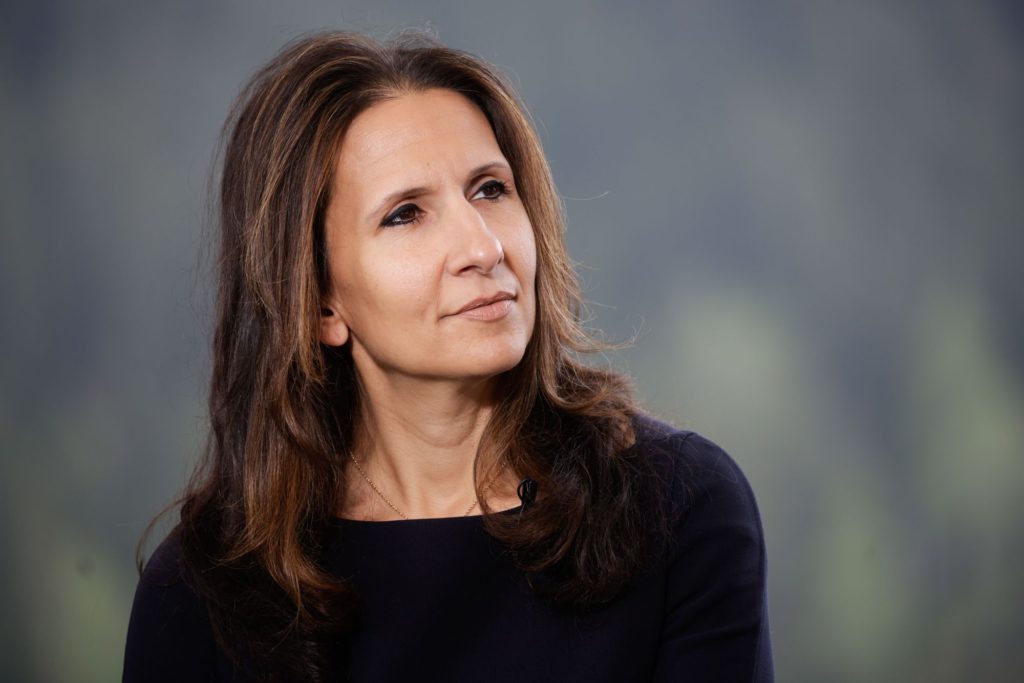
(Bloomberg) — The collapse of Sam Bankman-Fried’s FTX exchange added a new “layer of complexity” to crypto markets that already faced an uphill fight gaining acceptance from institutional investors, said New York Stock Exchange President Lynn Martin.

The swift fallout “wasn’t a surprise” because of the lack of regulation, Martin said Wednesday at a Reuters conference in New York. “There is no regulatory clarity, no transparency,” and there aren’t central counterparties similar to those found in traditional finance, she said.

“Those are reasons you didn’t see this seep further into the institutional side of the business,” Martin said.

The New York Stock Exchange, owned by Intercontinental Exchange Inc., has advocated for “highly regulated markets,” said Martin, who became the third woman to lead the NYSE after Stacey Cunningham stepped down from the post in early 2022.

Martin was also asked about the NYSE’s response to the US Securities and Exchange Commission’s efforts to write new equity-trading rules, which could impact the company’s exchange business.

“Until we see the market-structure rules in detail, it’s hard for us to comment,” she said. The NYSE has advocated for “common rules” across exchanges and so-called dark-pools, Martin said. “Ultimately you have to look at everything in a package.”

More stories like this are available on bloomberg.com

©2022 Bloomberg L.P.
Crypto Exchange Kraken to Lay Off 1,100 as Industry Pain Deepens

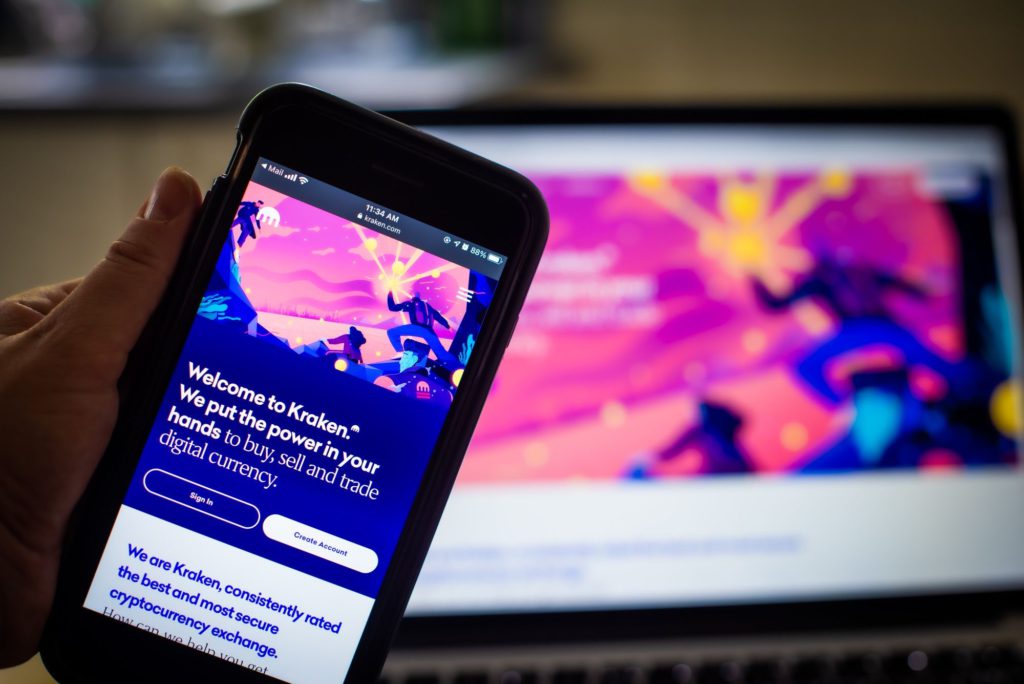
(Bloomberg) — The crypto exchange Kraken is laying off 30% of its workforce, or about 1,100 people, as the fallout from this year’s digit-asset market meltdown worsens. 

The job eliminations at the world’s third-biggest crypto exchange by daily trading volume follows similar moves by rivals including Coinbase Global Inc. and Gemini. Many exchanges have seen revenue slump as trading activity fell off in recent months with crypto prices plunging. The recent collapse of the crypto exchange FTX added to market uncertainty.

“Unfortunately, negative influences on the financial markets have continued and we have exhausted preferable options for bringing costs in line with demand,” the company said in a blog post Wednesday.

Kraken had recently expanded quickly, and the cuts will return its workforce to where it was a year ago, according to the blog.

“Mostly it’s an obvious follow on to declines in crypto trading volumes,” said Aaron Brown, a crypto investor who writes for Bloomberg Opinion. “There’s also the near-universal tendency of tech firms to over-staff in good times, leading to the need for large layoffs in bad times.”

The layoffs come just days after Kraken agreed to pay more than $362,000 in a settlement with the Treasury Department for violating sanctions with Iran. It also comes about two months after its controversial co-founder Jesse Powell announced he’ll be stepping down as its chief executive officer.

(Updates with background on Kraken, analyst comment.)

More stories like this are available on bloomberg.com

©2022 Bloomberg L.P.
FTX Is Latest Reason Why the C-Suite Needs a Chief Critical Officer

(Bloomberg) — After Enron filed for bankruptcy twenty-one years ago this week, history is repeating itself.

The irony can’t be lost on anyone that John J. Ray III, the man hired to oversee Enron’s liquidation is doing the same again in 2022 for FTX, the failed cryptocurrency exchange. My working assumption is that it’s time to focus less on the charisma of entrepreneurs and corporate leaders and show more healthy cynicism and criticism if such scandals as Enron, FTX and Theranos Inc. are to be avoided in the future.

Let’s start with charisma. At the time of their downfall, Kenneth Lay of Enron, Sam Bankman-Fried of FTX and Elizabeth Holmes of Theranos— who was recently sentenced to 11 years in prison for fraud— were all celebrities in their own right.

Holmes attracted a range of heavy-hitting investors including the family of former Education Secretary Betsy DeVos, Alice Walton, an heir to the Walmart Inc. fortune, and News Corp. Chairman Rupert Murdoch. Holmes’s pitch that she had discovered a revolutionary way to analyze blood, using a machine with the name “Edison,” relied entirely on what might be called chutzpah. But it worked.

Sam Bankman-Fried’s youth, demeanor and confidence put him alongside Tony Blair and Bill Clinton earlier this year at a crypto conference in the Bahamas.

In an article entitled “Charismatic Leadership and Corporate Cultism at Enron,” published in the  Journal of the International Cultic Studies Association in 2006  authors Dennis Tourish and Naheed Vatcha address “the dark side of charismatic leadership” and note that charismatic leaders surround themselves with a group which operates in a bubble. No critique gets in.

The question of why is certainly interesting because a charismatic leader needs followers. It’s a mix of FOMO — fear of missing out —  and what the marketing psychologist Robert Cialdini calls social proof, or in other words, persuasion through influence. Some investors do appear to be more immune than others: One of Warren Buffet’s legendary aphorisms is that the five most dangerous words in business may be: “Everybody else is doing it.”

Another question is how in this day and age such lack of corporate oversight still happens.

One reason, according to Dambisa Moyo, a board member at Chevron Corp., 3M Co. and Conde Nast International Inc., and author of the book How Boards Work, is that corporate boards haven’t changed sufficiently since their inception in the 1600s and are badly in need up an upgrade. She told the Man Institute podcast “boards have a three-pronged mandate, oversight of the strategy of the companies in which they serve, they are responsible for hiring…and they are also responsible more and more for the oversight of the cultural norms.”  She believes a focus on ethics plays an increasing role in this oversight.

Of course not all CEOs are corrupt, foolish, or playing fast and loose with other people’s money. And not all boards fail to independently scrutinize the decisions from top management. 

But too many of them  are packed with good intentions, enablers— people who end up being complicit in the crimes and misdemeanors of their CEOs. 

Of FTX, Ray said, “Never in my career have I seen such a complete failure of corporate controls and such a complete absence of trustworthy financial information.” That says a lot coming from the person who unwound the Enron mess. It’s unclear what role boards played at the exchange. 

If the cult of charisma were replaced by a culture of critique and criticism, history would look very different. Who might be a good role model? I recommend Empress Maria Theresa, the eighteenth century ruler of the Hapsburg empire, who took over the reigns of power as sovereign at the age of 23 when her father died suddenly. A big job if ever there was one. She faced constant battles and undermining incursions on her leadership, not least from Frederick the Great.

According to historian Nancy Goldstone in her book In the Shadow of the Empress, “the Queen of Hungary and Bohemia surprised everyone by appointing an official whose sole task consisted of critiquing her behavior and job performance with brutal honesty.”  The man given this job, a Portuguese nobleman twice her age, Count Emanuel da Silva-Tarouca, had no need to be nervous. Both flourished under the arrangement.

At a time when the C-suite of the future is in flux, with new roles like chief people officers, chief sustainability officers and even metaverse heads, let’s take a lesson from Maria Theresa.  Add “chief critical officers” or the like with a mandate to cut through the charisma and avoid the next governance disaster. 

Julia Hobsbawm  is a columnist for Bloomberg Work Shift and a speaker, broadcaster and consultant on  The Nowhere Office  email: jhobsbawm@bloomberg.net

More stories like this are available on bloomberg.com

©2022 Bloomberg L.P.
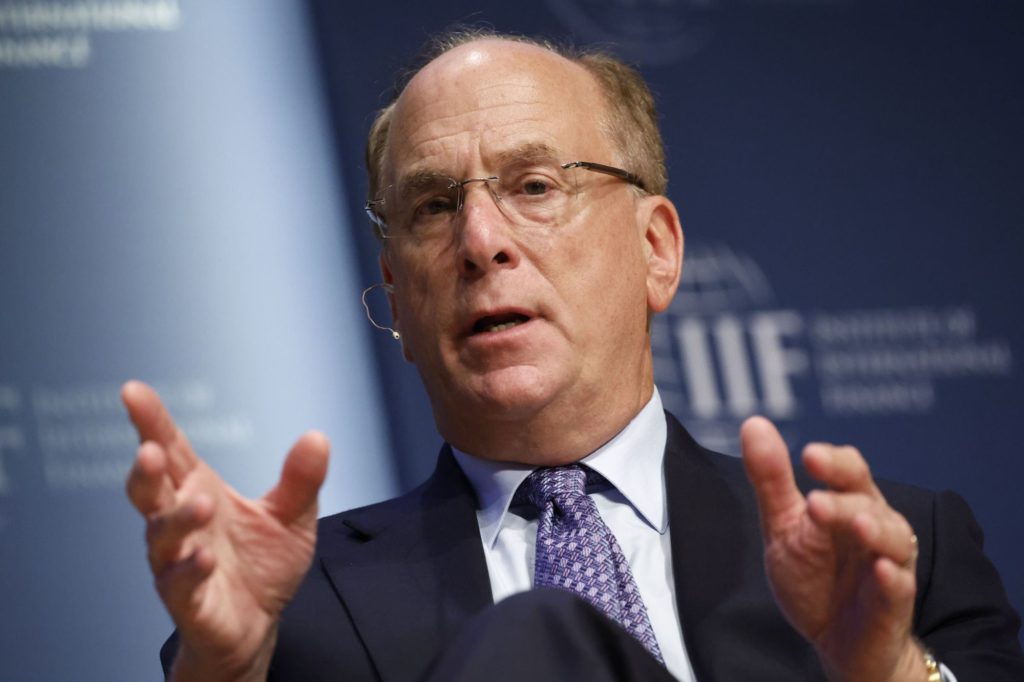
BlackRock’s Fink Says Most Crypto Firms Will Fold Following FTX’s Implosion

(Bloomberg) — BlackRock Inc. Chief Executive Larry Fink said most crypto companies will probably fold in the wake of FTX’s collapse. 

“I actually believe most of the companies are not going to be around,” Fink said Wednesday during a wide-ranging interview at the New York Times DealBook Summit. 

BlackRock, the world’s biggest asset manager, is among financial firms stung by the bankruptcy of the Bahamas-based crypto exchange founded by Sam Bankman-Fried, who’s scheduled to speak at the same event later in the day. BlackRock, which oversees about $8 trillion, invested roughly $24 million in FTX through a vehicle called a fund of funds, said Fink, a long-time skeptic of cryptocurrencies. 

Money managers from Wall Street to Silicon Valley and beyond poured billions of dollars into FTX, pushing its valuation as high as $32 billion before it imploded earlier this month. Firms including Sequoia Capital and Tiger Global Management have since marked down their stakes to zero, as FTX and more than 130 affiliated entities went bust. 

Read more: FTX’s Banking Web Raises Uncomfortable Questions for Regulators

Fink, 70, said he still sees potential in the technology underlying crypto, including instant settlement of securities and simplified shareholder voting.

Separately, Fink said he’s been working to counter criticism from across the political spectrum for BlackRock’s support of sustainable investing. Republicans have retaliated against his firm’s embrace of what they’ve described as “woke” capitalism, while Democrats and environmental activists have targeted BlackRock for investing in fossil-fuel producers. 

Against that backdrop, BlackRock poured record amounts of money into US political campaigns this year. Fink said Wednesday that he has been spending a lot of time in Washington to “correct the narrative.”

(Updates with sustainable investing starting in sixth paragraph.)

More stories like this are available on bloomberg.com

©2022 Bloomberg L.P.

Zelenskiy Invites Musk to Visit Ukraine in Response to His Talk of Peace Deal

(Bloomberg) — Ukrainian President Volodymyr Zelenskiy invited Elon Musk to visit his war-ravaged nation and see for himself the damage wrought by Russia, after the world’s richest man floated the idea of a peace deal that would give major concessions to President Vladimir Putin.

Musk played a key role restoring Internet service in Ukraine after the invasion, Zelenskiy told the New York Times Dealbook conference Wednesday, saying “life was maintained” thanks to the deployment of his Starlink satellite communications system. 

But sometime later, “it seems that Elon began to change his opinion and we began to hear all kinds of appeals,” Zelenskiy said.

“I always say very openly if you want to understand what Russia has done here, come to Ukraine and you will see this with your own eyes without any extra words,” Zelenskiy told the conference. “And after that, you will tell us how to end this war, who started it and when we can end it.”

Zelenskiy was responding to a question about a tweet Musk wrote in October laying out a peace proposal that would require that Ukraine remain neutral, give Crimea to Russia and redo elections in areas of Ukraine taken over by Russia.

“This is highly likely to be the outcome in the end – just a question of how many die before then,” Musk wrote. “Also worth noting that a possible, albeit unlikely, outcome from this conflict is nuclear war.”

Zelenskiy said he doesn’t know if somebody’s influencing the billionaire or if “he’s making those choices himself.”

At one point, Musk also said his company SpaceX wouldn’t continue to foot the bill for portable Starlink terminals that are providing internet communications for both Ukrainian citizens and its military, only to reverse that position.

Israel’s Role

Zelenskiy also said he has spoken to Benjamin Netanyahu since the recent election in Israel and that he impressed upon the former prime minister, who’s expected to return to power, that Ukraine needs air defense systems to protect against drone attacks. So far, Israel has resisted providing weapons to Ukraine, contributing equipment and humanitarian aid instead.

Zelenskiy said that more than 550 Iranian drones have been used in attacks against his country and said that Netanyahu must choose between his relationship with Putin and his country’s historical ties to Ukraine. 

“He certainly can help us with air defense systems,” Zelenskiy said. “If he just wants to maintain his personal relations with President Putin, then of course he may continue to do what he’s been doing. But if he wants to maintain an historical relationship between Israel and the Ukrainian people then I think you have to do everything you can in order to save as many people as possible.”

Zelenskiy said he didn’t think Russia would use nuclear weapons in Ukraine, arguing it would be more dangerous to leave the Russian president with the feeling that he could take another country’s territory without facing consequences.

“We should not be afraid” of the nuclear threat, Zelenskiy said. “We need to put him back in his place.”

More stories like this are available on bloomberg.com

©2022 Bloomberg L.P.

Close Bitnami banner
Bitnami
