Bloomberg

Trade S&P 500 Shares for ‘Tech-Lite’ Canada Stocks, CIBC Says

(Bloomberg) — Investors should reconsider their exposure to the tech-heavy S&P 500 Index and look to Canada’s $3 trillion stock market to diversify their portfolios.

That’s the message from Ian de Verteuil, head of portfolio strategy at CIBC World Markets, who added that the future of tech stocks could be less lucrative for investors as policymakers consider increasing interest rates and corporate taxes.

“Outside of the rise in interest rates, technology firms have to deal with the risk from rising tax rates, deglobalization and additional regulation,” de Verteuil wrote Friday in a note to clients. “Investors need to be aware that simply investing in the S&P 500 provides less diversification than in the past. We continue to prefer the ‘tech-lite’ S&P/TSX.”

The S&P/TSX Composite Index’s small weighting to tech stocks has kept this year’s sell-off at bay. The S&P/TSX is down 1.5% in 2022, compared with more than 9.7% for the S&P 500 Index. Investors have fled mega-cap tech companies like Meta Platforms Inc., Apple Inc., Amazon.com Inc. and Alphabet Inc. amid a rotation out of growth and into value. At the same time, commodity-driven stocks like gold miners, energy companies and banks have soared this year. Together, these listings make up about 50% of the S&P/TSX.

Foreign investors are piling into Canadian stocks at a record level. Inflows hit a high of C$217.8 billion ($171 billion) in 2021, more than twice the average annual investment recorded in the past decade, according to Bank of Montreal Capital Markets.

Market volatility won’t dissipate any time soon, and so investors should re-evaluate their exposure to technology, John Christofilos, chief trading officer at Toronto’s AGF Management Ltd., said in an interview. “Canada is definitely a market that I would be looking at, and the rest of the world is starting to pay attention as well,” he said.

(Updates figures to closing levels)

More stories like this are available on bloomberg.com

©2022 Bloomberg L.P.

China Stocks in U.S. Drop Amid Regulatory Scrutiny Worries

(Bloomberg) — U.S.-listed Chinese stocks declined for a fourth straight session Tuesday as concerns over Beijing’s regulation of its technology sector resurfaced.

Shares in e-commerce giant Alibaba Group Holding Ltd. fell 5.1% following a report that Chinese authorities told banks and state-owned companies to report their financial exposure to Ant Group Co. Alibaba owns a third of the fintech giant.

READ: China Tells Banks, SOEs to Report Exposure to Jack Ma’s Ant (3)

Worries over Beijing’s possible regulatory plans for the sector hit shares of other Chinese tech stocks, with JD.com Inc. dropping 1.2%, while Pinduoduo Inc. slumped 2.9% and Baidu Inc. fell 3.9%, mirroring moves in Hong Kong’s Hang Seng Index, which closed down 2.7% at the lowest level in almost seven weeks. Concerns over geopolitics and escalating tensions in Ukraine also weighed on risk assets more broadly.

The renewed regulatory interest in Ant comes more than a year after authorities blocked the fintech firm’s plan for a $35 billion initial public offering in November 2020. Since then, Beijing has gone on to target nearly every part of its business landscape, including the education sector, property firms, ride-hailing and video games.

While it remains unclear if the latest move will result in any regulatory actions, it stands as a stark reminder of just how quickly things can change. Earlier this month, Chinese stocks listed in the U.S. got a boost after reports that China’s so-called “national team” had bought mainland shares following the Lunar New Year holiday. That burst of positive news was cut short last week after authorities issued fresh guidelines asking food-delivery platforms to reduce their fees.

Investors will soon have to turn their focus to the release of quarterly earnings by many of China’s largest tech firms. Names including Alibaba, Baidu, NetEase and Pinduoduo are all expected to report results in the next few weeks. 

Another looming catalyst for shares could be China’s annual National People’s Congress session, widely considered the nation’s highest-profile political meeting of the year. The week-long gathering is set to kick off on March 5 and has previously been a time when state-backed funds were said to intervene in order to ensure stability in the local market.

U.S.-listed Chinese stocks, which are predominately tech names, are also facing pressure as investors sell shares in growth stocks amid expectations of rising interest rates, denting the appeal of highly valued shares. The Nasdaq Golden Dragon China Index — which tracks firms in the U.S. that conduct a majority of their business in China — has fallen 9.6% this year, following a 43% plunge in 2021.

(Updates pricing throughout)

More stories like this are available on bloomberg.com

©2022 Bloomberg L.P.

Intel Challenges the Reign of Chinese Bitcoin Mining Rig Makers

(Bloomberg) — Intel Corp.’s new Bitcoin mining chip may turn out to be the first major challenger to the Chinese rig manufacturers that have dominated the market for years. 

The Santa Clara, California-based chip making giant unveiled its crypto mining initiative earlier this month and the first generation BonanzaMine chip in January. Jack Dorsey’s digital payment company Block Inc., and two mining firms Griid Infrastructure and Argo Blockchain will receive the first batch of the chips later this year.

Chinese manufacturers Bitmain and MicroBT have a lion’s share of the Bitcoin mining hardware market due to the proprietary technology they use to make their high-performing chips. Few competitors appear to have been able to make a chip that can match them until now.

Bitcoin mining, which is earning rewards in Bitcoin by using computers to secure the cryptocurrency’s network, has become a lucrative business amid the surge in the price of Bitcoin in recent years, enriching the rig makers along the way. The mining industry raked in $15 billion in revenue in 2021, more than doubled the previous year.

Intel’s entry could weaken the Chinese manufacturers’ pricing power and offer better maintenance services given the company’s close proximity to the miners in North America, industry participants said. The region dethroned China as the world’s Bitcoin mining hub as Beijing banned crypto mining last May.

“Having a U.S.-based manufacturer with the size, scale and credibility like Intel is fantastic for the entire crypto industry,” said Dave Perrill, chief executive of Eden Praire, Minnesota-based Compute North, which provides Bitcoin miners with data centers to operate their machines. “Competition is a good thing.”         

One chief reason for miners to welcome a competitor like Intel is the current pricing model and purchasing terms, which are set by the top manufacturers, burden their buyers with varying financial risks and operational costs. A fixed price, which will be offered by Intel, provides more predictability.

The manufacturers make pre-orders of their latest models available for buyers before they have the inventory. However, the buyers won’t know the actual price until the manufacturers ship the machines and they are given a price range, said Nick Hansen, chief executive of Seattle-based mining pool and hardware brokerage company Luxor.

Prices of pre-ordered machines are updated everyday within that range based on the manufacturers’ internal pricing models. Bitcoin’s spot price and the payback period, which is the time needed to break even, are key factors in these models, Hansen said.

The internal pricing models could strain Bitcoin miners’ cash flow and pose even more risks when the miners face a potential shakeout during bear markets as the pricing models give great weight to the Bitcoin price.

“Our customers want clarity,” Perrill said. “They want to know that next week Bitcoin mining machines’ prices are not going to shift by 50% given the volatility of the Bitcoin market.”

Another reason Chinese makers do not sell machines at a fixed price is they do not have much control over its suppliers’ pricing, therefore these companies have less control over the final price for its mining machines, said Tong Lai, head of lending at Singapore-based Babel Finance, which provides lending services for Bitcoin miners. 

The 25% tariff imposed on imported mining machines from China adds more cost to the buyers, which could also be a significant factor for miners to make purchases. Unlike Bitmain and MicroBT, Intel has more control over its suppliers’ pricing due to the company’s influence and scale in the semiconductor industry, Lai said.

Some miners in North America also expect a domestic mining machine provider to have better maintenance services.

“Being located here gives a lot of advantages to Intel in the domestic market,” Perrill said. “Things like warranty claims, repair and how to handle the e-waste are really tipped in Intel’s favor.”

Better maintenance can slow mining machines’ depreciation and save operational cost for mining companies. Maintenance services become even more important when miners use certain models of mining machines that have more quality issues, Lai said.

“The biggest thing for us is what happens to older grade machines,” Perrill said. “My hope is that Intel brings a more enterprise grade approach to this business, manages and configures millions of computers at scale.”

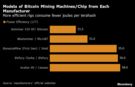
Details on Intel’s second generation chip, such as power efficiency and pricing, are yet to be available and some miners are skeptical of the significance of Intel’s entry to the industry. Intel revealed its first generation chip has the power efficiency of 55 joules per terahash falling far behind Bitmain’s latest model, according to Intel’s paper submitted to the International Solid-State Circuits Conference. The details on its second generation product, which is what the buyers are purchasing, will be released at a later time, a spokesperson from Intel told Bloomberg.

Power efficiency is arguably the most important specification for miners to gauge the profitability of a Bitcoin mining machine, Lai said. High power efficiency chips can save energy cost, which is one of the biggest costs for Bitcoin miners.

There are two things that determine a manufacturer’s ability to mass produce a chip. One is the chip’s design, while the other is whether it has a reliable supply chain for the components. 

“It could take a few years for Intel to catch up with Bitmain on all fronts,” Lai said. “But Intel’s entry is definitely a good thing for the industry.”

More stories like this are available on bloomberg.com

©2022 Bloomberg L.P.

Spark New Zealand to Separate Out Mobile Towers, May Seek Capital

(Bloomberg) — Spark New Zealand plans to separate its mobile-phone tower assets into a new subsidiary and explore the introduction of outside capital.

The Auckland-based telecommunications company will transfer about 1,250 mobile towers into a subsidiary called Spark TowerCo, it said when announcing first-half earnings Wednesday. Separating these assets will improve utilization through increased tenancy, while delivering cost efficiencies as Spark expands coverage, it said.

Telecommunications companies around the world are separating so-called passive assets such as mobile-phone towers and looking for specialist investors. In 2021, Australia’s Telstra Corp. raised $2.1 billion from the sale of a stake in its towers, and planned to return some of that to shareholders.

Spark said it will “commence a process” to explore the introduction of third-party capital in the next few months, however there is no certainty a transaction will proceed.

“Should we choose to introduce third-party capital we will retain a shareholding and remain a key anchor tenant, with appropriate agreements in place on arms-length terms for operations and services,” Chief Executive Jolie Hodson said. “There will be no change for our customers, and we will continue to invest in modernizing our mobile network and improving coverage.”

Spark said operating earnings rose 7.6% in the six months ended Dec. 31 to NZ$538 million ($363 million), and the company forecast it will achieve full-year operating earnings in the top half of a range of NZ$1.13 billion to NZ$1.16 billion.

More stories like this are available on bloomberg.com

©2022 Bloomberg L.P.

As Rivian Plant Fires Up Critics, Georgia Takes Over Approvals

(Bloomberg) — Approvals for Rivian Automotive Inc.’s planned electric-vehicle plant in Georgia will be handled by state authorities after local opposition threatened to delay groundbreaking on the $5 billion investment.

Construction is scheduled to start in the summer but no specific date has been given by the company, which announced the location in December. Split across Morgan and Walton counties, the facility is expected to employ more than 7,500 people and have the capacity to build 400,000 EVs annually. Production is due to start in 2024.

While the project has been championed by Governor Brian Kemp for giving Georgia a foothold in automotive electrification, the plant has met fierce opposition by some residents living near the site neighboring Rutledge, Georgia, about 45 minutes east of Atlanta. 

Opponents concerned about traffic, environmental damage, and continued urban sprawl from Atlanta have pushed back at local meetings, created a Facebook page with about 2,700 members, and hired a law firm to fight the project. The critics said they were kept in the dark about the project until late in the process.

County leaders responded on Feb. 18 by asking state Economic Development Commissioner Pat Wilson to handle compliance and public engagement, saying the process “requires a higher resource level than we can bring to bear locally.”

The state is purchasing the land slated for the plant from the counties so that it can consolidate the zoning and compliance process into a single forum, Wilson told county authorities in a letter Monday.

“We’re going to have to move as quickly as we can to make sure we’re addressing all the concerns that the community has,” he said in an interview Tuesday. “But at same time, we’ve got to meet the long-term timeline of the company.”

Georgia has taken a similar approach for other major projects, including a Kia Corp. plant in West Point and Mercedes-Benz stadium in Atlanta.

Rivian said it would host events in the spring to discuss resident’s concerns.

“For us to be successful in Georgia, it’s important that we spend time listening to local concerns, addressing them as best we can, and working hard to be the kind of neighbor the community would like to see,” the Irvine, California-based company said by email.

Rivian plans eventually to have a battery-cell production facility on the site but hasn’t set out a timeline for its construction or operation.

More stories like this are available on bloomberg.com

©2022 Bloomberg L.P.

Travelport Weighs U.S. IPO as Passengers Return

(Bloomberg) — Travel-booking software provider Travelport is exploring a U.S. initial public offering as pandemic restrictions start to lift globally, according to people with knowledge of the matter.

The technology company, which was taken private in 2019 by Elliott Investment Management and Siris Capital Group, may go public as soon as the second half of this year, said one of the people, who asked not to be identified discussing confidential information.

A final decision on pursuing an IPO hasn’t been made and the company’s plans could still change, the people said.

A spokesperson for Travelport didn’t immediately respond to a request for comment. Representatives for Elliott and Siris declined to comment.

Travelport’s customers have included American Airlines Group Inc., Southwest Airlines Co., Singapore Airlines Ltd. and Webjet Ltd., its website shows. The company has $3.8 billion in net debt, said a person familiar with the matter.

Under the ownership of Elliott and Siris, Travelport made changes to its management team, including naming former Sabre Corp. executive Greg Webb as chief executive officer. The company has also cut costs and taken strategic steps such as rolling its offerings into a core platform known as Travelport+.

In an April 2021 note, Fitch Ratings said the company’s business was “severely affected” by the disruption caused by the coronavirus pandemic, noting that its booking revenues were “broadly commensurate” with peers Sabre and Amadeus IT Group SA. Both Sabre and Amadeus saw their stock plunge at the onset of the pandemic and then re-gain some of the lost ground with vaccine rollouts and the resumption of global travel.

“The global travel recovery was slow at the beginning of the year, but that has changed significantly,” Sabre CEO Sean Menke said in an earnings call this month, adding that February bookings were on pace to “reach a similar level of recovery versus the same period in 2019.”

November was Sabre’s best month since the onset of the pandemic, Menke said, adding that 2022 is “shaping up to be a year of recovery and progress.”

An IPO would be the second for Travelport. Blackstone, which had agreed to acquire the company for about $4.3 billion in 2006, took it public in 2014 in a $480 million listing at a market value of almost $2 billion. Elliott and Siris paid $15.75 a share for Travelport in their leveraged buyout, 1.6% less than the IPO price of the shares.

More stories like this are available on bloomberg.com

©2022 Bloomberg L.P.
Amazon’s Landlord in Canada Is Planning Its Bond Market Debut

(Bloomberg) — A Canadian commercial real estate landlord whose largest tenant is Amazon.com Inc. is marketing its inaugural bond sale.

RBC Canadian Core Real Estate Fund plans to issue green bonds in the near future, subject to market conditions, according to people familiar with the matter. Proceeds will finance the acquisition of two eligible projects in Vancouver and Calgary, said the people.

Prospects for commercial real estate are in flux as the pandemic drags on, irrevocably altering in-office work patterns and occupancy. The Royal Bank of Canada’s managed fund comprises stakes in 65 assets, with offices accounting for almost 58% of net operating income while the remainder comes from industrial, retail and multifamily properties, according to a presentation sent to investors. Most of the asset’s stakes were acquired from pension fund British Columbia Investment Management Corporation.

Amazon accounts for almost 7% of gross rent generated by these assets, followed by a government agency and PwC Management Services LP with 4.2% and 4.1%, respectively, according to the presentation. Oil companies Arc Resources Ltd., Equinor Canada Ltd and Abu Dhabi National Energy Company are also among the largest tenants.

The bonds which would mature in 2027, will be issued out of Canadian Core Real Estate LP, which is rated A(low) by DBRS Ltd., its seventh-highest investment-grade level. A press officer for RBC’s asset management unit didn’t immediately reply to a request for comment.

More stories like this are available on bloomberg.com

©2022 Bloomberg L.P.

OpenSea NFT Heist Triggers Sharp Decline in Platform Activity

(Bloomberg) — Activity on OpenSea, the world’s largest marketplace for digital collectibles, dropped precipitously after a phishing attack that saw traders lose as much as an estimated $3 million.

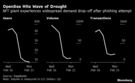
Trading in nonfungible tokens has plummeted more than 70% in the last four days, according to data provider DappRadar, falling from 70,100 transactions prior to the attack to a low of 19,400 on Sunday.

An unidentified hacker stole 254 tokens from OpenSea users by sending a malicious email asking to transfer their assets to a new contract. Around 17 traders signed the contract, which effectively acted as a blank check, giving the hacker access to all of the NFTs stored on their wallet. 

Some of those assets have since been sold, netting the perpetrator a hefty gain. Devin Finzer, OpenSea’s chief executive officer, valued the total amount stolen at $1.7 million on Sunday, but researchers since have valued the pile at anywhere between $2 million and $3 million. Among the stolen NFTs included four Bored Apes, three of which were later sold on rival platform LooksRare for a combined $667,000, according to data from blockchain security service PeckShield.

The daily volume of NFTs being traded fell similarly over the same period, dropping from $77.6 million before the heist to $9.8 million on Sunday. Meanwhile OpenSea’s total daily user base slid from 39,000 on Feb. 18 to just 10,400 on Monday.

OpenSea did not immediately respond to a request for comment.

OpenSea said on Monday that the attacker’s crypto wallet has gone quiet since the theft, with no transaction activity spotted in the last 24 hours. 

The marketplace’s Chief Technology Officer Nadiv Hollander said the incident demonstrated a need for more awareness about the security issues surrounding off-chain signatures among NFT traders, but noted that the attacker was able to fool their victims because of an ongoing contract migration.

“Education on not sharing seed phrases or submitting unknown transactions has become more widespread in our space. However, signing off-chain messages requires equal consideration,” said Hollander.   

More stories like this are available on bloomberg.com

©2022 Bloomberg L.P.

Swedish Camera Firm Axis Reports Outage After IT ‘Attack’

(Bloomberg) — Axis Communications, a Swedish manufacturer of video surveillance equipment, said Tuesday that it was continuing to grapple with a significant outage following an “IT-related attack” it announced a day earlier.

The company said on Twitter that it was “gradually” restoring its online services, and that there were no signs that customer data was affected. 

It wasn’t immediately clear how many products were affected. The company said “many external services” were disrupted in an automated phone message. 

The company’s status page showed that certain Axis systems — used to remotely access camera stations, verify product licenses and provide software upgrades — were down. Axis said the problem didn’t affect its body-worn cameras, used by police departments in Germany, Australia and the U.S. 

“Investigations began immediately and traces of illegal activity were found,” Axis spokesman Chris Shanelaris said in a statement to Bloomberg News. “As a preventative measure, we disabled public facing internet services in order to limit potential damage from the attack. We are working urgently to restore affected services and preserve the safety of our systems and data.”

The outage was previously reported by the research organization IPVM. 

(Updated to include company statement in fifth paragraph.)

More stories like this are available on bloomberg.com

©2022 Bloomberg L.P.

Envestnet Weighs Options After Getting Takeover Interest

(Bloomberg) — Envestnet Inc., a fintech company whose chief executive officer died in a car accident 2 1/2 years ago, is exploring options after receiving takeover interest, according to people familiar with the matter. 

The Chicago-based company has recently been approached by at least one private equity firm interested in acquiring it, said the people, who asked to not be identified because the matter isn’t public. While the company is evaluating the interest, no transaction is imminent, one of the people said. 

Envestnet rose 8.4% to $71.56 at 1:38 p.m. in New York on Tuesday, giving the company a market value of about $3.9 billion. The stock has fallen 9.5% in the past year. 

A representative for Envestnet declined to comment. 

Private equity firms have been using their war chests to go shopping for technology-focused financial services firms. Buyout firms like these assets because they generate steady cash and can be used as consolidation platforms. Madison Dearborn Partners agreed this month to buy money-transfer service MoneyGram International Inc. for about $1 billion in cash. 

Envestnet offers software and data to to wealth managers, banks and other clients that helps them manage and evaluate investments. More than 106,000 advisers and over 5,100 companies use its technology and services, according to its latest annual report. 

The company has been subject to takeover speculation since CEO Judson Bergman and his wife, Mary Miller, died in a San Francisco car accident in 2019. 

(Updates trading in third paragraph.)

More stories like this are available on bloomberg.com

©2022 Bloomberg L.P.

Close Bitnami banner
Bitnami