Bloomberg

Russian Says Pullback Begins; Putin Meets Scholz: Ukraine Update

(Bloomberg) — Russia’s Defense Ministry said Tuesday that some troops would return to their regular bases after completing drills, according to a Russian news agency, as German Chancellor Olaf Scholz is set to meet President Vladimir Putin. U.S. warnings of a possible Russian attack on Ukraine had reached their most urgent level yet this week.  …

Russian Says Pullback Begins; Putin Meets Scholz: Ukraine Update Read More »

Glencore Coal Mine in Spotlight as a Methane Hotspot Emerges

(Bloomberg) — Satellite data showing methane emissions near a Glencore Plc coal mine in Australia is putting pressure on one of the world’s largest commodity trading houses to explain the global hotspot.

Scientists at SRON Netherlands Institute for Space Research estimated the Hail Creek mine spewed between 123,000 and 263,000 metric tons of methane last year based on concentrations of the super-potent greenhouse gas detected by satellite. That’s in line with the previous year, for which the researchers estimated the mine emitted 133,000 to 223,000 tons of methane.The Swiss-based commodities giant, which has continued to mine the dirtiest fossil fuel even as rivals have looked to sell out, posted its highest-ever profit Tuesday. The amount of methane the researchers estimated spewed from Hail Creek would have the same short-term warming impact as the annual emissions from anywhere between about 2.2 million and 4.8 million U.S. cars each year.

Glencore didn’t confirm the SRON estimate or say how much methane the mine emits. The mine reported net emissions of 503,591 tons of carbon dioxide equivalent in the year ended June 2020 to Australia’s Clean Energy Regulator. Even if that figure only accounted for methane it would fall far short of the SRON estimate. Using a global warming potential factor of 28 — the multiplier used to show the impact over 100 years — it equates to only about 18,000 tons of methane emissions.The CER said “the agency is of the view that emissions and energy data for the Hail Creek Mine has been reported compliantly.” The department said emissions reports filed by operators are reviewed and assessed for wrongdoing and the vast majority meet their requirements.Mounting investor pressure will motivate Glencore and other miners to curb methane emissions, said Leonard Quong, an analyst with BloombergNEF in Sydney. “This pressure will grow as more accurate methane measuring technologies become available and as emissions reduction goals get closer.”Satellite observations of methane have exposed large-scale releases of the potent greenhouse gas globally from coal, oil and natural gas operations. About 75% of methane releases from the fossil fuel industry must be eliminated by 2030 to keep global temperatures from rising more than 1.5 degrees Celsius and to maintain a pathway toward a net zero energy system by mid-century, according to the International Energy Agency.The same SRON scientists who estimated the Hail Creek mine emissions for the last two years were among a larger group of researchers who found that the mine spewed similar levels of methane in 2018 and 2019, according to a paper published in November in Environmental Science & Technology. The scientists called for the on-the-ground measurements to validate their findings after releasing the new estimates for 2021 and 2020 to Bloomberg.

READ MORE: These Australian Coal Mines Are Methane Super-Emitters“You have to try to get closer to your source with measuring equipment to try to find out what is happening,” Ilse Aben, a scientist with SRON said.Geologically older and deeper coal deposits tend to contain more methane than shallower seams, which is why emissions from surface mines, such as Hail Creek, tend to be lower than underground mines. But the analysis of satellite data suggests that conventional wisdom may not always hold.Glencore said “questions have been raised about the ability of satellite imagery to correctly or accurately identify, quantify, isolate or attribute different emission sources, particularly in an area with numerous mining operations and without ground based or low level aerial monitoring.” The operator added that emissions from its Bowen Basin operations are accounted for in its climate targets, which include a 15% reduction in total emissions by 2026 and a 50% cut by 2035.Other scientists have have also looked at emissions from mines in Australia. Kayrros SAS estimated last year that for every ton of coal produced in the Bowen Basin, an average of 7.5 kilograms of methane is released. That was 47% higher than the average global methane intensity estimated by the IEA, the French geoanalytics firm said at the time.

More stories like this are available on bloomberg.com

©2022 Bloomberg L.P.

Stocks, U.S. Futures Rise on Ukraine Optimism: Markets Wrap

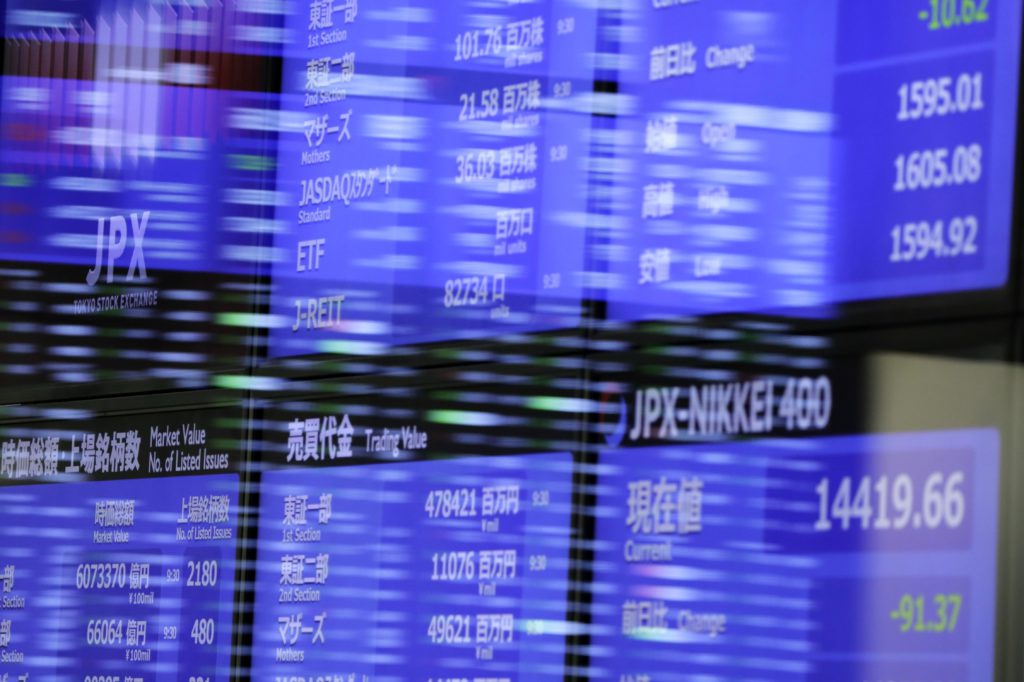
(Bloomberg) — Stocks rose Tuesday on optimism that geopolitical risks are receding. Europe’s Stoxx 600 Index and U.S. futures rose after reports that Russia is returning some troops. MSCI Inc.’s Asia-Pacific share gauge fell, though China bucked the trend on central bank steps to support economic growth.  Treasury yields advanced, while the dollar slipped. The …

Stocks, U.S. Futures Rise on Ukraine Optimism: Markets Wrap Read More »

Pakistan Says Risks From Cryptocurrencies Outweigh Its Benefits

(Bloomberg) — Pakistan’s central bank said that risks posed by cryptocurrencies outweigh its benefits, doubling down on its earlier message to stay away from investments in digital currencies.

In emerging markets and developing countries struggling with large informal economies, there is a risk of unregulated currencies being used for transactions instead of the nation’s legal currency, Reza Baqir, governor of State Bank of Pakistan, said. Their speculative nature, acute price fluctuations, and decentralized nature can pose a risk to financial and monetary stability for a developing country, he said in a speech on Feb. 14.

“Because of their anonymous nature, some cryptocurrencies are prone to be used for illegal economic activities,” said Baqir. “In such cases for countries like Pakistan, there is a risk of a widening grey economy and a risk of capital flight.”

The nation’s central bank’s four-year-old stance of discouraging cryptocurrencies is currently being challenged in a local court. However, Baqir is still open to the idea of central bank digital currencies. 

“The work underway in many countries in many international institutions on CBDCs, is welcome,” said Baqir. “This work in our view should be evaluated from the perspective of how CBDCs can contribute to each regulator’s goals.”

More stories like this are available on bloomberg.com

©2022 Bloomberg L.P.

Elon Musk Donated $5.7 Billion of Tesla Shares to Charity

(Bloomberg) — Elon Musk gifted almost $6 billion worth of Tesla Inc. stock to charity late last year in one of the largest philanthropic donations in history.

The world’s richest man donated more than 5 million shares in the electric-car maker from Nov. 19 to Nov. 29, according to a filing with the Securities and Exchange Commission. The gift was worth about $5.7 billion, based on average prices the days he sold the securities. The filing doesn’t name the charity and shows an unidentified trust was involved in the transaction.

The donation occurred as Musk, Tesla’s chief executive officer, sparred with politicians including Bernie Sanders and Elizabeth Warren over inequality and a proposed wealth tax. In the weeks leading up to the gift, Musk suggested he’d sell stock if the United Nations proved $6 billion would help solve world hunger, after the head of the organization’s World Food Programme called for billionaires like Musk to “step up.”

A large gift to charity would help reduce what Musk has said would be the biggest tax bill in U.S. history. Days before he completed a series of stock sales worth more than $16 billion — much of which was to cover the exercise of almost 23 million options — the CEO tweeted he would pay more than $11 billion in taxes for the year.

Much of Musk’s wealth is tied to Tesla, which overtook Toyota Motor Corp. as the world’s most valuable automaker in July 2020 and joined a select group of companies with trillion-dollar valuations in October. Tesla’s market capitalization has slipped since then to about $905 billion at Monday’s close. The shares advanced as much as 3.7% before the start of regular trading Tuesday.

As his net worth has grown, Musk has bristled at criticism of billionaires and said he’d sell his homes and most of his possessions. With a $227.3 billion fortune, he’s more than $47 billion richer than the world’s second-wealthiest person, Amazon.com Inc. founder Jeff Bezos, according to the Bloomberg Billionaires Index.

Musk has an eponymous foundation that’s become more active over recent years, with large, eight-figure gifts promised to the city near his South Texas spaceport, a $100 million competition for carbon removal and a $5 million contribution to two scientists researching Covid-19. Before then, his foundation’s largest contributions were to donor-advised funds, or DAFs, where charitable money can sit in perpetuity.

The Musk Foundation, which used to count Musk’s brother Kimbal as a director, has recently added a new face to its roster. Several grant recipients Bloomberg News spoke with have said their primary point of contact at the foundation is Igor Kurganov, a professional poker player-turned-philanthropist who is active in the effective altruism space.

(Updates with context on Musk’s wealth starting in the fifth paragraph.)

More stories like this are available on bloomberg.com

©2022 Bloomberg L.P.

Singaporean Plant-Based ‘Chicken’ Maker Snags $100 Million

(Bloomberg) — Next Gen Foods Pte, a Singapore-based maker of faux chicken meat, raised $100 million to expand in the U.S., the world’s biggest market for plant-based protein foods.

Investors in the Series A round included Alpha JWC, EDBI and MPL Ventures, with existing backers Temasek Holdings Pte, GGV Capital, K3 Ventures and Bits x Bites participating. The fresh capital brings the total raised by the startup to more than $130 million and follows a seed round last year.

A move into the U.S. pits Next Gen Foods against Impossible Foods Inc. and Beyond Meat Inc., whose meatless offerings have gained ground in many eateries and homes. The alternative protein market has been on the rise as consumers look for options that might be more sustainable than traditional animal products.

Next Gen Foods’ product, called Tindle, contains “lipi,” a signature mix of plant-based ingredients the startup says imparts a chicken-like taste the same way heme is considered key to the Impossible Burger’s flavor.

Next Gen plans to distribute to restaurants in major cities including San Francisco, Los Angeles and New York, hoping to win over fans before expanding to more locations and stores. The company will also use the fresh funds for research and development, education and to build up its supply chain.

The bigger U.S. rivals are also expanding in faux chicken meat. Impossible Foods introduced a line of faux chicken nuggets in 2021, while Beyond Meat partnered with KFC to market its soy-based meatless nuggets.

Yet Next Gen is confident there’s room for more brands in the market. The company is betting that it can win over restaurants and consumers by giving them more than one type of plant-based chicken product.

The U.S. “is the most mature and the biggest market in the world for this industry, but it’s far from being truly competitive,” Andre Menezes, co-founder and chief executive officer of Next Gen, said in a video interview. “If you show me one chef that’s genuinely excited with nuggets to put it on the center of the plate, I would be very surprised.”

More stories like this are available on bloomberg.com

©2022 Bloomberg L.P.

Maersk Chairman to Leave Board as Family Member Takes Over

(Bloomberg) — A.P. Moller-Maersk A/S’s chairman, Jim Hagemann Snabe, is leaving his position to pave the way for a Maersk family member to take over the job of overseeing the Danish shipping giant.

Robert Maersk Uggla, the great-grandson of the company’s founder, has been nominated to become chairman at next month’s annual general meeting. Uggla, 43, is chief executive officer of AP Moller Holding A/S, which invests the wealth of the Maersk family.

Snabe, the chairman of Siemens AG and a former executive at software giant SAP SE, joined Maersk’s board in 2016 to help drive a digital transformation of the Copenhagen-based shipping line. Earlier this month, Snabe said he will step down as deputy chairman of Allianz SE amid investor concerns that he sits on too many boards.

Snabe, 56, said it’s the right time for a “generational change” at Maersk, according to a statement on Tuesday. Uggla, who has been a board member since 2014, “has played a central role in the restructuring and transformation,” Snabe said.

The Maersk family controls about 55% of the share capital and 71% of the votes in the transport company, through AP Moller Holding and two other funds.

Maersk also said that Vice Chairman Ane Maersk McKinney Uggla, who’s the mother of Robert Maersk Uggla, won’t stand for re-election at next month’s AGM. Marc Engel, the outgoing chief chief supply chain officer at Unilever Plc, has been nominated to become the new vice-chairman.

Robert Maersk Uggla will probably continue the shipping line’s current strategy of expanding land-based logistics, including via takeovers, Brian Borsting a credit analyst at Danske Bank, said in a note.

More stories like this are available on bloomberg.com

©2022 Bloomberg L.P.

Sea’s $16 Billion Crash Signals Trouble Beyond India Shutout

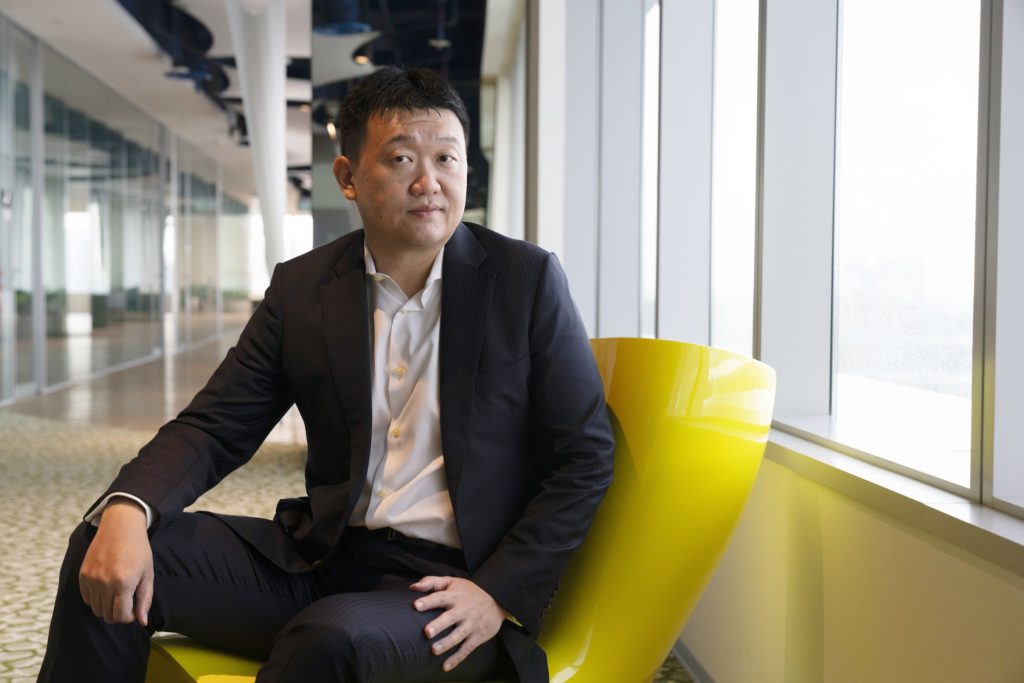
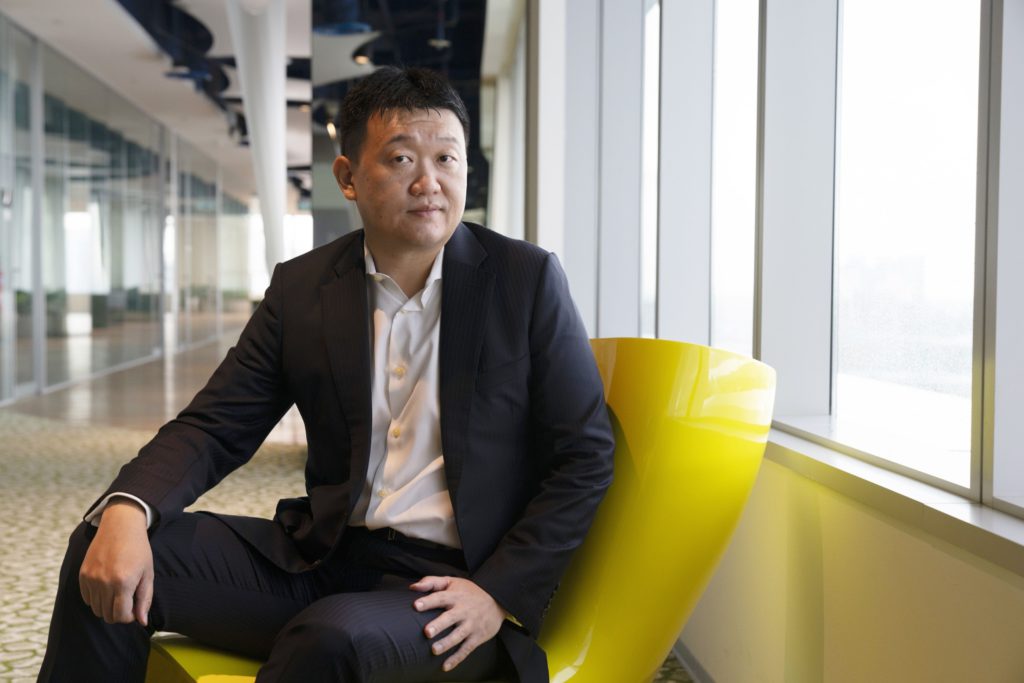
(Bloomberg) — Sea Ltd. lost more than $16 billion of value in its biggest daily market drop after India abruptly banned its most popular mobile gaming title. Investors are growing concerned the ban may just be the start of the company’s troubles.

Singapore-based Sea went public in 2017 and quickly became the most valuable company in Southeast Asia, based on its potential to expand its offering of gaming, e-commerce and financial services beyond its home turf. New Delhi’s decision to ban Free Fire — a lucrative title for the company — highlighted Sea’s challenges from geopolitical tensions as well as mounting competition from rivals like Alibaba Group Holding Ltd.’s Lazada.

India has banned hundreds of Chinese apps over the past two years, but the expansion of that policy to Sea took management and investors by surprise. The startup was founded by Forrest Li, who was born in China but is now a Singaporean citizen. Its biggest shareholder is Tencent Holdings Ltd., the Chinese social media giant.

“India is seen as one of the next major growth drivers for Sea’s e-commerce and gaming arm outside Southeast Asia,” said Angus Mackintosh, founder of CrossASEAN Research, which publishes reports on Smartkarma. “With the Free Fire ban, there’s a risk that the authorities would also turn on the Shopee app, and Sea could lose that upside for growth.”

Read more: Cathie Wood’s Ark Bought Sea Shares as Gaming Firm Plunged

Investors worry that India could potentially also ban Shopee, the second pillar of Sea’s business, where it had about 300 employees and 20,000 local sellers as of December. On Monday, Li reassured shareholders at its annual general meeting that the company had a grip on the situation. He didn’t comment on the Free Fire ban in India.

The markets didn’t buy it. Sea’s New York stock plunged more than 18% overnight as analysts scrambled to parse India’s reasoning and reassess Sea’s growth prospects. Shares have lost almost two-thirds of their value since October. 

“Sea is a Singaporean company and we aim to partner in India’s digital economy mission,” the company said in a statement in response to queries from Bloomberg News. “We are committed to protecting the privacy and security of our users in India and globally, we comply with Indian laws and regulations, and we do not transfer to or store any data of our Indian users in China.”

The Free Fire game was the highest grossing mobile game in India in the third quarter of 2021, according to industry tracker App Annie. JPMorgan analyst Ranjan Sharma slashed his price target by about 40% to $250, citing heightened nervousness around Sea’s gaming franchise.

The ban on Free Fire could curb Sea’s overall digital entertainment business, limiting its ability to bankroll Shopee’s expansion into new markets, said Oshadhi Kumarasiri, an analyst at Lightstream Research who provides research reports on Smartkarma. “With Free Fire banned in India, the state of Shopee’s expansion in India is at risk,” he said.

Sea Ltd. Sinks on Free Fire Game Ban in India: Street Wrap

Sea remains one of Southeast Asia’s biggest success stories, an online retail and entertainment empire that generates almost $10 billion of annual revenue. Some 32 of 33 analysts still maintain buy or overweight ratings on the stock. Its stable of global backers include Cathie Wood’s Ark Investment Management. The superstar fund manager bought more than 145,000 shares on Monday, according to Ark data compiled by Bloomberg.

The most immediate question is whether Sea can appeal India’s decision and reverse it — or, if it fails, whether that ban will extend to its other businesses in the world’s fastest-growing internet economy.

On the face of it, Delhi has little justification for going after the company. Sea is officially a Singaporean enterprise — it’s registered there and most of its workforce, including Li and his lieutenants, operate out of the city state. Executives have openly championed programs to aid employment and education in Singapore, among other things.

Representatives for Singapore’s Ministry of Foreign Affairs and India’s Ministry of Home Affairs had no immediate comment on the matter.

Read more: How Singapore Nurtured Foreign Trio Who Became Billionaires

But its links to the world’s No. 2 economy remain strong. Founded in 2009 by Li, Gang Ye and David Chen, a majority of its senior executives either hail from or have strong links with China.

Tencent, Sea’s long-time backer, is undergoing a national security review in the U.S. Last month, the internet giant divulged plans to sell $3 billion of Sea stock to reduce its holding to 18.7% from more than 20%, while eventually taking its voting interest down to less than a tenth. 

Some analysts viewed that move as an effort to clear up questions about Sea’s origins and who calls the shots at the company. But apart from any attempt to assuage those concerns, Tencent’s gradual retreat is in itself a potentially significant blow to the company. 

While Tencent is Sea’s largest shareholder, it’s adopted much the same hands-off approach it takes with other investees in China. But its backing was instrumental in Sea’s ascendancy especially in past years, when it ranked among the world’s best-performing stocks. 

Leveraging Tencent’s enormous experience with global distribution platforms and business model, Free Fire rapidly garnered more than a billion downloads on Google Play, ranking it among the most popular titles in the world. Li has been candid about relying on Tencent’s expertise, particularly in Sea’s early days, and his attempt to emulate its business practices.

It’s unclear how Tencent’s sell-down would affect that relationship. Both sides have affirmed they will continue to work together. But Tencent itself is now embarking on an overseas expansion after Chinese regulators launched a crackdown on the gaming sector at home — meaning it will inevitably vie with Sea for some of the same gaming audiences — just not in India.

“Any kind of cracks in the revenue stream from gaming will be picked up on by the investment community,” Mackintosh said.

(Updates with analyst’s and official comments from the fourth paragraph)

More stories like this are available on bloomberg.com

©2022 Bloomberg L.P.

Sea’s $16 Billion Wipeout Portends Trouble Beyond India Shutout

(Bloomberg) — Sea Ltd. lost more than $16 billion of value in its biggest daily market drop after India abruptly banned its most popular mobile gaming title. Investors are growing concerned the ban may just be the start of the company’s troubles. Singapore-based Sea went public in 2017 and quickly became the most valuable company …

Sea’s $16 Billion Wipeout Portends Trouble Beyond India Shutout Read More »

Oil Drops as Investors Weigh Up Ukraine Crisis, Supply Outlook

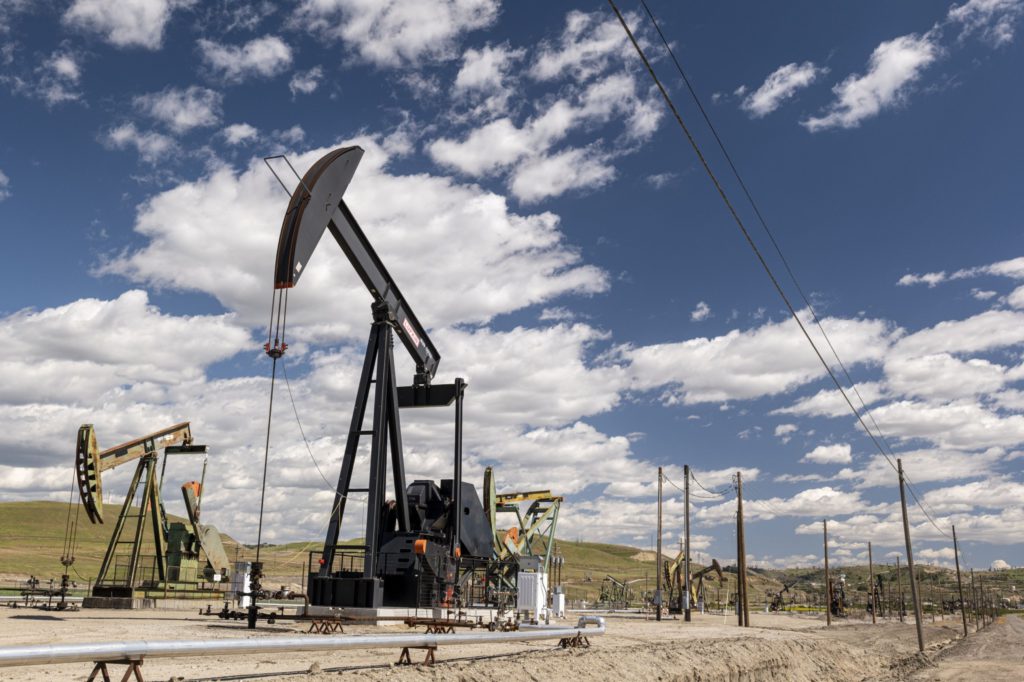
(Bloomberg) — Oil retreated from the highest since 2014 as traders weighed an apparent cooling in the Ukrainian crisis and prospects for increased supply. West Texas Intermediate fell after topping $95 a barrel on Monday. Despite U.S. warnings a Russian invasion of Ukraine may be imminent, Moscow is now calling for a diplomatic approach and …

Oil Drops as Investors Weigh Up Ukraine Crisis, Supply Outlook Read More »

Close Bitnami banner
Bitnami