Bloomberg

Russian Billionaire Potanin Says Tokens Can Displace Crypto

(Bloomberg) — Russia’s second-richest man says tokens and a digital ruble initiative will give the country’s crypto-skeptical central bank a way to promote new technologies without the risks associated with currencies like Bitcoin. 

Billionaire Vladimir Potanin is an investor in Atomyze, which uses blockchain to turn real assets ranging from metal to homes into tokens that can be easily exchanged. This month, the company’s Russian unit received a license allowing the platform to issue digital assets and offer trading. 

“Unlike some cryptocurrencies, platforms like Atomyze offer consumers high-quality and secure digital goods and may squeeze unreliable products out from the market,” Potanin said in interview in Moscow. 

Potanin’s position echoes the Bank of Russia, which supports the development of digital financial assets while advocating a complete ban on mining and trading cryptocurrencies that it says pose a threat to the country’s financial system. The government backs regulating and taxing digital currencies, while President Vladimir Putin has called on authorities to find a compromise. 

The development of digital assets, tokenization and the central bank’s digital ruble program may make the debate over crypto irrelevant, according to Potanin. He said regulators fear crypto and stablecoins because they are uncontrolled currency emissions, while a digital asset or token is like a contract giving customers the opportunity to get a product or service in a digital form using blockchain, an online ledger that tracks and verifies every transaction or change. 

“Metal coins were replaced by paper money, and then transactions became cashless,” Potanin said. “Digital financial assets are just the next stage.” 

Potanin’s Interros holding helped found Atomyze two years ago as it sought a way to make trading metals more efficient. Potanin is the biggest shareholder in MMC Norilsk Nickel PJSC, the world’s largest producer of refined nickel and palladium, which has been offering metals-linked tokens to industrial clients and via exchange-traded commodities on several European exchanges since 2020. 

READ: Nornickel Sells First Digital Metal Tokens to Traxys, Umicore

The platform could also be used for the sale of the other services and goods, according to Potanin. He said Interros is planning to invest as much as $1 billion in Atomyze and other technology projects, which may include banks and digital exchanges.

In Russia, Atomyze may offer the same service as abroad, including issuing tokens linked to metals, according to Potanin. It also plans to test its applications in real estate in Norilsk, a city of 180,000 people in the Arctic Circle, he said.

The program could allow a unit of the Norilsk-based miner to offer employees and other residents tokens to buy apartments in an effort to boost their liquidity and improve mobility, as well as develop a token-linked mortgage program with Societe Generale SA’s Rosbank. Then, when people seek to move they would be able to sell their properties for tokens and exchange them for money or a home in a different city, Potanin said. 

Interros is also in talks with the Hermitage Museum in St. Petersburg to offer non-fungible tokens for its art collection that could be used to fund restoration, Potanin said. 

More stories like this are available on bloomberg.com

©2022 Bloomberg L.P.

How Working From Home Will Permanently Change the Way We Travel

(Bloomberg) — It was the first glimmer of hope for the beleaguered travel industry in 2020 when locked-down citizens started doing something new amid the pandemic: not working from home, but working from anywhere. Off they’d go for weeks or months at a time, to any locale with good surf and better Wi-Fi, to show off a new Zoom background after early morning swims.

Today the era of decamping from your hometown might seem as far in the rearview mirror as a five-day, in-person workweek might appear on the horizon. But a new version of the trend is emerging—and it could prove a serious boon for the travel industry.

The ability to work from home is profoundly, and permanently, changing the way we travel. More lenient office policies mean many workers can travel anytime, even during busy workweeks, as long as they can hit deadlines from far afield. That, in turn, has made it easier for people to travel more frequently and for longer amounts of time, sometimes unlocking farther-flung destinations. The mixing of work and play, which some industry insiders (annoyingly) refer to as “bleisure” (business + leisure) travel, has greatly helped airlines make up for lost traffic.

“The ‘great untethering’ isn’t a trend, it’s permanent,” says Chris Lehane, global head of policy and communications for Airbnb Inc. “It’s a durable and enduring pattern that would have ultimately happened as society moved forward, even without the pandemic.”

“When you think about the technologies that have transformed travel, what we’re doing now, communicating and working on Zoom, is maybe even bigger than the advent of steam trains or commercial flight,” Lehane continues. “The entire construct of travel is in the midst of a change right now.”

That’s why companies as wide-ranging as Airbnb, Deloitte, and travel trade publication Skift have called the continuation of remote work the greatest change maker in travel for 2022. Here’s how it will affect your own experiences on the road well beyond the pandemic’s end.

You’ll Take More Trips

According to a 2022 travel industry outlook from Deloitte, people with the intent to fit work into their journeys also planned to travel twice as often as those who sought time to unplug. “Laptop luggers,” as Deloitte refers to them, will take two to four trips a year, compared with one to two for “disconnectors,” and 75% of them will add extra time to their vacation. (Only 6% will extend by several weeks, but a majority—38%—will add from three to six days.)

“It’s a benefit for the industry,” says Eileen Crowley, Deloitte’s travel leader. “These work-from-home travelers are spending more. There’s more potential there. They also fared a bit better financially during the pandemic, so they can increase their travel budgets as well.”

Kayak Chief Executive Officer Steve Hafner agrees. At a Skift conference previewing the megatrends that will shape travel in 2022, he said, “When you work from anywhere, that means more leisure travel. If you’re liberated from an office, you can go to a lot of other places.”

Airbnb’s Lehane says the ability to take work where your family wants to go means that “now you can organize your work life with your family at the center, as opposed to working your family around your job.”

And that also benefits hotels and destinations, as they become less reliant on excessively busy peak periods that have traditionally been deemed convenient times to travel—say, school vacation weeks.

Stays are getting longer, too. In a trends report for the year ahead, Airbnb shared that in the third quarter of 2021 (for which the most recent data were available), almost half of the nights booked on its platform were for stays of at least seven days, up from 44% in 2019. One out of every five gross nights booked in the quarter were for stays of 28 days or longer. 

And data from vacation property management platform Guesty suggest the trend of extended stays has continued to grow during the pandemic. In 2021, 14-plus-day bookings grew 33% from a year earlier, with a cumulative rise of 121% since 2019.

Business Travel Will Have to Be More Fun

Don’t count out pure business travel—it’s still a thing. But it’s also evolving. “Work culture is really being stymied by distributed teams,” says Evan Konwiser, executive vice president for product and strategy at American Express Global Business Travel. “We didn’t realize how much we relied on offices for that. But now travel is emerging as a great way to de-commoditize your work experience.”

Gathering the team in a fun way, he says, has become a popular approach for 2022, even if a majority of companies are still opting to hold team-building events at their headquarters or in hybrid ways. But outliers—companies that are planning these retreats at, say, dude ranches—are increasing in popularity, spurring hope that vacation vibes can spill into business travel in the same way business has spilled into leisure trips.

Some are calling this a push for the “great reconnection.” Retreat-planning companies such as Troop and NextRetreat are among the travel industry startups that closed seed-funding rounds in 2021. And according to Skift, Salesforce.com Inc.’s Marc Benioff has even floated the possibility of building a “ranch-style resort for employees, where they can spend time team-building, take training sessions or even holiday with their families.”

Much of that is still sorting itself out. But expect more work trips in 2022, even if it’s just to head back to the office on a quarterly basis to check in with the team.

“Wild and crazy off-sites in cool venues will become part of the mix, 100%,” Konwiser says. “But right now people are coming away saying it was so nice to be with my colleagues for a day.” And companies are going to go a greater distance to make sure the travel experience is a positive one, he adds. “I may have this one week to make you, team member, feel the power of our culture. Am I going to put you up at a highway motel or a cool boutique hotel in the heart of the city?”

Your Hotel May Look a Little Different

Because remote workers represent a whole new market for the travel industry to capture, accommodations providers will be racing to meet their needs—if they haven’t done so already. For laptop luggers, home rentals have the upper hand, says Deloitte’s Crowley, because they offer space to spread out and to separate work from play. And upstart companies like Landing, which charges users $199 per year to access a global portfolio of monthlong rental options, have sprung up to meet the demand of digital nomads.

Hotel companies are trying to muscle back into that territory, too. Citizen M, for instance, created a membership program that provides fixed nightly rates and discounts on food and beverage offerings when digital nomads commit to a monthlong stay; it typically works out to $1,500 a month even in pricey real estate markets such as New York, Amsterdam, or Paris. Hoxton hotels has announced special rates for commuters who need an overnight near the office, while Mandarin Oriental in Washington, D.C., is among the hotels offering day rates for at-home workers in pursuit of extra space. More will surely follow. In other places, hotels are rethinking the old business center; some are transforming pool cabanas into indoor-outdoor workstations, or adding a wider array of office supplies (and printing services) to the standard in-room desk. 

Resorts in luxury destinations, meanwhile, are moving to include home offices and other flexible spaces that can be outfitted with, say, fitness equipment or nursery gear. New constructions are being designed to feature fewer boxy rooms and more spacious suites. And never have general managers been so concerned with the strength and reliability of their Wi-Fi networks, either; that’s a far cry from the days when free Wi-Fi was considered a luxury at all. (Remember: That wasn’t too long ago.)

You May Not Get as Much R&R

One possible downside of blended travel is that people will forget the value of truly disconnecting. And the pressures of being “always on” may follow us wherever we go.

And don’t count on getting a reservation wherever you want to go. Between pent-up demand and the ability to travel anytime, anywhere, availability at top resorts remains at an all-time low.

“We’ve had record-breaking years at several of our resorts,” says Craig Read, CEO of Auberge Resorts Collection. “The demand is just so high at some of our properties that even when I’ve asked if the reservations team can squeeze me in with my family for spring break, they shake their heads and say no way.”

More stories like this are available on bloomberg.com

©2022 Bloomberg L.P.

Alibaba SEC Filing May Signal SoftBank Plans to Sell, Citi Says

(Bloomberg) — Alibaba Group Holding Ltd. registered one billion additional American depositary shares, suggesting to some analysts that SoftBank Group Corp. may intend to sell part of its stake in the Chinese e-commerce giant. 

The share registration, disclosed in a U.S. regulatory filing on Friday, contributed to a 4.5% slump in Alibaba’s stock in Hong Kong on Monday, the biggest drop in the benchmark Hang Seng Index. 

SoftBank invested in Alibaba before the company’s initial public offering, meaning a large portion of its holdings weren’t registered as ADSs, Citigroup Inc. analysts including Alicia Yap wrote in a note. Registering the shares gives holders more flexibility to sell, the analysts wrote. It may also cover Alibaba’s need to issue new shares for its employee equity incentive plan.

SoftBank owns 5.39 billion ordinary shares of Alibaba, equivalent to 673.76 million ADSs, or a 24.8% stake, according to Citigroup calculations. Alibaba registered about 2 billion ADSs when the company conducted its IPO in the U.S. in 2014.

Masayoshi Son’s SoftBank has come under pressure in recent months as a selloff in technology stocks dragged down the value of portfolio companies including Didi Global Inc., One 97 Communications Ltd. and DoorDash Inc. SoftBank’s shares have tumbled about 50% from their peak last year.

The Japanese company, which reports earnings Tuesday, has used buybacks in the past to bolster its own stock. Alibaba is by far its most valuable holding.

A spokesperson for SoftBank declined to comment. Its shares rose 2.6% in Tokyo on Monday.

(Updates trading prices in third paragraph.)

More stories like this are available on bloomberg.com

©2022 Bloomberg L.P.

H.K. Sees Record Cases; Australia Reopening: Virus Update

(Bloomberg) — Hong Kong reported a record of over 600 infections, putting pressure on the government to ramp up restrictions. 

Australia will allow double-vaccinated visa holders to enter the country from Feb. 21, ending about two years of strict international border controls. German officials will discuss gradually easing restrictions.

China locked down a city of 3.6 million people, and a top epidemiologist said the country has no plans to adjust its zero-Covid policy. Beijing reported new infections among arrivals for the Winter Olympics.

Canada’s capital Ottawa declared a state of emergency as police struggled to rein in protests largely among truckers against vaccine mandates. 

Key Developments:

  • Virus Tracker: Cases top 395 million; deaths pass 5.7 million
  • Vaccine Tracker: More than 10.2 billion shots administered
  • Beijing Olympics locks out omicron but internet is open
  • Covid rebellion brews in Canada, sending warning across globe
  • Is Covid becoming endemic? What would that mean?: QuickTake

Germany Discusses Gradual Easing of Restrictions (4:49 p.m. HK)

Germany’s health minister expects Covid restrictions to be eased “long before Easter.” A gradual lifting of measures may be discussed at a summit between the state and federal governments on Feb. 16, Karl Lauterbach said on Bild TV late Sunday. 

The “specter” of Covid may have subsided by the fall, but only if a vaccination mandate is introduced, he said. Germany’s outbreak is at record levels, with more than 1,400 infections per 100,000 people over the past seven days.

Hong Kong Reports More Than 600 Cases (5:02 p.m. HK)

Hong Kong reported a record 614 coronavirus cases on Monday. The surge has been accompanied by a jump in untraceable infections, suggesting a significant number of silent chains of transmission in the community. 

Hong Kong’s pursuit of Covid Zero has seen its health-care infrastructure straining under the pressure of stringent tracking and isolation measures that have sent thousands of people into quarantine or hospital. The government will start sending low-risk patients to Penny’s Bay for isolation Tuesday.

Indonesia Tightens Restrictions in Java, Bali (1:53 p.m. HK)

Indonesia has tightened mobility restrictions in Jakarta, Bandung and Bali to the second-highest level as omicron cases continued to spread rapidly. The restrictions, which include limiting capacity at public places and reducing operating hours for cafes and restaurants, will be implemented for one week, according to Luhut Panjaitan, a cabinet minister who oversees the nation’s pandemic response in Java and Bali. 

India Approves Sputnik Light (1:30 p.m. HK)

India’s drug regulator approved the use of Sputnik Light to boost vaccination efforts, the federal health minister tweeted late Sunday. The ninth vaccine added to India’s list of inoculations comes as the country continues its downward trend in infections, reporting 83,876 new cases on Monday, the lowest since Jan. 5. 

Australia to Reopen for Visa Holders (11:38 a.m. HK)

Australia will allow double-vaccinated visa holders to enter the country from Feb. 21, ending around two years of strict international border controls introduced to stem the spread of Covid-19.

The announcement is the final step in a gradual unwinding of international border restrictions, which kicked off in November. Still, Western Australia remains closed to the rest of the country, after delaying its domestic border reopening. 

The decision to allow vaccinated international arrivals comes as Covid infections, hospitalizations and intensive care admissions trend down in most parts of the country. 

Chinese City Locked Down (10:58 a.m. HK)

A southwestern Chinese border city was locked down after mass testing identified nearly 100 people with Covid, yet another outbreak that’s extending the country’s protracted battle to bring its Covid infections back to zero.

A total of 98 people tested positive on Sunday in Baise, a city of 3.6 million people next to Vietnam in the southwestern Chinese province of Guangxi. Travel was banned within the city and to the rest of China to prevent the virus from spreading further. All residents were asked to stay at home.

China has no plans to adjust its zero-Covid-tolerance policy for the time being, Wu Zunyou, chief epidemiologist with the Chinese Center for Disease Control and Prevention, told the Global Times in an interview. 

Protesters Cause Chaos in Australian Capital (10:46 a.m. HK)

A group of anti-vaccination demonstrators and conspiracy theorists have blocked roads and targeted businesses in the Australian capital of Canberra ahead of the return of federal parliament on Tuesday.

Hundreds of cars and trucks waving Australian flags, military insignia and campaign banners for former U.S. President Donald Trump descended on the city over the past week to call for the end to vaccination requirements in businesses and places of employment.

The protests in Canberra have echoed similar demonstrations in the Canadian capital Ottawa.

Philippines Starts Vaccinating Kids (10:37 a.m. HK)

The Philippines started giving Covid-19 shots to children aged 5 to 11, after receiving 780,000 Pfizer doses last week. The Southeast Asian nation aims to inoculate 15.5 million from this age group, as economic managers see allowing more activities for kids and their families as key to reviving consumer demand.

Korea Says Cases Could Reach 170,000 (10:26 a.m. HK)

South Korea’s daily cases could increase to up to 130,000-170,000 at the end of February with the surge of the omicron variant, the Korea Disease Control and Prevention Agency said. The numbers are based on forecast modeling conducted by experts.

President Moon Jae-in said it’s a serious situation as it’s difficult to predict how much the number of confirmed cases will increase and when the peak will be. But he said there is no need to be too concerned about the current situation. South Korea confirmed 35,286 more cases on Monday.

Thai Ministry to Propose More Easing: Post (9:04 a.m. HK)

Thailand’s Health Ministry will propose further easing of containment measures to the nation’s main virus task force later this week, the Bangkok Post reported, citing Opas Karnkawinpong, director-general of the ministry’s Department of Disease Control.

The ministry will encourage people to live with the virus rather than cope with lockdowns, the newspaper reported. Opas didn’t give details of measures that may be relaxed.

Japan PM Pushes for a Million Daily Shots (8:54 a.m. HK)

Japanese Prime Minister Fumio Kishida set a target of speeding booster vaccinations to a million shots a day by the end of the month, as two new polls showed his support falling.

While most of the population has received two doses of a vaccine, only about 5% has received a third shot, by far the lowest among advanced nations. 

Ottawa Declares Emergency as Protests Intensify (5 p.m. NY)

Canada’s capital declared a state of emergency Sunday as police struggled to rein in ongoing protests against vaccine mandates.

The demonstrations started in reaction to Canadian and U.S. laws that went into effect in January, requiring truckers crossing the border to be fully vaccinated. They have since morphed into a rally against Covid restrictions more broadly.

Ottawa Mayor Jim Watson, who declared the emergency, said in a statement that the increasingly rowdy demonstrations posed a “serious danger and threat to the safety and security of residents.”

Tributes to India’s ‘Nightingale’ (11:55 p.m. NY)

India’s central bank postponed its interest-rate review by a day as the nation and its neighbors mourn the death of celebrated singer Lata Mangeshkar after being diagnosed with Covid-19. She was 92.

The Reserve Bank of India’s monetary policy committee will now meet Feb. 8-10, and its decision will be announced Thursday.

Mangeshkar, known as the “Nightingale of India,” had been hospitalized since Jan. 8 after testing positive.

More stories like this are available on bloomberg.com

©2022 Bloomberg L.P.

Ex-Man United Players Form Sports Venture With Rich Singaporeans

(Bloomberg) — Former Manchester United football players including Gary Neville and Paul Scholes are teaming up with wealthy Singaporeans Peter Lim and his son Kiat Lim to create an organization that will allow fans to make sports-related investments alongside them.

The participants are creating a decentralized autonomous organization, or DAO — an entity that is meant to have a distributed governance model and brings together participants with set goals or ideas — that will aim to connect sports enthusiasts globally, according to a statement Monday. CO92 DAO, named after the Manchester United squad of 1992, will focus on strategic projects with football-related entities.

“We are currently already reviewing a range of professional football project opportunities, and will announce developments in the months ahead,” 28-year-old Kiat Lim said by email. “Access to this industry does not come easy or cheap, we are bringing many cumulative years of experience and personal high-level networks into this project to try to make it as big a success as it can be.”

While DAOs and decentralized projects have quickly gained popularity, they also have critics who contend that in reality, decision-making power is often concentrated among a few individuals. 

Read more: SushiSwap Infighting Shows Pitfalls of Decentralized Crypto 

Many details of the CO92 DAO are yet to be determined. Kiat Lim declined to comment on the amount of money that will be involved or give details on the ownership structure. There will be a public token sale with no minimum amount needed to participate, but specifics of allocation will be announced “in due course,” he said. 

The management team for the DAO includes Darius Sit, the founder of QCP Capital, QCP Soteria Node founder Sherwin Lee, and Gabriel Yang, who previously worked at the Monetary Authority of Singapore. Along with Neville and Scholes, Phil Neville, Nicky Butt and Ryan Giggs are also involved in the DAO, Kiat Lim said.

Kiat Lim and his father are no strangers to the sports and blockchain industries. Peter Lim, 68, owns Mint Media Sports, bought Spanish club Valencia C.F. in 2014 and is a shareholder of English club Salford City F.C. He and Neville are longtime business partners. Kiat Lim has teamed up with superstar Ronaldo on football-based digital community ZujuGP, and is aiming to create a private social-networking app based on non-fungible tokens, or NFTs, with Mewah International Inc. scion Elroy Cheo.

Read more on DAOs:

Job Hunters Trade Wall Street Experience for Red-Hot Crypto DAOs

Group of DAOs Considers Taking Over Another in Latest DeFi Twist

More stories like this are available on bloomberg.com

©2022 Bloomberg L.P.

Kim Jong Un Keeps Aiming His Missiles at This ‘Most Hated Rock’

(Bloomberg) — As Kim Jong Un unleashed his biggest-ever barrage of missile tests last month, one place suffered the most: a barren piles of rocks whose name means “No Man’s Land.” 

Alsom Island, located 18 kilometers (11 miles) off North Korea’s northeastern coast, has been targeted in more than 25 missile strikes since 2019. It was the destination of eight rockets in January alone, as Kim carried out the most launches since he took power in a signal of defiance against a U.S.-led sanctions regime intended to punish Pyongyang for developing such weapons.


The South Korean military has closely watched the outcropping’s bombardment, especially after North Korea built a 10-meter wide domed structure there in August 2020, according to opposition lawmaker Yoon Ju-kyeong. Such a structure could be used to test bunker-buster bombs, her office said, while others have speculated it might serve as a stand-in for a government building in Seoul. 

So much firepower directed at a single spot has prompted jokes that Kim must have a grudge, with weapons expert Joseph Dempsey quipping on Twitter that Alsom was North Korea’s “most hated rock.” 

Dempsey, a research associate for defense and military analysis at the International Institute for Strategic Studies in London, told Bloomberg News the island provided a useful proving ground for a new generation of short-range weapons systems, such as its KN-23, that can strike all of South Korea. “This relatively small and well-defined target presents a good way to demonstrate the apparent increased accuracy of these systems, particularly for propaganda purposes,” Dempsey said. 

In recent weeks, Kim has honed his newest short-range ballistic missiles on Alsom, some of which have slammed into the rocky outcrop at speeds possibly in excess of 3,000 kms per hour. North Korea also used the site to prove the accuracy and maneuverability of long-range cruise missiles that it said flew in patterns for 1,800 kms before hitting their targets on Jan. 25. It released photos of the impact.

The island is situated far enough off the coast to provide a buffer for errant rockets and close enough to expect only North Korean vessels would be in the area. At about 850 meters (2,800 feet) in length, it’s small enough to show the U.S. and its allies that Kim can hit what he aims at.  

Kim has sought to modernize his military arsenal, which had previously relied on Scud variants of questionable accuracy. The new solid-fuel, short-range ballistic missiles that have been rolled out since 2019 are designed to fly about 250-500 kms. But some have been test-fired to more than 600 kms — long enough to reach a few parts of Japan’s western coast.

As North Korea steps up launches, Alsom has provided a fiery backdrop for its domestically focused propaganda campaigns. State media have repeatedly published images of missiles fired at the island in recent days, including dramatic overhead drone shots. 

North Korea has fired its new missiles from various locations as it tries out new capabilities, such as a January test of ballistic missiles fired from train cars. Still, Alsom is too close to make a viable target if Kim makes good on his threat to resume tests of larger, intercontinental ballistic missiles. Those must be fired hundreds of kilometers into space and fall farther from the country’s shores. 

Kim could use a national holiday on Feb. 16 marking what would’ve been the 80th birthday of his late father, Kim Jong Il, to show off his newest weaponry. The DongA newspaper reported satellite imagery showed signs of preparations for a military parade in Pyongyang, an event where it often unveils its advances. 

So far, there is no indication the Biden administration — or the American public — is particularly alarmed by Kim’s missile tests. Unlike Trump, Biden has avoided threats or other rhetorical escalations and says relatively little about the North Korean leader.

“North Korea has been doing missile tests, dozens of them, in prior administrations,” White House Press Secretary Jen Psaki told a news briefing last week. “And obviously we’ve spoken to it each time that that has happened. The door to diplomacy remains open and we have conveyed that clearly.”

For now, the bombardment of Alsom looks set to continue. North Korea has already fired more nuclear-capable missiles in 2022 than in all of last year. And holidays on Feb. 16 and April 15 marking the respective birthdays of Kim’s father, Kim Jong Il, and grandfather, Kim Il Sung, have in the past provided occasions for military displays. 

“By hitting the same target from different origins of aggression, North Korea could test and improve its striking capability aimed at the ROK,” said Cheon Seong-whun, a former security strategy secretary at South Korea’s presidential Blue House, referring to South Korea by its formal name.

“Pyongyang is testing to see whether its striking options are working in reality,” he said.

(Updates with details of possible military parade.)

More stories like this are available on bloomberg.com

©2022 Bloomberg L.P.
Chinese Firms Pay Women’s Soccer Team Millions After Cup Victory

(Bloomberg) — Chinese companies are rewarding the nation’s women’s soccer team with cash payouts totaling some $3.6 million for an exciting championship victory that for a short time at least is overshadowing the Winter Olympics in the Asian nation.

Ant Group Co.’s Alipay said on social media it was giving the players 10 million yuan ($1.6 million) and the coaches another 3 million yuan, while China Mengniu Dairy Co. said it would hand the team 10 million yuan.

The squad could get 10 million yuan from the Chinese Football Association for topping South Korea 3-2 in the final of the AFC Asian Women’s Cup on Sunday in Navi Mumbai, according to local media outlets including Beijing Youth Daily. 

The Central Commission for Discipline Inspection, the graft buster of the ruling Communist Party, even weighed in, calling the women “steel roses” after they rallied from a two-goal deficit to win the cup for the ninth time. The victory was a popular topic on China’s internet, with one user commending the team for fighting to the last minute.

The glory being showered on the women’s team stands in contrast to the treatment the men received after a 3-1 loss to Vietnam in a World Cup qualifier last week. 

Chinese fans ripped the team afterward, and manager Li Xiaopeng apologized to them on social media afterward, calling the loss “unacceptable.”

Chinese President Xi Jinping has made developing soccer a priority for the government. In 2015, the cabinet announced it would boost national team funding and build thousands of schools dedicated to the sport, while also stating its intention for China to someday host the World Cup.

More stories like this are available on bloomberg.com

©2022 Bloomberg L.P.

Google Sued by PriceRunner for $2.4 Billion in Stockholm Court

(Bloomberg) — Alphabet Inc.’s Google is being sued by Nordic price comparison provider PriceRunner AB for about 22 billion kronor ($2.4 billion) at Sweden’s patent and market court.

The lawsuit follows the conclusion of a legal ruling in the European Union that established Google has breached antitrust laws by manipulating search results in favor of its own comparison-shopping services, PriceRunner said in an emailed statement Monday.

“This is also a matter of survival for many European entrepreneurial companies and job opportunities within tech,” said Mikael Lindahl, chief executive officer of PriceRunner.

The Nordic company, which has agreed to be bought by Klarna Bank AB, also said it expects that the final damages of the lawsuit will be “significantly higher” because the violation is still ongoing.

Last month, the U.S. tech giant said it had filed a challenge against the ruling at the EU Court of Justice “because we feel there are areas that require legal clarification” from the bloc’s top judges. 

Representatives for Google and Alphabet Inc. did not immediately respond to a request for comment by Bloomberg News.

More stories like this are available on bloomberg.com

©2022 Bloomberg L.P.

Bitcoin Tops 50-Day Average for First Time Since November

(Bloomberg) —

Bitcoin rose above its 50-day moving average on Monday for the first time in more than two months.

The largest cryptocurrency rose as much as 3% to $42,956, compared with the 50-day technical mark which was around $42,810. It built on Friday’s rise — the biggest since October — which had taken it back above the key round-number level of $40,000, and held over the weekend. 

“Bitcoin has broken some key levels and a downward-trending line here over the past few days and is showing signs of bullishness,” but it’s “being capped by the 50-DMA and needs to close above it,” said Vijay Ayyar, head of Asia-Pacific at Luno Pte. “The next stop from here is $46,000 to $47,000.”

Read more: Bitcoin’s Dip From Two-Week Peak Highlights Key Technical Hurdle

Bitcoin’s rise above the technical mark continues momentum higher amid the better-than-expected U.S. jobs report Friday on the heels of strong earnings from Amazon.com Inc. The cryptocurrency has been correlated with risk assets in recent months, and the S&P 500 gained 0.5% Friday while the Nasdaq 100 rose 1.3%.

The largest cryptocurrency, which along with Ether was aided by a raft of short liquidations on Friday, “can make further upward progress in the weeks to come” given the technical breakout, said Fundstrat’s Mark Newton in a report. “Initial upside targets lie at $45,000 and then $51,100.”

Other top cryptocurrencies like Ether and Solana were also slightly higher. The standout movers over the last 24 hours included XRP’s 8.1% gain as well as memecoin Dogecoin with a 7.4% advance and Shiba Inu marking a 26% surge, according to pricing from CoinGecko.

More stories like this are available on bloomberg.com

©2022 Bloomberg L.P.

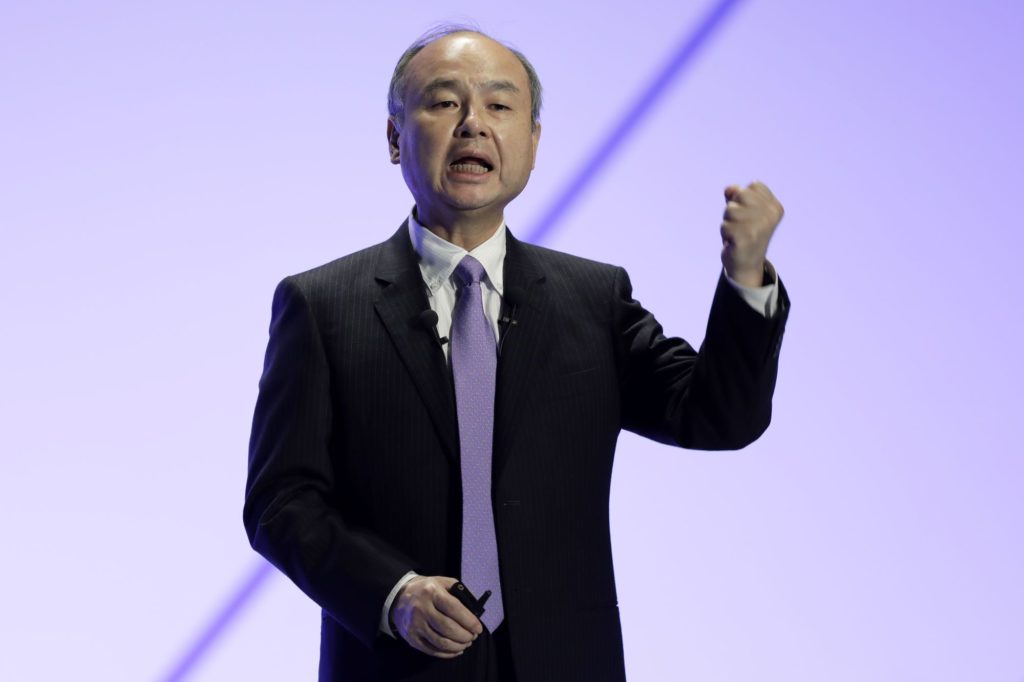
SoftBank Earnings Set to Show Worsening of Masa Son’s Blizzard

(Bloomberg) — When Masayoshi Son last spoke to SoftBank Group Corp. investors three months ago, he said his tech conglomerate was in the middle of a “blizzard.” Conditions for the firm have only deteriorated since. 

Some of its most high-profile investment bets have had a disastrous few months as an approaching tightening of the U.S. Federal Reserve policy turns investors sour on the type of tech startup bets his Vision Funds specialize in. To make matters worse, a long-awaited sale of chip designer Arm Ltd. to Nvidia Corp. looks set to collapse, while less than two weeks ago, Son lost another trusted lieutenant when operations guru Marcelo Claure stepped down due to a clash over pay. 

Even a long-awaited resumption of buybacks has failed to lift SoftBank’s shares. Announcing the 1 trillion yen ($8.7 billion) repurchase three months ago, Son said that as a shareholder himself he was “delighted” with the buyback. 

But no one will have been happy with SoftBank’s performance since then, with shares down more than 12%, worse than the Topix’s 5% slide in that time. Son will be under pressure to give some good news when he speaks to investors at a briefing following SoftBank’s third-quarter results on Tuesday. 

While SoftBank’s returns are notoriously hard to estimate given the size of its private holdings, Kirk Boodry, an analyst at Redex Research who publishes on Smartkarma expects a $2.1 billion loss on its portfolio in the three months ended December, despite it bringing 10 companies to public markets in that time. 

The damage ranges from India, where Paytm operator One97 Communications Ltd., the entity that operates the digital payments service Paytm, had a disastrous IPO, to the U.S. where DoorDash Inc. lost 28% of its value during the quarter and WeWork Inc. 14%. Didi Global Inc., which is preparing to delist in the U.S. and move to Hong Kong, lost 36% in the quarter. Most significantly, Alibaba Group Holding, SoftBank’s most valuable single investment, slid 16% in the three months. 

While three months ago analysts were eagerly anticipating the resumption of share buybacks, the most recent repurchase hasn’t boosted shares, while recent results mean there may be little room to expand them further, analysts said. 

“It is hard to see how Softbank can fund share purchases without selling assets,” Boodry wrote. “Shares will continue to be range-bound as Softbank appears unlikely to move more aggressively on buybacks.” 

There was one recent positive sign. Over the weekend, Alibaba registered one billion American depositary shares that hadn’t been registered before, suggesting SoftBank may intend to sell some of its shares, Citigroup Inc. analysts including Alicia Yap wrote in a note. SoftBank’s stock rose as much as 5.4% in Tokyo, while Alibaba’s Hong Kong shares slid as much as 4.7%.

In the past, Son has been keen to snap up his own firm’s shares when they seemed undervalued compared to his preferred metric of net asset value. Even that is likely to have declined further, however, Jefferies analysts Atul Goyal and Shingo Ito estimated in a note last month. They expect the figure to have dropped from around $185 billion to around $130 billion as of the end of January. 

However, that still means shares are trading at a significant discount to the net asset value, they noted, expecting net asset value per share of around 10,700 yen as of the end of the last quarter, versus its 5,388 yen share price in Tokyo at the morning close on Monday. 

SoftBank will announce earnings at 3 p.m. Tokyo time on Tuesday, with Son to brief at 4:30 p.m.

More stories like this are available on bloomberg.com

©2022 Bloomberg L.P.

Close Bitnami banner
Bitnami