Bloomberg

SoftBank Earnings Set to Show Worsening of Masayoshi Son’s Blizzard

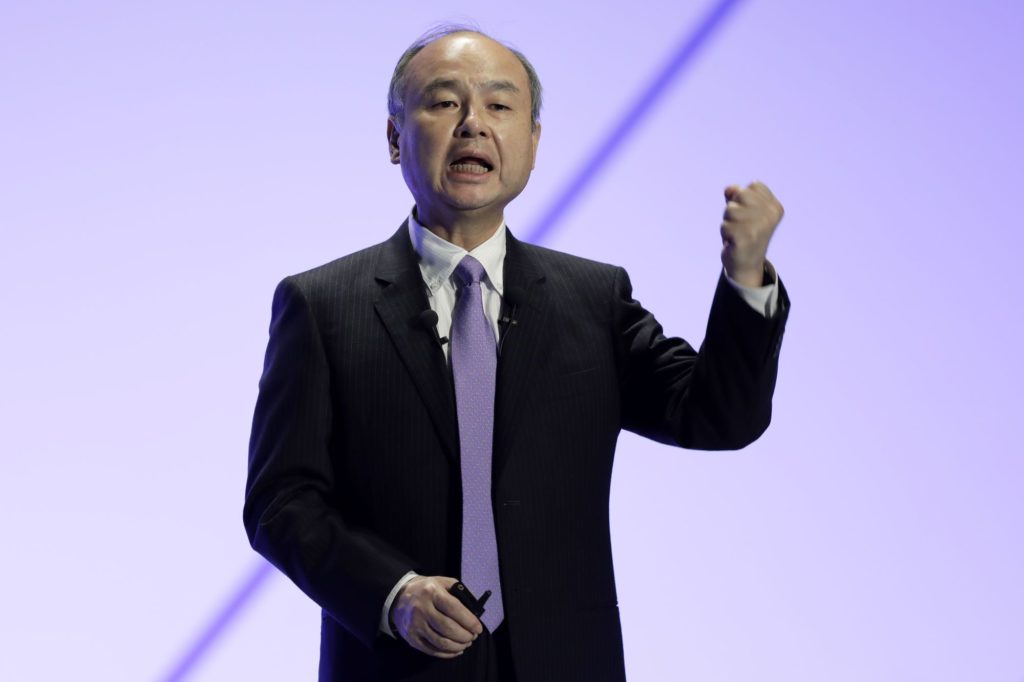
(Bloomberg) — When Masayoshi Son last spoke to SoftBank Group Corp. investors three months ago, he said his tech conglomerate was in the middle of a “blizzard.” Conditions for the firm have only deteriorated since. 

Some of its most high-profile investment bets have had a disastrous few months as an approaching tightening of the U.S. Federal Reserve policy turns investors sour on the type of tech startup bets his Vision Funds specialize in. To make matters worse, a long-awaited sale of chip designer Arm Ltd. to Nvidia Corp. looks set to collapse, while less than two weeks ago, Son lost another trusted lieutenant when operations guru Marcelo Claure stepped down due to a clash over pay. 

Even a long-awaited resumption of buybacks has failed to lift SoftBank’s shares. Announcing the 1 trillion yen ($8.7 billion) repurchase three months ago, Son said that as a shareholder himself he was “delighted” with the buyback. 

But no one will have been happy with SoftBank’s performance since then, with shares down more than 12%, worse than the Topix’s 5% slide in that time. Son will be under pressure to give some good news when he speaks to investors at a briefing following SoftBank’s third-quarter results on Tuesday. 

While SoftBank’s returns are notoriously hard to estimate given the size of its private holdings, Kirk Boodry, an analyst at Redex Research who publishes on Smartkarma expects a $2.1 billion loss on its portfolio in the three months ended December, despite it bringing 10 companies to public markets in that time. 

The damage ranges from India, where Paytm operator One97 Communications Ltd., the entity that operates the digital payments service Paytm, had a disastrous IPO, to the U.S. where DoorDash Inc. lost 28% of its value during the quarter and WeWork Inc. 14%. Didi Global Inc., which is preparing to delist in the U.S. and move to Hong Kong, lost 36% in the quarter. Most significantly, Alibaba Group Holding, SoftBank’s most valuable single investment, slid 16% in the three months. 

While three months ago analysts were eagerly anticipating the resumption of share buybacks, the most recent repurchase hasn’t boosted shares, while recent results mean there may be little room to expand them further, analysts said. 

“It is hard to see how Softbank can fund share purchases without selling assets,” Boodry wrote. “Shares will continue to be range-bound as Softbank appears unlikely to move more aggressively on buybacks.” 

There was one recent positive sign. Over the weekend, Alibaba registered one billion American depositary shares that hadn’t been registered before, suggesting SoftBank may intend to sell some of its shares, Citigroup Inc. analysts including Alicia Yap wrote in a note. SoftBank’s stock rose as much as 5.4% in Tokyo, while Alibaba’s Hong Kong shares slid as much as 4.7%.

In the past, Son has been keen to snap up his own firm’s shares when they seemed undervalued compared to his preferred metric of net asset value. Even that is likely to have declined further, however, Jefferies analysts Atul Goyal and Shingo Ito estimated in a note last month. They expect the figure to have dropped from around $185 billion to around $130 billion as of the end of January. 

However, that still means shares are trading at a significant discount to the net asset value, they noted, expecting net asset value per share of around 10,700 yen as of the end of the last quarter, versus its 5,388 yen share price in Tokyo at the morning close on Monday. 

SoftBank will announce earnings at 3 p.m. Tokyo time on Tuesday, with Son to brief at 4:30 p.m.

More stories like this are available on bloomberg.com

©2022 Bloomberg L.P.

Peloton Deal May Pose Regulatory ‘Headache’ for a Tech Giant

(Bloomberg) — Peloton Interactive Inc. — the early pandemic home-fitness darling that’s become a potential takeover target following a sharp plunge in its stock price — could find a challenging climate if it opts for a deal with a big-technology firm.

One key consideration is regulatory scrutiny. There’s a chill against large transactions at the moment in Washington, where technology companies are being probed by regulators for their reach and influence and the Federal Trade Commission recently sued to block an acquisition by Nvidia Corp.

“The deal better be worth the headache for the company because they’re going to be scrutinized on whatever they buy,” said Anurag Rana, a senior analyst at Bloomberg Intelligence, in an interview Sunday.

Peloton is evaluating interest from potential suitors and is working with an adviser to explore options, according to people familiar with the matter who asked not to be identified because discussions are private. The takeover interest in the New York-based maker of exercise bikes and treadmills is exploratory and may not lead to a transaction, they said.

The companies said to be taking a look at Peloton — whether for an acquisition, an investor or some other kind of tie-up — include some of the biggest names in technology and fitness. Amazon.com Inc. has spoken with advisers about a potential deal, the Wall Street Journal reported Friday. Analysts have also speculated that Apple Inc. could lurk as a potential buyer. Nike Inc. is also considering a separate bid for Peloton, according to the Financial Times. 

Peloton didn’t immediately respond to an email seeking comment. Amazon, Nike and Apple declined to comment.

Share Decline

Peloton’s shares have dropped more than 80% from their January 2021 high amid a slowdown following the loosening of pandemic restrictions. It’s a very different landscape than the early days of the pandemic, when demand for the company’s products exceeded supply. 

The company is currently valued at just over $8 billion, based on Friday’s official market close of $24.60 — below its September 2019 initial public offering price of $29. The shares surged as much as 43% in extended trading Friday after the Journal report.

Activist investor Blackwells Capital LLC last month issued a letter demanding the company fire co-founder and Chief Executive Officer John Foley and pursue a sale. Blackwells said in the letter that potential buyers could include Apple, Nike and Walt Disney Co.

‘Distraction’ for Amazon

“Although Peloton’s star was propelled during Covid, it’s become increasingly clear it’s a much smaller (still impressive) business than prior perception,” BMO Capital Markets analysts Simeon Siegel and Daniel Stroller wrote in a note Sunday. “One has to ask whether the brand is simply too small to make a difference to the world’s largest companies.”

The analysts questioned if Peloton’s roughly 2.8 million subscribers overlapped with those of Nike, Amazon or Apple. “If the world’s strongest companies weren’t interested when Peloton was expected to grow 15 to 100 million subscribers, are they looking for a fixer-upper now that engagement/demand has faltered?” they also said. 

In a short note Friday, Rana and Bloomberg Intelligence senior analyst Poonam Goyal said Peloton would “only serve as a distraction” for Amazon — while offering few synergies for a company focused on the cloud and logistics. An athleisure company, they said, “would be a better fit.”

“Active-wear brands already embody the workout scene through runs etc.,” Goyal wrote in an email Sunday. “Having a workout machine that can integrate their ambassadors and items could help them establish themselves further in the active community. Lululemon bought Mirror for the same reason.”

While Peloton is already among the at-home fitness leaders, greater product variety could help it recoup demand, said Amine Bensaid, also an analyst at Bloomberg Intelligence, in an email Sunday.

Read more: Reasons Apple is unlikely to buy Peloton: Power On

Apple and Peloton may seem like a good match because Apple is already pushing further into fitness, but even with that there are potential drawbacks. Peloton’s large, expensive hardware isn’t in keeping with Apple’s traditional product-turnover strategy, and it has its own fitness software. 

Even so, analyst Dan Ives of Wedbush Securities said Apple may have strategic reasons to consider a pursuit of Peloton.

“Apple may be forced into this deal if Amazon, Nike, or potentially Disney aggressively goes after Peloton in a defensive blocking strategic move,” Ives wrote in a note Sunday. “On the offensive front, Apple through its Fitness+ subscription service and Apple Watch strategy would be able to leverage the Peloton services and flywheel to significantly bulk up its health-care initiatives, which have been a key strategic linchpin.”

(Updates with analyst comment in 10th paragraph)

More stories like this are available on bloomberg.com

©2022 Bloomberg L.P.

Troubled Toshiba to Split Into Two Firms Instead of Three

(Bloomberg) — Toshiba Corp. said it would divide into two companies and sell non-core assets, scrapping an initial three-way split that faced fierce criticism from activist shareholders.

The Japanese tech giant plans to spin off the devices business, which includes semiconductors, and list it, Toshiba said in a statement Monday in Tokyo. It scrapped an earlier plan to separate out its infrastructure operations, which will instead continue to come under Toshiba. Splitting into two companies would be cheaper and smoother than the original plan, it said.

Toshiba also designated Toshiba Tec Corp., its listed electronic equipment business, as a non-core business, it said, though it stopped short of saying it would sell the unit. The company will also use 300 billion yen ($2.6 billion) of excess capital for shareholder returns over two years, it said.

Shares of memory-chip business Kioxia Holdings Corp. will continue to be held by Toshiba, it said, but the firm will seek to monetize the shares “immediately” and return proceeds to shareholders. Kioxia has been pursuing an initial public offering, but has also been reported to be in talks to merge with Western Digital Corp. 

Toshiba has requested an IPO of Kioxia as soon as possible, Chief Executive Officer Satoshi Tsunakawa said at a briefing in Tokyo on Monday. 

Toshiba will also sell a 55% stake in air-conditioning business Toshiba Carrier Corp. to its U.S. joint venture partner Carrier Global Corp. for about 100 billion yen, it said earlier Monday.

Activist Pushback

Toshiba shares erased earlier losses to jump as much as 4.5% after the plan was announced. Shares in Toshiba Tec surged as much as 15%, the most since 2016. 

The new plan is “more logical given the overlap in semis and devices,” said Justin Tang, the head of Asian research at United First Partners. The proposal offers more synergy than before, while investors should welcome the clarity over Toshiba Tec, he said. 

Toshiba, once among Japan’s most revered companies, has been in crisis mode for years due to repeated scandals and management missteps. It invented flash memory for computing, but had to sell control of its crown jewel semiconductor business to pay for a disastrous expansion in nuclear power.

That deal opened the door to activist investors who have pushed for change. They include Effissimo Capital Management Pte and 3D Investment Partners Pte, which are the two largest shareholders with 10% and 7.6% stakes respectively, according to data compiled by Bloomberg.

Tsunakawa said last year he believed the three-way split, into infrastructure, memory chips and devices entities, was best for the company and stock holders.

But some of Toshiba’s largest shareholders pushed back strongly against the plan, with 3D Investment opposing it and requesting that an upcoming vote on it would require a two-thirds majority. Farallon Capital Management, another large shareholder, backed 3D’s calls.

Tsunakawa on Monday denied that the changes were prompted by pressure from activists. He also suggested that a forthcoming vote on the plan at an extraordinary shareholders meeting set to be held by the end of March would require only a simple majority, though he added no decision had yet been made. Toshiba has yet to announce when the EGM will be held. 

(Updates with comments from CEO Tsunakawa from fifth paragraph, analyst quote in eighth paragraph)

More stories like this are available on bloomberg.com

©2022 Bloomberg L.P.

Spotify’s CEO Is ‘Deeply Sorry’ But Won’t Drop Joe Rogan

(Bloomberg) — Spotify Technology SA’s Chief Executive Officer Daniel Ek apologized to staff for the impact the controversy over Joe Rogan’s podcast has had on them, but said he didn’t agree with calls to drop the broadcaster from the service. 

“There are no words I can say to adequately convey how deeply sorry I am for the way ‘The Joe Rogan Experience’ controversy continues to impact each of you,” Ek said in a letter to staff, which was seen by Bloomberg News and verified by a spokesperson for Spotify. 

“Not only are some of Joe Rogan’s comments incredibly hurtful — I want to make clear that they do not represent the values of this company,” Ek said. “I know this situation leaves many of you feeling drained, frustrated and unheard.”

A video compilation of Rogan using the N-word circulated Friday. In an Instagram post, Rogan described the video as “horrible” and said it was the “most regretful and shameful thing” he’s ever had to talk about.

Rogan apologized Saturday for using the racial slur in past episodes of his popular podcast. Several episodes have since been removed from Spotify. He last week pledged more balance and better research for his podcast in a separate apology aimed at quelling growing controversy about misleading coronavirus information, which prompted musicians like Neil Young and Joni Mitchell to remove their music from the platform. 

However, Ek backed the decision to keep Rogan on the service.

“While I strongly condemn what Joe has said and I agree with his decision to remove past episodes from our platform, I realize some will want more,” Ek said in the letter, which was reported earlier by The Hollywood Reporter. 

“I want to make one point very clear — I do not believe that silencing Joe is the answer,” Ek wrote. “We should have clear lines around content and take action when they are crossed, but canceling voices is a slippery slope.”

Instead, Ek said Spotify would invest $100 million for the licensing, development and marketing of music and audio content from historically marginalized groups. 


More stories like this are available on bloomberg.com

©2022 Bloomberg L.P.

Bitcoin Rally Has Traders Watching $43,000 Target

(Bloomberg) — Bitcoin’s 30% rally since the lows of late January has the token testing the upper end of its 20-day bollinger band, a technical pattern that could signal resistance. A close above that level, currently around $43,000 (roughly $200 above its current price), may imply sustained strength. But the last time Bitcoin briefly touched the upper end, in late December, it went on to plunge as much as 36% before starting to recover. 

More stories like this are available on bloomberg.com

©2022 Bloomberg L.P.

Explosive ‘Fight Club’ Ending Restored in China After Public Ire

(Bloomberg) — Tencent Video subscribers in China can now watch the unabridged version of 1999’s “Fight Club,” after a social media furor erupted over a censored version that replaced its original ending with a line of on-screen text declaring all criminals were brought to justice.

The movie’s original denouement is marked by a series of explosions intended to destroy all bank and credit records, resetting the economy and liberating people from their consumption-heavy lifestyles. That iconic scene was radically altered when the film first became available on Chinese streaming sites last month, replaced by a silent line of text saying the protagonist Tyler Durden had helped police thwart the plot. The stark reconfiguration drew the ire of film fans online and followed similar edits to other U.S. films, such as “Lord of War.” The South China Morning Post reported the restoration of the “Fight Club” ending on Sunday.

First Rule of ‘Fight Club’: in China, the Police Always Win

A Tencent Holdings Ltd. spokesperson declined to comment. The rights to the film in China are held by Pacific Audio & Video Co., an affiliate of the state-owned Guangdong TV, according to an earlier Vice report.

Foreign filmmakers have watered down or altered content for years to get past Beijing censors, but it’s rare for entire endings to get reversed — particularly on older films that millions would have seen pirated copies of already. Tencent Video subscribers mocked the overhaul for distorting the original film’s message and intent. Based on Chuck Palahniuk’s book by the same name, “Fight Club” culminates in the unnamed narrator killing off his alter-ego Durden before the bombs detonated.

More stories like this are available on bloomberg.com

©2022 Bloomberg L.P.

H.K. Sees Record Cases; Olympics Infections Rise: Virus Update

(Bloomberg) — Beijing reported a pickup in new Covid infections among arrivals for the Winter Olympics. China locked down a city of 3.6 million people, and a top epidemiologist said the country has no plans to adjust its zero-Covid policy. 

Hong Kong is set to report another record number of coronavirus infections, ramping up pressure on the government to contain the worsening outbreak. 

Canada’s capital Ottawa declared a state of emergency Sunday as police struggled to rein in ongoing protests largely among truckers against vaccine mandates. A group of anti-vaccination demonstrators and conspiracy theorists have also blocked roads and targeted businesses in the Australian capital of Canberra.

Key Developments:

  • Virus Tracker: Cases top 394.7 million; deaths pass 5.7 million
  • Vaccine Tracker: More than 10.2 billion shots administered
  • Beijing Olympics locks out omicron but internet is open
  • CDC expands hunt for early warnings of Covid in sewage waste
  • Covid rebellion brews in Canada, sending warning across globe
  • Is Covid becoming endemic? What would that mean?: QuickTake

Hong Kong to Report More Than 600 Cases (11:05 a.m. HK)

Hong Kong is set to report another record number of coronavirus infections, ramping up pressure on the government to contain the worsening outbreak. The city saw more than 600 cases on Monday, local media reported, citing people they didn’t identify. 

The surge in infections followed Chief Executive Carrie Lam’s announcement on Friday of measures to provide “tens of millions” of home testing kits to the city’s 7.4 million residents. She also signaled that the government might tighten social-distancing measures to curb the spread of the virus, in a city that has pursued a Covid Zero strategy.

“There are invisible transmission chains in the community,” said Ronald Lam, director of health. He added that it is impossible to project the peak of the current wave. 

Chinese City Locked Down (10:58 a.m. HK)

A southwestern Chinese border city was locked down after mass testing identified nearly 100 people with Covid, yet another outbreak that’s extending the country’s protracted battle to bring its Covid infections back to zero.

A total of 98 people tested positive on Sunday in Baise, a city of 3.6 million people next to Vietnam in the southwestern Chinese province of Guangxi. Travel was banned within the city and to the rest of China to prevent the virus from spreading further. All residents were asked to stay at home.

China has no plans to adjust its zero-Covid-tolerance policy for the time being, Wu Zunyou, chief epidemiologist with the Chinese Center for Disease Control and Prevention, told the Global Times in an interview. 

Protesters Cause Chaos in Australian Capital (10:46 a.m. HK)

A group of anti-vaccination demonstrators and conspiracy theorists have blocked roads and targeted businesses in the Australian capital of Canberra ahead of the return of federal parliament on Tuesday.

Hundreds of cars and trucks waving Australian flags, military insignia and campaign banners for former U.S. President Donald Trump descended on the city over the past week to call for the end to vaccination requirements in businesses and places of employment.

The protests in Canberra have echoed similar demonstrations in the Canadian capital Ottawa.

Philippines Starts Vaccinating Kids (10:37 a.m. HK)

The Philippines started giving Covid-19 shots to children aged 5 to 11, after receiving 780,000 Pfizer doses last week. The Southeast Asian nation aims to inoculate 15.5 million from this age group, as economic managers see allowing more activities for kids and their families as key to reviving consumer demand.

Korea Says Cases Could Reach 170,000 (10:26 a.m. HK)

South Korea’s daily cases could increase to up to 130,000-170,000 at the end of February with the surge of the omicron variant, the Korea Disease Control and Prevention Agency said. The numbers are based on forecast modeling conducted by experts.

President Moon Jae-in said it is a serious situation as it’s difficult to predict how much the number of confirmed cases will increase and when the peak will be. But he said there is no need to be too concerned about the current situation. South Korea confirmed 35,286 more cases on Monday.

Thai Ministry to Propose More Easing: Post (9:04 a.m. HK)

Thailand’s Health Ministry will propose further easing of containment measures to the nation’s main virus task force later this week, the Bangkok Post reported, citing Opas Karnkawinpong, director-general of the ministry’s Department of Disease Control.

The ministry will encourage people to live with the virus rather than cope with lockdowns, the newspaper reported. Opas didn’t give details of measures that may be relaxed.

Japan PM Pushes for a Million Daily Shots (8:54 a.m. HK)

Japanese Prime Minister Fumio Kishida set a target of speeding booster vaccinations to a million shots a day by the end of the month, as two new polls showed his support falling.

While most of the population has received two doses of a vaccine, only about 5% has received a third shot, by far the lowest among advanced nations. 

The Japanese government is making final arrangements to extend a quasi-state of emergency in Tokyo and 12 other prefectures due to expire on Feb. 13, the Asahi reported, citing several unidentified officials.

Ottawa Declares Emergency as Protests Intensify (5 p.m. NY)

Canada’s capital declared a state of emergency Sunday as police struggled to rein in ongoing protests against vaccine mandates.

Ottawa Mayor Jim Watson, who declared the emergency, said in a statement that the increasingly rowdy demonstrations posed a “serious danger and threat to the safety and security of residents.” Hundreds of trucks continued to occupy the downtown area near Canada’s parliament with no sign that the protesters planned to leave.

The protests started in reaction to Canadian and U.S. laws that went into effect in January, requiring truckers crossing the border to be fully vaccinated. They have since morphed into a rally against Covid restrictions more broadly.

Gottlieb Expects U.S. Schools to Ease Masking (1:23 p.m. NY)

More U.S. schools are likely to begin lifting mask mandates soon as the overall risk from the omicron wave eases, said Scott Gottlieb, former commissioner of the Food and Drug Administration.

“We can start to lean forward and take a little bit more risk and try to at least make sure that students in schools have some semblance of normalcy for this spring term,” Gottlieb, a Pfizer Inc. board member, said on CBS’s “Face the Nation.” “A lot of kids haven’t really known a normal school day for two years now.”

He said, however, “we’re tragically still in this fight,” even as infections decline around the U.S. “Some parts of the country still are in the thick of their omicron wave, coming down, but still in the thick of it,” he said.

Tributes to India’s ‘Nightingale’ (11:55 p.m. NY)

India’s central bank postponed its interest-rate review by a day as the nation and its neighbors mourn the death of celebrated singer Lata Mangeshkar after being diagnosed with Covid-19. She was 92.

The Reserve Bank of India’s monetary policy committee will now meet Feb. 8-10, the authority said in a statement late Sunday. Its decision will be announced Thursday.

Mangeshkar, known as the “Nightingale of India,” received her home country’s highest civilian award during a career spanning more than six decades, as well as love and respect for her music from across the subcontinent. She had been hospitalized since Jan. 8 after testing positive.

Australia to Reopen to Tourists (11:49 a.m. NY)

Australia plans to open its borders to international tourists as soon as possible, a government minister said Sunday, following a report that they will be allowed back by the end of February after a Covid-related hiatus of almost two years. 

“We are getting ready to open as soon as we can,” Home Affairs Minister Karen Andrews said in an ABC TV interview. “We don’t have all the information we need to be able to take the decision, but we are very close.” 

Overseas tourists could be back within two or three weeks, the Herald Sun paper reported earlier on Sunday, citing an unnamed senior government source. An announcement from the government may come as soon as Monday following a meeting of the National Security Committee, the paper said. 

U.K. Cases Lowest Since December (11:22 a.m. NY)

The U.K. reported another 54,095 cases on Sunday, the lowest figure since Dec. 12. Infections have been declining since the omicron wave peaked in early January, with the seven-day average down 5% to 83,474. Another 75 fatalities were reported Sunday.

The country has stopped requiring those who test positive on lateral-flow devices to confirm the result with a laboratory PCR test. However, reinfections are also included as of last week.

More stories like this are available on bloomberg.com

©2022 Bloomberg L.P.

What It’s Like Inside China’s Covid-Safe, High-Tech Olympic Bubble

(Bloomberg) —

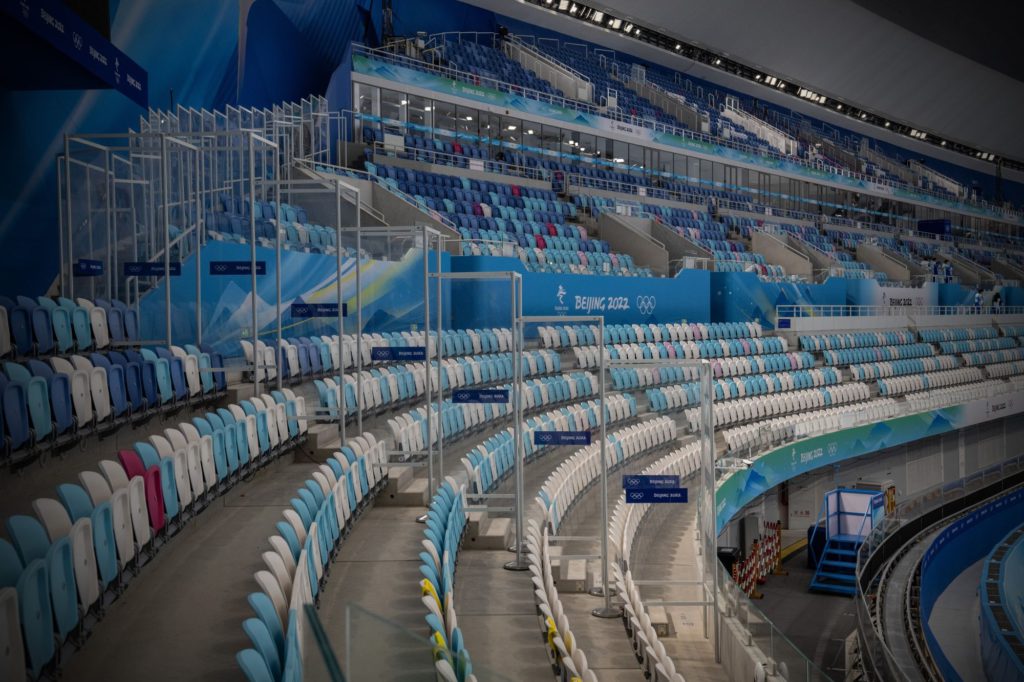
To wall off nearly 22 million Beijing residents from the risks of Covid-19 that Winter Olympics athletes may bring with them, China has built a city within a city where no one can interact with those living outside, but where there is unrestricted internet access and meals served by robots.

Over the course of two months, tens of thousands of athletes and support personnel are expected to enter the bubble for the Olympic and Paralympic Games, which spans parts of central Beijing, the capital’s outer Yanqing district and Zhangjiakou city in neighboring Hebei province. They’ll move around in the “closed-loop” system between competition venues, hotels and even bars connected by a dedicated transportation network.

China’s ambitious plan to entirely isolate the Olympics from the broader population underscores the gravity of the country’s insistence on maintaining a Covid-zero policy. With the highly infectious omicron variant breaching China’s borders in recent months and entire cities locked down in response, the country has also further tightened its Olympics restrictions, making a last minute decision to halt sales of tickets also to domestic spectators mid-January. 

Organizers are taking no chances. The vehicles dedicated for the games will travel in and out of the loop via their own lanes, and local residents have been advised to stay away even in the event of an accident.

International Olympic Committee President Thomas Bach also acknowledged the confines of the closed loop at a news conference on Feb. 3. “When you look around and you speak with the people — unfortunately you can only talk to people in the loop,” he said. “When you watch TV, you see that Chinese people from all walks of life embracing these Winter games.”

The largest group of Chinese residents that athletes and journalists will come into contact with are 19,000 volunteers, many of whom will remain inside the bubble for over three months. One of them is Lv Meixuan, a 23-year-old supervisor at the Main Media Center who said she got the position after going through a written test and several rounds of interviews at her university and with the organizing committee. 

“I don’t have any concern with regards to catching the virus. Since the one month we have been inside the loop, we feel very safe,” she said. “I would switch masks four times a day and do hand-sanitizing all the time.” 

Dashed Dreams

The Olympics isn’t the first time in the pandemic the Chinese government has set up strictly controlled spaces for a major event. Herman Hu, the vice president of the Sports Federation and Olympic Committee of Hong Kong, pointed out that during March’s National People’s Congress, the biggest annual political gathering in China, lawmakers gathering in Beijing were tested multiple times before and after their arrival. Attendees were not allowed to interact with anyone outside the meetings, and all support staff including hotel workers arrived two weeks prior to the start of the conference.

“China actually is very experienced in controlling this kind of pandemic. But of course, you know, doing sports, there are still certain risks,” Hu said.

The stakes for athletes are arguably much higher, however, and some have already experienced the heartbreak that comes with failing China’s Covid protocols. 

Just being able to make it to the loop is half the battle, as anyone with a positive test before departure or at Beijing airport will be rejected from traveling further. For example, the world’s top-ranked ski jumper, Austria’s Marita Kramer, tested positive just two days before she was expected to fly to Beijing. “It feels like my dreams are gone within 1 day,” she said in a message posted on her Instagram. 

Belgian skeleton racer Kim Meylemans, who had recovered from Covid in early January, spent several days in isolation in Beijing unsure if she would be able to compete after a positive test upon arrival. In isolation, Meylemans shared frequent updates on her emotions and anxiety via her social media account. She was finally moved back to the village a day before the games started after repeated negative tests, though housed in a separate area reserved for people considered close contacts.

Those who make it into the bubble are subject to daily Covid tests, as well as other rules including the mandatory wearing of N95 masks and eating in between plastic dividers in cafeterias. 

New cases have been percolating since the closed-loop system came into operation as early as Jan. 4. So far, 435 people have tested positive at the airport and inside the loop, including 142 people who are athletes or national team members. In comparison, the Tokyo Olympics last summer recorded just over 100 infections before the opening ceremony, reflecting in part the more infectious nature of the omicron variant.

Kazuki Shimizu, a senior fellow at Tokyo Foundation Policy Research whose research focuses on global public health, said the frequent testing is an improvement on the Tokyo Olympics’ more flexible range of days for testing. “I think the daily testing and screening could seriously contribute to reducing the transmission cycle,” Shimizu said.

Instagram Access

One of the biggest questions hanging over the games was what kind of internet access participants would be allowed to have given China’s strict online censorship, which blocks major international news websites as well as Instagram, Google and Twitter.

Chinese authorities have allowed people in the loop to access the open internet when connected to Wi-Fi at official venues with their credentials. Those with foreign SIM cards will also be able to bypass the firewall via roaming. Most athletes began arriving the week of Jan. 24 and have been able to share their experiences on social media.

However, security experts have already pointed to potential vulnerabilities in mandatory apps that track participants’ health status, saying they could be used for surveillance. They have also voiced concerns that state actors or criminals could use the designated Wi-Fi bubbles to access private communications or even install malware onto personal devices.

The U.S., Australia, Belgium, the Netherlands and Canada are among the countries that have advised athletes to keep their devices off Wi-Fi networks and use burner phones if possible. The Beijing Olympic Organizing Committee has rejected the reported advice given to athletes, saying the concerns over surveillance are “completely groundless.” 

In response to a question over whether local Olympics staff also have access to the unblocked websites, the committee said in a statement that “China has an open Internet environment” and the government “has created a favorable environment for the development of the Internet” for citizens.

(Updates with volunteer comments in 6th and 7th paragraphs.)

More stories like this are available on bloomberg.com

©2022 Bloomberg L.P.
Ottawa Declares Emergency; China City Locks Down: Virus Update

(Bloomberg) —

Canada’s capital declared a state of emergency Sunday as police struggled to rein in ongoing protests largely among truckers against vaccine mandates.

More U.S. schools are likely to begin lifting mask mandates soon as the overall risk from the omicron wave eases, said Scott Gottlieb, former commissioner of the Food and Drug Administration. But he warned, with infections still high in many parts of the U.S.: “We’re tragically still in this fight.”

China put a city of 4 million people into lockdown. Beijing Olympics organizers reported 10 new infections among athletes and officials arriving for the Winter Games. 

Key Developments:

  • Virus Tracker: Cases top 394.5 million; deaths pass 5.7 million
  • Vaccine Tracker: More than 10.2 billion shots administered
  • Beijing Olympics locks out omicron but internet is open
  • CDC expands hunt for early warnings of Covid in sewage waste
  • Covid rebellion brews in Canada, sending warning across globe
  • Is Covid becoming endemic? What would that mean?: QuickTake

Japan to Speed Vaccinations (5:56 p.m. NY)

Japanese Prime Minister Fumio Kishida will instruct cabinet members to accelerate the pace of vaccinations to 1 million shots a day within the month, broadcaster NHK reported, without attribution.

Kishida is to give the directive to health minister Shigeyuki Goto and others on Monday. Almost 79% of the population had two shots but only 4.8% had third as of Friday, when a little under 570,000 shots were reported.

N.Y. Positive Tests Back to Start of Omicron Surge (5:35 p.m. NY)

New York state passed a marker in the decline of the latest viral surge: the percentage of tests returning positive is the lowest since the World Health Organization declared omicron a variant of concern, on Nov. 26. That’s the most serious level of concern — and New York’s new infections quickly rose to daily records peaking at more than 90,000 on Jan. 8. 

New infections reported on Sunday were 5,680, with the percentage positive at 3.52%. Other measures of the omicron surge remain elevated: Hospitalizations are roughly double the level of late November, and deaths are roughly four times as high. 

Ottawa Declares Emergency as Protests Intensify (5 p.m. NY)

Canada’s capital declared a state of emergency Sunday as police struggled to rein in ongoing protests against vaccine mandates.

Ottawa Mayor Jim Watson, who declared the emergency, said in a statement that the increasingly rowdy demonstrations posed a “serious danger and threat to the safety and security of residents.” Hundreds of trucks continued to occupy the downtown area near Canada’s parliament with no sign that the protesters planned to leave.

The protests started in reaction to Canadian and U.S. laws that went into effect in January, requiring truckers crossing the border to be fully vaccinated. They have since morphed into a rally against Covid restrictions more broadly.

Gottlieb Expects U.S. Schools to Ease Masking (1:23 p.m. NY)

More U.S. schools are likely to begin lifting mask mandates soon as the overall risk from the omicron wave eases, said Scott Gottlieb, former commissioner of the Food and Drug Administration.

“We can start to lean forward and take a little bit more risk and try to at least make sure that students in schools have some semblance of normalcy for this spring term,” Gottlieb, a Pfizer Inc. board member, said on CBS’s “Face the Nation.” “A lot of kids haven’t really known a normal school day for two years now.”

He said, however, “we’re tragically still in this fight,” even as infections decline around the U.S. “Some parts of the country still are in the thick of their omicron wave, coming down, but still in the thick of it,” he said.

Tributes to India’s ‘Nightingale’ (11:55 p.m. NY)

India’s central bank postponed its interest-rate review by a day as the nation and its neighbors mourn the death of celebrated singer Lata Mangeshkar after being diagnosed with Covid-19. She was 92.

The Reserve Bank of India’s monetary policy committee will now meet Feb. 8-10, the authority said in a statement late Sunday. Its decision will be announced Thursday.

Mangeshkar, known as the “Nightingale of India,” received her home country’s highest civilian award during a career spanning more than six decades, as well as love and respect for her music from across the subcontinent. She had been hospitalized since Jan. 8 after testing positive.

Australia to Reopen to Tourists (11:49 a.m. NY)

Australia plans to open its borders to international tourists as soon as possible, a government minister said Sunday, following a report that they will be allowed back by the end of February after a Covid-related hiatus of almost two years. 

“We are getting ready to open as soon as we can,” Home Affairs Minister Karen Andrews said in an ABC TV interview. “We don’t have all the information we need to be able to take the decision, but we are very close.” 

Overseas tourists could be back within two or three weeks, the Herald Sun paper reported earlier on Sunday, citing an unnamed senior government source. An announcement from the government may come as soon as Monday following a meeting of the National Security Committee, the paper said. 

U.K. Cases Lowest Since December (11:22 a.m. NY)

The U.K. reported another 54,095 cases on Sunday, the lowest figure since Dec. 12. Infections have been declining since the omicron wave peaked in early January, with the seven-day average down 5% to 83,474. Another 75 fatalities were reported Sunday.

The country has stopped requiring those who test positive on lateral-flow devices to confirm the result with a laboratory PCR test. However, reinfections are also included as of last week.

China Puts 4 Million Into Lockdown (6:19 am. NY)

The southern Chinese city of Baise began a citywide lockdown on Sunday after 98 people tested positive for Covid-19, China Central Television reported, citing a local press conference.

An additional 87 results are still pending review, the report said. Mass testing of 207,506 people was rolled out after a person who traveled to Baise from Shenzhen tested positive on Feb. 4. 

The city with 4 million population in the province of Guangxi had previously reported a total of 43 positive cases during the mass testing.

Israel Severe Cases Hit Record (5:03 p.m. HK)

The number of serious coronavirus cases in Israel reached 1,263 on Sunday, the highest reported since the beginning of the pandemic. Before Saturday the previous record of 1,193 severe cases was set in January 2021. 

At the same time, the number of new daily infections is declining, with about 38,000 new cases on Friday, compared with 49,500 the previous Friday, and a peak of more than 85,000 at the height of the omicron wave.

Israel was one of the first countries to roll out vaccines and booster shots, offering a fourth dose to higher-risk people last month.

Hong Kong Finds 342 Local Infections (5:40 p.m. HK)

Hong Kong reported 342 positive Covid-19 cases on Sunday, health authorities said in a press conference, the second day in a row that the number surpassed 300.

All of the latest infections were local, with 136 listed as untraceable. Fifteen cases were detected in public housing estates in Tuen Mun and Sha Tin, where more than 7,200 residents have been tested, officials said. More than 300 preliminary positive cases were reported.

“There are invisible transmission chains in the community,” Ronald Lam, director of health, said during the press conference. He added that is impossible to project the peak of the current wave. 

More stories like this are available on bloomberg.com

©2022 Bloomberg L.P.

Ottawa Declares Emergency; China City Locks Down: Virus Update

(Bloomberg) — Canada’s capital declared a state of emergency Sunday as police struggled to rein in ongoing protests largely among truckers against vaccine mandates.

More U.S. schools are likely to begin lifting mask mandates soon as the overall risk from the omicron wave eases, said Scott Gottlieb, former commissioner of the Food and Drug Administration. But he warned, with infections still high in many parts of the U.S.: “We’re tragically still in this fight.”

China put a city of 4 million people into lockdown. Beijing Olympics organizers reported 10 new infections among athletes and officials arriving for the Winter Games. 

Key Developments:

  • Virus Tracker: Cases top 394.5 million; deaths pass 5.7 million
  • Vaccine Tracker: More than 10.2 billion shots administered
  • Beijing Olympics locks out omicron but internet is open
  • CDC expands hunt for early warnings of Covid in sewage waste
  • Covid rebellion brews in Canada, sending warning across globe
  • Is Covid becoming endemic? What would that mean?: QuickTake

Ottawa Declares Emergency as Protests Intensify (5 p.m. NY)

Canada’s capital declared a state of emergency Sunday as police struggled to rein in ongoing protests against vaccine mandates.

Ottawa Mayor Jim Watson, who declared the emergency, said in a statement that the increasingly rowdy demonstrations posed a “serious danger and threat to the safety and security of residents.” Hundreds of trucks continued to occupy the downtown area near Canada’s parliament with no sign that the protesters planned to leave.

The protests started in reaction to Canadian and U.S. laws that went into effect in January, requiring truckers crossing the border to be fully vaccinated. They have since morphed into a rally against Covid restrictions more broadly.

Gottlieb Expects U.S. Schools to Ease Masking (1:23 p.m. NY)

More U.S. schools are likely to begin lifting mask mandates soon as the overall risk from the omicron wave eases, said Scott Gottlieb, former commissioner of the Food and Drug Administration.

“We can start to lean forward and take a little bit more risk and try to at least make sure that students in schools have some semblance of normalcy for this spring term,” Gottlieb, a Pfizer Inc. board member, said on CBS’s “Face the Nation.” “A lot of kids haven’t really known a normal school day for two years now.”

He said, however, “we’re tragically still in this fight,” even as infections decline around the U.S. “Some parts of the country still are in the thick of their omicron wave, coming down, but still in the thick of it,” he said.

Tributes to India’s ‘Nightingale’ (11:55 p.m. NY)

India’s central bank postponed its interest-rate review by a day as the nation and its neighbors mourn the death of celebrated singer Lata Mangeshkar after being diagnosed with Covid-19. She was 92.

The Reserve Bank of India’s monetary policy committee will now meet Feb. 8-10, the authority said in a statement late Sunday. Its decision will be announced Thursday.

Mangeshkar, known as the “Nightingale of India,” received her home country’s highest civilian award during a career spanning more than six decades, as well as love and respect for her music from across the subcontinent. She had been hospitalized since Jan. 8 after testing positive.

Australia to Reopen to Tourists (11:49 a.m. NY)

Australia plans to open its borders to international tourists as soon as possible, a government minister said Sunday, following a report that they will be allowed back by the end of February after a Covid-related hiatus of almost two years. 

“We are getting ready to open as soon as we can,” Home Affairs Minister Karen Andrews said in an ABC TV interview. “We don’t have all the information we need to be able to take the decision, but we are very close.” 

Overseas tourists could be back within two or three weeks, the Herald Sun paper reported earlier on Sunday, citing an unnamed senior government source. An announcement from the government may come as soon as Monday following a meeting of the National Security Committee, the paper said. 

U.K. Cases Lowest Since December (11:22 a.m. NY)

The U.K. reported another 54,095 cases on Sunday, the lowest figure since Dec. 12. Infections have been declining since the omicron wave peaked in early January, with the seven-day average down 5% to 83,474. Another 75 fatalities were reported Sunday.

The country has stopped requiring those who test positive on lateral-flow devices to confirm the result with a laboratory PCR test. However, reinfections are also included as of last week.

China Sticks to Covid-Zero Plans (8:36 a.m. NY)

China has no plans to adjust its zero-Covid-tolerance policy for the time being, Wu Zunyou, chief epidemiologist with the Chinese Center for Disease Control and Prevention, told the Global Times in an interview. 

“We previously thought Covid-19 could be basically contained through vaccines, but now it seems that there’s no simple method to control it except with comprehensive measures, although vaccines are the most important weapon,” Wu said. 

China has vaccinated 86.8% of its population with two doses, according to the Bloomberg Vaccine Tracker, but is behind other nations in booster shots. Its domestically produced vaccines do not use the mRNA technology widely used in countries with advanced booster campaigns.

China Puts 4 Million Into Lockdown (6:19 am. NY)

The southern Chinese city of Baise began a citywide lockdown on Sunday after 98 people tested positive for Covid-19, China Central Television reported, citing a local press conference.

An additional 87 results are still pending review, the report said. Mass testing of 207,506 people was rolled out after a person who traveled to Baise from Shenzhen tested positive on Feb. 4. 

The city with 4 million population in the province of Guangxi had previously reported a total of 43 positive cases during the mass testing.

Israel Severe Cases Hit Record (5:03 p.m. HK)

The number of serious coronavirus cases in Israel reached 1,263 on Sunday, the highest reported since the beginning of the pandemic. Before Saturday the previous record of 1,193 severe cases was set in January 2021. 

At the same time, the number of new daily infections is declining, with about 38,000 new cases on Friday, compared with 49,500 the previous Friday, and a peak of more than 85,000 at the height of the omicron wave.

Israel was one of the first countries to roll out vaccines and booster shots, offering a fourth dose to higher-risk people last month.

Hong Kong Finds 342 Local Infections (5:40 p.m. HK)

Hong Kong reported 342 positive Covid-19 cases on Sunday, health authorities said in a press conference, the second day in a row that the number surpassed 300.

All of the latest infections were local, with 136 listed as untraceable. Fifteen cases were detected in public housing estates in Tuen Mun and Sha Tin, where more than 7,200 residents have been tested, officials said. More than 300 preliminary positive cases were reported.

“There are invisible transmission chains in the community,” Ronald Lam, director of health, said during the press conference. He added that is impossible to project the peak of the current wave. 

More stories like this are available on bloomberg.com

©2022 Bloomberg L.P.
Close Bitnami banner
Bitnami

