Bloomberg

Peloton Purchase May Pose Regulatory ‘Headache’ for a Tech Giant

(Bloomberg) — Peloton Interactive Inc. — the early pandemic home-fitness darling that’s become a potential takeover target following a sharp plunge in its stock price — could find a challenging climate if it opts for a deal with a big-technology firm.

One key consideration is regulatory scrutiny. There’s a chill against large transactions at the moment in Washington, where technology companies are being probed by regulators for their reach and influence and the Federal Trade Commission recently sued to block an acquisition by Nvidia Corp.

“The deal better be worth the headache for the company because they’re going to be scrutinized on whatever they buy,” said Anurag Rana, a senior analyst at Bloomberg Intelligence, in an interview Sunday.

Peloton is evaluating interest from potential suitors and is working with an adviser to explore options, according to people familiar with the matter who asked not to be identified because discussions are private. The takeover interest in the New York-based maker of exercise bikes and treadmills is exploratory and may not lead to a transaction, they said.

The companies said to be taking a look at Peloton — whether for an acquisition, an investor or some other kind of tie-up — include some of the biggest names in technology and fitness. Amazon.com Inc. has spoken with advisers about a potential deal, the Wall Street Journal reported Friday. Analysts have also speculated that Apple Inc. could lurk as a potential buyer. Nike Inc. is also considering a separate bid for Peloton, according to the Financial Times. 

Peloton didn’t immediately respond to an email seeking comment. Amazon, Nike and Apple declined to comment.

Share Decline

Peloton’s shares have dropped more than 80% from their January 2021 high amid a slowdown following the loosening of pandemic restrictions. It’s a very different landscape than the early days of the pandemic, when demand for the company’s products exceeded supply. 

The company is currently valued at just over $8 billion, based on Friday’s official market close of $24.60 — below its September 2019 initial public offering price of $29. The shares surged as much as 43% in extended trading Friday after the Journal report.

Activist investor Blackwells Capital LLC last month issued a letter demanding the company fire co-founder and Chief Executive Officer John Foley and pursue a sale. Blackwells said in the letter that potential buyers could include Apple, Nike and Walt Disney Co.

‘Distraction’ for Amazon

In a short note Friday, Rana and Bloomberg Intelligence senior analyst Poonam Goyal said Peloton would “only serve as a distraction” for Amazon — while offering few synergies for a company focused on the cloud and logistics. An athleisure company, they said, “would be a better fit.”

“Active-wear brands already embody the workout scene through runs etc.,” Goyal wrote in an email Sunday. “Having a workout machine that can integrate their ambassadors and items could help them establish themselves further in the active community. Lululemon bought Mirror for the same reason.”

While Peloton is already among the at-home fitness leaders, greater product variety could help it recoup demand, said Amine Bensaid, also an analyst at Bloomberg Intelligence, in an email Sunday.

Read more: Reasons Apple is unlikely to buy Peloton: Power On

Apple and Peloton may seem like a good match because Apple is already pushing further into fitness, but even with that there are potential drawbacks. Peloton’s large, expensive hardware isn’t in keeping with Apple’s traditional product-turnover strategy, and it has its own fitness software. 

Even so, analyst Dan Ives of Wedbush Securities said Apple may have strategic reasons to consider a pursuit of Peloton.

“Apple may be forced into this deal if Amazon, Nike, or potentially Disney aggressively goes after Peloton in a defensive blocking strategic move,” Ives wrote in a note Sunday. “On the offensive front, Apple through its Fitness+ subscription service and Apple Watch strategy would be able to leverage the Peloton services and flywheel to significantly bulk up its health-care initiatives, which have been a key strategic linchpin.”

More stories like this are available on bloomberg.com

©2022 Bloomberg L.P.

How China’s Communist Officials Became Venture Capitalists

(Bloomberg Markets) — In early 2020, as the pandemic pushed it to the verge of bankruptcy, China’s highest-­profile rival to Tesla Inc. was shunned by the venture capital funds and foreign investors that had powered its rise. So Nasdaq-listed Nio Inc. turned to China’s newest class of venture capitalists: Communist officials.

Listen to this story

The municipal government of Hefei, a city in eastern China, pledged 5 billion yuan ($787 million) to acquire a 17% stake in Nio’s core business. The company moved key executives from Shanghai to the city, which is less than half the size and 300 miles inland, and began producing more vehicles there. The central government and Anhui, Hefei’s province, joined the city, making smaller investments.

It might look like the kind of power grab some observers see as characteristic of President Xi Jinping’s China: an assertive state enforcing an ever-growing list of dictates on innovative private companies that are destined to discourage entrepreneurship. But the story didn’t play out that way. Nio turned its first profit in early 2021 and sold more than 90,000 vehicles by the end of the year. Rather than leveraging its stake to assert control, the Hefei government took advantage of Nio’s booming share price to cash out most of its stake within a year of its purchase—making a return of up to 5.5 times its investment—much like a private investor in London or New York might have done.

“From our investment in Nio, we ruthlessly made money,” Yu Aihua, the top Communist official in the city, said at a televised event in June that saw him seated on a podium dressed in a business suit and purple tie with entrepreneurs including Nio’s founder, William Li, seated below. “Making money for the government is not an embarrassment: It’s making money for the people,” he added.

Hefei has pioneered a shift in Chinese capitalism over recent years in which local governments are increasingly taking minority stakes in private companies. Since the 1950s, Hefei has been a hub of scientific research, but today its shrewd investments have transformed it from a relative backwater to a bustling metropolis of about 5 million people. In terms of economic growth, what Chinese media call the “Hefei model” appears to work. In the decade to 2020, Hefei was China’s fastest-growing city in terms of gross domestic product.

China’s local governments control land sales, receive profits from state-owned companies, and have close ties with state-owned banks. For decades they have supported private companies by offering them cheap land and other subsidies, tax breaks, and loans to encourage investment. That’s helped local officials, largely judged on the basis of economic performance, to win promotion from the ruling Communist Party.

More recently, that model has been updated for an era that depends on technology investment and innovation for growth. As China’s economy slows and Beijing tries to rein in debt, cash-rich local governments and state-owned companies have emerged as “white knights,” rescuing troubled private companies. In many cases, local governments are taking a passive approach to these investments, with a growing number of stakes taken through funds instead of through direct holdings. Today, Hefei invests in dozens of companies that are working on semiconductors, quantum computing, and artificial intelligence. Those industries are at the center of the Communist Party’s plans to double the size of China’s economy by 2035, likely overtaking the U.S. along the way. The Hefei model, and other cities’ efforts to replicate it, will be crucial to determining if that ambition is realized.

Hefei made its first winning bet on BOE Technology Group Co., an electronic display maker founded in 1993. When BOE was in trouble after the 2008 financial crisis, the city canceled plans for its first subway line and instead plowed billions of yuan into the company on the condition it would build a local plant. BOE built a state-of-the-art liquid-crystal display (LCD) screen plant, and by 2011 Hefei owned an 18% stake. The city agreed to vote with management on key decisions, according to company filings.

Over the following years, Hefei continued to invest in BOE, helping it build new plants and extracting profits. The company brought tens of thousands of jobs to Hefei and anchors a display-industry manufacturing cluster that makes products worth more than 100 billion yuan annually, including for foreign companies such as Corning Inc. In 2021, BOE overtook South Korea’s Samsung Electronics Co. as the world’s top manufacturer of LCD screens used in flatscreen TVs, helping end China’s dependence on foreign suppliers.

Academics have only recently been able to quantify how this model is transforming China’s economy. Researchers at the University of Chicago, Tsinghua University in Beijing, and the Chinese University of Hong Kong analyzed every registered company in China—more than 37 million of them. They found that those companies are ultimately owned by 62 million private individuals—­essentially the complete list of China’s capitalists—as well as about 40,000 state agencies from the central government down to cities and even villages. Companies owned by state agencies, most at the local-­government level, have been increasing their partnerships with private companies. The average state stakeholder now invests in companies owned by almost 16 private owners, up from eight a decade ago. Since the average number of owners per company is constant, this indicates each state stakeholder has nearly doubled the number of private companies it invests in over that period, says Chang-Tai Hsieh, a professor at the University of Chicago’s Booth School of Business and a researcher on the project.

As a result, China’s biggest entrepreneurs are more connected with the state. In 2019, of the 7,500 wealthiest individual owners (judged by the size of invested capital in the companies they own), just over half had at least one business that included a state agency among its investors. The trend results in companies that are “not fully state-owned firms but also not really private firms,” Hsieh says. “It’s this murky gray area, which I think is the dominant corporate structure in China today.”

Take China’s six largest electric vehicle startups, which collectively sold more than 435,000 cars in 2021. Five have local governments as minority investors, according to corporate records. The investments are often held by ­companies that are themselves owned by local governments. “Thirty years ago they [state government-owned companies] ­produced stuff that nobody wanted to buy. Now they are more like venture capital firms,” Hsieh says.

For entrepreneurs, forming partnerships with local governments makes it easier to get approvals for new factories, licenses to do business, and financing from the state-­dominated financial system, and it can offer a degree of political protection. Hsieh and his co-authors estimate that such hybrid companies account for the bulk of the growth in China’s economy over the last decade. A key to their success: The founding entrepreneurs remain in charge of important business decisions and respond to the market rather than political dictates.

The U.S. and other Western governments have long been wary of the economic power of China’s “state capitalism,” fueled by giant state-owned companies and an industrial policy driven by subsidies and government mandates. But policymakers need to pay more attention to what’s really propelling China’s growth: private firms with minority government-­linked investments. “The distinction between state-owned and private has been important for policymakers outside China and for analyzing the Chinese economy,” says Meg Rithmire, a professor at Harvard Business School who specializes in comparative political development in Asia and China. “That boundary is eroding.”

Other developing countries have taken strategic stakes in private companies on a large scale to ease economic and social turbulence. Rithmire points to Brazil, following macro­economic shocks in the 1980s, and Malaysia, which in the ’70s began a multidecade project of acquiring business stakes as part of a campaign to boost the economic influence of ethnic Malays in the country. In both cases, she says, the government used the stakes to gain increased influence on business decisions, which led to wasteful investment and ultimately did little to support growth.

As is often the case with venture capital, many government investments flop. These include some of Hefei’s earliest forays, such as a solar panel company and a 2 billion-yuan acquisition of a plasma screen factory from Japan’s Hitachi Ltd., both of which proved uncompetitive. In 2017 the government of Wuhan, the capital of Hubei province, took a 200 million-yuan stake in Wuhan Hongxin Semiconductor Manufacturing Co. The company aimed to generate annual sales of 60 billion yuan once running at full capacity. Last year the project was dissolved without making a single chip.

If one key to successful state investment is avoiding political interference in decision-making, as both Rithmire and Hsieh indicate, then the move by China’s local governments to employ professional fund managers could be an important step. Since 2015, Chinese officials have set up private equity-style “funds of funds” worth 2.14 trillion yuan, according to CVInfo, which provides information on China’s private equity industry.

Their managers invest in smaller funds, pooling cash with state-owned or private companies. Some funds are dedicated to supporting mature companies, and others are responsible for “angel” investment in startups. Typically, the government fund plays the role of limited partner in the lower-level funds, delegating investment decisions to a general partner—often a local state-owned company with industry expertise.

Government officials typically have little day-to-day control over the lower-level funds. “Local governments thought it was a good idea to find professional managers to help them choose companies,” says Liu Jingkun, an analyst at CVInfo.

These funds are major investors in the technology industry. In 2019, when China set up the Star board, modeled on the U.S.’s tech-heavy Nasdaq Stock Market, 14 of the original 25 listed companies reported state-owned minority investors. For example, Advanced Micro-Fabrication Equipment Inc.’s largest shareholder, with a 20% stake, was Shanghai Venture Capital, owned by that city’s government. (Today it owns 15.6%.)

The Hefei government has also shifted to investing through dozens of funds, a single one of which can manage assets as large as 31 billion yuan. Hefei’s early stakes in companies such as BOE were held directly, but its stake in Nio is currently held by a fund.

Government investments can lead to the kind of conflicts of interest typically discouraged at U.S. businesses. Hefei invested in Nio in part to shore up another of its ­holdings: Anhui Jianghuai Automobile Group Holdings Ltd., known as JAC Motors, which had rented a huge production line to the private EV maker.

Such ventures show that local government investments are often less about a bold vision for the future and more about preventing the collapse of large companies and the resulting financial and social instability, says Harvard’s Rithmire. “I caution against seeing strategic coordination in everything Chinese funds and firms do.”

Hefei’s success has inspired officials in cities as far afield as Inner Mongolia. Even Shenzhen, China’s leading tech hub, is taking note: The city’s Guangming District vowed last year to “study and explore” Hefei’s example. Given China’s size, if the model is even a partial success, it could transform the global economy for decades to come.

City-financed investment funds are buying foreign companies, too. In 2016, Beijing Jianguang Asset Management Co., known as JAC Capital, paid $2.75 billion for Dutch chipmaker Nexperia, which produced semiconductors used in mobile phones. Two years later, the fund, which includes Hefei among its investors, sold its stake to Chinese chipmaker Wingtech for $3.6 billion. Hefei has a 4% stake in Wingtech. Wingtech made headlines in the U.K. last year, when one of its subsidiaries bought the troubled Welsh semiconductor manufacturer Newport Wafer Fab for $87 million.

Meanwhile, even after Hefei sold most of its Nio stake, the city’s investment in EV technology continues to pay off. Germany’s Volkswagen AG has acquired 50% of JAC Motors and a 26% stake in battery maker Gotion High-tech Co., as it turns Hefei into one of its main production bases. Erwin Gabardi, chief executive officer of Volkswagen Anhui, praised the region’s “entrepreneurial spirit” and policy support. “This is why Volkswagen chose Hefei,” he says.

Hancock is the senior reporter covering China’s economy for Bloomberg News.


More stories like this are available on bloomberg.com

©2022 Bloomberg L.P.

Ottawa Protests a ‘Siege’; China City Locks Down: Virus Update

(Bloomberg) — Ottawa police are working to rein in the ongoing vaccine mandate protests among truckers, issuing more than 450 tickets since Saturday morning for everything from stunt driving to excessive noise to red-light violations. 

More U.S. schools are likely to begin lifting mask mandates soon as the overall risk from the omicron wave eases, said Scott Gottlieb, former commissioner of the Food and Drug Administration. But he warned, with infections still high in many parts of the U.S.: “We’re tragically still in this fight.”

China put a city of 4 million people into lockdown. Beijing Olympics organizers reported 10 new infections among athletes and officials arriving for the Winter Games. 

Key Developments:

  • Virus Tracker: Cases top 394.5 million; deaths pass 5.7 million
  • Vaccine Tracker: More than 10.2 billion shots administered
  • Beijing Olympics locks out omicron but internet is open
  • CDC expands hunt for early warnings of Covid in sewage waste
  • Covid rebellion brews in Canada, sending warning across globe
  • Is Covid becoming endemic? What would that mean?: QuickTake

Ottawa Police Work To Control Protests (2:55 p.m. NY)

Ottawa police are working to rein in the ongoing vaccine mandate protests, issuing more than 450 tickets since Saturday morning for everything from stunt driving to excessive noise to red-light violations. The incidents come as hundreds of trucks continued to occupy the downtown area near Canada’s parliament with no sign they plan to leave.

Ottawa’s police services board held an emergency meeting at which the police chief described the situation as a “siege” and said his force lacks the resources to bring an end to demonstrations that started on Jan. 28. The protests started in reaction to Canadian and U.S. laws that went into effect in January, requiring truckers crossing the border to be fully vaccinated. They have since morphed into a rally against Covid restrictions more broadly.

“Overnight, demonstrators exhibited extremely disruptive and unlawful behaviour, which presented risks to public safety and unacceptable distress for Ottawa residents,” Ottawa police said in a statement Sunday.

Gottlieb Expects U.S. Schools to Ease Masking (1:23 p.m. NY)

More U.S. schools are likely to begin lifting mask mandates soon as the overall risk from the omicron wave eases, said Scott Gottlieb, former commissioner of the Food and Drug Administration.

“We can start to lean forward and take a little bit more risk and try to at least make sure that students in schools have some semblance of normalcy for this spring term,” Gottlieb, a Pfizer Inc. board member, said on CBS’s “Face the Nation.” “A lot of kids haven’t really known a normal school day for two years now.”

He said, however, “we’re tragically still in this fight,” even as infections decline around the U.S. “Some parts of the country still are in the thick of their omicron wave, coming down, but still in the thick of it,” he said.

Tributes to India’s ‘Nightingale’ (11:55 p.m. NY)

India’s central bank postponed its interest-rate review by a day as the nation and its neighbors mourn the death of celebrated singer Lata Mangeshkar after being diagnosed with Covid-19. She was 92.

The Reserve Bank of India’s monetary policy committee will now meet Feb. 8-10, the authority said in a statement late Sunday. Its decision will be announced Thursday.

Mangeshkar, known as the “Nightingale of India,” received her home country’s highest civilian award during a career spanning more than six decades, as well as love and respect for her music from across the subcontinent. She had been hospitalized since Jan. 8 after testing positive.

Australia to Reopen to Tourists (11:49 a.m. NY)

Australia plans to open its borders to international tourists as soon as possible, a government minister said Sunday, following a report that they will be allowed back by the end of February after a Covid-related hiatus of almost two years. 

“We are getting ready to open as soon as we can,” Home Affairs Minister Karen Andrews said in an ABC TV interview. “We don’t have all the information we need to be able to take the decision, but we are very close.” 

Overseas tourists could be back within two or three weeks, the Herald Sun paper reported earlier on Sunday, citing an unnamed senior government source. An announcement from the government may come as soon as Monday following a meeting of the National Security Committee, the paper said. 

U.K. Cases Lowest Since December (11:22 a.m. NY)

The U.K. reported another 54,095 cases on Sunday, the lowest figure since Dec. 12. Infections have been declining since the omicron wave peaked in early January, with the seven-day average down 5% to 83,474. Another 75 fatalities were reported Sunday.

The country has stopped requiring those who test positive on lateral-flow devices to confirm the result with a laboratory PCR test. However, reinfections are also included as of last week.

China Sticks to Covid-Zero Plans (8:36 a.m. NY)

China has no plans to adjust its zero-Covid-tolerance policy for the time being, Wu Zunyou, chief epidemiologist with the Chinese Center for Disease Control and Prevention, told the Global Times in an interview. 

“We previously thought Covid-19 could be basically contained through vaccines, but now it seems that there’s no simple method to control it except with comprehensive measures, although vaccines are the most important weapon,” Wu said. 

China has vaccinated 86.8% of its population with two doses, according to the Bloomberg Vaccine Tracker, but is behind other nations in booster shots. Its domestically produced vaccines do not use the mRNA technology widely used in countries with advanced booster campaigns.

China Puts 4 Million Into Lockdown (6:19 am. NY)

The southern Chinese city of Baise began a citywide lockdown on Sunday after 98 people tested positive for Covid-19, China Central Television reported, citing a local press conference.

An additional 87 results are still pending review, the report said. Mass testing of 207,506 people was rolled out after a person who traveled to Baise from Shenzhen tested positive on Feb. 4. 

The city with 4 million population in the province of Guangxi had previously reported a total of 43 positive cases during the mass testing.

Israel Severe Cases Hit Record (5:03 p.m. HK)

The number of serious coronavirus cases in Israel reached 1,263 on Sunday, the highest reported since the beginning of the pandemic. Before Saturday the previous record of 1,193 severe cases was set in January 2021. 

At the same time, the number of new daily infections is declining, with about 38,000 new cases on Friday, compared with 49,500 the previous Friday, and a peak of more than 85,000 at the height of the omicron wave.

Israel was one of the first countries to roll out vaccines and booster shots, offering a fourth dose to higher-risk people last month.

Hong Kong Finds 342 Local Infections (5:40 p.m. HK)

Hong Kong reported 342 positive Covid-19 cases on Sunday, health authorities said in a press conference, the second day in a row that the number surpassed 300.

All of the latest infections were local, with 136 listed as untraceable. Fifteen cases were detected in public housing estates in Tuen Mun and Sha Tin, where more than 7,200 residents have been tested, officials said. More than 300 preliminary positive cases were reported.

“There are invisible transmission chains in the community,” Ronald Lam, director of health, said during the press conference. He added that is impossible to project the peak of the current wave. 

More stories like this are available on bloomberg.com

©2022 Bloomberg L.P.
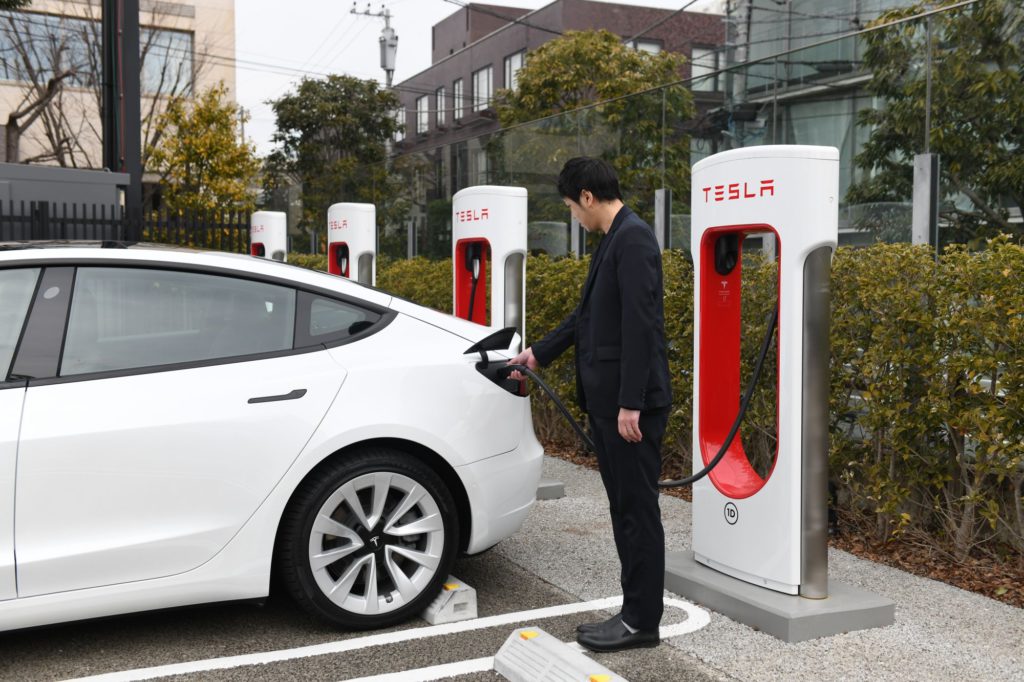
Tesla Escapes Tiny Niche Position as Japan Starts to Embrace EVs

(Bloomberg) — Tatsuya Arai, a 36-year-old entrepreneur in Tokyo, never saw the appeal of owning a car until he watched a YouTube video featuring a Tesla Inc. The Model 3, with its sleek exterior and innovative dash, looked like a neat solution considering he was moving from the city’s bustling Shibuya district to a quieter waterfront area and needed a way to get around.

“It was like buying a gadget,” he said.

Arai joined a small but growing number of electric vehicle owners in Japan. While EVs account for only 1% of overall car sales, well behind China and parts of Europe, they’re finally starting to catch on. In 2021, new registrations of imported EVs nearly tripled to 8,610, a small but remarkable shift in a country where overall automobile sales have stalled.

With its high per-capita income and enthusiasm for high-end European cars such as Mercedes-Benz, Japan initially looked like a natural fit to Tesla Chief Executive Officer Elon Musk, who predicted back in 2010 the Asian nation would be Tesla’s second-biggest market after the U.S.

Yet the country has remained wary of betting too heavily on full electric cars, even after Nissan Motor Co. blazed the trail for affordable EVs with its Leaf over a decade ago. Japan’s automakers and government have instead preferred to promote hybrids, a category Toyota Motor Corp. pioneered with the Prius around 25 years ago, as a more economically sound model.

There now seems to be a pivot amid international pressure. Toyota, Nissan and Honda Motor Co. have all rolled out new EV strategies as foreign giants from General Motors Co. to Volkswagen AG pledge to abandon combustion engine cars altogether in the not too distant future.

The Japanese government, pledging to be carbon neutral by 2050, also appears to have shifted from its earlier focus of defending its home-grown auto industry. It now aims to almost halve emissions by 2030 from 2013 levels, and is looking to ban sales of gas-fueled cars by the mid-2030s.

At the same time, it’s making EVs more affordable for consumers, doubling the amount of subsidies to a maximum of 800,000 yen ($7,000) in November.

That’s encouraging for foreign EV makers, who’ve long ceded the market to Toyota’s Prius hybrids and Nissan’s Leaf, the world’s first mass-market EV.

“The shift to zero-emission EV cars hasn’t happened yet, but once it does, we’ll see it proceed rapidly,” said Matthias Shapers, president of Volkswagen Japan, noting that Tesla cars were already selling well in neighboring Taiwan, where its suppliers are booming.

Tesla cars are particularly popular among Japan’s young and wealthy, who live in urban areas where EV chargers are available and buy into Musk’s maverick message, analysts say. Globally, Tesla delivered over 936,000 cars last year, an 87% increase from the year before, despite a global chip crunch that’s forced automakers to cut production.

“The fact that Tesla’s share price topped Toyota was huge” in boosting its brand recognition in Japan, said Seiji Sugiura, an analyst at Tokyo Tokai Research, adding that Teslas have become a status symbol.

IHS Markit estimates Tesla sold more than 5,200 cars in Japan last year, up from about 1,900 in 2020, although it also forecasts a brief pause this year while potential buyers wait for the new Model Y, expected to become available in Japan around year-end.

Discounts could also put Teslas within the reach of more people. In February last year, Tesla Japan cut the price of the long-range version of its Model 3 by 24% to about 5 million yen, mirroring a discount in China.

Tesla is soon expected to announce the start of production at its Gigafactory in Berlin, its first plant in Europe, and at another in Austin, Texas.

“Now that Giga Berlin is coming online, there’s going to be a lot of Teslas made in China going into Japan in 2022” as well as to South Korea and India, said Tu Le, director at Sino Auto Insights, who also forecasts further price cuts in Japan. 

Yet some warn it will be difficult for Tesla to expand in any meaningful way, particularly as domestic automakers put more resources into EVs. Even with a growing fan base of young, tech-savvy drivers, Tesla still struggles with poor brand recognition and its direct-to-consumer business model also confounds most shoppers accustomed to white-glove treatment.

“It’ll be a tight battle,” said Takeshi Miyao, an analyst at Carnorama, an automotive consultancy. “Japanese automakers are strong globally, but they’re even stronger at home. It’s a very difficult market for foreign carmakers.”

Miyao predicts particularly strong competition from Toyota’s bZ series, a line of electric-only sport utility vehicles unveiled last year. Toyota is planning to spend $35 billion to speed up its shift to EVs.

Nissan and alliance partners Renault SA and Mitsubishi Motors Corp. are spending a combined 23 billion euros ($26 billion) over five years to roll out 35 new battery-powered cars by the end of the decade.

Domestic carmakers will also have the upper hand when it comes to providing charging stations, helped by their existing networks of dealerships throughout the country, including in rural areas. Nissan already has a network of charging stations and is planning to build more as part of a global, 20-billion-yen project. Toyota has said it will equip EV chargers at all its dealers throughout the nation by around 2025.

Tesla’s charging stations meanwhile are concentrated in metropolitan areas. It won’t say how many chargers it will build in Japan this year, but is currently looking for a charging stations project deployment manager, according to its website. 

Volkswagen Japan has said it will build the country’s largest rapid charging network, equipping 90-150 kilowatt rapid chargers at some 200 points by the end of this year. Installing them can cost as much as 25 million yen each.


Stellantis NV has also started talking to energy providers to expand its charging network. Pontus Haggstrom, chief executive officer of Stellantis Japan, said he wants to see the government take a more active role.

“As far as infrastructure is concerned, it’s not for the manufacturers to work on. It’s what the government needs to work on,” he said.

Tesla fan Arai says he’s satisfied with the Model 3’s driving range of about 340 miles. While he wishes there were more charging stations along highways, the slight inconvenience is outweighed by the ease of the car’s technology, including over-the-air software updates and features including the ability to lock the door with his smartphone.

“I’m seeing more Tesla owners day by day,” he said.

More stories like this are available on bloomberg.com

©2022 Bloomberg L.P.
Super Bowl Host and Rams Owner Kroenke Wins Even Before Kickoff

(Bloomberg) — Stan Kroenke was called “Silent Stan” after he bought the Rams football team, rarely speaking or celebrating victories in public.

Last Sunday, five seasons after moving the National Football League franchise to Los Angeles from St. Louis — and moments after his team won its conference championship — the 74-year-old billionaire let loose.

“Whooose house?!” Kroenke bellowed as he accepted a trophy midfield before 70,000 fans in the $5.5 billion SoFi Stadium he built, allowing the crowd to deliver their regular cheer, “Rams house!”

Even before kickoff on Feb. 13, against the Cincinnati Bengals in Super Bowl LVI, Kroenke’s team and stadium stand to be big winners. Sponsorships, ticket sales and Kroenke’s real estate are all poised to benefit as the franchise’s winning record and a state-of-the-art venue feed off each other, according to sports-industry analysts.

“It validates the massive investment he’s made to move the Rams to LA and build the most magnificent stadium on the planet,” said Marc Ganis, co-founder of Sportscorp Ltd., a Chicago-based sport consultancy. 

The NFL’s twin themes of big money and power also weave through Kroenke’s success. His $750 million purchase of the Rams in 2010 is now worth $4.68 billion, making it the league’s No. 3 franchise, according to Sportico. That’s a sizable chunk of a $12.5 billion fortune amassed through sports and real estate, according to the Bloomberg Billionaires Index, and doesn’t even include his marriage to Walmart Inc. heiress Ann Walton Kroenke. His Kroenke Sports & Entertainment also owns the Denver Nuggets basketball franchise, the Colorado Avalanche hockey team and the London-based Arsenal Football Club. 

The Rams’ presence in Los Angeles also owes a lot to Kroenke’s clout — and the NFL’s. In November, Kroenke and the league agreed to pay $790 million to compensate the city of St. Louis for the team’s relocation, avoiding a trial that threatened to bring confidential details of league finances into public view.

That episode reinforced the narrative of a league whose baronial owners answer only to themselves, a recurring flash point for fans — and non-fans — who want sports to model a better vision of American society. The run-up to the Super Bowl is unfolding amid the controversy over off-season firings that left only one Black head coach in a league in which about 70% of the players are Black, with one ousted coach, Brian Flores, suing the NFL for discrimination in its hiring practices.

Kroenke and the Rams declined to comment for this article.

Entertainment Options

Super Bowl victories — or lack thereof — usually have limited value for established teams. The Dallas Cowboys, worth $6.92 billion, making it the most-valuable NFL franchise, haven’t won the big game since 1995. But as a new team in a market where fans have numerous entertainment options — there are the Dodgers, the Lakers, UCLA and USC basketball and football games, concerts, beaches — the Rams need to prove themselves to be a hot ticket.

“A Super Bowl win would likely provide a boost to the franchise value of roughly 5% on top of the regular annual increase we’ve seen in recent years,” Kurt Badenhausen, a sports-valuation reporter at Sportico, said in an email. He estimated that the value of the Rams swelled 14% last year.

Unusual for a team owner, Kroenke built SoFi Stadium, also home to the NFL’s Chargers, without the use of government financing. He’s developing the surrounding area, the former Hollywood Park horse-racing track, into a mixed-use community of apartments, offices and stores that’s triple the size of Disneyland and the biggest real estate project in the western U.S. 

It’s still a work in progress. The NFL occupies four floors of the project’s first office building, with three floors still available for lease, according to the development’s website. The site has entitlements for 500,000 square feet (46,000 square meters) of additional office space and a 300-room hotel. The 6,000-seat YouTube Theater, which shares a roof with SoFi Stadium, opened in August, and the first of as many as 2,500 residences will be completed this summer.

Kroenke’s project is a boon for Inglewood, the Los Angeles suburb that fell on hard times in the 1990s when the area was hurt by riots and the Lakers basketball team and Kings hockey franchise decamped for a new arena in downtown LA. A reminder of Inglewood’s checkered past came on Jan. 30, when a violent altercation in SoFi Stadium’s parking lot before the Rams-49ers game left a San Francisco fan in a medically induced coma.

Kroenke’s not the only one benefiting from the success of the Rams and their stadium. The NFL negotiates television deals, merchandising and licensing contracts, with proceeds divided evenly among the league’s 32 teams. Local revenue derived from ticket sales, concessions and corporate sponsorships, meanwhile, goes to the individual franchises.

The cheapest tickets to the Super Bowl were trading recently for more than $4,900 each on the StubHub website, while nearby parking spots were listed for north of $300.

“Related holdings, especially real estate and control over the stadium, go a long way toward building franchise value,” sports consultant David Carter said in an email. “It’s also critically important to assess not just fan interest, but corporate interest as well. A competitive team in a major media market that has been showcasing a new stadium is not lost on sponsors or other businesses hoping to use SoFi as a backdrop.”

The stadium will get a lot of free publicity on a TV broadcast that costs advertisers $6.5 million for a 30-second spot, according to Ganis of Sportscorp. 

“They called him ‘Silent Stan’ in St. Louis,” he said of Kroenke. “But he’s also ‘Solid Stan,’ because he sees things through to the end. The world’s going to see that at SoFi Stadium.”

More stories like this are available on bloomberg.com

©2022 Bloomberg L.P.
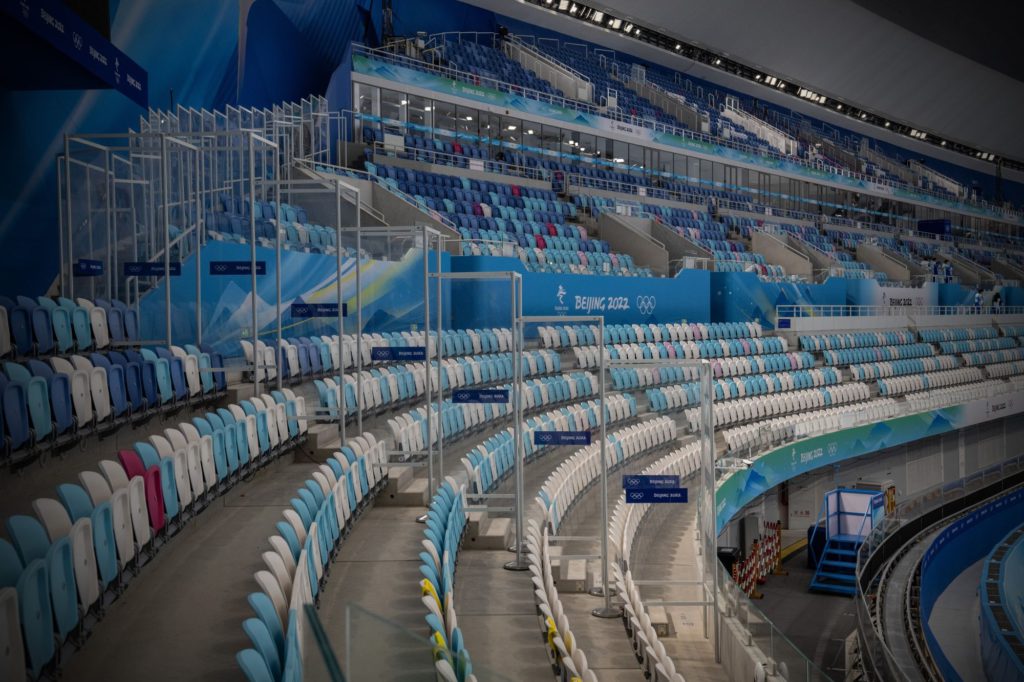
Beijing’s Olympic City Has Swabs Aplenty, But No Great Firewall

(Bloomberg) —

To wall off nearly 22 million Beijing residents from the risks of Covid-19 that Winter Olympics athletes may bring with them, China has built a city within a city where no one can interact with those living outside, but where there is unrestricted internet access and meals served by robots.

Over the course of two months, tens of thousands of athletes and support personnel are expected to enter the bubble for the Olympic and Paralympic Games, which spans parts of central Beijing, the capital’s outer Yanqing district and Zhangjiakou city in neighboring Hebei province. They’ll move around in the “closed-loop” system between competition venues, hotels and even bars connected by a dedicated transportation network.

China’s ambitious plan to entirely isolate the Olympics from the broader population underscores the gravity of the country’s insistence on maintaining a Covid-zero policy. With the highly infectious omicron variant breaching China’s borders in recent months and entire cities locked down in response, the country has also further tightened its Olympics restrictions, making a last minute decision to halt sales of tickets also to domestic spectators mid-January. 

Organizers are taking no chances. The vehicles dedicated for the games will travel in and out of the loop via their own lanes, and local residents have been advised to stay away even in the event of an accident.

International Olympic Committee President Thomas Bach also acknowledged the confines of the closed loop at a news conference on Feb. 3. “When you look around and you speak with the people — unfortunately you can only talk to people in the loop,” he said. “When you watch TV, you see that Chinese people from all walks of life embracing these Winter games.”

Dashed Dreams

The Olympics isn’t the first time in the pandemic the Chinese government has set up strictly controlled spaces for a major event. Herman Hu, the vice president of the Sports Federation and Olympic Committee of Hong Kong, pointed out that during March’s National People’s Congress, the biggest annual political gathering in China, lawmakers gathering in Beijing were tested multiple times before and after their arrival. Attendees were not allowed to interact with anyone outside the meetings, and all support staff including hotel workers arrived two weeks prior to the start of the conference.

“China actually is very experienced in controlling this kind of pandemic. But of course, you know, doing sports, there are still certain risks,” Hu said.

The stakes for athletes are arguably much higher, however, and some have already experienced the heartbreak that comes with failing China’s Covid protocols. 

Just being able to make it to the loop is half the battle, as anyone with a positive test before departure or at Beijing airport will be rejected from traveling further. For example, the world’s top-ranked ski jumper, Austria’s Marita Kramer, tested positive just two days before she was expected to fly to Beijing. “It feels like my dreams are gone within 1 day,” she said in a message posted on her Instagram. 

Belgian skeleton racer Kim Meylemans, who had recovered from Covid in early January, spent several days in isolation in Beijing unsure if she would be able to compete after a positive test upon arrival. In isolation, Meylemans shared frequent updates on her emotions and anxiety via her social media account. She was finally moved back to the village a day before the games started after repeated negative tests, though housed in a separate area reserved for people considered close contacts.

Those who make it into the bubble are subject to daily Covid tests, as well as other rules including the mandatory wearing of N95 masks and eating in between plastic dividers in cafeterias. 

New cases have been percolating since the closed-loop system came into operation as early as Jan. 4. So far, 435 people have tested positive at the airport and inside the loop, including 142 people who are athletes or national team members. In comparison, the Tokyo Olympics last summer recorded just over 100 infections before the opening ceremony, reflecting in part the more infectious nature of the omicron variant.

Kazuki Shimizu, a senior fellow at Tokyo Foundation Policy Research whose research focuses on global public health, said the frequent testing is an improvement on the Tokyo Olympics’ more flexible range of days for testing. “I think the daily testing and screening could seriously contribute to reducing the transmission cycle,” Shimizu said.

Instagram Access

One of the biggest questions hanging over the games was what kind of internet access participants would be allowed to have given China’s strict online censorship, which blocks major international news websites as well as Instagram, Google and Twitter.

Chinese authorities have allowed people in the loop to access the open internet when connected to Wi-Fi at official venues with their credentials. Those with foreign SIM cards will also be able to bypass the firewall via roaming. Most athletes began arriving the week of Jan. 24 and have been able to share their experiences on social media.

However, security experts have already pointed to potential vulnerabilities in mandatory apps that track participants’ health status, saying they could be used for surveillance. They have also voiced concerns that state actors or criminals could use the designated Wi-Fi bubbles to access private communications or even install malware onto personal devices.

The U.S., Australia, Belgium, the Netherlands and Canada are among the countries that have advised athletes to keep their devices off Wi-Fi networks and use burner phones if possible. The Beijing Olympic Organizing Committee has rejected the reported advice given to athletes, saying the concerns over surveillance are “completely groundless.” 

In response to a question over whether local Olympics staff also have access to the unblocked websites, the committee said in a statement that “China has an open Internet environment” and the government “has created a favorable environment for the development of the Internet” for citizens.

More stories like this are available on bloomberg.com

©2022 Bloomberg L.P.

GlobalWafers Sees Chip M&A Getting Harder After Failed Bid

(Bloomberg) —

Acquisitions will grow more difficult for GlobalWafers Co., Chief Executive Officer Doris Hsu said on Sunday, days after a $5 billion deal to buy Germany’s Siltronic AG fell through.

“As GlobalWafers grows bigger and wins more market share, we will face more challenges in acquisitions due to antitrust reviews or increasing geopolitical concerns from governments,” Hsu said during a call with analysts and reporters. 

GlobalWafers’ bid won Chinese approval but Germany blocked the attempt to create what could have been the world’s largest maker of the silicon wafers used in chipmaking. On Sunday, Hsu declined to comment extensively on Berlin’s action other than to say the company was told that German officials didn’t have enough time to review the deal. 

The scuttled acquisition has raised questions about the headwinds for international consolidation in the chip industry, as nations increasingly view semiconductor manufacturing as a national security priority. A persistent chip shortage over the past year has hurt a wide swath of industries and alarmed governments around the world. 

The Taiwanese company, which has said it would reassess its investment strategy, is not in a rush to dispose its 13.7% stake in Siltronic as market demand remains strong, Hsu said. 

Over the next three years, the company will spend $2 billion for a greenfield project and set aside another $1.6 billion or brownfield expansion, Hsu said.  

The Asian firm had hoped Siltronic would boost its capabilities in high-speed 5G networking and internet-of-things technologies, as well as accelerating progress toward compound-based semiconductors — the next stage in development beyond silicon.

More stories like this are available on bloomberg.com

©2022 Bloomberg L.P.

Social Media Buzz: GoFundMe, Mike Pence, Canadian Truckers

(Bloomberg) — What’s buzzing on social media this morning:

GoFundMe has removed a campaign for Canadian truckers protesting Covid-19 vaccine mandates, saying it violated its terms of service due to reports of violence and unlawful activity. Donations to “Freedom Convoy 2022” had surpassed more than C$10 million ($7.8 million). GoFundMe will give all donors their money back, the platform said in a statement.

Mike Pence said former President Donald Trump was wrong to state that as vice president Pence could have voided the 2020 presidential election results and refused to certify Joe Biden’s victory. “Under the Constitution, I had no right to change the outcome of our election, and (Vice President) Kamala Harris will have no right to overturn the election when we beat them in 2024,” Pence said at a conference.

Joe Rogan has apologized for his use of racial slurs spanning “12 years of conversations” on his popular podcast carried on Spotify. Singer India.Arie, who recently joined other artists in pulling her music from the streaming platform, posted a compilation video of Rogan saying the n-word repeatedly during various episodes. Spotify has reportedly removed as many as 70 episodes of Rogan’s show.

A shooting late Friday at the Melody Hookah Lounge in Blacksburg, Virgina, left one person dead and four others wounded, police said. At least one of the wounded was a Virginia Tech student, the Blacksburg Police Department confirmed. The investigation is currently ongoing and there was no immediate word on motive or the whereabouts of the shooter.

Trayvon Martin’s mother, Sybrina Fulton, wished her son a “Happy Heavenly 27th Birthday” in a tweet on Saturday. Martin, an unarmed Black teenager, was shot and killed by a neighborhood-watch volunteer in Florida in 2012. The volunteer was acquitted in the killing, spurring waves of national protests.

More stories like this are available on bloomberg.com

©2022 Bloomberg L.P.

‘Crypto Winter’ Threatens to Chill Red-Hot Area for Finance Jobs

(Bloomberg) — The surge in cryptocurrencies last year brought along with it one very positive real-world effect: A boom in jobs at startups and other companies trying to get in on the action. 

Now that many tokens have crashed as much as 50% or more in a few months, companies in the industry are being much more careful with their plans, according to Hany Rashwan, co-founder and chief executive officer of 21Shares, a provider of exchange-traded products that invest in cryptocurrencies. Still, Rashwan says that his company, which oversees about $2.5 billion in assets, is holding firm to its hiring plans.

Rashwan joined the “What Goes Up” podcast to talk about the effects of what’s being called “crypto winter” and how 21Shares was able to grow quickly in just three years. Below are condensed and lightly edited highlights of the conversation. Click here to listen to the full show and subscribe on Apple Podcasts or wherever you listen.

Q: You had some really ambitious hiring plans. And obviously that’s the story you heard all over the place, companies really ramping up and a lot of venture capital coming in. What do you sense is the mood of the industry after this nasty selloff in crypto? Does it make you second-guess any plans?

A: Of course it changes the scene. People are more careful. All of a sudden, companies that were more casually doing $1 million sponsorships for conferences of mostly crypto insiders are probably rethinking some of these; companies that were not on solid footing. Well, now we see who’s swimming without any swim trunks. 

Now a lot of sunlight is the best disinfectant here. And so it makes everybody more careful, which is probably why the data shows that downturns are better times to build companies. Not everything is going well. You have to make sacrifices. You have to think about this or that, which is a new paradigm shift for our industry. But you are honest with yourself. You’re intellectually honest with yourself. You’ve seen this coming, if you’re careful. You’ve seen this coming if you’re in crypto, that’s for sure, because we do these normally and we’ll continue to do them for quite some time. You prepare for it. 

So we still have all of these hiring plans. We have 40 or 50 open positions. We’re 125 people now, up from 20 or so about a year ago. But we’ve been an intelligent squirrel during the bull market and really stored up to make sure that we not only are safe now, but can be opportunistic. We were wildly profitable, we remain pretty profitable. But the extra attention to detail is something that I certainly miss during the bull markets where everyone’s a genius. And I wish the prices were higher — I always do, but I know they’ll be higher a year from now. 

Q: Talk to us about 21Shares and your biggest products.

A: I did grow up in America and so did my co-founder. And so the fact that we actually built the company in Switzerland was very much on purpose. What we were just looking to do at the beginning was put crypto in a safe, accessible, known package or wrapper. For a lot of people, buying ETFs is easier; for some people, buying ETFs is necessary. And we couldn’t find any of these products out there. There were numerous reasons why not, but we scoured the globe. We spoke to 27 different jurisdictions, different regulators around the world, before settling on Switzerland and then using Switzerland as a base from which to expand. 

The first product we launched was actually a bit of a complicated product. We first listed what was the world’s first and only index fund. And so it was an index of the top five cryptos that represented 75%, 80% of the market with just a single share. And it was the first time that anything globally had been listed on a stock exchange that was physically backed. These are physically backed commodity ETPs, and we put crypto in them. 

At the moment, we have maybe $2.5 billion or so spread across about 25 total products. We’re going to double — maybe triple — the product suite this year. We cover everything from single assets like the most-popular ones, Bitcoin, Ethereum, to some more esoteric, younger ones like Polkadot, or Chainlink or Solana, or Binance Coin. We also have a bunch of indexes if you want to buy thematic baskets, and we also have the only Bitcoin short in an ETP format. 

Q: Do you see an interest from institutions to get into DeFi (decentralized finance)? What would it take to get them involved?

A: Institutions are not here. They are on the way, but everyone is on the way to something. I think they still need a lot, especially if you’re talking about big pension funds and insurance companies and the like. The good thing is that they’re looking at falling bond yields, issues with interest rates, absolutely low yields, sometimes negative — like in Switzerland, it’s negative 75 basis points, is what the bank charges you on your balance — and they’re seeing all of that and they need to do something about it. 

So they are actually some of the best conversations we have, but they’re the conversations we have that we know will take another two, three, four, maybe five years to materialize into anything. And that’s fine — you continue to invest in that. But I think it will be a while before this really tips the scale, which makes this such a unique asset class, because I’m pretty sure that most asset classes are first embraced by the institutions. 

Q: Tell us about Amun (a tokens provider that Rashwan runs alongside 21Shares co-founder Ophelia Snyder) and what index tokens are.

A: It’s all about the end consumer, when you think about it. If our mission is to make crypto more accessible, and what we see ourselves doing is just building bridges into the crypto world, if you want to take that analogy to the limit, then there are different vehicles for different people on that bridge. And that’s how we see tokens overall, just conceptually, is that for some people, the product that makes the most sense is an ETF. My mother, for example, a fund manager, for example. But for some people, and this could be either a mix of maybe someone who is more technically savvy and crypto forward, maybe they’re in a geography where for the foreseeable future, A) we will not be listed locally on a local stock exchange, and B) they will not have access to the markets that we are on. 

Most people around the world don’t have access to the American stock-exchange system. And that by itself is the biggest one, let alone the German stock exchange or the French stock exchange. And so we want to have a product, whether you are in Guatemala or in Germany, and we want to continue having that. And there are indexes that I can give to you in an ETP format, but if you want to make a themed allocation into, say, the metaverse, or DeFi, or anything else, and you want this for some reason as a Solana token or an Ethereum token, we should have that product, it should have our name on it as well. 

That’s the basic summary of why we do tokens and how we think about it is greater accessibility. You do get into some very interesting things, though, with respect to what kind of products you can build in tokens, because it turns out that when you start doing this, you’ll then see, there’s a lot of things I can do with tokens that are impossible to do with ETFs and a couple of the other way around, but mostly tokens are better in a lot of technological ways.

These are just the highlights. Click here to listen to the full podcast. 

More stories like this are available on bloomberg.com

©2022 Bloomberg L.P.

NFTs Are the Ticket to New York’s Newest Social Clubs

(Bloomberg) — When Maxwell Tribeca opens its doors in July, it will have all the elements that define a certain kind of social club: a prestigious address, swanky decor, exclusive perks for members, and a well-heeled and well-connected founding team. But that’s not enough for David Litwak, founder and former chief executive officer of the tech travel platform Mozio. To become a member, you’ll also need to get involved in one of the buzziest corners of the crypto market.The 8,000 square-foot space, which will be located at 135 Watts Street, is modeled after the eating clubs known as  txokos of San Sebastian, Spain. Entry will require owning a so-called nonfungible token, or NFT—a kind of crypto asset being touted by everyone from Tom Brady to Melania Trump. 

NFTs are digital tokens that act like certificates of authenticity for, and in some cases represent ownership of, assets that range from expensive illustrations of apes to collectibles like celebrity autographs and physical goods like a case of rare whisky. Increasingly, as is the case with Maxwell Tribeca, they operate as a kind of passport to rarefied spaces and experiences—access that in this case includes your own liquor lockers.The place will operate “like a house party. Instead of ordering a negroni at the bar, you go get your own gin from your locker and pour yourself a gin and tonic,” Litwak tells Bloomberg. “We’re trying to create thousands of second homes, not third spaces, where people belong, and NFTs are a means to an end, he says. “Web3 often treats them like an end unto themselves,” he adds, referring to the the term popularized by venture capitalists to refer to online services that are built on the decentralized technology known as the blockchain.Maxwell Tribeca memberships start at $1,000 for shared liquor lockers; small liquor lockers will go for $5,000, and large liquor lockers $8,000; the monthly membership fee will be $250. 

“Social symbols and social status has always been an important part of society and culture, I think NFTs just give us a different way to signal that as consumers and a different way to create exclusivity as a business owner,” says Nick Casares, head of product at PolyientX, a platform that provides tools to create rewards for NFT communities.Litwak, who already has another NFT club in the works in partnership with pro soccer player Kyle Martino, contends that a crypto-based membership makes the experience more accessible than more traditional mechanisms. Using NFTs as the cost of entry makes it “easier to democratize your fundraising base,” according to Litwak.

Read more: Is New York’s Romance With Social Clubs Merely a Pandemic Love Affair?

Buying and selling NFTs typically requires incurring transaction fees that can be a significant percentage of the sale, in addition to the complexity of needing to create and fund crypto accounts and wallets. Litwak intends to work around these issues by building an entirely new marketplace, called Maxwell Social, rather than relying on companies like OpenSea that act as a kind of EBay for NFTs. “OpenSea is great at selling art NFTs to the highest bidder, we want to sell membership NFTs to the right bidder,” Litwak says. “Communities curate on more than just finances. But OpenSea does not.”He said there will be no transaction fees for buyers, but there will be a 2.5% fee on membership resale. Nor will there be an end date for the sale of their NFTs: “We will sell them as long as we need to, to find the members for our social club.” Litwak says he is aiming for about 600 members.Litwak plans to provide a kind of concierge service to help would-be members get started with crypto and overcome any technical hurdles: “The minting will happen in person, in our space, at a designated event. This will streamline buying into the community and allow us to help them mint the NFT in person and resolve any wallet issues, crypto issues.”

But Maxwell Tribeca will have to fight for NFT-minded New Yorkers’ attention, because there’s also Flyfish Club, a high-end seafood experience. Flyfish Club is led by VCR Group, a hospitality and restaurant group whose partners include Gary Vaynerchuk, co-founder of online reservation system Resy.

Flyfish, which has plans to open in early 2023, has so far generated a bit north of $14 million through its original NFT launch during which members purchased tokens directly from their website. They’ve earned an additional $2 million in royalties from OpenSea, where some of the people who bought one of those original 1,501 NFTs have chosen to sell their tokens (and their associated memberships) on the secondary market. FlyFish receives 10% of proceeds of these sales. David Rodolitz, founder and chief executive officer of VCR Group, told Bloomberg there’s been around $21 million total in secondary sales to date. 

“Every single thing about what we are doing is the exact opposite of a typical membership,” he says. “Ours is a one-time purchase of the NFT which becomes an asset to the token holder, there is no reoccurring fee each year and that person is in control of their asset and can actually use it, or sell it or lease it.”

He emphasized that people who buy into Flyfish have the ability to monetize their membership, “which no other club in the world could do because you don’t own anything. You are essentially just renting an experience from them.”

Litwak maintains that Maxwell Tribeca will be a very different experience from Flyfish. 

“Gary [Vaynerchuk] raised $14 million, good for him, but he sold his memberships to the highest bidders. That club will likely be 90% crypto dudes,” says Litwak. “He’s demonstrated the potential to raise capital. But it ignores why people care about a place to belong. [At Flyfish Club] anyone who can afford it can buy in, and then pretend it’s a community.”

Despite recent volatility in the market for crypto assets, which has seen wild swings in the prices of tokens like Bitcoin and Ether, Rodolitz is unfazed. “We are not using NFTs as a form of speculative crypto investment strategy,” he says. “So whether Ethereum is up or down or left or right, it actually has no influence on our business model whatsoever.”Not everyone thinks New York’s dining scene needs NFTs. “The tech behind the NFT makes some aspects easier: buying your token, trading your token, subleasing your token, providing proof of ownership, etc. But that’s not new economics, those are just convenient features,” says Scott Heimendinger, the former chief innovation officer at sous vide device maker Anova and who was an early adopter of crowdfunding. Heimendinger also questions whether the prospect of spending time with people comfortable plunking down thousands of dollars in crypto would be attractive to most New Yorkers. As he put it, creating a community “might be a tall order if you’re building a caviar clubhouse for the Kendall Roy crowd.” 

(Corrects number of tokens in 13th paragraph)

More stories like this are available on bloomberg.com

©2022 Bloomberg L.P.

Close Bitnami banner
Bitnami