Bloomberg

Big Tech Sparks Dizzying Swings After Meta Meltdown, Amazon Beat

(Bloomberg) — It was a week of polar extremes for Big Tech, which saw stomach-churning swings that ignited the wildest volatility since the pandemic shuttered the U.S. economy in 2020.

The zaniness of the past five days is hard to exaggerate: The Nasdaq 100 Index, which includes some of the world’s technology behemoths, had its best week since December even after Facebook parent Meta Platforms Inc. posted the worst one-day drop in market value in stock-market history, plunging it into value territory.

But it was hardly a train wreck for tech stocks this week: Amazon.com Inc. shares soared 14% Friday on strong cloud growth, in the biggest single-day gain in market capitalization in U.S. history. On Wednesday, Alphabet Inc. jumped the most in almost two years after the Google parent posted upbeat results, which came on the heels of solid earnings from Microsoft Corp. and Apple Inc. a week earlier.

Investors still have plenty to be on edge about, with the weeks counting down before a widely expected Federal Reserve interest-rate hike. The path of monetary policy amid soaring inflation and the uncertain trajectory of the pandemic are complicating portfolio decisions now, and the size and frequency of the swings in tech shares are beginning to worry analysts.

“These are very difficult waters for people to navigate — we are dealing with changing monetary policy, tapering, the pandemic, inflation, earnings, and all these issues,” Steve Sosnick, chief strategist at Interactive Brokers, said in a phone interview. “It is much harder to determine what fair value should be for a stock now, and the volatile markets reflect the difficulty that people are having.”

‘Value’ Shift

Shares of Meta collapsed 26% Thursday, wiping out $251 billion in market value and sparking a global tech rout. The company’s disappointing earnings stoked worries that its flagship product and core advertising have plateaued. 

Meta is now trading akin to a “value” stock, one that’s cheap on measures such as earnings or book value, rather than a more expensive “growth” stock. For instance, its forward 12-month price-to-earnings ratio has fallen to about 16, the lowest since the early months of the pandemic and below the S&P 500 Value Index’s for the first time on record. 

Volatility Spike


The diverging earnings reports from Big Tech and growth stocks are fueling the wild swings in U.S. equities and internet shares. The realized 10-day volatility for the Dow Jones Internet Composite Index — which tracks 42 Internet-related companies — has surged to the highest level since April 2020. 

Market-Cap Swings

Meta’s slide briefly weighed on major technology, growth and social media names, with shares of Amazon sinking 7.8% on Thursday before its blowout earnings report. On Thursday, Twitter Inc., Snap Inc. and Pinterest Inc. all tumbled, dragging the Nasdaq 100 Index down 4.2%, its worst selloff since September 2020. 

But all three stocks rebounded Friday after upbeat results from Snap and Pinterest eased fears that a slowdown at rival Meta reflected a broad slump for social media companies. 

More stories like this are available on bloomberg.com

©2022 Bloomberg L.P.

Peloton Is Said to Draw Takeover Interest After Share Plunge

(Bloomberg) — Peloton Interactive Inc. is evaluating interest from potential suitors after a plunge in the shares of the home fitness company made it a takeover target, according to people familiar with the matter.

The New York-based company is working with an adviser to explore options, said the people, who asked not to be identified because discussions are private. The takeover interest is exploratory and may not lead to a transaction, they said.

Amazon.com Inc. has been speaking to advisers about a potential deal, the Wall Street Journal reported on Friday. Nike Inc. is also considering a separate bid for Peloton, the Financial Times said. Both publications cited people familiar with the matter.

Shares of the indoor bike maker surged as much as 43% in extended trading Friday after the Journal report.

Read More: Peloton Seems to Offer Amazon Scant Synergies: BI React

Peloton’s stock has fallen more than 80% from the high a year ago as the gradual easing of pandemic restrictions fueled concern that growth would slow. It’s currently valued at just over $8 billion, based on Friday’s official market close of $24.60 — below its September 2019 initial public offering price of $29.

There’s no guarantee the tech giant will follow through with an offer and other potential suitors are circling, the WSJ reported, adding that no deal is imminent. Neither Nike nor Amazon have held direct talks with Peloton, the FT reported. 

Amazon, Nike and Peloton declined to comment.

Activist Push

Peloton was a darling of the pandemic as people at home during lockdowns turned to its fitness bikes and online classes for exercise. The stock lost some of its luster with the prospect of more people returning the the office. The company’s image also took a hit in December, when HBO Max’s “Sex and the City” reboot killed off a Peloton-riding character.

Activist investor Blackwells Capital LLC last month issued a letter demanding the company fire co-founder and Chief Executive Officer John Foley and pursue a sale. Blackwells said in the letter that potential buyers could include Apple Inc., Walt Disney Co., and Nike.

Amazon’s interest may be linked to its effort to gain a greater role in health care, as well as the potential to market to Peloton’s almost 3 million subscribers. The e-commerce giant in 2020 introduced its wearable Halo products to compete with Google-owned Fitbit and other fitness devices.

More stories like this are available on bloomberg.com

©2022 Bloomberg L.P.

News Corp. Says China Likely Behind Hack of Emails and Documents

(Bloomberg) — The media company News Corp. said Friday that it believes a foreign government was behind a recent hack of its computer systems. China is suspected of being behind the attack, according to a cybersecurity expert.

An internal memo to News Corp. employees said the company discovered “attack activity” Jan. 20 on a system used by several businesses, affecting a “limited number” of email accounts and documents that affected Dow Jones, News UK and the New York Post.

“Our preliminary analysis indicates that foreign government involvement may be associated with this activity, and that some data was taken,” said the note, which was obtained by Bloomberg News.

“We will not tolerate attacks on our journalism, nor will we be deterred from our reporting, which provides readers everywhere with the news that matters,” the letter said.

Liu Pengyu, a spokesperson for the Chinese Embassy in Washington, said that China “firmly opposes and combats cyberattacks and cyber theft in all forms.” 

“China is a staunch defender of cybersecurity and has long been a main victim of cyber thefts and attacks,” Liu said, adding that identifying the source of cyberattacks is a “complex technical issue.” “We hope that there can be a professional, responsible and evidence-based approach to identifying cyber-related incidents rather than making allegations based on speculations”

David Wong, vice president of consulting at cybersecurity firm Mandiant Inc., which is assisting News Corp. with its investigation, said his firm believes the attacks “have a China nexus.”

“We believe they are likely involved in espionage activities to collect intelligence to benefit China’s interests,” he said.

A News Corp. filing with the Securities and Exchange Commission on Friday stated that an unnamed cloud service used by News Corp. was the “target of persistent cyberattack activity.” The company told regulators it was “remediating the issue, and to date has not experienced any related interruptions to its business operations or systems.”

The attack was previously reported by the Wall Street Journal.

(Updates with comment from Chinese Embassy starting in fifth paragraph.)

More stories like this are available on bloomberg.com

©2022 Bloomberg L.P.

Microtransit Programs Promise On-Demand Transportation For All

(Bloomberg) —

Just before dawn on an autumn morning, Anne Watson, mayor of Montpelier, Vermont, is standing outside in the cold, waiting for a bus that could help to remake rural America. In January 2021, Montpelier, a state capital of 7,500 people, became an early adopter of a transportation system that advocates hope will breathe new life into the nation’s small towns, where residents are more auto-dependent, more apt to be disabled, and poorer and older than in cities.

On-demand buses eschew set schedules and routes. Instead, users summon a ride on their own timetable using an app on their phone. It looks a lot like Uber and Lyft, except that ride pooling is paramount and the entrepreneurs looking to cash in usually only provide the software, not the vehicles or drivers.

This on-demand model, also called microtransit, existed as Dial-a-Ride long before there were smartphones. Now, it’s surging. About 450 companies currently offer the service worldwide, according to Lukas Foljanty, a German transportation analyst focused on microtransit. Of those, roughly 150 sprang up in 2021. One in particular has wowed investors. Since its inception in 2012, the nation’s leading microtransit provider, Via, has landed $800 million in capital investment, enough to employ over 900 people.

Via, which boasts about four times as many on-demand deployments as its closest global competitor, has myriad urban clients, including New York City’s public schools. The company has a presence in about 25 U.S. communities of less than 50,000 people. Chief executive officer Daniel Ramot is intent on growing Via’s rural footprint. “Doing this in rural America feels important,” says Ramot. “Microtransit gets people out of their homes. It allows low-income people to get to their jobs. It helps drive local economies.”

As she boards her bus, Mayor Watson likewise sees hope in Vermont’s decision to supplant Montpelier’s funding for three fixed routes with a two-year on-demand pilot project, MyRide, run by Green Mountain Transit, a regional public transit agency.

“As a community, we hope to be net zero by 2050,” says Watson, who is en route to Montpelier High School, where she teaches physics and coaches Ultimate Frisbee. “And fossil fuel is the biggest portion of the carbon pie in rural areas.”

Watson and her husband lease a Nissan Leaf. They recently got rid of a second car and are hopeful that other Montpelierites likewise can shed their wheels. Sixty percent of the city’s downtown land mass is now devoted to parking lots. Still, it’s not quite clear how green Watson’s bus ride really is: She and I are the only passengers aboard our 12-seat Ford E450 bus, which gets about seven miles per gallon.

“We never have more than two people on the bus at the same time,” driver Philip Ballou tells me later. “All day long, I’m running around like a chicken with its head cut off. Nobody’s going in the same direction.”

MyRide currently is fare-free given the Covid pandemic. An average trip in Montpelier is 3.3 miles long and costs taxpayers $16.75, according to Green Mountain Transit. In another Via-served town, Wilson, North Carolina, the cost per ride is about $11, and similar costs prevail in other communities running microtransit on Via — in Lone Tree, Colorado, for instance, and on the Blackfeet Indian Reservation, in Montana.

If the numbers sound astronomical, consider the alternative. In the American countryside, fixed route buses are rarely popular. There typically aren’t enough riders to justify running them more than once an hour, and who wants to schedule their day around hourly bus service? In Montpelier, the buses were so often empty that they earned the name “ghost buses.”

Mass transit is always dependent on public funding — riders’ fares just aren’t sufficient to cover expenses. Pre-pandemic in the U.S., the average rate of fare recovery — the fraction of operating expenses met by fares — was about 20-30%. Remote Blackfalds, Alberta, lost its fixed route service after one local official complained of “low ridership.” Blackfalds just launched a microtransit pilot project.

Whether or not on-demand is the solution to this conundrum is an open question that likely won’t be answered for a while. Via’s Ramot says his company’s software is early in its evolution. Meanwhile on-demand faces numerous challenges. Sometimes, for instance, Via’s apps don’t work in remote locations where cell service is weak.

Microtransit can also be inconvenient. During my visit to Montpelier, I summoned MyRide six times. In the early morning, the bus, which services a 12.5 square mile area, arrived almost instantly. Then three times at midday my phone told me that I had to wait over half an hour. Montpelier’s three drivers were busy proffering custom service to others. So I just hoofed it.

There’s also an efficiency problem. Jarrett Walker, a Portland, Oregon-based transit consultant says, “Even in rural places like downtown Montpelier, fixed route buses can pick up 10 people an hour. Demand response can’t possibly do that. You’re looking at two or three pickups an hour.” In Walker’s view, if small towns indiscriminately adopt on-demand transit, they could still end up running ghost buses. Microtransit is, he says, “successful in areas where there is very low demand.”

Walker adds, “Like everything else funded by venture capital, demand-response is massively overhyped. I don’t think anyone’s actually making money on it yet,” he says, referencing Uber and Translock, two other microtransit companies that are tapping venture capital in hopes of transcending a mid-2010s jinx – several startups, including mini-bus operator Chariot, were shuttered largely due to lower ridership.

Ramot counters that Via, recently valued at $3.3 billion (the company confidentially filed documents with the Securities and Exchange Commission in December for an initial public offering), now has an annualized run rate revenue of over $100 million a year. His company is tapping into a deeply endowed client base, he said. “Nations and municipalities have very large budgets for public transportation, and even if you’re talking about communities like Montpelier, there are thousands of them around the U.S. Working with them is, in its own right, a big business.”

In Ramot’s view, microtransit is a noble business worthy of growth. “If you care about providing transportation to folks who don’t have a car or have mobility challenges, I think the solution we’re providing is the only solution.”

In Vermont, microtransit took root four years ago when a group named the Sustainable Montpelier Coalition proposed it as a tool for reducing the town’s need for vast parking lots.

One morning I met up with SMC’s public engagement director, Elizabeth Parker, for a downtown tour considering Montpelier’s problems and potential. Parker arrived at Bohemian Bakery, on Main Street, with her miniature dachshund, Cece, stowed in a battered 30-year-old monogrammed L.L. Bean tote bag. Parker described herself as having been “car-liberated” for nine years. “When you walk everywhere, it changes the way you relate to your community,” she said.

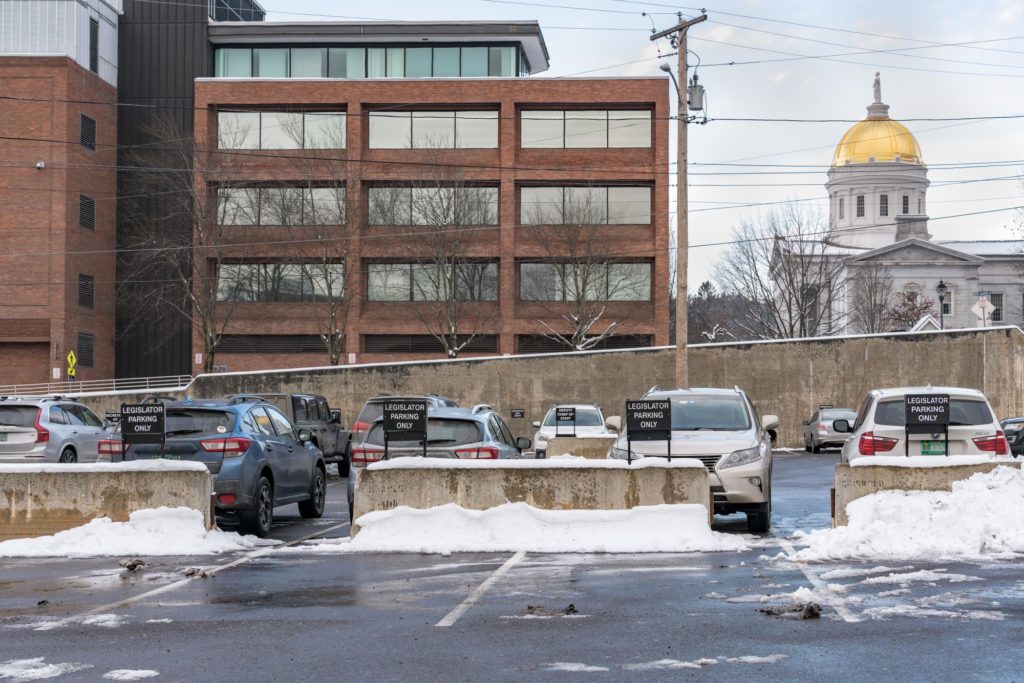
We strolled down to the banks of the Winooski River, into a mostly vacant parking lot built for the Vermont state employees who, pre-Covid, helped swell Montpelier’s daytime population to 15,000. Parker believes that MyRide can lure 1,000 Montpelier-based commuters out of their cars and land can be freed up for affordable housing. “We are an aware community that gets that there is an environmental crisis,” she said, giving voice to a scheme still more hope than solid plan.

Sustainable Montpelier is pitching MyRide to what some transit experts call “choice riders.” Like Parker, these are people who could drive but might be leery of the hassles of traditional bus travel —  the long waits, for example, and the milk-run slowness of fixed-route travel. The group’s website touts MyRide as “quick, direct and works with your schedule.”

But the service frequently doesn’t work for fixed route’s most loyal constituencies, senior citizens and disabled people, who are often relatively poor and technologically challenged. When I visited Montpelier’s Pioneer Apartments, a public housing complex, building manager Lorna Swann had nothing but disdain for MyRide. “We have physically disabled people here, and also mentally disabled,” Swann said, “and when you take away their routines, it’s very disturbing. They’re confused.”

Resident Judy Taplin, a 71-year-old retired Walmart clerk, told me that she doesn’t have a smartphone and added, “Once when I called MyRide to arrange a pickup, they told me, ‘We have 72 other riders ahead of you. You’ll have to wait.’ I refuse to go through that crap again. Now I just walk to the grocery store.”

Citywide, MyRide is attracting about 2,700 riders a month — about half the pre-pandemic average for the fixed routes it replaced.

As Jarrett Walker, the consultant, points out, if finances are finite, on-demand transit cannot scale. “If ridership goes up,” he says, “the whole system falls apart. Either you have to keep moving riders closer to a fixed route, or you have to put out more buses, which won’t be possible if you’ve already eaten up your budget.” 

Vermont is going to keep trying, in any case. The tiny state, with a population of just over 600,000 people, spends almost 10 times as much on transit, per capita, as the average U.S. state with a heavy rural population, according to its 2020 Public Transit Policy Plan. It’s now poised to study the feasibility of on-demand buses in 12 more communities scattered across the state.

Just before leaving Montpelier, I met up with a man involved in producing a study looking at the possibility of having microtransit in a remote tri-town nexus where 12,000 people live amid cow pastures and sub developments northeast of Burlington. Stephen Falbel is the president of Montpelier-based Steadman Hill Consulting and a Harvard grad with a humble New Englander’s pride. He walked to our meeting at Montpelier’s transit center in a Red Sox windbreaker, then told me that in the tri-towns the buses would be driven by 30 on-call volunteers — and would look for inspiration to the islands on Lake Champlain, which divides Vermont and New York State. There, he explained, a robust community group provides seniors rides and builds them gratis wheelchair ramps. “On the islands,” Falbel said, “there’s a sense that, ‘We’re alone here. We need to take care of each other,’ and Vermont considers itself an island in the country.”

A MyRide bus roared by outside, and I pointed out to Falbel that it was empty. “Look, it remains to be seen whether microtransit will work in a place with a population as low as Montpelier’s,” he said. “There has to be a massive cultural change for people to start taking the bus. It’s called a pilot project for a reason. We’re just trying it out.”

More stories like this are available on bloomberg.com

©2022 Bloomberg L.P.

Peloton Draws Interest From Amazon, Nike: Papers

(Bloomberg) — Peloton Interactive Inc. is attracting interest from potential suitors including Amazon.com Inc., the Wall Street Journal reported, citing people familiar with the matter. Shares of the home fitness company surged as much as 43% in extended trading Friday. 

Amazon has been speaking to advisers about a potential deal, the newspaper said. There’s no guarantee the tech giant will follow through with an offer or that Peloton, which is working with its own advisers, would be receptive to an approach. Other potential suitors are circling, the WSJ reported, though no deal is imminent. 

Nike Inc. is also considering a separate bid for Peloton, attracted by the drop in Peloton’s share price, the Financial Times reported, citing people familiar with the matter. Neither Nike nor Amazon have held direct talks with Peloton, the FT reported. 

Amazon and Peloton declined to comment to both papers and Nike didn’t immediately respond to the FT’s request for comment. 

Peloton was a darling of the pandemic as people at home during lockdowns turned to its fitness bikes and online classes for exercise. But shares have fallen more than 80% from their high a year ago as the gradual easing of pandemic restrictions fueled concern that growth would slow. Activist investor Blackwells Capital LLC last month issued a letter demanding the company fire co-founder and Chief Executive Officer John Foley and pursue a sale. Blackwells said in the letter that potential buyers could include Apple Inc., Walt Disney Co., and Nike.

The company’s public image also took a hit in December, when HBO Max’s “Sex and the City” reboot killed off a Peloton-riding character.

Amazon’s interest may be linked to its effort to gain a greater role in health care, as well as the potential to market to Peloton’s almost 3 million subscribers. The e-commerce giant in 2020 introduced its wearable Halo products to compete with Google-owned Fitbit and other fitness devices.

Peloton’s shares jumped to a high of $35.25 in extended trading after closing Friday at $24.60 in New York — below its September 2019 initial public offering price of $29.

Read more on how a Peloton investor is pushing for a sale

(Updates with FT reporting Nike also preparing a bid in headline, third paragraph)

More stories like this are available on bloomberg.com

©2022 Bloomberg L.P.

Ex-Neuralink President Invests in Competing Brain Startup

(Bloomberg) — New York-based Synchron Inc.—a competitor to Elon Musk’s brain-machine interface company, Neuralink—has won financial backing from Neuralink’s co-founder and former president.

Max Hodak, who left Neuralink last year, has invested in Synchron and joined its advisory board, he wrote in a blog post on Friday. He did not say how much he was investing.

“I jumped at the chance to work with them,” he wrote, saying the company’s technology could benefit tens of millions of patients. Synchron aims to treat conditions like paralysis by inserting its Stentrode implant in human brains. That is similar to Neuralink, which also plans to use implanted devices to help treat paralysis and similar conditions.

Unlike Neuralink, whose device will be implanted by drilling into skulls, Synchron to implant its device via blood vessels, which Hodak called “a different, really quite elegant idea.” Synchron has already tried the Stentrode in four patients and has received Food and Drug Administration permission to launch a clinical trial in the United States. That puts it far ahead of Neuralink, which is now recruiting a trial director.

Brain computer interfaces have become a hot investor area. Halfway through last year, startups in the field had already raised more cash than they did in all of 2020, according to PitchBook. Neuralink, which raised $205 million last year, is the best-capitalized, but plenty of others exist, like Paradromics Inc. and Precision Neuroscience Corp., as well as Synchron.

Hodak became president of Neuralink in 2017. When he left, “it wasn’t my choice,” he wrote in a September blog post. “There was a lot left there I still wanted to do. But as usual, Elon was right: it was time for me to go.” He raised at least $47 million for a new neuroscience venture, Science Corp., according to a July filing with the SEC.

“I really don’t want this to be construed as a knock on Neuralink,” Hodak said in an email, adding that he has not sold any of his Neuralink stock. “I’m sure they will also get into humans soon too,” he wrote, noting that Synchron is an older company. “There are many different ideas worth trying in this space.”

While it is unusual for an executive to leave one company and invest in a rival, a long history exists of startup executives forming or joining competing companies. Silicon Valley was born after the so-called “Traitorous Eight” quit Shockley Semiconductor Laboratory to found Fairchild Semiconductor in 1957. Decades later with tech’s cutting edge dominated by software, marketing executive Whitney Wolfe Herd left Tinder and founded competing dating site Bumble in 2014.

Hodak gave an implicit acknowledgment of the rivalry toward the end of his blog post. “Engineering the brain is such a profoundly powerful concept that I expect there to be multiple trillion-dollar companies to emerge in this space as it matures,” he wrote.

More stories like this are available on bloomberg.com

©2022 Bloomberg L.P.
BNM Head Aims to Give Malaysians More Digital Options in Finance

(Bloomberg) — Malaysia is assessing the potential benefits of adopting a digital currency, as part of measures targeted at helping the country’s financial services sector capitalize on the new technologies. 

“We are going one step further by experimenting with central bank digital currencies (CBDCs) over the next few years,” Bank Negara Malaysia Governor Nor Shamsiah Mohd Yunus said in an email interview. “There’s no better way to keep pace with something new than to try it ourselves.” 

While the central bank aims to speed up the growth of financial technology, it will ensure that new systems face similar scrutiny and safeguards to manage risks, she said.

This is an abridged transcript of the interview:

What are BNM’s aspirations for the domestic fintech sector?

Like many central banks around the world, we are paying close attention to the digital asset space, and the opportunities and risks that come with it. As with any emerging development, our goal is to ensure that the way we regulate and supervise continues to serve our monetary and financial stability mandates.

This is an exciting space, with many promising ideas and a lot going on. But I want to be clear that we don’t want to simply get caught up in all the hype and buzz. We do not promote technology for its own sake. It must deliver tangible benefits to the economy.

Read more: Malaysia’s Central Bank Studies Need for a Digital Currency

What are the drivers behind your plan for digital insurers and takaful operators?

An important motivation for introducing digital players in insurance and takaful is to serve the objective of expanding coverage. Our insurance penetration is still low. Only 15% of SMEs have insurance or takaful cover, and 25% of lower-income working adults have some form of life insurance and family takaful cover.

Digital insurers and takaful operators can play a role by introducing more innovative offerings that better serve these segments. New players will inject greater dynamism into the sector. We also want to also see traditional players undertake digital transformation to remain relevant in the face of competition.

What measures are you planning to further develop the domestic bonds and currency markets?

Since 2018, we have gradually liberalized foreign exchange policy to provide greater flexibility for businesses and investors to better manage their forex risk. This has helped strengthen Malaysia’s position as an FDI destination and role in the global supply chain, as well as to widen global investors’ access to the onshore market.

Today, our bond market is included in major global indices. Global investors also have allocations to our market. Although global markets continued to be volatile, non-resident holdings of government bonds remained stable at around 25% throughout 2021.

For 2022, we will continue to work with market participants through the Financial Market Committee to further develop our market, including areas such as the collateralised funding market and the sustainable financing space.

More stories like this are available on bloomberg.com

©2022 Bloomberg L.P.
Peloton Draws Interest From Amazon, Other Suitors: WSJ

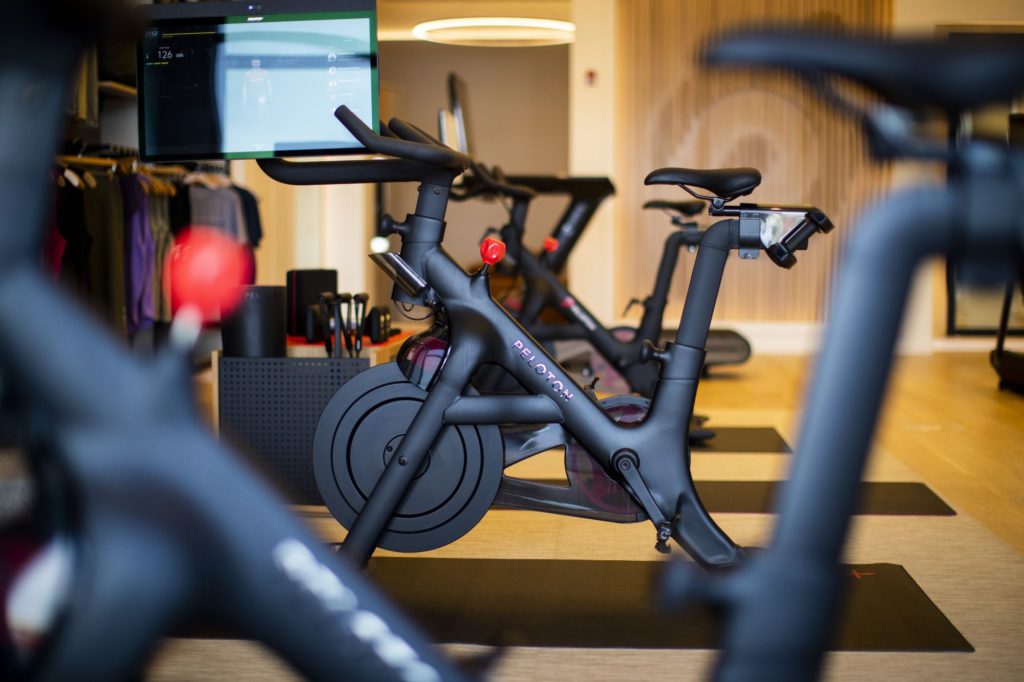
(Bloomberg) — Peloton Interactive Inc. is attracting interest from potential suitors including Amazon.com Inc., the Wall Street Journal reported, citing people familiar with the matter. Shares of the home fitness company surged as much as 43% in extended trading. 

Amazon has been speaking to advisers about a potential deal, the newspaper said. There’s no guarantee the tech giant will follow through with an offer or that Peloton, which is working with its own advisers, would be receptive to an approach.

Other potential suitors are circling, the WSJ reported, though no deal is imminent. Amazon, through a spokeswoman, declined to comment. Peloton also declined to comment on the report.

Peloton was a darling of the pandemic as people at home during lockdowns turned to its fitness bikes and online classes for exercise. But shares have fallen more than 80% from their high a year ago as the gradual easing of pandemic restrictions fueled concern that growth would slow. Activist investor Blackwells Capital LLC last month issued a letter demanding the company fire co-founder and Chief Executive Officer John Foley and pursue a sale. Blackwells said potential buyers could include Apple Inc., Walt Disney Co., and Nike Inc.

The company’s public image also took a hit in December, when HBO Max’s “Sex and the City” reboot killed off a Peloton-riding character.

Amazon’s interest may be linked to its effort to gain a greater role in health care, as well as the potential to market to Peloton’s almost 3 million subscribers. The e-commerce giant in 2020 introduced its wearable Halo products to compete with Google-owned Fitbit and other fitness devices.

Peloton’s shares jumped to a high of $35.25 in extended trading after closing Friday at $24.60 in New York — below its September 2019 initial public offering price of $29.

Read more on how a Peloton investor is pushing for a sale

(Updates with background, decline to comments from companies.)

More stories like this are available on bloomberg.com

©2022 Bloomberg L.P.

U.K. Adds Offenses to Online Safety Bill Targeting Big Tech

(Bloomberg) — The U.K. is toughening its upcoming Online Safety Bill to police illegal and harmful behavior on the internet. 

Currently, online platforms like Facebook owner Meta Platforms Inc. are required to take down illegal content after it has been reported to them. The new law will require companies to show how they proactively prevent such content spreading, and on Friday the government extended the list of content covered by this requirement to include crimes like revenge porn and the promotion of suicide.

Digital Secretary Nadine Dorries is also adding measures to the bill that are aimed at cracking down on malicious users through new criminal offenses. Lawmakers will vote on the legislation in the coming months.

They include online messages to convey threats of serious harm such as death threats and knowingly sending false communications with the intention to cause harm, such as spreading a message that drinking bleach cures Covid-19.

The current laws regulating malicious communications date from 1988 and 2003. The newly proposed legislation won’t apply to print and online journalism, television, radio, and film, the government said in the statement late Friday. 

Ministers are still considering whether to criminalize so-called cyber-flashing, epilepsy trolling and the encouragement of self-harm.

More stories like this are available on bloomberg.com

©2022 Bloomberg L.P.

Peloton Draws Interest From Suitors Including Amazon: Dow Jones

(Bloomberg) — Peloton Interactive is drawing interest from possible suitors including Amazon, Dow Jones reported, citing unidentified people familiar with the matter.

  • Amazon has been talking to advisers about a possible deal, some unidentified people told Dow Jones
  • There are other possible suitors circling, but no deal is imminent, Dow Jones said
  • Peloton shares rose as much as 33% in after market trading

More stories like this are available on bloomberg.com

©2022 Bloomberg L.P.

Close Bitnami banner
Bitnami