
Bloomberg

NATO Rejects Putin-Xi Demand to Halt Expansion: Ukraine Update

(Bloomberg) — NATO’s chief rejected a demand made by Russian President Vladimir Putin and Chinese President Xi Jinping that the military alliance halt any expansion eastward, reasserting that European states have the right to choose their own paths. 

Putin, in Beijing for the opening of the Winter Olympics, met with the Chinese leader on Friday to exchange views and pledge a bilateral friendship with “no forbidden zones.” Meanwhile, Russia’s foreign minister brushed off U.S. claims that Moscow plans to release a fake video as a way to justify an invasion. 

Moscow has repeatedly denied that it plans to attack Ukraine, while the U.K. and U.S. say it has massed almost 130,000 troops close to the border. Russia has decried the use of NATO forces near Russia’s frontiers. 

Key Developments

  • Putin’s Financial Fortress Blunts Impact of Threatened Sanctions
  • Putin Courts China’s Xi for Help in Showdown With the West
  • Russia Signs Energy Deals With China as Relations With West Sour
  • Ukraine Briefing Spurs Greater Urgency on Sanctions in Congress
  • What we know so far about potential U.S.-EU sanctions on Russia
  • Where military forces are assembling around Russia and Ukraine

All times CET

Lithuania Seeks Greater Deterrence Efforts (6:28 p.m.)

Lithuanian Foreign Minister Gabrielius Landsbergis called on NATO to step up deterrence on the eastern flank of the alliance as Russia moves more troops to Belarus.

“The growing number of Russian military forces in Belarus raises questions not only about the future of Belarus as an independent state but also increases the threat to the security of Lithuania and the Baltic region,” Landsbergis said in a statement.

Stoltenberg Dismisses Russia-China Demand to Halt NATO (3:29 p.m.) 

NATO Secretary General Jens Stoltenberg rejected claims that the 30-member alliance has expansion ambitions as “wrong.” “This is about respecting the sovereign right of independent nations to choose their own path,” he said in an interview with Bloomberg Television. 

Stoltenberg also said that the alliance is keeping an eye on China and Russia as they coordinate more closely militarily. “They are operating more together, they have more exercises together,” he said. “Just a few days ago they had a joint naval exercise with also Iran. So of course this is something we follow and monitor.”

Baltic Leaders Show Common Front on Energy Security (2:46 p.m.) 

NATO’s Baltic members have gas reserves and a liquid natural gas terminal, making them resilient to any potential shutoff of supplies by Russia, Latvian Prime Minister Krisjanis Karins said at a press conference with his Estonian and Lithuanian counterparts. 

The three prime ministers discussed energy security at their meeting in Riga, the Latvian capital. Estonian Prime Minister Kaja Kallas said she wasn’t convinced Russia would hold off using gas supplies as a weapon.

Russia Funneling Fuel, Hardware, Drones to Donbas, Kyiv Says (1:55 p.m.) 

Ukrainian intelligence services indicated that Russia continues to supply Kremlin-backed militants and Russian military personnel in the separatist-controlled areas in the eastern Donbas region, the Defense Ministry in Kyiv said in a statement.

Russian authorities dispatched 9,000 tons of fuel, several tanks, armored vehicles, self-propelled artillery units, Russian-made drones and other weapons by rail and road to Donetsk and Luhansk on Ukraine’s eastern border, the ministry said.

U.K. Backs U.S. Claim of Fake Video (1 p.m.)

U.K. Prime Minister Boris Johnson’s office said U.S. claims that Russia plans to make a graphic video of a Ukrainian attack to justify an invasion were “credible and extremely concerning.” 

“We’ve conducted our own analysis on this intelligence and share the US’s conclusion,” Johnson spokesman Max Blain told reporters at a regular briefing. The U.K. is “considering options for further military deployments to support NATO’s eastern flank”, Blain added. 

“We have high confidence Russia is planning to engineer a pretext blaming Ukraine for the attack in order to justify a Russian incursion into Ukraine,” Blain said. Russian Foreign Minister Sergei Lavrov earlier called the U.S. allegations “delusional.” 

Finland Bemoans EU Inaction (12:55 p.m.) 

Finland’s President Sauli Niinisto said the European Union must recognize that when its members are pulled into the Russia-Ukraine fray, it is also affected. 

Speaking to reporters in Helsinki, Niinisto referred to Russia’s demand that NATO agree not to expand eastward, which would effectively close the door to the military alliance for Finland and Sweden — although neither Nordic country has applied to join NATO. The EU’s lack of response on the subject stands in contrast to the solidarity that typically emerges quickly during financial crises, Niinisto said. 

NATO Chief to Depart After Central Bank Appointment (11:51 a.m.) 

NATO’s Stoltenberg has been appointed governor of Norway’s central bank and will take up the post later this year.  

NATO chief since 2014, Stoltenberg has pledged to serve out his term, which ends Oct. 1. The U.S. and Germany were among countries that had asked Stoltenberg, who’s leading the alliance’s talks with Russia over its military buildup near Ukraine, to stay on, Norwegian newspapers had reported.

Kremlin Says No Basis for Putin-Zelenskiy Meeting (11:40 a.m. CET)

There’s no basis yet for a meeting between Putin and Ukrainian President Volodymyr Zelenskiy on the tensions, Kremlin spokesman Dmitry Peskov said. 

“For this there needs to be an understanding of what will come out of it and what will be discussed, and there isn’t one yet,” Peskov said on a conference call. The same goes for another so-called Normandy summit that would include the leaders of France and Germany to discuss eastern Ukraine, he said. 

Turkish President Recep Tayyip Erdogan reiterated his offer to mediate between the two sides but Peskov said any visit by Putin to Turkey would be focused on bilateral issues. 

Putin, Xi See ‘No Forbidden Zones’ (11:17 a.m.) 

Putin and Xi see no limits to the Russia-China friendship and “no forbidden zones” in cooperation between their countries, the two leaders said in a joint statement after talks in Beijing — their first face-to-face meeting since 2019.  

China “treats with understanding and supports” Russia’s demands for binding security guarantees from the U.S. and NATO, and the two states oppose further expansion of the military alliance, according to the statement.

The pair also said in the statement that Russia opposes Taiwan’s independence in any form. The two leaders described the “new type” of relations between Moscow and Beijing as superior to the Cold War-era blocs.

YouTube Blocks Separatist Accounts (10:55 a.m.)

YouTube blocked several accounts associated with separatists in two eastern Ukraine regions, Tass reported, citing media representatives of the self-proclaimed republics. 

The Luhanskinformcenter in the unrecognized Russian-backed Luhansk People’s Republic and the Ministry of Information in the Donetsk People’s Republic were among the channels affected, Tass said. 

The moves could expose Alphabet’s Google, which owns YouTube, to new criticism in Russia, where it’s under increasing pressure from the government. The company is facing potentially huge fines for blocking a Russian TV channel’s account on the video service and in December was hit with a $95 million penalty for not removing content. 

Russia Blamed for German Energy Cyber Attack (11:00 a.m.)

A Russia-linked cybercrime gang was allegedly responsible for ransomware attacks that took down a swath of Germany’s fuel-distribution system this week. Hackers using “Black Cat” ransomware infected computers at Mabanaft GmbH and Oiltanking GmbH Group, say people familiar with an investigation of the breaches.

While there’s no confirmed link to the Russian state, the attacks come as the U.S., U.K. and others warn of the risk of cyberattacks as part of a campaign to put pressure on Europe for its support of Ukraine. 

Lavrov Calls U.S. Claim of Fake Video ‘Delusional’ (10:10 a.m.)

Foreign Minister Sergei Lavrov dismissed claims by the U.S. that Russia plans to produce a graphic propaganda video that purports to show a terrorist attack on Russian-speaking people.

“I read on the internet that the State Department made some statements that Russia is allegedly preparing a fake video with an apparent attack by Ukrainian soldiers on Donbas,” Lavrov said in a clip posted by Ren TV. “This kind of fantasy is delusional in my opinion, and they are more and more of them every day.”

U.S. officials warned previously that Moscow may be planning a false flag event that would create a justification for sending troops into Ukraine, and have said it used similar tactics when it occupied Crimea and fought a war with Georgia.

Carlsberg CEO Downplays Impact on Business (9:30 a.m.)

The Danish brewer Carlsberg A/S said its business won’t be hit too hard by a possible Russia-Ukraine conflict. Carlsberg gets less than 8% of its profit from the two countries, CEO Cees ‘t Hart said in a Bloomberg Television interview. A decade ago, eastern Europe accounted for almost half of the company’s earnings. 

Putin, Xi Meet; Russia will Supply Gas From Far East (9:13 a.m.) 

In their first in-person meeting since 2019, Putin told China’s Xi that Russia will supply 10 billion cubic meters of gas per year to China from the Far East under a new contract. 

During the summit, timed to show solidarity on the sidelines of the Winter Olympics, Putin said conditions between the two countries were of an “unprecedented nature and an example of a dignified relationship.” 

EU Warned of New Russian Cyber Threat (8:40 a.m.) 

European Union institutions were warned Thursday of a new Russian-backed cyber threat that’s been running credential harvesting activity since mid-2021, according to an alert seen by Bloomberg News. 

The alert says it’s possible the capabilities will be used for cyberespionage purposes. No institutions have been targeted yet. The alert didn’t mention Ukraine. 

The group, known as Reuse Team or Callisto, has been involved in state-sponsored espionage and criminal activity since the early 2000s, the alert said. The group has recently targeted an EU body and was involved in a campaign that targeted a European ministry of foreign affairs in 2020. It has gathered intelligence related to foreign policy in Eastern Europe and the South Caucasus, according to a 2017 report by F-Secure, a cyber security research firm. 

Gazprom Reliability in Doubt, Von Der Leyen Says (8:31 a.m.) 

Gazprom is abiding by its contracts with the EU but unlike other suppliers isn’t shipping more gas than planned to Europe, and that’s casting doubt on its reliability, European Commission President Ursula von der Leyen said in an interview with Les Echos and Handelsblatt.

Gazprom’s behavior is “weird,” and Russia is using gas deliveries as a way to put pressure on Europe, she said.

Von der Leyen also described the EU’s sanctions package in the event of a Russian invasion of Ukraine, which includes including shutting Moscow off from foreign capital, and controlling exports of critical goods to Russia needed in areas such as artificial intelligence, weapons, quantum computing, lasers and space technologies.

Macron to Visit Russia, Ukraine Next Week (8:21 a.m.) 

French President Emmanuel Macron will travel to Moscow on Monday and Ukraine on Tuesday, an Elysee official said, as he continues an active diplomatic role in the crisis. 

The trips will follow three calls in the past week between Macron and Vladimir Putin to discuss the Ukrainian situation.    

U.S. Lawmakers Briefed by Top Security Team (11:00 p.m.) 

U.S. lawmakers are rushing to draft a new round of potential sanctions on Russia intended as a deterrent to any aggression against Ukraine. The sense of urgency in Congress escalated following day-long briefings Thursday by top national security officials. 

Negotiations had been slowed as Democrats and the Biden administration resisted Republican efforts to impose more sanctions on Russia now. Both sides agree on the need for more punishing penalties should Russia invade Ukraine, which the Kremlin denies it plans to do. 

More stories like this are available on bloomberg.com

©2022 Bloomberg L.P.
VW Battle Brews as Lingering Chip Shortage Hits Workers’ Wallets

(Bloomberg) — Volkswagen AG plans to cut nearly all night shifts at its main plant in Germany that are a boon to workers as Europe’s largest carmaker continues to battle the semiconductor crisis. 

VW will cut the night shift, for which workers receive extra pay, from the start of the second quarter on three assembly lines in Wolfsburg, the carmaker said Friday, confirming a post on its intranet seen by Bloomberg News. The move has drawn ire from labor leader head Daniela Cavallo, who said a compromise on compensation must be found.

“Our colleagues aren’t responsible for the fact that order books are overflowing while we can’t make the vehicles because of the lack of semiconductors,” Cavallo said in the post. “We’ll fight for partial compensation.” 

Only a fourth assembly line that handles the Tiguan and its hybrid models, the Touran and Seat Tarraco will continue to run early, late and night shifts, VW said. 

Factory workers at Volkswagen have been on edge amid growing tensions between VW’s powerful union leaders and CEO Herbert Diess, who hinted at possible job cuts in November to stay competitive in the face of Tesla Inc. and the shift to EV production. The global shortage of chips forced Volkswagen to slash output at the sprawling Wolfsburg factory last year. 

The decision to cut the night shift was made in response to repeated short-notice cancellations and the need to furlough workers, the company said. 

“It is unavoidable that we adjust our shift model to maintain competitiveness and secure jobs in the long term,” said Gunnar Kilian, the board member in charge of personnel. “Unfortunately, this step will also involve workforce cuts and the loss of hardship allowances for the night shift.”

More stories like this are available on bloomberg.com

©2022 Bloomberg L.P.

India’s Paytm Reports Wider Losses After Rocky IPO

(Bloomberg) — One97 Communications Ltd., the entity that operates the digital payments service Paytm, reported a wider loss last quarter as the company tries to recover from a disastrous initial public offering in November.

The company reported a loss of 7.8 billion rupees ($104 million) for the December quarter, compared with a loss of 4.74 billion rupees a quarter earlier. Revenues rose 34% from the previous quarter to 14.6 billion rupees, the company said in a statement.

Paytm and founder Vijay Shekhar Sharma have been trying to get back on track after an IPO that raised $2.5 billion, but was followed by a vertiginous plunge in the stock price. Investors paid 2,150 rupees a share in the offering only to watch them plummet, closing on Friday at 953.3 rupees. 

Analysts at Macquarie Capital Securities (India) Pvt. made a hotly contested call just before the IPO by initiating coverage with an underperform rating. The analysis, from Suresh Ganapathy and Param Subramanian, proved prescient, but perhaps not bearish enough. Their price target was 1,200 rupees.

Investors will scrutinize the latest quarterly numbers for signs that Paytm can move toward profitability. Payment services to consumers and merchants increased 60% and 117%, respectively, while the company’s partners distributed 4.4 million loans valued at about 21.8 billion rupees during the quarter. 

The stock swoon has proven painful for early backers of Paytm, as its market cap has dropped to 618 billion rupees. Berkshire Hathaway Inc. invested in One97 when the company was valued at more than $10 billion in 2018, and T. Rowe Price Group Inc. invested at a $16 billion valuation the following year, people familiar with the matter have said. 

SoftBank Group Corp., which holds about 17.5% of the shares, invested in 2017 at valuation of about $7 billion, the people said.

Sharma founded the Noida-headquartered One97 almost two decades ago. The son of a school teacher, he grew up in a town in Aligarh, in central India, and studied engineering in New Delhi, where he taught himself English. He entered digital payments in 2014 and his business took off when India canceled high-value currency notes toward the end of 2016.

The market has grown increasingly competitive however. Global technology giants such as Amazon.com Inc., Meta Platforms Inc. and Alphabet Inc. are working to expand in India, along with local startups.

More stories like this are available on bloomberg.com

©2022 Bloomberg L.P.

UBS’s Lovell Says Use Stock Volatility to Move Up in Portfolio Quality

(Bloomberg) — The intense stock-market swings are giving investors the chance to snag good investments at reduced prices, according to UBS Global Wealth Management’s Nadia Lovell.

“As we go through a volatile period, there’s opportunity to move up the portfolio in quality, and that’s really our message right now to clients,” the senior U.S. equity strategist at the firm, told Bloomberg Television’s Surveillance Friday.

While concern about elevated inflation and policy tightening by the Federal Reserve has put stocks on a roller-coaster ride, the strategist said that “earnings will really drive the market higher. So when we look from that standpoint over the next six months or so, we think the market will grind higher. But there will continue to be bouts of volatility.”

The Cboe Volatility Index, or VIX, is up about 40% so far this year, while the S&P 500 is down about 6%. Some industrial companies are among those that offer a quality upgrade, according to Lovell.

“We haven’t seen the flow-through yet of those price increases that industrial companies have taken,” she said. “Some areas of tech do have pricing power, of course,” Lovell noted, while advising investors to “shift away from those companies having some issues around user growth.”

More stories like this are available on bloomberg.com

©2022 Bloomberg L.P.

U.S. Treasuries Fall as Jobs Beat Fuels Fed Bets: Markets Wrap

(Bloomberg) — U.S. Treasuries fell and stocks struggled for direction after a better-than-expected U.S. jobs report increased bets of tighter monetary policy, eroding some bullish sentiment from Amazon.com Inc. earnings.

The S&P 500 was little changed while the Nasdaq 100 added 0.5% with Amazon up 13% on a price hike for Prime memberships. Meanwhile, Europe’s Stoxx 600 declined as rate-hike bets reduced risk appetite. The dollar rose.

U.S. employers added more jobs than forecast last month, despite a surge in Covid-19 infections and related business closures. U.S. payrolls came in higher than all economists expected at 467,000 — a three-month high — while average hourly earnings also rose a higher-than-expected 0.7% month over month. 

The report is likely to increase conviction in the Federal Reserve’s path forward.

“A strong jobs report, along with elevated inflationary economic data that we’ve seen recently, could boost expectations that we’ll see a 50-basis point rate increase at the March meeting,” said Brian Price, head of investment management for Commonwealth Financial Network. “I still believe that 25 basis points is the base case at this point but 50 is not off the table either.”   

It’s been a volatile week in markets as investors were jolted by weak numbers at U.S. tech giants including Facebook-owner Meta Platforms Inc., which wiped more than $250 billion from its market value on Thursday. However, positive earnings from Amazon helped lift sentiment, with the online marketplace and tech company adding more than $150 billion to its market cap.

“It seems like each day we wake up to, ‘Thank you sir, may I have another?’ as a few tech blowups drag down the overall market,” said Mike Bailey, director of research at FBB Capital Partners. “There is an interesting behavioral metric where one bad thing requires four to five good things to make up for it.”

Here’s what else Wall Street saying Friday:

“Hopefully now that the week is coming to a close, we’re seeing that the economy is still strong based on this jobs report, that people can take a breath and really reassess what is the economic environment that we’re going into in the year ahead.” — Lindsey Bell, chief markets and money strategist at Ally

“The January employment report was strong overall, informs us that businesses are willing to look through the Omicron shock (which is actually news), and reinforces the case for the Fed tightening.” — Gerard MacDonell, analyst at 22V Research

“It was always going to be a surprise as far as the payrolls report was concerned, given the range of outcomes. And we got a positive surprise … The Fed is further and further behind and they’re going to have to catch up.” — Anastasia Amoroso, chief investment strategist at iCapital

“The data reinforces the case for hikes and QT and I think the 10-year should rise more, especially real rates. With the 10-year getting close to 2%, I worry about mortgage-backed securities convexity hedging and more bond fund outflows.” — Priya Misra, global head of rates strategy at TD Securities

“A better-than-expected jobs report only fuels the Fed’s fire to raise rates, and act quickly. While they’ve already signaled that the labor market is in a good place, there was potential for omicron to derail that progress — and that just doesn’t seem to be the case. So with the market typically unwelcoming of news that could accelerate the pace of action from the Fed, we could see some volatility.” — Mike Loewengart, managing director of investment strategy at E*Trade

Dip buyers have hoped a stronger earnings season would keep equities attractive and counter some concerns about tighter monetary policy in the face of higher inflation. Of the 272 companies in the S&P 500 that have reported results, 82% have met or beaten estimates, with profits coming in 8.8% above projected levels.

Still, signs of stubborn price pressures continue to appear as the latest data showed U.S. gasoline prices surged to the highest in more than seven years. Crude oil extended a fresh seven-year high, with banks including Goldman Sachs Group Inc. forecasting Brent will reach $100 a barrel.

“We are getting late in the cycle. The market is becoming more selective,” wrote Wells Fargo’s Chris Harvey. “The tide will no longer lift all boats and the market will become less and less forgiving in our view. Going forward, we feel investors will need to cut loses quickly and to focus on margins rather than the top or bottom line.”

Hawkish comments from European Central Bank President Christine Lagarde and a Bank of England interest-rate hike underlined risks from inflation. While a selloff in the region’s bonds eased Friday, the mood in the stock market turned sour. Europe’s Stoxx 600 fell 1.4% as rate-hike bets reduced risk appetite. Makers of cars and parts were the worst-performing industry group, while gains for technology shares surrendered gains.

Elsewhere, an Asia-Pacific equity gauge pushed higher partly on a 3% jump in Hong Kong where markets reopened from a holiday. 

For more market analysis, read our MLIV blog.

Some of the main moves in markets:

Stocks

  • The S&P 500 was little changed as of 12:07 p.m. New York time
  • The Nasdaq 100 rose 0.6%
  • The Dow Jones Industrial Average fell 0.3%
  • The Stoxx Europe 600 fell 1.4%
  • The MSCI World index was little changed

Currencies

  • The Bloomberg Dollar Spot Index rose 0.2%
  • The euro rose 0.2% to $1.1458
  • The British pound fell 0.4% to $1.3542
  • The Japanese yen fell 0.2% to 115.19 per dollar

Bonds

  • The yield on 10-year Treasuries advanced eight basis points to 1.91%
  • Germany’s 10-year yield advanced six basis points to 0.21%
  • Britain’s 10-year yield advanced four basis points to 1.41%

Commodities

  • West Texas Intermediate crude rose 2.3% to $92.39 a barrel
  • Gold futures rose 0.3% to $1,808.80 an ounce

More stories like this are available on bloomberg.com

©2022 Bloomberg L.P.

U.S. Treasury Warns of Illicit Money Percolating in High-End Art

(Bloomberg) — The U.S. Treasury Department is looking more closely at potential money laundering and the financing of terrorism through trading high-value art.

The way art is bought and sold — and some some of the participants involved — may make it attractive to criminals looking to launder money, according to a study published Friday by the Treasury department. 

The high-dollar value of transactions, transportability of goods, a longstanding culture of privacy and the use of intermediaries such as advisers are all contributing factors. The emerging digital art market, such as the use of non-fungible tokens (NFTs), may also present new risks, according to the report. 

“As we tackle systemic challenges like corporate transparency and other loopholes that allow criminals to abuse the U.S. financial system, we will look at what else might be needed to address money-laundering risks specific to other industries, including the art industry,” Scott Rembrandt, a Treasury official in the Office of Terrorist Financing and Financial Crimes, said in a statement.

The department’s larger regulatory agenda will aim to combat the use of shell companies, which are used to funnel cash, according to a person familiar with the matter.

The department, which released the report as part of a new congressionally-mandated requirement, found that “while there is some evidence of money laundering risk in the high-value art market, there was limited evidence of terrorist financing risk.”

In general, the report found that entities that had higher annual sales turnover were at a greater risk of being taken advantage of by criminals.

Treasury issued a short list of recommendations to help combat money laundering in the art world, including enhanced training for law enforcement and customs officials, using the Treasury’s Financial Crimes Enforcement Network for information collection and enhanced due diligence, and applying suspicious activity reporting and know-your-customer procedures to certain art market participants.

More stories like this are available on bloomberg.com

©2022 Bloomberg L.P.

Advent-Backed Fintech Ebanx Delays U.S. IPO on Recent Market Turbulence

(Bloomberg) — Ebanx SA, a Brazilian financial-technology firm backed by Advent International, delayed its U.S. initial public offering because of recent market volatility.

The company, which eventually may seek a valuation exceeding $10 billion, isn’t planing to go public in the first half of this year as previously expected, according to people familiar with the matter who asked not to be identified because the discussions are private. 

“Ebanx remains attentive to the best market moment for an eventual IPO,” the company said in a statement, adding that its processed volume more than doubled last year and that it will continue to expand operations. 

Read more: Brazilian Fintech Ebanx Said to File Confidentially for U.S. IPO

Equity markets fell sharply to start the year, with the S&P 500 sliding 5.3% in January and the tech-heavy Nasdaq Composite Index tumbling 9%. 

Ebanx, founded a decade ago, helps companies such as Spotify Technology SA, Uber Technologies Inc. and Amazon.com Inc. bill clients for their products and services in Latin America. The firm has been preparing for an IPO as it seeks to expand its payment-processing offerings throughout the region, Chief Executive Officer Joao Del Valle said in an interview last year. 

Read more: Unicorn Ebanx Prepares for IPO, Weighs More Acquisitions in Latin America

Advent, a Boston-based private equity firm, invested $430 million in Ebanx last year. 

More stories like this are available on bloomberg.com

©2022 Bloomberg L.P.

Macquarie Seeks to Raise $7 Billion for Americas Infrastructure Fund

(Bloomberg) — Macquarie Group Ltd.’s asset-management arm is planning to raise at least $7 billion for a new fund dedicated to making infrastructure bets in the Americas, according to people with knowledge of the matter. 

The Australian firm is set to formally begin fundraising for the vehicle, known as Macquarie Infrastructure Partners VI, in coming months, said the people, who asked not to be identified discussing private information. A Macquarie spokesman declined to comment.

Macquarie raised $6.9 billion in July for Macquarie Infrastructure Partners V, exceeding a $5 billion target, and said it would primarily focus on transactions in the communications, transportation, waste management, energy and utilities sectors.

So far, MIP V’s investments include a 50% stake in a portfolio of Massachusetts hospitals; an investment in LRS, a waste and recycling company; RailUSA, the operator of Florida Gulf & Atlantic Railroad and Grenada Railroad; and telecommunications provider Cincinnati Bell.

Investors in MIP V include the Teachers’ Retirement System of the State of Illinois, the North Dakota State Investment Board and the New Mexico State Investment Council, according to data compiled by Bloomberg.

Spurred by investor demand for stable returns that aren’t correlated to whipsawing markets, infrastructure-focused funds are collectively expected to raise more capital than any other alternative-asset class in the next five years, according to data provider Preqin. As part of that growth, infrastructure-related assets under management may overtake real estate by 2026, Preqin said.

More stories like this are available on bloomberg.com

©2022 Bloomberg L.P.

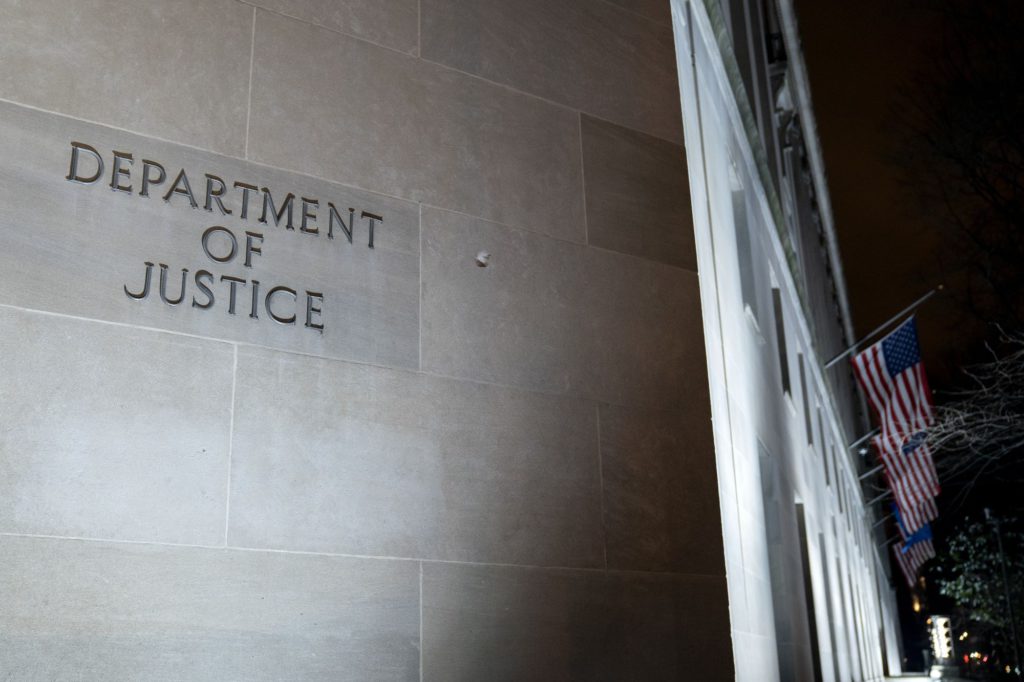
Vast DOJ Probe Looks at Almost 30 Short-Selling Firms and Allies

(Bloomberg) — The Justice Department is collecting a trove of information on dozens of investment firms and researchers engaged in short selling as part of a sweeping U.S. hunt for potential trading abuses, according to people with knowledge of the matter.

The Federal Bureau of Investigation seized computers from the home of prominent short seller Andrew Left, the founder of Citron Research, in early 2021, some of the people said. In more recent months, the Justice Department subpoenaed certain market participants seeking communications, calendars and other records relating to almost 30 investment and research firms, as well as three dozen individuals associated with them, the people said, asking not to be identified discussing confidential inquiries. 

Many on that roster — a veritable who’s-who of the activist short-selling realm — said they haven’t been contacted directly by the government, leaving some exasperated about being left in the dark. Reached for comment, Left also said he’s frustrated.

“It’s very tough to defend yourself when you haven’t been accused of anything,” Left said. “I’m cooperating and I have full faith in the system and the First Amendment,” he added, referencing protections on free speech. 

The long list of names underscores the breadth of the Justice Department investigation first described by Bloomberg in December and shows how authorities are trying to map out alliances and understand how short sellers handle research and arrange bets that stocks will fall. It remains unclear which, if any, of the names mentioned in subpoenas might be targets of the inquiry or merely have ties to other people or entities of interest.

SEC Scrutiny

The Securities and Exchange Commission also has sent some requests for information, people with knowledge of those inquiries said. Spokespeople for the Justice Department and SEC declined to comment. No one has been accused of wrongdoing, and in many cases, the opening of a probe doesn’t lead to anyone facing charges. 

Prominent firms and their leaders mentioned in the Justice Department’s requests to some market participants include Melvin Capital Management and founder Gabe Plotkin; Orso Partners and Nate Koppikar; Sophos Capital Management and Jim Carruthers; as well as Kerrisdale Capital Management. The list also includes well-known researchers such as Nate Anderson and his Hindenburg Research, as well as Fraser Perring and his Viceroy Research.

Representatives for most of those firms — Melvin, Orso, Sophos and Hindenburg — declined to comment or didn’t respond to messages seeking comment.

“We haven’t been contacted by DOJ, SEC or any governmental authorities about any investigations,” Kerrisdale’s chief investment officer, Sahm Adrangi, wrote in an email. “We literally haven’t spoken to anyone at the government in many years.”

Viceroy’s Perring said his firm also hasn’t received requests for information.

“We will always cooperate with any such investigations and are happy to assist regulators in carrying out their duties,” he said. “All our reports are based on information that is publicly available, sourced from records that anyone at any given time could research or find. Our most recent contact with the DOJ was in assisting an investigation into the fraud at a company that we had researched.”

Firms in the Dark

Bloomberg had noted in December that Anson Funds, Marcus Aurelius Value, Muddy Waters Capital and Citron are part of the probe.

Other firms mentioned in requests include Atom Investors, Bonitas Research, Connective Capital Management, Falcon Research, GeoInvesting, Gotham City Research, GrizzlyRock Capital, J Capital Research, Oasis Management, Park West Asset Management, QKM, Sabrepoint Capital Management, Silverado Capital, Spruce Point Capital Management, Valiant Capital Management and White Diamond Research.

Representatives for many of those firms — among them Falcon, GrizzlyRock, J Capital, Oasis, Valiant and White Diamond — said they hadn’t been contacted by investigators. “It’s hard for us to comment on something we don’t know anything about,” said Taylor Hall, a representative for Oasis.

Valiant “has a long-standing policy of cooperating with any inquiries it receives from regulators and other government bodies,” but is not aware of being involved in the short-selling probe, chief compliance officer Michaela Beckman said in an email. “Compliance with securities regulations has always been a point of significant emphasis at the firm since inception and we have not been subject to any regulatory action regarding insider trading or short-selling in our 13-year history.”

“Ethics are a key part of my work, and I wouldn’t do anything unethical or untruthful,” said White Diamond’s Adam Gefvert. “I may write negative things about a company but I wouldn’t embellish anything. Everything is backed by proof.”

Not all of the firms enter into public battles with companies. Atom invests in short-selling hedge funds. And GrizzlyRock isn’t an activist short seller, founder Kyle Mowery noted, adding that he’s glad the Justice Department is looking into that space.

Representatives for the rest declined to comment or didn’t respond to messages.

Pressure on DOJ

Short selling often involves borrowing and selling shares, in a bet that they can be bought back cheaper later to lock in a profit. Investors may also use derivatives such as put contracts.

The Justice Department and financial regulators have faced a growing number of calls in recent years to dig into short sellers and their research partners. Corporate executives including the world’s richest person, Tesla Inc.’s Elon Musk, have decried short sellers, accusing them of maligning businesses for profit.

The Justice Department’s probe is being run by the fraud section with federal prosecutors in Los Angeles and there’s no public signal that authorities have drawn any conclusions. As Bloomberg previously reported, they’ve been examining trading in dozens of stocks, as well as relationships between funds and researchers, looking for signs that they manipulated markets or broke other laws to profit.

Tough Times for Shorts

The U.S. probe adds to a treacherous period for short sellers. Some bearish funds threw in the towel as government stimulus drove equity markets, a situation exacerbated during the pandemic. The pressure intensified during 2021’s meme-stock frenzy, when retail investors banded together to bid up shares of popular short targets, inflicting losses on hedge funds and other traders. By late January of last year, Citron vowed to give up short-selling research and focus on long bets. 

Read more: Short Sellers Face End of an Era as Rookies Rule Wall Street

Some of the loudest short-selling critics include executives at companies that were later found to have engaged in malfeasance. But legions of small investors have also expressed outrage over stock slumps, especially during last year’s wild trading. Amid the complaints, members of Congress started demanding more government scrutiny. 

Researchers make money in a variety of ways beyond placing their own bets. Some sell insights to subscribers, or make arrangements to give clients, such as hedge funds, ideas in exchange for a cut of the profits. Paying customers often get to see research alleging problems at publicly traded companies before publication.

One area of focus is how investors set up their bets that stocks will decline. Investigators have been looking, for example, for signs that money managers might try to engineer startling stock drops to induce selling by market makers or other investors, or engage in other abuses, such as insider trading, people familiar with the matter have said.

More stories like this are available on bloomberg.com

©2022 Bloomberg L.P.

House Passes Chips Bill as Republicans Air Soft-on-China Gripes

(Bloomberg) — The House passed an expansive bill that would invest tens of billions in the U.S. tech sector, but Republican objections that it’s too weak on China threaten what Democrats hoped would be a quick election-year win.

The bill started as a bipartisan push to bolster U.S. manufacturing and research, and ease the dependence on China for semiconductors, but it became mired in long-standing partisanship over U.S. policy on China.

The 222-210 vote, coming as the Winter Olympics opened in Beijing, fell mostly along party lines. Yet the final version of the legislation still has to be negotiated with the Senate and could be months away. Beijing have accused the U.S. of making China an “imaginary enemy.” 

How Supply Chains Broke, Sparking Global Shortages: QuickTake

China’s rising economic power and global influence have been a focus for three successive presidential administrations and the subject of bipartisan angst in Congress, but the two parties’ tactics have differed widely. Former President Barack Obama emphasized engagement and building relationships in the Pacific region while former President Donald Trump used tariffs and tough rhetoric even as he deployed personal diplomacy with Chinese leader Xi Jinping. 

President Joe Biden, focused on his domestic agenda and the ongoing pandemic, hasn’t written its China trade policy yet. Last month, he said he’d like to lift Trump-era tariffs but “we’re not there yet.” 

The lingering partisan friction had been on display during the debate on the House bill.

Democrats have emphasized the bill’s domestic benefits, including $45 billion over six years for a new Supply Chains for Critical Manufacturing Industries Fund and $52 billion over five years to support semiconductor production. 

The bill also authorizes $8.8 billion this year for Energy Department research and development programs, with that amount increasing each year through fiscal 2026. And it authorizes as much as $8 billion to help developing countries address climate change over the next two years and another $2 billion annually to help developing countries deploy clean energy technologies, expand zero-emission vehicles, promote sustainable land use, and adapt to the effects of climate change.

BGOV Bill Summary: H.R. 4521, U.S.-China Competition Package (1)

Republicans — even those whose districts stand to gain from the infusion of semiconductor money — criticized the bill on multiple points, including what they called a “slush fund” for climate programs. 

They also argued the bill does too little to keep U.S. technology out of the hands of the Chinese military or taxpayer money from supporting China’s own green energy industry. 

Representative Michael McCaul, a Texas Republican who has a Samsung Electronics Co. plant in his district, sponsored the provision aiding the U.S. chip industry but said he opposed the bill.

“The administration came out with their statement of administration policy and they left the word ‘China’ out of their anti-China bill,” McCaul said, referring to White House support for the House legislation. “I think that speaks volumes about the lack of content when it comes to countering the malign influence.”

Republicans, in a message retweeted Thursday by GOP leader Kevin McCarthy, said the bill became a “backup plan” for Biden’s stalled economic agenda. 

McCaul said he’s talked with Senate GOP leader Mitch McConnell and others about changing the bill “so we can take some of this really bad stuff out.” 

Democrats underscore the House measure includes at least parts of 63 bills that Republican have co-sponsored. And of those, they say, 29 have previously passed the House with a bipartisan vote.

“This is a magnificent piece of work,” Speaker Nancy Pelosi said Thursday. House Foreign Affairs Chairman Gregory Meeks, a New York Democrat, said the bill would “revitalize America’s industrial base” and “force China to play by the rules on the world stage.”

Pelosi and her lieutenants worked quickly to write the bill under pressure from the Biden administration, industry and a group of 25 moderate House Democrats facing tough re-election bids.

Commerce Secretary Gina Raimondo, after meeting with House Democrats on Wednesday, dismissed talk that a final two-chamber agreement and passage of a U.S.-China Competition bill might not occur until Memorial Day. She suggested it is Republicans who are playing politics.

“We ought to be able to have a swift, efficient conference process, reconciling the differences,” Raimondo said.  

More stories like this are available on bloomberg.com

©2022 Bloomberg L.P.

Close Bitnami banner
Bitnami