Bloomberg

Take-Two Teases New Grand Theft Auto Game, Boosting Shares

(Bloomberg) — Rockstar Games said Friday that a new game in the Grand Theft Auto series is in development, sending shares of parent company Take-Two Interactive Software Inc. up as much as 7%

“We are pleased to confirm that active development for the next entry in the Grand Theft Auto series is well underway,” the company said in a blog post. The studio also announced the release of Grand Theft Auto V on the newest consoles, the PlayStaion 5 and Xbox Series X, for March 15.

Many players had been anticipating a Grand Theft Auto VI, given the unprecedented success of Grand Theft Auto V, which has sold more than 155 million copies. But it’s the first time Rockstar has acknowledged that a new title is in development.

In 2020, the video game website Kotaku reported that GTA VI will be rolled out with a moderate release and then be expanded and updated regularly over time.

Take-Two shares rose to as much as $174.50 on the news. The company reports fiscal third-quarter earnings on Monday.

More stories like this are available on bloomberg.com

©2022 Bloomberg L.P.

Retail Traders’ Tech Buying Spree Pays Off After Meta Drop

(Bloomberg) — Meta Platforms Inc.’s record-setting crash triggered a fire sale for tech peers, setting up retail investors to snap up cheaper shares ahead of Friday’s turnaround. 

The buy-the-dip crowd was out in full force on Thursday, piling into Amazon.com Inc. and Snap Inc. as Wall Street surveyed the investing landscape after Meta Platforms’ blowup. That buying proved prescient as investors were immediately rewarded with big rallies for the online retailer and social media platform after quarterly results of their own.

Retail investors pushed more than $700 million into Meta Platforms, Amazon and Snap as well as technology-focused exchange-traded funds on Thursday, data compiled by Vanda show. Separate data from Fidelity showed Meta and Amazon were the most bought assets on its platform Thursday.

That dip-buying was rewarded as Amazon surged as much as 13% and Snap by 55%, driving retail-trader favorite ETFs like the levered ProShares UltraPro QQQ (ticker TQQQ) to rebound. A sign that retail investors took advantage of Friday’s sharp rebound was apparent with Amazon and Snap seeing the largest number of sell orders on Fidelity’s platform.

The data show that retail investors are still quick to buy any weakness for shares of companies they follow despite concerns that they were on the brink of capitulating. 

Other tech stocks like PayPal Holdings Inc., Qualcomm Inc. and Apple Inc. saw increased retail trader demand Thursday, with individuals buying roughly $75 million worth of the three, Vanda data show.

While the buy-the-dip trend is the calling card of retail investors, the market’s choppy start to the year likely has many traders sitting in the red. Despite Friday’s gains for Amazon and Snap, they are well below levels seen recently.

The S&P 500 Index remains about 7% below its Jan. 3 closing high as retail trader darlings Tesla Inc. and Ford Motor Co. are each down 14% to start the year.

More stories like this are available on bloomberg.com

©2022 Bloomberg L.P.

German Fuel Hack Stretches to Sixth Day With Distribution Curbed

(Bloomberg) — A cyberattack targeting fuel storages in Germany and parts of northern Europe stretched into a sixth day with little visibility over when things will get back to normal.

Mabanaft Germany, whose systems were breached, continued to work on resolving the issue on Friday, according to a letter from the company seen by Bloomberg.

The hack left swaths of German fuel depots unable to load onto trucks. Operations at different companies’ terminals have also been disrupted in Belgium that handle a range of fuels, including gas. At least one terminal in Antwerp run by a company that suffered an IT outage is at least partly operating, according to two people with knowledge of the matter.

German authorities said earlier this week the incident was serious “but not grave.” People involved in fuel distribution in Germany said the fuel-supply situation since the hacking has so far been stable. One said there were plenty of alternative routes to market, while others said that high prices and subdued demand have helped to take any pressure off the country’s supply of heating oil.

The hackers behind the German breach appear to be related to the Russian DarkSide ransomware gang, according to Brett Callow, a threat analyst at the cybersecurity firm Emsisoft. DarkSide was accused of the attack on Colonial Pipeline Co. last year, shutting down the largest gasoline pipeline in the U.S. for several days in May.

The hacking has coincided with one of the tightest diesel markets that Europe has seen in years. So-called timespreads for the fuel have surged to the highest since 2008, indicating demand is outpacing supply. The distributors in Germany said that has resulted in slow demand.


Oiltanking Deutschland GmbH, a Mabanaft-linked storage firm whose IT system was also compromised, had about 18 million tons of fuel pass through its depots in 2020. That equates to about 15-20% of the nation’s oil demand, according to data compiled by Bloomberg.

In Germany, a force majeure is in place across distribution and storage assets owned by Mabanaft Group, within which the Oiltanking Deutschland operates. Both firms are owned by Marquard & Bahls.

The disruption left companies like Shell Plc unable to load fuels onto trucks at Oiltanking Deutschland facilities and looking for alternative options. Some barge operators can’t get fuel out of storage onto vessels operating along the Rhine River, a major conduit for supplies from northwest Europe to buyers as far away as Switzerland. Payments were hindered at some German filling stations.

More stories like this are available on bloomberg.com

©2022 Bloomberg L.P.

NATO Rejects Putin, Xi Demand to Halt Expansion: Ukraine Update

(Bloomberg) — NATO’s chief rejected a demand made by Russian President Vladimir Putin and Chinese President Xi Jinping that the military alliance halt any expansion eastward, reasserting that European states have the right to choose their own paths. 

Putin, in Beijing for the opening of the Winter Olympics, met with the Chinese leader on Friday to exchange views and pledge a bilateral friendship with “no forbidden zones.” Meanwhile, Russia’s foreign minister brushed off U.S. claims that Moscow plans to release a fake video as a way to justify an invasion. 

Moscow has repeatedly denied that it plans to attack Ukraine, while the U.K. and U.S. say it has massed almost 130,000 troops close to the border. Russia has decried the use of NATO forces near Russia’s frontiers. 

Key Developments

  • Putin’s Financial Fortress Blunts Impact of Threatened Sanctions
  • Putin Courts China’s Xi for Help in Showdown With the West
  • Russia Signs Energy Deals With China as Relations With West Sour
  • Ukraine Briefing Spurs Greater Urgency on Sanctions in Congress
  • What we know so far about potential U.S.-EU sanctions on Russia
  • Where military forces are assembling around Russia and Ukraine

All times CET

Stoltenberg Dismisses Russia-China Demand to Halt NATO (3:29 p.m.) 

NATO Secretary General Jens Stoltenberg rejected claims that the 30-member alliance has expansion ambitions as “wrong.” “This is about respecting the sovereign right of independent nations to choose their own path,” he said in an interview with Bloomberg Television. 

Stoltenberg also said that the alliance is keeping an eye on China and Russia as they coordinate more closely militarily. “They are operating more together, they have more exercises together,” he said. “Just a few days ago they had a joint naval exercise with also Iran. So of course this is something we follow and monitor.”

Baltic Leaders Show Common Front on Energy Security (2:46 p.m.) 

NATO’s Baltic members have gas reserves and a liquid natural gas terminal, making them resilient to any potential shutoff of supplies by Russia, Latvian Prime Minister Krisjanis Karins said at a press conference with his Estonian and Lithuanian counterparts. 

The three prime ministers discussed energy security at their meeting in Riga, the Latvian capital. Estonian Prime Minister Kaja Kallas said she wasn’t convinced Russia would hold off using gas supplies as a weapon.

Russia Funneling Fuel, Hardware, Drones to Donbas, Kyiv Says (1:55 p.m.) 

Ukrainian intelligence services indicated that Russia continues to supply Kremlin-backed militants and Russian military personnel in the separatist-controlled areas in the eastern Donbas region, the Defense Ministry in Kyiv said in a statement.

Russian authorities dispatched 9,000 tons of fuel, several tanks, armored vehicles, self-propelled artillery units, Russian-made drones and other weapons by rail and road to Donetsk and Luhansk on Ukraine’s eastern border, the ministry said.

U.K. Backs U.S. Claim of Fake Video (1 p.m.)

U.K. Prime Minister Boris Johnson’s office said U.S. claims that Russia plans to make a graphic video of a Ukrainian attack to justify an invasion were “credible and extremely concerning.” 

“We’ve conducted our own analysis on this intelligence and share the US’s conclusion,” Johnson spokesman Max Blain told reporters at a regular briefing. The U.K. is “considering options for further military deployments to support NATO’s eastern flank”, Blain added. 

“We have high confidence Russia is planning to engineer a pretext blaming Ukraine for the attack in order to justify a Russian incursion into Ukraine,” Blain said. Russian Foreign Minister Sergei Lavrov earlier called the U.S. allegations “delusional.” 

Finland Bemoans EU Inaction (12:55 p.m.) 

Finland’s President Sauli Niinisto said the European Union must recognize that when its members are pulled into the Russia-Ukraine fray, it is also affected. 

Speaking to reporters in Helsinki, Niinisto referred to Russia’s demand that NATO agree not to expand eastward, which would effectively close the door to the military alliance for Finland and Sweden — although neither Nordic country has applied to join NATO. The EU’s lack of response on the subject stands in contrast to the solidarity that typically emerges quickly during financial crises, Niinisto said. 

NATO Chief to Depart After Central Bank Appointment (11:51 a.m.) 

NATO’s Stoltenberg has been appointed governor of Norway’s central bank and will take up the post later this year.  

NATO chief since 2014, Stoltenberg has pledged to serve out his term, which ends Oct. 1. The U.S. and Germany were among countries that had asked Stoltenberg, who’s leading the alliance’s talks with Russia over its military buildup near Ukraine, to stay on, Norwegian newspapers had reported.

Kremlin Says No Basis for Putin-Zelenskiy Meeting (11:40 a.m. CET)

There’s no basis yet for a meeting between Putin and Ukrainian President Volodymyr Zelenskiy on the tensions, Kremlin spokesman Dmitry Peskov said. 

“For this there needs to be an understanding of what will come out of it and what will be discussed, and there isn’t one yet,” Peskov said on a conference call. The same goes for another so-called Normandy summit that would include the leaders of France and Germany to discuss eastern Ukraine, he said. 

Turkish President Recep Tayyip Erdogan reiterated his offer to mediate between the two sides but Peskov said any visit by Putin to Turkey would be focused on bilateral issues. 

Putin, Xi See ‘No Forbidden Zones’ (11:17 a.m.) 

Putin and Xi see no limits to the Russia-China friendship and “no forbidden zones” in cooperation between their countries, the two leaders said in a joint statement after talks in Beijing — their first face-to-face meeting since 2019.  

China “treats with understanding and supports” Russia’s demands for binding security guarantees from the U.S. and NATO, and the two states oppose further expansion of the military alliance, according to the statement.

The pair also said in the statement that Russia opposes Taiwan’s independence in any form. The two leaders described the “new type” of relations between Moscow and Beijing as superior to the Cold War-era blocs.

YouTube Blocks Separatist Accounts (10:55 a.m.)

YouTube blocked several accounts associated with separatists in two eastern Ukraine regions, Tass reported, citing media representatives of the self-proclaimed republics. 

The Luhanskinformcenter in the unrecognized Russian-backed Luhansk People’s Republic and the Ministry of Information in the Donetsk People’s Republic were among the channels affected, Tass said. 

The moves could expose Alphabet’s Google, which owns YouTube, to new criticism in Russia, where it’s under increasing pressure from the government. The company is facing potentially huge fines for blocking a Russian TV channel’s account on the video service and in December was hit with a $95 million penalty for not removing content. 

Russia Blamed for German Energy Cyber Attack (11:00 a.m.)

A Russia-linked cybercrime gang was allegedly responsible for ransomware attacks that took down a swath of Germany’s fuel-distribution system this week. Hackers using “Black Cat” ransomware infected computers at Mabanaft GmbH and Oiltanking GmbH Group, say people familiar with an investigation of the breaches.

While there’s no confirmed link to the Russian state, the attacks come as the U.S., U.K. and others warn of the risk of cyberattacks as part of a campaign to put pressure on Europe for its support of Ukraine. 

Lavrov Calls U.S. Claim of Fake Video ‘Delusional’ (10:10 a.m.)

Foreign Minister Sergei Lavrov dismissed claims by the U.S. that Russia plans to produce a graphic propaganda video that purports to show a terrorist attack on Russian-speaking people.

“I read on the internet that the State Department made some statements that Russia is allegedly preparing a fake video with an apparent attack by Ukrainian soldiers on Donbas,” Lavrov said in a clip posted by Ren TV. “This kind of fantasy is delusional in my opinion, and they are more and more of them every day.”

U.S. officials warned previously that Moscow may be planning a false flag event that would create a justification for sending troops into Ukraine, and have said it used similar tactics when it occupied Crimea and fought a war with Georgia.

Carlsberg CEO Downplays Impact on Business (9:30 a.m.)

The Danish brewer Carlsberg A/S said its business won’t be hit too hard by a possible Russia-Ukraine conflict. Carlsberg gets less than 8% of its profit from the two countries, CEO Cees ‘t Hart said in a Bloomberg Television interview. A decade ago, eastern Europe accounted for almost half of the company’s earnings. 

Putin, Xi Meet; Russia will Supply Gas From Far East (9:13 a.m.) 

In their first in-person meeting since 2019, Putin told China’s Xi that Russia will supply 10 billion cubic meters of gas per year to China from the Far East under a new contract. 

During the summit, timed to show solidarity on the sidelines of the Winter Olympics, Putin said conditions between the two countries were of an “unprecedented nature and an example of a dignified relationship.” 

EU Warned of New Russian Cyber Threat (8:40 a.m.) 

European Union institutions were warned Thursday of a new Russian-backed cyber threat that’s been running credential harvesting activity since mid-2021, according to an alert seen by Bloomberg News. 

The alert says it’s possible the capabilities will be used for cyberespionage purposes. No institutions have been targeted yet. The alert didn’t mention Ukraine. 

The group, known as Reuse Team or Callisto, has been involved in state-sponsored espionage and criminal activity since the early 2000s, the alert said. The group has recently targeted an EU body and was involved in a campaign that targeted a European ministry of foreign affairs in 2020. It has gathered intelligence related to foreign policy in Eastern Europe and the South Caucasus, according to a 2017 report by F-Secure, a cyber security research firm. 

Gazprom Reliability in Doubt, Von Der Leyen Says (8:31 a.m.) 

Gazprom is abiding by its contracts with the EU but unlike other suppliers isn’t shipping more gas than planned to Europe, and that’s casting doubt on its reliability, European Commission President Ursula von der Leyen said in an interview with Les Echos and Handelsblatt.

Gazprom’s behavior is “weird,” and Russia is using gas deliveries as a way to put pressure on Europe, she said.

Von der Leyen also described the EU’s sanctions package in the event of a Russian invasion of Ukraine, which includes including shutting Moscow off from foreign capital, and controlling exports of critical goods to Russia needed in areas such as artificial intelligence, weapons, quantum computing, lasers and space technologies.

Macron to Visit Russia, Ukraine Next Week (8:21 a.m.) 

French President Emmanuel Macron will travel to Moscow on Monday and Ukraine on Tuesday, an Elysee official said, as he continues an active diplomatic role in the crisis. 

The trips will follow three calls in the past week between Macron and Vladimir Putin to discuss the Ukrainian situation.    

U.S. Lawmakers Briefed by Top Security Team (11:00 p.m.) 

U.S. lawmakers are rushing to draft a new round of potential sanctions on Russia intended as a deterrent to any aggression against Ukraine. The sense of urgency in Congress escalated following day-long briefings Thursday by top national security officials. 

Negotiations had been slowed as Democrats and the Biden administration resisted Republican efforts to impose more sanctions on Russia now. Both sides agree on the need for more punishing penalties should Russia invade Ukraine, which the Kremlin denies it plans to do. 

More stories like this are available on bloomberg.com

©2022 Bloomberg L.P.

Bitcoin Posts Biggest Jump Since October as Risk Appetite Grows

(Bloomberg) —

Bitcoin gained the most in more than three months as investors shows signs of renewed risk appetite following a volatile week across financial markets. 

The largest cryptocurrency by market value jumped as much as 7.6% to $39,605, the most since Oct. 15. Ether climbed as much as 9%. Even SOL, the native currency of the Solana blockchain that has tumbled in the wake of the Wormhole project hack, surged more than 10%.

The top cryptocurrencies gained as strong earnings from Amazon.com Inc. bolstered confidence in technology stocks, which digital tokens have largely tracked over the past months.

Meanwhile, a report showed U.S. employers extended a hiring spree last month despite a record spike in Covid-19 infections and related business closures, with surging wages adding further pressure on the Federal Reserve to raise interest rates.

“The fact that AMZN’s earnings went the way of AAPL, MSFT and GOOGL — and not the way of FB — has given investors more confidence to reengage with the risk-on trade,” said Matt Maley, chief market strategist at Miller Tabak + Co., said.

The big cryptocurrencies have been largely trapped in a range over the past couple of weeks. Their struggle to break out came as growth stocks and other riskier assets faltered amid investor concern about the impact of imminent Fed rate hikes and a trend toward tighter monetary policy globally.

“Although there were concerns about accelerating monetary policy, there is now a sense among many capital markets that a 50 basis point rate hike is priced in given recent movements in equity markets,” said Hayden Hughes, chief executive officer at Alpha Impact, a trading social media platform. He also cited the restoration of $320 million from the Wormhole hack and oversold technical levels for bolstering the mood.

Read more: Meta Erases $251 Billion in Value, Biggest Wipeout in History

More stories like this are available on bloomberg.com

©2022 Bloomberg L.P.

Mideast Spotify Rival Anghami Soars on Debut After SPAC Merger

(Bloomberg) — Middle Eastern Spotify Technology SA rival Anghami surged as much as 82% on its Nasdaq debut following its merger with a blank-check firm, even after all but a handful of investors opted to return their shares in exchange for cash.

Anghami shares opened at $17.91 on Friday, before paring some of the gains to trade around $12. It’s the first Arab technology company to list on Nasdaq and its debut comes a day after Spotify’s shares tumbled in the U.S. after disclosing a slowdown in growth, following a month of controversy involving podcast host Joe Rogan. 

Special purpose acquisition companies are facing waning investor sentiment after they took Wall Street by storm last year, with high redemption rates, pulled listings and sinking share prices underscoring the troubles facing the asset class.

Holders of 9.8 million of the 10 million shares in Vistas Media Acquisition Company Inc., the SPAC behind Anghami’s float, have opted to return them for cash, according to a filing. The Abu Dhabi-based firm took the development in its stride.

“Of course this is something that has been happening lately, but we’re good with the funding that we have in place now,” Anghami Chief Executive Officer Eddy Maroun said in a Bloomberg TV interview ahead of the debut Friday. “We were well-prepared with a solid PIPE to compensate for this.”

Still, after a record number of transactions in 2021, SPAC investors are heading for the exits, with the average redemption rate jumping to 75% in January, the highest in 12 months and up from 14% a year ago, according to data from Boardroom Alpha. 

The merger included a $40 million PIPE — private investment in public equity — from UAE financial firm Shuaa Capital and the SPAC sponsor, Vistas Media Capital. About 98% of Anghami’s shareholders voted in favor of the business combination. Investors who redeem shares in a SPAC still keep the warrants attached to a deal, allowing them to profit if the merger goes well.

Anghami remains focused on growth and believes profitability will follow, according to Maroun. The company is looking to move beyond the music streaming business with plans to start creating original content and introducing new initiatives including offline concerts, he said.

Stockholm-based Spotify’s shares retreated 17% on Thursday to their lowest level since May 2020. The company’s first-quarter outlook  for total users and paid subscribers were shy of Wall Street forecasts.

Blank-check firms raised a record $162 billion in the U.S. alone last year, exploding in popularity in the midst of the pandemic as markets were flooded with cash and stocks hit records. But increased regulatory scrutiny, poor share performance and investor fatigue have caused the market to cool.

Just 27 SPACs have priced in the U.S. this year, raising $5.7 billion, compared with $36 billion by 116 firms a year ago, according to data compiled by Bloomberg. Seventeen SPAC offerings have been shelved so far in 2022, a record for the sector. 

(Updates with share price move.)

More stories like this are available on bloomberg.com

©2022 Bloomberg L.P.
Texas Deep Freeze Lingers While Electrical Grid Holds Steady

(Bloomberg) — A bitter cold blast is gripping Texas in the wake of a winter storm, but the state’s power grid is managing to keep up with demand as residents cranked up heaters.

Early morning temperatures in Dallas were at 20 degrees Fahrenheit (-7 degrees Celsius), while Midland, in the oil- and natural gas-rich Permian Basin, was at 10 degrees, with highs later in the day only expected to reach the 30s.

“That’s a solid 20 degrees below average,” said Marc Chenard, a meteorologist at the U.S. Weather Prediction Center. While the snow has moved out of Texas, some roads remain dangerous. “If you have to head out be alert for icy roads and be sure to wear layers as the wind chills are pretty low.”

The cold isn’t as extreme as last year’s deep freeze that triggered sprawling blackouts and left more than 200 people dead. Still, the deep chill caused power demand to surge across the state — albeit less than officials initially expected — and test the grid’s resiliency. Critics warned for months that grid managers and utilities haven’t done enough to winterize the system, while Governor Greg Abbott and power officials have tried to reassure Texans that the state is ready.

See: Texas Had All Year to Prep for Cold, and It’s Not Ready 

The Electric Reliability Council of Texas, which runs the grid, has seen power demand reach 69.1 gigawatts on Friday morning, well short of its Thursday prediction of reaching an all-time high of about 75.6 gigawatts. A gigawatt is typically enough to power about 200,000 Texas homes.

Power outages struck only a few pockets of the sprawling state by early Friday, with more than 22,600 homes and businesses in the dark as of 9:16 a.m. local time, according to PowerOutage.us, which tracks utility data.

“These are localized outages that are not related to system-wide reliability issues,” Peter Lake, chairman of the Public Utility Commission of Texas, said at a Thursday media briefing. “The grid remains strong, reliable, and it is performing well in this winter-weather event.” 


Also See: Winter-Scarred Texans Should Take a Load Off: Liam Denning

Natural gas has continued to flow through the pipelines that feed many of the state’s power plants, with limited disruptions. And wind turbines, whose poor performance during last year’s deep freeze has become the focus of Abbott’s scorn, supplied far more power than expected, keeping electric heaters humming.

The widespread U.S. storm has shifted to the Northeast, bringing heavy snow and treacherous ice accumulations across the region. New York City and Boston are under a winter weather advisory, with freezing rain expected. About 3,000 U.S. flights were canceled on Friday, with Dallas-Fort Worth International, New York’s LaGuardia and Newark Liberty International in New Jersey all had grounded about a third of operations for the day. The Texas airport, along with nearby Dallas Love Field, still were recovering from ice and snow that shut down flying for at least part of Thursday.

More stories like this are available on bloomberg.com

©2022 Bloomberg L.P.

Mexico Finance Chief Readies Infrastructure Plan to Jump-Start Economy

(Bloomberg) — Mexico is preparing a multibillion-dollar infrastructure package with private companies and doubling efforts to attract U.S. investment that would otherwise go to China as it seeks to restart a stagnant economy.

The public-private investment package will include over 40 projects in areas like highways, energy ventures, telecommunications and ports, Finance Minister Rogelio Ramirez de la O said in an interview at the National Palace in Mexico City. The official announcement will come soon, he said, declining to provide details until the package is unveiled.

“We have it already”, Ramirez de la O said on Thursday, adding that the initiative was approved by private sector representatives. “There’ll be an announcement of an infrastructure package in a few weeks, when the president is ready.”

While President Andres Manuel Lopez Obrador has made similar multi-billion dollar public-private announcements in the past, this new program comes as Mexico posted two consecutive quarters of activity contraction, putting Latin America’s second-largest economy in the position of needing to jump-start growth.

Read More: Mexico Follows Brazil Into Recession With Quarterly Decline

Mexico under Lopez Obrador is already spending on big infrastructure projects, including the construction of the Maya Train in the country’s southeast and the Dos Bocas refinery, intended to decrease Mexico’s dependence on imported fuels.

Private investment fell during the pandemic and though it has picked back up in the construction segment, the government is looking to bolster it in other areas, Ramirez de la O said.

“For the first time in many years, public investment is higher than 3% of GDP,” he said. 

Nearshoring Pitch

The minister is also reaching out to more investors in the U.S., pitching the advantages of putting resources in Mexico rather than China. Moving operations from Asia closer to home is beneficial in times of widespread supply shortages and rising shipping and labor costs, he said.

“We want to coordinate more with the U.S., with business groups and the government,” Ramirez de la O said. “We have to do roadshows in the U.S. to make people conscious of the fact that the advantages that made a lot of manufacturing move to China are not the same anymore. Salaries are higher and shipping costs are quadruple what they were.”

While companies have moved some production to border cities close to the U.S. and demand for exports have worked in Mexico’s favor, growth has been slower than in other countries in Latin America. A law banning outsourcing that went into effect last year hit the services sector and a global shortage of semiconductors hurt operations in Mexico’s powerful auto industry.

Read More: Mexicans Abroad Sent a Record $52 Billion Back Home Last Year

Mexico is suffering from stalled investment amid the pandemic and nationalist rhetoric from Lopez Obrador’s administration. Gross fixed investment, which includes spending in factories and machinery, dropped 0.1%in November from the month prior, the country’s statistic institute said on Friday.

The index, a leading indicator of long-term growth, is almost 17% below its peak, according to economist Gabriela Siller, from Banco BASE.

(Update with gross fixed investment starting in eleventh paragraph.)

More stories like this are available on bloomberg.com

©2022 Bloomberg L.P.

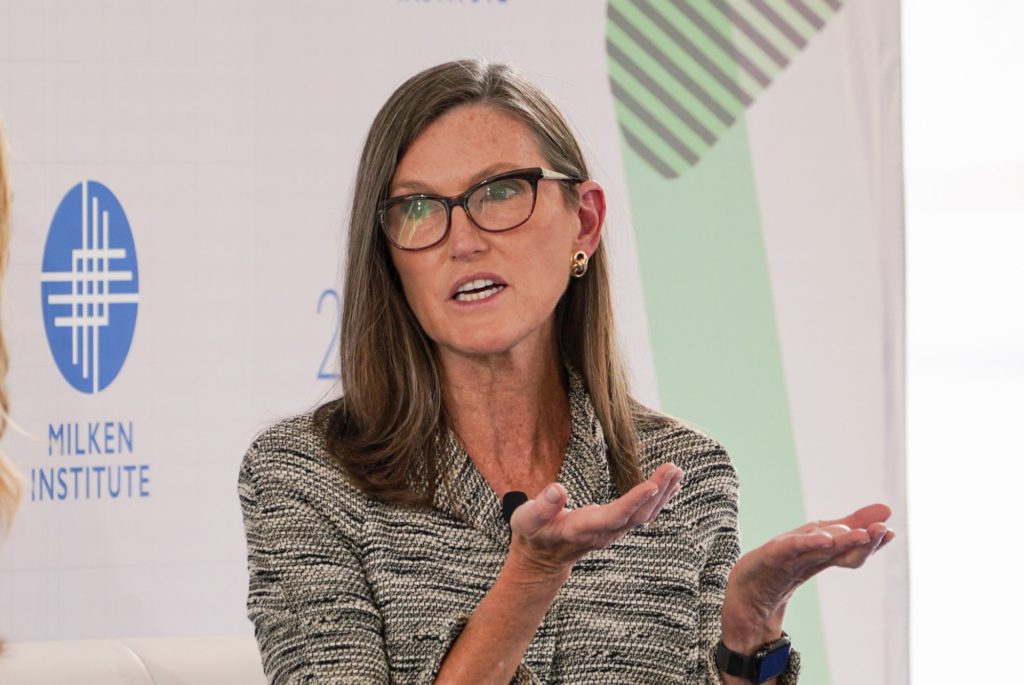
Cathie Wood Targets Illiquid Assets and Limits Exits in New Fund

(Bloomberg) — Cathie Wood is upping her big bet on disruptive tech companies via a new fund targeting less-liquid markets with limits on how quickly investors can exit.

Wood’s firm ARK Investment Management — whose lineup of exchange-traded funds is reeling in the U.S. rout in growth stocks — filed on Thursday for a closed-ended “interval” fund that would expand her flagship strategy into harder-to-trade assets. 

The ARK Venture Fund will follow the same “disruptive innovation” investment theme as the famous ARK Innovation ETF (ticker ARKK), but target “illiquid securities and securities in which no secondary market is readily available, including those of private companies,” the filing said.

The fund is structured with lock-up provisions that will help the famous Wall Street manager to keep more control over investor cash moving in and out of the strategy. 


It’s a telling move by the star money manager. Despite a woeful run of performance that has seen ARKK tumble more than 50% from its peak, investors have stayed remarkably loyal. The new fund will be able to tap into this fan base and invest in companies earlier in their market cycle. It also sidesteps worries about concentration, liquidity and scale that dogged its ETFs after they lured billions.

“This makes a lot of sense as the structure will give Cathie and Co. the freedom to really explore the less liquid areas of the market without having to worry about capacity issues like they would in an ETF,” said Eric Balchunas, a senior ETF analyst with Bloomberg Intelligence. “It’s also smart because it is serving up something Vanguard doesn’t and so can be used to complement the increasingly passive core of a portfolio.”

A spokesperson for ARK confirmed that the filing had been made, but declined to comment further while the fund undergoes the review process at the U.S. Securities and Exchange Commission.

Read more: Cathie Wood’s True Believers Are Sticking With ARK Despite Woes

Interval funds are one solution to a developing dilemma for asset managers. In an era when bonds are less effective at diversifying portfolios and returns are expected to be weak across major assets, investors are increasingly interested in alternatives like real estate or private credit. 

Using an ETF or open-ended mutual fund — which trade daily — to access such assets creates a liquidity mismatch when managers need to raise cash for any redemptions.

By offering redemptions of between 5% and 25% of the fund’s shares just once a quarter, the ARK Venture product should make any mismatch easier to manage. The firm expects to offer 5% per quarter, according to the filing. If the demand to exit exceeds the repurchase offer, shareholders may only be able to withdraw a portion of their investment. 

Although Wood’s ETFs are mainly focused on listed equities, liquidity concerns have dogged ARK because the company often invests in niche corners of the market. 

When the firm exploded in popularity after its stellar run in 2020, the amount of cash funneling into those stocks ballooned. At one point, ARKK held stakes of 10% or more in about 30 names, including more than 25% in Compugen Ltd., Organovo Holdings Inc. and Intellia Therapeutics Inc. 

Read more: Cathie Wood’s Power in Some Stocks Is Even Bigger Than It Seems

The shift to make it harder to pull cash out also mimics a trend in the hedge fund industry, where firms are asking clients to lock up cash for longer. Late last year, Izzy Englander’s Millennium Management was raising cash for a new share class that extended the redemption period to five years. Brevan Howard Asset Management has asked some investors to commit to two.

Meanwhile, Wood has previously noted that innovative companies are valued more highly in the private markets than the public sphere. Tweeting a news story in January about a company choosing to raise funds privately, she said the disconnect “is as wide as I ever have seen.”

Private markets are typically considered more risky than public, thanks to lower disclosure and regulatory requirements, though potential gains can be larger. The Venture Fund will carry a minimum investment of $1,000, according to the filing, providing a low bar for retail investor participation. The product can also leverage to help boost returns.

The $11.5 billion ARKK dropped 27% this year through Thursday. The latest data show net outflows of about $265 million in 2022.

(Updates with response from ARK)

More stories like this are available on bloomberg.com

©2022 Bloomberg L.P.

Amazon Bets Customers Are Willing to Pay $20 More for Prime

(Bloomberg) — Amazon.com Inc. is betting its Prime program provides enough bang that U.S. customers will be willing to pay an extra 20 bucks for an annual subscription. 

The increase to $139 a year, announced Thursday when the company released its fourth-quarter results, is the first price hike since 2018. The company has invested billions of dollars to ensure packages get to customers on time despite an acute labor shortage and supply-chain bottlenecks. Prime subscribers also get access to movies, sports programming and photo storage, among other perks.

The company added millions of new subscribers after previous price increases, and, despite high inflation, analysts say Amazon probably won’t lose many customers once the latest hike goes into effect. Investors welcomed the increase and sent the shares soaring after the company reported robust results, fueled in part by a strong showing from its cloud-services division. 

“Amazon has historically sold the increase in Prime to consumers by saying ‘we have much more and much more items,’” said Tom Forte, a senior research analyst at D.A. Davidson & Co. “They’re spending billions more on content than they were four years ago. I think there’s a strong case to make for price increases. I think there’s a compelling case that the retention rate will still be high.”

Morgan Stanley analysts led by Brian Nowak wrote in a note on Friday that Amazon attracted a large number of households averaging $55,000 to $70,000 in annual income over the last two years. “In our view, the growing and aging of Amazon’s Prime sub base continues to be a key enabler of Amazon’s retail business,” the analysts wrote.

Amazon shares rose 11% at 9:51 a.m. in New York.

The price change goes into effect on Feb. 18 for new Prime subscribers; it will apply to current members who renew after March 25. Amazon also raised its Prime monthly subscription to $14.99 from $12.99. 

The Seattle-based company signed up a combined 60 million U.S. Prime members in 2020 and 2021, according to Consumer Intelligence Research Partners, bringing the total number to 172 million. The research firm attributes the surge in sign-ups to consumers’ stampede online during the pandemic. 

Prime helps Amazon convert occasional shoppers into loyal customers. Prime subscribers typically spend more on Amazon than non-members

The price increase struck Evercore ISI retail analyst Greg Melich “as a bit early,” but he said it should “prove effective” given strong renewal rates and expanded benefits.

More stories like this are available on bloomberg.com

©2022 Bloomberg L.P.

Close Bitnami banner
Bitnami