Bloomberg

Amazon Lifts Tech Stocks, Bringing Hope of a Market Rebound

(Bloomberg) — The Nasdaq 100 index was primed for a rebound Friday as strong earnings from the likes of Amazon.com Inc., Snap Inc. and Pinterest Inc. helped ease fears after Meta Platforms Inc.’s stock crash.

The Invesco QQQ Trust Series 1, the biggest exchange-traded fund that tracks the Nasdaq 100, jumped as much as 2.2% in postmarket trading. Amazon drove the gains, surging 19% after the ecommerce giant reported profit that beat estimates and announced that it will hike the price of a Prime membership. 


Snap soared 56% and Pinterest jumped 17% after their earnings indicated that Meta’s results didn’t augur a broader slowdown in social media. To be sure, those gains came on the back of a huge selloff in the regular session that saw Meta post the biggest collapse in value in U.S. stock-market history. Snap closed down 24% and Pinterest lost 10%, while the broader Nasdaq 100 fell 4.2%, the most since September 2020.

Read more: Meta Erases $252 Billion in Value, Biggest Wipeout in History

Even with Thursday’s after-hours rebound, Amazon and Snap shares were only back to levels they last traded at in mid-January, showing the magnitude of the recent selloff.

The postmarket rally affected several other companies that didn’t report results, including Etsy Inc. (+7.1%), DoorDash Inc. (+7.3%), Snowflake Inc. (+4.2%) and Airbnb Inc. (+2.9%).

(Updates numbers throughout, adds that stocks are at mid-January levels in fourth paragraph)

More stories like this are available on bloomberg.com

©2022 Bloomberg L.P.

Tech-Led U.S. Stock Slump May Weigh on Asia Open: Markets Wrap

(Bloomberg) — Asian stocks face a choppy start Friday after the worst slide in U.S. technology shares since 2020. Concerns about tightening monetary policy have also intensified, sparking a selloff in sovereign bonds.

Futures for Japan and Australia fell, while traders are waiting to see how Hong Kong performs when it reopens from a prolonged holiday. The Nasdaq 100 shed 4.2% and the S&P 500 fell 2.4% as Facebook-owner Meta Platforms Inc. suffered an historic rout that wiped out about $251 billion from its value. 

But the somber mood eased in late U.S. trading. Amazon.com Inc. and Snap Inc. shares soared on strong earnings, spurring a jump in the biggest exchange-traded fund tracking the Nasdaq 100.

Meanwhile, surprisingly hawkish comments from European Central Bank President Christine Lagarde and a Bank of England interest-rate hike highlighted persistent concerns about high inflation. 

That sapped sovereign debt: Australian bonds fell following a jump in European yields and renewed selling in U.S. Treasuries. The euro surged, the pound was higher and a dollar gauge retreated. West Texas Intermediate oil scaled $90 a barrel for the first time since 2014, stoking price pressures.

The latest turbulence underscores how volatility has become the hallmark of global markets this year. Investors are trying to come to grips with less favorable monetary conditions just as the economic recovery from the pandemic show signs of moderating. 

“The first half this year we are now experiencing a rates shock,” Tracy Chen, portfolio manager at Brandywine Global Investment Management, said on Bloomberg Television. “If the Fed and BOE and other EM central banks are too aggressive in hiking interest rates, potentially we are going to face kind of a recession risk in the second half, or at least more slowdown in the economy.”

The latest data showed U.S. service-sector growth pulled back in January to the slowest pace in nearly a year. Meanwhile, U.S. initial jobless claims fell more than expected last week to 238,000 ahead of data on payrolls Friday. 

The looming jobs report “is a reminder that expectations for Fed policy are the key influence on this market right now,” wrote Tom Essaye, a former Merrill Lynch trader who founded The Sevens Report newsletter. A hot inflation print next week would “rekindle hawkish Fed concerns,” he added.

For more market analysis, read our MLIV blog.

What to watch this week:

  • U.S. payrolls report for January, Friday
  • Winter Olympics kick off in China, Russia’s President Vladimir Putin due to attend opening ceremony, Friday

Some of the main moves in markets:

Stocks

  • The S&P 500 fell 2.4%
  • The Nasdaq 100 fell 4.2%
  • Nikkei 225 futures dropped 0.5%
  • Australia’s S&P/ASX 200 futures declined 1.1%

Currencies

  • The Bloomberg Dollar Spot Index fell 0.3%
  • The euro was at $1.1437
  • The Japanese yen was at 114.97 per dollar
  • The offshore yuan was at 6.3531 per dollar

Bonds

  • The yield on 10-year Treasuries advanced six basis points to 1.83%
  • Australia’s 10-year bond yield rose six basis points to 1.93%

Commodities

  • West Texas Intermediate crude rose 2.3% to $90.27 a barrel
  • Gold was at $1,804.90 an ounce

More stories like this are available on bloomberg.com

©2022 Bloomberg L.P.

Ford Misses Estimates as Supply Shortages Throttle Output

(Bloomberg) — Ford Motor Co. reported fourth-quarter earnings that missed analysts’ estimates after sales failed to hit Wall Street’s most-optimistic forecasts, and warned of higher commodity costs in the year ahead.

The automaker on Thursday posted earnings of 26 cents a share excluding some items, less than the 45 cents analysts predicted on average. Adjusted earnings before interest and taxes of $2 billion were less than the $2.77 billion analysts expected.

For 2022, Ford forecasts earnings of $11.5 billion to $12.5 billion before interest and taxes, up 15% to 25% over 2021. That compares with analysts’ estimates of $12.2 billion.

Ford said supply constraints for critical components such as semiconductors prevented the company from meeting customers’ demand. Wholesale deliveries fell 11% in the last quarter to 1.1 million vehicles.

“We have incredible demand for our products,” John Lawler, Ford’s chief financial officer, told reporters on a call. “It’s the supply chains that limited what we could produce and what we could provide. And we see that easing into ’22, and you’ll see that flowing through our profits.”

Some analysts had expected double-digit sales growth, he said. The company is projecting $1.5 billion to $2 billion in higher commodity costs this year.

Sales rose 5% to $37.7 billion in the fourth quarter, with automotive revenue accounting for $35.3 billion of that total and surpassing the $34.6 billion analysts expected.

The stock fell as much as 7.9% to $18.32 in extended trading. It’s down 4.2% this year through Thursday’s close.

Investors have cheered Chief Executive Officer Jim Farley’s effort to accelerate Ford’s switch to electric vehicles, sending the shares up 136% last year and making the company the top automotive gainer. Ford’s market briefly topped $100 billion.

In recent weeks, that valuation has fallen back to around $80 billion. 

“Financial performance is obviously critical,” Farley said in a statement.  “We’re also proud that customers see how Ford is taking EVs mainstream.”

Bloomberg News reported on Feb. 1 that Ford is considering adding up to $20 billion to its EV spending over the next decade to convert factories to battery powered models. Farley has already tripled output of its electric Mustang Mach-E in Mexico and doubled production of the F-150 Lightning going on sale this spring.


Dearborn, Michigan-based Ford has seen car buyers pay up for its models as the pandemic and a shortage of semiconductors slashed inventory on dealer lots, causing discounts to dry up. Average sale prices for Ford models in the U.S. reached almost $51,000 in the fourth quarter, up from $46,211 a year earlier, according to automotive researcher Edmunds.com.

Crosstown rival GM earlier this week reported fourth-quarter earnings that beat analysts’ estimates but its forecast for the year was little changed from 2021.

Read more: GM sees high costs, budget cars capping profit

In its home market of North America, Ford grew its adjusted profit before interest and taxes by 70% in the fourth quarter to $1.82 billion, mainly due to strong demand for vehicles like its Bronco SUV and Maverick pickup. But that undershot the $2.34 billion profit projected by analysts.

Ford’s loss in China, the world’s largest car market, more than doubled in the quarter to $150 million from $66 million the previous year.

(Updates with CFO comments starting in fifth paragraph.)

More stories like this are available on bloomberg.com

©2022 Bloomberg L.P.

Ford Sinks as Supply Shortages Lead to Earnings Shortfall

(Bloomberg) — Ford Motor Co. missed analysts’ fourth-quarter earnings estimates after sales failed to hit Wall Street’s most optimistic forecasts. Shares dropped as the automaker warned of higher commodity costs in the year ahead.

Ford posted earnings of 26 cents a share excluding some items, less than the 45 cents analysts predicted on average. Ford said Thursday that supply constraints for critical components such as semiconductors prevented the company from meeting customers’ demand. Wholesale deliveries fell 11% in the last quarter to 1.1 million vehicles.

“We have incredible demand for our products,” John Lawler, Ford’s chief financial officer, told reporters on a call. “It’s the supply chains that limited what we could produce and what we could provide. And we see that easing into ’22, and you’ll see that flowing through our profits.”

The stock fell as much as 7.9% to $18.32 in extended trading. It’s down 4.2% this year through Thursday’s close.

For 2022, Ford forecasts earnings of $11.5 billion to $12.5 billion before interest and taxes, up 15% to 25% over 2021. That compares with analysts’ estimates of $12.2 billion. Adjusted earnings before interest and taxes of $2 billion were less than the $2.77 billion analysts expected.

Sales rose 5% to $37.7 billion in the fourth quarter, with automotive revenue accounting for $35.3 billion of that total and surpassing the $34.6 billion analysts expected.

Some analysts had expected double-digit sales growth, Lawler said. The company is projecting $1.5 billion to $2 billion in higher commodity costs this year.

Investors have cheered Chief Executive Officer Jim Farley’s effort to accelerate Ford’s switch to electric vehicles, sending the shares up 136% last year and making the company the top automotive gainer. Ford’s market briefly topped $100 billion.

In recent weeks, that valuation has fallen back to around $80 billion. 

“Financial performance is obviously critical,” Farley said in a statement.  “We’re also proud that customers see how Ford is taking EVs mainstream.”

Bloomberg News reported on Feb. 1 that Ford is considering adding up to $20 billion to its EV spending over the next decade to convert factories to battery powered models. Farley has already tripled output of its electric Mustang Mach-E in Mexico and doubled production of the F-150 Lightning going on sale this spring.


Dearborn, Michigan-based Ford has seen car buyers pay up for its models as the pandemic and a shortage of semiconductors slashed inventory on dealer lots, causing discounts to dry up. Average sale prices for Ford models in the U.S. reached almost $51,000 in the fourth quarter, up from $46,211 a year earlier, according to automotive researcher Edmunds.com.

Crosstown rival GM earlier this week reported fourth-quarter earnings that beat analysts’ estimates but its forecast for the year was little changed from 2021.

Read more: GM sees high costs, budget cars capping profit

In its home market of North America, Ford grew its adjusted profit before interest and taxes by 70% in the fourth quarter to $1.82 billion, mainly due to strong demand for vehicles like its Bronco SUV and Maverick pickup. But that undershot the $2.34 billion profit projected by analysts.

Ford’s loss in China, the world’s largest car market, more than doubled in the quarter to $150 million from $66 million the previous year.

(Updates with CFO comments starting in fifth paragraph.)

More stories like this are available on bloomberg.com

©2022 Bloomberg L.P.

Kid Vaccinations Drop; Iowa Downgrades Covid Risk: Virus Update

(Bloomberg) — Covid-19 vaccinations among U.S. children ages 5-11 have fallen to the lowest levels since the shots were first approved, a sign that parental enthusiasm for the shots may be running low even as authorities consider expanding the shots to even younger children.

American Express Co. is encouraging staffers in New York and the U.K. to start returning to the office early next month as Covid-19 cases recede globally.

Prime Minister Justin Trudeau downplayed the idea of deploying Canada’s military to help clear out a trucker protest that’s paralyzed the capital, raising the prospect of an extended occupation of Ottawa’s downtown core.

Sweden will lift restrictions starting next week, citing a high vaccination rate and a manageable situation in its hospitals, while France’s health minister said the country is past the worst of the latest wave.

Key Developments:

  • Virus Tracker: Cases top 387 million; deaths pass 5.70 million
  • Vaccine Tracker: More than 10.1 billion shots administered
  • Covid’s endemic shift means slowdown for virus-product makers
  • New virus research will speed NIH’s next outbreak response
  • What we know about omicron and its subvariant BA.2: QuickTake
  • Sign up for the free Coronavirus Daily newsletter here

Iowa Downgrades Covid Risk to Flu Level (4:49 p.m. NY)

Governor Kim Reynolds said she would allow Iowa’s public health emergency declaration, first issued near the start of the pandemic in March 2020, to expire on Feb. 15. 

“After two years, it’s no longer feasible or necessary,” the Republican governor said in a statement. “The flu and other infectious illnesses are part of our everyday lives, and coronavirus can be managed similarly.”

Health emergencies were declared at the start of the pandemic in all 50 states, and the expanded power of governors proved contentious in many of them. Roughly half of U.S. states have revoked them, and more are expected to do so as the omicron variant surge eases.

Colorado Hopeful on Omicron Immunity (4:36 p.m. NY)

Public health modeling suggests 80% of Colorado residents could be “immune to infection” from the current omicron variant by mid-February, Rachel Herlihy, state epidemiologist, said during a Thursday briefing. At the same time, the number of omicron cases remains elevated “and we have a long way to come down,” said Scott Bookman, Covid-19 incident commander at the Colorado Department of Public Health and Environment. Johns Hopkins researchers estimate 70.1% of Coloradans are fully vaccinated.

Medicare to Cover Free Home Tests (2:46 p.m. NY)

Medicare beneficiaries will be able to get up to eight free over-the-counter Covid-19 tests per month beginning in early spring, the Biden administration announced Thursday.

The new initiative will allow Medicare to directly pay participating pharmacies and other entities for over-the-counter tests approved or authorized by the Food and Drug Administration.

Private Medicare Advantage plans may offer coverage of the tests as a supplemental benefit in addition to hospital Part A coverage and outpatient Part B benefits, the Centers for Medicare & Medicaid Services said. Beneficiaries covered by Medicare Advantage should check with their plan to see if it includes such a benefit.

Amex Tells NYC, U.K. Staff to Start Returning (2:15 p.m. NY)

American Express Co. is encouraging staffers in New York and the U.K. to start returning to the office early next month as Covid-19 cases recede globally.

AmEx has previously said most colleagues will work remotely at least part of the time even after the pandemic subsides. The firm asked New York staffers in those hybrid roles to begin coming back one day a week starting March 1 before a wider return on March 15, Chief Executive Officer Steve Squeri said in an internal memo Thursday seen by Bloomberg News.

“The purpose of this phased approach is to give colleagues some time to adjust to the transition of coming in after working virtually for the past two years, as well as to become familiar with some of the new technology and other changes that have been made to support our new way of working,” Squeri said in the memo.

Kids’ Vaccinations Plummet (1:53 p.m. NY)

Covid-19 vaccinations among children ages 5-11 have fallen to the lowest levels since the shots were first approved, a sign that parental enthusiasm for the shots may be running low even as authorities consider expanding the shots to even younger children.

The seven-day average of first doses fell to about 37,062 on Jan. 28, marking the slowest one-week period since the government approved the vaccines for those children on Nov. 2, according to U.S. Centers for Disease Control and Prevention data. Just 31% of kids 5-11 have gotten a shot, compared with 75% of the total population.

Trudeau Rules Out Army Against Truckers (1:08 p.m. NY)

Prime Minister Justin Trudeau downplayed the idea of deploying Canada’s military to help clear out a trucker protest that’s paralyzed the capital, raising the prospect of an extended occupation of Ottawa’s downtown core.

Trudeau, speaking in a virtual news conference from isolation after contracting Covid-19, said Thursday that the federal government would consider any request for military help from provincial or city officials — but he doesn’t see that happening in the near future.

“One has to be very, very cautious before deploying military in situations engaging Canadians,” Trudeau said. “There have been no requests, and that is not in the cards right now.”

Merck Trims Antiviral Sales View (9:01 a.m. NY)

Merck & Co. said early Thursday that it now expects lower sales for its Covid antiviral molnupiravir than it had previously projected. The company now projects $5 billion to $6 billion in sales of the drug for the year, compared with a previous estimate of $5 billion to $7 billion. 

EU’s Valneva Review to Take Longer (8:56 a.m. NY)

French drugmaker Valneva SE’s vaccine might not receive a decision from European Union regulators until after mid-April, extending the review process.

The European Medicines Agency is awaiting more data from Valneva covering the entire adult population, Marco Cavaleri, the regulator’s head of biological health threats and vaccines strategy, said at a briefing on Thursday. The pace of the review depends on when the data is available, though it’s unrealistic to expect it before Easter, he said.

Subvariant Has Spread Across Africa (8:50 a.m. NY)

The omicron subvariant known as BA.2 has been found across Africa, and countries should sequence more samples so the extent of its spread can be determined, the World Health Organization said. 

So far, the strain has been found in Senegal in West Africa, Kenya in East Africa and Malawi, Botswana and South Africa in southern Africa, Nicksy Gumede-Moeletsi, a virologist with the WHO, said Thursday on a conference call.

Subvariant Dominant in Denmark (8:22 a.m. NY)

The omicron subvariant BA.2 makes up 69% of confirmed cases in Denmark and will reach 100% by mid-February, according to a study from the Danish virus watchdog SSI. BA.2 is about 30% more contagious than the original omicron, known as BA.1, the study found.

While unvaccinated people have a bigger risk of contamination overall, those who have been vaccinated are more likely to catch the new strain than BA.1. Denmark lifted all its Covid restrictions on Tuesday despite record daily cases, as hospitalizations and the number of people with severe disease are gradually declining.

U.K. Regulator Clears Novavax Shot (7:41 a.m. NY)

Novavax Inc.’s vaccine won clearance from U.K. regulators for use in people aged 18 and over for a first and second dose. The Medicines and Healthcare Products Regulatory Agency said nuvaxovid, as the protein-based shot is known, will be the fifth Covid vaccine authorized for use in Britain. 

Health Secretary Sajid Javid said the next step will be for the Independent Joint Committee on Immunisation and Vaccination, the government’s advisory panel on inoculations, to consider its use as part of the country’s Covid vaccination program. 

Europe Could See Covid ‘Ceasefire:’ WHO (6:43 a.m. NY)

Europe is at a crossroads in the fight against the pandemic with a potential “ceasefire” in sight, according to the director for the region at the World Health Organization.

While cases and hospitalizations from the omicron-driven wave are still rising in Europe, deaths are beginning to plateau, Hans Kluge told reporters Thursday. As the omicron wave recedes, Europeans will have a relatively high level of immunity derived from vaccines and from previous infections. 

“This period of higher protection should be seen as a ceasefire that can bring us enduring peace,” Kluge said. He urged a “drastic” increase in vaccinations, particularly in lower- and middle-income countries.

EU Proposes to Extend Certificates (6:14 a.m. NY)

The European Union is proposing to extend its digital Covid certificate system for a year, until the end of June 2023, as it aims to facilitate travel even as many governments are easing or eliminating pandemic-related restrictions.

“Without this extension, we risk having many divergent national systems, and all the confusion and obstacles that this would cause,” Justice Commissioner Didier Reynders said in a statement.

Africa Needs $1.29 Billion for Vaccine Rollout (6 a.m. NY)

Africa is short at least $1.29 billion to fund the rollout of vaccines, the World Health Organization said, citing data from 40 of the continent’s 54 countries. Only 11% of Africa’s 1.2 billion people are fully inoculated and the weekly pace of vaccination needs to rise sixfold to hit a target of getting 70% immunized by the middle of this year, the WHO said Thursday.

German Group Backs Second Booster (6:06 p.m. HK)

Germany’s vaccine commission recommends a second messenger-RNA booster shot for the elderly and people with weakened immune systems or who work in medical and other care facilities.

The second booster should take place at least three months after the first for people who are at least five years old and at heightened risk of serious disease, the commission said. For those working in medical and other care facilities, the second booster should take place at least six months after the first, the commission said. 

Sweden Lifts Restrictions (3:36 p.m. HK)

Sweden will lift restrictions starting next week, citing a high vaccination rate and a manageable situation in its hospitals despite what it calls a massive increase in transmission. “It’s time to open up Sweden again,” Prime Minister Magdalena Andersson told reporters in Stockholm.

‘Worst Is Behind Us,’ French Minister Says (2:20 p.m. HK)

French Health Minister Olivier Veran said the country has endured the hardest part of the latest pandemic wave.

“The worst is behind us,” the minister said late Wednesday on BFM TV, adding that the rate of hospitalizations is peaking.

France’s vaccine pass could be phased out before July if the current infection trends continue, he said. Some 7 million people will lose their vaccine passes by Feb. 15 if they don’t get a booster.


More stories like this are available on bloomberg.com

©2022 Bloomberg L.P.

Meta Erases $251 Billion in Value, Biggest Wipeout in History

(Bloomberg) — Meta Platforms Inc.’s one-day crash now ranks as the worst in stock-market history.

The Facebook parent plunged 26% Thursday on the back of woeful earnings results, and erased about $251.3 billion in market value. That’s the biggest wipeout in market value for any U.S. company ever. 

And while the stock could certainly bounce back in coming days, especially given the volatility that’s gripped the technology sector this year, the mood on Wall Street has turned decidedly bleak on the long-time market darling. 

Analysts pointing to the stiff competition that Meta now faces from rivals and to the fact that revenue was below expectations as causes for concern. Michael Nathanson, an analyst at brokerage Moffett Nathanson, titled his note “Facebook: The Beginning of the End?”

“These cuts run deep,” he wrote. The results were “a headline grabber and not in a good way.”

The sheer size of Facebook’s collapse illustrates just how tech companies have ballooned in size to become behemoths with unprecedented market power, and the drama that can ensue when they stumble.

“Lots of U.S. megacaps are priced as growth stocks. They may suffer more in a rising yield environment, especially if growth becomes more questionable,” said Frederic Rollin, senior investment advisor at Pictet Asset Management.


Meta Slumps With Targets Slashed on TikTok Threat: Street Wrap

Meta “finds itself in the middle of a perfect storm,” wrote Youssef Squali, an analyst at Truist Securities. 

Twitter Inc., Snap Inc. and Pinterest Inc. all closed lower Thursday and dragged the Nasdaq Index down 4.2%, its worst selloff since September 2020. Meta shares rose 1.4% after hours.

Meta’s market cap as of Wednesday’s close stood at roughly $900 billion. The company makes up one of the original Faang cohort of tech megacaps, including Google’s parent Alphabet Inc., Amazon.com Inc. and Apple Inc. 


It’s not the first time Meta shares have dropped dramatically. The stock plunged 19% in July 2018 on a slowdown in user growth, translating to a about $120 billion decline in market capitalization. At the time, it set the record for the largest-ever loss of value in one day for a U.S. traded company.

“We’re hopeful the company kitchen-sinked the outlook,” said Shyam Patil, an analyst at Susquehanna Financial Group. 

(Updates with postmarket prices, closes market value loss in second paragraph)

More stories like this are available on bloomberg.com

©2022 Bloomberg L.P.
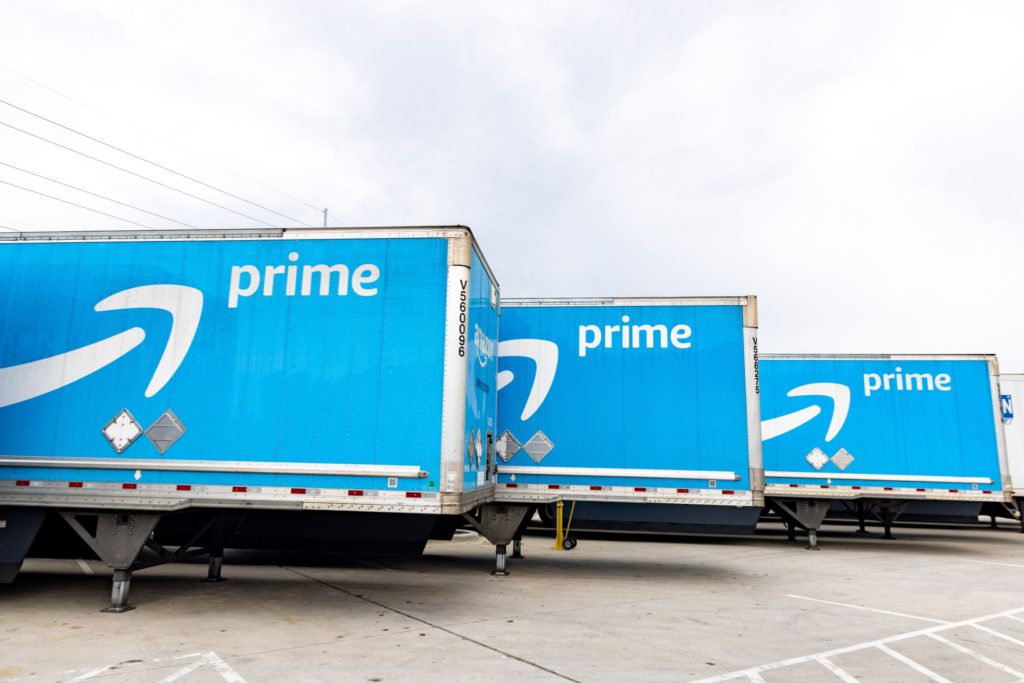
Amazon Raises Prime to $139 From $119, First Jump Since 2018

(Bloomberg) — Amazon.com Inc. is raising the annual fee for its Prime subscription service in the U.S. by $20 to $139, the first such increase since 2018.

For new Prime members, the price change will go into effect on Feb. 18 and will apply to current subscribers who renew after March 25, the company said Thursday in a statement as it reported fourth-quarter results. Amazon also raised its Prime monthly subscription to $14.99 from $12.99. 

The shares surged on the news in extended trading, even as Amazon posted robust financial results, fueled by a strong showing from its cloud services division. 

The Prime price increases were widely expected because the Seattle-based company has incurred billions in margin-eating costs to ensure packages get to customers amid supply-chain bottlenecks and an acute labor shortage.


Prime, which offers subscribers shipping discounts, video streaming and other perks, helps Amazon convert occasional shoppers into loyal customers. Prime subscribers typically spend more on Amazon than non-members.

Amazon signed up a combined 60 million U.S. Prime members in 2020 and 2021, according to Consumer Intelligence Research Partners, bringing the total number to 172 million. The research firm attributes the surge in sign-ups to consumers’ stampede online during the pandemic. 

(Updates with context in third paragraph, chart.)

More stories like this are available on bloomberg.com

©2022 Bloomberg L.P.

Meta Erases $252 Billion in Value, Biggest Wipeout in History

(Bloomberg) — Meta Platforms Inc.’s one-day crash now ranks as the worst in stock-market history.

The Facebook parent plunged 26% Thursday on the back of woeful earnings results, and erased about $252 billion in market value. That’s the biggest wipeout in market value for any U.S. company ever. 


And while the stock could certainly bounce back in coming days, especially given the volatility that’s gripped the technology sector this year, the mood on Wall Street has turned decidedly bleak on the long-time market darling. Analysts are pointing to the stiff competition that Meta now faces from rivals and to the fact that revenue was below expectations as causes for concern. Michael Nathanson, an analyst at brokerage Moffett Nathanson, titled his note “Facebook: The Beginning of the End?” 

“These cuts run deep,” he wrote. The results were “a headline grabber and not in a good way.”

The sheer size of Facebook’s collapse illustrates just how tech companies have ballooned in size to become behemoths with unprecedented market power, and the drama that can ensue when they stumble.

“Lots of U.S. megacaps are priced as growth stocks. They may suffer more in a rising yield environment, especially if growth becomes more questionable,” said Frederic Rollin, senior investment advisor at Pictet Asset Management.

Another way of illustrating the decline: Meta’s decline would be more than the market value of over 460 of the S&P 500’s members.

Meta Slumps With Targets Slashed on TikTok Threat: Street Wrap

Meta “finds itself in the middle of a perfect storm,” wrote Youssef Squali, an analyst at Truist Securities. 

Twitter Inc., Snap Inc. and Pinterest Inc. all closed lower Thursday and dragged the Nasdaq Index down 4.2%, its worst selloff since September 2020.

Meta’s market cap as of Wednesday’s close stood at roughly $900 billion. The company makes up one of the original Faang cohort of tech megacaps, including Google’s parent Alphabet Inc., Amazon.com Inc. and Apple Inc. 


It’s not the first time Meta shares have dropped dramatically. The stock plunged 19% in July 2018 on a slowdown in user growth, translating to a about $120 billion decline in market capitalization. At the time, it set the record for the largest-ever loss of value in one day for a U.S. traded company.

“We’re hopeful the company kitchen-sinked the outlook,” said Shyam Patil, an analyst at Susquehanna Financial Group. 

(Update share price moves throughout.)

More stories like this are available on bloomberg.com

©2022 Bloomberg L.P.

Zuckerberg Tells Staff to Focus on Video Products as Meta’s Stock Plunges

(Bloomberg) — Mark Zuckerberg quipped that if he started to cry, it wasn’t because of the day’s news.

His red, teary eyes were the result of a scratched cornea, the Facebook founder said Thursday, attempting to lighten the mood as Meta Platforms Inc.’s stock price lost more than a quarter of its value.

At a company-wide virtual meeting, Zuckerberg explained that the historic stock drop was a result of Meta’s weak forecast for revenue in the current quarter, according to a person who attended and was not authorized to speak about it. It is important to focus on growing Facebook’s short-video product, he said. 

Zuckerberg echoed his remarks of a day earlier to investors, telling employees that the social networking giant faced an “unprecedented level of competition,” with the rise of TikTok, the rival viral-video platform. Meta’s Instagram app has a copycat of TikTok called Reels, which the company is now prioritizing.

Employees were glued to the stock price. Facebook lost a record $251 billion of value in a single day. Some were discussing buying shares during the dip, believing in Zuckerberg’s long-term vision for the metaverse, an immersive version of the internet. Others fretted about what a continued decline might mean for their net worth, according to people familiar with the matter. Zuckerberg’s own wealth dropped by $31 billion.

Meta is already talking about ways to retain staff amid the stock rout. The social media giant is thinking of extending existing three-day holiday weekends, Zuckerberg said, responding to a question on burnout. He also encouraged exhausted employees to use their vacation days. He added that based on his life experience, transitioning to a four-day work week all the time would not be productive.

Facebook employees, like many in the technology industry, tend to be heavily compensated via shares. Employee options vest on Feb. 15, and annual bonuses hit in March — both of which could be factors in workers’ potential decisions to leave, according to another person familiar with the company’s plans. 

(Updates with value lost in the fifth paragraph)

More stories like this are available on bloomberg.com

©2022 Bloomberg L.P.

Tech Rout Eases Afterhours on Amazon, Snap Results: Markets Wrap

(Bloomberg) — The worst selloff in American technology shares since 2020 showed signs of easing in late trading after Amazon.com Inc. and Snap Inc. soared on quarterly results.

Amazon spiked higher by 15%, while Snap added 40%, lifting the biggest exchange-traded fund tracking the Nasdaq 100 by 2% as of 4:24 p.m. in New York.

The tech-heavy index plunged 4.2% in the cash session while the S&P 500 fell 2.4% as Facebook-owner Meta Platforms Inc. suffered a historic rout that wiped more than $250 billion from its value. 

The index declines came as investors also digested concerns about persistently high inflation from the European Central Bank with hawkish comments from Christine Lagarde. The euro spiked higher along with European bond yields. U.S. Treasuries followed the euro zone lower and the dollar fell. 

“We got hit with a one-two punch today with the big drop in Facebook and the surprising news that the ECB has become more hawkish,” said Matt Maley, chief market strategist for Miller Tabak + Co. “The stock market had rallied in the afternoon each of the last four days, so traders were hoping that could bail us out again. When the rally didn’t materialize, traders lost a lot of confidence.”

Weak numbers from U.S. tech giants including Spotify Technology SA jolted investors who had bet a strong earnings season would keep equities attractive and counter some of their lingering worries including tighter monetary policy. Markets have swung sharply and stocks are nursing losses this year as officials pare stimulus to curb inflation. 

In Europe, the Bank of England hiked its key rate and signaled it would start running down bond holdings. Meanwhile, the ECB held its interest rates and said net buying under its emergency support program will end in March. 

Lagarde said inflation would remain elevated for longer but the bank was getting “much closer” to its inflation target. Germany’s two-year yield rose to a 2015 high. The Stoxx Europe 600 fell below its 100-day moving average.

“As markets focus closely on large, developed-market monetary policy stances — and investor sentiment around the globe shifts — economic activity data releases will be key,” said Marilyn Watson, head of global fundamental fixed income strategy at BlackRock.

Growth in the U.S. services sector pulled back in January to the slowest pace in nearly a year. Meanwhile, U.S. initial jobless claims fell more than expected last week to 238,000 ahead of data on payrolls Friday. 

“Tomorrow’s jobs report is a reminder that expectations for Fed policy are the key influence on this market right now, and if economic data, especially inflation data, comes in ‘too hot’ then that will rekindle hawkish Fed concerns like in January, and we would expect at least a partial return of the January volatility,” wrote Tom Essaye, a former Merrill Lynch trader who founded “The Sevens Report” newsletter. “Bottom line, Fed policy still very much matters to this market.”

For more market analysis, read our MLIV blog.

What to watch this week:

  • U.S. payrolls report for January, Friday
  • Winter Olympics kick off in China, Russia’s President Vladimir Putin due to attend opening ceremony, Friday

Some of the main moves in markets:

Stocks

  • The S&P 500 fell 2.4% as of 4:01 p.m. New York time
  • The Nasdaq 100 fell 4.2%
  • The Dow Jones Industrial Average fell 1.5%
  • The MSCI World index fell 1.8%

Currencies

  • The Bloomberg Dollar Spot Index fell 0.3%
  • The euro rose 1.1% to $1.1431
  • The British pound rose 0.1% to $1.3595
  • The Japanese yen fell 0.4% to 114.94 per dollar

Bonds

  • The yield on 10-year Treasuries advanced five basis points to 1.83%
  • Germany’s 10-year yield advanced 10 basis points to 0.14%
  • Britain’s 10-year yield advanced 11 basis points to 1.37%

Commodities

  • West Texas Intermediate crude rose 2.1% to $90.11 a barrel
  • Gold futures fell 0.2% to $1,806.80 an ounce

More stories like this are available on bloomberg.com

©2022 Bloomberg L.P.

Close Bitnami banner
Bitnami