Bloomberg

Senator Warren Presses Tesla Board Over Musk’s Twitter Actions

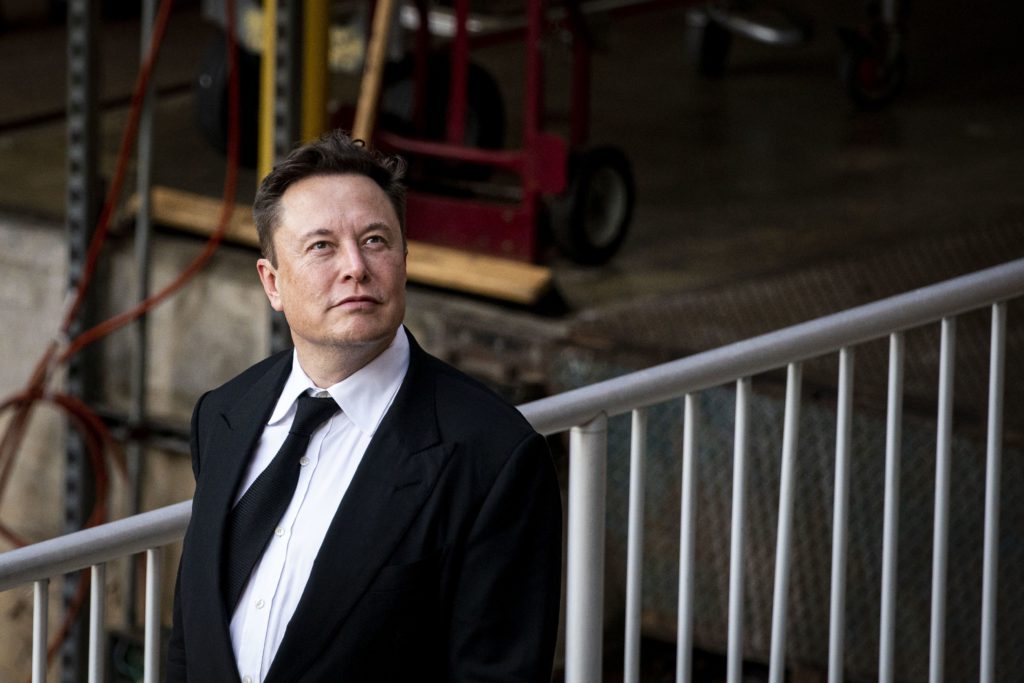
(Bloomberg) — Massachusetts Democratic Senator Elizabeth Warren on Monday sent a letter to the Tesla Inc. board questioning whether Chief Executive Officer Elon Musk is meeting his legal obligations to the company and its shareholders following his purchase of Twitter Inc. 

Warren wrote that Musk’s actions as the new CEO of Twitter have “raised questions about possible violations of securities or other laws.” 

“Despite widespread concerns about Mr. Musk’s acquisition of Twitter while serving as CEO of Tesla, it remains unclear whether the Tesla board – which has key decision-making authority within the company – is adequately governing the company or if it has established clear rules and policies to address the risks to Tesla posed by Mr. Musk’s dual roles,” Warren wrote. 

Musk has pulled Tesla engineers to help out at Twitter since he bought the company for $44 billion earlier this year. Warren’s letter also raised concerns about whether there is a conflict of interest between his roles at Tesla and Twitter, particularly because Tesla competitors like Audi AG advertise on Twitter’s platform. 

The New York Times reported earlier on Warren’s letter to the Tesla board.

More stories like this are available on bloomberg.com

©2022 Bloomberg L.P.

Tesla Rally Fizzles on Fear of Lasting Twitter-Related Risk

(Bloomberg) — An initial advance in Tesla Inc. shares following Elon Musk’s suggestion that he may step back from Twitter Inc. faded on Monday, as investors brace for lasting fallout from the billionaire’s acquisition of the social media company.

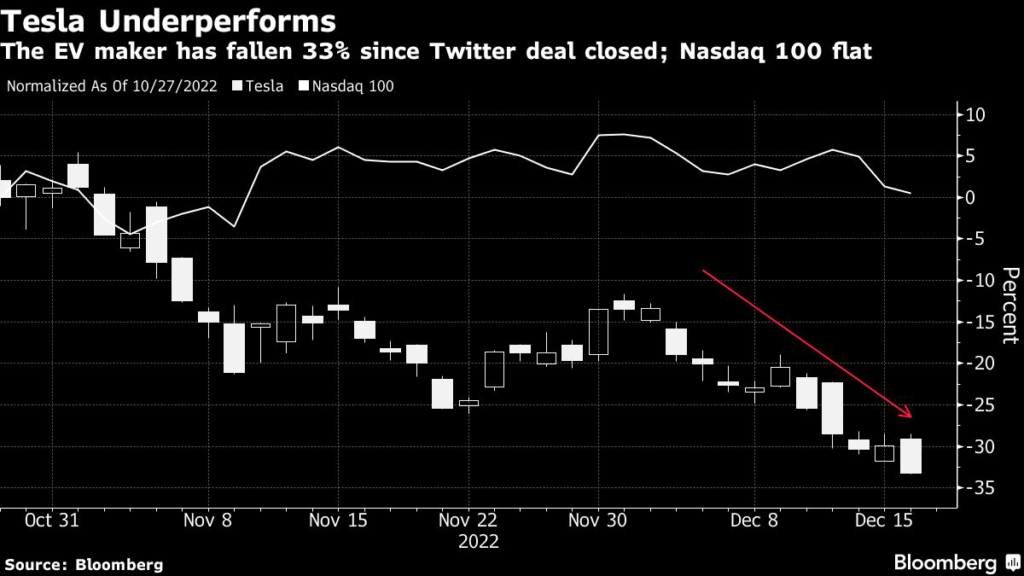
Tesla’s stock fell as much as 1.9% as of 11:09 a.m. New York time, erasing an earlier gain of as much as 3.3%. The shares have underperformed benchmark indexes since Musk took a stake in Twitter in early April and closed the acquisition in late October.

Musk, 51, tweeted Sunday that he would abide by the results of a poll asking whether he should step down as head of Twitter. Users cast more than 17.5 million votes, and 57.5% were in favor of him relinquishing the role.

Analysts at Oppenheimer & Co. nonetheless said in a note Monday that they remain concerned about Twitter-related risks for Tesla and downgraded the stock to the equivalent of a hold rating.

While Oppenheimer’s team led by Colin Rusch has “tried to separate Elon Musk’s non-Tesla endeavors” from their analysis of the company, Musk’s acquisition and management of Twitter “now make that separation untenable.”

Read more: Tesla Is Accused of Illegally Firing Workers Who Criticized Musk

Musk has taken his cues from Twitter users on decisions ranging from whether he should trim his stake in Tesla, to if he should reinstate former President Donald Trump’s account. Whereas his decisions after those polls were relatively straightforward, it’s less clear what he’ll do next with Twitter.

Musk has tweeted that it will be difficult to find another CEO and written that the company “has been in the fast lane to bankruptcy since May.”

“No one wants the job who can actually keep Twitter alive,” he said in another post. “There is no successor.”

Tesla closed last week at a two-year low, costing Musk his position atop the Bloomberg Billionaires Index. While its CEO has been preoccupied with Twitter, the carmaker has been cutting prices and production in China and offering incentives for customers to take delivery of vehicles in the US.

–With assistance from Thyagaraju Adinarayan, James Cone and Kit Rees.

(Updates to reflect share price decline in headline and first paragraph.)

More stories like this are available on bloomberg.com

©2022 Bloomberg L.P.

Tesla Illegally Fired Workers for Criticizing Musk, Complaints Claim

(Bloomberg) — Tesla Inc. allegedly fired two California-based employees in violation of labor laws for being part of a wider group that was discussing and drafting letters critical of Chief Executive Officer Elon Musk, according to their attorneys and complaints they filed with federal regulators. 

One draft letter asked Tesla executives to reconsider the strict return-to-office policy that Musk announced in late May. Another protested Musk’s tweets, saying they violated Tesla’s anti-harassment policy. One employee, who got a raise in May, was terminated in June. The other was fired a few days later and was told their employee discussions were “an attack” on Tesla, according to the Dec. 15 filings with the National Labor Relations Board.

Both employees said they were fired for discussing “Tesla’s failure to enforce its non-harassment policy and its implementation of its post-Covid return to office policy,” according to the complaints. The draft letters were never sent internally at Tesla.  

Tesla did not respond to a request for comment.

See also: Twitter Users Vote for Elon Musk to Step Down as CEO

Shares of the company gave up early gains Monday, falling 1.5% to $147.98 as of 11:16 a.m. in New York. The stock is down about 58% this year.

SpaceX Complaint Echo 

The complaints echo those made in June by several employees at SpaceX, the rocket launch and satellite company where Musk also serves as CEO. Those fired workers wrote an open letter that called Musk’s behavior “a frequent source of distraction and embarrassment for us,” and asked SpaceX leadership to condemn and distance itself from Musk’s “personal brand.” 

SpaceX did not respond to a request for comment.

Musk has long been highly active on Twitter — a platform he now owns. Besides announcing updates on his various companies, he often shares crude jokes and memes that have rankled employees. 

In May, Musk announced a strict return-to-office policy, saying, “Everyone at Tesla is required to spend a minimum of 40 hours in the office per week.”

US law prohibits companies from retaliating against workers for taking collective action related to their working conditions, with or without a union, according to lawyers specializing in labor law.

The Tesla employees are represented by Laurie Burgess and Anne Shaver, two San Francisco attorneys who also represent the SpaceX employees. 

Read more: Terminated SpaceX Workers File Labor Complaint

“These unfortunate firings at Tesla are part of a broader pattern across Elon Musk’s companies of a total disregard for workers’ legal rights,” said Shaver, an attorney at Lieff Cabraser Heimann & Bernstein LLP. “It is illegal to fire employees for organizing for better workplace conditions, including the right to a harassment-free workplace.”

Claims filed with the NLRB are investigated by regional officials. If they find merit in the allegations and can’t secure a settlement, they can issue a complaint on behalf of the board’s general counsel.

Complaints are considered by agency judges, whose rulings can be appealed to the NLRB members in Washington, and then to federal court. The agency has the authority to order companies to reinstate fired workers and provide back pay, but generally can’t hold executives liable for alleged wrongdoing or levy punitive damages.

NLRB members ruled last year that Tesla repeatedly violated labor law, including by firing a union activist and via a threatening tweet sent by Musk. Tesla has denied wrongdoing and is appealing that ruling in federal court. 

(Updates with Tesla shares in fifth paragraph.)

More stories like this are available on bloomberg.com

©2022 Bloomberg L.P.

Binance US Explores Buying Other Distressed Assets After Voyager

(Bloomberg) — Crypto exchange Binance.US is exploring more acquisition opportunities after agreeing to buy Voyager Digital’s assets out of bankruptcy in a deal valued $1.022 billion on Monday. 

“We are in the data room for many other assets that make sense as we focus on growth,” said Binance.US Chief Executive Officer Brian Shroder in an interview. “We are learning about the deals. We are also looking at several firms that are in trouble right now.”

The purpose for any M&A deal would be to drive new users and assets to the Binance.US platform, Shroder said, as well as adding technology, products or services it currently doesn’t have. There’s no earmarked amount for acquisitions, and the exchange still has “hundreds of millions of dollars in current assets” from its growth round, he said. 

Binance.US raised more than $200 million at a $4.5 billion valuation in April.

“There was a narrative around Sam being the white knight — turns out the white knight was not genuine,” Shroder said of Sam Bankman-Fried, whose earlier deal to buy Voyager assets fell through as the FTX exchange imploded. “That is not what we are interested in being perceived as. My goal is for Binance.US to be perceived as a boring, yet trustworthy and dependable crypto exchange.” 

A smaller exchange with millions of users, Binance.US is a separate legal entity with a licensing agreement with Binance.com, the world’s biggest crypto platform. Binance.US is majority-owned by Changpeng Zhao, the founder and chief executive officer of Binance. Unlike Binance.com, it doesn’t offer derivatives trading or margin trading. 

More stories like this are available on bloomberg.com

©2022 Bloomberg L.P.

UBS-Backed Carbon Credit Network Nears 2023 Launch After Test

(Bloomberg) — A carbon-credit transaction network developed by nine banks including Canadian Imperial Bank of Commerce and UBS Group AG is a step closer to launching early next year after completing a series of pilot trades. 

Carbonplace settled trades involving buyers and sellers of environmental credits in Brazil, Australia, Singapore and the UK, two days after the deals were priced. The process included procedures to comply with anti-fraud and money-laundering regulations, according to a statement seen by Bloomberg News. 

Demand for carbon credits may grow more than 40-fold over the next three decades, according to BloombergNEF projections, as companies use them to deliver on commitments to reach net-zero carbon emissions by 2050. 

But the business of trading environmental credits has also been tainted by companies’ use of low-quality carbon offsets to justify claims of carbon neutrality. Carbonplace will only settle trades of credits that are included in widely-recognized registries of those assets, such as Verra or American Carbon Registry, said Robin Green, its chief product officer. 

Carbonplace’s member banks, which also include Natwest Group Plc, Itaú Unibanco and National Australia Bank, started it with the goal of making the process easier for clients who want to buy or sell carbon credits. 

Read more: ‘Carbon Neutral’ Companies Are Relying on Junk Carbon Offsets

“Think of it like eBay,” Green said in an interview. “We are just broadening the access to the market by providing transparency and trust. It’s not that you can’t buy credits right now, but we are really simplifying the process.” Green, based in London, is a CIBC employee who’s been seconded to Carbonplace. 

The pilot trades on the blockchain-based network included the sale of carbon credits from Melbourne-based Carbon Growth Partners and Sao Paulo-based Sustainable Carbon to banks. Two of the transactions were priced via Climate Impact X, an exchange established by DBS Bank, Singapore Exchange, Standard Chartered and Temasek.

More stories like this are available on bloomberg.com

©2022 Bloomberg L.P.

Sam Bankman-Fried Prepared to Be Extradited to US as Soon as Monday

(Bloomberg) — Disgraced FTX co-founder Sam Bankman-Fried has indicated he’s preparing to be extradited to the US from the Bahamas as soon as Monday, according to a person with direct knowledge of the matter.

Bankman-Fried is expected to disclose that he won’t fight extradition in a court appearance in Nassau on Dec. 19. The former FTX chief executive officer has been locked up in the Bahamas since last Monday, when he was arrested at the request of US prosecutors in Manhattan who have accused him of a range of crimes including wire fraud. 

Agreeing to being sent to the US to face charges would be a remarkable reversal: His lawyers last week said he planned to fight extradition. The potential change is in part tied to the expectation that he’ll be able to get bail in the US, according to the person, who asked not to be identified due to the sensitivity of the matter.

Before his arrest, in numerous interviews following FTX’s implosion last month, the 30-year-old denied knowingly committing fraud or breaking the law. Representatives for Bankman-Fried and the US Attorney’s Office for the Southern District of New York, which has been handling the case, declined to comment on Monday.

Since being denied bail in the Bahamas court last week, Bankman-Fried has been in a notorious correctional facility on the outskirts of Nassau known as Fox Hill.

FTX and scores of related companies declared bankruptcy last month after three years of frenetic growth. At its peak, the exchange was worth $32 billion.

Authorities in both the Bahamas and the US are continuing to probe Bankman-Fried’s involvement in FTX’s collapse last month. The firm was headquartered in the Bahamas.

–With assistance from Ava Benny-Morrison and Jim Wyss.

(Updates with details on decision starting in fourth paragraph.)

More stories like this are available on bloomberg.com

©2022 Bloomberg L.P.

Meta Hit With EU Antitrust Charges Over Marketplace Service

(Bloomberg) — Meta Platforms Inc. was hit with a formal complaint from European Union antitrust watchdogs for allegedly squeezing out classified ad rivals by tying the Facebook Marketplace to its own social network.

The European Commission said Monday it issued a so-called statement of objections to Meta, paving the way for potential fines or changes to the firm’s business model. 

“With its Facebook social network, Meta reaches globally billions of monthly users and millions active advertisers,” EU Antitrust Commissioner Margrethe Vestager said in an email announcing the escalation of the case. “Our preliminary concern is that Meta ties its dominant social network Facebook to its online classified ad services called Facebook Marketplace,” meaning “Facebook users have no choice but to have access to Facebook Marketplace.” 

The EU watchdog said it’s also concerned that Meta imposes unfair trading conditions which allow it to use data on competing online classified ad services. 

The case is the latest in a long-running Europe-wide crackdown on the market power of tech firms such as Google, Apple Inc. and Amazon.com Inc. that’s led to multiple probes, fines and beefed-up laws. The EU previously fined Facebook for failing to provide correct information in the merger review of the WhatsApp takeover. Meta is also the subject of investigations in the UK and Germany

Tim Lamb, Meta’s head of EMEA competition, said in a statement that the “claims made by the European Commission are without foundation.” He said the company “will continue to work with regulatory authorities to demonstrate that our product innovation is pro-consumer and pro-competitive.”

Meta shares fell 3% at 10:36 a.m. in New York, almost eight times the Russell 3000 Index Computer Services Subsector. The stock has declined 65% in the past 52 weeks. 

The Brussels-based EU regulator has been investigating Meta’s Facebook since 2019. The platform sought to curb the probe with lawsuits to limit what information officials could scoop up.

Amazon Likely to Settle EU Antitrust Cases by the End of Year

Monday’s move against Meta comes as the EU is poised to announce a settlement in a similar probe into how Amazon uses rivals’ sales data and whether it unfairly favors its own products. 

Despite ramping up the Meta case, the EU on Monday also closed a separate antitrust probe into an advertising pact between Meta and Alphabet Inc.’s Google dubbed “Jedi Blue,” after concluding the agreement didn’t hurt competition. The UK’s CMA is continuing its investigation into the accord.

(Updates with shares in seventh paragraph)

More stories like this are available on bloomberg.com

©2022 Bloomberg L.P.

Most Dramatic Stock Moves of 2022 Led by Meta’s Nosedive

(Bloomberg) — From a little-known manufacturing firm’s 13,000% rally in its US stock-market debut to a flash crash across Nordic stocks, there was no shortage of dramatic moments that consumed equity investors’ focus in 2022.

It was a turbulent period for global stocks amid central banks’ efforts to tamp down rampant inflation, but much of the daily drama that livened up watercooler conversations had little to do with the macroeconomic tides. 

The year brought historic single-day swings in market valuations of the biggest technology companies, abrupt shifts in momentum in Chinese stocks and a shocking plunge in a troubled Swiss bank. Retail behemoths crashed on back-to-back trading days, a Chinese electric-vehicle maker tumbled on speculation over a Warren Buffett-sized stake and tax-cut drama roiled UK markets.

In a trip down memory lane for stock-watchers, here are 10 standout episodes from this year’s abundance of eye-popping moves: 

Feb. 3: Meta Wipeout

Facebook-parent company Meta Platforms Inc. reported catastrophic quarterly results that raised concern about user growth and featured a disappointing sales forecast. The stock tumbled 26%, erasing $251.3 billion of market capitalization, in the biggest one-day wipeout in market value ever for a U.S. company.

It was one of the clearest early indications that investors were souring on megacap tech stocks, a group that had led market gains for years. Meta’s struggles weren’t over: In October, another quarterly report triggered a selloff of about 25%, in part amid investor skepticism about the company’s expensive pivot toward the metaverse. 

March 16: China Policy Rally

To shift from panic selling to a sizzling rally, sometimes all China traders need are a few words from the country’s policy makers. In March, official pledges to ease a regulatory crackdown, support property and technology companies and stimulate the economy spurred a jaw-dropping rally. 

A gauge tracking shares of Chinese companies listed in Hong Kong surged the most since the global financial crisis while the Nasdaq Golden Dragon China Index jumped a record 33%. 

The stunning turnaround, right on the heels of a rout spurred by concerns over Beijing’s close relationship with Russia and regulatory risks, highlights the extreme volatility that investors in Chinese equities endured this year as they struggled to navigate the impacts of strict Covid controls, regulatory crackdowns and slowing growth. 

May 2: Nordic Flash Crash

Equity markets in the Nordic region and elsewhere in Europe were thrust into disarray early on a Monday morning, after an erroneous trade sent the large-cap OMX Stockholm 30 Index plunging as much as 8% in just five minutes. The crash was exacerbated because markets were less liquid than usual due to the UK market being closed. The abrupt move sent traders scrambling, as they were still on tenterhooks after Russia’s invasion of Ukraine. 

It would take most of that day — and the next — for the dust to settle and to identify the trigger for the temporary wipeout that at one point reached 300 billion euros ($318 billion): an erroneous transaction on Citigroup Inc.’s London trading desk. 

May 17-18: Retail Carnage

Barely two weeks later, retail bellwethers Walmart Inc. and Target Corp. came under fire on consecutive days. First, Walmart slashed its annual profit forecast on higher supply-chain costs and as consumers shifted spending to necessities amid soaring inflation, sending the stock down 11% for its worst one-day drop since 1987.

The next day, Target struck a similar tone by cutting its annual margin forecast, prompting a 25% stock slump that was also its worst drop in about 35 years. The S&P 500 sank, and a gauge of retailers plunged to the lowest level since June 2020. 

July 12: Buffett and BYD

BYD Co.’s shares tumbled the most since 2020 after a mysterious 20.49% stake in the Chinese electric-vehicle bellwether appeared in Hong Kong’s clearing system.

Speculation swirled for weeks that this could lead to a stake sale by Warren Buffett’s Berkshire Hathaway Inc., as it equaled the company’s position in BYD, until it was confirmed. Berkshire has since sold more than 25% of its position, contributing to a roughly one-third decline in the stock since around mid-July, even as BYD has reported record monthly sales.

Aug. 31: 13,000% Pop

A China-based garment manufacturer made history with a scorching trading debut, part of a trading pattern in small listings that sparked scrutiny from the exchanges and a warning of potential fraud from regulators.

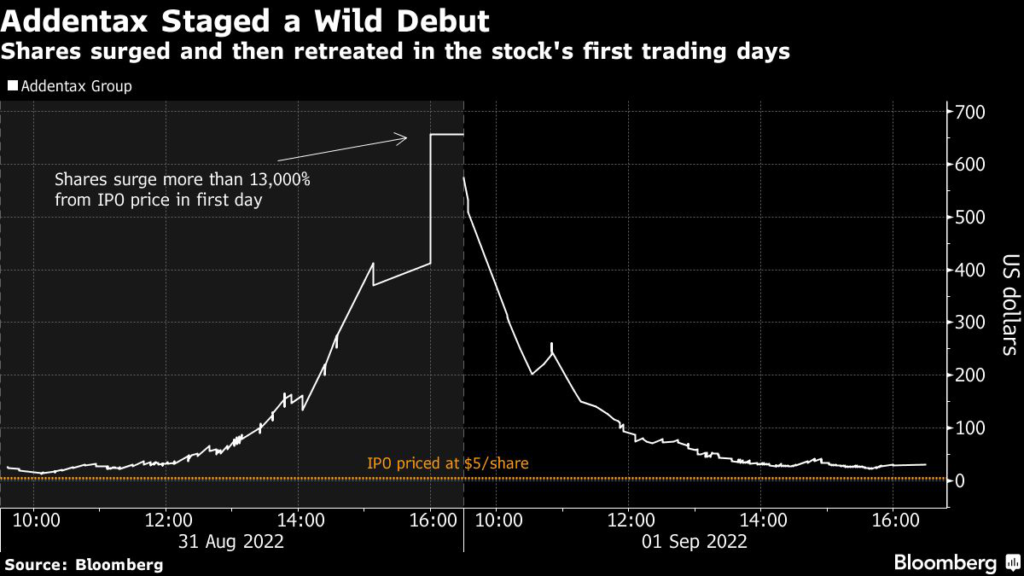
Addentax Group Corp. climbed more than 13,000% from its initial public offering price during its first session, following a US listing that raised $25 million through underwriter Network 1 Financial. It’s the biggest opening-day gain for any US IPO since at least 1990, according to data compiled by Bloomberg excluding deals worth $1 million or less. 

The surge, which has since been completely erased, was part of an unusually frequent pattern of pops in New York’s small IPOs this year. For example, the eight underwritten by Network 1 this year soared by an average of 1,910% in their debut sessions, according to data compiled by Bloomberg. While scrutiny is increasing around the unusual trading, no specific firms have been accused of wrongdoing. 

Sept. 26: UK Budget Fallout

UK traders were taken on a roller-coaster ride after new Prime Minister Liz Truss and Chancellor of the Exchequer Kwasi Kwarteng unveiled a raft of tax cuts in their so-called mini budget. The Friday announcement roiled markets as investors fretted over the increased government borrowing that would be required to fund the policies. But for stocks, most of the damage came the following Monday, on Sept. 26, after Kwarteng doubled down on his unorthodox measures in weekend television interviews.

Shares most exposed to Britain’s economy slumped, with an index tracking homebuilder stocks dropping more than 6%. Banks, real estate funds and retailers were also hit. Kwarteng was fired on Oct. 14 and Truss quit less than a week later, for the shortest stint as UK leader on record.

Oct. 24: China Party Congress Rout

Chinese President Xi Jinping’s move to surround himself with loyalists at the Communist Party congress triggered the biggest plunge in Chinese equities since 2008. Foreign investors dumped a record amount of mainland shares via trading links in Hong Kong on worries that China’s Covid Zero policy would continue without opposition and amid skepticism about the support for private enterprise.

Oct. 27: Credit Suisse Plunge

Shares of Credit Suisse Group AG dropped 19% — the most on record for the bank — after the Swiss lender reported a roughly $4 billion loss and announced a much-anticipated strategic plan. The shares have continued to slump, setting a record low this month. 

The bank has been in the spotlight after billions in losses over the past two years amid scandals involving Greensill Capital and Archegos Capital Management and top management changes. 

Nov. 10: Historic Apple Gain

High inflation was a drag on tech stocks throughout 2022, setting the stage for a huge rally on signs of cooling price pressures. On Nov. 10, softer-than-expected inflation data was the catalyst for a broad-based advance, including at Apple Inc., which soared 8.9%. 

That translated to a $190.9 billion increase in market value, the most ever by a US-listed company, narrowly beating out Amazon.com Inc., which added $190.8 billion after strong results in February.


–With assistance from Ryan Vlastelica, Joe Easton, Charlotte Yang, Jonas Ekblom, Janet Freund, Katrina Lewis, Macarena Muñoz and Drew Singer.

More stories like this are available on bloomberg.com

©2022 Bloomberg L.P.

Fortnite-Maker Epic Games to Pay $520 Million in Children’s Privacy Case

(Bloomberg) — Fornite-maker Epic Games Inc. will pay $520 million in fines and consumer refunds for violating a children’s privacy law and tricking consumers into making purchases, the US Federal Trade Commission said Monday.

Epic will pay $275 million for collecting information about kids under the age of 13, the largest fine ever for a violation of the Children’s Online Privacy Protection Act. The Cary, North Carolina gaming company will also refund consumers $245 million for unauthorized or unwanted purchases.

Fortnite has more than 400 million users worldwide, making it one of the world’s most popular video games. The FTC previously brought cases against Alphabet Inc.’s Google, Apple Inc. and Amazon.com Inc. over children’s  unauthorized digital purchases.

In a statement, Epic said it has made changes to its platform to ensure it is complying with all laws and regulations.

“We accepted this agreement because we want Epic to be at the forefront of consumer protection and provide the best experience for our players,” the company said.

Closely held Epic has investment from Playstation maker Sony Corp. and Chinese gaming giant Tencent Holdings Ltd.  

The settlement requires court approval. The Justice Department filed the complaint and proposed settlement on behalf of the FTC.

More stories like this are available on bloomberg.com

©2022 Bloomberg L.P.
Tesla Stock Rallies on Prospect of Elon Musk Stepping Back From Twitter

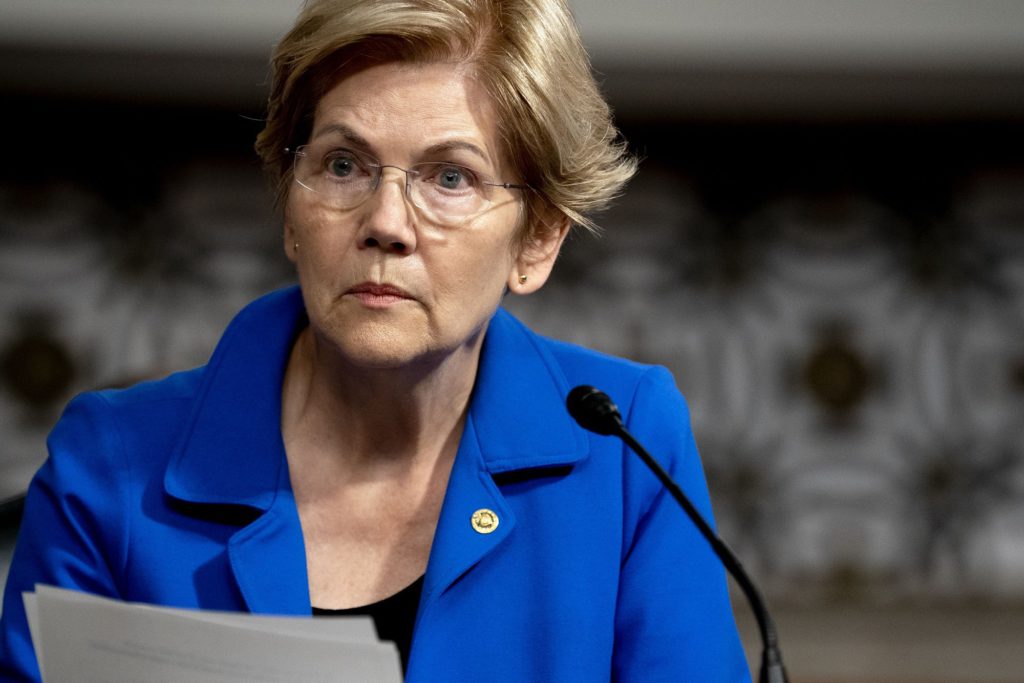
(Bloomberg) — Tesla Inc. shares rose in anticipation of Elon Musk stepping back from Twitter Inc., the social media company that has distracted him from running the electric-car maker for months.

Tesla’s stock advanced 0.7% as of 10:10 a.m. Monday, paring an earlier gain of as much as 3.3%. The shares have dramatically underperformed benchmark indexes since Musk took a stake in Twitter in early April and closed the acquisition in late October.

Musk, 51, tweeted Sunday that he would abide by the results of a poll asking whether he should step down as head of Twitter. Users cast more than 17.5 million votes, and 57.5% were in favor of him relinquishing the role.

Tesla’s chief executive officer has previously taken his cues from Twitter users on decisions ranging from whether he should trim his stake in the car company, to if he should reinstate former President Donald Trump’s account. Whereas Musk’s decisions after those polls were relatively straightforward, it’s less clear what he’ll do next with Twitter. Musk has tweeted that it will be difficult to find another CEO and written that the company “has been in the fast lane to bankruptcy since May.”

“No one wants the job who can actually keep Twitter alive,” he said in another post. “There is no successor.”

Analysts at Oppenheimer & Co. said in a note Monday they remain concerned about Twitter-related risks for Tesla and downgraded the stock to the equivalent of a hold rating.

While Oppenheimer’s team led by Colin Rusch has “tried to separate Elon Musk’s non-Tesla endeavors” from their analysis of the company, Musk’s acquisition and management of Twitter “now make that separation untenable.”

Tesla closed last week at a two-year low, costing Musk his position atop the Bloomberg Billionaires Index. While its CEO has been preoccupied with Twitter, the carmaker has been cutting prices and production in China and offering incentives for customers to take delivery of vehicles in the US.

–With assistance from Thyagaraju Adinarayan, James Cone and Kit Rees.

(Updates with Oppenheimer’s downgrade in the sixth paragraph.)

More stories like this are available on bloomberg.com

©2022 Bloomberg L.P.
Close Bitnami banner
Bitnami