
Bloomberg

What Led Twitter Users Into Voting Elon Musk Out: Timeline

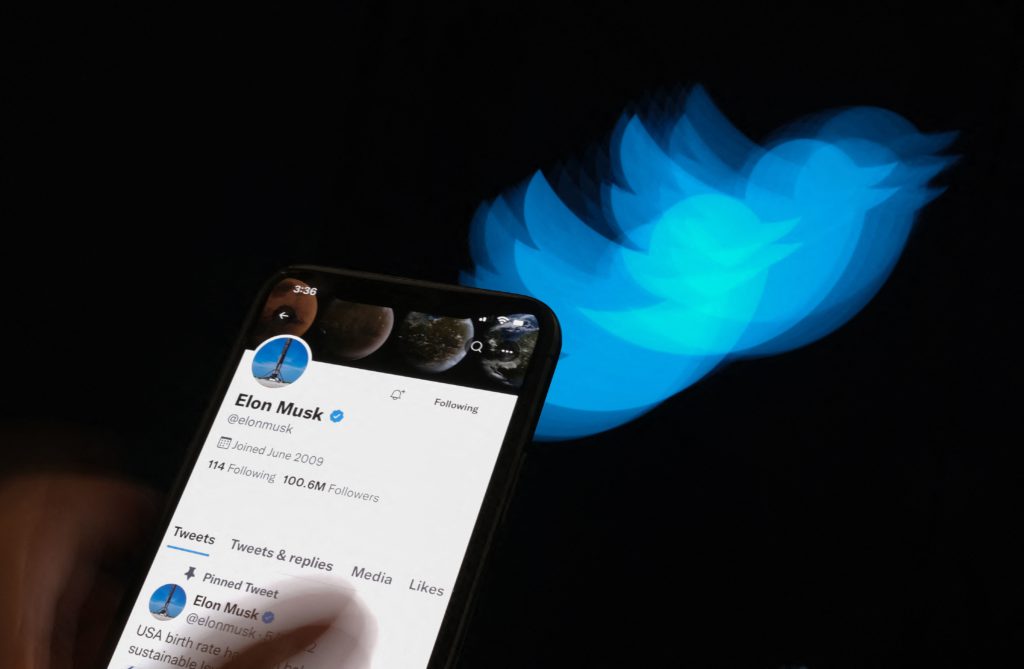
(Bloomberg) — After less than two months at the helm of Twitter Inc., Elon Musk asked his followers whether he should keep the job, pledging to abide by the result of the poll. They said he should step down. 

It’s the latest episode in a tumultuous series of events that’s played out since he acquired the social network for $44 billion. In less than two months, Musk halved the company’s workforce, fired most of its executives, and asked the remaining employees to commit to “hardcore” hours. 

He promised to restore free speech on the platform, but went on to ban several journalists and the owners of accounts he didn’t approve of. He tried to make paid subscriptions popular among users, but it was a particular hit among pranksters and satirists. It scared advertisers, who pulled back on spending, and raised alarm bells in regulatory offices, notably in Europe.

Here’s how events took place:

Oct. 27: Musk takes control

After being forced to complete the deal to buy Twitter for $44 billion, Musk announces he has taken possession of the social network. His first act is to fire the board along with CEO Parag Agrawal, Chief Financial Officer Ned Segal, head of legal and policy Vijaya Gadde and General Counsel Sean Edgett, among others in executive leadership. 

Oct. 28: Brands begin to take pause

As Musk plans to unban accounts and says he will charge for user verification, advertisers start to get nervous. General Motors Co. suspends ads, and others review their Twitter budgets.

Oct. 31: Top tweeters protest

Amid murmurings of plans to charge existing verified accounts, bestselling author Stephen King says in a tweet: “$20 a month to keep my blue check? F—- that, they should pay me. If that gets instituted, I’m gone like Enron.” Musk replies, “We need to pay the bills somehow! Twitter cannot rely entirely on advertisers. How about $8?” Musk double downs on promoting the product. A possible release date of Nov. 7 is debated.

Nov. 3: Massive layoffs begin 

A memo is sent to all employees telling them of imminent layoffs and to watch for an email with the subject line: “Your Role at Twitter.” Badge access to offices is suspended as about 3,700 staffers receive word that they’ve been cut. Realizing employees essential for the continuity of the business have been let go by mistake, some are asked to come back.

Nov. 5: Dorsey apologizes

Twitter co-founder and former CEO Jack Dorsey, who was a proponent of Musk’s acquisition, tweets: “I realize many are angry with me. I own the responsibility for why everyone is in this situation: I grew the company size too quickly. I apologize for that.” 

Nov. 8: Musk sells more Tesla

Despite a previous vow not to sell any more Tesla stock, Musk unloads an additional $3.95 billion, bringing the total sold in the past year to $36 billion at the time.

Nov. 9: Musk answers advertisers’ questions

In an attempt to stem the departure of brands from the platform, Musk hosts a Twitter Spaces Q&A with the head of sales Robin Wheeler, head of trust and safety Yoel Roth, and the CEO of the Interactive Advertising Bureau, David Cohen. Musk brainstorms about how his subscription product can grow by building more commerce into the platform.

Soon after, the company’s blue check mark option becomes available for purchase, and immediately becomes a tool for impersonators. An account masquerading as Nintendo posts an image of Super Mario holding up a middle finger, while a fake Eli Lilly & Co. account tweets that insulin is now free. An impersonator Tesla account jokes about the carmaker’s safety record. Politicians and celebrities are also spoofed.

Nov. 10: More key executives quit

In his first meeting with employees, Musk tells them to brace for 80-hour weeks and requires everyone back in the office full time, ending remote work and other perks like free food. He also says bankruptcy for the company is not out of the question if it doesn’t start generating more cash, and that teams need to move with urgency on the $8 subscription product.

Several executives in charge of keeping Twitter safe and accountable to its users quit, including Chief Information Security Officer Lea Kissner, Chief Privacy Officer Damien Kieran and Chief Compliance Officer Marianne Fogarty. Later in the day there is news that both Roth and Wheeler have resigned, although Wheeler returns soon after.

Nov. 11: Twitter adds badges with the “official” label

Twitter adds badges that say “official” to verified accounts in some places, though confusion abounds.

More brands depart the platform, including theater guide Playbill. “Because of its tolerance for hate, negativity, and misinformation, our time with the social media platform has come to an end,” the company said in a statement.

Nov. 16: Musk doesn’t want to be CEO

At a trial in Delaware Chancery Court over his $55 billion pay at Tesla, Musk says he doesn’t want to be CEO of the electric carmaker, let alone Twitter or any company. He says that he expects the restructuring of the social network to be completed by the end of next week, that he plans on spending less time at Twitter and will ultimately find someone else to run it. 

Musk emails Twitter employees a form titled, “Would you like to stay at Twitter?” asking for a pledge to work long, intense hours with “Yes” as the only option. A response is required by the end of the next day — Nov. 17 — or they can leave with three months severance.  

Nov. 17: #RIPTwitter is trending

As the employment deadline approaches, hundreds that don’t click yes on Musk’s ultimatum start to post their goodbyes across Slack, Blind and Twitter, many with a salute emoji and blue heart.

Nov. 18: “Hardcore” life begins 

Musk summons remaining engineers to a meeting at Twitter headquarters in San Francisco to explain the Twitter tech stack to him. They are asked to email their achievements over the past six months and send screenshots of their most salient lines of software code. 

Nov. 24: Twitter loses its Brussels office as departures continue

Twitter loses its last remaining employees in the regulatory hub of Brussels, at a time when it faces increasing scrutiny from lawmakers. The office was a key hub for Twitter to engage with a deluge of European regulation, much of which has only recently come into force.

Nov. 28: Musk accuses Apple of App Store threats

Musk claims that the iPhone maker had mostly stopped advertising on Twitter, and threatened to withhold the social network from its App Store. On Dec. 4, Musk says Apple has “fully resumed” advertising, de-escalating a brewing war with the tech giant after a meeting with Apple’s CEO Tim Cook. Musk said the two had a “good conversation” and “resolved the misunderstanding about Twitter potentially being removed from the App Store.” Musk said Cook was “clear that Apple never considered doing so.”

Dec. 02: Musk teases the “Twitter Files”

Musk teases the release of executive emails showing the internal debate at the social network over a controversial decision in 2020 to restrict access to an article about a laptop purportedly owned by Hunter Biden. The so-called Twitter Files include screenshots of user accounts as part of a collection of internal documents, which Musk handed over to reporters.

Dec. 13: Twitter disbands content moderation council

Twitter disbands its Trust and Safety Council, a group of independent experts who provided guidance on content moderation issues, days after several members quit over concerns about the company’s ability to police the platform for harmful content.

Dec. 14: Musk loses title as “world’s richest person”

Musk discloses that he’s sold another batch of Tesla shares, totaling $3.58 billion, bringing the amount he’s offloaded since late last year to almost $40 billion. The disposal of about 22 million shares coincided with Musk falling from the top spot on the Bloomberg Billionaires Index, replaced by Bernard Arnault. Tesla’s market value also slumped below the half-trillion-dollar mark for the first time since November 2020.

Dec. 16: Twitter bans journalists

Twitter suspends the accounts of journalists accused by Musk of posting his real-time location, something he described as “basically assassination coordinates.” The company says some of the accounts would be restored. Accounts tracking private jets, including Musk’s, are also banned from the platform.

The moves drew backlash from European politicians, with threats of future sanctions and lawmakers leaving the platform. “There are red lines. And sanctions, soon,” European Commission Vice President Vera Jourova said in a tweet. 

Dec. 17: The hunt for new investors

Musk seeks new investors for Twitter at the same price he paid when he took the company private. The managing director of the billionaire’s family office, Jared Birchall, reached out to potential backers, news site Semafor reported.

Dec. 18: Twitter forbids the promotion of other social media

Twitter starts removing accounts promoting other social media platforms, such as Facebook, Instagram and Mastodon. “We recognize that many of our users are active on other social media platforms. However, we will no longer allow free promotion of certain social media platforms on Twitter,” the company said on its own account. Some journalists see their accounts unbanned after Musk u-turns on his decision.

Dec. 19: Twitter users vote for Musk to step down as CEO

“Should I step down as head of Twitter?” Musk asks in a poll, promising to respect its outcome. About 58% of the 17.5 million voters are in favor of Musk giving up his position after 53 days at the helm, potentially leaving the company devoid of senior leadership. Musk was in Qatar to watch the World Cup final match between Argentina and France and tweeted out his poll after the game’s conclusion.

–With assistance from Craig Trudell, Dana Hull, Martine Paris and Kurt Wagner.

(Updates with Apple section)

More stories like this are available on bloomberg.com

©2022 Bloomberg L.P.

Elon Musk Says ‘No One Wants’ Top Twitter Job, But Some People Raise Their Hands

(Bloomberg) — Elon Musk said there is no one willing and capable of running Twitter Inc. But if he is good to his word and walks away from the top leadership position at the social media company he bought two months ago, a number of people are already raising their hands.

Musk polled his following on Sunday night asking if he should step down, and the answer early Monday morning by about 58% of respondents was yes.

The mercurial entrepreneur has been almost single-handedly running Twitter since he bought the company in October, having fired or accepted resignations from almost all of the top-rank executives in the past months. Musk said early on that he didn’t plan to stay on permanently as chief executive officer and he has surrounded himself with a few trusted people, some of whom have suggested they’d be ready to take on what he calls a thankless task. 

“No one wants the job who can actually keep Twitter alive. There is no successor,” Musk tweeted, adding “and it has been in the fast lane to bankruptcy since May.”

In the early days of Musk’s takeover of Twitter, he created a War Room, or fix-it committee, to revamp Twitter that included Jason Calacanis, an investor and podcaster, and former PayPal Holdings Inc. exec David Sacks.  Another Musk loyalist who has been present since the early days is Andreessen Horowitz partner Sriram Krishnan, also a former Twitter executive.

Calacanis ran his own Twitter poll asking whether people thought he or Sacks should run Twitter, or a combination of both of them. Sacks garnered 31% of the vote, with 39% going to “other.” Calacanis didn’t immediately respond to a request for comment. Musk didn’t respond to requests for comment on whether he was following through with honoring the outcome of the poll and who might replace him. 

At the time Musk first moved in to Twitter’s headquarters on Market Street in San Francisco and began making wholesale changes to the company, people familiar with the situation said Sacks, Calacanis and Krishnan were given internal accounts, helped with identifying those deemed talented enough to stay on and were part of the initial pitch to advertisers in an effort to stem the flow of clients pulling ads. Calacanis and Sacks both have denied ever holding a formal role at the company.

Read more about Musk’s Twitter fix-it team 

As CEO of Tesla Inc. and Space Exploration Technologies Corp., Musk could also tap talent at either of the other companies he helms. He’s been known to shuffle staff among his businesses before and brought in executives from Tesla to Twitter to help with the transition. Omead Afshar – previously the leader at Tesla’s Austin plant – was moved to SpaceX to work on Musk’s ambitious Starship deep-space rocket, Bloomberg has reported. And Tom Zhu, who joined Tesla in 2014 to help build its Supercharger network and most recently has been heading the carmaker’s Asia Pacific operations, is back in Austin, Bloomberg has reported, with some of his engineering team from China with him to assist in overseeing the ramp up of Giga Texas, a US hub for the Model Y and future production of the Cybertruck.

Others have been volunteering but have gained little traction. Lex Fridman, a respected AI academic and research scientist at MIT and a fan of Musk offered himself up, but was given a dour response.

Musk replied: “You must like pain a lot. One catch: you have to invest your life savings in Twitter and it has been in the fast lane to bankruptcy since May. Still want the job?”

The Financial Times suggested that Sheryl Sandberg could fit the bill. The longtime chief operating officer at Facebook was credited as the driving force behind the boom and advertising prowess at the company, which has since been renamed Meta Platforms Inc. If Sandberg doesn’t want the job, the FT suggested Sarah Friar, who was formerly chief financial officer of payments company Square Inc.

Musk has previously said he wants a ‘technologist,’ someone with talents across software and servers to take on the role, given those areas are at the core of Twitter’s business.

In an exchange with Former T-Mobile US Inc. CEO John Legere about a month ago, Musk rejected Legere’s voluntary outreach with a terse “no.” 

More stories like this are available on bloomberg.com

©2022 Bloomberg L.P.

Binance US to Buy Bankrupt Voyager Digital’s Assets for $1 Billion

(Bloomberg) — Crypto exchange Binance.US will buy Voyager Digital’s assets out of bankruptcy in a deal worth $1.022 billion, a discount to an earlier, failed sale struck with FTX.

Voyager selected Binance.US as the highest and best bidder after reviewing options, the company said in a statement Monday. The bid “sets a clear path forward for Voyager customer funds to be unlocked as soon as possible,” according to the statement, and the company will aim to return crypto to its customers in kind. 

FTX won an auction for Voyager’s assets in September with an offer valuing the company at $1.4 billion, of which $51 million was in cash. That arrangement fell through after FTX imploded in November. 

  • Read more: FTX Talking to Bahamas Regulators to Try to End Bankruptcy Feud

The Binance.US deal values Voyager’s crypto portfolio at just over $1 billion at current market prices and includes another $20 million of “incremental value,” according to the statement. The sale is subject to bankruptcy court approval, and a hearing is scheduled for Jan. 5. 

The Binance US entity buying Voyager operates as a separate legal entity with a licensing agreement with Binance.com and is led by Chief Executive Officer Brian Shroder. In a thread on Twitter, Shroder said they intend to provide users access to their assets in March 2023, pending court approvals. 

Voyager offered crypto trading, staking — a way of earning rewards for holding certain cryptocurrencies — and yield products and was among the companies burned by the downfall of hedge fund Three Arrows Capital Ltd. In June, it issued a notice of default to Three Arrows on a loan worth about $675 million. In July, Voyager filed for bankruptcy. 

Voyager also had extensive financial ties with Alameda Research, Sam Bankman-Fried’s crypto trading firm. Alameda acted as a lender, borrower, and backer of Voyager. 

  • Read more: Voyager Seeks Bankruptcy as Crypto Mogul’s Lifeline Fails

The collapse of FTX bolstered Binance.com’s overall market dominance during a time of negative industry sentiment. Binance’s market share has risen to 52.9%, its biggest ever, according to data compiled by CryptoCompare. 

–With assistance from Claire Boston.

(Adds additional details throughout, beginning in first paragraph.)

More stories like this are available on bloomberg.com

©2022 Bloomberg L.P.
Binance.US to Buy Voyager Assets in $1.022 Billion Deal

(Bloomberg) — Crypto exchange Binance.US will buy Voyager Digital’s assets out of bankruptcy in a deal worth $1.022 billion, a discount to an earlier, failed sale struck with FTX.

Voyager selected Binance.US as the highest and best bidder after reviewing options, the company said in a statement Monday. The bid “sets a clear path forward for Voyager customer funds to be unlocked as soon as possible,” according to the statement, and the company will aim to return crypto to its customers in kind. 

FTX won an auction for Voyager’s assets in September with an offer valuing the company at $1.4 billion, of which $51 million was in cash. That arrangement fell through after FTX imploded in November. 

  • Read more: FTX Talking to Bahamas Regulators to Try to End Bankruptcy Feud

The Binance.US deal values Voyager’s crypto portfolio at just over $1 billion at current market prices and includes another $20 million of “incremental value,” according to the statement. The sale is subject to bankruptcy court approval, and a hearing is scheduled for Jan. 5. 

The Binance US entity buying Voyager operates as a separate legal entity with a licensing agreement with Binance.com and is led by Chief Executive Officer Brian Shroder. In a thread on Twitter, Shroder said they intend to provide users access to their assets in March 2023, pending court approvals. 

Voyager offered crypto trading, staking — a way of earning rewards for holding certain cryptocurrencies — and yield products and was among the companies burned by the downfall of hedge fund Three Arrows Capital Ltd. In June, it issued a notice of default to Three Arrows on a loan worth about $675 million. In July, Voyager filed for bankruptcy. 

Voyager also had extensive financial ties with Alameda Research, Sam Bankman-Fried’s crypto trading firm. Alameda acted as a lender, borrower, and backer of Voyager. 

  • Read more: Voyager Seeks Bankruptcy as Crypto Mogul’s Lifeline Fails

The collapse of FTX bolstered Binance.com’s overall market dominance during a time of negative industry sentiment. Binance’s market share has risen to 52.9%, its biggest ever, according to data compiled by CryptoCompare. 

–With assistance from Claire Boston.

(Adds additional details throughout, beginning in first paragraph.)

More stories like this are available on bloomberg.com

©2022 Bloomberg L.P.
Adani Launches Digital Consumer App for Airport Services

(Bloomberg) — The Adani Group rolled out a digital platform for its airport vertical on Monday as the ports-to-power conglomerate, helmed by Asia’s richest person, Gautam Adani, inches closer to unveiling its super app.

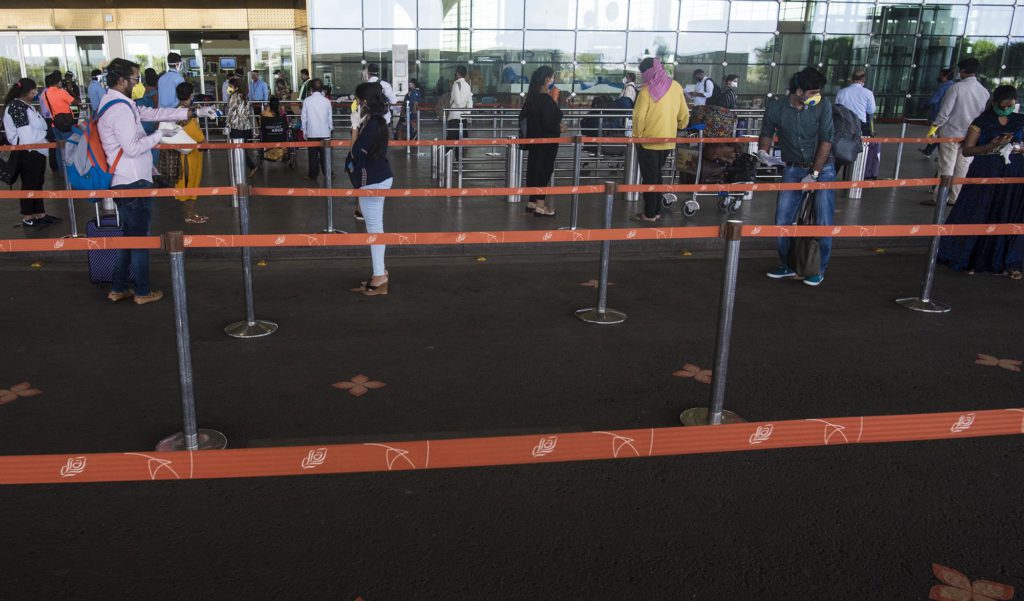
Adani One, developed in-house, will enable users to book air tickets, check flight status, access lounges, shop for duty-free products, get cabs and avail parking facilities. 

“We have taken a step forward in our digital journey,” Nitin Sethi, senior vice president and chief digital officer for consumer businesses at Adani Group, wrote in a LinkedIn post. “It’s our collective effort to build a digital twin that will eventually parallel our traditional businesses.”

The rapidly-diversifying Adani Group is the country’s largest airport operator. With an all-in-one e-commerce app, it will join fellow conglomerate Tata Group in vying for a piece of the fiercely-competitive sector, currently dominated by Amazon.com Inc. and Walmart Inc.-owned Flipkart Group. 

Sethi said Adani One aims to gather customer insights and feedback that will help the conglomerate improve its services.

Gautam Adani said last August his super app will be launched in six months and he wants it to be “the Ferrari of the digital world.”


More stories like this are available on bloomberg.com

©2022 Bloomberg L.P.

Facebook’s Meta Will Devote 20% of Costs to Metaverse Next Year

(Bloomberg) — Facebook parent company Meta Platforms Inc. will continue to devote about 20% of its overall costs and expenses to Reality Labs in 2023, despite questions about the business division focused on augmented and virtual reality and the so-called metaverse.  

The projection, given by CTO Andrew Bosworth in a blog post Monday, is little changed from the 18% of spending Meta devoted to Reality Labs in the third quarter. That means the bulk of the company’s investments will continue to go toward what Meta calls its “family of apps” – Facebook, Instagram, WhatsApp, and Messenger.  

Meta stock is down nearly 65% this year, and some have questioned Meta CEO Mark Zuckerberg’s expensive bet on the metaverse which comes as the company has cut other costs, including widespread layoffs. Reality Labs reported a loss from operations of $9.4 billion through the first nine months of the year; Meta’s family of apps, by comparison, brought in roughly $32 billion in profit during that same period. 

Bosworth said 2022 had been harder than expected.

“Economic challenges across the world, combined with pressures on Meta’s core business, created a perfect storm of skepticism about the investments we’re making,” he said. Still, he added, pulling back on future bets to focus on short-term goals alone can have “disastrous consequences.”

A 20% investment in futuristic technologies is a “level of investment we believe makes sense for a company committed to staying at the leading edge of one of the most competitive and innovative industries on earth,” he said. 

More stories like this are available on bloomberg.com

©2022 Bloomberg L.P.
YouTube Removed More Than 10,000 Videos Related to Midterms

(Bloomberg) — YouTube took down more than 10,000 videos related to the US midterm elections for violating its policies on election integrity and other guidelines, with 75% removed before they reached 100 views, the division of Alphabet Inc.’s Google said on Monday.

“We enforced our policies regardless of a speaker’s public figure status or their political viewpoint, and regardless of the language the content was in,” Leslie Miller, YouTube’s vice president of government affairs and public policy, wrote in a blog post. “We’ll apply learnings from these US midterms to our ongoing work supporting the integrity of elections around the world.”

The hugely popular video site and other social media companies have been under pressure since the 2016 US presidential election to ensure their platforms are not manipulated to spread political misinformation. YouTube published its results now that the Georgia runoff earlier this month has concluded. 

YouTube said it removed content that went against rules forbidding users from deceiving people about how to vote, encouraging violence and promoting misinformation, such as the falsehood that the 2020 US presidential election was stolen. The video platform also said that over 85% of its algorithmically-driven video recommendations on midterm-related topics came from authoritative news sources across multiple languages, including English and Spanish, from outlets such as Univision and NBC News.

More stories like this are available on bloomberg.com

©2022 Bloomberg L.P.
Funding for Latin America’s Unicorns Vanishes as Venture Capital Pulls Back

(Bloomberg) — The deluge of venture capital that poured into late-stage Latin American tech companies in recent years has dried up, forcing some of the region’s most promising startups to fire staff, rethink growth plans and turn to bank loans for funding. 

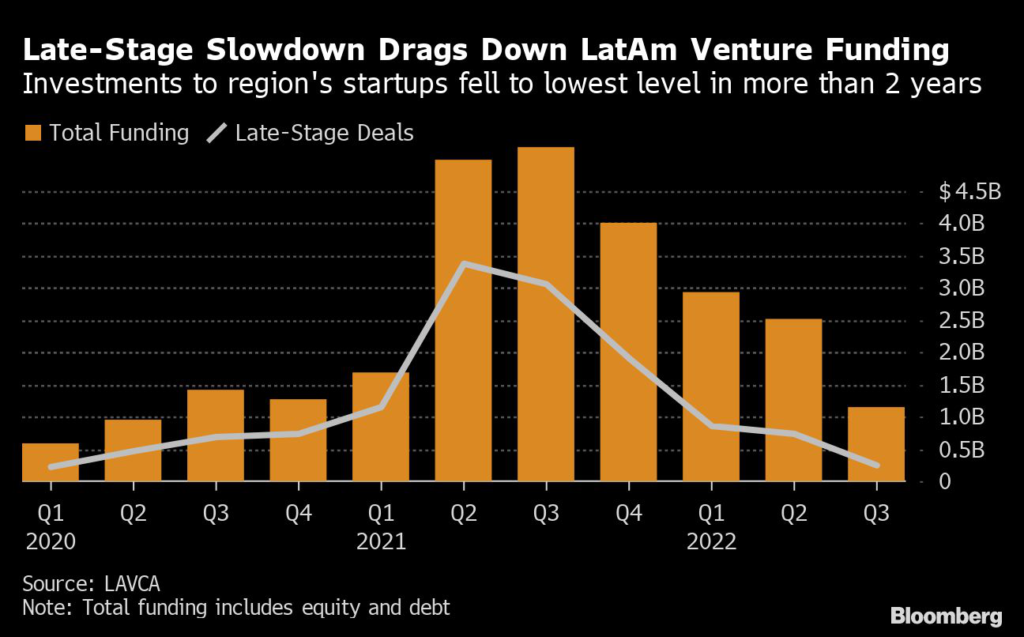
After a series of record years in which investors minted more than two dozen companies valued at $1 billion or more, venture capital has all-but vanished for more-established startups. Late-stage funding plummeted 92% in the third quarter compared to the same period a year ago, according to the Association for Private Capital Investment in Latin America, or LAVCA.  

“I haven’t seen a growth round from a single company from Latin America for months,” said Eric Reiner, founder and managing director of Vine Ventures LP, which opened a $140 million fund this year for investments in Latin America, Israel and the US. “When capital dries up, investors become more sophisticated and picky. A lot of these companies will have to show they’re real businesses.”

The slowdown tracks a global decrease in venture capital spending, which is on pace for the sharpest drop in more than two decades. For Latin America, it comes just as the startup industry was taking off: As recently as early this year, investors were quick to write checks, spawning waves of fast-growing companies in everything from financial technology to real estate. 

Overall, venture financing to the region last quarter dropped by more than three-fourths from a year earlier to $1.15 billion, according to LAVCA data.

High inflation and rising interest rates have led funds to turn away from riskier sectors. Instead of making investments based on growth projections, venture capitalists said they want companies to prove a clear path to turning a profit.  

“I still think it’s reasonable to be optimistic for the region. But we have seen corrections. It’s logical and natural and reflects that investors are demanding companies show profitability,” said Karin Tenenboim, investment manager at Newtopia VC, a firm based in Argentina that focuses on the region. “It’s a different mindset.” 

Companies from Mexico to Argentina have halted expansion plans and cut staff to preserve cash and improve margins. In recent weeks:

  • Loft, a Brazilian property technology company that was valued at $2.9 billion last year, said it reduced 12% of its workforce this month, the third time it cut staff this year. A spokesperson said the company’s valuation has not been affected.
  • In Colombia, Muni, a commerce platform that had expanded to Mexico and Brazil and raised $20 million in September, said it closed down.
  • Mexican crypto exchange Bitso, valued at $2.2 billion last year after raising $250 million in a round led by Tiger Global, cut staff in the wake of the collapse of FTX.
  • Jokr, a rapid delivery startup valued at $1.2 billion a year ago, pulled out of Santiago, Chile, and Medellin, Colombia, a company spokesperson said. In June, the company pulled back from the US to focus on Latin America.

Debt Deals

Héctor Jirau, director of operations and investment at Parallel 18, a tech accelerator in Puerto Rico, said that the slowdown has prompted founders and investors to structure deals differently, including using more debt.  

Banks like Goldman Sachs Group Inc. and Citigroup Inc. are moving into the space. Despite rising interest rates, startups took out $1.3 billion in credit lines from traditional banks, according to LAVCA.  

“There’s definitely been an increase in the availability of more novel structures for financing startups in Latin America,” said Martin Pustilnick, co-founder and CEO of Mundi, a startup that works with Mexican exporters. 

Mundi has borrowed $100 million to fuel its growth, which has given it more flexibility as lenders are less concerned with profitability in the short term, he said. “There will be a big opportunity for debt for the next few years as equity funds are pulling back from the market.”

–With assistance from Nicolle Yapur.

More stories like this are available on bloomberg.com

©2022 Bloomberg L.P.

United Internet Web Hosting Arm Ionos Eyes €5 Billion IPO Value

(Bloomberg) — United Internet AG is eyeing a potential market value of as much as €5 billion ($5.3 billion) in the planned listing of its web hosting arm Ionos Group, in what’s set to be a litmus test for Europe’s moribund IPO market, people familiar with the matter said. 

Ionos’s owners, United Internet and Warburg Pincus, have been holding preliminary meetings with fund managers in recent weeks to gauge investor appetite for the float, the people said, asking not to be identified because discussions are private. They plan to push ahead with the share sale by February based on investor feedback, they said, though timing and valuation are fluid.

Ionos may be one of the first to try reopening the region’s IPO market, which has come to a virtual standstill as investors turn risk-averse amid rising interest rates and heightened inflation. The owners are betting on pent-up demand among investors, a profitable and growing business and stabilized economic outlook to buoy the listing. 

Investors have been discussing a potential enterprise value for Ionos’s hosting operations of between 14 and 20 times its estimated 2023 earnings before interest, taxes, depreciation and amortization, according to the people. They’re comparing the business to publicly traded peers like GoDaddy Inc. and Squarespace Inc. 

Ionos has more than 6 million customers, with a focus on small- and medium-sized enterprises in Europe and North America, according to a recent release. The company also runs a smaller, fast-growing cloud business, which competes with firms including France’s OVH Groupe SAS and New York-listed DigitalOcean Holdings Inc. 

The multiples being discussed for the web hosting and cloud business would translate into an equity valuation of roughly €4.5 billion to €5 billion for Ionos after subtracting the group’s net debt of €1.2 billion and applying an IPO discount, the people said.

United Internet owns about 75% of Ionos, while Warburg Pincus owns the remainder. The size of the stake sale will depend on demand, but both parties are likely to sell down and the buyout firm may seek a full exit, they said. They’re hoping to take advantage of buoyant valuations from recent transactions in the industry, including a combination of private equity-backed Dogado Group and Group.One earlier this month.

Shares of United Internet have declined by almost half this year amid a broader selloff in tech stocks, giving the company a market value of €3.6 billion. The German firm has selected JPMorgan Chase & Co., Deutsche Bank AG, Berenberg and BNP Paribas SA to lead the Ionos IPO as joint global coordinators, Bloomberg News reported in November.

Terms of the IPO haven’t been finalized and could change depending on market conditions. Representatives for United Internet and Warburg Pincus declined to comment.

More stories like this are available on bloomberg.com

©2022 Bloomberg L.P.

Grayscale Considers Tender Offer for Bitcoin Trust Fund If SEC Lawsuit Fails 

(Bloomberg) — Grayscale Investments is considering appealing to the same US regulator that it’s currently suing for permission to buy back shares of its heavily discounted Bitcoin trust should the firm’s lawsuit fail. 

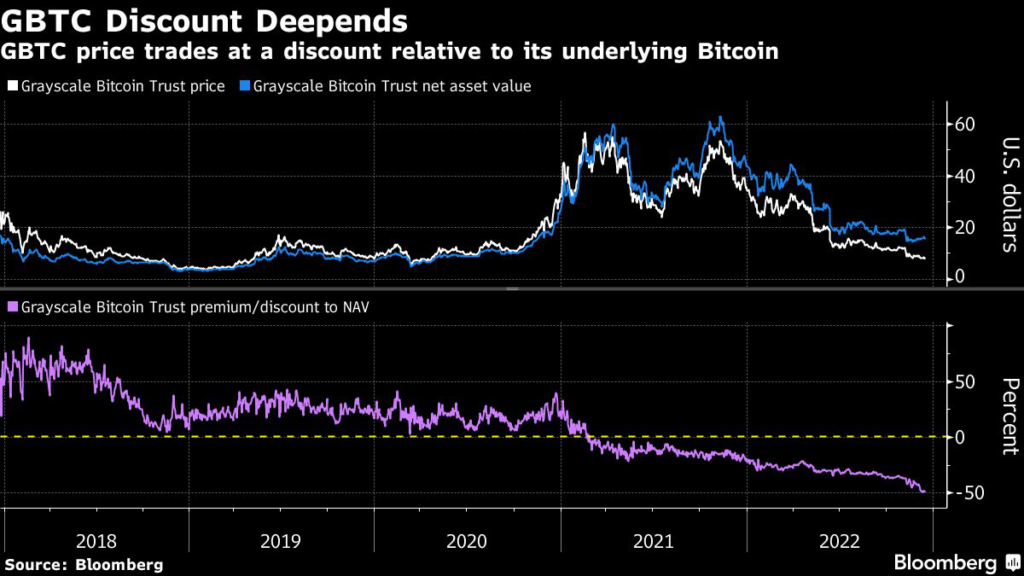
A tender offer for up to 20% of the outstanding shares of the $10.7 billion Grayscale Bitcoin Trust (ticker GBTC) is one of the options that the digital asset manager is considering, Grayscale Chief Executive Officer Michael Sonnenshein wrote in a letter to investors Monday. That process, in which Grayscale would ask shareholders to sell back their GBTC shares at an agreed price, would require approval from the Securities and Exchange Commission that the agency “may not provide,” Sonnenshein wrote.

GBTC closed nearly 50% below the value of its underlying Bitcoin on Friday, Bloomberg data show. Unlike an exchange-traded fund, GBTC can’t redeem shares to keep pace with cooling demand, which has seen the dislocation widen to record levels in recent weeks as the trust sells off to a greater degree than Bitcoin itself. The SEC denied Grayscale’s attempt to convert GBTC into a physically backed Bitcoin ETF in June, citing that the plan by NYSE Arca to list the product didn’t do enough to prevent fraud and manipulation. Grayscale filed a lawsuit against the agency within hours.

The lawsuit, combined with GBTC’s relatively hefty 2% annual fee, has spurred a backlash. Hedge fund Fir Tree Capital Management sued Grayscale earlier this month for information to investigate potential mismanagement and conflicts of interest of the trust. Fir Tree, which manages $3 billion, wants to push Grayscale to erase the discount by lowering fees and resuming redemptions, people familiar with the hedge fund’s plans told Bloomberg News. 

The Grayscale letter lands as questions around the health of parent company Digital Currency Group swirl. The once-$10 billion conglomerate founded by Barry Silbert also owns crypto lender Genesis, which suspended withdrawals last month and is reportedly seeking to raise fresh capital to stave off bankruptcy. 

Currently, liquidating GBTC isn’t being considered, Sonnenshein said. 

“In the event we are unsuccessful in pursuing options for returning a portion of the capital to shareholders, we do not currently intend to dissolve GBTC, but would instead continue to operate GBTC without an ongoing redemption program until we are successful in converting it to a spot Bitcoin ETF,” Sonnenshein wrote.

More stories like this are available on bloomberg.com

©2022 Bloomberg L.P.

Close Bitnami banner
Bitnami