Bloomberg

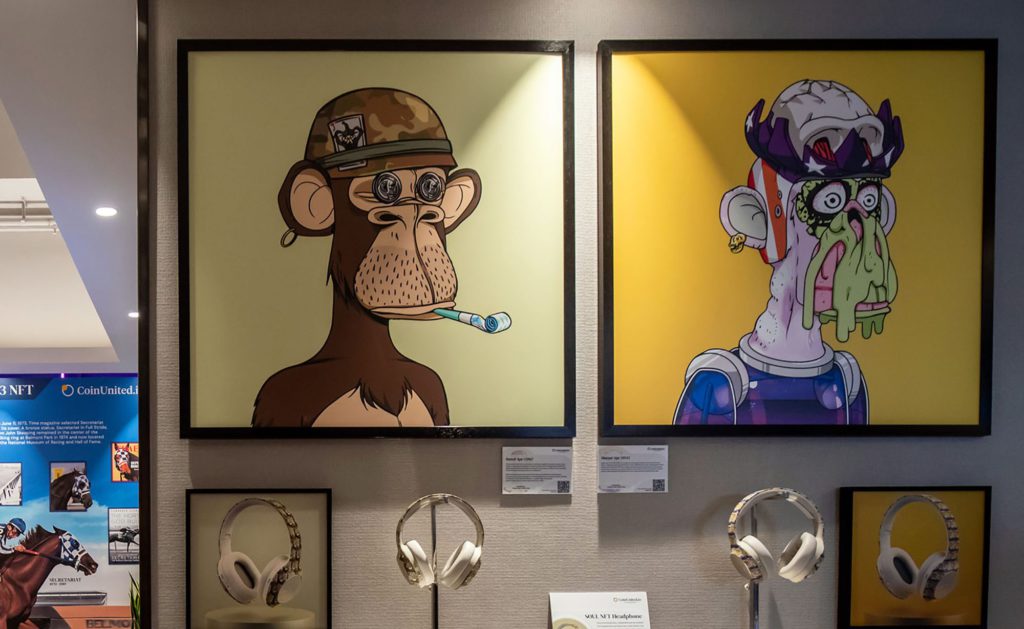
Activision’s Departing COO to Lead Startup Behind Bored Ape NFTs

(Bloomberg) — Activision Blizzard Inc.’s departing president will take on the chief executive officer role at the blockchain startup behind the Bored Ape Yacht Club collection of non-fungible tokens.

Daniel Alegre, who was also Activision’s chief operating officer, will take on the CEO post at Miami-based Yuga Labs Inc. in the first half of 2023, according to a Yuga statement Monday. 

Activision announced Alegre’s departure last week, saying the executive’s tenure would end when his contract expires next year on March 31. Alegre joined Activision in April 2020 after a 16-year career at Google.

Alegre is moving from an embattled company to an embattled sector. Activision is working on reshaping its corporate culture following a 2021 sexual misconduct scandal, and is awaiting the outcome of a pending $69 billion acquisition by Microsoft Corp. — which is being challenged by the Federal Trade Commission. 

Meanwhile, Yuga Labs is among the suite of companies that have generated buzz during the cryptocurrency and blockchain boom of recent years. Much of that enthusiasm has withered as the industry suffers through the high-profile implosions of several crypto outfits, including the FTX exchange. 

Yuga Labs, which was founded in 2021, was valued at $4 billion after closing on a $450 million funding round in March. Alegre will replace Yuga’s outgoing CEO Nicole Muniz, who will stay on as a partner and adviser. 

In addition to creating the popular Bored Ape Yacht Club NFT collection, Yuga Labs is also working on a metaverse project, in which land sales have drawn hundreds of millions dollars worth of cryptocurrency. 

Still, the company has not been free of controversy — including an investigation by the US Securities and Exchange Commission for whether its digital-asset sales violated federal law. It is also the subject of an investor lawsuit over celebrity promotion of its NFTs.

More stories like this are available on bloomberg.com

©2022 Bloomberg L.P.

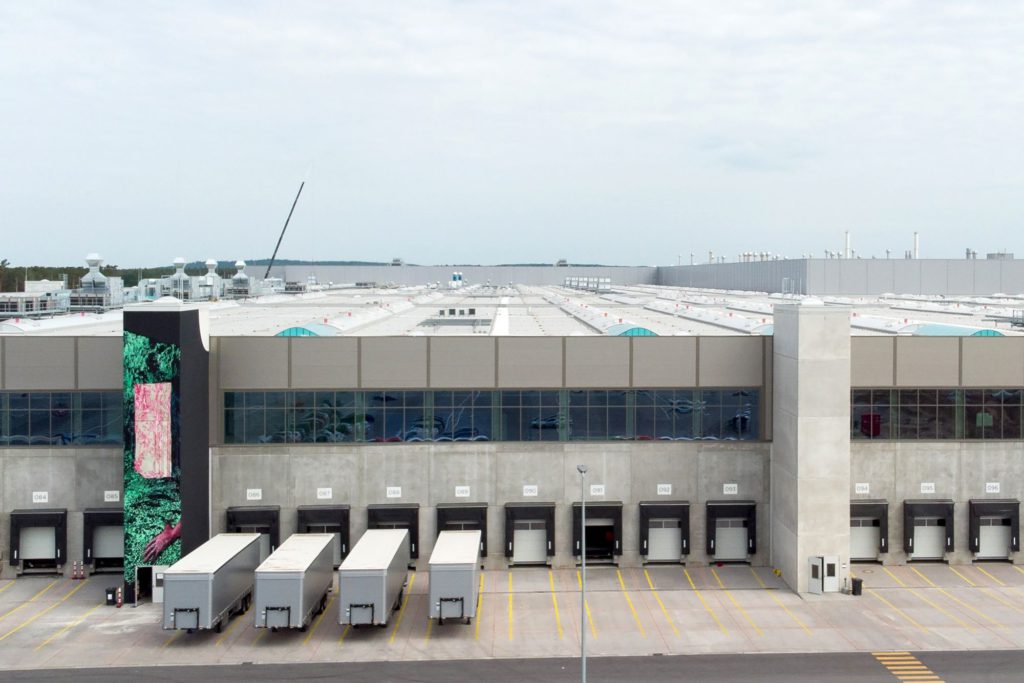
Tesla’s German Plant Is Ramping Up Slower Than Elon Musk Hoped

(Bloomberg) — Tesla Inc.’s factory outside Berlin is making Model Y SUVs at a much slower clip than Elon Musk envisioned over a year ago.

The plant in Gruenheide, Germany, built 3,000 sport utility vehicles last week, according to a tweet from Tesla’s verified Twitter account. That’s well short of the 5,000 to 10,000 vehicles a week that Musk said 14 months ago the carmaker was targeting by the end of this year.

Tesla opened the facility in March following months of bureaucratic setbacks. Weeks after output finally started, Musk referred to the company’s factories in Germany and Texas as “gigantic money furnaces” that were losing billions of dollars.

Read more: Elon Musk May Regret Tesla Plant Pick After More German Setbacks

While Tesla has steadily increased output in Gruenheide — it produced 2,000 vehicles there the last week of September — efforts to also make batteries and expand the plant for additional logistics capacity have been hindered by red tape. During an event at the site last year, Musk warned that reaching volume production at Gruenheide would be “incredibly difficult,” adding that the company would need “a lot of talented, hardworking people to get there.”

Tesla has been preparing to run three shifts at Grueheide for an around-the-clock production schedule, Germany’s Maerkische Onlinezeitung reported last week. More than 7,500 people currently work at the site, MOZ said.

Last week, Tesla shares closed at a two-year low, costing Musk his position atop the Bloomberg Billionaires Index. While the CEO has been distracted by running Twitter Inc., the carmaker has been cutting prices and production in China, and offering incentives for customers to take delivery of vehicles in the US.

More stories like this are available on bloomberg.com

©2022 Bloomberg L.P.

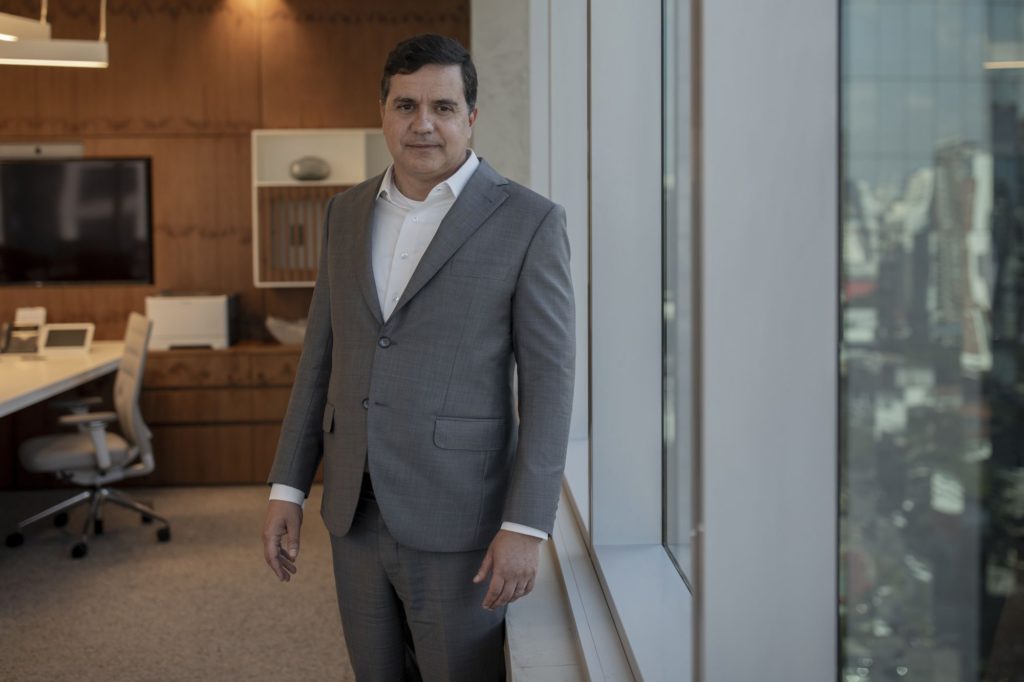
Bradesco Wants to Speed Up Its US Expansion With Fintech Deals 

(Bloomberg) — Banco Bradesco SA, Brazil’s second-biggest bank by market value, plans to buy more minority stakes in tech companies to speed up its expansion in the US. 

“We are going to be investing in digital firms that can help us foster our growth in every single area that we participate, such as investments, financing, credit cards, payments, cyber security,” Leandro Miranda, Bradesco’s head of private equity and venture capital, said in an interview.  

The lender has already invested $700 million in minority stakes in tech firms in Brazil and the US, and is seeking more partners in businesses that “would be extremely expensive to develop on our own, or would take too long for us to develop,” Miranda said.

Brazilian banks see an opportunity to expand by helping clients with investments and financing needs in the US. The lenders’ deep familiarity with Latin America allows them to be more comfortable with the process of opening accounts or approving credit to the Latino community.

The target companies will also benefit, he said, because “they burn cash fast in order to grow, and we pay decent money” in an environment in which capital has become scarce and expensive.

Seizing Benefits

Bradesco struck a partnership with Miami-based fintech BCP Global in December 2021, and since then has been using that company’s platform to offer digital investments to upper-middle-class and rich Brazilians. The Osasco-based bank in March participated in a $44 million round of investments in ChargeAfter, the digital network that connects retailers and banks in order to provide consumers with approved financing offers from multiple lenders with a single application. ChargeAfter operates in the US and Israel.   

“We just want to make sure that we have operational agreements with those firms, so we can seize the benefits when they grow,” Miranda said, adding that Bradesco often has the right of first refusal if the company plans to sell control to a competitor. “If they want to do public equity offerings, that is usually fine with us,” he said. 

Bradesco plans to use fintechs partnerships as “white label” operations, he said. “We put our logo there, and preserve the way they work, so they can update themselves very quickly, and we can have updated infrastructure in the cloud the whole time.” 

Bradesco controls its own fully licensed commercial bank, broker-dealer and financial advisory firm in the US after it cut a $500 million deal in 2019 to purchase Coral Gables, Florida-based BAC Florida Bank, now called Bradesco Bank. The lender is adding $200 million in capital to its US subsidiary, which serves rich and high-income individuals, Bradesco executive vice president Marcelo Noronha said in November.

Brazilians represent about 25% of Bradesco Bank’s clients, while other Latin American nations account for 35%, according to Miranda, who is also responsible for the Florida business. The rest are US citizens. 

“We are transforming our digital investment platform with BCP into a digital brokerage house this month, so our clients will be able to invest in any US stock, and then, in July 2023, they’re going to also be able to invest in bonds and funds,” he said. 

Florida Mortgages

According to Miranda, Bradesco Bank is already the biggest financier of residential mortgages for foreigners in Florida, and the plan is to increase the bank’s lending portfolio and promote wealth-management services. 

But Bradesco plans to go beyond serving the rich. It’s also helping to provide credit to lower-income individuals in the US, after acquiring a stake for $10 million in OneBlinc, a Miami-based firm founded by Brazilians. OneBlinc offers payroll loans, accounts and debit cards to state and federal government employees and health-care workers. 

“We realized that the US Latino and Black population is pretty much under-banked,” Miranda said, adding that the bank intends to bring its systems to the US and offer “breakthrough technology” to help address the problem.  

Bradesco already has more exposure than its peers to small companies and low-income individuals in Brazil, according to BTG Pactual. 

“We are going to be investing in several fintechs all over the US to get local knowledge about clients, to understand their needs, their behavior, and how we can take our systems into that,” Miranda said.

More stories like this are available on bloomberg.com

©2022 Bloomberg L.P.

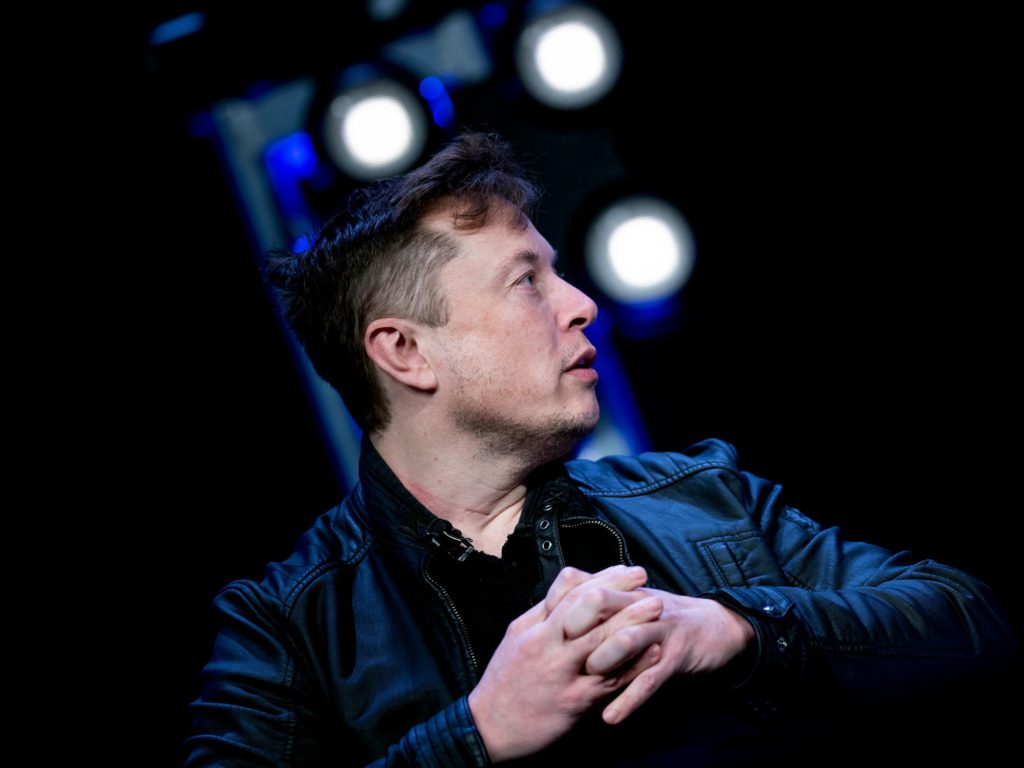
Twitter Users Vote for Elon Musk to Step Down as CEO

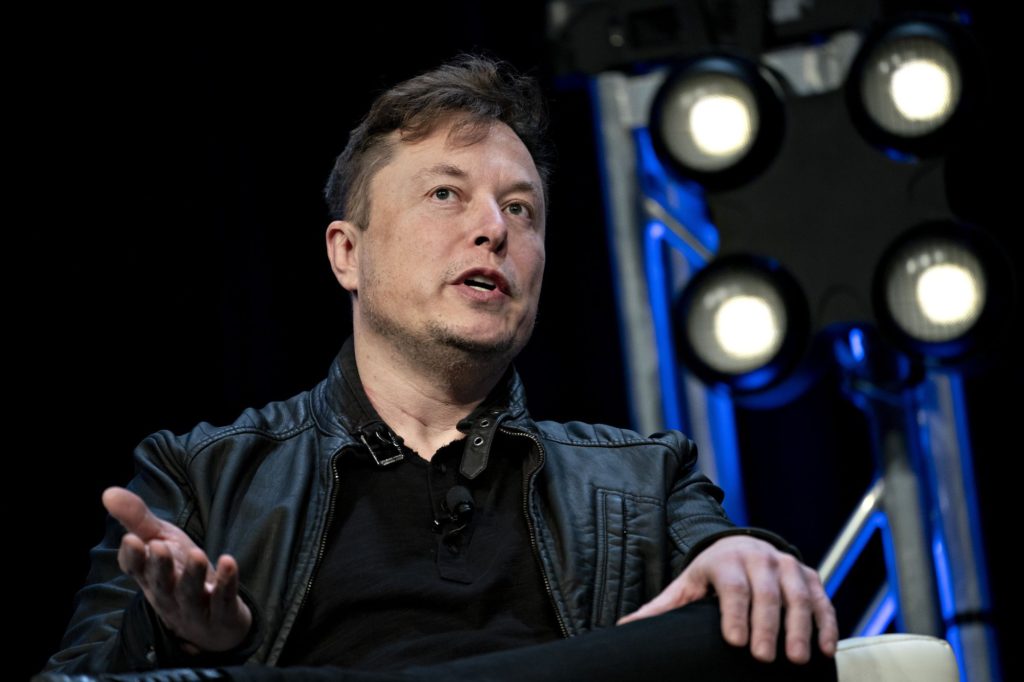
(Bloomberg) — Twitter Inc. users voted for Elon Musk to step down from his role as head of the social platform in a poll the billionaire entrepreneur said he would respect, potentially leaving the company devoid of senior leadership.

About 58% of the 17.5 million votes cast were in favor of Musk stepping back from the leadership role. If Musk heeds the results, it would mark the end of 53 chaotic days at the helm, which has involved dismissing top executives, eliminating roughly half of its employees and spooking advertisers.

Musk, who’s also chief executive officer of Tesla Inc. and Space Exploration Technologies Corp., has dedicated much of his time since acquiring Twitter on Oct. 27 to the social media service, drawing criticism for his abrupt policy changes and neglect of his other businesses. The stock of Tesla, his most valuable holding, has sunk by about a third since the acquisition.

It is not the first time Musk has put major corporate decisions to Twitter users. He recently conducted a poll of his followers on whether to reinstate Donald Trump’s Twitter account, and allowed him back the following day.

There is no clear replacement at Twitter, with almost all of the top rank executives having been fired or resigned over the past few months. Musk added in later tweets that “No one wants the job who can actually keep Twitter alive. There is no successor,” and “and it has been in the fast lane to bankruptcy since May.”

What Led Twitter Users Into Voting Elon Musk Out: Timeline

The threat that Twitter might veer into financial difficulties has been constant during Musk’s tenure, who in his first address to employees in November said bankruptcy was a possibility if it doesn’t start generating more cash. The company has almost $13 billion of debt that’s now in the hands of seven Wall Street banks that have been unable to offload it to investors. 

Musk was in Qatar to watch the World Cup final match between Argentina and France and tweeted out his poll after the game’s conclusion. The billionaire has been looking for new investors at $54.20 a share, the same price he paid when he took the company private for $44 billion in October.

Saudi prince Alwaleed bin Talal Al Saud is the second largest investor in Twitter behind Musk, while the Qatar Investment Authority invested $375 million in the social media platform. 

Musk originally agreed to acquire Twitter in April but then spent months trying unsuccessfully to get out of the deal. After taking the top role, he indicated that he’d only be in charge of Twitter for a limited time to complete the organizational overhaul he thought it needed to prosper, and complained of having “too much work” and sleeping at Twitter’s San Francisco office while enforcing his radical changes.

Tesla shares gained 4.8% in US premarket trading on Monday. Shares in the carmaker have slumped 57% this year amid concerns the chaotic takeover of Twitter has distracted Musk from the firm that propelled him to the richest person in the world — a title he lost last week to luxury titan Bernard Arnault.


(Additional context throughout.)

More stories like this are available on bloomberg.com

©2022 Bloomberg L.P.

WhatsApp, Monkey Bar, Buffett: Banking’s 2022 Winners and Losers

(Bloomberg) — It was a weird year on Wall Street. 

While capital markets sputtered for much of the year, volatility pushed trading revenues to their highest levels in well over a decade. With inflation running at a 40-year high, banks were forced to set aside billions in credit reserves. That hindered profits even as the Federal Reserve’s campaign to tamp down prices — marked by aggressive rate hikes — boosted net interest income for the country’s largest lenders. 

Along the way, firms cajoled even more of their staffers back to the office. Job cuts hit the cryptocurrency and fintech industries, which had long been recruiting workers away from Wall Street. And, following a sweeping probe, regulators cracked down on bankers using messaging apps for banter and other business communications. 

Here’s a look at this year’s winners and losers across the US finance industry:

Winners: Macro Traders 

Wall Street’s biggest trading desks are set to notch $109.6 billion in revenue for the year, the best performance since 2009. Most of that will come from fixed-income trading desks, where volatility handed commodities, currencies and rates traders one of their busiest years ever.

Nowhere is this more evident than at JPMorgan Chase & Co., where revenue is expected to jump 6.5% to $29.2 billion, the biggest haul among the five largest Wall Street banks. That includes a whopping $18.8 billion from fixed-income trading. That business got a new leader this year in Pranav Thakur, a 15-year veteran of the bank who previously oversaw foreign-exchange and emerging-markets trading globally.

Citigroup Inc.’s traders, led by Andy Morton, are set to hand the bank their second-best performance of any year dating back to 2009, an especially impressive feat given the bank’s push to rein in risk and limit business with less-lucrative clients. Morton took over as sole head of the trading division earlier this year after the departure of co-head Carey Lathrop.

Losers: IPO Bankers 

Things are far less rosy for investment bankers, especially those involved in putting together initial public offerings. In all, equity-underwriting revenue is poised to plummet 77% this year to $4.2 billion across the five biggest Wall Street banks, the lowest level on record, according to data compiled by Bloomberg Intelligence. Last year, Morgan Stanley alone raked in more than that in IPO fees.

And the drop is hitting home. Bankers are paid on an “eat what you kill” model. That means firms are already warning staffers that their bonuses — which often make up the majority of pay for senior employees — will be down significantly this year. JPMorgan, Bank of America Corp. and Citigroup are all considering slashing bonus pools for their investment bankers by as much as 30%, Bloomberg News reported earlier this month. Some firms are planning to give low performers no reward at all.

Winners: Bank Loan Underwriters

The Fed’s aggressive plan to damp inflation with higher interest rates might have stymied capital markets this year, but it was good news for the trillions of dollars in loans banks are sitting on. 

Banks were so eager to take advantage of rising borrowing costs that many lenders raised their rates within mere minutes of a Fed decision. Fifth Third Bancorp, for instance, took just eight minutes to inform customers that its prime lending rate would rise to 7.5% following the central bank’s most recent hike. In all, the four biggest US banks are expected to soak up $211 billion in net interest income this year, a 22% increase from 2021 and the biggest haul on record. 

What’s more, while lenders have been eager to charge higher rates to borrowers, they’ve been slower to pass on benefits to savers who have stashed trillions of dollars of deposits with the country’s biggest banks, boosting their profitability. Industrywide, net interest margin — the difference between what banks collect on loans and pay for deposits — soared to 3.12% in the third quarter, reversing a yearslong slump.

Losers: FTX Investors, Customers

The final months of 2022 will be remembered forever as crypto’s “Lehman moment.” In November, the digital-asset exchange FTX blew up in a truly spectacular fashion, followed quickly by the arrest of founder Sam Bankman-Fried, who faces charges of defrauding investors in his crypto empire.

The 30-year-old crypto maven had raised more than $1.8 billion from the likes of SoftBank Group Corp., Temasek Holdings Pte., Tiger Global Management and Insight Partners. With the bankruptcy filings of more than 130 entities tied to Bankman-Fried, the equity stakes of all who had backed FTX effectively plunged to zero.

Customers of the exchange continue to question whether it mishandled their funds, with FTX facing an $8 billion hole in its balance sheet. John J. Ray III, who’s handling the exchange’s restructuring, has already warned former customers that many of them won’t get back funds lost in the company’s spiral into bankruptcy.

Bankman-Fried spent much of the time between FTX’s implosion and his arrest on a virtual apology tour, denying trying to commit fraud or break the law to media outlets around the world, while admitting to egregious managerial errors.

“I made a lot of mistakes,” he said late last month by video link at the New York Times DealBook Summit. “There are things I would give anything to be able to do over again. I didn’t ever try to commit fraud on anyone.”

Winners: Loyal Bankers

Financial-technology startups and cryptocurrency firms alike have spent years luring Wall Street workers with the promise of valuable stock options and a chance to trade in the wild — and potentially lucrative — digital-asset markets.

This year, both industries lost their luster. Venture-capital firms pulled back on funding fintech startups as they looked to prioritize companies already turning a profit rather than those chasing growth. Fintech funding dropped 64% to $12.9 billion in the third quarter, the lowest level since the depth of the pandemic, according to CB Insights. 

The crypto winter — the Bloomberg Galaxy Crypto Index has slumped 68% this year — has also made life hard for the legions of former Wall Streeters who left their trading desks for the wild west of digital assets. 

With both industries now cutting thousands of workers, those bankers who stayed loyal to traditional finance are among the year’s big winners, for now. Banking giants from Goldman Sachs Group Inc. to Citigroup Inc. have started trimming their workforces, and more cuts may be on the way.

Loser: WhatsApping About Deals

At the start of the pandemic, with bankers and traders trapped at home for months on end, employees at the country’s largest banks turned to WhatsApp and other outside messaging apps to stay connected. That ended this year with the culmination of a monthslong probe by US regulators into how global financial firms failed to monitor employees’ communications on unauthorized apps. A dozen banks agreed to pay $2 billion to settle the matter, the largest penalties of their kind.

As part of the investigation, the US forced Wall Street banks to embark on a systematic search through more than 100 personal mobile phones carried by their top traders and dealmakers. The requests had lenders rooting through years of office banter and even personal texts, with banks arranging for outside attorneys to help conduct the reviews. 

Now, the world’s biggest banks have to hire compliance consultants to review how they monitor and archive any work-related communications, including on employees’ mobile phones or other personal devices. Call them the WhatsApp cops.

Winners: Banker Haunts 

Legions of Wall Street staffers made their way back to offices a bit more regularly this year, with almost half of all employees in the New York metro area back at their desks, according to card-swipe data from Kastle Systems. That’s meant wonders for the thousands of small businesses across the city that rely on worker foot traffic.

Take Monkey Bar. The tony restaurant in midtown Manhattan closed during the pandemic but finally reopened this year. It’s long been a popular haunt for dealmakers to take their power lunches and meet clients for happy hour. Now, many of the steakhouse’s reservations on Resy book up minutes after they become available. 

Or wander over to nearby Papillon Bistro & Bar, a popular happy-hour spot located near Jefferies Financial Group Inc. On many weekdays, the bistro is packed with young bankers in Patagonia vests and Loro Piana ankle boots.

“The restaurant hosted just over 20 corporate holiday events last week,” said Carly McLaurin, event coordinator for Celtic Developers Group, which owns Papillon. “Even with most tables and spaces booked, our regulars will pack into the bars to enjoy their after-work beer.”

Losers: High-Flying Fintechs 

The worst performer in a basket of 75 information-technology companies this year was PayPal Holdings Inc., the pandemic darling that at one point was worth more than Citigroup and Goldman Sachs combined. The fintech’s stock has plummeted 63% this year, shaving a whopping $141 billion off its market capitalization. 

At issue, analysts say, is the fact that growth hasn’t been as good as it was during the pandemic, when consumers were stuck at home and doing much more of their shopping online. 

PayPal’s big drop has had implications for the rest of fintech, with closely held firms benchmarking their own private valuations to that of the tech giant. One by one this year, companies including Stripe Inc., Checkout.com and Klarna have been forced to lower their valuations in line with those of publicly traded peers. 

“The shift in Klarna’s valuation is entirely due to investors suddenly voting in the opposite manner to the way they voted for the past few years,” Michael Moritz, a partner at Sequoia, said when Klarna announced its latest fundraising in July. “Eventually, after investors emerge from their bunkers, the stocks of Klarna and other first-rate companies will receive the attention they deserve”.

Winners: Points Junkies

For credit—card points junkies, 2022 was the year of the airport lounge.

JPMorgan opened its first Chase Sapphire Lounge in Hong Kong this year, while Capital One Financial Corp. also debuted a lounge of its own in Dallas. The king of airport lounges — American Express Co. — is in the process of expanding and reopening its Centurion Lounges at San Francisco International Airport and Seattle-Tacoma International Airport with new outposts planned for Hartsfield-Jackson Atlanta International Airport and Newark Liberty International Airport.

And gone are the days of lousy sandwiches and uncomfortable furniture. AmEx has outfitted some of its locations with everything from percussion massage therapy offerings to nail-buffing services. Capital One announced it’s partnering with José Andrés Group on new lounge concepts it’s testing out in New York and Washington airports, with Spanish-style tapas set to appear on menus.

Loser: Warren Buffett 

While the Fed’s moves to fight inflation boosted net interest income for the biggest lenders, the central bank also sparked fears it would send the US economy into a painful recession. That would probably cause credit losses to soar, ultimately hurting lenders’ profits.

That’s meant bank investors including the likes of Warren Buffett’s Berkshire Hathaway Inc. have seen the value of those holdings plummet in recent months. Weary investors shaved a quarter of a trillion dollars of market value off the four biggest US banks this year alone.

No major bank has had it worse than Bank of America, which counts Berkshire Hathaway as its largest shareholder and has seen its stock drop about 29% since the start of 2022. That shaved about $13 billion off the Oracle of Omaha’s stake this year alone. Even so, he’s still roughly doubled his money. In the first quarter, Buffett also took a 2.9% stake in Citigroup, which posted the second-worst stock performance among major banks, with a 27% drop for the year.

–With assistance from Noah Buhayar, Hannah Levitt, Katherine Doherty and Sridhar Natarajan.

More stories like this are available on bloomberg.com

©2022 Bloomberg L.P.

Ramaphosa Rebounds From Cash-in-Sofa Scandal, Wins South African Ruling Party Vote

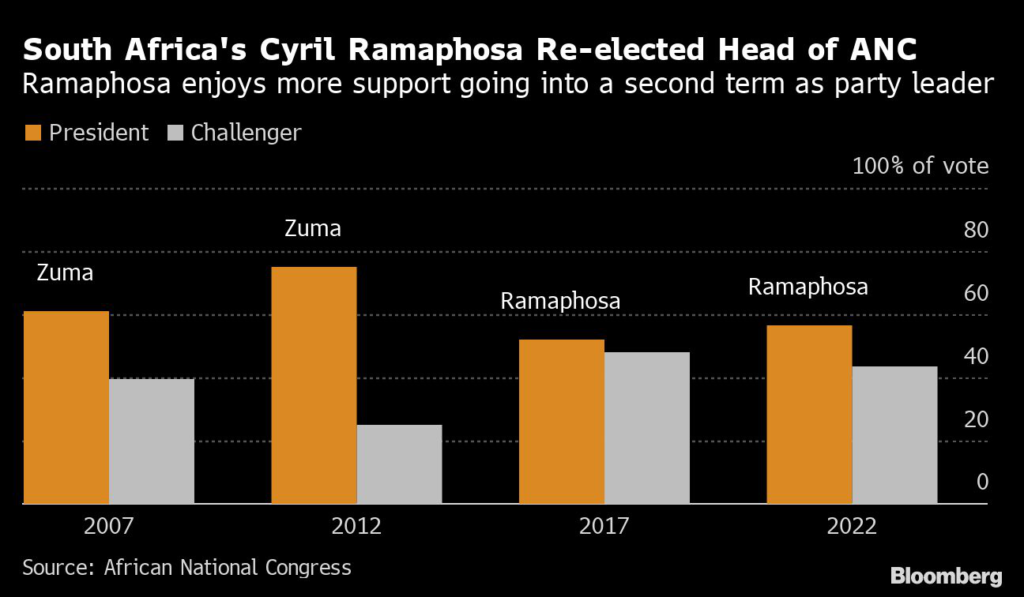
(Bloomberg) — Cyril Ramaphosa comfortably won re-election as head of South Africa’s governing party just weeks after a scandal threatened to derail his political career, and now faces an uphill battle to rebuild its flagging support heading into a national vote in 2024.

Rampahosa allies also won most of the African National Congress’s other six top party positions, giving him a firmer hold over the party. The outcome should reassure investors that his administration will continue with reforms to revive the stuttering economy. The rand gained as much as 2.8% against the dollar. 

Ramaphosa, 70, garnered 2,476 votes to secure a second five-year term at the party’s helm, and former Health Minister Zweli Mkhize 1,897. He considered quitting as the nation’s president earlier this month after an independent panel denounced his handling of the theft of foreign currency that was stuffed in a sofa at his game farm, but later backtracked and denied wrongdoing. 

The results were announced by Kgalema Motlanthe, the ANC’s head of elections, at a party conference on the outskirts of Johannesburg on Monday. Paul Mashatile, previously the ANC’s treasurer-general, easily won the deputy leader post. He beat Justice Minister Ronald Lamola and Eastern Cape Premier Oscar Mabuyane, who were both preferred by the president’s camp. 

But Ramaphosa allies Gwede Mantashe and Fikile Mbalula were respectively chosen as ANC chairman and secretary-general. The other three top positions all went to women, with Gwen Ramokgopa elected treasurer-general, and Nomvula Mokonyane and Maropene Ramokgopa as the two deputy secretary-generals.  

“Five out of seven candidates voted in the top seven positions belong to President Ramaphosa’s camp, which will help him strengthen his grip on the party,” Cristian Maggio, the head of portfolio and ESG Strategy at TD Securities in London, said in a note to clients. “The market is likely to reward the fading of political uncertainty for now with a strong rand and lower yields, though none of South Africa’s structural issues will be immediately resolved by this vote.”

Support for the 110-year-old ANC, which has ruled South Africa since the end of apartheid in 1994, dropped below 50% for the first time in a local government vote last year, and several opinion polls show it’s in danger of losing its national majority in 2024. Confidence in the party has been eroded by its failure to head off an energy crisis and stem an economic decline that’s spawned rampant unemployment, inequality and crime.

Ramaphosa is one of the country’s most seasoned politicians. A former labor union leader who made a fortune after going into business, he helped to negotiate a peaceful end to White-minority rule in the early 1990s and led a panel that drafted the country’s first democratic constitution. 

He succeeded Jacob Zuma as the nation’s president in early 2018 and pledged to tackle the economic malaise and endemic corruption that set in during his predecessor’s nine-year rule. 

Since then, he has sought to end the monopoly of Eskom Holdings SOC Ltd., the debt-stricken state power utility that’s subjected South Africans to intermittent blackouts from 2008, freeing companies to build their own generating plants and supply the grid. The spectrum needed to modernize the nation’s telecommunications industry was sold after more than a decade of delays. 

Read more: Why Blackouts Are Still Crippling South Africa: QuickTake

Ramaphosa has also made progress rebuilding the nation’s law-enforcement capabilities that were systematically hollowed out under Zuma. Several former leaders of state companies, politicians and party officials have been charged with corruption.

He’s been less successful in firing up an economy that’s been battered by the coronavirus pandemic and the energy crisis, and business leaders and foreign investors have called for the acceleration of reforms needed to help reduce a 32.9% unemployment rate. 

“This is a positive outcome for South Africa, certainly a positive outcome for the governing party,” his spokesman Vincent Magwenya told reporters. But more importantly, it “is a positive outcome for the acceleration of the institutional reforms that the president has undertaken as well as the economic reforms that will take us to the envisaged next level of economic performance,” he said.

Read more: Analysts, Officials React to Ramaphosa Second Term as ANC Leader

–With assistance from Paul Vecchiatto, Paul Richardson, Rene Vollgraaff, Prinesha Naidoo, Gem Atkinson and Colleen Goko.

(Updates with results of vote for other key posts in fourth paragraph.)

More stories like this are available on bloomberg.com

©2022 Bloomberg L.P.
Twitter Likely Too Small for EU Antitrust Violation

(Bloomberg) — Elon Musk’s sudden policy change barring users from promoting other social media accounts drew concern that the move was anticompetitive and would violate European Union rules. In the end, Twitter is likely too small to matter.

“Twitter is unlikely to incur penalties in Europe,” said Tommaso Valletti, a professor at Imperial College London and the former chief economist at the European Commission. “The practice is exclusionary, which is a violation of antitrust law, but only if you are a dominant company.”

On Sunday, Twitter announced a new policy that it would take down any accounts or posts promoting alternative social media sites including Facebook, Instagram and Mastodon. The move led to users including venture capitalist Paul Graham being suspended after he tweeted a link to his Mastodon account, before the company changed course and deleted all references to the policy.

The EU has new competition rules that explicitly bar companies from self-preferencing, but at face value, Twitter would not have to follow the rules. The Digital Markets Act designates companies “gatekeepers” if they have 45 million users in the EU and an annual turnover of at least €7.5 billion within the EU the past three years or an average market valuation of at least €75 billion in the previous year. 

Twitter doesn’t make enough money to qualify as a gatekeeper, but pressure is building on the European Union’s executive arm, the European Commission to designate Twitter a gatekeeper following a “qualitative assessment.”

“The European Commission is objectively under pressure to designate Twitter as a gatekeeper,” said Andreas Schwab, the lead author of the DMA in the European Parliament, arguing that doing so would be easy. Twitter likely meets the user threshold.

Damien Geradin, a competition lawyer in Brussels, said that Musk’s policy change would likely increase the pressure on the commission to act. “Musk is not doing the company any favors,” he said. “He is, frankly, dumb.”

Read More: Musk Faces European Anger Over Twitter Ban of Journalists 

Cristina Caffarra, a managing partner and head of Keystone Europe, said that all of these solutions take time — likely years — whether the commission tried to hit Twitter with an antitrust case or designated the company a gatekeeper, leaving “plenty of time for the bluebird to wriggle away.”

Musk will more likely run into issues with the Digital Services Act, as “Twitter is posing a risk for free speech,” Schwab said. Musk’s changes over the weekend likely violated requirements for companies to make changes to terms and services clear for users, lay them out all in all EU languages and maintain media plurality. But the DSA and DMA won’t go into effect until next year at the earliest.

Christel Schaldemose, the lead author of the DSA in the parliament, said the best thing the EU can do is prepare to enforce DMA and DSA when they are applicable. “Would it have been better if the DSA was in force now? Yes certainly. But it also proves that the new DSA, DMA regime is needed,” she said.

–With assistance from Stephanie Bodoni.

More stories like this are available on bloomberg.com

©2022 Bloomberg L.P.
Cabs Without a Chatty — Or Any — Driver Are Expanding in China

(Bloomberg) —

Across a sprawl of streets in southern Beijing, China’s answer to search engine giant Google is charting the path for driverless cars in the world’s biggest electric vehicle market.

Baidu Inc.’s Apollo program, which allows customers to hail and ride a fully autonomous robotaxi, has racked up more than 1.4 million public journeys, and is expanding a network that already covers dozens of square miles across 10 key cities that also include Wuhan and Chongqing. By next year, the company wants to have the largest autonomous service area in the world — an ambitious target considering it needs to complete with General Motors Co.’s fast-expanding robotaxi unit Cruise and California-based Waymo. Baidu is also being challenged in China by competitors like WeRide and Pony.ai.

The pace of development is on display at a company showroom in Yizhuang district, where an early autonomous model — a boxy red compact 4×4 rigged with steel beams to hold a camera and lidar sensors — contrasts with a sleek, white SUV that’s slated to launch next year. Nearby, a room out of Willy Wonka’s factory is wallpapered from floor to ceiling with QR codes that are used to train and test vehicle systems and equipment.Watch what it’s like here

While the technology behind the cars is thrilling, taking a ride in one across Beijing is surprisingly standard. Using Baidu’s white-and-green app to book a ride on a recent afternoon had a driverless cab arrive within minutes, and the fare, which included a promotional discount, was low: 4 yuan (65 cents) for a 10-minute journey.

The company’s robotaxi fleet uses the mass-produced Arcfox model aT that’s souped up with an array of sensors. The vehicle follows the speed limit diligently, merges early in traffic and turns smoothly on the broad, mostly empty avenues surrounding its facility. When a cyclist abruptly darts from a sidewalk, the robotaxi taps the brakes until he’s well across.

Because Baidu is currently using regular models designed for a human motorist, riding in the back does offer the unnerving vision of a steering wheel turning as if being spun by a ghost. Monitors in the rear cabin add to effect, displaying the same images the car interprets  — pedestrians, vehicles, bicycles, buses and trains all rendered into figures that look more like Monopoly game pieces. Another 10-minute ride across town is similarly smooth, quiet and drama-free.

For China’s operators, however, there is a potential hurdle ahead. In October, the US imposed tighter controls on exports of some chips and chipmaking equipment to the nation to stop it from developing capabilities that could become a military threat, such as supercomputers and artificial intelligence.

That could impact the autonomous driving industry, which trains its artificial intelligence on cloud platforms that rely on the advanced chips impacted by the controls, said Bao Linghao, an analyst with Trivium China Ltd. If Chinese companies have their computing power limited, that could eventually hamper efforts by Baidu and local rivals to keep pace with Alphabet Inc.’s Waymo, which already leads in terms of vehicle miles tested. “Over the long term, it’s going to be a big problem,” Bao said. “If China’s AI computing power is being capped, that would put Chinese AI companies at a disadvantage at a starting line.”

Baidu, which has nearly triple the road test miles of its key domestic competitors, sees a limited immediate effect. Ultimately, the firm expects China’s auto sector to become less reliant on imports.

“For the part of our businesses that need advanced chips, we have already stock enough in hand actually to support our business in the near-term,” Robin Li, Baidu’s president, said during an earnings call last month.

For the time being, Baidu — which is increasingly shifting its focus to artificial intelligence and autonomous vehicles after its core advertising revenue shrank — sees robotaxis as the best near-term opportunity. It’s preparing to ramp up production of the Apollo lineup, and has won contracts with cities like Guangzhou to build digital infrastructure for city streets. Investors can also expect to see “meaningful revenue contributions” from Baidu’s auto solutions businesses, which mainly involves selling driving-assistance software, starting in 2024, Li said.

More stories like this are available on bloomberg.com

©2022 Bloomberg L.P.
Philippines’ Largest Telecom Slumps 17% After Billions of Pesos in Budget Overrun Revealed

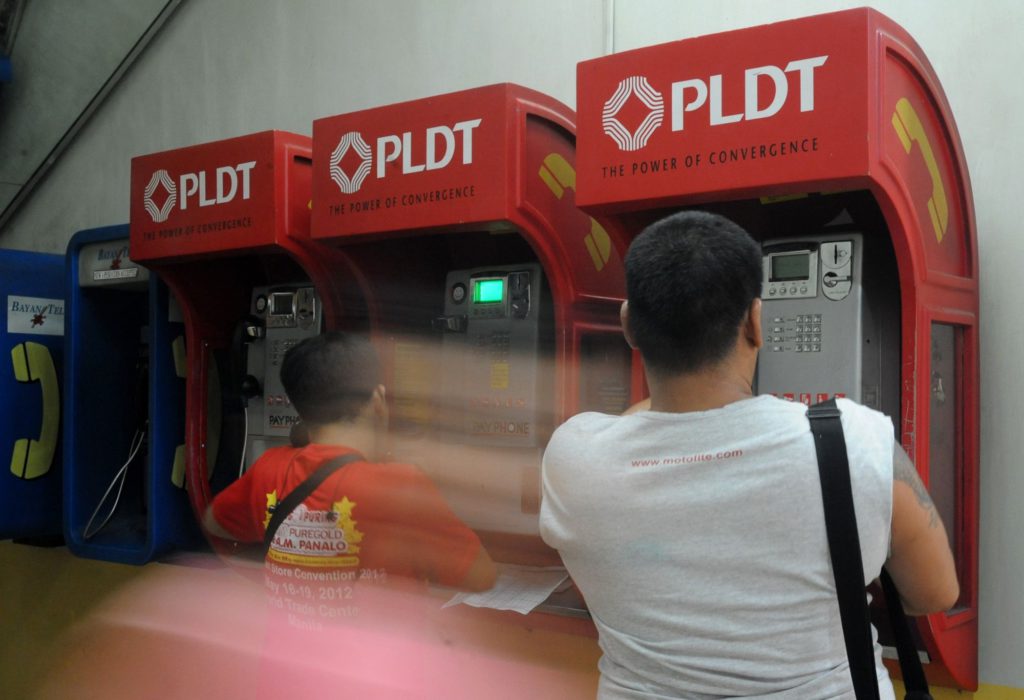
(Bloomberg) — The Philippines’ Securities and Exchange Commission has launched an inquiry into the 48-billion peso ($866 million) capital spending budget overrun at PLDT Inc. that triggered a record plunge in the stock amid questions over its corporate governance and fiscal control.

PLDT shares tumbled more than 19% on Monday, with almost 62 billion pesos in market value wiped out. 

The spending probe casts a stain on the finances and governance of PLDT, the country’s biggest phone company by revenue and among the nation’s most widely held stocks by foreign investors. It also raised questions about the management of PLDT Chairman Manuel Pangilinan, 76, who was also president and CEO until June 2021.

The cost overrun and the selloff in the shares on Friday just ahead of PLDT’s disclosure are “areas of concern” for SEC, the regulator said in a statement, adding that it immediately commenced an inquiry into the matter. The commission also ordered the Philippine Stock Exchange to submit its report on its own investigation on the Dec. 16 trading activities. 

The regulator’s move should provide clarity to investors on what’s happening in PLDT, said Japhet Tantiangco, analyst at Philstocks Financial Inc. “It’s highly possible that there were lapses and violations committed that led to this problem and PLDT as a public company must explain to investors what happened,” Tantiangco said. “The SEC must see to it that investors are protected.”

The SEC said it “will closely monitor the investigation and will continue to conduct a parallel, independent inquiry into the matter.”

PLDT’s US-traded depositary receipts dropped 2.4% on Friday, when PLDT announced the budget irregularity from 2019 through 2022 when it spent 379 billion pesos to bulk up its network for broadband and data to stave off rival Globe Telecom Inc.

“The core issue here and the primary reason PLDT is getting sold down is corporate governance,” said Manny Cruz, strategist at Papa Securities Corp. “The overrun is quite a substantial amount and it went on for years. That raises questions on how that could have happened to a blue chip company.”

The budget overrun is almost equivalent to PLDT’s combined 2020 and 2021 net income. It’s also more than twice the 21.46 billion pesos of cash and cash equivalents that PLDT had at the end of last quarter. While PLDT hasn’t given details, Pangilinan said in a Philippine Daily Inquirer report that as much as 130 billion pesos in undocumented purchases were made from 2019 through 2022 and an audit lowered the “questionable deals” to 48 billion pesos. 

Given the growing scrutiny on environmental, social and governance issues, PLDT’s debacle will raise concerns among its large base of foreign investors, which currently hold more than 40% stake in the company. More than 1.18 million PLDT shares changed hands Monday, the most since June 2017.

SGV & Co., the nation’s biggest auditing firm, is on its 20th year as the company’s external auditor. In other jurisdictions like the European Union, a company is required to invite bids for other auditors or have joint audits after 10 years.

PLDT also has the second lowest percentage of independent directors among the 30 companies in the benchmark Philippine Stock Exchange Index, according to data compiled by Bloomberg. In the broader MSCI Asia Pacific, it ranks 1,453 out of 1,486 companies. 

The Philippine Stock Exchange will look into trades involving shares of PLDT after bourse officials noticed heavy selling before the market closed Friday and an hour before the company disclosed the overrun, the Philippine Daily Inquirer reported, citing PSE President Ramon Monzon.

“It’s too early to judge PLDT’s quality of governance without the details” on how this came about, said Noel Reyes, chief investment officer at Security Bank Corp. “PLDT never had an issue like this before under Pangilinan.” 

PLDT’s shareholders include Japan’s Nippon Telegraph & Telephone Corp., Hong Kong’s First Pacific Co. and Manila-based JG Summit Holdings Inc. Vanguard Group Inc. and BlackRock Inc. are among the biggest asset managers that hold the stock, according to Bloomberg data.

Several other companies of which Pangilinan is also chairman declined. Metro Pacific Investments Corp., owned by First Pacific, sank as much as 5.4%, while Manila Electric Co. fell as much as 3.6%.

Pangilinan stunned the Philippines in 1998 when he engineered a 30-billion peso takeover of PLDT that he later merged with Smart Communications Inc., a mobile phone startup he funded through First Pacific. 

“Pangilinan will have to take responsibility for what transpired following the principles of command responsibility,” said Papa Securities’ Cruz. “This could end his career on a sour note and blemish a sterling legacy.”

–With assistance from Jeffrey Hernandez and Ditas Lopez.

(Adds SEC inquiry, analyst comment.)

More stories like this are available on bloomberg.com

©2022 Bloomberg L.P.
Musk Polls Twitter to Quit as Chief, Voters Leaning Toward Yes

(Bloomberg) — Elon Musk, under fire for recent policy changes at Twitter Inc., is asking users whether he should step down as head of the social media site.

With the poll set to end at about 6:20 a.m. in New York, around 57% of the 16 million voters have said yes. The billionaire owner of Twitter and chief executive officer of Tesla Inc. will abide by the results of the poll, he pledged in a tweet Sunday. Three of the top trending topics in the US overnight were about the platform itself, including “VOTE YES” and “CEO of Twitter.”

Musk was in Qatar to watch the World Cup final match between Argentina and France and tweeted out his poll after the game’s conclusion. Saudi prince Alwaleed bin Talal Al Saud is the second largest investor in Twitter behind Musk, while the Qatar Investment Authority invested $375 million in the social media platform. 

There is no clear replacement at Twitter, with Musk adding in later tweets that “No one wants the job who can actually keep Twitter alive. There is no successor,” and “and it has been in the fast lane to bankruptcy since May.”

Tesla shares gained 4.8% in US premarket trading on Monday. Shares in the carmaker have slumped 57% this year amid concerns the chaotic takeover of Twitter has distracted Musk from the firm that propelled him to the richest person in the world — a title he lost last week to luxury titan Bernard Arnault.

Following his takeover of Twitter, Musk has weathered criticism for his sweeping changes at the social network — such as firing more than half its staff and bringing back previously barred accounts — as well as calls to refocus on Tesla, whose share price has been plummeting. Since reluctantly completing the Twitter acquisition at the end of October, he has spent much of his time on the social service.

He was posting late into the night Thursday after tangling with journalists, Twitter’s most engaged and active contributors. The company banned a number of them from major publications like the Washington Post and CNN, alleging they were doxxing his location. The move incurred condemnation from the likes of the American Civil Liberties Union and even the United Nations, who called it a “dangerous precedent.”

Over the weekend, Twitter also announced and withdrew a policy change whereby it would bar accounts “created solely” to promote competing social networks. That decision led to the suspension of at least one prominent account, prompting Musk to say he’ll adjust the policy mere hours after its introduction. The Twitter Safety account later offered a poll on whether it should have the policy on removing accounts promoting other social media platforms.

(Updates with context; an earlier version corrected spelling of Jared Kushner’s name in photo caption)

More stories like this are available on bloomberg.com

©2022 Bloomberg L.P.
Close Bitnami banner
Bitnami