Bloomberg

Mauritius to Hike Power Tariffs for Households, Trade

(Bloomberg) —

Mauritius will raise prices for households with heavy power usage by 19% to 29.5% from February due to higher production costs, Le Defi Plus reported, citing Energy and Public Utilities Minister Joe Lesjongard.

The new tariffs will apply for households using more than 300 kWh a month, meaning that only 15% of users will fork out more for electricity. Commercial prices will increase as much as 11.49% for users of more than 400 kWh, impacting about 27% of registered traders, the Port Louis-based publication said.

A hike is warranted as the state-owned Central Electricity Board, a power producer and sole distributor, had losses of 2.5 billion rupees ($56 million) in the period from July to October due to higher production costs. Leaving the prices unchanged would have been unsustainable for the utility in the coming months, according to Lesjongard.


More stories like this are available on bloomberg.com

©2022 Bloomberg L.P.

TSMC CEO Says Export Controls Weaken Trust Among Countries

(Bloomberg) — Taiwan Semiconductor Manufacturing Co. Chief Executive Officer C.C. Wei warned of the dangers of excessive government export controls, which can erode mutual trust between countries.

“Export controls and banning products from other foreign countries destroy productivity and efficiency gained under globalization, or at least they reduce benefits offered by a free market,” Wei said at an industry event in Taipei on Saturday. “But the scariest thing is that mutual trust and cooperation among countries is beginning to weaken,” he added, saying that a distorted market leads to higher costs as he urged politicians to come up with an alternative solution. 

The US blacklisted more Chinese companies and escalated trade tensions earlier this week. It included dozens of Chinese technology companies on its so-called Entity List, making it almost impossible for them to procure critical foreign components and ratcheting up a trade conflict between the world’s two largest economies.

Washington’s action followed the Biden administration’s implementation of tough export controls two months ago to prevent China from buying or making leading-edge semiconductors — crucial for the Asian nation to leapfrog the US in areas such as artificial intelligence and supercomputing. Key US allies, including the Netherlands and Japan, are planning to adopt at least some of the new US rules as well, Bloomberg News reported. 

Multilateral export controls will create a lot of challenges for China’s chip industry, Wei said. 

TSMC is now building plants in Arizona and Japan amid growing concerns from customers and major governments that the world’s chip production is too centralized in Taiwan.

Wei said TSMC is constructing new fabs to satisfy its customers’ demand rather than fulfill requests from foreign governments. 

He said the plant the Taiwanese chipmaker is building in Kumamoto prefecture in Japan is aimed at helping Sony Group Corp. supply enough chips to TSMC’s biggest customer, a reference to Apple Inc. Apple has also said it will be the biggest customer for TSMC’s new plant in Arizona.

Wei also said it’s not easy to replicate Taiwan’s chip industry in another country as TSMC’s success was built over more than 30 years with help from its suppliers.

“Globalization is almost dead. Free trade is almost dead,” TSMC’s founder Morris Chang said at a speech at the opening ceremony of a plant in Arizona last week. “I really don’t think they will be back for a while.” 

(Updates with comments after the 6th paragraph)

More stories like this are available on bloomberg.com

©2022 Bloomberg L.P.

There’s a Small But Growing Push to Make Video Gaming Greener

(Bloomberg) — Few people think regularly about the carbon footprint of their smartphone. Understandably: One iPhone 14, for example, generates roughly 61 kg of carbon in its lifetime — the equivalent of a single drive from Washington DC to Philadelphia. But apply that to the 237 million iPhones Apple shipped in 2021, and those emissions climb to 15 million metric tons, five times more than Washington DC’s annual emissions from fossil fuels. Like so many aspects of our daily lives, from cheeseburgers to cars to new clothes, scale is the difference between negligible climate cost and noticeable climate footprint. 

Video games, too, have a little-discussed but growing problem with scale. While the amount of electricity used by a single gamer is small, roughly 40% of the global population — more than 3 billion people — now play video games of some sort, many for multiple hours a day. The proliferation of gaming hardware, which relies on increasingly scarce materials and complex supply chains, as well as the energy required to power a pastime growing in popularity, are starting to draw the attention of climate experts. With the world on track to add 600 million more gamers by 2027, addressing those challenges now could be an important step in a quest by the industry to make itself greener. 

“The emissions per hour of gaming aren’t so much, but collectively they are,” says Mike Hazas, a professor specializing in sustainability and digital technology at Uppsala University in Sweden. 

Some 60 years after the debut of the world’s first video game — rudimentary tennis played on an oscilloscope screen — gaming has grown into a global business worth $214 billion. With that growth comes an increased environmental impact. Video games’ climate footprint starts with the tens of millions of consoles, cartridges and discs manufactured each year and shipped around the world. Many consoles, like other electronic devices, make ample use of plastic, silicon and mined materials such as coltan and nickel. 

Sony’s PlayStation 4, for example, is one of the world’s most popular gaming consoles, and has sold more than 117 million units since its debut in 2013. According to 2019 research from the University of Cambridge, making one PS4 and shipping it from China to the UK emits 89 kilograms of carbon dioxide, a tally that includes everything from mining metals to manufacturing and maritime transportation. That’s similar to the emissions from producing one barrel of crude oil in the US. 

Once a console reaches its destination, gaming itself can be energy-intensive, though quantifying the associated emissions is tricky: They vary widely by console, game and system setup. In one of few attempts to assess the climate cost of video gaming, a 2019 peer-reviewed study estimated that American gamers collectively use up to 34 terawatt-hours of electricity annually. That’s more than the country’s largest nuclear power plant, the Palo Verde station, produces in one year.The same study found that the energy use of all US gaming causes 24 megatons of carbon dioxide emissions a year, the equivalent of adding more than 5 million cars to the road. On the end-of-life side, out of 53 million tons of electronic waste dumped globally in 2019, nearly 10% was made up of small devices, including game consoles.To be sure, the climate impact of video gaming is low when compared to high emitters like power generation, aviation and driving; gaming is arguably a “greener” use of time than a road trip or a far-flung vacation. But being a smaller emitter “doesn’t excuse the industry from doing everything it can to clean up its act,” says Benjamin Abraham, a gaming decarbonization advocate at Sydney-based consultancy AfterClimate and author of Digital Games After Climate Change. Abraham says conversations surrounding gaming emissions are largely missing: “It’s flown under the radar.”

As a fan of mobile game Honor of Kings, Nadia Li spends hours almost every day adventuring in her digital fantasy world. She knows the tricks to slaughter a monster. She knows her fellow players on the other side of the world. But there is one thing Li doesn’t know: how much electricity it takes to play.“I’ve never paid attention to it,” says Li, 22, a college student in Toronto whose electric bill comes to about C$30 ($22) a month. “After all, it can’t be too much.”

Li is far from alone: Gamers aren’t generally too focused on the energy use or carbon footprint of their hobby. Some of that has to do with transparency: Unlike refrigerators and clothes dryers, it’s uncommon for gaming consoles to carry an EnergyStar rating or other marker of efficiency. And while various emissions calculators exist to help consumers estimate the climate cost of road trips, air travel and dietary choices, parsing gameplay energy from overall household power use remains a challenge. 

Reed Noland, 35, who works in sales and lives in Clermont, Florida, says he plays video games two hours a day on average, but he doesn’t know how much electricity it uses or think about energy consumption when shopping for hardware. Noland says gamers might be inclined to buy energy-efficient equipment if there was solid proof of its climate impact, but for now, “most gamers don’t associate the power output of their machines with environmental issues.”

A small group of gaming enthusiasts are starting to think differently, though. On Reddit, several dozen threads exist for trading tips on energy-efficient gameplay, and YouTube videos on building a less power-hungry gaming computer are proliferating. Some boast millions of views.One such conscientious gamer is Matthew Kiehl, a 39-year-old computer technician in Ballston Spa, New York. Driven by concerns over climate change, Kiehl says he now games on a computer assembled with the older generation of components — replacing them only if necessary in order to save resources used for making the components. Playing video games on an older computer has its trade-off, though: On some occasions, Kiehl says it could take three times longer than normal for a game to load.Few are willing to make that kind of compromise. “If someone buys a console or gaming computer, they’re up for gaming,” says Li. “Why should we think of energy efficiency?”

As with many devices, regulatory frameworks to keep gaming’s energy consumption in check are practically nonexistent. So far, the European Union and six US states (California, Colorado, Hawaii, Oregon, Vermont and Washington) require console-makers to at least limit power draw when their devices are idle. Without any restrictions, a PlayStation 4 Pro, for instance, can consume as much as 8.2 watts of electricity an hour even if it’s not in use. But gaming companies are starting to pick at the problem. Microsoft announced in March that it had made “Energy Saver” mode the default option on all new Xbox consoles, nixing a default standby setting that used about 20 times more energy. For those with older models, Microsoft is also exploring ways to help improve energy efficiency through software updates, says Trista Patterson, an Xbox executive responsible for gaming sustainability.Japanese conglomerate Nintendo, for its part, says the power demand of its current Switch console is half that of the model released in 2017. Sony Interactive Entertainment said in November that its latest PlayStation 5 uses 17% less energy than the PS4. 

“They’ve clearly put a ton of engineering time into improving overall system energy efficiency,” says Abraham of AfterClimate. “But have they done everything that they could?” 

Earlier this year, Abraham urged console-makers to cap the amount of electricity their devices would use during actual gameplay, to no avail. (The three companies, however, have pledged to go beyond the EU’s mandatory requirements for capping energy use in standby mode, including in the UK.) Sony and Nintendo declined to comment on Ahraham’s criticism. Microsoft didn’t directly respond but said in a written statement that “sustainability is a priority.”

The next-generation trends in gaming are likely to exacerbate the challenge: As video game companies up the ante on enhanced graphics and interactive gameplay, more immersive games will require more computing power — and ultimately lead to higher energy demand. The migration of some gaming to the cloud, which eliminates expensive gaming rigs and lets gamers play via remote servers in data centers, may also prove problematic. Some experts say data centers offer economies of scale that improve energy efficiency, while others argue that the energy used to build and run such centers is at odds with climate goals. 

Then there’s the rise of gaming consoles as a kind of “everything device,” one that can also play music, browse online and stream entertainment. Noland, for example, often streams movies and shows on his Xbox, a practice he thinks of as energy efficient but experts say is wasteful. A 2021 analysis from the Natural Resources Defense Council found that the Xbox uses 10 to 25 times more power to watch a show than accessing the same content via an Apple TV or Roku box. 

–With assistance from Yuki Furukawa.

More stories like this are available on bloomberg.com

©2022 Bloomberg L.P.

Foxconn To Sell Stake in China Chip Giant as Taiwan Reviews Deal

(Bloomberg) — A subsidiary of Taiwan’s Hon Hai Precision Industry will dispose of its indirect minority stake in China’s semiconductor giant Tsinghua Unigroup, the latest sign that Beijing’s chip industry is becoming increasingly isolated from the rest of the world.

Hon Hai’s China-listed Foxconn Industrial Internet will sell the shares to Yantai Haixiu IC Investment Center for not less than 5.38 billion yuan ($772 million), according to an exchange filing Friday.

Hon Hai said in a separate statement that it decided to sell the stake to avoid uncertainty because the investment still cannot be finalized. The company’s interest in the Chinese chipmaker, despite being relatively small, has triggered concerns from the Taiwan government because the state-backed Tsinghua Unigroup is one of the most prominent semiconductor companies in China.

China’s ruling Communist Party sees the self-governing island as a part of the mainland. A visit to Taiwan in August by then-Speaker of the House, Nancy Pelosi, raised tension between the two sides, with Beijing staging unprecedented military exercises in the waters around the island. China has continued to send warplanes on provocative flight paths in the Taiwan Strait.

Opposed Investment 

The Taiwan government opposed the investment and wanted Hon Hai to exit the deal, according to a report by the Financial Times in October. The government said at the time that the case was under review. 

FII holds the stake in Unigroup indirectly through Xingwei (Guangzhou) Industrial Investment Partnership. Xingwei invested in Beijing Zhiguangxin Holdings, the parent company of Tsinghua Unigroup, via an affiliate, according to a previous filing.

Hon Hai, better known as Foxconn, is the biggest contract maker of Apple Inc.’s iPhones and operates several assembly plants on the Chinese mainland.

Tsinghua Unigroup didn’t reply to inquiries for comment from Bloomberg News out of business hours.


Beijing’s efforts to develop a self-sufficient chip supply chain at home are facing mounting challenges, with the US and its allies about to jointly restrict Chinese firms’ access to advanced semiconductor technologies.

The US government earlier this week included dozens of Chinese technology companies on its so-called Entity List, making it almost impossible for them to procure critical foreign components and ratcheting up a trade conflict between the world’s two largest economies.

Washington’s action followed the Biden administration’s implementation of tough export controls two months ago to prevent China from buying or making leading-edge semiconductors — crucial for the Asian nation to leapfrog the US in areas such as artificial intelligence and supercomputing. Key US allies, including the Netherlands and Japan, are planning to adopt at least some of the new US rules as well, Bloomberg News reported.


More stories like this are available on bloomberg.com

©2022 Bloomberg L.P.

Twitter Will Restore More Accounts Weekly Over Next 30 Days

(Bloomberg) — Twitter Inc. has started to restore accounts that were suspended for breaking platform rules and the company plans to reinstate more over the next 30 days.

In a series of tweets Friday night, Twitter said it had identified several policies where permanent suspension was a “disproportionate” action for breaking rules.

The company said reinstated accounts still need to comply with its rules. “Permanent suspension remains an enforcement action for serious violations,” it said.

Elon Musk, Twitter’s billionaire owner, tweeted separately that accounts which he alleges had shared details on his personal location “will have their suspension lifted now”, following a poll held by the social-media site. 

Earlier this week, the social network suspended the accounts of several prominent journalists — including from the Washington Post, CNN, and the New York Times — covering Musk, who alleged they were endangering his family.

(Updates with Musk’s tweet in fourth paragraph)

More stories like this are available on bloomberg.com

©2022 Bloomberg L.P.
Vaccine Pioneer Sees mRNA Technology’s Limits in Treating Cancer

(Bloomberg) — One of the pioneers in messenger RNA vaccines sees limits to their effectiveness against cancers, even after a successful trial raised expectations for the technology. 

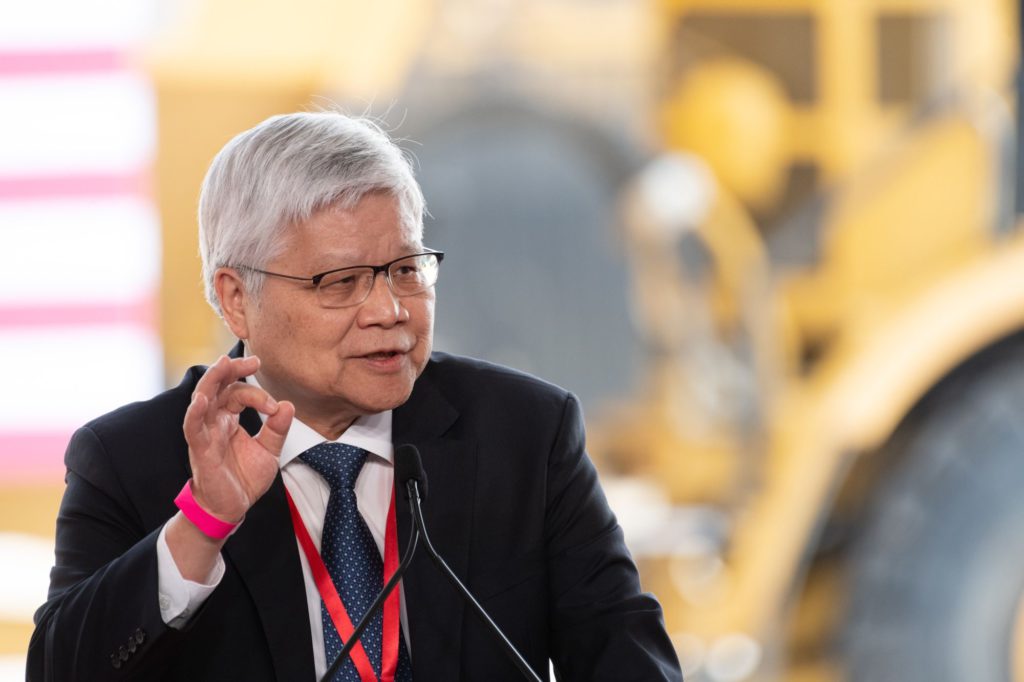
Tumor-fighting mRNA vaccines will probably be most useful for patients with only a few cancer cells, said Katalin Kariko, a former BioNTech SE executive and University of Pennsylvania researcher whose work helped lay the foundation for the technology’s success in the Covid-19 pandemic. 

The vaccines work by delivering instructions for the body to produce antigens that direct the immune system to zero in on cancer cells and kill them. The resulting response, however, probably won’t be powerful enough to eliminate the bulk of a tumor, she said.  

“Immune cells cannot beat a big, huge tumor,” Kariko said in an interview at Semmelweis University in Budapest, where she received an award. That makes it all the more important to “shift our attention to early detection,” in particular to developing blood tests that can enable tumors to be identified long before patients would normally be diagnosed, she said. 

Results released this week from a study that combined a personalized Moderna Inc. vaccine with Merck & Co.’s best-selling cancer drug Keytruda show the promise of the technology, Kariko said. The results demonstrate that it’s possible to fight cancer with an mRNA vaccine, but it’s important to note that the trial was conducted in patients whose tumors had already been surgically removed, she said.

“Some cells survive, and you can fight those with the vaccine,” Kariko said. 

New Therapies

Oncology is a key area of expansion for mRNA technology, which first reached patients during the race for a Covid shot. Moderna and BioNTech are plowing billions of dollars in profits generated by successful Covid vaccines back into their experimental drug pipelines to find new mRNA therapies.

In the Moderna-Merck melanoma study, the mRNA vaccine combination cut the risk of cancer returning after surgery, or of a patient dying, by 44%. Moderna expects the technology will work on more types of tumors and plans to ramp up production to run a range of late-stage clinical trials, Chief Executive Officer Stephane Bancel said in an interview with Bloomberg Television. 

“We think we can go pretty quickly,” he said, comparing mRNA technology to the revolution in cancer care when the first therapies — such as Keytruda — successfully harnessed the immune system against tumors. “We’re going to be very aggressive.” 

Pandemic Pressures

BioNTech is studying its own experimental mRNA treatments in a range of different types of cancer, including melanoma. 

Kariko left her position as a senior vice president at BioNTech earlier this year, though she said she still consults for the company. She had felt “overwhelming pressure” to perform as a leader, she said. “With two-three hours of sleep, that was unsustainable.” 

At 67, she plans to spend her time on research and scientific education for young people.

More stories like this are available on bloomberg.com

©2022 Bloomberg L.P.
TSMC CEO Wei Says Export Controls Weaken Trust Among Countries

(Bloomberg) — Taiwan Semiconductor Manufacturing Co. Chief Executive Officer C.C. Wei warned of the dangers of excessive government export controls, which can erode mutual trust between countries.

“Export controls and banning products from other foreign countries destroy productivity and efficiency gained under globalization, or at least they reduce benefits offered by a free market,” Wei said at an industry event in Taipei on Saturday. “But the scariest thing is that mutual trust and cooperation among countries is beginning to weaken,” he added, urging politicians to come up with an alternative solution. 

Wei’s comments come after the US blacklisted more Chinese companies and escalated trade tensions earlier this week. 

The US government included dozens of Chinese technology companies on its so-called Entity List, making it almost impossible for them to procure critical foreign components and ratcheting up a trade conflict between the world’s two largest economies.

Washington’s action followed the Biden administration’s implementation of tough export controls two months ago to prevent China from buying or making leading-edge semiconductors — crucial for the Asian nation to leapfrog the US in areas such as artificial intelligence and supercomputing. Key US allies, including the Netherlands and Japan, are planning to adopt at least some of the new US rules as well, Bloomberg News reported. 

Multilateral export controls will create a lot of challenges for China’s chip industry, Wei said. 

“Globalization is almost dead. Free trade is almost dead,” TSMC’s founder Morris Chang said at a speech at the opening ceremony of a plant in Arizona last week. “I really don’t think they will be back for a while.” 

More stories like this are available on bloomberg.com

©2022 Bloomberg L.P.

Tesla Plans to Announce Mexico EV Plant as Soon as Next Week

(Bloomberg) — Tesla Inc. is finalizing plans to build an electric vehicle assembly plant in an industrial area of northeastern Mexico and may announce the factory as early as next week.

The plant is to be located in Santa Catarina in Monterrey city, the capital of Nuevo Leon state, according to people familiar with the automaker’s plans, who asked not to be identified discussing internal business. Final details are still being worked out, and the talks with the company have involved both the state government and Mexico’s foreign relations ministry, one of the people said. 

Tesla didn’t immediately respond to an emailed request for comment. 

Chief Executive Officer Elon Musk visited Nuevo Leon in October and met with officials there, and the company’s relationship with the state’s government has already earned it an exclusive customs lane for parts crossing the border into Texas. 

The factory would be Tesla’s first south of the border and part of a push to expand global manufacturing that has included vast new plants in Austin, Texas, and Berlin, as well as a sprawling factory in Shanghai. Tesla has long mulled building a third factory in North America, with Musk telling shareholders in August that a decision might be made before the end of the year. 

US Market

The announcement would come just days after Mexico and Canada won a trade dispute with the US over cars shipped across regional borders, a development that gives automakers more incentive to manufacture in those nations. 

A Mexican-made electric vehicle would likely qualify for subsidies under recent US legislation signed into law in August designed to spur adoption of EVs, as long as it met battery content requirements. 

It’s unclear which models Tesla will produce in its Mexican factory or when it would begin production. Those details could be announced in the coming days, the people said.

Tesla would be locating in an automotive corridor of Nuevo Leon that’s already home to factories for General Motors Co. and Kia Motors, a unit of South Korea’s Hyundai Kia Automotive Group. Ford Motor Co. also builds its electric Mustang Mach-E in Cuautitlan, near Mexico City.

Musk has set an ambitious goal of selling 20 million electric vehicles a year by 2030, which would make Tesla twice the size of any other automaker and account for 20% of global auto output.

–With assistance from Dana Hull.

More stories like this are available on bloomberg.com

©2022 Bloomberg L.P.

Bahamas Says Extradition Fights Go Slow as Bankman-Fried Digs In

(Bloomberg) — As disgraced FTX co-founder Sam Bankman-Fried prepares to fight being sent to the US to face criminal charges, the Bahamas’ top diplomat is warning that extradition battles can be long and tedious.

Fred Mitchell, the island nation’s minister of foreign affairs, said an attempt to block removal from the Bahamas could drag on for months or even years. He declined to speak specifically about Bankman-Fried, who was arrested on Monday at the request of American authorities.   

“A person has a right to fight extradition,” Mitchell said in an interview on Friday. “In the United States, extraditions also take a long time. Courts grind slowly sometimes.”

As Bankman-Fried appeared in court for the first time, his lawyers indicated that he plans to resist extradition. US prosecutors in Manhattan on Tuesday unsealed an eight-count indictment that included charges of wire fraud and conspiracy to commit securities fraud for allegedly misappropriating billions of dollars in funds from FTX customers. 

Before his arrest, in numerous interviews following FTX’s implosion last month, the 30-year-old denied knowingly committing fraud or breaking the law.

Since he was denied bail at the court appearance on Tuesday, Bankman-Fried has been in a notorious correctional facility on the outskirts of Nassau known as Fox Hill. Local media reported that he may appeal the bail ruling.

Authorities in both countries are probing Bankman-Fried’s involvement in FTX’s collapse last month. The firm was headquartered in the Bahamas. 

Bahamian authorities are digging into what role its former top executives may have played in client withdrawals after the government froze FTX’s assets. In interviews and speeches, officials have denied suggestions that the government was too close to Bankman-Fried and other top FTX officials to properly regulate them.

On Friday, Mitchell, the foreign minister, denied that the Bahamas had been lax in its oversight. 

“Bad actors, or alleged bad actors, can turn up in any country,” he said Friday, citing US scandals like those involving Enron Corp. and Bernie Madoff. “It’s not the jurisdiction that’s the issue, it’s the actors who are the issue.”

Mitchell added that US and Bahamian law enforcement officials are fully cooperating on the FTX case. 

“There is no impact in terms of the foreign relations between our country and the United States on this,” he said. “The jurisdictions continue to cooperate on all kinds of levels.”

More stories like this are available on bloomberg.com

©2022 Bloomberg L.P.

Ohio Man Who Posed in Tub Full of Cash to Plead Guilty in Bitcoin Theft Case

(Bloomberg) — An Ohio man who posed in a tub full of cash is scheduled to plead guilty after he was charged with remotely stealing Bitcoin stored on a computer device the government seized in a case against his older brother.

Gary Harmon, 31, is to appear for a “plea agreement hearing” in federal court in Washington, DC, on Dec. 22, court records show. Harmon was charged after 713 digital tokens, then worth almost $5 million, disappeared from a hardware wallet in an Internal Revenue Service evidence locker as authorities watched helplessly. 

An attorney for Harmon and a spokesman for the US Attorney’s Office in Washington declined to comment. 

Prosecutors had seized the wallet from Harmon’s brother, Larry, after his February 2020 arrest on charges he laundered $311 million in crypto transactions on Darknet sites where illegal drugs were sold. Larry Harmon was the first person charged with US crimes related to “mixing” — the practice of jumbling together tokens from different owners to make them harder to trace.

Gary Harmon attended two bail hearings for his brother, one in their hometown of Akron, Ohio, and one in Washington. He learned prosecutors didn’t have the seed recovery phrases needed to access more than 4,800 Bitcoin seized from his brother, who had stored the tokens on a Trezor device, court filings show.

That device allows someone to generate a “seed phrase,” or combination of as many as 24 words that can re-create private keys to allow someone to go online and use a Bitcoin address for transactions. Anyone with that phrase and an additional PIN could take control of the Bitcoin from another device.

Read more: Millions in Cryptocurrency Vanished as Agents Watched Helplessly

Prosecutors initially suspected Larry Harmon did just that over several days in April 2020, after he’d been freed on bail. Larry told prosecutors that the culprit was Gary, who had worked for him. After Larry’s arrest, Gary lived on Covid stimulus funds and Ohio unemployment checks, court records show. 

But when the 713 Bitcoin disappeared, Gary Harmon’s lifestyle took a dramatic upswing. A photo on his cellphone showed him grinning as he lounged in a bathtub full of dollar bills surrounded by scantily clad women. Agents traced 519 of the stolen Bitcoin through two mixers, filings show. Prosecutors say he used 68 Bitcoin as collateral for a $1.2 million loan, and spent some of that to buy a luxury condo in Cleveland. 

Gary was arrested in July 2021, accused of money laundering and other crimes. A few weeks later, his brother pleaded guilty. Gary sought bail, but prosecutors said he should have to hand over seed phrases to the stolen Bitcoin. His lawyer said that would force him to admit crimes in violation of his Fifth Amendment right against self-incrimination. After that, Gary turned down two plea offers. His trial was scheduled for February. 

More stories like this are available on bloomberg.com

©2022 Bloomberg L.P.
Close Bitnami banner
Bitnami