
Bloomberg

Trump Hawks Superhero NFT Trading Cards as Crypto Universe Implodes

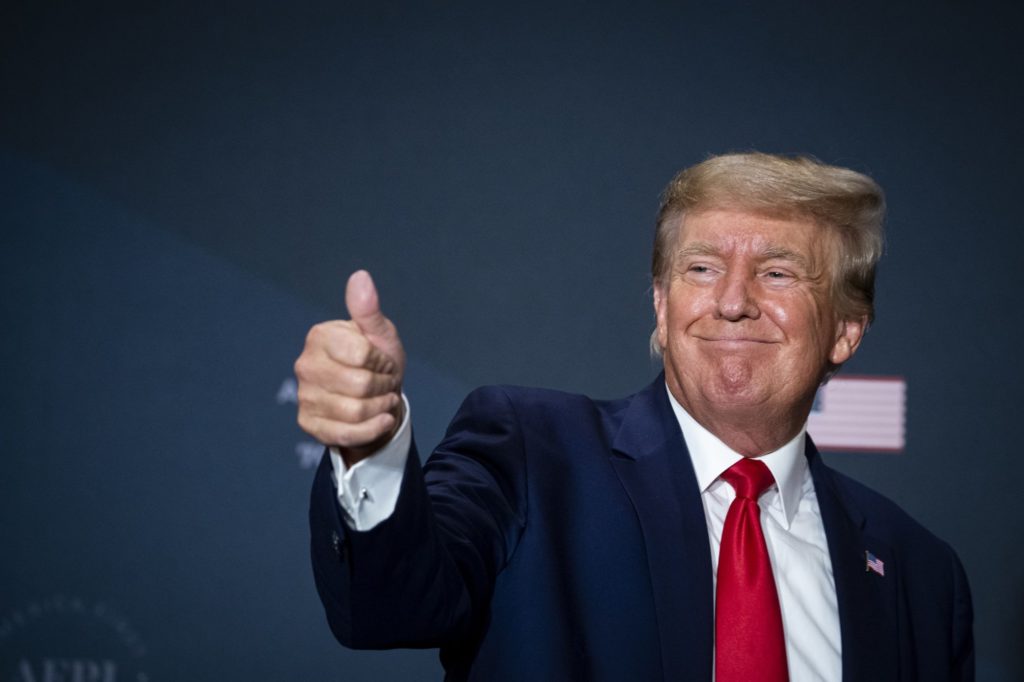
(Bloomberg) — Donald Trump teased a “major announcement” just weeks after declaring a third presidential run, leading political-watchers to speculate about big campaign moves. Instead, he’s hawking digital trading cards with depictions such as his head atop cartoon super-hero figures in an NFT market that’s already sagging.

Trump said on his Truth Social platform that the “Donald Trump Digital Trading Card collection,” can be collected like baseball cards and stored digitally. They cost $99 each and people who buy them are also entered into a sweepstakes for prizes including a golf outing with the former Republican president.

The digital cards are being offered by NFT INT LLC, which says on its website that the cards are not connected to Trump’s presidential campaign and that the company is not owned, managed or controlled by Trump, his company, or their affiliates. Trump gets paid under a license for use of his name and likeness, according to the website.

The market for NFTs has fallen sharply in recent months along with the rest of the crypto universe, which has endured a series of spectacular blowups including the November implosion of Sam Bankman-Fried’s FTX digital-asset empire. In November, monthly trading volume on the world’s biggest NFT marketplace, OpenSea, was the lowest since June of 2021, according to tracker Dune.

Some of the most popular NFT collections, such as Bored Ape Yacht Club, have experienced steep price drops. Since peaking in April, Bored Ape’s floor price — the lowest price someone would pay for an NFT from the collection — fell from about $408,000 to about $82,000 recently, according to tracker NFT Price Floor.

Trump had teased the announcement with a post on his Truth Social platform on Wednesday depicting himself as a Superman-like character standing in front of Trump Tower with lasers shooting from his eyes saying, “America needs a superhero.” In crypto parlance, laser eyes are a bullish signal and that picture is now one of the available digital cards.

The move comes a month after Trump’s Nov. 15 announcement that he’s waging a 2024 White House bid. There was speculation that the “major announcement” would be something dramatic like Trump returning to Twitter or running to be House speaker. 

Trump’s comeback run has so far been marked by one downturn after another, including being blamed for a disappointing Republican midterm showing, the growing popularity in the GOP and among voters of Florida Governor Ron DeSantis, the public dinner he held with two well-known antisemites, deepening legal woes, subpar online fundraising and polls showing him losing favor among his base.

President Joe Biden took a jab at Trump on Twitter, noting that he, too, had had some “MAJOR ANNOUNCEMENTS,” over the last couple of weeks, including signing the Respect for Marriage Act and securing the release of basketball star Brittney Griner from a Russian prison. 

Shortly after his NFT announcement, Trump posted a video on his Truth Social site to outline what he described as a platform to “reclaim” the right of free speech should he retake the White House in 2024.

–With assistance from Beth Williams and Olga Kharif.

(Updates with Biden tweet in 9th paragraph.)

More stories like this are available on bloomberg.com

©2022 Bloomberg L.P.
Binance Withdrawals Slow After Record Customer Outflows

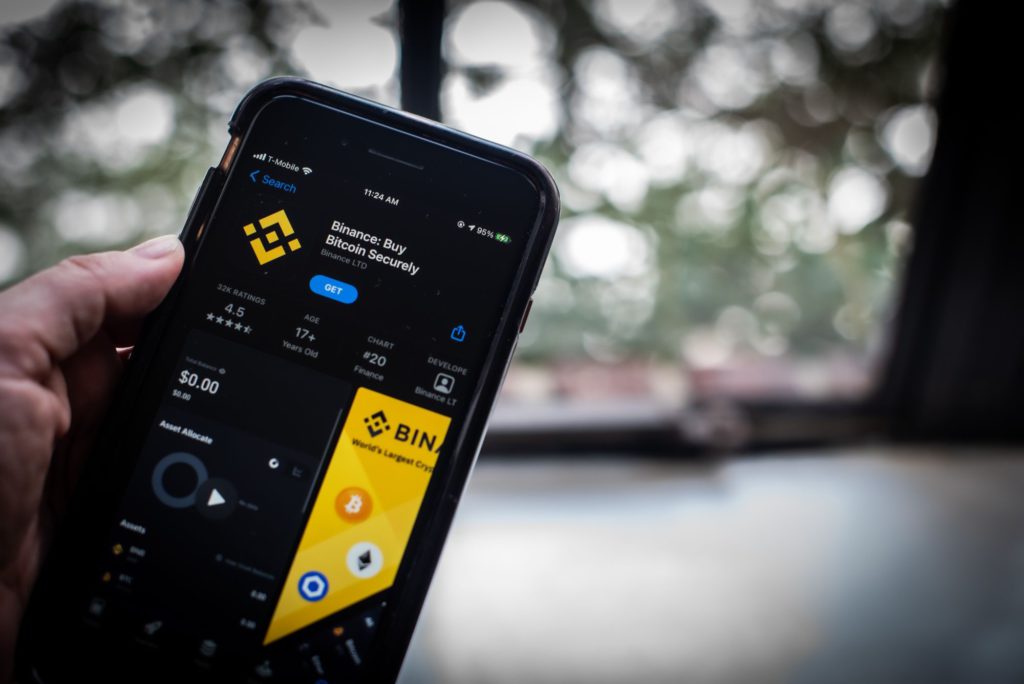
(Bloomberg) — Customer outflows from Binance’s cryptocurrency trading platform are slowing, according to blockchain data from two digital-asset analytics firms. 

The net outflow, the difference between the value of crypto coming into and leaving the exchange, was around $239 million in the past 24 hours, according to Nansen. The data excludes Bitcoin, which Nansen doesn’t track yet. That’s down from the daily average of $272 million over the past week. Binance has at least $60 billion in on-chain reserves, Nansen estimates. 

Data from researcher CryptoQuant show similar trends for Bitcoin flows on Binance. About 3,279 Bitcoin were withdrawn on Wednesday, down from a record high of 40,353 just two days ago.

Customers of Binance have been pulling their funds out of the exchange in the past few weeks amid waning confidence in the crypto sector, after Binance’s former rival FTX collapsed. Sam Bankman-Fried, FTX’s co-founder, has been charged with fraud for allegedly misappropriating billions of dollars of users’ money.

Binance Holdings Ltd. Chief Executive Officer Changpeng ‘CZ’ Zhao downplayed the concern about redemptions on Thursday, saying that customers could pull back all their funds without any problem if needed. 

“People can withdraw 100% of the assets they have on Binance, we will not have an issue in any given day,” Zhao said during an interview on CNBC. Crypto businesses should “hold user assets 1-to-1 and that is what we do.” 

Bloomberg reported earlier this week that the world’s biggest crypto exchange saw a daily record net outflow of Bitcoin and Ether in terms of the number of tokens removed on Tuesday.

Before FTX’s meltdown, the money flows on Binance fluctuated, but were often positive, based on Nansen calculations. A snapshot provided by Nansen of Binance’s weekly net flow of Ethereum blockchain-based tokens showed that there was a net inflow of more than $590 million between Oct. 30 and Nov. 5.

More stories like this are available on bloomberg.com

©2022 Bloomberg L.P.
Nikola CEO Sells $17.2 Million of Stock in the Months Leading to Retirement

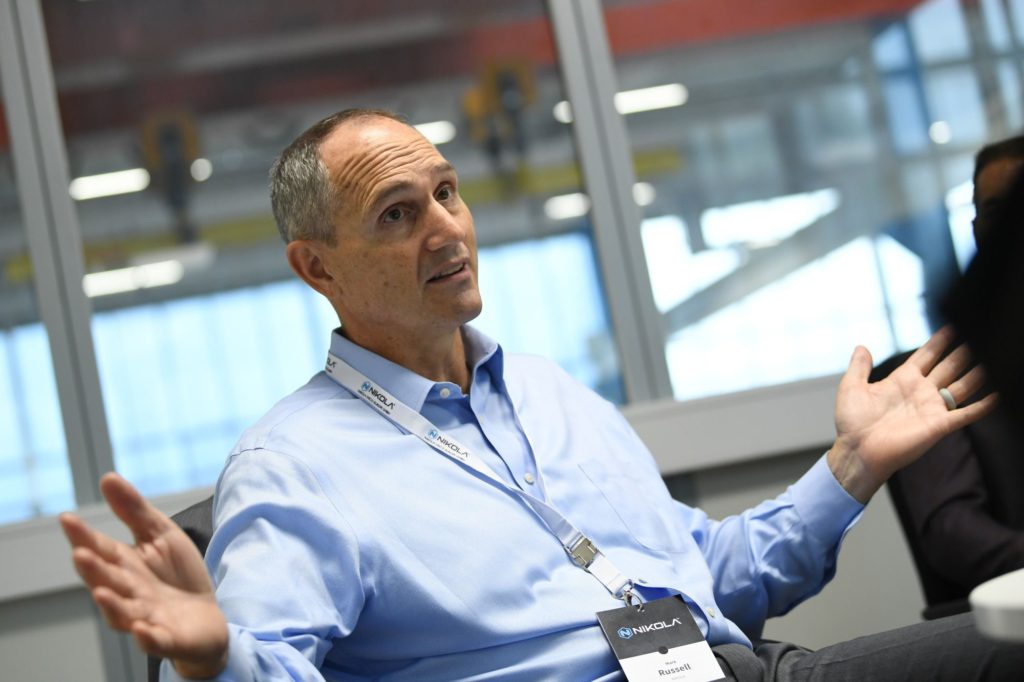
(Bloomberg) — Nikola Corp.’s former chief executive officer has sold more than a third of his direct stock holdings since the electric-truck maker announced his retirement after the end of this year.

Mark Russell has offloaded just over 1 million shares worth $17.2 million, selling almost every day since Sept. 15, according to data compiled by Bloomberg. His latest disposal, disclosed in a regulatory filing Wednesday, leaves him with 1.96 million shares.

A representative for Nikola didn’t immediately comment.

Russell took over as CEO in the days leading up to Nikola’s merger with a blank-check company in June 2020, replacing founder Trevor Milton. Soon after the electric-truck maker made its stock market debut, Milton’s pronouncements about the pre-revenue company sent its market capitalization soaring, briefly surpassing Ford Motor Co.’s valuation. It has fallen precipitously since those heady days two and a half years ago. 

Shares of the company declined 0.5% Thursday to $2.10 as of 1:50 p.m. in New York. The stock is down about 78% this year. 

Milton was found guilty in October of securities and wire fraud. Russell told the jury during the monthlong trial that Milton often made exaggerated statements that concerned him and was focused on day-to-day moves in Nikola’s stock price.

Read more: Nikola’s Milton Seeks New Trial, Saying Juror Lied to Be Chosen

While Russell testified that he had conflicts with Milton leading up to his dismissal in September 2020, the two are still linked through a jointly owned entity called T&M Residual. T&M holds about 8% of Nikola’s shares, according to data compiled by Bloomberg. Nikola has said Russell manages the T&M shares independently of the company.

Nikola announced on Nov. 3 that Russell would retire two months earlier than previously planned. He ceded the top job to Michael Lohscheller, an auto industry veteran who’s worked for manufacturers including General Motors Co. and Volkswagen AG. Russell remains on the company’s board.

(Updates with Nikola shares in fifth paragraph. An earlier version of this story corrected Russell’s current job status.)

More stories like this are available on bloomberg.com

©2022 Bloomberg L.P.
Nikola’s Ex-CEO Has Sold Stock Almost Daily for Three Months

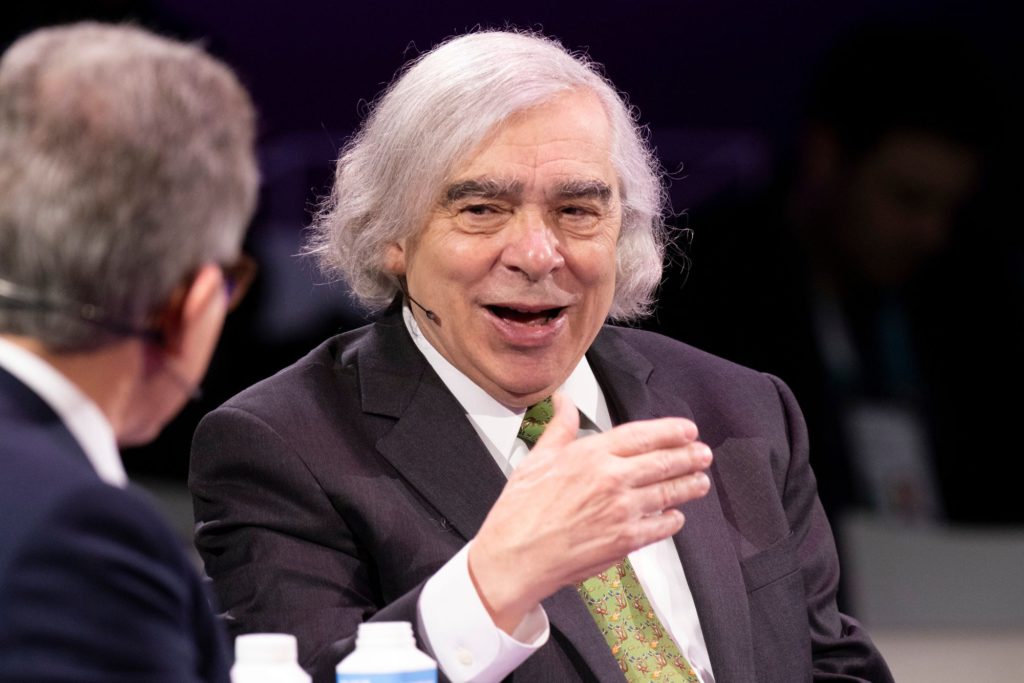
(Bloomberg) — Nikola Corp.’s former chief executive officer has sold more than a third of his direct stock holdings since the electric-truck maker announced his retirement after the end of this year.

Mark Russell has offloaded just over 1 million shares worth $17.2 million, selling almost every day since Sept. 15, according to data compiled by Bloomberg. His latest disposal, disclosed in a regulatory filing Wednesday, leaves him with 1.96 million shares.

A representative for Nikola didn’t immediately comment.

Russell took over as CEO in the days leading up to Nikola’s merger with a blank-check company in June 2020, replacing founder Trevor Milton. Soon after the electric-truck maker made its stock market debut, Milton’s pronouncements about the pre-revenue company sent its market capitalization soaring, briefly surpassing Ford Motor Co.’s valuation. It has fallen precipitously since those heady days two and a half years ago. 

Shares of the company declined 0.5% Thursday to $2.10 as of 1:50 p.m. in New York. The stock is down about 78% this year. 

Milton was found guilty in October of securities and wire fraud. Russell told the jury during the monthlong trial that Milton often made exaggerated statements that concerned him and was focused on day-to-day moves in Nikola’s stock price.

Read more: Nikola’s Milton Seeks New Trial, Saying Juror Lied to Be Chosen

While Russell testified that he had conflicts with Milton leading up to his dismissal in September 2020, the two are still linked through a jointly owned entity called T&M Residual. T&M holds about 8% of Nikola’s shares, according to data compiled by Bloomberg. Nikola has said Russell manages the T&M shares independently of the company.

Nikola announced on Nov. 3 that Russell would retire two months earlier than previously planned. He ceded the top job to Michael Lohscheller, an auto industry veteran who’s worked for manufacturers including General Motors Co. and Volkswagen AG. Russell remains on the company’s board.

(Updates with Nikola shares in fifth paragraph. An earlier version of this story corrected Russell’s current job status.)

More stories like this are available on bloomberg.com

©2022 Bloomberg L.P.
Fusion Power Is Possible in Next Decade, Former US Energy Chief Says

(Bloomberg) — Fusion power plants are possible on the electricity grid within the next decade, a potential game changer that could supply a limitless amount of carbon-free power, former US Energy Secretary Ernest Moniz said Thursday. 

“I believe that in this decade, we will demonstrate the science through multiple technologies that can accomplish fusion,” Moniz, who led the Energy Department under former President Barack Obama, said on Bloomberg Television. “We still have a ways to go to make a commercial power plant, but the prize is incredible.” 

Moniz’s comments come after the Department of Energy announced Tuesday that scientists at a laboratory in California managed for the first time to generate more energy from a fusion reaction than they needed to trigger it. The milestone raises the prospect that some day — perhaps decades from now — the global economy will be run on carbon-free electricity generated by the very process that powers the sun.

Read more: US fusion breakthrough inches world closer to a new energy era

President Joe Biden has also set a goal of achieving a commercial fusion reactor within a decade, though others, including the director of the Energy Department laboratory where the experiment took place, have said that time frame could be overly optimistic. 

Moniz, who serves on the board of fusion-power developer TAE Technologies Inc., said private companies have attracted as much as $5 billion in private capital to explore fusion technologies.

More stories like this are available on bloomberg.com

©2022 Bloomberg L.P.
US Blacklists More Chinese Tech Companies, Escalating Trade Fight

(Bloomberg) — The US government is blacklisting Yangtze Memory Technologies Co., Shanghai Micro Electronics Equipment Group Co. and dozens of other Chinese tech companies, ratcheting up a trade conflict between the world’s two largest economies.

The Department of Commerce is placing the companies on the so-called entity list, meaning that anyone seeking to supply them with US technology will require a license from Washington — something that will likely be difficult to get. Bloomberg News previously reported that the US was preparing to add the companies to the list.

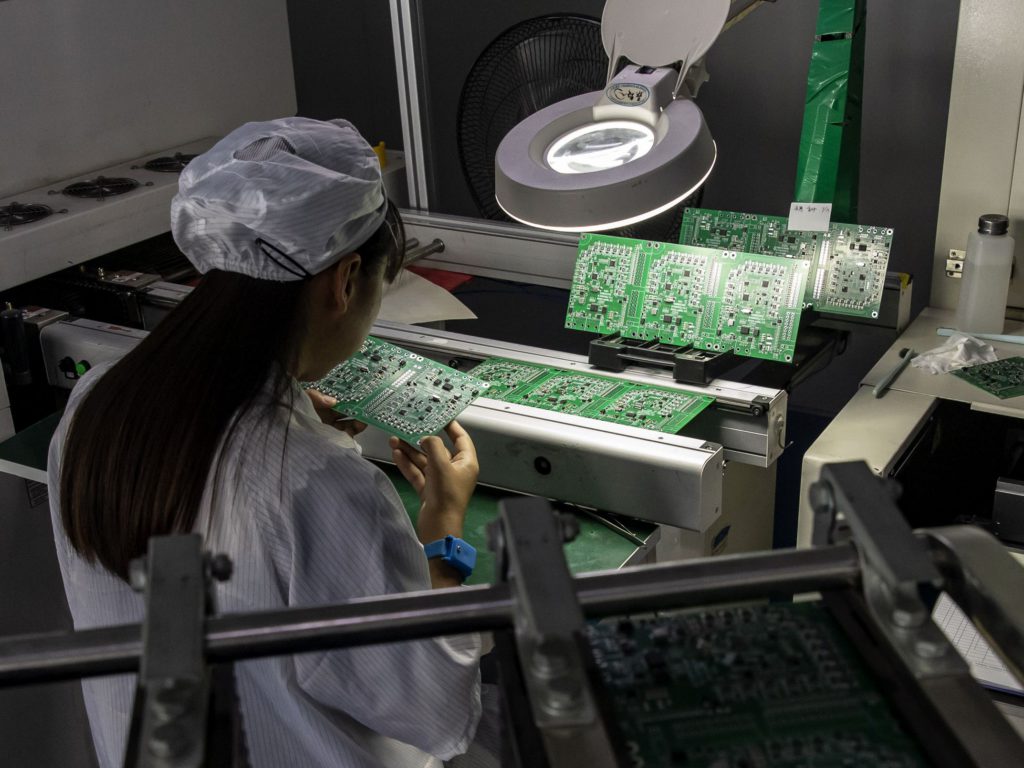
The lineup also includes Pengxinwei IC Manufacturing Co., better known as PXW. The fledgling chip business is run by a former Huawei Technologies Co. executive and is constructing facilities close to that company’s headquarters, according to public records and satellite photos. Huawei — a company already under strict US sanctions — was expected to buy most, if not all, of the output from that chip factory, Bloomberg reported in October.

The latest restrictions are part of a push to limit China’s access to advanced chipmaking and artificial intelligence technology, which the US wants to keep away from the Asian nation’s military. In October, the Biden administration unveiled sweeping measures that limit what US companies can sell to the country — and it’s been pushing for allies to go along with the plan.

The idea is to severely restrict China’s “ability to leverage artificial intelligence, advanced computing, and other powerful, commercially available technologies for military modernization and human rights abuses,” Under Secretary of Commerce for Industry and Security Alan Estevez said in a statement. “This work will continue, as will our efforts to detect and disrupt Russia’s efforts to obtain necessary items and technologies for its brutal war against Ukraine, including from Iran.”

Yangtze Memory and Shanghai Micro were added to the list out of concern that they’ll work with companies that the US has decided are either a risk to national security or support oppression by the Chinese government, including Huawei and Hangzhou Hikvision Digital Technology Co.

Yangtze Memory and Shanghai Micro are key to China’s efforts to build a domestic chipmaking business and wean itself off imports, particularly those from the US. In all, 36 companies are joining the entity list.

Shanghai Micro, better known as SMEE, is China’s leading lithography equipment maker. It’s a smaller rival to ASML Holding NV, the Dutch company whose machines are essential to the production of the most advanced chips. ASML’s technological advantage in that area is currently unmatched by any company anywhere, and the clampdown on SMEE will make it even less likely that a challenger emerges from China. 

Yangtze Memory, meanwhile, is a supplier of flash memory chips — the kind of component that stores data in mobile phones and personal computers. The company was making rapid advances in its production technology, chasing manufacturers such as Samsung Electronics Co., Kioxia Holdings Corp. and Micron Technology Inc. 

Yangtze Memory had been in talks to supply Apple Inc., which makes virtually all of its iPhones in China. The earlier rules announced in October had already hurt its access to production machinery. Now the entity listing further hinders its ability to compete.

For Beijing, the export curbs have added pressure to develop a homegrown chipmaking industry. The country has poured tens of billions of dollars into its domestic capabilities, with mixed results. Chinese officials are now readying an 1 trillion yuan ($144 billion) package to subsidize local chipmakers’ purchase from the nation’s equipment firms, Reuters has reported.

The latest announcement by the Department of Commerce also expands restrictions on AI technology. Cambricon Technologies Corp. and several of its affiliates, which are developing AI components or systems, were added to the list.

But the US also eased restrictions in certain areas. Some 26 entities will be removed from a preliminary “unverified list” because Beijing allowed US representatives to check that they’re in compliance with the rules. Nine Russian companies were also taken off the preliminary list, but they were put on the entity list because Moscow has prevented attempts to confirm how their technology is being used. 

The full list of companies added to the entity list is:

  1. Anhui Cambricon Information Technology Co.
  2. AVIC Research Institute for Special Structures of Aeronautical Composites
  3. AZUP International Group Co.
  4. Beijing HiFar Technology Co.
  5. Beijing Machinery Industry Automation Research Institute Co.
  6. Beijing UniStrong Science & Technology Co.
  7. Beijing Vision Strategy Technology Co.
  8. Cambricon (Hong Kong) Co.
  9. Cambricon (Kunshan) Information Technology Co.
  10. Cambricon (Nanjing) Information Technology Co.
  11. Cambricon (Xi’an) Integrated Circuit Co.
  12. Cambricon Jixingge (Nanjing) Technology Co.
  13. Cambricon Technologies Corp.
  14. CETC Cloud (Beijing) Technology Co.
  15. CETC LES Information System Group Co.
  16. China Electronics Technology Group Corp. No. 28 Institute
  17. Chinese Academy of Sciences Institute of Computing Technology
  18. Guangdong Qinzhi Technology Research Institute Co.
  19. Hefei Core Storage Electronic Ltd.
  20. Key Laboratory of Information Systems Engineering
  21. Nanjing Aixi Information Technology Co.
  22. Nanjing LES Cybersecurity and Information Technology Research Institute Co.
  23. Nanjing LES Electronic Equipment Co.
  24. Nanjing LES Information Technology Co.
  25. PXW Semiconductor Manufactory Co.
  26. Shanghai Cambricon Information Technology Co.
  27. Shanghai Integrated Circuit Research and Development Center
  28. Shanghai Micro Electronics Equipment (Group) Co.
  29. Shanghai Suowei Information Technology Co.
  30. Suzhou Cambricon Information Technology Co.
  31. System Equipment Co. of the 28th Research Institute (Liyang)
  32. Tianjin Tiandi Weiye Technologies Co.
  33. Xiong’an Cambricon Technology Co.
  34. Yangtze Memory Technologies Co.
  35. Zhongke Xinliang (Beijing) Technology Co.
  36. Yangtze Memory Technologies (Japan) Inc.

(Updates to include listing of Pengxinwei in third paragraph.)

More stories like this are available on bloomberg.com

©2022 Bloomberg L.P.

Twitter Must Tell Fired Workers About Severance Lawsuit, Judge Rules

(Bloomberg) — Twitter Inc. employees terminated in Elon Musk’s mass layoffs must be told about a lawsuit on their behalf against the company before they’re asked to give up their legal rights to qualify for severance pay, a judge ruled.

Twitter wants employees who accept a severance package that includes a month of base pay to sign a waiver agreeing not to join lawsuits against the company. The agreement doesn’t mention the existence of a class-action suit filed just before hundreds of people were fired in early November following Elon Musk’s takeover.

A company’s communications with workers about severance packages “should not be rendered misleading by omitting material information about a pending lawsuit,” US District Judge James Donato said in Wednesday’s order, adding that proper notice will “promote the fair and efficient administration” of the litigation.

Filed by a handful of workers, the suit alleges Twitter failed to give the required 60 to 90 days notice about the mass layoffs and is shortchanging the former employees on severance pay. Twitter faces separate claims that it retaliated against an employee who tried to organize a strike and that its layoffs disproportionately targeted female workers.

“Today’s decision is a victory for Twitter employees who for weeks have been abused by Elon Musk,” Shannon Liss-Riordan, a lawyer for the workers, said in an emailed statement. “The court’s ruling that Twitter must notify employees of our legal action is a basic but important step that will provide employees with the opportunity to more fully understand their rights instead of just signing them away, and potentially signing away money they are owed, under pressure from Musk.”

Liss-Riordan previously tangled with Musk over layoffs at Tesla Inc., his electric-car company. She argues in the Twitter suit that former workers are entitled to at least two months’ base pay, and maybe more depending on the number of years they worked there.

Under the previous agreement they’re also supposed to get three months of equity vesting, health-care contributions, and bonuses, she said.

As Tesla contended in the lawsuit over its layoffs, Twitter argued its former employees are bound by contractual agreements requiring them to resolve any disputes with the company in closed-door arbitration rather than in open court. A hearing on Twiiter’s request to force the workers into arbitration is set for January. In the Tesla case, a judge in Texas ordered the workers to go through arbitration.

After Musk bought the social media company for $44 billion, he fired half the workforce, asked some essential employees to return, rolled back its expansive work-from-home policy, and called on workers to sign a pledge to remain “extremely hardcore” at Twitter or quit.

The case is Cornet v. Twitter, 22-cv-06857, US District Court, Northern District of California (San Francisco).

(Updates with details about previous Tesla court fight over layoffs)

More stories like this are available on bloomberg.com

©2022 Bloomberg L.P.
Amazon to Publish ‘Tomb Raider’ Title in Boost to Gaming Ambitions

(Bloomberg) — Amazon.com Inc. has struck an agreement with video game developer Crystal Dynamics to release the next title in the popular Tomb Raider franchise, giving a boost to the e-commerce giant’s struggling gaming ambitions.

The next installment in the single-player adventure chronicling the British archaeologist Lara Croft is yet to be named or have a release date, according to a statement from Amazon. The title is in early development with California-based Crystal Dynamics, which will “take the storytelling to the next level in the biggest, most expansive Tomb Raider game to date,” Amazon said.

The agreement expands the Seattle-based company’s game publishing efforts under Amazon Game Studios, which set out to develop titles about eight years ago but has had only limited success so far. Amazon announced three games in 2016: New World, Breakaway and Crucible. Breakaway was canceled. Crucible was released, then un-released, then also canceled. Other projects, including ones code-named Nova and Intensity, were shelved before they were even revealed. 

Late last year Amazon finally had a modest hit with New World, a multiplayer adventure game. And earlier this year it released Lost Ark. The newTomb Raider title will be Amazon Games’ first single-player narrative game. 

The Tomb Raider franchise includes more than 20 titles and has sold more than 95 million copies since its 1996 debut, according to Amazon. Some recent installments of the series, including Shadow of the Tomb Raider, were published by Japan’s Square Enix Holdings Co. Square Enix owned the franchise as well as Crystal Dynamics until August of this year, when it sold both to the Swedish video game conglomerate Embracer Group AB.

–With assistance from Jason Schreier.

More stories like this are available on bloomberg.com

©2022 Bloomberg L.P.
FTC Asks Twitter How It Plans to Comply With Consent Decree

(Bloomberg) — The US Federal Trade Commission has sent letters to Twitter Inc. asking if the company is able to comply with a consent decree that the agency has vowed to rigorously enforce, according to a person familiar with the exchange. 

Elon Musk’s chaotic $44 billion purchase of Twitter and the subsequent exodus of staff — including many of the company’s lawyers — has raised concerns that it doesn’t have the security or legal resources to meet the requirements of its agreement with the FTC regarding user privacy and data security. 

Twitter didn’t immediately respond to a request for comment.

The FTC’s 2011 consent decree stemmed from allegations that Twitter failed to protect user data in a 2009 hack that allowed intruders to send out fake messages from any user account, including celebrities and politicians. 

Twitter in May paid a $150 million penalty for violating the order by misusing email addresses provided for security purposes. The agency said Twitter used the emails for targeted advertising from 2013 to 2019.

The FTC last month said it was tracking recent developments at the company and said that the revised consent decree gives the agency tools to enforce the order, emphasizing that no chief executive is above the law. 

Read More: Twitter Auditors Missed Lapses Later Exposed by Whistleblower

The FTC has been scrutinizing Twitter’s privacy and data-security compliance for more than a decade, requiring it to submit to independent audits every other year. 

The New York Times reported earlier on the FTC’s letters to Twitter. 

More stories like this are available on bloomberg.com

©2022 Bloomberg L.P.

Nasdaq 100 Declines More Than 3%; Dollar Rises : Markets Wrap

(Bloomberg) — Stocks declined across global financial markets after a wave of rate hikes from central banks, with the Federal Reserve and the European Central Bank warning of more pain to come. 

The tech-heavy Nasdaq 100 dropped more than 3%. The S&P 500 fell the most intraday in more than a month. Both indexes ended Wednesday in the red after Fed Chair Jerome Powell reiterated his hawkish stance and policymakers signaled a peak rate that was above market expectations. 

Europe’s equity benchmark, the Stoxx 600, fell after ECB President Christine Lagarde said the central bank needs to do more than traders priced in.

The US dollar strengthened. Britain’s pound fell after an expected half-point hike from the Bank of England and extended those losses. The euro dropped as traders parsed Lagarde’s remarks. 

Read More: ECB Hikes by Half Point as Lagarde Warns of More Such Moves

A global rally sparked by softer-than-forecast US consumer price index data came to an abrupt halt on Wednesday after the Fed sought to dispel hopes for a rate cut next year. Powell reaffirmed the central bank won’t back down from its fight against inflation despite mounting fears of job losses and a recession. But he also signaled the central bank is getting close to reaching the end of its tightening cycle. 

Investors are also parsing a bevy of US economic data Thursday. While retail sales were worse than expected, initial jobless claims came in lower than expected, underscoring the strength in the labor market. US factory production, meanwhile, declined for the first time since June. 

“Markets have been in a tug-of-war between better-than-feared economic data juxtaposed with concerns about the potential for the Fed to over-tighten monetary policy and push the economy into a recession,” said Art Hogan, chief market strategist at B. Riley Wealth. 

Key events this week:

  • Eurozone S&P Global PMI, CPI, Friday

Some of the main moves in markets:

Stocks

  • The S&P 500 fell 2.4% as of 11:13 a.m. New York time
  • The Nasdaq 100 fell 3.1%
  • The Dow Jones Industrial Average fell 2.1%
  • The Stoxx Europe 600 fell 2.5%
  • The MSCI World index fell 0.2%

Currencies

  • The Bloomberg Dollar Spot Index rose 0.9%
  • The euro fell 0.3% to $1.0648
  • The British pound fell 1.7% to $1.2216
  • The Japanese yen fell 1.6% to 137.65 per dollar

Cryptocurrencies

  • Bitcoin fell 2.3% to $17,427.18
  • Ether fell 3.1% to $1,270.44

Bonds

  • The yield on 10-year Treasuries declined three basis points to 3.45%
  • Germany’s 10-year yield advanced 14 basis points to 2.08%
  • Britain’s 10-year yield declined nine basis points to 3.23%

Commodities

  • West Texas Intermediate crude fell 1.1% to $76.44 a barrel
  • Gold futures fell 1.7% to $1,788 an ounce

This story was produced with the assistance of Bloomberg Automation.

–With assistance from Isabelle Lee and Srinivasan Sivabalan.

More stories like this are available on bloomberg.com

©2022 Bloomberg L.P.

Close Bitnami banner
Bitnami