Bloomberg

Meta Stops Planned $342 Million Data Center Expansion in Denmark

(Bloomberg) — Meta Platforms Inc. has halted construction of two new data centers in Denmark, canceling a 2.4 billion kroner ($342 million) contract it signed in August with contractor Per Aarsleff Holding A/S.

Per Aarsleff received notification that a contract to expand a data center in Odense was terminated, the Danish builder said in a statement Tuesday evening. The parent of Facebook and Instagram confirmed that it had stopped developing the site to Bloomberg News on Thursday.

Meta operates two large data centers in its Odense campus and is scheduled to finish a third next year. The canceled project would have built two additional buildings for housing servers and was scheduled to open by the end of 2025. 

Construction had started on the expansion, with foundations, sewers, cables, a canteen and parking space for 1,000 cars already installed. 

“We have decided not to move forward with the planned expansion beyond three buildings,” said Meta spokesman Peter Münster in a statement. 

Münster said the move was part of a number of steps recently announced to create “a more streamlined organization” and that the company is re-examining development plans to ensure it is building a “new generation” of data centers designed to handle AI workloads. 

Datacenter Dynamics first reported Meta’s plans to review its data center construction projects.

Last month, Meta’s Chief Executive Officer Mark Zuckerberg announced that the company would cut more than 11,000 jobs, following several quarters of disappointing earnings and a slide in revenue.

In July, Meta permanently canceled a data center project in the Netherlands after facing pushback from local politicians over environmental concerns.

More stories like this are available on bloomberg.com

©2022 Bloomberg L.P.

Bezos and Gates Back Synchron in Drive for Brain Implant Breakthrough

(Bloomberg) — Last March, brain-computing interface expert Tom Oxley sat down to dinner with Amazon.com Inc. founder Jeff Bezos to talk about Oxley’s nascent company, Synchron Inc. That meal in Ojai, Calif., ended with something better than dessert: Bezos told Oxley that he wanted to invest in the business.

Synchron said Thursday it completed a $75 million funding round, part of it from Bezos Expeditions. The financing was led by ARCH Venture Partners, and includes a check from Gates Frontier, the venture investment arm of Microsoft Corp. co-founder Bill Gates, and others. Existing investors also participated, including Khosla Ventures — whose founder, Vinod Khosla, introduced Oxley to Gates.

Brain-computer interfaces, known as BCIs, can interpret and stimulate parts of the brain and are seen as a possible treatment for brain injuries. New investors approached Synchron “through the lens of making an impact in neurology in an area of need,” Oxley said in an interview. They “saw BCI as a future therapeutic.” About 100 million people globally have upper limb impairment, he said, and could benefit from the technology.

The cash brings Synchron’s total funding to $145 million. That places it behind Elon Musk’s Neuralink Corp. and Max Hodak’s Science Corp. on fundraising, according to research firm Pitchbook, but far ahead of most other BCI companies. It’s an important ranking, given the expense of advancing BCIs through the US Food and Drug Administration approval process.

Synchron’s Switch device aims to help paralyzed people, such as those with amyotrophic lateral sclerosis (ALS), communicate by controlling computer cursors with their minds.

The company has already enrolled three patients in a six-person US feasibility trial and implanted the device in two of them. Oxley expects the remaining patients to enroll and receive their implants in the next few months. Doctors will observe them for a year and report findings to the FDA. Two years ago, the agency gave Synchron “breakthrough” status, allowing it to undergo a relatively streamlined approval process.

The founder’s next big goal is launching an FDA pivotal trial, a necessary step for the Switch to be eligible for Medicare and insurance coverage. Winning that eligibility would put the company on a path toward future revenue.

Investors had a burst of enthusiasm for BCI startups in 2021, with some 49 deals attracting $568 million of investment, according to Pitchbook. That tailed off this year to 37 deals at $263 million of funding through Nov. 28, but that’s still the second-highest since 2015. 

Unlike the devices proposed by many other BCI companies, which typically involve various types of brain surgery, Synchron’s system gets implanted into the jugular vein in a process similar to inserting a coronary stent. From there, its tiny electrode-studded stentrode travels through the bloodstream into the brain’s motor cortex. The implant works by communicating via a tiny wire with a second implant in the chest. A transmitter then sends signals to a computer outside the body, near the patient.

Ari Nowacek, a principal at ARCH Venture Partners, will join Synchron’s board of directors, while ARCH managing director Robert Nelsen will join as a board observer.

More stories like this are available on bloomberg.com

©2022 Bloomberg L.P.

Payments Firm Wise Launches ‘Interest’ to Rival Bank Savings Accounts

(Bloomberg) — Wise Plc is offering interest-like returns for customers by tying their money into funds tracking central bank rates. 

The British payments firm said it was rolling out the new product — which it has simply named “Interest” — for UK customers with balances in British pounds, US dollars and euros, with plans to expand across Europe next. 

Customer money isn’t protected by UK deposit rules and Wise, which is charging 0.29% on the product, doesn’t have a banking license in the country. The firm is instead trying to rival banks’ interest-bearing accounts by moving cash into public debt money market funds, which invest mostly in liquid government assets.

Gabriel May, senior expansion lead for assets, said the new product was more transparent than the way banks pass on central bank rates to their savings customers. 

Currently the annual variable yields are:

  • 3.29% on USD balances
  • 2.52% on GBP balances
  • 0.88% on EUR balances

Wise said 99.99% of money held will be immediately available to spend and send on its app. 

Co-founded by Estonian entrepreneurs Kristo Käärmann and Taavet Hinrikus in 2011, Wise now has 15 million clients and processes over £9 billion ($11.1 billion) in cross-border transactions every month. 

The London-listed fintech reported a 50% rise in transfer values in the three months through September, boosting revenues by 59%. It is authorized as an electronic money institution in the UK.

More stories like this are available on bloomberg.com

©2022 Bloomberg L.P.

Equities Tumble as Fed Shock Halts Global Rally: Markets Wrap

(Bloomberg) — US equity-index futures and European stocks declined after the Federal Reserve rebuffed expectations for a dovish tilt and said interest rates will go higher for longer.

Contracts on the S&P 500 and Nasdaq 100 gauges fell at least 1.1% each. Demand for haven assets sent the dollar and Swiss franc higher amid a wave of rate hikes from Taiwan to Norway. The euro halted a two-day advance as traders awaited policy decisions from the European Central Bank and Bank of England. Oil slid on signs of increasing supply. Tesla Inc. dropped in premarket New York trading after Elon Musk sold $3.6 billion of shares.

A global rally sparked by softer-than-forecast US inflation came to an abrupt halt on Wednesday after policymakers signaled a peak rate that was far above market expectations and sought to dispel hopes for a rate cut next year. Chair Jerome Powell reaffirmed the central bank won’t back away from its fight against inflation despite mounting fears of job losses and a recession.

“The Fed was more hawkish than markets had expected,” Jack McIntyre, a money manager at Brandywine Global Investment Management, wrote in a note. “They seemingly still want financial markets to tighten further, which essentially means they want lower equity prices.”


An index of the dollar’s strength headed for the biggest gain since Dec. 5. The euro fell from a six-month high, while Britain’s pound declined for the first time in seven days. The ECB and BOE are expected to follow the Fed with half-point hikes. 

The Swiss franc held its gain after the nation’s central bank doubled the policy rate to 1% as forecast. China’s yuan fell as poor economic data and a surge in Covid cases weighed.

Europe’s equity benchmark, the Stoxx 600, tumbled the most since Nov. 3, dragged by consumer and retail shares. Tesla dropped 2.6% in early New York trading after Chief Executive Officer Musk sold almost 22 million shares of the electric-car maker for $3.58 billion. Western Digital Corp. lost 4.1% as Goldman Sachs Group Inc. recommended selling the stock.

Shorter-dated Treasury yields edged higher, with the two-year rate adding 3 basis points. The 10-year rate was little changed as investors weighed the economic impact of Fed’s hawkishness.

Oil slipped after rallying almost 9% over the previous three sessions as TC Energy Corp. restarted a section of the Keystone pipeline, allowing for some flows to resume on the major conduit.


Key events this week:

  • ECB rate decision and ECB President Lagarde briefing, Thursday
  • Rate decisions for UK BOE, Mexico, Norway, Philippines, Switzerland, Taiwan, Thursday
  • US cross-border investment, business inventories, empire manufacturing, retail sales, initial jobless claims, industrial production, Thursday
  • Eurozone S&P Global PMI, CPI, Friday

Some of the main moves in markets:

Stocks

  • The Stoxx Europe 600 fell 1.2% as of 10:09 a.m. London time
  • Futures on the S&P 500 fell 1.1%
  • Futures on the Nasdaq 100 fell 1.3%
  • Futures on the Dow Jones Industrial Average fell 0.8%
  • The MSCI Asia Pacific Index fell 1.5%
  • The MSCI Emerging Markets Index fell 1.3%

Currencies

  • The Bloomberg Dollar Spot Index rose 0.6%
  • The euro fell 0.6% to $1.0621
  • The Japanese yen fell 0.8% to 136.62 per dollar
  • The offshore yuan fell 0.5% to 6.9770 per dollar
  • The British pound fell 0.7% to $1.2338

Cryptocurrencies

  • Bitcoin fell 0.8% to $17,691.21
  • Ether fell 1.7% to $1,287.85

Bonds

  • The yield on 10-year Treasuries was little changed at 3.48%
  • Germany’s 10-year yield declined two basis points to 1.92%
  • Britain’s 10-year yield declined eight basis points to 3.24%

Commodities

  • Brent crude fell 0.1% to $82.58 a barrel
  • Spot gold fell 1.6% to $1,778.12 an ounce

This story was produced with the assistance of Bloomberg Automation.

–With assistance from Richard Henderson and Georgina Mckay.

More stories like this are available on bloomberg.com

©2022 Bloomberg L.P.

What Crypto’s Decline Means for the Future of Bitcoin ATMs (Podcast)

(Bloomberg) — Listen to Bloomberg Crypto on the iHeartRadio App, Apple Podcasts or  Spotify.

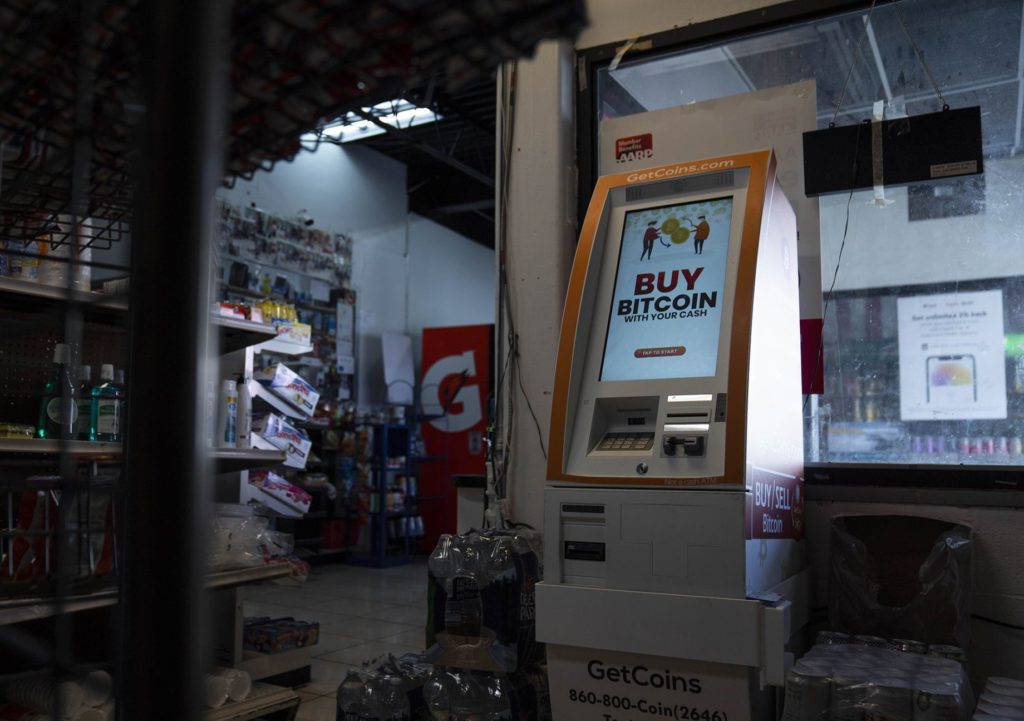
Bitcoin ATMs could be considered symbolic of the state of crypto’s popularity. During the digital-asset boom they kept appearing in what could reasonably be considered unusual locations, such as Amherst County, Virginia, a place that has no hospital but does have a Bitcoin ATM. Just in case.

The number of crypto ATMs in the US peaked in August at just over 34,000 but has begun to fall, according to Coin ATM Radar, a site that tracks global locations of Bitcoin ATMs. Will these makeshift monuments to digital assets withstand the FTX bankruptcy and subsequent decline of digital assets?  Bloomberg reporter Carly Wanna joins the episode to consider the future of Bitcoin ATMs.

Subscribe to the Bloomberg Crypto Newsletter at https://bloom.bg/cryptonewsletter 

This podcast is produced by the Bloomberg Crypto Podcast team: Supervising producer: Vicki Vergolina, Senior Producer: Janet Babin, Producers: Sharon Beriro and Muhammad Farouk, Associate Producers: Mo Andam and Ty Butler. Sound Design/Engineer:  Desta Wondirad.

More stories like this are available on bloomberg.com

©2022 Bloomberg L.P.

Japan Moves Closer to Easing Tax on Corporate Crypto Holdings

(Bloomberg) — Japan’s ruling political party agreed to ease corporate tax rules for virtual currencies, signaling support for an industry reeling from the meltdown of Sam Bankman-Fried’s crypto empire. 

The Liberal Democratic Party’s tax committee on Thursday approved a proposal to exempt companies from paying levies for paper gains on crypto coins that they hold after issuing them, according to a party politician. 

“This is a very big step forward,” said Akihisa Shiozaki, an LDP lawmaker who is a member of the party’s Web3 project team, at a briefing. “It will become easier for various companies to do business that involves issuing tokens.”  

The move indicates that policysetters in Japan continue to count on crypto technologies to drive growth even as FTX’s collapse sends shockwaves through the industry. Currently, profit from cryptocurrency holdings, including unrealized gains, is subject to corporate tax of about 30% in Japan. 

Prime Minister Fumio Kishida’s administration will finalize its annual tax policy guidelines by the year end based on the party’s decisions. The government normally submits legislation to parliament in January to rewrite tax codes for a new fiscal year starting April 1.

–With assistance from Russell Ward.

More stories like this are available on bloomberg.com

©2022 Bloomberg L.P.

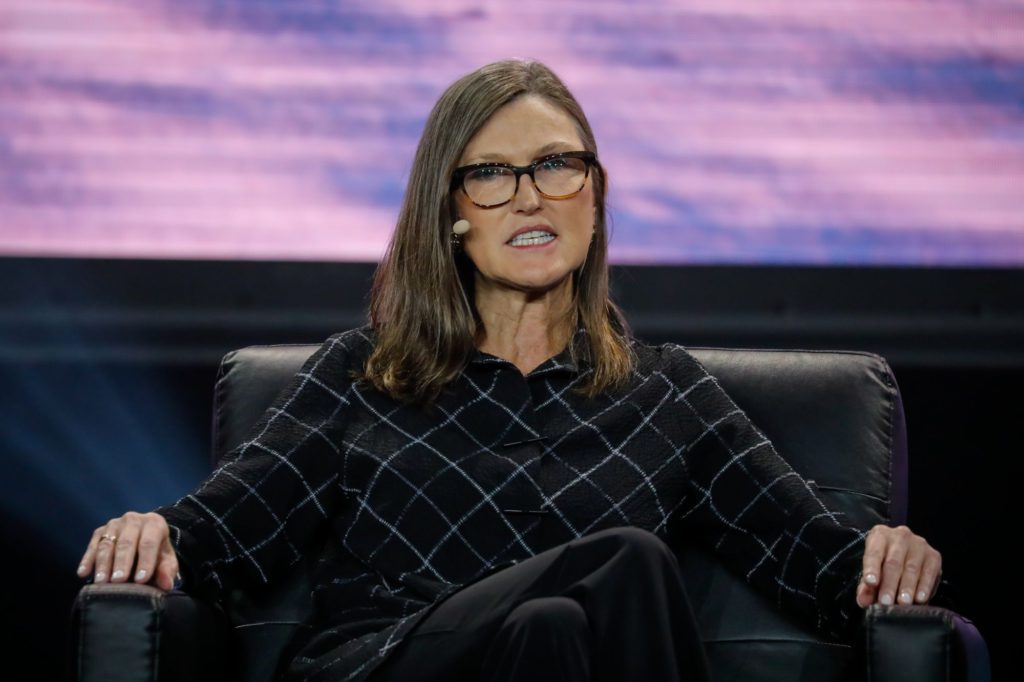
Cathie Wood Boosts Tesla, Coinbase Holdings on Dip-Buying Binge

(Bloomberg) — Cathie Wood scooped up more shares of Tesla Inc. and Coinbase Global Inc., underscoring her faith in electric vehicles and cryptocurrency as key trends for the future. 

A gamut of Ark Investment Management LLC’s funds, including Wood’s flagship Ark Innovation ETF, bought nearly 75,000 shares of the EV maker and about 297,000 of the cryptocurrency exchange operator on Wednesday, continuing a dip-buying streak that started in October, according to data compiled by Bloomberg.

Ark has continued its purchases in Coinbase despite unprecedented volatility induced by the collapse of Sam Bankman-Fried’s FTX crypto empire. Coinbase shares plumbed a record low on Tuesday, before recovering slightly on Wednesday.

Wood’s biggest fund, ARK Disruptive Innovation Strategy, is down 60% this year, compared with a loss of 28% for the Nasdaq 100 and a 16% decline for the S&P 500. She last month reiterated her $1 million target for Bitcoin, the largest crypto token, which currently trades around $17,600. 

Meanwhile, Tesla shares are at their lowest in more than two years amid concerns over a potential recession, a hawkish Federal Reserve, and founder Elon Musk’s moves to reduce his stake in the EV maker. 

READ: Tesla Closes Below $500 Billion Valuation First Time in 2 Years

Wood’s firm is one of the largest shareholders of Coinbase, holding a 4.3% stake as of Sept. 30, according to Bloomberg data. Ark holds just 0.13% of Tesla but the stock remains one of the top holdings of its main fund.   

Shares in Tesla fell 2.5% in premarket trading on Thursday, and those of Coinbase also slid 2.5%.

–With assistance from Subrat Patnaik.

(Updates with stock moves.)

More stories like this are available on bloomberg.com

©2022 Bloomberg L.P.

Foxconn Ends Most ‘Closed-Loop’ Restrictions in iPhone City

(Bloomberg) — Foxconn Technology Group, the primary assembler of iPhones for Apple Inc., is easing most anti-Covid restrictions at its factory in Zhengzhou, China — a facility that had become a flashpoint in the country’s efforts to contain infections.

Foxconn, also known as Hon Hai Precision Industry Co., said it is ending its “point-to-point” system, in which employees had to restrict daily movements to between their dormitories and the campus, according to a statement on its official WeChat account Wednesday night.

China has been moving away from its long-standing Covid Zero approach, which had hurt economic activity and sparked widespread discontent. Foxconn’s move comes after local authorities lifted the “high-risk Covid” status on the area around the plant earlier this week. Zhengzhou had already relaxed its virus-elimination measures for most of the city, ending mandatory Covid testing to enter public areas. 

China Eases Curbs in Major Shift From Covid Zero Policy (3)

China’s government is easing restrictions despite climbing infections and relatively low vaccination rates among the elderly. Almost 1 million people in China may die from Covid-19 as the government rapidly abandons pandemic curbs, according to a new study by researchers in Hong Kong.

“Foxconn will now need to address the potential increase in sickened staff and a possible shortage of workers,” said Will Wong, senior research manager at IDC. Many workers may be afraid to leave their homes ahead of family gatherings during Chinese New Year next month, he said. “More initiatives will need to be taken to appease staff, other than financial compensation.”

Foxconn also said it’s reopened its on-site cafeterias and will no longer provide three free meals per day. The lack of access to cafeterias in what’s known as iPhone City had become a significant hurdle to keeping workers fed during the pandemic, sparking an exodus of thousands of employees.

Restrictions at the Zhengzhou campus had reverberated throughout the country and beyond. Foxconn first shut its cafeterias and limited workers’ movements in October, attempting to limit an outbreak of Covid infections. That led to food shortages and trash-filled facilities, prompting workers to depart Zhengzhou by the thousands. 

After Foxconn teamed up with local authorities to hire new staff, the workers revolted in November over compensation and safety practices. Violent protests broke out as hundreds of workers clashed with security personnel.

Apple and Hon Hai warned that they would lose iPhone production because of the troubles in Zhengzhou, which makes all of Apple’s high-end Pro models. The shortfall is likely to be close to 6 million iPhone Pro units, Bloomberg News reported in November.

Meal expenses will now be deducted from staff wages, the company said, adding that it will provide 15 yuan per day of subsidies from Dec. 16 to Dec. 31 to those who work regularly.

The company will continue to provide free meals to Covid patients who choose to stay at company-appointed accommodations, it added.

–With assistance from Gao Yuan.

(Updates with analyst comment in fifth paragraph)

More stories like this are available on bloomberg.com

©2022 Bloomberg L.P.

Lloyds Names New COO, Numis Hires in Dublin: The London Rush

(Bloomberg) — It’s Bank of England rate-decision day, with investors and economists expecting the central bank to dial down the pace of increases. While inflation dipped last month, the cost-of-living squeeze goes on — as Bloomberg’s latest Breakfast Index shows. This morning’s corporate updates saw banks continue to hire and power group Drax warning of a “difficult winter.”

Here’s the key business news from London this morning:

In The City

Lloyds Banking Group Plc: The lender announced that Ron van Kemenade will join next year as chief operating officer from ING Groep NV, where he is the chief technology officer. 

  • “This is a pivotal role for our business given the pace of tech innovation and the importance of technology and data as a key enabler to helping us deliver our long-term growth strategy,” Lloyds CEO Charlie Nunn said 

Numis Corp Plc: The UK investment bank is expanding its Dublin office with three appointments to grow its offering to clients in Europe. 

  • The firm said it is hiring Rob Fallon from Goodbody as a director for equity sales trading, Peter Davis from Citigroup Inc. as director of investment banking and Cian Fanning from Davy as director of equity sales

Drax Group Plc: The power company said it sees a “difficult winter ahead,” adding that it will continue to optimise its biomass operations to ensure that more renewable power is available, “when the country needs it most.”

  • The company also said that thanks in part to the “strong pumped storage and hydro performance” in the second half of the year, it now expects that full-year adjusted Ebitda will be slightly above the top of the range of analyst expectations

Currys Plc: The electronics retailer said its international business had a “difficult” first half with margins sinking “sharply.” Lower demand has left domestic competitors with excess stock, “which they’re now heavily discounting,” the firm also said. 

In Westminster

Later today, the Bank of England is likely to slow the pace of interest-rate rises as it balances risks from high inflation with concerns that overly aggressive action might unnecessarily deepen the recession ahead.

That’s as UK bond traders seeking shelter from this year’s turmoil are piling into 10-year securities, a section of the market that’s been relatively insulated from central bank action.

Meanwhile, the government has begun talks on a scientific cooperation deal with Japan it hopes to sign in May, as Britain remains blocked from the EU’s key research funding program post-Brexit. Bloomberg Opinion says that by curtailing student visas, the UK could “blow one of its last great advantages.”

In Case You Missed It 

Those who have experienced racism and misogyny at Savills, the 167-year-old UK real estate company, say its culture enables bad behaviour. Management says it’s making “good progress.”

London-based Brevan Howard Asset Management’s new digital currency fund escaped with a single-digit loss after it held cash during some of this year’s crypto meltdown. 

Finally, Britain will set a June 2024 deadline for airports to upgrade security scanners so that liquids can be packed with hand luggage, ending the requirement for items such as sunscreen and shampoo to be presented at security gates in a separate plastic bag.

Looking Ahead 

Retail sales, due to be published at 7:00 a.m. tomorrow, are expected to have risen in November as consumers started shopping earlier for Christmas. This trend may “in part reflect growing promotions as well as consumers fearing stocks running out,” Bloomberg economists say, adding that overall consumer spending was likely to be scaled back with household budgets remaining under pressure. 

For a news fix when the day is done, sign up to The Readout with Allegra Stratton, to make sense of the day’s events.

–With assistance from Charles Capel.

More stories like this are available on bloomberg.com

©2022 Bloomberg L.P.

Europe Car Sales Continue Rebound on Easing Supply Snarls

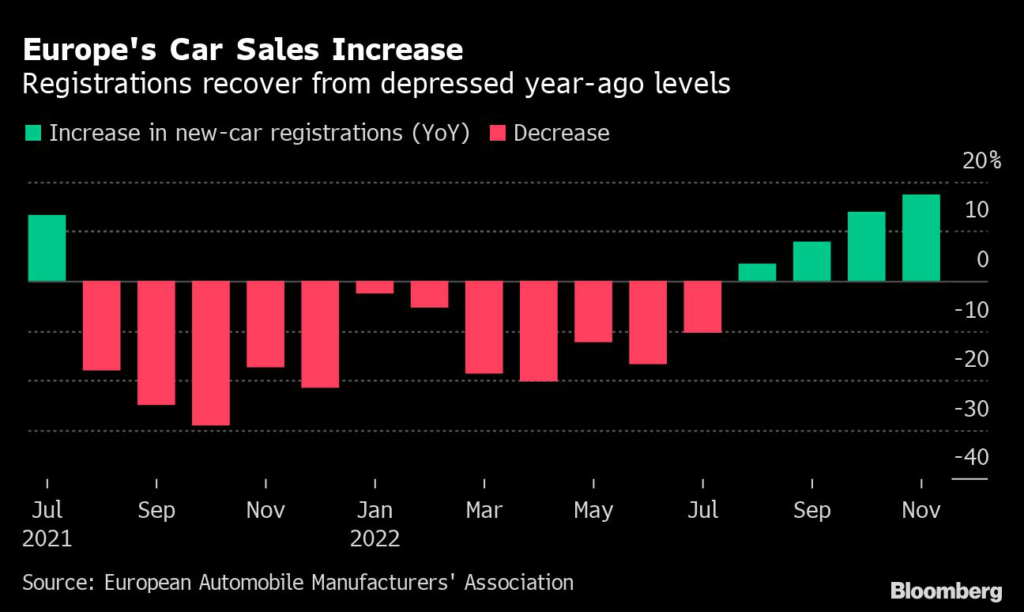
(Bloomberg) — Auto sales in Europe climbed for a fourth month in November as supply-chain issues continued to ease, though a worsening economic outlook threatens to hurt demand in the coming months.

New-car registrations rose 17% to more than 1 million vehicles last month, the European Automobile Manufacturers’ Association said Thursday. Total sales are still down about 6% from the first 11 months of  last year. 

Deliveries have improved in recent months as shortages of semiconductors and other components improved. Order books have remained full, which should help earnings through early 2023. But the industry has yet to recover to pre-pandemic levels and probably won’t be able to avoid a third consecutive year of decline, according to Bloomberg Intelligence.

Analysts at LMC Automotive said they expect supply bottlenecks that have constrained production will ease throughout next year. The market researcher is less sanguine about demand, citing high rates of inflation, declining consumer confidence and stretched household budgets.

“We assume 2023 will comfortably outpace 2022, though we are a little more cautious,” the analysts said, trimming their sales forecast for Western Europe to below 11 million.

Some manufacturers are already raising alarm bells about the impact of spiraling inflation. Volkswagen AG flagged this week that electric-vehicle sales in Europe had “gone off track” in recent months as surging energy prices started hurting demand.

High-end luxury vehicles have been relatively resilient this year, and automakers are still benefiting from unfilled orders accumulated during the height of their supply-chain crises. Some manufacturers, including Stellantis NV, are still reporting logistics problems.

Kepler Cheuvreux expects an overall 5.3% drop in western European registrations for 2022, including a 15% decline for light commercial vehicles, which are typically more sensitive to macroeconomic deceleration. Registrations are likely to remain well below pre-pandemic levels next year, Kepler analysts wrote in a Dec. 13 note. 

Registrations in November rose about 24% in the UK, 31% in Germany and 15% in Italy, the association said. VW was the standout performer last month with a 37% jump from a year ago. 

More stories like this are available on bloomberg.com

©2022 Bloomberg L.P.

Close Bitnami banner
Bitnami