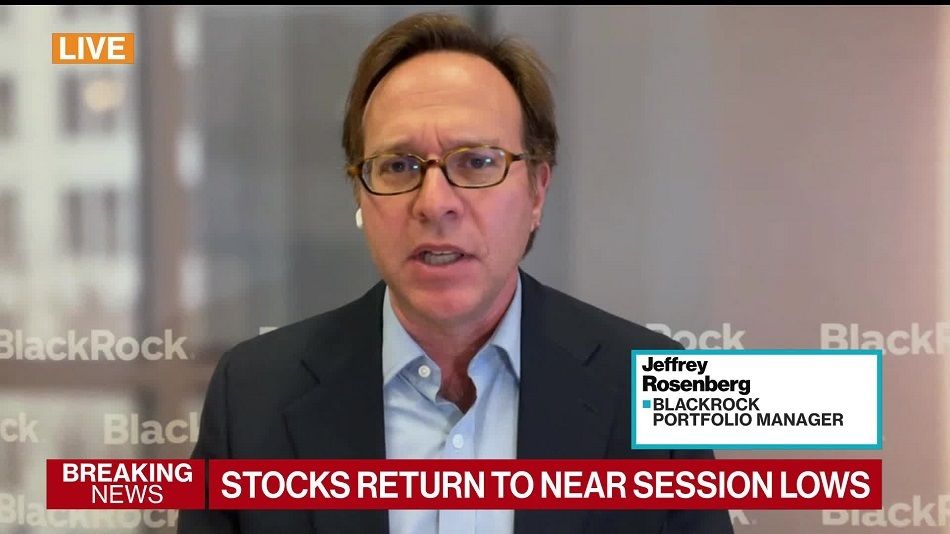
Bloomberg

Europe Stock Futures Fall After Fed, Ahead of ECB: Markets Wrap

(Bloomberg) — European equity futures fell ahead of interest rate decisions on the continent and in the UK, extending a decline in Asian and US markets after the Federal Reserve indicated it would hike rates higher than anticipated next year. 

The dollar climbed and the yuan fell as poor Chinese economic data added to downbeat sentiment in markets. While authorities have ended the Covid Zero policy that drove the weakness in China, the country is now struggling with a surge of infections.

Benchmark indexes in Japan, South Korea, China and Australia all slid Thursday, with notable falls in Hong Kong-listed technology companies. Futures contracts for the S&P 500 fluctuated after the gauge snapped a two-day rally Wednesday in a volatile session that saw shares end off their lows. 

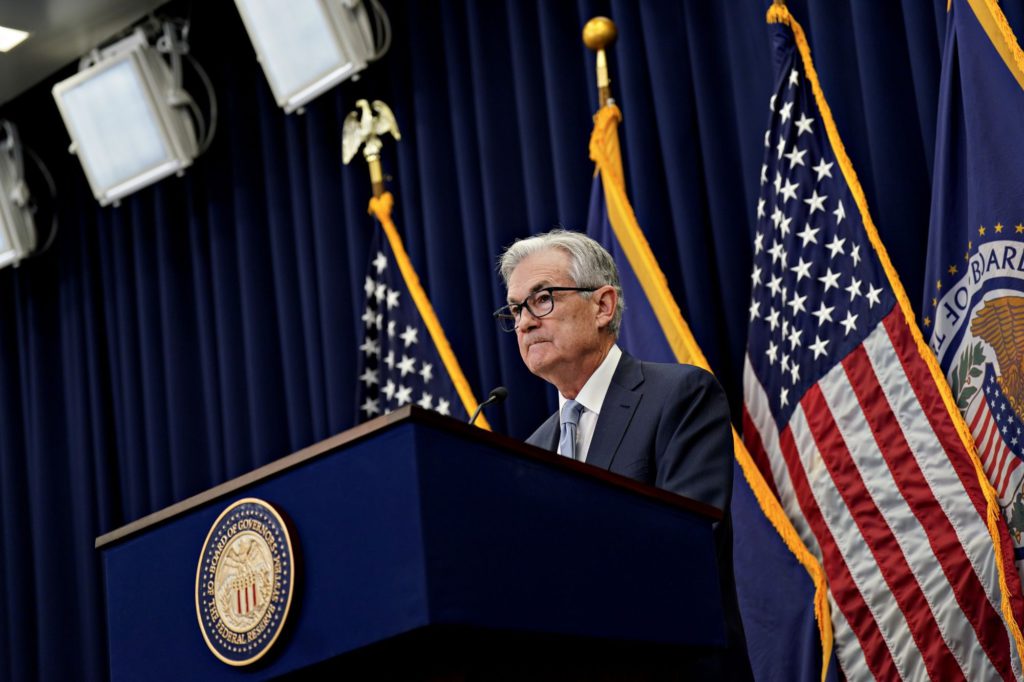
Fed Chair Jerome Powell said the central bank had a “ways to go” in its campaign to rein in inflation. Policy makers projected rates would end next year at 5.1%, a higher level than previously indicated and well above market projections.

“The Fed was decidedly more bearish than expected,” said Karen Jorritsma, head of Australian equities at RBC Capital Markets. “They will stay the course on inflation, making a hard landing almost a certainty.”

The Bank of England and European Central Bank will deliver rate decisions later Thursday and are expected to follow the Fed with half-point hikes. The euro and the pound were both lower versus the dollar in afternoon trading in Asia.

Treasury yields made small gains in Asia after fluctuating during the US session after the Fed’s hawkish decision and Powell’s comments. The relatively muted moves indicate bond market doubts about the Fed’s staying power in raising and holding rates higher for longer. 

The Federal Open Market Committee raised its benchmark rate by 50 basis points to a 4.25% to 4.5% target range. Powell left the door open to a similar hike at the next meeting in February or a step down, while pushing back on bets for reversing course next year.

The Fed confounded those betting on a dovish meeting, and that will be good for the dollar — and bad for stocks — heading into the final stretch of 2022, according to the results of an MLIV Pulse survey of 112 investors.

Elsewhere in markets, China’s benchmark 10-year bond yield was little changed after the central bank pumped more cash than forecast into the banking system in December. The move was expected to bolster bonds that had been roiled by the nation’s abrupt Covid policy shift.

New Zealand government bond yields rose after the economy grew more than twice as much as economists expected in the third quarter, with the rate on 10-year debt jumping 15 basis points.

Oil slipped after rallying almost 9% over the previous three sessions as TC Energy Corp. restarted a section of the Keystone pipeline, allowing for some flows to resume on the major conduit.

Key events this week:

  • ECB rate decision and ECB President Lagarde briefing, Thursday
  • Rate decisions for UK BOE, Mexico, Norway, Philippines, Switzerland, Taiwan, Thursday
  • US cross-border investment, business inventories, empire manufacturing, retail sales, initial jobless claims, industrial production, Thursday
  • Eurozone S&P Global PMI, CPI, Friday

Some of the main moves in markets:

Stocks

  • Futures on the S&P 500 were little changed as of 6:49 a.m. London time. The S&P 500 fell 0.6%
  • Nasdaq 100 futures fell 0.2%. The Nasdaq 100 fell 0.8%
  • Japan’s Topix Index fell 0.2%
  • The Hang Seng Index fell 1.5%
  • The Shanghai Composite Index fell 0.3%
  • Euro Stoxx 50 futures fell 0.5%

Currencies

  • The Bloomberg Dollar Spot Index rose 0.2%
  • The euro fell 0.2% to $1.0656
  • The Japanese yen fell 0.1% to 135.62 per dollar
  • The offshore yuan fell 0.3% to 6.9644 per dollar
  • The British pound fell 0.2% to $1.2397

Cryptocurrencies

  • Bitcoin fell 0.5% to $17,741.64
  • Ether fell 1.5% to $1,291.07

Bonds

  • The yield on 10-year Treasuries advanced one basis point to 3.49%
  • Japan’s 10-year yield was unchanged at 0.25%
  • Australia’s 10-year yield advanced nine basis points to 3.45%

Commodities

  • West Texas Intermediate crude fell 0.8% to $76.67 a barrel
  • Spot gold fell 0.7% to $1,794.93 an ounce

This story was produced with the assistance of Bloomberg Automation.

–With assistance from Georgina Mckay, Rheaa Rao and Stephen Kirkland.

More stories like this are available on bloomberg.com

©2022 Bloomberg L.P.
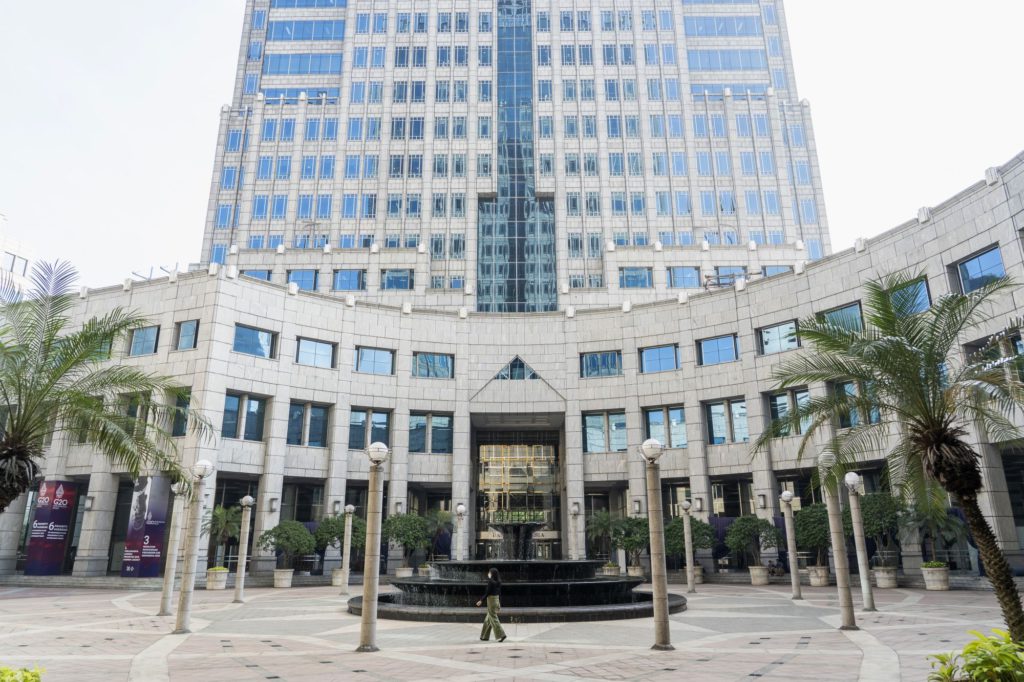
Indonesia Passes Law on Crisis Bond-Buying by Central Bank

(Bloomberg) — Indonesia’s parliament passed a law tasking the central bank to directly finance the budget in times of crisis, just as it had been doing since the pandemic, as part of a broader revamp of financial sector rules.

Lawmakers approved on Thursday the legislation covering hundreds of provisions related to the central bank, the capital markets, pensions and digital money. President Joko Widodo, popularly known as Jokowi, is expected to sign it into law within 30 days.

Once that’s done, Bank Indonesia will be expected to buy long-term sovereign bonds in the primary market as and when the government declares a crisis, besides helping ensure liquidity at banks. The revised law will also recognize digital rupiah as a legal tender, put insurance policies under the coverage of the deposit insurer and set a framework for carbon trading in exchanges.

While the expanded mandate raises concerns about the central bank’s autonomy, the key to retaining investor confidence, the law provides a basis for BI to reject interference, such as barring political nominees on its board. The reforms, in line with Jokowi’s goal to cut red tape and simplify rules, are expected to help deepen local capital markets to finance the needs of Southeast Asia’s largest economy and adapt to the rapidly evolving fields of financial technology and cryptocurrency.

“The challenges of the Indonesian financial sector show the urgency of financial sector reform,” Finance Minister Sri Mulyani Indrawati said, stressing that the previous regulations were more than 30 years old and have fallen behind recent developments in the market.

Market Pushback

The approval came after two years of thwarted attempts by legislators after market pushback on revisions to the Central Bank Act that analysts said pose risks to the monetary authority’s independence. An earlier proposal to explicitly include job creation and economic growth in Bank Indonesia’s mandate was dropped from the new legislation.

Instead, the central bank is directed “to participate in maintaining financial system stability in order to support sustainable economic growth” as well as maintain payment system stability on top of its existing mandate to ensure rupiah and price stability.

Indrawati argued that the law protects Bank Indonesia’s autonomy, as it requires politicians to resign from their parties in order to be nominated to the board of governors. The previous charter only required this once they were elected into the board.

“BI is indeed given an additional mandate, but that does not mean compromising its independence because BI is an entity that, together with other entities, maintains the economy and financial stability,” she added.

It remains to be seen how Bank Indonesia will carry out its expanded mandate, especially in the area of economic support. While the market has largely accepted the necessity of bond-buying during the pandemic, the move might face more scrutiny from investors post-Covid.

“How much longer BI can get away with it is anybody’s guess but once sentiment sours on it, it might be an issue,” said Nicholas Mapa, a senior economist at ING Groep NV. “Adding economic growth also leaves the door open for more dovishness.”

–With assistance from Norman Harsono and Chandra Asmara.

(Updates with comments from finance minister)

More stories like this are available on bloomberg.com

©2022 Bloomberg L.P.

Spain Calls on Big Tech to Help Pay for EU Internet Networks

(Bloomberg) — Spain is calling on European regulators to make large technology firms such as Amazon Inc. and Alphabet Inc. foot part of the bill for telecom networks.

It is “indispensable” for tech firms to pay a fair share of investments, Spain’s Deputy Prime Minister Nadia Calviño, who oversees telecommunications policy, said in an interview in the Canary Islands. “If we want to continue making the necessary investments in technological infrastructure, we need everyone who uses and benefits from them to contribute to financing that investment.” 

European telecom operators are lobbying regulators to make big tech firms, who are the biggest consumers of broadband and mobile data capacity, help pay for infrastructure investments. Carriers have been making the argument to no avail, but it gained traction during the pandemic, when work-from-home and binging of streaming content put added strain on networks. 

The European Commission is set to launch a consultation on the subject in early 2023 and some countries such as France and Italy have singled support of the idea of making US tech giants bear some of the costs. Others have pushed back however, with seven seven countries, including Germany and the Netherlands, having sent a joint letter in July to the Commission asking for a cautious approach.

Tech companies say they are already playing their part. Meta Platforms Inc. and Alphabet have spent billions of dollars laying underwater cables between continents, adding tens of billions of dollars to Europe’s economy, according to research funded by Meta. 

Calviño’s statement is aligned with comments made Tuesday at the same event in the Canary Islands by Telefónica SA, Spain’s largest telecom company.

Large tech firms account for about 57% of internet traffic and should therefore “contribute to network deployment” expenses, said Pablo de Carvajal, Telefónica’s chief legal counsel.


(Updates with Telefònica statements in last two paragraphs)

More stories like this are available on bloomberg.com

©2022 Bloomberg L.P.

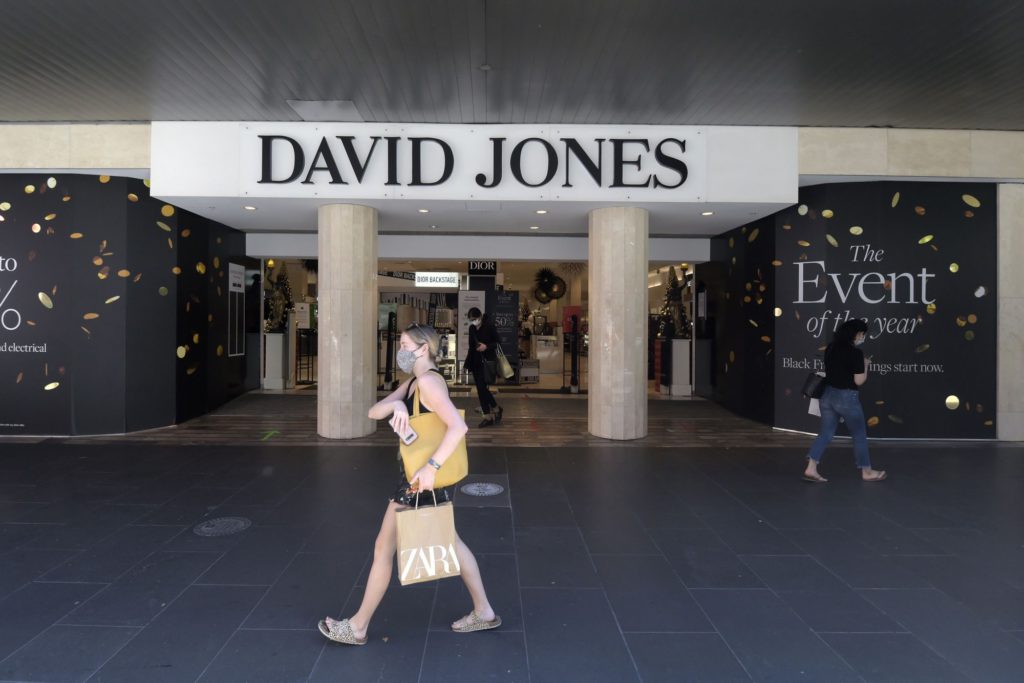
Woolworths Said to Near Sale of Department Store David Jones

(Bloomberg) — Woolworths Holdings Ltd. is nearing a deal to sell Australia’s oldest department store chain David Jones to Anchorage Capital Partners for about A$130 million ($89 million), according to people familiar with the matter.

The parties are ironing out final details of the transaction, which could be announced as soon as next week, said the people, who asked not to be named as they aren’t authorized to speak publicly. As part of the deal, Johannesburg-listed Woolworths plans to retain ownership of its flagship Melbourne city real estate, which it will lease to David Jones, the people said.

There is no guarantee such a deal will eventuate and talks could still fall through, the people said. Representatives for Anchorage and Woolworths declined to comment, while a representative for David Jones didn’t immediately respond to requests for comment.

A change of ownership would mark another attempt to transform the near 200-year-old David Jones after Woolworths acquired the chain in 2014 for around A$2.2 billion. Woolworths tried to replicate its successful South African upmarket food business in David Jones without success. Then the Covid-19 pandemic started, forcing store closures and putting the company on the back foot.

In October, Woolworths Chief Executive Officer Roy Bagattini said in the company’s annual report the group was “considering all possible options” for the future of David Jones, following years of writedowns, an annual loss and the departure of ex-CEO Ian Moir in early 2020.

Read more: Woolworths CEO Scraps Southern Hemisphere Retail Dominance Plan

David Jones enjoyed a 55% jump in total sales for the 20 weeks ended Nov. 13 compared to the same period a year earlier when much of Australia was under lockdown, according to a trading update. The rebound saw the retailer’s flagship CBD stores perform “well ahead of expectations,” even as online sales decreased by around 29%.

Anchorage’s potential acquisition signals a vote of confidence that the pandemic-induced online shopping habits are not permanent and that vigorous attention to the basics of the business model such as the supply chains and merchandise management could yet prove profitable in the long term provided it is not saddled with excessive debt.

–With assistance from Janice Kew.

More stories like this are available on bloomberg.com

©2022 Bloomberg L.P.

Abu Dhabi’s Etihad Hires Former TAP Portugal Executive as CFO

(Bloomberg) — Etihad Airways appointed Raffael Quintas as chief financial officer, the second executive to join the Abu Dhabi-based airline after previously working with Portugal’s flag carrier TAP.

Quintas joins from Infracommerce, the Latin American e-commerce solution provider, where he was CFO, according to a statement. He previously held the CFO role at TAP Air Portugal and was the corporate treasurer at Brazilian airline Azul Linhas Aéreas.

Quintas will take over from Adam Boukadida, who has left Etihad after nine years to pursue a new role.

Etihad Aviation Group in October appointed Antonoaldo Neves, the former head of Portugal’s flag carrier, as chief executive officer to succeed Tony Douglas. Prior to Neves’s role at TAP, he was president of Brazil’s Azul Airlines which he helped take public in a listing on the New York Stock Exchange.

Read more: Etihad Hires Former TAP Portugal CEO to Replace Douglas 

More stories like this are available on bloomberg.com

©2022 Bloomberg L.P.

Russia Spacewalk Canceled Due to Soyuz Leak at Space Station

(Bloomberg) — A planned spacewalk by two Russian cosmonauts was called off after ground controllers noticed a significant leak stemming from a Soyuz spacecraft docked with the International Space Station, causing an unknown substance to spew into space.

Live video of the exterior of the ISS aired on NASA TV showed a stream of particles emanating from the Soyuz for hours. It wasn’t immediately clear what the material was, but it appeared to be coming from instrumentation on the Soyuz’s propulsion module and could be a cooling substance, according to NASA commentary. The seven crew members on the ISS are safe, NASA said. 

“We do not know what the source of this stream of particles is at the point,” Rob Navias, NASA’s commentator said during live coverage at the start of the spacewalk. Discussions are ongoing “to make sure that the safety of the two spacewalkers is not compromised in any way. And then to determine what impact, if any, this might have on the integrity of that Soyuz vehicle.”

Sergey Prokopyev and Dmitri Petelin were preparing to conduct a spacewalk to relocate an exterior radiator from one ISS module to another. Flight controllers noticed the leak Thursday morning Moscow time as the cosmonauts were in one of the station’s airlocks, after they had donned their spacesuits. Asked about the leak, a NASA spokesperson pointed to a recent blog post, where the agency said “ground teams in Moscow are evaluating the nature of the fluid and potential impacts to the integrity of the Soyuz spacecraft.”

“The experts in Moscow are going to be taking a look at their systems and responding to the leak according to their procedures and policies,” NASA Chief Flight Director Emily Nelson told Navias. “Once they have a good understanding of the final status of the Soyuz tonight, we will then jointly make a decision about where to go forward from here.”

Prokopyev and Petelin rode on this Soyuz, along with NASA astronaut Frank Rubio, to the ISS in September. They are slated to return to Earth in the spring on the same spacecraft. It’s unclear how the leak will impact their return.

The ISS is operated by five space agencies from 15 countries and has been continuously occupied since 2000, according to NASA. 

–With assistance from Bruce Einhorn.

(Updates with comments from NASA’s chief flight director)

More stories like this are available on bloomberg.com

©2022 Bloomberg L.P.

Crypto Lender Amber Scraps Bonuses, Cuts Jobs as FTX Collapse Turmoil Continues

(Bloomberg) — Amber Group, one of Asia’s biggest trading and lending platforms for digital currencies, has canceled this year’s staff bonuses as the one-time industry darling grapples with the crypto downturn.  

The Singapore-based outfit told employees this week that it is scrapping performance-based bonuses for 2022 due to slower business growth and market uncertainties, in an internal memo viewed by Bloomberg News.

Since June, Amber has kicked off a series of cost-cutting measures including redundancies and wage reductions. Some of its management team have voluntarily agreed to give up all or part of their salaries until the market shows clear signs of recovery.

Amber Chief Executive Officer Michael Wu confirmed the cancellation of bonuses and management salary reductions in an interview with Bloomberg, adding that the firm will continue to reduce costs. 

“Even before the collapse of FTX, we were preparing for potentially a prolonged crypto winter,” he said. The company is cutting costs and “there will unfortunately not be bonuses this year.”

The company, whose backers include Temasek Holdings Pte and Sequoia China, plans to slash its workforce to fewer than 400 from a peak of some 1,100 earlier this year, Bloomberg reported last week. It has paused a $100 million funding round and is terminating a sponsorship contract with Chelsea FC, which was part of a sports-deal frenzy among crypto high-flyers in recent years.

With the collapse of Sam Bankman-Fried’s FTX crypto exchange sending shockwaves through the industry, investors and researchers alike have zeroed in on the financial health of Amber. The company was started about five years ago by a group of former finance professionals, including Goldman Sachs Group Inc. and Morgan Stanley alumni.

Amber has said less than 10% of its trading capital was stuck on FTX and executives have sought to reassure the public that the company’s daily operations have not been disrupted. 

At its peak, Amber hired hundreds of staff in roles like coding, operations and product management in mainland China, according to two ex-employees who were recently made redundant and asked not to be identified for fear of damaging their future job prospects. They signed contracts with mainland entities that are not directly linked to Amber’s main Singapore-based entity, they said. During the layoffs, these workers were asked to pack up their offices in Shenzhen and work from home, the former employees said.

Amber says it doesn’t have any offices in China. While crypto trading is illegal in China, the ban is not fully enforced, leaving a gray area in which some firms with Chinese origins operate. 

More stories like this are available on bloomberg.com

©2022 Bloomberg L.P.

Europe’s Trading Superhighway in the Alps Highlights Data Rush

(Bloomberg) — Bomb-proof buildings, biometric security passes and financial trading at the speed of light. Welcome to data centers, a booming global industry that’s hosting more of the world’s money, entertainment and energy use than ever.

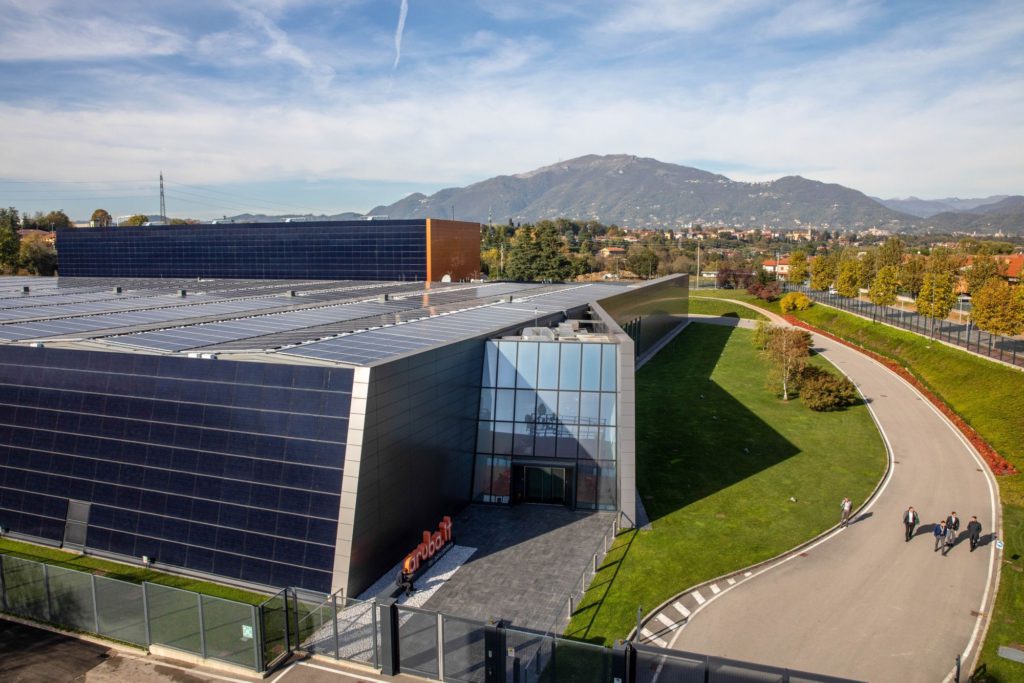
In the foothills of the Italian Alps, one of Europe’s newest data hubs is a prime example of how these boxy buildings have become cornerstones of the economy. Since June, Euronext NV has facilitated a quarter of European equities trading in the former textile town of Ponte San Pietro.

Within the building’s 800-kilometer network of cables, banks such as Goldman Sachs Group Inc. and JPMorgan Chase & Co. shoot trading data at one another’s servers within 20 microseconds, or millionths of a second. 

“It used to be a big noisy room with people buying and selling. Now it’s a big noisy room with servers,” Manuel Bento, Euronext’s chief operating officer, said in an interview, referring to the changes in trading culture. “Speed matters.”

The data center is now handling average volumes of 13 billion euros ($13.7 billion) each day — roughly twice that of Deutsche Boerse AG or London Stock Exchange Group Plc, according to Stephane Boujnah, Euronext’s chief executive officer. These are trades that, before Brexit, took place in an equally imposing warehouse a few miles east of London. It took a little over a year to shift the operation to Italy. 

The new site, about an hour from Milan, is part of an industry that’s accelerating as firms digitize their services and daily life shifts online. Every time someone reads an email, streams a movie or reads a tweet, the chances are they passed through a building like this. Every time something happens on “the cloud,” it’s happening in someone’s data center.

Investments in the industry globally more than doubled in 2021 to $59.5 billion, according to research by the law firm DLA Piper, driven by the growth of firms such as Facebook parent Meta Platforms Inc., Google’s Alphabet Inc. and Microsoft Corp. Investment this year had already surged to $21.3 billion by June 7, doubling the record set last year. This demand is also firing up businesses that supply equipment to data centers, including chipmaker Nvidia Corp. and network specialist Cisco Systems Inc.

“There’s a massive explosion of content and all that has to be resided and stored somewhere,” said Dalmar Sheikh, director and global head of data center operations at infrastructure investor Actis. The firm has data centers in Nigeria and China and is building more in South Korea and across Africa. 

For finance companies, the attraction of using data centers can lie in faster trading times — particularly if they can rent a spot in a data center close to its market counterparties, known as colocation. Firms that need huge computing power, such as payment processors or Bitcoin miners, can get greater flexibility from a data center than their own hardware. 

To be sure, trading in data centers isn’t for everyone. Automated, high-speeds algorithms can distort the market, while fees for data and colocation services can be hugely expensive, said Chris Jackson, head of equities for EMEA at Liquidnet Europe Ltd., which operates dark pools where firms can trade more slowly and discreetly.

”We would argue that it has created a hostile market for legitimate long term institutional investors,” said Jackson. 

Still, even for tasks that tolerate slower processing times, data centers are offering modern kit that, unlike firms’ own legacy servers running ancient code, allows them to outsource worries about maintenance and security.

Power Struggles

But, like trades on screens, these matters have to be managed somewhere in the real world. Growing concerns about energy usage in data centers have halted some projects in the Netherlands, where the government imposed a nine-month block on permits for sites larger than 10 hectares. 

Centralized data centers are in theory safer against cyber security incidents, since they are protected by one specialist company, rather than by each business trying to run its own servers. However, “I wouldn’t use the word ‘safe.’ Nothing in this world is safe,” said Beatriz Sanz Saiz, EY global consulting data and analytics leader.

Euronext moved its hub to Italy partly due to Brexit, and relocated from Basildon, a town outside of London. 

“Post-Brexit we wanted all data centers in the EU to have their core infrastructure in Europe,” said CEO Boujnah. “We didn’t know what the direction of travel was in the UK and didn’t want to take any regulatory risks.” 

It previously rented space in Basildon from Intercontinental Exchange Inc., which owns the New York Stock Exchange. It’s a largely windowless building in a maze of industrial parks near bathroom showrooms, tractor dealerships and smalltime law firms. 

ICE’s data center is difficult to miss at 30,000 square meters, or four times the size of soccer pitch. Inside, banks trade fixed-income derivatives such as gilts and Euribor futures, with hundreds of fiber optic cables running west to London, south via the English channel to Europe, and under the Atlantic to New York. 

“People who want to be in Basildon want premium access to the trading engine and to the data that is published locally, and there is nothing that provides faster access than colocation,” said Nicolas Bonnet, director of global connectivity product at ICE.

Read more on UK’s data center blackout plans

Failure Scenarios

At Telehouse, a short distance from the O2 arena in the Docklands area of east London, vibration wire around the site alerts 24/7 security staff to intruders. Workers use biometric fingerprint recognition to enter key rooms, parts of the building are bomb-proof, and the firm works closely with police and counter-terrorism officials. The goal is to protect the data of clients including Amazon.com Inc. and Microsoft, whose servers are identified by code, rather than by their names, to lower the risk of data breaches.

“We are designed to operate and keep services running in many, many different failure scenarios,” said Paul Lewis, senior operations director at Telehouse Europe. “We don’t want people coming in who shouldn’t be here and there are a lot of checks and balances.”

Clients rent a space similar to a gym locker that’s connected via yellow cables. The activity in all these lockers can send the center’s temperature soaring toward 40 degrees Celsius, requiring Telehouse to run air cooling. There are enough backup generators and fuel supplies to keep the building running through a 36-hour blackout.

Telehouse already operates five data centers in London and is planning to knock down a disused hotel next year to build a sixth, which could cost hundreds of millions of pounds.

Green Cost

One of the biggest concerns about the industry is its environmental impact. These buildings use 1% of global energy in 2021, according to the International Energy Agency, and in Ireland this has more than tripled to 14% since 2015. In Denmark it’s projected to triple to 7% by 2025.

In Norway, data center operator Green Mountain cools one of its sites with water drawn from a nearby 150- meter-deep fjord. It’s also planning to take the newly heated water and pump it into a lobster farm being built on its site, according to marketing manager Mette Gulbrandsen.

Euronext says it may have another solution. The firm generates power from solar panels and hydroelectricity on the Brembo river that flows down from the Bergamo Alps.

“Data centers are really the major problem when it comes to carbon footprint reduction in the digital economy,” said Boujnah. “Our carbon footprint is neutral.”

In the meantime the future of data centers is already changing. Sanz Saiz at EY predicts their role will be performed by cloud servers powered by renewable energy within the next five to 10 years. “The data that we are using today is a fraction of what we will use in the future, but there are new technologies coming,” she said. “The data centers that we know today will all be extinguished.”

More stories like this are available on bloomberg.com

©2022 Bloomberg L.P.

Amazon and Ancient Tribe Face Off Over Cape Town Headquarters

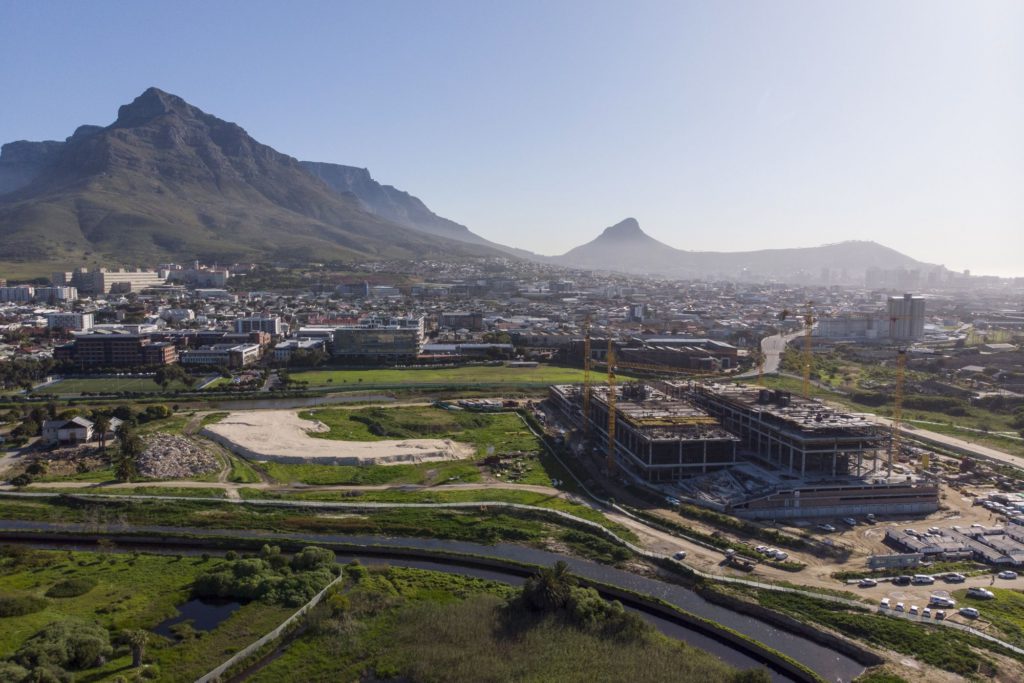
(Bloomberg) — On the outskirts of Cape Town, at the base of Table Mountain and set back from a tangle of freeways, the Liesbeek and Black rivers meet in a small stretch of marshland. The 37-acre plot isn’t pristine — it lies next to a railyard and was until recently home to a golf course — but for centuries, this land has been sacred ground for the Khoisan, a southern African tribe that traces its lineage back more than 100,000 years. In the near future, if all goes to plan, it will be the site of Amazon’s next regional headquarters.

To many local First Nations peoples, news of the project came as an unhappy surprise. Since approval for the e-commerce giant’s $250 million office complex on the 150,000 square-meter site was granted, groups aligned with the Khoisan to oppose the project have tried to derail construction. On a near-monthly basis, dozens of protestors have gathered on the steps of the High Court in Cape Town with signs reading “Concrete will never be our heritage,” and “No means no.” They’ve filed petitions and lawsuits, appealed to media and lawmakers, and forced Capetonians to reckon with the uncomfortable question of whether they’re willing to prioritize economic development over the fight to recognize indigenous land rights in South Africa.

“It’s almost a case of history repeating itself,” said a Khoisan chief Bradley Van Sitters, who also goes by the name Hyi!Gaeb!Gorallgaullaes, the exclamation points representing the clicks in the tribe’s language. “A lot of our people’s blood has been spilled here.”

For its part, Amazon has been working with the developer to accommodate the Khoi and San tribes, which are often referred to collectively. In collaboration with Khoisan members who support the project, the company has announced plans to build a heritage center which will include a garden, a media area, and roads and pathways with Khoisan names.  

With the economy stalling, Amazon also brings the promise of jobs and development in a city that desperately needs them. Unemployment is above 30% in South Africa, and nearly 27% in Cape Town. City government representatives say that the project will indirectly create jobs for 19,000 people, including more than 5,200 construction workers. Cape Town’s leaders are thrilled with the arrangement.

Although Amazon delivery services aren’t yet available in South Africa, the e-commerce giant has long had a presence in the country. It has kept offices in Cape Town for about 18 years, and the purpose of the Liesbeek hub is to consolidate the estimated 3,000-plus employees already in the city with another 5,000 or more to be hired in the next few years. This is part of a broader retail expansion into sub-Saharan Africa. Amazon Web Services recently opened offices in Johannesburg and Lagos, and according to people familiar with the matter who do not want to be identified as plans are not public, Amazon intends to roll out online delivery in South Africa and in Nigeria as early as next year.

None of these ambitions, however, rely on the Cape Town headquarters, which is nicknamed Project Zola, according to a bid proposal seen by Bloomberg.  “The campus is a nice-to-have rather than a have-to-have,” said Arthur Goldstuck, a technology analyst and managing director of World Wide Worx.

That “nice-to-have” hasn’t come easily. In Cape Town, litigation began almost as soon as the project became public. Protestors scored an early victory against Amazon in March, when the High Court in Cape Town ordered Liesbeek Leisure to temporarily stop work, ruling that “the core consideration is the issue of proper and meaningful consultation with all affected First Nations Peoples.”

It wasn’t the first time Amazon encountered obstacles when trying to set up shop outside the U.S. Plans to build large logistics hubs in France were scrapped on at least four occasions in the past 18 months due to political, environmental and financial concerns. Earlier this year, the company was blocked from building a 76,200-square-meter warehouse near the eastern French city of Belfort on the grounds that the proposal for the project did not include “compensatory measures to offset the destruction of wetlands.”

In the Liesbeek case, however, the decision didn’t stick. The court sided with the company on appeal and dismissed claims that the development would threaten the site’s cultural legacy.  As part of the development, $2.2 million (38 million rand) will be spent on environmental rehabilitation, the ruling went on to suggest that “development might enhance the land’s resources.” Construction on the site continued, though nobody can say for sure when it will be completed. 

To Tauriq Jenkins, head of the Goringhaicona Khoi Khoin Indigenous Traditional council, an organization that represents some of the groups opposed to the site, the decision made little sense. “How can you build a heritage center on top of the history being destroyed?”

What might be the opposition’s last chance to stop the project now comes down to proving that stakeholders were not properly consulted. A date for the review hearing hasn’t been scheduled, but optimism is running low. Without “the deep pockets our opponents have,” said Leslie London, a professor at the University of Cape Town who has been involved in the case, the groups have been “outmanoeuvred legally.”

Amazon’s spokespeople in South Africa, Europe and the US declined to respond when contacted multiple times for comment. The site’s developer responded to queries. 

Both the city and river valley have complicated histories. Europeans arrived in what is now Cape Town in the 15th century, and over the next several hundred years, local populations were brutally subjected to the rise of the slave trade, the introduction of apartheid, and government efforts to limit Black property ownership. When the Dutch settled along the Liesbeek in the 17th century, parcels of the valley were allocated to farmers and cut off from the Khoisan. It has mostly remained private land ever since. In recent years, the site has been used “as a private golf driving range, restaurant, bar and tarmac parking lot,” according to Liesbeek Leisure Properties Trust, the developer overseeing the Amazon project.

The current saga has led some to wonder why Amazon chose this site in the first place. “When it was announced that the Liesbeek Leisure Properties Trust was the preferred bidder to construct the Amazon headquarters on the River Club site, I was very surprised,” architect Derick Henstra, who advised one of the short-listed firms on the project, said in an affidavit filed as part of the case. “Both Amazon and the LLPT must have been conscious that selecting the site carried with it the risk of substantial delays.” In response, the developer said that “there was no reason to believe there would be delays or legal challenges to what is ostensibly an attempt to breathe life into a dilapidated space,” and added that it had all the necessary approvals to move ahead.

The project has also become a public relations headache. While many Cape Town residents are excited by the opportunities Amazon can offer (both in terms of jobs and midnight shopping binges) others have been put off by how the multinational handled this process. Ryan Dick, a software developer who lives in Cape Town, said he doesn’t “see how putting thousands of tons of concrete on top of a wetland is saving anything.” Another Capetonian, Sarah Driver-Jowitt, said that while she understood why Amazon Web Services wanted to centralize, she thought the site was “not an appropriate one.” Nadia Vatalidis, a human resources specialist, was sanguine about the controversy. Although any project has its downsides, she said, South Africa needs the jobs and investment.

One silver lining may be that the controversy has increased awareness around the Khoisan. In recent years, South Africa’s President Cyril Ramaphosa has signed legislation to acknowledge First Nations governance structures and established an advisory panel to address questions of land restitution. The Khoisan and others have also called on South Africa’s Heritage Resources Agency to declare the Liesbeek River Valley a heritage site. That wouldn’t stop construction, but it could delay it by two years.

As the Khoisan chief Van Sitters observed, fights over land have long moved off the battlefields and now happen in court.

For now, protestors say they will continue their efforts. Standing on the edge of the construction site one morning in October, Jenkins, the indigenous council leader, shook his head at the scene. “We want this development stopped,” he said over sounds of hammering and drilling. “We don’t want this concrete monstrosity here. This is sacred terrain.”

More stories like this are available on bloomberg.com

©2022 Bloomberg L.P.

Stocks Extend Drop in Asia on Fed; Dollar Advances: Markets Wrap

(Bloomberg) — Shares extended declines in Asia as the Federal Reserve’s resolve to push interest rates higher for longer sapped appetite for risk taking.

The dollar climbed and the yuan fell as poor Chinese economic data added to downbeat sentiment in markets. While authorities have ended the Covid Zero policy that drove the weakness in China, the country is now struggling with a surge of infections.

Benchmark indexes in Japan, South Korea, China and Australia all slid Thursday, with notable falls in Hong Kong-listed technology companies. Futures contracts for the S&P 500 fluctuated after the gauge snapped a two-day rally Wednesday in a volatile session that saw shares end off their lows. 

Fed Chair Jerome Powell said the central bank had a “ways to go” in its campaign to rein in inflation. Policy makers projected rates would end next year at 5.1%, a higher level than previously indicated and well above market projections.

“The Fed was decidedly more bearish than expected,” said Karen Jorritsma, head of Australian equities at RBC Capital Markets. “They will stay the course on inflation, making a hard landing almost a certainty.”

Treasury yields made small gains in Asia after fluctuating during the US session after the Fed’s hawkish decision and Powell’s comments. The relatively muted moves indicate bond market doubts about the Fed’s staying power in raising and holding rates higher for longer. 

The Federal Open Market Committee raised its benchmark rate by 50 basis points to a 4.25% to 4.5% target range. Powell left the door open to a similar hike at the next meeting in February or a step down, while pushing back on bets for reversing course next year.

The Fed confounded those betting on a dovish meeting, and that will be good for the dollar — and bad for stocks — heading into the final stretch of 2022, according to the results of an MLIV Pulse survey of 112 investors.

Read: Asian Equities Face Headwinds as Fed Hikes, Cuts Growth Forecast

The yuan’s drop snapped two days of strengthening, with the downward move accelerating after industrial production and retail sales data for November fell short of economist estimates. The country also injected net 150 billion yuan in liquidity through its medium-term lending facilities, more than economists anticipated. 

New Zealand government bond yields rose after the economy grew more than twice as much as economists expected in the third quarter, with the rate on 10-year debt jumping 15 basis points.

Later, policy decisions will be front and center in Europe, with the Bank of England and European Central Bank seen following the Fed with half-point hikes in rates.

Key events this week:

  • China medium-term lending, property investment, retail sales, industrial production, surveyed jobless, Thursday
  • ECB rate decision and ECB President Lagarde briefing, Thursday
  • Rate decisions for UK BOE, Mexico, Norway, Philippines, Switzerland, Taiwan, Thursday
  • US cross-border investment, business inventories, empire manufacturing, retail sales, initial jobless claims, industrial production, Thursday
  • Eurozone S&P Global PMI, CPI, Friday

Some of the main moves in markets:

Stocks

  • Futures on the S&P 500 were little changed as of 12:54 p.m. Tokyo time. The S&P 500 fell 0.6%
  • Nasdaq 100 futures fell 0.1%. The Nasdaq 100 dropped 0.8%
  • The Topix Index fell 0.1%
  • The S&P ASX Index fell 0.5%
  • The Hang Seng Index fell 1%
  • The Shanghai Composite Index fell 0.3%
  • Euro Stoxx 50 futures fell 0.3%

Currencies

  • The Bloomberg Dollar Spot Index rose 0.2%
  • The euro fell 0.2% to $1.0656
  • The Japanese yen was little changed at 135.55 per dollar
  • The offshore yuan fell 0.3% to 6.9616 per dollar

Cryptocurrencies

  • Bitcoin fell 0.5% to $17,737.57
  • Ether fell 1.4% to $1,292.29

Bonds

  • The yield on 10-year Treasuries advanced one basis point to 3.49%
  • Australia’s 10-year yield advanced nine basis points to 3.46%

Commodities

  • West Texas Intermediate crude fell 0.8% to $76.67 a barrel
  • Spot gold fell 0.7% to $1,794.04 an ounce

This story was produced with the assistance of Bloomberg Automation.

–With assistance from Georgina Mckay, Rheaa Rao and Stephen Kirkland.

More stories like this are available on bloomberg.com

©2022 Bloomberg L.P.

Close Bitnami banner
Bitnami