

Bloomberg

Guggenheim’s Minerd Warns of ‘Another Shoe to Drop’ in FTX Fallout

(Bloomberg) — Guggenheim Partners Chief Investment Officer Scott Minerd is warning investors there will be more shakeouts to come following the collapse of crypto exchange FTX as years of easy money end. 

“There’s another shoe to drop – I can’t tell you where it is,” Minerd said during a Bloomberg Television interview ahead of Wednesday’s rate decision from the Federal Reserve. “The reason is this is just like any number of periods where we had easy money and a lot of speculation; the weakest players fall first. Crypto was obviously something that is crazy.” 

Minerd, who in May predicted Bitcoin would fall to $8,000, said he has confidence the crypto system will move forward despite the recent collapse of prices and high-profile firms. 

“A year ago we were talking about crypto, and there were approximately 19,000 coins,” he said, “there is going to be wash out just like the Internet bubble.” 

“We will have survivors – the digitization of currency is just in its infancy and how this evolves now is going to require a regulatory framework to legitimize it,” he added. 

Bitcoin spiked above $18,000 Wednesday for the first time since FTX’s bankruptcy, though it fell to $17,844 after the Federal Reserve raised its benchmark rate by 50 basis points to a 4.25% to 4.5% target range. 

Minerd also predicted the Fed’s restrictive monetary policy will drive a roughly 2% rise in unemployment over the next two years. 

–With assistance from Tom Keene.

More stories like this are available on bloomberg.com

©2022 Bloomberg L.P.

US Is Seizing 48 Websites in Sting of Cyberattack-for-Hire Services

(Bloomberg) — The US seized dozens of internet domains and charged six people in a sting intended to bring down a network of cyberattack-for-hire services, the Department of Justice announced on Wednesday.

In all, the US obtained a court order to seize 48 websites, and six people were criminally charged in relation to the takedowns, according to federal prosecutors. The FBI was in the process of seizing the websites, officials said Wednesday.

The websites were used to launch, or attempt to launch, millions of so-called DDoS attacks around the world, the DOJ said in a statement. Short for distributed-denial-of- service, DDoS attacks direct huge amounts of junk internet traffic at a website or computer network to knock it offline.

“This week’s sweeping law enforcement activity is a major step in our ongoing efforts to eradicate criminal conduct that threatens the internet’s infrastructure and our ability to function in a digital world,” said Martin Estrada, the US Attorney for the Central District of California.

DDoS-for-hire services often refer to themselves as “stresser” or “booter” tools that purport to offer a way for individuals to test the resilience of websites and services they operate, according to cybersecurity experts. In reality, the services are often used for harassment, extortion and criminal mischief, they say. 

The sites seized by the FBI include royalstresser, securityteam and dragonstresser, among others. 

One popular use of the services is to knock competitors in a video game offline. In other cases, DDoS services have been used to extort news websites to remove unflattering articles, or to demand money from businesses to make the attacks stop. 

The FBI and DOJ performed a similar operation against DDoS sites in December 2018 when they seized 15 DDoS websites and charged three individuals. The takedowns came just before the Christmas holiday, a popular time for DDoS operators to launch attacks on gaming services.  


More stories like this are available on bloomberg.com

©2022 Bloomberg L.P.

Headspace Meditation App Cuts 50 Workers, or 4% of Staff

(Bloomberg) — Headspace Health, the maker of a popular meditation and mental-health mobile app, cut about 50 jobs, or 4% of its workforce, the latest internet startup to scale back as funding dries up and economic growth decelerates.

The Santa Monica, California-based company had about 1,200 workers before eliminating the positions last week, a spokesperson said on Wednesday. Headspace competitor Calm, another meditation app, let go about 20% of its 400-person staff in August. “We are taking this step to equip Headspace Health as a long-term, sustainable business that can weather various economic environments while continuing to execute on our mission,” the company said in a statement.

During the pandemic, anxious locked-down consumers flocked to meditation apps like Headspace. While the company grew, the pressure increased for employees, and some even said they attended therapy to relieve the stress of working at the meditation app, Bloomberg reported earlier this year. 

In September, Headspace said it had acquired Shine, another app that provides meditation-related content. The deal came about a year after Headspace merged with Ginger, which offers mental-health coaching via text message, swelling the combined company’s ranks from 300 to more than 1,000.

More stories like this are available on bloomberg.com

©2022 Bloomberg L.P.
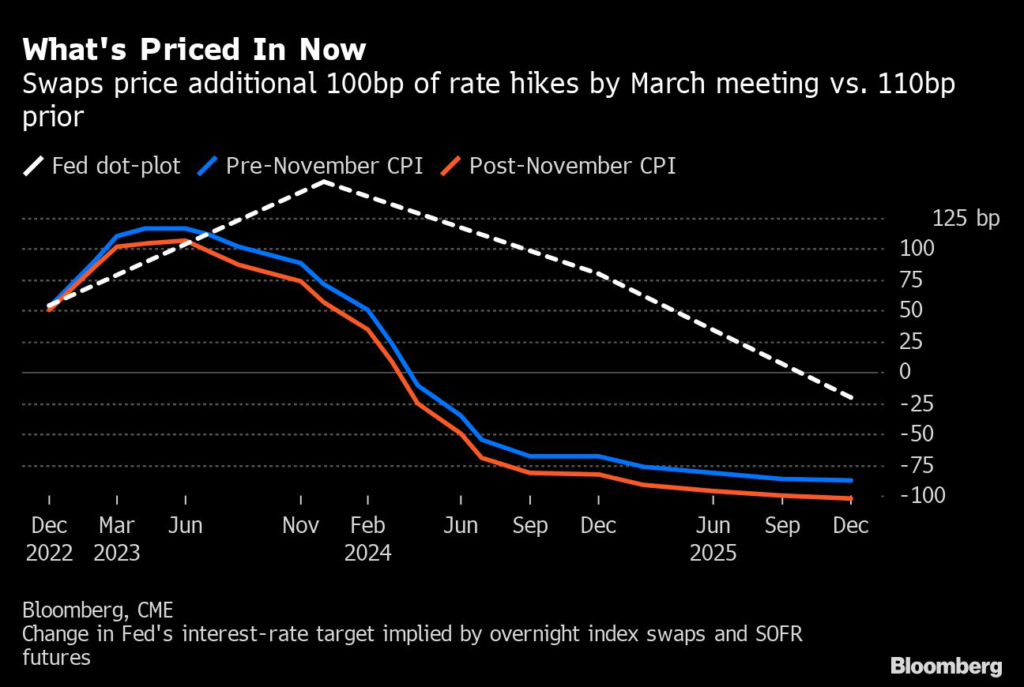
Stocks Drop After Powell Signals More Hikes Ahead: Markets Wrap

(Bloomberg) — US stocks turned lower after the Federal Reserve’s latest rate decision and Chair Jerome Powell’s speech signaled the central bank sees work left to do in its battle against inflation.

The S&P 500 and the Nasdaq 100 erased earlier gains after the Fed raised its benchmark rate by half a percentage point and Powell restated his hawkish stance. 

Stocks had rallied more than 6% since the last rate decision on the expectation that the central bank would be able to slow and possibly stop its tightening next year. That view took a hit with officials’ latest projections that the Fed funds rate will top 5% in 2023, before being cut to 4.1% in 2024. 

The policy-sensitive two-year Treasury yield pared its climb. The dollar dropped, after briefly strengthening as the Fed announced its decision.

Powell restated that policy will need to remain tight for “some time” to restore price stability. He provided no dovish relief and emphasized that the Fed needed more evidence beyond October and November’s softer consumer price index numbers to have confidence that inflation is coming down meaningfully. He also said that the size of February’s rate hike depend on incoming data. 

“The Fed still remains coy about the possibility of recession, but with most Fed officials considering risks to be tilted to the downside, it’s fair to say they are far more worried about the economic outlook than they are willing to admit,” said Seema Shah, chief global strategist at Principal Asset Management. “This should mark the death knell for the most recent bear market rally.”

Key events this week:

  • China medium-term lending, property investment, retail sales, industrial production, surveyed jobless, Thursday
  • ECB rate decision and ECB President Lagarde briefing, Thursday
  • Rate decisions for UK BOE, Mexico, Norway, Philippines, Switzerland, Taiwan, Thursday
  • US cross-border investment, business inventories, empire manufacturing, retail sales, initial jobless claims, industrial production, Thursday
  • Eurozone S&P Global PMI, CPI, Friday

Some of the main moves in markets:

Stocks

  • The S&P 500 fell 0.9% as of 2:56 p.m. New York time
  • The Nasdaq 100 fell 1.1%
  • The Dow Jones Industrial Average fell 0.7%
  • The MSCI World index rose 1.1%

Currencies

  • The Bloomberg Dollar Spot Index fell 0.2%
  • The euro rose 0.4% to $1.0675
  • The British pound rose 0.3% to $1.2406
  • The Japanese yen rose 0.2% to 135.26 per dollar

Cryptocurrencies

  • Bitcoin rose 0.2% to $17,800.33
  • Ether fell 0.9% to $1,308.05

Bonds

  • The yield on 10-year Treasuries declined two basis points to 3.48%
  • Germany’s 10-year yield advanced one basis point to 1.94%
  • Britain’s 10-year yield advanced one basis point to 3.31%

Commodities

  • West Texas Intermediate crude rose 2.6% to $77.32 a barrel
  • Gold futures fell 0.5% to $1,815.90 an ounce

This story was produced with the assistance of Bloomberg Automation.

–With assistance from Srinivasan Sivabalan, Isabelle Lee and Emily Graffeo.

More stories like this are available on bloomberg.com

©2022 Bloomberg L.P.
Twitter Suspends Sweeney and His Account Tracking Musk’s Jet

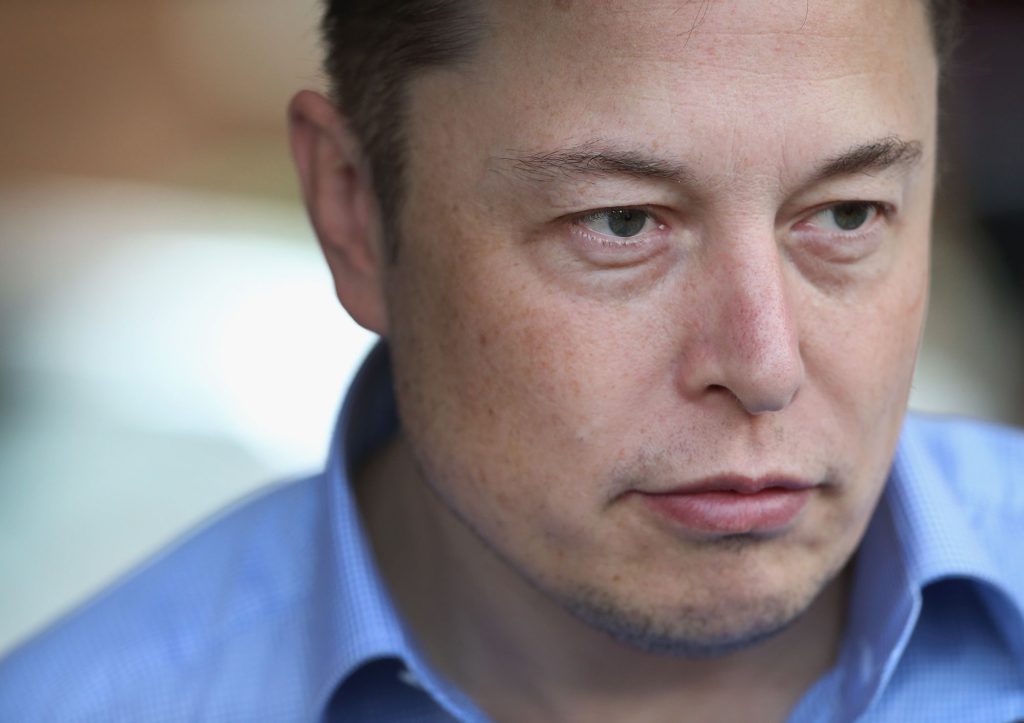
(Bloomberg) — Twitter Inc. has suspended Jack Sweeney and the account he runs on the social media platform known as @elonjet, which tracks the movements of Elon Musk’s private jet.

As of early Wednesday morning in New York, the @elonjet page showed a message that read “account suspended” with an explanation that Twitter suspends accounts that violate the platform’s rules. Later in the day, Sweeney’s personal account had also been suspended.

Musk bought Twitter for $44 billion in late October and has set about making sometimes drastic changes regarding how the platform operates. Last month, Musk said in a tweet that his commitment to free speech “extends even to not banning the account following my plane, even though that is a direct personal safety risk.”

Musk and representatives for Twitter didn’t immediately respond to requests for comment. 

Sweeney, who has run the account since June 2020, told Bloomberg News that, upon logging into the account, his Twitter page stated: “Your account is permanently suspended. After careful review we determined your account broke the Twitter rules. Your account is permanently in read-only mode.” 

The last tweet before Sweeney’s own account was suspended read, “Can I have my $8 back?,” a reference to the ill-fated Twitter subscription service launched and then shuttered by Musk. 

Sweeney, a student at the University of Central Florida, said he hasn’t received any other notices from Twitter via email or other mediums.

“Musk literally said he wouldn’t do anything because he protects free speech, but this is the exact opposite,” Sweeney said by phone. 

The @elonjet account tracks the movements of Musk’s private jet using publicly available flight data and gives automated alerts.

Sweeney, 20, turned down a $5,000 offer from the Tesla CEO in 2021 to shut down his bot account and countered with a demand to boost the payout to $50,000. Musk made multiple attempts to contact him to ask to shut it down, Sweeney has said.

Read More: Teen Tracking Musk’s Jet on Twitter Is Making Contingency Plans

Sweeney operates other automated accounts through a business called Ground Control, including accounts that follow celebrity jets and one that purports to track planes used by Russian President Vladimir Putin and other government officials. 

–With assistance from William Turton.

More stories like this are available on bloomberg.com

©2022 Bloomberg L.P.
Bankman-Fried’s Harsh Bahamas Jail Could Shift His Extradition Stance

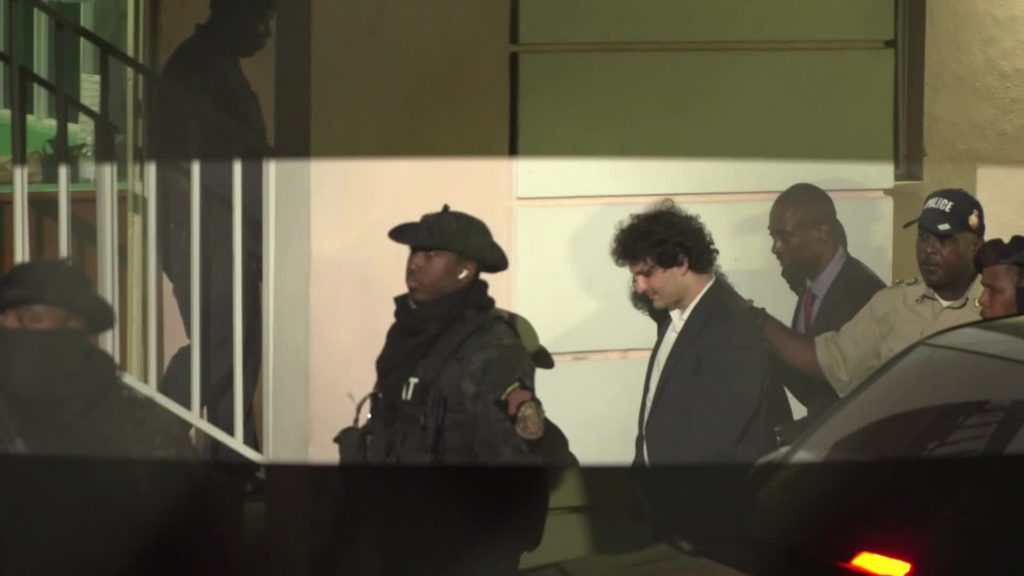
(Bloomberg) — The grim conditions FTX founder Sam Bankman-Fried is encountering in the Bahamas prison where he’s currently being held could change his attitude on extradition to face fraud charges in the US.

At Bankman-Fried’s first court appearance on Tuesday, his lawyer said he planned to fight extradition. But that was before the judge denied Bankman-Fried’s request to be released on $250,000 cash bail and an ankle monitor to track his movements and ordered him taken into custody at the Bahamas Department of Correctional Services facility, commonly known as Fox Hill.

Despite its bucolic name, Fox Hill is known for overcrowding, poor nutrition, inadequate sanitation and substandard medical care, according to a 2020 US State Department report. The report described rat and maggot infestation as well as tiny cells with only buckets for toilets.

People familiar with the matter said Bankman-Fried, 30, currently has his own room in the medical block of Fox Hill’s maximum security unit, where he will remain until his Feb. 8 extradition hearing. One person said Bankman-Fried’s relatives called the prison Tuesday night to ask whether vegan meals could be delivered to him. He can’t receive visitors due to COVID restrictions at the prison. 

Luxury Penthouse

It’s a far cry from the luxury penthouse in Nassau’s exclusive Albany community from which Bankman-Fried ran FTX and, according to federal prosecutors in New York, orchestrated a yearslong fraud that diverted billions of customer funds from the cryptocurrency exchange to personal use and risky bets by FTX’s sister trading firm, Alameda Research. 

Lawyers familiar with the extradition process said Bankman-Fried’s failure to win release on bail could change his calculations about returning to the US, especially since extradition battles can drag on for months or even years.

“It would be tough for SBF to withstand that for any period of time,” said Bruce Zagaris, a Washington-based lawyer. “He won’t get any special treatment from the inmates and the guards, like he did at the Albany condominium. Eventually, he’s going to say ‘I don’t want to spend another few years at this place, what are my alternatives?’”

Houston lawyer Douglas McNabb agreed. Losing a bail hearing often “causes a defendant to rethink whether they want to appeal the case or not because they don’t want to be sitting in a Bahamian jail,” he said. “That’s a decision he’s going to have to make.”

Czech-born businessman Viktor Kozeny who successfully fought extradition from the Bahamas on US bribery charges was imprisoned for more than a year at Fox Hill before a judge granted him bail. 

The Bahamian prison “has its legacy and reputation of breaking even the toughest of men,” his lawyer said at the time.

–With assistance from David Voreacos and Chris Dolmetsch.

More stories like this are available on bloomberg.com

©2022 Bloomberg L.P.

Sam Bankman-Fried’s Harsh Bahamas Jail Could Shift His Stance on Extradition

(Bloomberg) — The grim conditions FTX founder Sam Bankman-Fried is encountering in the Bahamas prison where he’s currently being held could change his attitude on extradition to face fraud charges in the US.

At Bankman-Fried’s first court appearance on Tuesday, his lawyer said he planned to fight extradition. But that was before the judge denied Bankman-Fried’s request to be released on $250,000 cash bail and an ankle monitor to track his movements and ordered him taken into custody at the Bahamas Department of Correctional Services facility, commonly known as Fox Hill.

Despite its bucolic name, Fox Hill is known for overcrowding, poor nutrition, inadequate sanitation and substandard medical care, according to a 2020 US State Department report. The report described rat and maggot infestation as well as tiny cells with only buckets for toilets.

People familiar with the matter said Bankman-Fried, 30, currently has his own room in the medical block of Fox Hill’s maximum security unit, where he will remain until his Feb. 8 extradition hearing. One person said Bankman-Fried’s relatives called the prison Tuesday night to ask whether vegan meals could be delivered to him. He can’t receive visitors due to COVID restrictions at the prison. 

Luxury Penthouse

It’s a far cry from the luxury penthouse in Nassau’s exclusive Albany community from which Bankman-Fried ran FTX and, according to federal prosecutors in New York, orchestrated a yearslong fraud that diverted billions of customer funds from the cryptocurrency exchange to personal use and risky bets by FTX’s sister trading firm, Alameda Research. 

Lawyers familiar with the extradition process said Bankman-Fried’s failure to win release on bail could change his calculations about returning to the US, especially since extradition battles can drag on for months or even years.

“It would be tough for SBF to withstand that for any period of time,” said Bruce Zagaris, a Washington-based lawyer. “He won’t get any special treatment from the inmates and the guards, like he did at the Albany condominium. Eventually, he’s going to say ‘I don’t want to spend another few years at this place, what are my alternatives?’”

Houston lawyer Douglas McNabb agreed. Losing a bail hearing often “causes a defendant to rethink whether they want to appeal the case or not because they don’t want to be sitting in a Bahamian jail,” he said. “That’s a decision he’s going to have to make.”

Czech-born businessman Viktor Kozeny who successfully fought extradition from the Bahamas on US bribery charges was imprisoned for more than a year at Fox Hill before a judge granted him bail. 

The Bahamian prison “has its legacy and reputation of breaking even the toughest of men,” his lawyer said at the time.

–With assistance from David Voreacos and Chris Dolmetsch.

More stories like this are available on bloomberg.com

©2022 Bloomberg L.P.
The Hypersexualization of TikTok’s Teen Users

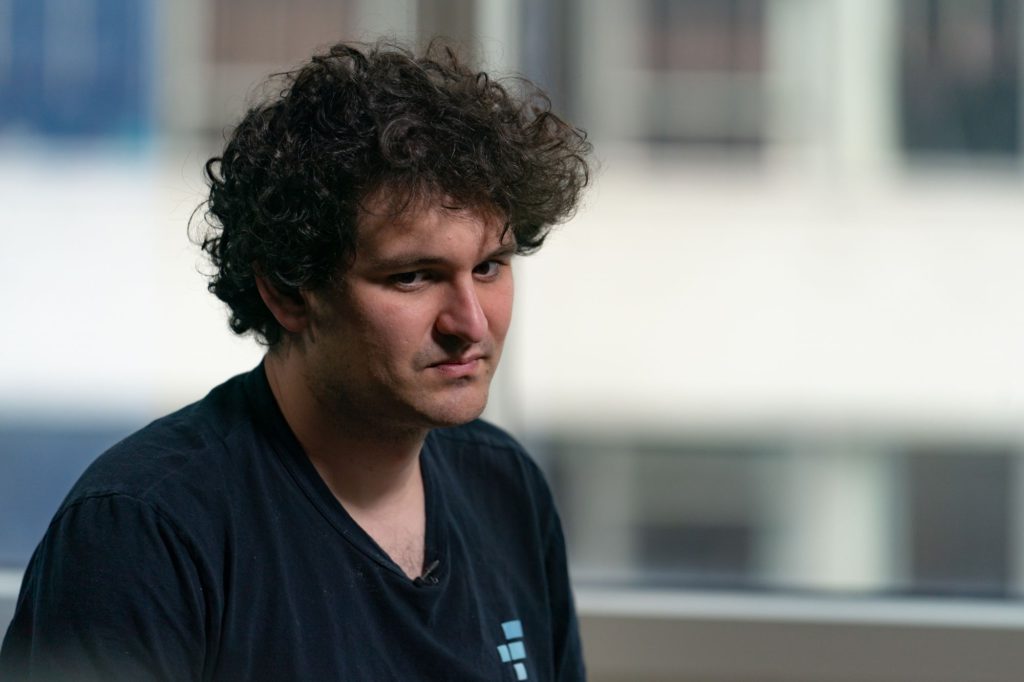
(Bloomberg) — Roselie Arritola, who goes by the name Jenny Popach on TikTok, is one of the platform’s most controversial stars. The 16-year-old’s account is filled with hypersexual posts—what she and her mother describe as “shock-value content”—in which she dances in string bikinis, body rolls in hot pants or drops innuendo in captions (“When men can go to jail for being with you”).Her mother, Maria Ulacia, and her father, Jorge Arritola, say they are fully invested in their daughter’s influencer aspirations. The Florida teen has 7 million followers and fashion brands have flocked to her, eager to capitalize on her sex appeal and paying a small fortune for her to wear their clothes. And while many of Arritola’s followers are indeed teenage girls who would be their target demographic, many others are not there to see which dress she’s wearing.

And this is what has some people furious.

On this episode of Bloomberg’s Storylines, we meet the Arritola family as well as online critics who loudly call out what they view as child exploitation, assailing the content “creators,” their parents and especially TikTok. The platform’s algorithm rewards controversial posts by promoting them in a curated feed of personalized content to its 1 billion users, and efforts to remove content that contravenes its guidelines are often criticized as ineffective.

More stories like this are available on bloomberg.com

©2022 Bloomberg L.P.

Sam Bankman-Fried Cut From Giving Pledge Website After Arrest

(Bloomberg) — Sam Bankman-Fried was removed on Wednesday from the website for the Giving Pledge, a promise by billionaires to give away the majority of their wealth in their lifetimes or wills.

The 30-year-old founder of crypto exchange FTX was once worth $26 billion and promised to donate his money to charity. The collapse of his empire last month left him with “next to nothing,” he said. 

This week, his downfall reached new lows: He was arrested Monday in the Bahamas after the US government filed a criminal indictment, following weeks of speculation that FTX client funds were misused. He’s now sitting in jail after a judge denied him bail because of concerns he’s a flight risk.

In his initial Giving Pledge letter, Bankman-Fried had kept it short: “A while ago I became convinced that our duty was to do the most we could for the long run aggregate utility of the world. In the end, it’s the work my friends and colleagues at foundations do that matters the most. A more just world would shine a brighter light on them. In this world, I’m honored to be able to support their work.”

Before his implosion, Bankman-Fried had been picking up his philanthropy, with a focus on effective altruism, a philosophy of charitable giving that tries to have the greatest impact by carefully spending money to solve problems. 

Bankman-Fried set up his FTX Future Fund earlier this year with a team that made more than $100 million in grants to individuals and organizations in the effective altruism space. Another $90 million in promised grants had yet to be paid when FTX and more than 100 related entities filed for bankruptcy in November. 

More stories like this are available on bloomberg.com

©2022 Bloomberg L.P.

Brevan Howard Crypto Fund Dodges Worst of Rout With Only 5% Loss

(Bloomberg) — Brevan Howard Asset Management’s new digital currency fund escaped with a single-digit loss after it held cash during some of this year’s crypto meltdown. 

The BH Digital Multi-Strategy Fund is down about 5% this year, according to people with knowledge of the matter. The fund is yet to deploy all $1 billion it raised earlier this year, one of the people said, asking not to be identified because the details are private. It’s not clear if the cash holding was a call on the market or the money simply hadn’t been deployed before the crypto markets plummeted.

By comparison, cryptocurrency hedge funds tracked by Bloomberg slumped 43% on average as Bitcoin’s roughly-60% decline and the recent collapse of crypto exchange FTX sent shockwaves through the nascent industry.

Brevan Howard’s digital fund is handing assets to internal and external portfolio managers who bet on the direction of cryptocurrency prices as well as relative-value and venture capital opportunities.    

The firm is among mainstream hedge funds that are pushing aggressively into digital assets, exposing them to volatile prices as well as the fallout from FTX’s bankruptcy last month. The fiasco has led to losses for some of the biggest names in finance including Tiger Global Management, Third Point and Brevan Howard’s founder Alan Howard personally, who chipped in as an angel investor in FTX.

The BH Digital unit employed more than 50 people earlier this year. Following the recent turmoil, the firm moved some of the staff to other parts of its business, the people said.  

A spokesman for the Jersey, Channel Islands-based investment firm declined to comment.

After a number of mediocre years, Brevan Howard has seen a rebound in its business under Chief Executive Aron Landy. Assets have risen to $30 billion, or about five times the lows seen in late 2018, with the firm growing to more than 700 employees. 

Its flagship macro hedge fund was up about 18% this year through November, while its multistrategy Alpha Strategies fund is heading for a record 26.5% return, according to investor updates seen by Bloomberg.

–With assistance from Harry Wilson.

More stories like this are available on bloomberg.com

©2022 Bloomberg L.P.

Close Bitnami banner
Bitnami