Bloomberg

Flying Out of Hong Kong Is Getting Easier But Far From Cheaper

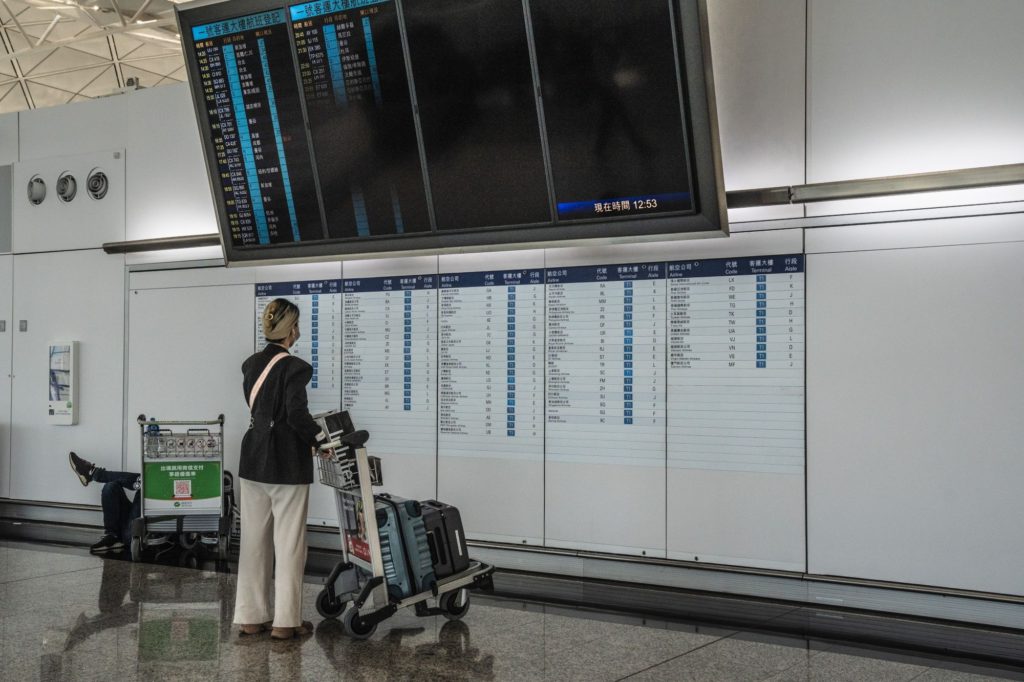
(Bloomberg) — Travel to and from Hong Kong is easier now that hotel quarantine has ended. It is also more expensive. Much more expensive. 

A business class ticket between Hong Kong and Los Angeles leaving Friday and returning on Oct. 7 cost HK$102,270 ($13,029) Monday with Cathay Pacific Airways Ltd., the only carrier offering the nonstop service in the wake of the pandemic. That’s more than double the HK$44,499 fare for the same flight next year. The price dropped to about HK$76,000 Tuesday morning. 

Flight-booking websites have been swamped following Hong Kong’s eagerly-awaited decision to ditch mandatory hotel quarantine, which for months during the pandemic was as long as 21 days — a major deterrent to travel. Trouble is, airlines can’t bring capacity back and rebalance schedules fast enough. 

Economy tickets to London Heathrow were listed on Cathay’s website at HK$28,899 on Monday, four times the cost of the same flight next year. Business class fares to the UK capital and New York were close to six figures. 

With a public holiday in Hong Kong on Oct. 4 presenting the chance for a rare long weekend away, shorter flights in the coming days turned more expensive too. Return on business class to Singapore, which is hosting the Formula One Grand Prix this weekend, cost HK$38,800 on Singapore Airlines Ltd., more than double the lowest price for the same ticket next year. 

Online travel agency Trip.com said Monday that outbound bookings made on Sept. 24-25 jumped 400% from the previous weekend, with orders for flights to Osaka in Japan surging 7,300%. Inbound bookings to Hong Kong climbed 155%.

Flight Orders Out of Hong Kong Leap 400%; Up 7,300% to Osaka

Japan is the most popular destination from Hong Kong, the co-founder of Klook Travel Technology Ltd. said on Bloomberg Television. The cheapest nonstop, roundtrip tickets to Tokyo offered Monday came from Japan Airlines Co. at HK$7,878 in economy and HK$18,818 in business. Cathay unit HK Airlines had returns to Osaka for HK$6,156 in economy and HK$10,710 in business.

More stories like this are available on bloomberg.com

©2022 Bloomberg L.P.

Hong Kong-Los Angeles Business Class Fares Hit $13,000 in Rush to Fly

(Bloomberg) — Travel to and from Hong Kong is easier now that hotel quarantine has ended. It is also more expensive. Much more expensive. 

A business class ticket between Hong Kong and Los Angeles leaving Friday and returning on Oct. 7 cost HK$102,270 ($13,029) Monday with Cathay Pacific Airways Ltd., the only carrier offering the nonstop service in the wake of the pandemic. That’s more than double the HK$44,499 fare for the same flight next year. The price dropped to about HK$76,000 Tuesday morning. 

Flight-booking websites have been swamped following Hong Kong’s eagerly-awaited decision to ditch mandatory hotel quarantine, which for months during the pandemic was as long as 21 days — a major deterrent to travel. Trouble is, airlines can’t bring capacity back and rebalance schedules fast enough. 

Economy tickets to London Heathrow were listed on Cathay’s website at HK$28,899 on Monday, four times the cost of the same flight next year. Business class fares to the UK capital and New York were close to six figures. 

With a public holiday in Hong Kong on Oct. 4 presenting the chance for a rare long weekend away, shorter flights in the coming days turned more expensive too. Return on business class to Singapore, which is hosting the Formula One Grand Prix this weekend, cost HK$38,800 on Singapore Airlines Ltd., more than double the lowest price for the same ticket next year. 

Online travel agency Trip.com said Monday that outbound bookings made on Sept. 24-25 jumped 400% from the previous weekend, with orders for flights to Osaka in Japan surging 7,300%. Inbound bookings to Hong Kong climbed 155%.

Flight Orders Out of Hong Kong Leap 400%; Up 7,300% to Osaka

Japan is the most popular destination from Hong Kong, the co-founder of Klook Travel Technology Ltd. said on Bloomberg Television. The cheapest nonstop, roundtrip tickets to Tokyo offered Monday came from Japan Airlines Co. at HK$7,878 in economy and HK$18,818 in business. Cathay unit HK Airlines had returns to Osaka for HK$6,156 in economy and HK$10,710 in business.

More stories like this are available on bloomberg.com

©2022 Bloomberg L.P.

Five Headaches Awaiting Italy’s Next Prime Minister

(Bloomberg) — Italy’s Giorgia Meloni is set to become premier after her right-wing coalition won Sunday’s elections, but she will have little time to pop the prosecco.

Awaiting her are a darkening economic outlook, high debt and energy price hikes in the wake of Russia’s invasion of Ukraine. The hit to Italy’s finances and the prospect of more interest-rate hikes from the European Central Bank have pushed the yield on Italy’s 10-year bonds to more than 4.5% compared with less than 1% in December.

Here’s a rundown of the top challenges facing Meloni:

Budget Law

A draft budget due to be presented shortly after the elections, and to be approved by year-end, will likely be just an abridged version focusing on grim economic forecasts. That means less fiscal room for intervention to help support the economy.

Meloni has vowed to keep the public finances in check, and to help Italians weather the crisis. With growth slowing and interest rates on the rise it will be increasingly difficult for Meloni to maintain her balancing act without expanding the country’s deficit, a move that may be unwelcome to markets. Her main ally Matteo Salvini of the League wants a 30 billion-euro ($30 billion) state subsidy to cap the cost of energy for businesses in the run-up to winter.

Energy Crisis

Italy has spent 66 billion euros so far protecting its citizens from power price increases and more will be needed. Even just extending tax breaks to companies that use a lot of energy until the month of December would cost almost 5 billion euros, according to people familiar with the matter. The country faces the prospect of paying twice as much for energy imports as it did a year ago, triggering concerns about the future of thousands of small and medium-sized firms. 

Meloni favors an EU-wide gas price cap. But she’s ready to restructure Italy’s energy market once in power without waiting for European peers. Decoupling the price of power from renewable sources from that of gas would cost 3 billion euros to 4 billion euros until March, she said, and won’t require adding to Italy’s large debt.

Monte Paschi

Just a few weeks after the vote, the Italian Treasury is set to plug additional 1.6 billion euros of fresh funds into nationalized Banca Monte dei Paschi di Siena SpA in a planned 2.5 billion-euro capital increase. This is the latest in a long line of attempts to revamp the ailing lender, which was first bailed out in 2009 and has burned through about 18 billion euros of taxpayer and investor cash since then. 

Maurizio Leo, a top economic adviser to Meloni, called on Sept. 11 for a delay in the bank’s capital-increase, arguing that the plan should wait until a new government is in place. A few days later, he said that if the bank could raise money now, this would be welcome. 

Even if the cash call succeeds, the state will still have to exit the lender after talks with UniCredit SpA collapsed last year. Matteo Salvini of the League, part of Meloni’s coalition, has said the bank can thrive on a stand-alone basis by combining with its smaller Italian peers. Meloni’s Brothers of Italy party may have a different view, like regulators.

ITA

The outgoing government of Prime Minister Mario Draghi entered exclusive talks at the end of August with a group led by the Certares investment fund, including Air France-KLM and Delta Air Lines Inc., to sell the airline born of troubled Alitalia. 

Meloni opposed the plan, saying that handing ITA over to foreign funds after having spent billions on the airline was wrong. Opposition from the election’s winners could scuttle the deal since there is no set date to finish the exclusive talks. The next government could go with another investor group or even block the carrier’s privatization altogether.

Telecom Italia

Telecom Italia is currently trying to speed up a turnaround plan that will lead to ceding control of its network. In July, the company’s board told Chief Executive Officer Pietro Labriola to give up control of the grid and cut over 30 billion euros in gross debt by breaking up the phone carrier into several units and finding new partners.

Labriola’s attempt to sell off the company’s landline network to a group led by Cassa Depositi e Prestiti, KKR & CO. and Macquarie Group Ltd has been questioned by Meloni’s party. With Meloni in charge, plans could change quickly.

Meloni’s party is promoting a plan to make Telecom Italia private and sell off the phone company’s assets in a bid to cut its debt pile by more than half, people familiar with the matter have said. Meloni would encourage a takeover bid by state lender Cassa Depositi, then sell about 30 million of Telecom Italia’s mobile and landline subscribers to competitors for about 13 billion euros, according to the people. 


More stories like this are available on bloomberg.com

©2022 Bloomberg L.P.

Crypto Exchange FTX Wins Bankrupt Firm Voyager’s Assets

(Bloomberg) — FTX US, the digital-asset exchange founded by billionaire Sam Bankman-Fried, won the auction for the assets of bankrupt crypto brokerage Voyager Digital Ltd.

The agreement is valued at about $1.4 billion, comprising an “additional consideration” worth about $111 million and the $1.3 billion market value of all the cryptocurrency at the bankrupt platform, according to a statement from Voyager Digital on Monday in New York.

Customers will be able to transfer to the FTX US platform after the conclusion of the bankruptcy process, Voyager said, adding the purchase agreement will be presented for approval in court on Oct. 19.

The purchase follows several earlier attempts by FTX to bail out or acquire Voyager. The New York-based platform had about 3.5 million users at the end of March, and 1.19 million funded accounts.

Voyager filed for bankruptcy protection in July after a failed attempt by Alameda Research — a trading house affiliated with FTX — to bail it out with a revolving line of credit. 

That same month, FTX and Alameda disclosed a joint bid for Voyager, but Voyager called it a “low-ball” offer. In September, Alameda said it will return about $200 million worth of Bitcoin and Ether it had borrowed from Voyager by the end of the month.

Bankman-Fried has been aggressively buying up distressed crypto companies this year, scooping up millions of customers and valuable technologies at a cheaper price than they traded at just half a year ago. 

Earlier this year FTX propped up the crypto platform BlockFi and was exploring a potential takeover of Robinhood Markets Inc., where Bankman-Fried owns a stake. He is estimated to own more than 50% of FTX, 70% of FTX US, and almost all of Alameda.

FTX is in the process of raising a $1 billion funding round, according to a source familiar with the deal, which hasn’t closed yet or been made public.

(Updates from the first paragraph with Voyager statement.)

More stories like this are available on bloomberg.com

©2022 Bloomberg L.P.

Japan’s Hakuhodo to Start Joint Venture With Crypto Entrepreneur

(Bloomberg) — Japanese advertising firm Hakuhodo DY Holdings Inc. will set up a joint venture with one of the nation’s best-known crypto entrepreneurs to help clients build so-called Web3 business.

Hakuhodo Inc., a flagship subsidiary of the Tokyo-based firm, plans to launch the startup this year with Stake Technologies Pte., a Singapore-based Web3 infrastructure developer headed by Sota Watanabe, according to a statement on Tuesday.

The move follows a pledge made earlier this year by Japanese Prime Minister Fumio Kishida’s administration to help grow Japan’s Web3 industry, which includes business built around crypto technology. As part of that, the government aims to change the tax code to make it less expensive for companies to issue and retain crypto tokens.

Hakuhodo has been strengthening collaboration with Stake Technologies, known for its Astar blockchain, to tap demand from Japanese firms looking to enter into crypto-related business. 

More stories like this are available on bloomberg.com

©2022 Bloomberg L.P.

Singapore’s Sovereign Fund Helps Create Thailand’s Latest Unicorn

(Bloomberg) — Thai food and parcel delivery app Line Man Wongnai raised $265 million in a round led by Singaporean sovereign fund GIC Pte, becoming the nation’s latest startup unicorn.

The company’s value topped $1 billion after a Series B round of funding, according to a statement on its website.  Other investors in the latest funding include Taiwan Mobile Co., BRV Capital Management and PTT Oil & Retail Business Pcl.

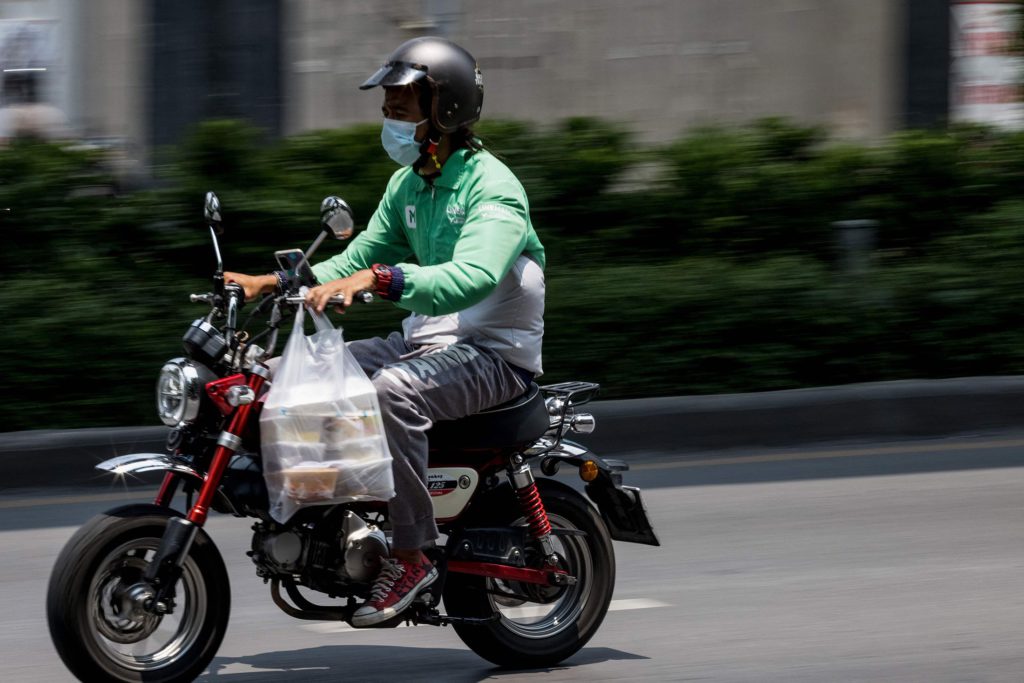
Line Man Wongnai competes with Grab Holdings Ltd. and SCB X Pcl on food delivery services as the pandemic boosts demand for home dining. The startup also offers business solutions for shops and restaurants with a database of more than 1 million merchants and 100,000 riders nationwide, according to the statement.

The company was formed in 2020 from the merger of Line Man, a domestic delivery service of Line Corp., and Wongnai, a food and restaurant review platform. The startup said it will use the proceeds to expand into new services and hire more employees. 

More stories like this are available on bloomberg.com

©2022 Bloomberg L.P.

China Ratings Startup Challenges System Where Even AAAs Default

(Bloomberg) — A spate of defaults by Chinese borrowers with seemingly impeccable onshore ratings has left antsy investors in the world’s second-largest credit market craving credible research to distinguish good debt from bad. Now a little known startup is seeking to tap that demand and is winning fans.

Though not exactly a household name, Shenzhen-based Ratingdog has slowly been carving out a name for itself within China’s corporate-bond community by flagging risks well before defaults occur. Some creditors and fund managers, long used to seeing domestic raters assign “AAA” and “AA” levels for even defaulters, are turning to independent research firms such as Ratingdog to navigate a nascent market amid a liquidity crisis.

The startup is challenging China’s broken credit-rating system, as authorities try to revamp it with new rules in the wake of the property-market meltdown led by developers including China Evergrande Group. The tiny credit assessor, which relies on funding from investors rather than issuers, has signed up almost 50,000 registered users — more than a 50-fold jump in less than four years — and its two WeChat accounts have garnered over 150,000 followers.

Investment managers like Li Gen said there’s demand for more such relatively independent companies. “They update ratings more frequently and can provide a perspective beyond that of traditional agencies,” said Li, chief executive officer of Beijing BG Capital Management Ltd. “Such new additions will benefit the long-term development of the credit market.”

Started as a part-time gig in 2017 by a group of frustrated buy-side analysts led by Yao Yu, Ratingdog, whose website features a border collie pup named “A-bu” as its mascot, has today grown into an operation with over 40 staff members.

The firm undertakes unsolicited reviews of companies and offers ratings to registered users free of cost, but charges investors for any additional analysis and research reports. Every weekend, founder Yao answers 50 to 100 questions from investors in the comments section on one of the WeChat accounts, where he publishes some of the firm’s research.

In an interview, 43-year-old Yao said about 40% of his clients are local banks and securities firms, while offshore investors are also increasingly keen to use his services.

“There was not enough credit research for many asset management firms, and we started an organization that’s almost like a help group,” Yao said. Prior to starting Ratingdog, he worked at CSCI Pengyuan Credit Rating Co. for 11 years in different roles before moving to China Securities Credit Investment Co. in 2015 as general manager of risk control and legal affairs department.

20 Shades

Yao said his firm has come up with about 20 different shades of ratings, almost like the three global majors.

Though there was some buzz around Ratingdog even before the property crisis, it drew the attention of investors in August 2021 when it downgraded Shimao Group Holdings Ltd. and its onshore unit Shanghai Shimao Co. from the equivalent of investment grade to high-yield, highlighting credit risks at what was once one of China’s largest real-estate developers. Almost a year later, Shimao missed payment on a $1 billion dollar note, its first default on a public bond after months of mounting stress, while its onshore unit delayed some domestic payments. 

Yet to this day, Shanghai Shimao remains an AAA-rated entity — practically the same as China’s sovereign — in the eyes of Chinese firm China Lianhe Credit Rating Co., which declined to comment. In a June report, Lianhe said Shimao is under significant payment pressure, but expects recovery in its rental business to supplement cash flow.

  • Note: Ratingdog’s rating ranges from 0 (equivalent of AAA) to 10 (equivalent of C) with +/- signs. A larger number and the “-” sign both represent a higher default risk.

“The existing ratings in the Chinese market are highly concentrated in the AA to AAA range, while international investors are more used to seeing more granular ratings in the global market to form their investment decisions,” according to Gina Huang, chief executive officer of S&P Global (China) Ratings.

“While what’s happening in the property market could affect investor confidence in the sector and the overall bond market, we’ve also seen a growing consensus about the need for greater transparency and analytical rigor,” said Huang.

Domestic raters have often been criticized for being overly generous and failing to highlight different shades of credit quality. While issuer-paid models are common around the world, in China they contribute to ratings skewing higher because of relatively low onshore defaults compared to global markets, and strict listing requirements until recently. Both Shenzhen and Shanghai bourses used to require bonds to have ratings of AA or above in order to be listed. That listing rule was scrapped in updated regulations this year as part of regulators’ attempts to address the shortcomings. 

But such concerns aren’t new, nor are they specific to China. Even giants including S&P Global Ratings, Moody’s Investors Service and Fitch Ratings have had their fair share of trouble with regulators and lawmakers. More than a decade ago, they were partly blamed by regulators for fueling a housing bubble by handing out top grades on debt tied to risky mortgages, a market that collapsed in 2007 and sparked the global financial crisis. They faced close scrutiny, and even lawsuits in some cases.  

But in China, authorities have found only limited success. The default rate of Chinese issuers with top domestic ratings is higher compared to the global market, according to a research note from CSCI Pengyuan in July, which studied default data onshore and globally between 2014-2022. The report found the average default rate of AAA-rated bonds over eight years was 4.49% domestically, while the number was 0.13% for those rated by Moody’s. 

Regulators including China’s central bank have tightened supervision of the credit rating industry, with rules issued in August 2021 calling for the evaluation of default rates to be at the core of rating mechanisms and encouraging issuers to choose more than one agency to conduct ratings. They have also given approvals to local units of S&P and Fitch, though the two largely confine themselves to monitoring financial institutions.

The new rules also encourage unsolicited ratings from agencies and investor-paid services, which is Ratingdog’s business model. 

China’s bond market is still in its infancy, and investors and issuers need to be educated on the benefits of more stringent rating processes, said Danny Chen, chief executive officer of Fitch (China) Bohua Credit Ratings Ltd. Rising defaults will lead to deeper changes, said Jim Veneau, head of Asian fixed income at AXA SA.

“Now China is accumulating a default history, so that history will then be utilized in terms of projecting future default probabilities,” said Veneau. “That will ultimately lead to more credit differentiation.”

Focused on Eyeballs

The growth in Ratingdog’s user base, however, hasn’t translated to a corresponding jump in revenue, which it projects to rise sixfold to a modest 30 million yuan ($4.3 million) in 2022 from two years ago. Yao said the company is currently focused more on attracting eyeballs.

“The free content doesn’t generate revenues directly, but is still valuable to the company,” said Yao. “The more free content we have, the more familiar others will be with us and the less we need to spend on marketing.”

Yao acknowledged that it’s difficult to generate revenue from ratings alone, but said he wants to use it as a tool to provide paid services around it. If the business hits a bottleneck, he could consider new businesses such as creating indexes, he said.

But for now, some investors say they have at least one credible alternative. 

“In the current onshore market where ratings are disorderly and severely lagging, the market is lacking pricing basis,” said Li Kai, chief investment officer at Beijing Shengao Fund Management Co. “New rating agencies such as Ratingdog are valuable and meaningful to investors.”

(Updates with comment in 13th paragraph. An earlier version corrected the title of an executive in the previous paragraph.)

More stories like this are available on bloomberg.com

©2022 Bloomberg L.P.

Ransom Demand Probed After Data Hack, Australia’s Optus Says

(Bloomberg) — Australian mobile-phone company Optus said authorities are investigating an online ransom demand following a major data hack that exposed the personal details of as many as 10 million customers.

The Singapore Telecommunications Ltd.-owned company is still trying to retrieve the data and is working with police and cybersecurity officials, Chief Executive Officer Kelly Bayer Rosmarin said Tuesday. The Australian Federal Police is “all over” an online post indicating that customer details will be sold unless Optus paid a ransom, she said. 

So-called ransomware hacks have soared worldwide in recent years, with attackers targeting businesses, schools and even hospitals. Since January 2020, at least 92 corporate, government and nonprofit organizations have suffered major cyberattacks exposing 1 million records or more. Over the course of more than a decade, the tally exceeds 11.43 billion records across 382 entities.

Optus, which revealed the security breach last week, is now under mounting pressure from the government as well as customers who accuse the company of poor communications in the wake of the attack. Home Affairs and Cyber Security Minister Clare O’Neil has said Optus left the “window open” for data to be taken, and was duped by “quite a basic hack.”

Amid reports that private information of 10,000 Optus customers has already been released, Bayer Rosmarin defended the quality of the company’s cyber-defenses. The hackers, not Optus, are the villains, she said. 

“It’s not as its being portrayed,” she said. “Our data was encrypted.” Still, she said: “If something indicates that Optus has made an error or done something bad we will of course take full accountability for that.”

The Australian Federal Police is working with overseas law enforcement to determine who carried out the attack. The force said Monday it’s also monitoring the dark web — hidden sites that are only accessible with special software — following reports that stolen data is being sold there. An AFP spokeswoman declined to comment Tuesday on the reported ransom demand.

According to Minister O’Neil, “basic personal information” had been taken from 9.8 million Optus customers, while for some 2.8 million of them, the theft includes personal data such as driving license and passport numbers. In Australia, that’s enough to provide proof of identity to obtain a wide range of services such as loans and credit cards. “The scope for identity theft and fraud is quite significant,” she said.

Australia’s data and technology defenses are years behind the criminals, she said.

“We are probably a decade behind in privacy protections where we ought to be,” she said. “We’re about five years behind where we should be in cyber protections when it comes to how fast things are moving.”

A company like Optus would be fined hundreds of millions of dollars for a breach of this scale in other countries and current penalties for privacy lapses in Australia were “totally inappropriate,” O’Neil said.

More stories like this are available on bloomberg.com

©2022 Bloomberg L.P.
DoorDash Judge Steers Suit Over Fatal Crash Out of San Francisco

(Bloomberg) — DoorDash Inc. persuaded a judge that a lawsuit blaming the company for the death of a pedestrian who was killed by a speeding deliver driver belongs in Wisconsin, where the accident happened and the driver lives.

California Superior Court Judge Richard Ulmer issued his decision after a hearing Monday, reversing a tentative ruling he made Friday that kept the case in San Francisco, DoorDash’s hometown.

“The driver’s Wisconsin residence tips the balance,” Ulmer wrote in a one-paragraph ruling. The driver will probably be a key witness in the case, he said. “Yet, she cannot be compelled to come to San Francisco to testify at trial. Plaintiffs suggest a deposition video, but that is an imperfect substitute for live trial testimony.”

Mark Webb, the lawyer for the victim’s family, said he would transfer the case to Wisconsin. “I think that the manner that they let people drive for them is questionable — and that’s what the ballgame is all about.”

DoorDash has denied any wrongdoing.

“There is no evidence DoorDash was the cause of the accident and there is plenty of evidence other factors were,” the company said following Friday’s ruling.

Read more: DoorDash Fails in Bid to Toss Lawsuit Over Speeding Driver

More stories like this are available on bloomberg.com

©2022 Bloomberg L.P.

NASA Craft Rams Distant Asteroid in Test of Earth Defense

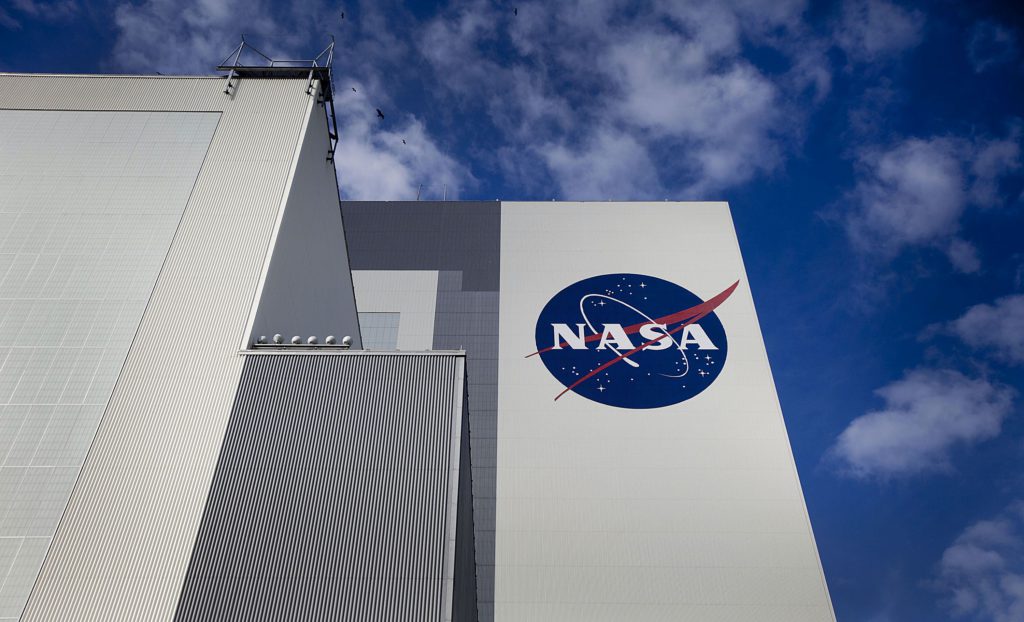
(Bloomberg) — A NASA spacecraft successfully crashed into an asteroid approximately 6.8 million miles (10.9 million kilometers) from Earth in a test to determine if the impact can nudge the space rock slightly off course.

NASA launched its DART spacecraft in November 2021 with the express purpose of colliding with an asteroid about the size of a football stadium at 14,000 miles per hour.

“In case you’re keeping score: humanity 1, asteroids 0,” Tahira Allen, a NASA spokesperson, said during the livestream after the impact.

The mission is NASA’s first demonstration of the agency’s planetary-defense initiative to protect Earth from the possibility of a hazardous collision with an asteroid. This particular asteroid, called Dimorphos, isn’t headed toward our planet but was singled out by NASA to test a deflection technique. If measurements show the asteroid’s course was even slightly altered, NASA will deem the mission a success.

It will take days or weeks before astronomers know if DART’s impact did its job, but a camera onboard the spacecraft captured a closeup view of the asteroid moments before the crash. Dimorphos filled the entire frame of DART’s camera, showing boulders and intricate detail just as NASA lost the spacecraft’s signal.

A separate spacecraft, deployed from DART prior to impact, also captured images of the collision, and NASA has said it will share those images in coming days. Various NASA telescopes, including the Hubble Space Telescope and the James Webb Space Telescope, also observed the impact.

The DART mission said they made almost a direct bullseye on Dimorphos, hitting the asteroid just 17 meters from its center. “We’ll get a much better understanding of where we are from the impact images that the investigation team now is going to analyze for quite some time,” Elena Adams, the DART mission systems engineer at Johns Hopkins, said during a press conference after the impact.

If in the future a hazardous asteroid is spotted heading toward Earth, it’s possible that NASA or some other space agency could send a spacecraft to ram it just as DART has done. Such an impact could impart just enough momentum to slightly change the asteroid’s trajectory so that, over time, it whizzes safely by Earth.

Dimorphos is actually an asteroid moonlet, orbiting around a much larger asteroid named Didymos, thus the name DART: Double Asteroid Redirection Test. 

Now that DART has rammed into Dimorphos, astronomers on Earth will observe the asteroid system with optical and radar telescopes over the coming weeks to see how the spacecraft changed the asteroid’s orbit around Didymos. Just before impact, Dimorphos’s orbit around Didymos was just under 12 hours. NASA anticipates that DART’s collision could change the orbit by several minutes.

NASA picked Dimorphos as a target because of its size. Measuring 525 feet (160 meters) across, it represents the kinds of asteroid that NASA and other space agencies are most worried about. Astronomers have cataloged most of the giant asteroids that would destroy our planet, and none identified pose a risk for the foreseeable future. But astronomers believe they’ve found less than half of the many thousands of asteroids similar in size to Dimorphos that are flying near Earth. Were one of these rocks to ever crash into the planet, it could cause significant damage.

“This would be regionally devastating over a populated area, a city, a state, or a country,” said Nancy Chabot, the coordination lead for DART at the Johns Hopkins Applied Physics Laboratory. “So you might not be talking global extinction, but you still want to be able to prevent this if you could.”

But such a scenario could be remedied in the future with the DART technique. The collision seemed to go just as NASA expected, with no glitches along the way. “Our first planetary defense test was a success and I think we can clap to that,” NASA’s Adams said to applause. “I think that earthlings should sleep better. Definitely, I will.”

(Adds NASA comment from 7th paragraph.)

More stories like this are available on bloomberg.com

©2022 Bloomberg L.P.

Close Bitnami banner
Bitnami