

Bloomberg

Long Burdened by Costly Funerals, Japan Embraces Simple Goodbyes

(Bloomberg) — Even before a $12 million state funeral for the slain former Prime Minister Shinzo Abe prompted a public outcry, the Japanese have long grumbled about funeral costs, the highest in the world. Now, an increasing number of grieving families are opting for low-key send-offs, with the pandemic providing an extra reason to avoid large ceremonies. 

Average spending per funeral in the past year was 1.1 million yen ($7,725), down 40% from an earlier, pre-Covid survey, according to Kamakura Shinsho Ltd., an online information service specializing in elderly care, funerals and graves. That’s still around a quarter of the average annual salary and doesn’t cover extra costs such as offerings to Buddhist monks. Including additional expenses, Japanese funerals cost around 3 million yen before the pandemic, around three to four times what’s spent in the US and Europe, according a 2020 survey by U.K.-based insurance provider SunLife Ltd.

Hiroya Shimizu, who organized his father’s funeral in early 2019, remembers being shown different hearses and floral arrangements but felt he ultimately had little control over costs.

“It’s not like you could compare prices on Amazon and Yodobashi,” said the 57-year-old hotel owner, referring to a popular e-commerce site for electronics. The final bill, he said, came to around 3.5 million yen. “You just pay what you’re told.”

While much of the recent decline was due to people opting for small-scale ceremonies to avoid the spread of Covid, many say the change is both overdue and unlikely to be fully reversed. Shinsuke Nakamura, a manager at Kamakura Shinsho, said Japan’s aging population and shift to smaller, nuclear families were also leading to smaller funerals. 

“Covid just accelerated a trend that was already there, with people increasingly shifting toward family-only ceremonies,” he said.

Traditional Buddhist ceremonies, which account for a majority of Japanese funerals, are usually held over two days, with a wake held on the first evening and a formal funeral and cremation the following day. Those who attend are expected to give cash as a condolence gift, but such contributions are usually far outweighed by costs ranging from food catering to venue fees.

One expense that many find particularly opaque is the offering of cash to Buddhist monks, who read sutras at ceremonies and give religious names to the dead for the afterlife. Monks are paid around 200,000 yen on average for such services. There’s rarely an explicit price list, but a bigger offering is understood to ensure a more elaborate religious name.

Most grieving families feel under pressure to pay whatever they’re told is the going rate, as haggling over funeral fees would be considered unseemly. Over half of the people in a study published this year by the All Japan Funeral Directors Co-Operation said that they were unsatisfied with such unclear payments. Upselling by funeral homes is also common, according to the National Consumer Affairs Center, which fields hundreds of such complaints each year including cases of people being pressured to opt for bigger venues or fancier coffins. 

Smaller funerals tend to keep such problems in check. Simple, so-called family funerals result in large cost savings and have become more popular since the pandemic. Unlike Abe’s family funeral in July, held ahead of Tuesday’s state funeral and attended by colleagues and other former prime ministers, most of these are limited to close relatives. Some are even shortened to a one-day event. Last year, one out of every two funerals was family-only, according to Kamakura Shinsho’s Nakamura. He added that such intimate gatherings also encouraged organizers to go for fewer frills.

“If it’s just family, no one’s going to be judging, and there’s a sense that the cheapest option is fine. But if you’re having neighbors, co-workers … it’s embarrassing if it’s done too cheaply, so you might choose a grander altar, or coffin,” Nakamura said. 

The fall in spending bodes poorly for the funeral industry, which by some estimates is worth 1.8 trillion yen and was briefly a target for investment funds a few years ago because of Japan’s aging population. In the past year, funeral operators have also been grappling with higher energy and import costs, with some raising prices on cremation fees and flower arrangements as well as dry ice used to preserve bodies. 

Tear Corp., one of several listed companies involved with funerals, has seen its business grow by offering lower-price ceremonies and a transparent pricing structure. But it too sees a fall in spending per customer.

“Current conditions in the industry show the number of funerals up year-on-year, but the price per funeral is continuing to decline as ceremonies are downsized and sales from meals also fall,” the company said in its latest earnings report. 

Some people said that family funerals could be lonely and disappointing, depriving mourners of a chance to grieve together and to connect with friends, colleagues and distant relatives of the deceased. But others who’ve attended small-scale ceremonies, including Shimizu, said they would likely become more common. 

“I’ve been to a small one. We just bowed in prayer, and that was it,” he said. “But I think that’s all we need, fundamentally.”

More stories like this are available on bloomberg.com

©2022 Bloomberg L.P.
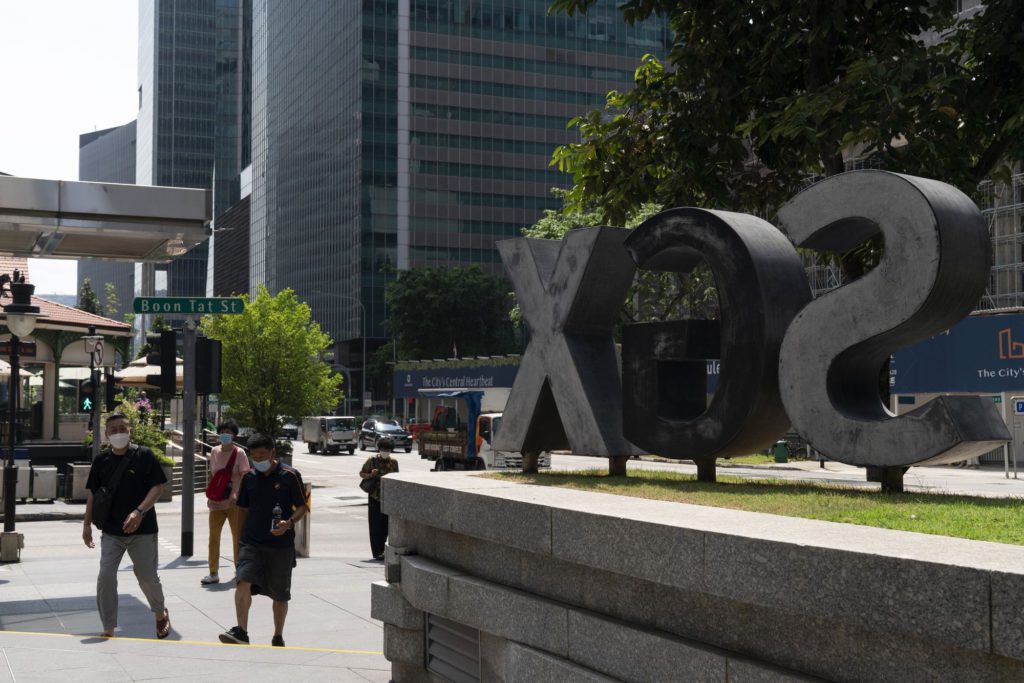
Singapore Bourse Follows Global Rivals With EV Metals Futures

(Bloomberg) — Singapore Exchange is set to launch its first lithium and cobalt contracts, adding to efforts by commodity exchanges to get battery materials companies and investors interested in using futures.

SGX is due to kick off trading in two lithium and two cobalt contracts on Monday. The London Metal Exchange and CME Group Inc. already offer futures for both metals, although trading liquidity is still far below established commodities contracts. 

Demand for battery minerals is expanding rapidly as the global auto industry accelerates a push toward electric vehicles, triggering big price swings. A global index of lithium prices has more than quadrupled in the past year, while Chinese lithium carbonate just hit a fresh record last week. 

While unprecedented price spikes have sparked calls for greater transparency in pricing, analysts have pointed to hurdles for contracts to gain traction — from the relative complexity of the markets, to a greater reliance on long-term supply deals that contrain spot trading.  

“In the case of lithium, miners and lithium converters often tie their volumes to long-term contracts,” said Leah Chen, analyst at S&P Global Commodity Insights. “Without the physical delivery of cargoes, it will be a paper market and there may be the risk of it falling into the space of speculation without providing the security from hedging.” 

The SGX is launching four contracts on Monday: battery-grade lithium carbonate and lithium hydroxide, plus cobalt metal and cobalt hydroxide. Open interest on both the CME and LME lithium hydroxide contracts was at zero as of Sept. 22.

As higher raw materials prices raise battery costs and threaten the pace of EV adoption, automakers and battery manufacturers have been trying to lock in future supplies of minerals amid fears of a deepening shortage. That includes offtake deals and multi-year supply partnerships between upstream and downstream companies.

“The benefit of this over futures contracts for miners is that it increasingly results in direct equity investment in extraction operations,” said Martin Jackson, senior analyst at CRU Group. “As long as that spot market remains the minority of traded material, liquidity will limit the potential of futures trading.”

More stories like this are available on bloomberg.com

©2022 Bloomberg L.P.
John Paulson on Frothy US Housing Market: This Time Is Different

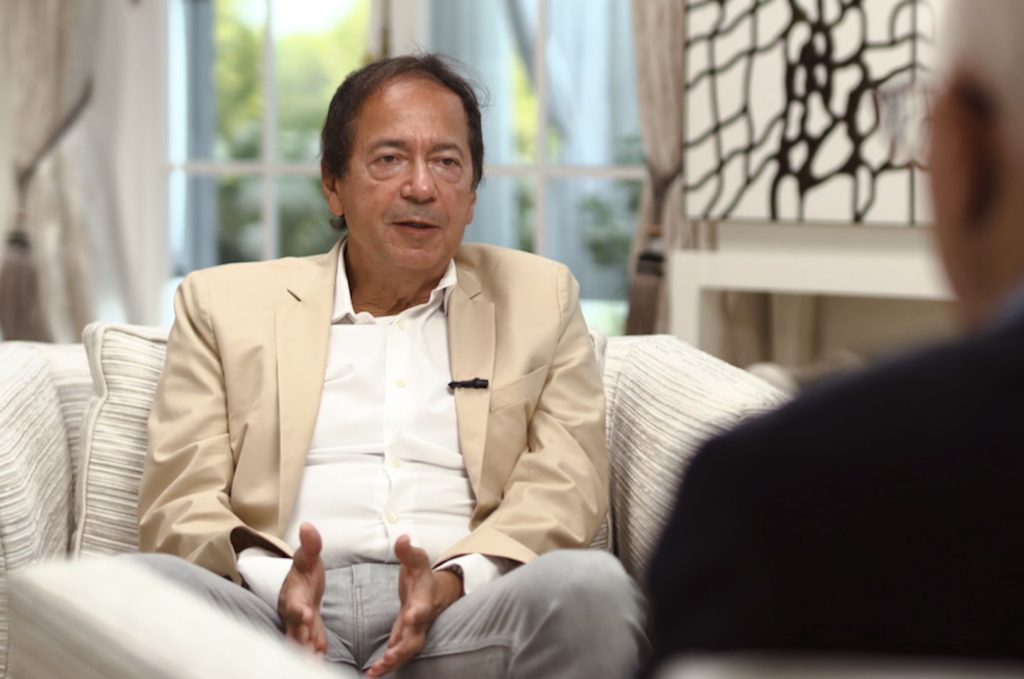
(Bloomberg) — John Paulson became a billionaire after his hedge fund effectively shorted more than $25 billion of mortgage securities at the dawn of the global financial crisis. 

As he sizes up yet another frothy housing market some 15 years later, the founder of Paulson & Co. says another downturn in US home prices may be in the cards — but the banking system is in a much better condition to handle it.  

Paulson sat down with Bloomberg for a wide-ranging interview at the Union League of Philadelphia’s Business Leadership Forum on Tuesday. He also discussed how the so-called “Greatest Trade Ever” influenced his investing afterward, as well as why gold prices have been falling. Below are some of the highlights of the conversation, which have been lightly edited for clarity.  

Q: You set your sights on the real-estate market about 16, 17 years ago. Basically you surmised that the US was in a housing bubble and that the huge market for mortgage securities was bound to be in trouble when prices collapsed. I’m curious if we could bring that into the present tense, because I look at how so much has changed since then: Underwriting standards have sobered up quite a bit; the banking system is much more inoculated; there are better capital requirements, a lot more regulations in place. But I look at the appreciation in home prices since the beginning of 2020 — the Case-Shiller index is up 40-some percent — and over the same period, mortgage rates have jumped to more than 6%. It seems like we could be in for some pain in the housing market. I wonder how well inoculated is the financial system? Compare and contrast now versus then.

A: Well the financial market, the banking system and the housing market are much different today than in ‘06 and ‘07. The underlying quality of the mortgages today is far superior. You don’t even have any subprime mortgages in the market … And the FICO scores are very, very high. The average is like 760. And the subprime, they were averaging 580-620 with no down payment. So in that period, there was no down payments, no credit checks, very high leverage. And it’s just the opposite of what’s happening today. So you don’t have the degree of poor credit quality in mortgages that you did at that time. 

The other factor is the banks at that period were very highly leveraged. The average capital in your major banks was about 3%. And then they had a lot of off-balance sheet exposure as well. So, you know, it doesn’t take a lot to fail if you have, let’s say, a hundred dollars in assets, and then on the liability side you only have $3 in equity and $97 in various types of borrowing. If you’re not really careful on the asset side, all the assets have to do is fall 3% and your equity is wiped out. You go into default. So the problem, in that period of time, the banks were very speculative about what they were investing in. They had a lot of risky subprime, high yield, levered loans. And when the market started to fall, the equity quickly came under pressure. 

And it caused the failure, very quickly, of major financial institutions in the US … The banks have recovered. But as a condition going forward, they really raise the equity. Today, the average bank is probably 9% equity, the systemically important banks are 11%-12% equity. So almost between three and four times as much equity as before. So we’re not at risk of a collapse today in the financial system like we were before. Yeah, it’s true, housing may be a little frothy. So housing prices may come down or they may plateau, but not to the extent it happened. 

Q: Is there anything you learned about bubbles in general? I feel like it’s one of the most-difficult things for an investor to do: It’s easy to spot a bubble, but it’s hard to sort of hit it at the right time and make the right trade to benefit from it, or at least get out of the way and cash in at the right time. Is there any lesson to be learned about bubbles or is each one unique and you have to take ‘em as they come?

A: Well, you’re absolutely right. Like crypto. Many people thought crypto was a bubble. I remember looking at Bitcoin. It was several thousand, went up to $20,000. People said, “This is ridiculous. Let’s short it.” Then it went all the way up to $65,000. So the problem with the short is there’s no way to cover the downside. 

Which is what made the shorting of subprime bonds interesting, because it was an asymmetrical trade … When you short a bond at par, say a hundred dollars, you take a hundred dollars back and then you invest that hundred dollars. So your loss is really between the rate you pay on the bond that you short and where you invest the hundred dollars. In the case of the subprime bonds, they yielded more or less 6%. They were triple-B bonds. And Treasuries at the time were 5%. So you short the bonds for a hundred, you have to pay $6, but then you take that hundred cash, you buy Treasuries, you make $5. So your net cost is only $1 per year. And if the duration of the bond is only two or three years, then you’re really risking 2%, 3%. But if the bond defaults, you can make a hundred dollars. 

So the economics of shorting investment-grade bonds are very attractive. The problem is, it’s like finding a needle in a haystack. When does an investment grade bond default? Prior to the subprime crisis, according to Moody’s and S&P, there had never been a default of an investment-grade bond. So there was literally hundreds of billions worth of these bonds available. But I thought because of the nature of the bonds, the nature of the mortgages and the leverage on the structures, that all you needed was a flat housing market, to slightly declining housing market, when the losses in these structures would wipe out the triple-Bs. 


Q: In the populist narrative, hedge-fund managers — and short sellers in particular — are often vilified when things go wrong. We’ve seen it a lot these last couple years with hedge funds that are short the very popular, day-trader meme stocks. I wonder if you experienced any of that? And is there anything valid to that criticism? 

A: There is, if you are a short seller and you’re promoting the stock. So to short a stock, you have to get someone to buy it and you want them to buy at a high price. Then when it goes down, you make the profit. So some of these short sellers are actually promoting the stocks: “They’re fine. This is the greatest thing ever.” And they’re promoting it to very unsophisticated retail investors. And then they run the stock up. And when the stock’s going up, they’re shorting the stock that they’re promoting to the unsophisticated retail investors. And then once the stock reaches a point, they maximize the short, then they pull the plug and stop promoting it. 

Subprime was very different. First of all, a lot of our investors were pensions, endowments, families. We provided balance to a lot of institutions that, when the market fell, they had something that made money that minimized the overall losses in the portfolio. And secondly, we never dealt with retail investors. Our counterparties were only the most-sophisticated banks. So our lead counterparty was Goldman Sachs, after that was Deutsche Bank, after that Morgan Stanley, after that Credit Suisse, UBS. So there was no hiding. They knew exactly what they were buying from us. They understood the market better than I did. And we never promoted these bonds. We were very clear: We thought these were very poor mortgages.  

Q. I wonder what it’s like after you have a trade that successful. Like if you’re a fisherman and you catch a whale, all of a sudden it must be tough to go back to fishing for trout. Was it difficult in the aftermath, psychologically, to think “I’m a home-run hitter” now?

A. Yeah, I think it is. You know, you did so well, you look for the next one. But it’s pretty hard to find. And you become a little overconfident so that you’re perhaps taking more directional risk. And, if you take directional risk, it can go either way. And then, you have sustaining losses, which makes you more humble. You can come back to reality and you become more realistic about finding another. You continue to look, but it’s difficult to find another trade that sets up like this one. 

Q: Can you help us understand what’s happening to gold now? Will it keep dropping?  


A: One thing about gold is that it’s down this year, more or less 8%. It’s down a lot less than stocks or bonds. So it has proven to be a source of protecting wealth. The issue is gold’s a hedge against inflation, but while the current inflation rate is high, long-term inflation expectations are still very low. It’s like 2.5%. And they haven’t really changed while the Fed has been raising interest rates. So as the 10-year yield has gone from 2% to, let’s say, 3.6%, inflation expectations still are around 2.5%. So before real rates were negative, now they become positive. So because real rates have become positive, that’s really put a cap on gold.

I think what needs to happen for gold to become more responsive is if the Fed ultimately raises rates, the economy weakens, and they pause. And then they see they can’t control inflation. Then it’s not going to come down to 2%, at best. Maybe they get it down to 4%, 5% or 6%, and then the economy weakens, they have to ease again. And then inflation comes back. At that point long-term inflation expectations will rise. People will not believe the Fed can control it. And then I think gold rises to higher levels.

More stories like this are available on bloomberg.com

©2022 Bloomberg L.P.
One Bitcoin Equals One Bitcoin Becomes the Narrative as the Drop Gets ‘Too Painful’

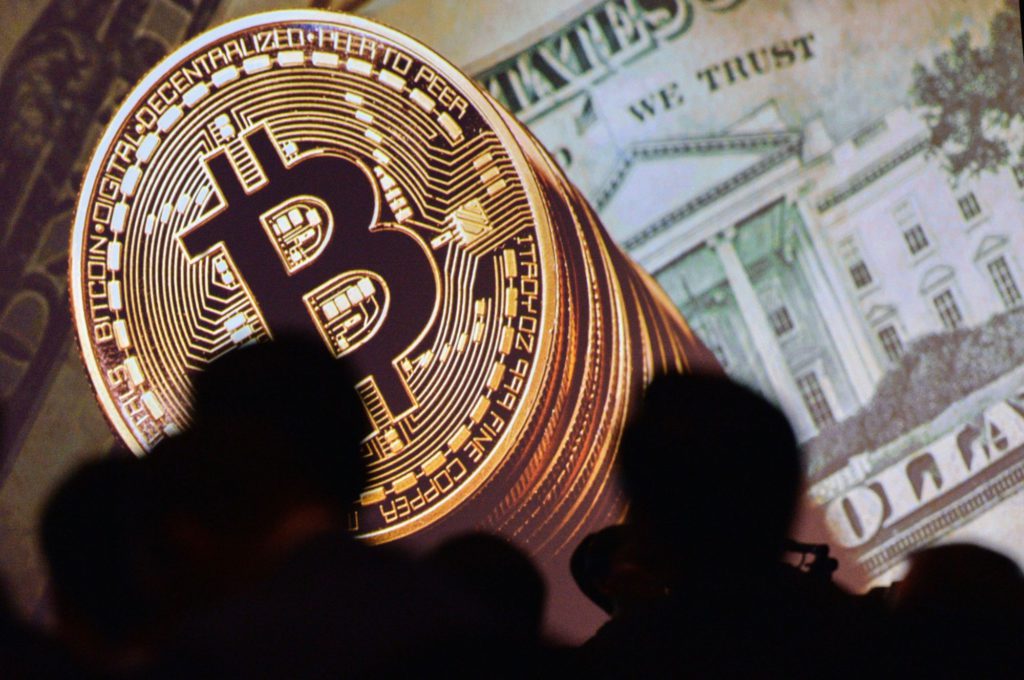
(Bloomberg) — Virtual money, digital gold, inflation hedge, uncorrelated asset, store of value: those are phrases once used by Bitcoin’s fans to describe the cryptocurrency’s virtues. Its new narrative? A Bitcoin is a Bitcoin.

That’s the expression that’s making its rounds on Twitter in recent days, where users, amid a deep decline in prices, have been posting that 1 BTC = 1 BTC. The idea is that it doesn’t really matter what the coin’s price is. Its supply is fixed and that should, theoretically, act as a buoy for prices in the long run. 

“1 BTC = 1 BTC is something Bitcoin maximalists say tongue-in-cheek when looking at the USD price of BTC becomes too painful,” said Joshua Lim, former head of derivatives at Genesis Trading. “The implication is that BTC will eventually become a unit of account so just focus on the absolute number of BTC you own today.”

Anyone paying attention to the crypto market has become familiar with the many cloaks Bitcoin has donned over the years. Fans had, before 2022, utilized a number of narratives for the coin, including that it could at some point replace gold, or that it’s a great inflation hedge. Most of those narratives have fallen by the wayside this year as prices plunged amid monetary policy tightening. Bitcoin has lost roughly 60% this year and has been trading below $19,000 in recent days, down from a near-$69,000 high at the end of 2021. 

When the pandemic first broke out, crypto investors ran with the idea that Bitcoin, thanks to that limited supply, could act as a hedge against rising prices. But consumer price pressures have remained sticky this year all the while prices for most cryptocurrencies plunged. Many market-watchers say that investors are now searching for a new narrative for the digital-assets market. Twitter has been flooded with posts proclaiming that all that matters is that 1 BTC equals 1 BTC.

Tagus Capital’s Ilan Solot says that the Bitcoin-as-an-inflation hedge narrative argued by the proponents has been misunderstood. It’s incorrect to think of it as Bitcoin not rising while prices skyrocket. “The narrative was never really Bitcoin is an inflation tracker, it’s not TIPS,” he said. “Bitcoin was a hedge against irresponsible money-printing by the central banks.”

Still, that’s not to say that diehard crypto investors have been deterred. The percentage of Bitcoin that has not been moved for over a year has held steady — at 68%, the metric is currently at its highest level since 2014, according to data compiled by FRNT Financial Inc.

Bitcoin is still caught up in the macro environment and hasn’t broken its correlation with risk assets, said Stephane Ouellette, chief executive of FRNT.  

“Narrative tend to follow markets, more often than the other way around,” he said. “When things are correlated, one way of looking at it is that it’s the same kind of traders of strategies that are involved. Ultimately, there is a growing and significant percentage of BTC holders who will never sell their BTC and those that use it for commercial purposes. At a certain point, BTC will start behaving differently than risk assets, but clearly it’s not there yet.” 

Yet it’s clear that Bitcoin’s other narratives haven’t borne out, said Peter Mallouk, president of Creative Planning. “We now know that cryptocurrencies are not an inflation hedge, it’s proven that to us now,” he said. “It’s a big, big speculative play for anybody that’s interested in it.”

More stories like this are available on bloomberg.com

©2022 Bloomberg L.P.
Courbit-Led Group Offer €20 Per Share For M6 Stake

(Bloomberg) —

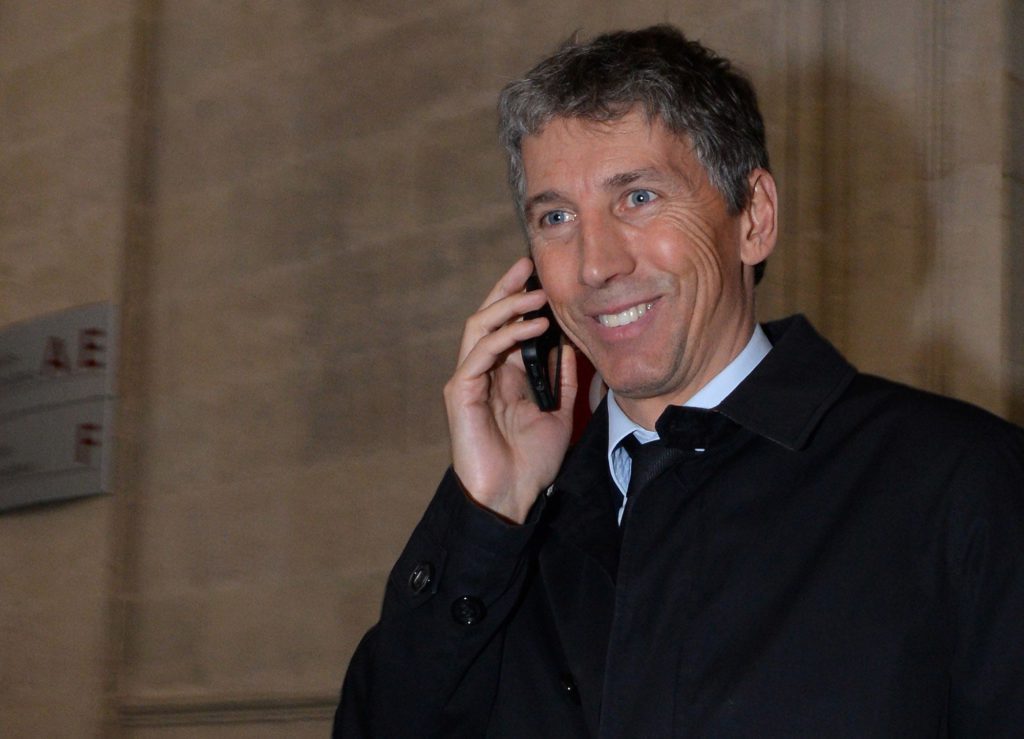
Media mogul Stephane Courbit and his investor partners are said to have offered 20 euros a share for Bertelsmann SE & Co.’s stake in Groupe M6, according to a person familiar with the situation.

That’s a 39% premium compared to Friday’s close of 14.43 euros per share, and it values the roughly 48% stake at around 1.22 billion euros ($1.18 billion). A representative for Courbit declined to comment on Sunday.

Courbit’s all-cash bid comes with backing from shipping tycoon Rodolphe Saade and businessman Marc Ladreit de Lacharriere, Bloomberg reported on Saturday. The offer follows a previous one in which MFE-MediaForEurope NV, the broadcaster controlled by former Italian Prime Minister Silvio Berlusconi, teamed up with French telecommunications billionaire Xavier Niel for the same asset. 

Czech billionaire Daniel Kretinsky also made an offer for the stake, another person familiar with the situation said. A representative for him didn’t immediately reply when asked for comment Sunday outside of normal business hours. 

Vivendi SE, controlled by billionaire Vincent Bollore, and owner of pay-TV Canal+, didn’t submit an offer, people familiar with the matter said. A representative for Vivendi didn’t immediately reply when asked to comment.

Bertelsmann is selling its stake in M6 after a plan to merge the company with Television Francaise 1 SA failed to overcome antitrust hurdles. The deal to combine France’s two biggest free-to-air broadcasters raised concerns that the combined company would dominate advertising and TV service distribution.

The plan’s collapse was also a blow to French construction and telecommunications conglomerate Bouygues SA, which is TF1’s biggest shareholder. A tie-up would have been a defensive move to create a stronger player in the market to go up against the likes of Netflix, Disney+ and Amazon.com Inc.’s Prime platform.

Courbit, 57, is a TV production entrepreneur whose media company FL Entertainment listed in Amsterdam earlier this year and is behind such TV hits as Black Mirror, Peaky Blinders and MasterChef, via Banijay Entertainment. He’s teamed up for this M6 stake offer with Saade, whose fortune derives from control of shipping company CMA CGM SA, and de Lacharriere.

Niel is the founder of the telecom group Iliad SA, through which he’s invested across Europe. He’s been looking to expand his model based on low costs and low prices. This month, his Atlas Investissement vehicle took a 2.5% stake in British telecom giant Vodafone Group Plc. Earlier this year, Niel also tried — via Iliad– to buy the British phone carrier’s Italian unit. His offer, which was backed by private equity Apax Partners LLP, was rejected.

The timing of the sale comes as Italians are set to vote in elections on Sunday, which could see a victory of an alliance which is led by far-right candidate Giorgia Meloni and includes Berlusconi.

(Updates with Kretinsky bid in 4th paragraph)

More stories like this are available on bloomberg.com

©2022 Bloomberg L.P.

Suicide Bombing Kills at Least 11 at Army Camp in Somalia

(Bloomberg) —

A suicide bombing by al-Qaeda-linked militants killed at least 11 people at a Somali army training camp, the latest assault to rock the capital as the president vows to stamp out a years-long insurgency.

The blast at the facility in Mogadishu on Sunday occurred during the recruitment of new troops, according to army officer Jama Hassan, who gave the death toll. Another 18 people were wounded. 

Al-Shabaab, the Islamist group that’s been fighting Somalia’s government for the past decade, took responsibility for the bombing, according to Radio Andalus, a broadcaster that supports its goals. 

The attack comes as Somalia’s government under President Hassan Sheikh Mohamud steps up its fight against the militants in the center and south of the Horn of Africa nation that’s been ravaged by decades of conflict.

In May, US President Joe Biden authorized the US military to send Special Operations troops back to Somalia on a “persistent” basis to revive a counter-terrorism mission that was ended during Donald Trump’s administration. The US last week said it killed 27 al-Shabaab members in an air-strike.

Mogadishu is a regular target of al-Shabaab attacks. In August, its fighters stormed a popular hotel, sparking a siege that ended with at least 20 people dead.

(Updates with background from fourth paragraph.)

More stories like this are available on bloomberg.com

©2022 Bloomberg L.P.

PGIM’s Head Quant Advises Patience With Fed’s Inflation Battle

(Bloomberg) — The nightmare for investors in both stocks and bonds took a turn for the worse this week as the Federal Reserve shocked markets by lifting their projections for interest-rate hikes while simultaneously lowering their outlook for economic growth. 

So is there anything that’s actually working in this type of environment? George Patterson, chief investment officer of PGIM Quantitative Solutions, joined the “What Goes Up” podcast to discuss some quant strategies that have held up amid the market selloff. Below are condensed and lightly edited highlights of the conversation. Click here to listen to the full podcast, or subscribe on Apple Podcasts or wherever you listen.

Q: We’ve noted that trend-following strategies have fared well in a year when little else has worked. What else is a solution from a quant perspective for a challenging environment like this? What are you telling those clients looking to either get some kind of return this year or at least protect the wealth they have?

A: We do have several offerings that focus on trend-following or global macro strategies or tail hedging. Those have been very successful. This is the perfect economic environment where you do have big movements, as well as some big inconsistencies across the globe. For example, looking at Japan and how everyone else is raising rates and Japan is really not. However, there’s a couple of other things. One is commodities and the other would be real assets in general. Maybe the last one I would talk about would be some downside protection. 

So commodities and real assets, we’ve seen a big run-up in commodities and a bit of a retracement. But over the long run, there’s a lot of research that shows that commodities do very well in this type of environment. Our view is that the Fed is going to be successful in taming inflation, but it’s also going to take a little bit of time. It’s not going to come down very rapidly. And we think there’s a lot of opportunities for commodities in a portfolio. So that’s one area. Real assets, whether it’s real estate or other direct real investments, also typically do very well in inflationary times. 

The other thing that we have a lot of conversations about is downside protection. How do you build a strategy that can either hedge tail risk, or just deliver most of the upside while limiting the downside? And again, there’s a number of different solutions we offer in that area. So those I’d say are the main subjects that we’ve been talking about to clients that we’ve seen the most interest in. 

Q: What do you expect from the Fed for the remainder of the year?

A: Over the summer, with some earlier statements from Powell, he tried to portray a very serious view about taming inflation, and he came away saying that, “We’re going to do it.” But he was maybe just a little bit too dovish. And we saw a very large rally in markets over the summer as the result of that, even though a number of other Fed speakers came out and really were much more pessimistic about things. So really since then, what we’ve seen is he has just had to be extremely clear that they are going to get their job done and it is going to cause some disruption. Some of his earlier statements, he was trying to be a bit more balanced. But I think now, given the market’s reaction, he has just realized that he has to be extremely clear about where he thinks things are going. 

Now, don’t forget it, it is a challenging economic outlook, but it follows several years of huge gains in the market. If you look over a longer period of time, we’ve had a lot of gains in a short period of time. So it’s not unrealistic to expect a little bit of give-back in the next year or two.

Q: I know natural-language processing is something you’re very interested in. Jerome Powell and the Fed’s message seemed pretty clear. But is there something more that a computer program can glean from a Fed statement and press conference like we got this week?

A: There’s several things that I would say are relevant. I’m sure there’s a lot of people out there that are running very short-horizon strategies, looking at what words he chooses to use and specifically the questions and answers that come out of that, and are looking to get in or out of the market very quickly to take advantage of a short-term movement. The real advantage, however, of language processing is just that you can go in-depth. You can read a 10-K and analyze a lot of aspects of it, and you could do that for two or three of them, but it could easily take you half a day or a day each. The advantage of language processing is that you get the breadth. So you can do 3,000 of these in a matter of minutes or maybe half an hour, depending on what type of models you’re running. But it’s a combination of the breadth and the timeliness, I would say, that makes it relevant. 

And if you think about humans, so much of our intelligence, so much of our knowledge is really encoded in writing. We’ve been collecting numerical data for some time, but people have been generating written texts since the beginning of putting text down on paper. So there’s just a huge amount of information that comes out and there’s a lot of value in there, is what we have found. So it’s been one of the most-relevant areas for us over the past few years to extract information.

More stories like this are available on bloomberg.com

©2022 Bloomberg L.P.
The Great Bond Bubble Is ‘Poof, Gone’ in Worst Year Since 1949

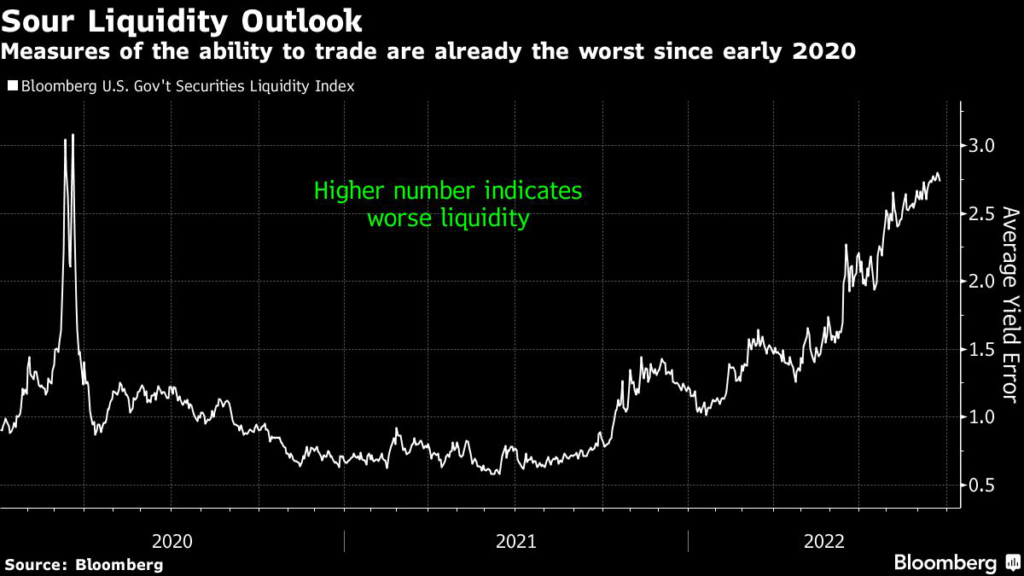
(Bloomberg) — Week by week, the bond-market crash just keeps getting worse and there’s no clear end in sight.

With central banks worldwide aggressively ratcheting up interest rates in the face of stubbornly high inflation, prices are tumbling as traders race to catch up. And with that has come a grim parade of superlatives on how bad it has become.

On Friday, the UK’s five-year bonds tumbled by the most since at least 1992 after the government rolled out a massive tax-cut plan that may only strengthen the Bank of England’s hand. Two-year US Treasuries are in the middle of the the longest losing streak since at least 1976, dropping for 12 straight days. Worldwide, Bank of America Corp. strategists said government bond markets are on course for the worst year since 1949, when Europe was rebuilding from the ruins of World War Two.

The escalating losses reflect how far the Federal Reserve and other central banks have shifted away from the monetary policies of the pandemic, when they held rates near zero to keep their economies going. The reversal has exerted a major drag on everything from stock prices to oil as investors brace for an economic slowdown.

“Bottom line, all those years of central bank interest-rate suppression — poof, gone,” said Peter Boockvar, chief investment officer at Bleakley Advisory Group. “These bonds are trading like emerging market bonds, and the biggest financial bubble in the history of bubbles, that of sovereign bonds, continues to deflate.”


The latest leg downward was fueled by the Fed meeting Wednesday, when the central bank raised its policy-rate range to 3% to 3.25%, its third straight 75-basis-point hike. Policy makers indicated they expect to push the rate beyond 4.5% and keep it there, even if it exacts a large toll on the economy. 

Underscoring that point, Fed Chair Jerome Powell said the bank “is strongly resolved to bring inflation down to 2%, and we will keep at it until the job is done.” The broad inflation gauge that the Fed targets, the personal consumption expenditures price index, is expected to show a 6% annual increase in August when it’s released on Sept. 30.

The scale of the expected interest-rate hikes will likely only deepen the Treasury market’s losses, since in previous monetary-policy tightening cycles yields have tended to crest near the Fed’s target rate. 

For now, only policy-sensitive front-end Treasuries are trading at yields above 4%, with the five-year briefly breaching that mark on Friday. Longer-dated yields are lagging the rise as traders price in the risk of a recession. Still, the 10-year hit as much as 3.82% Friday, a 12-year high.

“With more Fed rate hiking coming and quantitative tightening, as well as the possibly more government debt issuance down the road amid less Treasury buyers out there now, it all just means higher rates,” said Glen Capelo, managing director at Mischler Financial. “The 10-year yield is definitely going to get closer to 4%.”

In the coming week, the market may face fresh volatility from the release of the inflation data and public speaking engagements by Fed officials including Vice Chair Lael Brainard and New York Fed President John Williams. Also, the sale of new two-, five- and seven-year Treasuries will likely spur trading volatility in those benchmarks, since the market typically seeks a price concession before the auctions. The week will also mark the end of the month and the quarter, usually a time of diminished liquidity and elevated volatility as money managers adjust holdings.

A broad Treasury index has been swamped by escalating losses and is heading for a drop of over 2.7% in September, its worst since April. It’s down over 12% this year. 

“Whether 4.6% is the peak rate or they have to go further depends on the inflation trend,” said Andrzej Skiba, head of the BlueBay US fixed-income team at RBC Global Asset Management, who is cautious about being exposed to longer-dated interest-rate risk. “The market is totally at the mercy of incoming inflation data, and while our view is that inflation will decline, the degree of confidence in that forecast is low.”

What to Watch

  • Economic calendar:
    • Sept. 26: Chicago Fed national activity index; Dallas Fed manufacturing index
    • Sept. 27: Durable goods orders; Conference Board consumer confidence; FHFA house price index; Richmond Fed manufacturing index; New home sales
    • Sept. 28: MBA mortgage applications; Pending home sales; wholesale and retail inventories
    • Sept. 29: Weekly jobless claims; 2Q GDP revision
    • Sept. 30: Personal income and spending (with PCE deflator); MNI Chicago PMI; University of Michigan sentiment, inflation expectations
  • Fed calendar:
    • Sept. 26: Boston Fed President Susan Collins; Cleveland Fed President Loretta Mester; Atlanta Fed President Raphael Bostic
    • Sept. 27: Chair Powell on digital currencies; San Francisco Fed President Mary Daly; Chicago Fed President Charles Evans
    • Sept. 28: Bostic, Evans
    • Sept. 29: Mester, Daly
    • Sept. 30: Vice Chair Brainard; New York Fed President Williams
  • Auction calendar:
    • Sept. 26: Two-year notes; 13- and 26-week bills
    • Sept. 27: Five-year notes
    • Sept. 28: Two-year floating-rate notes; seven-year notes
    • Sept. 29: 4- and 8-week bills

More stories like this are available on bloomberg.com

©2022 Bloomberg L.P.

Iran Protests’ Death Toll Rises to 41 as the Unrest Deepens

(Bloomberg) — The number of people killed in Iranian protests that were sparked by the death of a woman in police custody rose to 41 including demonstrators and police, state TV reported.

The elite Islamic Revolutionary Guard Corps issued a statement describing the unrest as a “conspiracy” in which protesters had been organized and armed by the “enemy,” usually a reference to the US and Israel. The US imposed new sanctions in response to the government’s actions.

Demonstrations started last Friday following the death of 22-year-old Mahsa Amini, a young woman who fell into a coma after Tehran’s so-called “morality police” arrested her for allegedly flouting Islamic dress codes. 

Protests have been reported in scores of towns and cities including the capital Tehran as well as Karaj, Shiraz, Tabriz, Kerman, Kish Island, Yazd, Neyshapur, Esfahan and Mashhad. It’s the most widespread unrest in Iran since November 2019 when authorities shut down the internet and, rights groups say, killed hundreds of people. 

The “morality police” units have long been highly unpopular, but the protests are the first major rebuke of their actions. However that doesn’t mean the establishment is about to be swept aside, with security forces retaining a strong grip on the country as they seek to protect the clerical establishment.

Why a Woman’s Death in Iran Has Ignited New Protests: QuickTake

The US Treasury sanctioned the “morality police” on Thursday for what it described as the group’s violence against women and violation of the rights of peaceful protesters. 

Treasury also sanctioned seven senior leaders of Iran’s military, intelligence and law enforcement units, saying these entities use violence to suppress peaceful protests.

Footage of the protests posted to social media over the past few days has shown unarmed demonstrators turning on uniformed police and anti-riot officers wielding tasers or handguns as well as members of the plain-clothed Basij, who are also known to carry weapons. None of the videos can be verified by Bloomberg.

The militias, which are under the command of the Islamic Revolutionary Guard Corps, are deployed in order to infiltrate public gatherings and violently disperse protests. They are known to video tape and photograph protesters and passersby in order to later target them for harassment and arrest.  

Internet disruptions were widely reported in Iran last night with mobile internet access down in Tehran and slow speeds reported on broadband connections. Internet watchdog Netblocks said on Wednesday that access to Instagram, a hugely popular platform in Iran, has also been restricted. 

Iran’s President Ebrahim Raisi is currently attending the United Nations General Assembly in New York where his trip has been overshadowed by the violence at home.   

(Update with new death toll in protests.)

More stories like this are available on bloomberg.com

©2022 Bloomberg L.P.
Ukraine Latest: Russia Pushes Annexation; Putin May Speak Friday

(Bloomberg) —

The Kremlin may complete the annexation of the four occupied regions of Ukraine as soon as next week, just days after what the United Nations has denounced as illegal votes to join Russia. President Vladimir Putin may make his annual address to parliament Friday, a state news agency reported, days after the so-called referendums are due to end.

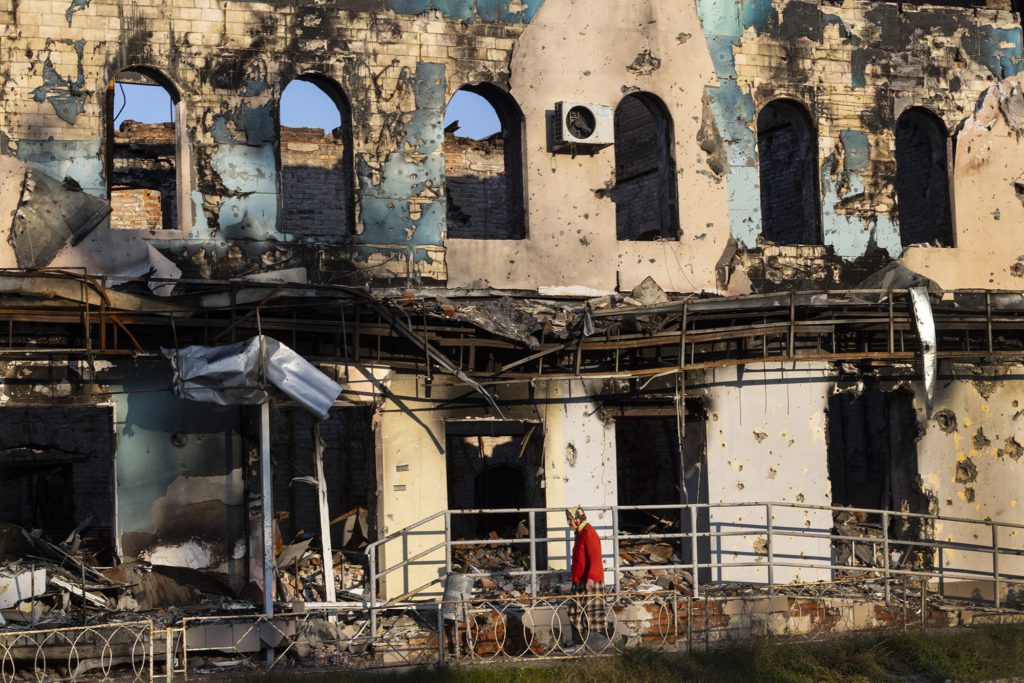
Seven months after a full-scale invasion of Ukraine, Russia is attempting to annex some of its neighbor’s most productive farmland and industrial areas. Putin ordered another 300,000 troops conscripted this week into Russia’s “special military operation.” 

Russian occupation authorities began drafting men in the Kherson and Zaporizhzhia regions, Ukrainian officials said. Envoys from European countries traveled to Izyum on Friday to visit a mass burial site exhumed after Ukraine recaptured the region from Russian troops this month. 

(See RSAN on the Bloomberg Terminal for the Russian Sanctions Dashboard.)

Key Developments

  • Putin’s Conscripts Won’t Win His War But May Drag It Out
  • Russians Confront New Normal as Annexation Voting Continues
  • Zelenskiy Says China’s Position on Russian Invasion ‘Ambiguous’
  • EU Rushes to Agree on an Oil Price Cap After Putin’s Threats 
  • Russia’s Lavrov Scorns West by Arriving Late at UN, Walking Out
  • Blinken Calls Russian Seizure of Nuclear Plant ‘Flagrant Breach’

On the Ground

Russian forces fired missiles at infrastructure in the Black Sea port of Ochakiv, Ukraine’s southern military command said on Facebook. Moscow’s troops fired missives at Mykolaiv, and a bakery and residential buildings were shelled in Marhanets in the Dnipropetrovsk region. Kyiv’s forces reasserted control of bridges across the Dnipro in the Kherson region and destroyed reserves of Russian weapons nearby. In the city of Kherson, a concentration of Russian weapons and machinery was attacked, as well as several control posts, officials said. The Ukrainian army downed six Iranian drones Shahed and one Mohajer-6 drones, the General Staff of the Ukrainian armed forces said on Facebook.  

(All times CET) 

Russian Lawmakers May Hold Sept. 29 Annexation Vote (7:10 p.m.)

The Federation Council, Russia’s upper house of parliament, may vote on Sept. 29 on the accord for occupied Ukrainian regions to join Russia, Ria Novosti reported, citing a source it didn’t identify. 

President Vladimir Putin plans to address the Federal Assembly, a joint session of both houses of parliament, the next day, the news agency reported earlier Saturday.

The president addresses the body annually on major domestic and foreign policy topics. 

China Warns Against Ukraine War Spillover (6:35 p.m.)

Chinese Foreign Minister Wang Yi called on all sides to avoid widening the war in Ukraine and said the solution is to “address the legitimate security concerns of all parties.”

“We call on all parties concerned to keep the crisis from spilling over and to protect the legitimate rights and interests of developing countries,” Wang said in a General Assembly speech at the United Nations on Saturday.

Moscow Plans One-Time Payments to Draftees (5:30 p.m.)

Deputies from the ruling United Russia party and the Communist Party submitted the bill to be reviewed by the parliament on a one-time payment of 300,000 rubles ($5,184) to all Russians, who will be drafted to fight in Ukraine, according to the parliament’s disclosure.

The drafted people will also be offered waivers of paying interest on mortgages and consumer loans for the duration of their service. Housing and communal services will also be canceled during this period.

As many Russian trying for flee from mobilization abroad or at home already Russia has offered salaries for draftees equal to those that contracted military staff gets, which is several times the Russian average. The average real salary in June was 66,500 rubles, according to statistic service

Eight Grain Vessels Sail From Ukraine’s Ports (3:45 p.m.)

Eight ships carrying a total of 131,300 tons of agricultural products to Africa, Asia and Europe were set to leave the ports of Odesa and Chornomorsk on Saturday, Ukraine’s Infrastructure Ministry said on Facebook. Six ships sailed early in the morning and formed a caravan, with two more were on the way.

Since the safe-transit agreement brokered by Turkey and the UN was reached between Ukraine and Russia in late July, 221 ships have left Ukraine’s ports on the Black Sea with 4.7 million tons of agriculture products, chiefly grains. 

Russia Shakes Up Army; Mariupol General Advances (12:07 p.m.)

Russia’s defense ministry announced personnel changes among its generals. No explanation was given for the move, days after President Vladimir Putin called up 300,000 reservists in an escalation of the now seven-month conflict.  

Colonel-General Mikhail Mizintsev was appointed Deputy Minister of Defense, responsible for the supply and logistics, the ministry said in its official Telegram channel. General Dmitry Bulgakov leaves the post for another, unspecified job, it said. 

Mizintsev was sanctioned by the UK in March for what it called his “reprehensible tactics” in combat including “atrocities” against the Ukrainian people during the siege of the southern city of Mariupol — as well as shelling civilian centers in Aleppo, Syria, in 2015-16. 

European Envoys Visited Izyum Mass Graves Site (11 a.m.)

Ambassadors from over a dozen European countries visited Izyum in Ukraine’s Kharkiv region on Friday and saw mass grave sites uncovered found when Kyiv’s troops recaptured the area. Some 436 bodies have been exhumed, including children. 

The visit also took in the site of a residential building destroyed by a Russian bomb, killing 53 people.

“The world must know the truth about the bloody crimes of the occupiers. That is why it is extremely important that today foreign diplomats were able to see with their own eyes what the Russian occupiers leave behind,” said Andrii Sybiha, deputy head of Ukraine’s Office of the President.  

Zelenskiy Says China’s Position ‘Ambiguous’ (10:26 a.m.)

Ukraine’s president said he would like to renew relations with China, whose position on the Russian invasion he termed “ambiguous.” 

“I would like them to help Ukraine,” Volodymyr Zelenskiy said in an interview with a French newspaper. A call with Chinese President Xi Jinping “would be difficult today.”

The comments came after Chinese Foreign Minister Wang Yi met with his Ukrainian counterpart this week during the UN General Assembly in New York. 

Russia Hits Dams to Slow Kyiv’s Advance, UK Says (8:30 a.m.) 

Russian forces targeted the Pechenihy dam on the Siverskyi Donets River this week following a hit a week ago to another major dam upriver in Kryvyi Rih, the UK defense ministry said in a Twitter update. 

“Ukrainian forces are advancing further downstream along both rivers. As Russian commanders become increasingly concerned about their operational setbacks, they are probably attempting to strike the sluice gates of dams, in order to flood Ukrainian military crossing points,” the UK said. 

Zelenskiy Says Russia Gave UN ‘Lying Propaganda’ (8 a.m.) 

Ukraine’s president said he had a “really positive” response to his speech to the UN General Assembly this week, where he outlined proposals for security guarantees.  

Zelenskiy said he met via video conference with representatives of BlackRock and Goldman Sachs, among others, as part of the week’s activities. 

“And what did Russia present? Once again, lame excuses, complaints and constant lying propaganda,” Zelenskiy said in a nightly address to the nation on Friday.   


More stories like this are available on bloomberg.com

©2022 Bloomberg L.P.

Close Bitnami banner
Bitnami
