Chinese Business

European stocks rise despite recession worries

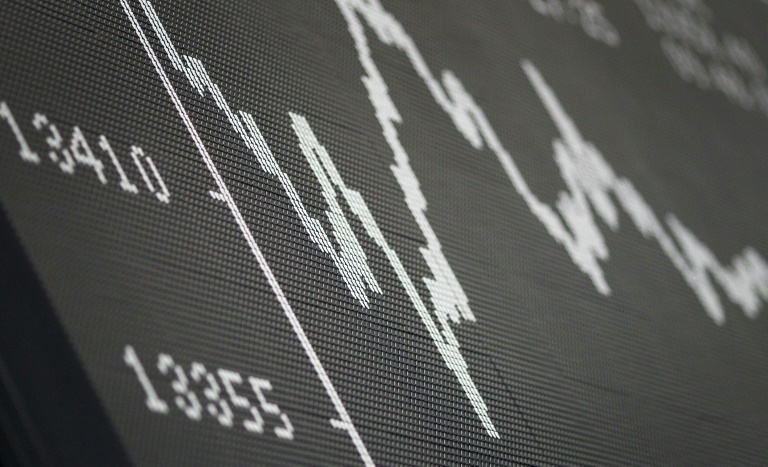
Europe’s main stock markets rebounded on Monday after a mixed Asian session following tumultuous sessions last week over recession fears.

Bitcoin regained $20,000 after sinking to an 18-month low of $17,599 in weekend deals because risk-averse investors had shunned the world’s most popular cryptocurrency.

London’s FTSE 100 rallied to close 1.5 percent higher, with sentiment boosted by news of a blockbuster takeover offer for publisher Euromoney.

Frankfurt stocks finished 1.1 percent higher while Paris gained 0.6 percent after French President Emmanuel Macron and his allies faced political deadlock after losing their parliamentary majority in weekend elections.

Wall Street, shut on Monday for a US public holiday, had risen on Friday, though the broad-based S&P 500 lost 5.8 precent for the week, its worst performance since 2020.

“Stability often comes before recovery and markets being more composed would suggest investors are no longer panicking,” said Russ Mould, investment director at broker AJ Bell.

Markets were rocked last week by a fierce selloff after the US Federal Reserve’s sharp interest rate hike — the biggest in nearly 30 years — and a warning of more to come as inflation soars.

The Fed’s move was followed by the fifth straight rate increase in Britain and the Swiss central bank’s first hike since 2007, raising concerns that such moves will drive countries into recession.

“There has undoubtedly been a shift in the market mindset over the last week and a half that has weighed heavily on risk assets,” said Craig Erlam, analyst at OANDA online trading platform.

“The prospect of a recession is being considered far more broadly and what’s more, central banks are increasingly resisting the urge to push back against it,” he said.

Cleveland Fed chief Loretta Mester added to the worry, warning that the risk of a US recession was increasing and it would take several years to bring inflation down from four-decade highs to the bank’s two-percent target.

She told CBS’s “Face The Nation” on Sunday that while she was not predicting a contraction, the Fed’s decision not to act sooner to fight rising prices was hurting the economy.

Analysts warned there was likely to be more pain ahead for traders as the Ukraine war — which has sent energy and food prices soaring this year — drags on and uncertainty continues to reign.

Oil prices stabilised on Monday after Friday’s hefty losses on demand worries caused by the prospect of a world recession.

However, US Energy Secretary Jennifer Granholm said prices could continue to surge if the European Union cut off imports of the commodity from Russia in response to the Ukraine war.

– Key figures at around 1620 GMT –

London – FTSE 100: UP 1.5 percent at 7,121.81 points (close)

Frankfurt – DAX: UP 1.1 percent at 13,265.60 (close)

Paris – CAC 40: UP 0.6 percent at 5,920.09 (close)

EURO STOXX 50: UP 0.9 percent at 3,469.33

Tokyo – Nikkei 225: DOWN 0.7 percent at 25,771.22 (close)

Hong Kong – Hang Seng Index: UP 0.4 percent at 21,163.91 (close)

Shanghai – Composite: FLAT at 3,315.43 (close)

New York – Dow: DOWN 0.1 percent at 29,888.78 (close)

Euro/dollar: UP at $1.0528 from $1.0499 late Friday

Pound/dollar: UP at $1.2243 from $1.2241

Euro/pound: UP at 86.02 pence from 85.77 pence

Dollar/yen: UP at 135.06 yen from 135.02 yen

Brent North Sea crude: UP 0.6 percent at $113.78 per barrel

West Texas Intermediate: UP 0.5 percent at $108.52

burs-lth/jj
Hong Kong floating restaurant sinks in South China Sea

Jumbo floating restaurant, a once famed but financially struggling Hong Kong tourist attraction, sank in the South China Sea after being towed away from the city, its parent company said Monday.

It capsized on Sunday near the Paracel Islands after it “encountered adverse conditions” and began to take on water, Aberdeen Restaurant Enterprises announced in a statement.

“The water depth at the scene is over 1,000 meters, making it extremely difficult to carry out salvage works,” it added.

The company said it was “very saddened by the incident” but that no crew members were injured.

It said marine engineers had been hired to inspect the floating restaurant and install hoardings on the vessel before the trip, and that “all relevant approvals” had been obtained.

The restaurant closed in March 2020, citing the Covid-19 pandemic as the final straw after almost a decade of financial woes.

Operator Melco International Development said last month the business had not been profitable since 2013 and cumulative losses had exceeded HK$100 million ($12.7 million).

It was still costing millions in maintenance fees every year and around a dozen businesses and organisations had declined an invitation to take it over at no charge, Melco added. 

It announced last month that ahead of its licence expiration in June, Jumbo would leave Hong Kong and await a new operator at an undisclosed location.

The restaurant set off shortly before noon last Tuesday from the southern Hong Kong Island typhoon shelter where it had sat for nearly half a century.

Opened in 1976 by the late casino tycoon Stanley Ho, in its glory days it embodied the height of luxury, reportedly costing more than HK$30 million to build.

Designed like a Chinese imperial palace and once considered a must-see landmark, the restaurant drew visitors from Queen Elizabeth II to Tom Cruise. 

It also featured in several films — including Steven Soderbergh’s “Contagion”, about a deadly global pandemic.

Jumbo’s departure from Hong Kong was met with regret and nostalgia from many Hong Kong residents.

Some online commentators described pictures of the floating palace sailing across a charcoal grey ocean towards the horizon as a metaphor for Hong Kong’s future.

The city has seen harsh pandemic restrictions put its status as an international hub at risk, while a national security law imposed by Beijing has stifled dissent, remoulding Hong Kong in China’s authoritarian image.

Sanctioned Russia becomes China's main source of oil

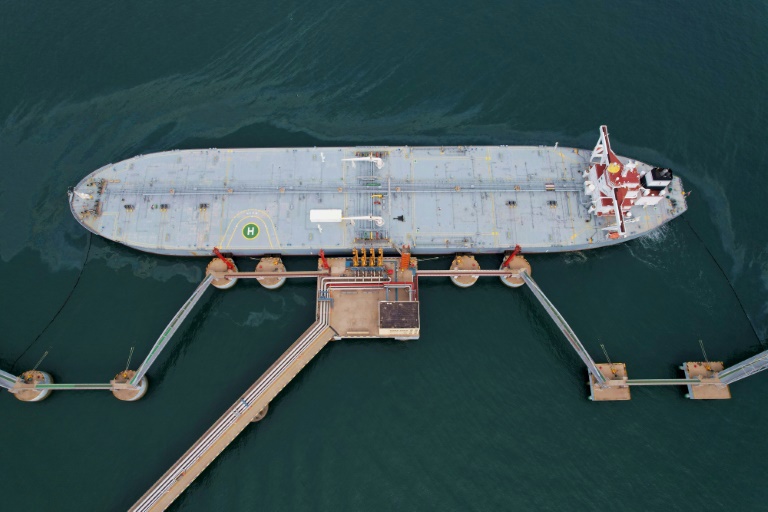
China ramped up crude oil imports from Russia in May, customs data showed Monday, helping to offset losses from Western nations scaling back Russian energy purchases over the invasion of Ukraine.

The spike means Russia has overtaken Saudi Arabia to become China’s top oil provider as the West sanctions Moscow’s energy exports.

The world’s second-biggest economy imported around 8.42 million tonnes of oil from Russia last month — a 55 percent rise on-year.

Beijing has refused to publicly condemn Moscow’s war and has instead exacted economic gains from its isolated neighbour.

It imported 7.82 million tonnes of oil from Saudi Arabia in May.

China bought $7.47 billion worth of Russian energy products last month, about $1 billion more than in April, according to Bloomberg News.

The new customs data comes four months into the war in Ukraine, with buyers from the United States and Europe shunning Russian energy imports or pledging to slash them over the coming months.

Asian demand is helping to staunch some of those losses for Russia, especially buyers from China and India.

India bought six times more Russian oil from March to May compared with the same period last year, while imports by China during that period trippled, data from research firm Rystad Energy shows.  

“For now, it is just pure economics that Indian and Chinese refiners are importing more Russian-origin crude oil… as such oil is cheap,” said analyst Wei Cheong Ho.

According to the International Energy Agency’s latest global oil report, India has overtaken Germany in the last two months as the second-largest importer of Russian crude.

China has been Russia’s biggest market for crude oil since 2016.

– ‘No limits’ –

Days before Moscow’s invasion of Ukraine, China’s President Xi Jinping greeted his Russian counterpart Vladimir Putin in Beijing where the two countries declared a bilateral relationship of “no limits”.

Although demand in China remains muted due to Covid restrictions, there has been some improvement in the past month as cities loosen controls after the country’s worst outbreak since the early days of the pandemic.

This has allowed supply chain problems to ease and industrial production to pick up, official data shows.

China’s overall imports from Russia spiked 80 percent in May from a year ago to $10.3 billion, according to customs data.

Beijing’s purchases of Russian liquefied natural gas surged 54 percent on-year to 397,000 tonnes, even as overall imports of the fuel fell.

China has been accused of providing a diplomatic shield for Russia by criticising Western sanctions on Moscow and arms sales to Kyiv.

– Joint goals –

Once bitter Cold War rivals, Beijing and Moscow have stepped up cooperation in recent years as a counterbalance to what they see as US global dominance.

This month they unveiled the first road bridge linking the countries, connecting the far eastern Russian city of Blagoveshchensk with the northern Chinese city of Heihe.

Last week Xi assured Putin of China’s support on Russian “sovereignty and security” in a call between the two leaders. 

The Kremlin said the pair had agreed to ramp up economic cooperation in the face of “unlawful” Western sanctions.

The West has implemented unprecedented sanctions on Russia in retaliation for its war in Ukraine, forcing Moscow to find new markets and suppliers to replace foreign firms that have left Russia following the invasion.

The 27-nation European Union agreed in late May to a package of sanctions that would halt the majority of Russian oil imports.

The United States has already banned all Russian oil but European nations are much more dependent on these imports.

Energy is a major source of income for Putin’s government, and Western nations are trying to isolate Moscow and impede its ability to continue the war.

Macau casino stocks slump as Covid restrictions kick in

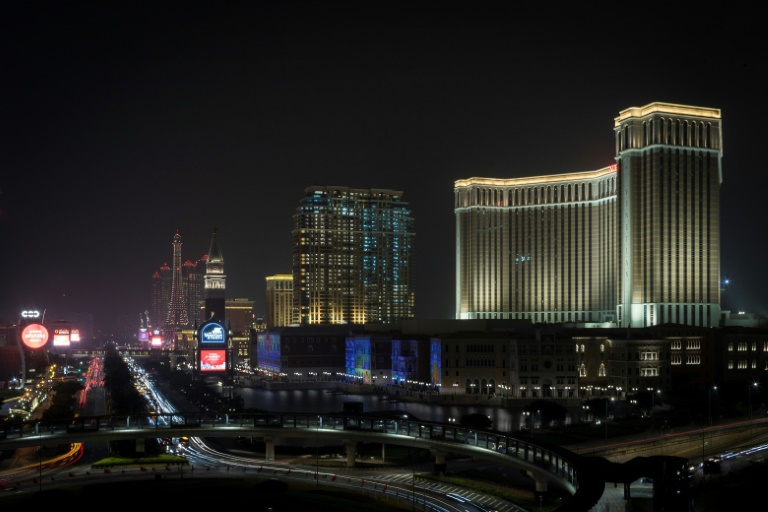
Macau casino stocks slumped on Monday as the Chinese gaming hub battled a Covid-19 outbreak that has prompted tightened social distancing restrictions and mass testing. 

The sector has been hammered by the pandemic, with vital tourism revenues wiped out by some of the world’s harshest measures to tackle the virus — including tough border controls, weeks-long quarantines and targeted lockdowns.

Case numbers are small by global comparison, with only 34 found so far in citywide mass testing according to local media, but the outbreak sent casino stocks tumbling. 

Sands China fell as much as eight percent while Wynn Macau dropped more than seven percent, though both partially recovered.

A Bloomberg Intelligence index of Macau’s six major casino operators fell as much as five percent, taking their total losses this year to 28 percent.

The virus has been kept largely under control in Macau but the government said a chain of transmission discovered on Saturday posed an “extremely high” risk of community transmission.

Citywide mass testing, expected to take place over 48 hours until Tuesday, had covered almost 340,000 people by Monday morning.

Government offices and banks are shut, dining in has been suspended at restaurants, school lessons have been cancelled and residents have been asked to stay at home.

Macau’s casinos usually account for about 80 percent of government revenue and more than half of the city’s gross domestic product, with nearly a fifth of the working population employed by the industry.

Almost all gambling is forbidden in mainland China but it is permitted in Macau, a former Portuguese colony that boasts a casino industry bigger than Las Vegas.

The pandemic is not the only challenge the sector is facing. 

Chinese President Xi Jinping’s anti-corruption campaign has seen increased scrutiny of big-spending gamblers and corrupt officials who might travel to Macau to launder money.

In September Macau announced plans to criminalise underground banking in the industry and place government representatives on the boards of casino operators to oversee their dealings.

However, when the new rules were unveiled at the beginning of this year they were less punishing than expected.

The six major casino operators are all required to bid again for their licences this year as they have expired.

'Huge uncertainty' for EU firms over China's Covid curbs, chamber warns

Many European firms are rethinking their investments in China because of its strict Covid controls, a top business group said Monday, warning that disruptions had pummelled operations.

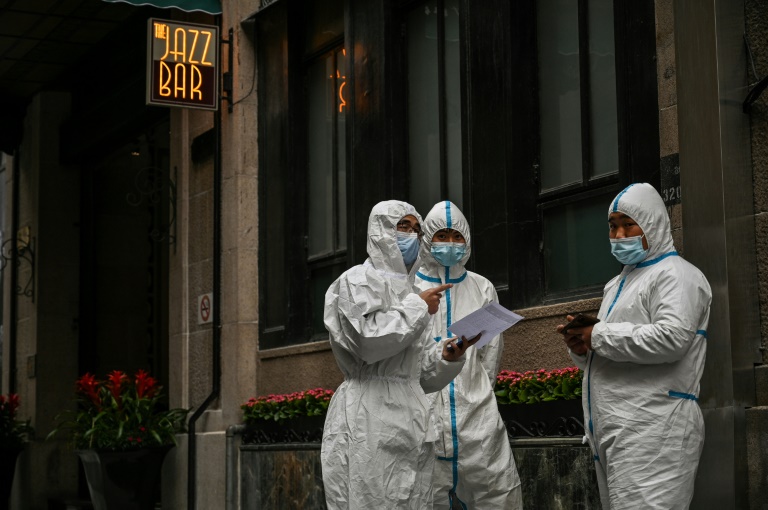
While the rest of the world has steadily removed coronavirus curbs, China has remained committed to its zero-Covid strategy, using lockdowns and mass testing to stamp out all infections.

But this strategy has hammered businesses and snarled supply chains — 60 percent of respondents in a survey of European businesses said it has become harder to do business in China, in large part due to Covid controls.

“We hope that China is really waking up,” Bettina Schoen-Behanzin, vice president of the European Union Chamber of Commerce in China, told AFP.

“(We hope) that they find a way to get out of this zero-tolerance Covid strategy because it causes huge uncertainty and this is for sure not good for investment.”

The chamber conducted the survey on over 600 member firms in February and March just as strict lockdowns were imposed in several areas to control China’s worst Covid outbreak in two years — from business hub Shanghai to the northern breadbasket province of Jilin.

The body also did a follow-up in April to assess the impact of the lockdowns and the Russian invasion of Ukraine.

It found that 92 percent of member companies were hit by supply chain problems, and three-quarters said their operations were negatively impacted by the Covid controls.

Further, 60 percent of respondents said in April that they had lowered their 2022 revenue projections.

The Ukraine war also impacted confidence — a third of the firms surveyed cited geopolitical tensions as a reason for the Chinese market becoming less attractive.

“The role China played over the last two years in bolstering European companies’ global revenues looks set to diminish,” the report released on Monday said.

“And recent events have led many to question just how many eggs they are willing to keep in their China basket.”

The Covid containment measures also hampered European firms’ ability to recruit international and local talent, the chamber said.

Its annual survey found that 58 percent of companies faced difficulties in recruiting international and local talent, pointing to the Covid controls and “a wealth of ever-changing visa and work permit procedures and extreme limitations on travel in and out of China”.

– ‘The world does not wait’ –

China is the world’s second-biggest economy with a huge market, however, making it difficult for firms to walk away.

“Companies, businesses are not leaving China, because the market is too big, the market is too important, and there are for sure many growth opportunities ahead,” Schoen-Behanzin told AFP.

“But they are localising, they are onshoring, and they are rethinking their footprint in China, in Asia,” she added.

“They are shifting, especially future investments.”

However, if the Covid restrictions drag on for another year, companies could start to feel even more pain.

“The world does not wait for China,” Schoen-Behanzin said.

“If there is no change, then definitely companies will start to think about backup plans and they obviously would go into other markets.”

Bankrupt Sri Lanka opens IMF talks, begins shutdown

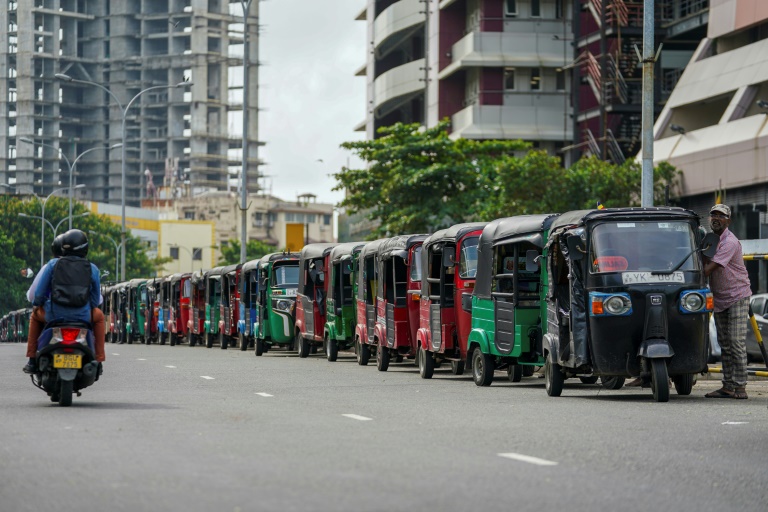
Sri Lanka closed schools and halted all non-essential government services on Monday, beginning a two-week shutdown to conserve fast-depleting fuel reserves as the International Monetary Fund opened talks with Colombo on a possible bailout.

The country of 22 million people is in the grip of its worst economic crisis after running out of dollars to finance even the most essential imports, including fuel.

On Monday schools were shut and state offices worked with skeleton staff as part of government plans to reduce commuting and save precious petrol and diesel. Hospitals and the main seaport in Colombo were still operating. 

Hundreds of thousands of motorists remained in miles-long queues for petrol and diesel even though the energy ministry announced they will not have fresh stocks of fuel for at least three more days.

The country defaulted on its $51 billion foreign debt in April and went cap-in-hand to the IMF.

The first in-person talks with the IMF on Sri Lanka’s bailout request commenced in Colombo on Monday and will continue for 10 days, the lender and the government said in brief statements.

Prime Minister Ranil Wickremesinghe was also due to meet visiting Australian Home Affairs Minister Clare O’Neil to “deepen cooperation and assist Sri Lanka as the country faces very difficult economic times,” Canberra said in a statement.

It said O’Neil will also discuss strengthening engagement on transnational crime, including people-smuggling following a surge in would-be illegal immigrants by boat in the past month.

Sri Lanka is facing record-high inflation and lengthy power blackouts, all of which have contributed to months of protests — sometimes violent — calling on President Gotabaya Rajapaksa to step down. 

Police arrested 21 student activists who blocked all gates to the presidential secretariat building after declaring Monday, Rajapaksa’s 73rd birthday, a “day of mourning”.

The shutdown order came last week as the United Nations launched its emergency response to feed thousands of pregnant women who were facing food shortages.

Four out of five people in Sri Lanka have started skipping meals as they cannot afford to eat, the UN has said, warning of a looming “dire humanitarian crisis” with millions in need of aid.

Layoffs and exits: Firms in China teeter under zero-Covid pressure

Fiona Shi lost her job twice during the pandemic — first, in 2020 when Covid ravaged the travel industry, and then this year as China’s strict virus controls hammered businesses in the world’s number two economy.

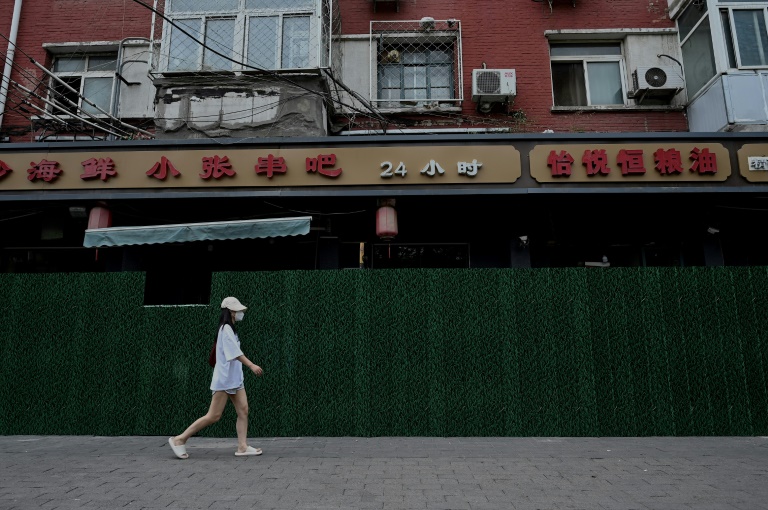
China is the last major economy welded to a zero-Covid strategy — putting firms and workers at risk of snap lockdowns, freezing activity in the services sector and tangling supply chains crucial for factories to sell their goods.

As the country battles its worst outbreak since 2020, its urban jobless rate has surged to the highest level in two years and the pain is being felt by both blue- and white-collar workers.

“Many places say they are not recruiting people aged above 35,” said Shi, 38, who pointed to the difficulty of returning to entry-level positions after managerial roles.

She worked in a management role in the hospitality industry in 2020 when the coronavirus brought nearly all travel to a halt as governments imposed social distancing and movement restrictions.

Two years later, the Beijinger found herself in the same position after losing her job at a multinational firm.

“The pandemic has also made it harder… many places have frozen headcounts,” she told AFP. “I’m really anxious.”

Months of unpredictable Covid restrictions — including snap lockdowns and severe travel curbs — have hit dozens of cities from business hub Shanghai to the northern breadbasket province of Jilin.

An American Chamber of Commerce survey released this week showed that almost all respondents cut their revenue projections, while in a separate study 11 percent of European firms said they would downsize their China operations because of Covid measures.

Domestic firms have also been tightening their purse strings.

Ride-hailing platform Caocao Chuxing has let go of staff, with Chinese media reports pegging the proportion at 40 percent.

Some staff at e-commerce giant Alibaba were also reportedly asked to leave, according to state outlet Legal Daily.

– ‘The situation is grim’ –

The imposition of restrictions to stamp out Covid outbreaks this year has intensified pressure on firms already grappling with a slowdown in the economy and regulatory crackdowns on sectors including property and tech.

Bai, 27, told AFP she was laid off by a US tech company that was preparing to end its business in China.

“In some ways, we saw it coming,” she said, only giving her surname. “Its China operations have been losing money.”

“It’s not the first to leave the China market and won’t be the last.”

Beijing-based Bai said it was the second time she lost her job because of the pandemic.

In 2020, as the virus raged in China, she was let go by a cruise line operator over fears tied to her nationality, she said.

Andrea Zhang, 24, who handled events planning, said his employer shuttered its clothing shops in March and April when outbreaks flared this year.

“Our bosses wanted to understand the situation at various stores (across the country) but realised they could not due to quarantine requirements,” said Zhang.

The company eventually closed its offline operations, and Zhang left.

Around 1.3 million entities cancelled their business registrations in China in March alone, a 24 percent spike on-year, according to official numbers.

With President Xi Jinping repeatedly backing the government’s zero-Covid strategy, observers do not expect authorities to pivot away from it even as the economy suffers.

But the restrictions have made life unbearable for some.

“Working from home, especially in an industry such as ours known for overtime practices, has made work-life boundaries even more blurred,” said Ning, who works in marketing at a tech firm in Beijing and only gave his surname.

The 26-year-old typically left work around 11 pm.

But his hours stretched past midnight and into weekends after the capital ordered people in his district to stay home last month as Covid cases surged.

“I was too exhausted, and left my job,” Ning said.

He has since submitted more than 200 job applications. Only three of these translated into job interviews.

“The situation is grim,” Ning told AFP. “But we will have to find a way to survive.”

Stocks waver, oil prices fall on recession fears

Stock markets wobbled and oil prices sank on Friday amid growing fears that inflation-fighting interest rate hikes by central banks could trigger recession.

Investors were shaken this week after the US Federal Reserve unleashed its biggest hike in borrowing costs for almost 30 years to tackle red-hot consumer prices.

The third Fed increase was followed by the fifth straight hike by the Bank of England and the first in 15 years by the Swiss central bank, underscoring the growing global concerns about inflation.

The moves caused a global selloff on Thursday. US and European markets tried to stage a rebound on Friday, but some indices were back in the red later in the day.

On Wall Street, the Dow Jones Industrial Average ended back under 30,000 points while the broad-based S&P 500 eked out a positive close and the tech-heavy Nasdaq rose 1.4 percent.

But the S&P lost 5.8 percent for the week, its worst performance since 2020.

European markets seesawed, with London finishing in the red, Paris almost flat and Frankfurt closing higher.

“Sentiment has been shattered and equities could suffer further,” Craig Erlam, an analyst at online trading platform OANDA, told AFP.

Karl Haeling of LBBW agreed, saying “markets are oversold, but probably not oversold enough to call for a bottom.”

He said the modest gains Friday likely mark “a little technical pause.”

Sentiment turned sour again as US official data showed industrial production in May had risen by just 0.2 percent, much slower than April and weaker than expected.

“We see that the positive attempts get rapidly killed as the market prices in a higher recession risk as inflation doesn’t ease,” Ipek Ozkardeskaya, analyst at Swissquote bank, told AFP.

Asian stock markets mostly closed lower Friday.

Recession fears also gripped the oil market as WTI, the US benchmark, fell by 6.4 percent to $110.04 per barrel. The international benchmark, Brent North Sea Crude, dropped 5.4 percent to $113.29.

Energy prices have soared since Russia invaded Ukraine, driving inflation higher, which has prompted central banks to spring into action. 

– BoJ bucks the trend –

Investors worry that while the rate increases can help tame inflation, they also crimp demand and economic growth.

The Bank of Japan bucked the global trend on Friday as it stood by its decision not to raise its rate, sending the yen close to the lowest level against the dollar since 1998.

Officials in Tokyo insist that low rates are still needed to nurture a struggling economy, though the BoJ did say it “was necessary to pay due attention to developments in financial and foreign exchange markets”.

Stock markets have been tumbling for months as traders contemplate the end of the era of cheap cash that had sent share prices to record or multi-year highs.

Inflation worldwide stands at levels not seen for decades owing in particular to surges in energy and food prices.

US markets will be closed on Monday for the Juneteenth holiday.

– Key figures at around 2100 GMT –

New York – Dow: DOWN 0.1 percent at 29,888.78 (close)

New York – S&P 500: UP 0.2 percent at 3,674.84 (close)

New York – Nasdaq: UP 1.4 percent at 10,798.35 (close)

London – FTSE 100: DOWN 0.4 percent at 7,016.25 (close) 

Frankfurt – DAX: UP 0.7 percent at 13,126.26 (close)

Paris – CAC 40: DOWN 0.1 percent at 5,882.65 (close)

EURO STOXX 50: UP 0.3 percent at 3,438.96 (close)

Tokyo – Nikkei 225: DOWN 1.8 percent at 25,963.00 (close)

Hong Kong – Hang Seng Index: UP 1.1 percent at 21,075.00 (close)

Shanghai – Composite: UP 1.0 percent at 3,316.79 (close)

Euro/dollar: DOWN at $1.0493 from $1.0549 late Thursday

Pound/dollar: DOWN at $1.2221 from $1.2353

Euro/pound: UP at 85.83 pence from 85.41 pence

Dollar/yen: UP at 134.99 yen from 132.21 yen

Brent North Sea crude: DOWN 5.4 percent at $113.33 a barrel

West Texas Intermediate: DOWN 6.3 percent at $110.21

burs-lth/har/hs/dw

Bank of Japan keeps easing despite global rate hikes

The Bank of Japan on Friday stuck to its monetary easing policy even as other central banks raise interest rates to tame inflation, but said it would “pay due attention” to forex markets after the yen hit a 24-year low.

The bank will hold rates at minus 0.1 percent and continue buying unlimited government bonds to maintain a low cap on long-term yields — part of a decade-old plan to boost the world’s third-largest economy.

The decision, announced after a two-day policy meeting, bucks a global monetary tightening trend aimed at battling sky-high fuel and food prices caused by the Ukraine war and supply chain snarls.

Rate hikes have been led by the US Federal Reserve, which this week announced its most aggressive increase in nearly 30 years and signalled more were in the pipeline.

The European Central Bank has said it plans to start a series of increases next month, while the Bank of England announced a fifth straight increase on Thursday and Switzerland surprised markets with its own rate hike, the first since 2007.

The widening chasm between Japanese and US monetary policy this week pushed the yen to its lowest level against the dollar since 1998, a cause for increasing concern that even the central bank made reference to in its policy statement.

“It is necessary to pay due attention to developments in financial and foreign exchange markets and their impact on Japan’s economic activity and prices,” the BoJ said, in an unusual reference to forex movements.

After the announcement, one dollar bought 134.63 yen, up from 133.41 yen earlier in the day.

– ‘Targeting price stability’ –

Bank governor Haruhiko Kuroda told reporters that the yen’s rapid depreciation is “undesirable for the economy, because it has increased uncertainty about the future and made it difficult for companies to draft business plans”.

However, he added that “central banks do not target exchange rates. We run monetary policy targeting price stability”.

Kuroda said the BoJ was not considering expanding the trading range of 10-year bonds, a move analysts say could help support the yen.

A weaker currency helps Japanese exporters as it inflates repatriated profits, noted Yoshikiyo Shimamine, executive chief economist of Dai-ichi Life Research Institute.

For the BoJ, it may be that “these benefits overwhelm the negative aspects of a cheaper yen — high prices for imported goods, which causes people to suffer without sufficient pay rises,” he told AFP.

The bank’s ultra-loose monetary policy aims to achieve two-percent inflation, a target that has been stubbornly out of reach during years of price stagnation.

In April, core consumer prices hit the target for the first time since 2015, but the BoJ has cautioned that it sees recent rising prices as a temporary and volatile trend.

Inflation has been rising for months in the United States and elsewhere as buoyant demand for cars and other goods clashes with supply problems caused by Covid-19 lockdowns.

The problem became dramatically worse after Russia invaded Ukraine in February and Western nations imposed steep sanctions on Moscow, sending food and fuel prices soaring, a particular problem in resource-poor Japan.

Close Bitnami banner
Bitnami