Chinese Business

China Covid lockdowns shut delivery workers out of their homes

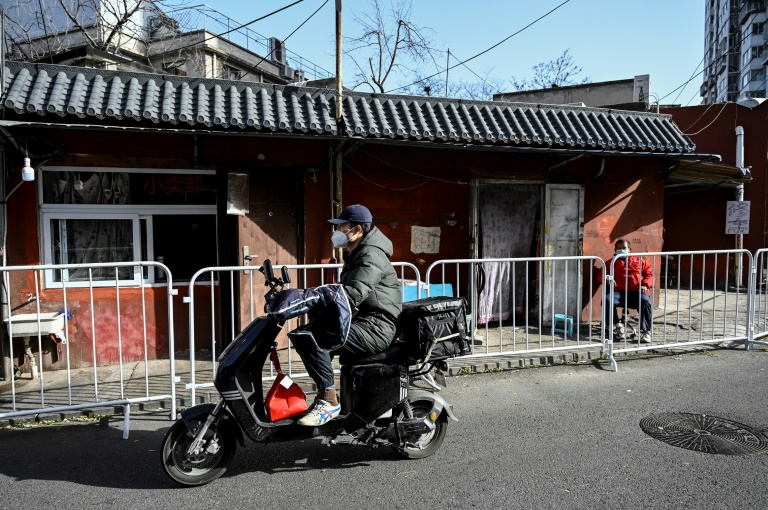
Overworked, underpaid and thoroughly fed up, Wang’s troubles deepened even further when authorities abruptly locked down the delivery driver’s Beijing apartment block earlier this month.

Officials in the Chinese capital have doubled down on the country’s hallmark zero-Covid policy in recent weeks, one of an array of cities to impose sweeping shutdowns, mass testing and teleworking mandates as caseloads have hit all-time highs.

Wang is not alone in feeling frustrated.

The ruling Communist Party’s uncompromising zero-Covid strategy — now in force for about three years — has stoked anger and resentment, with widespread and sometimes violent protests kicking off across China’s major cities.

Pandemic fatigue has been on the rise for some time, as a recent lightening of virus curbs has coincided with record infection tallies, prompting a patchwork of onerous restrictions in multiple major cities.

China is the last major economy wedded to a zero-Covid strategy, but maintaining relatively low numbers of cases and deaths has constrained its economic recovery, disrupted supply chains and hammered employment.

– ‘I have no choice’ –

Demand for deliveries has soared under the tightening curbs as millions of housebound urbanites have turned to an army of low-paid couriers — mostly migrants from other provinces — to supply takeaway lunches and grocery orders.

But this time the restrictions have crept deep into places where drivers live, shutting many inside without pay and forcing others to choose between having a place to sleep and earning enough money to survive.

Wang, who scoots back and forth across a wealthy financial district delivering food orders for internet giant Meituan, said his housing compound was cordoned off on November 7 after two Covid cases were discovered.

Desperate not to lose his income — about 250 yuan ($34) a day — the 20-year-old broke lockdown rules by vaulting a fence to make his shifts, sneaking back in under cover of darkness.

“I have no choice. If I don’t make money, I can’t pay rent,” said the native of the industrial northern province of Shanxi.

“Lots of delivery guys don’t have anywhere to live at the moment,” he told AFP outside a deserted office block on a cold winter afternoon last week.

“I’m really dissatisfied with the Chinese government, because other countries aren’t strict about Covid any more,” he said.

“We’re going to such great lengths… and I don’t feel it’s necessary, because nobody is dying from it.”

AFP withheld Wang’s full name to protect him from potential repercussions for breaking lockdown and criticising the state.

– Sleeping rough –

When a shutdown loomed over Gu Qiang’s housing compound last week, the Meituan driver chose to sleep in his car.

“Spending 30 yuan to keep the engine running all night is still cheaper than getting a hotel,” the gruff northeast China native said.

“Some of my friends are living outside — they dare not go home.”

Several couriers interviewed by AFP described heavier workloads in recent weeks as lockdowns have left their companies short of labour.

While some said they were happy to take on money-spinning extra orders, most said they had endured longer working hours, extra stress and more negative interactions with customers.

They also said they had not received any additional support from Meituan or the companies to which delivery services have been outsourced.

Authorities last year launched an investigation into food delivery platforms following claims of exploitative labour practices including algorithms that effectively forced couriers to drive dangerously to meet tight delivery times.

Meituan did not respond to an AFP request for comment prior to publication.

But the company told the state-run China Daily newspaper last week that it had paid for hotel rooms for some stranded workers and welcomed calls for help from couriers in similar situations.
Asian markets, crude drop on China unrest

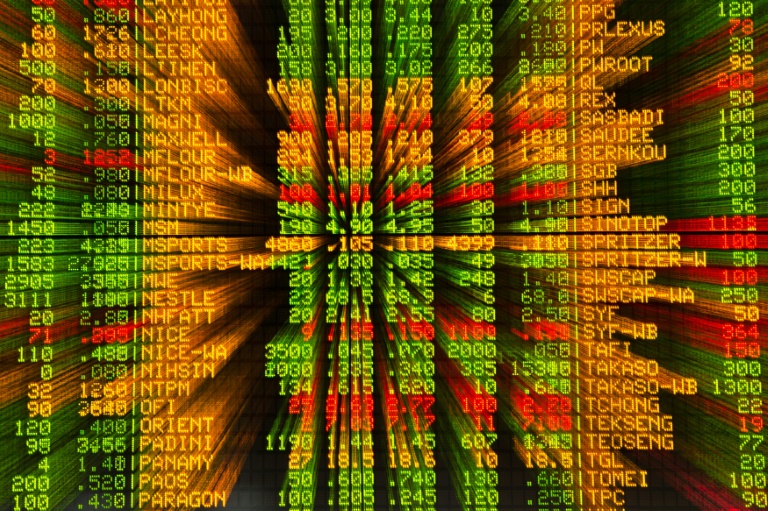
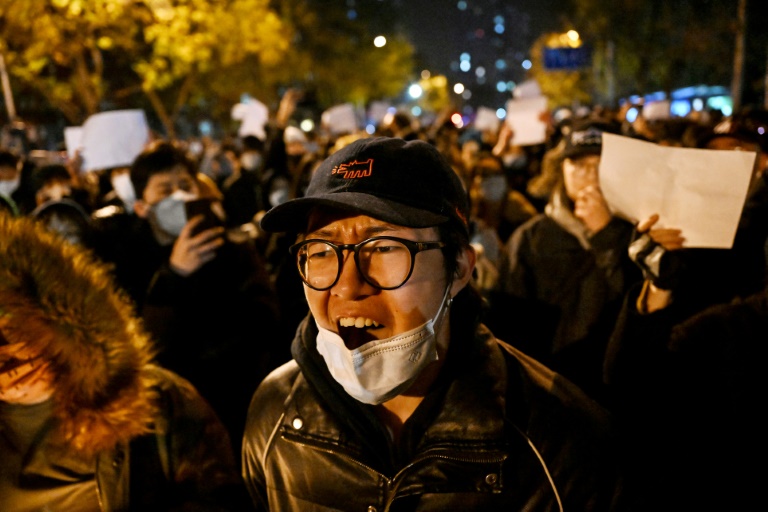
Stocks and oil prices sank Monday on concerns about protests across China calling for political freedoms and an end to the government’s hardline zero-Covid policy, fuelling uncertainty in the world’s number-two economy.

Hundreds of people took to the streets at the weekend in the country’s biggest demonstrations since pro-democracy rallies in 1989 were crushed.

A deadly fire in the Xinjiang region on Thursday served as the catalyst for the public anger, with many blaming virus lockdowns for hampering the rescue effort.

People have taken to the streets in Beijing, Shanghai, Guangzhou and Chengdu calling for an end to lockdowns, after an easing of some measures had fuelled hopes of a lighter pandemic approach.

China-linked stocks took the brunt of selling, with Hong Kong’s Hang Seng Index down two percent and Shanghai off one percent. The yuan was off more than one percent.

There were also losses in Tokyo, Sydney, Seoul, Singapore, Taipei, Jakarta, Bangkok and Wellington.

“Sentiment has turned sour as unrest across China grows,” said SPI Asset Management’s Stephen Innes. “Protest of this extent is rare in the country and raises many uncertainties.

“The best scenario is further easing and reopening, but the speed at how things deteriorated over the weekend suggests the government needs to act fast. The risk of the situation escalating from here and short-term volatility remains high.”

Ken Cheung of Mizuho Bank added: “It appears that the zero-Covid policy is reaching its tipping point. More easing or refinement on the Covid measures will be needed to curb discontent.”

The prospect of a hit to demand in the world’s biggest crude importer hammered oil prices, with both main contracts down more than two percent.

The selling has taken a bit out of recent gains across markets sparked by hopes of a slowdown in the Federal Reserve’s interest rate hikes as inflation finally shows signs of softening.

However, some observers said the protests could provide long-term benefits as they could force President Xi Jinping to shift away from his strict, economically damaging measures sooner.

Teneo Holdings’ Gabriel Wildau said: “I don’t expect Xi to publicly admit error or show weakness, but this wave of protests could cause the leadership to decide privately that the exit needs to proceed more quickly than previously planned.”

Investors are now looking ahead to the release of US jobs data at the end of the week, which could provide clues about the Fed’s next moves, while speeches by central bank boss Jerome Powell and other key policymakers will also be pored over.

– Key figures around 0410 GMT –

Tokyo – Nikkei 225: DOWN 0.4 percent at 28,159.58

Hong Kong – Hang Seng Index: DOWN 2.0 percent at 17,225.41 (break)

Shanghai – Composite: DOWN 1.0 percent at 3,069.66 (break)

Euro/dollar: DOWN at $1.0357 from $1.0403 on Friday

Dollar/yen: DOWN at 138.65 yen from 139.03 yen

Pound/dollar: DOWN at $1.2049 from $1.2087

Euro/pound: DOWN at 85.96 pence from 86.03 pence

West Texas Intermediate: DOWN 2.8 percent at $74.17 per barrel

Brent North Sea crude: DOWN 2.8 percent at $81.39 per barrel

New York – Dow: UP 0.5 percent at 34,347.03 (close)

London – FTSE 100: UP 0.3 percent at 7,486.67 (close)

Asian markets, crude drop on China Covid unrest

Stocks and oil prices sank Monday on concerns about protests across China at the government’s hardline zero-Covid policy, fuelling uncertainty in the world’s number two economy.

Hundreds of people took to the streets at the weekend after a deadly fire in the Xinjiang region on Thursday served as a catalyst for public anger, with many blaming virus lockdowns for hampering the rescue effort.

People have taken to the streets in Beijing, Shanghai, Guangzhou and Chengdu calling for an end to lockdowns as well as greater political freedoms in the highest-profile protests in China in years. The demonstrations come after an easing of some measures had fuelled hopes of a lighter pandemic approach.

China-linked stocks took the brunt of selling, with Hong Kong’s Hang Seng Index down more than three percent and Shanghai off more than one percent. The yuan was off more than one percent.

There were also losses in Tokyo, Sydney, Seoul, Singapore, Taipei and Wellington.

“Sentiment has turned sour as unrest across China grows,” said SPI Asset Management’s Stephen Inne. “Protest of this extent is rare in the country and raises many uncertainties.

“The best scenario is further easing and reopening, but the speed at how things deteriorated over the weekend suggests the government needs to act fast. The risk of the situation escalating from here and short-term volatility remains high.”

And Ken Cheung, of Mizuho Bank, added: “It appears that the zero-Covid policy is reaching its tipping point. More easing or refinement on the Covid measures will be needed to curb discontent.”

The prospect of a hit to demand in the world’s biggest crude importer hammered oil prices, with both main contracts down more than two percent.

The selling has taken a bit out of recent gains across markets in recent weeks sparked by hopes of a slowdown in the Federal Reserve’s interest rate hikes as inflation finally shows signs of softening.

However, some observers said the protests could provide long-term benefits as they could force President Xi Jinping to shift away from his strict, economically damaging measures sooner.

Teneo Holdings’ Gabriel Wildau said: “I don’t expect Xi to publicly admit error or show weakness, but this wave of protests could cause the leadership to decide privately that the exit needs to proceed more quickly than previously planned.”

Investors are now looking ahead to the release of US jobs data at the end of the week, which could provide clues about the Fed’s next moves, while speeches by central bank boss Jerome Powell and other key policymakers will also be pored over.

– Key figures around 0230 GMT –

Tokyo – Nikkei 225: DOWN 0.6 percent at 28,107.79 (break)

Hong Kong – Hang Seng Index: DOWN 3.2 percent at 17,016.92

Shanghai – Composite: DOWN 1.5 percent at 3,056.38

Euro/dollar: DOWN at $1.0359 from $1.0403 on Friday

Dollar/yen: DOWN at 138.47 yen from 139.03 yen

Pound/dollar: DOWN at $1.2044 from $1.2087

Euro/pound: DOWN at 86.01 pence from 86.03 pence

West Texas Intermediate: DOWN 2.5 percent at $74.36 per barrel

Brent North Sea crude: DOWN 2.5 percent at $81.65 per barrel

New York – Dow: UP 0.5 percent at 34,347.03 (close)

London – FTSE 100: UP 0.3 percent at 7,486.67 (close)

Macau casino giants win licence renewals, Malaysia's Genting loses bid

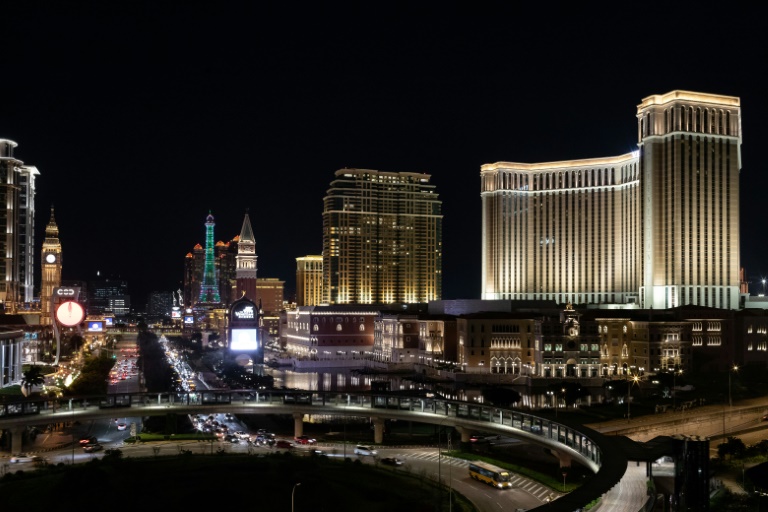
Macau said Saturday it has renewed the licences of its six major casino operators, with the city aiming for terms that would help diversify its economy away from gambling.

The former Portuguese colony is the only territory in China where casinos are allowed, and it issues just six operating concessions for a multi-billion-dollar industry that, until the pandemic hit, was bigger than Las Vegas.

The six current operators — including the subsidiaries of Las Vegas giants MGM, Wynn and Sands — had submitted renewal applications but a firm linked with Malaysian gaming and resorts giant Genting challenged the long-running oligopoly with a surprise bid.

That attempt failed, however, as Macau’s leader Ho Iat-seng announced that the existing licence holders have been granted provisional concessions.

“Development of non-gaming businesses is the most important factor” in the government’s decision, Andre Cheong, Macau’s administration and justice minister, told reporters.

He did not provide details about what licence holders would be required to invest and where.

The government said it will negotiate details with the six operators and the new licences will take effect from the beginning of next year.

Macau has long been keen to diversify away from gambling into tourism and leisure.

The city’s casinos were battered by pandemic-era restrictions that drove away the mainland Chinese gamblers who made up the vast majority of customers.

“The source of our tourists is too concentrated,” Cheong said Saturday, describing the situation as “not healthy”.

Gross gaming revenue was down 98 percent from pre-pandemic levels and fell to a record low in July, officials earlier announced.

– Scrutiny and reform –

Even if pandemic measures are fully lifted, it is unlikely Macau’s casinos will see a return to their headiest, freewheeling days.

Chinese President Xi Jinping has spearheaded an anti-corruption campaign that has seen increased scrutiny of the high rollers and officials who travel to gamble in Macau, where cases of money laundering are common.

For decades, Macau’s gaming industry was run as a monopoly by casino magnate Stanley Ho, but in 2002 more operators were brought in and issued 20-year concessions as part of a liberalisation effort. 

In January, authorities slashed the concession period of gaming licences to 10 years and unveiled regulations seeking to increase local ownership and government supervision.

Those factors did not deter the bid from GMM, a company controlled by Malaysian tycoon and Genting chairman Lim Kok Thay.

Best known for its resort in the Malaysian highlands, Genting also operates in Las Vegas and Singapore. It backed a ski resort in China that hosted this year’s Winter Olympics.

Stocks mixed as China Covid spike offsets rosier US rate outlook

Stock markets were mixed Friday, as fresh Covid lockdown fears in China offset hopes that the Federal Reserve would moderate US interest-rate hikes.

Trading was light after the Thanksgiving day break in the United States with few catalysts to drive action on trading floors and investors looking ahead to economic data releases next week, as well as a public appearance by Federal Reserve Chair Jerome Powell.

The S&P 500 was flat at the end of a holiday-shortened session as much attention turned to “Black Friday,” the annual kickoff of the festive shopping season.

Leading forecasts from Deloitte and the National Retail Federation project a single-digit percentage rise in US holiday sales this year, but this is unlikely to exceed the inflation rate — which stood at 7.7 percent in October.

Most of Europe’s major stock markets were up at the end of the day’s trading while Asian indices closed mixed.

The euro was also mixed against main rivals, as official data showed Germany’s economy grew more than previously thought in the third quarter despite high inflation and an energy crisis.

Oil prices fell again Friday after heavy losses earlier in the week.

– Mood picking up –

The mood across markets has picked up this month as a series of indicators suggested the US economy, the world’s largest, was showing signs of slowing after the Fed ramped up interest rates to cool surging prices.

These include reports showing some moderation in inflation, which has dominated the central bank’s focus for months.

And while a selection of Fed officials lined up to warn there was more tightening to come, there is an expectation that the days of bumper 75 basis-point increases are gone.

That has slightly eased worries that the sharp rise in borrowing costs could tip the US economy into recession — though many observers still see a contraction coming.

Markets also focused on fears about the spike in Covid cases in China, which authorities are trying to contain with a series of targeted measures in big cities including Beijing and Shanghai, although they stopped short of full-on lockdowns.

Still, SPI Asset Management’s Stephen Innes said there appeared to be less concern about the government’s reaction as it looks to ease parts of its strict Covid-zero strategy.

“Stock and currency market investors are tentatively looking through the current lockdown regime while betting on the more optimistic interpretation that China is hitting the limits of ‘Covid-zero’ and the authorities’ efforts to loosen restrictions will continue,” he added.

But worries about China were at the heart of a nearly two percent dip in Apple shares amid concerns over the potential impact on production following protests at a vast iPhone factory in Zhengzhou city.

China’s strict zero-Covid policy “has been an absolute body blow to Apple’s supply chain with the Foxconn protests in Zhengzhou a black eye for both Apple and Foxconn,” said analysts Daniel Ives and John Katsingris of Wedbush in an analysis.

Wedbush added that many Apple stores likely have shortages, warning it is not a good sign heading into the holiday season.

– Key figures around 1900 GMT –

New York – Dow: UP 0.5 percent at 34,347.03 (close)

New York – S&P 500: FLAT at 4,026.12 (close)

New York – Nasdaq: DOWN 0.5 percent at 11,226.36 (close)

London – FTSE 100: UP 0.3 percent at 7,486.67 points (close)

Paris – CAC 40: UP 0.1 percent at 6,712.48 (close)

Frankfurt – DAX: FLAT at 14,541.38 (close)

EURO STOXX 50: FLAT at 3,962.41

Tokyo – Nikkei 225: DOWN 0.4 percent at 28,283.03 (close)

Hong Kong – Hang Seng Index: DOWN 0.5 percent at 17,573.58 (close)

Shanghai – Composite: UP 0.4 percent at 3,101.69 (close)

Euro/dollar: DOWN at $1.0403 from $1.0410 on Thursday

Dollar/yen: UP at 139.03 yen from 138.54 yen

Pound/dollar: DOWN at $1.2087 from $1.2113

Euro/pound: UP at 86.03 pence from 85.94 pence

Brent North Sea crude: DOWN 2.1 percent at $83.63 per barrel

West Texas Intermediate: DOWN 2.1 percent at $76.28 per barrel

burs-jmb/bys

Stocks mixed as China Covid spike offsets rosier US rate outlook

Stock markets traded mixed Friday, as fresh Covid lockdown fears in China offset hopes that the Federal Reserve would tone down US interest-rate hikes.

Trading was light after the Thanksgiving day break in the United States with few catalysts to drive action on trading floors and investors looking ahead to the release of US jobs data next week.

Most of Europe’s major stock markets were up at the end of the day’s trading while Asian indices closed mixed.

Similarly Wall Street stocks opened undecided Friday with analysts expecting a quiet trading session with markets closing around midday.

The focus will likely be on Black Friday purchases and so this “could concentrate some of today’s thin trading interest on the retail stocks”, Patrick O’Hare of Briefing.com said in a note.

The euro was also mixed against main rivals, as official data showed Germany’s economy grew more than previously thought in the third quarter despite high inflation and an energy crisis.

Oil prices fell again Friday after heavy losses earlier in the week.

– Mood picking up –

The mood across markets has picked up this month as a series of indicators suggested the US economy, the world’s largest, was showing signs of weakness after the Fed ramped up interest rates.

The standout reports were consumer and wholesale inflation, which came in much lower than forecast and provided the US central bank with room to row back on its hawkishness.

And while a selection of Fed officials lined up to warn there was more tightening to come, there is an expectation that the days of bumper 75 basis-point increases are gone.

That has slightly eased worries that the sharp rise in borrowing costs could tip the US economy into recession — though many observers still see a contraction coming.

SPI Asset Management’s Stephen Innes said there was a “market consensus bias to believe that US headline inflation will continue to ease substantially over the next month or two and that the tail risks around (more than five percent interest rates) have dropped sharply”.

“After all, a step down to 50 basis points in December would be an unambiguous signal that peak hawkishness has passed.”

Focus was also on fears about the spike in Covid cases in China, which authorities are trying to contain with a series of targeted measures in big cities including Beijing and Shanghai, though they are short of full-on lockdowns.

Still, Innes said there appeared to be less concern about the government’s reaction as it looks to ease parts of its strict Covid-zero strategy.

“Stock and currency market investors are tentatively looking through the current lockdown regime while betting on the more optimistic interpretation that China is hitting the limits of ‘Covid-zero’ and the authorities’ efforts to loosen restrictions will continue,” he added.

– Key figures around 1645 GMT –

New York – Dow: UP 0.5 percent at 34,375.76

EURO STOXX 50: UP 0.4 percent at 3,962.41

London – FTSE 100: UP 0.3 percent at 7,486.67 points (close)

Paris – CAC 40: UP 0.1 percent at 6,712.48 (close)

Frankfurt – DAX: FLAT at 14,541.38 (close)

Tokyo – Nikkei 225: DOWN 0.4 percent at 28,283.03 (close)

Hong Kong – Hang Seng Index: DOWN 0.5 percent at 17,573.58 (close)

Shanghai – Composite: UP 0.4 percent at 3,101.69 (close)

Euro/dollar: DOWN at $1.0400 from $1.0411 on Thursday

Dollar/yen: UP at 139.25 yen from 138.39 yen

Pound/dollar: DOWN at $1.2089 from $1.2131

Euro/pound: UP at 86.03 pence from 85.82 pence

Brent North Sea crude: DOWN 0.4 percent at $85.01 per barrel

West Texas Intermediate: DOWN 0.2 percent at $77.80 per barrel

burs-raz/rox

Stocks mixed as China Covid spike offsets rosier US rate outlook

Stock markets traded mixed Friday, as fresh Covid lockdown fears in China offset hopes that the Federal Reserve would tone down US interest-rate hikes.

With Wall Street closed for the Thanksgiving break, trading was light with few catalysts to drive action on trading floors and investors looking ahead to the release of US jobs data next week.

Europe’s major stock markets rose nearing the half-way mark after Asian indices closed mixed.

The euro was also mixed against main rivals, as official data showed Germany’s economy grew more than previously thought in the third quarter despite high inflation and an energy crisis.

Oil prices firmed after heavy losses earlier in the week.

The mood across markets has picked up this month as a series of indicators suggested the US economy, the world’s largest, was showing signs of weakness after the Fed ramped up interest rates.

The standout reports were consumer and wholesale inflation, which came in much lower than forecast and provided the US central bank with room to row back on its hawkishness.

And while a selection of Fed officials lined up to warn there was more tightening to come, there is an expectation that the days of bumper 75 basis-point increases are gone.

That has slightly eased worries that the sharp rise in borrowing costs could tip the US economy into recession, though many observers still see a contraction coming.

SPI Asset Management’s Stephen Innes said there was a “market consensus bias to believe that US headline inflation will continue to ease substantially over the next month or two and that the tail risks around (more than five percent interest rates) have dropped sharply”.

“After all, a step down to 50 basis points in December would be an unambiguous signal that peak hawkishness has passed.”

Focus was also on fears about the spike in Covid cases in China, which authorities are trying to contain with a series of targeted measures in big cities including Beijing and Shanghai, though they are short of full-on lockdowns.

Still, Innes said there appeared to be less concern about the government’s reaction as it looks to ease parts of its strict Covid-zero strategy.

“Stock and currency market investors are tentatively looking through the current lockdown regime while betting on the more optimistic interpretation that China is hitting the limits of ‘Covid-zero’ and the authorities’ efforts to loosen restrictions will continue,” he added.

– Key figures around 1130 GMT –

London – FTSE 100: UP 0.3 percent at 7,487.76 points

Paris – CAC 40: UP 0.2 percent at 6,720.44

Frankfurt – DAX: UP 0.1 percent at 14,551.88

EURO STOXX 50: UP 0.2 percent at 3,969.84

Tokyo – Nikkei 225: DOWN 0.4 percent at 28,283.03 (close)

Hong Kong – Hang Seng Index: DOWN 0.5 percent at 17,573.58 (close)

Shanghai – Composite: UP 0.4 percent at 3,101.69 (close)

New York – Dow: Closed for a holiday

Euro/dollar: DOWN at $1.0401 from $1.0411 on Thursday

Dollar/yen: UP at 139.31 yen from 138.39 yen

Pound/dollar: DOWN at $1.2106 from $1.2131

Euro/pound: UP at 85.95 pence from 85.82 pence

Brent North Sea crude: UP 1.7 percent at $86.80 per barrel

West Texas Intermediate: UP 2.1 percent at $79.56 per barrel

India's Adani defends media bid after press freedom fears

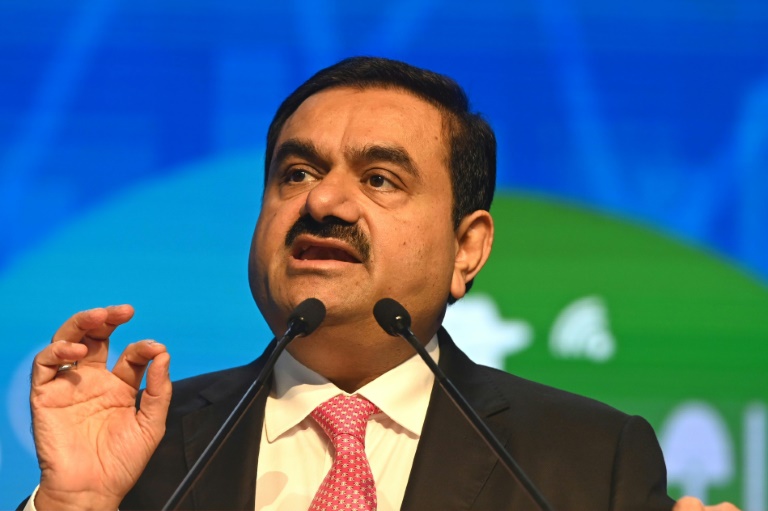
Indian tycoon Gautam Adani said Friday that media should have the “courage” to support the government when warranted, after his hostile takeover bid for one of the country’s top broadcasters sparked press freedom fears.

Adani, 60, is the world’s third-richest person, with an estimated net worth of $134 billion and interests ranging from Australian coal mines to India’s busiest ports.

He is also seen as a close acolyte of Hindu nationalist Prime Minister Narendra Modi, often publicly supporting his policies.

A company from his Adani Group revealed in August that it had indirectly bought 29 percent of NDTV, against the wishes of the broadcaster’s management, and is moving to buy a majority stake next month.

In a wide-ranging interview with the Financial Times, Adani said his foray into media was a “responsibility” rather than a business opportunity.

He added that it was time for India to have a global news conglomerate on par with Al Jazeera and said the channel should support the government when appropriate.

“Independence means if government has done something wrong, you say it’s wrong,” Adani told the British broadsheet.

“But at the same time, you should have courage when the government is doing the right thing every day. You have to also say that.”

NDTV’s two channels, one in Hindi and one in English, stand out among India’s myriad rolling news broadcasters for inviting on critics of the government as well as their hard-hitting reporting.

It has already been hit by a slew of legal cases that its owners said were a result of its reporting.

Under Modi, India has slipped 10 places in the Reporters Without Borders global press freedom ranking and is now 150 out of 180 surveyed countries. 

Critical reporters often find themselves behind bars and hounded on social media by supporters of Modi’s ruling Bharatiya Janata Party (BJP).

– Aggressive expansion –

Self-made billionaire Adani, 60, this year overtook fellow Indian Mukesh Ambani to become Asia’s richest man.

Like Modi, Adani hails from western Gujarat state, and his conglomerate has expanded aggressively in recent years, including into new areas like airports and renewable energy.

But its growth into capital-intensive businesses has raised alarm, with analysts from Fitch Group’s CreditSights warning in August that the group was “deeply overleveraged”.

On Friday, the group’s Adani Enterprises approved plans to raise $2.45 billion through a follow-on public offer — set to be India’s biggest ever, subject to regulatory approval.

The fresh funds will be key to reducing debt and fuelling further business expansion for the flagship entity, shares in which have surged nearly 1,000 percent over the past two years.

China's 'iPhone city' under Covid lockdown after violent clashes

Six million people were on Friday under Covid lockdown in a Chinese city home to the world’s largest iPhone factory, after clashes between police and workers furious over pay.

Authorities have ordered residents of eight districts in Zhengzhou, in the central province of Henan, not to leave the area for the next five days, setting up barriers around “high-risk” apartment buildings and checkpoints to restrict travel.

There have been only a handful of coronavirus cases in the city but under China’s zero-Covid policy even tiny outbreaks can spark gruelling lockdowns, travel restrictions and mass testing.

The lockdown in Zhengzhou follows protests by hundreds of employees over conditions and pay at Foxconn’s vast iPhone factory on the outskirts of the city, with images of fresh rallies emerging Friday.

Footage published on social media and geolocated by AFP showed a large group of people walking down a street in the east of the city, some holding signs.

“So many people,” a man can be heard saying. AFP was unable to verify precisely when the protests took place.

Workers previously told AFP the demonstrations had begun over a dispute over promised bonuses at the factory.

Scores of workers left the plant Thursday with payouts of 10,000 yuan ($1,400) from Foxconn.

On Friday posts on Chinese short-video apps said the Taiwanese tech giant was turning away many of thousands of people who had answered hiring ads from the firm after a raft of departures last month.

Some who arrived to take up newly vacant posts had been sent to quarantine hotels outside the plant despite in the end being refused a job, multiple workers told AFP.

“We are in a quarantine hotel, and have no way of going to the Foxconn campus,” one worker who asked to remain anonymous said.

Another employee said those turned away had been promised 10,000 yuan in compensation for being forced to quarantine, but had received only a fraction of that amount.

“They are not letting us start the job and we cannot return home,” one worker isolated in nearby Ruzhou city told AFP.

He added that there had been multiple small protests in other Henan cities by Foxconn workers made to quarantine and unable to start work.

– ‘Please share this’ –

Other videos posted online on Friday and geolocated by AFP showed angry workers knocking down furniture and swearing at police in the lobby of a hotel in Nanyang city, about 280 kilometres (174 miles) from Zhengzhou.

The workers appeared to have been quarantined in the hotel, with a man heard saying in one clip: “Everyone who’s online, please share this.”

The unrest in Zhengzhou comes against the backdrop of mounting public frustration over the government’s zero-tolerance approach to Covid.

China’s daily caseload stood at 33,000 on Friday — a record for the country of 1.4 billion although small by global standards.

The unrelenting zero-Covid push has sparked sporadic protests and hit productivity in the world’s second-largest economy.

In the southeastern manufacturing hub of Guangzhou, millions of people have been ordered not to leave their homes without a negative virus test.

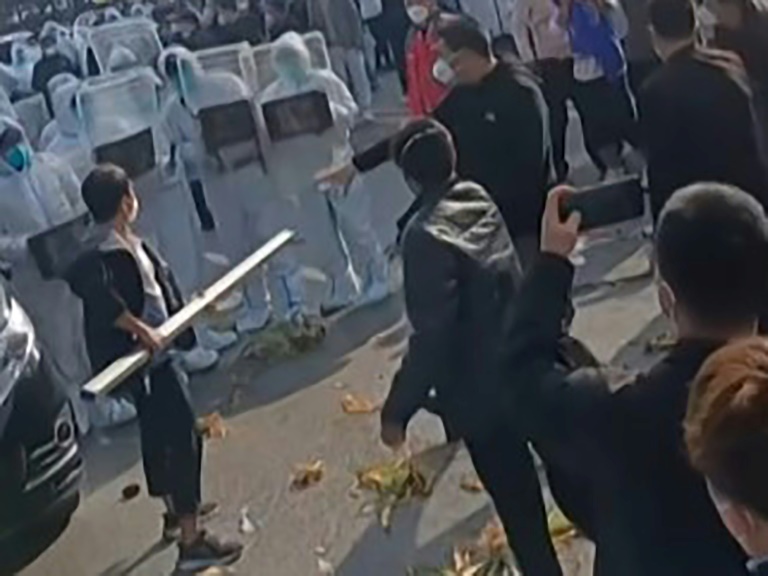
Social media footage published on Friday and geolocated by AFP showed residents of the city’s Haizhu district dismantling barricades and throwing objects at police in hazmat suits.

“What are you doing? What are you doing?” one police officer holding a shield can be heard asking as he and his colleagues back away from the projectiles.

Markets mixed as easing Fed fears tempered by China Covid spike

Asian markets were mixed on Friday at the end of a week in which hopes that the Fed will tone down its monetary tightening campaign were offset by fresh Covid lockdown fears in China.

With Wall Street closed for the Thanksgiving break, trading was light with few catalysts to drive action on trading floors and investors looking ahead to the release of US jobs data next week.

The mood across markets picked up this month as a series of indicators suggested the US economy, the world’s largest, was showing signs of weakness after the Federal Reserve ramped up interest rates.

The standout reports were consumer and wholesale inflation, which came in much lower than forecast and provided the central bank with room to row back on its hawkishness.

And while a selection of Fed officials lined up to warn there was more tightening to come, there is an expectation that the days of bumper 75 basis-point increases are gone.

That has slightly eased worries that the sharp rise in borrowing costs could tip the US economy into recession, though many observers still see a contraction coming.

SPI Asset Management’s Stephen Innes said there was a “market consensus bias to believe that US headline inflation will continue to ease substantially over the next month or two and that the tail risks around (more than five percent interest rates) have dropped sharply”.

“After all, a step down to 50 basis points in December would be an unambiguous signal that peak hawkishness has passed.”

Asian equities struggled at end of the week, however, with Tokyo, Hong Kong, Singapore, Seoul, Taipei, Mumbai, Bangkok and Jakarta all down.

There were gains in Shanghai, Sydney, Wellington and Manila.

London rose at the open while Paris and Frankfurt were flat.

Regional sentiment was sapped by ongoing fears about the spike in Covid cases in China, which authorities are trying to contain with a series of targeted measures in big cities including Beijing and Shanghai, though they are short of full-on lockdowns.

Still, Innes said there appeared to be less concern about the government’s reaction as it looks to ease parts of its strict Covid-zero strategy.

“Stock and currency market investors are tentatively looking through the current lockdown regime while betting on the more optimistic interpretation that China is hitting the limits of ‘Covid-zero’ and the authorities’ efforts to loosen restrictions will continue,” he added.

Meanwhile, Jun Bei Liu, at Tribeca Investment Partners, was upbeat about the outlook for Chinese markets.

“In the next 12 months things will get better,” she told Bloomberg TV.

“We have seen this playbook before across other economies. We’ll begin to see outperformance very soon in the next few quarters.”

– Key figures around 0820 GMT –

Tokyo – Nikkei 225: DOWN 0.4 percent at 28,283.03 (close)

Hong Kong – Hang Seng Index: DOWN 0.5 percent at 17,573.58 (close)

Shanghai – Composite: UP 0.4 percent at 3,101.69 (close)

London – FTSE 100: UP 0.1 percent at 7,470.36

Euro/dollar: UP at $1.0420 from $1.0411 on Thursday

Dollar/yen: UP at 138.65 yen from 138.39 yen

Pound/dollar: DOWN at $1.2110 from $1.2131

Euro/pound: UP at 86.05 pence from 85.82 pence

West Texas Intermediate: UP 1.0 percent at $78.68 per barrel

Brent North Sea crude: UP 0.7 percent at $85.97 per barrel

New York – Dow: Closed for a holiday

Close Bitnami banner
Bitnami