Chinese Business

No backsliding on Brexit, says UK PM

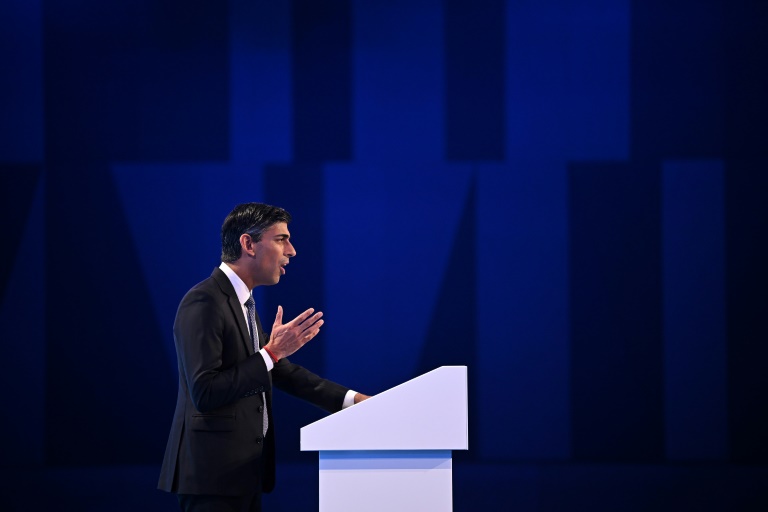
British Prime Minister Rishi Sunak on Monday denied that his government was seeking to row back on the UK’s EU withdrawal deal, despite an apparent growing backlash against Brexit.

Brexit-supporter Sunak told business leaders that life outside the European Union was “already delivering enormous benefits and opportunities”.

He touted greater curbs on immigration — a key plank of the Brexit deal — and closer trade ties with Asia.

But he added: “Let me be unequivocal about this: under my leadership, the United Kingdom will not pursue any relationship with Europe that relies on alignment with EU laws.”

The UK left the EU in full in January 2021, after years of political wrangling since the divisive referendum n 2016 to split from the bloc.

Brexit saw the UK withdraw from the European single market and customs union, while free movement between member states and the jurisdiction of European courts ended.

But a deal between London and Brussels maintained largely tariff-free trade with its remaining 27 members.

Sunak’s comments follow a Sunday Times report that “senior government figures” were planning to “put Britain on the path towards a Swiss-style relationship” with the EU.

Switzerland has far closer ties with the bloc through bilateral agreements allowing access to the single market, a high degree of free movement and by paying into EU coffers.

The report, and comments last week by finance minister Jeremy Hunt, who voted to remain in the EU, that he was eager to remove the “vast majority” of trade barriers with the EU.

That has sparked unease among eurosceptic members of the ruling Conservative party.

“The government has got to focus on what it needs to do, rather than trying to reopen a settled debate about Europe,” former Tory leader Iain Duncan Smith told The Sun. 

– Bad deals? –

The backlash stirred memories of the febrile aftermath of the referendum about how best to deliver Brexit.

Former prime minister Boris Johnson, a staunch critic of his predecessor Theresa May’s plan for Swiss-style ties, eventually won the argument with his harder version of Brexit.

He won a landslide election victory in December 2019 on a vow to “get Brexit done”, having negotiated his own 2019 divorce deal.

However, three years on, the UK is in a deep economic crisis and criticism of both Johnson’s agreement and the whole Brexit project is increasing.

Amid decades-high inflation and forecasts of its longest ever recession, a new YouGov poll last week suggested 56 percent of people now think it was wrong to leave the EU.

Some 32 percent were still in favour.

The Office for Budget Responsibility watchdog assessed that Brexit had had a “significant adverse impact” on UK trade, in comments backed by the Bank of England.

The OBR blamed Brexit for reducing overall trade volumes and denting trading relationships with the bloc.

The gloomy economic news was compounded by London losing its prized status as the biggest European stock market to Paris.

Brexiteers promised to strike trade deals around the world, including with the potentially lucrative United States market.

But an agreement with Washington is unlikely anytime soon.

Accords London has struck with other countries — negotiated by Sunak’s short-lived predecessor Liz Truss as trade minister — are also being lambasted.

Former environment minister George Eustice said last week that the agreement he helped finalise with Australia almost a year ago was “not actually a very good deal for the UK”.

“Overall, the truth of the matter is that the UK gave away far too much, for far too little in return,” he told MPs in parliament, citing liberalisation of beef and sheep markets.

In Brussels, the European Commission said: “Our relationship with the United Kingdom is based on the Withdrawal Agreement and the Trade and Cooperation Agreement.”

A temporary deal for food and agricultural products was “the only Swiss-style deal or offer on the table as far as we’re concerned”, a spokesman told reporters.

Markets mainly drop on fresh China Covid fears

Asian and European stocks mostly fell Monday, with investor sentiment hit by renewed Covid concerns in China.

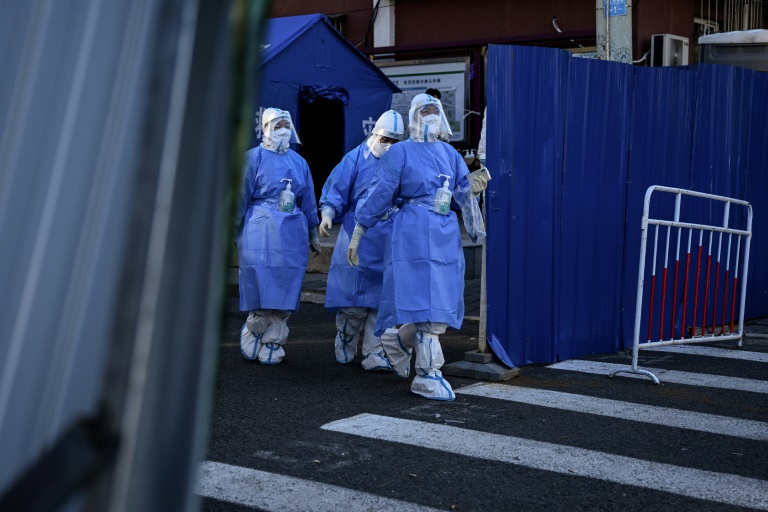
Shares headed lower as China’s first coronavirus death in six months sparked fears officials would reimpose strict, economically painful restrictions to fight outbreaks across the country.

Oil prices also slid on fears over energy demand in China, the world’s second biggest economy.

Investors “had been pinning hopes on a Chinese reopening to help ease global supply-chain problems and kickstart growth” in the Asian economic giant, said AJ Bell investment director Russ Mould.

“However, renewed outbreaks of Covid have seen some restrictions return and helped dampen sentiment, with oil prices also lower,” he added.

The death of an 87-year-old man in Beijing on Sunday came as infections across the country spiked, testing authorities’ plans to loosen their grip by lowering quarantine times for foreigners and cancelling mass tests.

The news threw a spanner in the works for investors who had grown hopeful of a gradual reopening of China’s economy.

“It feels like one step forward, two steps back,” said Forsyth Barr Asia analyst Willer Chen.  

“It is super hard to reopen in the short term, given winter is coming and cases are at a super high level and spreading across the whole country.”

The measures dealt a particular blow to Hong Kong’s Hang Seng Index, which fell nearly two percent, extending a sell-off at the end of last week.

Shanghai was also down along with most Asian markets, but Bangkok, Tokyo and Wellington ended higher.

Nevertheless, global markets have enjoyed a broadly healthy November thanks to signs of China easing and indications of slowing US inflation that fanned optimism the Federal Reserve would start to slow its pace of interest rate hikes.

But several officials soon lined up to warn that more needed to be done to get inflation back down from four-decade highs to more bearable levels.

Markets are meanwhile expected to stay relatively quiet for the rest of the week, with many US investors taking time off for Thanksgiving.

– Key figures around 1115 GMT –

London – FTSE 100: DOWN 0.1 percent at 7,380.96 points

Paris – CAC 40: DOWN 0.2 percent at 6,629.85

Frankfurt – DAX: DOWN 0.6 percent at 14,342.54

EURO STOXX 50: DOWN 0.5 percent at 3,906.26

Tokyo – Nikkei 225: UP 0.2 percent at 27,944.79 (close)

Hong Kong – Hang Seng Index: DOWN 1.9 percent at 17,655.91 (close)

Shanghai – Composite: DOWN 0.4 percent at 3,085.04 (close)

New York – Dow: UP 0.6 percent at 33,745.69 (close)

Euro/dollar: DOWN at $1.0244 from $1.0325 on Friday

Dollar/yen: UP at 141.43 yen from 140.37 yen

Pound/dollar: DOWN at $1.1809 from $1.1890

Euro/pound: UP at 86.75 from 86.34 pence

West Texas Intermediate: DOWN 0.5 percent at $79.70 per barrel

Brent North Sea crude: DOWN 0.7 percent at $87.03 per barrel

Asia markets suffer losses on fresh China Covid fears

Asian markets fell Monday as China’s first Covid death in six months sparked fears officials would reimpose strict, economically painful restrictions to fight outbreaks across the country.

The news threw a spanner in the works for investors who had grown hopeful of a gradual reopening after China eased a number of virus-fighting measures this month.

The death of an 87-year-old man in Beijing on Sunday came as infections across the country spiked, testing authorities’ plans to loosen their grip by lowering quarantine times for foreigners and cancelling mass tests.

Beijing has in recent days moved to confine some residents to their homes and ordered others to quarantine centres.

“It feels like one step forward, two steps back,” said Willer Chen, at Forsyth Barr Asia.  

“It is super hard to reopen in the short term given winter is coming and cases are at a super high level and spreading across the whole country.”

The measures dealt a particular blow to Hong Kong’s Hang Seng Index, which fell nearly two percent, extending a sell-off at the end of last week and eating further into a recent massive rally. Shanghai was also down.

There were also losses in Sydney, Seoul, Singapore, Taipei, Mumbai, Jakarta and Manila.

Kuala Lumpur dropped with the ringgit after the Malaysian elections offered no clear winner, fuelling uncertainty.

Tokyo, Bangkok and Wellington bucked the trend.

European markets opened lower.

Investors brushed off a positive end to last week for US markets, while attention turns to the release later in the week of minutes from the Federal Reserve’s most recent policy meeting.

Global markets have enjoyed a broadly healthy November thanks to signs of China easing and indications of slowing US inflation that fanned optimism the Fed would start to slow its pace of interest rate hikes.

The well-below-forecast readings in the consumer and wholesale indexes suggested months of strict tightening measures were finally working through the economy and having results, allowing for a less hawkish Fed.

But several officials soon lined up to warn that more needed to be done to get inflation back down from four-decade highs to more bearable levels.

– Brighter outlook? –

The sharp rise in interest rates and elevated inflation has this year sent shudders through trading floors as investors fear they will send the US economy into recession.

In the latest comments, Atlanta Fed chief Raphael Bostic said he saw borrowing costs hitting five percent — from their current levels of around four percent — before they are held.

Boston Fed president Susan Collins remained open to options for the next hike — including a fifth straight 75 basis-point lift.

However, National Australia Bank’s Tapas Strickland said: “That comment by itself sounds hawkish, but Collins overall was more cautious and also expressed confidence that policymakers can tame inflation without doing too much damage to employment.

“Instead, it was likely that comment coming after a bevy of Fed Speakers during the week that added a hawkish hue to it.”

While the mood among traders remains less than bright, there appears to be a feeling that there is some light at the end of the tunnel.

“Whether it’s the time of year or recession uncertainty, few seem inclined to chase the risk rally,” said Stephen Innes at SPI Asset Management.

“Still, there is growing recognition that the consensus view of recession and earnings downgrades could face mitigation from declining inflation.

“A lower dollar, lower volatility and the acknowledgement of having to buy early could improve the risk outlook.”

And Bokeh Capital Partners’ Kim Forrest added that 10-year Treasury yields had tumbled since late October, showing “a softening inflationary environment”. 

“The bond market is a little bit smarter about what the Fed needs to do and what it’s going to do. It’s been telling us that the Fed probably won’t be able to get its rates up to five percent nor will it need to,” she told Bloomberg Television.

Demand concerns caused by China’s Covid woes further hit oil prices, with both main contracts in the red, having tumbled last week.

– Key figures around 0820 GMT –

Tokyo – Nikkei 225: UP 0.2 percent at 27,944.79 (close)

Hong Kong – Hang Seng Index: DOWN 1.9 percent at 17,655.91 (close)

Shanghai – Composite: DOWN 0.4 percent at 3,085.04 (close)

London – FTSE 100: DOWN 0.4 percent at 7,355.95

Pound/dollar: DOWN at $1.1832 from $1.1883 on Friday

Euro/dollar: DOWN at $1.0268 from $1.0321

Dollar/yen: UP at 140.95 yen from 140.40 yen

Euro/pound: DOWN at 86.78 from 86.83 pence

West Texas Intermediate: DOWN 0.3 percent at $79.91 per barrel

Brent North Sea crude: DOWN 0.3 percent at $87.34 per barrel

New York – Dow: UP 0.6 percent at 33,745.69 (close)

— Bloomberg News contributed to this story —

Sonic the Hedgehog co-creator arrested over insider trading

The co-creator of classic video game series Sonic the Hedgehog has been arrested for alleged insider trading, according to public prosecutors in Tokyo.

Yuji Naka, a 57-year-old programmer known for making Sonic and other major titles at Japanese game firm Sega, was arrested on Friday, a prosecution document obtained by AFP said.

His alleged misdeed took place nearly three years ago, when Naka was an employee at “Final Fantasy” creator Square Enix, the Tokyo District Prosecutors Office document said.

Naka is accused of buying shares in another game company, Aiming, when he knew they were going to release a new title jointly developed with Square Enix.

He purchased 10,000 shares in Aiming for 2.8 million yen ($20,000) in January 2020, according to the document, and the new game was announced the following month.

Prosecutors on Thursday arrested two other former Square Enix employees, also for alleged insider trading linked to Aiming.

Naka was not immediately reachable for comment, but his fans expressed surprise and disappointment on social media.

“Please tell me this isn’t true. He brought Sonic to life… I’m so sad,” one Twitter user wrote.

“He worked on many great games. So disappointing,” said another.

On the website of the game studio that Naka founded called Prope, the programmer said he wanted to create “games that surprise and entertain children around the world”.

Hong Kong leads Asia losses on fresh China Covid fears

Asian markets fell Monday as China’s first Covid death in six months sparked fears officials would reimpose strict, economically painful restrictions to fight outbreaks across the country.

The news threw a spanner in the works for investors who had grown hopeful of a gradual reopening after Beijing eased a number of virus-fighting measures earlier this month.

The death of an 87-year-old man in Beijing on Sunday came as infections across the country spiked, testing authorities’ plans to loosen their grip by lowering quarantine times for foreigners and cancelling mass tests.

Beijing has in recent days moved to confine some residents to their homes and ordered others to quarantine centres.

The measures dealt a particular blow to Hong Kong’s Hang Seng, which fell more than two percent, extending a sell-off at the end of last week and eating further into a recent massive rally. Shanghai was down.

“It feels like one step forward, two steps back,” Willer Chen, at Forsyth Barr Asia, said.  

“It is super hard to reopen in the short term given winter is coming and cases are at a super high level and spreading across the whole country.”

There were also losses in Tokyo, Sydney, Seoul, Singapore, Taipei and Manila. Kuala Lumpur dropped with the ringgit after Malaysian elections ended with no clear winner, fuelling uncertainty in the country.

Regional investors brushed off a positive end to last week for US and European markets, while attention turns to the release later in the week of minutes from the Federal Reserve’s most recent policy meeting.

Global markets have enjoyed a broadly healthy November thanks to signs of China easing and indications of slowing US inflation that fanned optimism the Fed would start to slow its pace of interest rate hikes.

The well-below-forecast readings in the consumer and wholesale indexes suggested months of strict tightening measures were finally working through the economy and having results, allowing for a less hawkish Fed.

But several officials soon lined up to warn that more needed to be done to get inflation back down from four-decade highs to more bearable levels.

The sharp rise in interest rates and elevated inflation has this year sent shudders through trading floors as investors fear they will send the US economy into recession.

In the latest comments, Atlanta Fed chief Raphael Bostic said he saw borrowing costs hitting five percent — from their current levels of around four percent — before they are held.

Boston Fed president Susan Collins remained open to options for the next hike — including a fifth straight 75-basis-point lift.

However, National Australia Bank’s Tapas Strickland said: “That comment by itself sounds hawkish, but Collins overall was more cautious and also expressed confidence that policymakers can tame inflation without doing too much damage to employment.

“Instead, it was likely that comment coming after a bevy of Fed Speakers during the week that added a hawkish hue to it.”

While the mood among traders remains less than bright, there appears to be a feeling that there is some light at the end of the tunnel.

“Whether it’s the time of year or recession uncertainty, few seem inclined to chase the risk rally,” said Stephen Innes at SPI Asset Management.

“Still, there is growing recognition that the consensus view of recession and earnings downgrades could face mitigation from declining inflation.

“A lower dollar, lower volatility and the acknowledgement of having to buy early could improve the risk outlook.”

And Bokeh Capital Partners’ Kim Forrest added that 10-year Treasury yields had tumbled since late October, showing “a softening inflationary environment”. 

“The bond market is a little bit smarter about what the Fed needs to do and what it’s going to do. It’s been telling us that the Fed probably won’t be able to get its rates up to five percent nor will it need to,” she told Bloomberg Television.

Demand concerns caused by China’s Covid woes further hit oil prices, with both main contracts in the red, having tumbled last week.

– Key figures around 0230 GMT –

Tokyo – Nikkei 225: DOWN 0.1 percent at 27,871.09 (break)

Hong Kong – Hang Seng Index: DOWN 2.8 percent at 17,492.08

Shanghai – Composite: DOWN 1.0 percent at 3,066.47

Pound/dollar: DOWN at $1.1843 from $1.1883 on Friday

Euro/dollar: DOWN at $1.0292 from $1.0321

Dollar/yen: UP at 140.42 yen from 140.40 yen

Euro/pound: UP at 86.91 from 86.83 pence

West Texas Intermediate: DOWN 0.7 percent at $79.55 per barrel

Brent North Sea crude: DOWN 0.8 percent at $86.92 per barrel

New York – Dow: UP 0.6 percent at 33,745.69 (close)

London – FTSE 100: UP 0.5 percent at 7,385.52 (close)

— Bloomberg News contributed to this story —

Frustrated foodies gobble up South Korean grocery unicorn

When Sophie Kim moved home to South Korea after 15 years in the United States, she couldn’t find anywhere to buy kale for her green juice. So she found a farmer, then built an app to help others seek out top-quality produce.

The next-day grocery delivery service Market Kurly that 38-year-old Kim founded is now one of South Korea’s most important startup unicorns, last valued at $3 billion and set for an initial public offering by February.

Kim, a self-professed “foodie”, came up with the idea after she got tired of endlessly going from shop to shop to find the high-quality groceries she wanted in Seoul’s supermarkets.

But she knew the products were out there and began driving to South Korea’s agricultural heartlands to find them, for example visiting the famous meat market in Majang-dong to procure half a cow’s worth of beef, which she would then split with her co-workers.

“While I was trying to figure out why it was so difficult to have access to great quality, fresh food in Korea, I got to know some farmers and fishermen, and they had exactly the same issue of not being able to find customers,” she told AFP.

Korean farmers “are proud of the fact that they can produce such nice quality products, but it is extremely difficult for them to get to the consumer”, she said.

At first, Kim said she thought about setting up a farmers market, before abandoning the idea as too unwieldy and — more importantly — unhelpful for producers, who don’t have the time to travel to Seoul.

– Lightbulb moment –

It was a lightbulb moment when Kim realised “if we can make this work for both consumers and producers, it would probably be a breakthrough for the entire industry”.

Kurly customers — initially urban working women but now a diverse cross section of society — can order rare beef, hand-made bread, or pick one of more than a dozen varieties of local, hard-to-find apples by 11pm and be guaranteed delivery by 7am the next morning.

As with companies from Amazon to Uber Eats, the rapid-fast shipments rely largely on gig economy drivers, and Kurly has not been immune to the global industry-wide complaints of overwork and poor conditions.

But consumer convenience has proved key to the app’s success — even though Kim says she’s most proud of how the complex data-driven logistics network she’s built supports South Korea’s beleaguered farmers.

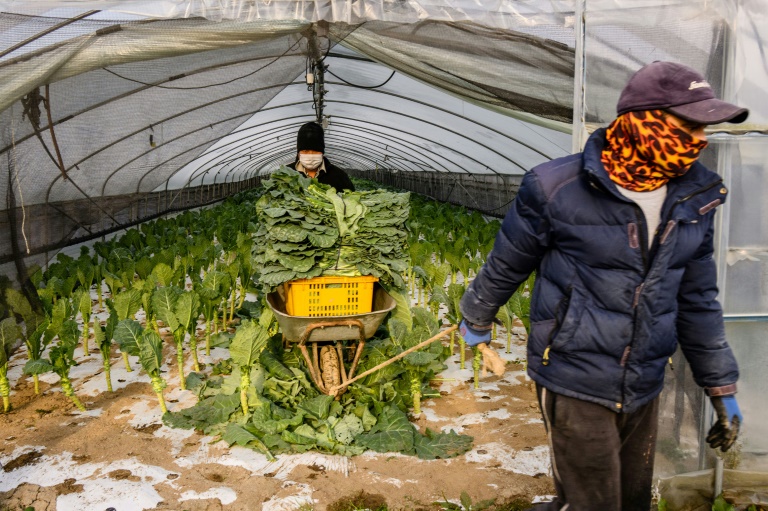
Kim launched Market Kurly with 30 products, including her beloved kale, which was supplied by farmer Hwang Han-soo, who has been growing organic vegetables for 30 years at his farm in Gyeonggi province.

Hwang told AFP that his kale was originally popular only with cancer patients for its perceived health benefits. He sold so little of it he considered switching crops, but the pleas of one of his terminally-ill customers in Busan convinced him to keep going.

Farming is tough in South Korea, Hwang said, owing to thin profit margins and a reliance on hard-to-find overseas workers amid dwindling interest in the industry from young South Koreans.

But working with Kurly has helped.

“In the early days of Kurly, we sold around 20 to 30 bags each day (but now) our average daily sales is around 800 bags” of kale, he said.

Part of the growth can be attributed to changing consumer trends, with kale now popular with young women who see it as a trendy health food, Hwang said, but Kurly’s next-day cold-chain logistics network also plays a key role.

– Social costs –

“It takes less than a day to go from harvesting to the consumer’s doorstep,” he said, adding that before Kurly came along it would take two or three days for his kale to make it to stores.

Next-day delivery services are “very helpful because it is a system that goes directly from the farm to the consumers”, while Kurly also handled all the promotion and marketing, he said.

“I can focus on farming,” he added.

Hwang also said reading reviews of his products on Kurly’s app allowed him to feel more connected to the people who eat what he grows.

South Korea’s next-day delivery apps including Kurly and rival Coupang Fresh have been criticised for the strain they put on delivery drivers, with local media reporting on occasional deaths from extreme overwork, as workers make scores of deliveries each night.

The rise of such services has also sucked gig workers from other crucial sectors including city taxis, where the supply crunch is so severe that the Seoul government recently hiked basic fares in a bid to entice more drivers to provide late-night services.

It is important for South Korea’s unicorns like Market Kurly to take into account the social costs of their business models, said Minister for Small and Medium Enterprises and Start-ups Lee Young.

“It’s very possible for these platform companies to contribute to society,” she said.

“Market Kurly is a very good example because it has created a very innovative idea and they have gone through multiple struggles until they achieved current success.”

US to help Thailand develop small nuclear reactors

The United States will help Thailand develop nuclear power through a new class of small reactors, part of a programme aimed at fighting climate change, Vice President Kamala Harris announced on a visit Saturday.

The White House said the assistance was part of its Net Zero World Initiative, a project launched at last year’s Glasgow climate summit in which the United States partners with the private sector and philanthropists to promote clean energy.

Thailand does not have nuclear power, with the public mood on the issue souring after the 2011 Fukushima disaster in Japan.

The White House said it would offer technical assistance to the Southeast Asian country to deploy the developing technology of small modular reactors, which are factory-built and portable. Such reactors are generally considered safer as they do not need human intervention to shut down in emergencies.

A White House statement said that US experts would work with Thailand on deploying the reactors, which will have the “highest standards of safety, security and nonproliferation” and boast a smaller land footprint than traditional nuclear plants.

US rivals China and Russia, as well as Argentina, are also developing small modular reactors, the prototypes of which are in the design phase.

The White House did not give a timeline but said it would support Thailand, which is highly vulnerable to climate change, in its goal of going carbon neutral by 2065.

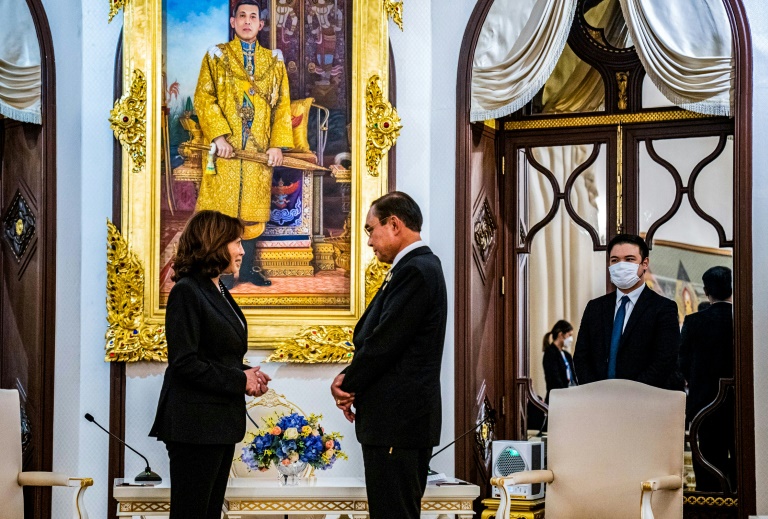
Harris is visiting the US ally for an Asia-Pacific Economic Cooperation summit and discussed climate efforts in a meeting with Thai Prime Minister Prayut Chan-O-Cha.

Harris also spoke to Prayut about developments in adjacent Myanmar, where the military toppled the elected government in February 2021.

Harris “condemned the ongoing atrocities and human rights abuses by Burma’s regime,” a White House statement on the meeting said, using Myanmar’s former name. 

“The vice president made clear that the United States stands with the people of Burma,” it said.

Myanmar’s junta on Thursday freed some 6,000 prisoners including foreigners. US Secretary of State Antony Blinken, who was in Bangkok at the time, welcomed the move but said there was no evidence the regime was making broader improvements.

During the visit by Harris, the White House also announced an initiative with Thailand to boost the safety of fifth-generation internet and a project to build a “world-class” cancer treatment centre in eastern Chonburi province.

Xi, Harris call for open channels in latest US-China meeting

Chinese President Xi Jinping and US Vice President Kamala Harris called for open communication during a brief meeting on Saturday, days after his extensive talks with President Joe Biden aimed at keeping tensions in check.

Harris and Xi met during an Asia-Pacific summit in Bangkok where another US rival, Russia, saw itself isolated, with no top leader attending and a statement issued showing wide condemnation of its war in Ukraine.

Speaking to Xi on the sidelines of the Asia-Pacific Economic Cooperation (APEC) forum, Harris reinforced Biden’s message that “we must maintain open lines of communication to responsibly manage the competition between our countries”, a White House official said.

On Monday, Biden and Xi met for three hours at a Group of 20 summit in Bali, the first in-person talks between the leaders of the world’s two largest economies since they each became president.

Chinese state media quoted Xi as telling Harris that his meeting with Biden was “strategic and constructive, and has important guiding significance for China-US relations in the next stage”.

“It is hoped that the two sides will further enhance mutual understanding, reduce misunderstanding and misjudgement, and jointly promote the return of China-US relations to a healthy and stable track,” added Xi, who is on only his second overseas trip since the pandemic.

US and Chinese officials have both put a positive spin on the renewal of diplomacy, while stopping short of predicting any substantive resolution of issues dividing them — notably Taiwan, the self-governing democracy claimed by Beijing.

Xi and Biden agreed that Secretary of State Antony Blinken will visit China early next year, the first visit by a top US diplomat since 2018.

Blinken told reporters in Bangkok that the contacts aimed at making sure that competition “does not veer into conflict” and examining areas of cooperation on global challenges such as climate change.

The United States said it was also looking for China to do more to rein in its ally North Korea, which on Friday test-fired a ballistic missile that US and Japanese officials said was likely capable of hitting the US mainland.

China should use its influence to persuade North Korea “not to go in this provocative direction, which only destabilises the region and the world”, said a US official travelling with Harris.

– Pressure on Russia –

If relations remain unchanged, Xi could see Biden in a year’s time when the United States hosts the APEC summit in San Francisco.

Xi last visited the United States in 2017, meeting then president Donald Trump at his Florida estate, but relations between the two countries later sharply deteriorated over trade, Taiwan, human rights and Covid-19.

APEC, which groups 21 economies, focuses on trade rather than political matters. But after US insistence, APEC followed the formula of this week’s G20 summit to take up the invasion of Ukraine by Russia, a member of both organisations.

“Most members strongly condemned the war in Ukraine and stressed it is causing immense human suffering and exacerbating existing fragilities in the global economy,” an APEC joint declaration said.

“There were other views and different assessments of the situation and sanctions.” 

The United States has been cautiously upbeat about China taking a distance from nominal ally Russia, including by rejecting requests to send military supplies.

While engaging Xi, the United States has vowed to shun Russian President Vladimir Putin who skipped this week’s Asian summits and is virtually certain not to receive an invitation to San Francisco.

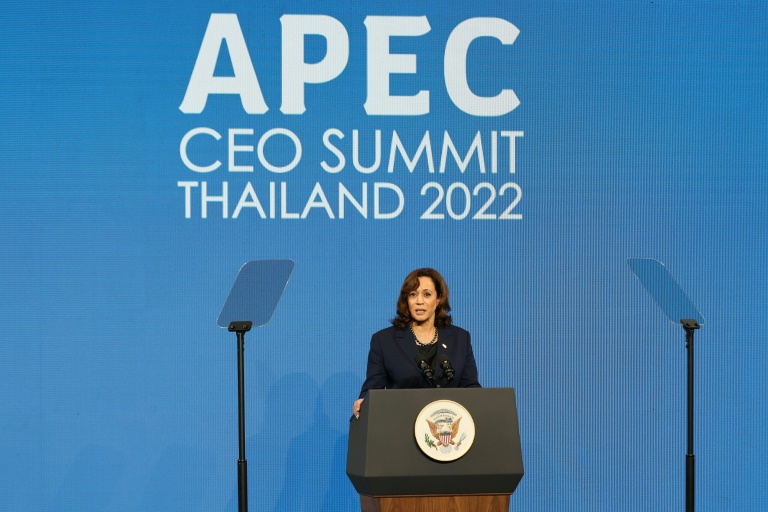
Harris, who is originally from the San Francisco Bay Area, told leaders in Bangkok that the United States would focus next year’s summit on raising climate ambitions.

She asked leaders to prepare new targets in time for the 2023 summit on reducing emissions from the power sector, hoping to flesh out longer-term commitments by most APEC members on zeroing out carbon.

US to help Thailand develop small nuclear reactors

The United States will help Thailand develop nuclear power through a new class of small reactors, part of a programme aimed at fighting climate change, Vice President Kamala Harris announced on a visit Saturday.

The White House said the assistance was part of its Net Zero World Initiative, a project launched at last year’s Glasgow climate summit in which the US partners with the private sector and philanthropists to promote clean energy.

Thailand does not have nuclear power, with the public mood on the issue souring after the 2011 Fukushima disaster in Japan.

The White House said it would offer technical assistance to the Southeast Asian country to deploy the developing technology of small modular reactors, which are factory-built and portable. Such reactors are generally considered safer as they do not need human intervention to shut down in emergencies.

“We really look forward to working with Thailand to take advantage of the benefits of small modular reactors and reliable clean energy sources,” said a senior US official travelling with Harris, speaking on condition of anonymity.

A White House statement said that US experts would work with Thailand on deploying the reactors, which will have the “highest standards of safety, security and nonproliferation” and boast a smaller land footprint than alternatives.

US rivals China and Russia, as well as Argentina, are also developing small modular reactors, the prototypes of which are in the design phase.

The White House did not give a timeline but said it would support Thailand, which is highly vulnerable to climate change, in its goal of going carbon neutral by 2065.

Harris, who is visiting the US ally for an Asia-Pacific Economic Cooperation summit, will discuss the nuclear power initiative in a meeting later Saturday with Thai Prime Minister Prayut Chan-O-Cha.

The White House also announced an initiative with Thailand to boost the safety of fifth-generation internet and a project to build a “world-class” cancer treatment centre in eastern Chonburi province.

Will any music stars perform in Qatar?

Several global stars have refused to take part in the opening ceremony of the Qatar World Cup, and with two days to go, it is still not clear who will perform.

The most likely appearance is Jungkook of K-pop megastars BTS, who was rumoured to have already arrived in Qatar on Friday. 

Britain’s Robbie Williams, who performed at the last World Cup in Moscow, is also considered a likely participant. 

But several musicians have made clear they will not perform, in protest at Doha’s human rights records, particularly with regard to LGBT rights. 

– Rod Stewart –

The rock legend gave a definitive no to organisers. 

Stewart told The Times that he was “offered a lot of money, over $1 million, to play there 15 months ago”, but that he turned them down. 

“I refused. It’s not right to go,” the 77-year-old British singer said, adding that it was “respect for human rights in general” that had led to his decision.

– Dua Lipa –

The 27-year-old British star, who has a huge LGBT fanbase, had also been tipped for an appearance, but she shut down the rumours in a post to her 87 million Instagram followers. 

“I will not be performing and have not been involved in any negotiations to perform in Qatar,” the “Levitating” singer wrote, adding that she would support England “from afar”. 

“I look forward to visiting Qatar when it has fulfilled all the human rights pledges it made when it won the right to host,” she added.

– Shakira –

Another name that had been slated to perform was Shakira, who has been a regular at previous World Cups while married to Spanish footballer Gerard Pique. 

She was the voice of the 2010 edition in South Africa, alongside local group Freshlyground, for the official theme “Waka Waka (This Time for Africa)” and performed four years later in Brazil.

But her team recently told Spanish news outlets that she would no longer be performing in Qatar, without giving a specific reason. 

– Lil Baby? –

US rapper Lil Baby, who has 32 million monthly listens on Spotify, released one of the official sponsorship songs this year, “The World Is Yours to Take”, which samples the Tears for Fears classic, “Everybody Wants to Rule the World”. 

But he has remained silent on whether he will actually make an appearance in Qatar. 

Close Bitnami banner
Bitnami