Chinese Business

Stocks rally but oil prices tumble

Stock markets in the United States and Europe rallied on Friday as investors fished for bargain shares and shrugged off losses elsewhere, but oil prices dropped as concerns over the global economy persist.

London stocks were lifted by official data showing UK retail sales rose 0.6 percent in October, rebounding from a 1.5-percent slump in September.

The news boosted the pound, which had fallen the previous day on a harsh government budget and confirmation Britain was in recession.

The main European indices closed in the green.

London was up 0.5 percent, while Frankfurt and Paris jumped 1.2 and 1.0 percent in value respectively.

The pound also rebounded after a sharp fall against the dollar on Thursday.

But others cautioned against getting too excited by the UK retail data since the country is in the grip of a worsening cost-of-living crisis.

“It is not the start of a promising trend,” said Craig Erlam at OANDA online trading platform.

The Dow Jones was also up 0.6 percent, buoyed by earnings reports from retail companies including Gap and Foot Locker.

“Their good news/better-than-feared news has mitigated some of the weakness seen earlier this week following Target’s (TGT) disappointment,” said Briefing.com analyst Patrick J O’Hare.

But with worries about the world’s economy and rising coronavirus cases in China, the price of the main US crude oil contract, WTI, tumbled on Friday below $80 per barrel for the first time since the end of September.

The main international oil contract, Brent crude, also fell by nearly three percent Friday around 1630 GMT.

– Fears abound –

Asian equities experienced mixed fortunes on Friday as cautious investors tried to gauge the outlook for Federal Reserve monetary policy, after several officials tempered optimism over signs that inflation is slowing in the world’s biggest economy.

While the week has been broadly positive for global equities following softer-than-expected US consumer and wholesale price figures, a strong reading on retail sales and jobless claims showed plenty of resilience to higher interest rates.

With that in mind, St Louis Fed President James Bullard warned more hikes were needed to bring inflation down from four-decade highs, adding that US interest rates might need to go as high as seven percent.

That was followed by Minneapolis Fed boss Neel Kaskari saying he had not witnessed much evidence that underlying demand was cooling and did not want to forecast when the tightening would end.

The comments came after a similar message from other policymakers, who have sought to calm markets, which soared in the wake of last Thursday’s consumer prices reading.

They also fuelled fears among traders that the sharp rate-hiking campaign — including four bumper 0.75-point increases in a row — would tip the US economy into recession.

“Investors seem continually surprised by the Fed merely repeating its mantra,” said Interactive Investor analyst Richard Hunter.

“Rates are likely to continue rising… and may well stay higher until such time as a sustained slowdown in inflation is evident.”

– Key figures around 1630 GMT –

New York – Dow: UP 0.6 percent at 33,746.54 points

EURO STOXX 50: UP 1.2 percent at 3,924.84

London – FTSE 100: UP 0.5 percent at 7,385.52 (close)

Paris – CAC 40: UP 1.0 percent at 6,644.46 (close)

Frankfurt – DAX: UP 1.2 percent at 14,431.86 (close)

Tokyo – Nikkei 225: DOWN 0.1 percent at 27,899.77 (close)

Hong Kong – Hang Seng Index: DOWN 0.3 percent at 17,992.54 (close)

Shanghai – Composite: DOWN 0.6 percent at 3,097.24 (close)

Pound/dollar: UP at $1.1931 from $1.1864 on Thursday

Euro/dollar: UP at $1.0368 from $1.0362

Dollar/yen: DOWN at 139.87 yen from 140.20 yen

Euro/pound: DOWN at 86.88 from 87.34 pence

Brent North Sea crude: DOWN 2.7 percent at $87.31 per barrel

West Texas Intermediate: DOWN 2.8 percent at $79.34 per barrel

burs-raz/gil

World stocks rally but oil prices tumble

Global main stock markets rallied Friday as investors fished for bargain shares and shrugged off losses elsewhere, but oil prices fell as concerns over the global economy persist.

London stocks were lifted by official data showing UK retail sales rose 0.6 percent in October, rebounding from a 1.5-percent slump in September.

The news boosted the pound, which had fallen the previous day on a harsh government budget and confirmation Britain was in recession.

London stocks gained 0.6 percent, while Frankfurt and Paris jumped 1.1 and 1.0 percent in value respectively.

The pound also rebounded after a sharp fall against the dollar Thursday.

But others cautioned against getting too excited by the UK retail data since the country is in the grip of a worsening cost-of-living crisis.

“It is not the start of a promising trend,” said Craig Erlam at OANDA online trading platform.

The Dow Jones was also up 0.7 percent after opening in New York buoyed by earnings reports from retail companies including Gap and Foot Locker.

But with worries about the world’s economy and rising coronavirus cases in China, the price of the main US crude oil contract, WTI, fell Friday below $80 per barrel for the first time since the end of September.

The main international oil contract, Brent crude, also tumbled by nearly four percent Friday around 1430 GMT.

– Fears abound –

Asian equities experienced mixed fortunes Friday as cautious investors tried to gauge the outlook for Federal Reserve monetary policy after several officials tempered optimism over signs that inflation is slowing in the world’s biggest economy.

While the week has been broadly positive for global equities following softer-than-expected US consumer and wholesale price figures, a strong reading on retail sales and jobless claims showed plenty of resilience to higher interest rates.

With that in mind, St Louis Fed President James Bullard warned more hikes were needed to bring inflation down from four-decade highs, adding that US interest rates might need to go as high as seven percent.

That was followed by Minneapolis Fed boss Neel Kaskari saying he had not witnessed much evidence that underlying demand was cooling and did not want to forecast when the tightening would end.

The comments came after a similar message from other policymakers, who have sought to calm markets, which soared in the wake of last Thursday’s consumer prices reading.

They also fuelled fears among traders that the sharp rate-hiking campaign — including four bumper 0.75-point increases in a row — would tip the US economy into recession.

“Investors seem continually surprised by the Fed merely repeating its mantra,” said Interactive Investor analyst Richard Hunter.

“Rates are likely to continue rising… and may well stay higher until such time as a sustained slowdown in inflation is evident.”

– Key figures around 1430 GMT –

London – FTSE 100: UP 0.6 percent at 7,387.76 points

Paris – CAC 40: UP 1.0 percent at 6,645.38

Frankfurt – DAX: UP 1.1 percent at 14,419.46

EURO STOXX 50: UP 1.2 percent at 3,926.21

New York – Dow: 0.7 percent at 33,792.59 points 

Tokyo – Nikkei 225: DOWN 0.1 percent at 27,899.77 (close)

Hong Kong – Hang Seng Index: DOWN 0.3 percent at 17,992.54 (close)

Shanghai – Composite: DOWN 0.6 percent at 3,097.24 (close)

Pound/dollar: UP at $1.1888 from $1.1864 on Thursday

Euro/dollar: DOWN at $1.0348 from $1.0362

Dollar/yen: DOWN at 139.77 yen from 140.20 yen

Euro/pound: DOWN at 87.05 from 87.34 pence

Brent North Sea crude: DOWN 3.9 percent at $86.27 per barrel

West Texas Intermediate: DOWN 4.5 percent at $77.93 per barrel

burs-raz/cdw

Europe stocks rally on bargain hunting

Europe’s main stock markets rallied Friday as investors fished for bargain shares and shrugged off losses elsewhere.

London stocks were lifted by official data showing UK retail sales rose 0.6 percent in October, rebounding from a 1.5-percent slump in September.

The news boosted the pound which had fallen the previous day on a harsh government budget and confirmation Britain was in recession.

London stocks gained 0.8 percent, while Frankfurt and Paris each jumped 1.1 percent in value.

“There’s a strong argument that European markets look undervalued, and have suffered more this year, so there is still plenty of bargain hunting going on,” IG analyst Chris Beauchamp told AFP.

“There appears to be hope that European inflation might cool early next year.”

The pound rebounded after a sharp fall against the dollar Thursday.

Asian equities experienced mixed fortunes on Friday as cautious investors tried to gauge the outlook for Federal Reserve monetary policy after several officials tempered optimism over signs that inflation is slowing in the world’s biggest economy.

While the week has been broadly positive for global equities following softer-than-expected US consumer and wholesale price figures, a strong reading on retail sales and jobless claims showed plenty of resilience to higher interest rates.

With that in mind, St Louis Fed President James Bullard warned more hikes were needed to bring inflation down from four-decade highs, adding that US interest rates might need to go as high as seven percent.

That was followed by Minneapolis Fed boss Neel Kaskari saying he had not witnessed much evidence that underlying demand was cooling and did not want to forecast when the tightening would end.

The comments came after a similar message from other policymakers, who have sought to calm markets, which soared in the wake of last Thursday’s consumer prices reading.

They also fuelled fears among traders that the sharp rate-hiking campaign — including four bumper 0.75-point increases in a row — would tip the US economy into recession.

“Investors seem continually surprised by the Fed merely repeating its mantra,” said Interactive Investor analyst Richard Hunter.

“Rates are likely to continue rising… and may well stay higher until such time as a sustained slowdown in inflation is evident.”

– Key figures around 1130 GMT –

London – FTSE 100: UP 0.8 percent at 7,405.88 points

Paris – CAC 40: UP 1.1 percent at 6,649.57

Frankfurt – DAX: UP 1.1 percent at 14,419.01

EURO STOXX 50: UP 1.3 percent at 3,928.78

Tokyo – Nikkei 225: DOWN 0.1 percent at 27,899.77 (close)

Hong Kong – Hang Seng Index: DOWN 0.3 percent at 17,992.54 (close)

Shanghai – Composite: DOWN 0.6 percent at 3,097.24 (close)

New York – Dow: FLAT at 33,546.32 points (close)

Pound/dollar: UP at $1.1910 from $1.1864 on Thursday

Euro/dollar: UP at $1.0378 from $1.0362

Dollar/yen: DOWN at 139.82 yen from 140.20 yen

Euro/pound: DOWN at 87.12 from 87.34 pence

Brent North Sea crude: DOWN 0.6 percent at $89.21 per barrel

West Texas Intermediate: DOWN 0.4 percent at $81.32 per barrel

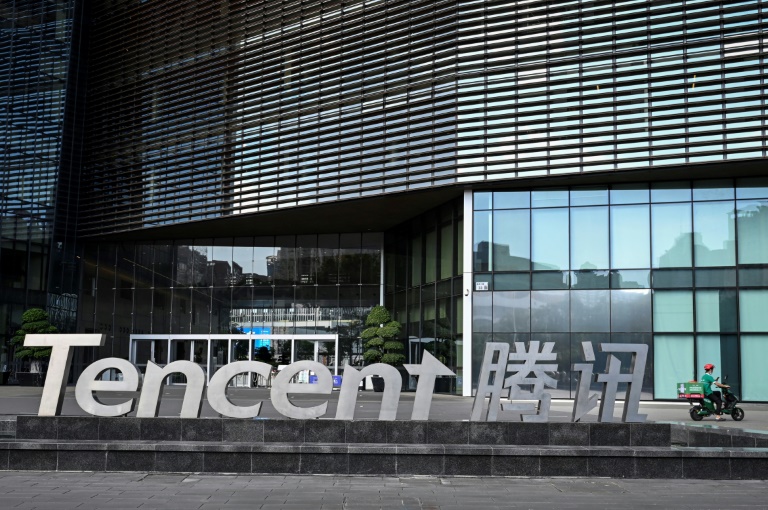
China's Tencent wins first game licence in 18 months

China has granted tech giant Tencent its first licence for a video game in 18 months, ending a dry spell that had threatened its position as the world’s top game maker.

Beijing moved against the country’s vibrant gaming sector last year as part of a sprawling crackdown on big tech companies, including a cap on the amount of time children could spend playing games.

Officials also froze approvals of new titles for nine months until April.

China’s gaming regulator, the National Press and Publication Administration, on Thursday said it had approved 70 new titles in November including Tencent’s action game “Metal Slug: Awakening” and a role-playing game “Journey to the West: Return” by rival NetEase.

Licences are mandatory for video games to be published and sold in the Chinese market.

The last time Tencent obtained a major licence was in May 2021.

A Tencent subsidiary received a licence in September but it was for a free educational game.

Shares in the Hong Kong-listed company closed up more than 0.5 percent on Friday after the licensing announcement, while NetEase gained more than 3.6 percent.

The approval signals a relaxing of China’s strict attitude towards tech companies.

During the crackdown, hundreds of game makers pledged to scrub “politically harmful” content from their products and enforce curbs on underage players to comply with government demands.

Restrictions announced last year allow players under the age of 18 to play for three hours a week.

Asian markets mixed as caution over rate outlook dulls sentiment

Asian markets were mixed Friday as caution permeated trading floors and investors tried to gauge the outlook for Federal Reserve monetary policy after several officials tried to temper optimism over signs that inflation is slowing.

While the week has been broadly positive for equities following softer-than-expected US consumer and wholesale price figures, a strong reading on retail sales and jobless claims showed plenty of resilience to higher interest rates.

With that in mind, St Louis Fed President James Bullard warned more hikes were needed to bring inflation down from four-decade highs, adding that they might need to go as high as seven percent.

That was followed by Minneapolis Fed boss Neel Kaskari saying he had not witnessed much evidence that underlying demand was cooling and did not want to forecast when the tightening would end.

The comments came after a similar message from other policymakers, who have sought to calm markets, which soared in the wake of last Thursday’s consumer prices reading.

They also fuelled fears among traders that the sharp tightening campaign — including four straight bumper 0.75-point increases in a row — would tip the world’s top economy into recession.

On Wednesday, Kansas City Fed chief Esther George said it was unclear how the bank can douse inflation “without having some real slowing” or even a contraction.

“Bullard’s comments are all the more surprising given that there is clear evidence that inflationary pressure is starting to slow more than expected,” said CMC Markets analyst Michael Hewson.

“Consequently, Bullard’’s views may well be a minority view at this point, but it still shows how sensitive markets can be when it comes to the eventual destination of the terminal rate.”

– ‘Fundamental disconnect’ –

Wall Street’s three main indexes ended in the red, and Asia struggled to hold on to the morning’s momentum.

Hong Kong turned negative after a strong start, even as tech firms rallied and after China indicated it would ease back on some of its strict Covid restrictions and help its troubled property sector.

Tokyo, Shanghai, Singapore, Taipei and Mumbai were also down, though Sydney, Seoul, Wellington, Manila, Bangkok and Jakarta edged up.

London, Paris and Frankfurt all rose at the open.

There was a fear among analysts that the recent rally may have run a little ahead of itself.

“The market believes that inflation is on the downtrend. We also believe that, but the fact of inflation having peaked is not a reason for the Fed to turn and cut rates,” Paul Christopher, at Wells Fargo Investment Institute, told Bloomberg Radio.

“That’s the fundamental disconnect that still exists between the Fed and the market.”

And SPI Asset Management’s Stephen Innes added: “Things can turn on a dime, primarily when the fear of missing (out) drives sentiment.

“However, the odds of a pre-Thanksgiving rally are giving way to the hawkish Fed drumbeat and pushback on China reopening plays.”

The pound clawed back some of the losses suffered Thursday after Britain unveiled a budget with 55 billion pounds ($65 billion) of tax hikes and spending cuts that traders fear will deepen a cost-of-living crisis and a recession that could last two years.

– Key figures around 0810 GMT –

Tokyo – Nikkei 225: DOWN 0.1 percent at 27,899.77 (close)

Hong Kong – Hang Seng Index: DOWN 0.3 percent at 17,992.54 (close)

Shanghai – Composite: DOWN 0.6 percent at 3,097.24 (close)

London – FTSE 100: UP 0.4 percent at 7,372.20

Pound/dollar: UP at $1.1910 from $1.1867 on Thursday

Euro/dollar: UP at $1.0373 from $1.0370

Dollar/yen: DOWN at 140.00 yen from 140.20 yen

Euro/pound: DOWN at 87.08 from 87.34 pence

West Texas Intermediate: UP 0.5 percent at $82.01 per barrel

Brent North Sea crude: UP 0.3 percent at $90.01 per barrel

New York – Dow: FLAT at 33,546.32 points (close)

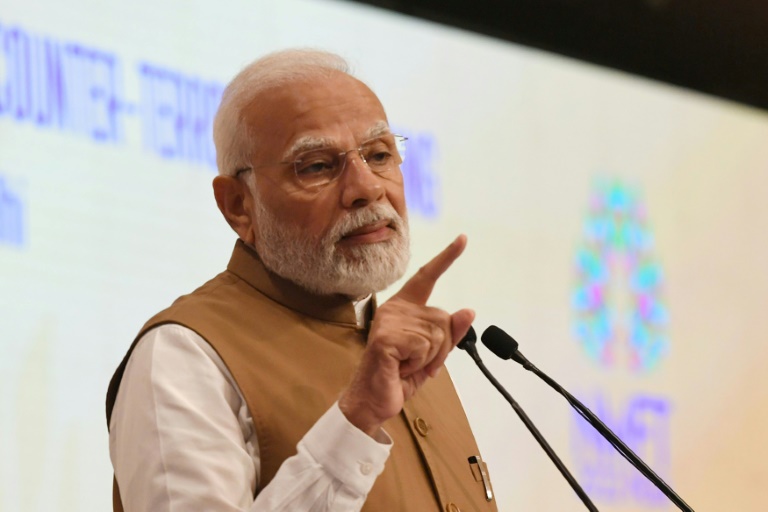
India's Modi says digital currencies being used to fund terror

Digital currencies need more regulation to stamp out funding for terror operations, India’s Prime Minister Narendra Modi said Friday at a major international forum to combat financing of extremist groups.

India has laboured to rein in cryptocurrency transactions after years of phenomenal growth, backed by burgeoning local trading platforms and glitzy celebrity endorsements.

Modi last year said that bitcoin presented a risk to younger generations and could “spoil our youth” if it ended up “in the wrong hands”.

On Friday, he went further and told delegates at the Conference on Countering Financing of Terrorism that “private currencies” posed a grave security risk. 

“New kinds of technology are being used for terror funding and recruitment. Challenges from the dark net, private currencies and more are emerging,” Modi said. 

“There is a need for a uniform understanding for new finance technologies,” he added. 

“From a uniform understanding, a unified system of checks and balances and regulation can emerge.”

Delegates from dozens of countries are in the capital New Delhi for the two-day conference, which follows a special session of the UN’s Counter Terrorism Committee held in India last month.

Cryptocurrencies have been under the scrutiny of Indian regulators since first entering the local market nearly a decade ago, with a surge in fraudulent transactions leading to a central bank ban in 2018.

India’s Supreme Court lifted the restrictions two years later and the market surged, growing by nearly 650 percent in the year to June 2021 — second only to Vietnam, according to research by Chainalysis.

The government also proposed banning “all private cryptocurrencies”, but ultimately held back and later taxed profits from “private currencies” at 30 percent.

Globally, the crypto market has been thrown into upheaval by this month’s collapse of FTX, a major exchange used for digital transactions. 

Once valued at $32 billion, FTX filed for bankruptcy last week.

Its downfall sent major cryptocurrencies plunging and further undermined investor confidence in the young and turbulent sector.

VP Harris tells Asia the US is 'here to stay'

Vice President Kamala Harris told Asian leaders on Friday that the United States is committed to the region for the long haul, rejecting doubts about its engagement as China expands its clout.

Addressing a summit in Bangkok, Harris called the United States a “proud Pacific power” and said that the longstanding US network of security alliances has allowed Asia to prosper.

“The United States is here to stay,” Harris told business leaders on the sidelines of the Asia-Pacific Economic Cooperation (APEC) summit, also attended by Chinese President Xi Jinping.

“Our message is clear: The United States has an enduring economic commitment to the Indo-Pacific, one that is measured not in years, but in decades and generations,” she said, using the preferred US term for the Asia-Pacific region.

President Joe Biden’s administration has focused on rallying behind allies and Harris will head from Thailand to the Philippines, where she will visit an island near waters increasingly contested by Beijing.

While the United States has taken a firm tone on China, some Asian officials have questioned the level of US economic engagement.

Biden has largely followed his predecessor Donald Trump in turning the page on the era of free-trade agreements, seeing them as unpopular among working-class US voters.

Harris insisted that economic partnerships in Asia were “a top priority” for the Biden administration and pointed out that the US private sector invests around $1 trillion a year in the region.

“America is a strong partner to the economies and companies of this region because America is and will remain a major engine of global growth, reinforced by our administration’s approach,” she said.

She said that goal had bipartisan support, with Washington set for greater gridlock after the rival Republican Party won control of the House of Representatives in elections last week.

Biden on a trip to Tokyo earlier this year launched the Indo-Pacific Economic Framework, which brings together countries to set common standards on technology and trade in the face of China’s rapid advances but stops short of lifting tariffs like a traditional free-trade deal.

“We are all feeling the discomfort and the anxiety of the global economy today,” US Trade Representative Katherine Tai told reporters Thursday.

“We need different outcomes, and that means that we also need to be innovating in how we engage each other in trade and economics and across the board,” she said.

Despite US vows of engagement, Biden skipped the APEC summit to attend his granddaughter’s wedding at the White House on Saturday.

He attended two other summits in Asia over the past week, however, in Cambodia and Indonesia.

DR Congo town set to 'disappear' as mines expand

“We’re screwed,” said Alphonse Fwamba Mutombo, standing on a plot of rubble overlooking an open-cast cobalt mine in Kolwezi, southeastern DR Congo. 

His had once been a thriving neighbourhood of neat houses and tree-shaded avenues.

Today his cherished home is surrounded by the wreckage of demolished houses, separated from the sprawling pit by a concrete barrier.

The Chinese-owned mine wants to expand, and many of Mutombo’s fellow residents have taken buy-outs. 

Mutombo doesn’t want to leave. The 70-year-old is clinging on, hoping to secure a better deal.

“We live on top of minerals,” Mutombo said.

But he had no delusions about what ultimately awaited his neighbourhood: “It will disappear,” he told AFP. 

Kolwezi, home to more than half a million people, sits atop some of the world’s richest mineral reserves — a treasure trove of copper, cobalt and gold that provides the motor for DR Congo’s economy.

The city is already ringed by a moat of industrial mines, a sandy moonscape of enormous open pits, access roads and pylons.

But mining activity is increasingly edging inside the city itself, uprooting thousands of people who often complain of unfair treatment. 

Mining permits cover most of Kolwezi’s surface area, according to the Democratic Republic of Congo’s mining cadastre. 

– ‘Everyone’s gone’ –

Kolwezi was founded in 1937 by the then Belgian Congo’s mining monopoly.

Seven years after independence in 1960, the monopoly was nationalised, eventually becoming a giant called the Generale des Carrieres et des Mines, or Gecamines.

As mining in Kolwezi flourished in the subsequent years, the parastatal built neighbourhoods such as Mutombo’s Quartier Gecamines Kolwezi for its workers.

Gecamines’ production collapsed in the 1990s after decades of mismanagement, but many of the neighbourhood’s remaining residents still have ties to the firm.

“Everyone’s gone, we’re the ones who are left,” said Martin Tino Kolpy Kapenda, a retired Gecamines employee, standing on the plot of what was once his neighbour’s house.

Kapenda, 60, also wants more money from Compagnie Minière de Musonoi (COMMUS), the Chinese firm that owns the adjacent copper-cobalt mine.

Some of the remaining residents fear the money on offer won’t allow them to find similar-quality housing elsewhere.

Their district has reliable electricity and running water, a rarity in the DRC. 

About 2,000 people out of 38,000 have left the neighbourhood within the last six months, according to city figures seen by AFP. 

An official in the city administration, who spoke on condition of anonymity, said the entire district may disappear within three years. 

COMMUS is offering residents $7,500 to leave, the official said, although many of the remaining residents are asking for at least three times that amount. 

– Waiting for death –

A semi-abandoned housing estate several kilometres (miles) outside of Kolwezi has served as a warning to some about enticements offered to leave neighbourhoods opened up for mining. 

Luzanga Muteba, 78, accepted an offer in 2017 from Chinese firm Congo Dongfang International Mining (CDM) to leave his native Kasulo district. 

A portion of that neighbourhood was razed to make way for a cobalt mine. In surrounding houses, many residents have taken to digging in their gardens for minerals themselves.

CDM built 21 houses for displaced Kasulo residents, but they say the firm never finished the work. 

Muteba, wearing an oversized pinstriped shirt, said he once had a thriving bakery in Kasulo, but cannot replicate the business in his new location, which is relatively isolated.

There is also no running water or electricity, although pylons carrying power to nearby mines stretch over the housing estate. Only a few of the houses are now inhabited. 

“They have to come and finish the work,” said Muteba, pointing to fetid green puddles in a ravine, where he and other residents draw their water.

“They take our minerals and develop their country,” he added, noting that he was losing hope after petitioning the government several times, without success. 

“I wait only for death,” Muteba said. 

Shanghai-based Zhejiang Huayou Cobalt, which owns majority stakes in both COMMUS and CDM, did not respond to questions from AFP.

A senior figure in the local government, who asked for anonymity, told AFP he thought it was “inevitable” that Kolwezi would one day disappear under expanding mines.

“This is the mess we live in,” said the besuited official, with a sad smile. 

China's Tencent wins first game licence in 18 months

China has granted tech giant Tencent its first licence for a video game in 18 months, ending a dry spell that had threatened its position as the world’s top game maker.

Beijing moved against the country’s vibrant gaming sector last year as part of a sprawling crackdown on big tech companies, including a cap on the amount of time children could spend playing games.

Officials also froze approvals of new titles for nine months until April.

China’s gaming regulator, the National Press and Publication Administration, on Thursday said it had approved 70 new titles in November including Tencent’s action game “Metal Slug: Awakening” and a role-playing game “Journey to the West: Return” by rival NetEase.

Gaming licences are mandatory for video games to be published and sold in the Chinese market.

The last time Tencent obtained a major license was in May 2021.

A Tencent subsidiary received a licence in September but it was for a free educational game.

Shares of the Hong Kong-listed company edged up 0.5 percent in early trade on Friday after the licensing announcement, while NetEase gained five percent.

The approval signals a relaxing of China’s strict attitude towards tech companies.

During the tech crackdown, hundreds of game makers pledged to scrub “politically harmful” content from their products and enforce curbs on underage players in a bid to comply with government demands.

Strict restrictions announced last year allow players under the age of 18 to play for three hours a week.

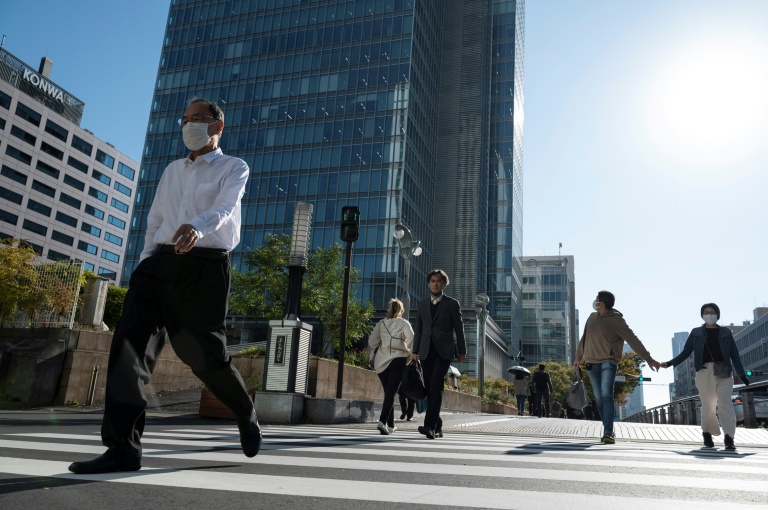
Japan inflation hits four-decade high in October

Japanese inflation hit a four-decade high last month, government data showed Friday, fuelled by high energy costs and a weak yen and ramping up pressure on the central bank to move away from its ultra-loose monetary policies.

Core consumer prices excluding volatile fresh food rose 3.6 percent on-year in October, marginally higher than analyst expectations.

The reading marked the fastest pace since 1982, although it remains below the sky-high levels that have pummelled the United States and other countries.

In reaction to the data, chief cabinet secretary Hirokazu Matsuno told reporters the government “must protect people’s livelihoods from these price rises”.

“Price increases have continued for items closely related to daily life such as utilities and food, due to rising raw material prices and the weak yen,” he said.

The government said last month it would spend $260 billion on an economic stimulus package that includes support for energy bills, which have spiked since Russia’s invasion of Ukraine in February.

“Policies targeting energy and food, which are the main causes of high prices” are included in the relief measures, Matsuno said as he vowed to “pass the extra budget as soon as possible”.

Darren Tay, Japan Economist at Capital Economics, told AFP that the impact of inflation on the average consumer was “very real”.

Prime Minister Fumio Kishida has responded with an “aggressive” stimulus package because “he knows that his electorate is not too happy with rising prices”, Tay added.

– Economy ‘on shaky footing’ –

When energy prices were not taken into account, October’s inflation was a more moderate 2.5 percent, but still higher than in September.

The headline core consumer price index (CPI) has now risen for 14 straight months — putting pressure on the Bank of Japan to tweak its longstanding monetary easing policies.

The US Federal Reserve and other central banks have sharply hiked interest rates this year to tackle inflation.

But Japan, which since the 1990s has swung between periods of sluggish inflation and deflation, has gone against the grain and continues to keep interest rates at ultra-low levels as it tries to kickstart the torpid economy.

Although inflation is now higher than the two-percent targeted by the Bank of Japan for the past decade, it sees the recent price rises as temporary and says there is no reason to change course.

The starkly different approaches taken by the BoJ and the Fed have driven down the value of the yen against the dollar this year from levels of around 115 yen per dollar in March to 140 on Friday, having hit a 32-year low of 151 yen last month.

But while the bank keeps a close watch on inflation, Tay added: “I still don’t think it’s enough for them to change their policy at this point.”

One reason is that Japan’s latest growth data, released on Tuesday, showed a surprise contraction of the world’s third-largest economy in the July-September quarter.

“That shows the bank very clearly that the economy is actually on much shakier footing than they might otherwise have expected,” Tay said.

“The other thing is the global economy is probably going to enter a recession next year, in the first half,” he added.

“We’re basically looking at very weak economic conditions overall, and the Bank of Japan will not risk jeopardising the economy even further by tightening monetary policy at this point.”

Close Bitnami banner
Bitnami