Chinese Business

Asian markets rise but caution over rate outlook dulls sentiment

Asian markets edged up Friday, though caution permeated trading floors as investors tried to gauge the outlook for Federal Reserve monetary policy after several officials tried to temper optimism over signs that inflation is slowing.

While the week has been broadly positive for equities following softer-than-expected US consumer and wholesale price figures, a strong reading on retail sales and jobless claims showed plenty of resilience to higher interest rates.

With that in mind, St Louis Fed President James Bullard warned more hikes were needed to bring inflation down from four-decade highs, adding that they might need to go as high as seven percent.

That was followed by Minneapolis Fed boss Neel Kaskari saying he had not witnessed much evidence that underlying demand was cooling and did not want to forecast when the tightening would end.

The comments followed a similar message put out by other policymakers, who have sought to calm markets, which soared in the wake of last Thursday’s consumer prices reading.

They also fuelled fears among traders that the sharp tightening campaign — including four straight bumper 0.75 point increases in a row — will tip the world’s top economy into recession

On Wednesday, Kansas City Fed chief Esther George said it was unclear how the bank can douse inflation “without having some real slowing” or even a contraction.

Wall Street’s three main indexes ended in the red.

Still, Hong Kong led gains across much of Asia thanks to rally in tech firms, and after China indicated it will ease back on some of its strict Covid restrictions and help the troubled property sector.

Tokyo, Sydney, Seoul, Wellington, Taipei, Manila and Jakarta also rose though Shanghai and Singapore dipped.

– ‘Fundamental disconnect’ –

While most of Asia rose, there was a fear that the recent rally may have run a little ahead of itself.

“The market believes that inflation is on the downtrend. We also believe that, but the fact of inflation having peaked is not a reason for the Fed to turn and cut rates,” Paul Christopher, at Wells Fargo Investment Institute, told Bloomberg Radio.

“That’s the fundamental disconnect that still exists between the Fed and the market.”

And SPI Asset Management’s Stephen Innes added: “Things can turn on a dime, primarily when the fear of missing (out) drives sentiment.

“However, the odds of a pre-Thanksgiving rally are giving way to the hawkish Fed drumbeat and pushback on China reopening plays.”

The pound clawed back some of its losses suffered Thursday after Britain unveiled a budget filled with 55 billion pounds ($65 billion) of tax hikes and spending cuts that traders fear will deepen a cost-of-living crisis and a recession that could last two years.

– Key figures around 0230 GMT –

Tokyo – Nikkei 225: UP 0.2 percent at 27,978.06 (break)

Hong Kong – Hang Seng Index: UP 1.2 percent at 18,266.41

Shanghai – Composite: DOWN 0.2 percent at 3,110.06

Pound/dollar: UP at $1.1892 from $1.1867 on Thursday

Euro/dollar: DOWN at $1.0367 from $1.0370

Dollar/yen: DOWN at 139.91 yen from 140.20 yen

Euro/pound: DOWN at 87.18 from 87.34 pence

West Texas Intermediate: UP 1.1 percent at $82.57 per barrel

Brent North Sea crude: UP 0.9 percent at $90.57 per barrel

New York – Dow: FLAT at 33,546.32 points (close)

London – FTSE 100: DOWN 0.1 percent at 7,346.54 (close) 
Blizzard to pull popular games from China after license spat

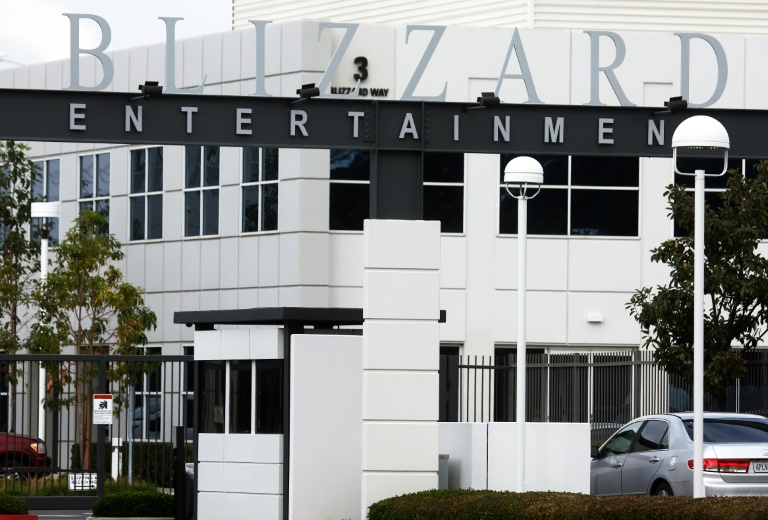
US gaming giant Blizzard Entertainment will suspend most of its services in China from January, the company said Thursday, after it failed to reach a licensing deal with local firm NetEase.

Producer of some of the best-known titles in video gaming, including “World of Warcraft” and “Overwatch”, Blizzard has operated since 2008 in China — the world’s biggest gaming market.

But the firm said it had failed to reach an agreement with Chinese publisher NetEase over an extension to their 14-year partnership.

“We will suspend new sales in the coming days and Chinese players will be receiving details of how this will work soon,” Blizzard Entertainment, a subsidiary of California-based Activision Blizzard, said in a statement.

Microsoft in January offered to buy Activision Blizzard for $69 billion, but the deal has yet to be finalised as anti-trust authorities examine it.

Negotiations with NetEase fell apart, the company said, after the two sides failed to strike a deal that is “consistent with Blizzard’s operating principles and commitments to players and employees”. It did not share further details.

Foreign companies require a license with Chinese publishers in order to sell their games. 

Activision Blizzard, for example, distributes its “Call of Duty” franchise through Tencent, the worlds’ biggest gaming company by revenue.

The break-up comes as Chinese gaming giants are expanding abroad, buying promising studios or expanding their ownership in major publishers in Europe.

– ‘Love and support’ –

Analysts said that the row with NetEase did not mean that Blizzard was leaving China and that the company was expected to find new ways to stay in the market, including through a possible tie-up with Tencent.

“It’s worth noting that this isn’t the first time that Blizzard has done something like this in China,” said Daniel Ahmad, a senior analyst at Niko Partners.

Before working with NetEase, Blizzard had a similar deal with a company called The9, before ending the partnership.

Ahmad said the news was reverberating across the gaming world in China and was a trending topic on Weibo, the Chinese version of Twitter.

Reactions poured in from gamers who were born in the 80s or 90s that grew up playing Blizzard video games as well as younger ones who had discovered the company on mobile, said Ahmad. 

Blizzard thanked local players for their “love and support”, saying it “sincerely looked forward to bringing Blizzard games back to you in the future”.

Upcoming releases for “World of Warcraft: Dragonflight”, “Hearthstone: March of the Lich King”, and season two of “Overwatch 2” will go ahead later this year, the company added.

NetEase’s Hong Kong-listed shares fell more than 9 percent on Thursday.

The Chinese gaming giant said the expiration of the licenses would have “no material impact on NetEase’s financial results”, in a stock exchange filing Thursday.

S. Korea, Saudi Arabia agree to boost energy and defence ties

The leaders of South Korea and Saudi Arabia agreed Thursday to boost ties in key sectors such as energy and defence, with the oil-rich kingdom signing a slew of deals including a $6.7 billion petrochemical agreement.

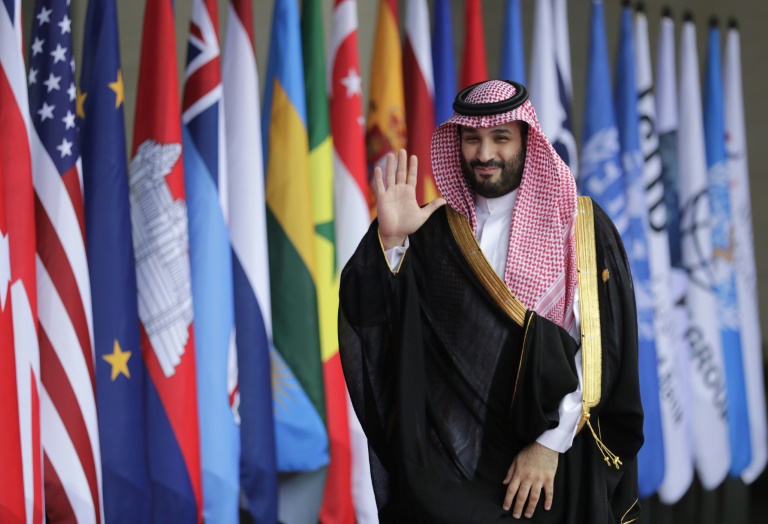
President Yoon Suk-yeol met with Saudi Arabia’s Crown Prince Mohammed bin Salman in the South Korean capital Thursday, announcing a plan to transform bilateral ties into a “strategic partnership”.

Bin Salman, the kingdom’s 37-year-old de facto ruler, often referred to as MBS, arrived in Seoul late Wednesday after attending the Group of 20 summit in Bali, Indonesia. 

Yoon and bin Salman agreed to elevate ties into a “future oriented strategic partnership,” Yoon’s office said in a statement.

The South Korean president wants to see local companies join key Saudi projects such as the futuristic mega-city known as NEOM, and boost cooperation in the defence and energy sectors.

Bin Salman “especially expressed his wish for a significant increase in cooperation in energy, defence and construction industries,” Yoon’s office said.

During the visit, the two governments and companies from both countries — including some of Seoul’s top conglomerates — signed about 20 deals in areas from agriculture to railways.

The Saudi investment ministry said the agreements were worth roughly $30 billion and covered sectors including energy, manufacturing, financial services and pharmaceuticals.

Among the agreements was Saudi investment for South Korean refiner S-OIL’s Shaheen project, which would build petrochemical production facilities in South Korea worth $6.7 billion, Yoon’s office said.

Bin Salman has tried to jumpstart efforts to diversify the economy of Saudi Arabia, the world’s biggest crude exporter, away from oil and to grow the private sector, and Saudi officials look to South Korea as a possible model. 

“Driven by the private sector, Korea’s successful economy and the global positioning of so many Korean companies, which are household names, are testament to Korea’s strategy’s success,” Saudi investment minister Khalid al-Falih said.

“The Korean model has been a benchmark for Saudi Arabia’s Vision 2030 and National Investment Strategy, which aim to increase the private sector’s contribution to the economy to 65 percent of GDP by the end of this decade.”

– Asia tour –

Bin Salman is on a multi-stop Asian tour in a bid to shore up the Gulf nation’s ties with its biggest energy market.

He left South Korea on Thursday for Bangkok, where he is scheduled to attend the Asia-Pacific Economic Cooperation (APEC) forum.

The trip comes as Riyadh feuds with Washington over the OPEC+ oil cartel’s October decision to cut production by two million barrels per day.

Bin Salman, who was officially made prime minister in September, has shaken up the ultraconservative oil titan with economic, social and religious reforms since his meteoric rise to power.

He gained global notoriety in connection with the 2018 killing of dissident Saudi journalist Jamal Khashoggi in the kingdom’s Istanbul consulate.

Last year, US President Joe Biden declassified an intelligence report that found bin Salman had approved the operation against Khashoggi, an assertion Saudi authorities deny.

UK austerity budget stings markets

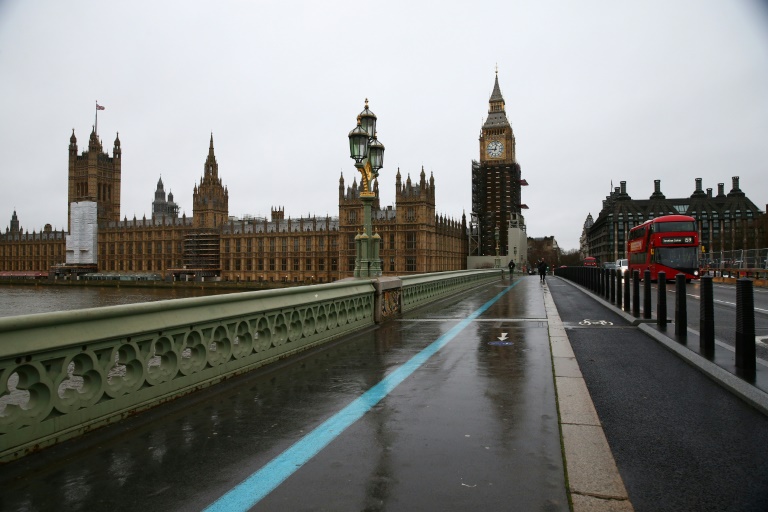
A British austerity budget hit the pound and gilts on Thursday, with stocks suffering worldwide on the glum economic outlook and the prospect of painfully high interest rates to curb inflation.

Britain unveiled a painful budget with £55 billion ($65 billion) of tax hikes and spending cuts despite confirming its economy was already in recession.

Finance minister Jeremy Hunt said the measures were needed to bring financial stability after recent turmoil in the markets, insisting they would alleviate rather than aggravate the downturn.

But the measures didn’t reassure British markets, with the pound falling and government borrowing costs rising. The drop in the pound helped the multinationals on the blue-chip FTSE 100 index, but the wider FTSE 250 index dominated by British firms fell 1.8 percent. 

CMC Markets analyst Michael Hewson said upheaval in markets in September over the profligate fiscal policies of the previous government had largely subsided, meaning a budget that makes Britain a worse place to do business was no longer necessary.

“Today’s budget should have walked the line between pushing inflation lower, without completely crushing demand in the economy with too many tax rises, and spending cuts,” Hewson said in a note to investors. 

“Initial analysis of today’s package suggests that we’ve got a lot of the former, and not too much of the latter, which is bad news if you’re looking to get businesses to invest,” he added.

The pound was down more than one percent against the dollar and also fell against the euro. 

Traders fear the budget will worsen Britain’s cost-of-living crisis after inflation spiked to a 1981 peak of 11.1 percent, and the government confirmed that the British economy was already in a recession that could last two years.

Wall Street stocks moved lower as investors worried the US Federal Reserve will continue to aggressively raise interest rates to lower rampant inflation, even if it means pushing the economy in recession.

Investors have been reassured by some data suggesting inflationary pressures are diminishing, as well as the overall economy is holding up well, but statements by some Fed policymakers spooked traders. 

“Concerns that the Fed will overtighten and force the U.S. economy into a hard landing were partly behind yesterday’s selling and widening inversion of the yield curve,” said Patrick O’Hare at Briefing.com

“Those concerns remain in place today and have been heightened by remarks made this morning by some voting” members of the Fed’s monetary policymaking committee, he added.

The Fed’s main interest rate is currently at 3.75 to 4.0 percent, but one Fed member said it may need to go as high as 7.0 percent. Another said a contraction in the economy may be needed.

Oil prices fell back on worries about Chinese demand.

“China remains a downside risk for oil in the near term, despite its recent relaxation of certain Covid curbs,” said Craig Erlam at OANDA online trading platform.

“A surge in cases in major cities, mass testing, and restrictions will hit economic activity despite recent measures which will weigh on demand in the world’s second-largest economy,” he added.

– Key figures around 1530 GMT –

New York – Dow: DOWN 0.7 percent at 33,335.18 points

EURO STOXX 50: DOWN 0.1 percent at 3,878.42

London – FTSE 100: DOWN less than 0.1 percent at 7,346.54 (close) 

Paris – CAC 40: DOWN 0.5 percent at 6,576.12 (close)

Frankfurt – DAX: UP 0.2 percent at 14,266.38 (close)

Tokyo – Nikkei 225: DOWN 0.4 percent at 27,930.57 (close)

Hong Kong – Hang Seng Index: DOWN 1.2 percent at 18,045.66 (close)

Shanghai – Composite: DOWN 0.2 percent at 3,115.43 (close)

Pound/dollar: DOWN at $1.1777 from $1.1914 on Wednesday

Euro/dollar: DOWN at $1.0325 from $1.0395

Dollar/yen: UP at 140.62 yen from 139.54 yen

Euro/pound: UP at 87.68 from 87.21 pence

Brent North Sea crude: DOWN 2.7 percent at $90.38 per barrel

West Texas Intermediate: DOWN 4.0 percent at $82.20 per barrel

burs-rl/bp

UK austerity budget stings markets

A British austerity budget hit the pound and gilts on Thursday, with stocks suffering worldwide on the glum economic outlook and the prospect of painfully high interest rates to curb inflation.

Britain unveiled a painful budget with £55 billion ($65 billion) of tax hikes and spending cuts despite confirming its economy was already in recession.

Finance minister Jeremy Hunt said the measures were needed to bring financial stability after recent turmoil in the markets, insisting they would alleviate rather than aggravate the downturn.

But the measures didn’t reassure British markets, with the pound falling and government borrowing costs rising. Losses on London stocks deepened, before later easing.

CMC Markets analyst Michael Hewson said  upheaval in markets in September over the profligate fiscal policies of the previous government had largely subsided, meaning a budget that makes Britain a worse place to do business was no longer necessary.

“Today’s budget should have walked the line between pushing inflation lower, without completely crushing demand in the economy with too many tax rises, and spending cuts,” Hewson said in a note to investors. 

“Initial analysis of today’s package suggests that we’ve got a lot of the former, and not too much of the latter, which is bad news if you’re looking to get businesses to invest,” he added.

The pound was down around one percent to $1.1799 in afternoon trading. 

London’s blue-chip FTSE 100 index was down 0.5 percent.

Traders fear the budget will worsen Britain’s cost-of-living crisis after inflation spiked to a 1981 peak of 11.1 percent, and the government confirmed that the British economy was already in a recession that could last two years.

Wall Street opened sharply lower as investors worried the US Federal Reserve will continue to aggressively raise interest rates to lower rampant inflation, even if it means pushing the economy in recession.

Investors have been reassured by some data suggesting inflationary pressures are diminishing, as well as the overall economy is holding up well, but statements by some Fed policymakers spooked traders. 

“Concerns that the Fed will overtighten and force the U.S. economy into a hard landing were partly behind yesterday’s selling and widening inversion of the yield curve,” said Patrick O’Hare at Briefing.com

“Those concerns remain in place today and have been heightened by remarks made this morning by some voting” members of the Fed’s monetary policymaking committee, he added.

The Fed’s main interest rate is currently at 3.75 to 4.0 percent, but one Fed member said it may need to go as high as 7.0 percent. Another said a contraction in the economy may be needed.

Oil prices fell back on worries about Chinese demand.

“China remains a downside risk for oil in the near term, despite its recent relaxation of certain Covid curbs,” said Craig Erlam at OANDA online trading platform.

“A surge in cases in major cities, mass testing, and restrictions will hit economic activity despite recent measures which will weigh on demand in the world’s second-largest economy,” he added.

– Key figures around 1330 GMT –

London – FTSE 100: DOWN 0.5 percent at 7,316.23 points

Paris – CAC 40: DOWN 1.0 percent at 6,538.53

Frankfurt – DAX: DOWN 0.3 percent at 14,186.35

EURO STOXX 50: DOWN 0.8 percent at 3,850.90

New York – Dow: DOWN 0.8 percent at 33,283.40

Tokyo – Nikkei 225: DOWN 0.4 percent at 27,930.57 (close)

Hong Kong – Hang Seng Index: DOWN 1.2 percent at 18,045.66 (close)

Shanghai – Composite: DOWN 0.2 percent at 3,115.43 (close)

Pound/dollar: DOWN at $1.1799 from $1.1914 on Wednesday

Euro/dollar: DOWN at $1.0331 from $1.0395

Dollar/yen: UP at 140.38 yen from 139.54 yen

Euro/pound: UP at 87.55 from 87.21 pence

Brent North Sea crude: DOWN 1.2 percent at $91.72 per barrel

West Texas Intermediate: DOWN 1.9 percent at $83.97 per barrel

burs-rl/bp

Alibaba reports loss of $2.9 billion in third quarter

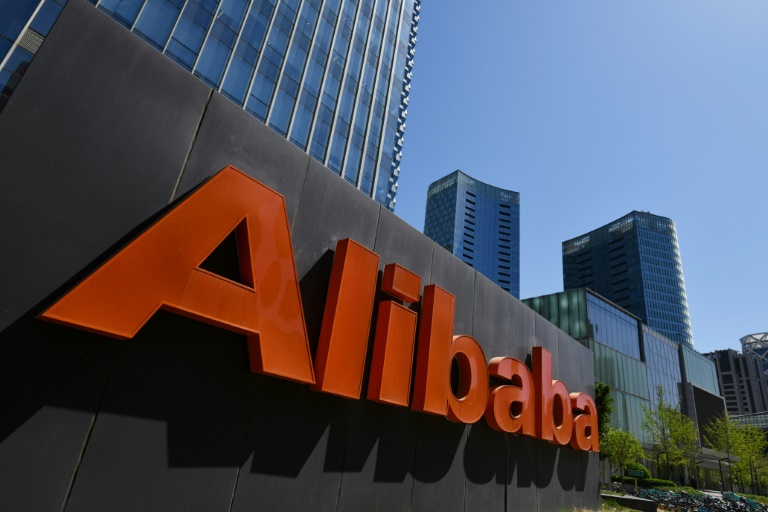
Chinese e-commerce giant Alibaba on Thursday reported a loss of 20.6 billion yuan ($2.89 billion) for the third quarter, as the company grapples with an economic slowdown and an anti-monopoly crackdown.

The heavy net loss attributable to ordinary shareholders was primarily due to a “decrease in market prices of our equity investments in publicly traded companies”, among other factors, the company said in a statement.

Alibaba’s performance is widely seen as a gauge of Chinese consumer sentiment, given its market dominance.

Revenue for the three months ending September 30 was up three percent year-on-year at 207.2 billion yuan, which Chief Financial Officer Toby Xu said was achieved “in spite of the impact on consumption demand by the Covid-19 resurgence in China as well as slowing cross-border commerce”.

Alibaba said it achieved revenue growth by “enhancing operating efficiency” as well as through the expansion of its logistics and services businesses, despite a slump in e-commerce sales within China.

It comes after the company earlier this year reported flat quarterly revenue growth for the first time ever.

– Flagging demand –

The company said in its statement on Thursday that revenue from domestic commerce had fallen in the third quarter, “mainly as a result of softer consumption demand, Covid-19 resurgence and restrictions, as well as ongoing competition”.

In a sign of difficulties for Alibaba, the company appears to have laid off a number of employees, with its headcount down more than 1,700 from the previous quarter.

China’s major tech companies have faced economic uncertainty, Covid-19 restrictions that have depressed consumer spending, as well as heightened scrutiny from regulators in recent months.

Fellow tech titan Tencent reported on Wednesday its second quarterly drop in revenue in a row.

Alibaba in particular has been at the centre of regulatory crackdowns at home and abroad.

US authorities have put the company on a watchlist that could see it delisted in New York if it does not comply with disclosure orders, causing its shares to slump.

Chinese authorities pulled a planned IPO by the company’s financial arm Ant Group at the last minute in 2020, then hit Alibaba with a record $2.75 billion fine for alleged unfair practices last year.

The company’s Singles Day e-commerce festival, which traditionally dwarfs similar US events such as Black Friday and Cyber Monday, has been more muted in recent years.

Alibaba — alongside main rival JD.com — did not release full sales figures for the shopping bonanza for the first time ever this year, instead saying in a statement that sales were flat from last year.

Europe stocks mostly drop before UK budget

European equities mostly fell Thursday with London on tenterhooks before a painful UK budget set to rip up the country’s economic forecasts.

The British stock market slid 0.6 percent and the pound fell versus the dollar as finance minister Jeremy Hunt readied a budget that will hike taxes and slash spending in a bid to balance the books.

In the eurozone, Paris lost 0.5 percent but Frankfurt won 0.2 percent on upbeat Siemens results, and after a mixed Asian session.

Investors also tracked fresh Russian strikes that hit cities across Ukraine, having been spooked Wednesday by a deadly missile blast in Poland.

Thursday’s focus remains squarely on Britain’s announcement which is scheduled for 1130 GMT.

Traders fear the budget will worsen Britain’s cost-of-living crisis after inflation spiked to a 1981 peak of 11.1 percent, as the economy heads toward recession. 

“Hunt is poised to unveil a raft of spending cuts and tax increases to plug the estimated £55 billion ($65 billion) fiscal black hole,” said Interactive Investor analyst Victoria Scholar.

“With a recession on the horizon and the 41-year high inflation there are concerns that we are heading back to an era of austerity and that could add to the woes facing consumers and businesses,” she warned.

The UK government will also give fresh estimates for the country’s growth and inflation.

Elsewhere, Wall Street was hit Wednesday after retailer Target posted weak results and warned of a poor festive shopping season.

Two reports showing inflation easing in the world’s top economy provided a springboard for world markets over much of the past week as investors took the readings to mean almost a year of monetary tightening was finally kicking in.

But on Wednesday the commerce department said retail sales jumped far more than expected last month, suggesting Americans are still able to weather the higher inflation and interest rate environment.

That was compounded by comments from a top Fed official that she did not see the bank stopping rate hikes, indicating she was willing to push borrowing costs above five percent, from the current 3.75 to 4.0 percent.

Traders have for months grown increasingly fearful that the Fed’s hawkish tilt will cause a recession, and policymakers have made clear they are willing to keep lifting even if that means hurting the economy.

The Bank of England, which is also raising interest rates to combat sky-high inflation, says Britain is probably already in recession after its economy shrank in the third quarter and will do so again in the final three months of 2022.

– Key figures around 1000 GMT –

London – FTSE 100: DOWN 0.6 percent at 7,309.46 points

Paris – CAC 40: DOWN 0.5 percent at 6,573.74

Frankfurt – DAX: UP 0.2 percent at 14,262.63

EURO STOXX 50: DOWN 0.2 percent at 3,876.21

Tokyo – Nikkei 225: DOWN 0.4 percent at 27,930.57 (close)

Hong Kong – Hang Seng Index: DOWN 1.2 percent at 18,045.66 (close)

Shanghai – Composite: DOWN 0.2 percent at 3,115.43 (close)

New York – Dow: DOWN 0.1 percent at 33,553.83 points (close)

Pound/dollar: DOWN at $1.1878 from $1.1914 on Wednesday

Euro/dollar: DOWN at $1.0360 from $1.0395

Dollar/yen: UP at 139.67 yen from 139.54 yen

Euro/pound: FLAT at 87.21 pence

Brent North Sea crude: DOWN 0.4 percent at $92.46 per barrel

West Texas Intermediate: DOWN 0.8 percent at $84.94 per barrel

S. Korea, Saudi Arabia agree to boost energy and defence ties

The leaders of South Korea and Saudi Arabia agreed Thursday to boost ties in key sectors such as energy and defence, with the oil-rich kingdom signing a slew of deals including a $6.7 billion petrochemical agreement.

President Yoon Suk-yeol met with Saudi Arabia’s Crown Prince Mohammed bin Salman in the South Korean capital Thursday, with the pair announcing a plan to transform bilateral ties into a “strategic partnership”.

Bin Salman, the kingdom’s 37-year-old de facto ruler, often referred to as MBS, arrived in Seoul late Wednesday after attending the Group of 20 summit in Bali, Indonesia.

He is on a multi-stop Asian tour, in a likely bid to shore up the Gulf nation’s ties with its biggest energy market.

The trip comes as Riyadh feuds with Washington over the OPEC+ oil cartel’s October decision to cut production by two million barrels per day.

Yoon and bin Salman agreed to elevate ties into a “future oriented strategic partnership,” Yoon’s office said in a statement.

The South Korean president wants to see local companies join key Saudi projects such as the NEOM smart city project, and boost cooperation in the defence and energy sectors.

Bin Salman “especially expressed his wish for a significant increase in cooperation in energy, defence and construction industries,” Yoon’s office said.

During the visit, the two governments and companies from both countries — including some of Seoul’s top conglomerates — signed about 20 deals in areas from agriculture to railways. 

Among the agreements was Saudi investment for South Korean refiner S-OIL’s Shaheen project, which would build petrochemical production facilities in South Korea worth $6.7 billion, Yoon’s office said.

Bin Salman, who was officially made Prime Minister in September, has shaken up the ultraconservative oil titan with economic, social and religious reforms since his meteoric rise to power.

He gained global notoriety in connection with the 2018 killing of dissident Saudi journalist Jamal Khashoggi in the kingdom’s Istanbul consulate.

Last year, US President Joe Biden declassified an intelligence report that found Prince Mohammed had approved the operation against Khashoggi, an assertion Saudi authorities deny.

Markets hurt as rate hike woes return to the fore

Trading was subdued on Thursday as the optimism that characterised recent sessions was dealt a blow by data showing a resilience among US consumers that gives the Federal Reserve room to keep hiking interest rates.

Two reports showing inflation easing in the world’s top economy provided a springboard for world markets over much of the past week as investors took the readings to mean almost a year of monetary tightening was finally kicking in.

But on Wednesday the commerce department said retail sales jumped far more than expected last month, suggesting Americans are still able to weather the higher inflation and interest rate environment.

That was compounded by comments from a top Fed official that she did not see the bank stopping interest rate hikes, indicating she was willing to push borrowing costs above five percent, from the current 3.75 to 4.0 percent.

San Francisco Fed President Mary Daly told CNBC: “Somewhere between 4.75 and 5.25 seems a reasonable place to think about as we go into the next meeting.

“And so that does put it in the line of sight that we would get to a point where we would raise and hold.”

“Pausing is off the table right now, it’s not even part of the discussion. Right now the discussion is, rightly, in slowing the pace,” she added.

Traders have for months grown increasingly fearful that the hawkish tilt by the central bank will cause a recession, and policymakers have made clear they are willing to keep lifting even if that means hurting the economy.

JPMorgan Chase said the United States would tip into a “mild” recession in 2023 owing to the rate increases, adding that it saw the Fed easing policy the following year in 2024.

“Every time equity and bond markets are thinking the Fed is done and start taking off in a rally, the Fed gets out and starts talking that back down again,” Cheryl Smith, of Trillium Asset Management, told Bloomberg Television.

Hong Kong lost more than one percent, hit by profit-taking after a 14 percent surge between Friday and Tuesday, while there were also losses in Shanghai.

Still, observers said there were signs of optimism in Chinese markets after Beijing moved to ease some of its strict Covid restrictions and provide much-needed help to the property sector.

Tokyo, Seoul, Taipei, Mumbai and Bangkok also fell, though Singapore, Sydney, Wellington, Jakarta and Manila edged up.

The pound edged back against the dollar as Britain prepares for what is expected to be a grim budget later in the day by Finance Minister Jeremy Hunt, who has flagged a jump in taxes and spending cuts.

The announcement comes a day after figures showed UK inflation spiked at 11.1 percent in October, the highest since 1981, as the country is hammered by a cost-of-living crisis.

London opened slightly lower, while Paris and Frankfurt rose.

– Key figures around 0820 GMT –

Tokyo – Nikkei 225: DOWN 0.4 percent at 27,930.57 (close)

Hong Kong – Hang Seng Index: DOWN 1.2 percent at 18,045.66 (close)

Shanghai – Composite: DOWN 0.2 percent at 3,115.43 (close)

London – FTSE 100: DOWN 0.1 percent at 7,345.30

Pound/dollar: UP at $1.1933 from $1.1914 on Wednesday

Euro/dollar: DOWN at $1.0389 from $1.0395

Dollar/yen: DOWN at 139.18 yen from 139.54 yen

Euro/pound: DOWN at 87.05 pence from 87.21 pence

West Texas Intermediate: DOWN 0.7 percent at $85.02 per barrel

Brent North Sea crude: DOWN 0.2 percent at $92.65 per barrel

New York – Dow: DOWN 0.1 percent at 33,553.83 points (close)

Asian markets sink as rate hike woes return to the fore

Trading was subdued in Asia on Thursday as the optimism that characterised recent sessions was dealt a blow by data showing a resilience among US consumers that gives the Federal Reserve room to keep hiking interest rates.

Two reports showing inflation easing in the world’s top economy provided a springboard for world markets over much of the past week as investors took the readings to mean almost a year of monetary tightening was finally kicking in.

But on Wednesday the commerce department said retail sales jumped far more than expected last month, suggesting Americans are still able to weather the higher inflation and interest rate environment.

That was compounded by comments from a top Fed official that she did not see the bank stopping hiking and indicating she was willing to push borrowing costs above five percent, from the current 3.75-4.0 percent.

San Francisco Fed President Mary Daly told CNBC: “Somewhere between 4.75 and 5.25 seems a reasonable place to think about as we go into the next meeting.

“And so that does put it in the line of sight that we would get to a point where we would raise and hold.”

“Pausing is off the table right now, it’s not even part of the discussion. Right now the discussion is, rightly, in slowing the pace,” she added.

Traders have for months grown increasingly fearful that the hawkish tilt by the central bank will cause a recession, and policymakers have made clear they are willing to keep lifting even if that means hurting the economy.

Meanwhile, JPMorgan Chase said the United States would tip into a “mild” recession in 2023 owing to the rate increases, adding that it saw the Fed easing policy the following year in 2024.

“Every time equity and bond markets are thinking the Fed is done and start taking off in a rally, the Fed gets out and starts talking that back down again,” Cheryl Smith, of Trillium Asset Management, told Bloomberg Television.

In early trade, Hong Kong lost more than two percent, hit by profit-taking after a 14 percent surge between Friday and Tuesday, while there were also losses in Shanghai.

Still, observers said there were signs of optimism in Chinese markets after Beijing moved to ease some of its strict Covid restrictions and provide much-needed help to the property sector.

Tokyo, Seoul, Taipei, Manila and Jakarta also fell, though Singapore, Sydney and Manila edged up.

The pound was down against the dollar as Britain prepares for what is expected to be a grim budget later in the day by finance minister Jeremy Hunt, who has flagged a jump in taxes and spending cuts.

The announcement comes a day after figures showed UK inflation spiked at 11.1 percent in October, the highest since 1981, as the country is hammered by a cost-of-living crisis.

– Key figures around 0230 GMT –

Tokyo – Nikkei 225: DOWN 0.4 percent at 27,915.58 (break)

Hong Kong – Hang Seng Index: DOWN 2.5 percent at 17,811.86

Shanghai – Composite: DOWN 0.9 percent at 3,092.40

Pound/dollar: DOWN at $1.1876 from $1.1914 on Wednesday

Euro/dollar: DOWN at $1.0367 from $1.0395

Dollar/yen: UP at 139.56 yen from 139.54 yen

Euro/pound: UP at 87.31 pence from 87.21 pence

West Texas Intermediate: DOWN 1.0 percent at $84.71 per barrel

Brent North Sea crude: DOWN 0.9 percent at $92.07 per barrel

New York – Dow: DOWN 0.1 percent at 33,553.83 points (close)

London – FTSE 100: DOWN 0.3 percent at 7,351.19 (close) 

Close Bitnami banner
Bitnami