Chinese Business

Stocks mixed on China moves, dollar drops

European and Asian stock markets were mixed Tuesday following losses on Wall Street and as China moves to shore up its economy.

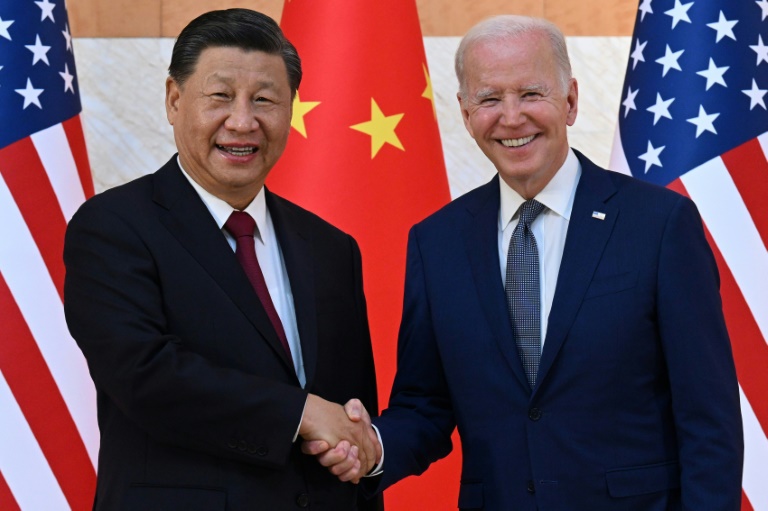
A largely positive meeting between US President Joe Biden and his Chinese counterpart Xi Jinping indicated an easing of tensions and helped sentiment.

However, there remains a lot of trepidation that central bank interest rate hikes aimed at taming inflation will eventually send economies into a recession.

The US is still expected to carry on hiking interest rates, but cooling inflation in the world’s biggest economy means the Federal Reserve is set to pull back on aggressive tightening, weighing on the dollar.

Vice Fed chair Lael Brainard said that while it would probably be right to slow down the rate hikes, “we have additional work to do both on raising rates and sustaining restraint to bring inflation down”.

Those comments contributed to Wall Street’s three main indices falling Monday.

“European stock markets made tentative gains on Tuesday after a positive handover from Asia in spite of Wall Street snapping a two-day bounce following last week’s inflation reading,” noted Neil Wilson, chief market analyst at Finalto trading group.

There was more unrest in the tech sector, with Amazon preparing to lay off as many as 10,000 employees, The New York Times reported on Monday.

Asian traders were a little more upbeat, cheered by China’s move to ease some of its strict Covid-19 restrictions and provide much-needed support to its beleaguered property sector.

Hong Kong rose more than four percent and Shanghai also closed in positive territory.

Optimism for a thawing in relations between Washington and Beijing was boosted after Biden and Xi’s extended talks on the sidelines of the G20 summit in Indonesia.

While there remain differences on hot-potato issues such as Taiwan, the two did find common ground on the Ukraine conflict, climate and the need to avoid another Cold War.

After the talks, Chinese foreign minister Wang Yi described it as a “new starting point”, adding that Beijing hoped “to stop the tumbling of bilateral ties and to stabilise the relationship”.

After a painful year for markets across the planet, dealers are hopeful that there is finally light at the end of the tunnel.

“It’s certainly a time to be thinking about a recovery regime unfolding for markets,” said Kristina Hooper of Invesco.

“But it’s going to take a little time before we know if this really is something of a turning point for inflation and the Fed can be a lot more comfortable about hastening the end of tightening,” she told Bloomberg Radio.

– Key figures around 1145 GMT –

London – FTSE 100: FLAT at 7,384.31 points

Frankfurt – DAX: DOWN 0.2 percent at 14,285.17

Paris – CAC 40: UP 0.3 percent at 6,627.48

EURO STOXX 50: UP 0.2 percent at 3,893.36

Tokyo – Nikkei 225: UP 0.1 percent at 27,990.17 (close)

Hong Kong – Hang Seng Index: UP 4.1 percent at 18,343.12 (close)

Shanghai – Composite: UP 1.6 percent at 3,134.08 (close)

New York – Dow: DOWN 0.6 percent at 33,536.70 (close)

Euro/dollar: UP at $1.0415 from $1.0331 on Monday

Pound/dollar: UP at $1.1870 from $1.1751 

Dollar/yen: DOWN at 139.25 yen from 139.90 yen

Euro/pound: DOWN at 87.73 pence from 87.89 pence

West Texas Intermediate: DOWN 0.6 percent at $85.32 per barrel

Brent North Sea crude: DOWN 0.4 percent at $92.80 per barrel
Rich nations target $20 bn to wean Indonesia off coal

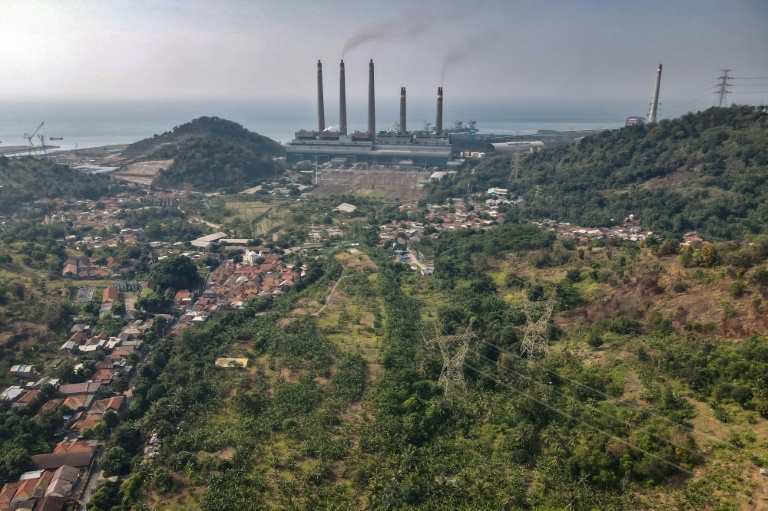
Rich nations pledged Tuesday to raise at least $20 billion to help wean Indonesia off coal and reach carbon neutrality by 2050, a decade earlier than planned, the White House said.

The United States, Japan, Canada and six European countries signed the accord with Jakarta on the sidelines of the G20 summit in Bali to ensure a “just power sector transition” away from Indonesia’s coal-dependent economy, they said in a statement released by the White House.

Under the deal, Indonesia, home to the world’s third-largest rainforest, pledges to be carbon-neutral by 2050, — 10 years earlier than previously planned — and to almost double its renewable energy generation by 2030.

Indonesian President Joko Widodo hailed the deal, which follows a similar agreement for South Africa last year, as a model that could be replicated in other countries to meet the world’s climate goals.

“Indonesia is committed to using our energy transition to achieve a green economy and drive sustainable development,” he said, pledging the deal would help “accelerate this transition”.

Sponsors of the agreement said Jakarta had committed to an ambitious shift to clean energy in return for $10 billion in public sector finance and $10 billion in private funding over three to five years.

The financing included “grants, concessional loans, market-rate loans, guarantees and private investments” for the country, which has one of the largest coal reserves in the world.

US President Joe Biden said the deal showed “countries can dramatically cut emissions and increase renewable energy while… creating quality jobs and protecting livelihoods and communities.”

– ‘Work in progress’ –

Indonesia has at times questioned climate deals, including a 2021 agreement to end deforestation by 2030 it signed, warning it could hinder the country’s economic development.

But despite the new incentives, experts cautioned that a lot of work remained for Indonesia to meet the demands of the partnership.

“It’s a work in progress. But Indonesia has gotten to enough comfort level with the scale of finance that they want to go ahead with it. There will be a lot of follow up work,” said Friederike Roder, senior director for EU and G20 at NGO Global Citizen.

But he warned: “There is concern that the finance is not adequate for the total transformation that is needed”.

Indonesian officials welcomed the pact despite the worries.

The deal shows “we can create a more sustainable world for our grandchildren, our citizens, and the future generation,” Indonesia’s coordinating minister of maritime and investment affairs Luhut Binsar Pandjaitan told a press conference.

The donor pledge announced on Tuesday was part of a slew of projects announced under an infrastructure partnership — aimed as a counter-balance to China’s Belt and Road Initiative — to provide support to developing nations.

They ranged from funding for digital projects in the Pacific to investment in the sustainable mining of nickel and cobalt in Brazil and powering solar projects in Honduras.

Rich nations target $20 bn to wean Indonesia off coal

Rich nations pledged Tuesday to raise at least $20 billion to help wean Indonesia off coal and reach carbon neutrality by 2050, a decade earlier than planned, the White House said.

The United States, Japan, Canada and six European countries signed the accord with Jakarta on the sidelines of the G20 summit in Bali to ensure a “just power sector transition” away from Indonesia’s coal-dependent economy, they said in a statement released by the White House.

Under the deal, Indonesia, home to the world’s third-largest rainforest, pledges to be carbon-neutral by 2050, 10 years earlier than previously planned, and to almost double its renewable energy generation by 2030.

Indonesian President Joko Widodo hailed the deal as a model that could be replicated in other countries to meet the world’s climate goals.

“Indonesia is committed to using our energy transition to achieve a green economy and drive sustainable development,” he said in a statement.

“We are grateful for the cooperation and the support from our international partners to realise its full implementation that will accelerate this transition.”

Sponsors of the deal said Jakarta had committed to an ambitious shift to clean energy in return for $10 billion in public sector finance and $10 billion in private funding over three to five years.

The financing included “grants, concessional loans, market-rate loans, guarantees and private investments” for the country, which has one of the largest coal reserves in the world.

US President Joe Biden praised Jakarta’s “tremendous leadership” in sealing the partnership.

“The resulting new and accelerated targets demonstrate how countries can dramatically cut emissions and increase renewable energy while advancing a commitment to creating quality jobs and protecting livelihoods and communities,” he said.

Indonesia had questioned the terms of a 2021 deal to end deforestation by 2030 signed by over 100 countries, including the Southeast Asian archipelago, arguing it would hinder the country’s economic development.

The donor pledge announced on Tuesday was part of a slew of projects announced under an infrastructure partnership — aimed as a counter-balance to China’s Belt and Road Initiative — to provide support to poor and developing nations.

They ranged from funding for digital projects in the Pacific, to investment in the sustainable mining of nickel and cobalt in Brazil and powering solar projects in Honduras.

Asian markets rise further as China moves provide support

Asian markets rose Tuesday as investors brushed off a reverse on Wall Street and focused on signs of slowing inflation and China’s moves to shore up its economy.

A largely positive meeting between US President Joe Biden and Chinese counterpart Xi Jinping indicated an easing of tensions between the powers and added to the upbeat mood on trading floors.

Still, there remains a lot of trepidation that central bank interest rate hikes aimed at taming inflation will eventually send economies into a recession.

And since Thursday’s forecast-beating consumer prices data, Federal Reserve officials have warned there were more increases in the pipeline, though they are not expected to be as big as the previous four rises, of 75 basis points.

The latest was vice chair Lael Brainard, who said that while it would probably be right to slow down the rate hikes, “we have additional work to do both on raising rates and sustaining restraint to bring inflation down”.

The comments, along with profit-taking, helped push Wall Street’s three main indexes into the red and pushed the dollar up against its peers, having tumbled last week.

Stephen Innes at SPI Asset Management said: “With US growth yet to fall off a cliff, make no mistake, inflation is still at the fulcrum of market expectations as board members continue to push back a bit on market pricing.”

However, Asian traders were a little more upbeat, cheered by China’s move to ease some of its strict Covid-19 restrictions and provide much-needed support to its beleaguered property sector.

Hong Kong rose more than four percent and Shanghai also closed in positive territory.

Tokyo, Singapore, Seoul, Manila, Mumbai, Taipei, Jakarta, Bangkok and Wellington also gained, but Sydney dipped.

Paris and Frankfurt rose at the open though London was slightly down.

Optimism for a thawing in relations between Washington and Beijing was boosted after Biden and Xi’s extended talks on the sidelines of the G20 summit in Indonesia.

While there remain differences on hot-potato issues such as Taiwan, the two did find common ground on the Ukraine conflict, climate and the need to avoid another Cold War.

After the talks, Chinese Foreign Minister Wang Yi described it as a “new starting point”, adding that Beijing hoped “to stop the tumbling of bilateral ties and to stabilise the relationship”.

After a painful year for markets across the planet, dealers are hopeful that there is finally light at the end of the tunnel.

“It’s certainly a time to be thinking about a recovery regime unfolding for markets,” said Kristina Hooper of Invesco.

“But it’s going to take a little time before we know if this really is something of a turning point for inflation and the Fed can be a lot more comfortable about hastening the end of tightening,” she told Bloomberg Radio.

– Key figures around 0820 GMT –

Tokyo – Nikkei 225: UP 0.1 percent at 27,990.17 (close)

Hong Kong – Hang Seng Index: UP 4.1 percent at 18,343.12 (close)

Shanghai – Composite: UP 1.6 percent at 3,134.08 (close)

London – FTSE 100: DOWN 0.1 percent at 7,375.39

Euro/dollar: UP at $1.0410 from $1.0331 on Monday

Pound/dollar: UP at $1.1825 from $1.1751 

Dollar/yen: DOWN at 139.44 yen from 139.90 yen

Euro/pound: UP at 88.00 pence from 87.89 pence

West Texas Intermediate: DOWN 0.6 percent at $85.38 per barrel

Brent North Sea crude: DOWN 0.4 percent at $92.78 per barrel

New York – Dow: DOWN 0.6 percent at 33,536.70 (close)

Renault touts 'warm' Nissan ties as pair review alliance

There is a “warm atmosphere” within the Renault-Nissan alliance and a deal regarding its future will be announced “in due time”, the French carmaker’s chairman said Tuesday.

The auto giants are in talks over a potentially drastic reshaping of their sometimes rocky 23-year union.

Nissan currently owns 15 percent of Renault, but Renault owns 43 percent of Nissan — a power imbalance that has long bothered the Japanese company.

While the discussions are behind closed doors, a source close to the matter told AFP that they involve a rebalancing of the cross-shareholding arrangement, and a possible Nissan investment in Renault’s new electric vehicle venture.

But concerns over issues such as the sharing of EV intellectual property have delayed an announcement, according to the source.

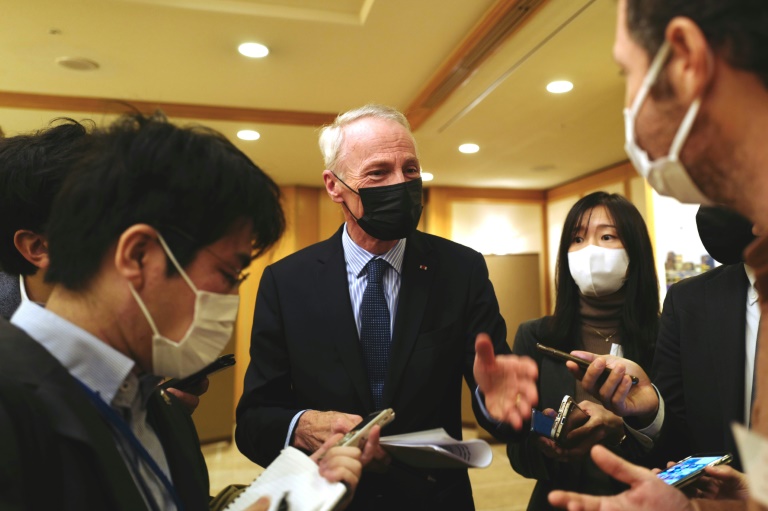
On Tuesday, Renault chair and alliance boss Jean-Dominique Senard sought to reassure reporters in Tokyo that the “warm atmosphere” within the alliance “bodes well” for its future.

“Confidence and trust have never been as high” between the pair and their smaller partner Mitsubishi Motors since he took charge of the three-way alliance almost four years ago, Senard said.

Any deal on a new shareholding agreement will be unveiled “in due time”, he added after giving a speech at an international financial forum.

Renault and Nissan joined forces in 1999, when the French company rescued the Japanese carmaker from bankruptcy.

Relations between the pair have not always been smooth, however, and were thrown into further disarray by the shock 2018 arrest of tycoon alliance boss Carlos Ghosn.

This month, Renault announced it will split its operations in two — a new electric vehicle business called Ampere and a separate subsidiary for petrol, diesel and hybrid cars that will pair up with China’s Geely.

Renault has yet to outline the part that Nissan will play in the new electric division, but its joint venture with Geely is reportedly raising questions in Japan about future technology transfers to the Chinese carmaker.

Chip giant TSMC shares surge on Buffett stake

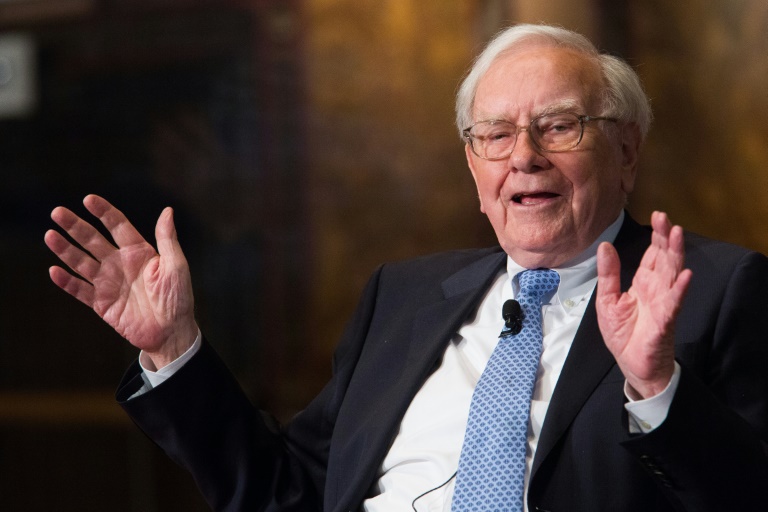
Shares in Taiwan’s TSMC soared on Tuesday after Warren Buffett’s Berkshire Hathaway confirmed it had taken a close to $5 billion stake in a major boost of confidence for the semiconductor giant.

Taiwan Semiconductor Manufacturing Company operates the world’s largest silicon wafer factories and produces some of the most advanced microchips used in everything from smartphones and cars to missiles.

The company’s shares and profits soared for the first two years of the coronavirus pandemic during a global shortage of semiconductors.

That climb came to an end this year as demand was clipped and the prospect of a global downturn loomed with the firm’s shares down 24 percent since January 1 and some US$230 billion wiped from its valuation. 

But that rout turned a corner in the past week with a sudden surge of investor buying and in Tuesday morning trade the company was up nearly eight percent.

That came after Buffet’s Hathaway confirmed in a filing it had acquired about 60 million American Depository Receipts in TSMC in the three months ended September.

Billionaire finance guru Buffett is one of the world’s most successful investors and has a long track record of making savvy, lucrative bets.

In October TSMC announced plans to slash expenditure by around 10 percent in the latest sign from a major global chipmaker that they are expecting the global downturn to deepen.

But the company remains in the fortunate position of making some of the world’s most advanced chips, with key clients including Apple, Nvidia and Qualcomm.

The company reported forecast-beating results in the third quarter with a net income of TW$280.9 billion ($8.8 billion).

Asian markets rise further as China moves provide support

Asian markets rose Tuesday as investors brushed off a reverse on Wall Street and focused on signs of slowing inflation and China’s moves to shore up its economy.

A largely positive meeting between US President Joe Biden and Chinese counterpart Xi Jinping indicated an easing of tensions between the powers and added to the upbeat mood on trading floors.

Still, there remains a lot of trepidation that central bank interest rate hikes aimed at taming inflation will eventually send economies into a recession.

And since Thursday’s forecast-beating consumer prices data, Federal Reserve officials have warned there were more increases in the pipeline, though they are not expected to be as big as the previous four rises, of 75 basis points.

The latest was vice chair Lael Brainard, who said that while it would probably be right to slow down the rate hikes, “we have additional work to do both on raising rates and sustaining restraint to bring inflation down”. 

The comments, along with profit-taking, helped push Wall Street’s three main indexes into the red and pushed the dollar up against its peers, having tumbled last week.

Stephen Innes at SPI Asset Management said: “With US growth yet to fall off a cliff, make no mistake, inflation is still at the fulcrum of market expectations as board members continue to push back a bit on market pricing.”

However, Asian traders were a little more upbeat, cheered by China’s move to ease some of its strict Covid-19 restrictions and provide much-needed support to its beleaguered property sector.

Hong Kong rose more than two percent and Shanghai was also in positive territory.

Tokyo, Singapore, Seoul, Mumbai, Manila, Taipei, Bangkok and Wellington were also up, but Sydney and Jakarta dipped. 

Optimism for a thawing in relations between Washington and Beijing was boosted after Biden and Xi’s extended talks on the sidelines of the G20 summit in Indonesia.

While there remain differences on hot-potato issues such as Taiwan, the two did find common ground on the Ukraine conflict, climate and the need to avoid another Cold War.

After the talks, Chinese Foreign Minister Wang Yi described it as a “new starting point”, adding that Beijing hoped “to stop the tumbling of bilateral ties and to stabilise the relationship”.

After a painful year for markets across the planet, dealers are hopeful that there is finally light at the end of the tunnel.

“It’s certainly a time to be thinking about a recovery regime unfolding for markets,” said Kristina Hooper of Invesco.

“But it’s going to take a little time before we know if this really is something of a turning point for inflation and the Fed can be a lot more comfortable about hastening the end of tightening,” she told Bloomberg Radio.

– Key figures around 0410 GMT –

Tokyo – Nikkei 225: UP 0.2 percent at 28,017.28

Hong Kong – Hang Seng Index: UP 3.6 percent at 18,257.69 (break)

Shanghai – Composite: UP 1.3 percent at 3,122.58 (break)

Euro/dollar: DOWN at $1.0324 from $1.0331 on Friday

Pound/dollar: UP at $1.1764 from $1.1751 

Dollar/yen: UP at 140.35 yen from 139.90 yen

Euro/pound: DOWN at 87.74 pence from 87.89 pence

West Texas Intermediate: DOWN 0.4 percent at $85.51 per barrel

Brent North Sea crude: DOWN 0.1 percent at $93.01 per barrel

New York – Dow: DOWN 0.6 percent at 33,536.70 (close)

London – FTSE 100: UP 0.9 percent at 7,385.17 (close)

Most Asian markets up further as China moves provide support

Asian markets mostly rose Tuesday as investors brushed off a reverse on Wall Street and focused on signs of slowing inflation and China’s moves to shore up its economy.

While the week got off to a slower start, the mood remains buoyant across trading floors, particularly in Hong Kong, where tech firms led the way.

Still, there remains a lot of trepidation that central bank interest rate hikes aimed at taming inflation will eventually send economies into a recession.

And since Thursday’s forecast-beating consumer prices data, Federal Reserve officials have warned there were more increases in the pipeline, though they are not expected to be as big as the previous four 75 basis point rises.

The latest was vice chair Lael Brainard, who said that while it would probably be right to slow down the rate hikes, “we have additional work to do both on raising rates and sustaining restraint to bring inflation down”. 

The comments, along with profit-taking, helped push Wall Street’s three main indexes into the red and pushed the dollar up against its peers, having tumbled last week.

Stephen Innes at STI Asset Management said: “With US growth yet to fall off a cliff, make no mistake, inflation is still at the fulcrum of market expectations as board members continue to push back a bit on market pricing.”

However, Asian traders were a little more upbeat, with dealers cheered by China’s move to ease some of its strict Covid-19 restrictions and provide much-needed support to its beleaguered property sector.

Hong Kong rose more than two percent and Shanghai was also in positive territory.

Tokyo, Singapore, Manila, Taipei, Jakarta and Wellington were also up, but Sydney and Seoul dipped. 

After a painful year for markets across the planet, there are budding hopes for light at the end of the tunnel.

“It’s certainly a time to be thinking about a recovery regime unfolding for markets,” said Kristina Hooper of Invesco.

“But it’s going to take a little time before we know if this really is something of a turning point for inflation and the Fed can be a lot more comfortable about hastening the end of tightening,” she told Bloomberg Radio.

Adding to the largely positive mood was a slight easing of China-US tensions after presidents Joe Biden and Xi Jinping held extended talks on the sidelines of the G20 summit in Indonesia.

After the talks, Chinese Foreign Minister Wang Yi described it as a “new starting point” and that they “hope to stop the tumbling of bilateral ties and to stabilise the relationship”.

– Key figures around 0230 GMT –

Tokyo – Nikkei 225: UP 0.1 percent at 27,994.68 (break)

Hong Kong – Hang Seng Index: UP 2.3 percent at 18,031.85

Shanghai – Composite: UP 0.5 percent at 3,100.05

Euro/dollar: DOWN at $1.0326 from $1.0331 on Friday

Pound/dollar: UP at $1.1765 from $1.1751 

Dollar/yen: UP at 140.25 yen from 139.90 yen

Euro/pound: DOWN at 87.75 pence from 87.89 pence

West Texas Intermediate: DOWN 0.6 percent at $85.39 per barrel

Brent North Sea crude: DOWN 0.3 percent at $92.91 per barrel

New York – Dow: DOWN 0.6 percent at 33,536.70 (close)

London – FTSE 100: UP 0.9 percent at 7,385.17 (close)

US presses China for debt relief in developing countries

The United States is pressing China and other G20 members to do more on debt relief for the world’s poorest countries, a senior US official said Tuesday.

The issue will be highlighted in the final joint statement when the summit in the Indonesian resort island of Bali ends this week, the official said, but there will not be unanimity.

“What you’re going to see in the G20 statement is that 19 members of the G20 came together to say this is a core, first-order issue that we need to take collective action with respect to, and you’ll see that, you know, one country is still blocking progress,” the official said, speaking on condition of anonymity.

He would not name the hold-out country but this appeared likely to be China, a massive creditor to poor countries around the world in a policy that Western countries have condemned as “debt traps” used to tighten Beijing’s grip on the global economy.

The official mentioned similar opposition to joint agreement on restructuring such debts at the October meetings of the World Bank and International Monetary Fund.

The issue “will continue to be a topic of conversation between the US and China and within the G20”, he said.

“We’re seeing — because of the stresses on the global economy, because of the food and energy security issues that we’re facing, as well as the broader macro-economic headwinds in the globe — that a set of emerging countries are finding themselves in pretty substantial distress when it comes to their debt burdens,” the US official said.

“It is vital to find a way forward to provide those countries that relief, so they can ultimately begin growing again and get their citizens and their economy out from under the burden.”

Debt relief will also be a concern in broader relations with China, which presidents Joe Biden and Xi Jinping sought to reinvigorate Monday at a meeting on the sidelines of the G20.

“I suspect that that will be a core topic that we continue engaging the PRC (China) on in the weeks and months ahead,” the official said.

Japan's economy shrinks unexpectedly in third quarter

Japan’s economy shrank in the three months to September due to slower-than-expected consumption, official data showed Tuesday, dashing hopes of another quarter of growth.

Higher import volumes and costs fuelled by the weak yen and the soaring price of commodities such as oil weighed on the world’s third-largest economy.

And private consumption did not see a significant jump, despite the end of Covid-19 restrictions.

The surprise negative reading follows three consecutive quarters of growth, after an initial negative reading in the first quarter was revised upwards.

From July to September, Japan’s gross domestic product contracted 0.3 percent quarter-on-quarter, missing market expectations of 0.3 percent growth, the government data showed.

Corporate investment was up for the period but private residential investment declined, while an increase in imports overwhelmed an increase in exports, the cabinet office said.

In the three-month period, private consumption grew 0.3 percent, down from 1.3 percent in the second quarter.

The data is preliminary, and GDP figures are often revised in later months.

Taro Saito, senior economist at NLI Research Institute, predicted the gloomy result would be short-lived. 

“The contraction this quarter is a one-off phenomenon, and we think the October-December quarter will see growth again,” he told AFP.

“Individual consumption and corporate investment both remain strong. A government campaign to support tourism across the country will also likely help boost consumption,” Saito added.

Before the data release, analysts had predicted a pick-up in consumption but acknowledged that Japan faces headwinds because of its trade balance.

A slower global economy, which is “likely to be dragged down by tightening in monetary policy, zero-Covid policy in China and geopolitical uncertainties,” is also a negative factor for Japan, UBS economists Masamichi Adachi and Go Kurihara said.

“On top of these factors, the secular drag from a shrinking and ageing population and low medium-to-long-term growth expectations cannot be ignored,” they added.

Last month, Japanese Prime Minister Fumio Kishida announced a $260 billion stimulus package to cushion the economy from the impact of inflation and the weak yen.

The Japanese currency has tumbled from about 115 against the dollar before Russia’s invasion of Ukraine to around 140 on Tuesday, after hitting three-decade lows of 151 yen last month.

The main driver of the yen’s fall is the gap between the stance of the Bank of Japan, which is sticking to its long-standing monetary easing policies, and the US Federal Reserve, which has made a series of aggressive rate hikes to tackle inflation.

Japan is heavily reliant on imported energy and also ships in other goods including much of its food.

The country fully reopened its borders to foreign tourists in October, after two and a half years of tough Covid-19 border restrictions.

Close Bitnami banner
Bitnami