Chinese Business

Wall Street rally peters out as dollar rises

Wall Street stocks slipped Monday after last week’s global surge, as the dollar advanced against major rivals.

The dollar crept higher as traders urged caution over expectations that the Federal Reserve would pull back from massive US interest rate hikes, following cooling inflation in the world’s biggest economy.

US stocks slipped on Monday with the Dow closing 0.6 percent lower, and the Nasdaq shedding 1.1 percent.

“There is a little bit of questioning as to whether the market overreacted last week,” said Briefing.com analyst Patrick O’Hare.

The “burst of euphoria” is ebbing away, after fresh warnings that the fight against inflation is still a hard slog yet to be won, added Susannah Streeter, senior investment and markets analyst at Hargreaves Lansdown.

While Fed Vice Chair Lael Brainard said on Monday that it would likely be “appropriate soon” for the central bank to slow its pace of rate hikes, she added that it still has work to do on raising rates and tamping down prices.

Investors will get a look this week on whether the cooling has spread to consumers, with US retail sales data due out on Wednesday.

Earnings figures from major retailers Walmart and Target are expected to also provide a window into how inflation is impacting consumer spending, a major driver of the US economy.

European stocks finished higher, with data boosting sentiment.

“There was good news from the eurozone as industrial production came in better than expected this morning,” said market analyst Fawad Razaqzada at City Index and FOREX.com.

While the eurozone is widely seen as heading for a recession, data showed a month-on-month gain of 0.9 percent in September.

The pound briefly fell by more than one percent against the dollar as the Thursday budget presentation by Chancellor of the Exchequer Jeremy Hunt approaches.

“The pound has also come under pressure… with all manner of reports that the Chancellor will impose new taxes on business that will deter future investment in energy security,” CMC Markets analyst Michael Hewson said.

Meanwhile, market sentiment was given a boost by China’s easing of some pandemic restrictions and authorities reportedly unveiling a plan to support its embattled property sector.

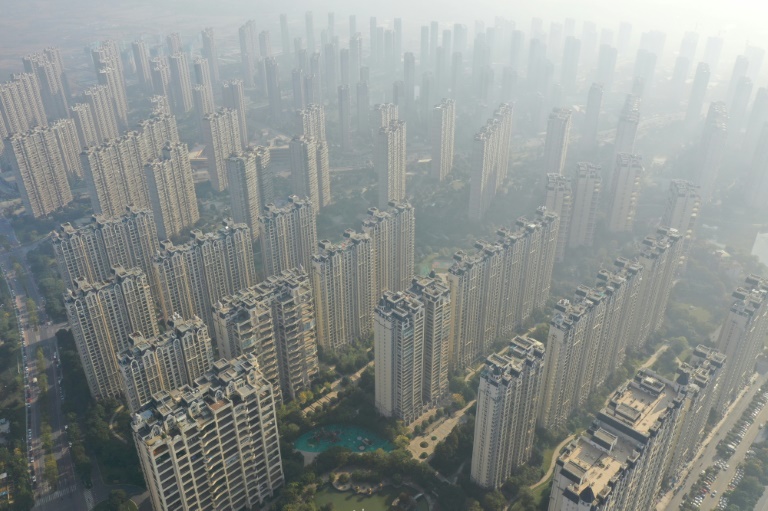
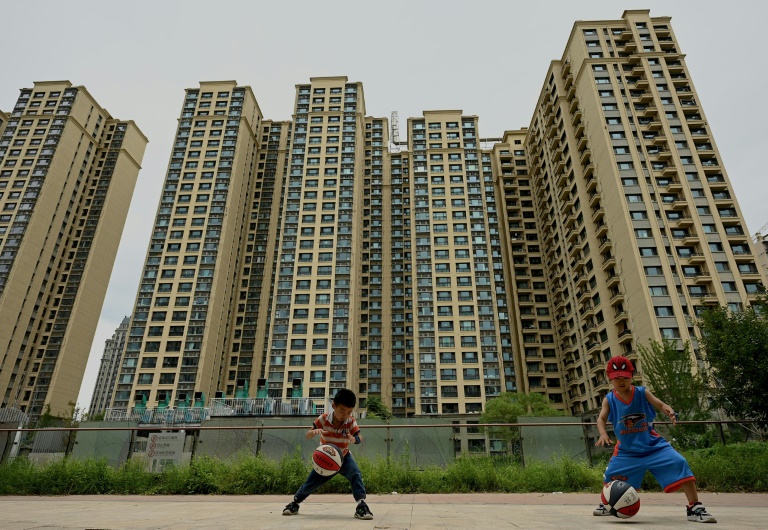
China’s real estate industry has come under immense pressure since officials imposed restrictions in 2020 aimed at reeling in debt, with major developers teetering on the brink of collapse.

The latest moves indicate that Beijing could be turning its focus to supporting the economy, a crucial driver of global growth, according to analysts.

Nomura’s Lu Ting warned, however, that the “measures may have little direct impact on stimulating home purchases”.

Hong Kong’s stock exchange ended more than one percent higher Monday, while oil prices fell.

“Crude oil prices have slipped back, after OPEC cut its oil demand forecast for the rest of this year, and 2023… citing concerns about rising inflation and interest rates,” said Hewson of CMC Markets.

“Increasing Covid cases within China alongside a rebound in the US dollar are also weighing on prices,” he added.

– Key figures around 2135 GMT –

New York – Dow: DOWN 0.6 percent at 33,536.70 points (close)

New York – S&P 500: DOWN 0.9 percent at 3,957.25 (close)

New York – Nasdaq: DOWN 1.1 percent at 11,196.22 (close)

London – FTSE 100: UP 0.9 percent at 7,385.17 (close)

Frankfurt – DAX: UP 0.6 percent at 14,313.30 (close)

Paris – CAC 40: UP 0.2 percent at 6,609.17 (close)

EURO STOXX 50: UP 0.5 percent at 3,887.51 (close)

Tokyo – Nikkei 225: DOWN 1.1 percent at 27,963.47 (close)

Hong Kong – Hang Seng Index: UP 1.7 percent at 17,619.71 (close)

Shanghai – Composite: DOWN 0.1 percent at 3,083.40 (close)

Euro/dollar: DOWN at $1.0331 from $1.0361 on Friday

Pound/dollar: DOWN at $1.1751 from $1.1839 

Dollar/yen: UP at 139.90 yen from 138.70 yen

Euro/pound: UP at 87.89 pence from 87.49 pence

West Texas Intermediate: DOWN 3.5 percent at $85.87 per barrel

Brent North Sea crude: DOWN 3.0 percent at $93.14 per barrel

burs-rl-bys/mdl
Wall Street rally peters out as dollar rises

Wall Street stocks slipped Monday following last week’s global surge as the dollar advanced against major rivals. 

The dollar crept higher as traders urged caution over expectations that the Federal Reserve would pull back from massive US interest hikes as inflation cools in the world’s biggest economy.

US stocks had bounded higher last week on the prospect the Fed might be able to let up on its aggressive interest rate hikes, with the tech-heavy Nasdaq jumping 8.1 percent and the blue-chip Dow rising 4.1 percent.

But Wall Street turned lower on Monday with the Dow slipping 0.1 percent in late morning trading, and the Nasdaq shedding 1.0 percent.

“This morning … there is a little bit of questioning as to whether the market overreacted last week,” said Briefing.com analyst Patrick O’Hare.

Susannah Streeter, senior investment and markets analyst at Hargreaves Lansdown, said “the burst of euphoria which erupted… at the end of last week is ebbing away after fresh warnings that the fight against inflation is still a hard slog yet to be won.”

Investors will get a look this week whether that cooling has spread to consumers, with US retail sales data due out on Wednesday. Earnings figures from major retailers Walmart and Target will also provide a window into how inflation is impacting consumer spending, a major driver of the US economy.

European stocks finished higher, where data helped improved sentiment.

“There was good news from the eurozone as industrial production came in better than expected this morning,” said market analyst Fawad Razaqzada at City Index and FOREX.com.

While the eurozone is widely seen as heading for a recession, the data showed a month-on-month gain of 0.9 percent in September, while analysts had expected practically no gain.

The pound briefly fell by more than one percent against the dollar as the Thursday presentation of the budget by Chancellor of the Exchequer Jeremy Hunt approaches.

“The pound has also come under pressure ahead of this weeks budget statement with all manner of reports that the Chancellor will impose new taxes on business that will deter future investment in energy security,” CMC Markets analyst Michael Hewson said.

Sentiment also won a lift from China, which is relaxing some of its strict Covid-19 restrictions that have hammered growth in the world’s second largest economy.

Authorities have also reportedly unveiled a 16-point plan to support the beleaguered property sector, a major component of the country’s economic engine.

The industry has come under immense pressure since China imposed a number of restrictions in 2020 aimed at reeling in debt as major developers teetered on the brink of collapse.

The latest moves indicate that China’s leadership is beginning to focus on supporting the economy, a crucial driver of global growth, according to analysts.

Nomura’s Lu Ting warned, however, that the “measures may have little direct impact on stimulating home purchases”.

Hong Kong’s stock exchange ended more than one percent higher Monday — having soared over seven percent Friday.

Oil prices fell.

“Crude oil prices have slipped back, after OPEC cut its oil demand forecast for the rest of this year, and 2023, by 100,000 barrels, citing concerns about rising inflation and interest rates,” CMC Markets’s Michael Hewson said.

“Increasing Covid cases within China alongside a rebound in the US dollar are also weighing on prices,” he added.

– Key figures around 1530 GMT –

New York – Dow: DOWN 0.1 percent at 33,705.83 points

London – FTSE 100: UP 0.9 percent at 7,385.17 (close)

Frankfurt – DAX: UP 0.6 percent at 14,313.30 (close)

Paris – CAC 40: UP 0.2 percent at 6,609.17 (close)

EURO STOXX 50: UP 0.5 percent at 3,887.51

Tokyo – Nikkei 225: DOWN 1.1 percent at 27,963.47 (close)

Hong Kong – Hang Seng Index: UP 1.7 percent at 17,619.71 (close)

Shanghai – Composite: DOWN 0.1 percent at 3,083.40 (close)

Euro/dollar: DOWN at $1.0341 from $1.0361 on Friday

Pound/dollar: DOWN at $1.1723 from $1.1839 

Dollar/yen: UP at 140.39 yen from 138.70 yen

Euro/pound: UP at 88.14 pence from 87.49 pence

West Texas Intermediate: DOWN 1.9 percent at $87.26 per barrel

Brent North Sea crude: DOWN 1.4 percent at $94.63 per barrel

burs-rl/yad

Wall Street rally reverses as dollar rises

Wall Street stocks slipped Monday following last week’s global surge as the dollar advanced against major rivals. 

The dollar crept higher as traders urged caution over expectations that the Federal Reserve would pull back from massive US interest hikes as inflation cools in the world’s biggest economy.

US stocks had bounded higher last week on the prospect the Fed might be able to let up on its aggressive interest rate hikes, with the tech-heavy Nasdaq jumping 8.1 percent and the blue-chip Dow rising 4.1 percent.

But Wall Street opened lower, with the Dow shedding 0.3 percent.

“This morning … there is a little bit of questioning as to whether the market overreacted last week,” said Briefing.com analyst Patrick O’Hare.

Susannah Streeter, senior investment and markets analyst at Hargreaves Lansdown, said “the burst of euphoria which erupted… at the end of last week is ebbing away after fresh warnings that the fight against inflation is still a hard slog yet to be won.”

Investors will get a look this week whether that cooling has spread to consumers, with US retail sales data due out on Wednesday. Earnings figures from major retailers Walmart and Target will also provide a window into how inflation is impacting consumer spending, a major driver of the US economy.

European stocks were higher in afternoon trading, where data helped improved sentiment.

“There was good news from the eurozone as industrial production came in better than expected this morning,” said market analyst Fawad Razaqzada at City Index and FOREX.com.

While the eurozone is widely seen as heading for a recession, the data showed a month-on-month gain of 0.9 percent in September, while analysts had expected practically no gain. 

Sentiment also won a lift from China, which is relaxing some of its strict Covid-19 restrictions that have hammered growth in the world’s second largest economy.

Authorities have also reportedly unveiled a 16-point plan to support the beleaguered property sector, a major component of the country’s economic engine.

The industry has come under immense pressure since China imposed a number of restrictions in 2020 aimed at reeling in debt as major developers teetered on the brink of collapse.

The latest moves indicate that China’s leadership is beginning to focus on supporting the economy, a crucial driver of global growth, according to analysts.

Nomura’s Lu Ting warned, however, that the “measures may have little direct impact on stimulating home purchases”.

Hong Kong’s stock exchange ended more than one percent higher Monday — having soared over seven percent Friday.

Property firms were the best performers with Country Garden leading the way with a massive 40-percent jump.

– Key figures around 1330 GMT –

London – FTSE 100: UP 1.0 percent at 7,388.60 points

Frankfurt – DAX: UP 0.6 percent at 14,314.24

Paris – CAC 40: UP 0.5 percent at 6,630.54

EURO STOXX 50: UP 0.6 percent at 3,891.75

New York – Dow: DOWN 0.3 percent at 33,649.45

Tokyo – Nikkei 225: DOWN 1.1 percent at 27,963.47 (close)

Hong Kong – Hang Seng Index: UP 1.7 percent at 17,619.71 (close)

Shanghai – Composite: DOWN 0.1 percent at 3,083.40 (close)

Euro/dollar: DOWN at $1.0308 from $1.0361 on Friday

Pound/dollar: DOWN at $1.1736 from $1.1839 

Dollar/yen: UP at 140.49 yen from 138.70 yen

Euro/pound: UP at 87.84 pence from 87.49 pence

West Texas Intermediate: DOWN 1.5 percent at $87.62 per barrel

Brent North Sea crude: DOWN 1.2 percent at $94.83 per barrel

burs-rl/yad

Stocks mostly rise, dollar up with focus on China, US

Stock markets mostly rose Monday after last week’s global surge, helped by China’s loosening of Covid rules and plans to help its property sector.

The dollar advanced against major rivals as traders urged caution over expectations that the Federal Reserve would pull back from massive US interest hikes as inflation cools in the world’s biggest economy.

Presidents Joe Biden and Xi Jinping meanwhile voiced hope Monday that the United States and China can manage growing differences and avoid conflict as they met for the first time in more than three years.

“The burst of euphoria which erupted… at the end of last week is ebbing away after fresh warnings that the fight against inflation is still a hard slog yet to be won,” noted Susannah Streeter, senior investment and markets analyst at Hargreaves Lansdown.

Sentiment won a lift from China, which is relaxing some of its strict Covid-19 restrictions that have hammered growth in the world’s second largest economy.

Authorities have also reportedly unveiled a 16-point plan to support the beleaguered property sector, a major component of the country’s economic engine.

The industry has come under immense pressure since China imposed a number of restrictions in 2020 aimed at reeling in debt as major developers teetered on the brink of collapse.

The latest moves indicate that China’s leadership is beginning to focus on supporting the economy, a crucial driver of global growth, according to analysts.

Nomura’s Lu Ting warned, however, that the “measures may have little direct impact on stimulating home purchases”.

Hong Kong’s stock exchange ended more than one percent higher Monday — having soared over seven percent Friday.

Property firms were the best performers with Country Garden leading the way with a massive 40-percent jump.

– Key figures around 1200 GMT –

London – FTSE 100: UP 0.3 percent at 7,336.45 points

Frankfurt – DAX: UP 0.4 percent at 14,279.75

Paris – CAC 40: UP 0.3 percent at 6,612.61

EURO STOXX 50: UP 0.3 percent at 3,880.51

Tokyo – Nikkei 225: DOWN 1.1 percent at 27,963.47 (close)

Hong Kong – Hang Seng Index: UP 1.7 percent at 17,619.71 (close)

Shanghai – Composite: DOWN 0.1 percent at 3,083.40 (close)

New York – Dow: UP 0.1 percent at 33,747.86 (close)

Euro/dollar: DOWN at $1.0280 from $1.0361 on Friday

Pound/dollar: DOWN at $1.1779 from $1.1839 

Dollar/yen: UP at 139.52 yen from 138.70 yen

Euro/pound: DOWN at 87.33 pence from 87.49 pence

West Texas Intermediate: DOWN 1.3 percent at $87.82 per barrel

Brent North Sea crude: DOWN 1.0 percent at $94.99 per barrel

Sri Lanka govt takes over $1.7 bn in debt owed to China

Crisis-hit Sri Lanka said Monday it would take responsibility for $1.7 billion owed to China by state enterprises as it seeks to sell them off and restructure its foreign debt to secure an IMF bailout.

The government of President Ranil Wickremesinghe is in talks with the Washington-based lender as it seeks funding to enable the island to recover from its worst-ever financial crisis.

His predecessor Gotabaya Rajapaksa was forced to flee the country and resign after demonstrators overran his house following months of protests over the unprecedented economic hardships faced by the 22 million population.

Sri Lanka defaulted on its foreign debt in April and the IMF has said its borrowings must be “sustainable” to unlock any new external funding.

That will require its creditors to take a haircut on their loans, but China is its biggest lender and Beijing has given no indication it is willing to do so.

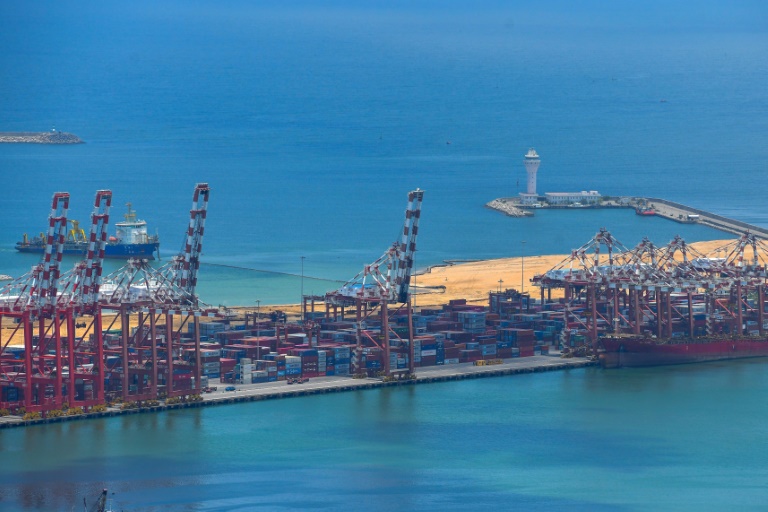
Wickremesinghe said $1.7 billion in loans taken from China’s Export-Import Bank by three key loss-making state-owned enterprises (SOE) — the electricity utility, Port Authority, and Airport and Aviation Services — would be considered government debt.

Taking the loans off their books will strengthen their balance sheets, which could make them more attractive to buyers or outside investors.

The IMF has said the country should also restructure its loss-making state enterprises.

Wickremesinghe, who is also the finance minister, signalled the selling-off of five state-owned companies, including the national carrier SriLankan Airlines — which has debts of more than $1 billion — to reduce the strain on the national budget.

Proceeds from the “restructure” of the companies will be used to boost the country’s depleted foreign reserves, he said, without giving estimates.

“A glimmer of hope on emerging from the economic abyss is currently visible,” Wickremesinghe told parliament as he presented his first full budget in the legislature.

“After the era of waiting in queues for days and protesting in various occupied places, our sufferings have been eased to some extent and we have reached an era where our peace of mind is much settled.”

He said bailout talks with the International Monetary Fund were on track and hoped for a deal with lenders.

“We are confident that these discussions will lead to positive outcomes,” he added.

The government revised its external debt figure down from $51 billion to $46 billion. 

Just over $14 billion of that is bilateral debt owed to foreign governments, of which China holds 52 percent.

Wickremesinghe, a six-times prime minister, has sharply raised taxes and increased fuel, water and electricity tariffs and rationed petrol and diesel since coming to power in July.

China unveils sweeping measures to rescue property sector

Chinese authorities have unveiled sweeping measures to rescue the country’s struggling property sector, as regulators seek to offset years of harsh pandemic curbs and a real estate crackdown that have stalled the world’s number-two economy.

The banking regulator and central bank on Friday issued a 16-point set of internal directives to promote the “stable and healthy development” of the industry, which were reported by Chinese state media on Monday.

The measures include credit support for debt-laden housing developers, financial support to ensure the completion and handover of projects to homeowners, and assistance for deferred-payment loans for homebuyers.

That came on the same day the National Health Commission issued 20 rules for “optimising” China’s zero-Covid policy, where certain restrictions were relaxed to limit its social and economic impact.

“We view this as the most crucial pivot since Beijing significantly tightened financing of the property sector,” Ting Lu, chief China economist at Nomura, said in a note.

“We believe these measures demonstrate that Beijing is willing to reverse most of its financial tightening measures.”

Hong Kong stocks surged more than three percent Monday after the measures were unveiled, extending Friday’s more than seven percent rally before paring gains to 1.7 percent at the close.

The Hong Kong-listed shares of China’s biggest developer by sales, Country Garden, closed up 45 percent while the shares of major competitor Greenland gained more than 35 percent.

– ‘Not a bailout’ –

Beijing imposed widespread lending curbs on property developers in 2020, which exacerbated their liquidity issues and caused several of the largest to default on bond payments.

The knock-on effects on the massive real estate sector were severe, with cash-strapped developer Evergrande — China’s largest — and others failing to complete projects, sparking mortgage boycotts and protests from homebuyers.

The measures emphasised “guaranteeing the handover of buildings”, and ordered development banks to provide “special loans” for the purpose, according to a copy circulating online.

The document ordered financial institutions to treat state-owned and private real estate enterprises equally, as well as “actively cooperating with distressed real estate enterprises in risk management”.

The measures also included “extending the transition period arrangements… of real estate loans” for distressed developers, and support for “high-quality real estate enterprises to issue bond financing”.

“The plan includes financial stability measures that aim to prevent massive defaults and hence provide a ‘soft landing’,” ANZ analysts wrote in a note.

But analysts cautioned that these changes — alongside the limited loosening of zero-Covid measures — would not cause an immediate recovery for the ailing sector.

“While not many are expecting a financial crisis caused by the current property downturn, the mainstream view is that the property sector would stay weaker for longer. Therefore, the worst is far from over for developers,” Macquarie economist Larry Hu said in a note.

“The package is not a bailout of property developers,” wrote Andrew Batson, an analyst at Gavekal Dragonomics.

“With the new policies, the government is trying harder to make its current approach to Covid containment and the property market work, rather than shifting to a different approach.”

New home prices have been falling for more than a year, while demand is struggling to pick up owing to ongoing strict pandemic controls that have dampened consumer confidence.

Stock markets mixed as global rally peters out

Markets were mixed Monday as traders struggled to maintain momentum after a global surge, though the loosening of China’s Covid rules and plans to help its property sector helped Hong Kong extend its rally.

Equities rocketed last week and the dollar sank after data showed US price rises eased in October, providing the Federal Reserve with room to take its foot off the pedal in tightening monetary policy.

The news led some commentators to suggest a feared recession in the world’s top economy could be shallower than first feared, or might be averted entirely.

The optimistic mood was given an extra injection late Friday by news that Beijing would relax some of its strict Covid-19 restrictions, a day after officials vowed to stick to their zero-tolerance strategy that has hammered growth.

Authorities have also reportedly unveiled a 16-point plan to support the beleaguered property sector, a major component of the country’s sprawling economy.

The industry has come under immense pressure since China imposed a number of restrictions in 2020 aimed at reeling in debt, with major developers teetering on the brink of collapse.

The news indicates the leadership is beginning to focus on supporting the economy, a crucial driver of global growth.

“It’s a meaningful easing,” said Larry Hu of Macquarie Group.

“It seems that the room for policy change has widened on various fronts after the Party Congress (last month), including for the two major headwinds to the Chinese economy: Covid Zero and property.”

Nomura’s Lu Ting said the support for the developers was “the most crucial pivot since Beijing significantly tightened financing of the property sector”.

“We believe these measures demonstrate that Beijing is willing to reverse most of its financial tightening measures,” he added.

“Those cash-strapped developers (especially private ones), construction companies, mortgage borrowers and other related stakeholders can now breathe a sigh of relief.”

He warned, however, that the sector continued to struggle and the “measures may have little direct impact on stimulating home purchases”.

Hong Kong ended more than one percent higher — having soared more than seven percent Friday — though morning gains were tempered as the day wore on.

Still, property firms were the best performers with Country Garden leading the way with a massive 40 percent jump.

Singapore, Taipei and Manila also rose, but profit-taking weighed elsewhere. Tokyo, Shanghai, Sydney, Seoul, Mumbai, Jakarta and Wellington retreated.

London, Paris and Frankfurt opened higher.

While the mood has lightened after the US inflation read, there is still a sense of trepidation among traders who fear the Federal Reserve will continue to lift borrowing costs while analysts warn last week’s rally may have been overdone.

“It was always clear that it would be easy to bring inflation down from 9-10 percent to 4-5 percent,” said SPI Asset Management’s Stephen Innes.

“Pushing it back to two percent could be much more complicated and require higher rates for longer. Hence, the central bank fight is far from over. But for now and until an indication of inflation proves stickier than expected, risk-on could roll on a bit further.”

Still, the yen, pound and euro held most of their gains against the dollar, which came in reaction to the consumer price index reading.

Traders are keenly awaiting a meeting later in the day between US President Joe Biden and Chinese counterpart Xi Jinping, with hopes for an easing of tensions between the superpowers.

The two are due to meet at the G20 summit in Bali, with Biden saying he wanted to repair lines of communication and help establish “guardrails” to keep the competing superpowers from veering into conflict.

– Key figures around 0820 GMT –

Tokyo – Nikkei 225: DOWN 1.1 percent at 27,963.47 (close)

Hong Kong – Hang Seng Index: UP 1.7 percent at 17,619.71 (close)

Shanghai – Composite: DOWN 0.1 percent at 3,083.40 (close)

London – FTSE 100: UP 0.3 percent at 7,341.83

Pound/dollar: DOWN at $1.1788 from $1.1839 on Friday

Euro/dollar: DOWN at $1.0332 from $1.0361

Dollar/yen: UP at 139.52 yen from 138.70 yen

Euro/pound: UP at 87.63 pence from 87.49 pence

West Texas Intermediate: UP 0.2 percent at $89.11 per barrel

Brent North Sea crude: UP 0.3 percent at $96.30 per barrel

New York – Dow: UP 0.1 percent at 33,747.86 (close)

China unveils sweeping measures to rescue property sector

Chinese authorities have unveiled sweeping measures to rescue the struggling property sector, as regulators seek to offset years of harsh pandemic curbs and a real estate crackdown that have stalled the world’s number-two economy.

The banking regulator and central bank on Friday issued a 16-point set of internal directives to promote the “stable and healthy development” of the industry, which were reported by Chinese state media on Monday.

The measures include credit support for debt-laden housing developers, financial support to ensure completion and handover of projects to homeowners, and assistance for deferred-payment loans for homebuyers.

That came on the same day the National Health Commission issued 20 rules for “optimising” Beijing’s zero-Covid policy, where certain restrictions were relaxed to limit its social and economic impact.

“We view this as the most crucial pivot since Beijing significantly tightened financing of the property sector,” wrote Ting Lu, chief China economist at Nomura, in a note.

“We believe these measures demonstrate that Beijing is willing to reverse most of its financial tightening measures.”

Hong Kong stocks surged more than three percent Monday, extending Friday’s more than seven percent rally after the measures were unveiled.

Beijing imposed widespread lending curbs on property developers in 2020, which exacerbated their liquidity issues and caused several of the largest to default on bond payments.

The knock-on effects on the massive real estate sector were severe, with cash-strapped developer Evergrande — China’s largest — and others failing to compete projects, sparking mortgage boycotts and protests from homebuyers.

The measures emphasised “guaranteeing the handover of buildings”, and ordered development banks to provide “special loans” for the purpose, according to a copy circulating online.

The document ordered financial institutions to treat state-owned and private real estate enterprises equally, as well as “actively cooperating with distressed real estate enterprises in risk management”.

The measures also included “extending the transition period arrangements… of real estate loans” for distressed developers, and support for “high-quality real estate enterprises to issue bond financing”.

“The plan includes financial stability measures that aim to prevent massive defaults and hence provide a ‘soft landing’,” ANZ analysts wrote in a note.

But analysts cautioned that these changes — alongside the limited loosening of zero-Covid measures — would not cause an immediate recovery for the ailing sector.

“While not many are expecting a financial crisis caused by the current property downturn, the mainstream view is that the property sector would stay weaker for longer. Therefore, the worst is far from over for developers,” wrote Macquarie economist Larry Hu in a note.

New home prices have been falling for more than a year, while demand is struggling to pick up owing to ongoing strict pandemic controls that have dampened consumer confidence.

Musk sees aliens, tunnels in a candlelit G20 vision of the future

Sitting in the dark, wearing a traditional Indonesian batik shirt and surrounded by candles, Elon Musk offered a vision for the future that includes aliens, deep tunnels and rocket tourism.

The seemingly disembodied billionaire Twitter owner appeared by video link on Monday to address business leaders in Bali on the sidelines of the G20 summit, only his face and hands visible on an otherwise black screen.

“We had a power outage three minutes before this call. That’s why I’m entirely in the dark,” he told Indonesian tycoon-cum-moderator Anindya Bakrie.

Musk was asked why he had not travelled to the tropical Indonesian island and the new Twitter boss joked that his “workload has recently increased quite a lot” after his takeover of the social media giant.

He had little else to say about his controversial acquisition, which has included firing thousands of employees and introducing a fee for verification. He supported more video on Twitter and efforts to monetise content for creators.

Twitter aside, the conversation turned instead to tunnels dug deep underground to battle congestion, rocket travel across the world in less than an hour and discovering extra-terrestrial life in space.

“Maybe we will find alien civilisations or discover civilisations that existed millions of years ago,” he said.

“I think that would be incredibly interesting, to go out there and explore the galaxy.”

The chief of electric carmaker Tesla then waxed lyrical about the benefits of tunnels over flying cars to battle gridlocked traffic, saying cars “will fall on your head” and would be bad for privacy.

“Electric vehicles and tunnels are absolutely an answer to the worst possible congestion of any city, because you can go as many layers deep as you like until the congestion is addressed,” he said.

Aside from his “bullish” view on Indonesia’s future as a developing nation, the conversation largely stayed on his quirky and bold outlook for the future of Earth.

Jakarta has invited Musk to use Indonesia as a launch site for his SpaceX rocket, pointing out the benefits of a location next to the equator.

But Musk said he wants to see rocket platforms across the world that would allow people to travel “to the complete other side of the world” at 20 times the speed of sound.

“I think this would really open up the world if you could travel anywhere in the world in less than an hour,” he said.

But for all his bold dreams about the future, the electric energy, space discovery and social media entrepreneur could not hide his amusement by the fact that even he is answerable to the planet’s energy whims.

“I just look at this video and it’s so bizarre. I’m sitting here in the dark surrounded by candles,” he said.

“This is the funniest thing.”

Cathay won't return to pre-pandemic capacity until 'end of 2024'

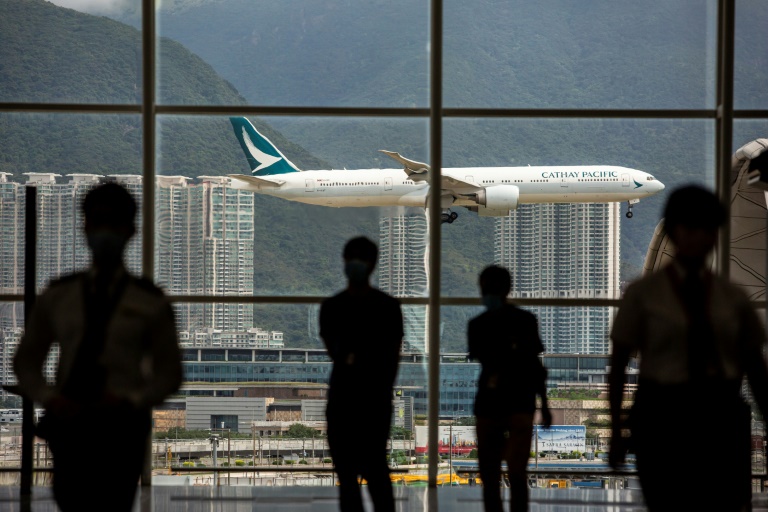
Cathay Pacific said Monday it does not expect to return to pre-pandemic levels of travel until the end of 2024, highlighting how long the Hong Kong airline’s return to normality could take.

Hong Kong imposed some of the world’s strictest travel curbs during the coronavirus pandemic and only abandoned compulsory quarantine for all international arrivals in September.

The restrictions closed off what was one of Asia’s once most connected cities and has hammered travel-reliant businesses including its flagship carrier.

In a statement released Monday, CEO Augustus Tang said the airline was “on track to achieve its target of operating up to one third of its pre-pandemic passenger flight capacity levels by the end of 2022”.

If achieved Tang said that would represent a doubling of capacity since August, the month before more than two years of compulsory quarantine rules were lifted.

But the journey back to full capacity remains a long one.

Cathay said it hoped to be operating at around 70 percent “by the end of 2023 with an aim to return to pre-pandemic levels by the end of 2024”.

Tang will be replaced by fellow veteran Cathay executive Ronald Lam on January 1.

While the number of flights to Hong Kong has increased after the government ended compulsory quarantine the airport is still far behind rivals.

Hong Kong’s airport handled 755,000 passengers in October, around 13 percent of what it used to process before the pandemic hit.

In contrast, rival hub Singapore handled 3.42 million passengers in September, 63 percent of pre-pandemic levels.

Singapore Airlines, which is already projecting to be at 76 percent capacity by the end of this year, carried 1.46 million people in September compared with Cathay Pacific’s 265,845 passengers.

While travellers to Hong Kong no longer need to quarantine they are banned from entering bars and restaurants for the first three days and must undergo multiple rounds of testing.

Wearing masks remains compulsory, even outdoors, and various social distancing measures remain.

The border with the Chinese mainland remains all but closed for now as Beijing sticks to its strict zero-Covid strategy. 

Travel industry groups have warned Hong Kong will not see a meaningful return of visitors until the three-day monitoring period and most other restrictions are lifted.

Hong Kong officials have repeatedly said they will only reopen the city gradually and have rejected calls to remove remaining curbs. 

Close Bitnami banner
Bitnami