Chinese Business

Germany blocks sale of two chipmakers to China

Germany on Wednesday blocked the sale of two chipmakers to Chinese investors because of a potential threat to security.

“We must look very closely at company takeovers when it relates to important infrastructure or when there is a danger that the technology would flow to buyers from non-EU countries,” said Economy Minister Robert Habeck.

Chinese company Sai MicroElectronics had been seeking to buy the Dortmund factory of Elmos through its Swedish subsidiary Silex. 

The German government had rejected the planned takeover because “the purchase could endanger the order and security of Germany,” said the economy ministry.

Other ways of reducing the risks, including allowing the acquisition under certain conditions, were “unable to eliminate the identified dangers”, it added.

A second acquisition had been turned down, Habeck said, without naming the companies involved because of “trade secrets”.

But Germany’s minister for research Bettina Stark-Watzinger named the company as Bavaria-based ERS Electronic, which supplies a cooling technology to wafer manufacturers.

Fears have been growing in Europe’s economic powerhouse about an over-reliance on Beijing, and letting critical infrastructure fall into the hands of Chinese state-linked companies.

Russia’s invasion of Ukraine and its subsequent dwindling of crucial gas supplies to Europe has further accentuated the concerns.

In particular, the microchip industry has come under scrutiny, as it produces key components used across industry from consumer electronics to battery-powered vehicles.

Earlier this year, the European Union unveiled a multibillion euro “Chips Act” aimed at doubling Europe’s market share in semiconductors and reducing dependence on supplies from Asia. 

– ‘Not naive’ –

Elmos, which primarily builds components for the automobile industry, said late last year it intended to sell the production facility at its headquarters.

Silex was seeking to buy the site for 85 million euros ($85.4 million).

But business weekly Wirtschaftswoche said Elmos had been the recipient of 5.9 million euros from the German state for two research projects. It had also received 8.1 million euros from an EU project on autonomous driving.

Habeck said that Germany remained open to investors, but that “we are also not naive”. 

Beijing has been trying to glean knowledge about production and development, underlined the minister, saying that the “statements from China are very clear”.

Habeck, of the ecologist Greens party, has recently locked horns with Chancellor Olaf Scholz over investments from China.

He deeply opposed a plan by Chinese shipping firm Cosco to buy a stake in a Hamburg port terminal, forcing Scholz to pull rank to force through the deal by allowing the purchase of a reduced stake.

Scholz has repeatedly underlined the importance of strong trade ties with Beijing, something that German industry leaders have also stressed.

China is a major market for German goods, particularly for auto giants Volkswagen, BMW and Mercedes-Benz, and many jobs in Europe’s top economy depend directly on the relationship.

On a controversial visit to Beijing last week, Scholz, accompanied by a delegation of German business bosses, told Chinese leaders that Berlin expected equal treatment on trade.

But Scholz’s trip has sparked controversy for coming so soon after Xi Jinping strengthened his hold on power in China last month.

With tensions between the West and Beijing running high on issues ranging from Taiwan to alleged human rights abuses, there had been concerns that the high-profile trip may have unsettled both the United States and the European Union.

Indonesia revokes licences of drug firms over syrups linked to child deaths

Indonesia’s food and drug agency on Wednesday revoked the licences of two chemical firms to distribute materials used in syrup medicines linked to a wave of child deaths caused by kidney failure or damage.

The move comes as the Southeast Asian country suffers a spike in cases of acute kidney injury that has killed nearly 200 children since the end of August, prompting an investigation and ban on the sale of some syrup medicines.

PT Mega Setia Agung Kimia and PT Tirta Buana Kemindo were barred from distributing raw pharmaceutical materials after two potentially harmful chemicals — diethylene glycol and ethylene glycol — were found in their supplies of propylene glycol, agency chief Penny Lukito told reporters.

The two chemical compounds are used in industrial products such as antifreeze and have been linked with recent cases of acute kidney injury.

Their distribution licences were revoked for “failing to comply with the requirements,” Lukito said.

“They distribute products contaminated with ethylene glycol and diethylene glycol. They also did not conduct inspection to guarantee the quality of the solvents,” said Lukito.

The food and drug agency (BPOM) also ordered the recall of syrup medicines from two other pharmaceutical companies — PT Samco Farma and PT Ciubros Farma — after tests revealed excessive amounts of those chemicals in their products.

“To those two firms, BPOM has ordered the recall of syrup medicines from distribution across Indonesia and the destruction of batches of products that contain ethylene glycol and diethylene glycol that were above safe levels,” Lukito said.

The agency on Sunday ordered the recall and destruction of syrup-based medicines from three other pharmaceutical companies after tests revealed the products contained ethylene glycol “beyond safe levels”.

Police have launched an investigation into the three companies and two of them have temporarily lost their licence to produce syrup medicines.

The World Health Organization has said it found an “unacceptable amount” of diethylene glycol and ethylene glycol in four Indian-made cough syrups and warned they could be linked to the deaths of nearly 70 children in Gambia due to AKI.

Tata Motors extends losses on chip woes, weak exports

India’s Tata Motors announced a seventh consecutive quarter of losses Wednesday as chip shortages and weak demand in export markets hurt sales.

Net losses at the Mumbai-headquartered automaker narrowed to 9.45 billion rupees ($116 million) in the July-to-September quarter, compared to a loss of 44.42 billion rupees in the same period last year.

But revenue from operations rose nearly 30 percent year-on-year to 796.11 billion rupees, as wholesale demand improved despite continued supply chain bottlenecks, such as semiconductor chip shortages.

“Demand continues to remain strong,” the company said in a stock exchange filing, but warned it remained vulnerable to “global uncertainties”.

Covid-19 lockdowns in China have also hurt sales this year.

But Tata Motors said “improving chip supply and cooling commodity prices” will aid business recovery in the quarters ahead.

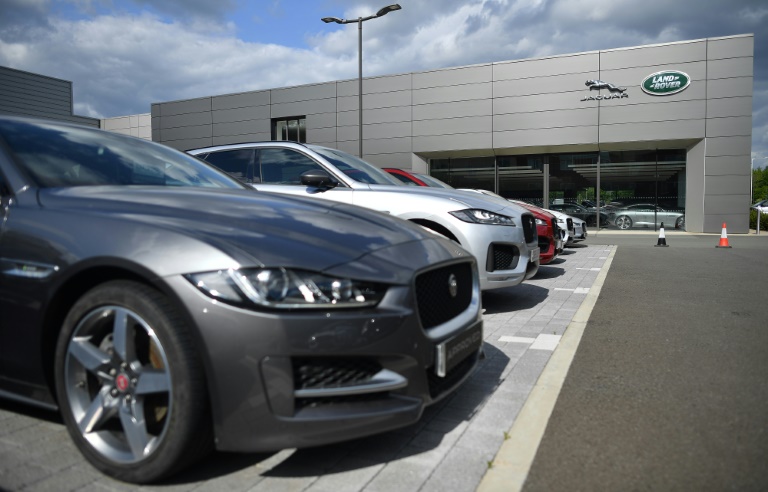
Revenues at British subsidiary Jaguar Land Rover (JLR) rose 35.9 percent to £5.26 billion ($6 billion) in the quarter as production of new Range Rover models improved, but it still lost £173 million.

“Demand for our most profitable and desired vehicles remains strong,” JLR chief Thierry Bollore said in a statement.

“We expect to continue to improve our performance in the second half of the year, as new agreements with semiconductor partners take effect,” he added.

Pending orders at JLR, Britain’s biggest carmaker, stood at 205,000 units at the end of September, as chip supply constraints persisted.

Revenue from Tata Motors’ commercial vehicle business jumped 35 percent year-on-year to 164.20 billion rupees, as India bounced back from a 2021 pandemic sales dent.

But commercial vehicle exports fell 22 percent in the quarter, impacted by “financial crisis in (a) few export markets”, with commodity price inflation and foreign exchange movements also eating into profit margins.

Demand for passenger vehicles remained strong, with revenues up 71 percent on-year to 125.47 billion rupees, buoyed by Indian festival season demand during the quarter.

Shares in Tata Motors closed 0.44 percent lower in Mumbai ahead of the earnings announcement.

Stocks drop with eyes on China, US midterms

Stock markets fell Wednesday following weak Chinese data and as traders assessed results of US midterm elections.

The dollar rose strongly versus the British pound — a currency under pressure owing to the UK’s bleak economic outlook.

Oil prices retreated as official data from China showed the world’s second-largest economy languishing under its strict zero-Covid policy.

Bitcoin continued to slide on fallout from the near-collapse of cryptocurrency platform FTX, reaching the lowest level for two years at $17,172.43.

Eyes will be on Facebook owner Meta at the reopening of Wall Street after the company said it would lay off 11,000 staff, in a move which follows a recent plunge of its valuation.

– US midterms –

Republican hopes for a sweeping rebuke of President Joe Biden in congressional elections failed to materialise, with both parties picking up seats following a campaign fought against a backdrop of stubbornly high inflation and fears for US democracy.

Biden, who framed the race as a clash between defenders of democracy and the “extremist” camp of Donald Trump, spent election night in back-to-back calls with Democrats savouring their wins in Senate, House and gubernatorial races around the country.

“The bigger takeaway from the election may well be what support there is for Trump-backed candidates and what that does for his own re-election hopes in two years. But that’s unlikely to sway the markets now, not with so much else to focus on,” noted Oanda analyst Craig Erlam.

“Investors are more focused on the inflation data on Thursday and whether that will pave the way for a slower pace of (US interest rate) tightening in December and early next year.” 

– ‘No good news from China’ –

In China, speculation over how long Beijing will keep its harsh lockdown-and-testing Covid-19 policies has fuelled volatility on markets, despite the government vowing it will not change course.

The restrictions have taken a toll on the Chinese economy. Data Wednesday showed China’s producer price index (PPI) fell by 1.3 percent on-year in October, pushing it into negative territory for the first time since December 2020.

The consumer price index (CPI) — the main gauge for retail inflation — rose 2.1 percent year-on-year in October, moderating slightly from September’s two-year high of 2.8 percent.

“The economy’s slowing, confirmed by the CPI data,” Iris Pang, chief economist for Greater China at ING Wholesale Banking, told AFP. 

“I don’t see any good news from China.”

– Key figures around 1115 GMT –

London – FTSE 100: DOWN 0.2 percent at 7,293.33 points

Frankfurt – DAX: DOWN 0.5 percent at 13,620.61

Paris – CAC 40: DOWN 0.2 percent at 6,428.74

EURO STOXX 50: DOWN 0.4 percent at 3,725.09

Tokyo – Nikkei 225: DOWN 0.6 percent at 27,716.43 (close)

Hong Kong – Hang Seng Index: DOWN 1.2 percent at 16,358.52 (close)

Shanghai – Composite: DOWN 0.5 percent at 3,048.17 (close)

New York – Dow: UP 1.0 percent at 33,160.83 (close)

Pound/dollar: DOWN at $1.1456 from $1.1468 on Tuesday

Euro/dollar: UP at $1.0059 from $1.0005

Dollar/yen: DOWN at 145.61 yen from 146.26 yen

Euro/pound: UP at 87.77 pence from 87.23 pence

West Texas Intermediate: DOWN 0.6 percent at $88.41 per barrel

Brent North Sea crude: DOWN 0.5 percent at $94.92 per barrel

IMF agrees $4.5 billion support package for Bangladesh

The International Monetary Fund said Wednesday it reached a preliminary agreement to provide Bangladesh with a $4.5 billion support package to help it cope with soaring energy and food prices.

Bangladesh in common with other Asian economies has been hit hard by the sharp rise in prices in the wake of Russia’s invasion of Ukraine, prompting angry street protests.

The South Asian nation of around 170 million people approached the IMF earlier this year for support.

An IMF delegation and Dhaka representatives “reached a staff-level agreement to support Bangladesh’s economic policies” with a total of $4.5 billion under various facilities, the institution said in a statement, adding the deal was subject to IMF management approval.

Bangladesh plans to use the IMF loan to prop up its foreign exchange reserves, which have nosedived from $46 billion to $34 billion.

The Bangladeshi taka has depreciated some 25 percent against the greenback in recent months, while according to official figures inflation has approached 10 percent — but independent economists say the true figure is closer to 20 percent.

Household budgets have been hit hard and the government has pledged to cap the price of several staple foods, including rice, to quell public discontent.

“Bangladesh’s robust economic recovery from the pandemic has been interrupted by Russia’s war in Ukraine, leading to a sharp widening of the current account deficit, rapid decline of foreign exchange reserves, rising inflation and slowing growth,” said IMF team leader Rahul Anand.

“Even as Bangladesh tackles these immediate challenges, addressing long-standing structural issues remains critical, including threats to macroeconomic stability from climate change,” he added.

– Power cuts –

The depreciating currency and dwindling foreign exchange reserves have left Bangladesh unable to import sufficient fossil fuels.

Prime Minister Sheikh Hasina’s government has been forced to close diesel plants, leave some gas-fired power stations idle and impose lengthy power cuts of up to 13 hours a day to conserve existing stocks.

Last month at least 130 million people were left without power after a grid failure caused widespread blackouts.

And tens of thousands of mosques around the Muslim-majority country have been asked to curtail the use of air conditioners to ease pressure on the electricity grid.

The blackouts have sparked widespread public anger and helped mobilise large demonstrations on the streets of Dhaka.

At least three people were killed in one demonstration and around 100 others injured in another in a police crackdown.

In August the government raised the prices of petroleum and diesel by up to 50 percent.

Bangladesh’s precarious financial position was compounded this year by unprecedented floods in the northeast, inundating the homes of more than seven million people and causing nearly $10 billion in damage, according to government estimates.

The opposition Bangladesh Nationalist Party has blamed the government for the crisis, accusing it of squandering cash on multibillion-dollar vanity projects.

It has organised a series of rallies demanding Hasina’s resignation and a general election under a caretaker government.

Bangladesh hopes to graduate from Least Developed Country status and become a “middle-income” nation by 2031.

Hasina’s government has put together a programme, which the IMF said it supports, to achieve the goal, as well as measures to contain inflation, change its monetary policy framework, and strengthen the financial sector.

Bangladesh will also support large-scale climate investments and seek additional climate financing.

Elsewhere in the region, Sri Lanka has also sought a bailout from the IMF, its economic crisis — which saw its president ousted by street protests — exacerbated by the global rise in energy and food prices.

China unveils new orders for homegrown passenger jet

China announced Wednesday hundreds of new orders for its first domestically manufactured large passenger jet, with the aircraft poised to make its commercial debut early next year.

The state-owned Commercial Aircraft Corp of China (COMAC) said it had sealed orders for 300 of the narrow-body C919 at a major airshow on Tuesday.

The announcement did not clarify whether the orders had been fully confirmed, and gave no details about the value of the deals or expected delivery dates.

If the orders go through, it would take the number of known deals for the C919 to more than 1,100, based on figures from previous COMAC statements.

Authorities hope the C919 — the country’s first homegrown jetliner with mass commercial potential — will challenge foreign models like the Boeing 737 MAX and the Airbus A320.

Beijing also anticipates that the aircraft will help reduce the country’s reliance on foreign technology amid testy ties with Western countries — though most of the plane’s parts are sourced from abroad.

COMAC said it had reached agreements with seven leasing firms for a combined 330 aircraft, including 30 of the C919’s predecessor, the ARJ21 regional jet, which came into operation in 2008.

The orders “fully expressed the confidence of our leasing partners” in the two models, COMAC said.

The company showed off the C919 on Tuesday at the China International Aviation and Aerospace Exhibition.

The sleek aircraft taxied down a runway in the southern city of Zhuhai before soaring into the skies in front of hundreds of onlookers.

Few details of existing orders for the C919 have been disclosed.

But domestic media have reported that four aircraft are expected to be delivered to China Eastern Airlines — the country’s second-largest carrier by passenger numbers — by the end of this year, and go into operation in the first quarter of 2023. 

China sealed a deal for Airbus jets worth $17 billion earlier this year.

The company began producing its A321 model in the eastern city of Tianjin on Wednesday with a view to making deliveries early next year, according to Xinhua.

The state-owned news agency quoted Airbus China CEO George Xu as saying the move displayed the company’s “unwavering support for the Chinese market”.

The Boeing 737 MAX has been grounded in China since 2019 after two fatal crashes, though Boeing said in July that it may be approved for delivery by Chinese regulators this year.

But lingering US-China trade tensions and China’s worst commercial air disaster earlier this year involving a Boeing 737-800 have slowed progress.

Nissan hikes forecasts on weak yen despite falling unit sales

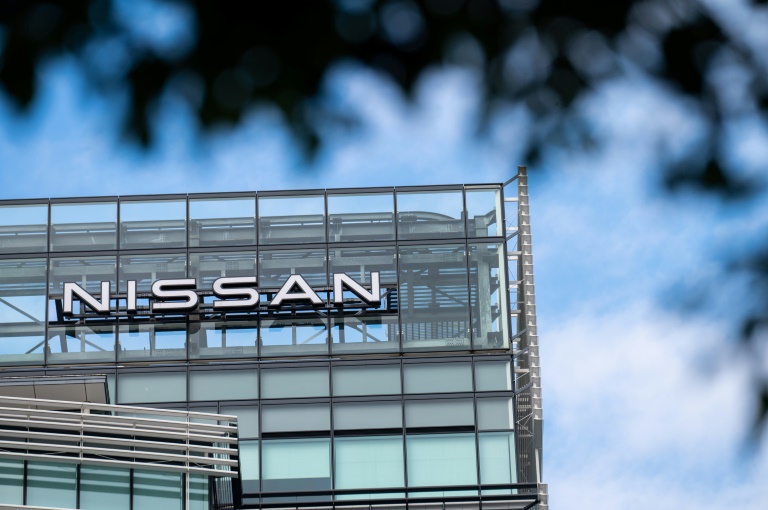
Nissan on Wednesday upgraded its full-year profit forecasts, as the depreciating yen helps inflate its overseas profits, despite ongoing challenges including Covid shutdowns and the global chip shortage.

The company now expects an annual net profit of 155 billion yen ($1.06 billion), up 5.0 billion yen from an earlier target for the year to March 2023.

It also hiked annual sales revenues, but said it now expects to sell 3.7 million units in the business year, down from a previous forecast of 4.0 million and lower than its unit sales in the previous fiscal year.

In a statement, the firm cited “a severe business environment in the first half of the fiscal year, with raw material prices rising sharply and sales volume falling below the previous year’s level due to semiconductor supply shortages and the impact of Covid-related lockdowns in Shanghai.”

“Our strong first half performance reflects our steadily improving profit structure and strong business foundations, as well as the exchange-rate impact of the historically weak yen,” said Nissan CEO Makoto Uchida in a statement.

He said the business environment would “remain challenging” in the second half of the year, with ongoing semiconductor shortages and higher raw material prices.

Nissan also reported a one-time loss in the period of approximately 100 billion yen “in connection with the withdrawal from the Russian market”.

The results come with all eyes on negotiations between Nissan and alliance partner Renault on a possible rebalancing of their sometimes fractious relationship.

The French automaker, which on Tuesday confirmed it will create a new electric car unit, Ampere, is believed to be discussing a sizable reduction of its stake in Nissan.

– ‘Open and constructive’ –

Nissan said in a statement last month that “trustful discussions” were underway with Renault as part of an effort to “reinforce the cooperation and the future” of their decades-long alliance.

The partnership is widely credited for Nissan’s transformation from a money-losing carmaker in the late 1990s into one of the world’s biggest industry giants.

Nissan officials reportedly want to rectify what they see as the uneven terms of their alliance, where Renault controls around 43 percent of Nissan but the Japanese automaker retains just a 15 percent share in its partner.

Uchida described “open and constructive” discussions but declined to offer any details.

“Yesterday, the Renault group made an announcement about the new firm… we’re looking into how this firm would benefit Nissan and how we should participate in it,” he said.

“Based on the discussions going forward, we will consider an investment in this new firm.”

A source close to Nissan said discussions on the alliance would take “several more weeks”.

“Given how complex the subject is, they need several more weeks to clarify things, but it’s advancing,” he told AFP.

The radio silence on Nissan’s participation in Ampere or any reduction of Renault’s stake in the Japanese automaker suggests “that negotiations are not proceeding very well, and slowly,” said auto analyst Tatsuo Yoshida of Bloomberg Intelligence.

Experts differ on how any rebalancing would affect the alliance, with Yoshida arguing a reduction of Renault’s stake would give Nissan more freedom.

But Kohei Takahashi, an analyst at UBS Securities, said Renault’s ongoing influence could sway negotiations in its favour.

The auto alliance, which also groups Mitsubishi Motors, has weathered tensions, particularly after the arrest and subsequent flight of former Nissan chief Carlos Ghosn.

Accused of financial misconduct, he argued he was targeted over attempts to further integrate Nissan and Renault. He jumped bail and fled Japan for Lebanon, where he remains an international fugitive.

Asian markets tepid with eyes on China, US midterms

Asian stocks made a positive start on Wednesday following gains on Wall Street, but lost momentum as factory gate prices in China fell for the first time in nearly two years.

Shares in Tokyo, Hong Kong and Shanghai edged up at the open as votes were counted in crucial US midterm elections that will shape the political fortunes of President Joe Biden.

But they closed lower after official data from China showed the world’s second-largest economy languishing under its strict zero-Covid policy.

Markets had climbed in New York and Europe on Tuesday, with Biden’s Democrats facing a struggle to hang on to control of Congress, and polls predicting a Republican victory that could pave the way for a White House comeback bid by Donald Trump.

That predicted Republican wave failed to materialise in elections fought against a backdrop of stubbornly high inflation, however.

By Wednesday afternoon in Asia, all eyes were on a handful of Senate races, including swing state Pennsylvania, where a win for the Democrats boosted the party’s chances of retaining their razor-thin majority in the upper chamber.

Investors were also awaiting key US inflation data due Thursday, causing the dollar to retreat along with the midterms as investors’ risk appetite increases, analysts said.

Tokyo ended down 0.6 percent and Shanghai closed 0.5 percent lower, while Hong Kong stocks lost 1.2 percent.

Other Asian markets were mostly higher, with Taipei jumping 2.2 percent, Seoul gaining 1.1 percent and Singapore up 0.7 percent. Sydney rose 0.6 percent, but Bangkok lost 0.6 percent.

– ‘No good news from China’ –

Speculation over how long Beijing will keep its harsh lockdown-and-testing Covid-19 policies has fuelled volatility in Chinese markets, despite the government vowing it will not change course.

The restrictions have taken a toll on the economy. China’s producer price index (PPI) fell by 1.3 percent on-year in October, pushing it into negative territory for the first time since December 2020.

The consumer price index (CPI) — the main gauge for retail inflation — rose by 2.1 percent on-year in October, moderating slightly from September’s two-year high of 2.8 percent.

“The economy’s slowing is confirmed by the CPI data,” Iris Pang, chief economist for Greater China at ING Wholesale Banking, told AFP. “I don’t see any good news from China.”

Stephen Innes of SPI Asset Management agreed that the Chinese data painted “a rather gloomy picture, with PPI remaining deflationary and CPI much weaker than expected, pointing to waning demand”.

Oil prices were driven lower during the day, but recovered in the afternoon.

“Rolling lockdowns in China, as Covid cases rebound, are catching oil traders leaning the wrong way,” Innes said.

The lacklustre mood was also seen in early European trade, with London losing 0.3 percent in early trade, Frankfurt down 0.2 percent, and Paris flat.

– Key figures around 0700 GMT –

Tokyo – Nikkei 225: DOWN 0.6 percent at 27,716.43 (close)

Hong Kong – Hang Seng Index: DOWN 1.2 percent at 16,358.52 (close)

Shanghai – Composite: DOWN 0.5 percent at 3,048.17 (close)

London – FTSE 100: DOWN 0.3 percent at 7,282.89

Pound/dollar: UP at $1.1554 from $1.1468 on Tuesday

Euro/dollar: UP at $1.0073 from $1.0005

Dollar/yen: DOWN at 145.42 yen from 146.26 yen

Euro/pound: DOWN at 87.19 pence from 87.23 pence

West Texas Intermediate: DOWN 0.6 percent at $88.33 per barrel

Brent North Sea crude: DOWN 0.4 percent at $94.93 per barrel

New York – Dow: UP 1.0 percent at 33,160.83 (close)

Dark clouds over China's economy as zero-Covid, global slowdown bite

A slew of lacklustre indicators for October show strict and enduring Covid curbs as well as a global slowdown are dragging on China’s economy, analysts told AFP, with prospects looking increasingly grim for 2023.

The world’s second-largest economy reported its first decline in exports since the early days of the pandemic last month, while factory activity and gate prices also fell.

The ultra-wealthy have seen their fortunes shrink, too, with the Hurun China Rich List this week recording its sharpest drop in the number of individuals worth at least five billion yuan ($690 million) since the 1990s.

Multiple analysts pointed to slumps abroad as a key factor behind the falling exports, long a major driver of growth for the Chinese economy.

“Monetary conditions are tightening quickly in other countries, while inflation continues to stay elevated amidst high energy costs,” Erin Xin, Greater China economist at HSBC, said in a note, pointing to a sharp decline in global demand for exports of discretionary items like clothing and electronics.

“With global demand slowing, the domestic economy will need to pick up the slack.”

And those falling exports will have a knock-on effect on manufacturing as well as the job market, Iris Pang, chief economist for Greater China at ING, explained.

Weakening demand risks “lower inflation and even deflation,” she said.

– Zero-Covid blues –

Deepening the pain is Beijing’s insistence on maintaining its strict policy of snap lockdowns and travel curbs whenever Covid cases arise — leaving businesses reeling from sudden disruptions and consumers reluctant to spend.

Economic powerhouses including Shanghai, Shenzhen and Beijing have been hit by either protracted lockdowns or restrictions limiting retail, construction and logistics this year as outbreaks of the more infectious Omicron variant spread across the country.

An area accounting for more than 12 percent of China’s gross domestic product is now under some form of Covid restriction, according to calculations by Nomura China economists on Monday.

China’s National Health Commission vowed Saturday to “unswervingly” stick to zero-Covid, dashing a major stock market rally on the back of unsubstantiated rumours that Beijing would imminently loosen its strict virus policy. 

And the man who oversaw a gruelling two-month lockdown of Shanghai, Li Qiang, was last month elevated by President Xi Jinping to the Communist leadership’s number two position.

“Given policymakers have invested so much political capital in the great zero-Covid campaign, it’s quite unlikely for them to abruptly declare the end of zero-Covid any time soon,” Macquarie economists Larry Hu and Yuxiao Zhang said.

“China’s economy has two major headwinds this year: zero-Covid and property.”

Property and construction account for around a quarter of China’s GDP, but crippling debts have forced multiple developers to default on loans this year, while buyers furious over unfinished homes have turned to mortgage strikes.

– Headwinds –

Chinese leaders have set out an annual economic growth target of about 5.5 percent, but many observers think the country will struggle to hit the target, despite announcing a better-than-expected 3.9 percent expansion in the third quarter.

Some are hopeful the situation could improve — despite the headwinds. 

Economists at HSBC said in a note that they “remain constructive on China” and predict more than five percent growth next year.

This will come, they argued, from a combination of the low base this year as well as “China further fine-tuning and gradually relaxing some Covid-19 restrictions in 2023, the housing market stabilising, and continued policy support”.

But others expect grim trends to continue, with Macquarie analysts telling AFP that “due to the softening global economy” they expect China exports to decline by five percent in 2023.

“For China at this moment, the deflation risk is much higher than the inflation risk,” they wrote, predicting “more easing ahead”, including cuts to the ratio of cash banks are required to hold as reserves.

China's security agency in Hong Kong buys $65 mn luxury villa

China’s national security agency in Hong Kong spent HK$508 million ($65 million) on a luxury villa in an exclusive neighbourhood perched on a hill above the city, registry data has revealed.

The purchase last month offers a rare glimpse into an organisation which was set up in the Chinese finance hub more than two years ago but remains opaque and free from public scrutiny.

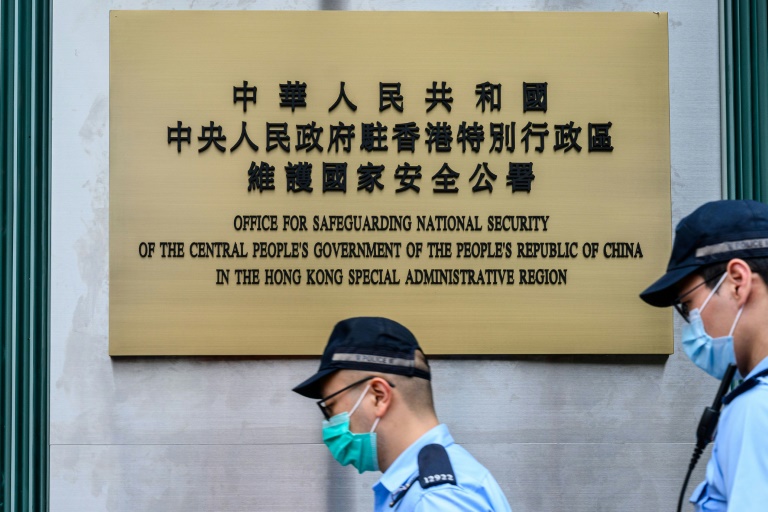
The Office for Safeguarding National Security of the Central People’s Government in the Hong Kong Special Administrative Region was listed as the buyer of the largest villa at the Mont Rouge residential project in the Beacon Hill district, according to a Land Registry document.

The 666-square metre (7,171-square foot) mansion has five bedrooms, three car parking spaces, a garden, its own lift and is described by its developer as “a residential jewel that secures panoramic views, low density and luxuriant living”.

The sale set a record for the most expensive house sold in the Kowloon district on a per-square foot basis, according to local media.

Beijing’s national security office in Hong Kong was established in July 2020 following huge and sometimes violent democracy protests, alongside the imposition of a sweeping security law which has since ensnared more than 200 people, including many of the city’s best known democracy activists.

The security law empowered China’s mainland security apparatus to operate openly in Hong Kong for the first time where their agents can conduct their own investigations and are not bound by the city’s laws.

The office requisitioned two hotels on Hong Kong’s main island to be its temporary headquarters, while an 11,500-square metre government plot has been earmarked for a permanent base.

A Hong Kong government spokesperson said the national security office is funded directly by the central government.

Hong Kong has been rated the world’s least affordable place to buy property for multiple years by the Demographia International Housing Affordability, outstripping famously pricey cities like Sydney and Vancouver.

According to Demographia, it would take 23.2 years for a local resident to buy a home even without spending any of their income.

The city’s sky-high property prices have taken a hit in the last six months, weighed down by Covid curbs, political turmoil, population outflow and dampened mainland China demand.

But rising interest rates have made mortgages for the average resident become more expensive, impacting affordability even as the property market slides. 

Close Bitnami banner
Bitnami