Chinese Business

Foxconn working 'at fastest speed' to restore vast China plant

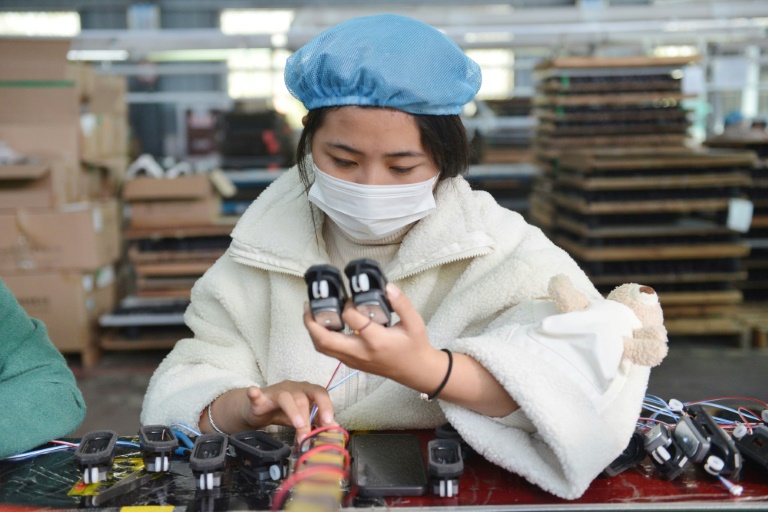
Taiwanese tech giant Foxconn, a principal Apple subcontractor, said Thursday it was working quickly to resume full production at its giant factory in central China before the crucial holiday season. 

Foxconn, also known by its official name Hon Hai Precision Industry, is the world’s biggest contract electronics manufacturer assembling gadgets for many international brands.

Most of its factories are in China, particularly the eastern city of Zhengzhou where lockdowns were imposed last month, in line with Beijing’s zero-Covid policy, after a spike in infections.

The huge facility of some 200,000 workers — dubbed “iPhone City” — has been operating in a “closed loop” bubble. 

Apple said this week the facility was running at “significantly reduced capacity” and warned customers would face longer wait times for the flagship iPhone 14 Pro and iPhone 14 Pro Max iPhones built there.

“With the support of Henan provincial government, we will eliminate the infections at the fastest speed to resume full capacity for production,” Foxconn chairman Young Liu said in a call with investors.

The production delays have come just ahead of the crucial Christmas holiday season for Western markets and the lunar new year in late January. 

“The fourth quarter and next year are very important,” Liu said.

“We will make every effort to adjust our capacity and production to ensure that the demands for the two holidays will not be affected,” he said. 

Foxconn has already said it was revising down its outlook for the last quarter.

Announcing third quarter figures on Thursday, Foxconn said net income rose five percent to NT$38.8 billion ($1.22 billion), below earlier average estimates of NT$41 billion, according to Bloomberg News. 

China is sticking to its strict zero-Covid policy, with harsh lockdowns, quarantines and testing regimens imposed after even the smallest outbreaks.

The measures have kept infections low but injected persistent uncertainty for businesses in the world’s second-largest economy.

Foxconn is the largest private employer in China.

“To maintain the health of more than one million workers and safe production has been the biggest challenge for the management,” Liu said. 

Panicking workers fled the Zhengzhou site on foot last week in the wake of allegations of poor conditions at the facility. Foxconn offered bonuses to workers who stayed on. 

Liu, in his call with investors, blamed the walkouts on “edited false videos and information that sparked some panic”.

Zhengzhou authorities lifted a week-long lockdown of the city’s outlying airport district on Wednesday but they retained restrictions in several high-risk neighbourhoods, including where the Foxconn campus is located.

The city reported more than 1,200 new infections Thursday.

Morgan Stanley analysts wrote in a research note on Monday that Foxconn’s expected sales could drop as much as 20 percent in the fourth quarter in a worst-case scenario, partly due to a 36 percent drop in revenue from production of iPhones, Bloomberg News reported.

Asian, European stocks down as US midterms worry markets

Asian stocks fell on Thursday after inconclusive US midterm election results and a cryptocurrency crisis hammered markets.

The uncertainty, especially about how the midterm results would impact inflation, transferred from Wall Street to Asia overnight.

Hong Kong dropped 1.7 percent while Tokyo shed nearly one percent and Shanghai also closed lower. Seoul, Sydney, Jakarta and Taipei also fell.

London, Paris, and Frankfurt all opened on Thursday in the red, continuing the slide in European markets.

“A purple dilemma might be the best way to describe the red-blue tangle that emerged Wednesday. It’ll be gridlock, that’s for sure,” Stephen Innes of SPI Asset Management said of the US midterms where the Democrats did better than expected, although Congress will likely be divided.

“Perhaps not the friendliest kind for market participants, many of whom were hoping for a more resounding rebuke of Democrats given inflation realities.”

All eyes are expected to turn to US inflation data, due later Thursday, to gauge the speed of future rate hikes by the Federal Reserve. 

“US growth looks still too strong to bring inflation down,” Tapas Strickland of National Australia Bank said in a note.

“The ongoing resilience in the (consumer prices) data and stickiness in inflation continue to point to the Fed hiking rates closer to 5.0 percent or higher.” 

Fed officials have raised their policy rate to a range of between 3.75 to 4.0 percent.

– ‘Crypto tumult’ –

Markets in Asia were already grappling with the impact of strict zero-Covid measures in China, with supply chains and activity slowed by harsh lockdowns and testing policies. 

“China’s domestic demand is weak and their key trading partners are entering recession territory,” said Edward Moya from Oanda. 

“China is also continuing to struggle with COVID as Guangzhou has to return to mass testing.”

The crypto world was also rocked by a surprise decision from Binance, the world’s biggest cryptocurrency platform, to scrap a possible acquisition of rival FTX.com a day after disclosing it had signed a non-binding letter of intent to buy it.

The near-collapse of FTX has plunged bitcoin to a two-year low.

“FTX’s slump from over a $32 bn valuation to zero in less than a few days raises numerous issues,” said Stephen Innes.

“This is far from fringe buyers taking a hit on the back of support from stimulus-check and crypto enthusiasts. Prominent investors are wearing eggs on their faces after diving in head first.”

He added that gold and silver will be the biggest beneficiaries of the crypto fallout with investors looking to the trusted precious metals for stability.

– Key figures around 0725 GMT –

London – FTSE 100: DOWN 0.17 percent at 7,284.15 

Frankfurt – DAX: DOWN 0.44 percent at 13,621.27 

Paris – CAC 40: DOWN 0.32 percent at 6,409.72 

Tokyo – Nikkei 225: DOWN 0.98 percent at 27,446.10 (close) 

Hong Kong – Hang Seng Index: DOWN 1.7 percent at 16,081.04 (close)

Shanghai – Composite: DOWN 0.39 percent at 3,036.13 (close)

Pound/dollar: UP at $1.1385 from $1.1352  

Euro/dollar: DOWN at $1.0001 from $1.0017 

Dollar/yen: DOWN at 146.26 yen from 146.37 yen 

Euro/pound: DOWN at 87.84 pence from 88.19 pence 

West Texas Intermediate: DOWN 0.55 percent at $85.36 per barrel

Brent North Sea crude: DOWN 0.36 percent at $92.32 per barrel

New York – Dow: DOWN 2.0 percent at 32,513.94 (close)

Mongolia sells more coal to China as world shuns polluting fuel

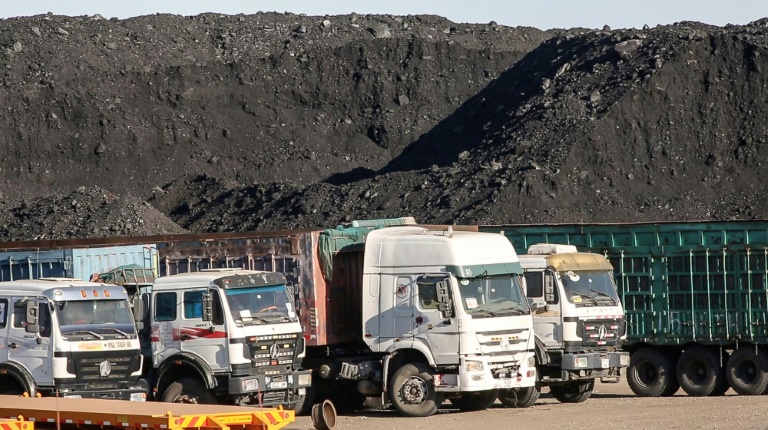
Mongolia is ramping up efforts to export coal to energy-hungry China, a government official told AFP, despite global efforts to end the use of the polluting fossil fuel.

World leaders are gathering at the COP27 conference in Sharm el-Sheikh to hash out the future of the planet, and China’s role in global carbon emissions has been front and centre.

Mongolia already sends 86 percent of its exports to China, with coal accounting for more than half the total, and is upgrading its infrastructure in the hopes of selling even more to its southern neighbour.

“We need to use this window of opportunity, use the next 10 years to be able to export as much coal as we can,” deputy mining minister Batnairamdal Otgonshar told AFP.

China is the world’s largest polluter and has pledged to achieve carbon neutrality by 2060. To that end, it is building out its renewable power grid to prepare for a move away from coal.

But its need for power far exceeds what renewable sources can supply. Chinese authorities ordered producers in spring to add 300 million tonnes of mining capacity this year — the equivalent of an extra month of coal production.

And Mongolia is keen to chip in, shipping 19 million metric tons of coal to China so far this year, according to the National Statistical Office, already exceeding 2021’s 16 million total.

Government officials want Mongolia to surpass the record 37 million tons sent in 2019 and to keep supplying China with a steady stream of coal well into the next decade, Batnairamdal said.

“Coking demand won’t decline in the next 10 years, but the technology may change,” he said. “The next 10 years remain an opportunity.”

Batnairamdal is pushing for Mongolia to invest heavily in coal, and new railways to connect to China’s ports and processing plants.

– ‘Window of opportunity’ –

Time is running out for Mongolia to sell off its thermal coal — used by power plants to make electricity — Batnairamdal said, as coal-fired plants are being phased out.

Soaring prices also mean there is little incentive for Ulaanbaatar to slow down. The value of Mongolia’s coal exports jumped to $4.5 billion in the first nine months of 2022, almost triple what they were over the same period last year.

An unofficial ban on Australian coal sparked by political disputes in 2020 has also opened the door wider to Mongolian exporters, analysts say.

“Without Australia, China’s appetite for low sulphur coking coal creates substantial demand for Mongolian miners,” said Simon Wu, a senior consultant at Wood Mackenzie, a research and consultancy group.

Mongolia missed their chance to export more coal to China after Australian imports fell off, Wu said, blaming a lack of railway connections.

Politicians in Ulaanbaatar are now working to fix that.

Ulaanbaatar finished a 233-kilometre (145 mile) rail line from the Tavan Tolgoi mine to the Gashuun Sukhait border in September, a project that took 14 years to complete.

Analysts also say relative political stability in Mongolia could help the government finish other long-delayed projects. 

– ‘Trade will open up’ –

Tumentsogt Tsevegmid, chairman of the Business Council of Mongolia, told AFP the infrastructure now in place, combined with projects already in progress, could allow Mongolia to push coal exports to 70 million tons annually, possibly by 2025.

“If China is willing to import more coal, and there is more work done to improve borders and railways lines, then trade will open up,” Tumentsogt said.

With a population of just 3.3 million, Mongolia has little heavy industry and does not by itself consume much coal compared to its southern neighbour. 

It accounts for just 0.11 percent of the world’s greenhouse gas emissions, according to the United Nations, but is already being severely affected by climate change.

Strong winter storms, along with drought and wildfires, have displaced communities, forcing nomadic families into the capital after losing their livestock. 

The United Nations says climate change is making these natural disasters more common in Mongolia, with overcrowding in unplanned areas of Ulaanbaatar leading to soil and air pollution — especially in winter, when raw coal is burned in residential stoves to fend off freezing temperatures.

“The contradiction will remain,” said Tumentsogt, when asked about Mongolia both producing coal for export while also investing in renewables.

“Mongolia has a dilemma, it needs short-term cash revenue to meet its fiscal needs and at the same time is trying to invest in costly renewables to reduce its carbon footprint, reduce air pollution and contribute to global sustainability efforts.”

Tumentsogt said Mongolia’s cash crunch has only one fix for now — sell more coal. 

“Coal deliveries and exports will remain as one of the major sources of revenue for the government and there are no other sources that can replace this fiscal need.”

Musk 'kills' new Twitter label, hours after launch

Twitter launched two new verification tools Wednesday but “killed” one of them hours later in a messy start to owner Elon Musk’s campaign to revamp the influential platform following his $44 billion buyout.

The social media platform unveiled its long-awaited Twitter Blue subscription service, which allows users to pay $7.99 per month for a coveted blue tick, as well as a separate gray “official” badge for some high-profile accounts.

But the new gray label was almost immediately scrapped, overshadowing the launch of Twitter Blue, which is currently only available on the mobile app on iPhones and in the United States.

“I just killed it,” Musk tweeted hours after the new tag was added to government accounts, big companies and major media outlets.

“Please note that Twitter will do lots of dumb things in coming months. We will keep what works & change what doesn’t,” the world’s richest man added.

The U-turn invited further scrutiny of Musk’s plans for Twitter a week after he laid off thousands of workers and drew a massive drop in spending by advertisers, who are wary of the site’s direction.

The blue tick has been a mark of an account’s authenticity and doubts emerged that public figures or media outlets would pay for it. The official gray tag was seen by observers as a workaround to solve that problem.

The launch of the new official label began Wednesday and was on the accounts of companies such as Apple and BMW, as well as public ones such as the White House and major media outlets.

But only hours later, it was gone for many of them.

Accounts that had received the “official” badge — including Agence France-Presse, BBC News, Pope Francis and Kanye West — saw the mention disappear.

– ‘A lot of work’ –

Esther Crawford, an executive who announced the gray tick on Tuesday, insisted that the official label was still going to be part of the relaunch, but that “we are just focusing on government and commercial entities to begin with.”

“There are no sacred cows in product at Twitter anymore. Elon is willing to try lots of things — many will fail, some will succeed,” she tweeted Wednesday.

“The goal is to find the right mix of successful changes to ensure the long-term health and growth of the business.”

During a panel for advertisers broadcast on Twitter, Musk exercised some damage control, admitting that a lot of work lay ahead to get the site to the place he wished to reach.

“We’ve got a lot to do on the software side. I can’t emphasize that enough,” he said.

Musk took control of Twitter after a drawn-out legal battle in which the mercurial tycoon tried to renege on a deal that many believe he overpaid for.

It emerged on Tuesday that Musk sold $4 billion worth of shares in Tesla to help pay for a transaction in which he took on billions of dollars in debt.

Twitter Blue is seen as one way to overcome the loss in advertisers since Musk took over.

Twitter last week fired half of its 7,500 employees, which Musk said was necessary as the company was losing $4 million a day.

Hackers demand $10 mn for stolen Australian health records

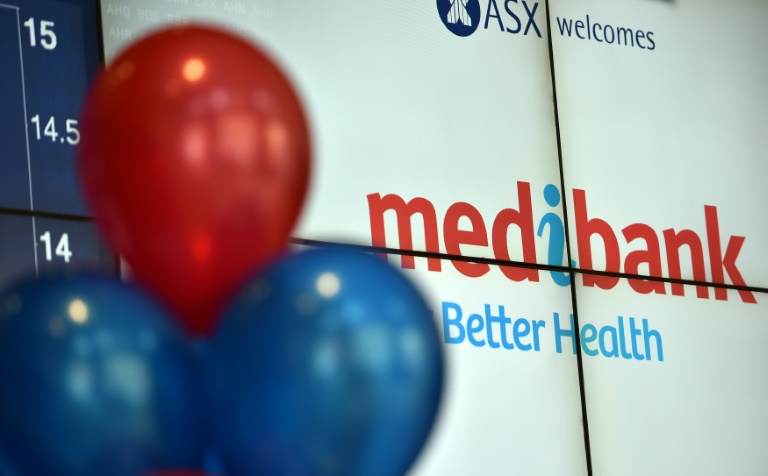
Hackers on Thursday demanded US$10 million to stop leaking highly sensitive records stolen from a major Australian healthcare company, as they uploaded yet more intimate details about customers.

Medibank, Australia’s largest private health insurer, confirmed this week that hackers had accessed the information of 9.7 million current and former clients, including Prime Minister Anthony Albanese.

The hackers on Thursday uploaded a second batch of files to a dark web forum, with more sensitive details about hundreds of Medibank customers.

The first leaks appear to have been selected to cause maximum harm: targeting those who received treatment related to drug abuse, sexually transmitted infections or pregnancy terminations.

“Added one more file abortions.csv,” the anonymous hackers wrote on the forum, before detailing their ransom threat.

“Society ask us about ransom, it’s 10 million USD. We can make discount… $1 = 1 customer.”

Medibank has repeatedly refused to pay the ransom.

– ‘Profit and greed’ –

The Medibank hack — and an earlier data breach impacting nine million customers at telecom company Optus — has raised questions about Australia’s ability to repel cyber criminals.

Dennis Desmond, a former FBI agent and US Defense Intelligence Agency officer, said Australia was no worse “than any other high-value target or Western country”. 

“It’s very unfortunate, but I don’t think Australia is any more vulnerable than any other Western developed nation,” he told AFP. 

Desmond said profit-driven hackers were unlikely to single out a specific country — and were typically more interested in targeting companies holding valuable data. 

“It’s the data types that are of the most interest to these hackers,” he said. 

“The healthcare data is a huge target and personally identifiable data is high-value. 

“Generally, profit and greed are the number one drivers.”

– ‘Scummy criminals’ –

The Medibank hack is likely to include data on some of the country’s most influential and wealthy individuals. 

Medibank chief executive David Koczkar condemned the “disgraceful” extortion tactics. 

“The weaponisation of people’s private information in an effort to extort payment is malicious and it is an attack on the most vulnerable members of our community.”

The group behind the attack appears to be pressuring Medibank by hunting for the most potentially damaging personal information within the records.

The first records posted to the dark web forum were separated into “naughty” and “nice” lists.

Some on the “naughty” list had numeric codes that appeared to link them to drug addiction, alcohol abuse and HIV infection. 

For example, one record carried an entry that read: “p_diag: F122”. 

F122 corresponds with “cannabis dependence” under the International Classification of Diseases, published by the World Health Organization.

Names, addresses, passport numbers and birth dates were also included in the data. 

Home Affairs Minister Clare O’Neil has described the hackers as “scummy criminals”. 

Asian stocks down after US midterms turn global markets red

Asian stocks started down on Thursday after inconclusive US midterm election results and a turbulent cryptocurrency market left Wall Street and European markets in a sea of red.

The uncertainty, especially about how the midterm results would impact inflation, transferred to Asia overnight.

Tokyo, Hong Kong, Shanghai, Seoul, Jakarta and Taipei were all trading lower.

“A purple dilemma might be the best way to describe the red-blue tangle that emerged Wednesday. It’ll be gridlock, that’s for sure,” Stephen Innes of SPI Asset Management said of the US midterms.

“Perhaps not the friendliest kind for market participants, many of whom were hoping for a more resounding rebuke of Democrats given inflation realities.” 

All eyes are expected to turn to US inflation data, due later Thursday, to gauge the speed of future rate hikes by the Federal Reserve. 

“US growth looks still too strong to bring inflation down,” Tapas Strickland of National Australia Bank said in a note.

“The ongoing resilience in the (consumer prices) data and stickiness in inflation continue to point to the Fed hiking rates closer to 5.0 percent or higher.” 

Fed officials have raised their policy rate to a range of between 3.75 to 4.0 percent.

– ‘Crypto tumult’ –

Markets in Asia were already grappling with the impact of strict zero-Covid measures in China, with supply chains and activity slowed by harsh lockdowns and testing policies. 

“China’s domestic demand is weak and their key trading partners are entering recession territory,” said Edward Moya from Oanda. 

“China is also continuing to struggle with COVID as Guangzhou has to return to mass testing.” 

The crypto world was also rocked by a surprise decision from Binance, the world’s biggest cryptocurrency platform, to scrap a possible acquisition of rival FTX.com a day after disclosing it had signed a non-binding letter of intent to buy it.

The near-collapse of FTX has plunged bitcoin to a two-year low.

“You can’t deny the growing correlation between bitcoin and risk assets,” said Innes.

“The FTX news is having an outsized effect on asset prices,” he said, adding that “all ships were sinking on the crypto tumult.”

– Key figures around 0230 GMT –

Tokyo – Nikkei 225: DOWN 1.16 percent at 27,395.71 

Hong Kong – Hang Seng Index: DOWN 2.49 percent at 15,950.47

Shanghai – Composite: DOWN 0.39 percent at 3,036.37

Pound/dollar: UP at $1.1394 from $1.1352  

Euro/dollar: FLAT at $1.0017 

Dollar/yen: DOWN at 146.19 yen from 146.37 yen 

Euro/pound: DOWN at 87.89 pence from 88.19 pence 

West Texas Intermediate: DOWN 0.22 percent at $85.64 per barrel

Brent North Sea crude: DOWN 0.19 percent at $92.47 per barrel

New York – Dow: DOWN 2.0 percent at 32,513.94 (close)

London – FTSE 100: DOWN 0.1 percent at 7,296.25 (close)

Facebook owner Meta to lay off 11,000 staff

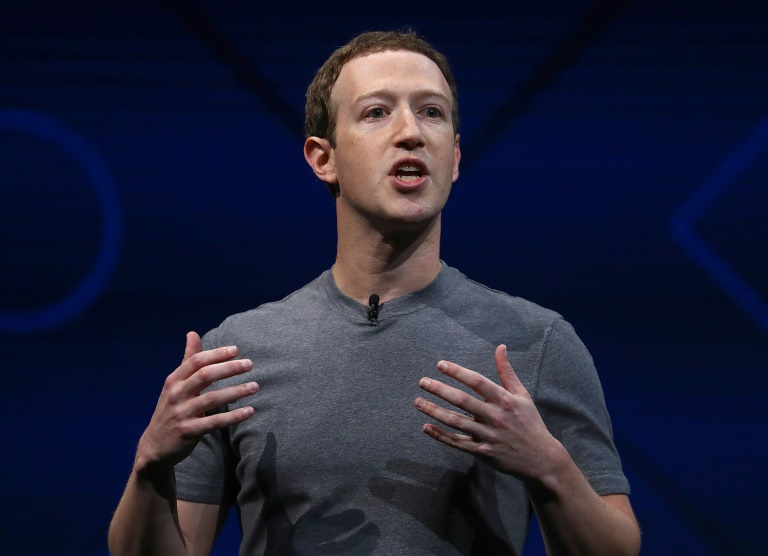
Facebook owner Meta will lay off more than 11,000 of its staff in “the most difficult changes we’ve made in Meta’s history,” boss Mark Zuckerberg said on Wednesday.

He said the cuts represented 13 percent of the social media titan’s workforce and would affect its research lab focusing on the metaverse as well as its apps, which include Facebook, Instagram and WhatsApp.

The tech industry is in a serious slump and several major firms have announced mass layoffs — Twitter’s new owner Elon Musk fired half its staff last week.

“I want to take accountability for these decisions and for how we got here,” Zuckerberg said in a note to staff.

“I know this is tough for everyone, and I’m especially sorry to those impacted.”

Ad-supported platforms such as Facebook and Google are suffering with advertisers looking to cut costs as they struggle with inflation and rising interest rates.

Zuckerberg told his 87,000-strong staff he had expected the boost in e-commerce and online activity during the Covid pandemic to continue, but added: “I got this wrong, and I take responsibility for that.”

The measures were also a message to Wall Street, where the company’s poor performance has sent the Meta share price plummeting by 70 percent since the start of the year.

The move on Wednesday was welcomed by investors with Meta shares showing major gains for the day of nearly six percent just ahead of the closing bell in New York.

The downturn has affected companies across the sector, with Apple and Amazon also recently announcing results that disappointed investors.

But Meta also faces some unique problems of its own.

The California-based company is being squeezed by Zuckerberg’s decision to devote billions of dollars to developing the metaverse, an immersive version of the web accessed via virtual reality headsets.

Zuckerberg renamed the company Meta a year ago to reflect the commitment to the project, but the division working on metaverse technology has since made losses of more than $3.5 billion.

Facebook is also struggling to fend off Chinese-owned TikTok, the now dominant social media for younger users to the detriment of Meta’s Instagram.

– ‘Last resort’ –

Mike Proulx, a research director at Forrester, said “Meta is amidst an identity crises” and that severe cost-cutting was “inevitable.”

“The company has one foot in a risky long-term metaverse bet and another foot failing to compete with TikTok,” he added.

Zuckerberg has hinted several times this year that belt-tightening measures were just around the corner and said in his letter on Wednesday that staff layoffs were a “last resort.”

Meta would also keep a hiring freeze going into next year, he said, and other spending cuts were envisaged.

“Fundamentally, we’re making all these changes for two reasons: our revenue outlook is lower than we expected at the beginning of this year, and we want to make sure we’re operating efficiently,” Zuckerberg wrote.

In the US, terminated Meta employees will receive four months severance pay and two additional weeks of pay for each year of service. 

Last month, Meta announced profits of $4.4 billion in the third quarter, a 52 percent decrease year-on-year.

The slump in profits comes despite its platforms dominating the world in terms of users — Facebook alone claims to have around two billion people who log on daily.

Stocks slide on China, US midterms

Global stock markets fell Wednesday following weak Chinese data and as traders assessed results of US midterm elections.

The dollar rose strongly versus the British pound — a currency under pressure owing to the UK’s bleak economic outlook.

Oil prices slumped as official data from China showed the world’s second-largest economy languishing under its strict zero-Covid policy and US stockpiles increased.

Shares in Facebook owner Meta jumped 8.0 percent after the company said it would lay off 11,000 staff, in a move which follows a recent plunge of its valuation.

The tech industry is in a serious slump and several major firms have announced mass layoffs — Twitter’s new owner Elon Musk fired half its staff last week.

Ad-supported platforms such as Facebook and Google are suffering with advertisers looking to cut costs as they struggle with inflation and rising interest rates.

Bitcoin continued to slide on fallout from the near-collapse of cryptocurrency platform FTX, reaching the lowest level for two years at $17,052.49.

“Even if you are not involved in cryptos, the turmoil is definitely something to keep an eye on, as it may be an additional factor impacting risk appetite across the financial markets,” said market analyst Fawad Razaqzada at City Index and FOREX.com.

– US midterms –

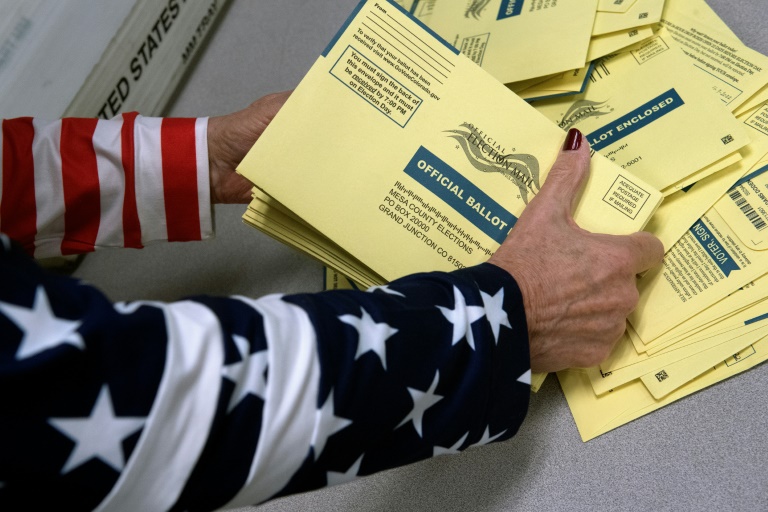
While equities rose ahead of the vote on the likelihood of legislative gridlock for the next two years, which would mean no new big increases in US government spending and taxes, they fell as results came in.

Republican hopes for a sweeping rebuke of President Joe Biden in congressional elections failed to materialise, with both parties picking up seats following a campaign fought against a backdrop of stubbornly high inflation and fears for US democracy.

While Republicans look like they will pick up a slim majority in the House, the outcome in the Senate is still unclear.

“The stock market had a nice, little run leading up to election day based on the gridlock angle,” said Patrick O’Hare at Briefing.com.

“It appears that is going to be the case, so participants are taking some money off the table,” he added.

– ‘No good news from China’ –

In China, speculation over how long Beijing will keep its harsh lockdown-and-testing Covid-19 policies has fuelled volatility on markets, despite the government vowing it will not change course.

The restrictions have taken a toll on the Chinese economy, with Data Wednesday showing China’s producer price index (PPI) fell by 1.3 percent on-year in October, pushing it into negative territory for the first time since December 2020.

The consumer price index (CPI) — the main gauge for retail inflation — rose 2.1 percent year-on-year in October, moderating slightly from September’s two-year high of 2.8 percent.

“The economy’s slowing, confirmed by the CPI data,” Iris Pang, chief economist for Greater China at ING Wholesale Banking, told AFP. 

“I don’t see any good news from China.”

– Key figures around 1530 GMT –

New York – Dow: DOWN 0.8 percent at 32,898.35 points

EURO STOXX 50: DOWN 0.3 percent at 3,728.03

London – FTSE 100: DOWN 0.1 percent at 7,296.25 (close)

Frankfurt – DAX: DOWN 0.2 percent at 13,666.32 (close)

Paris – CAC 40: DOWN 0.2 percent at 6,430.57 (close)

Tokyo – Nikkei 225: DOWN 0.6 percent at 27,716.43 (close)

Hong Kong – Hang Seng Index: DOWN 1.2 percent at 16,358.52 (close)

Shanghai – Composite: DOWN 0.5 percent at 3,048.17 (close)

Pound/dollar: DOWN at $1.1415 from $1.1468 on Tuesday

Euro/dollar: UP at $1.0049 from $1.0005

Dollar/yen: DOWN at 146.06 yen from 146.26 yen

Euro/pound: UP at 88.04 pence from 87.23 pence

West Texas Intermediate: DOWN 2.1 percent at $87.01 per barrel

Brent North Sea crude: DOWN 1.8 percent at $93.66 per barrel

burs-rl/lc

Germany blocks sale of two chipmakers to China

Germany on Wednesday blocked the sale of two chipmakers to Chinese investors because of a potential threat to security.

“We must look very closely at company takeovers when it relates to important infrastructure or when there is a danger that the technology would flow to buyers from non-EU countries,” said Economy Minister Robert Habeck.

Chinese company Sai MicroElectronics had been seeking to buy the Dortmund factory of Elmos through its Swedish subsidiary Silex. 

The German government had rejected the planned takeover because “the purchase could endanger the order and security of Germany,” said the economy ministry.

Other ways of reducing the risks, including allowing the acquisition under certain conditions, were “unable to eliminate the identified dangers”, it added.

Elmos and Silex “regret” the decision, the German company said, adding the sale would have “strengthened semiconductor production” in Europe’s top economy.

Elmos said it was considering legal action as the ban on the acquisition was announced before the end of a review period and without granting the companies a hearing.

The second acquisition to be turned down was of Bavaria-based ERS Electronic, which supplies a cooling technology to wafer manufacturers, according to Germany’s minister for research Bettina Stark-Watzinger.

Fears have been growing in Germany about an over-reliance on Beijing, and letting critical infrastructure fall into the hands of Chinese state-linked companies.

Russia’s invasion of Ukraine and its subsequent dwindling of crucial gas supplies to Europe has further accentuated the concerns.

In particular, the microchip industry has come under scrutiny, as it produces key components used across industry from consumer electronics to battery-powered vehicles.

Earlier this year, the European Union unveiled a multibillion euro “Chips Act” aimed at doubling Europe’s market share in semiconductors and reducing dependence on supplies from Asia. 

– ‘Not naive’ –

Elmos, which primarily builds components for the automobile industry, said late last year it intended to sell the production facility at its headquarters.

Silex was seeking to buy the site for 85 million euros ($85.4 million).

But business weekly Wirtschaftswoche said Elmos had been the recipient of 5.9 million euros from the German state for two research projects. It had also received 8.1 million euros from an EU project on autonomous driving.

Habeck said that Germany remained open to investors, but that “we are also not naive”. 

Beijing has been trying to glean knowledge about production and development, underlined the minister, saying that the “statements from China are very clear”.

Habeck, of the ecologist Greens party, has recently locked horns with Chancellor Olaf Scholz over investments from China.

He deeply opposed a plan by Chinese shipping firm Cosco to buy a stake in a Hamburg port terminal, forcing Scholz to pull rank to force through the deal by allowing the purchase of a reduced stake.

Scholz has repeatedly underlined the importance of strong trade ties with Beijing, something that German industry leaders have also stressed.

China is a major market for German goods, particularly for auto giants Volkswagen, BMW and Mercedes-Benz, and many jobs in Europe’s top economy depend directly on the relationship.

On a controversial visit to Beijing last week, Scholz, accompanied by a delegation of German business bosses, told Chinese leaders that Berlin expected equal treatment on trade.

But Scholz’s trip has sparked controversy for coming so soon after Xi Jinping strengthened his hold on power in China last month.

With tensions between the West and Beijing running high on issues ranging from Taiwan to alleged human rights abuses, there had been concerns that the high-profile trip may have unsettled both the United States and the European Union.

Stocks slide on China, US midterms

Global stock markets fell Wednesday following weak Chinese data and as traders assessed results of US midterm elections.

The dollar rose strongly versus the British pound — a currency under pressure owing to the UK’s bleak economic outlook.

Oil prices retreated as official data from China showed the world’s second-largest economy languishing under its strict zero-Covid policy.

Bitcoin continued to slide on fallout from the near-collapse of cryptocurrency platform FTX, reaching the lowest level for two years at $17,172.43.

Shares in Facebook owner Meta jumped 6.1 percent at the start of trading on Wall Street after the company said it would lay off 11,000 staff, in a move which follows a recent plunge of its valuation.

The tech industry is in a serious slump and several major firms have announced mass layoffs — Twitter’s new owner Elon Musk fired half its staff last week.

Ad-supported platforms such as Facebook and Google are suffering with advertisers looking to cut costs as they struggle with inflation and rising interest rates.

– US midterms –

Equities rose ahead of the vote on the likelihood of legislative gridlock for the next two years, which would mean no new big increases in government spending and taxes.

But Republican hopes for a sweeping rebuke of President Joe Biden in congressional elections failed to materialise, with both parties picking up seats following a campaign fought against a backdrop of stubbornly high inflation and fears for US democracy.

While Republicans look like they will pick up a slim majority in the House, the outcome in the Senate is still unclear.

“The stock market had a nice, little run leading up to election day based on the gridlock angle,” said Patrick O’Hare at Briefing.com.

“It appears that is going to be the case, so participants are taking some money off the table,” he added.

– ‘No good news from China’ –

In China, speculation over how long Beijing will keep its harsh lockdown-and-testing Covid-19 policies has fuelled volatility on markets, despite the government vowing it will not change course.

The restrictions have taken a toll on the Chinese economy, with Data Wednesday showing China’s producer price index (PPI) fell by 1.3 percent on-year in October, pushing it into negative territory for the first time since December 2020.

The consumer price index (CPI) — the main gauge for retail inflation — rose 2.1 percent year-on-year in October, moderating slightly from September’s two-year high of 2.8 percent.

“The economy’s slowing, confirmed by the CPI data,” Iris Pang, chief economist for Greater China at ING Wholesale Banking, told AFP. 

“I don’t see any good news from China.”

– Key figures around 1330 GMT –

London – FTSE 100: DOWN 0.2 percent at 7,291.45 points

Frankfurt – DAX: DOWN 0.5 percent at 13,618.84

Paris – CAC 40: DOWN 0.3 percent at 6,419.94

EURO STOXX 50: DOWN 0.5 percent at 3,721.68

New York – Dow: DOWN 0.5 percent at 32,982.50

Tokyo – Nikkei 225: DOWN 0.6 percent at 27,716.43 (close)

Hong Kong – Hang Seng Index: DOWN 1.2 percent at 16,358.52 (close)

Shanghai – Composite: DOWN 0.5 percent at 3,048.17 (close)

Pound/dollar: DOWN at $1.1397 from $1.1468 on Tuesday

Euro/dollar: UP at $1.0030 from $1.0005

Dollar/yen: UP at 146.38 yen from 146.26 yen

Euro/pound: UP at 87.95 pence from 87.23 pence

West Texas Intermediate: DOWN 1.4 percent at $87.64 per barrel

Brent North Sea crude: DOWN 1.5 percent at $93.97 per barrel

burs-rl/jmm

Close Bitnami banner
Bitnami