Chinese Business

Global markets mixed ahead of US midterms

Asian and European stock markets traded mixed Tuesday in jittery deals as Americans head to the polls in critical midterm elections.

The dollar clawed back some of its recent losses versus the euro, while oil continued to be weighed down by weaker Chinese demand expectations.

Frankfurt stocks gained ground after overnight Wall Street gains, but Paris flatlined and London slid in value.

“Those US midterm elections today might keep investors on the sidelines a bit before they make any major decisions,” noted Markets.com analyst Neil Wilson.

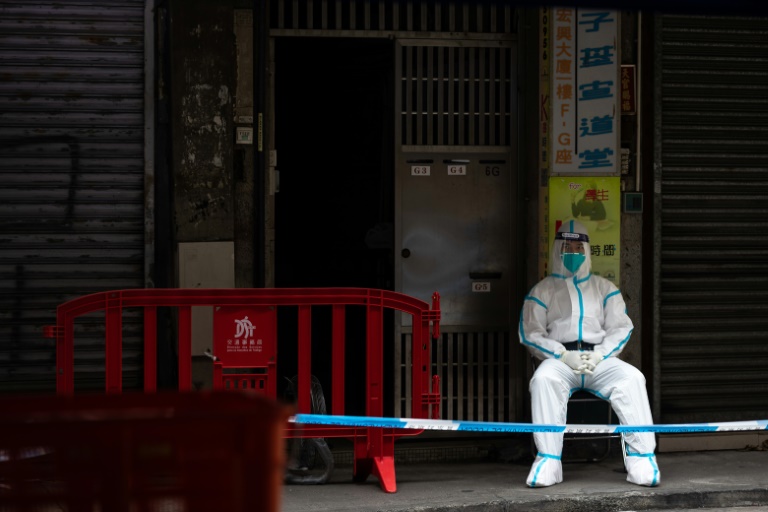
Hong Kong and Shanghai sank as speculation about a rollback of China’s strict zero-Covid policies fuelled market volatility, even after Beijing vowed to stick with its harsh lockdowns and testing regimes.

On the upside, Tokyo stocks won 1.3 percent.

Polls opened Tuesday in crucial US elections that could decide the political future of both President Joe Biden and his predecessor Donald Trump — who has all but announced he will seek the White House again in 2024.

Biden’s Democrats are facing a gargantuan struggle to hang on to Congress, after a race the president has cast as a “defining” moment for US democracy — while Trump’s Republicans have campaigned hard on kitchen-table issues like inflation and crime.

Polls show Republicans are likely to win at least one house of Congress — and some see the prospect of further Washington gridlock as a scenario that lessens the risk of policy uncertainty.

“Consensus is that investors prefer political deadlock as it prevents any significant shifts in policy,” added Scope Markets analyst James Hughes.

“With that looking like a real possibility, the real market turbulence may appear later in the week.”

– US on inflation watch –

On Monday, US stocks climbed, with the Dow Jones Industrial Average finishing up 1.3 percent and the broad-based S&P 500 rising 1.0 percent.

The next major data point that investors are watching is US inflation data due on Thursday.

SPI Asset Management analyst Stephen Innes said the data “will be the next marker for the (Federal Reserve) on how high to take interest rates”.

Back in Asia, Hong Kong closed down 0.2 percent after jumping nearly three percent in the previous session as investors continued to hope for a relaxation of China’s strict Covid-19 rules.

“Speculation about reopening continues to add some market volatility,” said Taylor Nugent, an economist at National Australia Bank.

“In a timely reminder of the potential for Covid policy to hit output, Apple warned iPhone shipments will be lower than previously expected after China lockdowns affected operations at a supplier’s factory,” he noted.

– Key figures around 1130 GMT –

London – FTSE 100: DOWN 0.1 percent at 7,293.16 points

Paris – CAC 40: FLAT at 6,416.83

Frankfurt – DAX: UP 0.4 percent at 13,581.88

EURO STOXX 50: UP 0.3 percent at 3,722.09

Tokyo – Nikkei 225: UP 1.3 percent at 27,872.11 (close)

Hong Kong – Hang Seng Index: DOWN 0.2 percent at 16,557.31 (close)

Shanghai – Composite: DOWN 0.4 percent at 3,064.49 (close)

New York – Dow: UP 1.3 percent at 32,827.00 (close)

Pound/dollar: DOWN at $1.1468 from $1.1514 on Monday

Euro/dollar: DOWN at $1.0005 from $1.0020

Dollar/yen: DOWN at 146.26 from 146.93 yen

Euro/pound: UP at 87.23 pence from 87.03 pence

West Texas Intermediate: DOWN 1.2 percent at $90.70 per barrel

Brent North Sea crude: DOWN 0.7 percent at $97.25 per barrel

Asian markets mixed ahead of US midterms

Asian markets were mixed on Tuesday following an upbeat session on Wall Street as investors look to crucial midterm elections that polls show could upend power in Washington.

Shares ended lower in Hong Kong and Shanghai as speculation about a rollback of China’s strict zero-Covid policies fuelled market volatility, even after the government vowed to stick with its harsh lockdowns and testing regimes.

But Tokyo stocks closed 1.3 percent higher, extending rallies in New York, where the dollar also retreated against the pound and the euro.

Early voting has begun in many states and most US voters go to the polls on Tuesday, with a Republican takeover of Congress likely dooming President Joe Biden’s ambitious proposals.

Polls show Republicans are likely to win at least one house of Congress — and some see the prospect of further Washington gridlock as a scenario that lessens the risk of policy uncertainty.

“This may very well be taken as a positive for equity markets over coming days,” Clifford Bennett, chief economist at ACY Securities, said in a note.

“The Biden administration, while welcomed to office by financial markets, has nonetheless delivered on being a very big spending government,” Bennett wrote.

“It is difficult to argue the extreme inflation and slowing economy are entirely the Biden administration’s fault, but voters will be very clear in their feelings on the matter just the same.”

– Not too bullish –

On Monday, US stocks climbed, with the Dow Jones Industrial Average finishing up 1.3 percent and the broad-based S&P 500 rising 1.0 percent.

The next major data point that investors are watching is US inflation data due on Thursday, “which will be the next marker for the (Federal Reserve) on how high to take interest rates”, said Stephen Innes of SPI Asset Management.

Before the US Consumer Price Index data is released, “traders are unlikely to live bullish life to the fullest”, he predicted.

Seoul gained 1.1 percent, Taipei rose 0.9 percent and Sydney was up 0.4 percent, with Singapore rising 0.3 percent.

But Hong Kong closed down 0.2 percent after jumping nearly three percent in the previous session as investors continued to hope for a relaxation of China’s strict Covid-19 rules.

“Speculation about reopening continues to add some market volatility,” said Taylor Nugent, an economist at National Australia Bank.

“In a timely reminder of the potential for Covid policy to hit output, Apple warned iPhone shipments will be lower than previously expected after China lockdowns affected operations at a supplier’s factory,” he noted.

Shanghai closed down 0.4 percent, while Jakarta fell 0.7 percent and Wellington dropped 1.2 percent.

European shares also fell in early trade. London was down 0.5 percent, Paris fell 0.4 percent and Frankfurt lost 0.1 percent.

– Key figures around 0830 GMT –

Tokyo – Nikkei 225: UP 1.3 percent at 27,872.11 (close)

Hong Kong – Hang Seng Index: DOWN 0.2 percent at 16,557.31 (close)

Shanghai – Composite: DOWN 0.4 percent at 3,064.49 (close)

London – FTSE 100: DOWN 0.5 percent at 7,266.12

Pound/dollar: DOWN at $1.1476 from $1.1513 on Monday

Euro/dollar: DOWN at $0.9997 from $1.0023

Dollar/yen: FLAT at 146.69 from 146.68 yen

Euro/pound: DOWN at 87.10 pence from 87.03 pence

West Texas Intermediate: DOWN 1.2 percent at $91.49 per barrel

Brent North Sea crude: DOWN 0.8 percent at $97.74 per barrel

New York – Dow: UP 1.3 percent at 32,827.00 (close)

Weak yen helps Nintendo lift annual net profit forecast

Nintendo raised its full-year net profit forecast on Tuesday, with the weak yen and a solid performance by new games helping compensate for falling sales of its Switch console.

The Kyoto-based Japanese gaming giant estimated net profit for the year to March 2023 at 400 billion yen ($2.7 billion), up from a previous projection of 340 billion yen.

Net profit for the half-year from April to September was also up 34.1 percent to 230 billion yen, the firm said.

“For software, sales for titles such as Splatoon 3 and Nintendo Switch Sports that were released during this fiscal year have continued to grow steadily,” it said.

“Titles released in previous fiscal years as well as titles from other software publishers have also performed well.”

Nintendo also saw a significant boost to its bottom line from foreign exchange gains driven by the depreciation of the yen, which has tumbled against the dollar this year to lows not seen since the 1990s.

In early October, it dropped beyond 151 to the greenback for the first time in 32 years, as Japan’s central bank sticks to its ultra-loose monetary policy while the Federal Reserve hikes rates to tackle inflation.

In 2020-21, Nintendo’s profits soared to an annual record of 480 billion yen due to soaring demand for indoor entertainment during pandemic lockdowns. 

The firm nearly matched that figure in the last financial year, with its blockbuster Switch console continuing to perform well and software sales staying strong.

But sales of the Switch have been slowing, and Nintendo said it now expects to sell 19 million units this fiscal year, two million units less than previously expected.

– Joint venture with DeNA –

Nintendo sold 6.68 million units of the various types of Switch consoles it offers in the first half of the fiscal year, down over 19 percent from a year earlier.

The slowing sales were due to a range of factors, including an ongoing global chip shortage, the firm said.

The revised forecast for Switch sales had been expected by some analysts, with Hideki Yasuda, senior analyst at Toyo Securities, telling AFP before the earnings estimate that Nintendo would “have a tough time” reaching its previous goal of 21 million unit sales.

But he said profits were expected to jump on the yen and the strong performance particularly by Splatoon 3, which had the fastest sales in the first three days of its release in Japan of any Switch title.

“A new Pokemon title will be launched in November and the company is seeing strong pre-orders in Japan,” Yasuda added.

The firm left its full-year operating profit forecast unchanged at 500 billion yen. Its sales forecast was revised up to 1.65 trillion yen from 1.60 trillion yen.

Nintendo on Tuesday also announced a joint venture with Tokyo-based mobile gaming company DeNA intended to “strengthen the digitalisation of Nintendo’s business”.

In a statement, Nintendo said the joint venture would research, develop and create “value-added services”, without giving further details.

The two firms announced an initial partnership in 2015 to develop games for smartphones.

Nintendo also bought a stake in DeNA as part of a deal to develop smartphone games based on its host of popular characters, possibly including Super Mario and Donkey Kong.

Nintendo said Tuesday’s joint venture announcement would have no effect on the company’s results for the current fiscal year.

The Switch manufacturer will hold 80 percent of the joint venture, to be called Nintendo Systems.

Australian insurer warns of 'distressing' hack threat

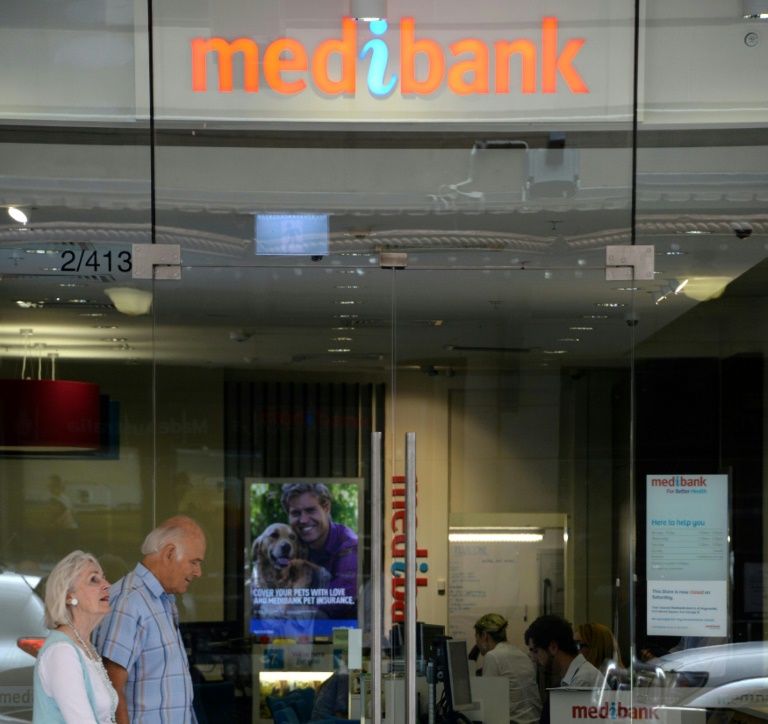
A major Australian health insurer warned Tuesday of a “distressing” threat by a purported hacker to release client data within 24 hours, following a hack affecting 10 million people.

Medibank Private, one of Australia’s largest insurers, told customers to be “vigilant” after the reported threat, issued a day after it had ruled out paying any ransom demand.

The company revealed Monday that a hack originally thought to have breached the data of 3.9 million people had in fact given access to the names, birth dates, addresses, phone numbers and emails of about 9.7 million former and existing clients.

Those numbers included 1.8 million international customers.

On Tuesday, an anonymous poster on a hacking blog — widely cited by Australian media — said that data from the Medibank hack “will be publish in 24 hours”. 

It was not possible to confirm whether the poster was connected to the hack or had access to people’s stolen information.

“We knew the publication of data online by the criminal could be a possibility, but the criminal’s threat is still a distressing development for our customers,” Medibank chief executive David Koczkar said, calling for clients to be “vigilant”.

“We unreservedly apologise to our customers,” he added.

The hacker could also attempt to contact customers directly, the company warned.

– ‘Betrayal’ –

Medibank had said in Monday’s announcement that it believed “all of the customer data accessed could have been taken by the criminal”.

The data breach included some people’s health claims along with codes exposing their diagnoses and medical procedures, as well as the passport numbers and the visa details of international students. 

Medibank said it was working with the Australian government and with the police, who were trying to prevent the sharing and sale of the stolen data.

Cybercrime experts had advised that paying a ransom had only a “limited chance” of ensuring the return of the stolen data, the company said, explaining its decision to reject any ransom demand.

Two law firms said Tuesday they had joined forces to investigate a possible class action lawsuit against Medibank.

“We believe the data breach is a betrayal of Medibank Private’s customers and a breach of the Privacy Act,” said a joint statement by Bannister Law and Centennial Lawyers.

“Medibank has a duty to keep this kind of information confidential.”

The Medibank hack followed an attack on telecom company Optus in September that exposed the personal information of some nine million Australians.

As data theft becomes more common, it may raise questions over the need for Australian businesses to gather customers’ sensitive personal information, said Michael Duffy, associate professor of corporate law at Monash University.

Some of those data retention policies were dictated by government regulation, he added.

“Nevertheless, businesses requesting and keeping personal details that aren’t completely essential could become more legally problematic for them, if they are hacked.”

Australian insurer warns of 'distressing' data threat

A major Australian health insurer warned Tuesday of a “distressing” threat by a purported hacker to release data within 24 hours from a hack affecting 10 million people.

Medibank Private, one of Australia’s largest insurers, told customers to be “vigilant” after the reported threat, issued a day after it had ruled out paying any ransom demand.

The warning came a day after a hack originally thought to have breached the data of 3.9 million customers had in fact given access to the names, birth dates, addresses, phone numbers and emails of about 9.7 million former and existing clients.

On Tuesday, an anonymous poster on a hacking blog — widely cited by Australian media — said “data will be publish in 24 hours”. 

It was not possible to confirm whether the poster was connected to the hack or had access to people’s stolen information.

“We knew the publication of data online by the criminal could be a possibility, but the criminal’s threat is still a distressing development for our customers,” Medibank chief executive David Koczkar said, calling for customers to be “vigilant”.

“We unreservedly apologise to our customers,” he added, describing the “weaponisation” of their data as malicious.

The hacker could also attempt to contact customers directly, the company warned.

The data breach of Medibank — one of Australia’s largest insurers — included 1.8 million international customers.

– ‘Betrayal’ –

The company had said in Monday’s announcement that they believe “all of the customer data accessed could have been taken by the criminal”, which contained people’s health claims along with codes exposing their diagnoses and medical procedures. 

Passport numbers and the visa details of international students were also part of the data hack. 

Medibank said it was working with the Australian government and with the police, who were trying to prevent the sharing and sale of the stolen data.

Cybercrime experts had advised that paying a ransom had only a “limited chance” of ensuring the return of the stolen data, Koczkar said, adding that it could encourage the direct extortion of its clients.

“It is for these reasons that we have decided we will not pay a ransom for this event,” he said. 

Two law firms said Tuesday they had joined forces to investigate a possible class action lawsuit against Medibank.

“We believe the data breach is a betrayal of Medibank Private’s customers and a breach of the Privacy Act,” said a joint statement by Bannister Law and Centennial Lawyers. “Medibank has a duty to keep this kind of information confidential.”

The Medibank hack followed an attack on telecom company Optus in September that exposed the personal information of some nine million Australians — almost a third of the population.

Asian markets mixed ahead of US midterms

Asian markets were mixed on Tuesday following an upbeat session on Wall Street as investors look towards crucial midterm elections that polls show could upend power in Washington.

Shares fell in Hong Kong and Shanghai as speculation about a possible rollback of China’s strict zero-Covid policies fuelled volatility, even after the government vowed to stick with its harsh lockdowns and testing regimes.

But Tokyo stocks gained 1.3 percent at the break, extending rallies in New York, where stocks ended higher and the dollar retreated against both the pound and the euro.

Early voting has begun in many states and most US voters go to the polls on Tuesday, with a Republican takeover of Congress likely dooming President Joe Biden’s ambitious proposals.

Polls show Republicans are likely to win at least one house of Congress — and some see the prospect of further Washington gridlock as a scenario that could lessen the risk of policy uncertainty.

“This may very well be taken as a positive for equity markets over coming days,” Clifford Bennett, chief economist at ACY Securities, said in a note.

“The Biden administration, while welcomed to office by financial markets, has nonetheless delivered on being a very big spending government,” Bennett said.

“It is difficult to argue the extreme inflation and slowing economy are entirely the Biden administration’s fault, but voters will be very clear in their feelings on the matter just the same.”

On Monday, US stocks climbed, with the Dow Jones Industrial Average finishing up 1.3 percent and the broad-based S&P 500 rising 1.0 percent.

The next major data point that investors are watching is US inflation data due on Thursday.

Seoul gained 0.8 percent, Taipei jumped 1.0 percent and Sydney was up 0.3 percent in morning trade, with Singapore also rising 0.2 percent.

But Hong Kong was down 0.6 percent after jumping nearly three percent in the previous session as investors continued to hope for a relaxation of China’s strict Covid-19 rules.

“Speculation about reopening continues to add some market volatility,” Taylor Nugent, an economist at National Australia Bank, said in a commentary.

“In a timely reminder of the potential for Covid policy to hit output, Apple warned iPhone shipments will be lower than previously expected after China lockdowns affected operations at a supplier’s factory,” he noted.

Shanghai was down 0.6 percent, while Jakarta fell 0.3 percent, Bangkok retreated 0.2 percent and Wellington dropped 0.7 percent.

– Key figures around 0230 GMT –

Tokyo – Nikkei 225: UP 1.3 percent at 27,879.70 (break)

Hong Kong – Hang Seng Index: DOWN 0.6 percent at 16,491.63

Shanghai – Composite: DOWN 0.6 percent at 3,057.89

Pound/dollar: UP at $1.1517 from $1.1513 on Monday

Euro/dollar: DOWN at $1.0012 from $1.0023

Dollar/yen: DOWN at 146.59 from 146.68 yen

Euro/pound: DOWN at 86.97 pence from 87.03 pence

West Texas Intermediate: DOWN 1.1 percent at $91.63 per barrel

Brent North Sea crude: DOWN 0.8 percent at $97.80 per barrel

New York – Dow: UP 1.3 percent at 32,827.00 (close)

London – FTSE 100: DOWN 0.5 percent at 7,299.99 (close)

Ghosn escape accomplices return to US, lawyer confirms

The American father and son duo who helped former Nissan chairman Carlos Ghosn dramatically escape from Japan have been returned to the United States after spending 20 months in Japanese jails, their lawyer said Monday.

Former Green Beret operative Michael Taylor, 62, was being held at a Los Angeles detention facility with a release date set for January 1, 2023, according to the Federal Bureau of Prisons, while son Peter Taylor was home with family in Massachusetts, their lawyer Paul Kelly told AFP, confirming reporting by The Wall Street Journal.

The Taylors’ return to America is the latest twist in the extraordinary Ghosn saga, which began with the former auto tycoon’s shock arrest in 2018 on financial misconduct allegations.

The men admitted helping smuggle Ghosn onto a private jet inside an audio equipment box in an audacious December 2019 escape from Japan while he was on bail.

Ghosn, who holds French, Lebanese and Brazilian passports, is now an international fugitive in Lebanon. The former chairman and chief executive of the Renault-Nissan-Mitsubishi alliance says he fled Japan because he did not believe he would receive a fair trial.

The Taylors were extradited from the United States to Japan in March 2021. In July that year Michael Taylor was sentenced to 24 months in prison and son Peter to 20 months, after apologising at previous hearings.

According to the prosecution, the Ghosn family paid the Taylors more than $860,000 for preparation and logistical costs, and $500,000 in cryptocurrency for lawyers’ fees.

Ghosn has always denied the charges against him, arguing they were cooked up by Nissan executives who opposed his attempts to more closely integrate the firm with French partner Renault.

Last March former Nissan executive Greg Kelly was handed a six-month suspended sentence by a Tokyo court over allegations he helped Ghosn attempt to conceal income.

Stocks mostly rise, oil falls tracking China lockdown policy

Stock markets mostly rose Monday, extending last week’s strong gains, while oil prices fell after China reaffirmed its commitment to its economically painful zero-Covid policy.

The dollar was down against key rivals ahead of this week’s US midterm elections.

Global markets and oil prices were buoyant last week on hopes Beijing may begin to roll back policies aimed at stamping out the disease within its borders.

But on Saturday, the Chinese government said it would “unswervingly” stick to its current plan, which involves harsh lockdowns and strict quarantine and testing regimens for even the smallest clusters of cases.

Despite the official stance, “there are still hopes in the market” that Beijing may relax Covid-19 restrictions in the coming months, Iris Pang, chief economist for Greater China at ING Wholesale Banking, told AFP.

“Traders believe that the Chinese government cannot permanently hold these existing Covid measures, and therefore the only direction is… looser Covid measures,” she said.

Ongoing large-scale events, such as the China International Import Expo in Shanghai, are also seen by investors as “a kind of water-testing” by Beijing, to see if cases and deaths rise significantly, Pang added.

All eyes will be on Apple when Wall Street reopens after the tech giant warned customers would face longer wait times for iPhones with the holiday season approaching.

This comes after Covid restrictions in central China “temporarily impacted” production at the world’s largest factory producing the smartphone.

Facebook-parent Meta will meanwhile become the latest tech firm to scale back its workforce, with plans to lay off thousands of employees this week, US media reported Sunday.

On Friday, Wall Street equities ended a volatile session higher after US jobs data showed hiring remained resilient and wages continued to rise, though at a slower pace.

That raised hopes of a soft landing for the world’s biggest economy despite aggressive Fed rate hikes aimed at taming inflation.

Meanwhile, two years since US President Joe Biden was swept to power in one of the most fraught elections Washington has witnessed, all eyes are on the next nationwide vote Tuesday.

US voters decide every two years who gets the majority in both chambers of Congress — and whether the president will get any new policies passed or if the opposition will be able to frustrate the agenda.

“A divided government can be good for the market,” noted Neil Wilson, analyst at Markets.com. 

“A Republican clean sweep would likely take key Democrat legislation off the table — mainly positive for markets — whilst in the unlikely event that the Democrats retain both houses it could see them push on with fiscal stimulus, mainly negative since it might be inflationary.”

– Key figures around 1130 GMT –

London – FTSE 100: DOWN 0.2 percent at 7,319.45 points

Frankfurt – DAX: UP 0.8 percent at 13,570.86

Paris – CAC 40: UP 0.1 percent at 6,420.16

EURO STOXX 50: UP 0.6 percent at 3,708.98

Tokyo – Nikkei 225: UP 2.7 percent at 27,527.64 (close)

Hong Kong – Hang Seng Index: UP 2.9 percent at 16,595.91 (close)

Shanghai – Composite: UP 0.2 percent at 3,077.82 (close)

New York – Dow: UP 1.3 percent at 32,403.22 (close)

Euro/dollar: UP at $0.9980 from $0.9964 Friday

Pound/dollar: UP at $1.1460 from $1.1309

Dollar/yen: DOWN at 146.71 from 147.44 yen

Euro/pound: DOWN at 87.11 pence from 87.80 pence

West Texas Intermediate: DOWN 0.2 percent at $92.46 per barrel

Brent North Sea crude: DOWN 0.1 percent at $98.52 per barrel

Asian markets rise despite China's zero-Covid pledge

Asian stocks made gains on Monday, with a fresh rally seen in Hong Kong even after China reaffirmed its commitment to its economically painful zero-Covid policy.

Global markets and oil prices were buoyant last week on hopes that Beijing may begin to roll back policies aimed at stamping out the disease within its borders.

But on Saturday, the Chinese government said it would “unswervingly” stick to its current plan, which involves harsh lockdowns, and strict quarantine and testing regimens for even the smallest clusters of cases.

Despite the official stance, “there are still hopes in the market” that Beijing may relax Covid-19 restrictions in the coming months, Iris Pang, chief economist for Greater China at ING Wholesale Banking, told AFP.

“Traders believe that the Chinese government cannot permanently hold these existing Covid measures, and therefore the only direction is… looser Covid measures,” she said.

Ongoing large-scale events, such as the China International Import Expo in Shanghai, are also seen by investors as “a kind of water-testing” by Beijing, to see if cases and deaths rise significantly, Pang added.

On Friday, Wall Street equities ended a volatile session higher after the latest US jobs data showed that hiring remained resilient and wages continued to rise, though at a slower pace.

The data, released days ahead of critical US midterm elections, raised hopes of a soft landing for the world’s biggest economy despite aggressive Fed rate hikes aimed at taming inflation.

– Vaccine ‘game-changer’ –

All three main US indexes ended around 1.3 percent higher on Friday, and Tokyo shares extended those gains, with the benchmark Nikkei index ending 1.2 percent higher on Monday.

Hong Kong shares dipped slightly at the open, then rocketed 2.7 percent at the close, adding to a jump of more than five percent in the previous session.

Bourses in Shanghai and Shenzhen edged up 0.2 percent and 0.4 percent respectively. However, as European trading began, London lost 0.2 percent and Paris fell 0.7 percent.

China is the last major economy wedded to a strategy of extinguishing Covid-19 outbreaks as they emerge, despite the widespread disruption to businesses and international supply chains.

“Last week, the financial market was stirring on rumours of China reopening,” Raymond Yeung and Zhaopeng Xing of ANZ Research said in a note.

“Obviously, China feels the urgency to normalise the economy… But the political leadership will not adopt ‘living with Covid’,” the pair said.

“In our view, the availability of locally developed new vaccines will be a game-changer”.

Seoul closed up by 1.0 percent, Taipei rose 1.5 percent and Sydney ended up 0.6 percent. Jakarta added 0.8 percent and Singapore inched up 0.1 percent.

Dashed hopes of a Chinese reopening also drove down oil prices, which had rallied on Friday on the optimism that Beijing could soon change course, pushing up demand for crude.

– Key figures around 0400 GMT –

Tokyo – Nikkei 225: UP 2.7 percent at 27,527.64 (close)

Hong Kong – Hang Seng Index: UP 2.9 percent at 16,595.91 (close)

Shanghai – Composite: UP 0.2 percent at 3,077.82 (close)

London – FTSE 100: DOWN 0.2 percent at 7,318.61

Pound/dollar: UP at $1.1365 from $1.1309

Euro/dollar: DOWN at $0.9930 from $0.9964

Dollar/yen: DOWN at 147.13 from 147.44 yen

Euro/pound: DOWN at 87.62 pence from 87.80 pence

West Texas Intermediate: DOWN 1.3 percent at $91.42 per barrel

Brent North Sea crude: DOWN 1.0 percent at $97.57 per barrel

New York – Dow: UP 1.3 percent at 32,403.22 (close)

China exports fall in October, first decline since 2020

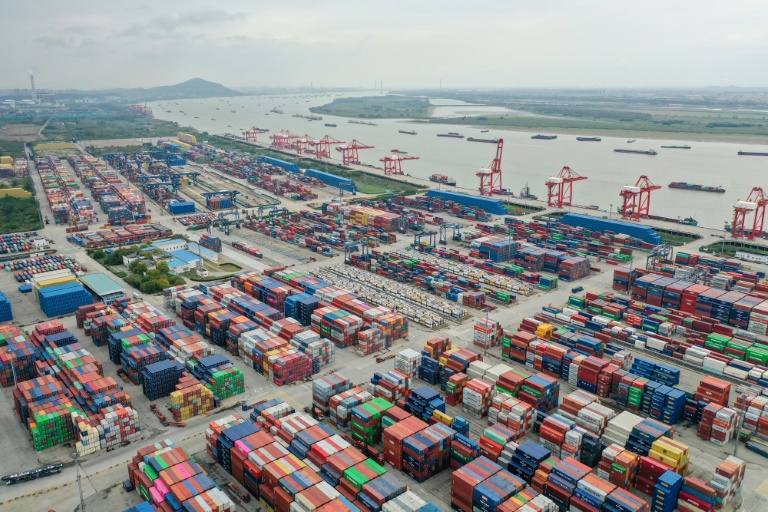
China’s exports shrank in October, the first such decline since mid-2020, customs authorities said Monday, as a domestic slowdown and the threat of global recession hit international trade.

Exports fell 0.3 percent year-on-year in October, according to the General Administration of Customs, a steep drop from September’s 5.7 percent increase and well below analysts’ expectations.

Year-on-year imports were down 0.7 percent in October, negative for the first time since March this year and down from September’s 0.3 percent growth.

The slowdown in trade comes as global demand for Chinese products weakens, with energy prices soaring and the United States facing the threat of recession.

Sporadic Covid-19 lockdowns have also hurt consumer enthusiasm and business confidence in the world’s second-largest economy.

Analysts surveyed by Bloomberg forecast export growth of 4.3 percent in October, but expected only 0.1 percent growth in imports in the face of weakening demand at home.

“The recent decline in export volumes appears to reflect a reversal in the pandemic-era surge in global demand for Chinese goods,” Capital Economics analyst Zichun Huang said in a note on Monday.

Import volumes are “likely to continue weakening given the challenging domestic outlook”, Huang said.

– Domestic challenges –

Nomura analysts on Monday said they expected China’s export downturn to extend in the next two months.

“As strong export growth has been the single-largest GDP growth driver in China since spring 2020, the contraction of exports will inevitably weigh on growth, employment and investment,” they said.

China’s factory activity shrank in October, official data showed last week, which the National Bureau of Statistics blamed on virus outbreaks last month.

Factory activity has been in contraction territory for six months of the year so far, as sweeping Covid restrictions paralysed major industrial cities such as Shanghai, Shenzhen and Chengdu.

Apple on Monday warned of delayed shipments after Covid restrictions “temporarily impacted” production at its massive factory in Zhengzhou, central China.

Chinese leaders have set out an annual economic growth target of about 5.5 percent, but many observers think the country will struggle to hit the target, despite announcing a better-than-expected 3.9 percent expansion in the third quarter.

It is the last major economy wedded to a strategy of extinguishing Covid outbreaks as they emerge, imposing snap lockdowns, mass testing and lengthy quarantines despite the widespread disruption to businesses and international supply chains.

And authorities poured cold water on speculation that the policy could be relaxed Saturday, with National Health Commission (NHC) spokesperson Mi Feng saying that Beijing would “stick unswervingly to… the overall policy of dynamic zero-Covid”.

Authorities had imposed enhanced virus curbs on a total area accounting for more than 10 percent of China’s overall gross domestic product as of Thursday, according to Nomura.

Close Bitnami banner
Bitnami