Chinese Business

'Law and order returned' Hong Kong's US-sanctioned leader tells bankers

Hong Kong’s US-sanctioned leader said political stability and business confidence have been restored following the crushing of democracy protests, as he opened a summit on Wednesday attended by global bankers including leading Wall Street executives.

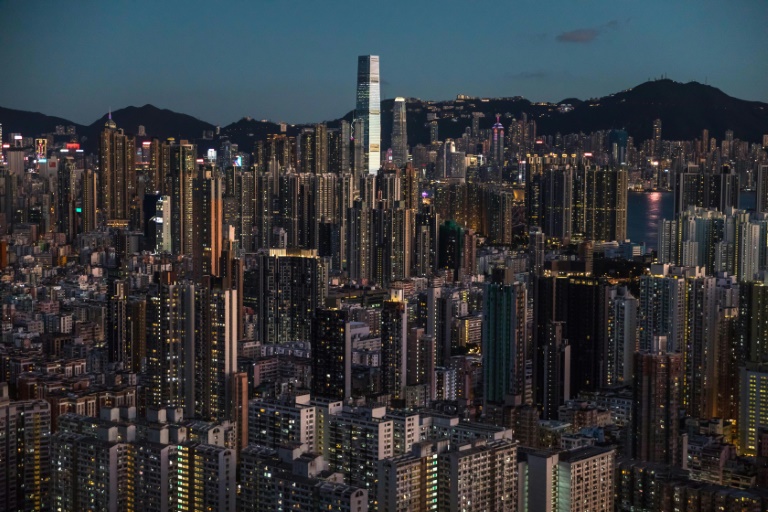
The Asian business hub is hosting a week of high-profile events after years of political unrest and pandemic travel curbs tarnished the city’s business-friendly reputation, sparked an exodus of talent and battered its economy.

The marquee event at the Four Seasons hotel was heralded by city leader John Lee as proof that the previously shuttered metropolis is back in business.

“We were, we are and we will remain one of the world’s leading financial centres. And you can take that to the bank,” Lee told delegates.

A former security chief who took office this year, Lee is among the Chinese officials sanctioned by Washington for cracking down on rights in Hong Kong after huge democracy protests. 

Most of the city’s political opposition are either behind bars or have fled overseas since those protests.

Blacklisted individuals are unable to hold accounts with the same banking giants attending the summit.

“Social disturbance is clearly in the past and has given way to stability, to growing business and community confidence in Hong Kong’s future,” Lee said in his summit speech. 

“Law and order has returned. The worst is behind us.”

– US criticism –

Among those speaking at the summit were Goldman Sachs head David Solomon, Morgan Stanley CEO James Gorman, Blackrock president Rob Kapito and JP Morgan Chase counterpart Daniel Pinto.

But their presence is not without controversy.

Last week, the leaders of the bipartisan US Congressional-Executive Commission on China called on Wall Street executives not to attend, accusing them of “whitewashing human rights violations” and giving political cover to Lee.

The row illustrates the tightrope faced by multinationals in Hong Kong, which is both a lucrative business gateway for China and a flashpoint in increasingly tense relations between Beijing and Western powers.

In his speech Lee said the city has an “irreplaceable connection” to mainland China for global businesses “as the centre of economic gravity in the world shifts eastward”.

The summit comes at a time of uncertainty over China’s economy under President Xi Jinping.

Xi, who secured a norm-breaking third term last month, has overseen regulatory crackdowns clipping the wings of some major Chinese companies and is still sticking to a strict zero-Covid strategy.

– ‘Don’t read international media’ –

Lee’s speech was followed by recorded interviews with three top officials involved in regulation, including Fang Xinghai, vice chairman of the China Securities Regulatory Commission, who criticised international press coverage of China.

“Don’t read too much of international media,” Fang said, sparking laughter from the audience.

Those comments received backing from both UBS chairman Colm Kelleher and Liu Jin, president of Bank of China.

“Like Vice Chairman Fang said we’re not reading the American press, we all buy the story,” Kelleher told delegates.

He added that while investors were closely watching Beijing for signs of reopening, international bankers were “very pro-China”.

Much of the discussion focused on the wider global economy where spiralling inflation rates and geopolitical uncertainty have hit sentiment.

“My gut is the central banks will, in aggregate, tame inflation,” Morgan Stanley chief Gorman told delegates in one of the more positive assessments.

Former governor of the Bank of England Mark Carney painted a more stark portrait.

“We’re headed very likely to a global recession,” he said, citing — among other things — China’s strict zero-Covid controls and the fallout in Europe of Russia’s invasion of Ukraine. 

The Hong Kong summit is being held in a bubble that keeps delegates away from residents. 

While Hong Kong scrapped mandatory quarantine in September — a key demand of businesses — it maintains layers of pandemic restrictions long since abandoned almost everywhere else.

Overseas arrivals must undergo frequent testing and are unable to go to bars and restaurants for their first three days in the city.

Restrictions on various gatherings remain and masks are compulsory, including outdoors.

Hong Kong’s leaders are keen to resuscitate the city’s fortunes. The city is headed for a full recession with gross domestic product plunging 4.5 percent in the third quarter of this year. 

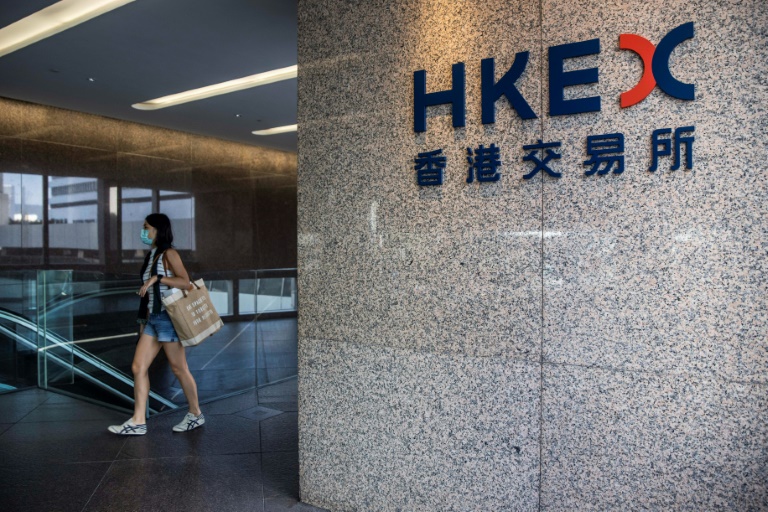
Its stock exchange is among the world’s worst performers, down more than 50 percent this year to levels last seen in 2009.

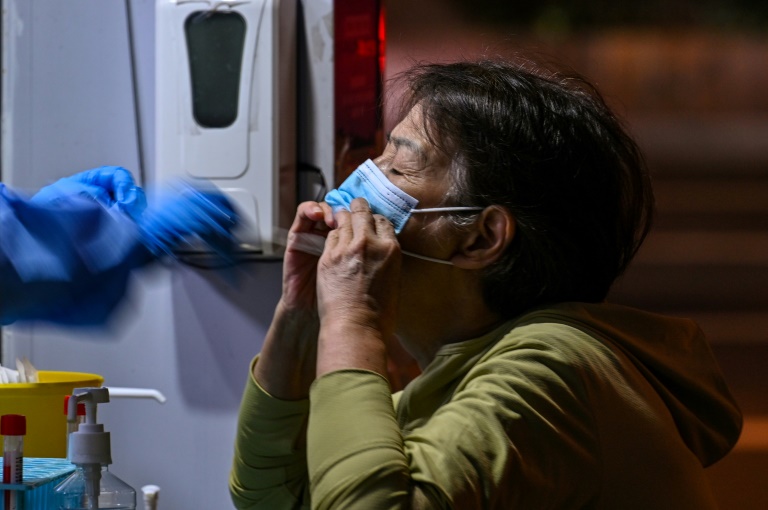
China is the last major economy committed to a zero-Covid strategy, persisting with snap lockdowns, mass testing and lengthy quarantines that have stamped out outbreaks but created growing economic pain.
China imposes Covid lockdown on area around iPhone factory

Chinese authorities on Wednesday locked down the area surrounding the world’s largest iPhone factory after workers fled the facility to avoid a virus outbreak and the resulting restrictions.

All people except Covid-prevention volunteers and essential workers “must not leave their residences except to receive Covid tests and emergency medical treatment”, officials from central China’s Zhengzhou Airport Economy Zone said Wednesday. 

The move comes after images emerged last week on Chinese social media showing people breaking out of the facility, which is run by Taiwanese tech giant Foxconn and employs hundreds of thousands of workers.

Employees were complaining online of poor conditions and having to flee the factory on foot to avoid Covid transport curbs.

China is the last major economy committed to a zero-Covid strategy, persisting with snap lockdowns, mass testing and lengthy quarantines in a bid to stamp out emerging outbreaks.

But new variants have tested local officials’ ability to snuff out flare-ups faster than they can spread, causing much of the country to live under an ever-changing mosaic of Covid curbs.

The district in Zhengzhou city said Wednesday that all businesses would be required to work from home, with only “key enterprises” in the district allowed to continue operating, without specifying which businesses fell under this category.

Only medical vehicles and those delivering essentials are allowed on the streets.

The district’s more than 600,000 residents will have to take nucleic acid tests every day, the local government said, warning that it would “resolutely crack down on all kinds of violations.”

– ‘Closed loop’-

Foxconn said over the weekend that it was testing employees daily and keeping them in a “closed loop” as well as offering transport to those who wanted to leave, after the videos on social media showed employees walking down motorways with their suitcases.

Local governments in the area surrounding Zhengzhou city have asked Foxconn workers to register with authorities if they return home and to complete several days of quarantine upon arrival.

The company added Tuesday that it would quadruple bonuses for employees willing to remain at the factory during the outbreak.

China reported more than 2,000 fresh domestic infections on Wednesday for the third day in a row.

Henan province, where Zhengzhou is located, officially reported 359 Covid-19 infections on Wednesday, a jump from Tuesday’s 104.

The southern Chinese manufacturing hub of Guangzhou also announced partial lockdowns in several districts this week in response to rising case numbers.

Top Chinese regulator urges investors to avoid foreign news

Investors should avoid reading international press coverage of China’s economy, a top Chinese securities regulator told a summit of global bankers on Wednesday in comments that received endorsement from two senior executives.

The advice was made by Fang Xinghai, vice chairman of China Securities Regulatory Commission, in a pre-recorded interview that was broadcast to a summit being held in Hong Kong.

“I deal with international investors quite a lot in my daily work and I am afraid some of them have read too much the international media reports about events in China,” he said.

“A lot of media reports, let me put it this way, they really don’t understand China very well and they have a short term focus… Don’t read too much of international media,” he added.

Hong Kong is hosting a week of high-profile events after years of political unrest and pandemic travel curbs tarnished the city’s business-friendly reputation, sparked an exodus of talent and battered its economy.

Senior executives from banks such as Goldman Sachs, Morgan Stanley, Blackrock, JP Morgan Chase, UBS, HSBC and Standard Chartered are among those attending.

In a later panel discussion UBS chairman Colm Kelleher backed Fang’s comments.

“Like Vice Chairman Fang said we’re not reading the American press, we all buy the story,” he said.

Kelleher added that international bankers were “very pro-China” and watching closely as to whether the world’s second largest economy would re-open.

Liu Jin, president of Bank of China, also referenced Fang’s remarks in comments about China’s deeply indebted property market. 

“Don’t worry too much. As Mr Fang said, don’t read too much negative reports,” he told delegates. 

China is the last major economy committed to a zero-Covid strategy, persisting with snap lockdowns, mass testing and lengthy quarantines.

The measures have stamped out outbreaks but created growing economic pain for local and international businesses.

Huge defaults have hit China’s property sector in the last 18 months, much of it revelations that were first reported on by international media.

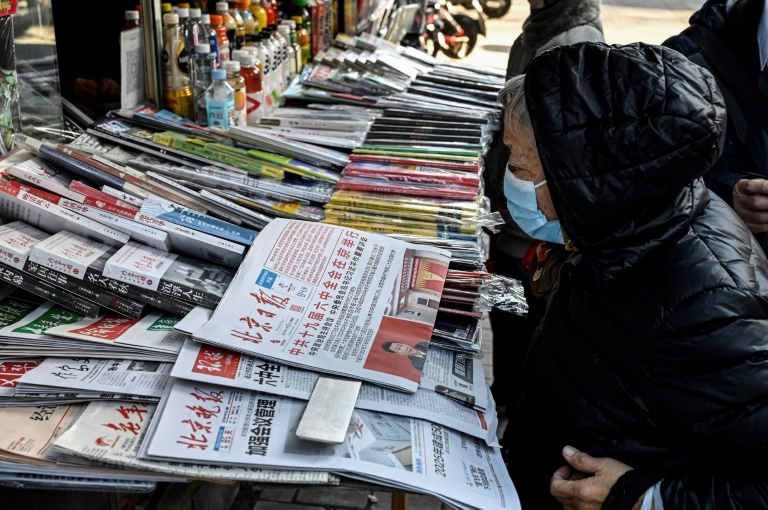
Domestic media is state-controlled in China and widespread censorship is used to suppress negative stories or critical coverage.

Foreign media face intense restrictions but have more leeway and are a conduit of information in a country where official economic data can be sometimes opaque.

In his comments Fang told investors to “find out what’s really going on in China, and what’s the real intention of our government, by themselves”.

However China has been largely cut off from the rest of the world for the last 2.5 years by pandemic travel controls.

President Xi Jinping, who secured a norm-breaking third term last month, has yet to signal any timeframe for whether and when China might move away from its zero-Covid controls.

'Law and order returned' Hong Kong's US-sanctioned leader tells bankers

Hong Kong’s US-sanctioned leader said political stability and business confidence has been restored following the crushing of democracy protests as he opened a summit on Wednesday attended by global bankers including leading Wall Street executives.

The Asian business hub is hosting a week of high-profile events after years of political unrest and pandemic travel curbs tarnished the city’s business-friendly reputation, sparked an exodus of talent and battered its economy.

The marquee event at the Four Seasons hotel was heralded by city leader John Lee as proof that the previously shuttered metropolis is back in business.

“We were, we are and we will remain one of the world’s leading financial centres. And you can take that to the bank,” Lee told delegates.

A former security chief who took office this year, Lee is among the Chinese officials sanctioned by Washington for cracking down on rights in Hong Kong after huge democracy protests. Blacklisted individuals are unable to hold accounts with the same banking giants attending the summit.

Most of the city’s political opposition are either behind bars or have fled overseas since those protests.

“Social disturbance is clearly in the past and has given way to stability, to growing business and community confidence in Hong Kong’s future,” Lee said in his summit speech. 

“Law and order has returned. The worst is behind us.”

– US criticism –

Among those speaking at the summit were Goldman Sachs head David Solomon, Morgan Stanley CEO James Gorman, Blackrock president Rob Kapito and JP Morgan Chase counterpart Daniel Pinto.

But their presence is not without controversy.

Last week, the leaders of the bipartisan US Congressional-Executive Commission on China called on Wall Street executives not to attend, accusing them of “whitewashing human rights violations” and giving political cover to Lee.

The row illustrates the tightrope faced by multinationals in Hong Kong, which is both a lucrative business gateway for China and a flashpoint in increasingly tense relations between Beijing and Western powers.

In his speech Lee said the city has an “irreplaceable connection” to mainland China for global businesses “as the centre of economic gravity in the world shifts eastward”.

The summit comes at a time of uncertainty over China’s economy under President Xi Jinping.

Xi, who secured a norm-breaking third term last month, has overseen regulatory crackdowns clipping the wings of some major Chinese companies and is still sticking to a strict zero-Covid strategy.

– ‘Don’t read international media’ –

Hong Kong’s gross domestic product plunged 4.5 percent in the third quarter of this year while its stock exchange is among the world’s worst performers, down more than 50 percent this year to levels last seen in 2009.

Lee’s speech was followed by recorded interviews with three top officials involved in regulation, including Fang Xinghai, vice chairman of the China Securities Regulatory Commission, who criticised international press coverage of China.

“Don’t read too much of international media,” Fang said, sparking laughter from the audience.

During panel discussions senior Wall Street executives said there were growing signs inflation could be brought under control by central banks, but geopolitical risks and the end of the era of easy money would continue to inject volatility.

“My gut is the central banks will, in aggregate, tame inflation,” Morgan Stanley chief Gorman told delegates, predicting interest rates of between 4-5 percent and inflation rates of around four percent over the coming years.

“There is a feeling that you know, the central banks will get this under control and then there will be there will be bright spots for investing,” added UBS chairman Colm Kelleher.

Kelleher also backed Fang’s criticism of Western media.

“We’re not reading the American press, we all buy the (China) story,” he said.

The bankers’ summit is being held in a bubble that keeps delegates away from residents. 

While Hong Kong scrapped mandatory quarantine in September — a key demand of businesses — it maintains layers of pandemic restrictions long since abandoned by almost everywhere else.

Overseas arrivals must undergo frequent testing and are unable to go to bars and restaurants for their first three days in the city.

Restrictions on various gatherings remain and masks are compulsory, including outdoors. 

China is the last major economy committed to a zero-Covid strategy, persisting with snap lockdowns, mass testing and lengthy quarantines that has stamped out outbreaks but created growing economic pain.
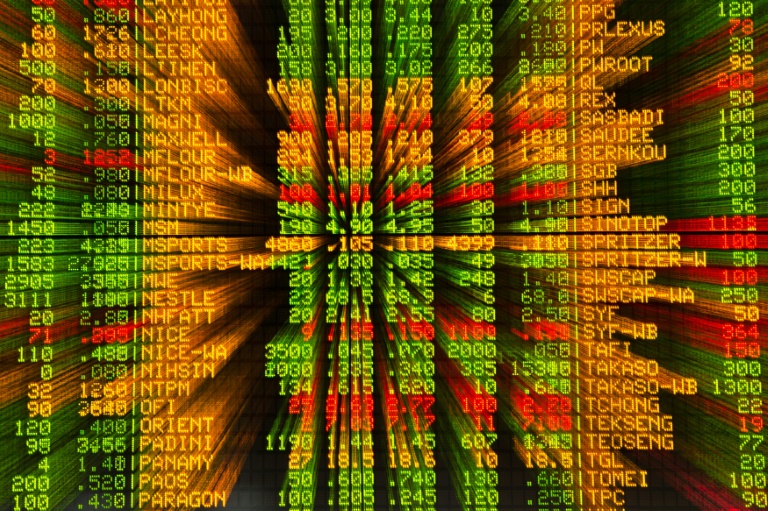
Asian markets swing as US data tempers Fed hopes

Asian stocks were mixed Wednesday following losses on Wall Street as forecast-beating US data jolted hopes the Federal Reserve could soon tone down its hawkish pace of interest rate hikes.

Suggestions that the US central bank could take its foot off the pedal as the world’s top economy shows signs of slowing have helped fuel a rally across risk assets for more than a week

But some of the wind was taken out of their sails Tuesday after data showed a rise in job openings while other numbers released indicated the manufacturing sector did not perform as badly as expected last month.

The readings suggest the economy continues to hold up despite recent signs of weakness in the face of decades-high inflation and numerous rate hikes that many observers warn will spark a recession.

They also come as the Fed concludes its latest policy meeting later in the day.

While it is widely tipped to unveil a fourth straight jumbo hike, the gathering was hotly anticipated by traders hoping for a hint from officials that they are ready to temper their speed of monetary tightening.

“Markets have been reacting to dovish expectations for Wednesday’s (policy meeting), which I have argued are wrong,” said SPI Asset Management’s Stephen Innes.

“Based on US economic data out Tuesday, there is no way for the Federal Reserve to turn dovish. The labour market is still strong, and manufacturing is still (slightly) expanding.”

He added: “Even if we see the Fed slow the pace of hikes, they are still hiking, the policy is still highly restrictive, front-end rates will still get worse before they get better.

“Sure, we could see a knee jerk higher on stocks via a lower Fed glide path, but will it be sustainable?”

Highlighting the tough jobs central banks face in the inflation fight, data out of South Korea on Wednesday and Britain on Tuesday indicated prices remain elevated, despite higher borrowing costs

After the negative lead from Wall Street, Asia fluctuated.

Hong Kong edged down after soaring more than five percent Tuesday following an unverified statement saying China was forming a committee to consider rolling back some painful zero-Covid measures.

The foreign ministry in Beijing said it was unaware of such a committee later Tuesday, while some commentators said authorities have actually boosted containment measures since a key Communist Party conference last month.

There were also losses in Singapore, Jakarta and Wellington.

But Shanghai, Sydney, Taipei and Manila rose.

Seoul was also up Wednesday as traders brushed off news North Korea had fired at least 10 missiles, including one that the South’s military said landed close to its territorial waters for the “first time”.

Tokyo ended the morning flat even as tech titan Sony racked up gains of more than eight percent a day after it lifted its annual net profit and sales forecasts thanks to the weak yen.

Oil prices jumped after a report said US stockpiles saw a huge drop last week, suggesting demand remains intact as worries about supplies continue to swirl.

While well down from their post-Ukraine-invasion peak, both main contracts have jumped in recent weeks after OPEC and other major producers said they would slash output.

The decision came after a drop in prices caused by global recession concerns, China’s demand-sapping lockdowns and the strong dollar, which makes the commodity expensive for buyers using other currencies.

– Key figures around 0230 GMT –

Tokyo – Nikkei 225: FLAT at 27,686.05 (break)

Hong Kong – Hang Seng Index: DOWN 0.7 percent at 15,364.64

Shanghai – Composite: UP 0.1 percent at 2,972.29

Euro/dollar: UP at $0.9886 from $0.9883 on Tuesday

Pound/dollar: UP at $1.1507 from $1.1486

Dollar/yen: DOWN at 147.42 yen from 148.23 yen

Euro/pound: DOWN at 85.94 pence from 85.96 pence

West Texas Intermediate: UP 0.9 percent at $89.19 per barrel

Brent North Sea crude: UP 0.8 percent at $95.37 per barrel

New York – Dow: DOWN 0.24 percent at 32,653.20 (close)

London – FTSE 100: UP 1.3 percent at 7,186.16 (close)

'Law and order returned' Hong Kong's US-sanctioned leader says at banking summit

Hong Kong’s US-sanctioned leader insisted Wednesday that political stability and business confidence in the city has been restored following the crushing of democracy protests, as he opened a financial summit attended by global bankers including leading Wall Street executives.

Hong Kong is hosting a week of high-profile events after years of political unrest and pandemic travel curbs tarnished the city’s business-friendly reputation, sparked an exodus of talent and battered its economy.

The marquee event at the Four Seasons hotel was heralded by city leader John Lee as proof that the previously shuttered Asian finance hub is back in business.

“We were, we are and we will remain one of the world’s leading financial centres. And you can take that to the bank,” Lee told delegates.

Lee, a former police officer and security chief who took office this year, is among the Chinese officials sanctioned by Washington for cracking down on rights in Hong Kong after huge democracy protests. These blacklisted individuals are unable to hold accounts with the same banking giants attending the summit.

Most of the city’s political opposition are either behind bars or have fled overseas since those protests. 

“Social disturbance is clearly in the past, and has given way to stability to growth in business and community confidence in Hong Kong’s future,” Lee said in his summit speech. 

“Law and order has returned. The worst is behind us,” he added.

Among those due to speak at the summit are Goldman Sachs head David Solomon, Morgan Stanley CEO James Gorman, Blackrock president Rob Kapito and JP Morgan Chase counterpart Daniel Pinto.

But their presence is not without controversy.

Last week, the leaders of the bipartisan US Congressional-Executive Commission on China called on Wall Street executives not to attend, accusing them of “whitewashing human rights violations” and giving political cover to Lee.

The row illustrates the tightrope faced by multinationals in Hong Kong, which is both a lucrative business gateway for China and a flashpoint in increasingly tense relations between Beijing and Western powers.

“Hong Kong’s seamless connection with the mainland affords Hong Kong advantages available to no other economy,” Lee declared in his speech. 

– Unsettled economic waters –

The summit comes at a time of uncertainty over China’s economy under President Xi Jinping.

Xi, who secured a norm-breaking third term last month, has overseen regulatory crackdowns clipping the wings of some major Chinese companies and is still sticking to a strict zero-Covid strategy.

Hong Kong’s economy saw gross domestic product plunge 4.5 percent in the third quarter of this year, according to preliminary figures released Tuesday.

Its stock exchange is among the world’s worst performers, down more than 50 percent this year to levels last seen in 2009.

Lee’s opening speech will be followed by recorded interviews with three mainland officials involved in regulation, including Yi Gang, the governor of China’s central bank.

That will be followed by a panel titled “Navigating Through Uncertainty” featuring senior executives from Morgan Stanley, Blackstone, UBS, Goldman Sachs and Bank of China president Liu Jin.

Hong Kong finance chief Paul Chan is also expected to give a speech after he was cleared by health officials to attend the conference after testing positive for Covid-19 last week during an overseas trip. 

Lee’s speech made no mention of the labyrinthine pandemic rules maintained by both China and, to a lesser extent, Hong Kong.

While Hong Kong scrapped mandatory quarantine in September — a key demand of businesses — it maintains layers of pandemic restrictions long since abandoned by almost everywhere else.

Overseas arrivals must undergo frequent testing and are unable to go to bars and restaurants for their first three days in the city.

Restrictions on various gatherings remain and masks are compulsory, including outdoors. 

Global stocks mixed on Fed hopes, China zero-Covid reports

Global stock markets were mixed Tuesday as traders looked ahead to the US Federal Reserve’s next interest rate decision hoping it will signal a more dovish approach to fighting inflation.

Early gains in US equities soon turned to red following mixed data that sparked anxiety that the Fed might disappoint investors.

Markets were particularly unnerved by Labor Department figures showing a surge in open positions in September, surprising investors who have been expecting the jobs market to slow.

“The economy can’t be slowing down that fast if companies are still struggling to fill job openings,” said Oanda’s Edward Moya. “The Fed downshift trade could blow up if the labor market refuses to break.”

The US central bank is widely expected Wednesday to announce a fourth straight 75-basis-point rate hike as it tries to rein in rising prices — but recent signals have suggested officials are looking to dial down the pace of increases.

Hopes that the Fed could pivot to a less hawkish stance in the coming months have sparked a rally in risk assets over the past week — helped by signs that other central banks are also trying to take a step back.

The main European indices pared back on earlier gains through afternoon trading, but still closed in the green.

London was up 1.3 percent, Paris 1.0 percent, and Frankfurt gained 0.6 percent.

– Waiting game –

“The waiting game for the Fed is still on, with investors largely in the dark until the US central bank illuminates the path ahead for interest rate rises tomorrow,” said Hargreaves Lansdown analyst Susannah Streeter.

In Asia, Hong Kong led the rally following unconfirmed posts on Chinese social media saying officials were putting together a committee to discuss how to move the country away from its economically damaging zero-Covid policy.

Shares jumped more than five percent after the appearance of the unverified document, which ramped up hopes that the world’s number two economy could begin opening up in the new year and ease the strict containment measures that have hammered productivity and markets.

Oil prices also gained on speculation of a gradual easing of the zero-Covid policy in China, a major consumer.

However, neither Chinese state media nor government officials have suggested the meeting actually took place, or that such a committee was established, raising questions about the statement’s veracity.

Nonetheless, Shanghai climbed more than two percent, while the yuan also rallied after recently falling to record lows against the dollar.

– Big earnings season –

Meanwhile positive results from multinational firms also helped lift equities. 

Shares climbed in London-listed oil giant BP after it reported that third-quarter profit had more than doubled on high commodity prices, to $8.2 billion.

It is the latest energy group to report bumper earnings in recent weeks after Chevron, Shell and TotalEnergies.

Also reporting Tuesday was US drugmaker Pfizer, which recorded an 83 percent surge in Covid-19 vaccine revenues in the United States in the most recent quarter.

Ride-hailing group Uber saw shares rocket after it reported a 72 percent surge in quarterly revenues.

And shares in British grocery delivery platform Ocado soared more than 35 percent at one point after it announced a tie-up with South Korean conglomerate Lotte Shopping.

– Key figures around 2100 GMT –

New York – Dow: DOWN 0.24 percent at 32,653.20 (close)

New York – S&P 500: DOWN 0.4 percent at 3,856.10 (close)

New York – Nasdaq: DOWN 0.9 percent at 10,890.85 (close)

London – FTSE 100: UP 1.3 percent at 7,186.16 (close)

Frankfurt – DAX: UP 0.6 percent at 13,338.74 (close)

Paris – CAC 40: UP 1.0 percent at 6,328.25 (close)

EURO STOXX 50: UP 0.9 percent at 3,651.02 (close)

Tokyo – Nikkei 225: UP 0.3 percent at 27,678.92 (close)

Hong Kong – Hang Seng Index: UP 5.2 percent at 15,455.27 (close)

Shanghai – Composite: UP 2.6 percent at 2,969.20 (close)

Euro/dollar: UP at $0.9883 from $0.9882 on Monday

Pound/dollar: UP at $1.1486 from $1.1469

Dollar/yen: DOWN at 148.23 yen from 148.71 yen

Euro/pound: DOWN at 85.96 pence from 86.16 pence

West Texas Intermediate: UP 2.1 percent at $88.37 per barrel

Brent North Sea crude: UP 2.0 percent at $94.65 per barrel

burs-jmb/dw

Wall Street chiefs to share stage with Hong Kong's sanctioned leader

Some of the world’s top bankers will attend a Hong Kong finance summit on Wednesday, defying criticism by US lawmakers over their decision to share a stage with the city’s leader who is sanctioned by Washington.

Hong Kong is hosting a week of high profile events after lifting years of pandemic travel curbs that tarnished the city’s business-friendly reputation, sparked an exodus of talent and battered its economy.

The marquee event is a summit on Wednesday attended by some 200 finance executives including some of Wall Street’s leading luminaries.

Among those due to speak are Goldman Sachs head David Solomon, Morgan Stanley CEO James Gorman, Blackrock president Rob Kapito and JP Morgan Chase counterpart Daniel Pinto.

The glitzy gathering at the Four Seasons hotel is being heralded by Hong Kong leader John Lee, who will give the opening speech, as proof that the previously shuttered Asian finance hub is back in business.

“After three years of pandemic, Hong Kong is reconnecting with the world,” Lee told reporters on Tuesday.

But the event is not without controversy.

The leaders of the bipartisan US Congressional-Executive Commission on China have called on Wall Street executives not to attend, accusing them of “whitewashing human rights violations” and giving political cover to Lee.

Lee, a former security chief who took office this year, is among Chinese officials sanctioned by Washington for cracking down on rights in Hong Kong after huge democracy protests, unable to hold accounts with the same banking giants attending the summit.

The row illustrates the tightrope faced by multinationals in Hong Kong, which is both a lucrative business gateway for China and a flashpoint in increasingly tense relations between Beijing and Western powers.

JP Morgan’s asset and wealth management head Mary Callahan Erdoes described Hong Kong as a “super-connector” for businesses wanting to access China, adding that the city “never disappeared” during the pandemic.

“There hasn’t been a city in the East that has emerged in the same way that Hong Kong has,” she told the South China Morning Post in an interview published Tuesday.

– Unsettled economic waters –

The summit comes at a time of uncertainty over China’s economy under President Xi Jinping.

Xi, who secured a norm-breaking third term last month, has overseen regulatory crackdowns clipping the wings of some major Chinese companies and is still sticking to a strict zero-Covid strategy.

Hong Kong’s China-dependent economy saw gross domestic product plunge 4.5 percent in the third quarter of this year, according to preliminary figures released Tuesday.

Its stock exchange is among the world’s worst performers, down more than 50 percent this year to levels last seen in 2009.

Lee’s opening speech will be followed by recorded interviews with three mainland officials involved in regulation, including Yi Gang, the governor of China’s central bank.

That will be followed by a panel titled “Navigating Through Uncertainty” featuring senior executives from Morgan Stanley, Blackstone, UBS, Goldman Sachs and Bank of China president Liu Jin.

Hong Kong finance chief Paul Chan is also expected to give a speech but it is unclear if he will be able to attend in person after he caught the coronavirus overseas.

While Hong Kong scrapped mandatory quarantine in September — a key demand of businesses — it maintains layers of pandemic restrictions long since abandoned by almost everywhere else.

Overseas arrivals must undergo frequent testing and are unable to go to bars and restaurants for their first three days in the city.

Restrictions on various gatherings remain and masks are compulsory, including outdoors. 

Global stocks mixed on Fed hopes, China zero-Covid reports

Global stock markets were mixed Tuesday, as traders looked ahead to the US Federal Reserve’s interest rate decision hoping it will signal a more dovish approach to fighting inflation.

But early gains in US equities soon turned to red after the release of a survey showing manufacturing growth slowed in October to its weakest since mid-2020 on falling orders and prices.

The Dow Jones was down 0.4 percent in early afternoon trading.

Investors were looking for signs of optimism as US central bankers started their two-day policy meeting Tuesday, against the backdrop of persistently high inflation.

The Fed is widely expected Wednesday to announce a fourth straight 75-basis-point rate hike as it tries to rein in runaway prices — but recent signals have suggested officials are looking to dial down the pace of increases.

Hopes it could pivot to a less hawkish stance in the coming months has sparked a rally in risk assets over the past week — helped by signs other central banks are also trying to take a step back.

“While a 75 basis point hike looks locked in tomorrow, the messaging is what investors are interested in,” said Craig Erlam, senior market analyst at OANDA.

The main European indices pared back on earlier gains through afternoon trading, but still closed in the green.

London was up 1.3 percent, Paris 1.0 percent, and Frankfurt gained 0.6 percent.

– Waiting game –

“The waiting game for the Fed is still on, with investors largely in the dark until the US central bank illuminates the path ahead for interest rate rises tomorrow,” said Hargreaves Lansdown analyst Susannah Streeter.

In Asia, Hong Kong led the rally following unconfirmed posts on Chinese social media saying officials were putting together a committee to discuss how to move the country away from its economically damaging zero-Covid policy.

Shares jumped more than five percent after the appearance of the unverified document, which ramped up hopes the world’s number two economy could begin opening up in the new year and ease the strict containment measures that have hammered productivity and markets.

Oil prices also gained on speculation of a gradual easing of the zero-Covid policy in China, a major consumer.

However, neither Chinese state media nor government officials have suggested the meeting actually took place, or that such a committee was established, raising questions about the statement’s veracity.

Nonetheless, Shanghai climbed more than two percent, while the yuan also rallied after recently falling to record lows against the dollar.

Sydney was also well up after the Australian central bank lifted rates by 0.25 percentage points to a near-decade high but brushed off calls for a bigger raise.

– Big earnings season –

Meanwhile positive results from multinational firms also helped lift equities. 

Shares climbed in London-listed oil giant BP after it reported that third-quarter profit had more than doubled on high commodity prices, to $8.2 billion.

It is the latest energy group to report bumper earnings in recent weeks after Chevron, Shell and TotalEnergies.

Also reporting Tuesday was US drugmaker Pfizer, which recorded an 83 percent surge in Covid-19 vaccine revenues in the United States in the most recent quarter.

Ride-hailing group Uber saw shares rocket after it reported a 72 percent surge in quarterly revenues.

And shares in British grocery delivery platform Ocado soared more than 35 percent at one point after it announced a tie-up with South Korean conglomerate Lotte Shopping.

– Key figures around 1630 GMT –

New York – Dow: DOWN 0.4 percent at 32,614.01 points

EURO STOXX 50: UP 0.9 percent at 3,649.46 

London – FTSE 100: UP 1.3 percent at 7,186.16 (close)

Frankfurt – DAX: UP 0.6 percent at 13,338.74 (close)

Paris – CAC 40: UP 1.0 percent at 6,328.25 (close)

Tokyo – Nikkei 225: UP 0.3 percent at 27,678.92 (close)

Hong Kong – Hang Seng Index: UP 5.2 percent at 15,455.27 (close)

Shanghai – Composite: UP 2.6 percent at 2,969.20 (close)

Euro/dollar: DOWN at $0.9869 from $0.9885 on Monday

Pound/dollar: DOWN at $1.1458 from $1.1465

Dollar/yen: DOWN at 148.09 yen from 148.72 yen

Euro/pound: DOWN at 86.11 pence from 86.20 pence

West Texas Intermediate: UP 2.2 percent at $88.44 per barrel

Brent North Sea crude: UP 2.1 percent at $94.83 per barrel

burs-rox/raz

Global stocks rise on Fed optimism, China zero-Covid reports

Global stock markets rose sharply Tuesday, as traders looked ahead to the US Federal Reserve’s interest rate decision hoping it will signal a more dovish approach to fighting inflation.

The Fed is widely expected Wednesday to announce a fourth straight 75-basis-point rate hike as it tries to rein in runaway prices, leading to worries it will tip the world’s top economy into recession, sending stocks tumbling.

But recent reports have suggested officials are looking to dial down the pace of increases, which has sparked a rally in risk assets over the past week — helped by signs other central banks are also trying to take a step back.

“While a 75 basis point hike looks locked in tomorrow, the messaging is what investors are interested in,” said Craig Erlam, senior market analyst at OANDA.

The main indices in London and Paris were both up 1.6 percent in afternoon trading, with Frankfurt gaining 1.3 percent.

The Dow Jones gained 0.7 percent after opening in New York.

– Waiting game –

“The waiting game for the Fed is still on, with investors largely in the dark until the US central bank illuminates the path ahead for interest rate rises tomorrow,” said Hargreaves Lansdown analyst Susannah Streeter.

“In the interim they have been feeling their way to a more optimistic attitude, hopeful that economic indicators hinting that inflationary pressures are beginning to subside could lead to a softening in monetary policy.”

In Asia, Hong Kong led the rally following unconfirmed posts on Chinese social media saying officials were putting together a committee to discuss how to move the country away from its economically damaging zero-Covid policy.

Shares jumped more than five percent after the appearance of the unverified document, which ramped up hopes that the world’s number two economy could begin opening up again in the new year and ease the strict containment measures that have hammered productivity and markets.

However, neither Chinese state media nor government officials have suggested that the meeting actually took place, or that such a committee was established, raising questions about the veracity of the statement.

Nonetheless, Shanghai climbed more than two percent, while the yuan also rallied after recently falling to record lows against the dollar.

Sydney was also well up after the Australian central bank lifted rates by 0.25 percentage points to a near-decade high but brushed off calls for a bigger raise.

– Big earnings season –

Meanwhile positive results from multinational firms also helped lift equities.

Shares increased in London-listed oil giant BP after it reported that third-quarter profit had more than doubled on high commodity prices, to $8.2 billion.

It is the latest energy group to report bumper earnings in recent weeks after Chevron, Shell and TotalEnergies.

Also reporting Tuesday was US drugmaker Pfizer, which recorded an 83-percent surge in Covid-19 vaccine revenues in the United States in the most recent quarter.

Shares in Pfizer rose more than two percent.

Japanese conglomerate Sony raised its annual net profit and sales forecasts Tuesday, saying the weak yen had boosted sectors such as its massive global entertainment business, including PlayStation games.

And shares in British grocery delivery platform Ocado soared more than 35 percent after it announced a tie-up with South Korean conglomerate Lotte Shopping.

– Key figures around 1330 GMT –

London – FTSE 100: UP 1.6 percent at 7,204.71 points

Frankfurt – DAX: UP 1.3 percent at 13,431.58

Paris – CAC 40: UP 1.6 percent at 6,368.12

EURO STOXX 50: UP 1.6 percent at 3,674.66

New York – Dow: UP 0.7 percent at 32,952.24

Tokyo – Nikkei 225: UP 0.3 percent at 27,678.92 (close)

Hong Kong – Hang Seng Index: UP 5.2 percent at 15,455.27 (close)

Shanghai – Composite: UP 2.6 percent at 2,969.20 (close)

Euro/dollar: UP at $0.9938 from $0.9885 on Monday

Pound/dollar: UP at $1.1549 from $1.1465

Dollar/yen: DOWN at 147.25 yen from 148.72 yen

Euro/pound: DOWN at 86.05 pence from 86.20 pence

West Texas Intermediate: UP 3.0 percent at $89.15 per barrel

Brent North Sea crude: UP 2.7 percent at $95.32 per barrel

burs-rox/imm

Close Bitnami banner
Bitnami