Chinese Business

Germany's Scholz set for high-stakes China visit

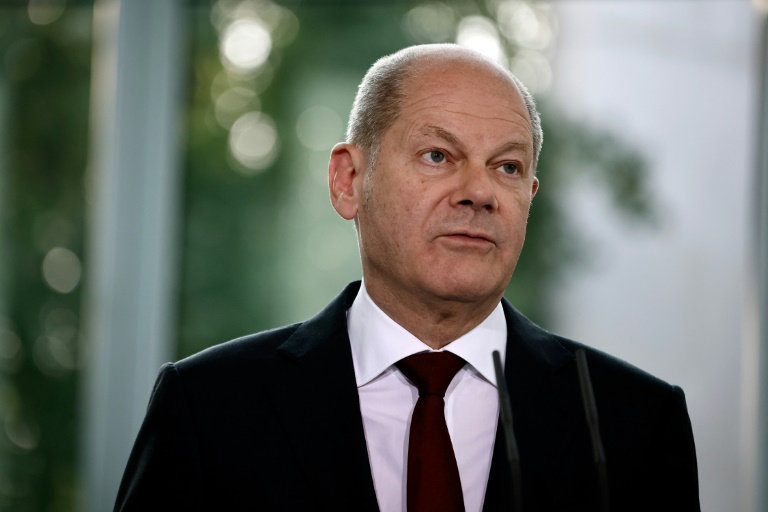
German Chancellor Olaf Scholz makes a high-stakes trip to China this week, walking a tightrope between shoring up a key economic relationship and facing heightened concerns about over-reliance on authoritarian Beijing.

Scholz, accompanied by a delegation of business executives, will be the first European Union leader to visit the world’s second-biggest economy since 2019.

During the one-day trip on Friday, he will hold talks with President Xi Jinping and Premier Li Keqiang. 

But the visit has sparked controversy, coming as Berlin reels from an over-dependence on Russian energy imports and amid surging tensions with China over issues ranging from Taiwan to alleged human rights abuses against the Uyghurs in Xinjiang.

Dolkun Isa, a Uyghur activist based in Germany and president of the World Uyghur Congress, on Tuesday slammed the planned visit and accused Scholz of deciding to “pay homage to Xi Jinping in complete disregard of human suffering”.

The decision to bring a business delegation “shows that for Germany, profit continues to trump human rights”, Isa told a press briefing in Berlin.

Even senior figures within Scholz’s coalition are raising concerns. 

Foreign Minister Annalena Baerbock said she feared mistakes made in the relationship with Russia could be repeated with China.

“We must prevent that,” Baerbock — from the Greens, a member of Scholz’s uneasy three-party ruling coalition — told broadcaster ARD at the weekend.

“I think it is extremely important that we never again make ourselves so dependent on a country that does not share our values.”

– ‘Minimise risks’ –

The sensitivity was highlighted when a row erupted last month about whether to allow Chinese shipping giant Cosco to buy a stake in a Hamburg port terminal. 

Ultimately, Scholz defied calls from six ministries to veto the sale over security concerns, instead permitting the company to acquire a reduced stake.

Ahead of the trip, Scholz’s spokesman Steffen Hebestreit stressed the chancellor was not in favour of “decoupling” from China — but also wanted to “diversify, and minimise risks”.

For now, the German and Chinese economies remain deeply intertwined.

China is a major market for German goods, particularly for auto giants Volkswagen, BMW and Mercedes-Benz, and many jobs in Europe’s top economy depend directly on the relationship.

The worsening climate has rattled the nerves of German firms with investments in China. BASF chemicals giant boss Martin Brudermueller, who will accompany Scholz, last week urged an end to “China bashing”.

Still, the timing of the trip has raised eyebrows, coming so soon after Xi Jinping secured a historic third term as China’s leader. 

“The timing is extremely unfortunate,” Heribert Dieter, from the German Institute for International and Security Affairs, told AFP. 

Xi “has just been confirmed for another five years in office, and of course Chinese politicians see the German chancellor’s visit as confirmation of their policies”, he added. 

– ‘Own path’ –

Chinese foreign ministry spokesperson Zhao Lijian on Tuesday said the aim of Scholz’s visit was to “inject new impetus into the in-depth development of the full-scale strategic partnership between China and Germany… and contribute to world peace, stability and growth”.

Scholz’s spokesman Hebestreit has insisted the trip will “cover the entire spectrum of our relations with China”, including tensions in East Asia, human rights and the war in Ukraine. 

He also said that Scholz was in close contact with international partners in Europe, as well as the United States, about the visit. 

But some may see it as further evidence of Germany going it alone to look after its own interests.

Berlin has already raised hackles among fellow EU members by unveiling a 200-billion-euro ($198 billion) fund to shield consumers and businesses from surging energy prices, rather than acting together with the rest of the bloc.

“Western allies — of course in Paris but above all in Washington — see this trip very critically,” said Dieter.

“Germany is following its own path.”
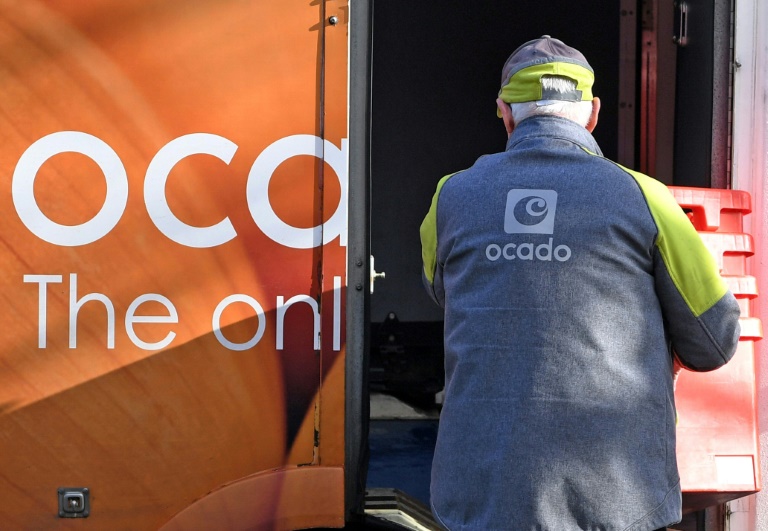
UK's Ocado announces tie-up with S.Korea's Lotte

British grocery delivery platform Ocado on Tuesday announced a tie-up with South Korean giant Lotte Shopping, sending its shares soaring in London.

Ocado’s stock surged more than 30 percent in morning trade on the London Stock Exchange after the announcement.

The two firms said in a joint statement that they would work together to develop Lotte’s online business in South Korea.

That includes creating a network of order processing centres across the country, with the first to open in 2025.

Ocado will also set up order points in stores operated by Lotte from 2024.

“Lotte will pay Ocado Solutions certain fees upfront and during the development phase, then ongoing fees linked to both sales achieved and installed capacity”, the statement read.

No further financial details were given.

Ocado said it expected the deal to create “significant long-term value to the business”, as well as give it another foothold in Asia Pacific.

“The impact of this transaction should be negligible on earnings in the current financial year as no cash fees will be recognised in revenue until operations commence,” it added.

Lotte Group is South Korea’s fifth-biggest conglomerate and operates in the food, retail, chemical and hotel sectors.

Its biggest affiliate, Lotte Shopping has more than 1,000 stores, hypermarkets, supermarkets across the country, and is also present online.

In 2021, its annual revenue was 15.6 trillion won ($11 billion).

The announcement comes after Lotte’s biggest partner, US supermarket giant Kroger, signed a deal to buy its competitor Albertsons.

Ocado announced at the end of July a £212.5-million loss and a slump in first-quarter revenue compared to the same time last year, when it saw sales boosted by coronavirus lockdown restrictions.

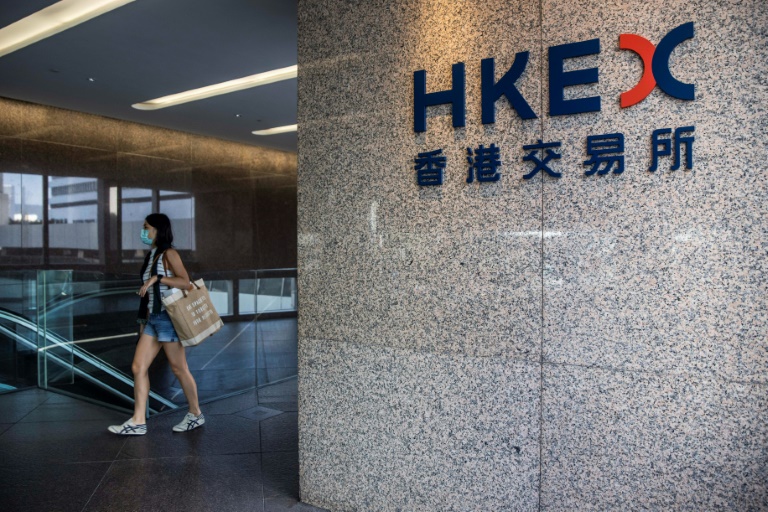
Markets rally before Fed, China zero-Covid hopes boost Hong Kong

Asian and European stock markets rose further Tuesday, as traders looked ahead to the Federal Reserve’s policy decision, hoping it will signal a more dovish approach to fighting inflation.

The Fed is widely expected Wednesday to announce a fourth straight 75-basis-point rate hike as it tries to rein in runaway prices, which has led to worries it will tip the world’s top economy into recession, sending stocks tumbling.

But a recent report suggesting officials are looking to dial down the pace of increases has sparked a rally in risk assets over the past week — helped by signs other central banks are also trying to take a step back.

– Waiting game –

“The waiting game for the Fed is still on, with investors largely in the dark until the US central bank illuminates the path ahead for interest rate rises tomorrow,” said Hargreaves Lansdown analyst Susannah Streeter.

“In the interim they have been feeling their way to a more optimistic attitude, hopeful that economic indicators hinting that inflationary pressures are beginning to subside could lead to a softening in monetary policy.”

In Asia, Hong Kong led the rally following unconfirmed posts on Chinese social media saying officials were putting together a committee to discuss how to move the country away from its economically damaging zero-Covid policy.

Shares jumped more than five percent after the appearance of the unverified document, which ramped up hopes that the world’s number two economy could begin opening up again in the new year and ease the strict containment measures that have hammered productivity and markets.

However, neither Chinese state media nor government officials have suggested that the meeting actually took place, or that such a committee was established, raising questions about the veracity of the statement.

Nonetheless, Shanghai climbed more than two percent, while the yuan also rallied after recently falling to record lows against the dollar.

Sydney was also well up after the Australian central bank lifted rates by 0.25 percentage points to a near-decade high but brushed off calls for a bigger raise, surging despite inflation.

– Key figures around 1000 GMT –

London – FTSE 100: UP 1.4 percent at 7,196.72 points

Frankfurt – DAX: UP 1.0 percent at 13,383.85

Paris – CAC 40: UP 1.6 percent at 6,368.85

EURO STOXX 50: UP 1.4 percent at 3,666.35

Tokyo – Nikkei 225: UP 0.3 percent at 27,678.92 (close)

Hong Kong – Hang Seng Index: UP 5.2 percent at 15,455.27 (close)

Shanghai – Composite: UP 2.6 percent at 2,969.20 (close)

New York – Dow: DOWN 0.4 percent at 32,732.95 (close)

Euro/dollar: UP at $0.9934 from $0.9885 on Monday

Pound/dollar: UP at $1.1536 from $1.1465

Dollar/yen: DOWN at 147.41 yen from 148.72 yen

Euro/pound: DOWN at 86.12 pence from 86.20 pence

West Texas Intermediate: UP 1.3 percent at $87.65 per barrel

Brent North Sea crude: UP 1.4 percent at $94.13 per barrel

Sony hikes net profit forecast as weak yen boosts business

Sony raised its annual net profit and sales forecasts on Tuesday, saying the weak yen had boosted the performance of sectors including music, movies and smartphone camera components.

The yen has lost more than 20 percent of its value this year, inflating profits for Japanese companies that operate overseas.

That includes Sony’s massive global entertainment business — from streaming services to blockbuster films and PlayStation games, as well as digital camera components.

“Major factors for the upward revisions include the growth of the music streaming business, as well as foreign exchange,” chief financial officer Hiroki Totoki told reporters.

The conglomerate now expects net profit to March 2023 to reach 840 billion yen ($5.7 billion), up from the 800 billion yen previously forecast.

It has also slightly increased its sales outlook to 11.6 trillion yen, with higher revenues in several sectors likely to be “partially offset by lower-than-expected sales in the financial services segment”.

In the first half of the current financial year, net profit was 482.2 billion yen — up 13 percent on-year — while sales rose nine percent to five trillion yen, Sony said.

Recent big hits for the group include the PC version of the game “Marvel’s Spider-Man”, “Uncharted: Legacy of Thieves” for PlayStation, as well as new music from Beyonce, Doja Cat and Harry Styles, Totoki added.

– PS5 production increasing –

Nearly two years since its launch, Sony’s PlayStation 5 console remains notoriously difficult to find.

But “with material supply and logistics constraints significantly eased, PS5 production exceeded 6.5 million units in this quarter and is progressing ahead of plan,” Totoki said.

Recent price increases for the console have not yet hit demand, he added, and Sony is “doing our utmost to accelerate supply for the year-end sales season”, he added.

In August, Sony Interactive Entertainment recommended raising the PS5’s retail price in many parts of the world, but not the United States, because of high inflation and forex changes.

Hideki Yasuda, senior analyst at Toyo Securities, said PS5 “hardware shipments are expected to grow significantly” in the second half of 2022-23, but warned that software sales will be “very tough”.

“This year, software makers are postponing the sale of major titles, partly because production of the PS5 has been slow,” Yasuda told AFP ahead of Sony’s earnings release.

With most of the forex-related boost coming from software sales, if the situation does not change it could start to hit Sony’s gaming earnings, the analyst warned.

“The PS5 is selling at a very high price, but it is well-balanced cost-wise… if the dollar strengthens, it’s going to be tricky,” he said.

Behind the yen’s dramatic fall is the contrast between the monetary policies of the US and Japanese central banks.

While the US Federal Reserve is fighting inflation with aggressive rate hikes, the Bank of Japan has stuck to its longstanding monetary easing programme, designed to encourage sustainable growth.

China iPhone factory under lockdown quadruples bonuses for workers who stay

The world’s largest iPhone factory in central China told staff Tuesday it would quadruple their bonuses if they remained at the plant after scores of workers fled a Covid outbreak at the facility.

China is the last major economy committed to a zero-Covid strategy, persisting with snap lockdowns, mass testing and lengthy quarantines in a bid to stamp out emerging outbreaks.

But new variants have tested local officials’ ability to snuff out flare-ups faster than they can spread, causing much of the country to live under an ever-changing mosaic of Covid curbs.

Taiwanese tech giant Foxconn’s plant in Zhengzhou has been under lockdown since mid-October, with the company saying it is testing employees daily and keeping them in a closed loop.

But complaints from workers circulating on Chinese social media have alleged poor working conditions and inadequate virus protection for employees who are not infected.

“I only took a handbag, three packets of instant noodles, four bottles of milk, two bottles of water and some bread,” an escaped Foxconn worker named Li Yan who walked for three hours after leaving the facility told the state-run China Newsweek.

Videos shared online over the weekend showed Foxconn employees fleeing the company’s campus and returning to their hometowns on foot, in a bid to avoid Covid travel restrictions.

Foxconn’s Zhengzhou plant said on its official WeChat account that, starting from Tuesday, employees will receive a daily bonus of 400 yuan ($55) for showing up to work — quadruple the previous subsidy of 100 yuan a day.

Staff will also receive additional bonuses if they attend work for 15 days or longer in November, reaching 15,000 yuan if they record full attendance this month.

– ‘Controllable’ outbreak –

One unnamed factory manager told China Newsweek Tuesday that there had been no serious infections so far, and insisted that the outbreak was “controllable”.

Foxconn — which supplies iPhones to US tech firm Apple — has promised to do more to help employees and organise buses to transport workers back to their hometowns should they wish to leave, in what it has called a “protracted battle” against the virus.

Local governments in the area surrounding the city asked fleeing workers to register with authorities if they returned home and to complete several days of quarantine upon arrival.

The southern semi-autonomous territory of Macau also announced mass testing of its 700,000 population Tuesday after a handful of cases were discovered, triggering a lockdown of one of its casinos.

It is a fresh blow for the city’s struggling gambling industry, which had been poised for recovery after plans to relax travel between mainland China and the former Portuguese colony this month.

China reported more than 2,000 fresh domestic infections Tuesday for the second straight day, as curbs ramped up in response to a wave of regional outbreaks. 

The southern Chinese manufacturing hub of Guangzhou also announced partial lockdowns in several districts Monday in response to rising case numbers.

Guangzhou reported more than 520 fresh infections on Tuesday.

New outbreaks have also emerged in northern cities near China’s border with Russia and North Korea as winter approaches.

Markets extend rally, China zero-Covid hopes boost Hong Kong

Asian and European markets rose again Tuesday, building on the strong start to the week as traders look ahead to the Federal Reserve’s policy decision, hoping it will signal a more dovish approach to fighting inflation.

Hong Kong led the rally with Shanghai following unconfirmed posts on Chinese social media saying officials were putting together a committee to discuss how to move the country away from its economically damaging zero-Covid policy.

While Wall Street suffered a pullback from a recent rally, the mood in Asia remained optimistic while bargain-buying also provided some much-needed support to Hong Kong and Shanghai.

The Fed is widely expected Wednesday to announce a fourth straight 75-basis-point rate hike as it tries to rein in runaway prices, which has led to worries it will tip the world’s top economy into recession, sending stocks tumbling.

But a report last month suggesting officials are looking to dial down the pace of increases has sparked a rally in risk assets over the past week, helped by signs other central banks are also trying to take a step back.

“Fifty basis points or 75 basis points in December is ultimately less important than the path (Fed boss Jerome) Powell lays out for next year,” said Stephen Innes at SPI Asset Management.

“If push comes to shove, the Fed probably does not want to see the market pricing cuts as soon as the hike cycle finishes, so I expect the rhetoric to be targeted here.”

Data showing eurozone inflation hit a record 10.7 percent last month — fanned by a 41.9 percent rise in energy costs — drove home the fine line banks must walk in battling rising prices while trying to cushion fragile economies.

That came as other figures showed manufacturing around the world is shrinking owing to the spike in prices and borrowing costs.

“A global manufacturing contraction is here,” said OANDA’s Edward Moya.

“Factory activity is taking a big hit as China struggles with Covid, Europe is headed towards a recession, and as the US economy finally feels the impact of inflation and Fed tightening.”

Hong Kong led the gains, jumping more than five percent after an unverified document online referring to the zero-Covid committee and a possible relaxation of measures in the new year, Bloomberg News reported.

The news comes after the world’s number two economy has been battered by a series of lockdowns around the country aimed at stamping out the disease, hammering productivity and sending markets plunging.

However, neither Chinese state media nor government officials have suggested that the meeting actually took place, or that such a committee was established, raising questions about the veracity of the statement.

“I think the market’s reaction shows how much anticipation there has been for the reopening in the market,” Hao Hong at Grow Investment Group said. Stock market gains were led by reopening names, including travel companies.

The gains were led by a surge in beaten-down tech giants including Alibaba, JD.com, Meituan and Tencent, while Macau casinos saw double-digit advances.

Shanghai climbed more than two percent, while the yuan also rallied after recently falling to record lows against the dollar.

There were also big gains in Singapore, Seoul, Taipei, Mumbai and Bangkok. London, Paris and Frankfurt rallied at the open.

Sydney was also well up after the Australian central bank lifted rates by 0.25 percentage points to a near-decade high but brushed off calls for a bigger raise, surging despite inflation.

The prospect of China easing back from its strict containment measures also lifted oil prices, which jumped around two percent as demand expectations picked up.

Investors are also keeping tabs on the earnings season, with several big-name firms reporting this week. The announcements come after a number of US companies have surprised with better-than-expected results, suggesting they are holding up despite the tough trading environment.

– Key figures around 0820 GMT –

Tokyo – Nikkei 225: UP 0.3 percent at 27,678.92 (close)

Hong Kong – Hang Seng Index: UP 5.2 percent at 15,455.27 (close)

Shanghai – Composite: UP 2.6 percent at 2,969.20 (close)

London – FTSE 100: UP 1.1 percent at 7,174.03

Euro/dollar: UP at $0.9944 from $0.9885 on Monday

Pound/dollar: UP at $1.1543 from $1.1465 

Dollar/yen: DOWN at 147.70 yen from 148.72 yen

Euro/pound: DOWN at 86.14 pence from 86.20 pence

West Texas Intermediate: UP 1.9 percent at $88.16 per barrel

Brent North Sea crude: UP 2.0 percent at $94.65 per barrel

New York – Dow: DOWN 0.4 percent at 32,732.95 (close)

Sony hikes net profit forecast as weak yen boosts business

Sony raised its annual net profit and sales forecasts on Tuesday, saying the weak yen had boosted its bottom line in sectors including gaming, music and movies.

The Japanese conglomerate said it now expects net profit to March 2023 to reach 840 billion yen ($5.7 billion), up from 800 billion yen previously forecast.

It also slightly increased its sales outlook to 11.6 trillion yen.

The yen has lost more than 20 percent of its value this year, inflating profits for Japanese companies that operate overseas.

Sony said its massive global entertainment businesses, from music streaming services to blockbuster films and the PlayStation, were enjoying the impact of the cheap yen.

Sales were expected to be higher than forecast in several sectors but “partially offset by lower-than-expected sales in the financial services segment”, the company said.

In the first half of the current financial year, net profit was 482.2 billion yen, up 13 percent on-year, while sales rose nine percent to five trillion yen.

Nearly two years since its launch, the company’s PlayStation 5 console remains notoriously difficult to find.

But “hardware shipments are expected to grow significantly” in the second half, while software sales will be “very tough”, said Hideki Yasuda, senior analyst at Toyo Securities.

“This year, software makers are postponing the sale of major titles, partly because production of the PS5 has been slow,” Yasuda told AFP ahead of the earnings release.

With most of the forex-related boost coming from software sales, if the situation does not change it could start to have a negative impact on Sony’s gaming earnings, the analyst warned.

“The PS5 is selling at a very high price, but it is well balanced cost-wise … if the dollar strengthens, it’s going to be tricky,” he said.

Behind the yen’s dramatic falls is the contrast between the monetary policies of the US and Japanese central banks.

While the US Federal Reserve is fighting inflation with aggressive rate hikes, the Bank of Japan has stuck to its longstanding monetary easing programme, designed to encourage sustainable growth.

China iPhone factory under lockdown boosts bonuses for workers who stay

The world’s largest iPhone factory in central China told staff Tuesday it would quadruple their bonuses if they remained at the plant after scores of workers fled a Covid outbreak at the facility.

China is the last major economy committed to a zero-Covid strategy, persisting with snap lockdowns, mass testing and lengthy quarantines in a bid to stamp out emerging outbreaks.

But new variants have tested local officials’ ability to snuff out flare-ups faster than they can spread, causing much of the country to live under an ever-changing mosaic of Covid curbs.

Taiwanese tech giant Foxconn’s plant in Zhengzhou has been under lockdown since mid-October, with the company saying it is testing employees daily and keeping them in a closed loop.

But complaints from workers circulating on Chinese social media have alleged poor working conditions and inadequate virus protection for employees who are not infected.

Videos shared online over the weekend showed Foxconn employees fleeing the company’s campus and returning to their hometowns on foot, in a bid to avoid Covid travel restrictions.

Foxconn’s Zhengzhou plant said on its official WeChat account that, starting from Tuesday, employees will receive a daily bonus of 400 yuan ($55) for showing up to work — quadruple the previous subsidy of 100 yuan a day.

Staff will also receive additional bonuses if they attend work for 15 days or longer in November, reaching 15,000 yuan if they record full attendance this month.

Foxconn — which supplies iPhones to US tech firm Apple — has promised to do more to help employees and organise buses to transport workers back to their hometowns should they wish to leave, in what it has called a “protracted battle” against the virus.

Local governments in the area surrounding the city asked fleeing workers to register with authorities if they returned home and to complete several days of quarantine upon arrival.

The southern semi-autonomous territory of Macau also announced mass testing of its 700,000 population Tuesday after a handful of cases were discovered, triggering a lockdown of one of its casinos.

It is a fresh blow for the city’s struggling gambling industry, which had been poised for recovery after plans to relax travel between mainland China and the former Portuguese colony this month.

China reported more than 2,000 fresh domestic infections Tuesday for the second straight day, as curbs ramped up in response to a wave of regional outbreaks. 

The southern Chinese manufacturing hub of Guangzhou also announced partial lockdowns in several districts Monday in response to rising case numbers.

Guangzhou reported more than 520 fresh infections on Tuesday.

New outbreaks have also emerged in northern cities near China’s border with Russia and North Korea as winter approaches.

Toyota keeps net profit forecast despite production woes

Toyota kept its annual net profit forecast unchanged on Tuesday as the weaker yen offsets supply-chain disruptions that have forced the Japanese car giant to slash production targets.

The world’s top-selling automaker said it now expects to sell half a million fewer vehicles than planned in the current financial year because of a global chip shortage and other supply problems.

Chief financial officer Kenta Kon warned that “headwinds are blowing” as he listed the uncertainties facing the company.

“Energy and material prices, as well as the global labour situation, are changing rapidly and significantly,” along with shifting monetary policies and forex rates, he told reporters.

“A number of changes are happening simultaneously, including the semiconductor situation — any one of which could have a major impact on the future of the automotive industry.”

Semiconductors are an essential component of modern cars, and the pandemic-triggered chip drought has pummelled Toyota and its rivals worldwide.

On Tuesday Toyota revised down its full-year production plan to 9.2 million units “due to risks such as procurement of semiconductors”.

The weak yen should help inflate revenues, however, and the carmaker now predicts annual sales worth 36 trillion yen ($240 billion), up from the previous forecast of 34.5 trillion yen.

Buoyed by the cheap yen — which has lost more than 20 percent of its value against the dollar this year — Toyota in August upgraded its full-year net profit forecast to 2.36 trillion yen, which it maintained on Tuesday.

– Production ‘bottleneck’ –

Net profit in the six months to September fell 23 percent year-on-year to 1.2 trillion yen.

Toyota said higher material costs pushed down its profits in North America in the first half, while business in Europe was affected by its decision to pull out of Russia.

The company announced in September its decision to end production in Russia, citing supply chain problems.

“It is hard to see six months ahead in the automotive industry, and it is really difficult to foresee Toyota’s earnings,” Kon said.

But the company can broadly maintain production levels “thanks to steady work over a long time, with many stakeholders, to improve financial health”, he added.

Some analysts say Toyota has been less affected by the chip shortage than its Japanese rivals, due in part to the stronger ties it cultivated with domestic suppliers after Japan’s 2011 earthquake and tsunami.

A key question will be how much longer Toyota is willing to keep up this approach, said Kohei Takahashi, an analyst at UBS Securities.

As the automaker readies to pivot toward new businesses and technologies, “there will come a moment Toyota will demand suppliers give something back,” he said.

Seiji Sugiura, an analyst at Tokai Tokyo Research Center, told AFP ahead of the earnings release that Toyota will face difficulties ahead.

“Domestic production issues are emerging as a bottleneck,” he warned, while “reduced exports could affect the extent to which (the forex rate) contributes to the company”.

Toyota said each drop of one yen per dollar is estimated to translate into a 45-billion yen increase in operating profit.

So “benefits from the yen’s depreciation will remain palpable”, Sugiura predicted.

Filipinos flock to cemeteries for All Saints' Day

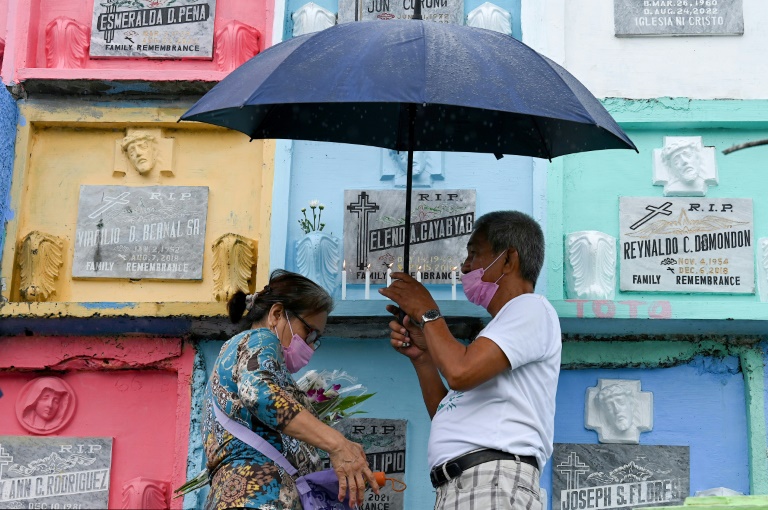
Filipinos clutching flowers and umbrellas poured into cemeteries across the Catholic-majority Philippines Tuesday to pay tribute to their dead loved ones on All Saints’ Day for the first time since the start of the Covid-19 pandemic.

Rain fell as thousands walked or took free motorised tricycle services to tombs scattered across sprawling graveyards in the capital Manila where many poor families live alongside the dead in shanties or mausoleums.

Ahead of the “day of the dead”, a powerful tropical storm unleashed landslides and flooding across the archipelago nation, killing at least 110 people and leaving dozens missing.

Among the tens of thousands of visitors to Manila North Cemetery was Leonardo Filamor, 58, who was paying his respects to a friend who died in 2017.

“Even a typhoon would not have stopped me from coming here,” said Filamor, who left a card and a small bouquet of white flowers at the tomb.

Filamor said he lived on the streets and previously had not been able to afford the public transport fare to reach the cemetery. 

“I’m really happy I had the money this time and got to be with him again,” he said. 

It was the first time since the start of the pandemic that cemeteries were open on November 1 for the ancient Christian tradition, which honours all saints and martyrs who died for the faith. 

Millions of Filipinos normally go to cemeteries on the day to remember their dead relatives by praying, lighting candles and leaving flowers at the gravesites.

People began lining up before dawn to enter graveyards in Manila. 

Flower vendor Lucila Cleto said the weekend storm had dented sales and driven up the price of chrysanthemums and roses.

“I’m not expecting to earn much, just enough to get by,” the 52-year-old told AFP as she sat under a tent among buckets of bouquets and pots of flowers.

Cemeteries in the Philippines range from quiet fields of white crosses to dense “apartment” tombs stacked metres high.

While most people visit the graves of relatives or friends, others go to remember their beloved pets.

“My siblings and I have a huge age gap so I only had Tatsumi as my playmate growing up,” said a 29-year-old woman, referring to her Japanese spitz dog buried under a tree near her grandparents’ tomb.  

“I was devastated when he died.”

Mariz Amplayo, who brought her three children to visit the grave of her diabetic brother, said it was an important day for her family.

“Visiting dead loved ones every year keeps their memory alive,” Amplayo, 47, said as she left flowers, candles and food at his tomb. 

“We don’t want to ever forget.”

Close Bitnami banner
Bitnami