Chinese Business

Hong Kong to explore legalising crypto for retail investors

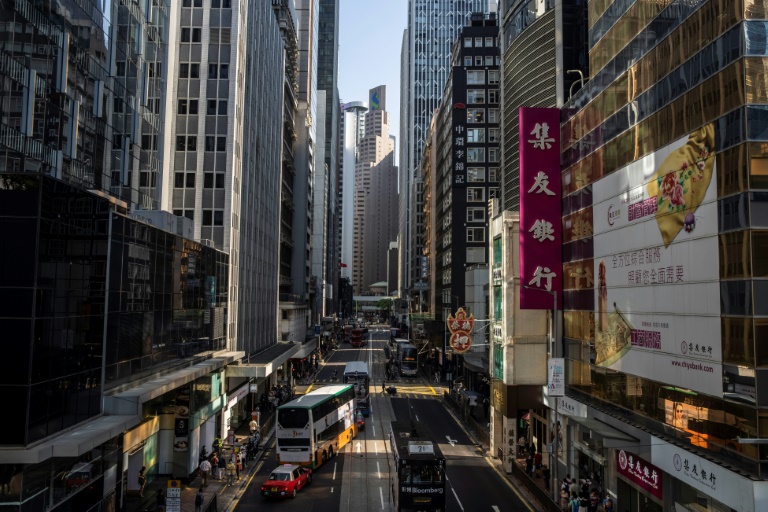
Hong Kong is “back in business” and exploring whether to legalise crypto trading by retail investors, the city’s finance chief announced Monday, kicking off a week of conferences aimed at resuscitating the Chinese hub’s image.

In contrast to mainland China where crypto has been all but banned, Hong Kong is looking to relax regulations and claw back some of the business that has left.

Years of strict pandemic controls and a political crackdown have hammered the Asian finance hub’s economy and sparked an exodus of talent that authorities say they now want to reverse.

A fintech conference opened on Monday and will be followed on Wednesday by a finance summit attended by some of the world’s top bankers.

“Hong Kong is open and inclusive towards the global community of innovators engaging in virtual asset businesses,” finance secretary Paul Chan told delegates at the fintech conference.

“In a great many ways, we are telling the world that we are back in business,” he added, in a speech that had to be delivered remotely after he caught Covid last week during an overseas trip.

In a new policy statement the government said it would launch a consultation to explore how the retail segment “may be given a suitable degree of access”. It added that Hong Kong was willing to review “property rights for tokenised assets and the legality of smart contracts”.

Currently Hong Kong restricts exchanges to clients with portfolios of at least HK$8 million ($1 million). 

Expanding permission to retail investors would allow far more regular residents to invest in cryptocurrencies and virtual assets.But that carries its own risks. 

There has been a global push to regulate the crypto market and protect investors following wild swings and a string of high-profile collapses.

Critics say crypto is an ideal tool to generate investment bubbles, hide illicit wealth and enable scams.

China, once one of the world’s largest crypto markets, banned transactions of  digital currencies in 2021.

Singapore recently strengthened regulations around retail transactions after a number of crypto exchanges imploded, including in the city state. 

Meanwhile, Japan has recently relaxed some of its more conservative rules on listing tokens.

Given its position as a gateway for China to the international markets, Hong Kong was initially something of a crypto hub.

The city then introduced a voluntary licensing regime in 2018 for big exchanges but only two were approved for permits — BC Technology and HashKey.

One of the biggest exchanges that used to be in the city, FTX, moved to the Bahamas last year.
China's factory activity contracts on Covid curbs

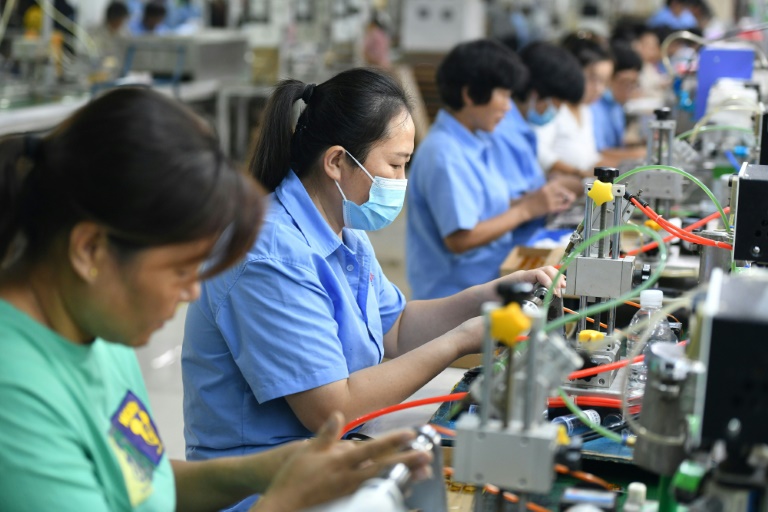
China’s factory activity shrank in October, official data showed Monday, after industries were hit by strict Covid lockdowns.

The Purchasing Managers’ Index (PMI) — a key gauge of manufacturing in the world’s second-biggest economy — came in at 49.2, down from September’s 50.1 and below the 50-point mark separating growth from contraction, according to data from the National Bureau of Statistics (NBS).

Sporadic Covid-19 lockdowns around China have dampened demand and business confidence.

The manufacturing PMI has been in contraction territory for six out of the past eight months, as sweeping Covid restrictions paralysed major industrial cities such as Shanghai, Shenzhen and Chengdu and a summer of searing heat hit production.

“In October, affected by the frequent appearance of domestic outbreaks, China’s purchasing managers’ index declined,” NBS senior statistician Zhao Qinghe said in a statement.

Zhao added that “the foundation for China’s economic recovery and development needs to be further consolidated”, noting both weakened demand and rising raw material prices.

While activity at larger businesses expanded in October, work at small and medium-sized enterprises contracted significantly, with Zhao saying “the pressure on production and operation at small and medium-sized enterprises has increased”.

The non-manufacturing PMI came in at 48.7 points in October, a sharp decline from 50.6 in September and “below a critical point”, Zhao said in the statement.

Zhao added that Covid outbreaks in October had hit the service industry especially hard, with activity in transport, accommodation and food and beverage businesses falling during a traditional peak period coinciding with week-long national holidays.

“We don’t expect the zero-Covid policy to be abandoned until 2024, which means virus disruptions will keep in-person services activity subdued,” Capital Economics analyst Zichun Huang said in a note on Monday.

“The deepening global downturn will continue to weigh on exporters. And officials are still struggling to put a floor underneath the property market,” Huang added.

Chinese leaders have set out an annual economic growth target of about 5.5 percent, but many observers think the country will struggle to hit the target, despite announcing a better-than-expected 3.9 percent expansion in the third quarter.

And officials have shown no sign that they intend to ease the country’s zero-Covid strategy, with President Xi Jinping last week promoting Li Qiang, who oversaw a debilitating two-month lockdown in Shanghai, to the second-most powerful post in the Communist Party. 

The economic slowdown has also been exacerbated by a crisis in the massive property sector, where a series of debt-laden developers have defaulted on loans.

Markets rise on rate hopes ahead of Fed decision

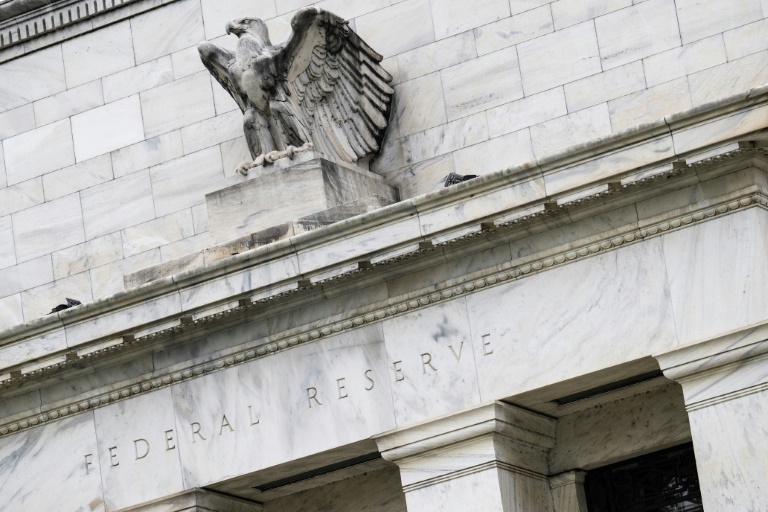
Most markets rose Monday ahead of a crucial Federal Reserve policy meeting later in the week, with investors hoping for a less hawkish tilt in their plans for interest rates.

A sense of relief has settled on trading floors over the past week following a report that the US central bank could take its foot off the accelerator in its push to rein in decades-high inflation.

Adding to the positive mood has been an indication that others around the world are looking at slowing down, though the excitement was tempered Friday by record inflation readings in Europe and data showing prices remained elevated.

Asian dealers were given a strong lead from Wall Street, where all three main indexes ended more than two percent higher thanks to a rally in tech firms following a strong earnings report from Apple.

Tokyo, Hong Kong, Seoul, Singapore, Taipei and Wellington all piled on more than one percent, while Sydney and Jakarta were also up.

However, Shanghai fell on concerns about China’s growth outlook as the government presses on with its zero-Covid strategy of lockdowns, with restrictions imposed in towns and cities nationwide.

Data showing activity in the factory and services sectors contracted last month highlighted the impact the measures are having on the world’s number two economy.

All eyes are on the Fed’s policy meeting, which ends Wednesday.

While it is widely expected to announce a fourth successive 75 basis point hike, traders will be poring over the post-meeting statement looking for a hint officials are open to dialling back the pace of increases.

The gathering comes as other central banks have recently indicated they are willing to ease up, with Canada raising rates less than expected last week, while authorities in Australia and Europe have taken a more dovish view.

Concerns that rapidly rising borrowing costs will send economies into a recession has hammered markets globally this year.

“There has been a succession of central bank downshifts, adding to the ‘peak hawkishness’ theme running through macro markets,” said SPI Asset Management’s Stephen Innes. “And investors are entirely focused on these U-turns as peak rates get priced in. 

“So, people don’t want to miss the stock market rally wagon, especially if the Fed conveys a similar policy downshift this week, sending the rally into overdrive as pivot procrastinators will be forced to chase.”

A better-than-expected earnings season has also provided support to global markets, easing concerns that tighter monetary policies would hammer firms’ bottom lines, though big-name tech giants have taken a blow.

National Australia Bank’s Rodrigo Catril said more than 70 percent of companies that had reported had beaten forecasts, though he added that while markets had risen over the past month, some traders remained cautious.

“Those with a positive inclination may look at October’s equity performance as a sign of a new uptrend while others would suggest we have not yet seen the worst given the lag effects from monetary policy and the prospect of still more tightening to come,” he said in a note.

– Key figures around 0230 GMT –

Tokyo – Nikkei 225: UP 1.6 percent at 27,529.33 (break)

Hong Kong – Hang Seng Index: UP 0.7 percent at 14,959.04

Shanghai – Composite: DOWN 0.8 percent at 2,891.75

Euro/dollar: DOWN at $0.9953 from $0.9967 on Friday

Pound/dollar: DOWN at $1.1601 from $1.1618 

Dollar/yen: UP at 148.00 yen from 147.46 yen

Euro/pound: UP at 85.83 pence from 85.77 pence

West Texas Intermediate: DOWN 0.6 percent at $87.36 per barrel

Brent North Sea crude: DOWN 0.9 percent at $94.87 per barrel

New York – Dow: UP 2.6 percent at 32,861.80 (close)

London – FTSE 100: DOWN 0.4 percent at 7,047.67 (close) 

Hong Kong banking summit a post-pandemic sales pitch, but is anyone buying?

Hundreds of top bankers will arrive in Hong Kong this week to hear the government’s sales pitch that — despite lingering pandemic curbs and entrenched US-China tensions — the city is once again open for business.

The Chinese finance hub has prepared a high-profile summit, including a glitzy banquet at a newly opened art museum to woo financial bigwigs, hoping to outshine regional rivals like Singapore, London and Tokyo.

Wednesday’s gathering has come under fire from some United States lawmakers, who said Wall Street’s luminaries are “whitewashing human rights violations” with their presence and giving political cover to city leader John Lee.

Lee, who is scheduled to deliver an opening keynote speech, is among Chinese officials sanctioned by Washington for their role in cracking down on human rights in Hong Kong. 

He is, as a result, unable to hold a bank account at the financial giants whose top executives will share the stage with him this week.

“Business as usual in Hong Kong is the wrong choice for these companies,” said the leaders of the bipartisan US Congressional-Executive Commission on China.

The event still has plenty of cheerleaders from local industry, anxious to maintain Hong Kong’s standing as a global finance hub.

“We need to… paint a more positive picture about the real situation,” financial services sector lawmaker Robert Lee told AFP.

“Hong Kong is open for business. I think that message should be loud and clear.”

– Restrictions remain –

Since Lee’s administration took office in July, officials have billed the summit as a watershed moment to show that the city has left behind China’s strict zero-Covid strategy.

Hong Kong finally scrapped mandatory hotel quarantine in September. Many controls, however, remain in place — curbs that rival cities have long abandoned.

Overseas arrivals must undergo frequent testing and are unable to go to bars and restaurants for their first three days in the city.

Restrictions on various gatherings remain and masks are compulsory, including outdoors.

The finance summit is being held at the Four Seasons hotel and partial exemptions have been granted so bankers can “have meals with others in private rooms” and visit venues that would otherwise be off-limits.

Those who test positive will be permitted to skip isolation and leave by private flights if they can.

“Covid restrictions are hurting us,” said Mike Rowse, a former civil servant who promoted the city to foreign investors.

“I used to travel around the world selling Hong Kong… When you finish (that pitch) you say: ‘Come and see for yourself’. But right now you can’t say that.”

The delicate balance between convenience and pandemic control was thrown into sharp relief last week, when Hong Kong finance chief Paul Chan caught the coronavirus while abroad — potentially forcing him to skip the conference.

Citigroup CEO Jane Fraser also contracted the virus and pulled out of the event, removing one of the few senior women at a gathering otherwise dominated by men. 

Top officials have promised to keep reopening. 

But Aries Wong, an economist at Hong Kong Baptist University, said the incremental tweaks mean little to foreign firms unless controls are fully scrapped.

“There is still policy uncertainty because if the controls remain on the books, it means they can potentially be tightened if things worsen again,” Wong told AFP.

– Gateway to China –

International firms are also caught in the middle of fraying US-China trade ties and competing sanction regimes that make compliance a headache.

The former British colony has been under Beijing’s tightening grip after authorities cracked down on huge and often violent pro-democracy protests in 2019.

“China’s government has suggested that Hong Kong’s distinct status as a global economic connector remains firmly intact,” said Austin Strange, an international relations scholar at the University of Hong Kong.

“The international community is less settled on this issue, and will look to actual policies and measures… rather than take official statements at face value.”

The issue of US sanctions arose again earlier this month when Lee’s government made clear it would not follow US, European and British sanctions against Russia over Moscow’s invasion of Ukraine.

While Hong Kong’s closeness to China may be a geopolitical liability, it is also the very heart of the city’s appeal to the many banks present at the summit.

Hong Kong remains China’s prime gateway to international markets and foreign capital.

Laurence Li, the head of Hong Kong’s financial industry advisory body, said China is pushing ahead with measures to more seamlessly connect Hong Kong markets to the mainland.

“No one in the world can afford not to interact with China… Hong Kong remains the best place to participate in the mainland’s economy and growth,” Li told AFP.

'Lot of progress' in India trade talks: UK foreign minister

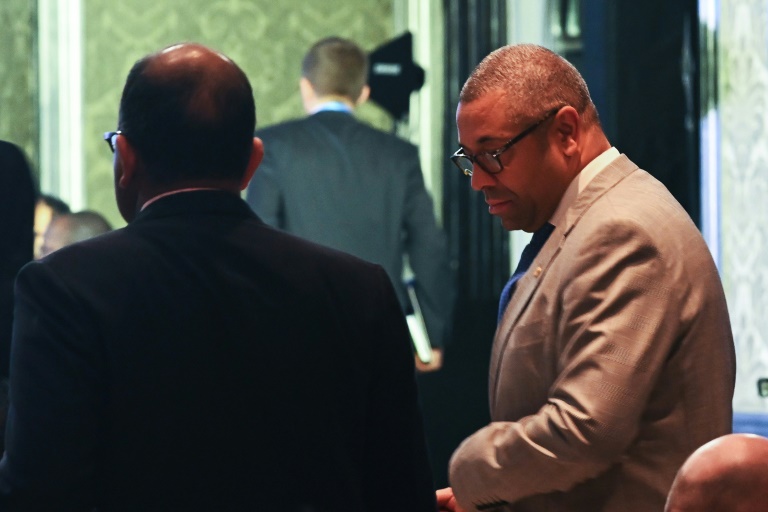
Britain’s foreign minister has insisted during a visit to India that “a lot of progress” has been made in talks on a post-Brexit free-trade deal despite negotiators missing a recent deadline.

“We have made a lot of progress in the negotiations, and we continue to work for an agreement that works for both countries,” James Cleverly said in a Times of India interview published Sunday.

“We have been very, very explicit that our partnership with India is one that matters to us and one we want to enhance and develop,” he was quoted as telling the paper during the two-day visit.

India and its former colonial ruler have been negotiating for around 18 months on a trade deal that would be an important milestone for Britain as it seeks alternative markets following its exit from the European Union.

In exchange for lowering tariffs on British imports like whisky, India wants more work and study visas for its nationals in line with similar recent deals struck between Britain and Australia and New Zealand.

But a target date for a deal of the Indian religious festival of Diwali, which began on October 24, was missed with reports saying the talks had snagged over fears among Britain’s ruling Conservatives of more immigration.

The Indian government was also irked by comments from Suella Braverman, Britain’s recently reinstated right-wing interior minister, that Indians were the largest group of people who overstayed British visas.

However, Cleverly told the Times that he saw it “as a very positive thing that so many Indians want to come and study in the UK, that Indian businessmen want to do business in the UK. It’s a cause for celebration.”

But he added: “Of course, it does mean that we must ensure our processes are right.”

Cleverly refused to be drawn on expectations that the appointment of Rishi Sunak, who is of Indian heritage, as prime minister could help boost ties.

“That said, it’s lovely to see how much excitement and enthusiasm there is about the British PM here in India,” he told the paper.

Apple rally fuels tech share turnaround, lifting US stocks

Tech shares were back on their front foot Friday following solid Apple results, boosting the Nasdaq nearly three percent and adding to weekly gains.

Apple, the biggest company in terms of market value, soared nearly eight percent after reporting higher profits despite lower-than-expected iPhone sales. 

Apple’s surge helped offset a comparable drop in Amazon shares on a disappointing holiday-quarter forecast and added to buying momentum on Wall Street following a mixed day in global bourses and a drop in oil prices.

“The stock market showed impressive resilience today,” observed Briefing.com after the Dow’s sixth straight positive session.

The gains by Apple helped prompt an advance by large tech companies like Microsoft and Google parent Alphabet that were punished earlier in the week in a pullback that investors feared could mark a major negative turning point for tech giants.

Art Hogan, analyst at B. Riley Financial, said tech shares benefited Friday from an “oversold rebound,” adding that semiconductor shares were lifted by Facebook parent Meta’s plan to boost investment in the metaverse.

Stocks have also been boosted in recent sessions by hopes the Federal Reserve will soon moderate its policies to counter inflation.

Markets largely shrugged off a mixed US economic data that showed inflation lingering but also a jump in household spending. 

In Europe, Germany’s economy unexpectedly grew in the third quarter, but slowing growth in France and Spain added to fears that high inflation and an energy crisis will tip the region into recession.

“Today’s positive growth data is a welcome surprise. However, it does not mean that the German economy will be able to prevent a recession,” said ING economist Carsten Brzeski.

Elsewhere, the yen was down against the dollar after Japan’s Prime Minister Fumio Kishida said the country would spend $260 billion on a stimulus package to cushion the weak economy.

The yen has plunged to 32-year lows versus the dollar in recent weeks as Japan’s central bank refuses to hike interest rates despite sky-high inflation, fueled by soaring energy prices.

“The Japanese yen is once again the worst performer today after the Bank of Japan kept its monetary policy unchanged,” said market analyst Michael Hewson at CMC Markets.

– Key figures around 2040 GMT –

New York – Dow: UP 2.6 percent at 32,861.80 (close)

New York – S&P 500: UP 2.5 percent at 3,901.06 (close)

New York – Nasdaq: UP 2.9 percent at 11,102.45 (close)

London – FTSE 100: DOWN 0.4 percent at 7,047.67 (close) 

Frankfurt – DAX: UP 0.2 percent at 13,243.33 (close)

Paris – CAC 40: UP 0.5 percent at 6,273.05 (close)

EURO STOXX 50: UP 0.2 percent at 3,613.02 (close)

Tokyo – Nikkei 225: DOWN 0.9 percent at 27,105.20 (close)

Hong Kong – Hang Seng Index: DOWN 3.7 percent at 14,863.06 (close)

Shanghai – Composite: DOWN 2.3 percent at 2,915.93 (close)

Euro/dollar: UP at $0.9967 from $0.9965 on Thursday

Pound/dollar: UP at $1.1618 from $1.1567 

Dollar/yen: UP at 147.46 yen from 146.27 yen

Euro/pound: DOWN at 85.77 pence from 86.11 pence

West Texas Intermediate: DOWN 1.3 percent at $87.90 per barrel

Brent North Sea crude: DOWN 1.2 percent at $95.77 per barrel

burs-jmv/md

Stock markets recover from tech results shock

Stock markets recovered Friday from the shock of disappointing earnings reports of giant tech firms that added to fears of a global recession according to traders.

The week has seen forecast-missing results from some of the world’s biggest firms including Apple, Amazon, Facebook parent Meta and Google parent Alphabet.

That has caused sharp share-price losses for some of the titans, in turn sending values tumbling for tech companies worldwide.

The tech-heavy Nasdaq Composite opened lower Friday, but quickly followed the Dow and S&P 500 higher.

“It has been a week of mostly disappointing results from US tech giants, putting significant pressure on the Nasdaq,” said market analyst Fawad Razaqzada at City Index and FOREX.com.

Amazon, which on Thursday predicted a slowdown in sales growth during the year-end holiday shopping season after reporting a drop in third quarter earnings, saw its shares slump around 10 percent as trading got under way on Friday, although it recovered some of that ground in morning trading.

Even if the Nasdaq moved higher, “there’s a good chance the tech-heavy index could fall again as we head towards the end of the week,” he added.

Most European markets also pulled higher. 

Investors have in fact been looking for data showing that the US Federal Reserve’s rate hikes are beginning to slow inflation and the economy, which they hope will convince policymakers to slow or pause further interest rate hikes. 

A 10 percent monthly drop in pending US home sales, a far bigger fall than expected, showed that higher interest rates are indeed having an impact on the housing market. 

But the latest inflation data showed prices and wages continuing to rise, and consumers also continuing to spend for the moment.

Patrick O’Hare at Briefing.com said the latest inflation figures “are unlikely to prompt the Fed to reconsider its aggressive rate hike plans.”

In foreign exchange Friday, the euro was back below parity against the dollar following official data Thursday showing the US economy rebounded in the third quarter.

Surprise figures Friday showing Europe’s biggest economy Germany had also expanded in the July-September period failed to push the euro above one dollar, where it stood earlier in the week for the first time since September.

Meanwhile, high inflation figures for Germany at 10.4 percent and Italy at 11.9 do not augur well for the European Central Bank letting up on its increases to interest rates.

Elsewhere, the yen was down against the dollar after Japan’s Prime Minister Fumio Kishida said the country would spend $260 billion on a stimulus package to cushion the weak economy.

The yen has plunged to 32-year lows versus the dollar in recent weeks as Japan’s central bank refuses to hike interest rates despite sky-high inflation, fuelled by soaring energy prices.

“The Japanese yen is once again the worst performer today after the Bank of Japan kept its monetary policy unchanged,” said market analyst Michael Hewson at CMC Markets.

– Key figures around 1530 GMT –

New York – Dow: UP 1.8 percent at 32,612.70 points

EURO STOXX 50: UP 0.2 percent at 3,613.02

London – FTSE 100: DOWN 0.4 percent at 7,047.67 (close) 

Frankfurt – DAX: UP 0.2 percent at 13,243.33 (close)

Paris – CAC 40: UP 0.5 percent at 6,273.05 (close)

Tokyo – Nikkei 225: DOWN 0.9 percent at 27,105.20 (close)

Hong Kong – Hang Seng Index: DOWN 3.7 percent at 14,863.06 (close)

Shanghai – Composite: DOWN 2.3 percent at 2,915.93 (close)

Euro/dollar: DOWN at $0.9947 from $0.9965 on Thursday

Pound/dollar: UP at $1.1591 from $1.1567 

Dollar/yen: UP at 147.51 yen from 146.27 yen

Euro/pound: DOWN at 85.79 pence from 86.11 pence

West Texas Intermediate: DOWN 1.5 percent at $87.71 per barrel

Brent North Sea crude: DOWN 1.5 percent at $95.50 per barrel

burs-rl/cdw

Stock markets recover from tech results shock

Stock markets recovered Friday from the shock of disappointing earnings reports of giant tech firms that added to fears of a global recession according to traders.

The week has seen forecast-missing results from some of the world’s biggest firms including Apple, Amazon, Facebook parent Meta and Google parent Alphabet.

That has caused sharp share-price losses for some of the titans, in turn sending values tumbling for tech companies worldwide.

The tech-heavy Nasdaq Composite opened lower Friday, but quickly followed the Dow and S&P 500 higher.

“It has been a week of mostly disappointing results from US tech giants, putting significant pressure on the Nasdaq,” said market analyst Fawad Razaqzada at City Index and FOREX.com.

Amazon, which on Thursday predicted a slowdown in sales growth during the year-end holiday shopping season after reporting a drop in third quarter earnings, saw its shares slump around 10 percent as trading got under way on Friday.

Even if the Nasdaq moved higher, “there’s a good chance the tech-heavy index could fall again as we head towards the end of the week,” he added.

Most European markets also pulled higher in the half hour after Wall Street began trading.

Investors have in fact been looking for data showing that the US Federal Reserve’s rate hikes are beginning to slow inflation and the economy, which they hope will convince policymakers to slow or pause further interest rate hikes. 

Meanwhile, the latest batch of US economic data showed prices and wages continuing to rise, and consumers also continuing to spend for the moment.

Patrick O’Hare at Briefing.com said the latest figures “are unlikely to prompt the Fed to reconsider its aggressive rate hike plans.”

In foreign exchange Friday, the euro was back below parity against the dollar following official data showing the US economy rebounded in the third quarter.

Surprise figures showing Europe’s biggest economy Germany had also expanded in the July-September period failed to push the euro above one dollar, where it stood earlier in the week for the first time since September.

Elsewhere, the yen was down against the dollar after Japan’s Prime Minister Fumio Kishida said the country would spend $260 billion on a stimulus package to cushion the weak economy.

The yen has plunged to 32-year lows versus the dollar in recent weeks as Japan’s central bank refuses to hike interest rates despite sky-high inflation, fuelled by soaring energy prices.

ExxonMobil on Friday reported a surge in third-quarter earnings on high oil and natural gas prices.

The US oil giant became the latest petroleum heavyweight to report stunning quarterly figures, with year-on-year profits nearly tripling to $19.7 billion on revenue soaring to $112 billion.

The company’s share price dipped 0.2 percent at the start of trading.

Shares in Twitter were removed from trading on the NY stock exchange after Elon Musk completed a mega takeover of the social media giant, with critics and fans anxious to see how the planet’s richest man runs one of the world’s leading social media platforms.

– Key figures around 1330 GMT –

London – FTSE 100: DOWN 0.5 percent at 7,040.28 points

Frankfurt – DAX: DOWN 0.4 percent at 13,160.37

Paris – CAC 40: UP less than 0.1 percent at 6,247.60

EURO STOXX 50: DOWN 0.3 percent at 3,594.15

New York – Dow: UP 0.5 percent at 32,202.82

Tokyo – Nikkei 225: DOWN 0.9 percent at 27,105.20 (close)

Hong Kong – Hang Seng Index: DOWN 3.7 percent at 14,863.06 (close)

Shanghai – Composite: DOWN 2.3 percent at 2,915.93 (close)

Euro/dollar: UP at $0.9970 from $0.9965 on Thursday

Pound/dollar: DOWN at $1.1550 from $1.1567 

Dollar/yen: UP at 147.65 yen from 146.27 yen

Euro/pound: UP at 86.30 pence from 86.11 pence

West Texas Intermediate: DOWN 1.0 percent at $88.20 per barrel

Brent North Sea crude: DOWN 0.9 percent at $96.11 per barrel

burs-rl/cdw

Volkswagen says China recovery accelerating

Auto giant Volkswagen said Friday its recovery in China was accelerating, but sounded a note of caution on geopolitical risks as concerns grow over German dependence on the Asian giant.

The German group, whose brands also include Audi and Skoda, saw net profits in the July-September period slide due to the suspension of its Russian operations and costs linked to listing luxury brand Porsche.

But there was a 26 percent increase in deliveries in China, Volkswagen’s biggest market, in the same period, and a 33 percent increase in September alone.

The news is a boost for the group which, like other international companies, saw its business in China impacted by lockdowns and other restrictions as part of the country’s zero-Covid policy.

China remains a “strong market for Volkswagen… We have strong partnerships in China,” said the group’s CEO Oliver Blume, who will accompany Chancellor Olaf Scholz on a visit to the world’s number two economy next week.

German companies are however facing growing scrutiny over their reliance on authoritarian China, after many in Europe’s top economy got badly burned by an over-reliance on gas imports from Russia. 

Moscow has slashed vital energy deliveries to the continent, in suspected retaliation for the sanctions imposed over the Ukraine war, leaving consumers and businesses facing huge bills.

– Need to be ‘flexible’ –

Asked about growing tensions over China, Blume responded that the company was keeping an eye on the “geopolitical situation”. 

It was important for Volkswagen to be “flexible with our global footprint in terms of being able to react on geopolitical crises”, he added. 

Worries about China were laid bare recently when a row erupted in the ruling coalition about whether to sell a stake in a Hamburg port terminal to a Chinese company. 

Scholz ultimately defied calls from six ministries to veto the sale over security concerns, instead permitting the company to acquire a reduced stake. 

In the third quarter, Volkswagen made a net profit of 2.13 billion euros ($2.12 billion) in July to September — a fall of more than 26 percent from the same period a year earlier.

Results were “weighed down by non-recurring costs totalling around 1.6 billion euros related to revaluation effects due to the group’s suspended activities in Russia and costs associated with the Porsche IPO”, said Volkswagen in a statement.

Along with other German automakers including rivals Mercedes-Benz and BMW, Volkswagen halted exports to Russia shortly after the invasion of Ukraine and closed its local production sites.

Last month, luxury sports carmaker Porsche floated on the Frankfurt stock exchange in one of Europe’s biggest listings in years. Volkswagen is expected to use some of the cash raised in the listing in its shift towards electric vehicles.

The group confirmed its outlook for 2022 in most areas. It expects sales revenues to be eight to 13 percent higher than in the previous year.

Stock markets slide as tech results shock

Global stock markets slumped on Friday, with shares in tech giants tumbling on poorly-received earnings, adding to fears of a global recession according to traders. 

The week has seen forecast-missing results from some of the world’s biggest firms including Apple, Amazon, Facebook parent Meta and Google parent Alphabet.

That has caused sharp share-price losses for some of the titans, in turn sending values tumbling for tech companies worldwide.

“Tech carnage is affecting sentiment,” noted Neil Wilson, analyst at Market.com.

All eyes are meanwhile on Twitter after Elon Musk completed a mega takeover of the social media giant, with critics and fans anxious to see how the planet’s richest man would run one of the world’s leading social media platforms.

In foreign exchange Friday, the euro was back below parity against the dollar following official data showing the US economy rebounded in the third quarter.

Surprise figures showing Europe’s biggest economy Germany had also expanded in the July-September period failed to push the euro above one dollar, where it stood earlier in the week for the first time since September.

Elsewhere, the yen was down against the dollar after Japan’s Prime Minister Fumio Kishida said the country would spend $260 billion on a stimulus package to cushion the weak economy.

The yen has plunged to 32-year lows versus the dollar in recent weeks as Japan’s central bank refuses to hike interest rates despite sky-high inflation, fuelled by soaring energy prices.

ExxonMobil on Friday reported a surge in third-quarter earnings on high oil and natural gas prices.

The US oil giant became the latest petroleum heavyweight to report stunning quarterly figures, with year-on-year profits nearly tripling to $19.7 billion on revenue soaring to $112 billion.

– Key figures around 1115 GMT –

London – FTSE 100: DOWN 0.4 percent at 7,042.47 points

Frankfurt – DAX: DOWN 0.6 percent at 13,127.27

Paris – CAC 40: DOWN 0.2 percent at 6,230.98

EURO STOXX 50: DOWN 0.6 percent at 3,582.33

Tokyo – Nikkei 225: DOWN 0.9 percent at 27,105.20 (close)

Hong Kong – Hang Seng Index: DOWN 3.7 percent at 14,863.06 (close)

Shanghai – Composite: DOWN 2.3 percent at 2,915.93 (close)

New York – Dow: UP 0.6 percent at 32,033.28 (close)

Euro/dollar: DOWN at $0.9950 from $0.9965 on Thursday

Pound/dollar: DOWN at $1.1538 from $1.1567 

Dollar/yen: UP at 147.62 yen from 146.27 yen

Euro/pound: UP at 86.22 pence from 86.11 pence

West Texas Intermediate: DOWN 0.6 percent at $88.56 per barrel

Brent North Sea crude: DOWN 0.4 percent at $96.61 per barrel

Close Bitnami banner
Bitnami