Chinese Business

Asian markets extend rally as bargain-buyers boost Hong Kong

Asian markets rose again Tuesday, building on the strong start to the week as traders look ahead to the Federal Reserve’s policy decision, hoping it will signal a more dovish approach to fighting inflation.

While Wall Street suffered a pullback from a recent rally, the mood in Asia remained optimistic while bargain-buying also provided some much-needed support to Hong Kong and Shanghai.

The Fed is widely expected Wednesday to announce a fourth straight 75-basis-point rate hike as it tries to rein in runaway prices, which has led to worries it will tip the world’s top economy into recession, sending stocks tumbling.

But a report last month suggesting officials are looking to dial down the pace of increases has sparked a rally in risk assets over the past week, helped by signs other central banks are also trying to take a step back.

“Fifty basis points or 75 basis points in December is ultimately less important than the path (Fed boss Jerome) Powell lays out for next year,” said Stephen Innes at SPI Asset Management.

“If push comes to shove, the Fed probably does not want to see the market pricing cuts as soon as the hike cycle finishes, so I expect the rhetoric to be targeted here.”

Data showing eurozone inflation hit a record 10.7 percent last month — fanned by a 41.9 percent rise in energy costs — drove home the fine line banks must walk in battling rising prices while trying to cushion fragile economies.

That came as other figures showed manufacturing around the world is shrinking owing to the spike in prices and borrowing costs.

“A global manufacturing contraction is here,” said OANDA’s Edward Moya.

“Factory activity is taking a big hit as China struggles with Covid, Europe is headed towards a recession, and as the US economy finally feels the impact of inflation and Fed tightening.”

In early trade, Hong Kong led the gains, jumping more than three percent thanks to a bargain-buying surge in beaten-down tech giants including Alibaba and Tencent.

Shanghai climbed more than one percent, along with Singapore and Seoul, while Tokyo, Sydney, Taipei and Bangkok. However, Jakarta and Wellington edged lower.

Investors are also keeping tabs on the earnings season, with Japanese giants Toyota and Sony among the big-name firms reporting.

The announcements come after a number of US companies have surprised with better-than-expected results, suggesting they are holding up despite the tough trading environment.

– Key figures around 0300 GMT –

Tokyo – Nikkei 225: UP 0.2 percent at 27,646.34 (break)

Hong Kong – Hang Seng Index: UP 3.7 percent at 15,224.90

Shanghai – Composite: UP 1.5 percent at 2,935.46

Euro/dollar: UP at $0.9905 from $0.9885 on Monday

Pound/dollar: UP at $1.1514 from $1.1465 

Dollar/yen: DOWN at 148.20 yen from 148.72 yen

Euro/pound: DOWN at 86.04 pence from 86.20 pence

West Texas Intermediate: UP 0.8 percent at $87.18 per barrel

Brent North Sea crude: UP 0.8 percent at $93.59 per barrel

New York – Dow: DOWN 0.4 percent at 32,732.95 (close)

London – FTSE 100: UP 0.7 percent at 7,094.53 (close)
Germany's Scholz set for high-stakes China visit

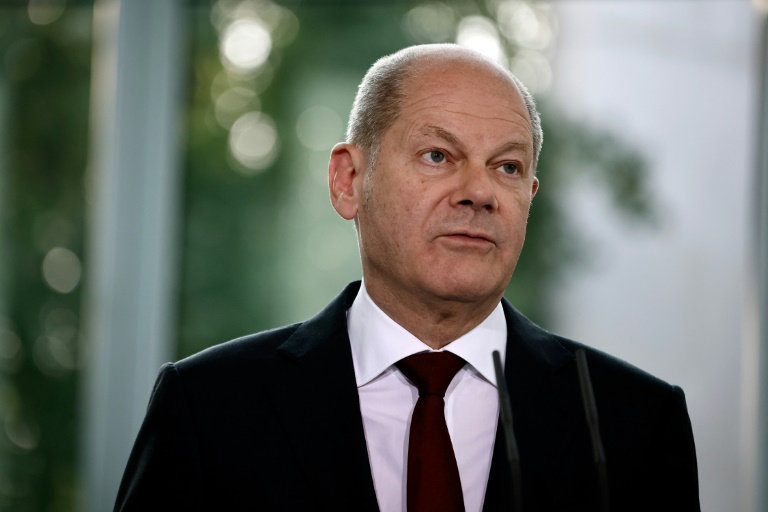
German Chancellor Olaf Scholz makes a high-stakes trip to China this week, walking a tightrope between shoring up a key economic relationship and facing heightened concerns about over-reliance on authoritarian Beijing.

Scholz, accompanied by a delegation of business executives, will be the first European Union leader to visit the world’s second-biggest economy since 2019.

During the one-day trip on Friday, he will hold talks with President Xi Jinping and Premier Li Keqiang. 

But the visit has sparked controversy, coming as Berlin reels from an over-dependence on Russian energy imports that left it exposed when Moscow slashed supplies following its invasion of Ukraine.

That crisis has prompted soul-searching about whether German industry’s heavy reliance on China could again leave it vulnerable.

Surging tensions between the West and Beijing over issues ranging from Taiwan to human rights in Xinjiang have added to a worsening geopolitical climate, and even senior figures within Scholz’s coalition are raising concerns. 

Foreign Minister Annalena Baerbock said she feared mistakes made in the relationship with Russia could be repeated with China.

“We must prevent that,” Baerbock — from the Greens, a member of Scholz’s uneasy three-party ruling coalition — told broadcaster ARD at the weekend.

“I think it is extremely important that we never again make ourselves so dependent on a country that does not share our values.”

– ‘Minimise risks’ –

The sensitivity was highlighted when a row erupted last month about whether to allow Chinese shipping giant Cosco to buy a stake in a Hamburg port terminal. 

Ultimately, Scholz defied calls from six ministries to veto the sale over security concerns, instead permitting the company to acquire a reduced stake.

Some in government will view shoring up the economic partnership with China as crucial at a time Germany, battered by the energy crisis, is hurtling towards a recession.

Ahead of the trip, Scholz’s spokesman Steffen Hebestreit stressed the chancellor was not in favour of “decoupling” from China — but also wanted to “diversify, and minimise risks”.

For now, the German and Chinese economies remain deeply intertwined.

China is a major market for German goods, particularly for auto giants Volkswagen, BMW and Mercedes-Benz, and many jobs in Europe’s top economy depend directly on the relationship.

The worsening climate has rattled the nerves of German firms with investments in China. BASF chemicals giant boss Martin Brudermueller, who will accompany Scholz, last week urged an end to “China bashing”.

Still, the timing of the trip has raised eyebrows, coming so soon after Xi Jinping secured a historic third term as China’s leader. 

“The timing is extremely unfortunate,” Heribert Dieter, from the German Institute for International and Security Affairs, told AFP. 

Xi “has just been confirmed for another five years in office, and of course Chinese politicians see the German chancellor’s visit as confirmation of their policies”, he added. 

– ‘Follow its own path’ –

Hebestreit insisted the visit will “cover the entire spectrum of our relations with China”, including tensions in East Asia, and human rights.

He said the war in Ukraine would be on the agenda. While Germany has firmly condemned Russia’s invasion, China has steadfastly avoided criticising Moscow and instead blames the United States and NATO for the conflict. 

He also said that Scholz was in close contact with international partners in Europe, as well as the United States, about the visit. 

But some may see it as further evidence of Germany going it alone to look after its own interests.

Berlin has already raised hackles among fellow EU members by unveiling a 200-billion-euro ($198 billion) fund to shield consumers and businesses from surging energy prices, rather than acting together with the rest of the bloc.

“Western allies — of course in Paris but above all in Washington — see this trip very critically,” said Dieter.

“Germany is following its own path.”

Markets mixed on hopes Fed will take foot off pedal

World stocks were mixed on Monday before a key Federal Reserve policy meeting later in the week, with investors hoping for a less hawkish tilt in plans for interest rate hikes.

Equities in Europe mostly climbed through the day, although Paris sank on news of record high eurozone inflation and slowing economic growth and US indices were a sea of red.

“Market volatility is expected to remain high throughout the week as investors have a lot to digest,” said Pierre Veyret, analyst at ActivTrades.

Investors were hopeful on reports that the Fed could take its foot off the accelerator in its push to rein in decades-high inflation.

It is expected to announce a fourth successive 75 basis point hike on Wednesday, but it could hint that officials are open to dialling back the pace of increases.

The Dow Jones was trading down throughout Monday morning, after Wall Street enjoyed strong gains before the weekend thanks to a rally in tech firms after strong earnings from Apple.

The US gathering comes as other central banks recently indicated they are willing to ease up, with Canada raising rates less than expected last week.

The Bank of England is however expected to deliver another hefty rate hike on Thursday.

“Uncertainty sums up the feeling in the markets at the moment,” said Craig Erlam, senior market analyst at OANDA.

“There’s going to be a lot to take in this week… perhaps it’s not surprising to see some jitters creeping back in.”

– Better earnings than expected –

Concerns that rapidly rising borrowing costs will send economies into a recession have hammered markets globally this year.

Yet a better-than-expected earnings season has provided recent support.

More multinationals will report this week as the financial results season rolls on, including pharmaceutical giants Moderna and Pfizer, technology behemoth Sony, and car brands BMW, Toyota and Ferrari.

But investors remain on edge over red-hot inflation, as analysts warned a recession in the eurozone appeared to be on its way.

Economic growth in the bloc fell to 0.2 percent in the third quarter, as inflation hit another record high on the back of soaring energy prices, the EU’s statistics agency said on Monday.

“It is a matter of how deep the recession will be and not if there will be one,” Oxford Economics said in an analyst note.

Consumer prices jumped by a fresh record of 10.7 percent in October, stoked by an eye-watering 41.9 percent rise in energy costs, Eurostat said.

“Double-digit inflation and decade-high interest rates do not bode well for eurozone growth during the rest of this year and into 2023,” noted economist Benjamin Trevis at think-tank CEBR.

– ‘Salt to the wounds’ –

Asia mainly advanced through Monday, although Hong Kong and Shanghai sank on concerns over the economic impact of Chinese Covid restrictions.

Beijing reported a contraction in factory activity as sweeping pandemic restrictions paralysed major industrial cities.

That also weighed heavily on oil because China is a major global consumer.

“Although these data points are weaker than expected, it should be no surprise given those broad-based Covid-related restrictions,” said Stephen Innes, managing partner at SPI Asset Management.

“Negative news from the real estate sector is adding salt to the economic wounds.”

– Key figures around 1640 GMT –

New York – Dow: DOWN 0.4 percent at 32,720.04 points

EURO STOXX 50: UP 0.1 percent at 3,617.54

London – FTSE 100: UP 0.7 percent at 7,094.53 (close)
Frankfurt – DAX: UP 0.1 percent at 13,253.74 (close)

Paris – CAC 40: DOWN 0.1 percent at 6,266.77 (close)

Tokyo – Nikkei 225: UP 1.8 percent at 27,587.46 (close)

Hong Kong – Hang Seng Index: DOWN 1.2 percent at 14,687.02 (close)

Shanghai – Composite: DOWN 0.8 percent at 2,893.48 (close)

Euro/dollar: DOWN at $0.9888 from $0.9965 on Friday

Pound/dollar: DOWN at $1.1491 from $1.1615 

Dollar/yen: UP at 148.62 yen from 147.60 yen

Euro/pound: UP at 86.04 pence from 85.80 pence

West Texas Intermediate: DOWN 1.3 percent at $87.90 per barrel

Brent North Sea crude: DOWN 0.4 percent at $96.31 per barrel

burs-rox/raz

Covid outbreak traps visitors at Shanghai Disneyland

Shanghai Disney Resort abruptly shut its doors Monday as Chinese authorities imposed a snap lockdown, trapping guests who are not permitted to leave until they test negative for Covid-19.

China is the last major economy wedded to a zero-Covid policy, with authorities brandishing snap lockdowns, mass testing and lengthy quarantines in an effort to stamp out emerging outbreaks.

But new variants have tested local officials’ ability to snuff out flare-ups faster than they can spread, causing much of the country to live under an ever-changing mosaic of Covid curbs.

Visitors to Shanghai Disney Resort are not allowed to leave “until on-site testing returns a negative result”, the city government said in an online notice on Monday.

It added that those who had visited the park since Thursday must obtain three negative Covid tests over three successive days and “avoid participating in group activities”.

The announcement came after Disney said it was “temporarily closing with immediate effect… in accordance with disease control requirements”.

The sprawling 390-hectare (960 acres) theme park and resort includes Shanghai Disneyland, Disneytown and Wishing Star Park. The resort had previously said that it was operating at reduced capacity due to Covid restrictions.

“We will notify guests as soon as we have a confirmed date to resume operations,” Disney said. 

China reported 2,699 local Covid infections on Monday, including 10 asymptomatic cases in Shanghai, according to the National Health Commission.

The eastern megacity — a major hub for the world’s second-largest economy — seethed under a months-long lockdown earlier this year marked by sporadic food shortages and isolated protests.

Markets mostly rise on hopes Fed will take foot off pedal

World stocks mostly rose Monday before a key Federal Reserve policy meeting later in the week, with investors hoping for a less hawkish tilt in plans for interest rate hikes. 

Frankfurt and London equities climbed, but Paris slipped on news of record high eurozone inflation and slowing economic growth.

Investors were nevertheless soothed by reports that the Fed could take its foot off the accelerator in its push to rein in decades-high inflation.

It is expected to announce a fourth successive 75 basis point hike on Wednesday, but it could hint that officials are open to dialling back the pace of increases.

The US slipped into the red on Monday morning, after Wall Street enjoyed strong gains before the weekend thanks to a rally in tech firms after strong earnings from Apple.

“The Fed decision is high priority — and the likelihood of a less hawkish Fed is increasing, which could benefit riskier assets” like equities, said XTM Market analyst Walid Koudmani.

The US gathering comes as other central banks recently indicated they are willing to ease up, with Canada raising rates less than expected last week.

The Bank of England is however expected to deliver another hefty rate hike on Thursday.

– Better earnings than expected –

Concerns that rapidly rising borrowing costs will send economies into a recession have hammered markets globally this year.

Yet a better-than-expected earnings season has provided recent support.

More multinationals are due to report this week as the financial reporting season rolls on, including pharmaceutical giants Moderna and Pfizer, technology behemoth Sony, and car brands BMW, Toyota and Ferrari.

But investors remain on edge over red-hot inflation, as analysts warned a recession in the Eurozone appeared to be on its way.

Economic growth in the bloc fell to 0.2 percent in the third quarter, as inflation hit another record high on the back of soaring energy prices, the EU’s statistics agency said Monday.

“It is a matter of how deep the recession will be and not if there will be one,” Oxford Economics said in an analyst note.

Consumer prices jumped by a fresh record of 10.7 percent in October, stoked by an eye-watering 41.9 percent rise in energy costs, Eurostat said.

The news came after the European Central Bank warned last week that a recession was looming, as it announced another jumbo interest rate hike to try to curb inflation driven up by the fallout from energy producer Russia’s war on Ukraine.

“Double-digit inflation and decade-high interest rates do not bode well for eurozone growth during the rest of this year and into 2023,” noted economist Benjamin Trevis at think-tank CEBR.

– ‘Salt to the wounds’ –

Asia mainly advanced, although Hong Kong and Shanghai sank on concerns over the economic impact of Chinese Covid restrictions.

Beijing reported a contraction in factory activity Monday as sweeping pandemic restrictions paralysed major industrial cities.

That also weighed heavily on oil because China is a major global consumer.

“Although these data points are weaker than expected, it should be no surprise given those broad-based Covid-related restrictions that remained in place during the party congress,” said Stephen Innes, managing partner at SPI Asset Management.

“Negative news from the real estate sector is adding salt to the economic wounds.”

– Key figures around 1330 GMT –

London – FTSE 100: UP 0.5 percent at 7,084.52 points

Frankfurt – DAX: UP 0.19 percent at 13,271.77

Paris – CAC 40: DOWN 0.1 percent at 6,267.68

EURO STOXX 50: UP 0.2 percent at 3,619.19

New York – Dow: DOWN 0.3 percent at 32,749.75

Tokyo – Nikkei 225: UP 1.8 percent at 27,587.46 (close)

Hong Kong – Hang Seng Index: DOWN 1.2 percent at 14,687.02 (close)

Shanghai – Composite: DOWN 0.8 percent at 2,893.48 (close)

Euro/dollar: DOWN at $0.9906 from $0.9965 on Friday

Pound/dollar: DOWN at $1.1498 from $1.1615 

Dollar/yen: UP at 148.72 yen from 147.60 yen

Euro/pound: UP at 86.15 pence from 85.80 pence

West Texas Intermediate: DOWN 1.3 percent at $87.90 per barrel

Brent North Sea crude: DOWN 0.4 percent at $96.31 per barrel

burs-rox/pvh

Bankrupt Sri Lanka's inflation dips to 66 percent

Inflation in crisis-hit Sri Lanka dipped marginally for the first time in 12 months but prices were still an eye-watering 66 percent higher than a year ago, official data showed Monday.

The island nation of 22 million people has suffered months of extreme economic hardship with severe shortages of essentials including food, fuel and medicines.

The Department of Census and Statistics data showed October inflation was nearly four percentage points lower than the record 69.8 percent in September.

Food inflation which had also reached a record high for the 12th consecutive month in September at 94.9 percent moderated to 85.6 percent in October.

The department did not give reasons for the slowdown in inflation, but authorities had reduced fuel prices twice in October, cutting prices by 20 percent.

However, the price of petrol is still double the amount before the start of the crisis late last year, while diesel — used commonly for public transport — is still three and a half times more.

Sharp price increases for both food and fuel has led to a drop in demand and queues for petrol and diesel and cooking gas have sharply reduced in recent weeks.

The World Bank has warned that the economy could shrink by 9.2 percent this year, worse than the 8.7 percent contraction the central bank of Sri Lanka had forecasted.

An unprecedented downturn forced the government to default on its $51 billion foreign debt in April and go to the International Monetary Fund (IMF) for a bailout. 

Blackouts, chronic fuel shortages and high prices triggered months of political unrest, ultimately forcing the president Gotabaya Rajapaksa to flee the country and resign in July. 

The IMF has tentatively approved a four-year, $2.9 billion bailout to help Sri Lanka reorganise its finances, subject to an agreement with its creditors.

It had also asked the government to contain spiralling inflation and address corruption as part of efforts to salvage the troubled economy.

Markets mostly rise on hopes Fed will take foot off pedal

World stocks mostly rose Monday before a key Federal Reserve policy meeting later in the week, with investors hoping for a less hawkish tilt in plans for interest rate hikes. 

Frankfurt and London equities climbed, but Paris slipped on news of record high eurozone inflation and slowing economic growth.

Asia mainly advanced, although Hong Kong and Shanghai sank on concerns over the economic impact of Chinese Covid restrictions.

That also weighed heavily on oil because China is a major global consumer.

– ‘High priority’ –

Investors were nevertheless soothed by reports that the Fed could take its foot off the accelerator in its push to rein in decades-high inflation.

“The Fed decision is high priority — and the likelihood of a less hawkish Fed is increasing, which could benefit riskier assets” like equities, said XTM Market analyst Walid Koudmani.

“Furthermore, Friday’s non-farm payrolls report is also going to be quite important as it will precede next week’s mid-term US election and set the tone.”

The Fed is expected to announce a fourth successive 75 basis point hike on Wednesday, but it could hint that officials are open to dialling back the pace of increases.

The gathering comes as other central banks recently indicated they are willing to ease up, with Canada raising rates less than expected last week.

The Bank of England is however expected to deliver another hefty rate hike on Thursday.

Concerns that rapidly rising borrowing costs will send economies into a recession have hammered markets globally this year.

Yet a better-than-expected earnings season has provided recent support, but investors remain on edge over red-hot inflation.

Eurozone economic growth fell to 0.2 percent in the third quarter, as inflation hit another record high on the back of soaring energy prices, the EU’s statistics agency said Monday.

Consumer prices jumped by a fresh record of 10.7 percent in October, stoked by an eye-watering 41.9 percent rise in energy costs, Eurostat said.

The news came after the European Central Bank warned last week that a recession was looming, as it announced another jumbo interest rate hike to try to curb inflation driven up by the fallout from energy producer Russia’s war on Ukraine.

“Double-digit inflation and decade-high interest rates do not bode well for eurozone growth during the rest of this year and into 2023,” noted economist Benjamin Trevis at think-tank CEBR.

Wall Street meanwhile enjoyed strong gains before the weekend, thanks to a rally in tech firms after strong earnings from Apple.

– Key figures around 1130 GMT –

London – FTSE 100: UP 0.1 percent at 7,057.08 points

Frankfurt – DAX: UP 0.2 percent at 13,266.49

Paris – CAC 40: DOWN 0.2 percent at 6,263.60

EURO STOXX 50: UP 0.1 percent at 3,616.77

Tokyo – Nikkei 225: UP 1.8 percent at 27,587.46 (close)

Hong Kong – Hang Seng Index: DOWN 1.2 percent at 14,687.02 (close)

Shanghai – Composite: DOWN 0.8 percent at 2,893.48 (close)

New York – Dow: UP 2.6 percent at 32,861.80 (close)

Euro/dollar: DOWN at $0.9935 from $0.9965 on Friday

Pound/dollar: DOWN at $1.1547 from $1.1615 

Dollar/yen: UP at 148.46 yen from 147.60 yen

Euro/pound: UP at 86.04 pence from 85.80 pence

West Texas Intermediate: DOWN 1.6 percent at $86.49 per barrel

Brent North Sea crude: DOWN 1.5 percent at $94.35 per barrel

Japan govt spent $43 bn to bolster yen in October

Japan’s finance ministry said Monday it spent $43 billion in October to bolster the value of the yen, which has tumbled against the dollar this year to lows not seen since the 1990s.

The ministry said it spent 6.35 trillion yen ($43 billion) on forex intervention operations between September 29 and October 27, without giving details of when or how often they had taken place.

It follows a similar decision to sell dollars and buy yen in September that cost 2.8 trillion yen (nearly $20 billion at the time) and was announced by authorities soon after it happened.

But the government had until now refused to confirm speculation by traders and analysts of further intervention this month, causing rollercoaster fluctuations in the yen’s value.

The currency dropped beyond 151 per dollar earlier in October for the first time in 32 years, before rebounding sharply, then gradually falling again.

Around the time of Monday’s announcement, one dollar bought 148 yen — still dramatically weaker than February levels of around 115.

Behind the currency’s slide is the contrast between the monetary policies of the US and Japanese central banks.

While the US Federal Reserve is fighting inflation with aggressive rate hikes, the Bank of Japan has stuck to its longstanding monetary easing programme, designed to encourage sustainable growth.

BoJ governor Haruhiko Kuroda said on Friday there would be no change “any time soon” to the bank’s ultra-loose stance.

“Traders want to test the resolve of the Bank of Japan,” Carol Kong, economist and currency strategist at Commonwealth Bank of Australia, told AFP.

The Japanese government has “a huge amount to spend on intervention”, with more than $1 trillion left in its forex coffers after September’s action, she said.

But to keep costs down, “they have instead used a lot of verbal intervention to try to keep dollar yen on the weaker side”.

Kuroda and Finance Minister Shunichi Suzuki have repeatedly vowed tough action against rapid changes in forex rates.

As well as the impact of government interventions, the yen has also strengthened slightly in recent days because investors expect the Fed to soon temper its hawkish rate hikes, Kong said.

But as long as the Bank of Japan sticks to its guns, moves by the Japanese government to strengthen the yen can only have a limited effect, said Rakuten Securities chief strategist Masayuki Kubota in a recent commentary.

“Intervention can’t stop the yen’s depreciation, but if fundamentals — the gap between Japanese and US interest rates — change, the fall of the yen will stop,” he wrote.

Markets boosted by rate hopes ahead of Fed decision

Most markets rose Monday ahead of a crucial Federal Reserve policy meeting later in the week, with investors hoping for a less hawkish tilt in their plans for interest rates.

A sense of relief has settled on trading floors over the past week following a report that the US central bank could take its foot off the accelerator in its push to rein in decades-high inflation.

Adding to the positive mood has been an indication that others around the world are looking at slowing down, though the excitement was tempered Friday by record inflation readings in Europe and data showing prices remained elevated.

Asian dealers were given a strong lead from Wall Street, where all three main indexes ended more than two percent higher thanks to a rally in tech firms following a strong earnings report from Apple.

Tokyo, Seoul, Sydney, Singapore, Taipei, Mumbai, Bangkok and Wellington all piled on more than one percent, while Jakarta was also up.

London and Frankfurt were flat at the open while Paris dipped.

Hong Kong and Shanghai were hit by concerns about China’s growth outlook as the government continues its zero-Covid strategy of lockdowns, with restrictions imposed in towns and cities nationwide.

Data showing activity in the factory and services sectors contracted last month highlighted the impact the measures are having on the world’s number two economy.

The drops also come after China announced a tally of more than 2,500 new virus cases, the biggest outbreak in more than two months, fanning concerns of further painful shutdowns.

All eyes are on the Fed’s policy meeting, which ends Wednesday.

While it is widely expected to announce a fourth successive 75 basis point hike, traders will be poring over the post-meeting statement looking for a hint that officials are open to dialling back the pace of increases.

The gathering comes as other central banks have recently indicated they are willing to ease up, with Canada raising rates less than expected last week, while authorities in Australia and Europe have taken a more dovish view.

Concerns that rapidly rising borrowing costs will send economies into a recession have hammered markets globally this year.

“There has been a succession of central bank downshifts, adding to the ‘peak hawkishness’ theme running through macro markets,” said SPI Asset Management’s Stephen Innes. “And investors are entirely focused on these U-turns as peak rates get priced in. 

“So, people don’t want to miss the stock market rally wagon, especially if the Fed conveys a similar policy downshift this week, sending the rally into overdrive as pivot procrastinators will be forced to chase.”

The policy decision is followed Friday by the release of US jobs figures, which will give a fresh snapshot of the economy in light of rising prices and interest rates.

A better-than-expected earnings season has also provided support to global markets, easing concerns that tighter monetary policies would hammer firms’ bottom lines, though big-name tech giants have taken a blow.

National Australia Bank’s Rodrigo Catril said more than 70 percent of companies that had reported had beaten forecasts, though he added that while markets had risen over the past month, some traders remained cautious.

“Those with a positive inclination may look at October’s equity performance as a sign of a new uptrend while others would suggest we have not yet seen the worst given the lag effects from monetary policy and the prospect of still more tightening to come,” he said in a note.

– Key figures around 0820 GMT –

Tokyo – Nikkei 225: UP 1.8 percent at 27,587.46 (close)

Hong Kong – Hang Seng Index: DOWN 1.2 percent at 14,687.02 (close)

Shanghai – Composite: DOWN 0.8 percent at 2,893.48 (close)

London – FTSE 100: FLAT at 7,046.37

Euro/dollar: DOWN at $0.9928 from $0.9967 on Friday

Pound/dollar: DOWN at $1.1570 from $1.1618 

Dollar/yen: UP at 148.01 yen from 147.46 yen

Euro/pound: UP at 85.80 pence from 85.77 pence

West Texas Intermediate: DOWN 0.5 percent at $87.44 per barrel

Brent North Sea crude: DOWN 0.5 percent at $95.30 per barrel

New York – Dow: UP 2.6 percent at 32,861.80 (close)

Stellantis China Jeep joint venture to file for bankruptcy

A Chinese joint venture producing Jeep SUVs for Stellantis will file for bankruptcy, the European carmaker said Monday, after its chief executive complained earlier this month political tensions with the West were affecting the business environment.

Earlier this month Carlos Tavares had said the auto giant would consider ending production in China, questioning whether the stability of relations between Beijing and the world could be guaranteed.

Shareholders have given their approval for the joint venture to file for bankruptcy “in a loss-making context”, Stellantis said.

The carmaker had terminated the Jeep joint venture with local partner Guangzhou Automobile Group (GAC) in July, and is in talks with local partner Dongfeng about its Peugeot and Citroen brands.

The Jeep joint venture’s “assets were no longer sufficient to pay off all debts”, GAC said in a separate filing to the Hong Kong stock exchange on Monday, confirming that the venture would file for bankruptcy.

“Affected by factors including decline in product competitiveness, (the GAC-Stellantis venture’s) production and operations have gradually fallen into difficulties,” GAC said.

Unlike German rival Volkswagen, which sold three million cars in China last year, Stellantis has never broken through there.

The company aims for revenues of 20 billion euros ($19.6 billion) in China by 2030 with its 14 brands, but Tavares earlier this month complained of unequal treatment from Beijing.

“The red carpet is rolled out for Chinese manufacturers in Europe, and that’s not how we’re welcomed in China,” he told reporters at the Paris Motor Show.

Close Bitnami banner
Bitnami