Chinese Business

Asian markets track Wall St losses but sterling bounces

Asian equities dropped Monday, tracking a selloff on Wall Street as last week’s rally ran out of steam on fresh worries about rising interest rates and surging inflation.

The pound rose, however, after British Prime Minister Liz Truss replaced her finance minister and speculation swirled that she would row back on more of the debt-fuelled, tax-cutting budget that sent shivers through finance markets.

The healthy gains Asian markets enjoyed on Friday were largely wiped out in early trade as expectations about elevated prices and central bank moves to rein them in continued to fan recession fears.

Last week’s strong US inflation reading ramped up bets that the Federal Reserve will hike borrowing costs by 75 basis points twice more before the end of the year, stoking concerns the world’s top economy will flip into a recession.

All three main indexes on Wall Street finished sharply lower Friday, and Asia followed suit Monday.

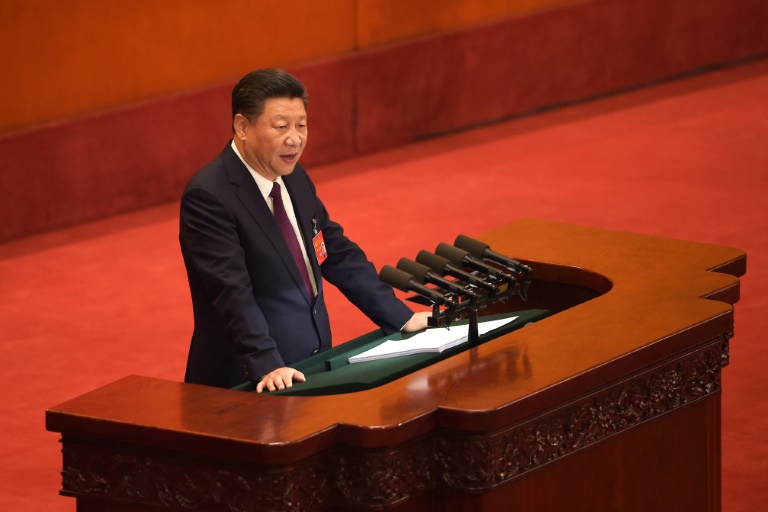
Hong Kong shed more than one percent and Shanghai was also in the red, with Chinese President Xi Jinping at the weekend reasserting his commitment to the zero-Covid strategy of lockdowns that has hammered the economy this year.

There were also losses in Tokyo, Sydney, Seoul, Singapore, Taipei, Jakarta and Wellington.

Traders are also keeping tabs on looming earnings reports, with expectations that higher rates and prices will have eaten into companies’ bottom lines.

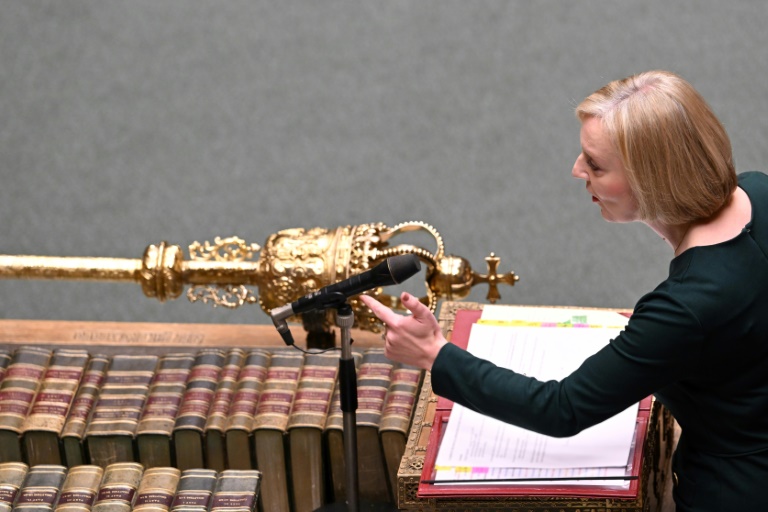
They will also be keeping a close eye on the United Kingdom as Truss battles for her political future just weeks after taking the keys to Number 10.

She sacked her finance minister Kwasi Kwarteng on Friday after coming under intense pressure following his controversial tax-cutting mini-budget.

His replacement, Jeremy Hunt, looked set to roll back several of the measures in a bid to reassure markets.

“It does indicate that they are moving back to some degree of fiscal probity and employing a slightly more prudent fiscal outlook,” said Peter Kinsella, of Union Bancaire Privee UBP SA. 

The pound was holding above $1.12 in Asian trade, having sunk Friday owing to the uncertainty in Westminster, while a news conference by Truss did very little to reassure nervous investors.

Eyes are also on Tokyo as the yen sits around a three-decade low against the dollar owing to US rate hike expectations and the Bank of Japan’s refusal to tighten monetary policy, citing a need to support the economy.

The yen is approaching 150 to the dollar for the first time since 1990, but while officials have said they are keeping tabs on developments, they have yet to intervene in markets for a second time, having done so last month.

– Key figures around 0230 GMT –

Tokyo – Nikkei 225: DOWN 1.4 percent at 26,703.00 (break)

Hong Kong – Hang Seng Index: DOWN 1.3 percent at 16,365.82

Shanghai – Composite: DOWN 0.2 percent at 3,065.88

Pound/dollar: UP at $1.1236 from $1.1180 Friday

Dollar/yen: DOWN at 148.59 yen from 148.72 yen

Euro/dollar: UP at $0.9747 from $0.9724

Euro/pound: DOWN at 86.76 pence from 86.93 pence

West Texas Intermediate: UP 0.8 percent at $86.31 per barrel

Brent North Sea crude: UP 0.9 percent at $92.41 per barrel

New York – Dow: DOWN 1.3 percent at 29,634.83 (close)

London – FTSE 100: UP 0.1 percent at 6,858.79 (close) 
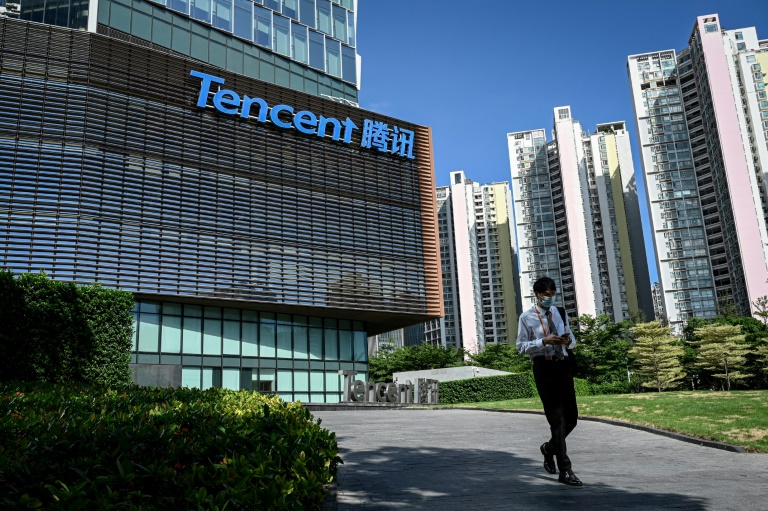
Hounded at home, China's video game firms welcomed in Europe

China is investing billions in Europe’s video game industry, but analysts have warned that there could be trouble along the road unless regulators start to take stricter notice.

Europe is embroiled in long-running disputes with Beijing over trade, environment, education, raw materials, intellectual property — but so far video games are not part of the fight.

As Beijing tightens up on the video game industry at home, China’s tech giants are looking to make investments overseas — prompting concerns ranging from data security to limits on creative freedom.

“Europe has this idea that we will be able to separate strategic industries from non-strategic industries,” Antonia Hmaidi from the Mercator Institute think-tank told AFP.

“Video games for most policymakers will always go into the non-strategic pile.” 

This has helped Tencent, the world’s largest games company by revenue, to buy into studios across Europe –- including the then world-record $8.6 billion deal for Finnish firm Supercell in 2016.

Chinese rival NetEase made its biggest foray into foreign gaming studios in August, snaffling French firm Quantic Dream — just days before Tencent upped its stake in Ubisoft, another French studio.

EU regulators only look at major investments with a pan-European dimension, and national regulators have shown no interest.

When Tencent bought British studio Sumo for $1.3 billion last year, the deal was scrutinised not by UK regulators but by their US counterparts. 

– ‘Cold’ China –

Chinese firms are increasingly seeking profits abroad, analysts say, because of stifling restrictions in their home market.

Tencent recorded its first-ever quarterly loss in August on the back of a wide-ranging crackdown on the tech sector.

The Chinese government has identified video games as a potential threat not only to state power but also to the wellbeing of citizens. 

Beijing introduced a nine-month ban on approval of new video games last year and now approves only a fraction of the number it once allowed on to the market. 

Game makers have had to scrub “politically harmful” content, and the state has tightly restricted the time youngsters can spend gaming. 

“Chinese companies in general are looking further afield given the climate of the domestic market,” said Louise Shorthouse of Ampere analysis. 

Several reports have suggested that Tencent is preparing to ramp up its overseas investments and could even begin to take control of smaller firms. 

Tencent is essentially “sitting on a load of cash”, said Kevin Shimota, a former marketing manager at the company and author of “The First Superapp”. 

“The Chinese market is cold right now so in terms of Tencent’s global strategy you’d expect it to be more aggressive,” he said.

But he stressed that the aim was unlikely to be direct takeovers or deeper control of foreign companies, rather Tencent might look at ways of developing games for audiences outside of China. 

– ‘More erratic’ –

Tencent is ubiquitous in China, an empire of games, social media and payment services largely funnelled through its WeChat app, which boasts more than one billion monthly users. 

Its leader, Pony Ma, has worked hard to keep himself out of the limelight –- and out of Beijing’s firing line. 

And the company is determined to present a humble face to the world. 

“Whether we are a minority investor or a majority shareholder, we do not exercise creative, editorial, management, or day-to-day control,” Tencent told AFP in a statement. 

Tencent’s business model has generally been to buy into foreign firms and publish their games for the Chinese market. 

As those foreign companies were unlikely to find any other way into China, they welcomed the investment and new revenue streams. 

NetEase is following the same model.

A blog from Quantic Dream announcing the takeover stressed that the French firm would maintain control over the “editorial line, the artistic direction of our projects and the management of the studio”. 

NetEase did not respond to AFP’s request for comment. 

Analyst Hmaidi said the hands-off approach was fine when business was booming — but the effects of an economic downturn or political upheaval were impossible to predict.

European regulators, she suggested, could benefit from a broader approach that questioned whether a single country — China or any other nation — should be allowed to dominate an entire industry.

“Having a sector dependent on China just in general is bad at the moment,” she said.

Pakistan vows IMF reforms as flood damage estimated at over $16 bn

Pakistan’s finance minister has promised international lenders to stay true to economic reforms despite a new estimate that his country quickly needs more than $16 billion to recover from devastating floods.

Finance Minister Ishaq Dar also said that a flood donors’ conference promised by French President Emmanuel Macron would take place next month which he hoped would help Pakistan both with immediate and longer-term needs.

The International Monetary Fund in late August released $1.1 billion to Pakistan as part of a $6 billion package sealed in 2019 as the new government of Prime Minister Shehbaz Sharif moved forward on reforms.

“It will be our endeavor, even at the cost of extra effort, that we should complete the program successfully,” Dar told AFP in an interview Friday evening in Washington.

Doing so “sends a positive signal to the international community and the markets,” he said, voicing appreciation to the “very responsive” promises of other nations for Pakistan.

Dar — who took the job for the fourth time last month after his predecessor quit — acknowledged political risks.

Former prime minister Imran Khan, the cricket star turned politician ousted in a no-confidence vote in April, has been plotting a return amid protests seeking an early election.

Khan late in his term slashed petrol prices, defying his own government’s package with the IMF, which says that subsidies should only benefit the neediest as Pakistan struggles to put its finances in order.

Dar said that some of his political allies had advocated letting Khan stay on longer to face the consequences of the economic crisis.

“It would have been selfish to have a political approach,” Dar said.

– Billions needed after floods-

The new government took over to face unprecedented monsoon rains that submerged one-third of Pakistan — the world’s fifth most populous country.

Such disasters are forecast to worsen in the coming years due to climate change, even though Pakistan contributes less than one percent to the carbon emissions heating up the planet.

Dar said that a new study commissioned in part by the World Bank and the Asian Development Bank found that Pakistan sustained $32.4 billion in flood losses and would require $16.2 billion for reconstruction and rehabilitation.

“With that challenge, obviously, we have to go to the drawing board” to allocate funding, he said.

He said that minor adjustments may be needed but “everything is in order” for the next review of the IMF which could release further funding.

Dar said he expected Macron’s donor conference sometime in November and that he hoped it would address needs beyond the three to four years typically eyed for immediate disaster recovery.

The World Bank earlier this month once again downgraded the growth forecast for Pakistan, expecting its economy to expand by only two percent in the year through June due to the floods as well as inflation and troubled finances.

Dar, while not criticizing the World Bank’s methodology, said he was a “little more optimistic” and envisioned growth of three percent.

“I think things are settling down already,” he said, while not ruling out impacts from global troubles.

Jihad Azour, director of the IMF’s Middle East and Central Asia department, said that a mission would visit Pakistan next month to start the next review.

He reiterated concern about Pakistan’s blanket fuel subsidies, calling the policy “very regressive.”

“We are encouraging Pakistan as well as also other countries to move from an untargeted subsidy that is a waste of resources and to dedicate those resources to those who need it,” Azour told reporters.

China's economy slows as Xi plans for historic third term

As China’s leaders gather for a crucial party congress, the country is expected on Tuesday to announce some of its weakest quarterly growth figures since 2020, its economy hobbled by Covid restrictions and a real estate crisis.

The figures for the third quarter, along with a salvo of other economic indicators, will be unveiled in the middle of the week-long political meeting that is expected to grant President Xi Jinping a historic third term in charge.

A group of experts interviewed by AFP said they expected an average GDP increase of 2.5 percent on last year’s July-September quarter.

In the previous quarter, growth in the world’s second largest economy collapsed to only 0.4 percent compared to the previous year, the worst performance since 2020. The country posted 4.8 percent growth in the first quarter of 2022.

Many economists think China will struggle to attain its growth target this year of around 5.5 percent, and the International Monetary Fund (IMF) has lowered its GDP growth forecast to 3.2 percent for 2022 and 4.4 percent for 2023.  

AFP’s panel of experts predicted average growth of three percent in 2022, a long way off the 8.1 percent seen in 2021. 

That would be China’s weakest growth rate in four decades, excluding 2020 when the global economy was hammered by the emergence of the coronavirus.

“The big policy challenge is accepting that the economy has reached a state of maturity that means growth numbers are likely permanently reset to the zero to 4.5 percent range for the coming decade,” Clifford Bennett, chief economist at ACY Securities, told AFP. 

– Zero-Covid –

Another factor that has had an enormous impact is Beijing’s zero-Covid policy. 

China is the last of the world’s major economies to continue to follow the strategy, which imposes tight travel restrictions, mass PCR testing and obligatory quarantines.  

It also involves sudden and strict lockdowns — including of businesses and factories — which has disrupted production and weighed heavily on household consumption.

But despite the impact on the economy, “there is no clear sign of a significant easing of the zero-Covid strategy”, Nomura’s Ting Lu said, noting that so far the opposite had happened. 

In the week leading up to the Chinese Communist Party (CCP) Congress, state media have published multiple editorials warning the policy should not be relaxed, and officials have pounced on outbreaks across the country over the last week with increased curbs.

Some lockdown restrictions have returned to major financial hub Shanghai, prompting some to fear a repeat of earlier this year when the city was shut down for two months. 

Meanwhile, China is also battling an unprecedented crisis in its real estate sector — historically a driver of growth in the economy and representative of more than a quarter of the country’s GDP when combined with construction. 

Following years of explosive growth fuelled by easy access to loans, Chinese authorities launched a crackdown on excessive debt in 2020.

Property sales are now falling across the country, leaving many developers struggling and some owners refusing to pay their mortgages for unfinished homes.

– ‘Modern economy’ –

Despite the problems, “many economic indicators have actually recovered reasonably well from the mass lockdowns of March and April”, according to analyst Thomas Gatley from Gavekal Dragonomics.

Car sales held strong in September, driven by strong demand for electric clean vehicles.

August exports increased by 7.1 percent compared to the previous year, and Beijing has invested in infrastructure to support activity.

However, “those pillars of growth are becoming more fragile”, Gatley said. 

And “the Chinese economy faces more fundamental problems” of transformation, sinologist Jean-Louis Rocca told AFP. 

After decades of growth fueled by investment and exports, he said China “no longer wants to be ‘the world’s factory'” — instead it aspires to be a “modern economy”, geared towards new technology and consumption — and the transition is still ongoing. 

Another worry for the CCP, which draws a large part of its political legitimacy from its economic success, is that this type of modern economy does not create very many jobs, Rocca said — which has serious implications for China’s growing middle class. 

Pound slides amid UK political drama

The pound fell on Friday after under-fire British Prime Minister Liz Truss sacked her finance minister and made a dramatic policy U-turn, while an equity rally ran out of steam.

The yen struck a new three-decade dollar low as a rise in US inflation expectations cemented expectations of more hefty Federal Reserve rate hikes.

Truss sacked finance minister Kwasi Kwarteng as pressure mounted on her government following last month’s big-spending, tax-slashing mini-budget, which spooked markets.

The September 23 budget sent the pound tumbling to a record dollar low, near parity with the greenback, and bond yields surged before stabilizing thanks to interventions by the Bank of England. 

Sterling sank more than one percent to under $1.12 after Truss dismissed Kwarteng. 

It fell even lower after Truss appointed Jeremy Hunt as her new finance minister and announced a dramatic policy U-turn, before clawing back some of its losses.

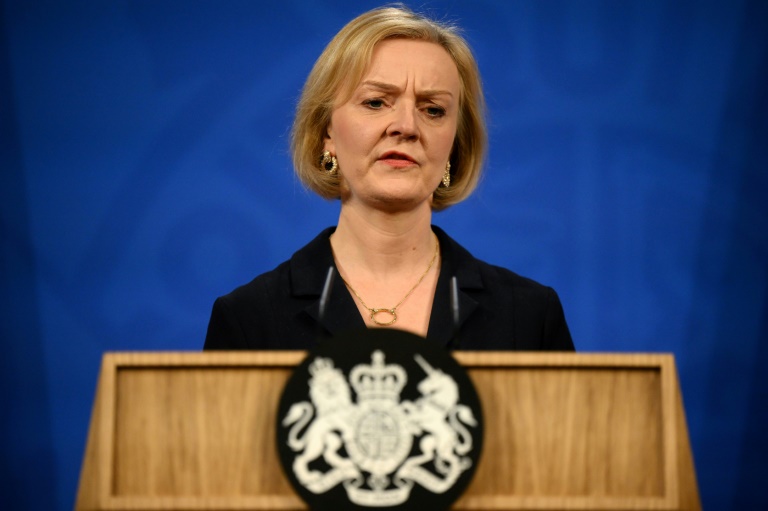
In her first Downing Street press conference, Truss stated the “need to act now to reassure the markets,” abandoned her plans to eliminate an increase in corporation tax and said spending would not increase as rapidly as planned.

“The soap opera that is UK politics continues to dominate FX (forex) markets Friday,” said Stephen Innes, managing partner at SPI Asset Management.

UK 10-year government bond yields rose after the Bank of England publicly stated it would end its costly market interventions on Friday.

“Unfortunately for Truss, her swift ability to spook markets with a swathe of unfunded spending plans is now being followed by yet another rise in yields, as markets wonder whether we could soon see another push to replace her,” said Joshua Mahony, senior market analyst at online trading platform IG.

London’s FTSE 100 ended the day with an increase of 0.1 percent, having given up most of its earlier gains because Truss’s U-turn left her position fragile.

Berenberg bank Senior Economist Kallum Pickering said “the policy U-turn is a major humiliation for Truss” and weakens her politically.

“It is not easy to see how Truss — whose personal mandate is now in tatters — can continue as PM for long,” he added.

While European markets ended higher, Wall Street failed to hold onto gains made on Thursday in a surprising rally despite data showing strong inflationary pressures in the United States.

After rising early on, US stocks resumed their downward spiral, with the S&P 500 losing 2.4 percent.

US retail sales in September were virtually unchanged from August at $684 billion, Commerce Department data showed in a report that revealed the drag on consumers from inflation.

Meanwhile, consumer sentiment data from the University of Michigan came in slightly better than expected, but the report cautioned of a “bumpy road ahead for consumers” due to uncertainty over inflation and the state of financial markets. 

Third quarter earnings season got into full swing, with a number of large banks, including JPMorgan Chase and Citigroup, reporting lower earnings and setting aside more funds in preparation for a possible recession, although their performances topped analyst estimates.

– Key figures around 2100 GMT –

New York – Dow: DOWN 1.3 percent at 29,634.83 (close)

New York – S&P 500: DOWN 2.4 percent at 3,583.07 (close)

New York – Nasdaq: DOWN 3.1 percent at 10,321.39 (close)

London – FTSE 100: UP 0.1 percent at 6,858.79 (close) 

Frankfurt – DAX: UP 0.7 percent at 12,437.81 (close)

Paris – CAC 40: UP 0.9 percent at 5,931.92 (close)

EURO STOXX 50: UP 0.6 percent at 3,381.73 (close)

Tokyo – Nikkei 225: UP 3.3 percent at 27,090.76 (close)

Hong Kong – Hang Seng Index: UP 1.2 percent at 16,587.69 (close)

Shanghai – Composite: UP 1.8 percent at 3,071.99 (close)

Pound/dollar: DOWN at $1.1180 from $1.1326 Thursday

Dollar/yen: UP at 148.72 yen from 147.12 yen

Euro/dollar: DOWN at $0.9724 from $0.9776

Euro/pound: DOWN at 86.93 pence from 88.29 pence

Brent North Sea crude: DOWN 3.1 percent at $91.63 per barrel

West Texas Intermediate: DOWN 3.9 percent at $85.61 per barrel

burs-jmb/caw

Pound slides amid UK political drama

The pound fell on Friday after under-fire British Prime Minister Liz Truss sacked her finance minister and made a dramatic policy U-turn, while an equity rally ran out of steam.

The yen struck a new three-decade dollar low as a rise in US inflation expectations cemented expectations of more hefty Federal Reserve rate hikes.

Truss sacked finance minister Kwasi Kwarteng as pressure mounted on her government following last month’s big-spending, tax-slashing mini-budget, which spooked markets.

The September 23 budget sent the pound tumbling to a record dollar low, near parity with the greenback, and bond yields surged before stabilising thanks to interventions by the Bank of England. 

Sterling sank more than one percent to under $1.12 after Truss dismissed Kwarteng. 

It fell even lower after Truss appointed Jeremy Hunt as her new finance minister and announced a dramatic policy U-turn, before clawing back some of its losses.

In her first Downing Street press conference, Truss stated the “need to act now to reassure the markets”, abandoned her plans to eliminate an increase in corporation tax and said spending would not increase as rapidly as planned.

“The soap opera that is UK politics continues to dominate FX (forex) markets Friday,” said Stephen Innes, managing partner at SPI Asset Management.

UK 10-year government bond yields rose after the Bank of England publicly stated it would end its costly market interventions on Friday.

“Unfortunately for Truss, her swift ability to spook markets with a swathe of unfunded spending plans is now being followed by yet another rise in yields, as markets wonder whether we could soon see another push to replace her,” said Joshua Mahony, senior market analyst at online trading platform IG.

London’s FTSE 100 ended the day with a gain of 0.1 percent, having given up most of its earlier gains because Truss’s U-turn left her position fragile.

Berenberg bank Senior Economist Kallum Pickering said “the policy U-turn is a major humiliation for Truss” and weakens her politically.

“It is not easy to see how Truss –- whose personal mandate is now in tatters — can continue as PM for long,” he added.

While European markets ended higher, Wall Street failed to hold onto gains made on Thursday in a surprising rally despite data showing strong inflationary pressures in the United States.

A survey out on Friday showed inflation expectations were on the rise, a signal likely to worry policymakers at the US Federal Reserve, who are trying to not only tamp down inflation but ensure that expectations about price rises do not become entrenched.

“It is one report, but it coincides with a hot inflation report and a market that is fearful that it keeps mistiming when the Fed will pivot,” said Edward Moya at OANDA.

Expectations that the Fed will be able to quickly pivot — or begin reducing interest rates — helped spur a brief rally in stocks last week. 

Third quarter earnings season got into full swing, with a number of large banks, including JPMorgan Chase and Citigroup, reporting lower earnings and setting aside more funds in preparation for a possible recession, although their performances topped analyst estimates.

“None of those banks missed consensus earnings estimates, like investment bank Morgan Stanley did, yet their reports were laced with increased provisions for credit losses,” noted market analyst Patrick O’Hare at Briefing.com.

– Key figures around 1530 GMT –

New York – Dow: DOWN 0.4 percent at 29,915.75 points

EURO STOXX 50: UP 0.6 percent at 3,381.73

London – FTSE 100: UP 0.1 percent at 6,858.79 (close) 
Frankfurt – DAX: UP 0.7 percent at 12,437.81 (close)

Paris – CAC 40: UP 0.9 percent at 5,931.92 (close)

Tokyo – Nikkei 225: UP 3.3 percent at 27,090.76 (close)

Hong Kong – Hang Seng Index: UP 1.2 percent at 16,587.69 (close)

Shanghai – Composite: UP 1.8 percent at 3,071.99 (close)

Pound/dollar: DOWN at $1.1214 from $1.1326 Thursday

Dollar/yen: UP at 148.46 yen from 147.12 yen

Euro/dollar: DOWN at $0.9748 from $0.9776

Euro/pound: DOWN at 86.89 pence from 88.29 pence

Brent North Sea crude: DOWN 2.3 percent at $92.43 per barrel

West Texas Intermediate: DOWN 2.8 percent at $86.62 per barrel

burs-rl/gil

Pound slides amid UK political drama, stocks soar

The pound fell Friday as under-fire British Prime Minister Liz Truss sacked her finance minister and made a dramatic policy U-turn, while equities rallied for a second day despite surging US inflation.

The yen held around three-decade dollar lows as rampant US consumer prices cemented expectations of more hefty Federal Reserve rate hikes.

Truss sacked Kwasi Kwarteng as finance minister as pressure mounted on her government following last month’s big spending, tax-slashing budget, which spooked markets.

The September 23 budget sent the pound tumbling to a record dollar low near parity with the greenback and bond yields surged, before stabilising thanks to interventions by the Bank of England. 

Sterling sank 1.2 percent to $1.1188 after Prime Minister Liz Truss dismissed Kwarteng. It reduced those losses as Truss appointed Jeremy Hunt as her new finance minister.

“The soap opera that is UK politics continues to dominate FX markets Friday,” said Stephen Innes, managing partner at SPI Asset Management.

Truss later announced a dramatic policy U-turn, stating the “need to act now to reassure the markets”, abandoning plans to eliminate an increase in corporation tax.

UK 10-year government bond yields fell further following the announcement, despite the Bank of England having insisted the costly market interventions would end Friday.

London’s FTSE 100 was 1.6 percent higher in afternoon trading. 

– ‘Astonishing rebound’ –

Stock markets continued to push higher Friday after rising on Thursday despite data showing strong inflationary pressures in the United States.

“Markets staged an astonishing rebound despite a hotter-than-expected inflation report in the United States,” said Interactive Investor analyst Richard Hunter on the broad-based gains.

“The reasons… were not immediately clear, although traders pointed to a technical rebound as investors unwound defensive positions which had been in place ahead of the inflation report.”

US CPI inflation data showed prices rose last month at a faster clip than expected, despite this year’s series of Fed interest rate hikes, which have fanned fears of a global recession.

The month-on-month reading came in double estimates, while core inflation — which strips out volatile energy and food prices — was also elevated.

The figures sparked a sharp plunge on Wall Street but the selling quickly reversed, and all three main indices finished the day with gains of more than two percent.

Wall Street opened higher on Friday as a number of top banks kicked off earnings season, JPMorgan Chase, Citigroup, Wells Fargo and U.S. Bancorp all beating analysts’ expectations. 

“None of those banks missed consensus earnings estimates, like investment bank Morgan Stanley did, yet their reports were laced with increased provisions for credit losses,” noted market analyst Patrick O’Hare at Briefing.com.

US retail sales came in flat in September, below analyst expectations of a 0.2 percent rise.

“The key takeaway from the report is that it is not adjusted for inflation, so the lackluster numbers for September suggest consumers were pulling back on spending activity in the face of high inflation,” O’Hare said.

– Key figures around 1330 GMT –

London – FTSE 100: UP 1.6 percent at 6,956.37 points

Frankfurt – DAX: UP 2.1 percent at 12,616.25

Paris – CAC 40: UP 2.4 percent at 6,021.88

EURO STOXX 50: UP 2.3 percent at 3,438.20

New York – Dow: UP 0.6 percent at 30,207.67

Tokyo – Nikkei 225: UP 3.3 percent at 27,090.76 (close)

Hong Kong – Hang Seng Index: UP 1.2 percent at 16,587.69 (close)

Shanghai – Composite: UP 1.8 percent at 3,071.99 (close)

Pound/dollar: DOWN at $1.1232 from $1.1326 Thursday

Dollar/yen: UP at 147.84 yen from 147.12 yen

Euro/dollar: DOWN at $0.9751 from $0.9776

Euro/pound: DOWN at 86.81 pence from 88.29 pence

Brent North Sea crude: DOWN 1.6 percent at $93.02 per barrel

West Texas Intermediate: DOWN 1.9 percent at $87.46 per barrel

burs-rl/jj

Equities soar despite hot US inflation, pound dips on uncertainty

Asian and European equities rallied Friday despite news of surging US inflation, while the pound dipped on uncertainty over Britain’s controversial budget.

The yen held around three-decade dollar lows as rampant US consumer prices cemented expectations of more hefty Federal Reserve rate hikes.

London stocks rose as British finance minister Kwasi Kwarteng flew back one day early from a key IMF gathering in Washington, stoking speculation of another U-turn over his debt-fuelled measures that sparked recent markets turmoil.

He was also reported to have lost his job.

The pound dipped before the Bank of England ends later Friday its emergency bond-buying policy that sought to stem the turbulence.

– ‘Astonishing rebound’ –

“Markets staged an astonishing rebound despite a hotter-than-expected inflation report in the United States,” said Interactive Investor analyst Richard Hunter on the broad-based gains.

“The reasons… were not immediately clear, although traders pointed to a technical rebound as investors unwound defensive positions which had been in place ahead of the inflation report.”

US CPI inflation data showed prices rose last month at a faster clip than expected, despite this year’s series of Fed interest rate hikes which have fanned fears of a global recession.

The month-on-month reading came in double estimates, while core inflation — which strips out volatile energy and food prices — was also elevated.

The figures sparked a sharp plunge on Wall Street but the selling quickly reversed, and all three main indexes finished the day with gains of more than two percent.

“It could be argued that yesterday’s hotter-than-expected CPI reading may well have been partially priced in as far as stock markets were concerned,” noted CMC Markets analyst Michael Hewson.

Investors are awaiting quarterly results Friday from US banks Citigroup, JPMorgan Chase and Wells Fargo.

The updates “could offer some important insights into how US consumers are spending their money”, added Hewson.

Markets meanwhile remain on tenterhooks that the UK government was set to perform another U-turn on last month’s tax-slashing budget.

Speculation had been swirling that British Prime Minister Liz Truss could sack Kwarteng over the badly-received budget, with the BBC reporting that he had in fact lost his job.

The pound had rallied sharply Thursday on reports the new government could row back on more tax-cut pledges.

Truss has insisted that there would be no more U-turns, after she was previously forced to scrap a plan to cut tax on the richest earners. 

Meanwhile, the yen’s weakness comes from the Bank of Japan’s refusal to lift interest rates — citing a need to support the economy — just as the Fed presses ahead with hefty hikes in borrowing costs.

– Key figures around 1115 GMT –

London – FTSE 100: UP 1.3 percent at 6,938.57 points

Frankfurt – DAX: UP 1.3 percent at 12,520.35

Paris – CAC 40: UP 1.7 percent at 5,977.18

EURO STOXX 50: UP 1.6 percent at 3,466.70

Tokyo – Nikkei 225: UP 3.3 percent at 27,090.76 (close)

Hong Kong – Hang Seng Index: UP 1.2 percent at 16,587.69 (close)

Shanghai – Composite: UP 1.8 percent at 3,071.99 (close)

New York – Dow: UP 2.8 percent at 30,038.72 (close)

Pound/dollar: DOWN at $1.1249 from $1.1326 Thursday

Dollar/yen: UP at 147.67 yen from 147.12 yen

Euro/dollar: DOWN at $0.9739 from $0.9776

Euro/pound: DOWN at 86.57 pence from 88.29 pence

Brent North Sea crude: DOWN 1.1 percent at $93.49 per barrel

West Texas Intermediate: DOWN 1.2 percent at $88.06 per barrel

Markets surge after sharp Wall St swing, pound holds gains

Equities rallied Friday to extend a surge on Wall Street, where all three indexes saw extreme swings in response to a forecast-beating inflation report that cemented expectations for more big Federal Reserve rate hikes.

Sterling also held most of its big gains sparked by speculation the UK government was set to perform another U-turn on its debt-fuelled mini-budget, though the yen remained stuck around three-decade lows against the dollar.

The hotly awaited US inflation report showed prices rose last month at a faster clip than expected, despite a series of interest rate increases this year that have fanned fears of a global recession.

The month-on-month reading came in double estimates, while core inflation — which strips out volatile energy and food prices — was also elevated.

The figures sparked a sharp plunge on Wall Street but the selling quickly reversed, and all three main indexes finished the day with gains of more than two percent, with analysts suggesting several reasons for the extreme move.

Some said the initial selling may have been a knee-jerk reaction before traders accepted the data was not as bad as other recent reports, while technical factors were also flagged.

Others speculated that equities had finally reached their bottom after a year of selling that has seen many indexes plunge into correction territory, having lost more than 20 percent from their recent peaks.

“The market reversal was a head-scratcher”, said OANDA’s Edward Moya. “Some investors are convinced core inflation will soon start trending lower. Fed tightening will remain aggressive at 75 basis points in November and possibly December,” he added.

“Monetary policy is quickly getting restrictive and that will undoubtedly send inflation lower. It looks like rates will peak slightly above five percent and for some that is good enough of a reason to get back into stocks.”

He warned, however, that “given the path for rates is higher, this market reversal won’t last long”.

Tokyo piled on more than three percent, while Seoul and Taipei added more than two percent. There were also big gains in Mumbai, Sydney, Singapore, Wellington and Manila. Hong Kong closed in positive territory but late selling saw it end well off its intraday highs.

London, Paris and Frankfurt jumped in the morning, extending Thursday’s gains in early business.

There was little reaction to news that Chinese consumer inflation had hit a two-year high partly because of surging pork prices, though Shanghai was well up ahead of the start of a key Communist Party gathering at which Xi Jinping is expected to be named president for a third term.

– Yen weakness –

The pound held up after breaking higher Thursday on reports the new government could row back on more tax-cut pledges in its mini-budget, which sparked market turmoil when released two weeks ago.

Sterling sat around $1.13 — compared with Thursday’s sub-$1.10 levels — with help also coming from Bank of England cash injections to prop up financial markets.

The pound’s stronger position came despite Prime Minister Liz Truss’s insistence that there would be no more U-turns, after she was previously forced to scrap a plan to cut the higher rate of income tax. 

Finance Minister Kwasi Kwarteng has returned early from a meeting in Washington to address the crisis.

While the BoE has said it intends to end its market support Friday, analysts say it will likely keep an eye on events.

“There is… an expectation that whatever the Bank of England and Governor (Andrew) Bailey says about ending the support for the gilt market today, if we get further turbulence next week, they will have little choice but to step in and provide liquidity to the market,” said CMC Markets’ Michael Hewson.

The US inflation data pushed the already strong dollar further up against other currencies and it hit a 32-year high of 147.67 yen. Traders are now looking to see if Tokyo intervenes again to protect the unit.

Japanese Finance Minister Shunichi Suzuki said authorities were “watching the foreign exchange markets with a high sense of urgency, and we’ll take appropriate responses against excessive moves”.

Officials refused to say if they intervened Thursday following a brief drop in response to the greenback’s spike.

The yen’s weakness comes from the Bank of Japan’s refusal to lift interest rates — citing a need to support the economy — as the Fed presses ahead with its big rate hikes.

– Key figures around 0810 GMT –

Tokyo – Nikkei 225: UP 3.3 percent at 27,090.76 (close)

Hong Kong – Hang Seng Index: UP 1.2 percent at 16,587.69 (close)

Shanghai – Composite: UP 1.8 percent at 3,071.99 (close)

London – FTSE 100: UP 0.9 percent at 6,911.54

Pound/dollar: DOWN at $1.1302 from $1.1333 Thursday

Dollar/yen: UP at 147.47 yen from 147.22 yen

Euro/dollar: DOWN at $0.9769 from $0.9780

Euro/pound: UP at 86.37 pence from 86.28 pence

West Texas Intermediate: UP 0.4 percent at $89.48 per barrel

Brent North Sea crude: UP 0.4 percent at $94.92 per barrel

New York – Dow: UP 2.8 percent at 30,038.72 (close)

Poverty, climate, space: China's progress in 10 years under Xi

Xi Jinping’s China has dragged millions out of extreme poverty, sent spacecraft to the Moon and committed itself to cutting greenhouse gas emissions.

On the brink of securing a third term, the president can boast of several achievements in his first 10 years in power, though some do come with caveats.

Here AFP looks at some of the key advances made under Xi:

– End of extreme poverty –

China’s Communist Party prides itself on being “at the service of the people”, so Beijing’s announcement in 2020 that it had brought an end to extreme poverty was hailed as a critical milestone.

People’s living conditions, their livestock and access to education were among the factors assessed by officials on door-to-door visits.

The government said it had invested 1.6 trillion yuan ($230 billion) between 2013 and 2021 to improve living standards — for example by building roads, houses and infrastructure.

Millions of rural households have been relocated to villages with better economic opportunities.

A year after Xi became leader, 82 million Chinese people lived in extreme poverty, according to World Bank data. By 2019, the figure was six million.

However, Xi warned in 2020: “The task of consolidating and expanding the achievements of poverty alleviation remains difficult.” 

– Wealth surge –

The average disposable income per urban household surged 66 percent from 2013 to 2020, according to official statistics.

In rural households it rose 82 percent in that same period.

Cars per urban dwelling doubled from 0.22 in 2012 to 0.45 in 2020, while the number of mobile phones grew from 2.17 to 2.49 per urban household in the same period. 

However, housing costs have quadrupled, putting a strain on purchasing power.

Migrant workers — people who have moved from the countryside to cities for work — have significantly increased their earnings, according to Jean-Louis Rocca, a specialist in Chinese social movements at Sciences Po in Paris.

“But with rent increases, education costs and the need to dress fashionably to fit in, their situation — which has improved in medium-sized cities — has often stagnated or even declined in large metropolises,” Rocca said. 

– Space programme –

A source of national pride, China’s space programme has narrowed much of the gap with the US, Russia and Europe. 

Rovers reached the Moon in 2013 and 2019 — the latter the first ever to make a soft landing on its far side.

Another subsequent unmanned spacecraft returned to Earth in 2020 with the first lunar samples collected in four decades.

The same year, satellite navigation system Beidou was finalised, a rival to the American GPS.

After landing its first robot on Mars last year, China is expected to complete its space station in 2022.

– Corruption clampdown –

From civil servants to government ministers, army generals to bank managers, 11.3 million people were given warnings for discipline cases between 2012 and 2022, according to the Central Commission for Discipline Inspection, and 4.7 million were investigated for more serious misconduct.

At least 1.5 million were punished, with the most extreme prosecutions carrying the death penalty. 

A culture of “frugality” has been imposed by Xi — meaning, for example, fewer lavish banquets for party officials.

While the campaign is popular with the public, critics say it is also a way for Xi to eliminate political rivals.

– The environment –

Beijing signed the Paris climate agreement in 2016, and in 2020 Xi pledged his country would reach its peak carbon emissions by 2030, and aim for carbon neutrality by 2060.

Environment groups have called on China — the world’s biggest emitter of greenhouse gases — to act faster, saying that otherwise meeting the Paris agreement’s goal of keeping global warming to 1.5 degrees Celsius is not possible.

After turning a blind eye to China’s choking cities for decades, the environment ministry started to publish more comprehensive data on air pollution in 2012. 

The concentration of very fine and dangerous particles in the air fell by 34.8 percent between 2015 and 2021, according to the ministry.

Waste separation schemes are progressing. In megacity Shanghai, for example, they have been mandatory since 2019.

– Transport –

The length of the high-speed rail network has quadrupled, from about 9,300 kilometres in 2012 to 40,000 kilometres in 2021.

China now has 250 civilian airports, with 82 built in the last decade, and air passenger traffic doubled between 2012 and 2019.

The infrastructure projects have boosted travel and tourism, stimulated the economy, and opened the less-developed west of the country.

Close Bitnami banner
Bitnami