Chinese Business

Taiwan's Foxconn unveils more electric vehicle prototypes

Taiwanese tech giant Foxconn unveiled two more electric vehicle prototypes on Tuesday, including a pickup truck, as it said commercial production on two other designs would start later this year.

The world’s largest contract electronics maker, Foxconn already plays a lynchpin role in assembling gadgets for a host of top international brands including Apple’s iPhones.

The company has moved to diversify beyond electronics assembly and embraced the competitive but rapidly expanding EV business, unveiling three concept cars last year.

Foxconn chairman Young Liu showed off two more prototypes at Tuesday’s media event in Taipei — a sporty hatchback dubbed the Model B and a pickup, the Model V.

He also announced that commercial production would start by the end of the year on the group’s previously unveiled electric bus and a family sports utility vehicle.

“Foxconn has cut in half the design time and reduced development cost by a third in taking an EV from concept to production-ready,” Liu said.

Foxconn plans to do with electric vehicles what it did for gadgets — become a go-to contract builder.

Its strategy is to construct vehicles for clients rather than sell them under its own name, using the prototypes as a guide.

Liu said one of its clients, Taiwanese automaker Luxgen, had received 15,000 customer pre-orders in under two days for its N7 car, which is based on the Foxconn Model C unveiled last year.

Foxconn has also started building electric vehicles for Lordstown Motors after completing its purchase of a former General Motors plant in Lordstown, Ohio in May.

This month, it signed a memorandum of understanding with US-based INDIEV Inc to build the first INDI One prototype EV at its Ohio facility.

Its partners also include Fisker, one of a host of US-based electronic car startups hoping to someday challenge Tesla’s supremacy.

Fisker has recently reaffirmed plans to have Foxconn build its upcoming Fisker Pear model at the Ohio factory starting in 2024.

It has been widely reported for years that Apple has a secret electronic car project, something Foxconn could be in an ideal place to partner on given its existing relationship with the California-based giant.

Asian markets up, sterling holds gains after UK budget U-turn

Equities mostly rose and sterling held on to its gains Tuesday after the UK government scrapped a controversial debt-funded mini-budget that had roiled markets, while traders were also cheered by a broadly positive start to earnings season.

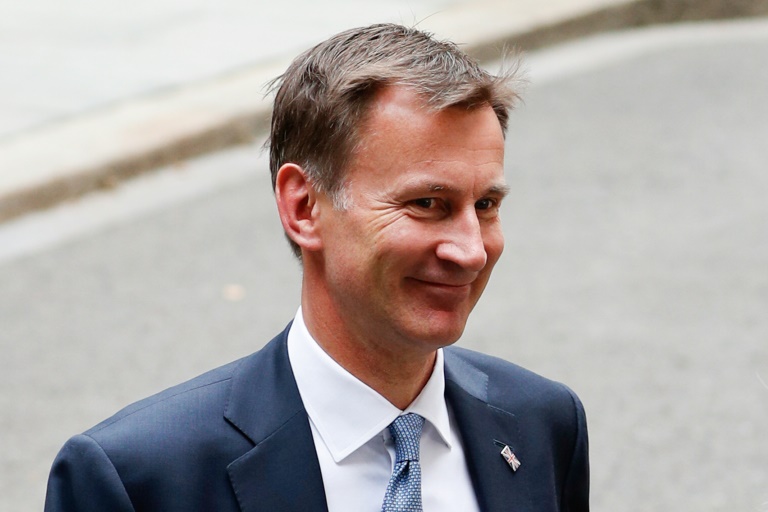
After a volatile few weeks during which the pound hit a record low, new finance minister Jeremy Hunt sought Monday to reassure investors as he unveiled a new spending package, doing away with tax cuts and warning of much lower spending.

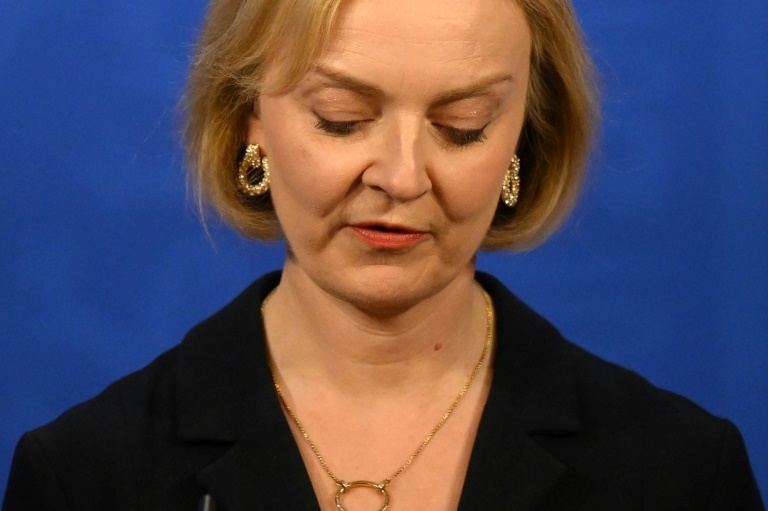
The move — which deals a blow to Prime Minister Liz Truss’s authority — sent sterling up as much as two percent at one point and the cost of government borrowing tumbled, while the FTSE 100 jumped.

The positive mood filtered through to other markets, with Wall Street enjoying a much-needed surge, including a more than three percent jump in the Nasdaq.

And most of Asia followed suit, with Tokyo, Hong Kong, Sydney, Seoul, Wellington, Taipei, Manila and Jakarta all enjoying a pick-up, though Shanghai and Singapore dipped.

The gains built on Monday’s rise, though analysts warned that the advances were unlikely to be sustained owing to broader worries about inflation and rising interest rates.

“Investors are still searching for the elusive fundamental support behind these rallies,” said SPI Asset Management’s Stephen Innes.

“Not finding that absolute macro needle in a haystack suggests these rallies still fall into the technical squeeze category rather than one where investors are boarding the rally wagon en masse.”

The latest inflation reading out of New Zealand showing it remained at a three-decade high underscored the tough job central banks have in bringing prices down, even after several rate hikes.

Commentators said traders have come to the conclusion that a recession is on the way in major economies, with the main question being how bad it will be.

“I think we can stop saying inflation is ‘hotter than expected’ and shift to ‘hotter than hoped’ — because it really does feel like we’re all just crossing our fingers and hoping prices come down,” said Matt Simpson at City Index.

“And in the few cases that they are, it is clearly not fast enough for anyone’s liking. Conversely to the adage about stock market prices, inflation seems to get the elevator up and the escalator down — but not before lingering around the top floor for an extended period of time.”

Markets in China softened after a positive start, a day after authorities delayed the release of third-quarter economic figures, which analysts said were likely to show the weakest growth since the pandemic owing to Covid-19 lockdowns.

The decision comes as the Communist Party holds a key gathering at which President Xi Jinping is expected to be handed a third term.

“Whenever the release occurs, we should all be prepared for some global financial market reaction if the world’s two largest economies are both in recession this year. Especially, as the global economic slowdown remains ongoing,” said Clifford Bennett at ACY Securities.

“While in China, we have a slightly artificially generated risk of recession due to a zero-Covid policy.

“This policy has been confirmed to remain in place indefinitely. This means China will see further economic disruption over the coming year.”

– Key figures around 0230 GMT –

Tokyo – Nikkei 225: UP 0.8 percent at 26,985.55 (break)

Hong Kong – Hang Seng Index: UP 0.5 percent at 16,689.89

Shanghai – Composite: DOWN 0.1 percent at 3,082.71

Pound/dollar: DOWN at $1.1339 from $1.1351 Monday

Dollar/yen: DOWN at 148.92 yen from 149.03 yen

Euro/dollar: DOWN at $0.9833 from $0.9840

Euro/pound: UP at 86.72 pence from 86.66 pence

West Texas Intermediate: DOWN 0.3 percent at $85.24 per barrel

Brent North Sea crude: DOWN 0.2 percent at $91.44 per barrel

New York – Dow: UP 1.9 percent at 30,185.82 (close)

London – FTSE 100: UP 0.9 percent at 6,920.24 (close) 

'A turning point': Japanese fashion after Kenzo, Miyake

At Tokyo’s prestigious Bunka Fashion College, students concentrate in silence that is broken only by the sound of scissors and sewing machines as they strive to emulate the global success of alumni like Kenzo.

The loss of greats Kenzo Takada and Issey Miyake heralds the end of a fashion era, decades after Japanese design revolutionised Parisian catwalks in the 1970s and ’80s.

And the French capital remains a goal for emerging talent like Bunka graduate Takuya Morikawa, whose streetwear-inspired tailoring made its Paris Fashion Week debut two years ago.

Morikawa, 40, hopes his shows at the industry’s top event will lead to “an amazing future, beyond my wildest dreams”.

Before launching his label TAAKK in 2013, Morikawa spent eight years at Miyake’s studio, where he worked on runway collections and the famous “Pleats Please” line, but also harvested rice and made paper to learn about traditional craft methods.

He told AFP he was saddened by Miyake’s death this summer, but implored younger designers not to feel disheartened.

“We need to do our best to not let these designers’ deaths impact the fashion world. If that happens, it means we’re doing our job badly,” he said.

One of the big names picking up the baton is Nigo, who shot to fame in the 1990s with his streetwear brand A Bathing Ape.

The designer, who also studied at Bunka and whose real name is Tomoaki Nagao, was named artistic director at Kenzo last year, after founder Takada died of Covid-19 in 2020.

Another Japanese label enjoying international success is Sacai, founded in 1999 by Chitose Abe, who was tapped as the first guest couture designer for Jean Paul Gaultier.

– ‘Goosebumps’ –

Kenzo and textile visionary Miyake became hugely influential by pursuing their passion in Paris, as did haute couture trailblazer Hanae Mori, who died in August.

Left holding the torch are Yohji Yamamoto, now 79, and 80-year-old Rei Kawakubo, founder of Comme des Garcons, who shook up the fashion establishment in the early 1980s.

New challenges, including the vast range of styles now available for every taste, have made it harder for emerging designers to grab global attention, according to Bunka president Sachiko Aihara.

“The world was shocked” by avant-garde Japanese design, she said, recalling how her students began to dress in black after Yamamoto launched his first monochromatic clothing line.

“But we no longer live in an era where a designer presents a collection and everyone wears it,” she said at the school, whose basement archive is packed with valuable garments that students and teachers can study.

This is because of the explosion in diverse types of clothing, “not a decline in talent”, stressed Aihara, adding that it was now also essential to study business to start a competitive brand.

Designer Mariko Nakayama, who worked as a stylist in Tokyo’s fashion scene for decades, also remembers “feeling goosebumps” wearing Comme des Garcons for the first time.

She agrees, however, that the industry is different now.

“Looking at Virgil Abloh for Louis Vuitton, for example, I feel that now is an era of edit,” with designers making modern tweaks to classic shapes and patterns, she said at her boutique in Tokyo’s upscale Omotesando district.

– ‘Create new values’ –

Working in Paris, London, New York or Milan is still seen as key to succeeding for Japanese designers, said Aya Takeshima, 35, who studied at Central Saint Martins in the British capital.

Takeshima’s recent show at Tokyo Fashion Week for her brand Ayame featured women wearing sheer blouses and embossed dresses, while male models donned delicate dresses. 

She told AFP she had chosen to study abroad to “learn what I needed to become an independent designer”, adding that the experience had helped her understand different perspectives.

“Honestly, I think it would be difficult” to succeed internationally while only working in Japan, she said.

“In Japan, it felt like technique was drilled into you first, while ideas and concepts… were secondary”, but it was the other way around in London, Takeshima explained.

Bunka college recognises these benefits and plans to offer a scholarship for studying abroad as part of its 100th-anniversary celebrations next year.

For 21-year-old Natalia Sato, a student at Bunka, Miyake and the old guard of Japanese designers “brought a great deal of Japanese and Eastern values” to the world, including techniques inspired by “delicate” traditional craftsmanship.

“I’m worried that the foundation they built might be destroyed by their passing”, but “at the same time, this is a turning point” that could provide new creative opportunities, she said.

“It’s a chance for me to think about how we can create new values.”

Stellantis CEO says group may end China production

Car giant Stellantis may stop building vehicles in China, chief executive Carlos Tavares said Monday, citing building tensions with the West as a deterrent to investment there.

“Our strategy anticipates the possibility of geopolitical tensions,” Tavares told reporters at the Paris Motor Show.

“There have already been several times where we’ve been thrown out of a country when Western sanctions are imposed… can we be sure that the stability of relations between China and the world is guaranteed?” he added.

Stellantis has already dropped a joint venture that built Jeep SUVs in China after failing to take a controlling stake, and is in talks with local partner Dongfeng about its Peugeot and Citroen brands.

Unlike German rival Volkswagen, which sold three million cars in China last year, the historic mass-market French vehicles have never broken through there.

“We’re still selling Jeep and Alfa Romeo vehicles built outside China very profitably” in the world’s largest car market, Tavares said, suggesting the same model could work for Peugeot and Citroen.

“If we take our strategy all the way, we don’t need any factories in China. In a world of growing tensions, we don’t need to create vulnerabilities,” he added.

Japanese and German producers have largely stayed away from the Paris Motor Show.

But Asian manufacturers like China’s Ora and BYD or Vietnam’s VinFast have turned out in force, hoping to bring lower-cost electric vehicles to European markets.

Stellantis aims for revenues of 20 billion euros ($19.6 billion) in China by 2030 with its 14 brands, but Tavares complained of unequal treatment from Beijing.

“The red carpet is rolled out for Chinese manufacturers in Europe, and that’s not how we’re welcomed in China,” he said.

“Import taxes on vehicles coming from China should be symmetrical with those applied to Western vehicles in China.”

The Stellantis boss added that “we are in a world that’s fragmenting, states are trying to create bubbles.

“If we think these bubbles will close at some point, we’ll have to sell in Europe vehicles that are made in Europe. We will adapt,” he added.

Pound rockets as UK rips up budget

The pound jumped more than two percent against the dollar Monday as Britain’s fourth finance minister in as many months sensationally ripped up a tax-cutting budget that had spooked markets.

Chancellor of the Exchequer Jeremy Hunt tore up the fiscal policy unveiled by the new government of Prime Minister Liz Truss last month.

She is battling to stay in power after dramatically sacking Hunt’s predecessor Kwasi Kwarteng on Friday.

Truss and Kwarteng had announced tax cuts, funded by debt — causing the pound to hit a record low against the dollar and UK government bond yields to soar.

-‘Government can’t control markets’ –

“No government can control markets but every government can give certainty about the sustainability of public finances,” Hunt said in a televised address that demolished the maligned budget.

The pound rallied and yields on UK government bonds, or gilts, slid on Monday’s fiscal policy U-turns.

“The markets are responding positively to the new chancellor’s plans to reverse almost all of the tax cuts announced by his predecessor,” noted Victoria Scholar, head of investment at Interactive Investor. 

“Jeremy Hunt’s focus on reassuring the markets and reinstating confidence appears to have worked so far with gilt yields trading lower and sterling pushing higher.”

The Bank of England on Friday ended its emergency purchasing on UK government bonds triggered by unravelling markets in the wake of Kwarteng’s September budget aimed at boosting Britain’s recession-threatened economy.

Monday’s reversals also lifted London’s benchmark FTSE 100 shares index, which closed up 0.9 percent.

Frankfurt gained 1.7 percent and Paris 1.8 percent.

– China disappointment –

All three main indices on Wall Street rebounded on Monday, having finished sharply lower Friday. 

The Dow was up 1.7 percent in late morning trading, with the S&P 500 climbing 2.6 percent and the tech-heavy Nasdaq soaring 3.2 percent.

“The three pillars of support for the rebound effort — lower interest rates, a weaker dollar, and strength in the mega-cap stocks — need to remain intact,” said market analyst Patrick O’Hare at Briefing.com. 

“They are currently, so the stock market has something to build on.”

The markets have been grappling with the latest strong US inflation reading, which ramped up bets that the Federal Reserve will hike borrowing costs by 75 basis points twice more before the end of the year. 

That, in turn, has stoked concerns the world’s top economy will flip into a recession.

Traders are keeping tabs on looming earnings reports, with expectations that higher rates and prices will have eaten into companies’ bottom lines.

Elsewhere, Asian equities started the week in mixed fashion.

There was a little disappointment among investors after Chinese President Xi Jinping at the weekend reasserted his commitment to the zero-Covid strategy of lockdowns that has hammered the economy this year.

Beijing has also delayed the release of anticipated economic growth figures — which analysts had expected to be some of its weakest quarterly growth figures since 2020, as the economy is hobbled by the Covid-19 restrictions and a real estate crisis.

Eyes are also on Tokyo as the yen sits around a three-decade low against the dollar owing to US rate hike expectations and the Bank of Japan’s refusal to tighten monetary policy, citing a need to support the economy.

The yen is approaching 150 to the dollar for the first time since 1990, but while officials have said they are keeping tabs on developments, they have yet to intervene in markets for a second time, having done so last month.

– Key figures around 1530 GMT –

New York – Dow: UP 1.7 percent at 30,150.53 points

EURO STOXX 50: UP 1.8 percent at 3,441.64

London – FTSE 100: UP 0.9 percent at 6,920.24 (close) 

Frankfurt – DAX: UP 1.7 percent at 12,649.03 (close)

Paris – CAC 40: UP 1.8 percent at 6,040.66 (close)

Tokyo – Nikkei 225: DOWN 1.2 percent at 26,775.79 (close)

Hong Kong – Hang Seng Index: UP 0.2 percent at 16,612.90 (close)

Shanghai – Composite: UP 0.4 percent at 3,084.94 (close)

Pound/dollar: UP at $1.1416 from $1.1172 Friday

Dollar/yen: UP at 148.75 yen from 148.67 yen

Euro/dollar: UP at $0.9813 from $0.9722

Euro/pound: DOWN at 85.97 pence from 87.02 pence

Brent North Sea crude: DOWN less than 0.1 at $91.55 per barrel

West Texas Intermediate: FLAT at $85.60 per barrel

burs-rl/pvh

Pound rallies as UK rips up budget

The pound jumped more than one percent against the dollar Monday as Britain’s fourth finance minister in as many months sensationally ripped up a tax-cutting budget that had spooked markets.

Chancellor of the Exchequer Jeremy Hunt tore up fiscal policy unveiled by the new government of Prime Minister Liz Truss last month.

She is battling to stay in power after dramatically sacking Hunt’s predecessor Kwasi Kwarteng on Friday.

Truss and Kwarteng had announced tax cuts, funded by debt — causing the pound to hit a record low against the dollar and UK government bond yields to soar.

-‘Government can’t control markets’ –

“No government can control markets but every government can give certainty about the sustainability of public finances,” Hunt said in a televised address that demolished the maligned budget.

However, the pound rallied and yields on UK government bonds, or gilts, slid on Monday’s fiscal policy U-turns.

“The markets are responding positively to the new chancellor’s plans to reverse almost all of the tax cuts announced by his predecessor,” noted Victoria Scholar, head of investment at Interactive Investor. 

“Jeremy Hunt’s focus on reassuring the markets and reinstating confidence appears to have worked so far with gilt yields trading lower and sterling pushing higher.”

The Bank of England on Friday ended its emergency purchasing on UK government bonds triggered by unravelling markets in the wake of Kwarteng’s September budget aimed at boosting Britain’s recession-threatened economy.

Monday’s reversals also lifted London’s benchmark FTSE 100 shares index.

– China disappointment –

Elsewhere, Asian equities started the week in mixed fashion.

The latest strong US inflation reading ramped up bets that the Federal Reserve will hike borrowing costs by 75 basis points twice more before the end of the year — stoking concerns the world’s top economy will flip into a recession.

All three main indices on Wall Street finished sharply lower Friday.

There was a little disappointment among investors after Chinese President Xi Jinping at the weekend reasserted his commitment to the zero-Covid strategy of lockdowns that has hammered the economy this year.

Beijing has also delayed the release of anticipated economic growth figures — which analysts had expected to be some of its weakest quarterly growth figures since 2020, as the economy is hobbled by Covid-19 restrictions and a real estate crisis.

Traders are keeping tabs on looming earnings reports, with expectations that higher rates and prices will have eaten into companies’ bottom lines.

Eyes are also on Tokyo as the yen sits around a three-decade low against the dollar owing to US rate hike expectations and the Bank of Japan’s refusal to tighten monetary policy, citing a need to support the economy.

The yen is approaching 150 to the dollar for the first time since 1990, but while officials have said they are keeping tabs on developments, they have yet to intervene in markets for a second time, having done so last month.

– Key figures around 1130 GMT –

London – FTSE 100: UP 0.8 percent at 6,913.75 points

Frankfurt – DAX: UP 1.1 percent at 12,572.07

Paris – CAC 40: UP 0.9 percent at 5,983.77

EURO STOXX 50: UP 0.9 percent at 3,411.21

Tokyo – Nikkei 225: DOWN 1.2 percent at 26,775.79 (close)

Hong Kong – Hang Seng Index: UP 0.2 percent at 16,612.90 (close)

Shanghai – Composite: UP 0.4 percent at 3,084.94 (close)

New York – Dow: DOWN 1.3 percent at 29,634.83 (close)

Pound/dollar: UP at $1.1303 from $1.1172 Friday

Dollar/yen: UP at 148.79 yen from 148.67 yen

Euro/dollar: UP at $0.9750 from $0.9722

Euro/pound: DOWN at 86.25 pence from 87.02 pence

Brent North Sea crude: UP 0.3 percent at $91.94 per barrel

West Texas Intermediate: FLAT at $85.62 per barrel

Bankrupt Sri Lanka slashes fuel prices

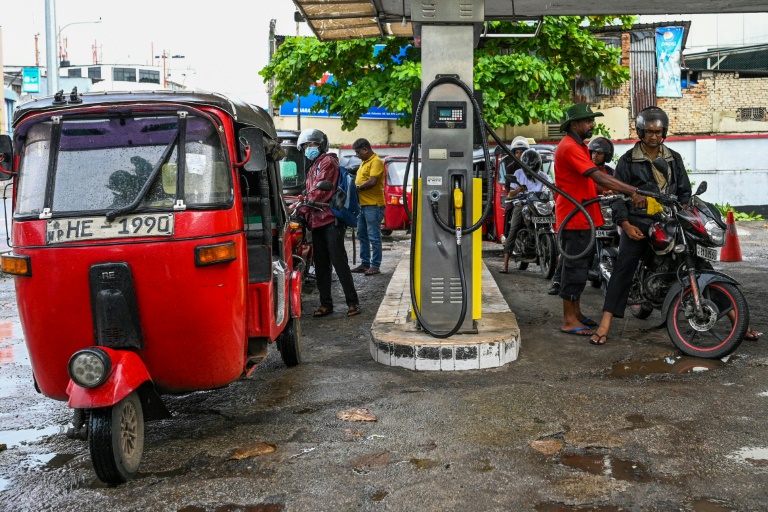
Crisis-hit Sri Lanka slashed fuel prices on Monday, the second cut in as many weeks, after the World Bank warned that the economy will shrink an unprecedented 9.2 percent this year.

The energy ministry said the price of petrol will be reduced by 40 rupees to 370 rupees ($1.02) a litre from Monday night after a similar 10 percent reduction earlier this month.

But the price of regular petrol is still twice the amount before the start of the crisis last year while diesel is three and a half times more than what it was in December 2021.

Earlier this year motorists spent weeks to get fuel, contributing to weeks of protests that forced president Gotabaya Rajapaksa to flee the country in July and quit.

The wait at the pumps has reduced to a few hours in recent weeks, but fuel is still strictly rationed because of an enduring shortage of dollars needed to pay for essential imports.

Public transport also ground to a halt due to a lack of diesel but now services are almost back to normal, although many fares — in common with soaring prices for other services and goods — have doubled.

Official annual inflation rates are running at close to 70 percent.

The latest lowering of petrol and diesel came after the World Bank warned that the economic contraction will be worse than the 8.7 percent forecast by the Central Bank of Sri Lanka.

The World Bank in its latest country update published last week said the economy will continue to shrink next year too. It expects a 4.2 percent contraction next year.

In addition to the Covid-19 pandemic and the Ukraine war, Sri Lanka’s worst crisis since independence is also partly blamed on the sharp tax cuts announced by Rajapaksa after he came to power in November 2019.

The crisis forced the government to default on its $51 billion foreign debt in April.

Rajapaksa’s successor, Ranil Wickremesinghe, has overturned some of the tax cuts and introduced new revenue measures.

The International Monetary Fund has tentatively approved a four-year, $2.9 billion bailout.

But the package is subject to an agreement with creditors including China, Sri Lanka’s biggest creditor, as well as to contain inflation and tackle corruption.

China delays release of economic data during key political meeting

China said Monday it will delay the release of economic growth figures, as the country’s leadership gathers for a major meeting set to hand President Xi Jinping a historic third term in office.

The announcement comes a day before analysts had expected Beijing to publish some of its weakest quarterly growth figures since 2020 with the economy hobbled by Covid-19 restrictions and a real estate crisis.

The National Bureau of Statistics (NBS) said the release of growth figures for the third quarter along with a host of other economic data would be “postponed”, without specifying a reason or giving a new timeline.

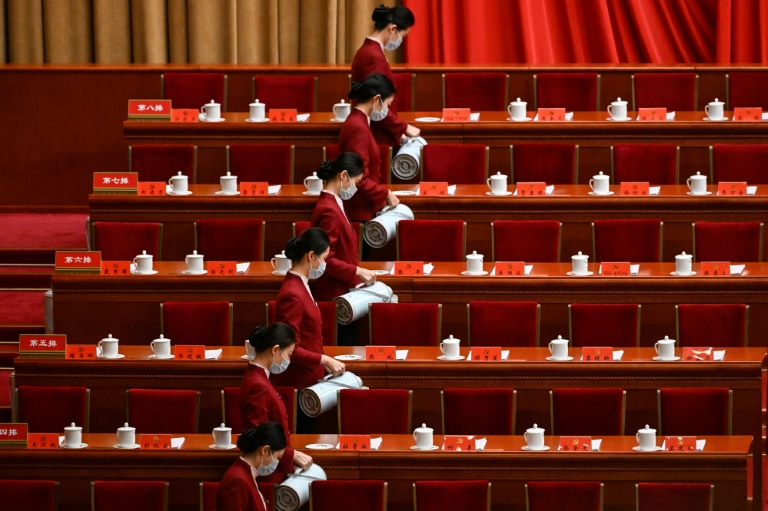
The delay comes as officials from China’s ruling Communist Party meet in Beijing for their 20th Congress, which is set to rubber stamp Xi’s bid to rule for another term.

Zhao Chenxin, senior official at the National Development and Reform Commission, told reporters on Monday that “the economy rebounded significantly in the third quarter”.

“From a global perspective, China’s economic performance is still outstanding,” he said.

But many analysts expect the world’s second-largest economy to struggle to reach its growth target this year of around 5.5 percent, with the International Monetary Fund lowering its forecast for GDP expansion to 3.2 percent.

A panel of experts polled by AFP last week predicted an average of three percent growth in 2022 — a long way off the 8.1 percent seen last year.

That would be China’s weakest growth rate in four decades, excluding 2020 when the global economy was hammered by the emergence of the coronavirus.

The NBS said it would also postpone the release of monthly data on indicators including real estate and retail sales.

Last week customs authorities delayed the release of September trade figures without providing an explanation.

– China ‘in a bind’ –

Nick Marro, lead for global trade at the Economist Intelligence Unit, told AFP that signs point to “a really ugly Q3 data print, at a time when the party is focused on highlighting its policy achievements, while minimising any missteps”.

Alicia Garcia Herrero, chief economist at Natixis, said “nothing, not even GDP data release, can disturb the coronation of Xi Jinping”.

The delay “puts China in a bind”, Marro added.

“If it comes out with a rosier-than-expected data print, the national statistics bureau will inevitably face questions around data veracity,” he said.

China’s economy has been hit hard by the government’s strict zero-Covid policy.

The country is the last of the world’s major economies to continue to follow the strategy, which imposes tight travel restrictions, mass PCR testing and obligatory quarantines.

It also involves sudden and strict lockdowns — including of businesses and factories — that have disrupted production and weighed heavily on household consumption.

China is also battling an unprecedented crisis in its real estate sector — historically a major driver of growth that accounts for more than a quarter of GDP when combined with construction.

Following years of explosive growth fuelled by easy access to loans, Beijing launched a crackdown on excessive debt in 2020.

Property sales are now falling across the country, leaving many developers struggling and some owners refusing to pay their mortgages for unfinished homes.

China delays release of economic data during key political meeting

China  said Monday it will delay the release of economic growth figures, as the country’s leadership gathers for a meeting set to hand President Xi Jinping a historic third term in office.

The announcement comes a day before China had been expected by analysts to announce some of its weakest quarterly growth figures since 2020, as the economy is hobbled by Covid-19 restrictions and a real estate crisis.

Beijing’s National Bureau of Statistics (NBS) announced that the release of growth figures for the third quarter along with a host of other economic data would be “postponed”, without specifying a reason for the delay or giving a new timeline.

The postponement comes as officials from China’s ruling Communist Party gather in Beijing for their 20th Congress, which is set to rubber stamp Xi’s bid to rule for another term.

Zhao Chenxin, senior official at the National Development and Reform Commission, told reporters on Monday morning that “the economy rebounded significantly in the third quarter.”

“From a global perspective, China’s economic performance is still outstanding,” he said.

But many analysts had expected the world’s second-largest economy to struggle to reach its growth target this year of around 5.5 percent, with the International Monetary Fund lowering its GDP growth forecast to 3.2 percent for 2022.

A panel of experts polled by AFP last week predicted average growth of three percent in 2022 — a long way off the 8.1 percent seen in 2021.

That would have marked China’s weakest growth rate in four decades, excluding 2020 when the global economy was hammered by the emergence of the coronavirus.

Separately, customs authorities delayed the release of September’s trade figures last week, without providing an explanation, while the NBS said on Monday it would also postpone the release of monthly data on indicators including real estate and retail sales.

– Covid impact –

China’s economy has been hit particularly hard by the government’s strict zero-Covid policy.

The country is the last of the world’s major economies to continue to follow the strategy, which imposes tight travel restrictions, mass PCR testing and obligatory quarantines.

It also involves sudden and strict lockdowns — including of businesses and factories — that have disrupted production and weighed heavily on household consumption.

China is also battling an unprecedented crisis in its real estate sector — historically a driver of growth in the economy and representative of more than a quarter of the country’s GDP when combined with construction.

Following years of explosive growth fuelled by easy access to loans, Beijing launched a crackdown on excessive debt in 2020.

Property sales are now falling across the country, leaving many developers struggling and some owners refusing to pay their mortgages for unfinished homes.

Sterling rises with UK finance minister set to unveil spending plans

Sterling rose Monday as Britain’s new finance minister prepared to announce new tax and spending measures aimed at calming markets after a botched debt-fuelled budget by his predecessor sent shivers through trading floors.

Jeremy Hunt was put in place on Friday after Prime Minister Liz Truss sacked Kwasi Kwarteng as she battles to save her political career just weeks after taking the keys to Downing Street.

Hunt is tipped to tear up the previous plans and warned at the weekend of tax hikes as he dramatically reversed course on right-wing Truss’ radical programme.

“It does indicate that they are moving back to some degree of fiscal probity and employing a slightly more prudent fiscal outlook,” said Peter Kinsella, of Union Bancaire Privee UBP SA.

The pound held above $1.12, having sunk Friday owing to the uncertainty in Westminster, while a news conference by Truss did very little to reassure nervous investors.

Bonds also rallied on the first day without the Bank of England support put in place in response to turmoil caused by Kwarteng’s mini-budget.

“There is no question that recent events have shattered confidence in the… current government, and trust once foregone is usually very difficult to get back,” said CMC Markets’ Michael Hewson.

“The wider question now is what happens next with respect to any new budget, and whether new Chancellor Jeremy Hunt can stabilise the ship at a time when global interest rates are rising anyway.”

The calm also lifted equities, with London in positive territory in the morning. There were also gains in Paris and Frankfurt.

Asia started the week in mixed fashion as Friday’s rally petered out.

The latest strong US inflation reading ramped up bets that the Federal Reserve will hike borrowing costs by 75 basis points twice more before the end of the year, stoking concerns the world’s top economy will flip into a recession.

All three main indexes on Wall Street finished sharply lower Friday.

There was a little disappointment among investors after Chinese President Xi Jinping at the weekend reasserted his commitment to the zero-Covid strategy of lockdowns that has hammered the economy this year.

“We expect that the existing Covid measures, that is the number of Covid tests, quarantine days, etc, will remain the same after the Party Congress,” said Iris Pang at ING.

“This will continue to put fiscal pressure on local governments, and when the number of Covid cases increase, we should keep seeing localised lockdowns.”

Traders are also keeping tabs on looming earnings reports, with expectations that higher rates and prices will have eaten into companies’ bottom lines.

Eyes are also on Tokyo as the yen sits around a three-decade low against the dollar owing to US rate hike expectations and the Bank of Japan’s refusal to tighten monetary policy, citing a need to support the economy.

The yen is approaching 150 to the dollar for the first time since 1990, but while officials have said they are keeping tabs on developments, they have yet to intervene in markets for a second time, having done so last month.

– Key figures around 0720 GMT –

Tokyo – Nikkei 225: DOWN 1.2 percent at 26,775.79 (close)

Hong Kong – Hang Seng Index: UP 0.2 percent at 16,612.90 (close)

Shanghai – Composite: UP 0.4 percent at 3,084.94 (close)

London – FTSE 100: UP 0.6 percent at 6,896.53

Pound/dollar: UP at $1.1262 from $1.1180 Friday

Dollar/yen: DOWN at 148.61 yen from 148.72 yen

Euro/dollar: UP at $0.9748 from $0.9724

Euro/pound: DOWN at 86.55 pence from 86.93 pence

West Texas Intermediate: UP 1.0 percent at $86.47 per barrel

Brent North Sea crude: UP 1.0 percent at $92.54 per barrel

New York – Dow: DOWN 1.3 percent at 29,634.83 (close)

Close Bitnami banner
Bitnami