Chinese Business

Stocks extend losses on recession fears

Stock markets fell further on Friday as weak UK retail sales data and a dire warning from global shipping giant FedEx fuelled fears of recession.

Equities were already struggling this week after data showed US inflation slowed but not as much as expected, fuelling fears of aggressive monetary tightening by central banks.

Investors worry that central banks will move too aggressively to tame inflation through rate hikes that could put the brakes on economic growth.

Wall Street stocks slunk lower after FedEx reported on Thursday that its shipped fewer packages than expected over the summer due to weakness in the global economy.

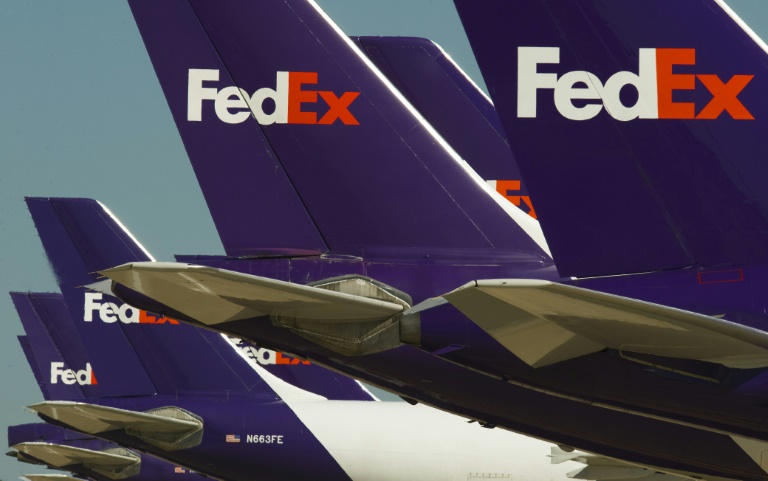
The company said it was closing stores, freezing hiring and parking aircraft, while warning of a big earnings hit, with its CEO Raj Subramaniam telling CNBC he expects a global recession.

“The market is looking weak this morning because of the FedEx warning, but it really goes beyond that,” said Briefing.com analyst Patrick O’Hare.

“There are pressing concerns that the aggressive rate hikes by central banks thus far, and the ones that are yet to come, will drive the global economy into a recession that is not ‘soft’,” O’Hare said.

The Dow was down 1.1 percent in late morning trading, while the broader S&P 500 fell 1.3 percent and the tech-heavy Nasdaq Composite tumbled 1.6 percent.

“These increasing concerns over a global recession, as well as rising US yields are prompting a flight into the US dollar and not much else,” said CMC Markets analyst Michael Hewson.

London’s FTSE 100 stock index ended the day 0.6 percent lower while the British pound tanked to a 37-year low against the dollar at $1.1351 on news that British retail sales tumbled by far more than forecast in August as shoppers faced rampant inflation.

Sales by volume dived 1.6 percent last month, more than triple expectations.

Sterling has hit a series of 1985 lows in recent weeks, also as the US Federal Reserve implements aggressive hikes interest rate hikes.

– ‘Markets in pain’ –

“Markets are in a lot of pain, and the UK’s retail data has made things only worse for traders as it clearly pointed out one thing: an imminent recession,” said AvaTrade analyst Naeem Aslam.

“When you look at the sterling against the dollar, it seems like there are no buyers out there.”

Elsewhere, Frankfurt equities dived 1.7 percent and Paris shed 1.3 percent as investors digested confirmation of record-high inflation in the eurozone.

“Data for August confirm that price pressures are very strong and broad-based” with eurozone inflation at 9.1 percent, said Capital Economics analyst Jack Allen-Reynolds.

“The European Central Bank will need to continue hiking interest rates aggressively at forthcoming meetings.”

The ECB had last week hiked its key rate by a historic 75 basis points, and markets expect a similar-sized move at the October policy meeting.

The Fed and Bank of England are widely expected to ramp up borrowing costs next week.

The US central bank has lifted borrowing costs by 75 basis points at each of its last two meetings. 

– Key figures at around 1530 GMT –

New York – Dow: DOWN 1.1 percent at 30,635.57 points

EURO STOXX 50: DOWN 1.1 percent at 3,500.41

London – FTSE 100: DOWN 0.6 at 7,236.68 (close)

Frankfurt – DAX: DOWN 1.7 percent at 12,741.26 (close)

Paris – CAC 40: DOWN 1.3 percent at 6,077.30 (close)

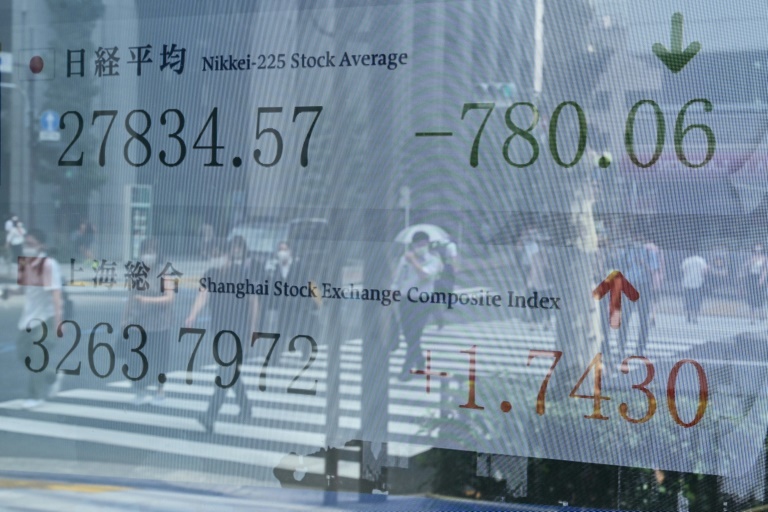
Tokyo – Nikkei 225: DOWN 1.1 percent at 27,567.75 (close)

Shanghai – Composite: DOWN 2.3 percent at 3,126.40 (close)

Hong Kong – Hang Seng Index: DOWN 0.9 percent at 18,761.69 (close)

Pound/dollar: DOWN at $1.1422 from $1.1467 on Thursday

Euro/pound: UP at 87.72 pence from 87.21 pence 

Euro/dollar: UP at $1.0020 from $1.0001

Dollar/yen: DOWN at 142.98 yen from 143.45 yen

Brent North Sea crude: UP 1.0 percent at $91.76 per barrel

West Texas Intermediate: UP 0.8 at $85.80 per barrel

burs-rl/cdw

Prices soaring everywhere: from beans in Brazil to pork in China

Consumers and businesses around the world are facing steeper prices for everything from Mexico’s beloved tortillas to the aluminium cans used by beer companies.

Inflation jumped after countries emerged from Covid lockdowns and it has soared since Russia invaded Ukraine, with the IMF expecting consumer prices to rise by 8.3 percent globally this year.

Here is a look at how higher prices are affecting the world:

– Fuel –

The invasion of Ukraine by Russia, the world’s third largest oil producer, sent crude oil prices through the roof.

The main international contract, Brent North Sea, almost hit $140 per barrel, but has now dropped back below $100.

Prices at the pump have followed suit, surging to over two euros per litre in eurozone countries and above five dollars per gallon in the United States, before falling back in recent weeks.

Natural gas has also become more expensive, especially in Europe, where electricity prices hit record levels in Germany and France.

Energy prices were up 38.6 percent in the eurozone in August from the same month last year, according to revised official data published Friday.

Higher energy prices ripple throughout the economy as they affect the production and transportation costs of companies.

– Pasta, beans and tortillas –

The war sent food prices soaring as the war disrupted grain exports from Ukraine, a major supplier of wheat and sunflower oil to countries around the world.

In May, Allianz estimated that pasta prices had risen 19 percent in the eurozone over the previous 18 months.

In Canada, another large exporter of wheat, a 500-gram package had risen by 60 cents in July from the same month last year, to CAN$3.16, according to official data.

In Thailand, the price for instant noodles, which is controlled by the state, rose for the first time in 14 years in August — a 17 percent increase to seven bahts (20 US cents).

The price of the corn flour used to make tortillas in Mexico — a staple used for tacos and other dishes — is up by around 13 percent from last year and contributing to two-decade high inflation.

Pinto beans, a Brazilian staple, cost nearly 23 percent more in August than at the same time last year.

– Meat –

With grain more expensive, feeding livestock has become costlier and farmers have in turn raised their prices.

Pork, the most popular meat in China, cost 22 percent more in August than last year. 

Chinese authorities will tap into their strategic reserves of pork for a second time this year in order to stabilise prices, the official Xinhua news agency said Friday.

In Argentina, ground beef patties are popular as their prices have traditionally been low, but these have shot up by three quarters in the past 12 months. 

The country currently has one of the highest inflation rates in the world at 56.4 percent over the first eight months of the year.

In Europe, it is chicken prices that have taken wing as farmers have had to contend with bird flu in addition to cost pressures. Wholesale prices were up by a third in August from the same month last year.

– Beer –

Brewers have been hit with not only rising grain prices, but also for the aluminium cans and glass bottles for their beer.

These are 70 percent more expensive than before the war in Ukraine, according to the trade association of European brewers. 

Heineken, the world’s second-largest brewery group, hiked its prices by an average of 8.9 percent over the first half of this year. 

According to estimates by Bloomberg, AB InBev, the world’s top brewer whose beers include Budweiser and Corona, has increased its prices by eight percent.

In Britain, the cost of a pint has risen above four pounds ($4.6), the highest price since 1987, according to Britain’s Office for National Statistics.

– Newspapers –

Paper prices have climbed as demand has risen following the end of Covid lockdowns. Printing is an energy-intensive process.

Several French dailies raised their prices earlier this year, as have a number British newspapers like the Sun, the Times and Sunday Mail.

Others have reduced their number of pages.

In Europe overall, the prices of newspapers were 6.5 percent higher in July, according to official data.

Starbucks Singapore says customer database breached

Starbucks Singapore said Friday its customer database was breached online, with local media reporting that 200,000 people’s information was stolen.

The coffee chain — a licensed Starbucks franchise owned by Hong Kong-based Maxim’s Caterers — said in an email to customers that it had “discovered… some unauthorized access” to details such as names, gender, dates of birth, phone numbers and home addresses.

“Relevant authorities have been informed and Starbucks Singapore is assisting them on this matter,” said the email seen by AFP.

The company said it was made aware of the breach on September 13, and that no credit card details were taken as it does not store them.

It urged customers to reset their passwords.

A public relations agency representing Starbucks Singapore told AFP it was “unable to disclose the number of affected customers”.

The Straits Times said 200,000 customers’ data was stolen and put on sale in an online forum on September 10.

One copy of the database had already been sold for Sg$3,500 ($2,500), the newspaper added.

The city-state’s Personal Data Protection Commission told AFP it had been notified about the incident and has reached out to Starbucks Singapore for more information.

Stocks mostly slide; pound hits 37-year dollar low

Stock markets mostly slumped Friday, while the British pound tanked to a 37-year dollar low as weak UK retail sales stoked global recession fears.

Sterling slid to $1.1351, the lowest level since 1985, on news that British retail sales tumbled by far more than forecast in August as shoppers faced rampant inflation.

Sales by volume dived 1.6 percent last month, more than triple expectations.

Eurozone and Asian stock markets tumbled but London pushed into positive territory as the weak pound boosted exporters.

Sterling has hit a series of 1985 lows in recent weeks, also as the US Federal Reserve implements aggressive hikes interest rate hikes.

– ‘Markets in pain’ –

“Markets are in a lot of pain, and the UK’s retail data has made things only worse for traders as it clearly pointed out one thing: an imminent recession,” said AvaTrade analyst Naeem Aslam.

“When you look at the sterling against the dollar, it seems like there are no buyers out there.”

Elsewhere, Frankfurt equities dived 1.5 percent and Paris shed 1.2 percent as investors digested confirmation of record-high inflation in the eurozone.

“Data for August confirm that price pressures are very strong and broad-based” with eurozone inflation at 9.1 percent, said Capital Economics analyst Jack Allen-Reynolds.

“The European Central Bank will need to continue hiking interest rates aggressively at forthcoming meetings.”

The ECB had last week hiked its key rate by a historic 75 basis points, and markets expect a similar-sized move at the October policy meeting.

Asian equities also dropped Friday, tracking Wall Street losses as investors express concern over persistently high consumer prices and the increasing likelihood of further interest rate hikes.

The Fed and Bank of England are widely expected to ramp up borrowing costs next week.

The US central bank has lifted borrowing costs by 75 basis points at each of its last two meetings. 

Asian investors meanwhile shrugged off brighter data from powerhouse economy China.

China’s factory output and retail sales beat expectations in August, new data released on Friday showed, despite the economy being hammered by Covid-related curbs, heatwaves and a deepening property market slump.

– Key figures at around 1030 GMT –

London – FTSE 100: UP 0.1 percent at 7,292.21 points

Frankfurt – DAX: DOWN 1.5 percent at 12,764.90

Paris – CAC 40: DOWN 1.2 percent at 6,082.93

EURO STOXX 50: DOWN 1.1 percent at 3,502.91

Tokyo – Nikkei 225: DOWN 1.1 percent at 27,567.75 (close)

Shanghai – Composite: DOWN 2.3 percent at 3,126.40 (close)

Hong Kong – Hang Seng Index: DOWN 0.9 percent at 18,761.69 (close)

New York – Dow: DOWN 0.6 percent to 30,961.82 (close)

Pound/dollar: DOWN at $1.1388 from $1.1467 on Thursday

Euro/pound: UP at 87.59 pence from 87.21 pence 

Euro/dollar: DOWN at $0.9974 from $1.0001

Dollar/yen: DOWN at 143.25 yen from 143.45 yen

Brent North Sea crude: UP 0.4 percent at $91.18 per barrel

West Texas Intermediate: UP at $85.21 per barrel

burs/rfj/bcp/lth

Prices soaring everywhere: from beans in Brazil to pork in China

Consumers and businesses around the world are facing steeper prices for everything from Mexico’s beloved tortillas to the aluminium cans used by beer companies.

Inflation jumped after countries emerged from Covid lockdowns and it has soared since Russia invaded Ukraine, with the IMF expecting consumer prices to rise by 8.3 percent globally this year.

Here is a look at how higher prices are affecting the world:

– Fuel –

The invasion of Ukraine by Russia, the world’s third largest oil producer, sent crude oil prices through the roof.

The main international contract, Brent North Sea, almost hit $140 per barrel, but has now dropped back below $100.

Prices at the pump have followed suit, surging to over two euros per litre in eurozone countries and above five dollars per gallon in the United States, before falling back in recent weeks.

Natural gas has also become more expensive, especially in Europe, where electricity prices hit record levels in Germany and France.

Energy prices were up 38.3 percent in the eurozone in August from the same month last year.

Higher energy prices ripple throughout the economy as they affect the production and transportation costs of companies.

– Pasta, beans and tortillas –

The war sent food prices soaring as the war disrupted grain exports from Ukraine, a major supplier of wheat and sunflower oil to countries around the world.

In May, Allianz estimated that pasta prices had risen 19 percent in the eurozone over the previous 18 months.

In Canada, another large exporter of wheat, a 500-gram package had risen by 60 cents in July from the same month last year, to CAN$3.16, according to official data.

In Thailand, the price for instant noodles, which is controlled by the state, rose for the first time in 14 years in August — a 17 percent increase to seven bahts (20 US cents).

The price of the corn flour used to make tortillas in Mexico — a staple used for tacos and other dishes — is up by around 13 percent from last year and contributing to two-decade high inflation.

Pinto beans, a Brazilian staple, cost nearly 23 percent more in August than at the same time last year.

– Meat –

With grain more expensive, feeding livestock has become costlier and farmers have in turn raised their prices.

Pork, the most popular meat in China, cost 22 percent more in August than last year. 

Chinese authorities are considering tapping into their strategic reserves of pork for a second time this year in order to stabilise prices.

In Argentina, ground beef patties are popular as their prices have traditionally been low, but these have shot up by three quarters in the past 12 months. 

The country currently has one of the highest inflation rates in the world at 56.4 percent over the first eight months of the year.

In Europe, it is chicken prices that have taken wing as farmers have had to contend with bird flu in addition to cost pressures. Wholesale prices were up by a third in August from the same month last year.

– Beer –

Brewers have been hit with not only rising grain prices, but also for the aluminium cans and glass bottles for their beer.

These are 70 percent more expensive than before the war in Ukraine, according to the trade association of European brewers. 

Heineken, the world’s second-largest brewery group, hiked its prices by an average of 8.9 percent over the first half of this year. 

According to estimates by Bloomberg, AB InBev, the world’s top brewer whose beers include Budweiser and Corona, has increased its prices by eight percent.

In Britain, the cost of a pint has risen above four pounds ($4.6), the highest price since 1987, according to Britain’s Office for National Statistics.

– Newspapers –

Paper prices have climbed as demand has risen following the end of Covid lockdowns. Printing is an energy-intensive process.

Several French dailies raised their prices earlier this year, as have a number British newspapers like the Sun, the Times and Sunday Mail.

Others have reduced their number of pages.

In Europe overall, the prices of newspapers were 6.5 percent higher in July, according to official data.

India's Adani briefly listed as world's second-richest person

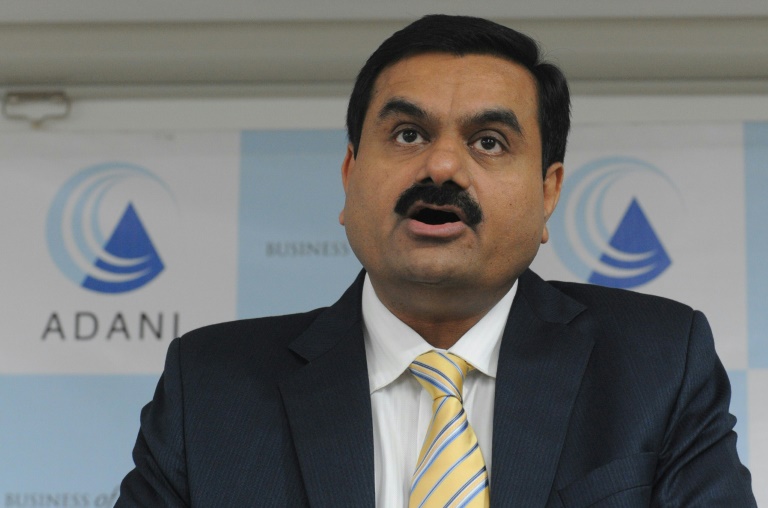
Indian industrialist Gautam Adani briefly became the world’s second-richest person on the Forbes real-time billionaire tracker on Friday, weeks after becoming the first Asian to break into the top three.

The self-made billionaire’s net worth surged $4 billion overnight to $154 billion, according to Forbes, ranking him ahead of LVMH’s Bernard Arnault and Amazon’s Jeff Bezos.

Tesla founder Elon Musk remained well out in front with a fortune of more than $270 billion.

Arnault — who at times held the top spot in May 2021 — and Adani traded the number two position during the day as the share prices of their companies fluctuated.

Adani, 60, made his fortune in ports and commodities trading and now operates India’s second-largest conglomerate with interests ranging from coal mining and edible oils to airports and news media.

His ballooning net worth reflects a stratospheric rise in the market capitalisation of his publicly listed companies, as investors back the Adani Group’s aggressive expansion of old and new businesses.

Shares in the flagship Adani Enterprises — of which the billionaire owns 75 percent — have soared more than 2,700 percent since March 2020, and doubled in value in the past six months.

Stock price surges in other group companies including Adani Transmission, Adani Power, Adani Ports and Adani Green Energy catapulted Adani past fellow Indian billionaire Mukesh Ambani this year.

Analyst estimates indicated the market capitalisation of Adani’s seven listed companies also briefly overtook those of the Tata group on Friday morning, making the Adani Group India’s largest conglomerate.

Born in the city of Ahmedabad in the western state of Gujarat to a middle-class family, Adani dropped out of college to work in the diamond industry before starting his export business in 1988.

In 1995, he won a contract to build and operate a commercial shipping port at Mundra in Gujarat, which has since grown to become India’s largest port.

At the same time, Adani expanded into thermal power generation and coal mining in India and overseas.

In recent years, the conglomerate has forayed into petrochemicals, cement, data centres and copper refining, in addition to establishing a renewable energy business with ambitious targets.

Recent investments in Indian news media and a bid for 5G airwaves this year have raised speculation that the billionaire’s empire could soon impinge on sectors dominated by Ambani’s Reliance Industries.

But Adani’s rapid expansion into capital-intensive businesses has also raised financial alarms, with Fitch Group’s CreditSights last week reiterating that they “remain concerned over the Adani Group’s leverage”.

Asian stocks lose ground as investors eye Fed decision next week

Asian markets dropped on Friday, tracking Wall Street losses as investors continue to show concern over persistently high global inflation and the likelihood of further interest rate hikes.

Major markets in Tokyo, Shanghai, Hong Kong, Seoul, Taipei, Mumbai and Sydney were lower, in line with overall market sentiment ahead of a decision from the US Federal Reserve next week.

Asian stocks were on course to extend their weekly declines into a fifth straight week, following on from continuing weakness in US and European equities.

The Nikkei in Tokyo lost 1.1 percent at the close, as investors “found it difficult to aggressively take positions” ahead of a long weekend and the Fed’s upcoming decision, Seiichi Suzuki, chief equity market analyst at Tokai Tokyo Research Institute, told AFP.

China’s factory output and retail sales beat expectations in August, new data released on Friday showed, despite the economy being hammered by Covid-related curbs, heatwaves and a deepening property market slump.

The data did little to buoy China’s main stock market, however, with Shanghai closing down 2.3 percent. Hong Kong closed down 0.9 percent. 

Europe’s main stock markets slid at the open on Friday, with London’s FTSE 100 index particularly impacted by disappointing UK retail sales data.

Wall Street’s three main indices rallied briefly on Thursday, but the gains fizzled. Traders took little comfort from US President Joe Biden’s announcement of a tentative deal to avert a potentially damaging railroad strike.

All eyes remain on the Fed, which has already instituted two consecutive 75-basis-point hikes and is widely expected to carry out a third. 

On Thursday, US retail sales data showed a surprising increase in August, but the report also downgraded sales in the month prior, tempering the good news.

Weekly US jobless claims retreated once again, and industrial production fell modestly in August.

The new data was not enough, however, to offset the widespread bearish sentiment following higher-than-expected US inflation data released earlier in the week, which showed yearly inflation slowing by less than forecast and monthly inflation rising.

– Fed expectations –

Analysts expect the Fed to continue raising interest rates, in a bid to cool an overheating economy and combat inflation, which remains near decades-highs in major economies.

“Because of the dramatic rise in Treasury yields, the Fed is going to have to keep raising rates beyond (next week),” said prominent investor Louis Navellier in his podcast on Thursday.

“I think they might now raise rates in November just before the (US) midterm elections and possibly December.”

Other commentators echoed that view. OANDA’s senior market analyst Edward Moya addressed the concern that further hikes could send the world’s largest economy into a recession.

“The latest round of data suggest the Fed can stick to aggressive rate hikes as the labour market remains strong and as the economy slowly softens,” he said.

“The risks of the Fed sending the economy into a severe recession are growing but right now the data doesn’t support that argument.”

Now that the data is in, markets are fully focused on the Fed’s decision as their next potential pivot, said Fiona Cincotta, senior financial markets analyst at City Index.

“This is a market waiting for the next catalyst,” she told Bloomberg News. 

“What we saw in the selloff on Tuesday is the repricing of expectations of the Fed. Until we really hear from the Fed we are not going to get a very clear direction.”

– Key figures at around 0815 GMT –

Tokyo – Nikkei 225: DOWN 1.1 percent at 27,567.75 (close)

Shanghai – Composite: DOWN 2.3 percent at 3,126.40 (close)

Hong Kong – Hang Seng Index: DOWN 0.9 percent at 18,761.69 (close)

EURO STOXX 50: DOWN 1.5 percent at 3,488.36

London – FTSE 100: DOWN 0.3 percent at 7,261.92

Frankfurt – DAX: DOWN 1.8 percent at 12,727.57

Paris – CAC 40: DOWN 1.5 percent at 6,068.11

New York – Dow: DOWN 0.6 percent to 30,961.82 points (close)

Euro/dollar: DOWN at $0.9960 from $0.9997 

Pound/dollar: DOWN $1.1369 at from $1.1472 

Euro/pound: UP 87.61 pence from 87.14 pence 

Dollar/yen: DOWN at 143.44 yen from 143.45 yen 

Brent North Sea crude: DOWN 0.6 percent at $90.30 per barrel

West Texas Intermediate: DOWN 0.9 percent to $84.34 per barrel

Indonesia investigating Google over app store payment system

Indonesia has launched an anti-trust investigation into Google over the tech firm’s insistence that its payment system be used for purchases from its app store, authorities said Thursday, accusing it of unfair business practices.

The US internet giant has been under legal scrutiny in a number of countries over its stipulation that its billing system be used by all buyers on Google Play.

Authorities in Jakarta said in a statement they suspected “Google has abused its dominant position by imposing conditional sales and discriminatory practices in digital application distribution in Indonesia”.

Google Play is the largest app distribution platform in Indonesia, a country of around 270 million people.

Third-party developers offering their apps on Google Play are charged a 15 to 30 percent service fee, higher than the five percent imposed by other payment systems, according to an initial probe by the nation’s anti-trust agency.

“The respective developers cannot refuse the obligation because Google can impose sanctions by removing their applications from the Google Play store and preventing them from making updates to their applications,” the agency said.

Google Indonesia said on Friday that it would work with the Indonesian authorities “to demonstrate how Google Play supports developers”.

It added that since early this month, it has started a pilot billing system, allowing an alternative payment system alongside the one used on Google Play.

The American multinational has faced a barrage of legal cases in the United States, Europe and Asia based on similar accusations.

Google has also faced claims that it unfairly forced its search engine and Chrome internet browser on phone makers using the Android operating system.

On Wednesday, the European Union’s second-highest court ruled that “Google imposed unlawful restrictions on manufacturers of Android mobile devices”.

The court upheld the EU’s record fine of more than four billion euros ($4 billion) against Google

That case was the third of three major cases brought against Google by the EU’s competition czar Margrethe Vestager, whose legal challenges were the first worldwide to directly take on Silicon Valley tech giants.

South Korea fined Google nearly $180 million last year for abusing its dominant market position in a similar case regarding the Android system.

Indonesia investigating Google over app store payment system

Indonesia has launched an anti-trust investigation into Google over the etch firm’s insistence that its payment system be used for purchases from its app store, authorities said Thursday, accusing it of unfair business practices.

The US internet giant has been under legal scrutiny in a number of countries over its stipulation that its billing system be used by all buyers on Google Play.

Authorities in Jakarta said in a statement they suspected “Google has abused its dominant position by imposing conditional sales and discriminatory practices in digital application distribution in Indonesia”.

Google Play is the largest app distribution platform in Indonesia, a country of around 270 million people.

Third-party developers offering their apps on Google Play are charged a 15 to 30 percent service fee, higher than the five percent imposed by other payment systems, according to an initial probe by the nation’s anti-trust agency.

“The respective developers cannot refuse the obligation because Google can impose sanctions by removing their applications from the Google Play store and preventing them from making updates to their applications,” the agency said.

Google Indonesia said on Friday that it would work with the Indonesian authorities “to demonstrate how Google Play supports developers”.

It added that since early this month, it has started a pilot billing system, allowing an alternative payment system alongside the one used on Google Play.

The American multinational has faced a barrage of legal cases in the United States, Europe and Asia based on similar accusations.

Google has also faced claims that it unfairly forced its search engine and Chrome internet browser on phone makers using the Android operating system.

On Wednesday, the European Union’s second-highest court ruled that “Google imposed unlawful restrictions on manufacturers of Android mobile devices”.

The court upheld the EU’s record fine of more than four billion euros ($4 billion) against Google

That case was the third of three major cases brought against Google by the EU’s competition czar Margrethe Vestager, whose legal challenges were the first worldwide to directly take on Silicon Valley tech giants.

South Korea fined Google nearly $180 million last year for abusing its dominant market position in a similar case regarding the Android system.

Hong Kongers rush to learn new skills ahead of life abroad

Inside the bowels of a Hong Kong industrial building, Eric Pun was among two dozen people crammed into a classroom learning to drill holes — acquiring a new set of skills before heading abroad.

Savvy businesses have started offering crash courses in subjects like home repair and hairdressing, capitalising on a wave of people departing Hong Kong as China cracks down on dissent and strict pandemic rules upend the economy.

For Pun, a 35-year-old nurse emigrating to Australia with his family, taking the home repair class was both a practical cost-saving measure and a way to prepare mentally for the unknown.

“In Hong Kong, if there is a problem you can go to the property management office or hire someone from the mall… but when my family lives in a house, I’ll have to rely on myself,” he told AFP.

Spending a day at Renobro, one of the handful of companies offering home-repair lessons, costs HK$1,980 ($250) and courses are fully booked weeks in advance, according to company co-founder and instructor Lau Chun-yu.

“More than a thousand people have participated in our course,” Lau said.

“When we first started, we didn’t expect so many people would be emigrating.” 

Lau said his students, who are mostly in their thirties and include doctors and teachers, race through a one-day syllabus of more than 40 skills, such as caulking, plastering and rewiring appliances.

“Most of them aren’t well-prepared, but… they hope to go over as soon as possible,” he said, citing fears that foreign countries may tighten immigration controls in the long run.

– Brain drain –

Hong Kong is currently experiencing an exodus of local and foreign talent.

Many residents have baulked at Beijing’s sweeping crackdown on dissent following huge and sometimes violent democracy protests three years ago.

Stringent zero-Covid rules also remain in place two and half years into the pandemic, restricting daily life and isolating the city internationally.

Latest census figures showed a record dip in Hong Kong’s population, which fell 1.6 percent to 7.29 million compared with a year earlier. The labour force has plunged to 3.75 million, the lowest in nearly a decade.

Many of those leaving are families with school-aged children. 

Official primary school figures released earlier this month showed there were 70 fewer classes across 60 schools this academic year. More than 4,000 teachers have left their jobs in the past school year.

The United Kingdom became one of the most popular destinations for Hong Kongers after it announced a visa scheme that provided a pathway to citizenship, arguing Beijing had abandoned its pre-handover promise to allow residents key freedoms and autonomy. 

So far more than 140,000 people have applied under the British scheme since it was launched in January 2021.

Other common choices for relocation include Canada, Australia and the United States, mirroring a similar wave of emigration that occurred ahead of Hong Kong’s 1997 handover from Britain.

– ‘I want to be equipped’ –

Despite their optimism for life overseas, many would-be emigrants told AFP they were worried about job prospects and wanted to learn more skills as insurance.

Fashion retailer Kimi Chau, 35, took a series of hairdressing classes in preparation for her move to Britain along with her husband and five-year-old.

“I want to be equipped for a job after I’ve arrived… If I could learn more skills before I leave, then if the opportunity came along for me to open up a business, I would be more confident,” she told AFP.

Chau said her concerns about Hong Kong’s education system amid a shifting political climate drove her to leave.

“Because I have a kid, the issue felt closer to home and I didn’t take a long time to decide.” 

On a sweltering August afternoon, Chau and other hairdressing students brought along friends and family members to the salon where they took their classes for an informal graduation ceremony and a bittersweet farewell.

Instructor Jason Yip said the hairdressing industry has a relatively low entry threshold and Hong Kongers can get a job quickly, adding that roughly one-third of his students plan to emigrate.

Yip added that many of his students appreciate the social dimension of hairdressing, as a way to stay close to family members and to connect with like-minded Hong Kongers.

“For them, (hairdressing) can become a kind of hobby, and they are quite happy to have it after arriving in a new place,” Yip said. 

“That kind of joy is shared and there is a sense of achievement.”

Close Bitnami banner
Bitnami