Chinese Business

Asian markets see rare rally but caution rules as Fed hike nears

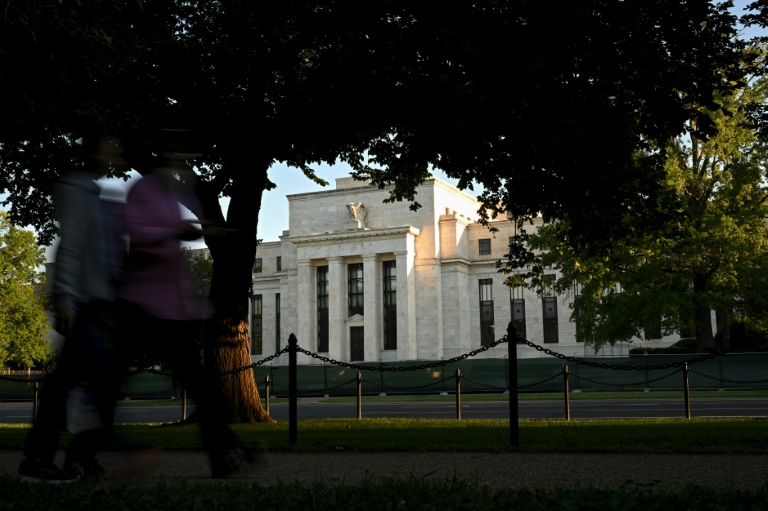
Asian markets enjoyed a much-needed bounce Tuesday, tracking Wall Street’s late rally as investors gird themselves for another big Federal Reserve interest rate hike this week, though fears of a recession remain elevated.

Global equities have taken a severe body blow in recent weeks as central banks struggle to rein in stubbornly high inflation, Russia continues its war in Ukraine and China’s economic woes darken the mood across trading floors.

With the main concern being that sharp increases in borrowing costs will cause recessions in major economies, this week will be a minefield for traders with several countries, including Britain, tipped to announce more tightening.

The Fed’s decision, however, is the main focus after figures last week showed prices are still rising at rates not seen since the early 1980s.

Most observers expect the bank to announce a third successive 75-basis-point lift, though there are some who have flagged a possible one-percentage-point move.

And there is speculation that the rises will not stop until the rate is above four percent, still some way from the current 2.25-2.75 percent.

“We expect central bank tightening and a fading of supply chain pressures to moderate job growth and core inflation,” JPMorgan Chase & Co said, tipping it to end at 4.25 percent by early next year.

“In turn, we anticipate this will allow the Fed and other central banks to pause” in the first half of 2023, said strategists including Marko Kolanovic and Nikolaos Panigirtzoglou.

In a sign of expectations that rates will continue up for some time, the two-year Treasury yield is on course to break four percent for the first time since 2007.

It is also much higher than the 10-year yield, which is called an inversion and considered a key pointer to recession.

– ‘Pessimism remains elevated’ –

The outlook remains downbeat, with Edward Moya at OANDA warning the lows of June could be seen again.

“Pessimism for equities remains elevated as the US economy appears to have a one-way ticket towards a recession as the Fed is poised to remain aggressive,” he said in a note.

“The risks for a retest of the summer lows could easily happen if the Fed remains fully committed (to) their inflation fight.”

And CMC Markets analyst Michael Hewson added that “the main factor spooking markets right now is how much higher will rates have to go, and will there be any more profit warnings” from firms such as that from US shipping giant FedEx last week.

Still, Asian markets were on the up Tuesday.

Hong Kong rose more than one percent with tourism-linked firms boosted by news that the city’s government was considering bringing an end to the hotel quarantine rules that have helped hammer the local economy.

Sydney and Mumbai were also up more than one percent, while Tokyo returned from a long weekend to post healthy gains. Shanghai, Seoul, Singapore, Taipei, Manila, Wellington, Bangkok and Jakarta were also higher.

London enjoyed early gains after a special public holiday for the queen’s funeral, with Paris and Frankfurt also on the front foot.

On currency markets, the dollar held its strength ahead of the expected rate hike.

And while a jump in Japanese inflation to an eight-year high will cause a headache for the Bank of Japan, officials there are expected to maintain their ultra-loose policy to support the economy, despite the yen sitting at 24-year lows against the dollar.

Sterling was also struggling to bounce back, even as the Bank of England lines up another big increase.

Oil prices edged up but gains were capped by the strong dollar and worries about the economic outlook, while traders were also keeping tabs on Iran nuclear talks that could see Tehran resume crude sales.

– Key figures at around 0810 GMT –

Tokyo – Nikkei 225: UP 0.4 percent at 27,688.42 (close)

Hong Kong – Hang Seng Index: UP 1.2 percent at 18,781.42 (close)

Shanghai – Composite: UP 0.2 percent at 3,122.41 (close)

London – FTSE 100: UP 0.4 percent at 7,267.78

Pound/dollar: UP at $1.1455 from $1.1434 on Monday

Euro/pound: DOWN at 87.60 pence from 87.69 pence 

Euro/dollar: UP at $1.0034 from $1.0026

Dollar/yen: UP at 143.45 yen from 143.24 yen

West Texas Intermediate: UP 0.2 percent at $85.88 per barrel

Brent North Sea crude: UP 0.4 percent at $92.38 per barrel

New York – Dow: DOWN 0.2 percent at 30,765.98
Hong Kong to decide on further Covid relaxation 'soon': city leader

Hong Kong’s leader on Tuesday said he will soon make a decision on further relaxing coronavirus restrictions, as residents and businesses decry quarantine rules that have kept the finance hub cut off for more than two years.

“We will make a decision soon and announce to the public,” chief executive John Lee told reporters. 

“We want to be connected with the different places in the world. We would like to have an orderly opening up,” he added.

Lee’s comments came as a senior Chinese official also signalled support for an easing of the curbs during a rare briefing.

“It’s normal for the Hong Kong government to adjust and improve Hong Kong’s anti-epidemic measures accordingly,” Huang Liuquan, deputy director of China’s Hong Kong and Macau Affairs Office, told reporters in Beijing.

Hong Kong has adhered to a version of China’s strict zero-Covid rules throughout the pandemic, battering the economy and deepening the city’s brain drain as rival business hubs reopen.

It maintains mandatory hotel quarantine for international arrivals — currently at three days — widespread masking, business operating limits and bans on more than four people gathering in public.

Lee, a Beijing-anointed former security chief, took office in July and vowed to reopen the city while keeping cases low.

He reduced hotel quarantine from seven to three days but has faced a growing chorus of criticism from residents, business organisations and health experts saying he should go further.

– Quarantine free? –

Over the past week multiple Hong Kong media outlets have reported, citing sources, that the government has already agreed to lift quarantine.

Lee would not confirm that decision or commit to a firm timeline on Tuesday.

But his comments were the strongest indication yet that Hong Kong is planning to join much of the rest of the world in accepting endemicity.

That would leave just China and Taiwan still maintaining mandatory quarantine for arrivals.

Under President Xi Jinping, mainland China has stuck to a rigid zero-Covid strategy with snap lockdowns of huge cities for even a handful of cases.

Unlike on the mainland, most of Hong Kong’s residents have already had the coronavirus when it tore through earlier this year, leaving the city with one of the highest death rates per capita in the world.

Hong Kong is in the midst of a technical recession while its financial chief recently warned its fiscal deficit is expected to balloon to HK$100 billion ($12.7 billion) this year, twice initial estimates.

Arrivals at the airport, once one of the world’s busiest, are at a fraction of pre-pandemic levels with many airlines skipping the city altogether.

Regional rival Singapore has long dispensed with coronavirus controls and is hosting a slew of conferences, entertainment and sporting events over the coming months.

Meanwhile, Hong Kong has seen multiple events cancelled by organisers citing the uncertain pandemic controls — including most recently next year’s World Dragon Boat Championships which will be held in Thailand instead.

Hong Kong is planning to host a banking summit and the Rugby Sevens in November, although under current rules players in the latter will have to stay in a “closed loop” bubble.

Hong Kong to further relax covid restrictions 'soon': city leader

Hong Kong’s leader on Tuesday said he will soon make a decision on further relaxing coronavirus restrictions, as residents and businesses decry quarantine rules that have kept the finance hub cut off for more than two years.

“We will make a decision soon and announce to the public,” chief executive John Lee told reporters. 

“We want to be connected with the different places in the world. We would like to have an orderly opening up,” he added.

Hong Kong has adhered to a version of China’s strict zero-Covid rules throughout the pandemic, battering the economy and deepening the city’s brain drain as rival business hubs reopen.

It maintains mandatory hotel quarantine for international arrivals — currently at three days — widespread masking, business operating limits and bans on more than four people gathering in public.

Lee, a Beijing-anointed former security chief, took office in July and vowed to reopen the city while keeping cases low.

He reduced hotel quarantine from seven to three days but has faced a growing chorus of criticism from residents, business organisations and health experts saying he should go further.

Over the past week multiple Hong Kong media outlets have reported, citing sources, that the government has already agreed to lift quarantine.

Lee would not confirm that decision or commit to a firm timeline on Tuesday.

But his comments were the strongest indication yet that Hong Kong is planning to join much of the rest of the world in accepting endemicity.

That would leave just China and Taiwan still maintaining mandatory quarantine for arrivals.

“Our goal is to maximise Hong Kong’s international connectivity and reduce the inconvenience for arrivals due to quarantine, on the condition that we can control the trend of the pandemic,” Lee said.

Hong Kong is in the midst of a technical recession while its financial chief recently warned its fiscal deficit is expected to balloon to HK$100 billion ($12.7 billion) this year, twice initial estimates.

Arrivals at the airport, once one of the world’s busiest, are at a fraction of pre-pandemic levels with many airlines skipping the city altogether.

Regional rival Singapore has long dispensed with coronavirus controls and is hosting a slew of conferences, entertainment and sporting events over the coming months.

Meanwhile, Hong Kong has seen multiple events cancelled by organisers citing the uncertain pandemic controls including most recently next year’s World Dragon Boat Championships which will be held in Thailand instead.

Hong Kong is planning to host a banking summit and the Rugby Sevens in November, although under current rules players in the latter will have to stay in a “closed loop” bubble.

Markets struggle ahead of another Fed rate hike

Stock markets dropped again Monday, extending last week’s rout as investors brace for another big rate hike by the US Federal Reserve that they fear could drag down the global economy.

Wall Street opened lower, with the Dow dropping 0.6 percent.

The Paris CAC 40 and Frankfurt DAX were down in afternoon trading while Asian indices mostly closed lower. London was closed for the funeral of Queen Elizabeth II. 

“Traders are worried that they are going to hear more hawkish stance from central banks this week” which would “cut economic activity further,” AvaTrade analyst Naeem Aslam told AFP.

The Fed will announce its latest monetary policy decision on Wednesday as it seeks to tame decades-high inflation.

With recent data showing US inflation rooted at four-decade highs, investors are increasingly pessimistic about the outlook for the global economy.

Central banks raise interest rates to cool inflation, but higher borrowing costs also slow down economic activity.

Disappointing US inflation figures last week unnerved traders and ramped up bets for a third successive 0.75-percentage-point rise, while some have predicted a whole percentage point move.

Policymakers, including Fed chairman Jerome Powell, have repeatedly said their ultimate aim is to bring inflation under control, even if that means sending the economy into recession.

“We’re expecting a sharp interest rate increase and therefore a clear signal against galloping inflation,” said Tim Emden, an independent market analyst.

Patrick O’Hare at Briefing.com said that a good question is why stock markets are still falling when they already took a wallop last week on the prospect of higher interest rates triggering an economic slump.

“The reason being is that the market doesn’t have a comforting sense where the end rate will be, how long the end rate will remain the end rate, and how low earnings estimates will go,” he said.

The Bank of England and its peer in Japan are also holding key meetings this week, with the pound and the yen feeling the pressure from a strong dollar.

– Yen under pressure –

Asian equity investors continued the selling on Monday.

Hong Kong closed down one percent, even after reports that the city’s government was considering ending mandatory hotel quarantine for incoming travellers.

Shanghai was also down despite news that megacity Chengdu was ending a two-week Covid-19 lockdown that saw 21 million people affected.

Tokyo was closed for a holiday.

The prospect of more big Fed rate hikes is also keeping the dollar at multi-decade highs against its major peers, with the yen feeling most of the pressure as the Bank of Japan refuses to tighten policy.

The Japanese unit last week hit a fresh 24-year low of 144.99 to the dollar, though it has bounced slightly after comments from BoJ officials that signalled they were ready to intervene to provide support.

Oil prices tumbled around three percent despite the news out of Chengdu as demand fears are fuelled by the growing fear of recession around the world.

“The market’s growth concerns, meanwhile, are being fed by the inverted yield curve and are manifesting themselves in the commodities market,” O’Hare said.

An inverted yield curve is the unusual situation where short-term interest rates are higher than long-term interest rates, and is often a signal of an impending recession.

– Key figures at around 1330 GMT –

New York – Dow: DOWN 0.6 percent at 30,722.56

EURO STOXX 50: DOWN 0.7 percent at 3,499.78

Frankfurt – DAX: DOWN 0.3 percent at 12,707.24

Paris – CAC 40: DOWN 1.0 percent at 6,015.85

London – FTSE 100: Closed for queen’s funeral

Hong Kong – Hang Seng Index: DOWN 1.0 percent at 18,565.97 (close)

Shanghai – Composite: DOWN 0.4 percent at 3,115.60 (close)

Tokyo – Nikkei 225: Closed for holiday

Pound/dollar: DOWN at $1.1369 from $1.1423 on Friday

Euro/pound: UP at 87.79 pence from 87.00 pence 

Euro/dollar: DOWN at $0.9983 from $1.0018

Dollar/yen: UP at 143.45 yen from 142.91 yen

West Texas Intermediate: DOWN 3.5 percent at $81.81 per barrel

Brent North Sea crude: DOWN 2.7 percent at $88.67 per barrel

Markets struggle ahead of another Fed rate hike

Stock markets dropped again Monday, extending last week’s rout as investors brace for another big rate hike by the US Federal Reserve that they fear could drag down the global economy.

The Paris CAC 40 and Frankfurt DAX were down in early afternoon trading while Asian indices mostly closed lower. London was closed for the funeral of Queen Elizabeth II. 

“Traders are worried that they are going to hear more hawkish stance from central banks this week” which would “cut economic activity further,” AvaTrade analyst Naeem Aslam told AFP.

The Fed will announce its latest monetary policy decision on Wednesday as it seeks to tame decades-high inflation.

With recent data showing US inflation rooted at four-decade highs, investors are increasingly pessimistic about the outlook for the global economy.

Central banks raise interest rates to cool inflation, but higher borrowing costs also slow down economic activity.

Disappointing US inflation figures last week unnerved traders and ramped up bets for a third successive 0.75-percentage-point rise, while some have predicted a whole percentage point move.

Policymakers, including Fed chairman Jerome Powell, have repeatedly said their ultimate aim is to bring inflation under control, even if that means sending the economy into recession.

“We’re expecting a sharp interest rate increase and therefore a clear signal against galloping inflation,” said Tim Emden, an independent market analyst.

The Bank of England and its peer in Japan are also holding key meetings this week, with the pound and the yen feeling the pressure from a strong dollar.

– Yen under pressure –

Asian equity investors continued the selling on Monday.

Hong Kong closed down one percent, even after reports that the city’s government was considering ending mandatory hotel quarantine for incoming travellers.

Shanghai was also down despite news that megacity Chengdu was ending a two-week Covid-19 lockdown that saw 21 million people affected.

Tokyo was closed for a holiday.

The prospect of more big Fed rate hikes is also keeping the dollar at multi-decade highs against its major peers, with the yen feeling most of the pressure as the Bank of Japan refuses to tighten policy.

“Speculative selling of the yen is readily justified by the ongoing widening in US-Japan yield differentials,” said Ray Attrill, of National Australia Bank.

“Until or unless something happens to arrest or reverse this spread widening, the yen is susceptible to additional selling pressure.”

The Japanese unit last week hit a fresh 24-year low of 144.99 to the dollar, though it has bounced slightly after comments from BoJ officials that signalled they were ready to intervene to provide support.

Oil prices dipped despite the news out of Chengdu as demand fears are fuelled by the growing fear of recession around the world.

– Key figures at around 1100 GMT –

EURO STOXX 50: DOWN 1.1 percent at 3,462.97

Frankfurt – DAX: DOWN 0.7 percent at 12,654.03

Paris – CAC 40: DOWN 1.4 percent at 5,994.24

London – FTSE 100: Closed for queen’s funeral

Hong Kong – Hang Seng Index: DOWN 1.0 percent at 18,565.97 (close)

Shanghai – Composite: DOWN 0.4 percent at 3,115.60 (close)

Tokyo – Nikkei 225: Closed for holiday

New York – Dow: DOWN 0.5 percent at 30,822.42 (close)

Pound/dollar: DOWN at $1.1378 from $1.1423 on Friday

Euro/pound: UP at 87.81 pence from 87.00 pence 

Euro/dollar: DOWN at $0.9991 from $1.0018

Dollar/yen: UP at 143.45 yen from 142.91 yen

West Texas Intermediate: DOWN 1.8 percent at $83.61 per barrel

Brent North Sea crude: DOWN 0.6 percent at $89.91 per barrel

Markets drop again as traders brace for another big Fed hike

Markets fell Monday as traders extended last week’s rout across risk assets, with expectations high that the Federal Reserve will this week announce another outsized interest rate hike.

With recent data showing US inflation rooted at four-decade highs, investors are increasingly pessimistic about the outlook for the global economy.

Some observers have warned of a sharp recession in many countries caused by the huge rate increases, which are hitting families in the pocket.

And with uncertainty rife owing to a range of issues, including Russia’s war in Ukraine and China’s lockdown-induced slowdown, equities are in danger of revisiting the lows they hit in June.

Several central banks are due to make rate announcements this week, with Japan and Britain among the biggest, although the main event is Wednesday’s Fed decision.

There had been a hope that after two 75-basis-point increases in a row, and economic data showing weakness, officials would take their foot off the pedal this month.

But last Tuesday’s disappointing consumer price figures shocked traders and ramped up bets for a third successive 75-point rise, while some have predicted a whole percentage point move.

Policymakers, including Fed boss Jerome Powell, have repeatedly said their ultimate aim is to bring inflation under control, even if that means sending the economy into recession.

“It is clear that the Fed will project hawkish messaging, once again reiterating that it will bring down inflation unconditionally,” said Vasileios Gkionakis at Citigroup.

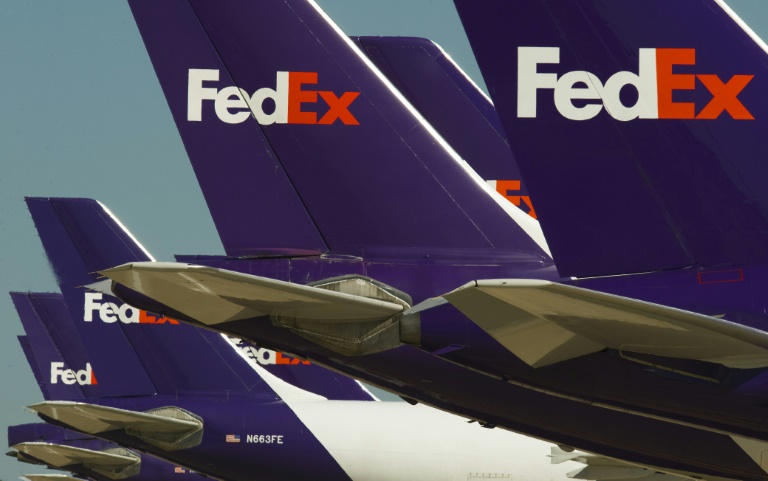
Wall Street’s worst week since June ended with more losses after FedEx reported Thursday that it shipped fewer packages than expected over the summer owing to weakness in the global economy.

That came as CEO Raj Subramaniam said he expects a global recession.

Asian equity investors continued the selling on Monday.

Hong Kong closed down one percent, even after reports that the city’s government was considering ending mandatory hotel quarantine for incoming travellers.

Shanghai was also down despite news that megacity Chengdu was ending a two-week Covid-19 lockdown that saw 21 million people affected.

Sydney, Seoul, Singapore, Taipei, Manila and Wellington were also in the red, though Mumbai and Bangkok inched up and Jakarta was flat. Tokyo was closed for a holiday.

Frankfurt and Paris both opened lower. London was closed for the funeral of Queen Elizabeth II.

The prospect of more big Fed rate hikes is also keeping the dollar at multi-decade highs against its major peers, with the yen feeling most of the pressure as the Bank of Japan refuses to tighten policy.

“Speculative selling of the yen is readily justified by the ongoing widening in US-Japan yield differentials,” said Ray Attrill, of National Australia Bank.

“Until or unless something happens to arrest or reverse this spread widening, the yen is susceptible to additional selling pressure.”

The Japanese unit last week hit a fresh 24-year low of 144.99 to the dollar, though it has bounced slightly after comments from BoJ officials that signalled they were ready to intervene to provide support.

Oil prices dipped despite the news out of Chengdu as demand fears are fuelled by the growing fear of recession around the world.

– Key figures at around 0830 GMT –

Hong Kong – Hang Seng Index: DOWN 1.0 percent at 18,565.97 (close)

Shanghai – Composite: DOWN 0.4 percent at 3,115.60 (close)

Tokyo – Nikkei 225: Closed for holiday

Pound/dollar: DOWN at $1.1390 from $1.1423 on Friday

Euro/pound: UP at 87.60 pence from 87.00 pence 

Euro/dollar: DOWN at $0.9979 from $1.0018

Dollar/yen: UP at 143.37 yen from 142.91 yen

West Texas Intermediate: DOWN 1.3 percent at $83.99 per barrel

Brent North Sea crude: DOWN 0.9 percent at $90.60 per barrel

New York – Dow: DOWN 0.5 percent at 30,822.42 (close)

London – FTSE 100: Closed for queen’s funeral

Asian markets extend losses as traders brace for Fed hike

Asian markets fell Monday as traders extended last week’s rout across risk assets, with expectations high that the Federal Reserve will this week announce another outsized interest rate hike.

With recent data showing US inflation rooted at four-decade highs, investors are increasingly pessimistic about the outlook for the global economy.

Many observers have warned of a sharp recession in many countries caused by the huge rate increases, which are hitting families in the pocket.

And with uncertainty rife owing to a range of issues, including Russia’s war in Ukraine and China’s lockdown-induced slowdown, equities are in danger of revisiting the lows they hit in June.

Several central banks are due to make rate announcements this week, with Japan and Britain among the biggest, though the main event is Wednesday’s Fed decision.

There had been a hope that after two 75 basis point increases in a row, and economic data showing weakness, officials would take their foot off the pedal this month.

But last Tuesday’s disappointing consumer price figures shocked traders and ramped up bets for a third successive 75-point rise, while some have predicted a whole percentage point move.

Policymakers, including Fed boss Jerome Powell, have said time and again their ultimate aim is to bring inflation under control, even if that means sending the economy into recession.

“It is clear that the Fed will project hawkish messaging, once again reiterating that it will bring down inflation unconditionally,” said Vasileios Gkionakis at Citigroup.

Wall Street’s worst week since June ended with more losses after FedEx reported Thursday that it shipped fewer packages than expected over the summer owing to weakness in the global economy.

That came as CEO Raj Subramaniam said he expects a global recession.

Asian equity investors continued the selling on Monday.

Hong Kong lost more than one percent, even after reports of the city’s government considering ending hotel quarantine rules.

Shanghai was also down despite news that megacity Chengdu was ending a two-week Covid lockdown that saw 21 million people shut away.

Sydney, Seoul, Singapore, Taipei, Manila and Wellington were also in the red. Tokyo was closed for a holiday.

The prospect of more big Fed rate hikes is also keeping the dollar at multi-decade highs against its major peers, with the yen feeling most of the pressure as the Bank of Japan refuses to tighten policy.

“Speculative selling of the yen is readily justified by the ongoing widening in US-Japan yield differentials,” said Ray Attrill, of National Australia Bank.

“Until or unless something happens to arrest or reverse this spread widening, the yen is susceptible to additional selling pressure.”

The Japanese unit last week hit a fresh 24-year low of 144.99 to the dollar, though it has bounced slightly after comments from BoJ officials that signalled they were ready to intervene to provide support.

Oil prices rose on the news out of Chengdu, which lifted demand hopes, though the gains were capped by the growing fear of recession around the world.

– Key figures at around 0230 GMT –

Hong Kong – Hang Seng Index: DOWN 1.1 percent at 18,559.45

Shanghai – Composite: DOWN 0.2 percent at 3,119.55

Tokyo – Nikkei 225: Closed for holiday

Pound/dollar: DOWN at $1.1400 from $1.1423 on Friday

Euro/pound: UP at 87.70 pence from 87.00 pence 

Euro/dollar: DOWN at $1.0000 from $1.0018

Dollar/yen: UP at 143.13 yen from 142.91 yen

West Texas Intermediate: UP 0.8 percent at $85.79 per barrel

Brent North Sea crude: UP 0.9 percent at $92.17 per barrel

New York – Dow: DOWN 0.5 percent at 30,822.42 (close)

London – FTSE 100: DOWN 0.6 at 7,236.68 (close)

China doubles down on coal as energy crunch bites

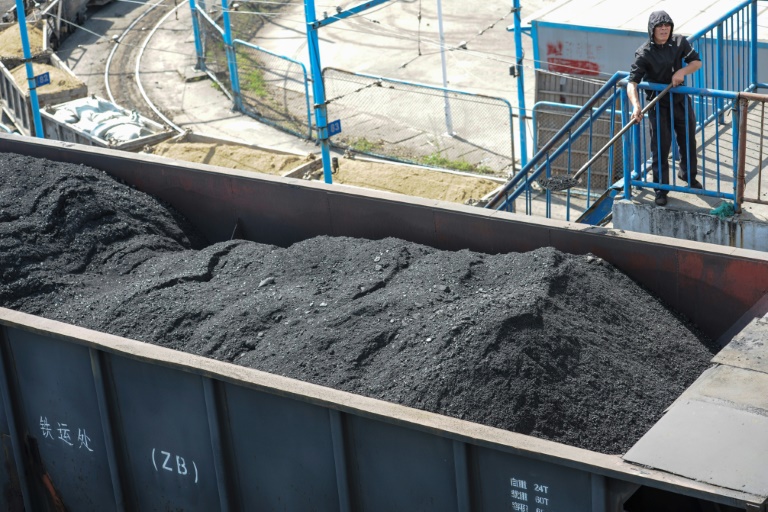
China has stepped up spending on coal in the face of extreme weather, a domestic energy crunch and rising global fuel prices — raising concerns Beijing’s policies may hinder the fight against climate change.

The country is the world’s biggest emitter of the greenhouse gases driving global warming, and President Xi Jinping has vowed to reduce coal use from 2026 as part of a broad set of climate promises.

Beijing has committed to peaking its carbon emissions by 2030 and achieving carbon neutrality by 2060. 

Overall carbon emissions in China have fallen for four consecutive quarters on the back of an economic slowdown, research reported by climate monitor Carbon Brief showed in early September.

But at the same time, slowing growth has led authorities to rely on smokestack industries in an effort to boost the economy.

The push to shore up coal power — which still makes up most of China’s energy supply — has alarmed analysts who warn that it will make an eventual transition to a renewables-dominated energy mix more difficult.

Spooked by an energy shortage last autumn, Chinese authorities in spring ordered coal producers to add 300 million tonnes of mining capacity this year — the equivalent of an extra month of coal production for the country.

In just the first quarter of 2022, regulators endorsed the equivalent of half the entire coal-fired power plant capacity approved in 2021, according to Greenpeace.

– Inefficiencies –

Authorities have also burned and mined more coal in recent weeks in order to meet increased air conditioning demand and make up for shrunken hydropower dams during China’s hottest-ever summer.

Premier Li Keqiang in June called for “releasing advanced coal capacity, as much as possible, and implementing long-term coal supply”.

The independent Climate Action Tracker warns that even the “most binding” climate targets laid out by Beijing would be in line with global warming of between three and four degrees Celsius before the end of the century — well above the Paris Agreement’s goal to limit global warming to 1.5C.

To meet that goal, it said, China would “need to reduce emissions as early as possible and well before 2030” — as well as “decrease coal and other fossil fuel consumption at a much faster rate than currently planned”.

Beijing’s unwillingness to let go of coal stems partly from inefficiencies in its power grid that prevent surplus energy from being transported across regions.

Coal and gas give local officials a ready source of energy and are, in practice, “the only way for local officials to avoid power shortages”, energy researcher Lauri Myllyvirta wrote in a Carbon Brief report.

– ‘Politically crucial year’ –

China has made real progress in building up renewable energy capacity.

The current operating solar capacity in the country accounts for nearly half the global total, according to San Francisco-based non-governmental organisation Global Energy Monitor (GEM).

But unlike wind or sunlight, stockpiles of coal and gas can be held for long periods of time and deployed as needed, giving local authorities a sense of security.

Yet, building more coal facilities means less focus on fixing problems with the grid, Myllyvirta said in comments to AFP, warning plant owners would be motivated to “slow down the transition as they will have an interest in making use of their brand-new assets”.

At the same time, the central government wants to “avoid large-scale blackouts, which we witnessed last winter in the northeastern provinces, in this politically crucial year for Xi”, Byford Tsang, senior policy adviser at climate think-tank E3G, told AFP.

President Xi is expected to secure an unprecedented third term in power at a major Communist Party meeting next month.

Tsang said skyrocketing international energy prices driven by the Russian invasion of Ukraine also pushed Beijing to shore up domestic coal production, pointing to a 17.5 percent drop in coal imports in the first half of this year compared to a year earlier.

Expanding coal capacity as a quick fix, however, goes against “immediate annual cuts in coal use that the UN and leading research organisations have called for”, GEM analysts said.

GEM said all of China’s proposed new mines could together emit as much as six million tonnes of the greenhouse gas methane each year once operational. That is roughly equivalent to the annual methane emissions of Austria, according to World Bank data.

“The more coal China builds now, the harder it becomes to finance and deliver renewable energy projects later,” Wu Jinghan, climate and energy project leader for Greenpeace East Asia, told AFP.

“The longer we wait to transition, the steeper the transition pathway becomes,” Wu said. “That means more disruptive and higher risk, financially and environmentally.”

Wanted crypto founder Do Kwon says 'not on the run'

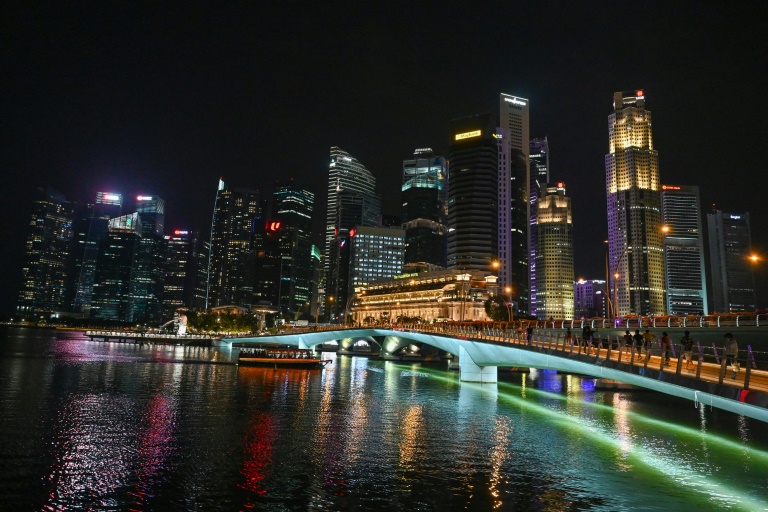
Do Kwon, the wanted South Korean founder of the failed cryptocurrency Terra, denied Sunday he was on the run after the Singapore police said he was not in the city-state as had been believed.

Kwon’s whereabouts have been thrown into question after the Singapore Police Force (SPF) statement late Saturday, and his tweets did not reveal where he was.

The collapse of Terraform Labs earlier this year wiped out about $40 billion of investors’ money.

A South Korean court on Wednesday issued an arrest warrant for Kwon.

Early Sunday he said on Twitter: “I am ‘not on the run’ or anything similar”, but did not reveal where he was.

“For any agency that has shown interest to communicate, we are in full cooperation and we don’t have anything to hide,” he added.

“We are in the process of defending ourselves in multiple jurisdictions… and look forward to clarifying the truth over the next few months.”

The 31-year-old was earlier believed to be in Singapore, where last month he gave his first media interview since the crypto operator folded in May.

Late Saturday, the SPF said in an email response to an AFP query that “Do Kwon is currently not in Singapore”.

“SPF will assist the Korean National Police Agency (KNPA) within the ambit of our domestic legislation and international obligations,” said the brief statement, which gave no further details.

Singapore’s Straits Times newspaper has reported that Kwon’s work permit in the city-state was due to expire on December 7, but his application for a renewal could be at risk now.

South Korean prosecutors have also issued arrest warrants for five other people — who were not named — linked to stablecoin TerraUSD and its sister token Luna.

Kwon’s Terra/Luna system disintegrated in May, with the price of both tokens plummeting to near zero, and the fallout hitting the wider crypto market. Its collapse sparked more than $500 billion in losses.

Stablecoins are designed to have a relatively stable price and are usually pegged to a real-world commodity or currency.

TerraUSD, however, was algorithmic — using code to maintain its price at around one US dollar.

Many investors lost their life savings when Luna and Terra entered a death spiral, and South Korean authorities have opened multiple criminal probes into the crash.

Stocks extend losses on recession fears

Stock markets fell further on Friday as weak UK retail sales data and a dire warning from global shipping giant FedEx fueled fears of recession.

Equities were already struggling this week after data showed US inflation slowed but not as much as expected, adding to fears of aggressive monetary tightening by central banks.

Investors worry that central banks will move too aggressively to tame inflation through rate hikes that could put the brakes on economic growth.

Wall Street stocks sank lower after FedEx reported on Thursday that it shipped fewer packages than expected over the summer due to weakness in the global economy.

The company said it was closing stores, freezing hiring and parking aircraft, while warning of a big earnings hit, with its CEO Raj Subramaniam telling CNBC he expects a global recession.

“The market is looking weak this morning because of the FedEx warning, but it really goes beyond that,” said Briefing.com analyst Patrick O’Hare.

“There are pressing concerns that the aggressive rate hikes by central banks thus far, and the ones that are yet to come, will drive the global economy into a recession that is not ‘soft’,” O’Hare said.

The broad-based S&P 500 finished at 3,873.33, down 0.7 percent for the day and nearly five precent for the week.

“These increasing concerns over a global recession, as well as rising US yields are prompting a flight into the US dollar and not much else,” said CMC Markets analyst Michael Hewson.

London’s FTSE 100 stock index ended the day 0.6 percent lower while the British pound tanked to a 37-year low against the dollar at $1.1351 on news that British retail sales tumbled by far more than forecast in August as shoppers faced rampant inflation.

Sales by volume fell 1.6 percent last month, more than triple what was expected.

Sterling has hit a series of 1985 lows in recent weeks, also as the US Federal Reserve implements aggressive hikes interest rate hikes.

– ‘Markets in pain’ –

“Markets are in a lot of pain, and the UK’s retail data has made things only worse for traders as it clearly pointed out one thing: an imminent recession,” said AvaTrade analyst Naeem Aslam.

“When you look at the sterling against the dollar, it seems like there are no buyers out there.”

Elsewhere, Frankfurt equities dropped 1.7 percent and Paris shed 1.3 percent as investors digested confirmation of record-high inflation in the eurozone.

“Data for August confirm that price pressures are very strong and broad-based” with eurozone inflation at 9.1 percent, said Capital Economics analyst Jack Allen-Reynolds.

“The European Central Bank will need to continue hiking interest rates aggressively at forthcoming meetings.”

The ECB had last week hiked its key rate by a historic 75 basis points, and markets expect a similar-sized move at the October policy meeting.

The Fed and Bank of England are widely expected to ramp up borrowing costs next week.

The US central bank has lifted borrowing costs by 75 basis points at each of its last two meetings. 

– Key figures at around 2110 GMT –

New York – Dow: DOWN 0.5 percent at 30,822.42 (close)

New York – S&P 500: DOWN 0.7 percent at 3,873.33 (close)

New York – Nasdaq: DOWN 0.9 percent at 11,448.40 (close)

London – FTSE 100: DOWN 0.6 at 7,236.68 (close)

Frankfurt – DAX: DOWN 1.7 percent at 12,741.26 (close)

Paris – CAC 40: DOWN 1.3 percent at 6,077.30 (close)

EURO STOXX 50: DOWN 1.2 percent at 3,500.41 (close)

Tokyo – Nikkei 225: DOWN 1.1 percent at 27,567.65 (close)

Shanghai – Composite: DOWN 2.3 percent at 3,126.40 (close)

Hong Kong – Hang Seng Index: DOWN 0.9 percent at 18,761.69 (close)

Pound/dollar: DOWN at $1.1423 from $1.1467 on Thursday

Euro/pound: DOWN at 87.00 pence from 87.21 pence 

Euro/dollar: UP at $1.0018 from $1.0001

Dollar/yen: DOWN at 142.91 yen from 143.52 yen

Brent North Sea crude: UP 0.6 percent at $91.35 per barrel

West Texas Intermediate: UP less than 0.1 percent at $85.11 per barrel

burs-jmb/dw

Close Bitnami banner
Bitnami