Chinese Business

Ethereum blockchain completes 'monumental' overhaul

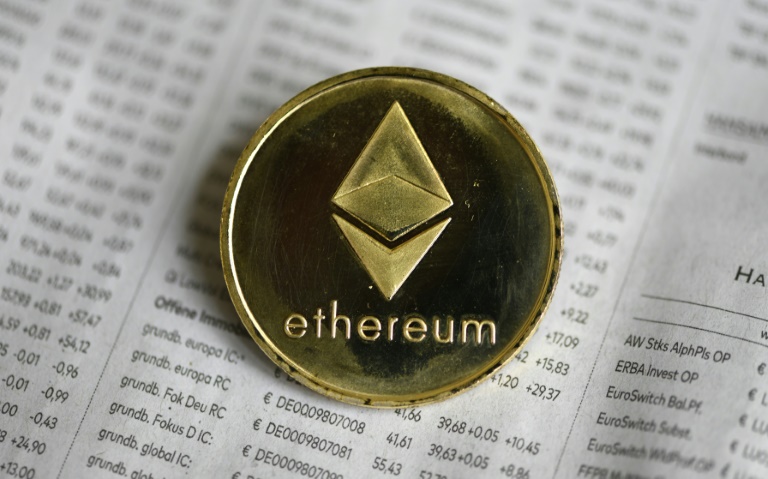
Senior figures in the crypto world said on Thursday that one of the biggest software upgrades the sector has ever seen was completed, an overhaul of the Ethereum blockchain aimed at reducing its massive energy consumption.

Developers had spent years working on a more energy-efficient version of Ethereum, a digital ledger that underpins a multibillion dollar ecosystem of cryptocurrencies, digital tokens (NFTs), games and apps.

“And we finalized!” tweeted Ethereum’s co-creator Vitalik Buterin, calling it a “big moment for the Ethereum ecosystem”.

Ethereum is the second most important blockchain after bitcoin, but it has faced criticism for burning through more power each year than New Zealand.

Buterin quoted research claiming that the “merge”, as developers have called the software upgrade, would reduce global energy consumption by 0.2 percent.

Enthusiasts hope a more energy efficient Ethereum will spur wider adoption, particularly as a way of enabling banks to automate transactions and other processes.

But so far the technology has been used largely to create speculative financial products.

And critics remain sceptical of the claims of massive energy savings, pointing out that it is unclear much energy the new system will need.

– Trading resumes –

The switchover changes the way transactions are logged on the Ethereum blockchain.

From the start of Ethereum in 2015, so-called crypto miners have competed against each other to solve equations — a system known as “proof of work”.

The process required vast computing power and only the winner would be chosen to update the blockchain and get rewards. 

The new system scraps the competition element, the miners and their energy-guzzling computer stacks.

Instead, “validators” will now be chosen in a lottery-style system.

Rather than solving an equation, they put up 32 ether (worth $55,000) — Ethereum’s cryptocurrency — and wait to be chosen in a system known as “proof of stake”.

Blockchain company Consensys called it a “monumental technological milestone” and the biggest update to Ethereum since it was launched.

The world’s biggest crypto exchange, Binance, had stopped trading ether during the merge process.

“The Ethereum Merge is complete,” the firm tweeted on Thursday morning, saying it was resuming trading in ether. 

The upgrade is likely to face a rocky beginning as crypto mining companies have already promised to keep running the old mechanism on a smaller blockchain “forked” from the main Ethereum chain.

And even if the “merge” is successful, Ethereum will still face major hurdles before it can be more widely adopted.

For example, it is expensive to use and the update will not reduce fees.

And the wider crypto sector is still beset by wildly fluctuating prices, security flaws and scams.


Asian stocks edge higher, with all eyes on Fed rate path

Asian stocks mostly edged higher on Thursday, tracking gains on Wall Street as markets adjusted following a rout this week on higher-than-expected US inflation data.

The data showed US yearly inflation slowing less than expected and monthly inflation rising, stoking fears that the US Federal Reserve would continue its aggressive tightening of monetary policy.

On Thursday, bourses in Tokyo, Hong Kong, Taipei, Singapore, Kuala Lumpur and Jakarta made cautious gains.

Markets in Shanghai and Seoul, however, were down at the close.

European stock markets rebounded somewhat at the open on Thursday.

Analysts said markets were bouncing back from the steep losses that followed the inflation data, and traders were pricing in an expected 75 basis-point interest rate hike by the Fed at a meeting next week.

The release of US producer price data also affected market sentiment, showing costs dropping for the second straight month, mainly driven by falling US fuel prices.

“Stock markets have stabilised a little after Tuesday’s rout which saw risk assets pummelled across the board,” said Craig Erlam, senior market analyst at OANDA.

Tokyo — the previous day’s biggest loser in Asia — closed up by 0.2 percent, but investors there remained wary of the speed and degree of future US rate hikes, analysts said.

In Hong Kong, stocks closed 0.4 percent higher on Thursday. 

On Wednesday, Wall Street stocks rose as investors prepared for next week’s Fed decision, with the Dow rising 0.1 percent and the S&P 500 gaining 0.3 percent.

Any US interest rate hike tends to strengthen the dollar, and Asian currencies remain at risk from the strong greenback.

On Thursday, the Australian dollar traded near a two-year low, with the yen at near 143 to the US dollar.

A day earlier, Japan’s central bank conducted a “rate check” operation on the yen, a move seen as a precursor to possible intervention, and which served to bring the currency back from the 145 level that is widely seen as a threshold by the market.

– ‘Front-running’ predictions –

Global consumer prices have soared for months, exacerbated by Russia’s invasion of Ukraine — which has hiked energy and food costs — and because of supply chain strains and Covid lockdowns in China.

Analysts say markets have been trying to “front-run” predictions of when inflation will peak.

“There appears to have been a tendency in recent months to front-run certain releases in the hope that it’s going to prove to be the ‘pivot’ moment when everything starts to look up, central banks can ease off the brake and risk assets will have bottomed,” said OANDA’s Erlam.

All eyes are now firmly on the Fed’s meeting next week, where another 75 basis-point rise is widely expected, after two consecutive increases of the same size.

Following the US inflation data, however, some analysts said it could rise by a full percentage point.

Aggressive interest rate tightening by central banks is slowing down major economies, as authorities attempt to stop them from overheating and tame sharp price rises.

On Wednesday, UK inflation slowed to 9.9 percent in August, but remained close to 40-year highs.

The Bank of England is expected to institute another rate hike next week.

“(The UK inflation figure is) not exactly cause for celebration, nor is it likely the peak, but you have to take your wins where you can these days,” said Erlam.

“The data also won’t in all likelihood change the outcome of the BoE meeting next week, with 75 basis points now heavily backed but 50 also possible.”

– Key figures at around 0800 GMT –

Tokyo – Nikkei 225: UP 0.2 percent at 27,875.91 (close) 

Hong Kong – Hang Seng Index: UP 0.4 percent at 18,930.38 (close)

Shanghai – Composite: DOWN 1.2 percent at 3,199.92 (close)

EURO STOXX 50: UP 0.41 percent at 3,582.12

London – FTSE 100: UP 0.7 percent at 7,324.97

Frankfurt – DAX: UP 0.5 percent at 13,092.77

Paris – CAC 40: UP 0.3 percent at 6,237.99

New York – Dow: UP 0.1 percent to 31,135.09 points (close)

Euro/dollar: UP at $0.9976 from $0.9972 

Pound/dollar: DOWN at $1.1521 from $1.1532  

Euro/pound: UP at 86.59 pence from 86.46 pence

Dollar/yen: UP at 143.58 yen from 142.20 yen 

Brent North Sea crude: UP 0.5 percent at $94.52 per barrel

West Texas Intermediate: UP 0.5 percent at $88.96 per barrel

Malaysian firm makes surprise bid for Macau gaming licence

A company controlled by Malaysian tycoon and Genting chairman Lim Kok Thay has put in a bid for a casino licence in Macau, a surprise challenge to the decades-long oligopoly of the six incumbent operators.

The former Portuguese colony is the only territory in China where casinos are allowed, and issues just six operating concessions for a multibillion-dollar industry that, until the pandemic, was bigger than Las Vegas.

Licences for the current operators — including MGM China, Sands China and Galaxy Entertainment Group — will expire at the end of the year, and they face plummeting revenues and heightened regulatory scrutiny from Beijing.

The six operators all submitted bids by Wednesday to renew their licences but the spotlight was stolen by newcomer GMM.

A GMM representative told reporters that the bid was submitted on behalf of leisure and entertainment firm Genting, according to Macao Daily.

Best known for its resort in the Malaysian highlands, Genting also operates in Las Vegas and Singapore and backed a ski resort in China that hosted this year’s Winter Olympics.

Shares in Macau casino operators fell two percent in Thursday morning trading in Hong Kong, according to Bloomberg Intelligence.

Macau’s gaming sector has been battered by pandemic-era restrictions that drove away the mainland Chinese gamblers who make up the vast majority of customers. 

Gross gaming revenue was down 98 percent from pre-pandemic levels and fell to a record low in July, officials earlier announced.

Chinese President Xi Jinping has spearheaded an anti-corruption campaign that has seen increased scrutiny of the high-rollers and officials who travel to gamble in Macau, where cases of money laundering are common.

For decades, Macau’s gaming industry was run as a monopoly by casino magnate Stanley Ho, but in 2002 more operators were brought in and issued 20-year concessions as part of a liberalisation effort. 

In January, authorities slashed the concession period of gaming licences from 20 years to 10 and unveiled regulations seeking to increase local ownership and government supervision. 

GMM’s bid adds an element of uncertainty to the sector, which had been dominated by the same big players for decades.

In a research note, JPMorgan Chase analysts argued it was “unlikely” for Macau to prefer a new foreign operator over incumbents who have a track record in investment and local employment.

In January, Genting’s Hong Kong cruise ship operator filed for liquidation after its shipyard in Germany went bankrupt.

Asian stocks edge higher, with all eyes on Fed rate path

Asian stocks edged higher at the open on Thursday, tracking gains on Wall Street as markets adjusted following a rout this week on higher-than-expected US inflation data.

The data showed US yearly inflation slowing less than expected and monthly inflation rising, stoking fears that the US Federal Reserve would continue its aggressive tightening of monetary policy.

On Thursday, bourses in Tokyo, Hong Kong and Seoul opened cautiously up.

Analysts said markets were rebounding from the steep losses that followed the inflation data, and to price in an expected 75 basis-point interest rate hike by the Fed at a meeting next week.

The release of US producer price data also affected market sentiment, showing producer costs dropping for the second straight month, mainly driven by falling US fuel prices.

“Stock markets have stabilised a little after Tuesday’s rout which saw risk assets pummelled across the board,” said Craig Erlam, senior market analyst at OANDA.

Tokyo — the previous day’s biggest loser in Asia — rebounded slightly on Thursday but investors remained wary of the speed and degree of future US rate hikes.

“Investors remain deeply cautious about potentially excessive monetary tightening in the United States”, Okasan Online Securities said in a note.

On Wednesday, Wall Street stocks rose as investors prepared for next week’s Fed decision, with the Dow rising 0.1 percent and the S&P 500 gaining 0.3 percent.

Any US interest rate hike tends to strengthen the dollar, and Asian currencies remain at risk from the strong greenback.

On Thursday, the Australian dollar traded near a two-year low, with the yen at near 143 to the US dollar.

A day earlier, Japan’s central bank conducted a “rate check” operation on the yen, a move seen as a precursor to possible intervention, and which served to bring the currency back from the 145 level that is widely seen as a threshold by the market.

– ‘Front-running’ predictions –

Global consumer prices have soared for months, exacerbated by Russia’s invasion of Ukraine — which has hiked energy and food costs — and because of supply chain strains and Covid lockdowns in China.

Analysts say markets have been trying to “front-run” predictions of when inflation will peak.

“There appears to have been a tendency in recent months to front-run certain releases in the hope that it’s going to prove to be the ‘pivot’ moment when everything starts to look up, central banks can ease off the brake and risk assets will have bottomed,” said OANDA’s Erlam.

All eyes are now firmly on the Fed’s meeting next week, where another 75 basis-point rise is widely expected, after two consecutive increases of the same size.

Following the US inflation data, however, some analysts said it could rise by a full percentage point.

Aggressive interest rate tightening by central banks is slowing down major economies, as authorities attempt to stop them from overheating and tame sharp price rises.

On Wednesday, UK inflation slowed to 9.9 percent in August, but remained close to 40-year highs.

The Bank of England is expected to institute another rate hike next week.

“(The UK inflation figure is) not exactly cause for celebration, nor is it likely the peak, but you have to take your wins where you can these days,” said Erlam.

“The data also won’t in all likelihood change the outcome of the BoE meeting next week, with 75 basis points now heavily backed but 50 also possible.”

– Key figures at around 0230 GMT –

Tokyo – Nikkei 225: UP 0.4 percent at 27,918.46  

Hong Kong – Hang Seng Index: UP 0.3 percent at 18,896.92

Shanghai – Composite: DOWN 0.6 percent at 3,218.07

New York – Dow: UP 0.1 percent to 31,135.09 points (close)

London – FTSE 100: DOWN 1.5 percent at 7,277.30 (close) 

Euro/dollar: UP at $0.9976 from $0.9972 

Pound/dollar: UP at $1.1534 from $1.1532  

Euro/pound: UP at 86.50 pence from 86.46 pence 

Dollar/yen: UP at 143.28 yen from 142.20 yen 

Brent North Sea crude: DOWN 0.1 percent at $93.99 per barrel

West Texas Intermediate: UP 0.02 percent at $88.50 per barrel

How the tide turned on data centres in Europe

Every time we make a call on Zoom, upload a document to the cloud or stream a video, our computers connect to vast warehouses filled with servers to store or access data.

Not so long ago, European countries were falling over each other to welcome the firms that run these warehouses, known as data centres or bit barns.

Wide-eyed politicians trumpeted investments and dreamt of creating global tech hubs.

But then the dream went sour.

The sheer amount of energy and water needed to power and cool these server farms shocked the public.

The industry sucked up 14 percent of Ireland’s power last year, London warned home builders that power shortages caused by bit barns could affect new projects, and Amsterdam said it simply had no more room for the warehouses.

Then things got worse.

The war in Ukraine helped spark an energy crisis across the continent, leaving consumers facing rocketing bills and countries contemplating energy shortages.

“Data centres will be a target,” critical blogger Dwayne Monroe told AFP, saying the focus would only grow if Europe cannot fix its energy crisis.

Grassroots campaigns and local opposition have already helped to halt projects this year by Amazon in France, Google in Luxembourg and Meta in the Netherlands.

The Irish government, while reaffirming support for the industry, put strict limits on new developments until 2028.

The data industry says it feels unfairly targeted, stressing its efforts to source green energy and arguing that outsourcing storage to bit barns has helped slash consumption.

– ‘Veil of shadow’ –

These arguments are playing out most spectacularly in Ireland.

Activists are campaigning on a broad range of topics and using local forums to push their case.

“They take up a huge amount of space but provide basically no employment,” says Madeleine Johansson, a Dublin councillor for the People Before Profit party, which is campaigning on the issue.

Johansson recently had a motion passed in her council area banning the centres, sparking an almighty row with the national government that is yet to be resolved.

Dylan Murphy of Not Here, Not Anywhere, one of several climate groups pushing the issue in Ireland, has filed a motion in his local council in Fingal calling for companies to reveal the kind of information they are holding.

“There’s a complete lack of transparency… about what data is actually being stored in these data centres,” he said, calling it a “veil of shadow”. 

The data industry says revealing that information would be impossible.

Michael McCarthy of Cloud Infrastructure Ireland, a lobby group, said activists had lost the argument on sustainability and were now throwing everything at the wall. 

“Data centres definitely are large energy users but they’re part of a cohort of larger energy users,” he said.

McCarthy and industry figures in other countries say the real problem is years of underinvestment in national energy infrastructure. 

He also pointed out that the industry in Europe had pledged to become carbon neutral by 2030.

And there are still countries hankering to get data firms to locate there — particularly Iceland and Norway.

– Questions over metaverse –

Against this backdrop, the tech industry continues to innovate new products that invariably require vast amounts of processing power and data storage.

Machine-learning tools, for example, are hugely energy hungry — Google said earlier this year they accounted for between 10 and 15 percent of its total energy usage.

The metaverse, an emerging concept for a 3D internet championed by Facebook owner Meta, would also be hugely energy intensive. 

Critical blogger Monroe reckons the metaverse will buckle under its own weight, partly because of its data requirements.  

“The construction of the metaverse would require Facebook to build out a distribution of data centres that would rival what Amazon, Microsoft and Google have done for their clouds,” he said.

Meta did not respond directly to questions about the metaverse but told AFP that it was “proud to build some of the most energy and water efficient data centres in the world”.

As far as the carbon footprint of such innovation goes, energy experts interviewed by AFP said it would be difficult to assess.

The metaverse, for example, could help to reduce emissions in other areas by reducing the need for travel.

An energy official who did not want to be named questioned whether data centres were the best target for criticism when cryptocurrencies were so wasteful.

While data centres used about one percent of global energy output in 2020, cryptocurrency mining used about half that amount, according to the International Energy Agency.

McCarthy said those who opposed data centres needed to reckon with just how embedded they had become in everyday life, particularly since the coronavirus pandemic.

“They facilitate how we can work and live online, that’s the reality of it,” he said.

TikTok search results rife with misinformation: report

TikTok is serving up misinformation to users searching for news about politics, climate change, Covid-19, the war in Ukraine and more, according to a report released Wednesday.

Toxicity and false claims are a “significant threat” at TikTok, which is becoming a go-to online venue for young people to search for information, according to a study by NewsGuard, a media watchdog.

NewsGuard describes itself as a “journalism and technology tool” that rates the credibility of websites and online information.

“Even when TikTok’s search results yielded little to no misinformation, the results were often more polarizing than Google’s,” NewsGuard said of its findings.

NewsGuard in September analyzed the top 20 results from 27 TikTok searches on news topics, finding that 19.5 percent of the videos suggested contained false or misleading claims, the report stated.

Researchers said that they compared TikTok and Google results from searches for information about school shootings, abortion, Covid-19, US elections, Russia’s war on the Ukraine and other news.

False or misleading claims in results included conspiracy theories promoted by QAnon and supposed home recipes for hydroxychloroquine, a prescription drug used to treat malaria and lupus, according to NewsGuard.

TikTok says the methodology used in the analysis is flawed, and that it makes a priority of fighting misinformation.

“Our Community Guidelines make clear that we do not allow harmful misinformation, including medical misinformation, and we will remove it from the platform,” a TikTok spokesperson said in response to an AFP inquiry.

“We partner with credible voices to elevate authoritative content on topics related to public health, and partner with independent fact-checkers who help us to assess the accuracy of content.”

While testifying Wednesday at a Senate hearing on social media’s impact on national security, Twitter former senior vice president of engineering Alex Roetter said that the Chinese government is an investor in TikTok parent company Bytedance, and that it has incentives to maximize profit and user engagement.

“The TikTok algorithm pushes educational science, engineering, and math content on Chinese youth while pushing a feed containing twerking videos, misinformation, and other destructive content to US children,” Roetter told Senators.

Social media companies stand to benefit from attention-grabbing online content despite harmful effects it may have on society, Roetter said in opening remarks.

“Our terms of service and community guidelines are built to help ensure our vision of a safe and authentic experience,” TikTok chief operating officer Vanessa Pappas said at the hearing.

“Our policies have zero tolerance for disinformation, violent extremism and hateful behavior.”

How the tide turned on data centres in Europe

Every time we make a call on Zoom, upload a document to the cloud or stream a video, our computers connect to vast warehouses filled with servers to store or access data.

Not so long ago, European countries were falling over each other to welcome the firms that run these warehouses, known as data centres or bit barns.

Wide-eyed politicians trumpeted investments and dreamt of creating global tech hubs.

But then the dream went sour.

The sheer amount of energy and water needed to power and cool these server farms shocked the public.

The industry sucked up 14 percent of Ireland’s power last year, London warned home builders that power shortages caused by bit barns could affect new projects, and Amsterdam said it simply had no more room for the warehouses.

Then things got worse.

The war in Ukraine helped spark an energy crisis across the continent, leaving consumers facing rocketing bills and countries contemplating energy shortages.

“Data centres will be a target,” critical blogger Dwayne Monroe told AFP, saying the focus would only grow if Europe cannot fix its energy crisis.

Grassroots campaigns and local opposition have already helped to halt projects this year by Amazon in France, Google in Luxembourg and Meta in the Netherlands.

The Irish government, while reaffirming support for the industry, put strict limits on new developments until 2028.

The data industry says it feels unfairly targeted, stressing its efforts to source green energy and arguing that outsourcing storage to bit barns has helped slash consumption.

– ‘Veil of shadow’ –

These arguments are playing out most spectacularly in Ireland.

Activists are campaigning on a broad range of topics and using local forums to push their case.

“They take up a huge amount of space but provide basically no employment,” says Madeleine Johansson, a Dublin councillor for the People Before Profit party, which is campaigning on the issue.

Johansson recently had a motion passed in her council area banning the centres, sparking an almighty row with the national government that is yet to be resolved.

Dylan Murphy of Not Here, Not Anywhere, one of several climate groups pushing the issue in Ireland, has filed a motion in his local council in Fingal calling for companies to reveal the kind of information they are holding.

“There’s a complete lack of transparency… about what data is actually being stored in these data centres,” he said, calling it a “veil of shadow”. 

The data industry says revealing that information would be impossible.

Michael McCarthy of Cloud Infrastructure Ireland, a lobby group, said activists had lost the argument on sustainability and were now throwing everything at the wall. 

“Data centres definitely are large energy users but they’re part of a cohort of larger energy users,” he said.

McCarthy and industry figures in other countries say the real problem is years of underinvestment in national energy infrastructure. 

He also pointed out that the industry in Europe had pledged to become carbon neutral by 2030.

And there are still countries hankering to get data firms to locate there — particularly Iceland and Norway.

– Questions over metaverse –

Against this backdrop, the tech industry continues to innovate new products that invariably require vast amounts of processing power and data storage.

Machine-learning tools, for example, are hugely energy hungry — Google said earlier this year they accounted for between 10 and 15 percent of its total energy usage.

The metaverse, an emerging concept for a 3D internet championed by Facebook owner Meta, would also be hugely energy intensive. 

Critical blogger Monroe reckons the metaverse will buckle under its own weight, partly because of its data requirements.  

“The construction of the metaverse would require Facebook to build out a distribution of data centres that would rival what Amazon, Microsoft and Google have done for their clouds,” he said.

Meta did not respond directly to questions about the metaverse but told AFP that it was “proud to build some of the most energy and water efficient data centres in the world”.

As far as the carbon footprint of such innovation goes, energy experts interviewed by AFP said it would be difficult to assess.

The metaverse, for example, could help to reduce emissions in other areas by reducing the need for travel.

An energy official who did not want to be named questioned whether data centres were the best target for criticism when cryptocurrencies were so wasteful.

While data centres used about one percent of global energy output in 2020, cryptocurrency mining used about half that amount, according to the International Energy Agency.

McCarthy said those who opposed data centres needed to reckon with just how embedded they had become in everyday life, particularly since the coronavirus pandemic.

“They facilitate how we can work and live online, that’s the reality of it,” he said.

Wall Street attempts recovery from previous day's rout

Wall Street stocks made modest gains Wednesday following the previous day’s rout on stronger-than-expected US inflation data that sparked fears of a prolonged campaign of Federal Reserve interest rate hikes.

The US inflation data still pulled European and Asian equities sharply lower, London the heaviest faller in Europe after news that UK inflation had slowed last month but remained close to a 40-year high.

The dollar edged down in choppy trade, as oil prices climbed.

US consumer price inflation (CPI) slowed slightly in August to 8.3 percent on an annual measure, but this trumped market expectations of about eight percent. Prices actually rose on a monthly comparison. 

– ‘Caught up’ –

European markets are “caught up in the negative sentiment that has taken hold across global markets,” said Victoria Scholar, head of investment at Interactive Investor.

“Hotter-than-expected US inflation figures prompted heavy selling on Wall Street” on Tuesday, she added, when the blue-chip Dow index tumbled almost four percent.

Global consumer prices have soared for months, exacerbated by Russia’s invasion of Ukraine — which has hiked energy and food costs — as well as owing to supply chain strains and Covid lockdowns in China.

The Fed has already instituted two consecutive 75-basis-point hikes, and a third such move is widely expected at its meeting next week.

After the latest US inflation data, some investors are even predicting the next Fed hike could be a full percentage point.

Aggressive rate tightening by central banks worldwide is denting economic activity as consumers and businesses face higher loan repayments.

Investors “still appear to be in a state of shock, trying to process how high the Fed will go with its policy rate and how low the economy and earnings growth will go as a result of the restrictive policy,” said market analyst Patrick O’Hare at Briefing.com.

In the UK, inflation slowed to 9.9 percent in August but remained almost in double digits.

The news boosted the pound on hopes of another interest rate hike next week from the Bank of England.

“There has been a fresh bout of anxiety on financial markets amid worries that inflation is still proving to be a formidable opponent to take down,” said Hargreaves Lansdown analyst Susannah Streeter.

In Asia, Tokyo led the region’s losses with the Nikkei plunging 2.8 percent.

Hong Kong stocks closed down more than two percent, with Chinese conglomerate Fosun hit hard by media reports that the group was under regulatory scrutiny.

But after slipping into the red early in the session, Wall Street stocks pushed modestly higher during morning trading on Wednesday.

A dip in US wholesale prices helped boost sentiment. 

The drop “suggests that inflation pressures are moderating albeit not as quickly as one would like,” said market analyst Michael Hewson at CMC Markets.

– Key figures at around 1330 GMT –

New York – Dow: UP 0.2 percent at 31,163.58 points

EURO STOXX 50: DOWN 0.5 percent at 3,567.56

London – FTSE 100: DOWN 1.5 percent at 7,277.30 (close) 

Frankfurt – DAX: DOWN 1.2 percent at 13,028.00 (close)

Paris – CAC 40: DOWN 0.4 percent at 6,222.41 (close)

Tokyo – Nikkei 225: DOWN 2.8 percent at 28,818.62 (close) 

Hong Kong – Hang Seng Index: DOWN 2.5 percent at 18,847.10 (close)

Shanghai – Composite: DOWN 0.8 percent at 3,237.54 (close)

Euro/dollar: UP at $0.9993 from $0.9970 late Tuesday

Pound/dollar: UP at $1.1564 from $1.1493 

Euro/pound: DOWN at 86.39 pence from 86.75 pence 

Dollar/yen: DOWN at 142.77 yen from 144.58 yen 

Brent North Sea crude: UP 2.1 percent at $95.10 per barrel

West Texas Intermediate: UP 2.4 percent at $89.42 per barrel

burs-rl/jj

Stocks extend global selloff on US inflation gloom

Global equities sank further Wednesday as stronger-than-expected US inflation data sparked fears of a prolonged campaign of Federal Reserve interest rate hikes.

London was the heaviest faller in Europe after news that UK inflation slowed last month but held close to a 40-year high.

Asia tanked after Wall Street took its worst beating in weeks Tuesday on news of hot US inflation.

The dollar edged down in choppy trade, while oil prices were mixed Wednesday.

US inflation slowed slightly in August to 8.3 percent, but this trumped market expectations of about eight percent.

– ‘Caught up’ –

European markets are “caught up in the negative sentiment that has taken hold across global markets,” said Victoria Scholar, head of investment at Interactive Investor.

“Hotter-than-expected US inflation figures prompted heavy selling on Wall Street,” she added.

Global consumer prices have soared for months, exacerbated by Russia’s invasion of Ukraine — which has hiked energy and food costs — as well as owing to supply chain strains and Covid lockdowns in China.

The Fed has already instituted two consecutive 75-basis-point hikes, and a third such move is widely expected at its meeting next week.

After the latest US inflation data, some investors are even predicting the next Fed hike could be a full percentage point.

Aggressive rate tightening by central banks worldwide is denting economic activity as consumers and businesses face higher loan repayments.

In the UK, inflation slowed to 9.9 percent in August but remained almost in double digits.

The news boosted the pound on hopes of another interest rate hike next week from the Bank of England.

“There has been a fresh bout of anxiety on financial markets amid worries that inflation is still proving to be a formidable opponent to take down,” said Hargreaves Lansdown analyst Susannah Streeter.

In Asia, Tokyo led the region’s losses with the Nikkei plunging 2.8 percent.

Hong Kong stocks closed down more than two percent, with Chinese conglomerate Fosun hit hard by media reports that the group was under regulator scrutiny.

– Key figures at around 1115 GMT –

London – FTSE 100: DOWN 1.1 percent at 7,307.45 points

Frankfurt – DAX: DOWN 0.6 percent at 13,110.78

Paris – CAC 40: DOWN 0.3 percent at 6,225.22   

EURO STOXX 50: DOWN 0.4 percent at 3,573.69

Tokyo – Nikkei 225: DOWN 2.8 percent at 28,818.62 (close) 

Hong Kong – Hang Seng Index: DOWN 2.5 percent at 18,847.10 (close)

Shanghai – Composite: DOWN 0.8 percent at 3,237.54 (close)

New York – Dow: DOWN 3.9 percent at 31,104.97 (close)

Euro/dollar: UP at $1.0006 from $0.9970 late Tuesday

Pound/dollar: UP at $1.1559 from $1.1493 

Euro/pound: DOWN at 86.56 pence from 86.75 pence 

Dollar/yen: DOWN at 143.24 yen from 144.58 yen 

Brent North Sea crude: DOWN 0.1 percent at $93.07 per barrel

West Texas Intermediate: UP 0.4 percent at $87.68 per barrel

burs/rfj/bcp/lth

Shares in Chinese conglomerate Fosun dive on report of watchdog scrutiny

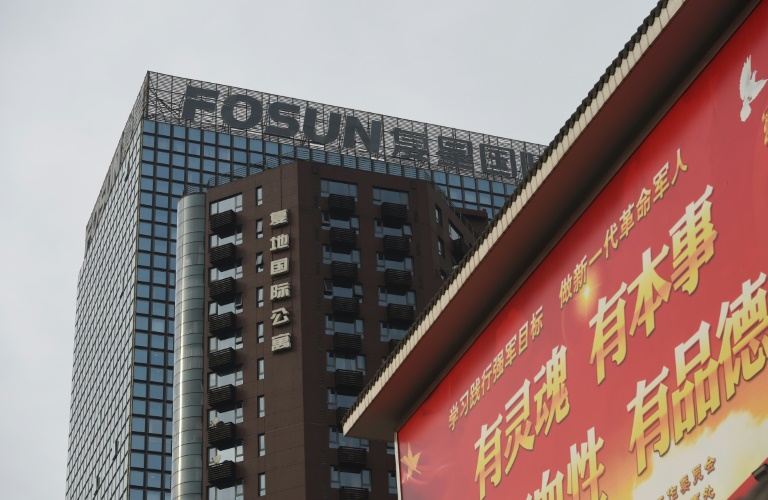
Club Med owner Fosun, one of China’s largest private-sector conglomerates, saw billions wiped off its value on Wednesday as jittery investors reacted to a media report that the group was under regulatory scrutiny.

There has been growing concern about the debts of Chinese companies, particularly after a run of high-profile defaults in the property sector last year that rippled through the wider economy.

Bloomberg News on Tuesday cited unnamed sources as saying that regulators, including China’s banking watchdog and the local commission overseeing state investments, have told large lenders and state-owned enterprises to closely examine their exposure to Fosun.

Shares in Fosun International Limited, the conglomerate’s flagship company, slid as much as 9.6 percent in Hong Kong on Wednesday. 

They later pared some of those losses, ending the day down 6.6 percent at HK$4.56, the lowest level since late 2012.

Fosun’s Chief Financial Officer Alex Gong rejected the Bloomberg report as “completely false”.

“Neither the China Banking and Insurance Regulatory Commission (CBIRC) nor the Shanghai Banking and Insurance Regulatory Commission have asked commercial banks to find out about Fosun’s financial exposure, and those institutions have not received any notice of this,” Gong told the South China Morning Post.

The public had a “one-sided interpretation” of Fosun’s recent reductions in shareholdings and divestments and failed to see that they were part of a long-term financial strategy, the Shanghai-based company added in a statement.

– Circus and football –

Co-founded by tycoon Guo Guangchang in 1992 during the heady days of China’s initial “reform and opening” period, Fosun started off in pharmaceuticals and real estate but has since built a sprawling business empire that includes tourism and finance. 

A prolific buyer of global assets, Fosun owns French brand Club Med and has a controlling stake in the fashion house Lanvin.

It owns English Premier League football club Wolverhampton Wanderers and has a major stake in Canadian circus producer Cirque du Soleil.

In 2020, Fosun struck a deal with Germany’s BioNTech to manufacture its coronavirus vaccine in China and later became its exclusive distributor to the Greater China region.

Chinese companies have faced growing scrutiny over their debt exposure, especially those in the property sector. 

Multiple construction giants, including Evergrande, have defaulted on debts and been forced into major restructuring.

Beijing has also launched regulatory investigations in multiple sectors, including education and technology businesses, clipping their growth.

In recent months China’s economy has been reeling from a debt crisis in its massive property sector, mortgage boycotts, as well as disruptions from coronavirus lockdowns in finance and manufacturing hubs.

Fosun faces as much as $8 billion in bond repayments through 2023, according to Bloomberg News.

Fosun’s dollar bonds also fell by as much as six cents on Wednesday, adding to declines a day earlier that were the biggest since a rout in June.

The CBIRC’s request to banks to check their exposure to Fosun debt does not mean it wants lenders to change their financing, and the regulator’s move may not result in any action, Bloomberg reported.

The Beijing branch of the State-owned Assets Supervision and Administration Commission was also among the regulators who asked institutions for closer scrutiny regarding Fosun, the report added.

Fosun’s debt stood at 261 billion yuan ($37.7 billion) as of June 30, up from 237 billion yuan at the end of last year, according to an earnings report last month.

Moody’s last month downgraded Fosun, citing weak liquidity and a weakening portfolio amid asset sales.

— Bloomberg News contributed to this story —

Close Bitnami banner
Bitnami